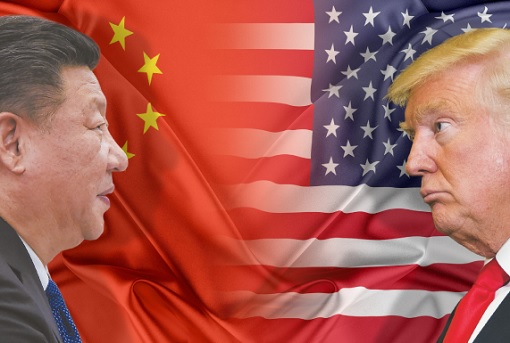
Big Picture: President Trump and Trade Using the Art of the Self-Fulfilling Prophecy


Posted originally on CTH on January 27, 2026 | Sundance

People might be interested in the recent stories of Canadian Premier Doug Ford and his reversal of position on Chinese EV production. Ontario Premier Ford now welcomes Chinese EVs into Canada.

Or people might be interested in the recent story of the EU announcing a historic trade deal with India. The European Union is now looking to find new markets to replace the U.S., while simultaneously agreeing to establish a new immigration/recruitment process to accept massive numbers of Indian migrants.

Yes, Canada reverses their position on trade with China, that’s odd. And somehow the EU immediately forgets their demands for India to stop buying Russian oil or face EU sanctions, another oddity.  This is like watching someone you don’t like, get engaged to your smelly, fat ex-girlfriend. [Matthew 15:14]

Canada and the EU take trade and economic positions seemingly against U.S. interests. Simultaneously Mexico modifies all their trade positions to come into alignment with the USA. Yesterday, Mexican President Claudia Sheinbaum announced Mexico will no longer ship oil to Cuba.

What’s going on?

Well, to really understand what is happening you need to look at President Trump’s responses to all of the individual issues outlined above and take a much bigger picture view.  President Trump is the master of the ‘self-fulfilling prophecy.’

♦ CANADA – When President Trump was asked about Prime Minister Mark Carney creating a new trade agreement with China, President Trump responded that he didn’t care – it was irrelevant to him.  Yet, simultaneously inside the USMCA President Trump has the power to veto any trade agreement between Mexico or Canada and a non-member nation.

So, why didn’t President Trump care?  Easy, because in President Trump’s mind there’s not going to be a USMCA; so, he really doesn’t care if Canada runs to violate it.  In real terms, Canada doing bilateral deals with other countries, especially deals potentially detrimental to the USA, only strengthens his position on dissolving the USMCA.

If Canada violates the terms and spirit of the USMCA, it makes dispatch of the unliked trade agreement even easier.  Canada is helping President Trump remove the congressional justification they could use to block him.  If Canada is violating the USMCA (CUSMA), Congress is kneecapped from interference.

Provoking Canada into a trade position, that puts them at a disadvantage trying to stop the dissolution of the CUSMA, stops Congress from opposing the fracture, and then opens the door to a bilateral trade agreement, is creating a self-fulfilling prophecy that is entirely controlled by President Donald Trump.

[I pointed this out on the ‘Russian Sanctions’ map four years ago for a reason.] 

♦ EUROPE – In the last few months, the EU has been pressuring President Trump to join them in putting sanctions against India for purchasing Russian oil.  Suddenly, all those Russian energy issues are dropped, and the EU signs a trade agreement with India.  Again, just like with Canada, President Trump doesn’t care; he’s working on a much bigger objective.

Both Canada and Europe are independently, out of necessity, taking action that takes apart the trade and economic system they created.  At the core of the old trade system both Canada and Europe were exploiting the USA, exfiltrating wealth and skimming the independent entrepreneurial innovation that originates from within the U.S. economic system.

That necessary exploitation happened because the USA is innovative (freedom-based capitalism), while the CA/EU system is built on government control mechanisms.  The CA/EU energy policy is just one impactful example of their pontificating inability to be insightful when it comes to consequences.  The EU and Canada are now stuck looking for markets that will do the dirty jobs, provide them with core components, while simultaneously looking for markets for their finished products.

On the other side of the approach is President Trump, working to expand U.S. industrial dirty job capacity, create our own core components, then create finished goods entirely on our own.  A complete revitalization of the U.S. industrial and manufacturing base.  Our U.S. GDP is currently expected to grow north of 5%.  This is not happening by accident.

Additionally, EU Commission President Ursula von der Leyen is not bragging about importing Indian IT workers in a vacuum.  If the EU cannot skim off the IT capabilities of America, they have to find another Braintrust to tap.  Just like the innovative dependencies of China, the EU is intellectually frigid; compliance is ingrained in their academia.  Within the USA, we still have foundational disposition of ‘screw you‘ in our DNA.

Look at the advancements of Artificial Intelligence, or AI. All of the growth in that tech sector is being led by America. President Trump is taking every approach to ensure we remain the world’s dominant power in AI development. As much as Elon Musk’s quirks and quasi-friendly politics annoys me personally, strategically, on the technology side, it’s good to see him chumming around with President Trump; at least that’s what I tell myself.

♦ MEXICO – This is where it gets really, super interesting.  You might remember that China was set to invest between $5 billion and $10 billion (total) in Mexico for EV auto manufacturing.  In December of 2023, three Chinese auto manufacturers, MG, BYD, and Chery, announced they were going to spend billions building new EV manufacturing plants.  Each Chinese manufacturer was initially going to spend between $1.5 to $2.0 billion.  By March 2024, the reasoning was evident – Biden was supporting it.

When President Trump won the November 2024 election, all of those Chinese investments and plans inside Mexico were cancelled.

As we noted at the end of last year, splitting the USMCA into two bilateral trade deals, one for Mexico and one for Canada, will be one of the most interesting and long-term economically significant moves in U.S. trade history.  It is going to be a lot of fun to watch these negotiations, and the pre-positioning gives us a preview of what is to come.  Mexico is doing everything almost perfectly in preparation for their bilateral deal, including their stopping of oil shipments to Cuba.

This alignment follows the Mexican government passing a sweeping set of tariffs against Chinese imports. The Mexican government, led by Sheinbaum, made moves throughout 2025 to stay in alignment with a favorable U.S. trade agreement.  Meanwhile, the Canadian government, led by Mark Carney, has been more antagonistic and positioning Canada to lose badly.

♦ SUMMARY: Some people have construed the bilateral trade preference of President Trump to be the elimination of globalism in favor of nationalism in trade agreements. While the outcome of Trump’s approach indeed aligns with that theme, it is not specifically the objective of President Trump to eliminate global trade, but rather to focus on specific interests in trade that benefit the unique nature of each party involved.

Canada can embrace China, and Europe can embrace India; in the bigger picture it really doesn’t matter.  These relationships only create dependencies which are the natural outcome of globalism.  From President Trump’s position, what really matters is what happens within our borders and how the United States economy is positioned.  This is President Trump’s singular focus.

Do you remember President Trump leaving the 2025 G7 meeting in Canada early? The final day invitation list brought Australia, Mexico, Ukraine, South Korea, South Africa, India, the United Nations and the World Bank into the G7.  President Donald Trump smartly exited the G7 assembly a day early, he departed before that crowd of interests arrived.  The world leaders came because the process to keep USA wealth inside the USA is against their interests.  That’s why they came, and that’s why President Trump left.

Globalism, in its economic construct, is a series of dependencies. However, the opposite is also true. If nations are not dependent, they are sovereign – able to exist without the need for support from other nations and systems. If nations are sovereign, then globalism is no longer needed. If each nation of the world is operating according to its individual best interests, the position of Donald Trump, then what happens to the governing elite who set up the system of interdependencies?

“G7”?

Ontario Premier Doug Ford Appears in Awkward Presser – We Love Chinese EVs Now


Posted originally on CTH on January 27, 2026 | Sundance

Ontario Premier Doug Ford went for a pizza with Canadian Prime Minister Mark Carney.  Following the meeting Doug Ford appears on camera for a debrief to explain how he has reversed his opposition to Chinese EV imports.  The presser looks like a hostage video (prompted):

USMCA Article 32.10 – Non-Market Country FTA (key provisions):

“A Party intending to negotiate a free trade agreement with a non-market country shall inform the other Parties at least three months prior to commencing negotiations and, upon request, provide information regarding the objectives of those negotiations.

A Party that enters into a free trade agreement with a non-market country shall provide the other Parties with the full text of the agreement prior to signing.

If a Party enters into a free trade agreement with a non-market country, the other Parties may terminate this Agreement on six months’ notice and replace it with a bilateral agreement.” [SOURCE]

NATO General Secretary Mark Rutte Delivers Brutally Honest Message to Virtue Signaling Brussels


Posted originally on CTH on January 26, 2026 | Sundance 

NATO Secretary General Mark Rutte delivered a direct reminder to the EU in Brussels.  Brushing aside criticism after Donald Trump published private messages between them and telling EU lawmakers, he did not mind the disclosure. Speaking directly to the EU nations at the European Parliament, Secretary Rutte defended Trump’s NATO record, warned Europe cannot defend itself alone, and rejected claims linking Greenland talks to Ukraine.

Rutte reminded the European assembly that without the United States there is “no way” for Europe to defend itself. WATCH:

.

Full EU MEETING VIDEO:

Press Secretary Karoline Leavitt Press Briefing – 1:00pm ET Livestream


Posted originally on CTH on January 26, 2026 | Sundance 

White House press secretary Karoline Leavitt speaks to the media.  The anticipated start time is 1:00pm ET with livestream links below.

.

.

A Domestic Insurgency Has Erupted – President Trump Sending Tom Homan to Minneapolis


Posted originally on CTH on January 26, 2026 | Sundance

The violence in Minneapolis erupted when the scale of financial fraud was discovered.  The administration of President Trump has begun to highlight this non-pretending reality.

On the surface it seems like ICE enforcement is the issue; however, in reality Governor Tim Walz and Mayor Jacob Frey have been leading a criminal syndicate, with the entire region engaged in money laundering and financial fraud.

State political leadership are involved. The local Minneapolis police are involved; the Minneapolis municipal leaders are involved; a large and dedicated segment of the migrant population is involved; corrupt judges and officers of the courts are involved; public and private sector agencies involved in fraudulent exploitation of benefits are involved, and the community activists -footsoldier communists- are engaged in the process of using civil unrest as cover.

As the violent insurgency escalates, President Trump has announced Border Czar Tom Homan is being sent to the region:

“I am sending Tom Homan to Minnesota tonight. He has not been involved in that area, but knows and likes many of the people there. Tom is tough but fair, and will report directly to me. Separately, a major investigation is going on with respect to the massive 20 Billion Dollar, Plus, Welfare Fraud that has taken place in Minnesota, and is at least partially responsible for the violent organized protests going on in the streets. Additionally, the DOJ and Congress are looking at “Congresswoman” Illhan Omar, who left Somalia with NOTHING, and is now reportedly worth more than 44 Million Dollars. Time will tell all. Thank you for your attention to this matter!” ~ President DJT

When we went to Iraq/Afghanistan, American political leadership said we were going to fight them “there” so that we didn’t need to fight them “here.” However, that same American political leadership then imported hundreds-of-thousands of them to here.

The communist-minded community activists have joined with the Antifa domestic terrorists and adopted the strategy of insurgencies.  Former retired Green Beret Officer Eric Schwalm writing on X accurately draws attention to the similarity of action:

Eric Schwalm: “As a former Special Forces Warrant Officer with multiple rotations running counterinsurgency ops—both hunting insurgents and trying to separate them from sympathetic populations—I’ve seen organized resistance up close. From Anbar to Helmand, the pattern is familiar: spotters, cutouts, dead drops (or modern equivalents), disciplined comms, role specialization, and a willingness to absorb casualties while bleeding the stronger force slowly.

What’s unfolding in Minneapolis right now isn’t “protest.” It’s low-level insurgency infrastructure, built by people who’ve clearly studied the playbook.

Signal groups at 1,000-member cap per zone. Dedicated roles: mobile chasers, plate checkers logging vehicle data into shared databases, 24/7 dispatch nodes vectoring assets, SALUTE-style reporting (Size, Activity, Location, Unit, Time, Equipment) on suspected federal vehicles. Daily chat rotations and timed deletions to frustrate forensic recovery. Vetting processes for new joiners. Mutual aid from sympathetic locals (teachers providing cover, possible PD tip-offs on license plate lookups). Home-base coordination points. Rapid escalation from observation to physical obstruction—or worse.

This isn’t spontaneous outrage. This is C2 (command and control) with redundancy, OPSEC hygiene, and task organization that would make a SF team sergeant nod in recognition. Replace “ICE agents” with “occupying coalition forces” and the structure maps almost 1:1 to early-stage urban cells we hunted in the mid-2000s.

The most sobering part? It’s domestic. Funded, trained (somewhere), and directed by people who live in the same country they’re trying to paralyze law enforcement in.

When your own citizens build and operate this level of parallel intelligence and rapid-response network against federal officers—complete with doxxing, vehicle pursuits, and harassment that’s already turned lethal—you’re no longer dealing with civil disobedience. You’re facing a distributed resistance that’s learned the lessons of successful insurgencies: stay below the kinetic threshold most of the time, force over-reaction when possible, maintain popular support through narrative, and never present a single center of gravity.

I spent years training partner forces to dismantle exactly this kind of apparatus. Now pieces of it are standing up in American cities, enabled by elements of local government and civil society. That should keep every thinking American awake at night.

Not because I want escalation. But because history shows these things don’t de-escalate on their own once the infrastructure exists and the cadre believe they’re winning the information war.

We either recognize what we’re actually looking at—or we pretend it’s still just “activism” until the structures harden and spread.

Your call, America. But from where I sit, this isn’t January 2026 politics anymore. It’s phase one of something we’ve spent decades trying to keep off our own soil.” [source]

President Donald Trump Releases a Statement on Minnesota Chaos


Posted originally on CTH on January 25, 2026 | Sundance

It is rumored that President Trump is likely to invoke the Insurrection Act in Minneapolis, Minnesota, perhaps as early as Monday afternoon. This is potentially why the following statement has been released by President Trump:

(VIA Truth Social) – During the four years of Crooked Joe Biden and Democrat failed leadership, Tens of Millions of Illegal Alien Criminals poured into our Country, including Hundreds of Thousands of Convicted Murderers, Rapists, Kidnappers, Drug Dealers, and Terrorists.

I won the Election in a Historic Landslide, and Republicans won Majorities in both the House and Senate, in large part, because we pledged to SEAL THE BORDER, which we have done, and launch the largest Mass Deportation of Illegal Alien Criminals in American History. This Deportation effort is underway, and in Republican run Cities and States, these operations are going peacefully and smoothly, because Local Law Enforcement Officers are allowed to work with their federal counterparts.

For example, in the five Republican run States of Texas, Georgia, Florida, Tennessee, and Louisiana, ICE has arrested 150,245 Criminal Illegal Aliens over the past year — with ZERO protests, riots, or chaos. Why? Because Local Police and ICE are cooperating and working together.

Meanwhile, Democrat run Sanctuary Cities and States are REFUSING to cooperate with ICE, and they are actually encouraging Leftwing Agitators to unlawfully obstruct their operations to arrest the Worst of the Worst People!

By doing this, Democrats are putting Illegal Alien Criminals over Taxpaying, Law-Abiding Citizens, and they have created dangerous circumstances for EVERYONE involved. Tragically, two American Citizens have lost their lives as a result of this Democrat ensued chaos.

That is why I am hereby calling on Governor Walz, Mayor Frey, and EVERY Democrat Governor and Mayor in the United States of America to formally cooperate with the Trump Administration to enforce our Nation’s Laws, rather than resist and stoke the flames of Division, Chaos, and Violence:

1. Governor Walz and Mayor Frey should turn over all Criminal Illegal Aliens that are currently incarcerated in their State Prisons and Jails to Federal Authorities, along with all Illegal Criminals with an active warrant or known Criminal History, for Immediate Deportation.

2. State and Local Law Enforcement must agree to turn over all Illegal Aliens arrested by Local Police.

3. Local Police must assist Federal Law Enforcement in apprehending and detaining Illegal Aliens who are wanted for Crimes.

4. Democrat Politicians must partner with the Federal Government to protect American Citizens in the rapid removal of all Criminal Illegal Aliens in our Country. Some Democrats, in places like Memphis, Tennessee, or Washington, D.C., have done so, resulting in safer streets for ALL.

In addition, I am hereby calling on the United States Congress to immediately pass Legislation to END Sanctuary Cities, which is the root cause of all of these problems. American Cities should be Safe Sanctuaries for Law Abiding American Citizens ONLY, not Illegal Alien Criminals who broke our Nation’s Laws.

All of these requests are rooted in COMMON SENSE, and will provide the best possible circumstances to, MAKE AMERICA GREAT AGAIN! The Trump Administration is standing by and waiting for ANY Democrat to do the right thing, and work with us on these important matters of MAKING AMERICA SAFE like it is in all sections of our Country where we are, together with Local Leadership, participating and involved.

DONALD J. TRUMP, President of The United States of America

Sunday Talks – Treasury Secretary Scott Bessent Discusses Trade Conflict with Canada and Greenland


Posted originally on CTH on January 25, 2026 | Sundance 

Treasury Secretary Scott Bessent appears on ABC News with narrative engineer Jonathan Karl to discuss the outcomes of the Davos assembly, the Canadian trade conflict and the U.S-NATO deal over Greenland.  Video and Transcript Below:

[Transcript] – KARL: I’m joined now exclusively by Treasury Secretary Scott Bessent, who is just back from Davos and joins us here in the studio.

Thank you for being here, Mr. Secretary. Let me start with the threat that the president made just yesterday to Canada. He said, if Canada makes a deal with China, it will immediately be hit with a one hundred percent tariffs against all Canadian goods. Why is Donald Trump threatening Canada again with another trade war?

SCOTT BESSENT, (R) UNITED STATES TREASURY SECRETARY: Well, Jonathan, good to be with you. And look, Prime Minister Carney went to — went to China, came back, dropped some industry specific tariffs on Chinese goods, and we have a highly integrated market with Canada, sometimes in autos, which he dropped the E.V. tariff, I believe, from a hundred percent to six percent.

The goods can cross across the border during the manufacturing process six times. And we can’t let Canada become an opening that the Chinese pour their cheap goods into the U.S. We have a USMCA agreement, but based on — based on that, which is going to be renegotiated this summer, and I’m not sure what Prime Minister Carney is doing here, other than trying to virtue-signal to his globalist friends at Davos.

I don’t think he’s doing the best job for the Canadian people.

KARL: But there’s confusion from President Trump on this. I mean, we heard from him just — I think it was nine days ago, eight or nine days ago. He had this to say about Canada negotiating with China.

(BEGIN VIDEO CLIP)

REPORTER: How do you see the deals — Canada and China just signed trade deals between the two partners?

DONALD TRUMP, PRESIDENT OF THE UNITED STATES: Well, that’s OK. That’s what he should be doing. I mean, it’s a good thing for him to sign a trade deal. If you can get a deal with China, he should do that.

(END VIDEO CLIP)

KARL: OK. So, he gives a green light to a deal with China just after they do it. And then nine days later, he’s saying that’s it, hundred percent tariffs.

BESSENT: Well, no, there’s possibility of hundred percent tariffs if they do a free trade deal. So, what —

KARL: So, it’s not now? It’s — this is if they go further than what’s already happening?

BESSENT: Well, it’s — if they go further, if we see that the Canadians are allowing the Chinese to dump goods. And Jonathan, just to be clear that the Canadians, a few months ago, joined the U.S. in putting high steel tariffs on China because the Chinese are dumping. The Europeans also have done the same thing. And it looks like that Prime Minister Carney may have done some kind of about-face.

KARL: You’ve got tariffs that have been in place since April. And the idea is to bring back manufacturing jobs, but in fact, every month, according to the data from the Fed, every month since April, we’ve actually had a decline in manufacturing jobs in the country.

BESSENT: Well, that — those are the manufacturing jobs. What we’re seeing is a burst in construction jobs because we’re seeing record number of factories construction. I was just in my home state of South Carolina a couple of months ago. There’s a rare earth magnets factory, 800 construction jobs. It could morph into 3,000 factory jobs.

I was just at the Boeing plant in Charleston. Thanks to President Trump’s constant push during the trade deals to sell more aircraft, Boeing is expanding their capacity there by fifty percent. So those will be construction jobs that morph into factory jobs. So, I could not be more upbeat about the prospects for manufacturing, for the economy in 2026.

KARL: And how do you explain what happened with Greenland? I mean, the president goes into Davos, not ruling out military force, talking about imposing tariffs on the Europeans who oppose us retaking Greenland. And now, suddenly, he’s OK with essentially, it seems like the same agreement that’s been in place since the ’50s.

BESSENT: Well, I think you haven’t seen the full agreement. Secretary General, Mark Rutte was a very good interlocutor between the Europeans and between President Trump. But look, a lot — a lot of things have changed up in Greenland. Jonathan, do you know what the Istanbul Bridge is?

KARL: Tell me.

BESSENT: A Chinese freight ship that, for the first time in October, came across the Arctic into the U.K. They are shortening their travel time. So, the Arctic is changing. Very important strategically for the U.S. to help control that.

KARL: OK. But again, it seems like we’re going to basically have the — I mean, Greenland’s not going to become part of the United States. We’re going to have the same access that we’ve had.

(CROSSTALK)

BESSENT: I promise you, the deal is not what we had before.

KARL: OK.

BESSENT: It is much more fulsome for the United States. And again, Jon, just to be clear, for 150 years, American presidents have had their eye on Greenland. We administered Greenland during World War II after the Danish were invaded by the Nazis.

KARL: Let me — let me ask you. Let me show you a photo that was posted by the French Defense Ministry yesterday showing coffins of French soldiers who died fighting alongside Americans in Afghanistan. And we also heard from the Italian prime minister, a good supporter of Donald Trump, Prime Minister Meloni, reacted to what the president had to say about European troops serving in Afghanistan, saying that she was astonished, and noted that 53 Italian service members were killed, more than 700 were wounded.

Does the president regret what he said about our NATO allies and their service in Afghanistan?

BESSENT: Jon, I was traveling. I haven’t seen any of that, but I can tell you that the president values NATO, and since his first term, he has worked hard to make sure that our NATO allies are pulling their fair share.

Just to be clear, since 1980, since 1980, the U.S. has spent $22 trillion more on defense than NATO. And now by President Trump getting our NATO allies, including Canada, who was very deficient in the funding, NATO is going to be stronger than ever.

KARL: But this is about sacrifice. Let’s play President Trump’s words so you understand exactly what they were talking about, what I’m talking about.

(BEGIN VIDEO CLIP)

DONALD TRUMP, PRESIDENT OF THE UNITED STATES: We’ve never needed them. We have never really asked anything of them. You know, they’ll say they sent some troops to Afghanistan or this or that, and they did. They stayed a little back little off the front lines.

(END VIDEO CLIP)

KARL: I mean, do you understand why our European allies, the ones you’re negotiating with, are insulted by that?

BESSENT: Again, I think President Trump is laser-focused on the strongest NATO possible, that he has worked to negotiate a settlement on Russia-Ukraine. The U.S. has made much bigger sacrifices than the European has — Europeans have. We have put 25 percent tariffs on India for buying Russian oil. Guess what happened last week? The Europeans signed a trade deal with India.

They — and just to be clear again, the Russian oil goes into India. The refined products come out, and the Europeans buy the refined products. They are financing the war against themselves. So, President Trump’s leadership, we will eventually end this Ukraine-Russia war.

KARL: And before you go, I know this is not your lane, but I got to ask you about what’s happened in Minneapolis. As a member of the — of the Trump cabinet, are you concerned to see another American citizen ends up dead, shot by federal law enforcement?

BESSENT: Jonathan, it’s a tragedy when anyone dies, but I can tell you the situation on the ground there is being stirred up by Governor Walz. I was out there two weeks ago. Governor Walz declined to provide a security detail for me to go into the Minnesota capital with the state police. So, he is fomenting the — he is fomenting chaos because there is substantial waste, fraud and abuse.

My job as Treasury secretary is to investigate that, and I think that, you know, this chaos that’s going on out there, and again, I am sorry that this gentleman is dead, but he did bring a nine-millimeter semi-automatic weapon with two cartridges to what was supposed to be a peaceful protest. I think that there are a lot of paid agitators who are ginning things up, and the governor has not done a good job of tamping this down.

KARL: Yes. I mean, as you know, he was an ICU nurse, worked for the Veterans Administration, and there’s no evidence that he brandished the gun whatsoever. In fact, it appears that —

BESSENT: He brought a gun.

(CROSSTALK)

KARL: He’d been disarmed before he was —

(CROSSTALK)

BESSENT: He brought a gun. Have you ever gone to a protest, Jonathan?

KARL: I mean, we do have a Second Amendment in this country that —

BESSENT: Jonathan, have you ever gone to a protest?

KARL: I mean —

BESSENT: Have you gone to a protest?

KARL: I mean, I’ve — no, actually, as a reporter covering it.

BESSENT: OK. I’ve been to a protest.

KARL: Yes.

BESSENT: Guess what? I didn’t bring a gun. I brought a billboard.

KARL: OK. Secretary Bessent, thank you for joining us.

Coming up, we’ll have the latest on the massive winter storm sweeping the country. We’re back in a moment.

[END TRANSCRIPT]

Canadian Ambassador Hillman Says Canada Is Relying Upon Democrats and Republicans in Congress to Protect them from Trump’s Bilateral Trade Approach with Canada


Posted originally on CTH on January 25, 2026 | Sundance 

Canadian Ambassador to the U.S., Kirsten Hillman, appears on CBS Face The Nation to discuss ongoing political and trade relations between Canada and the United States – Video and Transcript below.

During one segment of the interview, Ambassador Hillman is asked about the dissolution of the USMCA (CUSMA) trade agreement, and immediately Hillman falls back upon the same Justin Trudeau position of the government. The U.S. politicians will not allow President Trump to dissolve the USMCA.

“I think that we have to believe that our political leaders are going to be listening to the people in the constituencies for whom that instrument was drawn up, and they’re saying, this is vital to us, do no harm.”

Canada is counting on American political opposition to defend the economic interests of Canada. This is exactly the same position that former Canadian Prime Minister Justin Trudeau espoused in 2017 and 2018.

[Transcript] – So a lot is going on in the relationship between our two countries. We are so deeply integrated here on trade, you buy more from the U.S. than any other country. We have the world’s longest land border. We have shared defense interests through NATO, shared air defense with NORAD. Are we like in the middle of a divorce? Like, how do you describe the relationship?

AMB HILLMAN I- I- we’re not in the middle of a divorce, but we are in the middle of a change. There’s no question about it. I think that we are finding ourselves, quite frankly, in- in a situation where some of the foundations that have governed our relationship for a long time, that you know, integrated supply chains are good, that working together on strategic issues is- are important, that looking out for each other in important ways is- is a number one priority. I think in some quarters, Canadians feel that those foundations are being tested. We will adapt. We will make it through, I have no doubt about that, but it’s yeah, it’s a complicated time.

MARGARET BRENNAN

Well, you know, Canada had agreed to join this Board of Peace that President Trump announced out at Davos, and then overnight Thursday, the president disinvited Canada. Is this kind of public snub interfering in the relationship, and- and what does that indicate to you about what this Board of Peace is that Canada had said it did want to be a part of?

AMB HILLMAN

So we had expressed an interest in the Board of Peace a number of weeks ago, and essentially, a Board of Peace that is seeking to find peace, in particular, in Gaza and stability, is something that Canada was very much supportive of. The- the parameters of that Board of Peace had just really started to come out and- and our government was considering it, but hadn’t- hadn’t really made a decision. But I think that- that honestly, I think that the most important thing to say here, from the perspective of Canada, is that we have always and will always be promoting peace and stability and human rights around the world. We’ll do it with our allies in various fora, at NATO, at the U.N. bilaterally with like minded countries. So we’re not going to change that and- and we will give it our all in- in any fora that- that is available to us.

MARGARET BRENNAN

It- It’s kind of now described as an alternative to the United Nations. Is that something you’re comfortable with?

AMB HILLMAN

Well, we are deep supporters of the United Nations. We feel that it’s, you know, it’s not perfect, no large institution is, but having a place where the whole world can get together and express their views on issues that are important to the globe is vital. And as I say, NATO is vital, and we work with our EU counterparts and EU-Canada, you know, security discussions and in- in various other configurations. So probably all of these different fora are- are essential. The Board of Peace has yet to be fully, I think, understood, and we’ll see- we’ll- we’ll see where that goes, but the outcomes are what matter to Canada.

MARGARET BRENNAN

So your prime minister gave a national address on Thursday, and I understand he denounced authoritarianism and exclusion. He did not mention President Trump by name, but he did rebuke the claim that Trump made at Davos, that Canada lives because of the United States. You’re talking about what people receive at home, everyone has local politics, so when something like that is said, do you fear that this is starting not just a spat, but this is like a generational split between our two countries, like, how are people receiving this at home?

AMB HILLMAN

Look, I think Canadians- Canadians know that Canada lives because of Canadians, because what Canadians do for Canada, and right now, that’s where we’re trying to focus our attention. By doing what- you know, focusing our attention on what we can control as a nation for ourselves and our own economy and our own security and our own relationships around the world. The United States is always going to be a vital partner. Geography, as you said in your opener, 5,500 miles of border, deep ties, millions of Canadians and Americans that work together every day, that- that you know, do research and study and have families across the border so that- that is there, and that is something that I actually think brings strength to the relationship at times where, you know, in other- at other levels, and maybe at the political level, it- it’s more complicated.

MARGARET BRENNAN

It’s very complicated. I mean, it- it’s almost unthinkable that a phrase like authoritarianism and exclusion that that could be thought to be referring to the leader of the president of the United States?

AMB HILLMAN

Well, I think that there are concerns globally for- by our government, that we have institutions and norms, rules that have governed our countries, yours, mine, and all like minded countries for generations that are really being tested, really being tested. And- and I think what matters is how we react in the face of these tests, and for us, for our country, for our prime minister, you know, there are important implications for our country. And he’s- he’s trying to articulate a vision. And I think he is articulating a very strong vision for how we must adapt. And again, it’s- it’s about being pragmatic and principled, and that’s- that’s what we’re going to continue to be.

MARGARET BRENNAN

You have had a long career here in the United States, deeply involved with trade in particular. You helped to negotiate that free trade deal known as USMCA during the first Trump administration. President Trump was asked about it, January 13. He said, I really don’t care in terms of renewing it, there’s no real advantage. We don’t need Canada products here. Is that free trade deal doomed?

AMB HILLMAN

No, it is not doomed. That is my view. All three countries, Canada, the U.S. and Mexico did broad consultations, national consultations, with their business communities in particular, on what- how that agreement works for them. And really without exception, the American comments back were sure we’d like to maybe update this or change this a little bit, but job number one is to do no harm to this agreement, which is the economic foundation of our continental partnership and leads to very important U.S. competitiveness, and Canadian and Mexican competitiveness vis-a-vis other parts of this world. So I think there’s- I think that we have to believe that our political leaders are going to be listening to the people in the constituencies for whom that instrument was drawn up, and they’re saying, this is vital to us, do no harm.

MARGARET BRENNAN

So do you think there’s a bilateral trade deal here? Is that what the Trump administration is going for, rather than the three way deal or–

AMB HILLMAN

I- you know, I think- I- I- we hear- we hear that sometimes, we hear different things. It is important to remember that even within that agreement, there are a lot of bilateral elements, but there is- there are advantages to doing things trilaterally. There’s a lot of supply chain movement that happens between our three countries. And if you, if you break it into two, you could have different rules and disconnects there that are inefficient for business. So we’re driven- look, Canada will be driven by what the best thing to do is, as I say, for the companies and constituencies that are relying on that agreement to create jobs.

MARGARET BRENNAN

Because you heard the commerce secretary say at Davos, you know, globalism isn’t working. I mean, these free trade deals are part of that globalism. And it was just a week ago, your prime minister was in Beijing, and he described Canada’s relationship with China as more predictable than its relationship with the United States. He really meant more predictable than the Trump administration’s United States.

AMB HILLMAN

Look, there’s no question that the last number of months have been unpredictable for us in our relationship with the United States. You know, we have a trade agreement that had us virtually tariff free between our two countries, and now we have very serious tariffs on steel, aluminum, autos, lumber, and that’s causing a lot of challenges within our country. There are people that are losing their jobs. There are industries that are being reoriented, and it’s very difficult. So that is seen as, yes, unpredictable.

MARGARET BRENNAN: But fortress North America had been an idea. I mean, the treasury secretary talked about it, that the United States, Mexico, Canada, we could stand up together, you know, have shared values, and stand up to China. That seems dead, if Canada is really describing a new alliance here with Beijing.

AMB HILLMAN: Well, I think- I think we have to put this in perspective. The- the agreement that we did with China a few weeks ago was a very focused and surgical agreement that was largely, or almost exclusively, designed to de-escalate some tariff escalation that had happened over the past year and a bit. So over the past year and a bit, China had put very punitive tariffs on Canadian agricultural products and fish and seafood, shutting Canadians out from one of their primary markets, if not for some of them, their primary market. And so we went to Beijing to re-establish market access for our farmers and our fishers. It’s exactly what the U.S. administration did in October when they re-established market access for U.S. soy farmers, and in exchange, rolled back some tariffs and fees. So this is a very pragmatic, very focused approach. I think it’s important to put it in context.

MARGARET BRENNAN: But even Ontario’s premier said this is letting Chinese “spy cars” into your country. I think he means electric vehicles that will be cheaply made in China. Are you worried about becoming too beholden to China and its cheap manufacturing?

AMB HILLMAN: No, we’re not, because, we- the- the auto side of this agreement was again to take us back to 2023, we had the importation of vehicles made in China. Many of those were Teslas, as a matter of fact, and we’ve gone back and stuck to the level of 2023 for those imports. So this isn’t a revolutionary new thing. This is really just trying to roll back or de-escalate what had been escalated over the past year and a bit.

MARGARET BRENNAN

Well, the treasury secretary is saying that Albertans are going to have a referendum on succeeding from Canada. He seems to be urging that. What do you make of this–

AMB HILLMAN: Well–

MARGARET BRENNAN: –and comments like that?

AMB HILLMAN: I think it’s important to let Albertans and Canadians manage their own very delicate domestic, you know, politics themselves. I think that that’s probably wise counsel. Having grown up in Alberta, you know, it’s a- it’s a- it’s a province that has lots of strong views about the way in which it interacts with the rest of the country, as do other parts of our nation. And those are important debates to be had, but they’re debates for our country to have within its own citizenry.

MARGARET BRENNAN: It seems to be stirring the pot there a bit, but I want to ask you what your prime minister said at Davos. He got a standing ovation for this speech. He described a ruptured global order, the end of a nice story, and the beginning of a new brutal reality, which he described as a predatory one. Take a listen.

MARK CARNEY, PRIME MINISTER OF CANADA: Stop invoking rules-based international order as though it still functions as advertised. Call it what it is: a system of intensifying great power rivalry, where the most powerful pursue their interests using economic integration as coercion.

[SOUNDS ON TAPE ENDS]

MARGARET BRENNAN: He said, if you’re not at the table, then you’re on the menu. What does this new world order look like?

AMB HILLMAN

Well, that’s a good question. I mean, I think he laid out in his- his discussion, his speech, his- his view of what is happening in our world. And it’s- it’s a world in which rules that governed every player in the globe, every country were maybe not perfectly abided by, as he said, maybe not always exactly exercised as one would hope, but still were sufficient to form the basis of the prosperity, the stability, the predictability that we all used to maximize peace and stability and- and maximize economic reality. So we’re moving away our economic benefits, and we’re moving away from that, and we have to- countries like ours, have to figure out what that means for us. I think that what it does mean for us is that we can’t walk away from our principles. We can’t walk away from our belief in rules that are to be abided by by everyone if they commit to them. But at the same time, we have to be pragmatic and we have to look inward to control what we can within our own economies to be as resilient as we possibly can within our own economies, and part of that means engaging pragmatically with a broad array of countries around the world, in trade agreements, in investment relationships and in partnerships.

MARGARET BRENNAN: Sounds like Canada is picking off our friends.

AMB HILLMAN: You know, I- no, I think Canada is trying to make sure that it is the most resilient it can be for our own benefit.

MARGARET BRENNAN: I’m being told that President Trump posted on social media just a few moments ago that Canada is against the Golden Dome over Greenland and has voted against it to choose to be closer to China. That’s how it was described to me. Yet President Trump had previously talked about Canada participating in this Golden Dome project, which isn’t yet built, but it’s supposed to be missile- layered missile defense, as I understand it. Do you know what he’s talking about, that Canada has rejected being involved?

AMB HILLMAN: No, I’m afraid I don’t, but what I can say about the Golden Dome is this, Canada is- is investing over $80 billion over the next five years in our defens-, in our defense systems, and a big part of that is Arctic defense. And a big part of our Arctic defense investments are something called over-the-horizon radar, which is a system that allows us to see the threats that are coming into the Arctic before they arrive. So that is part- and when we have talked to the president about protecting our hemisphere, we have talked about ways in which our different capabilities can work together so that we have eyes on the region and we cooperate in a way that protects both of our countries.

MARGARET BRENNAN: So the president has described that as Canada wanting to plug in to the system. As you understand it, that’s the better description, your own system that would coordinate?

AMB HILLMAN: Right. Much as we do across all sorts of defense systems, where we’re interoperable. We- we work together. We make our investments that make sense for Canada and defending our territory and defending our sovereignty, but we work with the Americans and- and other allies to maximize the benefits of those.

MARGARET BRENNAN: So in- in short, you do think there needs to be more focus on Arctic defense, but you’re on board to help do that?

AMB HILLMAN: We’re deeply committed to Arctic defense. Absolutely.

MARGARET BRENNAN: I need to ask you about NATO, because you’re also a partner at NATO. The only time that NATO’s Article 5 was ever invoked, and you know this, was after the 9/11 attacks on this country. That collective defense clause, an attack on one is an attack on all, meant that Europe and Canada, they sent troops right alongside American troops on the battlefield in Afghanistan. Here’s what President Trump said.

[SOUND ON TAPE BEGINS]

PRESIDENT DONALD TRUMP: We’ve never needed them. We have never really asked anything of them. You know, they’ll say they sent some troops to Afghanistan, or this or that. And they did. They stayed a little back, little off the front lines.

[SOUNDS ON TAPE ENDS]

MARGARET BRENNAN

He was speaking about all NATO troops. But we did check and about 40,000 Canadians deployed to Afghanistan between 2001 and 2014. 158 were killed, 635 wounded in action. What is a remark like that do to people at home?

AMB HILLMAN: You know, I think what’s most important is that we know what our Canadians have done, and I know that your American armed forces are deeply respectful and deeply appreciative of having stood side by side with Canadians in those very, very treacherous and difficult fights. We know that to be true. They know that to be true, and that’s what matters.

MARGARET BRENNAN: Ambassador, thank you for your time as it wraps up here in Washington.

AMB HILLMAN: Thank you for having me.

MARGARET BRENNAN: Great to have you. We’ll be back in a moment.

[END TRANSCRIPT]

President Trump Threatens to Hit Canada with 100% Tariff if they Become a Transshipping Hub for Chinese Imports


Posted originally on CTH on January 24, 2026 | Sundance 

Canada signing a trade agreement with China to permit the import of EVs is another escalation in the exploitation of the USMCA compact.

For the position of China, using Canada as a route to ship component goods into the United States is just a slight expansion of their current technique to avoid U.S. tariffs.  However, President Trump is taking action immediately.

Noting on his Truth Social platform, President Trump announced that if Canada does effectively go through with allowing the import of Chinese electric vehicles, then the U.S. will impose a 100% countervailing duty against all Canadian imports.

[SOURCE]

“[…] As a part of the deal, Canada will ease the tariffs on Chinese electric vehicles that it imposed in tandem with the U.S. in 2024. In exchange, China will lower retaliatory tariffs on key Canadian agricultural products.” ~Politico

Canadian Prime Minister Mark Carney continues giving President Trump the ammunition to dissolve the USMCA trade agreement this year.

USTR Jamieson Greer and Commerce Secretary Howard Lutnick have both expressed anticipation of a new bilateral trade agreement to stop all this Canadian nonsense.

Ukraine, Russia and U.S. Negotiators Assemble with Military Leaders from Each Nation


Posted originally on CTH on January 24, 2026 | Sundance

The bad news is that nothing much visible has changed in language or action from the negotiations.  The good news is that for the first time military leadership from Russia, Ukraine and the USA joined with the diplomatic negotiators.  This could indicate they are trying to work out the details on just how a ceasefire could be executed.

For the first time a trilateral discussion was held between the warring parties of Ukraine and Russia with the U.S. team working as an intermediary. The venue was the UAE acting as neutral turf for the discussion.  According to Ukraine President Zelensky, the meeting in the Emirates was the first time representatives from Ukraine, Russia, and the United States were engaged in a trilateral format since the full-scale war began.

Steve Witkoff and Jared Kushner traveled to the UAE meeting after three hours of discussions with Russian Federation President Vladimir Putin in Moscow.  Zelensky noted the arrangements were coordinated by the American side, describing the meeting as one of several unexpected diplomatic initiatives that emerged during negotiations.

ZELENSKYY – Our delegation delivered a report; the meetings in the UAE have concluded. And this was the first format of this kind in quite some time: two days of trilateral meetings. A lot was discussed, and it is important that the conversations were constructive.

The negotiations also involved military representatives from all three sides. From our side, today’s participants included Rustem Umerov, Kyrylo Budanov, Andrii Hnatov, Davyd Arakhamiia, Sergiy Kyslytsya, and Vadym Skibitskyi. From the American side, the participants were Steve Witkoff, Jared Kushner, Dan Driscoll, Alexus Grynkewich, and Josh Gruenbaum. The Russian side was represented by members of their military intelligence and armed forces.

The central focus of the discussions was the possible parameters for ending the war. I highly value the understanding of the need for American monitoring and oversight of the process of ending the war and ensuring genuine security.

The American side raised the issue of potential formats for formalizing the parameters for ending the war, as well as the security conditions required to achieve this.

As a result of the meetings held over these days, all sides agreed to report back in their capitals on each aspect of the negotiations and to coordinate further steps with their leaders. The military representatives identified a list of issues for a potential next meeting. Provided there is readiness to move forward – and Ukraine is ready – further meetings will take place, potentially as early as next week. I expect a personal briefing from the delegation upon its return.

I am grateful to the United Arab Emirates, and personally to the President of the Emirates, for their mediation and their readiness to host further meetings.

Ukraine is working for peace and security. Thank you to everyone who is helping. (link)

Ukrainian President Volodymyr Zelenskyy stunned the World Economic Forum by revealing European leaders privately urged him not to mention long-range weapons like Tomahawks. Zelenskyy said Europe’s fear of offending allies, internal rivalries, and silence are allowing Russia to keep striking Ukraine—and could soon threaten NATO itself.