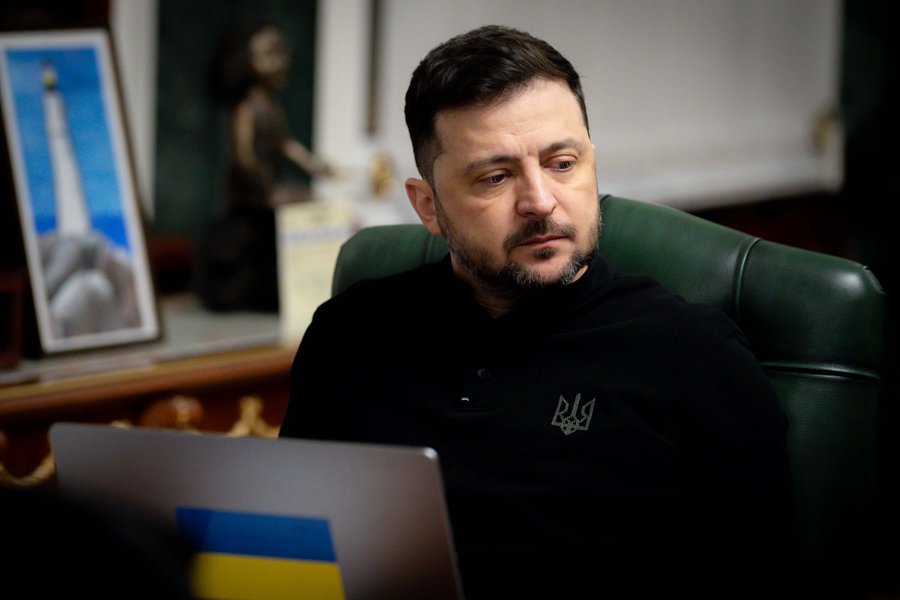
Zelenskyy Says European Counterproposal for Conflict Ceasefire Soon to be Sent to White House


Posted originally on CTH on December 10, 2025 | Sundance |

The entire premise of this interlocutory exchange is bizarre, actually, beyond bizarre when you think about it.

President Trump’s negotiation team worked with Ukraine officials and Russian officials to establish the parameters for a ceasefire proposal. Representatives from the U.S, including Secretary of State Marco Rubio, Steve Witkoff and Jared Kushner working as moderators for a cessation of hostilities held multiple meetings with high level Ukraine and Russian officials, including Russian Federation President Vladimir Putin, and Ukraine President Volodymyr Zelenskyy.

As a consequence, President Trump’s team (Rubio, Witkoff and Kushner) have spent hundreds of hours, including nine entire days, over the last two weeks in detailed face-to-face discussions with Ukraine officials.

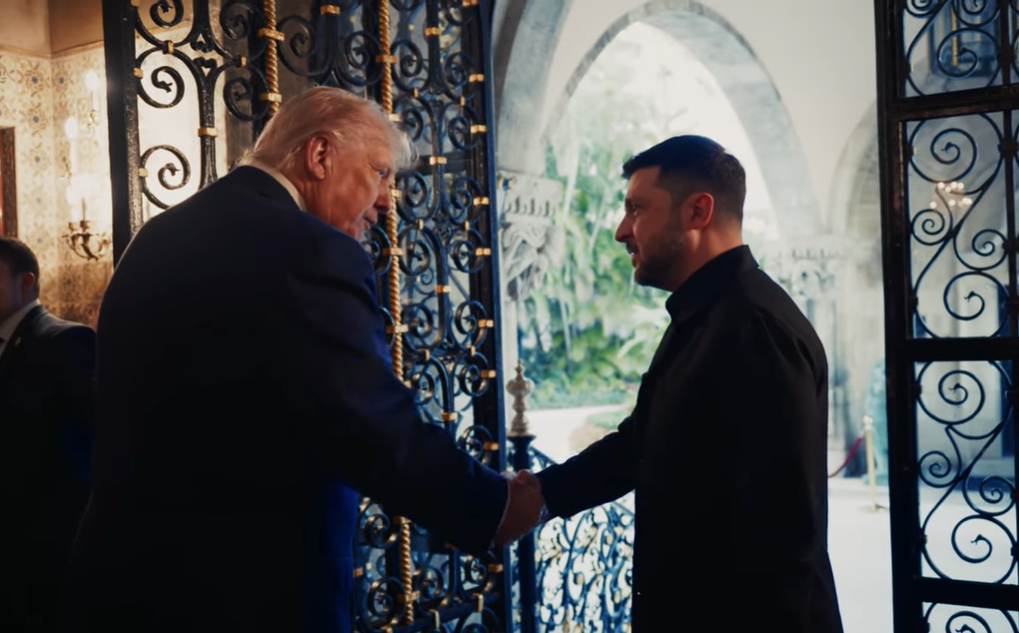
Zelenskyy then goes to Paris, London, Brussels and Rome, to consult with European leaders, and then has the audacity to say he will present a counterproposal from the Europeans to President Trump.

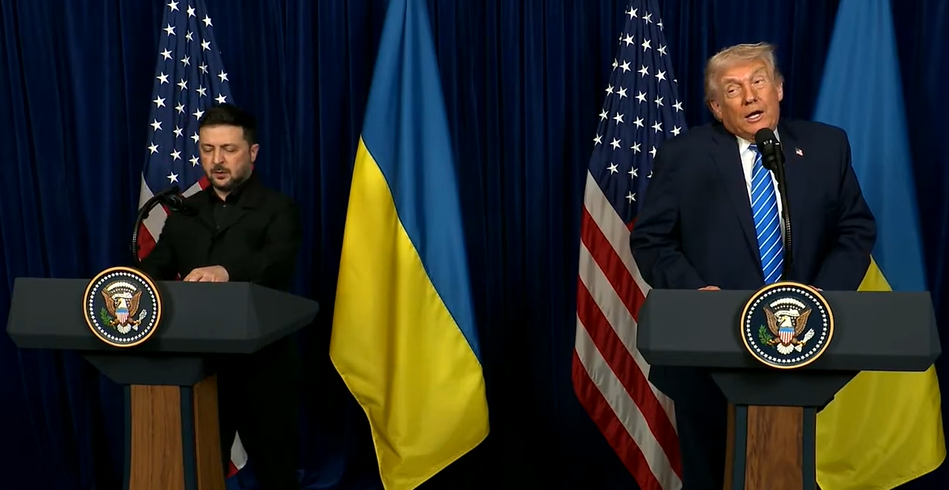
PRESIDENT ZELENSKYY – “Today, we already discussed with our negotiating team the results of yesterday’s work in London, which was conducted at the level of the National Security Advisors of our European partners. This was agreed upon yesterday at the leadersʼ level.

We are working very actively on all components of potential steps toward ending the war. The Ukrainian and European components are now more developed, and we are ready to present them to our partners in the U.S. Together with the American side, we expect to swiftly make the potential steps as doable as possible.

We are committed to a real peace and remain in constant contact with the United States. And, as our partners in the negotiating teams rightly note, everything depends on whether Russia is ready to take effective steps to stop the bloodshed and prevent the war from reigniting. In the near future, we will be ready to send the refined documents to the United States. Glory to Ukraine!” (SOURCE)

If Zelenskyy is representing Ukraine, then why didn’t Zelenskyy put his proposals into the agreement during two weeks of discussions with the U.S. delegation.

Is Zelenskyy representing Ukraine, or is Zelenskyy representing European stakeholders?

I know, rhetorical I guess…..

In the interim and throughout this process, more young Ukrainian men are dead.

President Trump Gives Extensive Comments on State of Ukraine-Russia Conflict


Posted originally on CTH on December 9, 2025 | Sundance 

President Trump sat down for an extensive interview with Dasha Burns of Politico.  Despite the ideological outlook of Politico, the interview itself was remarkably absent of combative antagonism. The result is a good review of the current positions of President Trump as they relate to the rest of the world.

The Ukraine-Russia conflict is the immediate issue that is discussed within the interview.  President Trump answers some direct questions about who is currently most responsible for continuing the conflict and is asked his opinion directly on Ukraine not holding elections.

President Trump notes Russian President Vladimir Putin is in the strongest position within the conflict and carries the strongest leverage into any ceasefire negotiations.  Trump also frames the need for the bloodshed to end with a much greater sense of urgency than any of the EU leaders or Zelenskyy.  Additionally sharing the opinion that Ukraine needs to have an election to showcase the will of the Ukrainian people in the leadership of Volodymyr Zelenskyy.  WATCH:

.

Volodymyr Zelensky


Zelenskyy Met with Starmer, Merz and Macron – Now Heading to Brussels

Posted originally on CTH on December 9, 2025 | Sundance | 19 Comments

Yesterday, Ukraine President Volodymr Zelenskyy traveled to London to meet with British PM Keir Starmer, German Chancellor Friedrich Merz and French President Emmanuel Macron.

As expected, part of the Zelenskyy meeting with the “coalition of the willing” included a briefing by Ukraine negotiator Rustem Umerov, the secretary of Ukraine’s National Security and Defense Council, who held detailed consultations for three days last week in Miami with Trump’s envoys Steve Witkoff and Jared Kushner.

President Zelenskyy then departed London traveling with his media entourage to Brussels for the next round of discussions with the European Union stakeholders, financiers and politicians. During the trip Zelenskyy told his media stenographers, “Under our laws, under international law — and under moral law — we have no right to give anything away. That is what we are fighting for.

The U.K, France and Germany support Zelenskyy’s position that he is not going to concede any territory to the Russian Federation, specifically the 30% of the Donbas area in Eastern Ukraine currently at the heart of the physical conflict.

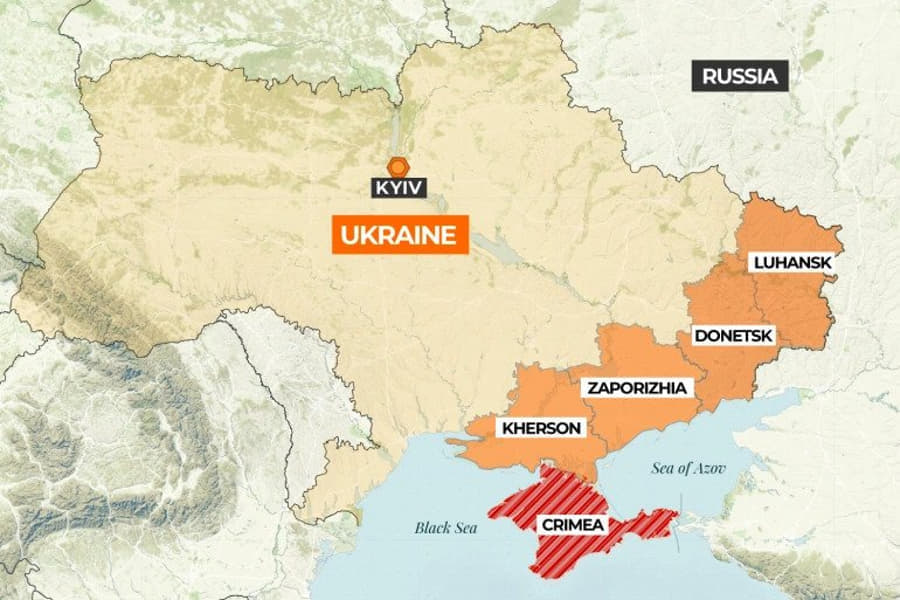
The 30% issue surrounds the Donetsk region in Ukraine, which includes the cities of Kramatorsk and Sloviansk. Russia is currently pushing deep into fortified Ukraine resistance in this region with a population of around 100,000. Zelenskyy claims losing this area would allow Putin to invade the Dnipropetrovsk, Zaporizhzhia and Kharkiv regions.

Historically, this Donbas area was part of a brutal long-term Ukraine civil war between the pro-Russia eastern Ukrainian citizens and the pro-EU western aligned Ukrainian army. Russia’s current position is for Ukraine to cede the entire Donbas to Russia as part of the ceasefire agreement, or Russia will continue forward conflict military operations until successful.

Seeing things through the pragmatic prism of inevitability, President Trump’s view appears to be that this Donbas area will be lost to Russia one way or the other. So, the best scenario to stop the killing is for Ukraine to give up this territory as part of the ceasefire terms. Zelenskyy, with support of the EU, France, Germany and U.K says a firm “no.”

Politico reports that Zelenskyy said in August of this year “it would take Russia four-years to fully occupy the Donbas,” subsequently a lot of killing would take place during this process.  President Trump is trying to stop the brutal “killing” part of that dynamic by getting the negotiation to the point of concession, but the EU team view any land area concession as positive affirmation for Russia to continue threatening Europe.

♦ On the ‘Security Guarantee‘ issue, this is where a quagmire is presented by European leaders.

From a pragmatic standpoint a European demilitarized zone, stood up and supported by EU military forces would appear to be the best solution.  However, the “coalition of the willing” say they are willing to put security troops into Ukraine, but only if the USA will defend them if attacked by Russia.  In essence, quasi-NATO forces on a non-NATO country, that if attacked would draw the entirety of NATO into the conflict, including the United States.

The U.K, France, Germany and EU Commission want a security structure similar to NATO for Ukraine that legally binds the United States to defend their interests if the ceasefire does not hold.  President Trump has rejected this construct as yet another way for Europe to pull the U.S into a conflict zone that is not in our vital national security interests.

The ceasefire proposal structured by Trump, Witkoff and Kushner – seemingly supported by Russia, does not permit Ukraine to join NATO; however, EU membership is entirely up to the EU and people of Ukraine to decide.  If Ukraine joins the EU, then EU forces alone should provide the security guarantee, not NATO which includes the U.S. and Canada.

(Washington Post) […] Zelensky said Ukraine will not surrender its territory in the eastern Donbas region — not to hasten peace talks, not to satisfy Washington’s push for compromise and not under pressure from Moscow’s continuing military onslaught.

Ukraine and Europe have insisted that a ceasefire be declared along current battle lines, but Russia has refused. Putin has claimed, illegally, to have annexed four entire regions of Ukraine (in addition to Crimea, which Russia seized in 2014) — far more territory than his military forces have been able to occupy.

Some Ukrainian officials held out hope that the negotiations could still bear fruit.

The proposal “is closer to be doable for Ukraine, but not easy and not finished,” said a senior Ukrainian official familiar with recent discussions, who spoke on the condition of anonymity because they were not authorized to comment publicly. (read more)

President Zelenskyy, whose term in office has long expired, departed London with his EU media entourage heading to Brussels.  The collective group is trying to figure out how to keep America tied to their stakeholder interests in Ukraine.

The European leaders are manufacturing a construct that is not supported by the vast majority of the citizens within the EU, even within Ukraine itself.  Meanwhile back in the USA, congress (House and Senate majorities) supports the position of Ukraine and the EU against the interests of President Trump and the voting majority.

There are trillions at stake.

The ruling class is supporting Zelenskyy, while the killing of the non-ruling class continues on the fields of Ukraine.

Following Three Days of Talks with U.S, Team Zelenskyy Heads to London for Meeting With “Coalition of the Willing”


Posted originally on CTH on December 8, 2025 | Sundance 

Following three days of negotiations in Florida (Thur, Fri, Sat) between President Trump emissaries Steve Witkoff and Jared Kushner, and Ukraine emissaries Rustem Umierov and Andrii Hnatov, the group then held a 2-hour phone call with Ukraine President Volodymyr Zelenskyy.

No substantial progress was reported.  However, military officials Umierov and Hnatov then flew to meet Zelenskyy in London where French President Emmanuel Macron, British Prime Minister Keir Starmer and German Chancellor Friedrich Merz are assembled to discuss alternatives to ending the conflict.

Starmer, Macron and Merz form the core of the “coalition of the willing,” an EU group who have unilaterally proclaimed they were willing to send the military of the U.K, France and Germany into Ukraine so long as President Trump would backstop their troops with promises of U.S. intervention if things went badly.  Trump would not make that commitment.

Zelenskyy Inc, Macron, Starmer and Merz do not want to end the proxy fight against Russia.  Together with the EU leadership of NATO, the coalition of the willing want to retain the conflict.  However, the problem for the four leaders is that without strong USA support, the citizens of their EU countries will rise up against them.

Even with NATO missiles and transferred technological assistance, they ultimately need the American military in order to ensure Putin doesn’t squish them.  President Trump wants the proxy war to end – loggerheads are reached.

Russian President Vladimir Putin does not seem to be paying too much attention to the bureaucratic speeches and instead is continuing forward advancement [SEE HERE] to secure the territory in Ukraine with or without a negotiated settlement.

The Russian Federation has presented its terms; the Russian terms for cessation are known; the rest is up to the EU, NATO, USA and Ukraine to work out.

At this point the problem is over-talking and FUBAR, or, well, a typically European situation.  So, Putin keeps going, more Ukraine troops are killed, while Putin awaits the endless conversations that he predicted would result in more endless conversations.  To be fair, Putin’s cold approach appears to be a mostly accurate interpretation of what he expected.

ZELENSKYY – “In recent days, representatives of Ukraine held substantive discussions with envoys of the US President – and now National Security and Defence Council Secretary Rustem Umierov and Chief of the General Staff Andrii Hnatov are en route to Europe. I expect detailed information from them on everything that was said to the American envoys in Moscow, and on the nuances the Americans are prepared to modify in negotiations with us and with the Russians.” (link)

By my count in the past two weeks, Witkoff and Kushner have spent nine days in direct all-day negotiations with various Ukraine officials from various institutions of Zelenskyy’s government, with a one-day trip to Moscow sandwiched between them.  Yet, western media continually proclaim the U.S. delegation of Kushner and Witkoff are ignoring the Ukrainians.

This is what I call the ‘paralysis of analysis’, or the part of every negotiation where things get so granular in detail that the larger objective is lost.

While the Ukraine team argues about whether a creek or a railroad track should determine the current point of conflict, another 250 Ukrainian soldiers have their limbs torn from their bodies and lie dead in the mud.  Today they will meet in London to argue over telephone pole ownership, while another battalion is fed to the meat grinder.

CNN frames a narrative that President Trump is unsympathetic and frustrated with Zelenskyy:

(VIA CNN) – […] Trump criticized Zelensky on Sunday after talks between US and Ukrainian negotiators over the weekend in Miami ended with unresolved questions over security guarantees, territorial issues and continued concern that the US proposal tilts in Russia’s favor.

“We’ve been speaking to [Russian] President [Vladimir] Putin and we’ve been speaking to Ukrainian leaders, including… President Zelensky, and I have to say that I’m a little bit disappointed that President Zelensky hasn’t yet read the proposal, that was as of a few hours ago,” Trump said. (more)

President Trump is reviewing the issue through the prism of “hours” because he knows that as each hour passes that’s more dead young men…. And FOR WHAT?

Meanwhile, Volodymyr Zelenskyy is traveling around Europe stopping for tea and crumpets with Macron, Starmer and Merz in London today.  Think about the upside-down priorities here.

Bread and Circuses – With Servants Patiently Waiting (Dec 6, 2025)

[SOURCE]

[If you think I’m not being fair to Ukraine, just go scroll Zelenskyy’s Twitter feed]

Trump Preparing to Exit NATO?


Posted originally on Dec 8, 2025 by Martin Armstrong |  

2025_National_Security_Strategy

President Trump released the 2025 National Security Strategy (NSS) of the US, released by the White House on December 4th, 2025, marks a potentially profound shift in US foreign policy. He has criticized Europe and insisted on ending the perception and preventing the reality, of NATO as a perpetually expanding alliance.  This 33-page document specifically embraces an ‘America First’ doctrine, rejecting global hegemony and ideological Neocon crusades that are always in favor of war and world dominance. The Neocons constantly claim Putin wants to invade Europe so we have to expand NATO to their border to prevent him from doing so as if Russia was still communist from the old cold war days.

Trump is shifting the focus to a more pragmatic, transactional realism focused on protecting core national interests rather than Neocon desire to conquer the world. In 2023, Sens. Tim Kaine (D-Va.) and Marco Rubio (R-Fla.), two dangerous Neocons, authored legislation requiring that any presidential decision to exit NATO must have either two-thirds Senate approval or be authorized through an act of Congress. These Neocons pushed this legislation and the got it to pass stuffed in the fiscal 2024 National Defense Authorization Act, which President Joe Biden signed into law probably with an autopen fed into the machine by Antony Blinken or Victoria Nuland.

NATO Headquarters Brussels

I would argue that Trump can sidestep these Neocons citing presidential authority over foreign policy. Congress can try, but the Constitution does not clearly give Congress the power to force a president to remain in a treaty such as NATO. This is one of the biggest unresolved constitutional gaps in U.S. foreign-relations law. Article II gives the president power to make treaties with the advice and consent of the Senate (two-thirds vote). It says nothing about who has the power to terminate treaties.

Presidents Have Terminated Treaties Unilaterally

If we look at history and precedent, presidents of both parties have withdrawn from treaties without prior congressional approval, including:

  • 1854 – Franklin Pierce withdrew from the U.S.–Swiss treaty
  • 1899 – McKinley ended parts of the U.S.–China treaty
  • 1979 – Carter unilaterally withdrew from the U.S.–Taiwan defense treaty
  • 2002 – George W. Bush exited the ABM Treaty
  • 2020 – Donald Trump withdrew from the Open Skies Treaty

Congress never successfully blocked any of these actions. Consequently, this long-standing practice builds a strong historical precedent (though not formally adjudicated). Therefore, this Neocon act introduced by Tim Kaine and Marco Rubio, which in their mind would send everyone else’s children to die for their personal hatred and glory, is by no means “airtight,” and would expose the bloodthirsty Neocons for what they really are since this law sets up a direct constitutional conflict with Congress if a president does try to withdraw as I have recommended.

Our American children are at risk just as they were coming home in body-bags from Vietnam when President Johnson lied to the American people admitted we were never attacked and Robert McNamara who admitted before he died that they were wrong and thought Russia was involved confirming they were not and it was “just a civil war.” I just had a meeting with a vet from the Iraq War who lost his leg all for another lie – weapons of mass destruction that never existed.

Scepter of Power

These Neocons are consumed with power and hatred and that is a lethal combination. They have usurped US foreign policy for personal glory and hatred. This has been a strategic coup by unelected Neocons who have created endless wars for personal vendettas. Approximately 35% of the current publicly held U.S. national debt can be attributed to the direct costs of past wars and the interest accrued on that borrowed war spending. The average American is paying for the Neocon warmongering with higher mortgage rates because this war expenditure continually expands and will never be paid off. These Neocons have undermined the living standards of the people all for their personal hatreds and glory to rule the world.

Trump should declare he was pulling out of NATO; I would force Congress into a legal position and launch an investigation of any Senator or Representative to ensure that they are not profiting in any way from the war expenditures they are advocating.

The Supreme Court has generally held that institutional conflicts between the branches are political questions best resolved through the political process rather than through judicial intervention. But we are dealing with Neocons here who have engaged in a covert coup of American foreign policy, which to me is treason. Perhaps we need Treason Trials like Roman Emperors Tiberius and Caligula to get our country back from the brink.

In court, you have to have what is called “standing” to bring a case. I cannot bring a case against you for not paying your child’s college bills. Only your child would have “standing” to bring the action provided you did not guarantee the college. Here, the only party with standing would be Congress itself, but it is not clear that the Republicans in Congress would support such a suit. If they did, they you know who should be hauled out of Capital Hill in chains.

It would take Congress which has the strongest standing to sue over a presidential withdrawal from NATO. Perhaps you could argue Americans who own property in NATO countries might be able to claim standing. This type of claim is less certain.

Even if the Supreme Court took up the case, it’s not clear who would win because the constitutional question is murky. Congress has never mounted a direct legal challenge to a president withdrawing from a treaty. Article II gives the president power to make treaties with the consent of Congress but it does NOT give the power to Congress to even negotiate a treaty.

NATO Article 5

Article 5 under the NATO treaty is fundamentally voluntary in its implementation. This is a critical and often misunderstood point. The Wording of Article 5 Itself states:

“…each of them will assist the Party or Parties so attacked by taking forthwith, individually and in concert with the other Parties, such action as it deems necessary, including the use of armed force…”

The crucial phrase is “such action as it deems necessary.” This grants each member nation the sovereign right to decide what form its assistance will take. There is no prescribed, automatic obligation to declare war or deploy troops. Rubio thinks that it would not be voluntary and has no problem sleeping a night knowing your son or daughter will die for his personal hatred. All my friend from high school who died for Vietnam all for lies. As McNamara said, it was just a civil war and that is Ukraine which we instigated thanks to Victoria Nuland, John. McCain, and Antony Blinken.

Meanwhile, Trump can also undermine NATO without formally leaving, even if he chooses not to follow my recommendation and get out. He could refuse U.S. support by withholding ambassadors or keeping troops from participating in military exercises. While several lawmakers in February called for new legislative measures to guard against these risks, nothing serious has materialized since. Again, any lawmaker who sells out our country for war should be removed from any government position whatsoever.

Hollen Chris

“Following Trump’s threats in his first term, the Congress — recognizing the vital importance of NATO — acted on a bipartisan basis to prevent any future presidents from unilaterally withdrawing,” Sen. Chris Van Hollen (D-Md.), a member of the Senate Foreign Relations Committee, said in a statement. He is another Neocon. NATO is not important to America. “While Trump may resort to his old tricks, we’ll continue working to shore up NATO and stand ready to fight back against any attempts to undermine the strength of this alliance.”

Kaine Timothy

Kaine, one of the authors of the NATO guardrail, slammed Trump’s rhetoric on the alliance and argued the U.S. “is safest when we link arms with our allies.” He is an idiot that peace is NEVER achieved with force. He also said:  “Donald Trump’s disparaging comments about NATO are disturbing, and my hope is that the legislation we passed will ensure the United States continues to participate in this crucial alliance.”

europe Capital Flows New to Old

We should stand aside, let Europe destroy itself for the third time, and then pick up the pieces but no Marshall Plan this time. I would promote legislation that prohibits any legislator from voting for war unless they have a family member that are willing to hand a gun and say here, go kill a bunch a people. They have no problem sending other people’s children to war while exempting their own.

Kennedy_Nixon_Debat_(1960)

October 13, 1960

The Third Kennedy-Nixon Presidential Debate

It has been the Neocon agenda or having bases everywhere that has undermined the economy in the face of constant US overreach as a failure that weakened America. President Kennedy said that in his campaign debate with Nixon in 1960. It was the building of basdes everywhere that increased the dollars and that brought down Bretton Woods and the gold standard all for the Neocon agenda. Kennedy’s remarks set off a gold panic in 1960 as people feared the US would contract and no longer fund the defense of Europe. Kennedy said:

“The difficulty, of course, is that we do have heavy obligations abroad, that we therefore have to maintain not only a favorable balance of trade but also send a good deal of our dollars overseas to pay our troops, maintain our bases, and sustain other economies.”

US Russia Reestablishing Peace

Russia Peace Deal-7-Fa

I laid out in the peace proposal that the real enemy would be the EU – not Russia. That has proven to be correct. There was even a secret meeting where Macron and Merz instructed Zelensky no peace. There is way too much money at stake in addition to all the billions flowing into the pockets of Ukrainian and EU politicians, no peace means the EU gets to keep the over $300 billion in Euroclear. If you actually look closely, you will see that the EU has violated international law for about 80% of that money belongs to private Russians, not state assets. This is all about keeping American sending billions with no accountability that EU lawmakers get their shares.

Any American legislator who votes to keep sending money to Ukraine and NATO should reveal all net wealth personally and their family including second degree. War is the MOST profitable war to enter office broke, and leave a multi-millionaire. Trump’s approach is all about ushering in a “new golden age” for the United States, which the Democrats keep trying to prevent simply because it is Trump – not that the policies are good, bad, or indifferent. Politics is no longer about the country or the people, it is to embarrass the opponent regardless of the issue just to win.

Trump’s 33-page document organizes US strategy around three pillars: Homeland defense, the Western Hemisphere, and economic renewal. Secondary focuses include selective partnerships in Asia, Europe, the Middle East, and Africa.

Here are the major shifts in strategy compared to the previous strategies of not just Biden/Neocons, but also Trump’s first term:

  • From global cop to regional hegemon: Unlike Biden’s 2022 NSS (which emphasized alliances and great-power competition) or Trump’s 2017 version (which named China and Russia as revisionists), this document ends America’s “forever burdens” abroad. It prioritizes the Americas over Eurasia, framing Europe and the Middle East as deprioritized theaters.
  • Ideological retreat: Democracy promotion is explicitly abandoned – “we seek peaceful commercial relations without imposing democratic change” (tell that to the Venezuelans). Authoritarians are not judged, and the EU is called “anti-democratic.”
  • Confrontational ally relations: Europe faces scathing criticism for migration, free speech curbs, and risks of “civilizational erasure” (e.g., demographic shifts making nations “unrecognizable in 20 years”). The US vows to support the “patriotic” European parties resisting this, drawing Kremlin-like rhetoric accusations from EU leaders.
  • China policy: Acknowledges failed engagement; seeks “mutually advantageous” ties but with deterrence (e.g., Taiwan as a priority). No full decoupling, but restrictions on tech/dependencies.
  • Multipolar acceptance: Invites regional powers to manage their spheres (e.g., Japan in East Asia, Arab-Israeli bloc in the Gulf), signaling US restraint to avoid direct confrontations.
2024_10_30_16_56_43_NATO_Considers_Opening_a_Tokyo_Office_to_Have_a_Permanent_Indo_Pacific_Footprint

We are looking at a seismic shift in America’s approach to NATO. As I have said, NATO should be shut down for its sole purpose in like a Mafia protection racket. It is not there to promote peace, it keeps getting money only by constantly claiming that Russia wants to conquer Europe. It has even tried to expand into Asia to create war with China agains to keep its money flowing in endlessly. NATO is a ruthless retirement home for Neocons.

Armstrong on Peace

Trump has put normalizing relations with Russia among ‘core interests’ where the days of empire building are over. I have explained that only the Roman Empire achieved peace because people realized it was more beneficial to be inside the Empire with free trade than on the outside looking in. Sanction have NEVER worked even once. Neocons have constantly sought to wage economic war under the theory that will bring down their hated opponent.

The US MUST abandon Ukraine!!!!! It is far too corrupt and ONLY when the billions stop flowing into the pockets of the elite Ukrainians will this war ever come to an end. The propaganda of the NATO and the EU to keep this corruption and money flowing has been to instill fear in Europeans to convince them that Russia as an existential threat. Managing European relations with Russia will require significant US diplomatic engagement. The EU is not prepared for peace because it needs that $300 billion just to stay alive until 2027 at best.

IBEUUS M Array 12 6 25
AE Equity War Index M Array 12 7 25

December 2025 is a Double Directional Change and then by February we have a Panic Cycle. From January on, the dire economic conditio0n within the EU will continue to force their had to push for war with Russia and they will most likely stage a false flag.

Categories:European UnionWar

Blog Alerts

Envelop Subscribe to alerts for each new postEmail *

Related posts
SSCentAm-Gold Bar Black

Italy Declares Central Bank Held Gold an Asset of the People

December 8, 2025

PRIVATE BLOG

PRIVATE BLOG – EU To Stage False Flag to Start WWIII

December 6, 2025

Civil Unrest BW

Bulgaria Withdraws Budget After Protests

December 4, 2025

Putin signs

Putin Ignores Maduro’s Request for Help

December 3, 2025

Capital Controls (2)

Europe’s Love Affair with Capital Controls

December 2, 2025


Market Talk


Models


Events


Socrates

President Trump’s 2025 National Security Strategy – Europe Is Destroying Itself


Posted originally on CTH on December 6, 2025 | Sundance

President Trump’s 2025 National Security Strategy is outlined in a detailed 33-page report.

In addition to setting the priorities for the United States focus, the report details the Trump administration perspective on the world as broken down into specific regions.  The report is a brutally honest review of the current state of geopolitical benefits, risks and threats as they pertain to vital U.S. interests.

[Full pdf Here]

In addition to outlining a critically renewed focus on the Western Hemisphere, the Trump administration also notes the practical position of Europe, as it pertains to NATO and dependency on the U.S.A.

In a brutally honest review of the situation, the Trump administration notes Europe is increasingly losing their own identity.  The fear the Europeans express about being vulnerable to Russian strength is hypocritical, in the sense that in practical outcomes the EU is purposefully weakening itself and simultaneously demanding assistance against their own weakness.

[PAGE 25] – American officials have become used to thinking about European problems in terms of insufficient military spending and economic stagnation. There is truth to this, but Europe’s real problems are even deeper.

Continental Europe has been losing share of global GDP—down from 25 percent in 1990 to 14 percent today—partly owing to national and transnational regulations that undermine creativity and industriousness. But this economic decline is eclipsed by the real and more stark prospect of civilizational erasure.

The larger issues facing Europe include activities of the European Union and other transnational bodies that undermine political liberty and sovereignty, migration policies that are transforming the continent and creating strife, censorship of free speech and suppression of political opposition, cratering birthrates, and loss of national identities and self-confidence.

Should present trends continue, the continent will be unrecognizable in 20 years or less. As such, it is far from obvious whether certain European countries will have economies and militaries strong enough to remain reliable allies. Many of these nations are currently doubling down on their present path. We want Europe to remain European, to regain its civilizational self-confidence, and to abandon its failed focus on regulatory suffocation.

This lack of self-confidence is most evident in Europe’s relationship with Russia.

European allies enjoy a significant hard power advantage over Russia by almost every measure, save nuclear weapons. As a result of Russia’s war in Ukraine, European relations with Russia are now deeply attenuated, and many Europeans regard Russia as an existential threat.

Managing European relations with Russia will require significant U.S. diplomatic engagement, both to reestablish conditions of strategic stability across the Eurasian landmass, and to mitigate the risk of conflict between Russia and European states.

It is a core interest of the United States to negotiate an expeditious cessation of hostilities in Ukraine, in order to stabilize European economies, prevent unintended escalation or expansion of the war, and reestablish strategic stability with Russia, as well as to enable the post-hostilities reconstruction of Ukraine to enable its survival as a viable state.

The Ukraine War has had the perverse effect of increasing Europe’s, especially Germany’s, external dependencies. Today, German chemical companies are building some of the world’s largest processing plants in China, using Russian gas that they cannot obtain at home.

The Trump Administration finds itself at odds with European officials who hold unrealistic expectations for the war perched in unstable minority governments, many of which trample on basic principles of democracy to suppress opposition. A large European majority wants peace, yet that desire is not translated into policy, in large measure because of those governments’ subversion of democratic processes. This is strategically important to the United States precisely because European states cannot reform themselves if they are trapped in political crisis.

Yet Europe remains strategically and culturally vital to the United States. Transatlantic trade remains one of the pillars of the global economy and of American prosperity. European sectors from manufacturing to technology to
energy remain among the world’s most robust. Europe is home to cutting-edge scientific research and world-leading cultural institutions. Not only can we not afford to write Europe off—doing so would be self-defeating for what this strategy aims to achieve.

American diplomacy should continue to stand up for genuine democracy, freedom of expression, and unapologetic celebrations of European nations’ individual character and history. America encourages its political allies in Europe to promote this revival of spirit, and the growing influence of patriotic European parties indeed gives cause for great optimism.

Our goal should be to help Europe correct its current trajectory. We will need a strong Europe to help us successfully compete, and to work in concert with us to prevent any adversary from dominating Europe.

America is, understandably, sentimentally attached to the European continent — and, of course, to Britain and Ireland. The character of these countries is also strategically important because we count upon creative, capable, confident, democratic allies to establish conditions of stability and security. We want to work with aligned countries that want to restore their former greatness. (continue reading)

Russian Federation President Vladimir Putin does not see a strong Europe; instead, he sees a continent destroying itself and creating vulnerabilities that can easily be exploited.

President Trump is attempting to stop the inevitable conclusion, the outcome created throughout history, when a strong nation state is positioned right next to a vulnerable, fat, lazy and weak-minded coalition of states.

Europe would be wise to listen to President Trump now, because the American people are not willing to put our blood on the line again to protect the EU – ultimately from itself.

The Money Phase – Emissary Witkoff Updates on Ukraine/Russia Peace Negotiations


Posted originally on CTH on December 6, 2025 | Sundance

If we read between the lines in the latest update from President Trump emissary Steve Witkoff, we can clearly see the negotiations have entered into that critical phase where payments to all of the stakeholders will determine a successful outcome.

Pragmatic people have long predicted the ultimate solution to the bloodshed will only be determined once western interests get to the point where negotiators propose a long-term plan for continued financial benefit.  Too many people, “stakeholders” are making money from the conflict.

From a western perspective, support for the Ukraine conflict is based on money. Therefore, the solution to the conflict requires a system where the western opportunity for financial benefit continues.

Written in polite diplomatic terms, the continued payments are identified as “the prosperity agenda which aims to support Ukraine’s post-war reconstruction, joint U.S.–Ukraine economic initiatives, and long-term recovery projects.” This is codespeak for the U.S. Senate and EU will retain a financial mechanism to exploit for personal benefit.

From the language it appears that Witkoff and Kusher are confident they can construct a financial reward system for western banks, investors, politicians and Ukraine officials that will retain the benefits of war without the ancillary ingredient of bloodshed.

If the U.S. delegation can pull this off, then Russia can gain the territory they want, corrupt Ukraine officials can keep skimming investment money, the EU can retain the power it wants to extract financial payments, American politicians can use the “long-term recovery projects” for money laundering and quasi-public/private investment banks can benefit from the exploitation of Ukraine resources.

Again, from a ‘western geopolitical perspective’, the territorial issues, security guarantees, EU membership status and the position of NATO are downstream details once the larger payment system is organized.  Put another way, they are down to the stuff that really matters, the money.

STEVE WITKOFF – Readout of Meeting Between Special Envoy for Peace Steven Witkoff, Jared Kushner, Ukrainian Secretary of National Security and Defense Council Rustem Umerov, and Chief of General Staff General Andriy Hnatov

Over two days, Special Envoy for Peace Steven Witkoff and Jared Kushner met with Ukrainian Secretary of National Security and Defense Council Rustem Umerov and Chief of General Staff General Andriy Hnatov for constructive discussions on advancing a credible pathway toward a durable and just peace in Ukraine.

Today, the group had their sixth meeting over the past two weeks. Secretary Umerov reaffirmed that Ukraine’s priority is securing a settlement that protects its independence and sovereignty, ensures the safety of Ukrainians, and provides a stable foundation for a prosperous democratic future.

The participants discussed the results of recent meeting of the American side with the Russians and steps that could lead to ending this war. The American and Ukrainians also agreed on the framework of security arrangements and discussed necessary deterrence capabilities to sustain a lasting peace.

Both parties agreed that real progress toward any agreement depends on Russia’s readiness to show serious commitment to long-term peace, including steps toward de-escalation and cessation of killings.

Parties also separately reviewed the future prosperity agenda which aims to support Ukraine’s post-war reconstruction, joint U.S.–Ukraine economic initiatives, and long-term recovery projects.

American and Ukrainian parties underscored that an end to the war and credible steps toward ceasefire and de-escalation are necessary to prevent renewed aggression and to enable Ukraine’s comprehensive redevelopment plan, designed to make the nation stronger and more prosperous than before the war.

Parties will reconvene tomorrow to continue advancing the discussions.” (source)

From the Russian side of the equation the war is about ideology, national security and proactive defeat of western, mostly American, encroachment and influence.  From the western side, the EU support for Ukraine was less ideological and more financially motivated.

Russia and Ukraine have paid a high price in the larger proxy war.  Russia has won the physical fight.  Hopefully soon the financial terms will be accepted by the western stakeholders and combat operations can cease.

Ukraine President Zelenskyy will get a nice villa in Europe and a reasonable mansion in the USA.  The cocktail parties will continue with crustless cucumber sandwiches and white wine spritzers, while the ladies go shopping and the men get manicures while talking about which of their favorites will replace Zelenskyy.

Canadian Media Catch On, U.S Trade Rep Jamieson Greer Says Trump Likely to Exit the USMCA (CUSMA)


Posted originally on CTH on December 5, 2025 | Sundance

In the world of Trumpian geopolitical trade stuff, three issues are very interesting to watch. (1) The strategic reset with Russia which could break the official western construct of financial control. (2) The proactive and defensive positioning of Mexico (desperate attempt to retain economic attachment), and (3) the certain dissolution of the USMCA what Canadians call CUSMA.

Canadian media are starting to realize something we have talked about on these pages for years; President Trump intends to end the USMCA because the USMCA was used as a fracture point to eliminate NAFTA.

Wall Street, the U.S. Congress, the massive K-Street lobbying network around the U.S. Chamber of Commerce and the entire political apparatus of business and industry would never permit the end to NAFTA; too many trillions at stake. So, President Trump replaced NAFTA with the interim USMCA, which was better but factually more useful in elimination of the original.

Now, as we have discussed by highlighting President Trump’s no-so-subtle words on the issue, the Canadian media is realizing the USMCA will be dissolved in favor of two independently negotiated bilateral trade agreements; one with Canada and one with Mexico.

(CTV) – U.S. President Donald Trump could decide next year to withdraw from the Canada-United States-Mexico trade agreement (CUSMA), Politico reported on Thursday, citing U.S. Trade Representative Jamieson Greer.

“The president’s view is he only wants deals that are a good deal. The reason why we built a review period into CUSMA was in case we needed to revise it, review it or exit it,” Greer told Politico’s White House bureau chief Dasha Burns in a podcast episode that airs Friday.

Greer also raised the idea of negotiating separately with Canada and Mexico and dividing the agreement into two parts in the podcast, adding that he spoke with Trump about that possibility just this week.

The White House, Canadian and Mexican governments did not immediately respond to Reuters request for comment.

Trump on Wednesday said that the CUSMA agreement – which faces an upcoming review- will either be left to expire or another deal will be worked out.

The USMCA, which replaced the North American Free Trade Agreement in 2020 and was negotiated during Trump’s first term as president, requires the three countries to hold a joint review after six years. (link)

I have talked to a lot of Canadians on the issues of economics and trade. As a result, I can say with complete sincerity that not since the COVID-19 examples of New Zealand (lockdowns) and Australia (vaxx), has a nation engaged in such a level of mass cognitive dissonance as the govt of Canada on the issue of economics and trade – in the past few years. It is stunning.

To understand the reality of the situation Here’s an IN-DEPTH LINK. Apparently, few really understand the full scope of the issues.

For those who have followed along with the U.S-Canada trade positioning, the current status of conflict between the Trump administration and the government of Canada is not surprising.  {GO DEEP}

Going all the way back to the replacement of NAFTA, with the USMCA, President Trump always said he did not favor multilateral trade deals with multiple countries; instead, he preferred bilateral free trade agreements.

Some people have construed the bilateral preference of President Trump to be the elimination of globalism in favor of nationalism in trade agreements.

While the outcome of the Trump approach indeed aligns with that theme, it is not specifically the objective of President Trump to eliminate global trade, but rather to focus on specific interests in trade that benefit the unique nature of each party involved.

As a result, the USMCA -or CUSMA as said in Canada- is not in alignment with a bilateral free trade agreement, and the conflicted differences between trade with Mexico and trade with Canada are an outcome of this dynamic.  The solution is simply to eliminate the multilateral in favor of the bilateral approach.  This is the objective of President Trump as expressed.

There is zero leverage on the Canadian side of the trade negotiation, zero.

There is nothing that Canada provides to the USA that the USA cannot create, produce or secure independently.  The nature of the economic relationship is entirely lopsided, with the USA getting nothing in return for the massive outflow of U.S. dollars (USD).

Our trade relationship with Canada is based on the U.S. government simply liking our northern neighbor and giving them terms and conditions for their economy to benefit from proximity.  Take the friendship out of the equation, which is key to understanding the polar political ideology of the two nations, and there is simply not much reciprocal trade benefit.

Take away the soft wood lumber, we have our own.  Take away the oil, we have multitudes of domestic production options. Take away the minerals, again we have both our own unused capacities and enhanced trade agreements with other Free Trade Agreement nations.

Then look at the possibility of a strategic U.S-Russia economic alliance, and all those contracted icebreakers take on new meaning.

Some may think this is an overly harsh view of our Canadian friends.  However, the Canadian majority believes in climate change and unfortunately leftist politicians control their industrial economy.  Canada is in the middle of a mass formation psychosis. Canada needs to get hard, dispatch cultural Maxism and put deliberate men in charge.

A Canadian conservative is essentially a politically correct Mitt Romney; not strong enough to make a difference.

The best thing President Trump can do for our Canadian friends is to help strategic regions while their overall economy collapses around them.  Then we hope guys like this surface to rebuild the Great White North.

Secretary of State Marco Rubio Discusses Immigration Vetting, Venezuela Situation and Ukraine-Russia Conflict


Posted originally on CTH on December 3, 2025 | Sundance

Secretary of State and National Security Advisor Marco Rubio appears on Fox News for an extensive interview about current events. Within the interview Secretary Rubio discusses the current status of immigration vetting and the pause therein.

Additionally, Rubio outlines the current state of the U.S. operation in/around Venezuela and the ongoing negotiations with Ukraine and Russia to end the conflict in Eastern Europe. WATCH:

.

Videos Worth Watching – President Trump asked About Witkoff and Kushner Visiting Moscow


Posted originally on CTH on December 3, 2025 | Sundance 

President Trump was asked about the Witkoff and Kusher trip to Moscow, Russia as negotiations for an end to the conflict are ongoing.  President Trump noted he had not yet heard from the emissary duo, as he is spending time with media, answering questions and being the most transparent administration in history [Video Here].

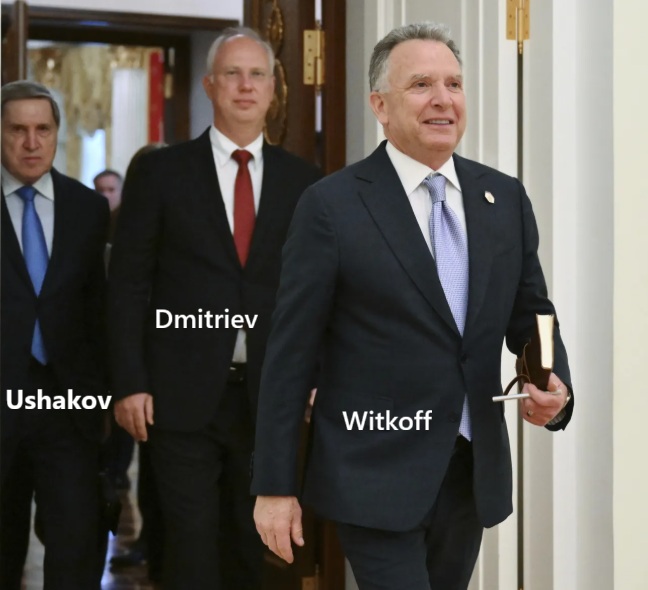
In the contextual background, Russian Presidential Aide Yury Ushakov and Special Presidential Representative for Investment and Economic Cooperation with Foreign Countries, CEO of the Russian Direct Investment Fund (RDIF), Kirill Dmitriev spent time walking through Moscow center city with Trump Emissaries Steve Witkoff and Jared Kushner.  This is before the meeting with Russian Federation President Vladimir Putin.

This move is typical Putin.  It’s not a negative per se’, but rather an emphatic narrative contrast intended to draw attention to a Russian/American dichotomy.

This optical presentation was likely coordinated via Yury Ushakov and Steve Witkoff.  The optical message is psychological targeting; the city of Moscow -structural order, cleanliness, visual and representative Christmas holiday festival spirit- contrast and compared to the city of Washington DC, chaos, conflict and lack of social cohesion.

Traditional American intelligence review would be angered by what would be deemed psy-op manipulation; however, the reality of the situation doesn’t diminish just because the intent is to emphasize the contrast.

In reality, the Russian system of social cohesion generates these visible outcomes, and yes, there is an authoritarian mechanism that mandates the mechanics of what is inherently visible.  The debate, which never takes place, regards the overall outcome, the value in the experience as contrast against the two systems.

Yes, despite our unwillingness to admit benefit, there is value in government setting social rules, enforcing cultural compliance standards, demanding self-respect, patriotism and the lack of visible vulgarity.  Yes, if govt enforces a rules-based order, it will be naturally oppressive to those who are non-compliant – perhaps to those who prefer vulgarity. However, it is not as simple as dismissing the value when contrast against the outcomes.

THE UNSPOKEN MESSAGE: President Trump has to put national guard troops on the ground in Washington DC to retain lawful order, to control the thugs and enhance the safety and security (domestic tranquility) of the region.  President Putin does not need to put the Russian army on the streets to control the thugs or generate the same outcome; Putin’s effort has a cultural outcome.

As the ‘West’ continues to destroy itself (Russian perspective), its culture, its moral decency – and by extension its identity – the position of Russia is to keep out these vulgar influences that devalue the national sense of self-respect.

From the position of the Russian standard, social indecency is not going to be permitted, and if it takes oppressive govt control mechanisms to enforce national cultural standards, if it takes govt to mandate self-discipline, then so be it.

That’s the larger message from Russian Federation President Vladimir Putin, and it is a cold, unwavering and deliberate approach that appears hard, callous and dictatorial to the ‘West’, because in many ways, it is exactly that.

Taking part in the meeting on the Russian side were Presidential Aide Yury Ushakov, and Special Presidential Representative for Investment and Economic Cooperation with Foreign Countries, CEO of the Russian Direct Investment Fund (RDIF), Kirill Dmitriev.

On the American side, the meeting was attended by Special Envoy of the President of the United States of America Steve Witkoff ,together with entrepreneur, investor, and founder of Affinity Partners Jared Kushner.

Ushakov is to Witkoff as Dmitriev is to Kushner.  However, I will say very directly -and this might not please a lot of Trump critics- that Jared Kushner is the key influence agent in this negotiation.

Despite what people might criticize him for, Mr. Jared Kushner has a remarkable level of self-discipline and an emotionless face that would immediately earn the respect of any Russian opposition.  When you know how Russians think about strength, you realize the mental component is their focus.  When the Russian delegation looks upon Kushner, they see self-control, strength, limited words and ultimately that translates to power.

If there is a hard 10% needed to get to the finish line of negotiations, it will be Kushner who penetrates that difficult part.  If Ukraine is to achieve an outcome that leaves them with self-respect in the final product, it will be Jared Kushner who delivers that for them.

Additionally, Russian President Vladimir Putin is happy, because he is in a strong position having just won control of the city of Pokrovsk in Ukraine (Donbas region), saying the now-secured area is a key base for Moscow’s ongoing military advance.  Ukrainian resistance is falling, as the stronghold for the best units of the Ukraine military has now collapsed.