Posted originally on May 20, 2025 by Martin Armstrong |
Saudi Arabia and Qatar announced that they have paid off Syria’s outstanding debt of $15.5 million to the World Bank’s International Development Association. “We are pleased that the clearance of Syria’s arrears will allow the World Bank Group to reengage with the country and address the development needs of the Syrian people,” the World Bank said in a statement. This will enable Syria to take on new loans, and secure Qatar’s and Saudi Arabia’s influence in the rebuild.
Syria is still in dire condition after its 14-year conflict. The World Bank said, “The first project in our reengagement with Syria is centered on access to electricity.” The World Bank’s International Development Association can provide Syria with zero—or low-interest loans going forward.
Investments are pouring into Syria from across the Gulf. Trump lifting sanctions signaled that Syria is open for business. Dubai signed a $800 million memorandum to rebuild the port of Tartus, marking the largest foreign investment in Syria to date.
Although tons of investments and calls for an epic rebuild are coming from around the world, we must remember that Syria is a war-torn, third-world nation that is barely surviving. Syria is desperate for stable basic infrastructure. The national grid is extremely unreliable and has been unable to generate enough electricity to meet demand. Estimates states only 1,500 MW was produced in the beginning of the year, amounting to around 2 hours of electricity per day for the population who has access to the grid. Around 2.5 to 3 million Syrians do not have any access to electricity. Those who do have access regularly experience multi-day blackouts. There is mass corruption and regions favored by the regime notably have more access to electricity compared to others.
Worse, half of Syria’s water and sanitation systems are inoperable, leading to severe water shortages. The United Nations warned that Syria was the most drought-prone nation in the Mediterranean on its Global Conflict Risk Index. It is estimated that 98% of Syrians had access to basic drinking water in 2011, before the war. That figure has plummeted to 50% at best. The Euphrates River, Syria’s main freshwater source, has seen its flow drop by more than half since 2021 due to drought and restrictions implemented by Turkey.
Since the pipelines flowing throughout the nation were damage by warfare, many regions relied on trucked water, with an estimated 6.9 million people only having access to their primary water source for two to seven days per month. Contaminated water caused tens of thousands of cholera outbreaks, and the nation has little to no access to health care.
Over 65% of the population, or 16 million people, cannot access health care. All of the skilled workers and doctors left the country long ago, education has been minimal, and hospitals are severely understaffed. Estimates believe only 37% of primary health care centers are operational, with 57% of hospitals operating to some capacity. The nation entirely relies on foreign humanitarian aid.
The people of Syria are living in atrocious conditions. Over half the nation is food insecure, half cannot access water, and the majority barely have access to electricity. An estimated 90% of the public lives well below the poverty line. GDP plummeted by two-thirds since 2011, and the Syrian pound also fell by two-thirds in 2023 alone. The SYP was about 47 to the dollar before the war, and now, the exchange rate is around 11,000 to 13,000 per USD. Many regions use the Turkish lira is given the opportunity but one in four Syrians cannot find work, and those who do manage to find public sector employment are living on under $70 USD (1.2 million SYP) per months when the cost of living for a family of five is around 14.5 million SYP.
So while we may hear of these lucrative opportunities to rebuild Syria, the nation is still in complete disarray. Investments from nations like Qatar and Saudi Arabia are desperately needed, but it will take time for the nation to recover from such a devastating low.
Posted originally on CTH on May 19, 2025 | Sundance
The DOJ has announced a criminal assault charge against New Jersey Democrat Representative LaMonica McIver, who was involved in a physical confrontation with Immigrations and Customs Enforcement officials outside a federal immigration facility in New Jersey earlier this month.
Washington DC – […] New Jersey interim U.S. Attorney Alina Habba announced the charge against McIver on X, escalating a confrontation between the political branches, while also agreeing to drop the pending trespass charge against Mayor Ras Baraka.
“I have persistently made efforts to address these issues without bringing criminal charges and have given Representative McIver every opportunity to come to a resolution, but she has unfortunately declined,” Habba said in a statement. (link)
Posted originally on CTH on May 19, 2025 | Sundance
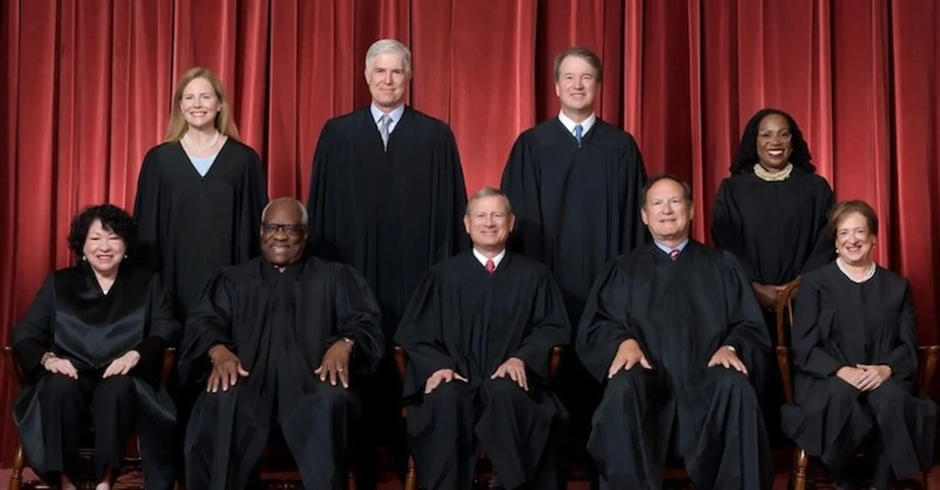
The Supreme Court has stayed a lower court injunction against the Trump administration {Ruling Here}.
In the 1-page decision, the Supreme Court cleared the way for the Trump administration to immediately end immigration protections called “Temporary Protection Status” that allowed roughly 350,000 illegal alien Venezuelans to remain in the USA. Justice Ketanji Brown-Jackson would have allowed the block to stay in place.
BACKGROUND– […] In February, seven Venezuelan migrants and the National TPS Alliance sued the Trump administration to block the termination of protected status for Venezuelans. A federal judge in Northern California paused Trump’s action, ruling that the cancellation of protected status violated procedural rules and was probably sparked by racial animus. (read more)
Posted originally on CTH on May 19, 2025 | Sundance
President Trump participated in an event to honor Law Enforcement today at the White House. At the conclusion of the ceremony President Trump took questions from the media [15:00 of video below]. The majority of the questions were about President Trump’s phone call with Russian President Vladimir Putin. However, the remarks about Joe Biden’s diagnosis are very interesting. WATCH:
Posted originally on CTH on May 19, 2025 | Sundance
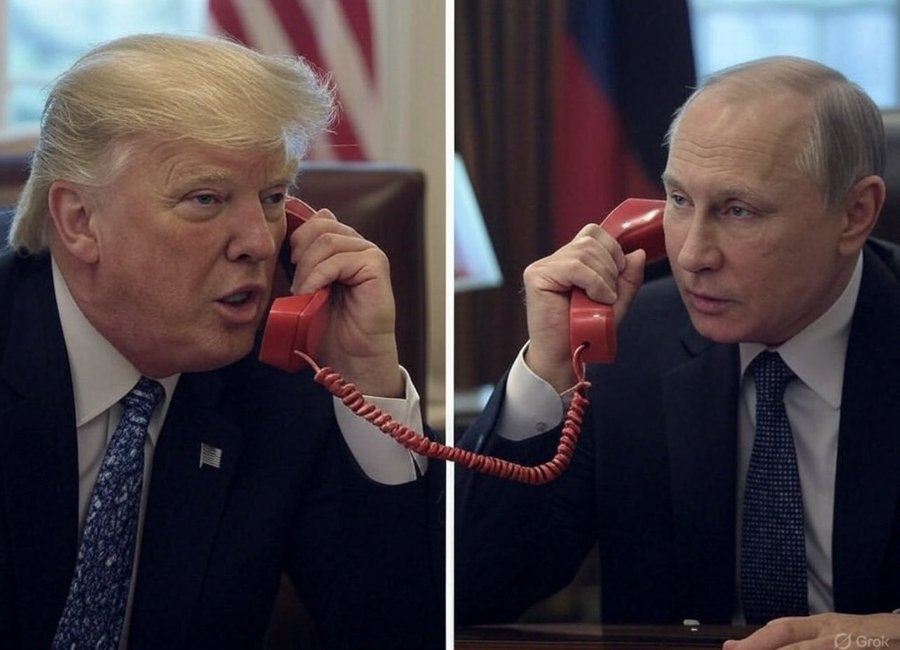
Earlier today President Trump held a 2-hour phone call with Russian President Vladimir Putin. The objective of President Trump is clear; however, he is battling against recent history and the domestic political environment within Washington DC.
President Trump provides a summary via Truth Social: “Just completed my two-hour call with President Vladimir Putin of Russia. I believe it went very well. Russia and Ukraine will immediately start negotiations toward a Ceasefire and, more importantly, an END to the War. The conditions for that will be negotiated between the two parties, as it can only be, because they know details of a negotiation that nobody else would be aware of.
The tone and spirit of the conversation were excellent. If it wasn’t, I would say so now, rather than later. Russia wants to do largescale TRADE with the United States when this catastrophic “bloodbath” is over, and I agree. There is a tremendous opportunity for Russia to create massive amounts of jobs and wealth. Its potential is UNLIMITED. Likewise, Ukraine can be a great beneficiary on Trade, in the process of rebuilding its Country. Negotiations between Russia and Ukraine will begin immediately.
I have so informed President Volodymyr Zelenskyy, of Ukraine, Ursula von der Leyen, President of the European Commission, President Emmanuel Macron, of France, Prime Minister Giorgia Meloni, of Italy, Chancellor Friedrich Merz, of Germany, and President Alexander Stubb, of Finland, during a call with me, immediately after the call with President Putin. The Vatican, as represented by the Pope, has stated that it would be very interested in hosting the negotiations. Let the process begin!”
There is tremendous opportunity within a strategic U.S-Russia relationship, both economically and for the stability of the world as a whole. It is clear from his statements both today and previously, that President Trump sees this opportunity with clear eyes.
Unfortunately, there is less consistency within American politics than is needed for a strategic reset. Indeed, from Vladimir Putin’s perspective how long would a good relationship hold up given the pendulum swings within USA politics. A strategic partnership today could easily become a vulnerability tomorrow if the administration changes. This is a complicated dynamic to navigate.
Global corporatists and their aligned intelligence apparatus both here and abroad do not want President Trump to have a strategic relationship with Vladimir Putin. Global stability is against their interests.
Russia in general appreciates brutal honesty and it is apparent from the communication out of Moscow that leadership within the Russian Federation respect and appreciate President Trump. But President Trump will not be around after the next four years and things can change quickly.
Can Vladimir Putin and Donald Trump organize a strategic change in the dynamic? That’s the $60k question.
The opposition to Putin and Trump, including NATO, the CIA, the European Union, the European Commission, the U.K., and all of the financial control elements, are currently using Ukraine President Volodymyr Zelenskyy as the foil against both of them. That is a considerable opposition group to overcome.
Posted originally on CTH on May 18, 2025 | Sundance
Treasury Secretary Scott Bessent appears on NBC Meet the Press to discuss the current status of the trade negotiations, tariffs and pending trade deals. In addition, Secretary Bessent outlines the construct of President Trump’s tax proposals and the intended benefits therein to middle-class working Americans. WATCH (Transcript Below)
[Transcript] KRISTEN WELKER: Welcome back. There are new economic warnings after the credit ratings agency, Moody’s, downgraded the United States’ credit rating one notch from its AAA rating. Moody’s citing concerns over the nation’s rising debt. It comes as President Trump’s tax bill suffered a setback in Congress this past week. Joining me now is Treasury Secretary Scott Bessent. Secretary Bessent, welcome back to Meet the Press.
SEC. SCOTT BESSENT: Kristen, good to see you. Thanks for having me on.
KRISTEN WELKER: It’s wonderful to have you on after a long foreign trip. Thank you for being here. Let’s start right there with Moody’s downgrading the nation’s credit rating. And they do cite the debt. I want to read you a little bit of what Moody’s says. It says, quote, “If the 2017 Tax Cuts and Jobs Act is extended, which is our base case, it will add around $4 trillion to the deficit over the next decade.” Several Republicans, Mr. Secretary, are citing similar concerns. Does the president’s tax bill need to do more to address the nation’s debt and deficit?
SEC. SCOTT BESSENT: Well, Kristen, first – first of all, I – I think that Moody’s is a lagging indicator. I think that’s what everyone thinks of credit agencies. Larry Summers and I don’t agree on everything, but he said that’s when they – they downgraded the U.S. in 2011. So it’s – it’s a lagging indicator. And just like Sean Duffy said with our air traffic control system, we didn’t get here in the – in the past 100 days. It’s the Biden administration and the spending that we have – have seen over the past four years. We inherited 6.7% deficit to GDP, the highest when we weren’t in a recession, not in a war. And we are determined to bring the spending down and grow the economy.
KRISTEN WELKER:
Fair enough. But under President Trump’s first administration he added $8 trillion to the nation’s debt in his first term. So there’s plenty of blame to go around. Let me –
SEC. SCOTT BESSENT:
No, no, no, no, no. But let’s review. We were in the rescue portion of Covid. The Biden – the Biden administration was in the recovery portion. And Kristen, it would’ve been if not for Senators Manchin and Sinema, who are no longer the – in the Democratic caucus, that it would’ve been $4 trillion or $5 trillion more.
KRISTEN WELKER:
It did include the – the tax cuts as well. But let me ask you about Walmart, this big news from Walmart. It says it will start raising prices on its consumers, Mr. Secretary, as early as this month due to the tariffs. Now, President Trump out with a very stern warning on social media saying Walmart, quote, “should eat the tariffs,” adding the company made far more than expected last year. Is the president asking American companies to be less profitable?
SEC. SCOTT BESSENT:
I – I was on the phone with Doug McMillon, the CEO of Walmart, yesterday. And Walmart is in fact, going to, as you describe it, eat some of the tariffs, that – just as they did in ’18, ’19, and ’20. The other thing, though, that we are seeing that Doug passed along to me, that with their consumers, the single most important thing is the gasoline price. Gasoline prices have collapsed under President Trump. So we – we are seeing that. The other thing that will happen, that is a direct tax cut for consumers. Then the transportation costs are also a big input. So let’s see what happens. What you’re describing was Walmart’s earnings call. The other thing the companies have to do, they have to give the worst case scenario so that they’re not sued. So you know, I – I think overall we are seeing a decline in services, inflation, and I – and we saw inflation come down for the first time in four years.
KRISTEN WELKER:
Well, you know, in my conversation with former Vice President Mike Pence, he says he sees tariffs as a tax. How far, Mr. Secretary, is the president, is the administration willing to go to prevent CEOs from increasing prices?
SEC. SCOTT BESSENT:
Well, I – I think what we are hearing here is tax – people are saying tax increases are inflationary that – when I was testifying before Congress last week, one of the congressmen said that. And I said, “Well, Congressman, if taxes are inflationary, let’s cut taxes.” So let’s get this tax bill done, bring down taxes, which according to this line of thinking, should be disinflationary.
KRISTEN WELKER:
But the Federal Reserve has said that tariffs are inflationary. Just to be very clear, you said you called Walmart. Is that what CEOs can expect, that you, that the president, that other members of the administration will apply pressure to try to prevent them from passing on these prices to CEOs?
SEC. SCOTT BESSENT:
I – I didn’t apply any pressure. The – the – Doug and I have a very good relationship, so I just wanted to hear it from him rather than – than second, third-hand from the press. And again, as I said, this is all from their earnings call. And on an earnings call, you have to give the – the worst case scenario. Kristen, to go back to what you said, the Federal Reserve is not saying that tariffs will cause inflation. They’re saying they’re not sure, and that they’re in wait and see mode.
KRISTEN WELKER:
Let’s talk about the other big news that you were a part of a week ago in Switzerland, negotiating with China’s officials. You and the administration lowered tariffs from the high rate of 145% to 30% for 90 days, to allow talks to continue. But President Trump had said previously, and I’m quoting from him, “China needs to make a deal with the U.S. We don’t have to make a deal with them.” So why did the United States back down?
SEC. SCOTT BESSENT:
Neither side backed down. Both sides realized that this, as I had said, the – was unsustainable. So we had the equivalent of an embargo, which is not what either side wanted. You know, it was this constant tit-for-tat escalation. So both sides brought the tariffs down by 115%. So for 2025, we have increased tariffs on China by 30%, they have increased them by 10% on us. We now have a mechanism in place to continue talks.
KRISTEN WELKER:
Okay. On Friday, as a piece of this, President Trump, while he was on the foreign trip, said that countries should expect letters from you, from Secretary Lutnick, saying this is what the tariff rate is going to be. Mr. Secretary, does that effectively mean that these negotiations with other countries are over? And how high should they expect tariffs to go? Above 10%?
SEC. SCOTT BESSENT:
This means that they’re not negotiating in good faith. They are going to get a letter the – saying, “Here – here is the rate.” So I would expect that everyone would come and negotiate in good faith.
KRISTEN WELKER:
You expect that rate, though, that you would slap on any country that you think is not negotiating in good faith to be above 10%?
SEC. SCOTT BESSENT:
Well, I think that it would be the April 2nd level. Some countries were at 10%, some were substantially higher. And the negotiating leverage that President Trump is talking about here is if you don’t want to negotiate then it will spring back to the April 2nd level.
KRISTEN WELKER:
I have to ask you about the war in Ukraine. President Trump saying he is going to speak with President Zelensky and Putin on Monday. Former Vice President Pence told me, “It is time to impose harsh sanctions now.” What say you, Mr. Secretary: is it time to impose sanctions against Russia?
SEC. SCOTT BESSENT:
Well, I think we will see the – what happens when both sides get to the table. President Trump has made it very clear that if President Putin does not negotiate in good faith that the United States will not hesitate to up the Russia sanctions along with our European partners. What I can tell you is the sanctions were very ineffective during the Biden administration because they kept them low because they were afraid of pushing up domestic oil prices.
KRISTEN WELKER:
Very quickly, how long for the timeline until you move to sanctions? Obviously there’s a call. But if the president doesn’t feel like there’s progress how much time is he going to give them?
SEC. SCOTT BESSENT:
I – I – look, I – I’m not going to tie the president’s hands in his negotiations.
KRISTEN WELKER:
Let me ask you, former Vice President Mike Pence echoed several of President Trump’s, quite frankly, own allies in expressing concerns about this plane that Qatar has offered to President Trump. They are saying it sends the wrong message. It sends the wrong message and raises concerns ethically, raises concerns constitutionally and about security. Why is it appropriate for the president to accept a $400 million jet from Qatar?
SEC. SCOTT BESSENT:
Well, it’s not the president accepting it, it would be the United States government. And Senator Mullin said this weekend that the talks had actually begun under the Biden administration. So – but Kristen, what I can tell you is I think this is an off-ramp for many in the media not to acknowledge what an incredible trip this was. You know, President Trump has brought back trillions of investments in the United States. Every stop we made, the – the enthusiasm in – in Saudi Arabia, in Qatar, in the United Arab – Arab Emirates to invest in the United States that they want to push more and more, they have funds here. And if we go back to your initial question on the Moody’s downgrade, who cares? Qatar doesn’t. Saudi doesn’t. UAE doesn’t. They’re all pushing money in. They’ve made ten-year investment plans. So this administration, we’re doing peace deals, trade deals and tax deals.
KRISTEN WELKER:
And just very, very quickly, President Trump has said he plans to keep that plane in his presidential library after. But what do you say to some Republicans who argue it sends a message that the United States can be bought, or that other countries can curry favor if they offer gifts?
SEC. SCOTT BESSENT: I say that the gifts are to the American people. These trillions of dollars of investments that are going to create jobs in the U.S., whether it’s the UAE building this gigantic aluminum plant in Oklahoma, whether it’s these data centers that Qatar is going to do, is $600 billion on its way to $1 trillion from Saudi, it all accrues to the American people.
KRISTEN WELKER:
All right, Secretary Bessent, I know you’ve had a long week traveling with the president. Thank you so much for being here. We really appreciate it.
I have created this site to help people have fun in the kitchen. I write about enjoying life both in and out of my kitchen. Life is short! Make the most of it and enjoy!
This is a library of News Events not reported by the Main Stream Media documenting & connecting the dots on How the Obama Marxist Liberal agenda is destroying America









 Centinel2012