Posted originally on Mar 22, 2026 by Martin Armstrong |
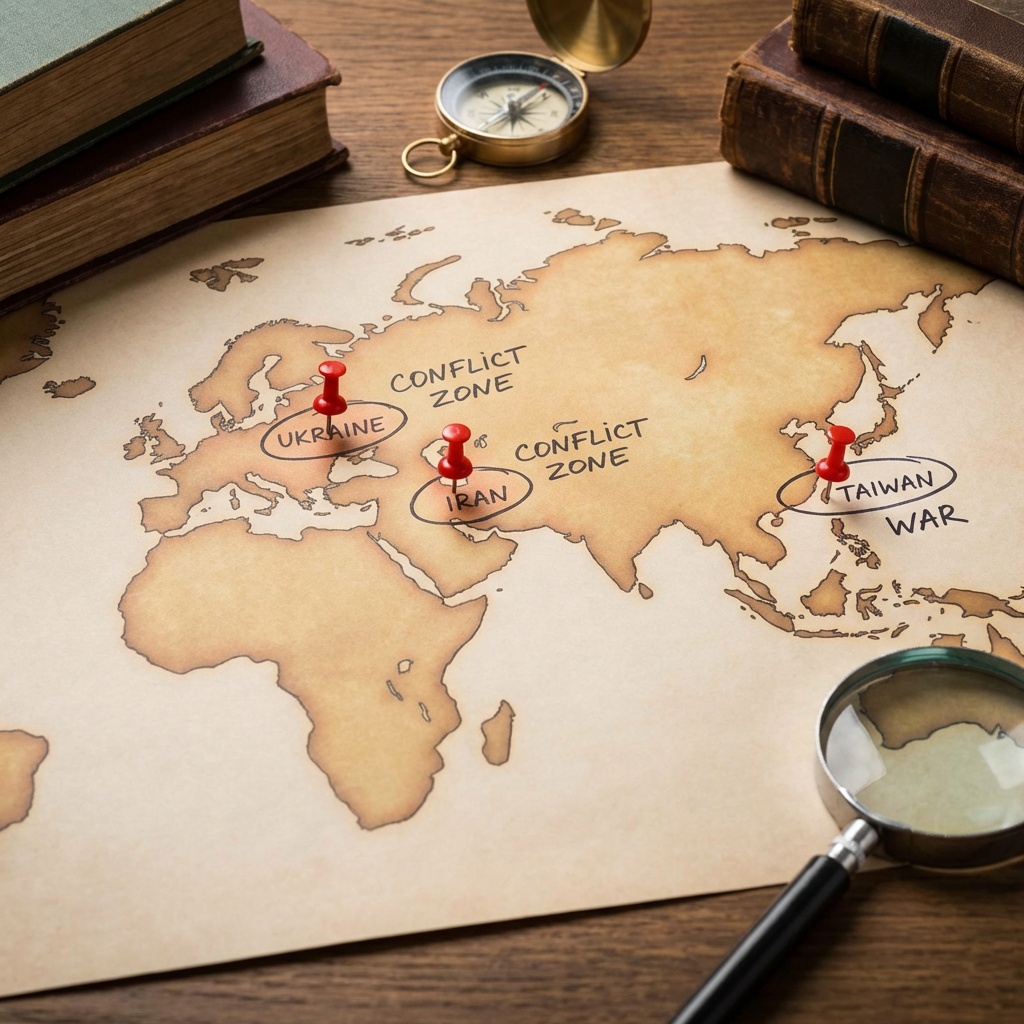
I have warned that (1) Iran can become a proxy war dragging the USA in deeper and deeper using up its missile inventory. At the same time, this is distracting the Administration from Ukraine and Taiwan. The obvious way to defeat the United States is the way Napoleon was defeated. While fighting on multiple fronts certainly contributed to Napoleon’s downfall, describing his defeat as simply a result of “too many wars” is an oversimplification. The core of the problem was strategic overreach: he initiated massive, unnecessary conflicts that bled his forces dry, which in turn allowed a united coalition of European powers to eventually overwhelm him.
China has adopted what is known as the “All-Dimensional Deterrence outside the island chain.” This is a very clear reference to intercepting any U.S. military forces in the Western Pacific Ocean that might attempt to intervene in Taiwan’s defense against an actual attack. Taiwan is already concerned that the US is going through cruise missiles like water in Iran even bringing assets from other regions to protect Ukraine and now Iran. I am concerned that the arrogance of the Neocons really running this war are clearly blinded for they cannot see that engaging in three wars simultaneously will necessitate resurrecting the draft and will add so much debt, the entire system may come crumbling down post 2028.
Iran’s warning that it will strike energy and water infrastructure across the Persian Gulf if Donald Trump follows through on his threat to destroy its power plants has raised fears of mass disruption in a region heavily dependent on desalination for drinking water. Such an attack on Iran’s electricity may hurt the Iranian people where they hope they will rise up against the government. But such an attack will be potentially catastrophic for its Gulf neighbors, which consume around five times as much power per capita. It is electricity that makes the desert cities habitable, in part by powering the desalination plants that produce 100% of the water consumed in Bahrain and Qatar. Such plants use seawater to meet more than 80% of drinking water needs in the United Arab Emirates, and 50% of the water supply in Saudi Arabia. Donald Trump on Sunday gave Iran 48 hours to fully reopen the vital strait of Hormuz to shipping or face the destruction of its energy infrastructure.
The consequences of that will backfile on Trump for it will drastically cut energy from the Middle East and send prices significantly higher and this will shift the markets that are up to now believing the BS that this will be a short war, So far, it appears Trump might back down, but not for long.
We need someone with a cool head here to prevent a major crisis that will forever change the political landscape post-2032.
Posted originally on Mar 18, 2026 by Martin Armstrong |
🔥🚨 BREAKING: Joe Kent, Director of the National Counterterrorism Center, has RESIGNED over the war in Iran
“I cannot in good conscience support the ongoing war in Iran. Iran posed no imminent threat to our nation, and it is clear that we started this war due to pressure from… pic.twitter.com/tiEwlONqlS
I touched on this story yesterday when the news broke. Listen, when the Director of the National Counterterrorism Center resigns and publicly states he cannot support a war because there was “no imminent threat,” you are no longer dealing with politics as usual. You are looking at the beginning of a fracture inside the system itself. Joe Kent stepping down is a warning sign that those inside the intelligence community are starting to distance themselves from what they know is being sold to the public as something it is not.
“I cannot in good conscience support the ongoing war in Iran,” Kent said. “Iran posed no imminent threat to our nation, and it is clear that we started this war due to pressure from Israel and its powerful American lobby.”
I have warned for years that the Neocons never left Washington. They simply change parties, change faces, and reinsert themselves into every administration. It does not matter if it is Republican or Democrat. These people operate behind the curtain and push the same agenda over and over again. Endless war. Regime change. The illusion that the United States can reshape the world at will. We saw this with Iraq. We saw this with Libya. We saw this with Syria. And now we are watching the exact same script play out with Iran.
What is unfolding now is even more dangerous because the people inside the system are beginning to recognize it. When intelligence officials start walking away, it means they know the narrative does not match reality. You cannot claim imminent threat when your own counterterrorism chief is saying the opposite. That is when confidence begins to break, and once confidence breaks, it never unfolds in a neat and controlled fashion.
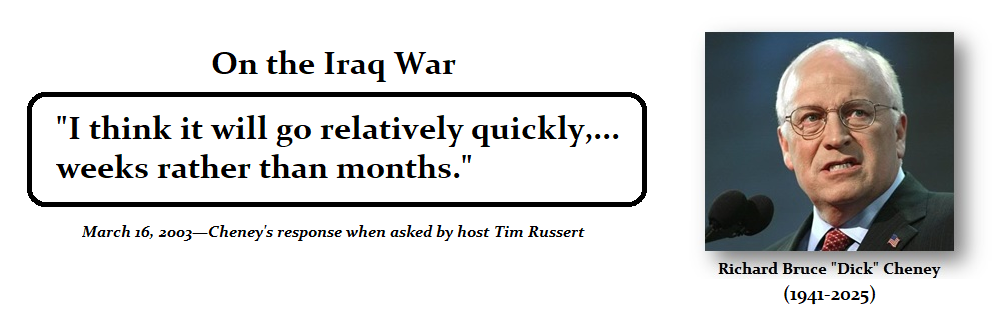
These wars are sold as quick operations, clean interventions, necessary for national security. I have pointed to Iraq countless times. Cheney said it would take weeks. Bush stood on an aircraft carrier and declared, “Mission accomplished!” That war dragged on for eight years. Thousands of lives lost, trillions spent, and in the end nothing was resolved. Now we are watching the same people, or at least the same ideology, pushing the country down the exact same path again.
The reality is that those who can see what is happening are beginning to step away. They understand that this is not about protecting the United States. This is about geopolitical strategy, influence, and an agenda that has been in motion for decades. The problem is that once these people gain control of policy, they create momentum that is very difficult to stop. When someone in Kent’s position walks away and tells you there was no imminent threat, you should pay attention. That is confirmation that what we are being told and what is actually happening are two very different things.
The most dangerous part is that the public is always the last to know. By the time resignations like this happen, the decision has already been made and the machine is already moving. The Economic Confidence Model has been warning that we are entering a period of rising geopolitical instability into 2027 and beyond. This is exactly how it begins, not with a declaration of world war, but with a series of decisions that escalate step by step until the situation is beyond anyone’s control.
Posted originally on Mar 17, 2026 by Martin Armstrong |
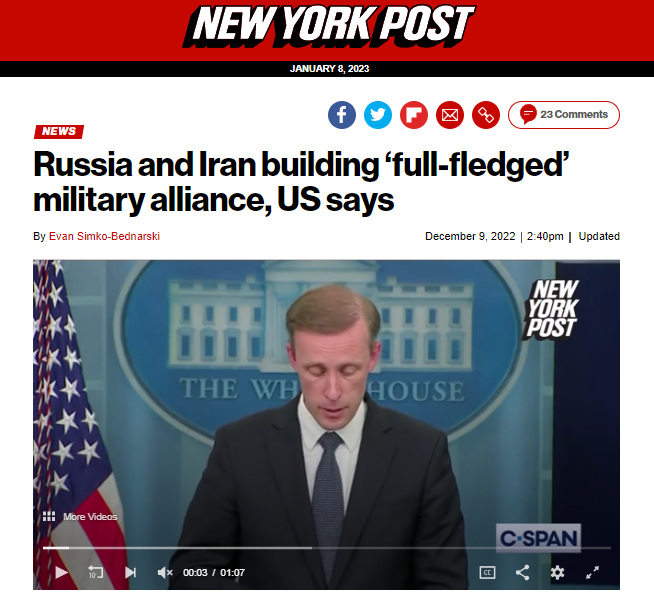
For years, I have warned that geopolitics moves in cycles just as markets do. The Economic Confidence Model has been projecting that the period around 2026 would become a geopolitical turning point, leading to rising confrontation toward the Panic Cycle in 2027 and ultimately the 2028 Panic Cycle year. What we are now witnessing is the early stage of that alignment. The conflict with Iran is no longer merely a regional war. It is evolving into something far more significant as alliances that previously existed quietly in the background are now being acknowledged publicly.
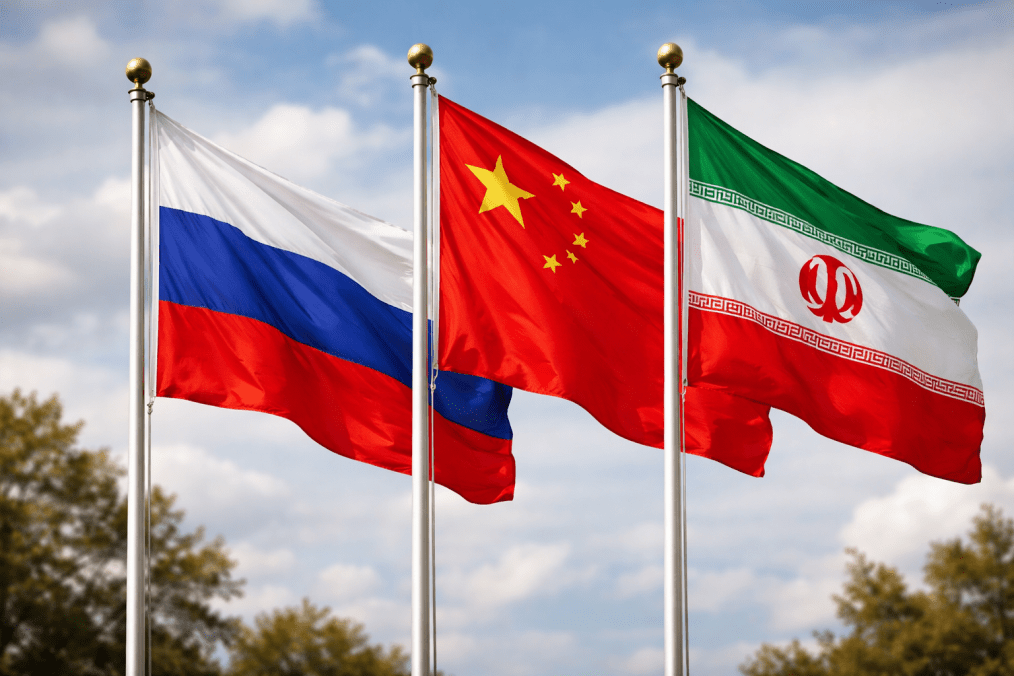
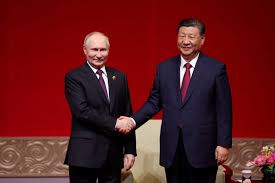
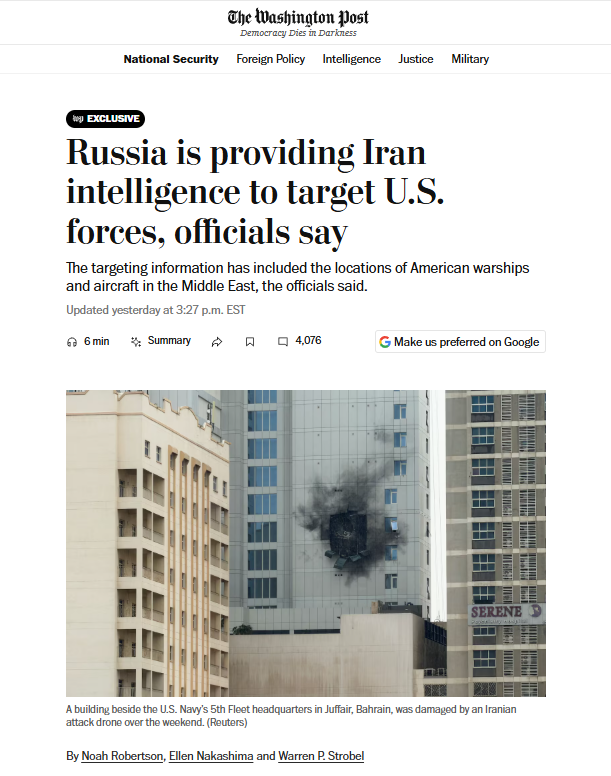
Iran’s foreign minister has now openly stated that Russia and China are providing military cooperation to Tehran during the war with the United States and Israel. He emphasized that these relationships are part of long-standing strategic partnerships that now include intelligence sharing and other forms of support as the conflict escalates. This matters enormously because once cooperation becomes official rather than discreet, it changes the geopolitical landscape. The declaration of alignment is a signal to the world that a new bloc is forming.
Reports indicate that Russia’s support has included intelligence assistance and battlefield data, while China has focused on diplomatic backing, logistical assistance, and the protection of energy flows through the Strait of Hormuz. At the same time, Chinese naval assets have appeared near the Strait while Russia and China have coordinated diplomatic efforts at the United Nations to challenge the legitimacy of the strikes against Iran. None of this is accidental. These powers are not rushing troops into battle, but they are positioning themselves strategically while allowing the United States to become entangled in another prolonged conflict.
In the modern era, direct confrontation between nuclear powers is avoided, but support flows through intelligence, logistics, technology, and diplomacy. Russia and China are effectively helping Iran sustain resistance without crossing the line into direct war with the United States. Analysts already note that intelligence sharing and electronic warfare assistance have improved Iran’s ability to track U.S. military movements in the region. The result is a conflict that can drag on far longer than policymakers initially expect.
From the perspective of the Economic Confidence Model, this is exactly what a Panic Cycle environment looks like. Confidence begins to shift away from government institutions, geopolitical tensions escalate, and alliances begin to harden. The ECM has shown that 2026 represents the pivot year. Pressure builds into 2027, where the Panic Cycle raises the probability of sudden geopolitical escalation, and the cycle then carries forward into the 2028 Panic Cycle year. When these cycles align, history shows that global alliances restructure and the world moves toward a new balance of power.
Energy routes make the situation even more dangerous. The Strait of Hormuz remains one of the most critical chokepoints in global oil supply, and disruptions there have already sent energy prices sharply higher as the conflict intensifies. China’s interest in securing passage through the strait and Russia’s strategic positioning highlight that the battle is not only military. It is economic. Whoever controls the energy corridors and trade routes ultimately controls leverage over the global economy.
The key takeaway is that the official acknowledgement of cooperation among Iran, Russia, and China goes beyond wartime rhetoric. It signals that the geopolitical chessboard is shifting. What began as a regional confrontation now sits within a larger strategic framework that the ECM warned about years in advance. When alliances begin to crystallize during a Panic Cycle phase, the risk is not simply prolonged conflict. The risk is that the world divides into opposing blocs once again, and history shows that such realignments rarely unfold quietly.
Posted originally on Mar 17, 2026 by Martin Armstrong |
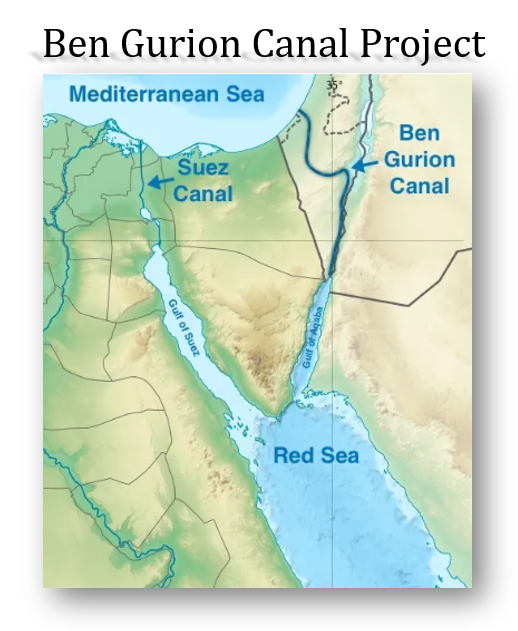
Many people are looking at the conflicts in Gaza and Iran strictly through the lens of religion, terrorism, or regional politics. But history has shown that wars are rarely about what the headlines claim. Beneath the surface lies economics and control of trade routes. One project that has quietly resurfaced in strategic discussions is the Ben Gurion Canal, an alternative shipping route connecting the Red Sea to the Mediterranean that would rival the Suez Canal. The proposal dates back to the 1960s and would run from the port of Eilat through Israel and eventually connect to the Mediterranean near Gaza, providing a strategic bypass of Egypt’s Suez Canal.
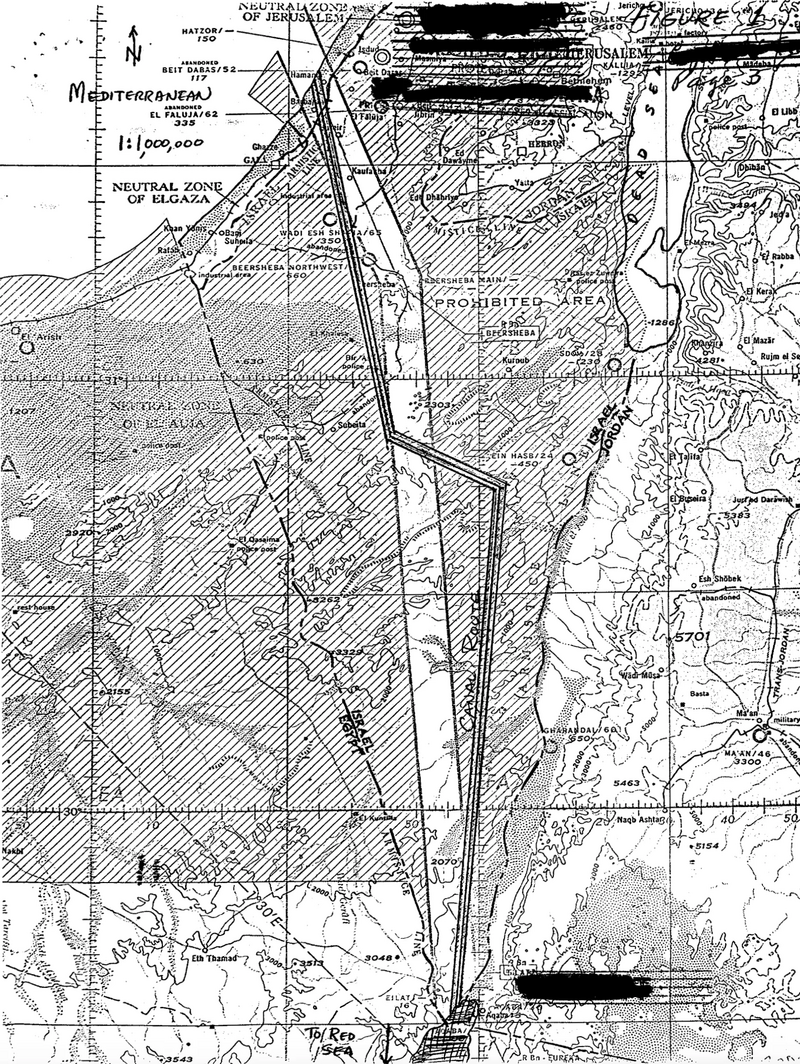
Declassified U.S. documents revealed that planners studied using hundreds of underground nuclear explosions in the Negev Desert to carve the canal. The proposal noted that such a route would be a “strategically valuable alternative” to the Suez Canal and could transform regional trade. Around 20% of global trade moves through the Suez Canal today, giving Egypt enormous influence over global supply chains. Any disruption, whether political or accidental, has massive economic consequences.
This is where the geopolitical puzzle begins to fit together. The proposed canal route runs extremely close to the Gaza Strip and, in some versions, could even pass through territory adjacent to it. From a purely strategic perspective, no major global shipping route could run alongside an area capable of launching rockets or drones. Control and stability in Gaza, therefore, are prerequisites for any such infrastructure project. Analysts have noted that renewed interest in the canal has coincided with Israel’s war against Hamas, raising questions about whether the long-standing project could become viable again if the region is brought under full military control.
Now look at this through the lens of the Economic Confidence Model. The ECM has consistently shown that 2026 is a geopolitical turning point, leading to rising tensions toward the 2027 Panic Cycle and ultimately the 2028 Panic Cycle. These shifts historically coincide with wars, trade disruptions, and major changes to the global economic order. When the confidence wave turns downward, governments seek strategic advantage in infrastructure, energy routes, and trade chokepoints. The Suez Canal itself has repeatedly triggered geopolitical crises from Nasser’s nationalization in 1956 to modern blockages that froze billions of dollars in trade overnight.
The second layer of the strategy involves the Strait of Hormuz. A large percentage of the world’s oil flows through that narrow passage between Iran and the Arabian Peninsula. Any conflict with Iran threatens that chokepoint and exposes how fragile global energy transport really is. If Hormuz becomes unstable while Suez remains under Egyptian control, the West’s supply lines become vulnerable. A new canal controlled by Israel and its allies would provide an alternative strategic corridor linking the Red Sea and Mediterranean without relying on Egypt or risking disruption from regional adversaries.
When you step back, the sequence begins to look less like random events and more like long-term geopolitical positioning. The war in Gaza removes a security obstacle along the proposed canal route. Escalation with Iran highlights the dangers of relying on existing trade chokepoints such as the Strait of Hormuz and the Suez Canal. Meanwhile, the ECM shows that this entire period sits within a cycle of rising geopolitical tension leading into a Panic Cycle phase. History teaches us that major infrastructure projects that control global trade rarely emerge during peaceful periods. They appear during times of crisis when nations reposition themselves for the next economic order.
Posted originally on Mar 16, 2026 by Martin Armstrong |
There is a critical failure in the Neocons’ playbook. They assumed that Iran would NOT close the Strait of Hormuz, for they assumed that they would line it with mines and physically close the waterway, which would be suicidal for them as well. Still, they sought out and destroyed several of their mine laying ships. But Iran has been able to close the Strait with just threats. Ships headed to China are passing with no problem and the US is not doing anything about it fearing (1) it would be confrontational with China, and (2) it would cause oil prices to rise even higher. Iran attacks ships selectively. That is the fear tactic that has shut the Strait without mines or Iranian naval ships.
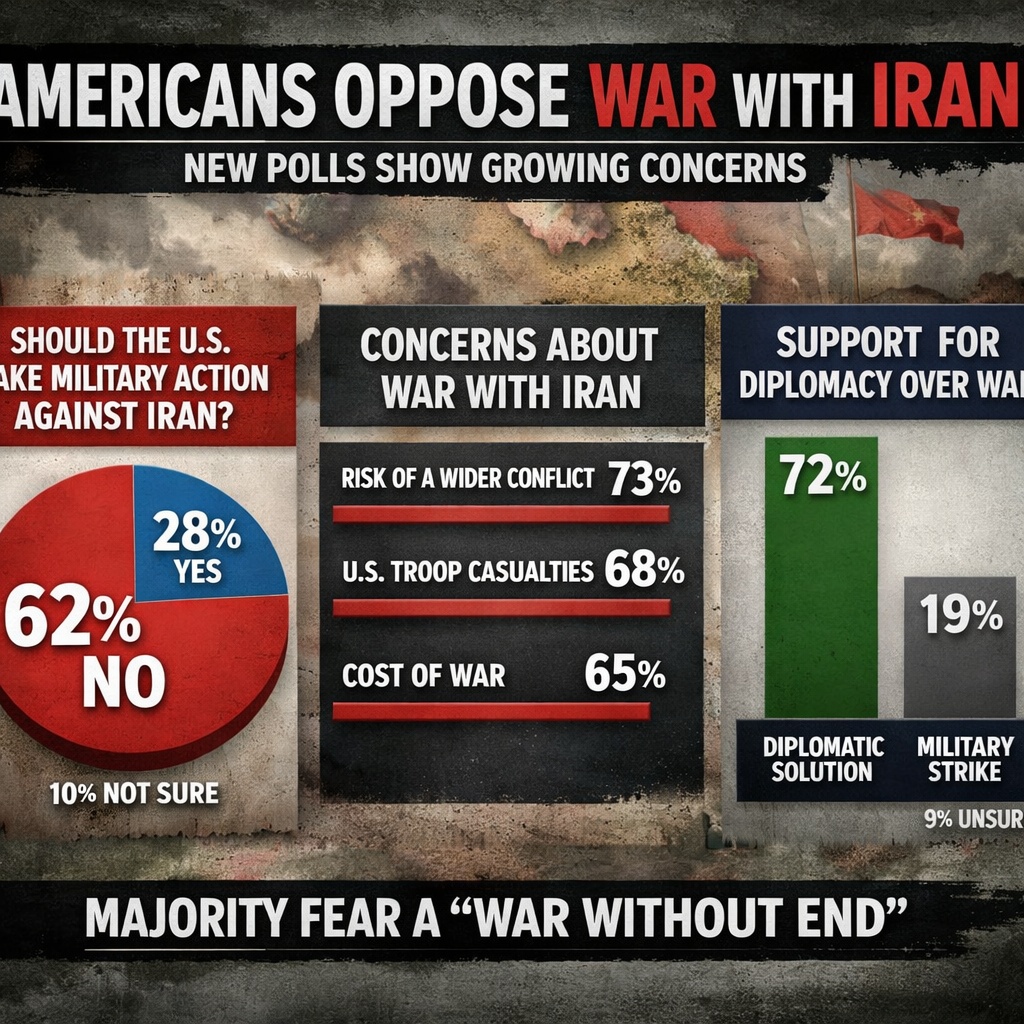
Our greatest problem here is that we DO NOT know what the goal of this war is supposed to be. Trump has said regime change, end nuclear weapons, as well as degrade the Iranian military. As long as he does not clearly state what is the objective, then this leaves the door open to declare victory and exit. If he says it was just to degrade the military, then he can declare victory and end it tomorrow. Bur why then assassinate the Ayatollah? That made it seem to be the regime change and calling to the people to rise up was in line with that. Iran has stated that it 400 kg of uranium is under ruble. If that is true, then the nuclear argument is off the table. Yet to do either the regime change or the seizure of the nuclear material will necessitate boots on the ground and there is no real support in America for that.
No matter what the truth may be, the perception remains that this is Israel’s war and we have participated in the targeting and killing of the Ayatollah, which was Israel’s policy of decapitation.
Apocalypse fears, once associated with the fringes of society, are now commonplace across North America—and are shaping attitudes towards perceived threats. New research has revealed just how widespread these beliefs have become, fueled by climate change, geopolitical instability and rapid advancements in artificial intelligence. Belief in the end of the world is surprisingly common across North America, and it’s significantly influencing how people interpret and respond to the most pressing threats facing humanity. This is becoming a dominant concern with many viewing the Middle East war as leading to Armageddon.
Posted originally on Mar 13, 2026 by Martin Armstrong |
The push to ban firearms in the United States never really stops. It simply advances in stages. Minnesota has now produced one of the more revealing examples of how far some politicians are willing to go. Democratic lawmakers are proposing legislation that would ban many semiautomatic rifles and magazines while forcing citizens who already own them to register their firearms and submit to government inspections inside their own homes. The proposal effectively says that if you wish to keep a legally purchased firearm, the government must first be allowed to verify how you store it.
According to the legislation, gun owners would need to obtain a certificate to keep firearms that the state plans to prohibit going forward. Even more troubling is the requirement that law enforcement be permitted to inspect the owner’s residence to verify compliance with storage rules. In other words, the state is asserting the authority to enter private homes to ensure obedience to government mandates.
The constitutional problems are obvious. The Second Amendment to the United States Constitution explicitly states that the right of the people to keep and bear arms shall not be infringed. The rifles being targeted are not rare or exotic weapons; they are among the most commonly owned firearms in the country. The courts have repeatedly acknowledged that arms in common use fall within the protection of the Constitution. Attempting to ban them outright invites a direct constitutional conflict.
At the same time, the proposal collides head-on with the Fourth Amendment to the United States Constitution. That amendment was written precisely to prevent the government from entering a citizen’s home without proper cause and a warrant. Yet Minnesota’s proposal essentially conditions the ownership of private property on allowing police access to your residence. If you refuse, you lose the right to keep the firearm. This is a remarkable inversion of the principle that government power must be limited by the Constitution rather than the other way around.
Throughout history, governments have always preferred populations that are dependent and compliant. An armed citizenry is far more difficult to control. That is why the debate is rarely just about crime. Just look at Minnesota, a state riddled with fraud against taxpayers. The attention instead falls on the law-abiding citizens who legally purchased firearms and followed every rule imposed by the government. Politicians refuse to acknowledge the problems plaguing society unless those problems personally affect their campaigns.
Laws that directly challenge the Second and Fourth Amendments will almost certainly end up in the courts. The real question is whether the Constitution still serves as a meaningful restraint on government power or whether legislators now believe they can simply rewrite those limits whenever political convenience demands it.
Posted originally on Mar 12, 2026 by Martin Armstrong |
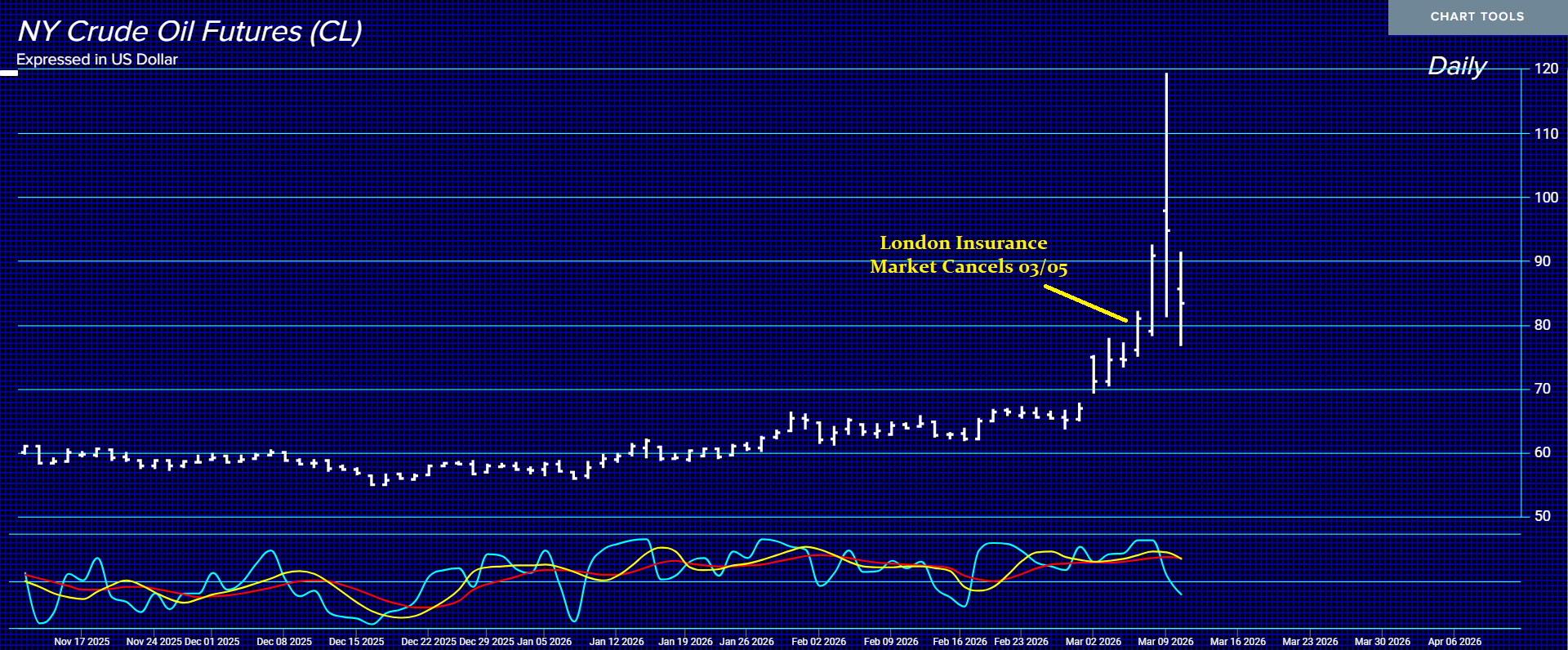
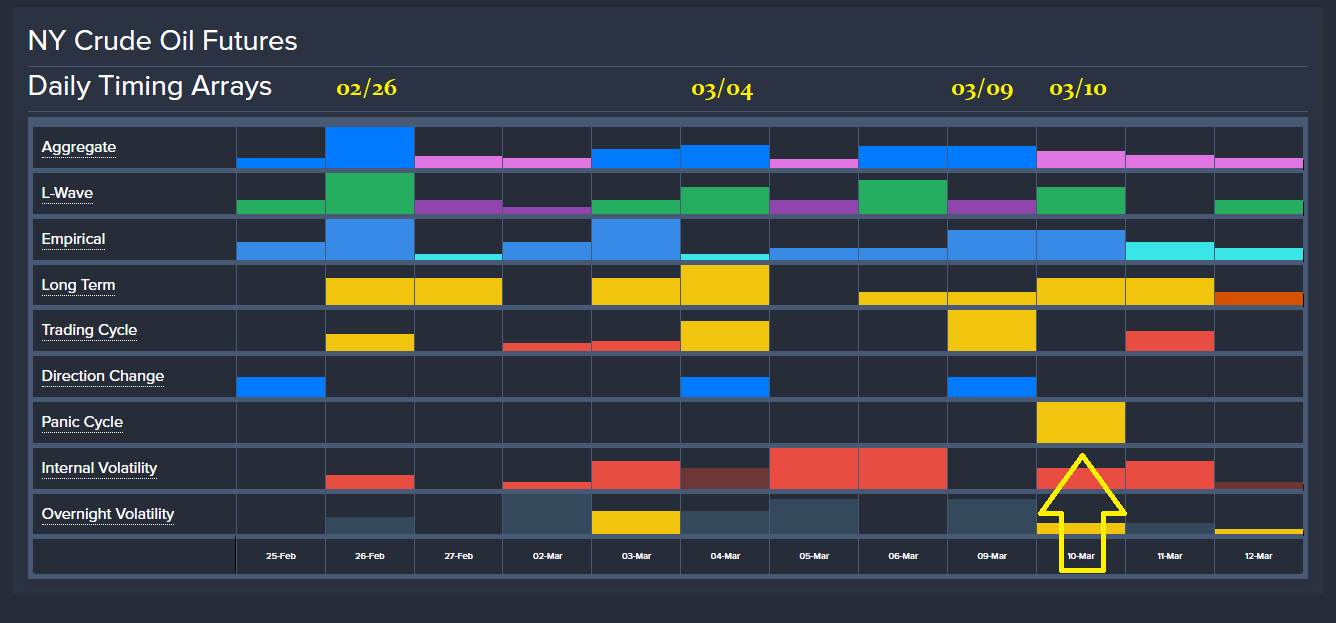
QUESTION: Do you think Trump has been subjugated by the Neocons and Israel? Socrates picked the low on the Feb 26 before the low, five days later Lloyds cancels the insurance to spike oil higher. It peaked precisely on March 9 as Socrates forecast and then the next day was a Panic Cycle when Crude crashes. Was this all orchestrated for the London houses to make a fortune again?
FG
ANSWER: It has been alleged that Trump is subservient to Netanyahu and that the Neocons were attempting to make a fortune on the oil market by instigating war with Iran. I do believe that Netanyahu will take the blame for this war that I fear may be unwinnable life Afghanistan because it also is religious. It has further been alleged that Lloyds of London killing the insurance on shipping to send oil prices to the Moon. The truth is that the International Group of P&I Clubs and its members (like Gard, Skuld, and NorthStandard) are NOT part of Lloyd’s of London. They are two entirely separate and distinct institutions in the London insurance market, though they have a close and long-standing working relationship.
The 26th was the low and crude began yielding buy signals two days in advance. Yes, Socrates picked the high and the crash with the Panic Cycle on the 10th. The computer clearly picked up in advance that the capital was flowing in anticipation of war in the Middle East. There was a Direction Change on the 25th, the day before the spike low ahead of the attack on the 28th.
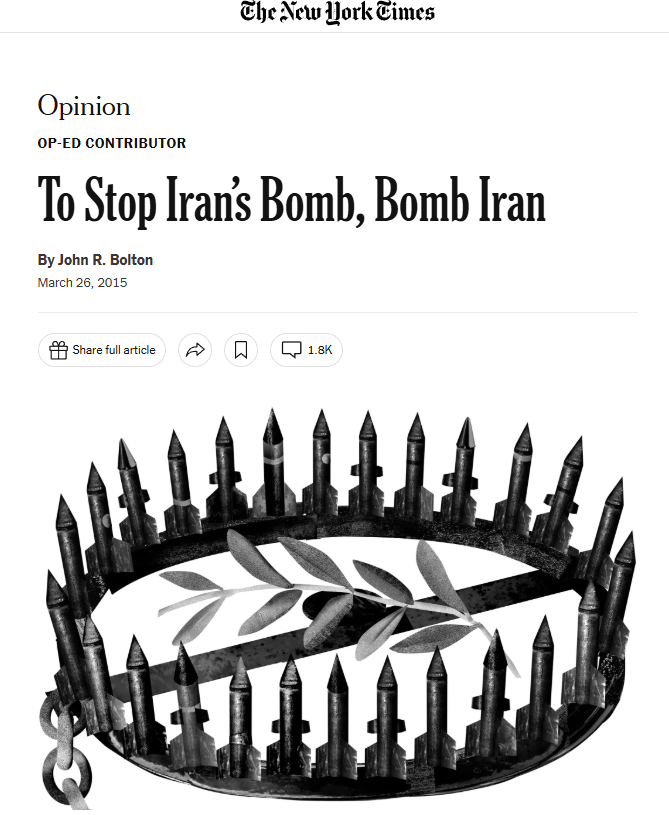
The Neocons in the USA are not rejoicing for Trump suddenly becoming a warmonger. Killing the Ayatollah has been on Netanyahu’s wish list for probably longer than Trump has every thought of becoming President. This no doubt Netanyahu’s war but that does not make it antiemetic. As I said, Netanyahu went to school in Philadelphia and hung out with the Kristols when in fact Irving Kristol is the godfather of the Neocons. This is an op-ed from John Bolton in the NY Times from 2015 Before Trump was president and it advocated bombing Iran.
That said, Bolton and other Neocons are not so happy because Trump is not actually listening to them and he is not using their playbook. There is another twist here and that is the businessman coming into this theatre.
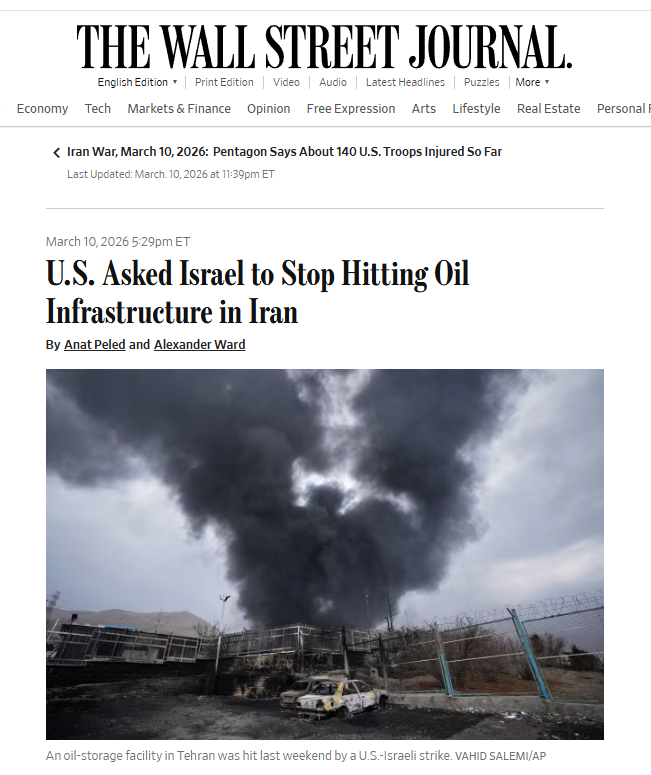
Trump has told Netanyahu to stop targeting Iran’s oil infrastructure. Why? Trump is planning ahead despite what Bolton is saying. Trump knows with the hote of a regime change, he wants Iran to be able to enter the world economy and supply oil. That will be an economic incentive to replace the government. But more than just that, China gets about 80% of Iran’s oil. Taking out that capacity may invite China into the mix for their national security perspective.
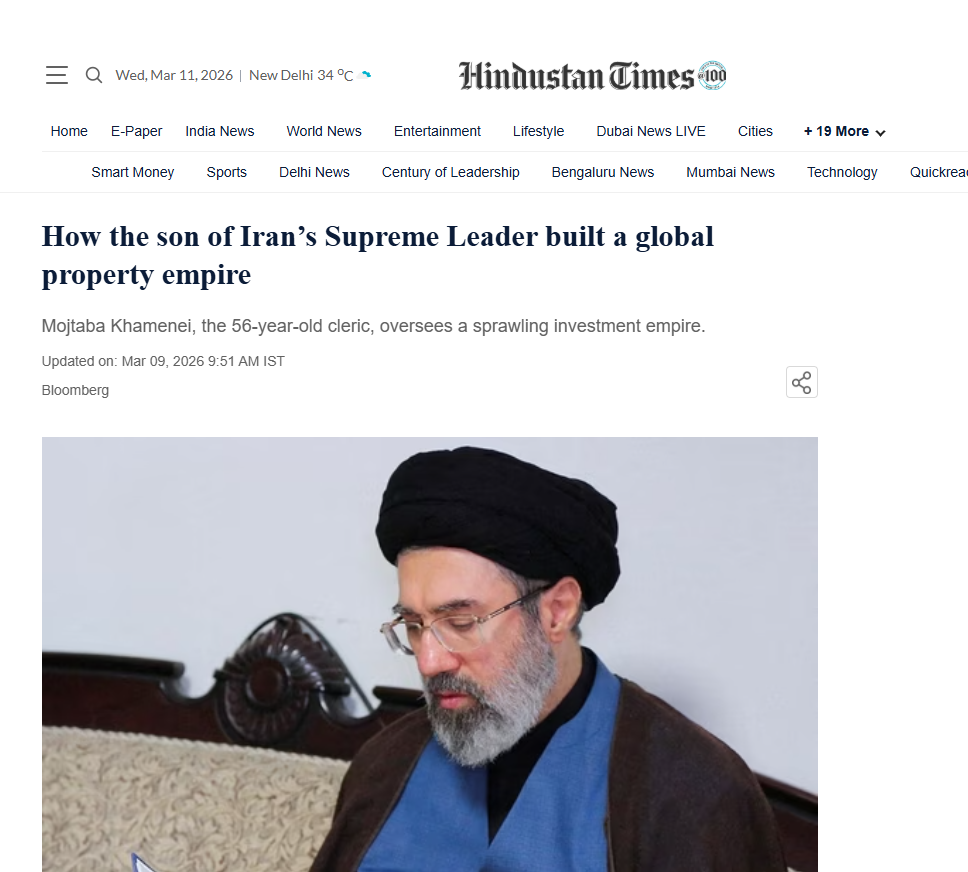
It has been reported that the ne Ayatollah has been the man behind a major property investor including house on Billionaire’s Row in London. He seems to have tried to hide his name directly but this goes back at least as far as 2011. The ties to London among the Islamic organizations have been there for decades.
Indeed, Trump keeps shifting his argument for why the war is happening, and how long it will last. Meanwhile, he understands that this can become a proxy war against the United States a drain our military assets rapidly. He is forced to into lifting sanctions on Russian oil and has said that he is defending the Strait of Horuz for everyone, including China, which is the largest oil importer and it takes about 80% of China’s oil.
The greatest danger here is not just that Iran causes a Middle East War with sleeper cells and proxies, but that Russia is also ready providing tactical info to Iran as the USA has been doing with Ukraine, and on to of that, destroying the Iranian infrastructure clearly runs the risk of bringing in China and even Pakistan.
Posted originally on Mar 9, 2026 by Martin Armstrong
COMMENT: Marty, a number of us are sending letters to Trump that he should be consulting with you and Socrates for your track record is unprecedented. Other countries respect you. Your own tries desperately to marginalize you. The neocons are destroying the world. We have to at least try. I hope you got everyone out of Dubai.
ED
REPLY: I respect that. It would take much more than a single letter. The Neocons are intimidating people in Congress and the Senate not to listen to our forecasts. They are no different from the bankers who always blamed me for their own stupidity. As you see in Europe, the presumption is always silence your opposition to retain power. The Ayatollah did that in 1979 and any opposition was called an agent of the Great Satan or Little Satan. The EU uses this on anyone who is anti-war calling them a Putin Supporter. The Neocons are using that tactic against me. They think they can rule the world usurping our Foreign Policy circumventing Congress and the people.
Thank you for all the inquiry about our staff in Dubai. Everyone is now safely out. The local scuttlebutt is that there is only 10 days of food left in Dubai. It is not just a crisis in shipping oil, it is also a crisis in food supply. As always, the Neocons assume instant victory, never anticipate what comes next. As I have warned, this is different aside from Iran being 3 times the size of Iraq. This is religious. This is NOT a simple territorial war. The Neocons judge the world only by what they think. They are making the very same mistake they made with Afghanistan. Clearly, religion was the indispensable ingredient that made the Afghanistan conflict unwinnable for conventional superpowers. The Neocons advising Trump do not care about the country and they certainly do not care about Trump and how he will be remembered.
Three days after that summit meeting, on August 18, 2025, Russia announced they were restarting Russia’s Arctic-2 LNG production facility. Russia would be more than doubling their capacity to generate and store liquified natural gas (LNG). Why? They understand the risks of war with Iran far better than those advising Trump, who was told this will be short and sweet. Obviously, it makes no sense to increase production in the fact of sanctions. However, if you expect Iran to target refineries and bring the entire West to its knees, then its time to restart producing even more LNG doubling the supply when Russia was already overproducing LNG. The computer has been waring rising volatility starts in April into July. The writing is on the wall. The Neocons refuse to read.
I have created this site to help people have fun in the kitchen. I write about enjoying life both in and out of my kitchen. Life is short! Make the most of it and enjoy!
This is a library of News Events not reported by the Main Stream Media documenting & connecting the dots on How the Obama Marxist Liberal agenda is destroying America




 Centinel2012