Sunday Talks – U.N. Ambassador Mike Waltz Discusses Ongoing Objectives with Current Status of Iran


Posted originally on CTH on April 19, 2026 | Sundance |

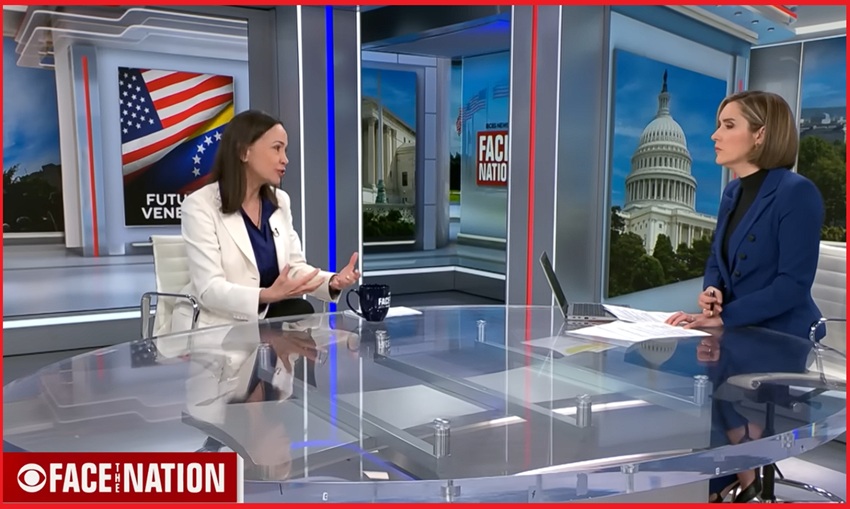
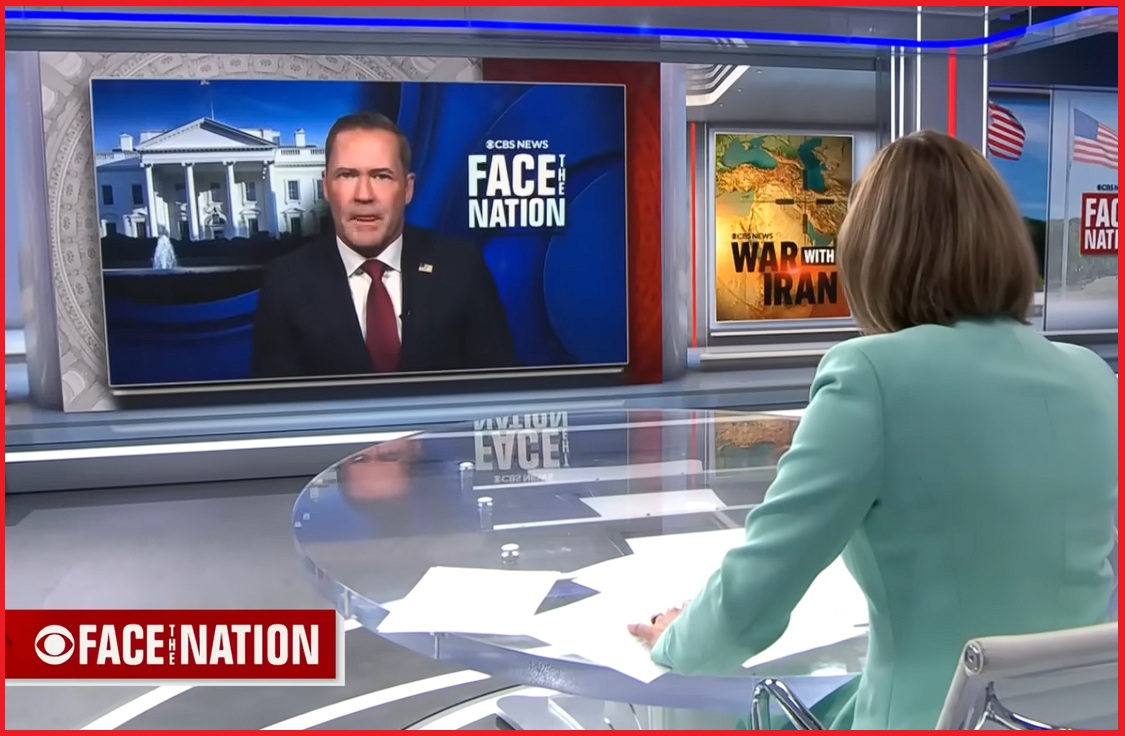
U.S. Ambassador to the U.N. Mike Waltz appears on CBS Face the Nation to discuss the difficulty of negotiating with Iran, a regime based on fanatical religious zealotry and control.  The video and transcript are below:

[Transcript] – MARGARET BRENNAN: Imtiaz Tyab reporting from Dubai. We turn now to the U.S. Ambassador to the United Nations, Mike Waltz, who joins us this morning from New York. Welcome back to Face The Nation, ambassador.

AMBASSADOR MIKE WALTZ: Thank you, good to be with you.

MARGARET BRENNAN: So the President said Iran broke the ceasefire, but he is still offering them a deal. Is this a presentation of terms, or should we expect an actual, prolonged negotiation?

MIKE WALTZ: Well, I think this will be a continuation of the terms that the vice president offered a week ago. And look, we have to take a step back here in that – President Trump, the US Navy is controlling what is coming out of the straits. We’ve had the highest level engagement in the history of the Iranian regime, with the vice president leading. We have historic ceasefire talks going on between the Israelis and the Lebanese. The markets are up. Oil prices are relatively stable. The Iranian economy is devastated, and they’ve never been, I can tell you here at the United Nations, they’ve never been more diplomatically isolated. So Iran does not have the cards, and we are confident they will come to the table and finally give up their obsession with having a nuclear weapon.
MARGARET BRENNAN: Well, Iran has not yet announced that it’s sending a delegation to Islamabad. I know there’s this back and forth all morning long about whether the vice president would be leading it or not. CBS, as you just heard, is reporting he will be but why is it important that he be there in person? Is it because Iran has refused to send anyone with decision making authority, unless he is there?

MIKE WALTZ: Well, you’ve seen the chaos, I mean that you just pointed to on the Iranian side. The last 48 hours, you have their foreign minister announcing that they’re going to stop attacking shipping. Then you have the IRGC saying that they will and then doing so, as President Trump pointed out, an absolute violation. So the Iranian side is in a bit of chaos. This is absolutely due to the devastating strikes on their leadership. But I think the vice president leading shows the level of engagement from the US side that we are absolutely serious. And I for one, thank God for future generations that we are arresting a problem before it’s too late. We’re not waiting until the US has no options —

MARGARET BRENNAN: Well —

MIKE WALTZ: and Iran has some kind of breakout, which would lead to a nuclear breakout all over the Middle East.

MARGARET BRENNAN: Let me follow up on what you just said, though, because that’s important, the Iranian side is in chaos. So how do you know you’re negotiating with the right person? It’s been reported, The Institute for the Study of War says that the IRGC Commander General the Vahidi has secured control over the negotiations and the military within the past 48 hours. Does that mean Foreign Minister Araghchi is not the person to be sitting across the table from? Who’s in charge?

MIKE WALTZ: Well, look – again the Iranian regime, we’ve put them in chaos, but at the same time, we are never going to take an approach of trust. Any deal that comes out of this will have to absolutely be verifiable and be enforceable. I can tell you, from sitting in my seat at the UN we’ve been in extensive discussions with the International Atomic Energy Agency, the IAEA, which would have ostensibly a key role in ensuring Iran lives up to any deal that it signs to, this – signs up to, there is no trust on this side. There is verified and enforceable provisions that are that are on the table from the US to ensure they never have a nuke.

MARGARET BRENNAN: Okay, that’s important in terms of enforcement. Does that mean if you actually get to a negotiated deal, and the UN’s nuclear watchdog would be very much in those details of going in and perhaps securing that enriched uranium. Does this mean you’re going to put a deal for approval before the United Nations? Is it going to be codified like that?

MIKE WALTZ: Well, I’ll tell you, there are dozens and dozens of resolutions over the years, not just the United States, the entire world, saying Iran cannot have a nuclear weapon.

MARGARET BRENNAN: Right.

MIKE WALTZ: We had snap back provisions that are in place now for global sanctions and that Iran cannot enrich so anything that would would change those resolutions would then need to come back before but let’s not get ahead of ourselves. Let’s see if the Iranians actually sign up to a very reasonable offer that is sitting on the table from the United States —

MARGARET BRENNAN: Yeah —

MIKE WALTZ: which is an off ramp from them, and also will ensure the region, the United States, Europe and the world, is never threatened by a regime with its hand on a nuclear button.

MARGARET BRENNAN: Okay, so, but back to the point of who’s in charge. President Trump says he hopes they take the deal, that was the post this morning. But on Friday afternoon, he spoke to my colleague, Weijia Jiang, and he gave us an incredibly optimistic read. He said Iran had quote, agreed to everything, including to stop enriching uranium forever and to stop backs – backing all proxy groups like Hezbollah. He made it sound like it’s all been sorted out. So which is it? Was there an agreement with certain parts of the Iranian government, but now there are others in charge, or was he just, you know, I don’t know, speculating about something he hopes comes true?

MIKE WALTZ: Margaret, anybody who has dealt with the Iranians will tell you it is often two steps forward, three steps back. They’re incredibly slippery. They can’t be trusted. They cheated over the years, which is one of the reasons that President Trump withdrew us from the JCPOA. They were hiding sites. They were hiding capabilities, and this is why he made the bold decision —

MARGARET BRENNAN: Yep —

MIKE WALTZ: last year in operation midnight hammer, to just end it once and for all. And again, we have to take the perspective that we’re not waiting. We’re not trusting. We are reducing their capabilities. Their military is in shambles. Their missile program is in shambles, and now, hopefully diplomatically, they will do it the easy way, rather than the hard way, of finally giving up on this illegal ambition.

MARGARET BRENNAN: The Defense Intelligence Agency told Congress this past week, Iran has thousands of missiles and one way attack drones that can still threaten the United States. So there’s still a threat in certain ways. General Caine said on Thursday, the US is going to pursue Iranian flagged vessels or any vessel providing support, including those carrying Iranian oil. Beijing is the top customer. Are you going to start boarding vessels headed to to China? When do these operations begin?

MIKE WALTZ: Well, I’m not going to give – get into operational timelines, but I’ll tell you all options are on the table. The President is prepared to escalate, to de-escalate, he means it. When he said nothing that benefits Iran is coming out of the strait. And then on top of that, Secretary Bessent announced operation economic fury, where we are prepared to put secondary sanctions on banks who are transacting in illegal Iranian oil dollars. So we are truly putting maximum pressure on every aspect of the Iranian economy, and at some point they are going to see some level of common sense and pragmatism and say enough is enough with this nuclear obsession.

MARGARET BRENNAN: Is that the first step before you go back to combat? Because President Trump was talking about bombing power plants. Are the sanctions and the seizing of vessels —

MIKE WALTZ: Well, we’ve taken —

MARGARET BRENNAN: step one?

Mike Waltz: Well we’ve taken, you know, again, I’m not going to publicly sequence the steps, but the blockade was, was a tremendous step and has been tremendously effective, with dozens of ships turned around. Others that are already out on the water, our Pacific Command is prepared to interdict. We’re going after the banks. We’re going after this shadow fleet, one of which was run by a relative of Khamenei. So we are taking a number of steps. We’re even looking – our acting attorney general has made it very clear, he is going to start aggressively prosecuting, our threat finance unit is going —

MARGARET BRENNAN: Yeah —

MIKE WALTZ: after their illegal dollars. So this is a whole of government, full on press. I hope we don’t have to go back to a military option but President Trump’s made it very clear. And by the way, bridges, power plants that are run by the IRGC, which runs the entire military, are absolute legitimate military targets, not only now, but have been historically. That is a false, fake and ridiculous notion that this is some type of war crime.

MARGARET BRENNAN: Well, we’ll talk about that, and we’ll see if that happens. But Germany and other allies have said they will help the United States with that navigation through the Strait of Hormuz, eventually, once combat ends, but they said they need cover. They need an international mandate at the United Nations. Will Russia and China get on board? Are you trying to do that at the UN?

MIKE WALTZ: Well, as our Gulf Arab allies made it very clear at the UN, I guess that would be nice to have after the conflict, but they need help and are ready to take action now, particularly Bahrain, UAE, Qatar, Kuwait, Saudi Arabia, we had a historic resolution to the UN with 135 —

MARGARET BRENNAN: Yeah —

MIKE WALTZ: nations condemning Iran for its attacks on civilian infrastructure, on resorts, civilian airports, ports, shipping. That was truly tremendous. It’s disappointing the Russians and Chinese chose to side with Iran rather than our Gulf Arab allies —

(CROSSTALK BEGINS)

MARGARET BRENNAN: And you still lifted sanctions on Russia.

(CROSSTALK ENDS)

MIKE WALTZ: and freedom of navigation, but you’re going to see – yeah, you’re going to see continued action this coming week. The entire world is united that you – that a country cannot hold an international waterway and cannot hold the world’s economies hostage because it has a conflict with another country. You don’t see that in the Straits of Gibraltar, the Bering Strait, the Straits of Malacca, or any other international waterway. Iran is absolutely in the wrong here from a legal, diplomatic and economic standpoint.

MARGARET BRENNAN: Let me ask you about Lebanon. President Trump posted Friday that quote, Israel will not be bombing Lebanon any longer. They are prohibited from doing so by the USA. Enough is enough. How is the US prohibiting ally Israel from bombing in Lebanon? And what is the United States doing to confiscate weapons from Hezbollah like, how are you helping the Lebanese military do that?

MIKE WALTZ: Well to answer your last question, first, the US contributed over $250 million to the Lebanese Armed Forces. This is a tremendous historic opportunity for Lebanon, the Lebanese government led by President Aoun, a former general, the head of the Lebanese Armed Forces, to take their country back. Finally, with Iran on its back foot and militarily devastated, with Syria —

MARGARET BRENNAN: Yep.

MIKE WALTZ: in a much better place, with the fall of the Assad regime and the effective diplomacy that we’ve had there, and from the pager and beeper operation to now, Hezbollah has never been in a worse place. This is a true moment, and it was a real honor for me to be at the opening of the —

MARGARET BRENNAN: Yeah.

MIKE WALTZ: first Israel – Israel Lebanon talks, first ever —

MARGARET BRENNAN: How are you going to prohibit Israel from bombing?

MIKE WALTZ: in modern history. So, we have – look, but Maragaret, we have diplomacy on the march in a number of places —

MARGARET BRENNAN: Uh-huh.

MIKE WALTZ: Backed, of course, by military strength —

MARGARET BRENNAN: Okay.

MIKE WALTZ: but we have to take a moment to understand the magnitude of what’s going on.

MARGARET BRENNAN: Ambassador Waltz, we will be watching to see what happens in the coming days. Thank you for your time. This morning, Face the Nation will be back in a minute. Stay with us.

{END TRANSCRIPT}
Sunday Talks: Mike Waltz Says Iran’s 4,000km Missile Range Not Verified


Posted originally on CTH on March 22, 2026 | Sundance

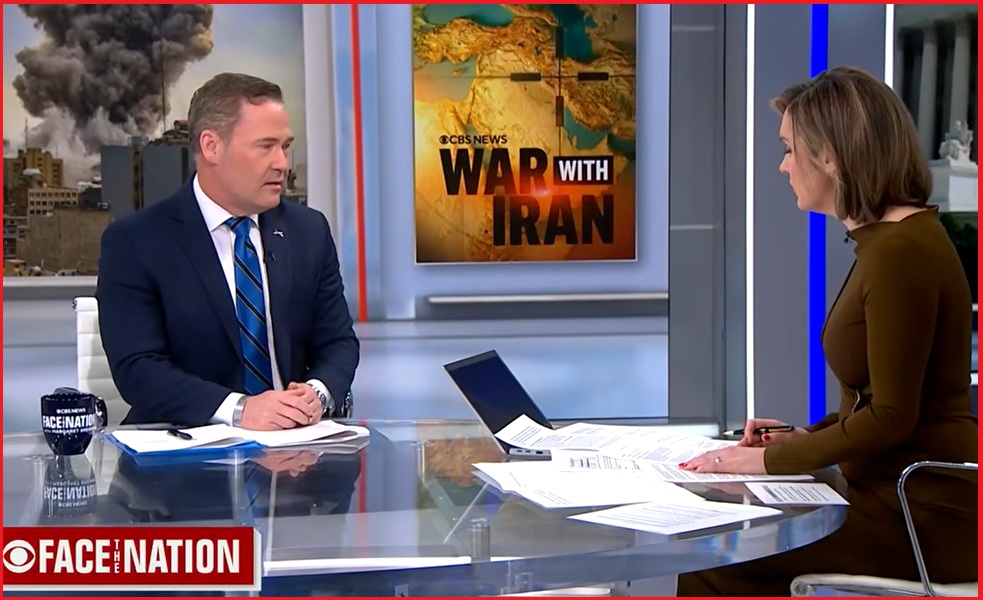
U.S. Secretary to the United Nations, Mike Waltz, appears on CBS to discuss the political angles to the U.S. military operation against Iran.  There was some critical questioning about whether Iran was factually capable of sending a missile from Iran to the U.S. base at Diego Garcia in the Indian Ocean.   Ambassador Waltz seems to question the reporting on their capabilities.  Video and Transcript Below:

[Transcript] – MARGARET BRENNAN: That’s Charlie D’Agata reporting in Arad, Israel. We’re joined now by the U.S. Ambassador to the United Nations, Mike Waltz, and it’s good to have you here in person.

AMB. MIKE WALTZ: Thank you, Margaret.

MARGARET BRENNAN: So Ambassador, on Friday, the president tweeted, “The Hormuz Strait will have to be guarded and policed, as necessary, by other Nations who use it — The United States does not!” And then last night he threatened that if Iran doesn’t fully open the Strait of Hormuz within 48 hours from the time of his post, the US will “hit and obliterate” their power plants, starting with the “biggest one first.” So which is it, is the U.S. opening Hormuz by force or having others do it.

AMB. WALTZ: Well, I think it can be both. It’s not necessarily mutually exclusive. I am glad you are having NATO Secretary General Mark Rutte on. I think at his urging and his leadership, we have now seen Italy, Germany, France and a number of others commit to help with this effort.

MARGARET BRENNAN: –After combat operations end.

AMB. WALTZ: Particularly since, particularly since so much energy is going to Europe out of the strait. We just had the Japanese Prime Minister commit to portions of her navy and the Japanese navy, 80% of what is coming out of the Gulf is going to Asia. So we are seeing our allies come around as they should, but at the same time, the president is not going to stand for this regime, as it has threatened and tried for five decades to hold the world’s energy supplies hostage under its, its genocidal intent.

MARGARET BRENNAN: So some allies like the United Kingdom have talked about things like surveillance, anti-mining, anti-drone support for the United States. But in that appeal from the United States, I should say in the Strait of Hormuz, but not until active combat ends. To be clear, that is what we are talking about.

AMB. WALTZ: And the president has been clear too. He’s going to continue to pound Iran’s capabilities, its missile, its naval and its drone capability. Margaret, we have to take a step back. We have seen what it’s doing now in terms of attacking ports, airports, civilian infrastructure, hotels, resorts, and what it is trying to do to global energy supplies. One can only imagine if it had a nuclear umbrella. One could only imagine if Iran achieved its aim to test. Then you have Saudi Arabia wanting a nuclear program, then perhaps the UAE, Turkey or others. And when people ask why this matters to our security here at home, it should petrify every American that you could potentially have a nuclear Middle East awash in weapons.

MARGARET BRENNAN: Well, they are not enriching. They weren’t enriching leading up to this. This is what U.S. officials have testified to. But just on this point about what the president–

AMB. WALTZ: Well they couldn’t enrich because of Operation Midnight Hammer that obliterated their ability to enrich. They had every intent to continue.

MARGARET BRENNAN: They do have a nuclear power plant, Bushehr. It’s actually their largest energy plant. It’s a civilian site.

AMB. WALTZ: It is actually not their largest energy plant. It is about one, about one gigawatt. They have larger ones that are gas, fired outside of Tehran. But just case in point, yeah.

MARGARET BRENNAN: Okay, but- but in this case, in that clarification, the reason I am asking you is when the president says he is going to bomb energy infrastructure, civilian energy infrastructure, is he going to bomb a nuclear power plant, or is that off the table.

AMB. WALTZ: Well, I would never take anything off the table for the president, certainly not on national television. However, there are larger plants. There is one outside of Tehran. There are others outside of other cities that are gas fired, thermal powered. I think the important point here is to understand the IRGC, a declared terrorist organization, not only by us–

MARGARET BRENNAN: Yeah, in Europe too.

AMB. WALTZ: –but in a number of European countries, controls a huge swath of Iran’s critical infrastructure, their economy and certainly many of their governing institutions. And so to the extent we are degrading their military capability and their defense industrial base, all options should be on the table, and the president has made that very clear.

MARGARET BRENNAN: How do you ensure that this doesn’t constitute a war crime, which the UN Secretary General said an attack on energy infrastructure could be. How do you make sure this is not mass punishment for innocent civilians?

AMB. WALTZ: Well, I think you know, I would encourage and will encourage the Secretary General to point out the twenty to thirty thousand Iranians that the regime massacred at scale, the civilian infrastructure that they are attacking–

[CROSS-TALK STARTS]

MARGARET BRENNAN: –No one is endorsing that but how do you make sure this doesn’t hurt–

AMB. WALTZ: — And when you, but when have a regime that has its grips on so much critical infrastructure, that is using it to further not only the repression of its own people, to attack its neighbors, and in contravention of UN sanctions, to march towards a nuclear weapon, then that makes those legitimate targets.

[CROSS-TALK ENDS]

MARGARET BRENNAN: Okay, well, you know that in many of these places, water desalination is linked into that energy infrastructure, civilian infrastructure. This is why it is a question of it being a war crime.

AMB. WALTZ: I have no doubt that the president, the Pentagon, their team will ensure that what they target is geared towards the military infrastructure of Iran. But I have to tell you, they deliberately blend, have a long history, everything from hiding weapons under schools and hospitals to using power plants and other critical infrastructure to not only power their military but their civilian, and they deliberately blend in contravention of international law.

MARGARET BRENNAN: Let me ask you about what we saw overnight with these missile attacks. The Director of National Intelligence testified last week to Congress that Iran could not develop a militarily viable ICBM, intercontinental ballistic missile, before 2035 if it attempted to pursue that capability. Yesterday, the IDF said Israel said that Iran did fire an ICBM. Has this changed the U.S. assessment?

AMB. WALTZ: I am not familiar with the IDF assessment. I can tell you-

MARGARET BRENNAN: They said what was fired at Diego Garcia and them was an ICBM.

AMB. WALTZ: I can tell you the UK just condemned the firing of an intermediate range ballistic missile at Diego Garcia, that same type of missile Iran has lied about in terms of its development, said they were not developing yet. They just lied. Yet they just did it. Not only could it hit Diego Garcia, it could hit capitals in Europe. And Margaret, the technology, the booster technology that Iran has been hiding behind its space program. I don’t think we are going to see Iranian astronauts on the moon anytime soon. That this space program has been hiding that technology. You have the re-entry technology to marry the two really does not take very much in terms of technological development. And we just have to you know, thank God the president is taking action now and stopping this march towards a fully fledged nuclear program, instead of waiting until after it’s developed, like we saw in North Korea under the Clinton administration say, surprise, we now have, a full program.

MARGARET BRENNAN: So a difference there in the assessments. But let me ask you about our polling.

AMB. WALTZ: It wouldn’t be the first time you have different intelligence assessments, by the way, by different intelligence communities.

MARGARET BRENNAN: Absolutely. The administration has not convinced, we’ve seen it in our polling, the majority of Americans that this war was necessary. Sixty six percent of Americans believe conflict with Iran is a war of choice. Sixty percent disapprove of the US taking military action against Iran. Fifty seven percent of Americans think the conflict is going very or somewhat badly. How do you tell the American people they’re wrong?

AMB. WALTZ: Well, I can. I could quote a whole slew of polls that show, for example, self-described MAGA Republicans give the president a 100% percent approval rating–

MARGARET BRENNAN: –his base is in there, absolutely–

AMB. WALTZ: A majority say the number one job of the commander in chief is to keep Americans safe. I can point here to an NBC poll, 90% of Republicans, broader Republicans, support Trump’s effort to destroy Iran’s nuclear capabilities. And I have to point out, no one should be surprised here. President Trump has said Iran cannot have a nuclear weapon 2016 campaign, 2020 campaign. Since 2024 he has said it seventy four times out in the public space.

MARGARET BRENNAN: But if he is going to commit any kind of ground troops or boots on the ground. Don’t you think he needs to persuade the majority of American people, not just his base?

AMB. WALTZ: I think the president will keep all options on the table to secure these objectives. And as a veteran, as a parent, I thank God he is not kicking the can like so many administrations have for fifty years, until this is a catastrophic problem where we have very limited options to deal with, much less an entire Middle East potentially awash in nukes.

MARGARET BRENNAN: Ambassador Walz, thank you for your time this morning.

AMB. WALTZ: All right, thank you.

[END TRANSCRIPT]

United Nations Moves to Censor the Internet


Posted originally on Feb 25, 2026 by Martin Armstrong |  

The United Nations is now openly discussing “coordinated global action” to combat what it defines as disinformation and hate speech online, and this should not be dismissed as some abstract policy debate. This is a structural shift toward the internationalization of speech regulation, and that carries profound political and economic implications.

The UN’s recent digital governance initiatives, including its policy briefs tied to the Global Digital Compact, explicitly call for stronger international cooperation to address online misinformation, platform accountability, and content governance across borders. The stated objective is to create safer digital spaces and reduce harmful content, yet the mechanism being proposed is coordinated oversight at a global level.

An unelected international institution proposing frameworks that influence what information is acceptable raises concerns. The UN has no direct democratic mandate over the citizens of individual nations, yet its policy direction increasingly encourages governments and platforms to align with shared global standards for speech moderation and information control. This is being framed as a necessary response to misinformation, extremism, and social instability in the digital age. The globalists want to control our ability to access and process information.

The core issue is not whether misinformation exists. It always has. Every era has dealt with propaganda, rumors, and competing narratives. What is different now is the scale and the proposed solution of centralized digital oversight coordinated at the international level. Why should a select few determine fact from fiction? The power is unimaginable.

What one administration labels misinformation may later prove accurate, and what is defined as harmful speech can shift with political priorities. History is filled with examples where dissenting views were initially censored only to later become accepted truths in matters of war policy, economic forecasting, and public health.

The future regulatory battleground will not be limited to finance, taxation, or energy, but increasingly to information itself. In a digital economy, whoever influences the flow of information indirectly influences public confidence, political legitimacy, and even economic behavior. The real question is no longer whether misinformation exists. The structural question is who defines truth, who enforces that definition, and how far institutions are willing to go to maintain narrative authority in an era of declining global trust.

Can Trump Save the UN?


Posted originally on Feb 3, 2026 by Martin Armstrong |  

United Nations Drawing

In a recent interview, Donald Trump claimed he could “very easily solve” the United Nations’ financial problems by requiring member states to pay their dues, much as he pressured NATO allies to increase defense contributions during his first term. Trump would not be able to do this with funds, as that is not the true nature of the problem. The core of the institution has rotted; global powers no longer have strong confidence in the United Nations.

Yesterday, I wrote about the United Nations warning that it was facing an “imminent financial collapse. I argued that when institutions fail to adapt to shifting power dynamics, they collapse under their own contradictions. That is exactly what we are witnessing now.

The UN’s financial crisis is not primarily about $4 billion in unpaid dues. Rather, it’s about the loss of legitimacy and mutual trust among sovereign states. The UN is a creature of consensus and shared obligations, but the financial obligation has fallen on the US, and the American people no longer wish to foot the bill. This is precisely why there is a rising tide of nationalism, as people demand that their politicians and taxes stay within the domestic realm.

“When I’m no longer around to settle wars, the U.N. can,” Donald Trump said, acknowledging that he won’t always be the one intervening in global conflicts. “It has tremendous potential. Tremendous.”

Now, the UN has international respect and the ability to function based on SHARED interests. The United Nations was never designed to be a global government; it was a forum for negotiation among sovereign powers. It worked as long as the major powers had a shared interest in maintaining stability. But that shared interest has eroded.

The West is fracturing internally, with the US and Europe increasingly at odds on security, economic policy, defense obligations, and industrial strategy. Countries are less willing to fund an institution they no longer see as effective, fair, or aligned with their interests. Expectations regarding payment compliance are rooted in a bygone era when the UN’s agenda broadly aligned with American and Western strategic leadership. That alignment is gone.

United Nations Facing “Imminent Financial Collapse”


Posted originally on Feb 2, 2026 by Martin Armstrong

United Nations 2

United Nations Secretary-General Antonio Guterres has warned that the organization could face “imminent financial collapse” unless member states pay their dues in full and on time or unless the underlying financial structure is fundamentally reformed.

“The crisis is deepening, threatening programme delivery and risking financial collapse. And the situation will deteriorate further in the near future,” Guterres said. “Either all Member States honour their obligations to pay in full and on time – or Member States must fundamentally overhaul our financial rules to prevent an imminent financial collapse,” he added.

The United States has been bankrolling the UN for decades. It has functioned in many respects like a supranational agency funded disproportionately by American taxpayers, while policies coming out of that same body are often openly hostile to US interests. That contradiction could only last so long.

During his first term, Donald Trump warned that member nations were not making their required contributions. The UN repeatedly rebuked US policy and then wondered why the POTUS suspended funding.

You cannot build a permanent international bureaucracy assuming one country will always write the largest check regardless of behavior, efficiency, or accountability. When confidence declines at home, foreign commitments are always the first to be questioned. We see this pattern repeatedly with empires and reserve currency nations. External spending gets cut when internal stress rises.

We are moving away from the post-World War II global order where the United States carried the financial burden for international structures in exchange for geopolitical influence. Those with nationalist sentiments see this as a win for the United States who has been bankrolling globalist agencies and foreign governments for far too long. What does the US receive in return? Nothing.

Sunday Talks – Venezuela Opposition Leader Maria Corina Machado Discusses Her Goals and Objectives


Posted originally on CTH on February 1, 2026 | Sundance

President Trump and Secretary Rubio are walking carefully through a process to keep Venezuela stable and authentic to the true intents of the Venezuelan people.  Toward that end, both Trump and Rubio have been very careful with Maria Corina Machado, the exiled opposition leader who claims to be the legitimate voice of the people.

Machado is loved by the United Nations, the American leftists and DC control agents. However, to avoid Machado becoming Venezuela’s Zelenskyy, President Trump and Secretary Marco Rubio are working through a three-stage process that would culminate in secure national elections to coincide with Maria Machado’s return.  If she wins the hearts and minds, she will have legitimacy.

If you listen carefully to her phrases and omissions, you can clearly see where the trepidation from Trump and Rubio comes from.  There are a lot of platitudes and pretenses within Venezuelan politics.  Video and Transcript Below:

[TRANSCRIPT] – MARGARET BRENNAN: And we’re joined now by Venezuelan opposition leader María Corina Machado, and it is amazing to see you here in person after so long.

MARÍA CORINA MACHADO: Likewise. Thank you very much.

MARGARET BRENNAN: You met with Secretary of State Marco Rubio this past week. He said the U.S. now does not intend to have any military action or presence inside Venezuela, except for maybe at a reopened embassy there. Is that a good idea to take that military pressure off when the Maduro regime is effectively still in place?

MACHADO: Well, first of all, I have to say that on behalf of the Venezuelan people, we’re very, very grateful to the American people, and the first hand- first and foremost, to President Trump, to the secretary of state, and also to your leaders in Congress. I mean, the- the degree of support and care that we’ve felt in this fight at this moment is enormous, and I think it is clear on the- on the behalf and well being of the American people, but also of the Venezuelan people, and I would say the whole hemisphere. I do not think that the pressure is being taken away. Actually, everything Delcy Rodríguez is currently doing is because she’s complying with instructions she’s getting from the United States, and important steps are being taken. So I think that the message has been delivered, and so far, we’re seeing the results in the actions taken by the regime, and also in the mood and energy that is growing within the Venezuelan population.

MARGARET BRENNAN: Are you, or is anyone in your movement, in touch with Delcy Rodríguez, who’s the acting president of Venezuela now?

MACHADO: No, not directly.

MARGARET BRENNAN: No. Why not?

MACHADO: Well, we had offered, since we won the election by a landslide, that we were willing to- to agree in the terms of a negotiated transition, they refused. On the contrary, they decided to unleash the- the- the most cruel, brutal repression wave. There are- as you know, there have been thousands of political prisoners, and they had not demonstrated any willingness to- to stop this cruelty, until January 3rd arrived and- and happened when it happened. So it sent a clear message to them, and they’re starting to realize that things have changed for good. So eventually they might understand or- and even very soon, that it is in their best interest to- to accept that transition is unstoppable.

MARGARET BRENNAN: A transition that you hope involves a democratic election at some point. Did Secretary Rubio give you any kind of timeline for the American plans?

MACHADO: What I do have very clear is that the end result is the same. What we want, what the Venezuelan people have voted and struggled and fight for with huge cause and sacrifice, and what the United States government and President Trump also desires. It is a very complex process. I mean, this is a criminal structure that has intertwined with the enemies of the West, Russia, Iran, China, Cuba, extremist terrorist organizations such as Hezbollah, Hamas, the cartels, the guerrilla, all in association with the Maduro regime and Delcy Rodríguez and others. So it’s a process of dismantling this structure in the- in a way that it’s most orderly under control possible in the short term. And yes, the end game has to be, or the end step has to be, a electoral process in which we can have legitimate power. So I’m talking about a legitimate national assembly, governors, mayors and certainly president.

MARGARET BRENNAN: But for the people in Venezuela still living under that regime, what has actually changed for them, and do they have the patience to wait for what you’re talking about, which is basically just hoping that the Rodríguez government does what Donald Trump tells them to do?

MACHADO: Well, it’s more than hoping. We’re seeing the results, the actions. Are we there yet? Not. And- and I think it’s a good point, what you mentioned, patience. How much patience can the Venezuelan people have? Because, I mean, there were over 1,000 political prisoners on January the 1st. Still, there are over 700. Not one military prisoner, political prisoner has been liberated. There are men and women that have been in prison for years. Even the three police of the Policía Metropolitana have 23 years in prison, and they have not been liberated- released yet.

MARGARET BRENNAN: And Secretary Rubio has said it’s not happening as fast as America wants it to.

MACHADO: Absolutely. And in- in our case, we want that to happen immediately. Imagine, you know, the mothers of- of- of many of these innocent prisoners have been in vigils for over 23 days and nights. This is something that was unthinkable, Margaret, before January 3rd, and it shows that Venezuelan people are getting more and more empowered, more and more confident that this process will eventually lead to a- to a legitimate government based on the will of the people, but certainly we need to move there and leave evidence that there’s no way back.

MARGARET BRENNAN: Yeah, well, President Trump has talked a lot about Venezuela’s oil and its natural resources. Do you support the law that was just passed that allows the Venezuelan Government to privatize the oil industry?

MACHADO: Well, first of all, I do not recognize the National Assembly as a legitimate power. It has not been recognized by the Venezuelan people, not even by the American- by the U.S. government.

MARGARET BRENNAN: Not legally, but effectively they–

MACHADO: Yeah, but whatever comes from that National Assembly has no legality. So- because this is an illegitimate power. So certainly, these so-called reforms introduce positive signs in terms of what we, the Venezuelan people, want in the future. We don’t want socialism. We don’t want the state owning every single, you know, facility or production center. We want private property, but that requires rule of law, long term guarantees for foreign investment, for local investment. But one thing that is the most important of all, in my opinion, you need to have people, talent, specialized, professional, willing to work and develop these enterprises. What happened with the Venezuelan specialized talent? It was forced to flee the country, almost a third of our population, and these are people that are working all around the world. So imagine if a Venezuelan engineer working in Ghawar, the- the largest oil field in Saudi Aramco, would he leave his job and go back to Venezuela, where Delcy Rodríguez, who is part of the cartel, is in- and who originally fired him is in power? Of course, not.

MARGARET BRENNAN: Well, you raised this point, but President Trump just said on camera that United States is going to start peeling back some of these sanctions so that Americans can travel back to Venezuela. He’s lifted the air restrictions–

MACHADO: –Well, I think–

MARGARET BRENNAN: –is it safe to go?–

MACHADO: I think it is important to take steps. I think these are signals directed to several actors. First and foremost, to the regime, saying this is going to move forward. There is no way back. And- and- and the regime knows that no American citizen or Venezuelan citizen is going to go back to a country that’s still under the power of Maduro regime and the cartel. That’s not going to happen. But- but these kinds of actions, I think, give the correct signals in terms that this is going to move ahead. And I do trust the president in what he has said regarding how much he cares about the Venezuelan people, that’s something that I think it was quite significant in our conversation.

MARGARET BRENNAN: If you return to Venezuela now, would you be imprisoned, and has the American government said that they will protect you, they will guarantee your safety?

MACHADO: Well, you know, things are changing very fast in Venezuela. If they had captured me before I left, I probably would have been disappeared or worse. Right now, I don’t think they would dare to kill me because of the United States presence and pressure and actions. I don’t know how much possibility of moving I would have inside Venezuela, certainly they would be very afraid, because the- the regime knows the connection, the intimate connection we have, you know, the Venezuelan people and- and the leadership that won the election, the legitimate government.

MARGARET BRENNAN: You won that election along with Edmundo González at the top of that ticket, even the Trump administration recognized it. Secretary Rubio testified that to Congress, but then the president of the United States stood up there and said to the public that even though you had won that election, you didn’t have the public support. And I wonder if you can understand why they made that calculation, that you and your party who won an election couldn’t be that transitional government that would do all the things you’re talking about?

MACHADO: Well, Margaret, I will concentrate in what he told me in a private conversation, looking each other in the eyes, and I, and I truly believe he understands the nature of this regime. They all know that Delcy Rodríguez is a communist that no one can trust. Not even, you know, the people surrounding her right now does. I mean these are individuals that have strong ties with Russia, Iran, China, Cuba. I mean, she is doing what she’s doing because United States is putting enough pressure for them to understand that she has no other option. If that, if that pressure were taken away, she would turn around and go back to where loyal- her loyalty is with these regimes are the enemies of America. So no one is naive here. I think she’s doing part of the dirty job of dismantling her own regime and entourage, but that’s a- there’s a limit to it. For what you said before, you know, people have to be taken account on- of. They have to be involved. And the Venezuelan people, 90% of our people want the same. Not only this regime to go immediately, but we want to live in a country with human dignity, with solidarity, with justice, with freedom. This is all about bringing our kids back home, having our families together. It’s about saving lives.

MARGARET BRENNAN: What role would you want in a future Venezuelan government? Because even President Trump says you may have a role in the future. Would you run for president?

MACHADO: I will be president when the time comes. But it doesn’t matter. That should be decided in elections by the Venezuelan people. I wasn’t allowed to run in the last election, as we mentioned before, because Maduro was afraid to running against me, and he thought Edmundo was not a threat, because nobody knew who he was. And in less than three months, we managed to put the whole country supporting him, because this is- this is matter of freedom. I mean, this is a spiritual fight, an existential fight for Venezuela. Unlike other diasporas, and I want to stress this, our people around the world, here in the United States, want to go back. Go back and live in a country where they’re safe, but most of all, where there is a future in freedom and democracy. So if we want those hundreds of thousands and millions of Venezuelan to go back, we need to have a secure and precise timeline through which this transition will advance.

MARGARET BRENNAN: And we don’t know when yet–

MACHADO: Not yet–

MARGARET BRENNAN: –from the Trump administration at all.

MACHADO: Not yet. But I’m sure there is, and the secretary of state and many other members of the government, by instructions of the president, a clear willingness to move as fast as possible within, you know, control and order and understanding the complexity of such a criminal structure, but understanding that the voice of the people is what brings legitimacy to this process.

MARGARET BRENNAN: Before I let you go. You know, the last time we spoke, you had made this daring, covert escape by land, sea and air from Venezuela to go and receive that Nobel Peace Prize in Oslo. You’ve kept those details private, you said, for safety reasons, but you did say you broke your back, you talked about being lost at sea, that you feared that you might lose your life at one point. After all of that, why did you give your Nobel Peace Prize to President Trump after you’d already dedicated it to him?

MACHADO: Look, I think this is a matter of justice, and it’s a matter of what’s in the superior interest of our country. We the Venezuelan people, are truly grateful for what he has done, and we’re confident in what he will do in the- in the days, weeks and months to come.

MARGARET BRENNAN: You believe he supports you.

MACHADO: I do. Because it is- it has to do first and foremost with you, the American people, and how dismantling this criminal structure not only saves millions of Venezuelan lives, it also saves lives in the Americas. And once Venezuela is free, then the Cuban regime will follow. The Nicaraguan regime will follow, even the Iranian regime that has turned Venezuela into its safe haven and satellite only three hours away from Florida. I mean, this has huge consequence for the Western Hemisphere, for United States. So I think this is a win-win situation for investment, for business opportunity, for security reasons, and certainly for migration tensions and crisis. So Venezuela will be free, and I know I will host you soon in a wonderful country that is very grateful to yours.

MARGARET BRENNAN: María Corina Machado, thank you very much for your time today. We’ll be right back.

[END TRANSCRIPT]

President Trump Delivers Highly Anticipated Speech at Davos Assembly – 8:30am ET Livestreams


Posted originally on CTH on January 21, 2026 | Sundance 

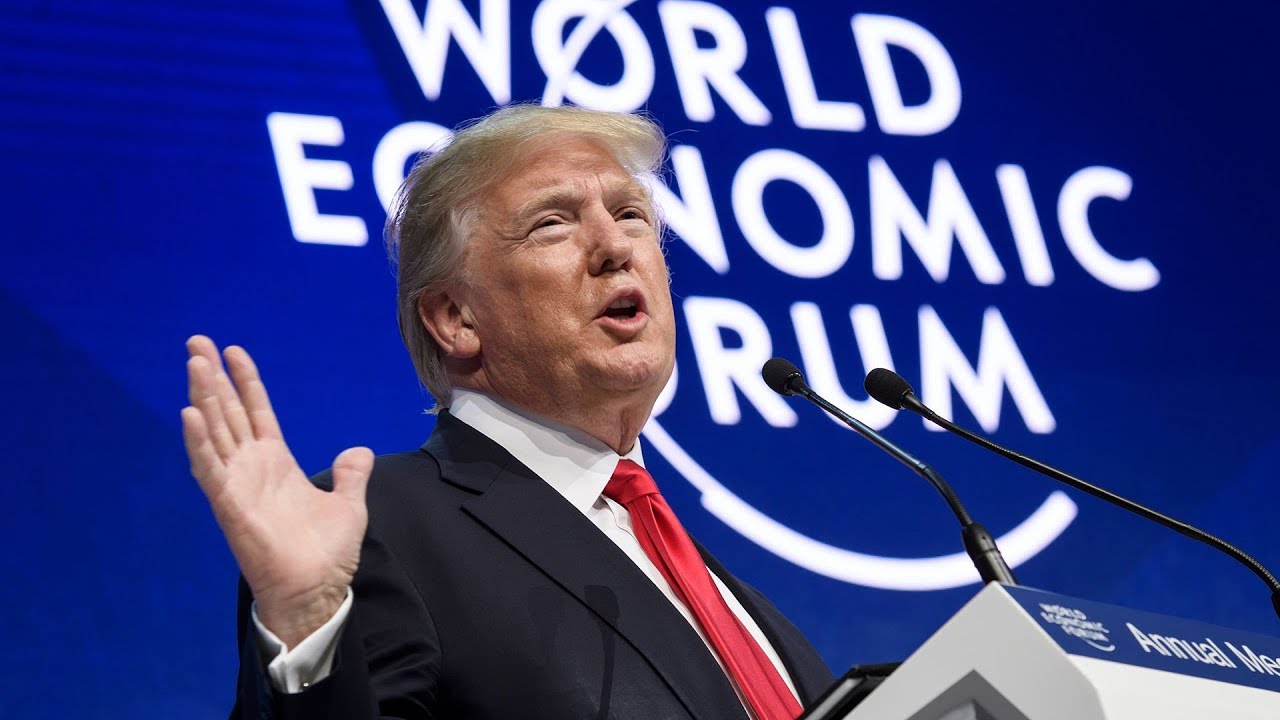
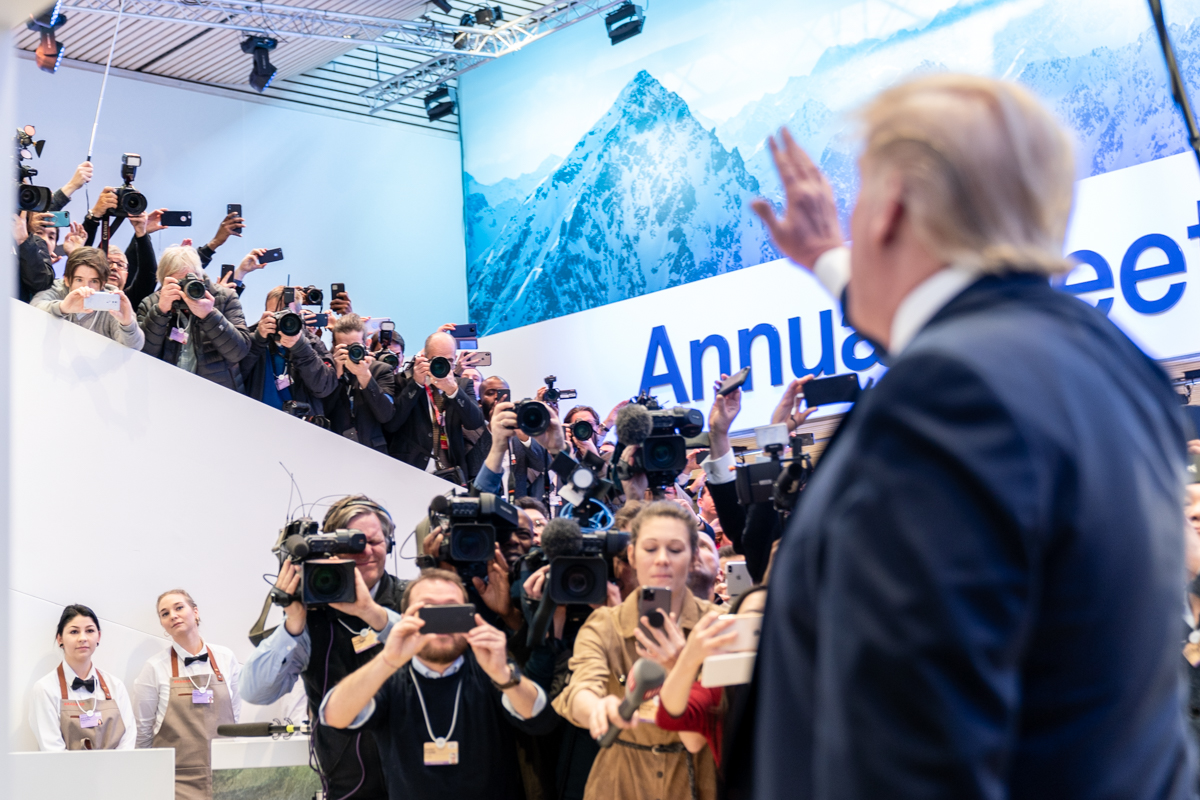
After a brief return to the U.S. due to unexpected electrical issues aboard Airforce One, President Trump is now on the ground in Davos, Switzerland and about to make his speech to the international assembly gathered at the World Economic Forum 2026.

According to the schedule President Trump is expected to make his remarks at 8:30am Eastern Time. There are multiple livestreams below from domestic and international news outlets. The entire western world is watching to see what happens next.

.

.

.

.

.

.

President Trump Asked Directly if He Wants Peace Board to Replace The United Nations


Posted originally on CTH on January 20, 2026 | Sundance 

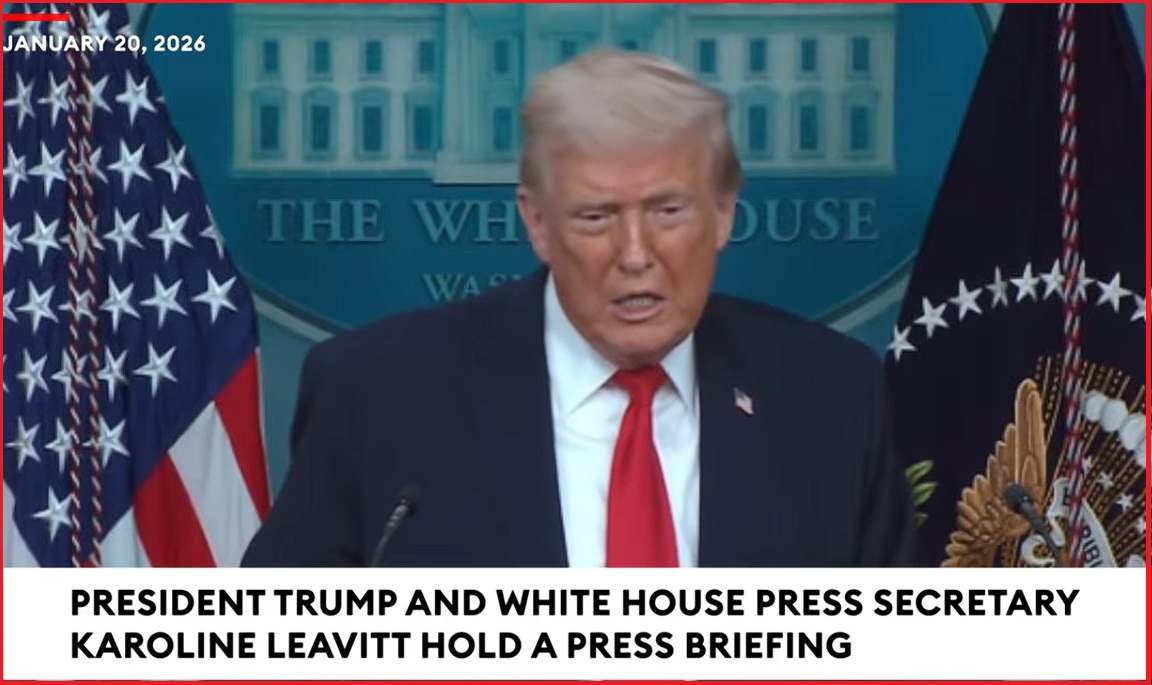
During a press conference earlier today from the White House briefing room, President Donald Trump was asked directly if his “Board of Peace” organization is going to substantively replace The United Nations assembly.  In response to the question President Trump said, “Well it might.”

.

Oh Dear – The Wall Street Journal Just Realized, President Trump is Making U.N. Functionally Obsolescent


Posted originally on CTH on January 20, 2026 | Sundance | 238 

This is funny.  The Wall Street Journal just realized the purpose of President Trump inviting world leaders to a new structure of global leadership.

As the outlet contemplates the mission of the “Gaza Board” they recognize the bigger intention, the nullification of the United Nations.

WASHINGTON DC – President Trump has expanded the mission of his proposed Gaza Board of Peace into a global body that would take on the role mediating conflicts currently held by the United Nations and carry a $1 billion fee for a permanent seat, according to a charter sent to prospective members.

[…] “Too many approaches to peace-building foster perpetual dependency, and institutionalize crisis rather than leading people beyond it,” the charter’s preamble says, calling for “a coalition of willing States committed to practical cooperation and effective action.”

[…] The expansive mandate underscored Trump’s accelerating push to replace the international system established by the U.S. after World War II, which he has attacked for years as ineffective, with a new structure built around himself that bypasses existing multilateral institutions. Earlier this month he pulled the U.S. out of 31 U.N. agencies and bodies, saying they operated “contrary to U.S. national interests.”

Countries that agree to join the board could serve for a three-year term, but that limit would be waived for countries that agree to contribute $1 billion in cash to the board, according to the charter, which was previously reported by Bloomberg. The charter doesn’t say how the fees will be used.

“It’s hard not to read this as an attempt to establish a precedent in Gaza that could be used elsewhere in terms of saying that Trump is going to be calling the global shots here, and you either fall in line or you’re not part of the process,” said Julien Barnes-Dacey, director of the Middle East and North Africa program at the European Council on Foreign Relations. (read more)

Figured that out all on their own, did they?

[…] “The Board of Peace is an international organization that seeks to promote stability, restore dependable and lawful governance, and secure enduring peace in areas affected or threatened by conflict,” it says.

[…] Around 60 governments have received invitations to join the board, but the reaction from most has been cautious so far. Asked Monday about the Trump plan, British Prime Minister Keir Starmer told reporters: “We’re talking to allies about the terms of the Board of Peace.”

France has been asked to join the board but plans to decline the offer for now because the charter goes beyond responsibility for Gaza and raises questions about the impact it would have on the U.N., according to a French official.

[…] Hungarian Prime Minister Viktor Orbán said on X he had been invited onto the board and had already accepted. Orbán has positioned himself as one of the loudest advocates for Trump’s peace efforts in Ukraine. “We have, of course, accepted this honourable invitation,” Orbán said.

The king of Morocco, Mohammed VI, and the president of Kazakhstan, Kassym-Jomart Tokayev, also announced they would join the board, officials from each country said on social-media posts that didn’t mention the $1 billion fee for a permanent seat.

[…] As chairman, Trump would have wide authority over the new organization, with the power to appoint and remove member states, as well as a veto over its decisions. The charter specifies that the board’s decisions will be “made by a majority of the member states present and voting, subject to the approval of the chairman, who may also cast a vote in his capacity as chairman in the event of a tie.”

It also reserves for the chairman the “exclusive authority” to create other entities to carry out the board’s mission.

The charter specifies that “Donald J. Trump shall serve as inaugural Chairman,” and it appears to outline a succession procedure that ensures he or a handpicked successor would remain in the position indefinitely.

“Replacement of the Chairman may occur only following voluntary resignation or as a result of incapacity,” it says. In that event, “the Chairman’s designated successor shall immediately assume the position of the Chairman.” (read more)

“Complicated business, folks. Complicated business.” ~DJT

Trump’s Davos schedule, via the White House. Depart DC Tuesday evening

Wednesday in Davos:
2:10 PM – Greets WEF leadership
2:30 PM – Delivers his Davos speech
3:45 PM – Bilats and meetings
5:25 PM – Business reception

Thursday
10:30 AM – Board of Peace Charter Announcement

Then back home.

Trump Wants Gaza Board Constitution and Remittance Agreement Signed in Davos – EU/Macron Flips Out, “No Way”


Posted originally on CTH on January 19, 2026 | Sundance 

In a stunning and rapid strategy to keep the globalists from realizing what he is assembling, it is being reported that President Trump wants the Gaza Board of Peace constitution and remittance agreement signed in Davos.  However, as the United Nations, European leaders and traditional globalists who comprise the WEF assembly begin to realize what Trump is putting together, they are getting triggered.

“Hey boss, they’re catching on. Better hurry up”

In essence, as people of self-appointed political importance are starting to realize, President Trump is assembling an entirely new structure for global partnerships that will likely end up with the functional obsolesce of the United Nations.  Trump is selecting world leaders through the invite to a global board of peace; Gaza merely represents the initial venue.

One of the key aspects is the new global assembly will each pay their own way. No free riders this time. You want to sit at the big table, join the big club of sovereignty, assemble with a mutually respectful team of action, then pay the entrance fee to attend.

Surprise!  [Remember the “Happy Trump” pin?]

(Bloomberg) — US President Donald Trump’s proposed Board of Peace has got off to a rough start: questioned by Europe, criticized by Israel and celebrated by friends of the Kremlin.

France’s Emmanuel Macron, for one, has come right out of the gate to decline an invitation that was also extended to strongmen such as Belarus’s autocratic leader Alexander Lukashenko. Several liberal democracies are squirming, uncertain how to respond and not wanting to offend Trump.

They don’t have long to decide.

Trump wants the full constitution and remit of the committee signed in Davos on Thursday, according to people familiar with the matter. But some elements of the small print have left invitees wondering whether to accept.

Trump is demanding that nations pay $1 billion for permanent membership of the board, Bloomberg reported, a condition since confirmed by the White House. That’s blindsided world leaders and left many bewildered, according to people familiar with the matter.

Potential members of the board — conceived last year as a Trump-headed body to oversee the redevelopment of post-war Gaza — began to filter out over the weekend. Invitees include world leaders from Canadian Prime Minister Mark Carney to Turkey’s President Recep Tayyip Erdogan.

Much of the concern centers on the wording of the peace board’s charter, seen by Bloomberg, which appears to place its ultimate decision-making power with Trump. That raises many questions — not least over where the payments for long-term membership would go, the people said.

The State Department did not immediately respond to a request for comment.

European allies are working to modify the terms and coordinate a response, people familiar with the matter said, and are seeking to persuade Arab nations to also lobby Trump for changes.

That response encapsulates much of Europe’s approach to Trump’s second term: play for time, be seen to engage, try to talk him down. The conversations are particularly challenging as they come at a sensitive moment in negotiations over Russia’s ongoing invasion of Ukraine and with Trump threatening to take Greenland, one of the people said. (read more)

“He can’t. He, he, wouldn’t” – “Oh yes, he bloody well can, and he bloody well is.” – “In case you haven’t noticed, he’s not asking for permission.”

And….

Wait for it….

Who/Where/What is the first voice to rise against this global alliance for peace?

“So far, only Israeli Prime Minister Benjamin Netanyahu has publicly pushed back against the proposal. While he’s in favor of the Board of Peace as a concept, his office said the make-up of a separate Gaza committee serving under the board, was “not coordinated with Israel and runs contrary to its policy,” after officials from Qatar and Turkey were included.”

Wait, so Israel is not happy…. Not just about Gaza, but about, well, everything this new structure could possibly mean.

Meanwhile, “Argentina’s Javier Milei confirmed he’ll become a founding member, and Italy’s Giorgia Meloni has pitched herself as a mediator who is “ready to do our part.””

Can you see it now?

Leftist/Globalist United Nations imperialism is diminished. While a nationalist, respectful sovereign alliance rises.

Farewell five-eyes.  Giddy up freedom!