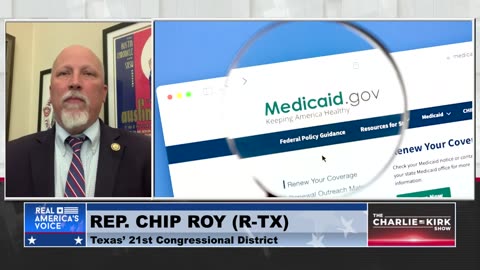
The Medicaid Scam: Rep. Roy Reveals the Real Story & Explains Why the System Needs to Be Changed


Posted originally on Rumble By Charlie Kirk show on: May 21, 2025 at 6:00 pm EST

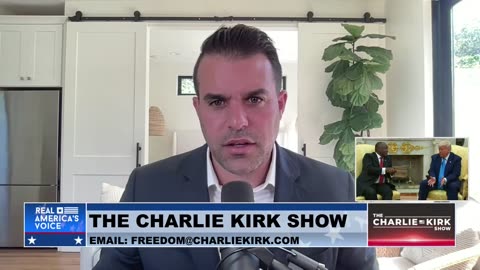
President Trump Confronts South Africa Leader Over the Merciless Murders of White Farmers


Posted originally on Rumble By Charlie Kirk show on: May 21, 2025 at 6:00 pm EST

Jekielek : The Issue With The Catholic Church CCP Deal Is It Gives Credit To The Regime


Posted originally on Rumble By Bannon’s War Room on: May 21, 2025, at 9:00 pm EST

“State Sanctioned Murder For Organs” Jan Jekielek Reveals Evil Reality Of CCP


Posted originally on Rumble By Bannon’s War Room on: May 21, 2025, at 9:00 pm EST

Steve Bannon: “You Can’t Have Massive Tax Cuts Without Commitment To Cuts In Spending”


Posted originally on Rumble By Bannon’s War Room on: May 21, 2025, at 8:00 pm EST

“It’s Going To Get Worse In The Senate” Steve Bannon On Big Beautiful Bill


Posted originally on Rumble By Bannon’s War Room on: May 21, 2025, at 7:00 pm EST

MAX TEGMARK: AI will be vastly more impactful than the Industrial Revolution.


Posted originally on Rumble By Bannon’s War Room on: May 21, 2025, at 1:00 pm EST

NOOR BIN LADIN: President Trump and his administration are REFUSING to pay the World Health Organization’s membership fees as the U.S. leaves the WHO.


Posted originally on Rumble By Bannon’s War Room on: May 21, 2025, at 1:00 pm EST

Bessent Disagrees on US Credit Downgrade


Posted originally on May 22, 2025 by Martin Armstrong 

ScottBessent

US Treasury Secretary Scott Bessent rebuked Moody’s lowered rating of US credit from AAA to AA1. “First of all, I think that Moody’s is a lagging indicator, and I think that’s what everyone thinks of credit agencies,” Bessent said. “Larry Summers and I don’t agree on everything, but he’s said that when they downgraded the U.S. in 2011. So it’s a lagging indicator.”

The US Treasury Secretary must maintain that the nation’s economy is in sound health. Former Treasury Secretary Janet Yellen voiced similar sentiments last year when Fitch downgraded the US credit, calling the move “arbitrary.” “I strongly disagree with Fitch’s decision. The change announced today is arbitrary and based on outdated data,” Yellen insisted. She then went on to insist the federal government had the funds to back two wars in Ukraine and Palestine, as there is no spending limit for governments.

In 2011, Standard & Poor cut its rating also after a debt ceiling crisis caused by politicians. The global markets felt the impact of that news. Fitch has been warning of a possible downgrade since May 2023, due to the massive debt burden and political mismanagement. The White House continued its spending spree and our politicians could not agree on a limit for the debt ceiling. The warnings were there.

The difference this time is that Moody’s has not downgraded US credit since 1917. The issue is not consumer confidence in the US or even investor confidence. The primary concern is CONFIDENCE in the system itself that has clearly been failing. Over 70% of US debt is short-term, and Washington has been unable to pass or adhere to a budget. The Democrats are saying that this is reason to collect more tax revenue, while the Republicans aim to curb government spending. Both fail to realize that they are too late either way, and the system itself must change because the problem cannot be fixed with the same line of thinking that created this disaster in the first place.

Capital is not going to flee the US because of Moody’s downgrade. Where else would it go?

Ratings agencies are indeed reactionary rather than proactive. The debt crisis has been looming for a long time. The Economic Confidence Model turns again in late 2026, and we are watching the beginning of the end for government debt as a trustworthy asset class.

No Tax on Tips Act


Posted originally on May 22, 2025 by Martin Armstrong 

Waiters

The “No Tax on Tips Act” passed in the Senate after a unanimous vote. At last, the Senate can agree upon one item. The legislation permits a tax deduction worth up to $25,000 for tips for workers earning under $160,000 as of 2025, with the figure expected to increase over the years along with inflation. The bill comes with a major caveat.

The measure only applies to cash tips. It is well-known that service workers often underreport or fail to report their cash earnings. There is a high probability that this measure is to ensure that workers properly report their earnings to the IRS to ensure the government can track every passing penny.

The Treasury Inspector General for Tax Administration (TIGTA) conducted a study in 2018 that found 52% of overall tips went unreported, costing the IRS an estimated $44 billion annually. The study found that personal services and food services workers—those who rely on cash tips—were most likely to in incompliance. These are the workers who are often paid under minimum wage and derive the majority of their income from tipping culture. The IRS believes that tips account for 10% of the total individual income tax underreporting gap.

The previous law required tips above $20 per month to be reported. Failure to report could equate to a 50% penalty of Social Security and Medicare taxes owed on the underreported tips. Yet, it is extremely rare for the IRS to actually hunt down individuals who fail to report. The same TIGTA report found that only 34 tip examinations were completed in FY2026, although the IRS believed 15,000 employers withheld $6.3 billion in tip income from the government. From 2013 to 2027, the IRS only completed 262 tip examinations and those mainly occurred on a voluntary basis.

Ride-share workers and others in the service industry who have gone digital will not benefit from this legislation. Tipping culture in America has crept up throughout the years, with the average tip amount coming in at 20%. Americans are asked to tip on everything with the introduction of POS monitors that often ask for a tip when service was not provided.

A recent survey found that up to 90% of Americans feel tipping culture is “out of control,” with 66% holding a negative view of the tip system. Around 83% would like to see a man on mandatory service fees. Three in five Americans (60%) believe employers have shifted the responsibility of employee compensation onto the customer. Still, only 25% of Americans felt that tips should be taxes. Tipping culture is quite different outside America where employees are paid living wages. Every European I know who has visited the States was shocked to see how much they were expected to add to their final bill.

Overall, the new legislation is not exactly a ban on taxed tips. The legislation would have banned taxes on all tips if they were truly concerned with service workers struggling with the cost of living. The Trump Administration has still failed to uphold its promise to remove taxes on overtime pay. Governments are consistently on a hunt for taxation, and this measure will simply allow the government to accurately track cash in circulation.