Posted originally on Jul 8, 2026 by Martin Armstrong |
The politicians are now trying to redefine what victory means because they cannot admit the obvious. CNBC reported that Finnish President Alexander Stubb declared that Ukraine has already “won the war” against Russia because it preserved its independence and sovereignty. He said, “I say Ukraine has won,” while arguing that Russia advanced only 60 kilometers in four years. Sweden’s Prime Minister Ulf Kristersson joined the same fantasy, saying, “Russia is certainly not winning,” and claiming Ukraine is having “spectacular successes.” These people are playing word games while young men are still dying every day in trenches, cities are still being bombed, and Ukraine survives only because the West continues financing the war.
This is the propaganda that has kept this war going. Ukraine did not win. Ukraine was used. There is a very big difference. A country does not “win” when millions have fled, its economy has been destroyed, its population has been shattered, and its government must beg NATO for air defense, ammunition, budget support, and money to keep the state functioning. CNBC itself noted that Stubb still warned Kyiv urgently needs more NATO air defense. That alone exposes the contradiction. If Ukraine has won, why must it still plead for Patriot missiles, NATO membership, and endless Western financing?
Russia has not won either. NO ONE WINS DURING WARFARE! CSIS estimated Russia suffered roughly 1.4 million battlefield casualtiesthrough June 2026, including 400,000 to 450,000 deaths. That is a meat grinder. But the fact that Russia has suffered enormous losses does not magically mean Ukraine has won. War is not a football match where one side loses badly and the other is declared victorious by default. Ukraine has suffered staggering losses as well, with CSIS estimating 525,000 to 625,000 Ukrainian military casualties, including 125,000 to 150,000 dead. That is a generation destroyed.
The UN reported that since the 2022 full-scale invasion, at least 15,172 civilians were killed and 41,378 injured by February 2026, and the real figures are likely higher. Civilian casualties continued rising in 2026, with April marking the highest monthly toll since July 2025 and May becoming the deadliest month for civilians since April 2022. This is not victory. This is the complete failure of diplomacy, the failure of NATO expansion policy, the failure of European leadership, and the failure of anyone who believed war could be managed like a public relations campaign.
Ukraine has only held off Russia because the West turned it into a proxy war. The Council on Foreign Relations reported that the United States made available $195 billion in Ukraine-war-related spending by March 31, 2026. The EU Council states total EU support has reached €215.2 billion, including €77 billion in military support. Ukraine is now seeking another €6.6 billion from the EU’s peace fund while its own officials say total defense needs for the year are about €136 billion, with the domestic budget covering only about €53 billion. That is a state kept alive by foreign taxpayers.
Stubb is wrong because he is measuring survival as victory. Kristersson is wrong because “spectacular successes” do not change the strategic reality. Ukraine has launched impressive drone strikes and disrupted Russian energy infrastructure, but Russia is still fighting, still advancing in places, still bombing Ukrainian cities, and still forcing Kyiv to rely on NATO for survival. Ukraine may have prevented Russia from taking the whole country, but preventing total defeat is not the same as winning a war.
The neocons never cared how many Ukrainians died. If Ukraine were winning, there would be peace. If Russia were defeated, the war would be over. Instead, we have a devastated country, a shattered generation, an endless funding pipeline, and NATO leaders pretending that attrition is victory.
Posted originally on Jul 8, 2026 by Martin Armstrong |
Spain’s latest position perfectly illustrates what has become one of the great contradictions within NATO. Madrid wants Europe to build its own military capable of acting independently of Washington, yet Spain has consistently resisted NATO’s higher defense spending targets while expecting the alliance to continue providing collective security.
Spain is again championing the idea of a European army while insisting it can meet its NATO obligations without matching the spending commitments accepted by virtually every other member. Europe cannot demand strategic independence while simultaneously asking someone else to pay the bill.
I have said for years that Europe has always dreamed of becoming an independent military power. Long before the war in Ukraine, Brussels was discussing a unified European army, common procurement, centralized command, and eventually a foreign policy independent of Washington. Every crisis has been used to advance that objective. The migration crisis expanded Brussels’ authority. COVID centralized health policy. The Ukraine war accelerated fiscal integration through joint borrowing and massive defense spending. Now the argument is that Europe needs its own army because it can no longer rely entirely on the United States. That has been the destination all along.
Ironically, Spain is making the argument while remaining one of NATO’s weakest contributors. Prime Minister Pedro Sánchez rejected the alliance’s new goal of spending 5% of GDP on defense by 2035, insisting Spain can fulfill its obligations while spending only about 2.1% of GDP. That position has frustrated allies who argue collective defense cannot function if some members continually expect others to shoulder the burden. NATO Secretary General Mark Rutte has repeatedly argued that Europe’s security environment now requires substantially greater investment across the alliance.
Europe must ultimately decide what it wants. If it genuinely intends to build an independent military capable of defending the continent without American leadership, then it must also accept the enormous financial burden that comes with that decision. A modern European army would require hundreds of billions of euros in new spending, integrated command structures, common procurement, expanded ammunition production, satellite capabilities, cyber warfare, missile defense, logistics, and nuclear deterrence. None of that comes cheaply.
The greatest long-term strategic challenge is no longer Europe. It is the Indo-Pacific. China is rapidly expanding its navy, modernizing its nuclear arsenal, increasing pressure on Taiwan, and competing directly with the United States across technology, manufacturing, shipping, and finance. America cannot simultaneously concentrate the majority of its military resources in Europe while preparing for a potential confrontation in Asia.
If Europe believes Russia represents its primary existential threat, then Europe should take primary responsibility for confronting Russia. That is neither anti-European nor isolationist. It is simply strategic reality. The United States should remain an ally, but not Europe’s permanent security guarantor. Washington has carried that burden since the end of the Second World War. Meanwhile, European governments repeatedly criticize American foreign policy while relying upon American aircraft carriers, intelligence, logistics, nuclear deterrence, and taxpayers whenever a genuine crisis emerges.
The post-1945 order is fragmenting. Nations are increasingly pursuing regional spheres of influence rather than a single American-led global system. Europe seeks strategic autonomy. China seeks dominance in Asia. Russia seeks influence over its near abroad. The United States must decide where its vital interests truly lie. If Europe wants its own army, then let Europe build it. America’s focus should increasingly shift toward maintaining stability in the Pacific, where the balance of power over the next several decades is far more likely to determine the future of the global economy than another generation of underwriting European defense.
Posted originally on Jul 8, 2026 by Martin Armstrong |
The politicians insisted for years that the border crisis was somehow good for the economy. They claimed millions of illegal migrants would solve labor shortages, keep inflation down, and somehow make America stronger. Now even a Federal Reserve study is acknowledging what ordinary Americans have been living through every single day. The damage was real, measurable, and far more significant than Washington was willing to admit.
A new working paper from the Federal Reserve Bank of Dallas examined the unprecedented wave of unauthorized immigration between 2021 and 2024. According to the Congressional Budget Office, roughly 7 million unauthorized migrants were added to the U.S. population during that period, averaging about 1.75 million people annually. That was nearly double the pace of legal immigration and represented the largest surge in modern history.
The study found that these inflows accounted for roughly 30% of employment growth, approximately 30% of home-price appreciation, and about 20% of rent increases across the average metropolitan area between March 2021 and March 2024. Those are the Federal Reserve’s own findings—rent increased an alarming 20% due to mass migration.
The economists determined that every 1% increase in unauthorized workers relative to a local labor force produced roughly a 1% increase in total employment, but there was virtually no expansion in housing supply to accommodate that population growth. Instead, every 1% increase in unauthorized workers corresponded with approximately a 2.2% rise in home prices and a 1.4% increase in rents. That is precisely what anyone with common sense would expect. You cannot inject millions of additional people into already constrained housing markets and pretend prices will remain stable. Supply simply could not keep pace with demand.
The report also found little evidence that average wages declined, which will undoubtedly be seized upon by politicians. Yet that misses the larger point entirely. The study found labor income per capita declined while government transfers fell. More importantly, Americans were competing for housing in markets where construction could not expand fast enough. Families trying to purchase their first home or simply renew a lease paid the price. The issue was never simply wages. It was purchasing power. If housing costs explode faster than incomes, people become poorer regardless of what their paycheck says.
This is exactly how governments create inflation without ever printing a single additional housing unit. They expand demand through policy while ignoring the supply side of the equation. Washington spent years insisting inflation was caused by corporate greed, supply chains, or anything else convenient while refusing to acknowledge that adding millions of people into an already undersupplied housing market would inevitably push prices higher. Economics is not ideology. It is mathematics.
This entire episode demonstrates the danger of allowing politicians to ignore basic economic principles in pursuit of ideology. Governments cannot continue expanding populations while restricting housing development, burdening builders with regulation, inflating construction costs, and expecting affordability to improve. Every action has a consequence. The bill always arrives eventually, and it is ordinary citizens who end up paying it.
Posted originally on Jul 7, 2026 by Martin Armstrong |
I have spoken with professional Iranian Americans who, prior to this war, were staunchly opposed to the religious government. They took great pride in Iran’s participation in the World Cup, yet were deeply offended by the treatment of the players, who were judged solely on the basis of their nationality. These individuals began to sense that the prevailing attitude was one of distrust toward all Iranians, rather than a targeted opposition to the Shia theocracy. However, this war against Iran is yielding a counterproductive outcome. Rather than toppling the regime or inspiring a popular uprising, it is fostering a unifying effect, as the public increasingly comes to view the so-called “Great Satan” and “Little Satan” as the true aggressors.
I have previously written about how those in power will often employ a false flag operation to manufacture unity through what is known as the “rally ’round the flag” effect. Coined by Mueller in 1970, this phenomenon describes a sudden, and often short-lived, surge in a political leader’s popularity during an international crisis, war, or attack. It is typically attributed to a combination of factors, including patriotic fervor, elite consensus, and psychological responses to external threats.
1) Citizens feel a sense of national unity and are more likely to support their leader in the face of an external threat.
2) Opposition parties and political elites often temper their criticism of the government, creating an appearance of national unity.
3) Feelings of anger, anxiety, or vulnerability can drive citizens toward “unconditional support for those in power” as a source of protection.
We saw that with 911. Democrats and Republicans actually merged briefly. In this case, the US was the aggressor attacking Iran. Thus, there is no “rally around the flag” inside the US since we were not attacked. To me, this seems to be a one-way affect.
While a “rally ’round the flag” effect is a well-documented phenomenon where an attack can cause a surge in unity and support for the leadership, recent research also shows this outcome is highly conditional and not universal. Recent studies have show that this is NOT a guaranteed outcome. It appears to depend upon the verification of the attack and do the people believe that it was truly a foreign enemy.
Rather than looking weakened by this war, Iran presented itself as defiant with the public funeral painting itself as the victim of assassins. They presented a unified and determined to shape what comes next. That defiance and ability to survive now underpins Iran’s negotiating strategy. The US and Israel, with their unethical assassination tactics, has unified the country as it was not before. Depicting the funeral as the moment Tehran to project strength and unity. Lyndsey Graham once said that the Ukrainians would fight to the last man standing. That defiance is now engulfing Iran.
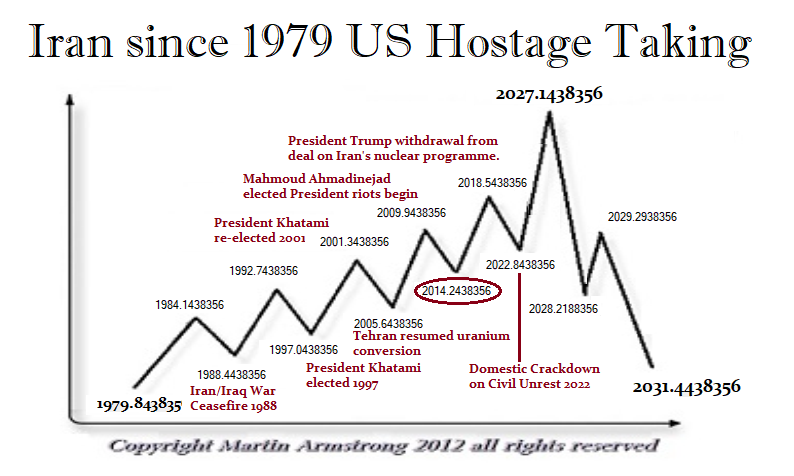
We are in this final wave between 2022 and 2027, which traditionally is the most volatile. As I posted. Dr. Dan Diker, president of the Jerusalem Center for Security and Foreign Affairs, told Newsmax on Sunday that the only way to defeat Iran’s ruling regime “is to defeat it militarily.” While Netanyahu spoke of the imminent liberation of the Iranian people from tyranny, he could care less about the Iranian people. This about his hatred for Iran.
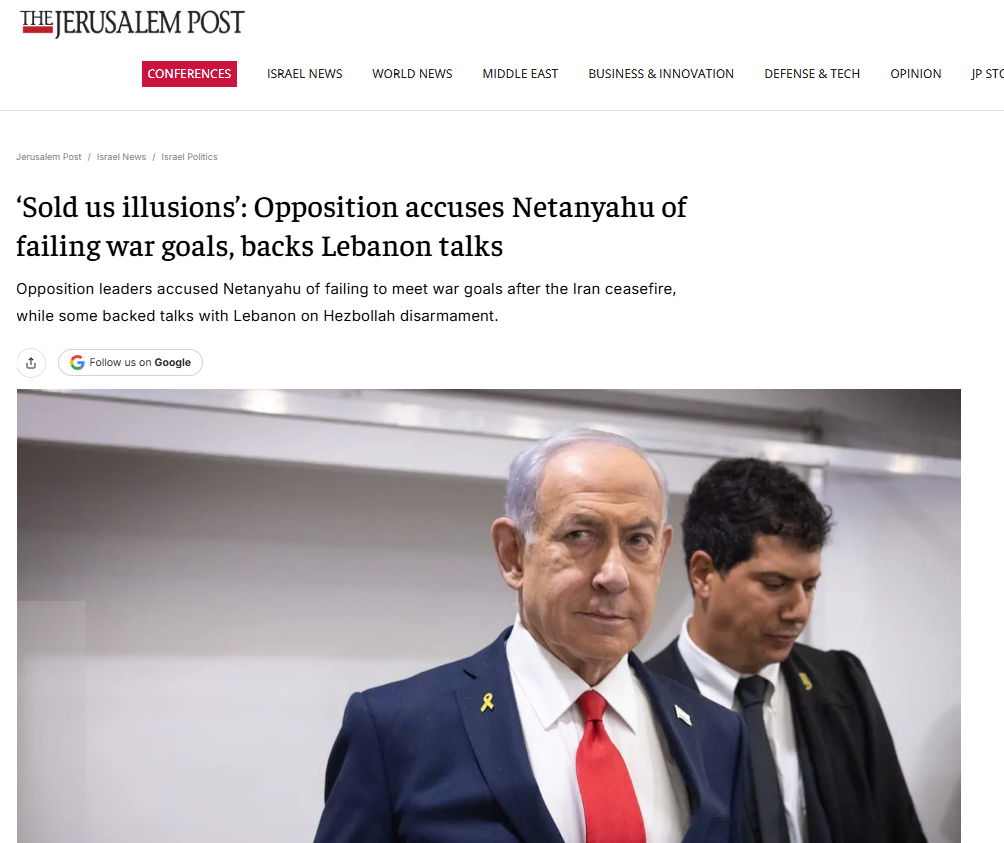
Former prime minister Naftali Bennett, leading opposition candidate, has come out anticipating that Netanyahu will run in the upcoming elections. He said in a press conference that the war’s objectives were clearly outlined in advance and had not been achieved ahead of the ceasefire.
There is concern that Prime Minister Benjamin Netanyahu, who has consistently and publicly declared an unwavering commitment to prevent Iran from obtaining nuclear weapons, using the strongest possible terms, will resort to a false flag and some fear he could use a tactical nuke to try to reach Iran’s nuclear facilities deep in the mountain.
The next scheduled Israeli Knesset election is expected to be held by October 2026 (barring an early dissolution). Netanyahu’s current term is ongoing, and he remains the sitting Prime Minister. However, his future political viability could be influenced by this Iran War as well as the status of his ongoing corruption trial, which is a central factor in his political narrative.
The duration of the current government is a crucial variable. If the coalition remains intact, the election will proceed as scheduled in October. If the government collapses, the election could occur much earlier, at which point his decision to run would become clear.
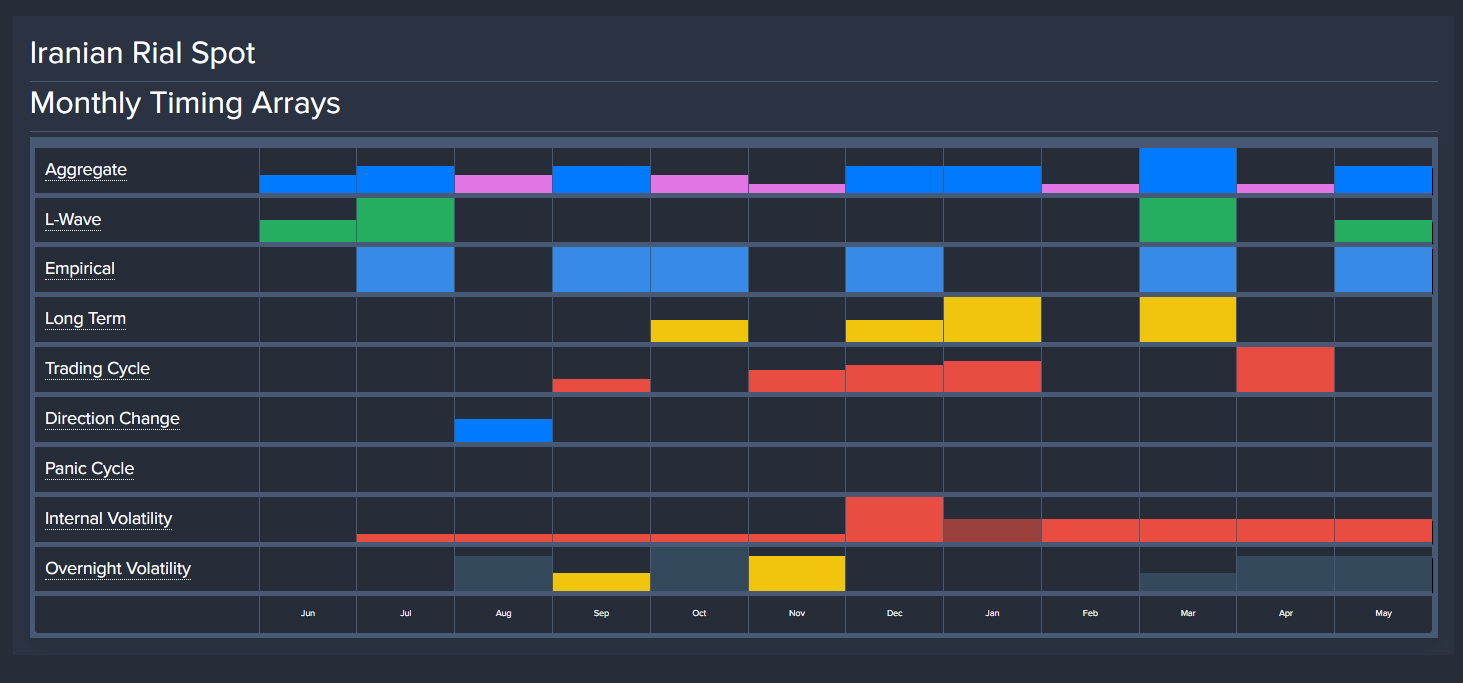
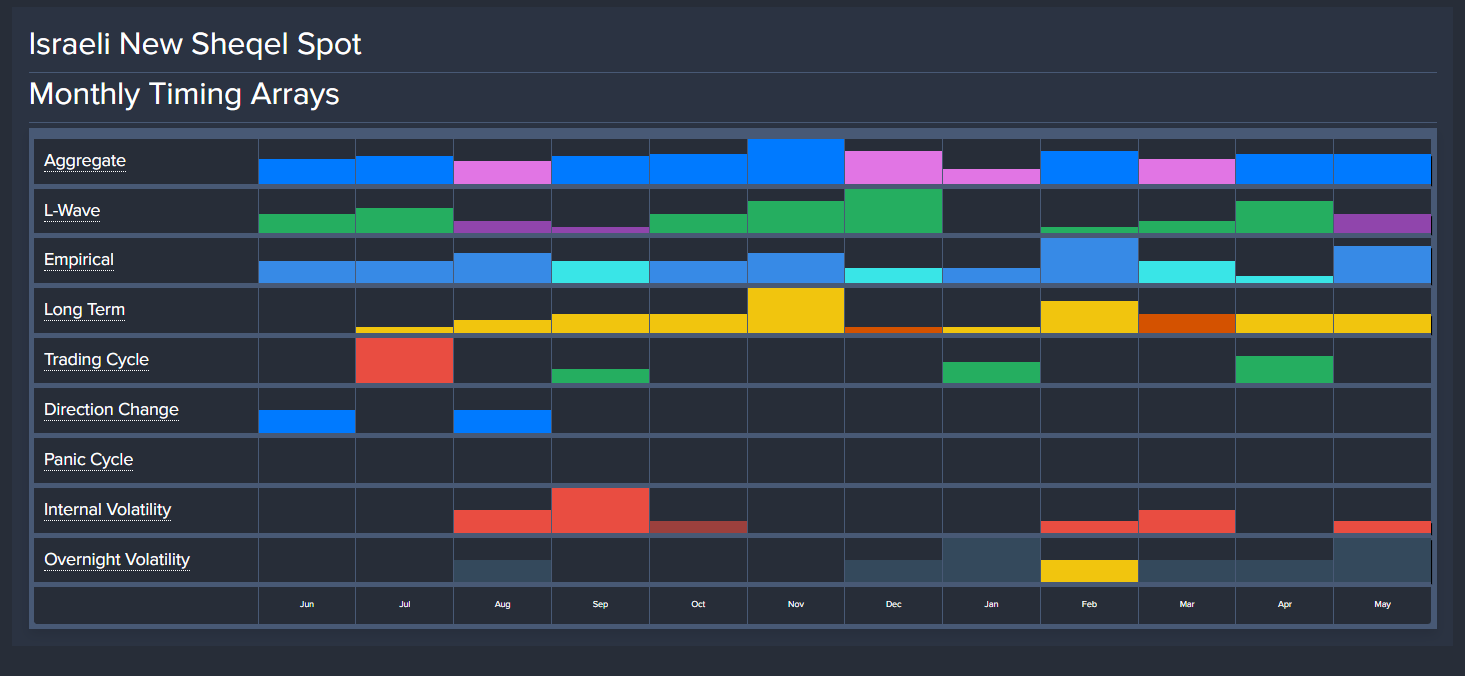
It clearly warns that that something is in the wind come August and that are Directional Change in both Iran and Israel. Note that there is rising volatility in Israel for September, but not in Iran. This tends to imply that the Israeli elections will take focus.
Cuba’s national electrical grid suffered yetanother total collapse on July 6, leaving nearly the entire island without electricity. According to the report, the outage began after a failure at the Diezmero substation near Havana triggered a chain reaction that shut down power generation across the country. This marks the fourth nationwide grid collapse in less than a year, underscoring just how fragile Cuba’s electrical infrastructure has become. Authorities estimate nearly 10 million people were affected as engineers once again struggle to restart an electrical system that has become increasingly unstable.
Many immediately blame socialism alone, but the reality is more complicated. Cuba has endured decades of economic isolation, sanctions, fuel shortages, and chronic underinvestment. None of that excuses Havana’s policies, yet pretending that American policy has played no role ignores history. Washington has maintained one of the longest embargo regimes in modern history while successive administrations tightened restrictions on fuel shipments and financial transactions. The result has been an economy unable to obtain the capital, spare parts, and financing necessary to modernize infrastructure that was already decades old.
Cuba’s electrical grid has become one of the clearest examples of what happens when infrastructure is sacrificed to politics. Most of the country’s thermoelectric plants were built during the Soviet era and continue operating well beyond their intended lifespan. Mechanical failures have become routine rather than exceptional. The country imports much of its fuel, and when shipments from allies such as Venezuela declined because of their own economic collapse, the entire system became even more vulnerable. You cannot maintain a twentieth-century electrical grid indefinitely without investment. Eventually transformers fail, transmission lines deteriorate, and power stations simply reach the end of their useful lives.
Infrastructure does not suddenly collapse overnight. It deteriorates after years of deferred maintenance, declining investment, and governments that continually choose short-term politics over long-term planning. Whether the system is socialist or capitalist makes little difference if there is no capital available to maintain the foundation upon which the economy depends.
The sovereign debt crisis I have discussed for years ultimately produces exactly these types of failures. Governments borrow to fund current consumption while neglecting productive investment. The public notices little at first because the lights still work. Then one day they do not. Cuba simply reached that point sooner than many others because it lacked access to both capital and reliable energy supplies. Every nation that neglects its infrastructure while diverting resources elsewhere eventually discovers that economic decline begins long before the markets recognize it. The blackout is not the crisis. It is merely the symptom of decades of economic decay.
Posted originally on Jul 7, 2026 by Martin Armstrong |
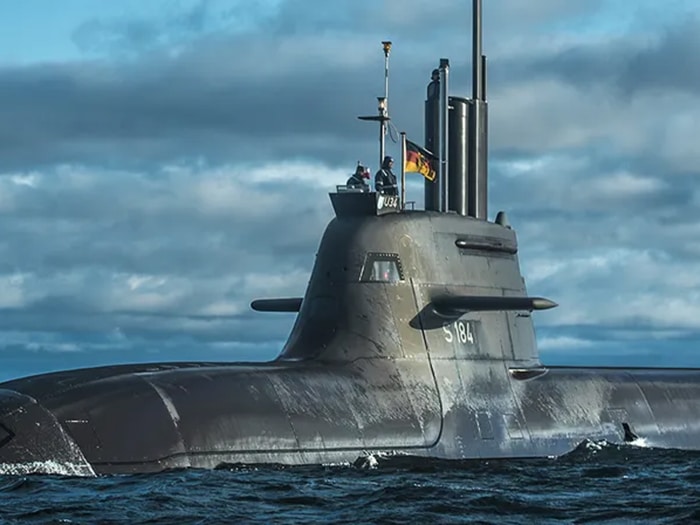
Canada has officially selected Germany’s ThyssenKrupp Marine Systems (TKMS) as the preferred builder for a new fleet of 12 submarines. The program is expected to cost roughly C$60 billion, making it one of the largest military procurements in Canadian history. Prime Minister Mark Carney is making the announcement just before the NATO summit, where member states are once again pledging even higher military spending. This is not simply about replacing aging submarines. It is another step in the global rearmament that I have warned was inevitable once governments abandoned diplomacy in favor of perpetual confrontation.
Canada’s existing Victoria-class submarines are reaching the end of their operational lives, but what stands out is who won the contract. Germany’s Type 212CD submarine was chosen over South Korea’s competing bid. The 212CD was jointly developed with Norway and is specifically designed for NATO operations, utilizing advanced air-independent propulsion, non-magnetic steel to reduce detection, and enhanced capabilities for operations in northern waters. Germany has openly stated that this contract would draw Canada closer to Europe strategically, not merely commercially. That should tell everyone this was as much a geopolitical decision as it was a military one.
Europe is rapidly transforming itself into a military union. Germany, once constrained after the Second World War, is now becoming one of Europe’s dominant military manufacturers. I have written repeatedly that history always comes full circle. Nations never remain demilitarized forever. The politicians always justify rearmament by claiming they are preserving peace, but throughout history every major military buildup has eventually found its justification in conflict. The War Cycle has been pointing directly toward this period, and every month governments continue pouring hundreds of billions into defense while their sovereign debt problems continue to spiral out of control.
Canada recently reached the NATO alliance’s 2% of GDP spending goal ahead of schedule, while NATO members have now committed themselves to raising total defense and security spending toward 5% of GDP by 2035. The question nobody asks is where this money will come from. Canada already faces slowing economic growth, record household debt, an affordability crisis, and expanding fiscal deficits. Governments never solve debt crises by borrowing even more money, yet that is precisely the path every Western nation has chosen.
These massive defense programs become long-term liabilities that taxpayers finance for decades. Every new military commitment pushes sovereign debt even higher while politicians simultaneously claim there is no money for healthcare, pensions, or essential domestic infrastructure.
This is why I have consistently said the sovereign debt crisis and the War Cycle are converging. Governments throughout the West cannot meet their existing obligations, yet they continue to expand military budgets at a pace not seen since the Cold War. Germany is rebuilding its defense industry. Canada is rearming. Europe is preparing for prolonged confrontation with Russia. Asia is expanding its naval forces. These are not isolated events. They are all part of the same global trend. Once governments begin reorganizing their economies around military production, history shows they rarely reverse course peacefully. That is why the years immediately ahead remain among the most dangerous we have faced in generations.
Posted originally on Jul 7, 2026 by Martin Armstrong |
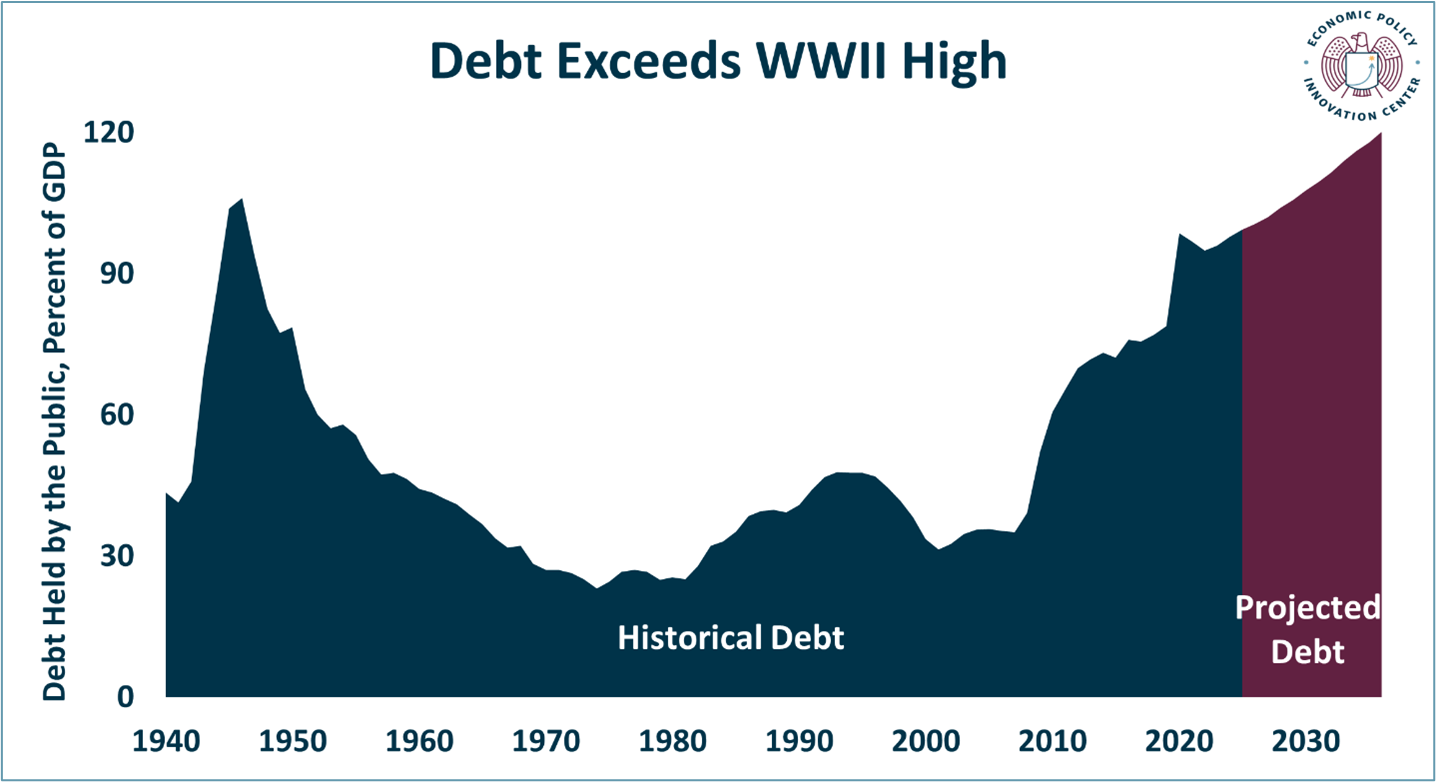
The United States has crossed a milestone that Washington has spent decades pretending would never arrive. Federal debt held by the public has now exceeded 100% of GDP for the first time since the aftermath of the Second World War. According to the latest government data, debt held by the public reached approximately $31.27 trillion while the nation’s annual economic output totaled roughly $31.22 trillion, pushing the debt-to-GDP ratio to 100.2%. The Congressional Budget Office now projects debt held by the public will average 101% of GDP this year and continue climbing to 120% by 2036 if current law remains unchanged.
The media continues to compare today’s numbers with the end of World War II, but that comparison completely misses the point. After 1945, the United States emerged as the world’s dominant industrial power. Soldiers came home, factories shifted from producing tanks to automobiles, the population expanded rapidly, and economic growth far outpaced government borrowing. Debt declined because the nation was producing wealth. Today we are doing precisely the opposite. Washington continues borrowing during periods of economic expansion, not because the country faces an existential war, but because politicians refuse to tell voters that promises have become mathematically impossible to keep.
The numbers expose just how unsustainable the fiscal position has become. The Congressional Budget Office estimates the federal deficit will total roughly $1.9 trillion this fiscal year, equal to 5.8% of GDP. By 2036, annual deficits are projected to exceed $3.1 trillion, or 6.7% of GDP. Federal spending will consume 23.3% of GDP this year, while revenues amount to only 17.5%. Washington is spending approximately $1.33 for every dollar it collects. That gap is no longer the result of recession or emergency stimulus. It has become the permanent operating model of government.
The real crisis is not simply the debt itself. It is the cost of carrying that debt. Net interest payments exceeded $1 trillion for the first time last year, consuming roughly 14% of all federal spending. Interest on the debt now exceeds what Washington spends on national defense. Every increase in long-term interest rates compounds the problem because trillions of dollars in Treasury securities must continually be refinanced at higher yields. Governments cannot borrow indefinitely without eventually becoming captive to their creditors.
This is exactly why I have repeatedly explained that the sovereign debt crisis, not inflation, will define this decade. Every government has embraced the Keynesian fantasy that deficits do not matter as long as borrowing remains possible. They assume they can simply issue another bond and postpone the consequences for another administration. That strategy works only until confidence begins to disappear. Sovereign debt crises are never caused by running out of money. They begin when lenders question whether governments possess either the ability or the political will to restore fiscal discipline.
Our computer has never suggested that the sovereign debt crisis would begin with a sudden default. It unfolds gradually through rising interest costs, capital migration, declining confidence, and governments searching for new ways to finance themselves. That inevitably leads to higher taxes, inflationary policies, capital controls, and expanding regulation of private wealth. Politicians will never admit they overspent. They will instead insist that the problem is wealthy citizens who have not contributed enough, corporations that have not paid their “fair share,” or investors who moved capital abroad. Governments always blame the people before accepting responsibility for their own fiscal recklessness.
Crossing 100% of GDP is not merely another statistic. It marks the point where the United States officially joins the group of heavily indebted nations that believed perpetual borrowing could replace sound fiscal policy. Unlike 1946, there is no peace dividend waiting on the horizon, no manufacturing boom capable of overwhelming the debt, and no political appetite to reduce spending. Every election promises more benefits, more subsidies, and more borrowing. That is why this cycle will end as every sovereign debt cycle throughout history has ended, with a crisis of confidence rather than a shortage of promises.
Posted originally on Jul 6, 2026 by Martin Armstrong |
Video Player
A ton of emails have come in about the Israeli leaked video and the timing. Footage has surfaced from Israel, which has been long rumored to have existed. Channel 12 has aired the leaked video in time for the NATO conference confirming Israel ordered the Hannibal Directive in the early hours of October 7th, 2023. This takes place at the Israel police command center. The video shows what they said:
“(Strike) Gaza. Break it all apart. Along with the soldiers who got abducted.”
In the first hours of Operation Al-Aqsa Flood, while conversing with Israel’s Police Chief Kobi Shabtai, another senior officer calls to implement the HANNIBAL DIRECTIVE, and destroy Gaza along with the Israeli captives. Minister Itamar Ben Gvir later arrives and orders to stop filming the meeting. This video has been leaked to discredit Trump at the NATO meeting.
The HANNIBAL DIRECTIVE is a highly controversial Israeli military policy. The most widely accepted explanation for its name is that it is named after the Carthaginian general Hannibal Barca, who chose to take his own life by poison around 181BC rather than be captured by his Roman enemies. The name is seen as a chillingly apt reference to a policy that emphasizes preventing capture at almost any cost.
Its primary intent was to prevent the capture of Israeli soldiers by enemy forces, even if it meant TERMINATING the soldier’s life, by authorizing the use of massive force to stop a kidnapping in progress. The Israeli perspective was to ensure that enemy forces could NOT take an Israeli soldier hostage. The underlying concern was that captured soldiers could be used as bargaining chips to secure the release of Palestinian prisoners held in Israeli jails.
In essence, while it was supposed to be officially a “last resort,” the directive allowed for the use of overwhelming firepower, potentially including artillery or airstrikes, on a vehicle carrying a captured soldier, even if that meant the soldier might be killed in the process. The instruction was to prevent the escape of the captors “at any cost,” which critics argue effectively prioritized preventing the kidnapping over the soldier’s personal safety.
In 2016, the Israeli claimed to have military revised the directive to emphasize the soldier’s life as paramount. However, a 2022 report indicated that the Israeli military had officially rescinded the HANNIBAL DIRECTIVE, replacing it with updated, more refined protocols for hostage and missing persons situations.
In the context of the October 7 Hamas Attacks, the policy has drawn significant attention since the Hamas-led attacks on Israel. While the directive was officially rescinded before the attacks, its legacy and application have been debated. Multiple investigations and news reports had alleged that the HANNIBAL DIRECTIVE was activated during the chaos of the October 7 attacks. For instance, some reports indicate that the IDF ordered that “no vehicle can leave” the attack area, which allegedly led to a policy of “shoot to kill and leave no one behind.”
The October 7 attacks were a complex and mass casualty event involving around 5,000 militants and the seizure of over 250 hostages. The chaotic environment involved different militant groups, making it difficult to distinguish between soldiers and civilians or to prevent kidnappings using standard operational protocols.
In the broader context and controversy, critics argue that the HANNIBAL DIRECTIVE was used to justify the deaths of kidnapped Israelis to avoid prisoner swaps. Since October 7th, survivors and families of victims have alleged that the IDF engaged in actions consistent with the HANNIBAL DIRECTIVE, such as shelling vehicles and buildings where hostages were held, potentially killing them to prevent their capture. The Israeli military denies any deliberate killing of its own citizens on October 7th and maintains it acted to neutralize threats, though some testimonies from survivors and soldiers have fueled the ongoing controversy.
Of the 251 hostages taken, 168 have been returned and 83 have died in captivity.
Posted originally on Jul 6, 2026 by Martin Armstrong |
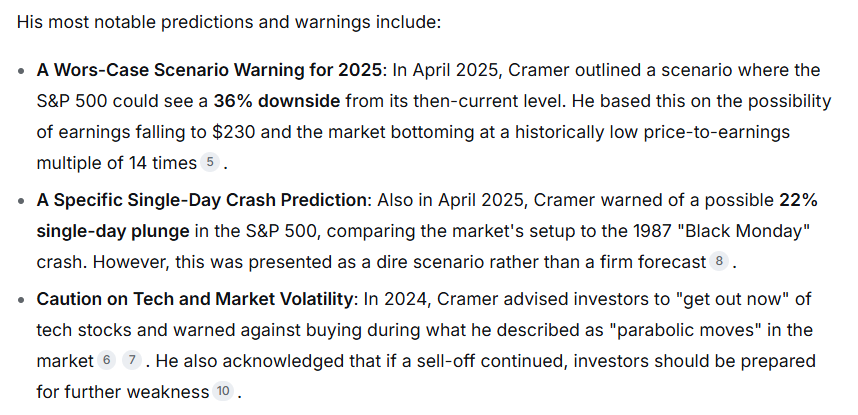
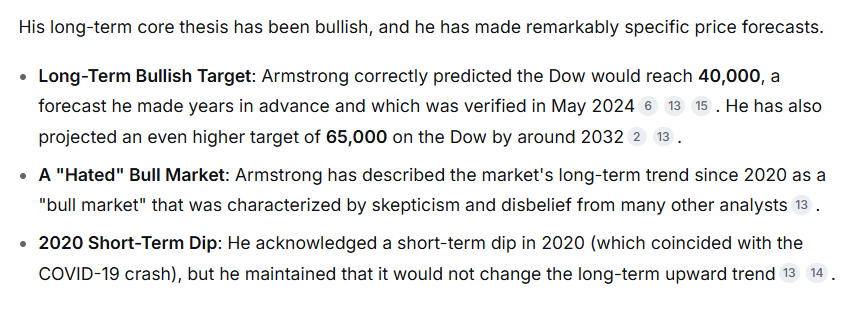
COMMENT: Marty, despite being repeatedly advised to disregard your work, I distinctly remember your 2020 call that we were entering the most hated bull market in history. No other analyst I know can match your predictive track record—which, I suspect, is precisely why you face so much opposition. Any media outlet that refuses to host you only reinforces its own lack of credibility. I’ve attached an AI-generated comparison between you and Jim Cramer. What stands out most is that your analysis is never rooted in personal opinion; it remains strictly objective. In that regard, you captured the very essence of Socratic wisdom. Every forecast article you read is about the crash. Nobody but nobody has been long-term bullish.
Jeb
PS: As you know, I am a lawyer. I read your sentencing TR and everything they say about you is a lie. They dropped the whole Ponzi allegation, the bank plead guilty, and the judge ruled people were not entitled to be paid twice and ordered you had full credit for the bank’s restitution so you had none. The fact that they put a gag order on you to prevent you from helping your clients says it all.
REPLY: The entire reason I am doing this conference on July 25th trying to keep the cost to a minimum is because of what you are saying. The reasons offered are always domestic. I have witnessed international capital flows. I taught Socrates how to analyze the world from that perspective, not classical economic theories that were all forged during the Gold Standard so they NEVER considered currency as a variable. You can invest internationally all based on the currency at times even alone. This is why these theories crumble to dust and need to be swept away. Things change. War was fought with stones, then clubs, then swords, bullet with the discover of gunpowder, followed by nukes, and now war has become drone-warfare with a kid who is great at video games.
Another reader sent this in:
A Taste of Armageddon” (Star Trek: The Original Series, Season 1, Episode 23). In this episode (aired February 23, 1967), Captain Kirk and the Enterprise crew visit the planet Eminiar VII on a diplomatic mission. They discover that Eminiar has been in a 500-year computerized “war” with its neighbor, Vendikar. The conflict is entirely simulated by computers that calculate attacks and casualties—no actual weapons are fired—but the designated “casualties” (including, at one point, the entire Enterprise crew) must voluntarily report to disintegration chambers to be killed for real, keeping the war “civilized” and bloodless on the surface. Kirk and his landing party get caught up in the system when the Enterprise is declared “destroyed” in a simulated attack, and they’re ordered to report for disintegration. The episode explores themes of war, dehumanization, and the illusion of sanitized conflict, ending with Kirk forcing the societies to confront the reality of their choices.
Is this the next wave of creative destruction?
I have been calling this the “most hated bull market in history” because, it has been a powerful rally that most investors don’t trust, don’t participate in, and constantly expect to collapse. Based on data from the Federal Reserve’s Survey of Consumer Finances, only about 21% of American families directly own individual stocks. The 21% figure for direct stock ownership is from the Federal Reserve’s 2022 Survey of Consumer Finances and is NOT a record high. In fact, it is less than the direct ownership rates seen in both 1929 and 2000. So where is the Bubble?
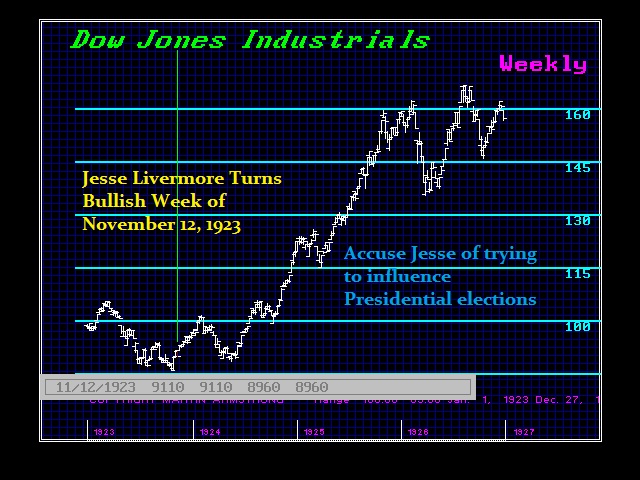
The Wall Street Journal accused Jesse Livermore of trying to influence the election by putting out a bullish forecast in 1923. They were wrong, and Time Magazine wrote that those who were “bearish to begin with” refused to allow the market to guide their analysis. They were bent upon having a depression and chose to slander Livermore by suggesting that he might gain some personal favors from the President if he could make the market go up. The excuses were, quite frankly, defamatory and uncalled for. The Wall Street Journal falsely accused Jesse of turning bullish for the election and refused thereafter to ever quote him again because they were wrong. The same applies to me. No mainstream press will ever report the truth because they get their marching orders from behind the curtain as we saw with COVID.
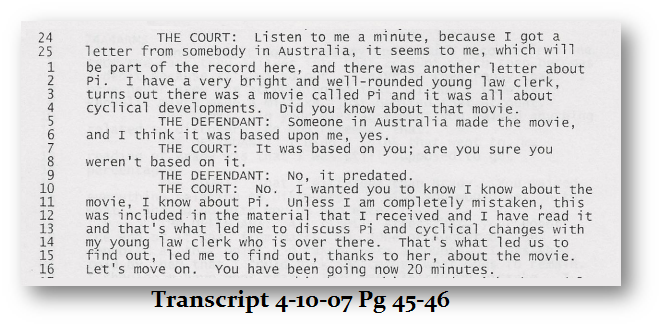
Amazing, on one had they tried to discredit the model claiming I stole it from a 1998 movie to go back in time since I first published it in 1979. Yet the movie the Forecaster they made on me had to be insured by Lloyds of London to even make the film. Everything had to be proven to them that the government lied at every stage of the case. The government even put it in writing that they demanded I turn over the source code or they would fire all 240 employees worldwide.
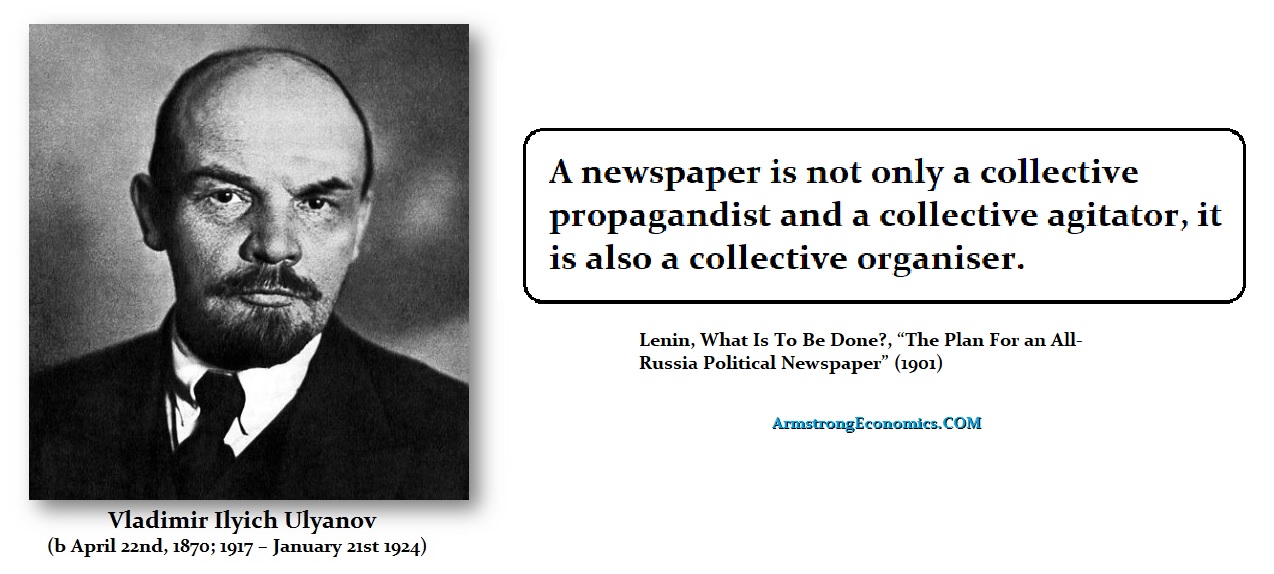
The government will NEVER tell the truth and mainstream press is used to push disinformation. The UK government is now seizing YouTube and they will now censor everything in Britain no different than the Communists. Even Castro’s daughter has warned that government always seizes the press. We saw what they did with COVID. That was a tiny taste. NEVER expect to get real forecasts from mainstream media.
Despite the market’s long-term strength, the prevailing sentiment has been persistently bearish. All we need do is just look at the fact that many analysts and investors are constantly predicting a crash, rather than celebrating the rally. This contrasts with the Roaring ’20s, where market participation was widespread, noting that retail investor involvement during this current bull market has remained near historic lows. There is no euphoria.
I approach things from a global perspective. Many analysts are misreading the market’s health by looking at it through a narrow, modern Domestic lens. Using my own proprietary models, it was clear that we were in a long-term historical bull market. The market is not as dangerously “overbought” position as it appears. Looking at data going back hundreds of years, the current bull market appears more sustainable than conventional indicators suggest. Both 1929 in the USA and Japan in 1989, were capital concentrations globally, which was also pushing the respective currencies higher. Foreign investors made more money than domestic investors in both cases.
Pervasive bearishness remains a positive signal for as I have also repeatedly said, the MAJORITY MUST ALWAYS BE WRONG! The widespread negativity and lack of speculative frenzy are the very reasons the long-term bullishness remains optimistic. This broad skepticism acts as a protective “wall of worry” that can continue to fuel the bull market, as it prevents the kind of euphoric, overleveraged peak that typically ends a rally.
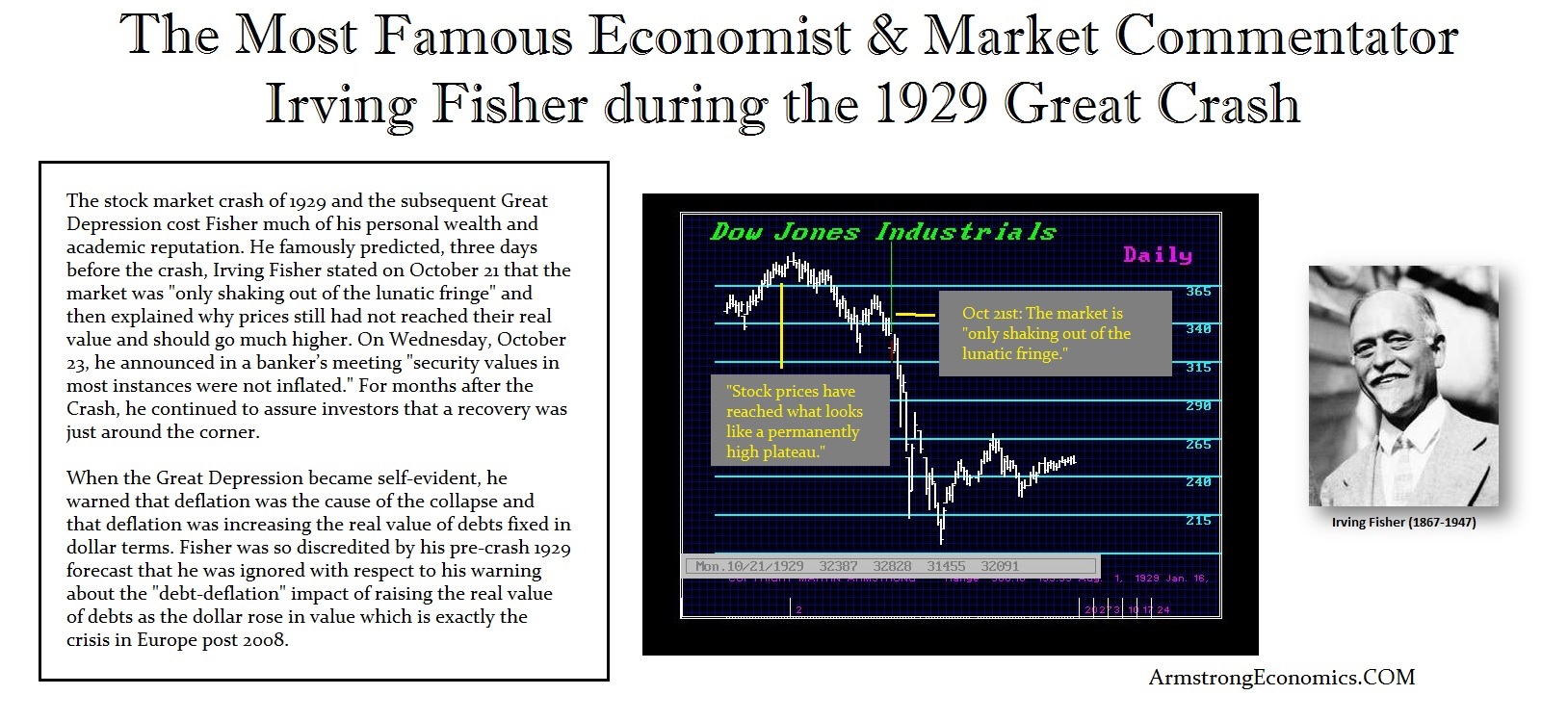
All I hear is that the inflation is rising so the Fed will raise rates and that will kill the bull market. While 99.9% of analysts seem to focus on interest rates as the major factor, they assume the bull market is over simply because of price. NOBODY can forecast the future from a personal opinion. My computer beats me all the time. I have learned over the last 50 years when it is contrary to everything out there, it is correct. Irving Fisher was the most famous forecaster during the Roaring ’20s. He did not understand the international implications of the capital inflows as money was hiding out in the US during WWI and WWII had begun in the financial markets.
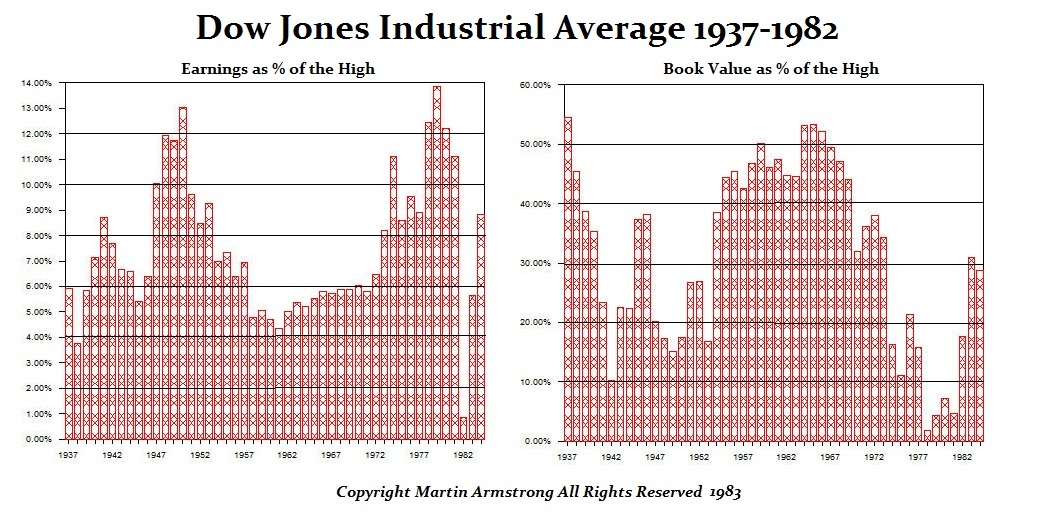
If we look at Goldman Sachs (GS), which by no means is a favorite company of mine, its book value is $366.15 with a stock price at $1,050. That is 34%, well below even the 1982 rally no less 1937 or 1929. That is not historically over the top. The trailing P/E Ratio of the Dow is about 25.49. During 1972, the PE Ration on the Dow hit 50. That was a flight of capital into the Dow because of the collapse of the gold standard on August 15th, 1971. I have stated countless times, when you lose confidence in the government, many times you run to equities.
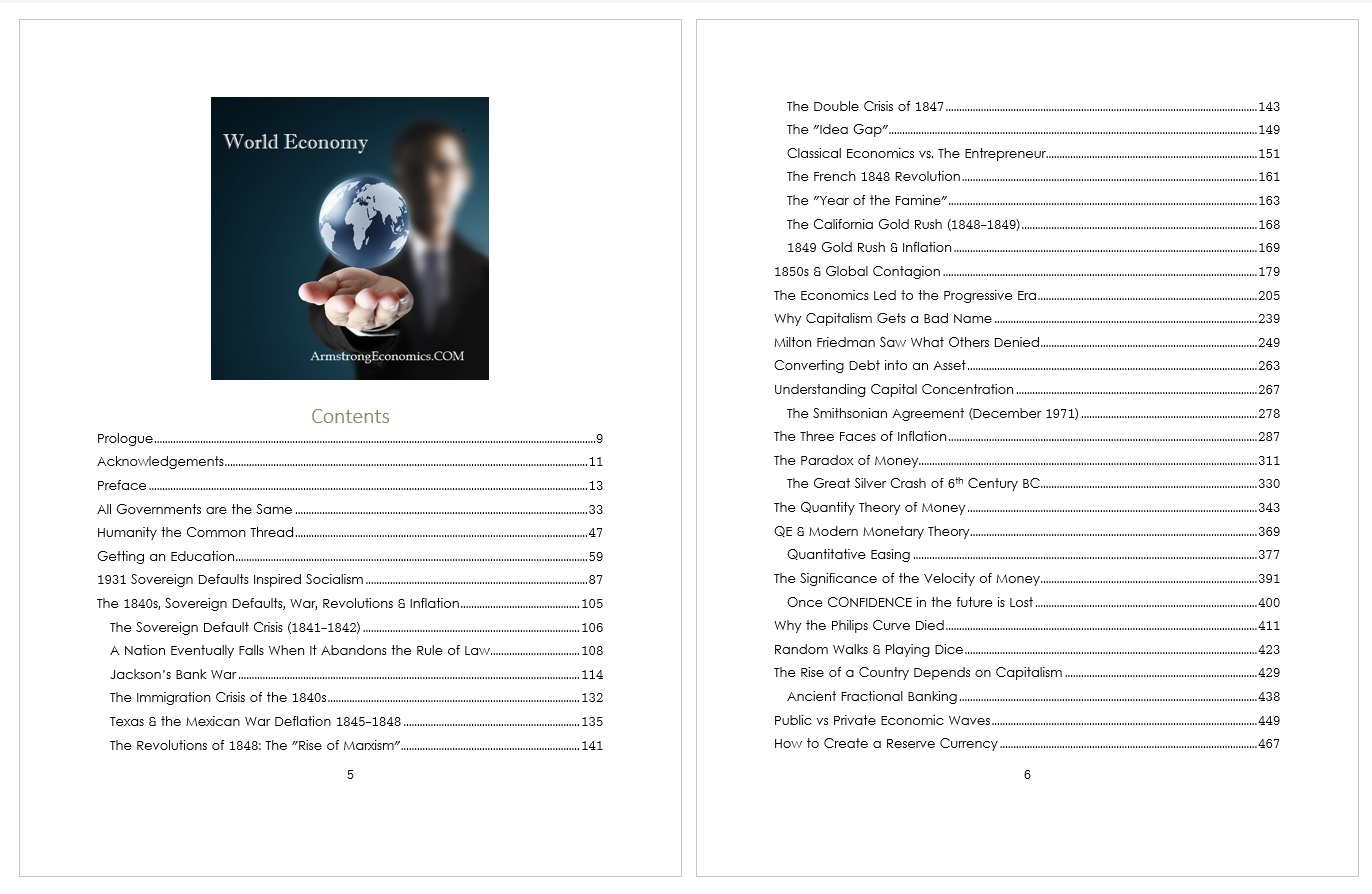
As most know, I was blamed for the whole 1980s takover boom because I was running around showing these charts back then and advised many of the takover tycoons. I am explaining some of that in the next textbook on Understanding the World Economy. The average cost of college textbooks and supplies for a full-time student is about $1,370 per year. A textbook will often run $400-$600. I promised to try to keep the costs down and this textbook will be $250 fully illustrated in color.
Dr. Dan Diker, president of the Jerusalem Center for Security and Foreign Affairs, told Newsmax on Sunday that the only way to defeat Iran’s ruling regime “is to defeat it militarily.”
If anyone thinks for one second that peace is in the wind, I really do not know what you are smelling. I have laid out the timing for a correction on the Private Blog. But this is not the end of the bull market. It still qualifies as the most hated bull market in history.
We will be offerring the textbook after the conference for $250.
Posted originally on Jul 6, 2026 by Martin Armstrong |
For years, I have warned that technology would become the government’s greatest surveillance tool. Politicians always promise new powers will only be used against criminals. Then those same powers gradually expand until everyone becomes a potential suspect. History never changes because governments never voluntarily surrender authority once they obtain it.
The U.S. Supreme Court has now delivered one of the most important privacy decisions in years. In a 6-3 ruling, the Court held that law enforcement’s use of geofence warrants constitutes a search under the Fourth Amendment.
Justice Elena Kagan wrote that people do not surrender their constitutional right to privacy simply because they carry smartphones or enable location services. As she explained, “A cellphone user is not to be viewed as sharing private information with third parties… just by doing the ordinary things cellphone users do.” The Court sent the case back to determine whether the warrant itself satisfied the constitutional requirement of probable cause, but the broader principle is now clear, digital location data deserves constitutional protection.
Geofence warrants represent one of the most sweeping investigative tools ever created. Instead of identifying a suspect first, police define a geographic area and time period, then compel companies such as Google to identify every device that was present. In the Virginia robbery case before the Court, Google initially identified 19 devices located within approximately 150 meters of the crime scene before investigators narrowed the list. These warrants invert the Constitution by allowing police to search thousands of innocent people first and decide who becomes a suspect afterward.
The significance extends far beyond one robbery case. Smartphones constantly generate location histories, travel patterns, religious attendance, medical visits, political gatherings, and personal relationships. The government no longer needs someone to follow you down the street. Your phone already performs that task every minute of every day. Technology companies possess an extraordinary amount of information, and governments around the world increasingly view those databases as investigative gold mines.
This ruling does not end digital surveillance. It simply reminds governments that constitutional limits still exist. Many technology companies have already begun changing how they store location data. Google, for example, has shifted much of its location history storage onto users’ own devices rather than centralized servers, making broad geofence requests more difficult. Law enforcement will undoubtedly seek new methods as technology evolves, because governments never stop seeking additional powers.
The larger trend remains exactly what our computer has warned. Governments burdened by rising debt, political instability, and civil unrest always seek greater control over information. Surveillance expands during every crisis because politicians claim extraordinary circumstances require extraordinary powers. Today it is geofence warrants. Tomorrow it will be artificial intelligence analyzing billions of data points in real time. The battle between personal liberty and government surveillance is only beginning, and this decision represents one of the few occasions where the courts have reminded Washington that the Constitution still matters in the digital age.
I have created this site to help people have fun in the kitchen. I write about enjoying life both in and out of my kitchen. Life is short! Make the most of it and enjoy!
This is a library of News Events not reported by the Main Stream Media documenting & connecting the dots on How the Obama Marxist Liberal agenda is destroying America











 Centinel2012