Posted originally on Jul 8, 2026 by Martin Armstrong |
The politicians are now trying to redefine what victory means because they cannot admit the obvious. CNBC reported that Finnish President Alexander Stubb declared that Ukraine has already “won the war” against Russia because it preserved its independence and sovereignty. He said, “I say Ukraine has won,” while arguing that Russia advanced only 60 kilometers in four years. Sweden’s Prime Minister Ulf Kristersson joined the same fantasy, saying, “Russia is certainly not winning,” and claiming Ukraine is having “spectacular successes.” These people are playing word games while young men are still dying every day in trenches, cities are still being bombed, and Ukraine survives only because the West continues financing the war.
This is the propaganda that has kept this war going. Ukraine did not win. Ukraine was used. There is a very big difference. A country does not “win” when millions have fled, its economy has been destroyed, its population has been shattered, and its government must beg NATO for air defense, ammunition, budget support, and money to keep the state functioning. CNBC itself noted that Stubb still warned Kyiv urgently needs more NATO air defense. That alone exposes the contradiction. If Ukraine has won, why must it still plead for Patriot missiles, NATO membership, and endless Western financing?
Russia has not won either. NO ONE WINS DURING WARFARE! CSIS estimated Russia suffered roughly 1.4 million battlefield casualtiesthrough June 2026, including 400,000 to 450,000 deaths. That is a meat grinder. But the fact that Russia has suffered enormous losses does not magically mean Ukraine has won. War is not a football match where one side loses badly and the other is declared victorious by default. Ukraine has suffered staggering losses as well, with CSIS estimating 525,000 to 625,000 Ukrainian military casualties, including 125,000 to 150,000 dead. That is a generation destroyed.
The UN reported that since the 2022 full-scale invasion, at least 15,172 civilians were killed and 41,378 injured by February 2026, and the real figures are likely higher. Civilian casualties continued rising in 2026, with April marking the highest monthly toll since July 2025 and May becoming the deadliest month for civilians since April 2022. This is not victory. This is the complete failure of diplomacy, the failure of NATO expansion policy, the failure of European leadership, and the failure of anyone who believed war could be managed like a public relations campaign.
Ukraine has only held off Russia because the West turned it into a proxy war. The Council on Foreign Relations reported that the United States made available $195 billion in Ukraine-war-related spending by March 31, 2026. The EU Council states total EU support has reached €215.2 billion, including €77 billion in military support. Ukraine is now seeking another €6.6 billion from the EU’s peace fund while its own officials say total defense needs for the year are about €136 billion, with the domestic budget covering only about €53 billion. That is a state kept alive by foreign taxpayers.
Stubb is wrong because he is measuring survival as victory. Kristersson is wrong because “spectacular successes” do not change the strategic reality. Ukraine has launched impressive drone strikes and disrupted Russian energy infrastructure, but Russia is still fighting, still advancing in places, still bombing Ukrainian cities, and still forcing Kyiv to rely on NATO for survival. Ukraine may have prevented Russia from taking the whole country, but preventing total defeat is not the same as winning a war.
The neocons never cared how many Ukrainians died. If Ukraine were winning, there would be peace. If Russia were defeated, the war would be over. Instead, we have a devastated country, a shattered generation, an endless funding pipeline, and NATO leaders pretending that attrition is victory.
Posted originally on Jul 8, 2026 by Martin Armstrong |
Spain’s latest position perfectly illustrates what has become one of the great contradictions within NATO. Madrid wants Europe to build its own military capable of acting independently of Washington, yet Spain has consistently resisted NATO’s higher defense spending targets while expecting the alliance to continue providing collective security.
Spain is again championing the idea of a European army while insisting it can meet its NATO obligations without matching the spending commitments accepted by virtually every other member. Europe cannot demand strategic independence while simultaneously asking someone else to pay the bill.
I have said for years that Europe has always dreamed of becoming an independent military power. Long before the war in Ukraine, Brussels was discussing a unified European army, common procurement, centralized command, and eventually a foreign policy independent of Washington. Every crisis has been used to advance that objective. The migration crisis expanded Brussels’ authority. COVID centralized health policy. The Ukraine war accelerated fiscal integration through joint borrowing and massive defense spending. Now the argument is that Europe needs its own army because it can no longer rely entirely on the United States. That has been the destination all along.
Ironically, Spain is making the argument while remaining one of NATO’s weakest contributors. Prime Minister Pedro Sánchez rejected the alliance’s new goal of spending 5% of GDP on defense by 2035, insisting Spain can fulfill its obligations while spending only about 2.1% of GDP. That position has frustrated allies who argue collective defense cannot function if some members continually expect others to shoulder the burden. NATO Secretary General Mark Rutte has repeatedly argued that Europe’s security environment now requires substantially greater investment across the alliance.
Europe must ultimately decide what it wants. If it genuinely intends to build an independent military capable of defending the continent without American leadership, then it must also accept the enormous financial burden that comes with that decision. A modern European army would require hundreds of billions of euros in new spending, integrated command structures, common procurement, expanded ammunition production, satellite capabilities, cyber warfare, missile defense, logistics, and nuclear deterrence. None of that comes cheaply.
The greatest long-term strategic challenge is no longer Europe. It is the Indo-Pacific. China is rapidly expanding its navy, modernizing its nuclear arsenal, increasing pressure on Taiwan, and competing directly with the United States across technology, manufacturing, shipping, and finance. America cannot simultaneously concentrate the majority of its military resources in Europe while preparing for a potential confrontation in Asia.
If Europe believes Russia represents its primary existential threat, then Europe should take primary responsibility for confronting Russia. That is neither anti-European nor isolationist. It is simply strategic reality. The United States should remain an ally, but not Europe’s permanent security guarantor. Washington has carried that burden since the end of the Second World War. Meanwhile, European governments repeatedly criticize American foreign policy while relying upon American aircraft carriers, intelligence, logistics, nuclear deterrence, and taxpayers whenever a genuine crisis emerges.
The post-1945 order is fragmenting. Nations are increasingly pursuing regional spheres of influence rather than a single American-led global system. Europe seeks strategic autonomy. China seeks dominance in Asia. Russia seeks influence over its near abroad. The United States must decide where its vital interests truly lie. If Europe wants its own army, then let Europe build it. America’s focus should increasingly shift toward maintaining stability in the Pacific, where the balance of power over the next several decades is far more likely to determine the future of the global economy than another generation of underwriting European defense.
Posted originally on Jul 8, 2026 by Martin Armstrong |
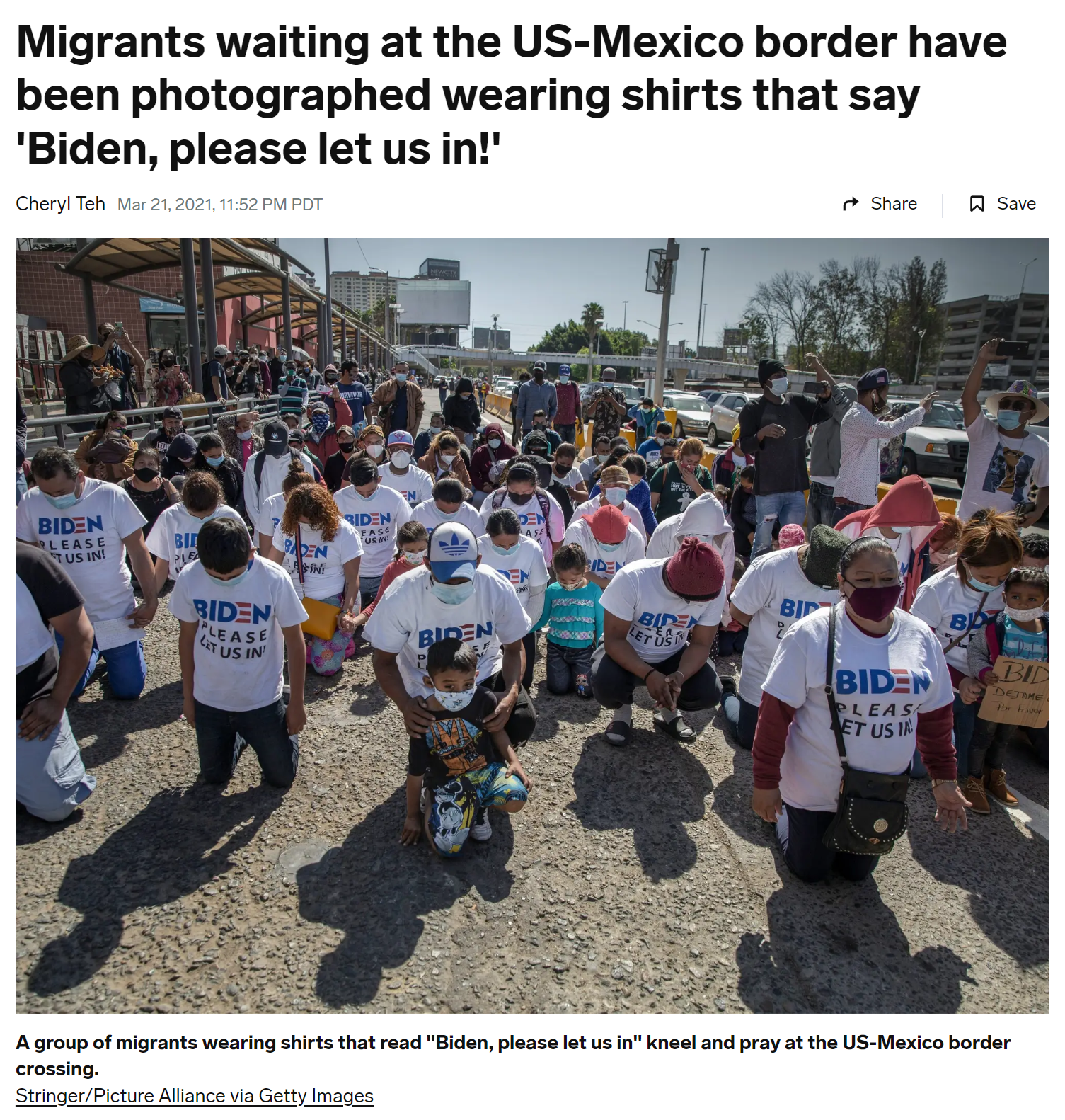
The politicians insisted for years that the border crisis was somehow good for the economy. They claimed millions of illegal migrants would solve labor shortages, keep inflation down, and somehow make America stronger. Now even a Federal Reserve study is acknowledging what ordinary Americans have been living through every single day. The damage was real, measurable, and far more significant than Washington was willing to admit.
A new working paper from the Federal Reserve Bank of Dallas examined the unprecedented wave of unauthorized immigration between 2021 and 2024. According to the Congressional Budget Office, roughly 7 million unauthorized migrants were added to the U.S. population during that period, averaging about 1.75 million people annually. That was nearly double the pace of legal immigration and represented the largest surge in modern history.
The study found that these inflows accounted for roughly 30% of employment growth, approximately 30% of home-price appreciation, and about 20% of rent increases across the average metropolitan area between March 2021 and March 2024. Those are the Federal Reserve’s own findings—rent increased an alarming 20% due to mass migration.
The economists determined that every 1% increase in unauthorized workers relative to a local labor force produced roughly a 1% increase in total employment, but there was virtually no expansion in housing supply to accommodate that population growth. Instead, every 1% increase in unauthorized workers corresponded with approximately a 2.2% rise in home prices and a 1.4% increase in rents. That is precisely what anyone with common sense would expect. You cannot inject millions of additional people into already constrained housing markets and pretend prices will remain stable. Supply simply could not keep pace with demand.
The report also found little evidence that average wages declined, which will undoubtedly be seized upon by politicians. Yet that misses the larger point entirely. The study found labor income per capita declined while government transfers fell. More importantly, Americans were competing for housing in markets where construction could not expand fast enough. Families trying to purchase their first home or simply renew a lease paid the price. The issue was never simply wages. It was purchasing power. If housing costs explode faster than incomes, people become poorer regardless of what their paycheck says.
This is exactly how governments create inflation without ever printing a single additional housing unit. They expand demand through policy while ignoring the supply side of the equation. Washington spent years insisting inflation was caused by corporate greed, supply chains, or anything else convenient while refusing to acknowledge that adding millions of people into an already undersupplied housing market would inevitably push prices higher. Economics is not ideology. It is mathematics.
This entire episode demonstrates the danger of allowing politicians to ignore basic economic principles in pursuit of ideology. Governments cannot continue expanding populations while restricting housing development, burdening builders with regulation, inflating construction costs, and expecting affordability to improve. Every action has a consequence. The bill always arrives eventually, and it is ordinary citizens who end up paying it.
Posted originally on Jul 7, 2026 by Martin Armstrong |
I have spoken with professional Iranian Americans who, prior to this war, were staunchly opposed to the religious government. They took great pride in Iran’s participation in the World Cup, yet were deeply offended by the treatment of the players, who were judged solely on the basis of their nationality. These individuals began to sense that the prevailing attitude was one of distrust toward all Iranians, rather than a targeted opposition to the Shia theocracy. However, this war against Iran is yielding a counterproductive outcome. Rather than toppling the regime or inspiring a popular uprising, it is fostering a unifying effect, as the public increasingly comes to view the so-called “Great Satan” and “Little Satan” as the true aggressors.
I have previously written about how those in power will often employ a false flag operation to manufacture unity through what is known as the “rally ’round the flag” effect. Coined by Mueller in 1970, this phenomenon describes a sudden, and often short-lived, surge in a political leader’s popularity during an international crisis, war, or attack. It is typically attributed to a combination of factors, including patriotic fervor, elite consensus, and psychological responses to external threats.
1) Citizens feel a sense of national unity and are more likely to support their leader in the face of an external threat.
2) Opposition parties and political elites often temper their criticism of the government, creating an appearance of national unity.
3) Feelings of anger, anxiety, or vulnerability can drive citizens toward “unconditional support for those in power” as a source of protection.
We saw that with 911. Democrats and Republicans actually merged briefly. In this case, the US was the aggressor attacking Iran. Thus, there is no “rally around the flag” inside the US since we were not attacked. To me, this seems to be a one-way affect.
While a “rally ’round the flag” effect is a well-documented phenomenon where an attack can cause a surge in unity and support for the leadership, recent research also shows this outcome is highly conditional and not universal. Recent studies have show that this is NOT a guaranteed outcome. It appears to depend upon the verification of the attack and do the people believe that it was truly a foreign enemy.
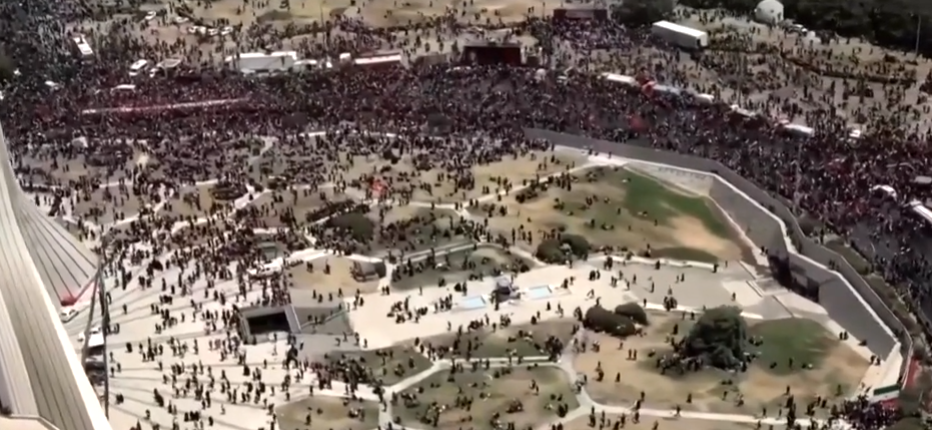
Rather than looking weakened by this war, Iran presented itself as defiant with the public funeral painting itself as the victim of assassins. They presented a unified and determined to shape what comes next. That defiance and ability to survive now underpins Iran’s negotiating strategy. The US and Israel, with their unethical assassination tactics, has unified the country as it was not before. Depicting the funeral as the moment Tehran to project strength and unity. Lyndsey Graham once said that the Ukrainians would fight to the last man standing. That defiance is now engulfing Iran.
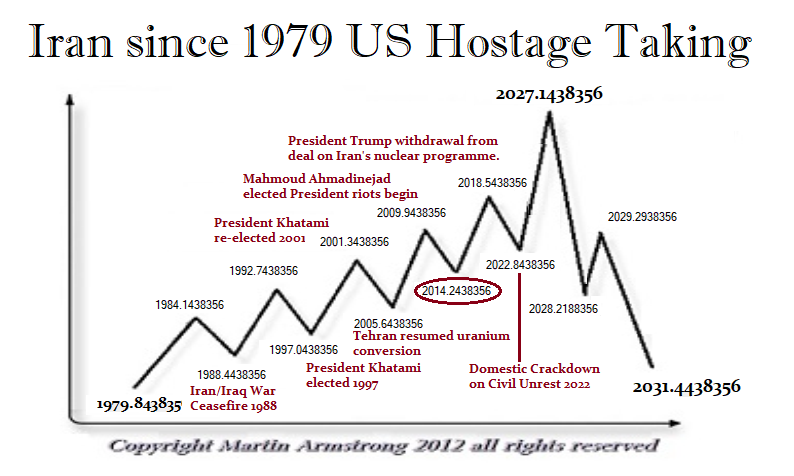
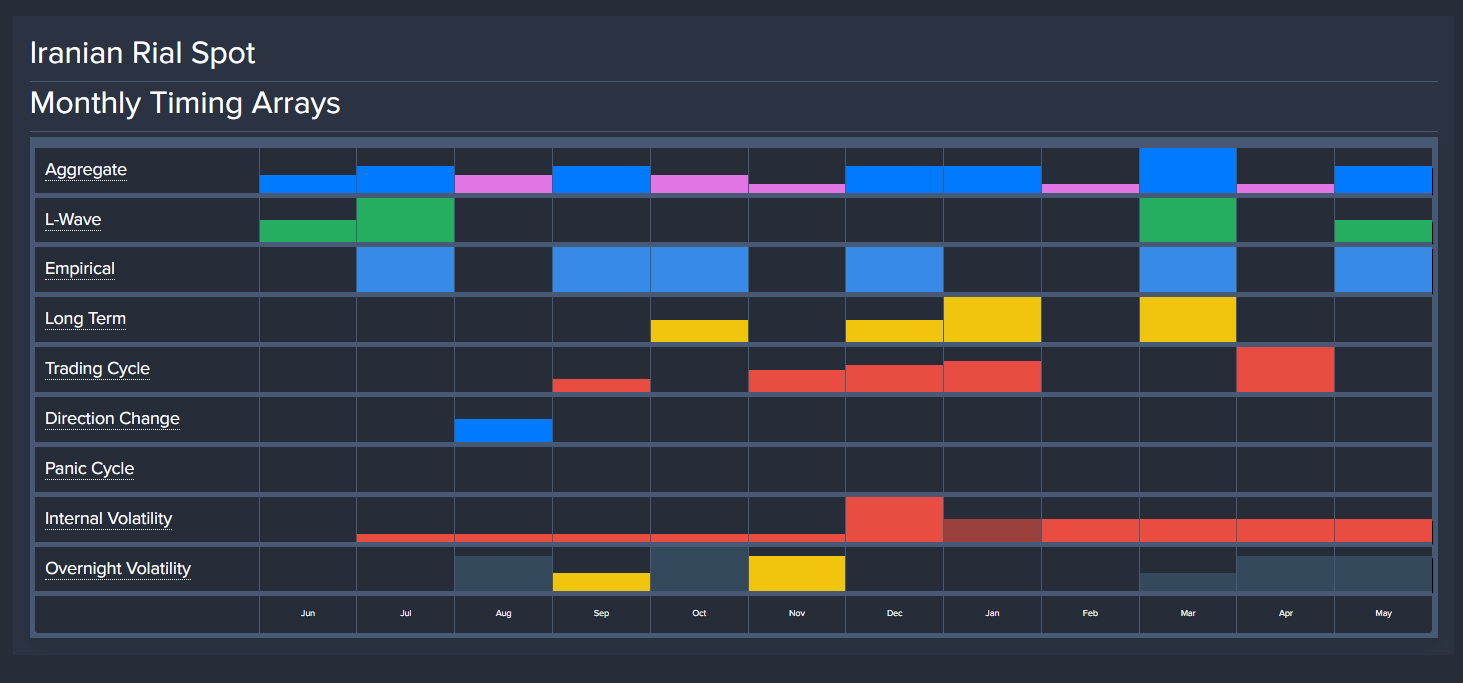
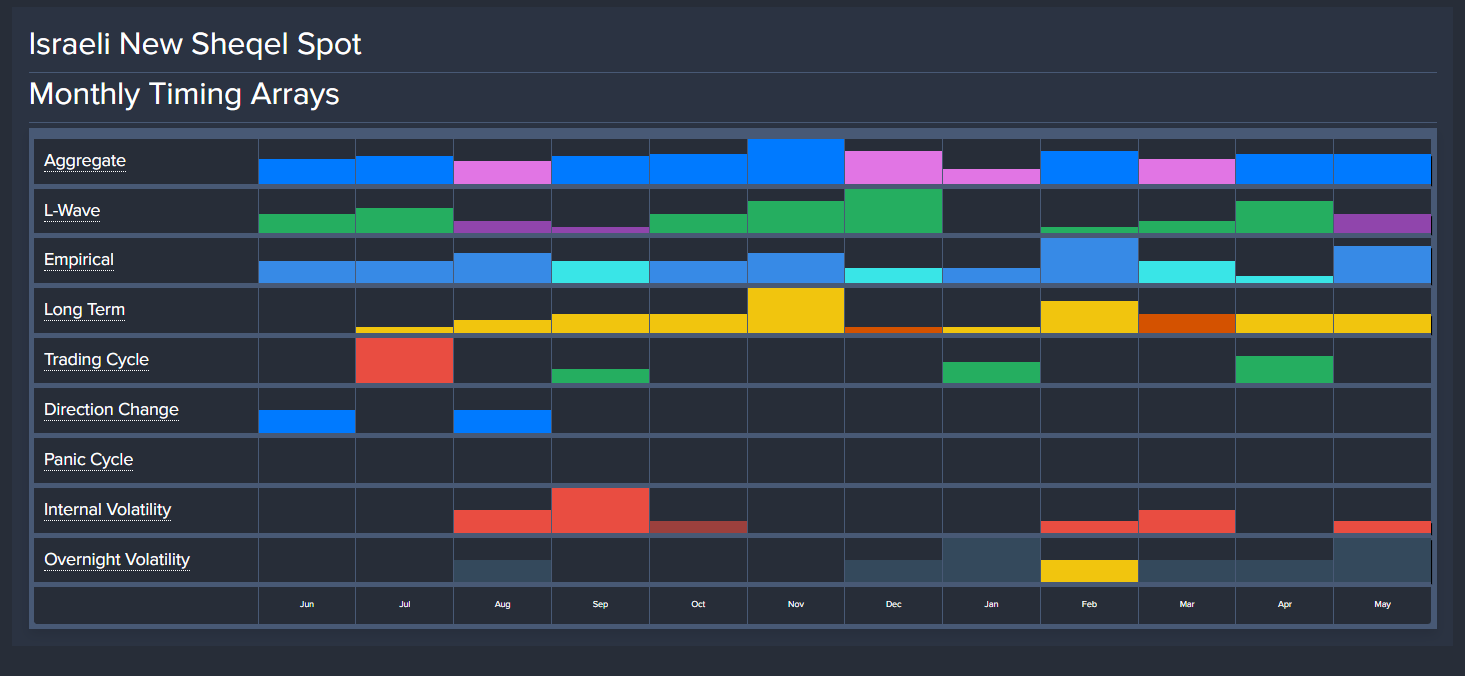
We are in this final wave between 2022 and 2027, which traditionally is the most volatile. As I posted. Dr. Dan Diker, president of the Jerusalem Center for Security and Foreign Affairs, told Newsmax on Sunday that the only way to defeat Iran’s ruling regime “is to defeat it militarily.” While Netanyahu spoke of the imminent liberation of the Iranian people from tyranny, he could care less about the Iranian people. This about his hatred for Iran.
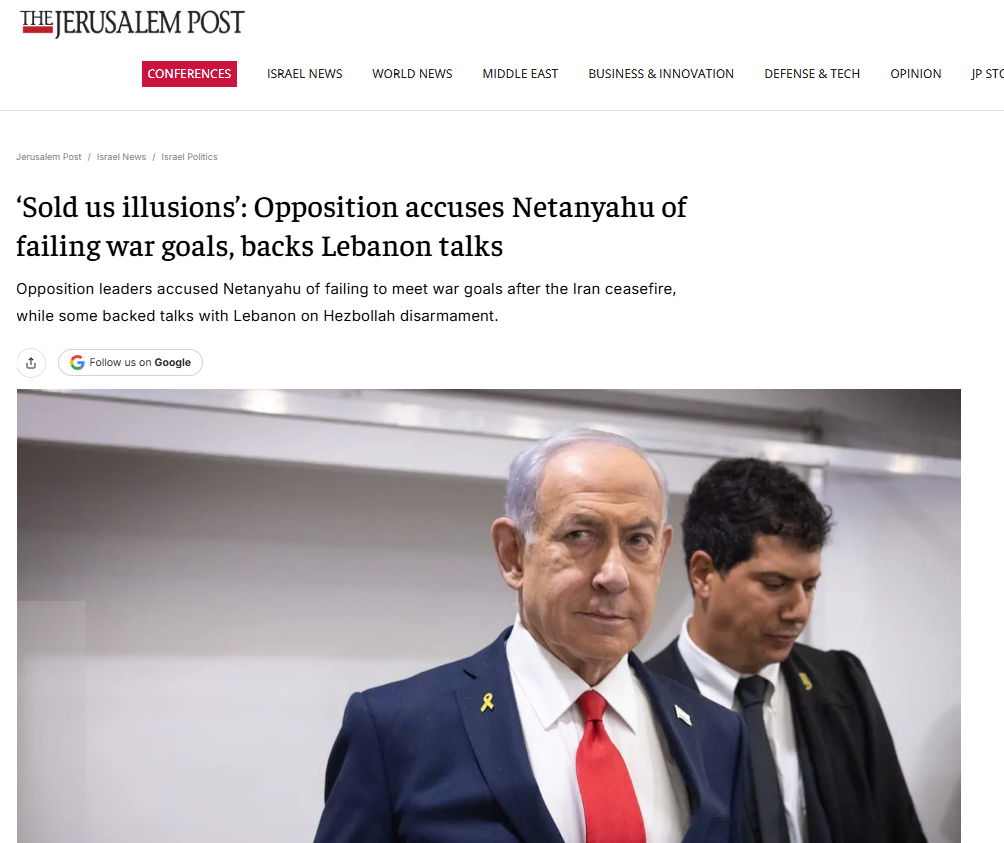
Former prime minister Naftali Bennett, leading opposition candidate, has come out anticipating that Netanyahu will run in the upcoming elections. He said in a press conference that the war’s objectives were clearly outlined in advance and had not been achieved ahead of the ceasefire.
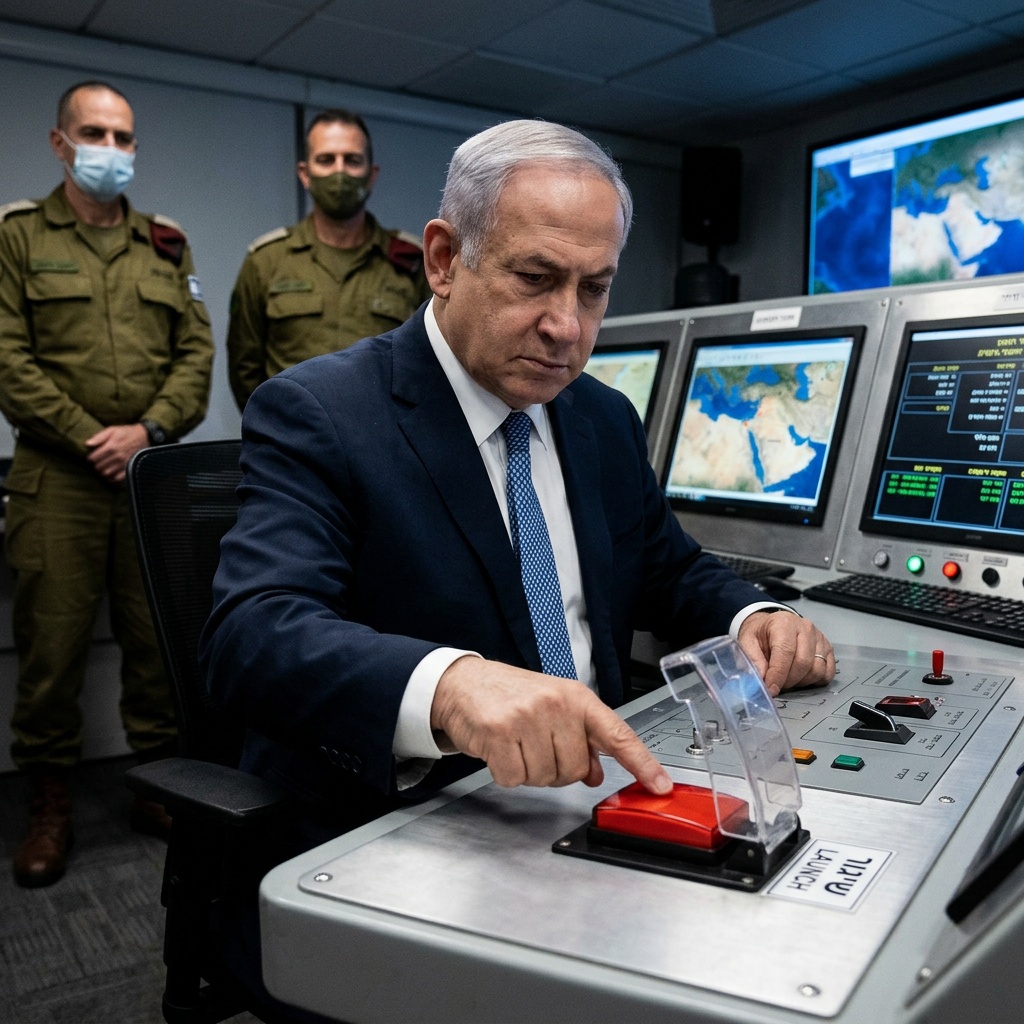
There is concern that Prime Minister Benjamin Netanyahu, who has consistently and publicly declared an unwavering commitment to prevent Iran from obtaining nuclear weapons, using the strongest possible terms, will resort to a false flag and some fear he could use a tactical nuke to try to reach Iran’s nuclear facilities deep in the mountain.
The next scheduled Israeli Knesset election is expected to be held by October 2026 (barring an early dissolution). Netanyahu’s current term is ongoing, and he remains the sitting Prime Minister. However, his future political viability could be influenced by this Iran War as well as the status of his ongoing corruption trial, which is a central factor in his political narrative.
The duration of the current government is a crucial variable. If the coalition remains intact, the election will proceed as scheduled in October. If the government collapses, the election could occur much earlier, at which point his decision to run would become clear.
It clearly warns that that something is in the wind come August and that are Directional Change in both Iran and Israel. Note that there is rising volatility in Israel for September, but not in Iran. This tends to imply that the Israeli elections will take focus.
Posted originally on CTH on July 7, 2026 | Sundance
Nigel Farage has been under extreme pressure from the U.K political apparatus surrounding a £5 million personal donation from a long-term friend Christopher Harborne to pay for a personal security protective detail.
Both the Labour and Conservative political parties in the U.K have been blistering Farage under investigations around this donation, and the subsequent investigations are being used as justifications in attempts to remove him from his position as leader of the Reform Party. Essentially, the British government -writ large- are using all of the mechanisms of government institutions trying to take him down.
To put a stop to the nonsense, Nigel Farage has decided to resign from his position as a member of Parliament, and then immediately run again for reelection in the special election (bi-election). VIDEO:
.
A solid explanation of the strategy is outlined in the video below.
Posted originally on CTH on July 7, 2026 | Sundance
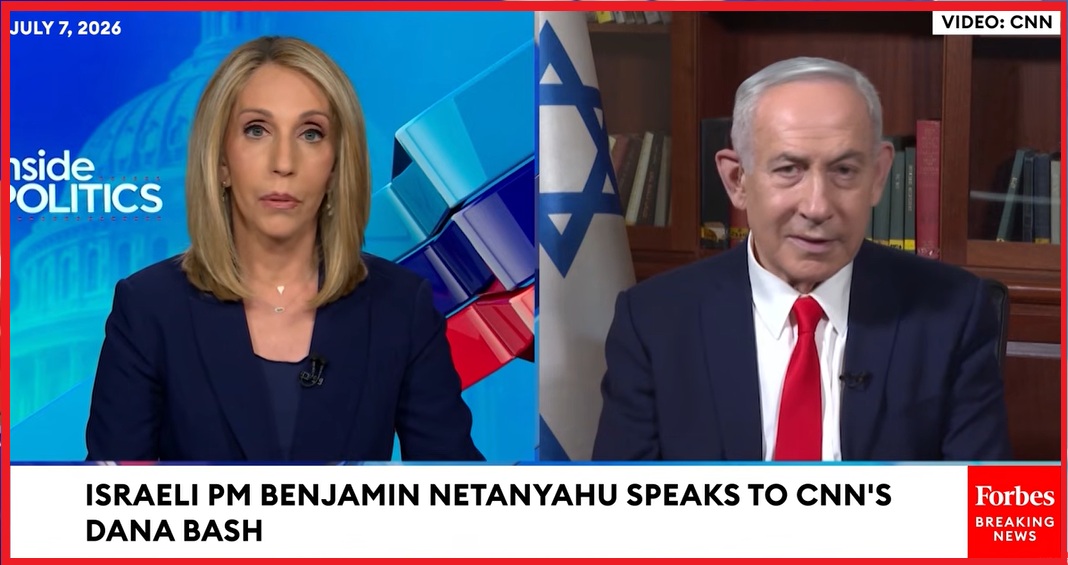
CNN Narrative Engineer Dana Bash clutches her pearls in worry about a potentially weakened position for Israel against the backdrop of President Trump visiting Turkey and structuring diplomatic relations with Recep Erdogan.
It seems quite odd to see CNN have great concerns about the well-being of Israel given their leading role as critics against the actions of Israel. Then again, CNN has the art of pretending down pat. The transparency is laughable. WATCH:
Posted originally on CTH on July 7, 2026 | Sundance
WOW…
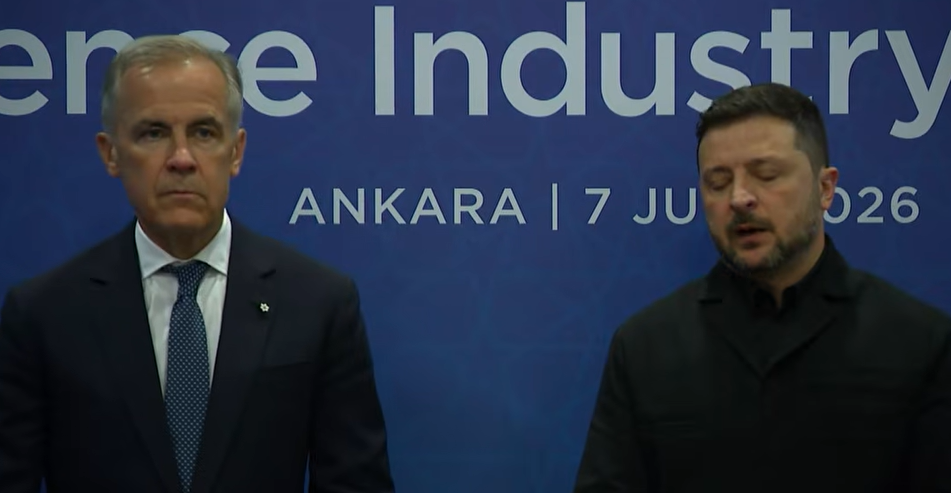
Things are coming together quickly now as Canadian Prime Minister Mark Carney begins unveiling details to support his illusion of meeting NATO obligations, with a smart money laundering assist from Volodymyr Zelenskyy.
To establish part of the background, remind yourself that former Canadian Minister Chrystia Freeland was appointed by Zelenskyy to lead a Ukraine redevelopment operation. Today, speaking from Ankara, Turkey, Carney and Zelenskyy announced a $900 million fund for short, mid-term and long-term investment in Ukraine. WATCH:
But wait, it gets much better. A few hours later Prime Minister Carney and Volodymr Zelenskyy announced a new Canada-based financial institution called the Defense, Security and Resilience Bank (DSRB). {citation}
CANADA – […] “Mark Carney, welcomed the support for the Canada-led DSRB by: Albania, Belgium, Greece, Latvia, Luxembourg, Romania, Türkiye, and Ukraine. These countries will be entrusted with defining the initial policies and directives of the Bank, shaping its operations and ensuring benefits flow to members’ economies.”
[…] Leveraging a strong credit rating, the Bank will provide long-term, low-cost financing for defence, security, and resilience initiatives across supply chains.” (more)
You see, unbeknownst to most people, TKMS has a subsidiary that was just founded, literally just founded weeks before Carney announced the $20 to $30 billion submarine contract.
In announcing the TKMS contract, CBC noted: “The German government also proposed establishing a carbon capture facility deploying TKMS technology in partnership with Alberta.” That would be TKMS Calvion GmbH (TKMS-CG) which was a company formed within TKMS on May 16, 2026.
So, think about this. Mark Carney tells Alberta Premier Danielle Smith that a condition for the Alberta pipeline is authorization of a carbon capture scheme that will be contracted to the recently created subsidiary of TKMS, TKMS-CG. who Carney knows is about to get the submarine contract. Pretty slick.
All of this spending (military and resilience initiatives) then becomes part of Canada meeting their NATO obligations, which will be wrapped into a NEW BANK (DRSB) controlled by Mark Carney, Volodymyr Zelenskyy and likely Chrystia Freeland, and funded (at least in part) by Canadian taxpayer money flowing to Ukraine. All other nations within DRSB providing the patina of credibility to hide the laundry.
The “private sector” investments, noted within the banking charter, will almost certainly stem from companies like TKMS and TKMS-CG, who will create a circular process. Taxpayer funds to TKMS. TKMS funds to bank. Bank funds to TKMS-CG. With Carney, Zelenskyy and Freeland prepositioning investments ahead of the arrival of deposits.
Brilliant.
Here’s a great video recap that was created before the $900 million and DRSB bank announcement, and when you add in those two components it all makes sense. Information packed 20 minutes. WATCH:
Posted originally on CTH on July 7, 2026 | Sundance
h, this is interesting for those who walk the deep weeds.
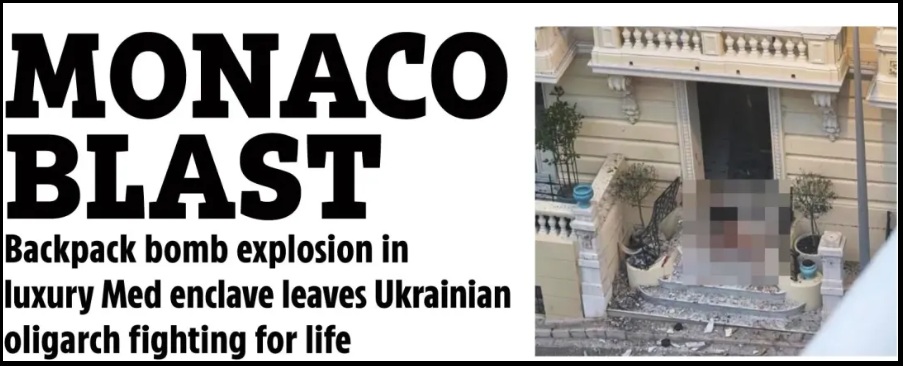
On June 29th a woman dressed as a man placed a package bomb at the Monaco residence of Ukrainian business tycoon Vadym Yermolaiev who refused to take sides in the Russia-Ukraine conflict. Yermolaiev, a Ukrainian property tycoon, was sanctioned by Kyiv in 2023 over his alleged business activities in Russian-occupied Crimea.
Immediately after the bombing suspect was identified as Ukrainian national Anastasiia Berezovska, the Zelenskyy government said she was operating as a Russian asset and had not been to Ukraine in years. Ukrainian sources suggested she was born in Kazakhstan, holds a Russian passport, and lived in occupied Crimea. {citation}
All reasonable/non-pretending people recognized immediately Ukraine was the likely source of the terrorist attack, and Zelenskyy was just trying to cover his tracks. Well, Ukraine’s narrative has just collapsed as the bomber was just found in Kiev, shot four-times in the back of the head, and the suspect in her killing is a Ukraine intelligence agent.
This news breaks this morning just as Ukraine President Volodymyr Zelenskyy is prancing around the NATO summit in Turkey, despite Ukraine not being a NATO member.
CTV – KYIV, Ukraine — Ukraine’s Security Service on Tuesday said it found the body of Ukrainian national Anastasiia Berezovska, who had been wanted by authorities in Monaco in connection with the bombing targeting Ukrainian business tycoon Vadym Yermolaiev.
The security service, also known by its local abbreviation SBU, said an officer serving in Ukraine’s military intelligence agency confessed to killing Berezovska with the help of a former law enforcement officer. He claimed he acted on his own initiative and without informing his superiors, the statement said.
The attack on June 29 reportedly targeted Yermolaiev, who has links to Russia, and his family. Three people were injured, including a child. The incident shocked Monaco, a coastal playground for the rich and famous known for its tax-friendly incentives, royal family and Formula 1 Grand Prix. Its head of state, Prince Albert II, described the blast as “an odious act” and said all public services were mobilized to ensure security.
Interpol had identified 39-year-old Berezovska as the main suspect.
[…] The SBU said investigators had focused on the two men after discovering they had repeatedly transferred cryptocurrency and money through bank accounts to Berezovska. During searches, authorities also found what the SBU described as a basement resembling a torture chamber at the former law enforcement officer’s home.
Investigators found Berezovska’s body during a reconstruction of the crime based on one suspect’s testimony. She had gunshot wounds to the head, and investigators recovered spent pistol casings at the scene, the SBU said. (read more)
The Sun also has a media report on the issue – SEE HERE.
What is now clear is that Ukraine Intelligence was behind the bombing in Monaco, and then tried to cover their tracks. However, one note of caution: why shoot someone “4-times in the back of the head“? One of the motives for such a brutal method of killing is to graphically disfigure the face of the person killed.
Zelenskyy really is a Nazi terrorist; yet there are a lot of European and Canadian leaders who align themselves with him.
I have created this site to help people have fun in the kitchen. I write about enjoying life both in and out of my kitchen. Life is short! Make the most of it and enjoy!
This is a library of News Events not reported by the Main Stream Media documenting & connecting the dots on How the Obama Marxist Liberal agenda is destroying America




 Centinel2012