Posted originally on Dec 30, 2025 by Martin Armstrong |
As we close out 2025, I want to personally thank the more than 2.5 million readers from around the world who visited ArmstrongEconomics.com this year. Your willingness to question official narratives, examine history, and think independently is what keeps this site alive and relevant.
Our content is based on following the data, the cycles, and the models wherever they lead, even when the conclusions are uncomfortable. The fact that millions continue to return tells me that confidence in independent analysis is rising at precisely the moment institutions are losing credibility.
The global economy cannot be viewed from isolated lenses, and our readership reflects the global nature of our venture. Readers from 232 nations around the world tuned in and turned off their preconceived notions of the world to explore the underlying patterns and cycles that are propelling us into a new future. Millions of us have a common bond and understanding.
The years ahead will test economic, political, and social structures globally. My commitment remains the same. I will continue to provide clear, historically grounded analysis so you can navigate what lies ahead with foresight rather than fear.
Thank you for being part of this journey.
This list represents readers from around the world who share a common desire to question official narratives, study history, and understand how economic and political cycles truly function. Despite different cultures, languages, and borders, what unites this global audience is a shared view that the future cannot be understood by opinion or ideology, but only by following the data, the trends, and the repeating patterns of history.
Posted originally on Dec 30, 2025 by Martin Armstrong |
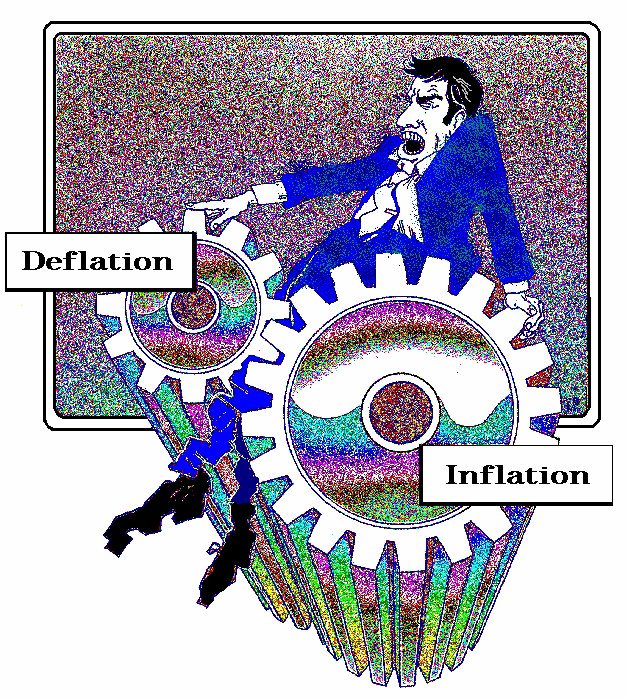
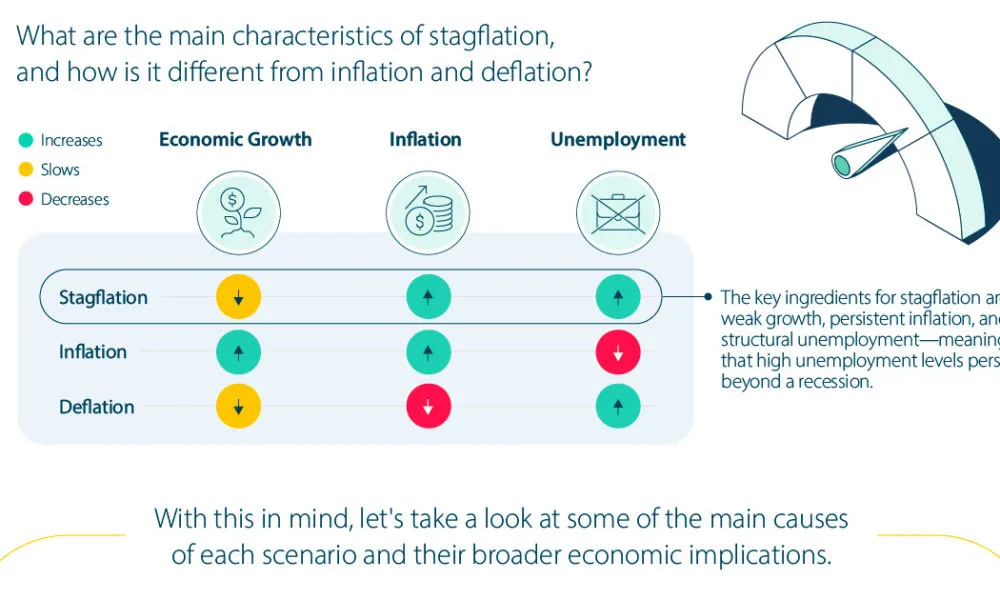
Some people have a tough time understanding that we are in a massive deflationary spiral; they think that rising prices mean it is inflation and not deflation. Then they mistake stagflation for deflation and wonder why people are spending more on less. They only see prices, not disposable income, and, indeed, not economic growth or unemployment.
Prices rose sharply following the OPEC oil price hikes of the 1970s. Still, the sharp rise in energy prices crowded out other forms of spending, resulting in rising prices that had nothing to do with a speculative economic expansion, and a deflationary contraction they called STAGFLATION occurred, with rising prices and declining economic growth.
If you want to raise NET DISPOSABLE INCOME, lower taxes! Raising wages, as the Democratas believe corporations should do, will cause people to move to higher tax brackets, and soon, all benefits will come into play with these socialistic programs. As always, nobody in government talks about reducing government waste and corruption. The very people who are using these social programs are still paying taxes to the state and federal government.
Household income will soon be defined as everyone living in the same house – kids and all. Perhaps you will have to pitch a tent and make the kids sleep outside with the dog to avoid “household” income tax increases. Deflation is not the lowering of prices; it is the lowering of economic activity that can also include STAGFLATION, which occurs when prices rise but there is no economic growth.
Now, stagflation is not exactly the same as deflation, where the price of goods and services declines. For example, before World War II, the US experienced a massive deflationary environment in which GDP fell by 30% between the crash of 1929 and 1933. A quarter of Americans were unemployed. Imagine 1 in 4 eligible workers on the sidelines. Prices plummeted, and consumers were not spending because they had very little, if anything, to spend. Panics erupted, and people hoarded; the Second World War brought America out of that economic downfall. The public confidence wave began after World War II, because people believed their change in fortune was due to government policies (i.e., FDR’s New Deal) and war victory.
During periods of stagflation, the prices of goods and services increase while buying power decreases. Consumers end up spending more on less. As we are seeing now, for example, retail salesof items such as clothing have declined, but people are spending more on gas, shelter, and groceries. People feel as if they are earning less despite wage increases because their buying power has been drastically reduced. Companies will suffer as consumers spend less, and this has led to workforce reductions. Unemployment during the OPEC crisis of the 1970s was not nearly as severe, but it rose to 7.2% by 1980. Inflation went from around 1% in 1964 to 14% in 1980, and GDP growth went from 5.8% to -0.3% during that same period.
So be very careful. If you only look at prices rising and ignore the fact that your disposable income is declining, you will be in for a very rude awakening. Unemployment will continue to rise in 2026, with the computer anticipating figures surpassing 6%. The trend was set in motion long before automation and AI. Companies simply will not hire when they expect a continued contraction. The ability to borrow at a lower rate is not enticing because those same companies do not want to take on more debt than they already owe. We will not see another Great Depression by any means, but the “soft landing” is merely rhetoric intended to lift confidence.
Posted originally on Dec 30, 2025 by Martin Armstrong |
November home sales in the US paint a picture of stagnation and a frozen market. Home prices and mortgages have risen and demand has waned. This is a buyer’s market but conditions are not particularly favorable due to the cost of ownership.
Sales rose 0.5% from November to October and were 1% lower on an annual basis, according to data from the National Association of Realtors. A total of 4.13 million homes were sold for the month based on closings.
Supply remains constrained on a monthly basis, declining 5.9% from October, but have risen 7.5% on the yearly. A six-month supply is considered a balanced buyer-seller market, but current conditions show a 4.2-month supply.
The median home price in the US has reached $409,200, up 1.2% annually, and the highest reading on record for November. Lower-priced homes are not selling as those with less cannot afford to enter the market. Homes priced from $100,000 to $250,000 are down 8% from last year, but homes above $1 million rose 1.4%.
Gone are the days of overbidding cash offers. Homes are sitting on the market for an average of 36 days. Investors are slowly re-entering the market and accounted for 18% of sales compared to 13% one year prior. New homeowners accounted for 30% of sales, but historically, first-time home owners account for 40% of closings.
Weak regions are seeing declining values while stronger capital-inflow areas remain firm. This is classic late-cycle behavior. Real estate does not move as a monolith. It turns region by region, driven by employment, taxation, migration, and regulatory burden. The myth of a single “national housing market” is one of the great analytical failures of modern economics.
Transactions are falling and inventory is uneven. The real pressure will come not from housing itself, but from government debt, taxation, and declining economic confidence as we move toward the 2026 turning point. The model indicates that the current buyers market will persist into 2028. There will NOT be a housing bubble collapse as we saw in 2008. Commercial real estate is far more vulnerable than residential and operates on a different cycle. People have fled and are continuing to flee states that are unfavorable to capital, as we have seen with mega corporations fleeing places like New York and California. We will see fragmentation on a regional basis in real estate.
Interest rates will not collapse to save housing as capital demands higher yields and the central bank cannot toy with the markets as they have in recent years. Capital is migrating to states that offer financial stability, lower taxation and regulation. Transaction volume is declining and sellers are refusing lower prices. Buyers are waiting. Liquidity is vanishing. This is all par for the course during a collapse of confidence that will intensify in 2026.
Posted originally on CTH on December 30, 2025 | Sundance
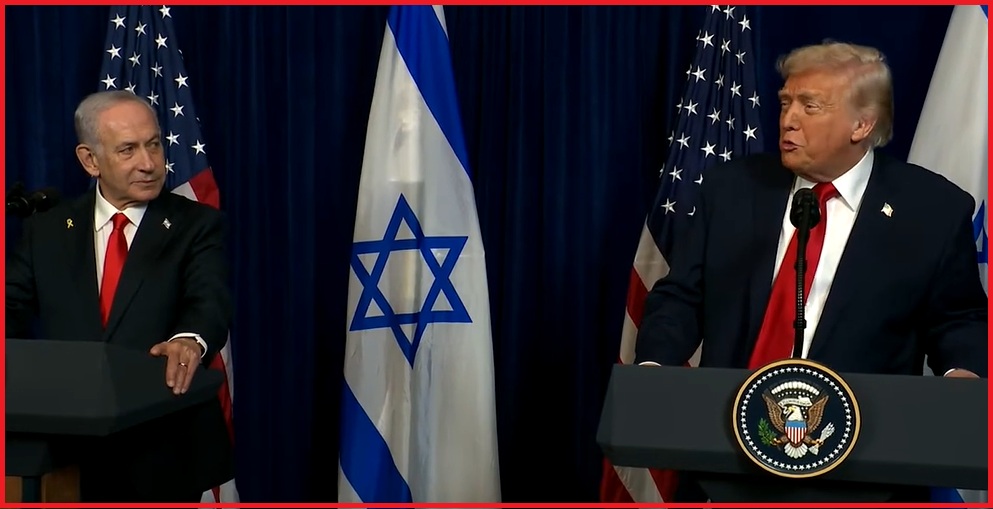
During an impromptu press availability beside Israeli Prime Minister Benjamin Netanyahu, President Trump responded to a question about a drone attack against the personal residence of Russian President Vladimir Putin.
President Trump noted that he was informed of the attack by President Putin during an early Monday phone call between the two leaders.
According to Russian media, confirmed by Russian foreign Minister Sergey Lavrov, Putin’s presidential residence in the Novgorod region, more than 400 kilometers (249 miles) northwest of Moscow, was targeted by 91 drones. Russia has vowed retaliation saying, “targets had already been selected.” President Trump’s response is prompted below:
Ukraine President Volodymyr Zelenskyy has denied the accusation that Ukraine carried out this particular attack. The attack took place while Zelenskyy was in Florida meeting with President Trump.
In context, there have been several attacks against Russia timed with negotiations. CTH has noted that each instance of closer agreement during Russia/Ukraine negotiations (Turkey) or U.S/Ukraine negotiations (Turkey and Paris) there have been attacks into Russia that seemed to carry a motive from an external third party.
U.S. media have said the attack on Putin may be a lie; however, with physical evidence from the defense operation, it is less likely Russia just made up the attack. At this moment in the conflict, Putin doesn’t need domestic propaganda.
CONTEXT: British intelligence previously confirmed their participation in the successful Ukraine drone attack against long-range Russian bombers. That operation, highly controversial at the time, was previously confirmed by President Trump saying the U.S. was not informed in advance.
The “coalition of the willing” has also expanded. Outside the Ukraine regime, the current group making up the “coalition of the willing” includes: the U.K, France, Germany, Canada and Australia. It is worth noting the additions are all part of the British commonwealth (U.K, Canada, Australia).
Most observers note that Ukraine President Zelenskyy is not an independent actor in the warfare decisions as carried out from within Ukraine itself. In fact, British intelligence has now replaced U.S. intelligence for providing the majority of the satellite guidance systems, targeted systems and missile operations. German and French intelligence have been closely coordinating with the U.K. on behalf of European Union stakeholders.
Europe, specifically the British MI6 intelligence service, have recently espoused their #1 priority is to defeat Russia using the proxy that Ukraine provides.
So, with full context applied it is entirely likely that both Vladimir Putin and Volodymyr Zelenskyy are not lying.
The most likely scenario is that U.K elements inside Ukraine again used the opportunity of the Trump-Zelenskyy negotiation meeting to carry out the attack against Russian President Putin. The motive is obvious.
Beyond the ideological component, the economies of the U.K/EU are now increasingly dependent on their defense spending as was recognized yesterday with the severe contraction of the German economy in almost all sectors except those supported by defense spending.
An end to the Russia/Ukraine conflict is against the interests of the “coalition of the willing.” Additionally, an ancillary motive for the U.S. group who support the EU effort is to keep President Trump bogged down.
(Bloomberg) — President Donald Trump’s campaign to end the war in Ukraine faced new complications on Monday when Vladimir Putin said he would revise his country’s negotiating position after the Russian leader claimed Ukrainian drones targeted his residence.
Putin told Trump of his decision in a call Monday, according to the Kremlin, even as Kyiv cast the Russian allegations as a fabrication aimed at derailing the peace process.
Trump addressed the dispute while speaking to reporters in Florida, saying that Putin had told him about the purported attack during their discussion. The US president, seeming to side with Putin, said he was “very angry.”
“It’s one thing to be offensive, because they’re offensive,” Trump told reporters in Florida. “It’s another thing to attack his house. It’s not the right time to do any of that.”
Ukrainian President Volodymyr Zelenskiy has dismissed the Russian claims as a “new lie” and warned that Moscow could be using it as an excuse to prepare an attack on government buildings in Kyiv.
Putin said Moscow intends to work closely with the US on peace efforts but would reconsider a number of previously reached agreements, Kremlin aide Yuri Ushakov told Russian newswires. Ushakov added that Putin assured Trump that Moscow would look to continue working with American partners to achieve peace and that the two leaders agreed to maintain their dialogue. (more)
Posted originally on CTH on December 29, 2025 | Sundance
The sense you get from reviewing the interactions is that Israeli Prime Minister Benjamin Netanyahu is nervous in his need to maintain very close support from U.S. President Donald Trump. When we review the interaction, we see Netanyahu’s praise of President Trump through a prism of tenuous dependency.
Netanyahu needs to retain a close and favorable position of influence; yet there is something in the engagement that seems to indicate an unease, a nervousness visible within the Prime Minister of Israel.
The moment at 10:48 is important, “Someone said in the room: if you don’t have Trump“… and the U.S. President strategically decided to let that thought trail off without finishing. However, in context it was very clear what would have come next if Trump didn’t restrain himself. “Someone said in the room: if you don’t have Trump”… you don’t have Netanyahu, was likely the end of that thought, and Trump isn’t wrong. Benjamin Netanyahu’s body language, facial expressions and overall demeanor imply agreement.
Bibi knows the unspoken words are accurate, so does everyone who supports Bibi – especially those pro-Israel voices inside the USA. Also, within that geopolitical dynamic, you will find President Trump’s leverage and an understanding of the behavior for those who support Netanyahu’s government. WATCH:
The non-pretending review of Netanyahu’s purpose for the visit, is to get additional support from President Trump for more military action against Iran. President Trump knows the intents and motives behind the shaped information from Netanyahu, the Israeli government and U.S. donors and voices.
President Trump emphasized strongly how the Arab coalition supports the elimination of Hamas as a terrorist threat, not just the United States. This emphasis on retaining the original peace agreement continues to pull the narrative away from the U.S. having to give support to ongoing Israel military action in Gaza. “If Hamas doesn’t disarm voluntarily” the Arab countries will disarm them President Trump suggested.
Benjamin Netanyahu is not going to be able to pull the Trump administration into military engagement in Iran. That part is clear from the tone and presentation of Netanyahu as well as the space between the words of Trump.
I have created this site to help people have fun in the kitchen. I write about enjoying life both in and out of my kitchen. Life is short! Make the most of it and enjoy!
This is a library of News Events not reported by the Main Stream Media documenting & connecting the dots on How the Obama Marxist Liberal agenda is destroying America