BRADLEY THAYER: “Tensions Rising: China’s Economic and Military Turmoil


Posted originally on Rumble on Bannon War Room on: March 8, 2026

JACK POSOBIEC: PIPELINE STRIKES COULD SHAKE ISRAEL’S ENERGY SUPPLY


PIPELINE STRIKES

Posted originally on Rumble on Bannon War Room on: March 8, 2026

BRANDON WEICHERT: Expanding Tensions and Strategic Shifts”


Posted originally on Rumble on Bannon War Room on: March 8, 2026

Caroline Wren: All Eyes Are On Texas


Posted originally on Rumble on Bannon War Room on: March 8, 2026

BANNON: We Are Now In The Beginning Of The Kinetic Part Of The 3rd World War


Posted originally on Rumble on Bannon War Room on: March 8, 2026

Ukrainian Bank Workers Detained in Hungary as Oil Tensions Deepen


Posted originally on Mar 9, 2026 by Martin Armstrong |  

The latest diplomatic explosion between Hungary and Ukraine did not come out of nowhere. Hungarian authorities recently detained seven Ukrainian nationals traveling through the country in armored vehicles carrying enormous quantities of cash and gold, reportedly tens of millions of dollars and kilograms of bullion. Kyiv immediately accused Hungary of “state banditism” and hostage-taking, while Budapest launched a money-laundering investigation and announced the individuals who they deem a “Ukrainian gold convoy” would be expelled.

But this incident cannot be understood without the broader economic conflict unfolding between the two countries. It is highly suspicious that these workers were traveling with 40 million in USD, 35 million euros in cash, and 9 kilos of gold. If it were nationals from any other nation then money laundering would not be deemed hostage taking. For Hungary, this is about energy and the oil lifeline that keeps Hungary’s economy running. Hungary and Slovakia rely heavily on crude delivered through the Druzhba pipeline network, one of the main arteries carrying Russian oil into Central Europe. That pipeline has been offline since late January after infrastructure damage in Ukraine halted deliveries, leaving the two countries facing supply shortages and rising economic pressure.

Budapest has repeatedly accused Kyiv of deliberately delaying repairs and effectively imposing an oil blockade. Prime Minister Viktor Orbán has openly declared that Hungary will use political and financial pressure to force Ukraine to reopen the pipeline and restore energy flows to Hungarian refineries.

From Hungary’s perspective, the situation is absurd. The European Union demands sanctions against Russia while simultaneously expecting smaller Central European economies to cripple their own energy systems. Hungary was granted exemptions to continue importing Russian oil precisely because its refining infrastructure and geography make sudden alternatives extremely difficult.

Image

When Ukraine halted the pipeline, Hungary and Slovakia responded by suspending diesel exports to Ukraine and threatening broader retaliatory measures, including blocking EU funding packages for Kyiv.

This is where the story becomes politically explosive. The EU leadership and Western media continue to frame the conflict purely through the lens of the war with Russia. But Hungary is looking at it through a far more practical lens: national survival. Hungary was forced to block the 90 billion euro package to Ukraine. Why would a nation agree to provide unconditional funds for a hostile country that is threatening its economy?

“We hope that a certain person in the European Union will not block the €90 billion, or the first tranche from the €90 billion, and our defenders will have weapons. Otherwise, we will give that person’s address to our Armed Forces, to our boys, so they can call him on the phone and speak to him in their own language,” Zelensky said, threatening to provide troops Orban’s number.

“If Ukraine blackmails Hungary, it cannot expect pro-Ukraine decisions in Brussels. Until order is restored, we will use every tool available. We have already stopped fuel deliveries, and we will continue applying pressure until oil supplies resume,” said Orban in a Kossuth interview on March 6. Hungary is giving Ukraine until today “to visit and assess the current state of the Druzhba oil pipeline together with representatives of the MOL group (Hungary’s oil company — ed)” or resume oil transit.

Energy is the foundation of every modern economy. Shut down oil flows, and you are not merely making a geopolitical statement — you are threatening industry, transportation, and the entire domestic energy market. The next step will be crucial. Will Brussells side with Hungary or continue to disregard a member state in favor of propping up Ukraine? This is one of the countless reasons why the European Union is doomed. There is no union, there is no loyalty. The unelected bureaucrats in Brussels are only concerned with beating the drums of war to buy time from the inevitable crash and burn.

February Jobs USA


Posted originally on Mar 9, 2026 by Martin Armstrong |  

Jobs

The latest employment report from the Bureau of Labor Statistics once again highlights the persistent inconsistencies that appear when comparing government labor data with private payroll figures. According to the BLS, nonfarm payrolls fell by roughly 92,000 jobs in February, while the unemployment rate edged higher to 4.4%. Analysts had expected modest job growth, so the negative headline came as a surprise and suggests the labor market is beginning to show clearer signs of slowing.

What makes this report particularly interesting is how sharply it diverges from the private sector data released earlier in the week. The ADP National Employment Report estimated that private employers added about 63,000 jobs in February, an improvement from January’s extremely weak reading of roughly 11,000 jobs. While still far from robust growth, the ADP figures pointed to modest hiring rather than the contraction implied by the official report.

Looking deeper into the BLS data, the sector breakdown reveals that hiring was concentrated in only a handful of areas while several cyclically sensitive industries declined. Health care and social assistance continued to add jobs, along with government employment and portions of the education sector. Construction also managed small gains despite weather disruptions. However, manufacturing payrolls declined, retail employment fell, and professional and business services, which tend to weaken early in economic slowdowns, also posted losses. Leisure and hospitality hiring slowed sharply compared with the pace seen throughout 2024 and early 2025.

This gap between the two measures has been appearing more frequently in recent years and highlights the structural differences in how the data are compiled. ADP draws from actual payroll processing data covering millions of workers, whereas the BLS relies heavily on surveys and statistical adjustments, including the birth-death model used to estimate employment from new firms. These models can introduce significant volatility, and revisions months later often alter the original picture substantially.

The broader trend, however, is consistent across both reports. Job creation has slowed materially compared to the earlier post-pandemic period, and the labor market is gradually losing momentum. From a cyclical perspective, this aligns with the broader economic shift unfolding as we move deeper into the current phase of the business cycle. Employment tends to lag the economy, which means weakening payroll data often appears only after growth has already begun to cool beneath the surface.

C

Canada and Europe Strengthen Trade Ties as Global Economy Fragments


Posted originally on Mar 9, 2026 by Martin Armstrong |  

EU-Canada relations

Canada and the European Union agreed to modernize their existing trade agreement while launching negotiations for a new digital trade pact. On the surface, this appears to be another routine trade update between two long-standing partners. In reality, it reflects a much deeper shift underway in the global economy as nations begin quietly restructuring trade relationships in response to rising geopolitical tension and economic uncertainty.

The agreement expands cooperation under the Comprehensive Economic and Trade Agreement, the free-trade pact originally signed between Canada and the European Union in 2016. That deal already removed roughly 98% of tariffs between the two economies and significantly expanded market access for businesses on both sides of the Atlantic. Now both governments are attempting to update the framework to address new issues such as digital commerce, cross-border data flows, and cybersecurity rules as global trade increasingly moves online.

What makes the timing particularly interesting is the strategic motivation behind the move. Canadian officials have openly stated that they want to reduce dependence on the United States. At present, nearly 70% of Canadian exports still go to the US, leaving the Canadian economy highly exposed to shifts in American policy. Europe, facing its own economic decline, is also seeking to diversify trade.

The modernization of the agreement also includes new mechanisms for resolving investment disputes and simplifying regulatory barriers that can make cross-border trade more complicated than tariffs themselves. Negotiators are also launching talks on Canada’s first digital trade agreement with the European Union, which will set rules governing electronic transactions, data transfers, and emerging technologies such as artificial intelligence and digital services.

Governments around the world are attempting to build regulatory frameworks around digital infrastructure, financial technology, and online communication under the banner of security and consumer protection. I have often warned that once governments gain centralized authority over financial and digital systems, the potential for broader control over economic activity and information flow increases. What begins as a framework to facilitate digital commerce can easily evolve into a system where regulators exert increasing influence over how information and financial activity move across borders.

What we are witnessing is the gradual fragmentation of the global economy into competing regional alliances. For decades, politicians promoted the concept of a fully globalized trading system. But as geopolitical tensions rise and governments increasingly weaponize trade policy, nations are beginning to look for partners they consider politically reliable rather than simply economically efficient.

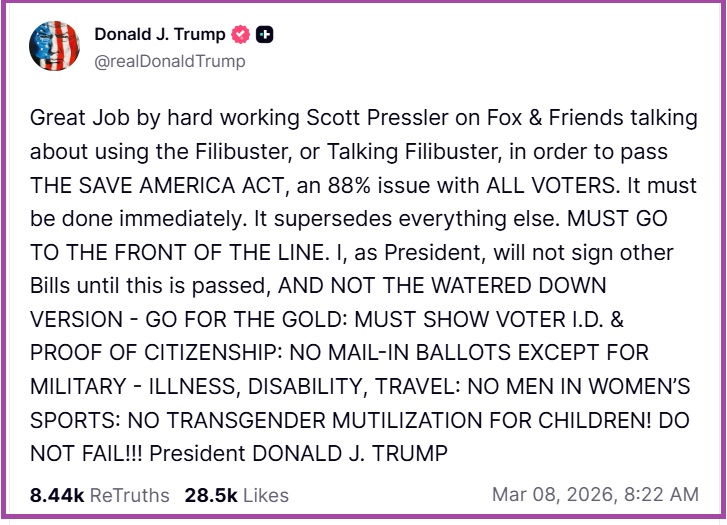
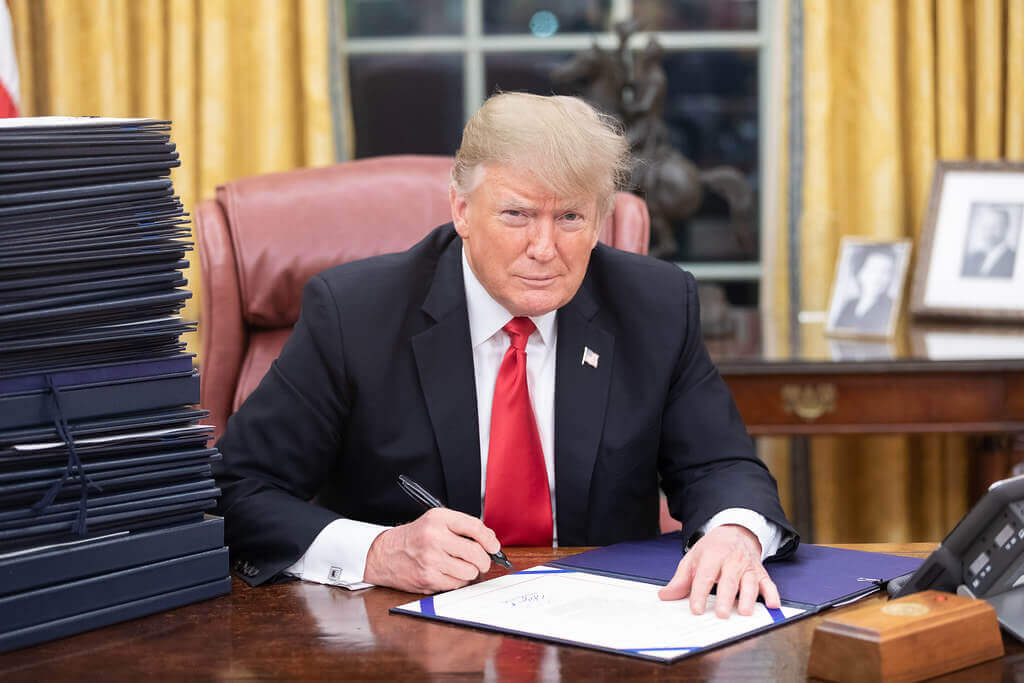
President Trump States He Will Not Sign Other Bills Until ‘Save America Act’ is Passed


Posted originally on CTH on March 8, 2026 | Sundance

President Trump is again urging the Senate to pass the Save America voting act that is a core element of restoring voter integrity in U.S. elections.  In his Truth Social post, President Trump notes he will not sign other legislation until the Save America Act reaches his desk.

[SOURCE]

This thread will refresh daily and appear above the Open Discussion Thread.

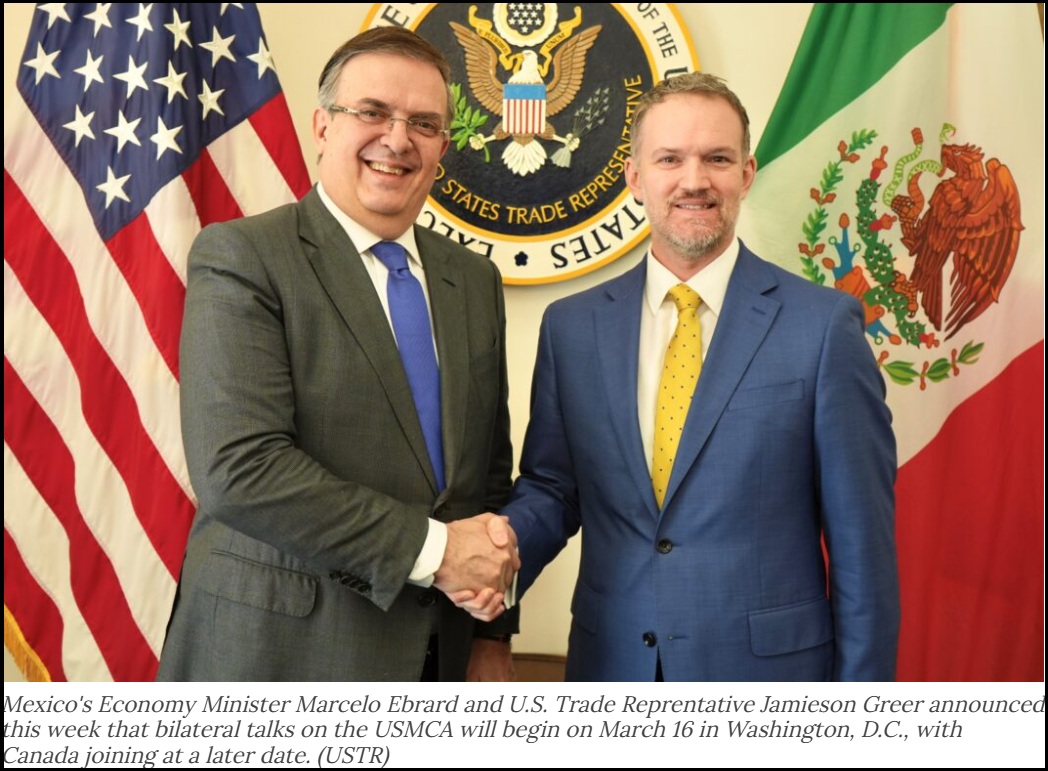
Mexico and USA Begin Bilateral Preparations to Dissolve USMCA Without Canada


Posted originally on CTH on March 8, 2026 | Sundance

One of the most curious aspects to the predictable USMCA review, ie. dissolution, has been the incapacity of the Canadian government or trade delegation to accept the United States is going to create two distinctly different bilateral trade agreements and eliminate the trilateral USMCA.

For 16 months the Canadians have refused to fathom the reality of what is going to happen this year.

The Canadians just cannot believe it is possible they will be forced to negotiate a free trade agreement without the cover of a multilateral construct. It has been remarkable to watch their dissonance.

Last week President Donald Trump and Mexican President Claudia Sheinbaum held a phone call. At the conclusion of the call, Sheinbaum publicly asserted the reality the Canadians just refuse to accept.

MEXICO – Mexico’s President Claudia Sheinbaum told reporters during her morning news briefing on Wednesday that her U.S. counterpart, Donald Trump, is open to doing away with the U.S.-Mexico-Canada trade agreement (USMCA) and replace it with individual trade deals with each country.

[…] “There might be revisions that create bilateral deals instead of involving the three countries because some things are more important between Mexico and the United Sates or between Canada and the United States,” said Sheinbaum. “Not everything has to be trilateral.”

Mexico’s president said the subject was brought up by Trump during a Tuesday phone conversation. […] According to Sheinbaum, her country is ready to consider possible changes. (read more)

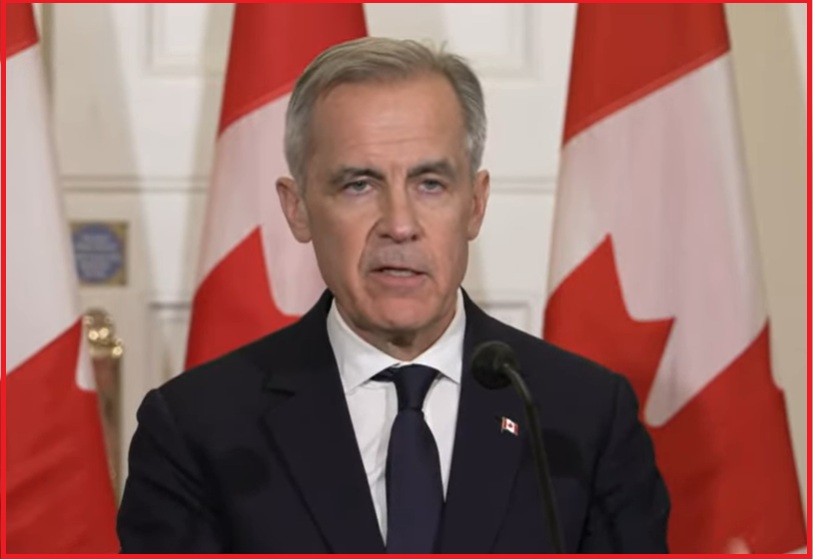
Canadian Prime Minister Mark Carney finally started to realize President Trump was likely to ignore Canada and begin direct discussions with Sheinbaum. So, Carney went to Mexico to try and get assurances from Sheinbaum that Mexico would not proceed without Canadian interests in mind.

Essentially, Carney wanted Sheinbaum to be on his team.  However, as diplomatically noted in the phone call with President Trump, President Sheinbaum politely rejected the Canadian partnership. [Insert Trump’s position toward Mexican cartels as an overriding thought]

The Canadians have been talking to U.S. media looking for sympathetic ‘Orange man bad’ coverage.  However, within the contacts between Canadian government officials and U.S. corporate allies, the sentiment from team Trump is very clear:

“The key thing that has struck me, and I think it has struck all Canadians, is so many of these guys in the Trump administration, frankly, they just hate Canada,” said Brian Clow, former Prime Minister Justin Trudeau’s deputy chief of staff who led Canada-U.S. affairs. {source}

It’s not hatred, it’s annoyance.

Years of compounding parasitic annoyances and sanctimonious, ‘holier-than-thou’ pontifications from the arrogant and uppity Canadian government.

The only time Canada has been honest with themselves and with President Trump was when Justin Trudeau was exiting office and admitted Canada cannot function without all of the one-way benefits it receives from the USA {GO DEEP}.

That’s it. That’s the only time Canada has ever been honest about the nature of the economic relationship.  A time when Trudeau had already quit and would not be around to deal with the consequences.  However, the level of Canadian arrogance is not only visible to President Trump, even the Japanese can see it.

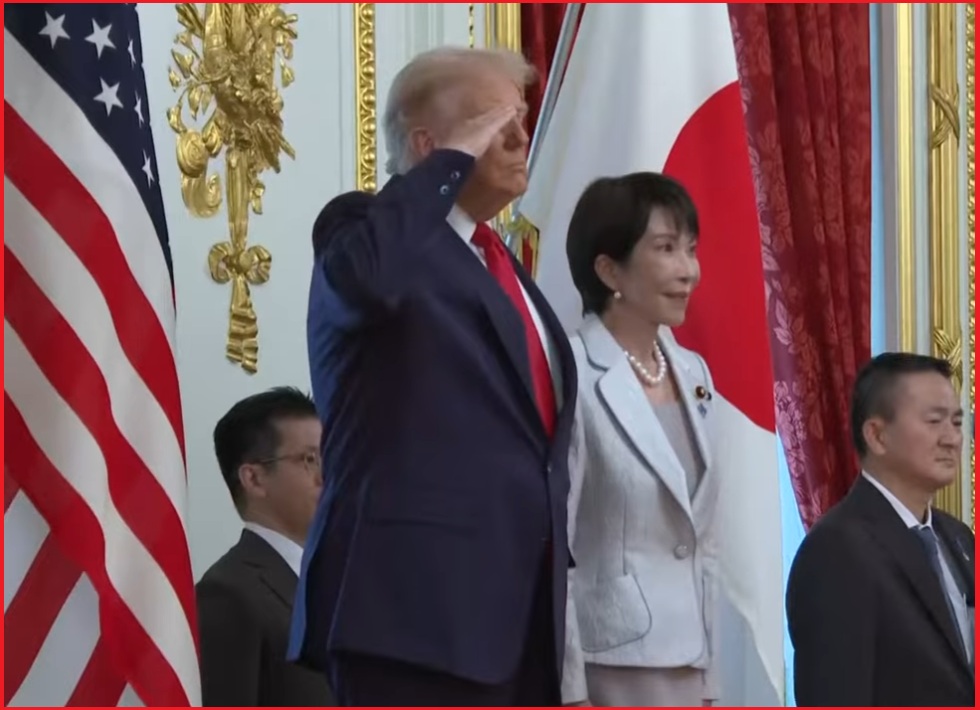
Remember that very close relationship between Japanese Prime Minister Sanae Takaichi and President Trump.  That professional, personal and respectful relationship is going to become strategically important this year.

Japan’s economic and trade representatives have told the Canadians that if the USMCA is dissolved, and if Canada no longer has the same trade access current available in the trilateral format, then Japan would rethink its entire investment portfolio in Canada, specifically the auto sector.

In essence, specifically as it pertains to the auto industry, Japan is saying if the USMCA is gone, Japan may pull all their cross-border manufacturing out of Canada and transfer it to the United States.

Prime Minister Mark Carney was recently questioned about the statements from Japan and he waxed nonsensically [SEE HERE] about how Canada would use Chinese BYD electric autos to replace lost Toyota manufacturing.

It’s a hot mess for Canada and getting worse.

Last Friday, Canada’s worst nightmare began unfolding:

WASHINGTON – Today, U.S Trade Representative Jamieson Greer and Mexican Secretary of Economy Marcelo Ebrard announced the first round of bilateral discussions in preparation for the Joint Review of the United States–Mexico–Canada Agreement (USMCA).

The ministers instructed negotiators to begin a scoping discussion on the necessary measures to ensure the benefits of the Agreement accrue primarily to the parties, including by reducing dependence on imports from outside the region, strengthening rules of origin, and enhancing the security of North American supply chains.

Ministers expect negotiators to hold the first meeting the week of March 16 and meet regularly thereafter as part of the Joint Review. [LINK]

Right there, you can see the exact same thing that took place in early 2017, when President Trump began organizing a bilateral trade discussion with Mexico only, in advance of his preferred approach to dissolve NAFTA and use two distinctly different bilateral trade agreements to replace it.  USTR Robert Lighthizer was working with Mexico only.

USTR Jamieson Greer, the studious protege’ of Lighthizer, now has the task of organizing the USA and Mexico while delaying any substantive contact/discussions with Canada until President Trump is ready to drop the hammer.

I can assuredly say President Trump wants everything outlined and in place for a U.S-Mexico deal before he announces the dissolution (joint review withdrawal) to end the USMCA.

There is little to no chance President Trump wants to renew a trilateral trade agreement that allows Canada to keep exploiting their market access to the U.S. without accepting reciprocity.

Remember, Canada’s main export is energy, and Trump has diminished that leverage through the Venezuela operation. Perhaps another ‘ah-ha’ moment for deep weed walkers.  Yes, in addition to giving China a body blow, taking control of Venezuela oil and minerals also weakens the leverage position of Mark Carney.  Can you see it now?

Canada has one key card they can leverage, congress.

Prime Minister Mark Carney is counting on the UniParty in Washington DC to stand in his corner against President Donald Trump and block any attempt to end the USMCA.  However, this is not going to be a surprise to President Trump, because Justin Trudeau did the same thing in 2018 when he coordinated his approach toward NAFTA through then Speaker of the House, Nancy Pelosi.

As I have said with great eagerness, it is going to be a lot of fun to watch this unfold.