A Volcano & the Last Little Ice Age


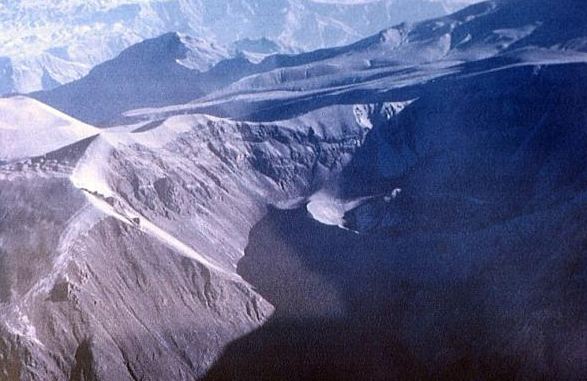
In the upland region of Southern Peru, there is a volcano by the name of Huaynaputina which to this day remains one of the largest ever to erupt in South America. It exploded on February 19th, 1600, and is recorded as the largest volcanic explosion ever in South America. However, studies have shown around the world that this volcano indeed altered the climate and took place during a solar minimum. Scientists now believe that its eruption had a devastating effect around the world both in Europe as well as in China and Korea. This impacted the agriculture and further the contagion cycles from disease. In fact, the Great Famine in Russia was caused by this eruption. The Russian famine of 1601–1603 was Russia’s worst famine in terms of a proportional effect on the population. More than two million people starved to death which was one-third of the Russian people. The famine compounded the Time of Troubles and weakened Russia allowing it to be invaded by the Polish-Lithuanian Commonwealth. This famine was part of worldwide record cold winters and crop disruption, which geologists in 2008 linked to the 1600 volcanic eruption of Huaynaputina in Peru which has been classified as a VEI6 putting some 30 cubic kilometers of earth into the sky more than 8 miles high. Contemporary accounts state that some regions did not see the sun for two months. Without the sun, crops fail.
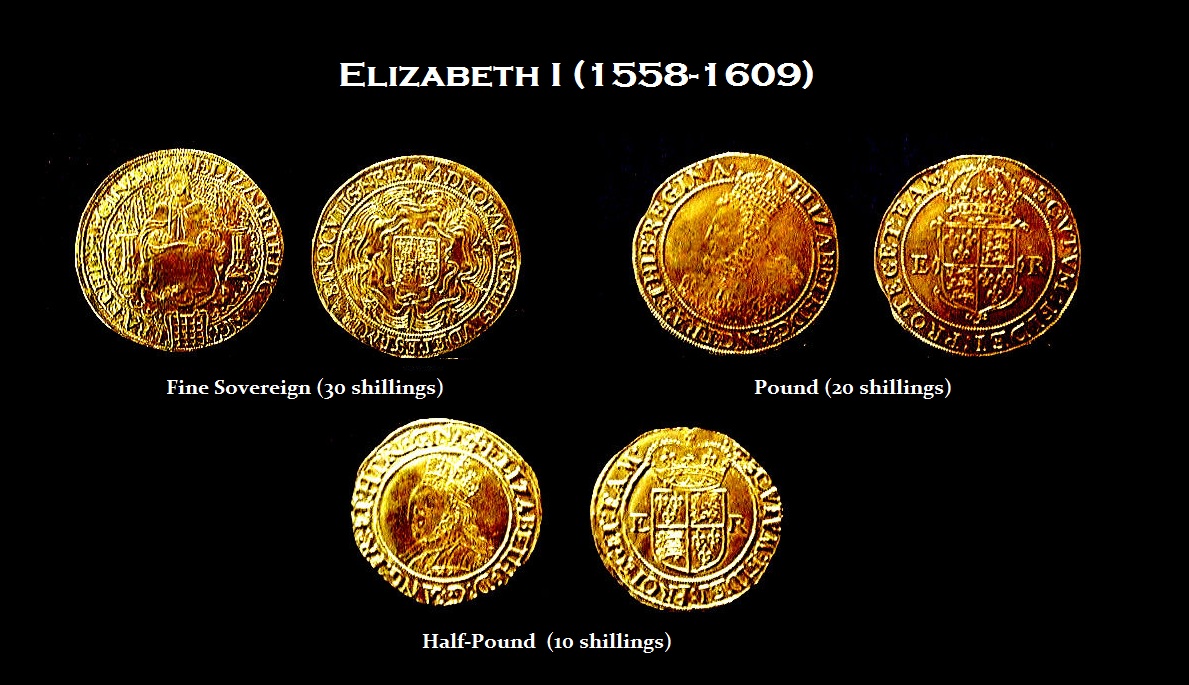
We even see the impact in the English coinage it is impossible to determine the coinage during this crisis for coins were not dated until 1642 under Charles I. The standard of living dropped significantly during the final years of the reign of Elizabeth I (1558-1603). This led to a surge in homeless which had repercussions for the country as a whole. Elizabeth’s government set about trying to tackle this problem by introducing a series of Acts which acknowledged that the care of the poor was now the community’s responsibility and that each citizen had to play his part. In this respect, the Poor Laws were progressive for their time certainly established a framework which lasted for many years to come.
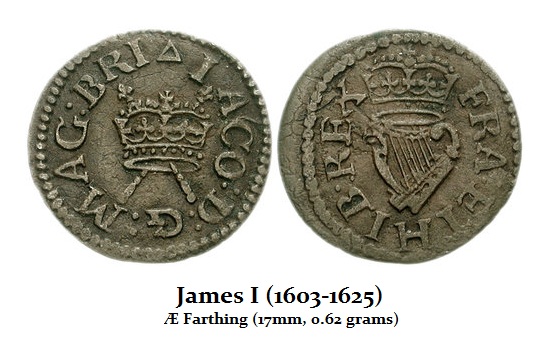
English coins were made in only gold or silver until 1613 when James I granted a patent to Lord Harrington to produce copper royal farthings. Coated with tin to look like silver, the so-called Harrington farthing was not worth the copper used to produce it and was rejected by people in England. The value of cash rose creating deflation. This is the first time we see bronze coins introduced in Britain which also coincide with this major volcanic eruption.
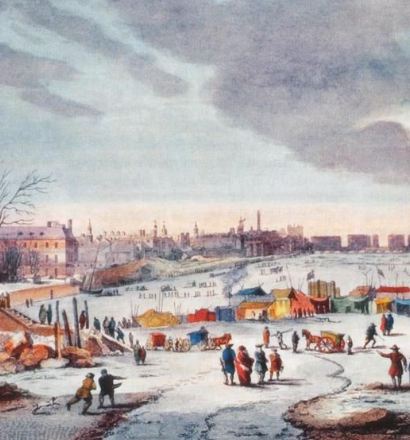
While this eruption was in 1600, it certainly appears that it contributed to the hard times of the period. The weather turned cold into the end of that century. A detail from Frost Fair on the River Thames near the Temple Stairs in 1683–1684 depicts a festival taking place on the frozen river, one of a number of so-called Frost Fairs celebrated in London during exceptionally cold winters during the 17th century known as the Little Ice Age. This engraving, published in 1825, was based on an earlier painting by the seventeenth-century artist Thomas Wyke.

The Chinese have also researched the impact of this event in Peru upon their climate and economy. The weather has drastically affected in China and the Korean Peninsula. The contemporary accounts have been examined revealing that historical evidence points to the conclusion that the eruption was followed by an abrupt cooling period and epidemic outbreaks in 1601 AD within both China and the Korean Peninsula.

Just one major volcanic eruption can send food prices sky-high. According to our computer, we show food prices rising from 2020 into 2024. The computer is calculating everything and correlating eveny type of data we have assembled. Its forecasts are based upon that intense correlation.
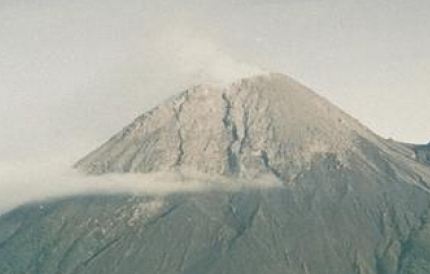
Mount Merapi is Due for an Eruption here in 2018


COMMENT: Mr. Armstrong; I am a loyal reader from Java. We have a big volcano here which has started to show life. The government has just put out a warning that it may erupt. I really find your work so interesting. You said 2018 would see a rise in volcanic activity along the Pacific rim of fire. Well, it appears after Hawaii, we could be next.

PM

REPLY: Yes. This particular volcano is like that of Hawaii insofar as it is much more active. Pyroclastic flow from a large explosions took place November 22nd, 1994. Another large eruption occurred in 2006, shortly before the Yogyakarta earthquake. There was also a large eruption in 2010 that changed the characteristic of Mount Merapi. Then on March 10th, 2014, Mount Merapi erupted early that Monday causing a thick-pyroclastic surge that shot 1,500 meters up in the air. We are now due for another event so this one is on schedule for 2017/2018.

Normally, small eruptions occur every two to three years, and larger ones every 10–15 years or so. However, the real major eruptions have occurred in 1006, 1786, 1822, 1872, and 1930. The eruption of 1006 is claimed to have covered all of central Java with ash. It was that volcanic eruption that is believed to have caused the collapse of the Hindu Kingdom of Mataram. This is akin to the destruction of the Minoan society when Thera erupted around 1650BC – today Santorini.

According to our model, the next BIG ONE is probably due in 2028, which may be at the 1006 eruption magnitude.

Here is the list of eruptions since we have consistent recorded history:

  • 1548, 1554, 1560, 1584, 1586(?), 1587,
  • 1658, 1663, 1672, 1678,
  • 1745, 1752, 1755, 1768, 1791, 1797,
  • 1807, 1810, 1812-22, 1822-23, 1828, 1832-36, 1837-38, 1840, 1846, 1848(?), 1849, 1854(?), 1861, 1862-64, 1865-71, 1872 (large vulcanian-subplinian eruption VEI:4) , 1872-73, 1878-79, 1883-84, 1885-87, 1888, 1889, 1891-92, 1893, 1894, 1897,
  • 1902, 1902-04, 1905, 1906-07, 1908, 1909-13, 1915, 1918, 1920-21, 1922, 1923(?), 1924, 1930-31, 1932, 1933-35, 1939-40, 1942-45, 1948, 1953-58, 1961, 1967-1970, 1971(?), 1972-85, 1986-90, 1992-2002,
  • April-July 2006, Oct 2010-2011, 2014, 2018 (May)

The BMW Self-Balancing Motorcycle NEXT 100


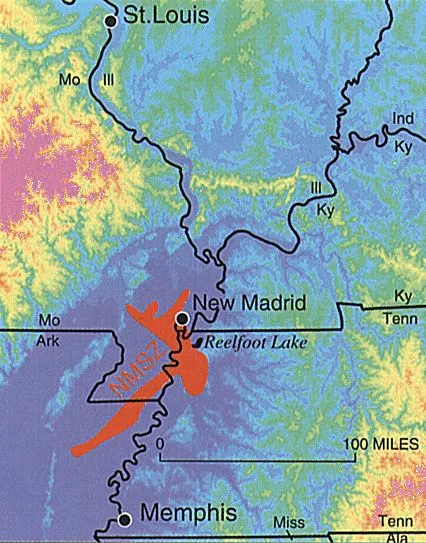
The New Madrid Fault – What is It Due?


QUESTION: This is the start of more volcanic and earthquake activity. Everyone thinks about the west coast when they think about quakes, but what about the center of the country and the New Madrid fault. What is the timeline for it

GB

ANSWER: The last big one was 1811-1812. There were actually four earthquakes during this period between December to February with the last one sending the Mississippi River reversing its course and flowing North for a brief period. The first struck on December 16th, 1811 at 2:15 am with an epicenter in northeast Arkansas. The second struck the same day December 16th, 18,11 which the sun was rising at 7:15 am still with the epicenter in northeast Arkansas. The third struck on January 23rd, 1812 at 9:15 am with an epicenter around New Madrid, Missouri. The third earthquake to strike was February 7th, 1812 at 3:45 am with an epicenter near New Madrid, Missouri.

This one appears to be due in 2035. However, we have some additional data that was recently given to us with the more minor events post-1811. There was a flurry of small quakes in 2017. We are running this through our models to see what it comes up with. We will report on the results of that correlation when complete to see if that changes the due date

Robot Can Ride a Bike and Balance Itself


When is the Next Megathrust Earthquake Due?


QUESTION: Dear Mr. Armstrong, What do you make of the risk from the Cascadia Subduction Zone, where two major plates are stuck? Scientists ‘predict’ a major earthquake up to 9.2 on the Richter-scale and the following tsunami, that could level Seattle and other cities in the Northwest. A major earthquake – that occurs there every 240 years the last 10.000 years – would be overdue by over 75 years already. You warn about an uptick in earthquake activity the coming years: will this be the feared big one for the US? I’m following you since I saw you on Dutch television and watched the documentary – and it was deeply impressed. Looking forward to your documentary about the unfolding euro crisis!

best regards,

Martijn, Netherlands

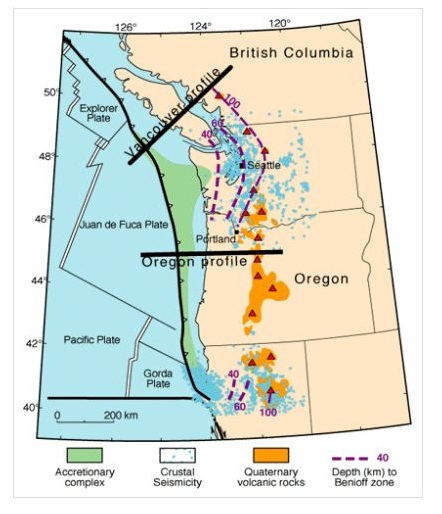
ANSWER: That is a very good question. Most people have never even heard of this fault. It is the big one of them all. The Cascadia Subduction Zone (CSZ) is what is known as a”megathrust” fault which is a 625 miles long (1,000 km). It is a dipping fault which stretches from Northern Vancouver Island to Cape Mendocino in California. This separates the Juan de Fuca and North America plates. New Juan de Fuca plate is created offshore along the Juan de Fuca Ridge which moves toward the North American plate and eventually pushes beneath the entire continent. This one is no joke. It is the ONLY fault which is capable of producing earthquakes that are greater than M8.5 and can reach into 9 to 10 level on the scale. In fact, the CSZ has already produced magnitude 9.0+ earthquakes in the past. It is not 75 years overdue according to our models. We entered the danger zone only in 2009, which then turned sharply higher in February 2018.

The last megathrust earthquake hit on January 26th, 1700 (1700.071) which has been estimated to have been in the 8.7–9.2 level. The megathrust earthquake involved an average slip of 20 meters (66 ft). That was a very big move. Most quakes are under 2 feet. That 1700 megathrust earthquake caused a tsunami which struck the coast of Japan.


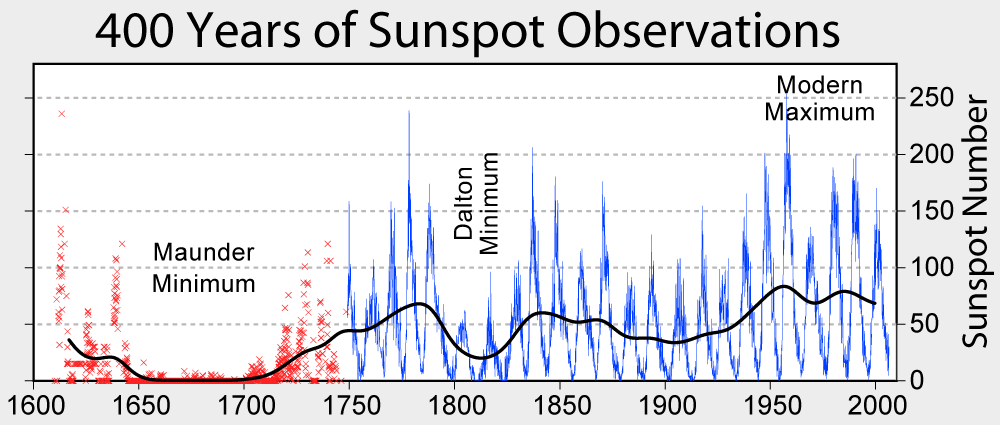
There are no exact records, so it is nearly impossible to develop an accurate forecast with only one actually known date. The geological evidence can only tell us that there have been 7 such events in past 3,000 years. That would produce an average cycle of 428.57 years. This is not much help. We need to correlate this with the energy output of the sun since most volcanoes tend to erupt during Solar Minimums. Indeed, the last megathrust earthquake took place on January 26th, 1700 (1700.071) during the Maunder Minimum. We are watching the energy output of the sun drop faster since 2015 than anyone thought possible. This means that the first ideal target would be ideally 320.78 years from that last event or 2020.85 (November 6th, 2020).

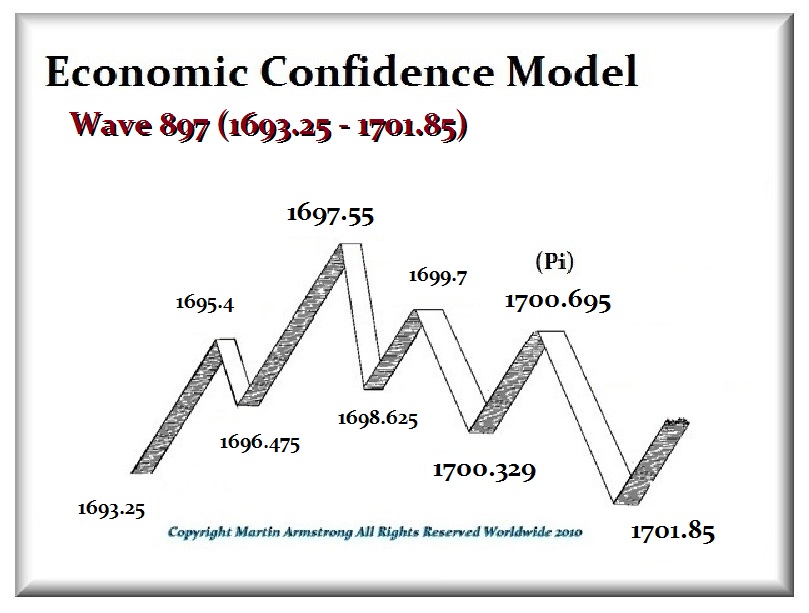
Unfortunately, do not expect this event to take place on that exact date. All we have is just one known date 1700.071. Correlating that with the activity of the sun, we can at best come up with an approximation for the event. We have no way of predicting the exact date when there is little historical definitive evidence. Look at the ECM Wave at that time #897,  we can see that the megathrust earthquake of 1700 took place going into the Pi target. If the date was correct, then 1700.071 is just a few weeks ahead of schedule.

In any event, we are by no means 75 years overdue. That is simply using an average for events.

Hawaii Volcano – Right of Schedule?


(Download USGS Report on Hawaii)

COMMENT: Mr. Armstrong; I think you have proven time and again that there is a cyclical nature to everything. You said in the report you did on volcanos last year that 2018 would be the beginning of serious eruptions. Well, I live here on the main island in Hawaii. This is by far the worst I have seen here in my life.

DKR

ANSWER: I do not believe that people understand that Hawaii is rather unique. The continuous flow of lava made many complacent. This was due to the fact that Hawaii sits on what is called a “hot spot” which was put forth back in 1963 by J. Tuzo Wilson, a geophysicist, who explained the framework of plate tectonics by proposing the “hot spot” hypothesis. Wilson’s hypothesis has come to be widely accepted. The scientific data on linear volcanic island chains in the Pacific Ocean created the Hawaiian Islands. This “hot spot” has created a very distinctive linear shape of the Hawaiian-Emperor Chain demonstrating that there has been a linear progressive movement of the Pacific Plate over a “deep” and “fixed” hot spot. It is still debated as to how far down this hot spot extends. It is not known precisely if it extends only a few hundred miles or does it go down thousands of miles, perhaps to Earth’s core-mantle boundary itself

Nevertheless, the Hawaiian Islands are really just that peaks of huge mountains that rise from the floor of the Pacific Ocean. The newest of these islands, Hawai’i, is relatively young, speaking geologically of course. The oldest rocks above sea level are less than one million years old. The Island of Hawai’i was actually formed by five volcanoes, yet today currently only three are considered active: Hualālai, Mauna Loa and Kīlauea. Because they seem to sit on a hot spot, they have been continuously active which make them the world’s most active volcanoes.

There is a new sister volcano known as Lō’ihi Seamount, which is still underwater yet also an active volcano about 20 miles off the southeast coast of Hawai’i. Indeed, Lō’ihi may be the next island to emerge in the Hawaiian chain. It is still about 3,000 feet below sea level. Using a linear project, which discounts major eruptions, then it would appear as a new island in about 100,000 years or so. If we get bursts of an eruption, which is cyclically more likely, then that time period could be cut in half.

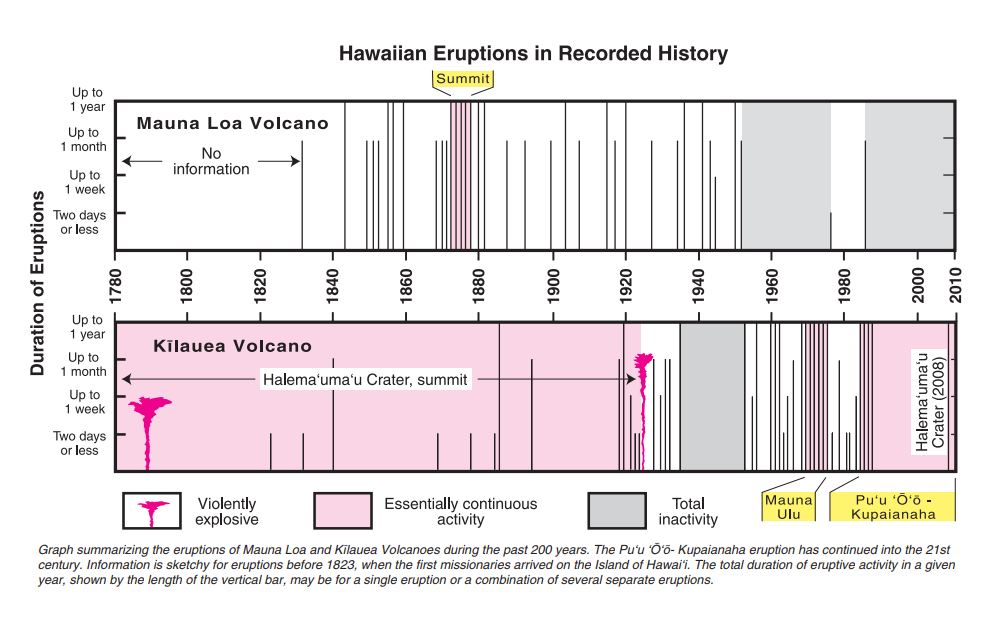
Historical Eruptions at Kilauea volcano have occurred from both the summit caldera and from vents along the East Rift Zone. The historical record began with a very explosive phreatomagmatic eruption in 1790. The year 2018 was the start of a major eruption sequence. We can see from the chart above that the INTENSITY has picked up significantly since 1924. It was after this 1790 eruption when the volcano has become almost continuously active. It was 1924 when the more gentle effusion turned back to an explosive eruption. The period 1924 to 1955 saw mostly short-duration summit eruptions. Since 1955, Kilauea has seen mostly East Rift Zone activity interspersed with small summit eruptions.

Kilauea’s Eruption rate diminished steadily over the first half of the historic period but has been increasing again since 1924. Currently, we now have “ballistic blocks” being hurled into the air which are the size of microwave ovens. This is typically the warning that this eruption can turn very explosive. The intensity actually began to rise over the past 4 years. This was a perfect 224-year cycle. Hawaii may be complete resurfaced in 2048.

I will restate what I wrote last year: “If we see a series of volcanic eruptions in the VEI 6 category or greater within 2018, expect to see a very sharp turn down in temperature and Global Cooling will take on rapid change going into 2024.” Correlations suggest that when the energy output of the sun declines, as it is doing now, then larger erutptions tend to correlate to such periods.

British Earthquakes


QUESTION: I am just curious. Do you have any data on earthquakes in Britain? I was in Winchester in January 2015 when we had a small earthquake. The size was not the issue, but the fact that it was an unusual location, not previously known for earthquakes. Can your computer forecast such events?

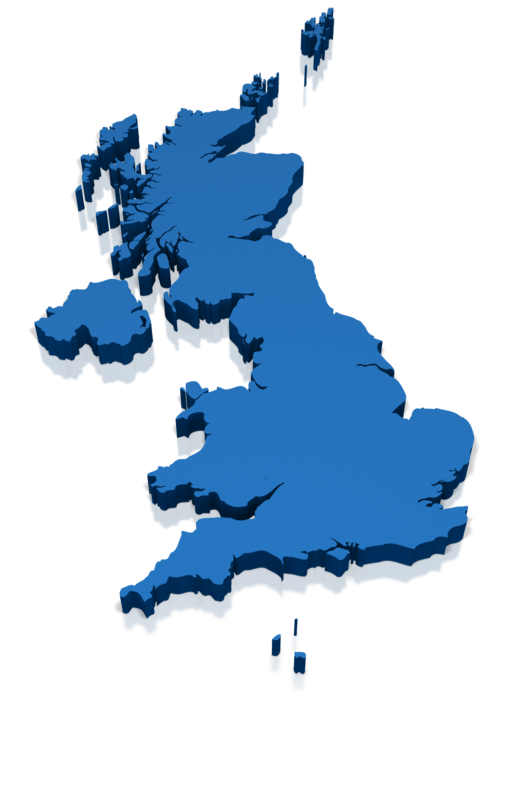
ANSWER: Without data, it is impossible to forecast anything. However, that particular area may not have been known for a quake in the past, but the surrounding area has a record that extends back to 1076 when a major quake struck on March 26th that historians said was felt “throughout all England.” There have been 75 quakes in Southern England and there is a fairly regular 13-year cycle with the next one due in 2028.

Like everything else, they build in intensity. There may be what people will call a “swarm” of earthquakes that cluster during a period. There were two in 1692, and then there were six all in 1750, then three in 1752, and two in 1753 with nine hitting in 1755. Those produced even a Tsunami with waves almost 10 feet high that went into the western English Channel about 4 hours following the serious quake in Lisbon.

It appears that we could see a swarm start around 2025, which interesting just follows the high in the Economic Confidence Model, which in fact, incorporates earthquake impacts economically.

Yellowstone – The Supervolcano When is It Due?


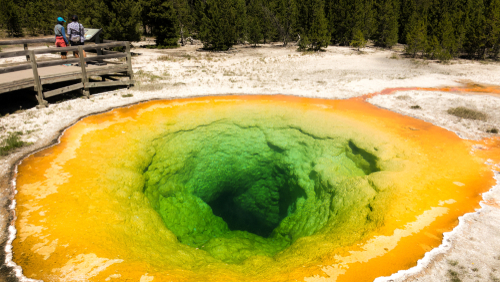
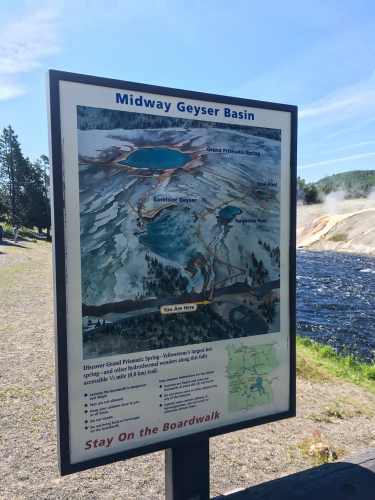
Yellowstone Supervolcano geyser Steamboat has been unusually active. Many fear that something strange is happening which may signal it is getting active once again under Yellowstone National Park. Steamboat is indeed the world’s largest geyser and it has erupted three times in just six weeks. Many people have been asking if we ran our models on this one. Sure, we gave it a reasonable shot. However, the data is way too vague to produce an accurate projection. This requires not just trying to ascertain the cycle in this Supervolcano, but to double check it against our entire database to see if it correlates with other events to increase the accuracy.

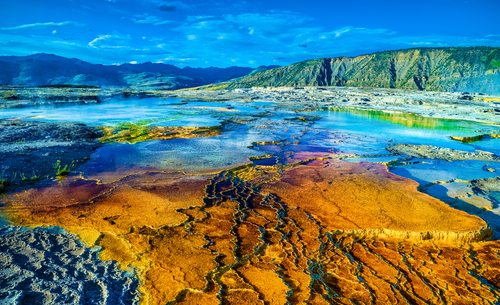
Yellowstone National Park is actually an active supervolcano. It is a “supervolcano” since the entire park in inside the volcano, which is why you do not see the typical mountain and cone.  As you walk around the park you do not realize that you are walking into the Yellowstone volcano’s Caldera. The Yellowstone Caldera was formed when the supervolcano erupted around 640,000+ years ago. The Yellowstone eruption area collapsed upon itself, creating a sunken giant crater or Caldera 1,500 square miles in area. You could fit Tokyo, the world’s biggest city, in Yellowstone’s super-volcanic Caldera, no less New York City, Los Angeles, London, and Paris.

What makes the place so beautiful is the dramatic geological chaos beneath the surface. The magmatic heat that powered that last eruption, is still there and actually is powered two previous eruptions. Therefore, the park’s famous geysers, hot springs, fumaroles, and mud pots, are all because what lies beneath is still very active.

The very term “Supervolcano” implies an eruption of magnitude 8 on the Volcano Explosivity Index, indicating an eruption of more than 1,000 cubic kilometers (250 cubic miles) of magma. Yellowstone has had at least three such eruptions one about 2.1 million years ago, the next 1.2 million years ago, and the last big one 640,000 years ago. Three super-eruptions at Yellowstone appear to have occurred on a 600,000-700,000 year cycle. It is certain without question that a full-scale eruption would create a global disaster never witnessed by modern man. We are obviously at a loss of historical records to gauge what would happen. The most recent full-scale eruption took place 640,000 years ago – suggesting Yellowstone is overdue for an eruption. Yet this analysis is by itself just one-dimensional. To increase the accuracy, we need to correlate this with everything else in our database.

Looking at just the major Supervolcano eruptions does not help in really determining the true cyclical forces at work. We must also include the minor eruptions that take place within these cycles of 600-700,000 year intervals. The most recent volcanic activity consisted of rhyolitic lava flows which erupted approximately 70,000 years ago.  Indeed, the most recent giant caldera-forming eruption, 640,000 years ago is a starting point. There have been approximately 80 relatively nonexplosive eruptions that have occurred in the past 640,000 years. On the surface, this yields a general cycle of 8,000 years. When we correlate that against the entire database we have, it amazingly lines up with 8,600 years, which is no surprise. When we extrapolate this with our VOLATILITY models, it appears that intensity builds in a cycle of 25,800 years (3 times 8.6).

1991 Pinatubo Eruption

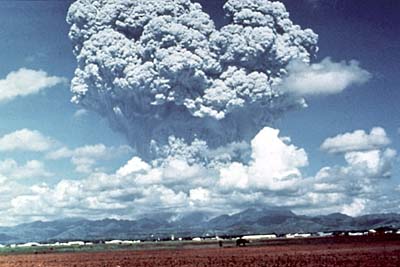
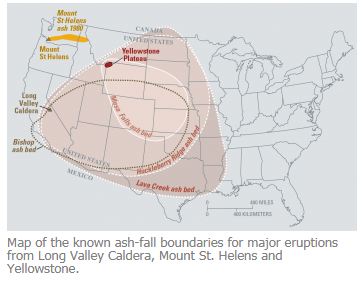
Looking deeper into these 80 eruption events, we discover that at least 27 were rhyolite lava flows in the Caldera, and 13 were rhyolite lava flows outside the Caldera. Some 40 eruption events were basalt vents outside the Caldera. Some of this “minor” eruptions that most people overlook were approximately the size of the devastating 1991 Pinatubo Eruption in the Philippines, and several were even much larger than that one. The most recent volcanic eruption at Yellowstone, a lava flow on the Pitchstone Plateau, occurred 70,000 years ago. So these minor events are entirely capable of even altering the climate WITHOUT the eruption of a Supervolcano which nobody can honestly say what would be the result. If the eruption of Mount Tambora  in 1816 produced the year without a summer, this one would probably darken the sky for more than a year and would probably result in famine and starvation. The evidence of the previous ash-fall would cover the wheat fields of the USA. That would not be very good for society as a whole. How long would the sun be blocked is the real question. This would most certainly contribute to Global Cooling.

Over the past few decades, there have been several research papers in the scientific press that submit there is a correlation between cosmic-solar radiations and destructive geological events such as earthquakes and volcanic eruptions. On top of this, there are correlations with climate change that kick in where volcanoes throw up ash into the atmosphere which blocks the sun and that sets in motion the global cooling sending the earth back toward an Ice Age. Therefore, the entire process is extremely complex. Our computer can put out a forecast, but it is looking at everything and the dynamic complexity of all the interactions. This is why I do not put forth X happens because of Y. It is just more complex than such correlations.

Many put forth that we are overdue on the Supervolcano eruption using this measurement of 640,000 years ago for the previous event. What we will see is a series of building minor events that should probably come in clusters of three. Based upon our correlations, the Supervolcano will be due 670,800 years from the last event. That means, not so much that we are in the clear, but how accurate is that last date of 640,000 years ago? Is it +- 30,000 years? What does seem to be more likely is that a major event is building in intensity keeping in mind that the smaller events can still be biggest that Mount Tambora and on this scale we do seem to be on schedule.

Where The Future Looks Bright


QUESTION: Do you think stem cell research will be the next advance in medicine?

KW

ANSWER: It is a shame that much is misunderstood and has been driven offshore.  So many people think Stem Cells are taken from dead babies. They are gathered from the umbilical cord but can be extracted from your teeth or even fat tissue in your own body. But the answer is yes. Stem Cell research is the next generation that can really be our saving grace for the future against superbugs. They can tank you blood and create a new heart. Aside from the day when you will be able to replace organs, it is helping to shorten the 10-year cycle in the development of new drugs.

This is right on time and it should provide the next advancement in medicine providing the next way of technological advancement.  Biotech companies can also “print” living tissue using specialized 3D printers. They can print tissue that can be used to produce skin for grafts, or cartilage for joints. This is the next great advancement in medicine. One company is Aspect Biosystems, which went into partnership with Johnson & Johnson to develop 3D-printed knee meniscus tissue.

The future is not all dark and foreboding. That seems to be limited to the political-economy. In other areas, the future looks different and promising