Posted originally on CTH on February 19, 2026 | Sundance
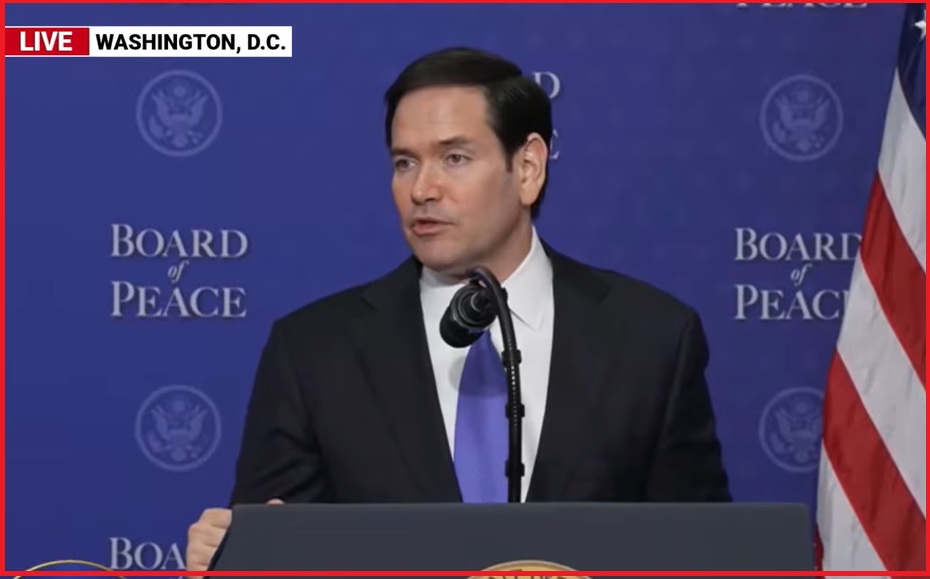
As the inaugural meeting of the Global Board of Peace gets underway, Vice President JD Vance, Secretary of State Marco Rubio and Special Envoy Steve Witkoff delivered speeches at the beginning of the Board of Peace session in Washington DC. WATCH:
Posted originally on CTH on February 19, 2026 | Sundance
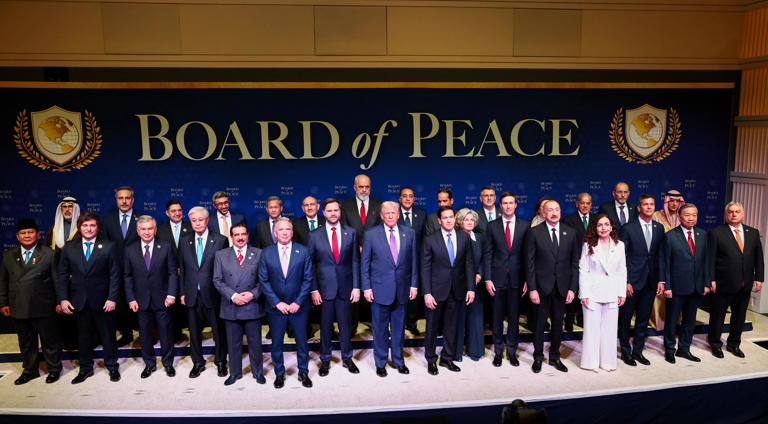
President Trump invited global leaders to Washington DC to participate in the inaugural meeting of the Board of Peace. U.S President Donald Trump, U.S. Vice President JD Vance, U.S. Secretary of State Marco Rubio, Special Envoy Steve Witkoff and Jared Kushner all delivered remarks during the event.
Participating countries include Albania, Argentina, Armenia, Azerbaijan, Belarus, Bulgaria, Cambodia, El Salvador, Hungary, Indonesia, Kazakhstan, Kosovo, Mongolia, Pakistan, Paraguay, Uzbekistan, Vietnam, Israel, Saudi Arabia, Egypt, Qatar, Bahrain, Jordan, Kuwait, Morocco, Turkey and the United Arab Emirates.
The Vatican and Pope Leo rejected an invitation to participate, concerned the Global Board of Peace may overshadow the United Nations, and that would not be acceptable to the Catholic Church or the European Union. Full video of the event below:
Posted originally on CTH on February 19, 2026 | Sundance
Forlesia Cook, a grandmother who lost her grandson to violence, delivered a brief and powerful testimonial supporting President Trump. Many naysayers, beyond just the DHS security issues, would be well-served to listen to her advice.
Mrs Cook spoke during a Black History Month reception at the White House, pushing back on claims that President Trump is racist. As noted by this passionate grandma, President Trump gave her a voice when others ignored her.
Cook’s 22-year-old grandson, Marty William McMillan Jr., was brutally murdered in cold blood in 2017 after meeting someone online. He left home to meet a woman he connected with on the Plenty of Fish dating app. He never came back. His remains were discovered months later on the side of a highway in Maryland, shot seven times {SOURCE}.
Posted originally on CTH on February 18, 2026 | Sundance
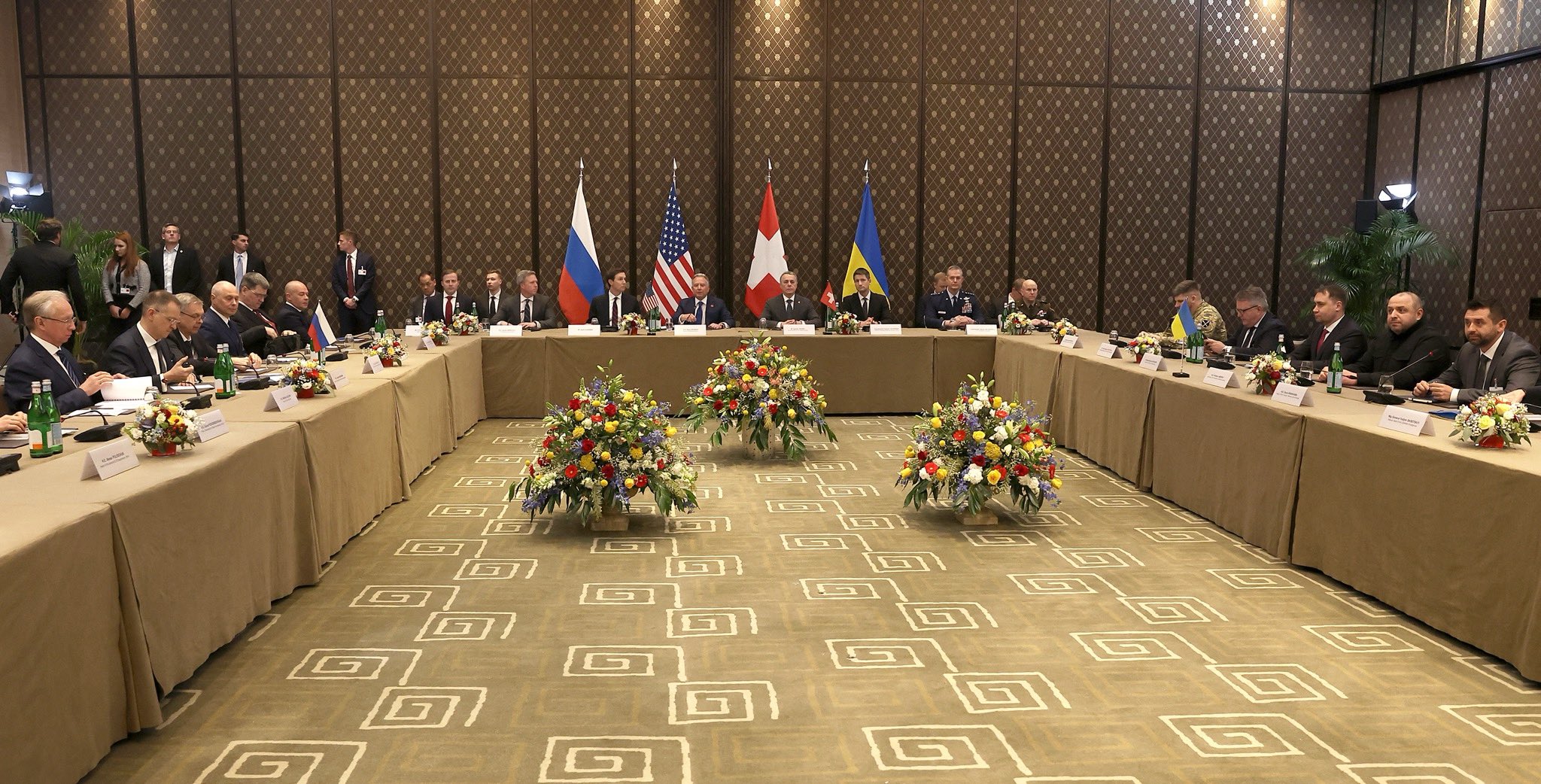
The U.S. mediating team met with Ukraine and Russia negotiators for the second day in Geneva, Switzerland. Unfortunately, despite the high praise and customary diplomatic niceties spoken, there was not much progress.
There was, however, a rather remarkable accusation hurled by Russian media about uninvited British officials going to Geneva in order to conduct surveillance of the negotiations. Apparently, this is part of UK Prime Minister Keir Starmer’s efforts to retain maximum involvement and influence.
STEVE WITKOFF – “Today, at President Trump’s direction, the United States moderated a third set of trilateral discussions with Ukraine and Russia. Thank you to the Swiss Confederation for being gracious hosts for today’s meetings.
President Trump’s success in bringing both sides of this war together has brought about meaningful progress, and we are proud to work under his leadership to stop the killing in this terrible conflict. Both parties agreed to update their respective leaders and continue working towards a deal.” (source)
Consultations are taking place in working groups by areas within the political and military tracks. We are working on clarifying the parameters and mechanisms of the decisions discussed yesterday.
We are focused on substantive work. We will provide additional information on the results.” (source)
In Geneva, while Russia, the US, and Ukraine are trying to talk, Britain sneaks in with a delegation led by Starmer’s security advisor, Jonathan Powell. This clearly trying to meddle.
Italy, Germany, and France are sticking to formal channels, but Britain is lurking, ready to… pic.twitter.com/wErmZtQsCs
🛢️ The Ukrainians’ decision to block oil deliveries through the Friendship pipeline to Hungary is blatant political blackmail. They’re trying to pressure us to support their EU membership & hand over funds belonging to Hungarian families. In response, Hungary has decided to stop… pic.twitter.com/Sv9jw4lFDX
VIDEO BELOW Between Piers Morgan and Volodymyr Zelenskyy:
CHAPTERS:
00:00 Introduction and monologue 02:14 President Zelensky on the latest developments in Ukraine 08:13 Zelensky on breaking news over the trilateral meeting in Geneva 10:30 Zelensky: ‘We need European representatives’ 14:50 Would Ukraine ever concede any territory for the Russians? 20:40 Zelensky’s view over Russia’s red lines involving NATO 25:55 Bill Clinton on dealing with Putin 35:19 Zelensky: “I don’t need all this historical shit!” 37:12 Would Zelensky authorise forces to kill Putin? 41:40 Zelensky on his relationship with America 46:57 Piers asks Zelensky is he trusts President Trump 50:04 Zelensky on the possibility of having free and fair elections following a 2-month ceasefire 53:54 Zelensky being voted the world’s favourite leader 01:03:00 Zelensky on Russia in the Winter Paralympics: “I don’t want to say it’s about money but it’s a dirty decision” 01:07:05 Zelensky on his relationship with his family 01:11:00 Piers’ monologue following his interview with President Zelensky
Posted originally on CTH on February 18, 2026 | Sundance
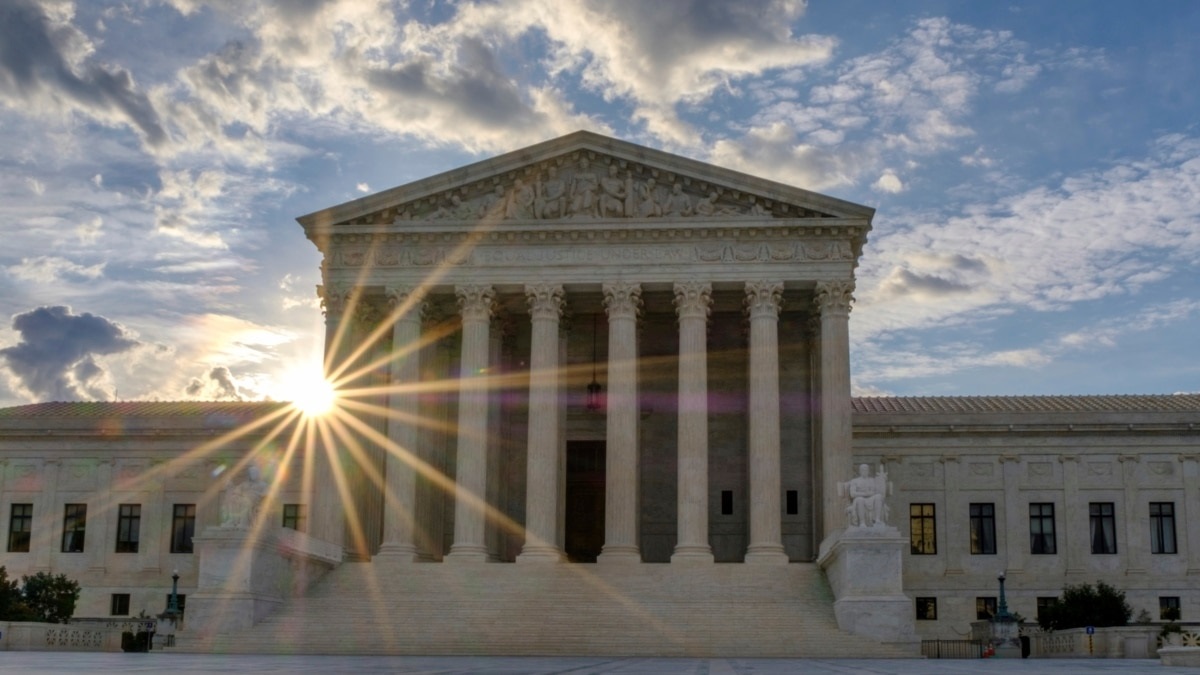
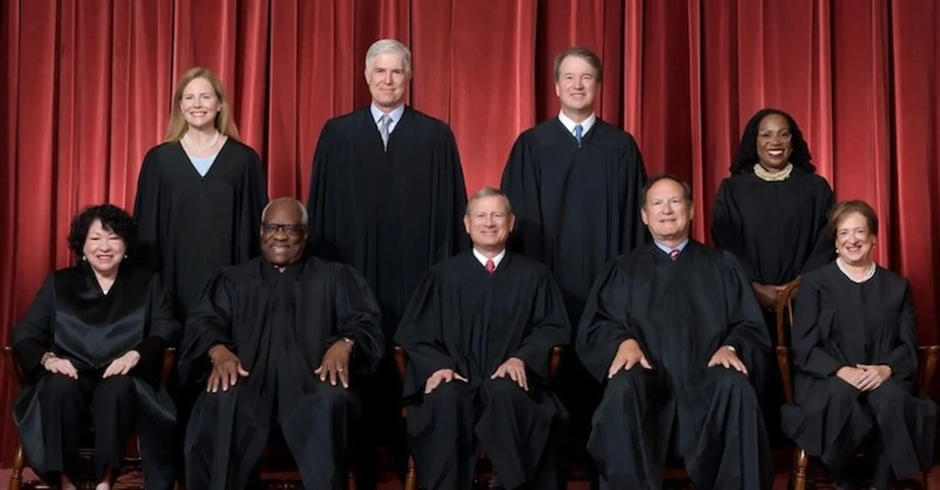
The high court has indicated it will be releasing opinions on one or more of the previously argued cases on Friday February 20, Tuesday Feb 24, or Wednesday Feb 25. The decision over tariffs triggered by President Trump using the International Emergency Economic Powers Act (IEEPA) is one of the decisions now considered highly likely to surface.
If the decision doesn’t come this Friday, a rather interesting situation unfolds. The following week falls into the Tuesday Feb 24 State of the Union address.
Typically, several Supreme Court justices sit in front row of the House floor during the speech. The decision could be released on the morning of the speech, or justices could actually sit in the audience – knowing the outcome and the morning after the State of the Union address, the ruling could be released.
Now, there is a possibility the ruling will not come out in this cycle, but that is diminishing possibility considering the length of time the Supreme Court has sat on this opinion.
The court knows the importance of this decision, and they obviously know the State of the Union speech is scheduled to be delivered on Tuesday the 24th. This will be an interesting dynamic to watch unfold.
Posted originally on CTH on February 18, 2026 | Sundance
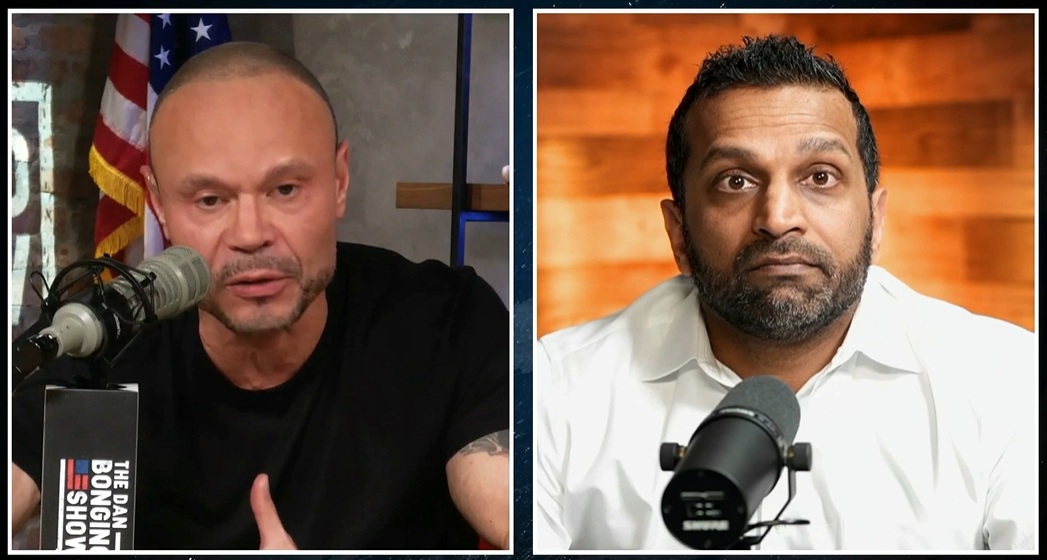
Former FBI Deputy Director Dan Bongino is helping to spearhead a coordinated message campaign for President Trump as he returns to podcasting. Bongino is hoping to fill the void for voices who speak positively about ongoing DOJ and FBI efforts and share information about ongoing Justice Department efforts.
Today, Dan Bongino interviews FBI Director Kash Patel. At 01:08:36 of the video below, Kash Patel outlines some pending information that is likely to reach the headlines about the funding mechanisms behind Antifa. I have prompted the video to the entire interview between Bongino and Patel. {Direct Rumble Link} – WATCH:
Posted originally on CTH on February 17, 2026 | Sundance
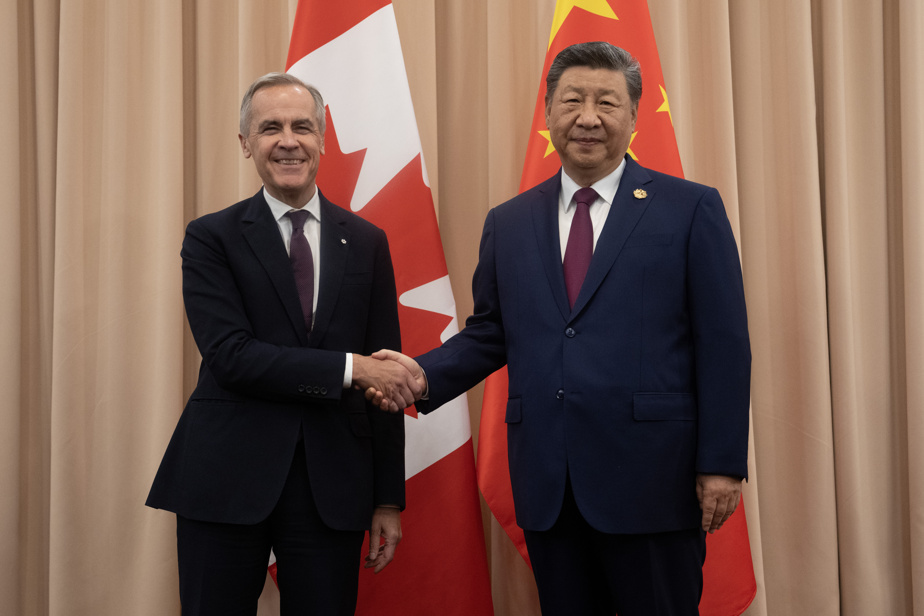
There is an awful lot to unpack in this seemingly obscure article talking about Canadian Prime Minister Mark Carney and a new trade approach he is pitching to Pacific/Asia and Atlantic/European nations. [Story Here]
Before getting to the substance of the outline, something important needs to be shared for context.
Do you remember the 2014, 2015 and 2016 top story conversations and debates over the Transpacific Partnership trade deal known as TPP?
You might also remember the Transatlantic Trade and Investment Partnership trade deal known as TTIP.
The TPP (Pacific) and TTIP (Atlantic) were two major multinational trade deals negotiated between 2013 and 2016. While both sparked plenty of debate, most of the spotlight was on the TPP, the Trans-Pacific Partnership.
Hillary Clinton was in favor of TPP as were most of the traditional republican field of candidates in ’15/’16. However, Donald Trump was strongly against TPP and pledged to exit out of any negotiations and scrap the U.S. participation if he was to win the 2016 election. Some of you may begin to remember this.
Donald Trump agreed with our position, that TPP was being falsely sold as a beneficial 12-nation massive trade agreement between the USA and pacific rim countries including Australia and Southeast Asia nations.
With the history of NAFTA behind us, we could see two major issues with TPP: #1: It was structured with a back door to let China into the deal. And #2) it was created to ensure the USA remained a “service driven economy.”
Supporters of TPP and TTIP claimed this multinational trade deals would create smooth supply chains and align on ‘rules of origin.’ They believed TPP would benefit companies and lead to cheaper products. Critics, however, argued that the agreements were designed to exploit the U.S. consumer market and prevent the country from ever regaining a strong manufacturing base.
I share those reminders to set up the big 800-lb gorilla question.
If the TPP was such a great trade deal for all parties involved, why didn’t the group finalize it after the USA withdrew? It’s been a decade, so why haven’t the TPP nations completed their trade agreement?
The honest answer reveals the undiscussed lie.
Both TPP and TTIP were constructed and designed to keep exploiting the U.S. consumer market. That’s it. That was the entire purpose of TPP (Asia) and TTIP (Europe). Corporations and lobbyists like the U.S. Chamber of Commerce wrote the TPP language to maximize corporate profits. That was the purpose of it.
Take the U.S.A. out of the TPP trade agreement and the purpose/benefit no longer exists. Without the host, there is no need for a feeding agreement between parasites. That’s why a decade has passed and TPP/TTIP went nowhere.
All of that said, suddenly with President Trump positioning to eliminate the USMCA trade agreement, Canadian Prime Minister Mark Carney wants to go back to the TPP/TTIP “Rules of Origin” trade framework in order to create an insurance policy against the end of the trilateral USMCA trade agreement.
Now, here is where it gets really interesting. There is no way for Canada to remain in the USMCA and simultaneously commit to a trade agreement with different rules of origin. This means that for Carney to accomplish what he’s reportedly aiming for, the dissolution of the UMCA would already need to be in the works.
“A Party intending to negotiate a free trade agreement with a non-market country shall inform the other Parties at least three months prior to commencing negotiations and, upon request, provide information regarding the objectives of those negotiations.
A Party that enters into a free trade agreement with a non-market country shall provide the other Parties with the full text of the agreement prior to signing.
If a Party enters into a free trade agreement with a non-market country, the other Parties may terminate this Agreement on six months’ notice and replace it with a bilateral agreement.” [SOURCE]
The Canadian proposal violates the central tenet of the USMCA. Carney’s proposal can only move forward if the Canadian government has already accepted that the USMCA trade agreement will come to an end.
WASHINGTON – The European Union and a 12-nation Indo-Pacific bloc are opening talks to explore proposals to form one of the largest global economic alliances, multiple people with knowledge of the talks told POLITICO.
Canada is spearheading the discussions after Prime Minister Mark Carney called on middle powers to buck trade war coercion last month, days after Trump threatened to raise tariffs on Denmark’s European allies if it didn’t cede Greenland.
Ottawa is “championing efforts to build a bridge between the Trans-Pacific Partnership [CPTPP] and the European Union, which would create a new trading bloc of 1.5 billion people,” Carney told world leaders and the global business elite in Davos.
The middle powers are taking action. The EU and CPTPP are starting talks this year to strike an agreement to intertwine the supply chains of members like Canada, Singapore, Mexico, Japan, Vietnam, Malaysia and Australia with Europe.
It would bring nearly 40 nations on opposite sides of the globe closer together with the aim of reaching a deal on so-called rules of origin.
These rules determine the economic nationality of a product. A deal would allow manufacturers throughout the two blocs to trade goods and their parts more seamlessly in a low-tariff process known as cumulation. (read more)
In practice, a multilateral trade agreement with “Rules of Origin” involving many countries doesn’t really matter to the USA since our trade deals are bilateral. Other parties can set whatever terms they like, but if they want access to the U.S. market, that’s where we lay out our own specific terms on a one-to-one basis.
The same thing cannot be said for Canada, who is intentionally planning to remain a deindustrialized economy. Canada will import component goods for assembly in Canada, but they will not fabricate much.
Prime Minister Mark Carney is strategically planning to keep Canada dependent on cheap foreign imports.
Posted originally on CTH on February 16, 2026 | Sundance
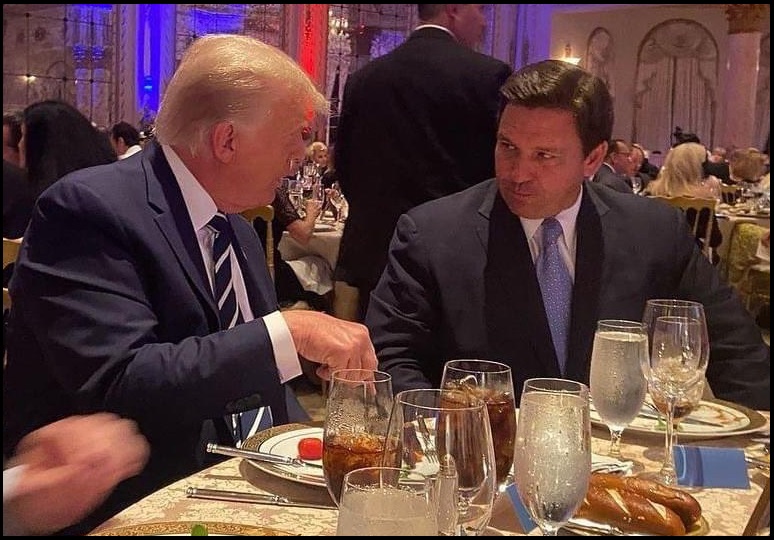
An interesting thing happened last weekend, President Trump went golfing with Florida Governor Ron DeSantis. {SOURCE} Simultaneously, President Trump released the following statement from his Truth Social account.
(Via Truth Social) – “The Board of Peace has unlimited potential. Last October, I released a Plan for the permanent end to the Conflict in Gaza, and our Vision was unanimously adopted by the United Nations Security Council. Shortly thereafter, we facilitated Humanitarian Aid at record speed and secured the release of every living and deceased Hostage.
Just last month, two dozen distinguished Founding Members joined me in Davos, Switzerland, to celebrate its official formation, and present a bold Vision for the Civilians in Gaza, and then, ultimately, far beyond Gaza — WORLD PEACE!
On February 19th, 2026, I will again be joined by Board of Peace Members at the Donald J. Trump Institute of Peace in Washington, D.C., where we will announce that Member States have pledged more than $5 BILLION DOLLARS toward the Gaza Humanitarian and Reconstruction efforts and have committed thousands of personnel to the International Stabilization Force and Local Police to maintain Security and Peace for Gazans.
Very importantly, Hamas must uphold its commitment to Full and Immediate Demilitarization. The Board of Peace will prove to be the most consequential International Body in History, and it is my honor to serve as its Chairman.” PRESIDENT DONALD J. TRUMP
I said a few weeks ago that I would not be surprised to see President Trump announce the appointment of Ron DeSantis to be the Chief Executive Officer of the Board of Peace. DeSantis’ executive experience in combination with his relationship with Israel functionally makes him a good fit. Just a guess.
DeSantis is a political animal without much of a career path that does not lean heavily on his governorship. Ron and Casey DeSantis are the republican equivalent of Bill and Hillary.
DeSantis will need a job after his term expires this year. The traditional path would be to take a job as the CEO within a major company, make money then launch for the 2028 campaign later in 2027.
Posted originally on CTH on February 16, 2026 | Sundance
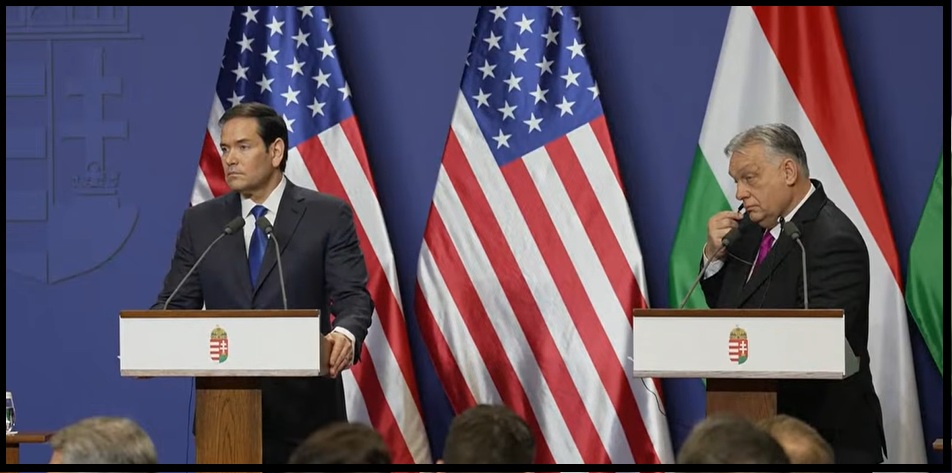
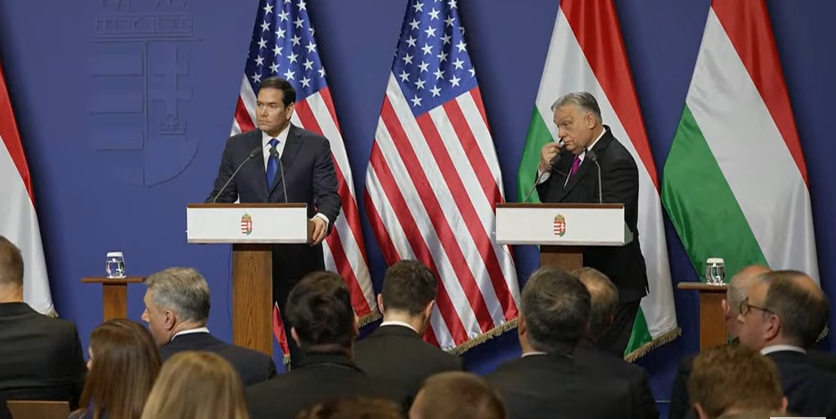
Secretary Marco Rubio went out of his way in this joint presser to emphasize the personal relationship between Hungarian Prime Minister Viktor Orban and U.S. President Donald Trump. Orban is facing a serious election challenge this April and all of the EU/NATO systems are actively trying to create pressure points to remove him.
Secretary Marco Rubio is in Budapest today for meetings with Prime Minister Viktor Orbán and his government to include the signing of a civilian-nuclear cooperation agreement heralded by the Trump administration. Hungary is one of the few voices within the European Union who is pushing back against Brussels efforts to go to war against Russia.
Prime Minister Orban has been very critical of Ukraine, openly stating his opposition to EU membership for the embattled country. In response President Zelenskyy has weaponized Ukraine’s geographical stewardship of oil and gas pipelines to shut down Hungarian energy and drive-up prices. VIDEO:
[Transcript] – MODERATOR: (Via interpreter) Good morning, ladies and gentlemen. May I extend my most cordial welcome to all of you, and may I extend my most special welcome to His Excellency Mr. Marco Rubio, Secretary of State of the United States of America, at the press conference and signing ceremony organized on the occasion of his visit to Hungary. Let me also extend my warm welcome to Mr. Viktor Orban, Prime Minister of Hungary, members of the U.S. and Hungarian delegations, and all our esteemed guests.
At today’s event, the agreement between the Government of the United States of America and the Government of Hungary to facilitate cooperation on the civilian nuclear program in Hungary will be signed. The signatories to the agreement on behalf of the United States of America, Secretary of State Marco Rubio, and on behalf of Hungary, Minister for Foreign Affairs and Trade Mr. Peter Szijjarto.
MODERATOR: (Via interpreter) Thank you very much, gentlemen. And now, may I invite Prime Minister of Hungary Viktor Orban to deliver his statement.
PRIME MINISTER ORBAN: (Via interpreter) Good morning, distinguished ladies and gentlemen, distinguished Mr. Secretary of State. This week starts well. It’s only Monday, and we are already over friendly and very serious discussion with the Secretary of State arriving from the United States of America. We agreed upon this visit with the President of the United States on our visit to the U.S. last November, and I’d like to deliver my heartfelt thanks to Secretary of State to – for visiting Hungary and therefore doing a privilege to Hungary.
We reviewed and overviewed our bilateral relationships. There is a new U.S. President, so I am also adapting to the new expressions. A new golden age has set upon us concerning the relationship between the United States and Hungary. We operate with understatements in the Hungarian language and Hungarian politics, but the situation is that I cannot remember – although for 30-odd years I have been present in politics – when the last time it was that the relationships between the two nations were at such a high level, so balanced and so friendly. So, my heartfelt thanks goes to President Trump.
Perhaps the last time we were near this, when President Bush visited us prior to the change of the political regime, which visit greatly contributed to us doing away with the communists and the Warsaw Pact. Since then, we had better and worse periods in the U.S.-Hungarian relationships, but we’ve never been to this high a level.
Since last year’s January, 17 U.S. investments have been decided upon here in Hungary. This is a decade-long record. And Hungarians can once again travel to the U.S. without a visa – thank you very much, Mr. Secretary of State. Hungary was invited to the Peace Council. The first inauguration meeting will take place in Washington, D.C., this Thursday, perhaps where I shall represent Hungary. And we entered into agreements of key importance in the fields of energy, including oil, gas, and nuclear energy. And these agreements, with the exception provided by the President of United States of America which allows for the use of Russian gas and oil here in Hungary, jointly contribute to the fact that Hungary can continue to remain secure on the aspect of energy supply and that we shall be able to supply households and the industry with cheap energy in an international comparison. And we also discussed the refinery in Serbia, how that can be purchased – NIS – how NIS can be purchased by MOL, the Hungarian oil company.
As for me, I assured Secretary of State Mr. Rubio that Hungary continues to support, regardless of European conflicts (inaudible), Hungary shall continue to support the efforts of peace of the U.S. in Ukraine. The current President of the United States did the most in international politics in order to ensure peace in the Russia-Ukrainian war. And I must reiterate, although everybody knows, that if Donald Trump had been the president of the United States, this war would never have broken out. And if he were not the President now, then we would not even stand a chance to put an end to the war with peace. So, thanks goes to the United States President for his efforts in favor of peace.
Hungary remains ready that if there is a peace summit, that we provide a venue for that here in Budapest, and I assured Mr. Rubio that Mr. Trump has a live invitation to Hungary. Thank you very much, Mr. State Secretary, for the opportunity to enter into discussions today.
MODERATOR: (Via interpreter) Thank you very much, Mr. Prime Minister. Now, may I invite Secretary of the United States of America Marco Rubio to make a statement?
SECRETARY RUBIO: Well, thank you, Mr. Prime Minister, for welcoming us here today. It’s an honor to be with you in this incredibly gorgeous city. It’s my first time being here, and it’s phenomenal, even to be in this hall where – and the history behind it and everything that’s going on here.
The second is the relationship – you talked about the golden age, which is not an exaggeration. The relationship between the United States and Hungary today is as close as I can possibly imagine it being. And it’s not just close rhetorically; it’s close in action and things that are actually happening. And I think some evidence of that is here today in the agreement that we’ve just signed that builds on a historic meeting that we had in November at the White House, that you had with the President and that I happened to be – have the honor to be present and be a part of.
The signed agreement we’ve had today is one that we hope will be many in the years to come in areas of collaboration. You spoke about the 17 investments. To those who think that Hungary is being isolated, that’s an example of the fact that that’s not the case – that under the prime minister’s leadership, in fact, there is a growing number of American companies, as evidenced by the 17 that have already arrived, who want to invest in your economy and want to be a part of what’s happening here and are excited about it – because you have strong leadership, because you have leadership that we know are going to protect investments and allow it to continue to be a place that’s friendly for business, and be competitive with rules that are competitive that allow businesses to grow and prosper in comparison to other places. And there are so many other areas that we can work together on, especially on energy, but just so many areas of common interest.
But I have to say this because it’s important to understand. We are entering this golden era of relations between our countries, and not simply because the alignment of our people, but because of the relationship that you have with the President of the United States. I don’t think it is any mystery – and should not be a mystery to anyone here – how the President feels about you, how he interacted with you in his first term as President, and now in his second term as President that relationship’s grown even closer. And it’s important to understand how important the relations between leaders are to the relations between countries. There is – we are – at the end of the day, we are still human, we are still people, and that person-to-person connection that you’ve established with the President has made all the difference in the world in building this relationship and in hopefully growing this relationship even more.
It is the kind of thing that I think, for example, I can say to you with confidence that President Trump is deeply committed to your success because your success is our success, because this relationship we have here in Central Europe through you is so essential and vital for our national interests in the years to come – that if you face financial struggles, if you face things that are impediments to growth, if you face things that threaten the stability of your country, I know that President Trump will be very interested because of your relationship with him and because of this importance of this country to us, to finding ways to provide assistance if that moment ever were to arise, and obviously with regards to finances and the like.
I also think it’s the reason why, in your visit in November, you saw an extension of – and a suspension of the imposition of sanctions and allowed to move forward on energy. It was because of that personal relationship. It’s because we want you to continue, because we want this economy to prosper, we want this country to do well. It’s in our national interest. Especially as long as you’re the prime minister and the leader of this country, it’s in our national interest that Hungary be successful. It helps America, and obviously it helps you.
So, it’s an honor to be with you here today. We have a lot that we can continue to work on. We also want to thank you, and I want to thank you, on behalf of the President of the United States, for the indispensable role you’ve played on the Board of Peace. Not everyone’s on the Board of Peace, and not everyone – for different reasons they can be participants or not be participants, but you are, and you’ve been there from the very first day. And again, a testament to the personal relationship between President Trump and Prime Minister Orban that I think speaks volumes. The role you play geopolitically, the role you play even outside of this region in affairs involving the Middle East, is invaluable and indispensable, and we are very appreciative of it.
And that’s why after traveling to Munich for the Security Conference, I wanted to make sure we paid a visit here to continue to build on this relationship and to signal very clearly that not only are we in a golden age, but we haven’t even scratched the surface of what we can achieve together as a people – as peoples, as nations, and as leaders. And so I thank you for the opportunity to be with all of you here today, and thank you for the very warm invitation and the very important conversations that we had where we touched on a bunch of subjects and a bunch of topics that I think will be of great interest back in Washington when I return. Thank you.
MODERATOR: (Via interpreter) Mr. Secretary of State, thank you very much. We have some time for questions. Hungarian Television gets the floor.
QUESTION: (Via interpreter) Good morning. I am Laszlo Meszaros. Volodymyr Zelenskyy, president of Ukraine, is constantly attacking Prime Minister Viktor Orban for not supporting the accession of Ukraine. What is your take on this political action, this political attack against a NATO and EU member-state?
PRIME MINISTER ORBAN: (Via interpreter) And who is the question addressed to?
QUESTION: (Via interpreter) Both of you. Both of you, naturally.
PRIME MINISTER ORBAN: (Via interpreter) I don’t wish to drag Secretary of State into Hungarian internal political issues.
(In English) So if you allow me, I start to answer first to this question.
(Via interpreter) The Ukrainians and their president obviously have entered into the Hungarian election campaign. For a while, I was thinking whether we should take that on the wrong note or not. I mean, with such brutal openness entering into the election campaign of another country is not very frequent. You don’t see that often. But then again, I realized it was understandable, because the Hungarian elections is the most important to Hungarian people but it has an impact beyond Hungary as well. And the Ukrainians quite justly believe that what government Hungary shall have is significant to them. And there are only two options.
One is what you knew well – that is the option of the Hungarian people who, at a vote – vote 2025, clearly stated that they would not undertake the Ukraine acceding to the European Union because that would drag us into a war and ruin our economy. And you can also know that we shall not provide money for Brussels in order for them to send that to Ukraine.
The other option, which is a real option, and the Ukrainians would favor that – and with common sense you can realize that if a government arrived which would want or which will accept Ukraine becoming a member of the European Union, they obviously want a government which will take a part in the financial burden of Ukraine – in other words, send money to Ukraine. And for the Ukrainians it does matter what the outcome of the elections will be, therefore they decided to participate in the campaign. And since we stand on the ground of common sense, we must not be surprised at that. We must adapt to it, and we must acknowledge that the Ukrainian president and Ukraine will be an active participant of this election, and we have to prevail against them too. That is our reality. Anything else attached to that – the future of the war, the funding of the war – are beyond the framework of this press conference. I will not go into detail.
I would only return to a single aspect, that this is an election. As an election, people decide. And for Ukraine, it does matter what the outcome of the decision is, and therefore, they put their full weight and weaponry in participating in the Hungarian campaign. We know full well that they fund – finance our opponents. We know how that happens. This is a well-known, written fact.
But once again, we must not be outraged, but we must acknowledge that this campaign in Hungary also has an international dimension – in other directions, too, but in the Ukrainian direction. That is why it’s an important international event, not only for Hungarians, but as the example of the Ukrainians shows, it’s important for other greater nations. That’s how you have to win elections. We have won elections in many ways. Now, we shall win this way.
SECRETARY RUBIO: My only comment is the United States interest is to see the war end, and we want to do what we can to make it end. We’re the only nation on Earth that apparently can get both sides to the table to talk. I’m not here to insult anybody, but the United Nations hasn’t been able to do it. There’s no other country in Europe that’s been able to do it. The United States has been successful at being able to get both sides to talk. I mean, for the first time in a number of years, you have – truly have, at a technical level, military officials from both sides sat down last week in the Middle East. And we’ll restart those talks again in Geneva later this week. I think that’s a very positive thing.
That said, all we are trying to do is play a role, if it’s possible, in reaching a deal. We’re not seeking to impose a deal on anybody. We’re not trying to force anyone to take a deal they don’t want to take. We just want to help them, because we think it’s a war that’s incredibly damaging. We think it’s a war that’s incredibly destructive. We think it’s a war that never should have happened and should end as soon as possible. That’s how the President feels, and the President’s invested a tremendous amount of time and political capital in trying to serve a useful purpose. Usually, in my time observing geopolitics, when a president tries to engage himself in peacemaking and in ending wars, that’s usually applauded.
So, this is one of the few times, for a lot of different reasons – I don’t know what they may be, but maybe I can speculate what they are – where people actually criticize a President trying to end a war. Usually when you’re trying to end wars, the international community applauds you. This is one of the few wars I’ve ever seen where some people in the international community condemn you for trying to help end a war. But that’s what we’re trying to do. That’s what we’re going to continue to do as long as our role is, and our engagement is, a positive one.
And, hopefully, the war will end – the sooner, the better. It should have ended a long time ago. It should have never actually happened. This war should have never happened. This war would have never happened if Donald Trump had been president of the United States at the time it began. But that’s what happened, and so now here we are. So, we’re going to continue to do everything we can to try to bring it to an end. And if we can be successful at it, I think the world will be a better place. And if we can’t, then unfortunately the suffering and the dying and the killing will continue, and that’s not good for anybody, but that’s where we find ourselves. So hopefully we can stop it, but let’s see.
MODERATOR: Next is CBS News. Please, Olivia.
QUESTION: Thank you very much. Budapest is, in fact, beautiful. Mr. Secretary, on the notion of a golden age, why isn’t the United States conditioning deeper cooperation with Budapest on Hungary reducing its extensive and ongoing, deepening cooperation with China, which is a strategic rival for the United States?
Secondly, if, despite President Trump’s endorsement and your visit here, Prime Minister Orban does not succeed and loses the April election, does the U.S. commit to working with his challenger constructively? Prime Minister Orban, do you commit to accepting electoral defeat if it happens?
And to both of you, president – I mean, sorry, Prime Minister Orban has said that the exemption that Hungary has been granted for Russian energy purchases is indefinite. The U.S. has said it was for one year. Which one is it? Thank you.
SECRETARY RUBIO: All right, well, let me start by answering that question. First of all, let me – so everybody can be very clear, I’ve made this point repeatedly. I’ll make it again. Under President Trump, it is our expectation that every nation on Earth is going to act in their national interest. That’s what nations are supposed to do. If the prime minister of Hungary does not act in the national interest of Hungary, he won’t be prime minister for long; but who’s going to act in the national interest of Hungary if their prime minister doesn’t do it? If your government is not acting in your national interest, then who will? By the way, we feel the same way about America.
So, in those instances in which our national interest and some other country’s national interests are aligned, that is an opportunity for extraordinary partnership. And we have many, many areas where our national interests are aligned. Where they’re not aligned or where we have some differences, that’s where that – alignment and the other issues, that’s where this relationship, that’s where these deep ties to one another are so important, because that’s where you can find accommodation. That’s where you can hear each other out. That’s where maybe you can work together on.
But we’re not asking any country in the world to isolate themselves from anybody. We understand that every country in the world has to deal with the reality of their geography, of their economy, of their history, and of the challenges of their future. We will obviously share with partners and friends concerns we may have about certain things. But as an example, the United States – you mentioned China as an example. Okay. We have trade and relations with China. The President of the United States is going to travel in April to China. Why? Because China is a big country. It’s got a billion-something people, second largest economy in the world. They have nuclear weapons. It would be crazy – okay, it’s insane for the United States and China not to have relations and interact with one another.
Now, two big countries like this, do we have differences? We absolutely do, and we’ll have to manage those differences. And some of those differences are things – we’ve spoken very frankly and clearly and repeatedly about the fact that it is not good for the world – it’s not good for anybody – to rely on one country or one economy for 90 percent of anything, especially things like critical supply chains. This is a reality. We want to diversify supply chains around the world. We’ve spoken clearly about it. That’s not an anti-China thing. That’s just the reality that over-dependence on one source is not good, and especially when there’s been a willingness in the past to use it as leverage against each other.
But we expect – we pursue these things within the context of the U.S. national interest. And that’s why we met with the Chinese in South Korea earlier in the year and were able to reach an understanding on some trade matters. That was a mutual interest between us and them. So, geopolitics is difficult because it requires a little bit of maturity and seriousness, okay? It requires a little bit of seriousness about these things have real implications, and the balancing of relations between nation-states requires maturity and seriousness.
So, our relationship here, you asked the last question about it. Look, I’m just telling you guys what it is, okay? The President has an extraordinarily close relationship to the prime minister. He does. And it has had tangible benefits in our relationship. I’m not going to speculate about the future. What happens in this country is up to the voters of this country to determine and decide, and we love the people of Hungary. But I’m not – but there’s no reason to sugarcoat it. I’m going to be very blunt with you. The prime minister and the President have a very, very close personal relationship and working relationship, and I think it has been incredibly beneficial to the relationship between our two countries.
QUESTION: The sanctions waiver, sir? Is it a year?
SECRETARY RUBIO: What’s that? I’m sorry.
QUESTION: The sanctions waiver on Russian energy purchases?
SECRETARY RUBIO: Yeah, but here’s the way I would couch that. Those sanctions waivers happened, as much as anything else, because of the relationship between the prime minister and the President. And so I think all I can tell you is that’s the – that relationship and the importance of that relationship, and the importance of that relationship to our bilateral relationship, underpins the decision the President made and, I think, will continue to underpin it as long as that relationship is a factor in our bilateral relations.
PRIME MINISTER ORBAN: Thank you very much, Your Excellency. So, to answer to your question, for those who are relatively young, it’s difficult to know the Hungarian modern political history. But if you look at it carefully, you see that I’m not just registered as the longest-serving prime minister in Europe, which means 20 years, but I’m the longest-serving leader of the opposition with 16 years. So, I spent 16 years as leader of opposition. What does it mean? It means that sometimes I lose, sometimes I win. So don’t afraid what will be if we are not winning, because it’s regularly happened here at least four times already. So, there is no need to be afraid what will happen in Hungary.
The Hungarian democracy is very strong, and the government of this country is very strongly believe on democracy and competitiveness and competition in politics as well, as we have done in the last 35 – 35 years. So, our record is very strong on the governmental side and on opposition side as well. So, a government will be created after the election in Hungary based on the intention of the Hungarian people, and Hungary as a country will remain strong anyway.
MODERATOR: (Via interpreter) Thank you very much. Now Index is up next.
QUESTION: Good morning. I’m Balazs Karóczkai from Index. I will ask my question in English because I think it’s easier for you. So —
SECRETARY RUBIO: (Inaudible) in English than in Hungarian, absolutely. You can ask it in Spanish, and that’s – maybe Italian I might be able to pick it up too, but —
QUESTION: Unfortunately, my Spanish is not so good.
SECRETARY RUBIO: (Laughter.) Okay.
QUESTION: So, Mr. Prime Minister, you mentioned the invitation of President Trump. I have a question for both of you. Is there – have been any discussion regarding a potential visit by President Trump? And if so, when might it take place, and will it be a peace summit? And a brief question is: Have there been any progress toward new Hungarian-U.S. tax treaty? Because the last one is terminated on two years ago. Thank you.
SECRETARY RUBIO: Yeah. On the visit, I don’t have any news for you on it today other than I know the President would love to come and I know the President would love to be here. Obviously, like any world leader, there’s a lot of balancing going on, but we’ll see what happens. I mean, the President has made very clear his feelings about the prime minister, both on a personal and on a political level in terms of the relationship and the impact it’s had on us. And so, I’m certainly here today because I wanted to make sure that, having been in Munich for the Security Conference, being so close by, we saw an opportunity to be here today and build on that historic gathering that we had. I don’t have any updates for you on the tax treaty per se today, but we may soon. It’s something we’ll look at.
PRIME MINISTER ORBAN: (Via interpreter) And if you’ll allow it, I’ll answer in Hungarian. So, in Hungarian, all I’d like to say is that it’s not worth planning in the distant future in current politics. I mean, the fact that this Thursday we will meet in Washington, D.C., with the President of the United States was not in our calendar two weeks ago. What I’m trying to say is that events take place and the current of international politics is that significant changes can take place in three or four days. For instance, when the first meeting was called for the establishment of the Board of Peace in Sharm El-Sheikh, you could only know that three or four days in advance.
So, in international politics, it is not long-term planning, but short-term response is what is a real virtue. And the Americans are very good at that. So, the fact that we don’t know anything for certain now does not mean that it will not happen. In fact, it might mean the exact opposite. The less we know anything certain about something, the more possible it might happen. Thank you.
MODERATOR: (Via interpreter) Thank you. And the last question is for Reuters.
QUESTION: Thank you, Mr. Secretary. Good to see you. Mr. Prime Minister. Just two questions, Mr. Secretary. Iran is pursuing a nuclear agreement with the U.S. that it says would deliver economic benefits for both sides. Is that acceptable for the U.S., even if it doesn’t cover Tehran’s ballistic missile program?
Recently a U.S. immigration judge has ruled that there were no grounds to deport Tufts University student who wrote an op-ed on Gaza. A second judge said using deportation as a threat violated the First Amendment rights of people like her because those rights apply to foreigners. What is your response to that?
And, Mr. Prime Minister, I just wanted to follow up on the China angle. Secretary just spoke about balancing relationships. You’ve been pushing a lot for more Chinese investments in Hungary. How will you make sure that that does not create a problem in your relationship with Washington? Thank you.
SECRETARY RUBIO: Yeah, on the two questions you asked, first of all, on the particular case of the student, look, my job at the State Department is if I identify someone who I believe is present – someone who’s not – who’s a visitor, a guest to the United States, and we identify that their presence in our country poses a threat to our foreign policy, to our national security, we’re going to take that person’s visa away. We’re going to take their visa away. That’s what we’re going to do. We’ve done that – in a lot of cases over the last year, we’ve done it.
Fact is that visas are not a right. I’ve said this repeatedly. I don’t know why it’s so hard for some to comprehend it, so let me repeat it again. A visa – no one’s entitled to a visa. There is no constitutional right to a visa. Okay, a visa is a permission to enter our country as a visitor. If you enter our country as a visitor, and as a visitor in our country – be it a student, a tourist, a journalist, whatever you want to be – and you undertake activities that are against the national interest and national security of the United States, we will take away your visa. In fact, if we knew you were going to do it, we probably wouldn’t have given you your visa.
That’s what we do. The decision to remove someone from our country after we take away our visa, that belongs to other agencies of our government. As far as judges are concerned, judges – that’s a different branch of government. They’re not going to tell us how to conduct the foreign policy of the United States. If they have an issue with the process by which someone was removed, then obviously that’s an issue for other agencies in our government that are involved in enforcing that. All I can opine to you on is the – is taking away someone’s visas. And no judge is going to tell the Executive Branch how to conduct foreign policy because that’s not up to judges. That’s up to the Executive Branch.
On your first question about Iran, look, doing a deal with Iran is not easy. I said it yesterday; I’ll repeat it again today. I mean, we have to understand that Iran ultimately is governed and its decisions are governed by Shia clerics – radical Shia clerics, okay? These people make policy decisions on the basis of pure theology. That’s how they make their decisions. So, it’s hard to do a deal with Iran. We’ve always said it’s hard, but we’re going to try. That’s what the President is trying. I’m not going to prejudge those talks. I’m certainly not going to negotiate with Iran here in front of the press and on the stage. Our negotiators are on their way there now. They’ll have meetings. We’ll see what happens.
We’re hopeful there’s a deal. The President always prefers peaceful outcomes and negotiated outcomes to things. He’s a President that’s shown his willingness to talk to anyone and meet with anyone. And I think if there’s an opportunity here to diplomatically reach an agreement that addresses the things we’re concerned about, we would be very open and welcoming to that. But I don’t want to overstate it either. It’s going to be hard. I mean, we’re dealing – it’s been very difficult for anyone to do real deals with Iran because we’re dealing with radical Shia clerics who are making theological decisions, not geopolitical ones. But, let’s see what happens. I hope it works out; we all hope it works out.
PRIME MINISTER ORBAN: (Via interpreter) I can answer in Hungarian, right? There is a fact that we must take into consideration in every international relationship of ours as an (inaudible), and that is that we are members of NATO. This means that in the field of security issues, that determines the boundaries of cooperating with others. In fact, in security issues, Hungary only cooperates with NATO member-states. Anything beyond that, including commerce, trade, we are in favor of cooperating with as many entities as possible. And if our cooperation does not – is not liked by any of our partners, disliked by them, they will indicate that to us. And if they do so, we shall discuss the matter.
I have been working together with Americans for over 30 years now. President Bush, Sr., was the first president I met. I don’t know how many I’ve met since, and I do have an experience pertaining to Americans. It is best if you share with them everything openly and clearly. We play with open cards – open, visible cards. Our partnership is built upon clear speech, and if we do not like anything, we tell our partner. And if the Americans don’t like anything, they will share that with us.
And I can report to you that since there is a new President, there is not one single point of conflict. I have never come across any of those in the field of our cooperation with the United States. That was not the case, previously. When we had a Democrat administration, we had multiple conflicts. We still openly represented our position, but we could not cooperate with that administration. We can with the current one.
But one thing has unchanged: Hungarians always say what they want, for what reason, what they object against, what they can support, and what they ask. We are a reliable partner because we are open. We are in favor of open, clear speech. And as I observe the current President of the United States, he represents the same school. He is very straightforward. He says what is the interest of the United States of America. There are no taboo issues. We can discuss any issue, including the issue of China and any other issue. And I think that is to the best.
MODERATOR: (Via interpreter) Mr. Secretary of State, Mr. Prime Minister, thank you very much. This concludes our press conference. Thank you very much for being with us today. I wish you a pleasant remaining part of the day. Goodbye.
Posted originally on CTH on February 16, 2026 | Sundance
Through the years I didn’t really have much of an opinion of Steve Bannon, I approached any story of interest that surrounded him by simply looking at the factual details of the current event in question.
CTH well understood that Bannon, and subsequently his expressed opinion and objective, was simply an outcome of his position – downstream from the billionaire of the moment who paid him.
In essence, Steve Bannon always seemed to be, much like Kellyanne Conway, an advocate for whoever was financing him. From Robert/Rebekah Mercer at Breitbart forward to any endeavor thereafter, it always just appeared the same.
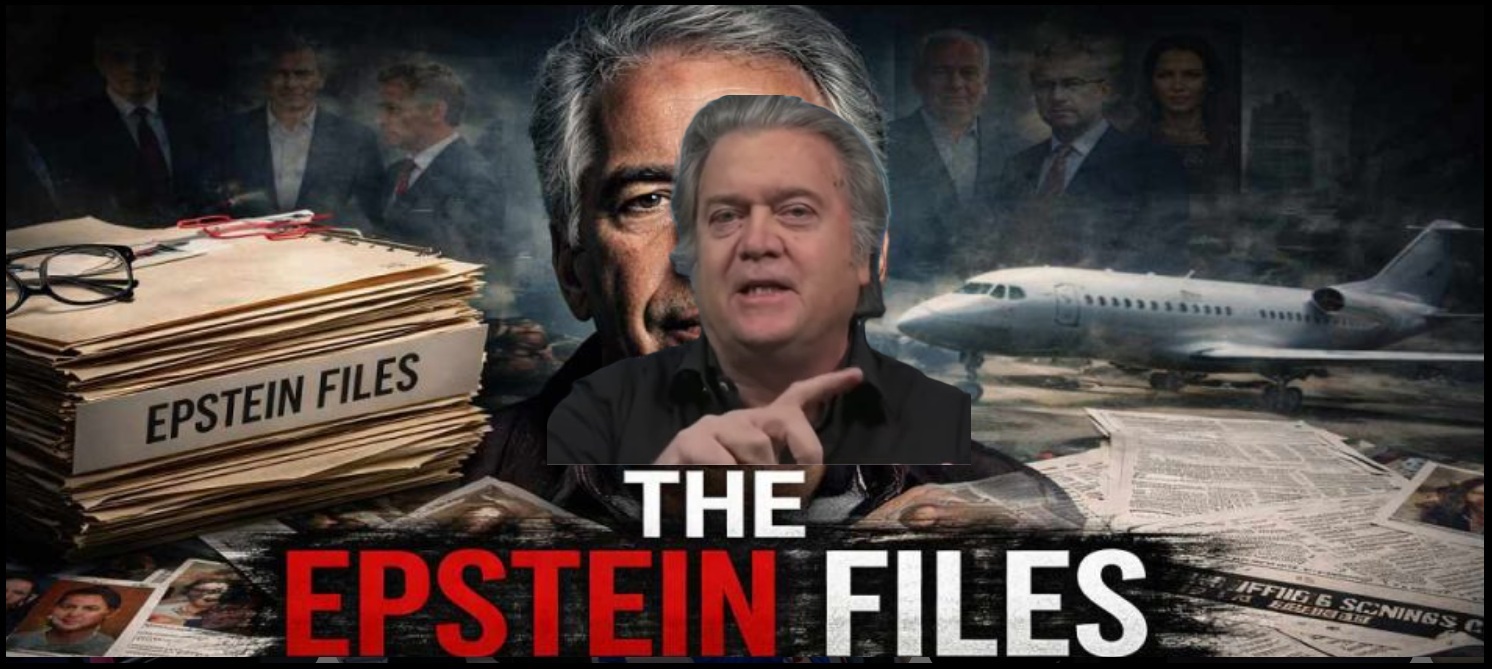
That said, with the release of the Epstein files, the relationship between Steve Bannon and Jeffrey Epstein is something CTH did not expect. {HERE} Bannon and Epstein were very close and talked to each other about seemingly everything.
I can never unsee what I have read. Nor will CTH ever entertain the possibility that Bannon was ever a good element within the MAGA effort. There is a solid argument to be made that the Bannon War Room was funded, or organized in the funding mechanisms, by Jeffrey Epstein. {HERE}
The files of messages between them contain some shocking stuff happening in the background while Steve Bannon was in very close proximity to candidate and President Trump. The level of disdain Bannon had for Donald Trump’s family and for Donald Trump himself is really something CTH did not expect to see. {examples: HERE and HERE}
I am left to wonder now how much of the vitriol against Jared Kushner and Ivanka Trump, ie. “Javanka hatred”, actually originated from the Braintrust behind Bannon and the assembly of people in his immediate orbit. {HERE}
Initially, I saw some Twitter accounts attempt to defend Steve Bannon by saying Epstein did all the talking in their text exchanges and Bannon was less communicative. However, that only applied to the first batches of files reviewed. As a few days went along and people started citing files, reading them gives a much more fulsome picture of the relationship.
Steve Bannon may have been focused on the financial gains and perhaps networks of people in his association with Epstein; but he certainly got deep into it and expressed extreme praise for Epstein, even going so far as to call him a god. {LINK} These were two men in a very close friendship. There is no political or ideological distance between Bannon and Epstein.
The level of expressed skullduggery that has been going on for years in the background is very unsettling to accept, and I say that as a person who doesn’t customarily get shocked by duplicity.
This is not about division; this is about something more akin to betrayal.
While putting on a MAGA face for the War Room broadcasts, in the background Bannon was actually plotting and advising of ways to eliminate Donald Trump from republican politics. This is Brutus level disloyalty, even accepting the guy has no moral compass other than his bank account. I can never unsee what has been seen.
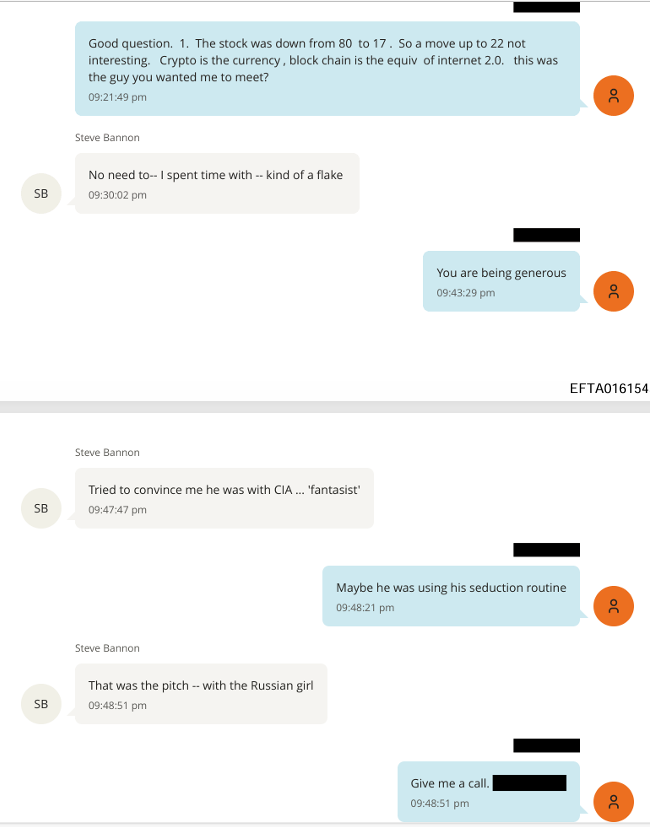
There’s also some weird stuff in the exchanges about contextual things from years past. As an example, in one set of text messages Bannon and Epstein were discussing Patrick Byrne who is now part of the Emerald Robinson/Mike Flynn network. Bannon notes in 2018 that Byrne told him he was working for the CIA, and apparently Bannon did not believe him. {SOURCE}
This is the same November, 2018, message exchange where Epstein is advising Steve Bannon on how to set up a media network to maximize privacy, structure the financing and eliminate the problems with transparency. This is the origin of what would less than a year later become Bannon’s War Room on Real Voice America.
Did Jeffrey Epstein provide the seed capital to assist the start-up of Bannon’s War Room? That question isn’t clear, but sheesh, the creepy irony of the possibility is really over-the-top.
I guess in the big scheme of things, considering all of the potential creepy stuff that is far more consequential to the Epstein file release, the relationship with Steve Bannon is not at the top of the issues of concern. However, the reality of seeing this relationship and reading how much they both hated MAGA is just so darn deflating.
Trust lost can never be reestablished.
Ugh. All of it. Just, ugh.
Now we reevaluate everyone who openly, frequently and willingly associated themselves with Steve Bannon on that “War Room” platform. Including: Julie Kelly, Mike Davis, Jack Posobiec, Lara Logan, John Solomon, Laura Loomer, Harmeet Dhillon and so many more. Did they know about this Bannon-Epstein network?
I have created this site to help people have fun in the kitchen. I write about enjoying life both in and out of my kitchen. Life is short! Make the most of it and enjoy!
This is a library of News Events not reported by the Main Stream Media documenting & connecting the dots on How the Obama Marxist Liberal agenda is destroying America



 Centinel2012