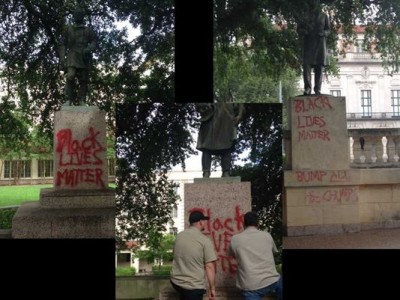
General Robert E. Lee’s statue is one of seven statues being moved off the mall at the UT-Austin campus (photo above) to an obscure location. Lee was a Confederate and, according to the complaints, he was a symbol of ‘white supremacy’. Lee, ironically, abhorred the institution of slavery. “There are few, I believe, in this enlightened age, who will not acknowledge that slavery as an institution is a moral and political evil,” he once said.
While Confederates have become the latest target of the left because they represent ‘white supremacy’, what about the blacks who owned slaves? There were many.
Some free black people in this country bought and sold other black people, and did so at least since 1654 and continued to do so right through the Civil War.
According to federal census reports, on June 1, 1860 there were nearly 4.5 million blacks in the United States, with fewer than four million of them living in the southern slaveholding states. Of the blacks residing in the South, 261,988 were not slaves. Of this number, 10,689 lived in New Orleans. The country’s leading African American historian, Duke University professor John Hope Franklin, records that in New Orleans over 3,000 free blacks owned slaves, or 28 percent of the free blacks in that city.
The 28 percent number is impressive when compared to less than 1.4 percent of all American whites and less than 4.8 percent of southern whites. The statistics show that, when freed, blacks disproportionately became slave masters.
According to colonial records, the first slave owner in the United States was a black man. Before 1655, there were no slaves, only indentured servants who were freed when their time was up which was usually about seven years. They were then granted 50 acres of land. Blacks also received 50 acres.
Anthony Johnson, photo below, was a black man from what is now Angola who came to the U.S. to work on a tobacco farm in 1619.
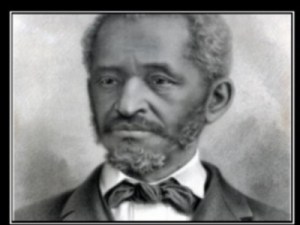
When he was freed from indentured servitude, he ran a successful farm. By 1651, he owned 250 acres and five black indentured servants. In 1654, when it was time for him to release John Casor, a black indentured servant, he told Casor he was extending his time. Casor left to work for a man by the name of Robert Parker and he lived as a free man.
Anthony Johnson sued Parker and in 1655, the court ruled Anthony could hold Casor indefinitely. The ruling allowed a black to own a slave of his own race.
This was the beginning of slavery and institutionalized racism.

John Casor
Whites could not own slaves until 1670 when that all changed and everyone, including Indians, could own blacks as slaves.
By 1830 there were 3,775 black families living in the South who owned black slaves. By 1860 there were about 3,000 slaves owned by black households in the city of New Orleans alone.
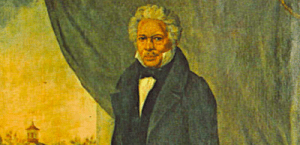
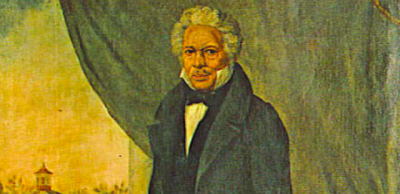
Nicolas Augustin Metoyer of Louisiana,pictured above, owned 13 slaves in 1830. He and his 12 family members collectively owned 215 slaves.
Some black slave owners purchased family members as slaves to protect them and others bought slaves to exploit them.
The great African-American historian, John Hope Franklin, states this clearly: “The majority of Negro owners of slaves had some personal interest in their property.” But, he admits, “There were instances, however, in which free Negroes had a real economic interest in the institution of slavery and held slaves in order to improve their economic status.”
The horror of slavery is still with us and the entire story needs to be told.
References: John Casor, Anthony Johnson, Henry Louis Gates Jr, and American Civil War



 Centinel2012