BRICS Economic Bloc Expands Adding Iran, Argentina, UAE, Saudi Arabia, Egypt and Ethiopia During Summit


Posted originally on the CTH on August 24, 2023 | Sundance 

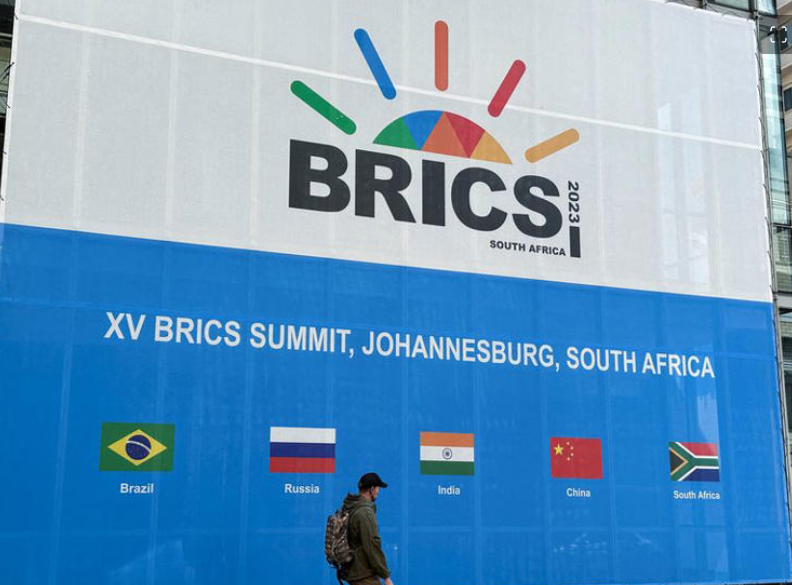
The original BRICS economic alliance between Brazil, Russia, India, China and South Africa has expanded today.  During the summit held in South Africa, the group which is home to about 40% of the world’s population and a quarter of global gross domestic product, voted to accept the applications of Iran, Argentina, Saudi Arabia, United Arab Emirates, Egypt and Ethiopia.

What we see forming now is further evidence of the great energy cleaving.  As most western nations chase the World Economic Forum’s priority around ‘climate change’, the BRICS alliance hedges for more traditional energy sources (oil, natural gas, coal).  China will benefit the most as the Western industrial economies will not be able to compete in a global market using windmills and solar panels.
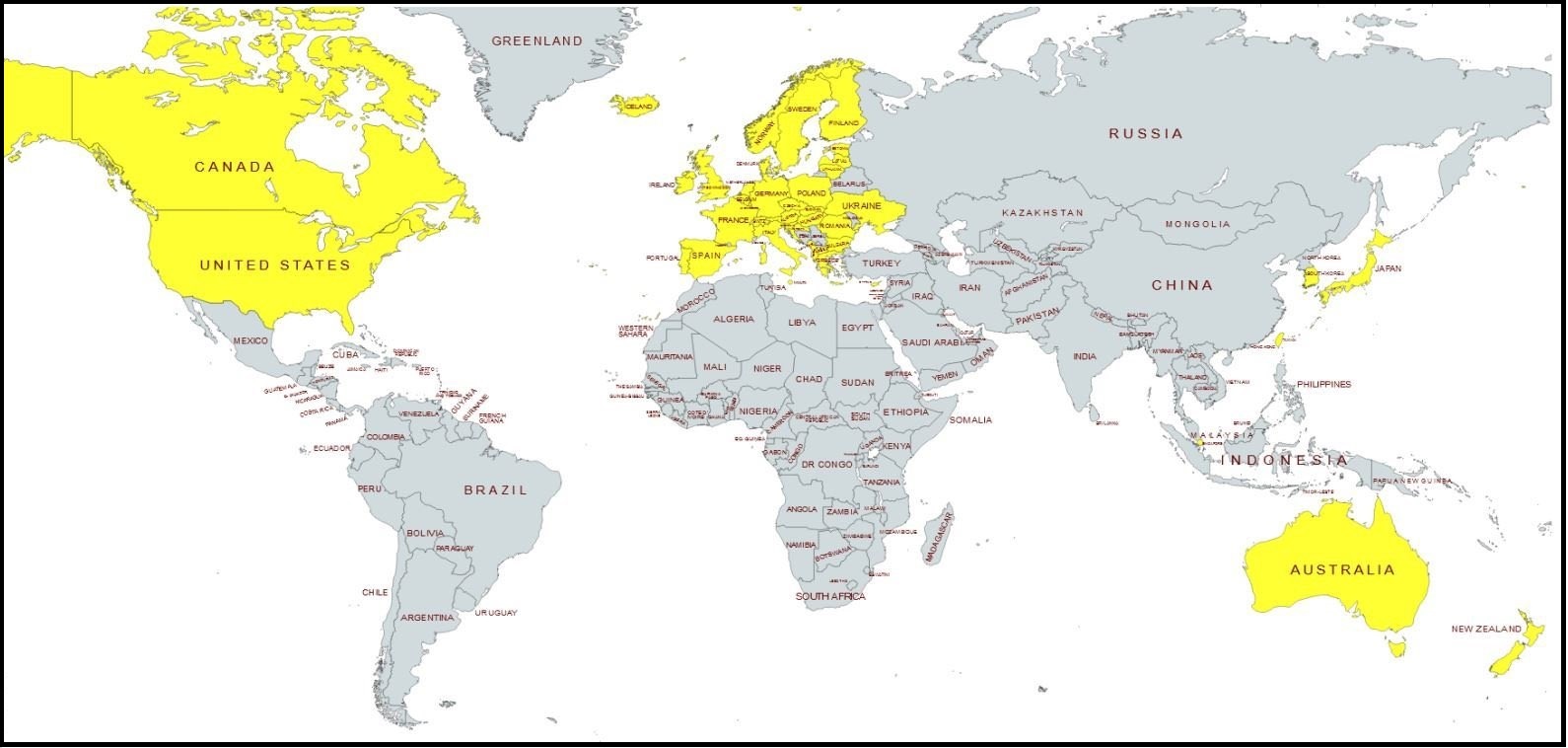
The western alliance (yellow) will be chasing climate change energy policy to power their economies.  The rest of the world (grey) will be using traditional and more efficient energy development.  The global cleaving around energy use would be complete.

This is not some grand conspiracy, ‘out there‘ deep geopolitical possibility, or foreboding likelihood as an outcome of short-sighted western emotion.  No, this is just a predictable outcome from western created events that pushed specific countries to a natural conclusion based on their best interests.

(New York Times) […] On Thursday, the bloc revealed its decision, adding six new countries, including the staunchly anti-Western Iran, in an apparent victory for Beijing.

The inclusion of Tehran tilts the bloc more in opposition to China’s chief rival, the United States, and signals that Chinese pressure largely outweighed the qualms of India and Brazil, which want to maintain friendly ties with the West.

“Iran, obviously, is a complicated choice,” said Cobus van Staden, a researcher with the China Global South Project. “I can imagine that some of the other members worry that it might increase geopolitical tensions with Western powers, which I think it kind of inevitably would.”

The addition of Argentina, Egypt, Ethiopia, the United Arab Emirates and Saudi Arabia gives the group more financial heft. It also bolsters Beijing’s bid to demonstrate to the world that it has growing support for its agenda despite having alienated many countries in the developed world over its ties to Russia.

“This membership expansion is historic,” China’s top leader, Xi Jinping, said on Thursday at the end of the meeting. “It shows the determination of BRICS countries for unity and cooperation for the broader developing world.”

China did not get everything it wanted, however. It had pushed for Indonesia to be invited to the group. The reason for Indonesia’s omission was not immediately clear.

Still, the appearance of a success for China may turn out to be the most significant takeaway from the summit, which failed to deliver on the long-stated goal of establishing a BRICS currency to rival the hegemony of the U.S. dollar. The group instead encouraged members to use local currencies in trade. (read more)

The currency issue is likely to be a more complex undertaking as it does not make sense to establish trade in an alternative currency until the arrival of the Central Bank Digital Currencies.   The most likely path for global energy trade will be in the form of a digital currency exchange amid the BRICS+ group.

More than 40 additional countries have expressed interest in joining BRICS, say South African officials, and 22 have formally asked to be admitted.

Everything inside this dynamic appears structurally centered on the full cleaving of the energy sector into two bipolar worlds. One economic system focused on green energy policy, the other economic system working via traditional energy development.

Digital IDs in China – THE GREAT RESET IS HAPPENING NOW


Armstrong Economics Blog/Great Reset Re-Posted Aug 22, 2023 by Martin Armstrong

The mainstream media does not want the West to know what is happening in China because the people would be frightened and begin to rebel. The media wants you to believe that China is “experimenting” with digital IDs that are linked to bank accounts and impacted by social credit scores, but they’re already there. TikTok is one of the last platforms where users throughout the world can share personal news without censorship. In the video above, a Chinese woman is explaining how she “once again cannot buy food.”

Her story is one example of how the digital ID program will work. She attempted to buy a new phone linked to a Chinese bank account to bypass the digital ID, but since her cousin purchased the phone, she was unable to log on because the phone was flagged. China has been testing this system since 2018 and had a soft launch in March, when Chinese Premier Li Keqiang announced that 100 million citizens would be issued digital identification cards. As always, they market this as a mere convenience.  “One policy from the government this year is to make ID cards electronic, so that relevant information can be accessed by a simple scan of the code on the cellphone,” he said.

Simply look at the articles regarding digital IDs and the praise they receive such as “offering an omnichannel experience” or even calling the provinces that have instituted the measure “digital ID havens.” They tout how citizens can access public venues with facial recognition technology. What they fail to mention is that the government now owns its citizens. All of their data, from where to go to what to buy, is tracked and harvested. One misstep and a person can and will be financially excommunicated from society.

Welcome to the Great Reset. China already had a firm grip on its population that was already battered after what it did during COVID. Remember, Trudeau said China is his ideal form of government. All of the West will watch this play out in China to determine how they can implement it too. They will market this to the sheep as a technological achievement to be celebrated. Those who can think independently will not go down without a fight. We must wake up and realize that the global elite is implementing the Great Reset.

Palestine Enters the Chat


Armstrong Economics Blog/War Re-Posted Jun 20, 2023 by Martin Armstrong

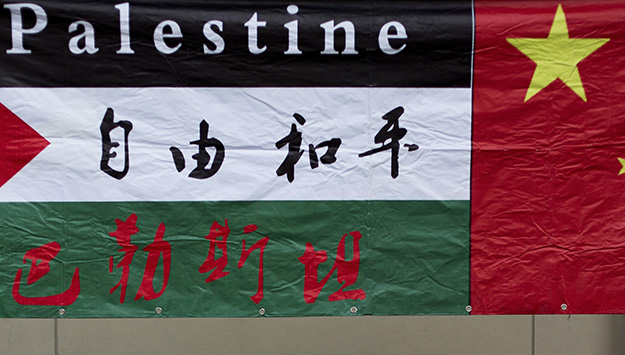
Palestinian Authority President Mahmoud Abbas met with Chinese President Xi Jinping for a three-day visit. Xi called Abbas a “good friend” and said that China fully supports Palestine. “We have always firmly supported the just cause of the Palestinian people to restore their legitimate national rights,” Xi stated. China and Palestine have had good diplomatic relations for years, but this is the first time Xi fully committed to helping Palestine restore statehood.

Peace talks between Palestine and Israel ended in 2014. China may have mended tensions between Iran and Saudi Arabia, but Israel-Palestine is another issue entirely. The land dispute in this region can be traced back to biblical days. Historians believe Palestine comes from the word “Philistia” or Philistines who are cited in the Torah and Old Testament as sworn enemies of the Jews. Muslims, Christians, and Jews alike know the story of King David battling the Philistines to become king of Israel, albeit they all interpret him a bit differently.

The region has been taken over by numerous empires over the ages. More recently, after the demise of the Ottoman Empire during the Great War in 1918, the British claimed Palestine. The British then established a Jewish nation in the region in 1923. Two decades later, in 1947, the United Nations decided to split Palestine into two states – one Arab and one Jewish. Arab leaders disagreed with the ruling. Britain withdrew, Israel then became a state in May 1948, leading to the Arab-Israeli War. The war ended in 1949, with Israel claiming control of over two-thirds of the territory. The two have been at odds ever since.

That is an extremely over-simplified version of events, but the hatred runs deep. The West has fully supported Israel in maintaining its territory, and China’s intervention in Palestine will be seen as a threat. “We especially appreciate the Chinese side’s commitment to financing a number of development projects presented by Palestine. We wish the speedy dispatch of technical delegations to implement these projects,” Abbas said. China is strategic. They want to assert dominance in the Middle East, where the West has lost its footing nearly everywhere besides Israel.

Iran and Saudi Arabia – Mutual Friends


Armstrong Economics Blog/World Trade Re-Posted Jun 7, 2023 by Martin Armstrong

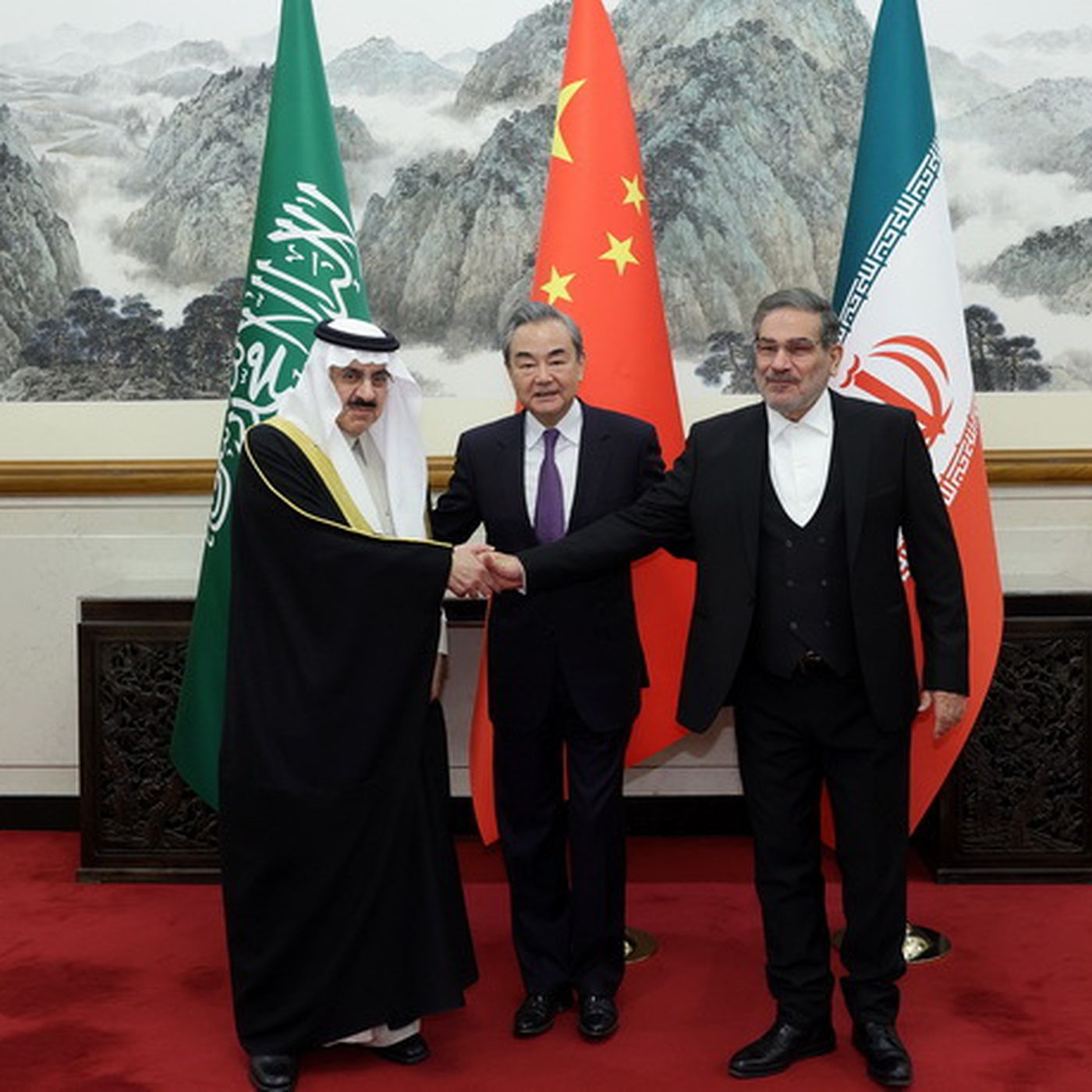
Iran and Saudi Arabia are now mutual friends through China. The two countries had been sworn enemies since the beginning of time, representing conflicting Shiite and Sunni Muslim groups that have been battling since their religion was founded. They were murdering one another through a proxy war in Yemen that has left over 150,000 dead. Then the unthinkable happened – the two nations came together at the request of China and made amends.

Chinese President Xi Jinping made them an offer they couldn’t refuse – the potential to form a strong alliance through trade without Western influence. Saudi Arabia issued a shocking press release in March, given the deep hatred it had for Iran. Saudi Arabia stated it was keen on “developing good neighborly relations…in light of their brotherly ties.”

Now, Iran announced it is reopening its embassy in Saudi Arabia as the two continue to put their differences aside for the prospect of economic prosperity. The embassy closed abruptly in 2016 after Saudi Arabia executed a Shiite cleric, leading to mass protests outside the embassy in Tehran. Riyadh and Tehran have not had diplomatic relations since.

Iran and Saudi Arabia would like to join the BRICS alliance between Brazil, Russia, India, China, and South Africa. If the two nations join, all major energy exporters will be within this alliance. BRICS currently contains 42% of the global population and over a quarter of the global economy. There would be absolutely no need for Western interference, and the threat of sanctions would hold little meaning. Saudi Arabia has already begun settling some oil transactions in the yuan instead of the dollar. Iran has been aggressively trading with the bloc; non-oil trade between BRICS and Iran reached $38.43 billion in the 2022-2023 fiscal year, marking a 14% year-on-year increase. China is Iran’s top trading partner in the BRICs alliance, with $30.32 billion of the aforementioned funds going directly to Beijing. An alliance could mean economic domination.

China seems to have done the unthinkable by brokering a peace treaty between the two nations. Opening an embassy signals that the countries are now ready to begin diplomatic relations once again. The BRICS alliance is growing stronger by the day, and there are rumors of the UAE, Egypt, Algeria, Bahrain, and even Turkey requesting to join. As our models have been warning, China is posturing itself to claim the throne of the financial capital of the world by 2032.

Tiananmen – 34 Years Ago, Tonight


Posted originally on the CTH on June 4, 2023 | Sundance 

It was 34 years ago tonight when the Chinese government sent the Mongolian Army into Tiananmen Square to crackdown on the mostly student protestors.

It is against the law in China to recognize today, memorialize the dead, or even speak publicly of this bloody anniversary. Few people know the short and long-term political ramifications to this event which extended far beyond the borders of China.

Many people are familiar with this image:

However, not as many people are as familiar with the wide shot.

That’s some serious courage right there.

The June 4th 1989 anniversary holds a great deal of personal significance for those who witnessed the events.  Many of us remember exactly where we were as the first reports started to leak out.

Few people know how most of the regular Chinese military refused orders to open fire on the protesting crowd. Hundreds of young Chinese military soldiers actually formed lines around the mostly student activists in an effort to protect them. The Chinese government eventually bypassed the regulars and instructed the Mongolian military divisions who carried out the orders.

No one really knows how many were killed, and even the families of the fallen were too scared to speak publicly.

Those who were lost live on in whispered memories of lore.

So many.

So young.

We remember.

…Then the tanks came….

Youth Unemployment in China


Armstrong Economics Blog/China Re-Posted Jun 1, 2023 by Martin Armstrong

Chinese youth are struggling to find jobs in urban areas. Unemployment for the 16-to-24 demographic reached a new high in April at 20.4%. Youth unemployment has steadily risen this year after reaching 17.3% in January, 18.1% in February, and 19.6% in March. These young adults were born under the one-child policy that has since been repealed, adding more pressure to succeed to help support their families.

The main change here is that this generation is highly educated. Working in the countryside or in blue-collar roles became less appealing as the opportunity to attend college became widely available. Additionally, China is shifting to a consumer country, and high-paying jobs in the city are more desirable. Chinese students are encouraged to study STEM and seek out top-earning positions. There were 96.37 million people aged 16 to 24 living in urban areas as of March, and 64.18 million were unable to participate in the workforce as the majority were students. Those students are now graduating, and many will be unable to find work in their field of study, similar to most nations.

Unemployment remains low among the “main labor force” aged 25 to 59, but Chinese youth will need to compete for highly desirable jobs in the cities. The new generation is smart, highly educated, and willing to work. But competition will be fierce.

Chinese Hackers Target US Infrastructure


Armstrong Economics Blog/War Re-Posted May 26, 2023 by Martin Armstrong

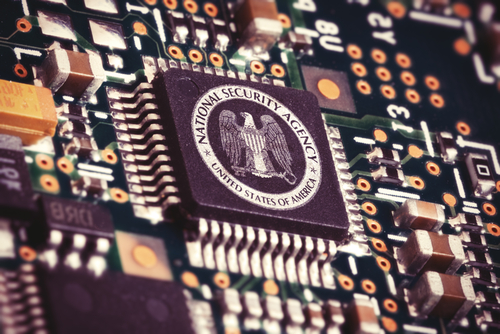
The US National Security Agency (NSA) issued a warning to all members of the Five Eyes organization that China has launched a cyber attack against the US. “Private sector partners have identified that this activity affects networks across U.S. critical infrastructure sectors, and the authoring agencies believe the actor could apply the same techniques against these and other sectors worldwide,” the report states. They are attributing the attack to a state group by the name of Volt Typhoon.

Microsoft first alerted the NSA that Volt Typhoon had compromised critical systems in Guam by installing surveillance malware on government devices. Guam is significant to China because it hosts the Andersen Air Force Base, which could be used in the event that China invaded Taiwan. Guam also hosts numerous ships for use in the Pacific. “Microsoft assesses with moderate confidence that this Volt Typhoon campaign is pursuing development of capabilities that could disrupt critical communications infrastructure between the United States and Asia region during future crises,” a NSA spokesperson stated.

Volt Typhoon uses “living off the land” techniques to direct a computer’s operating system, enabling them to evade tracking. “In addition, Volt Typhoon tries to blend into normal network activity by routing traffic through compromised small office and home office network equipment, including routers, firewalls and VPN hardware.”

The Pentagon now believes the spy balloons were affiliated with this operation. The US is too busy with Ukraine to worry about its own national security. The likelihood that the CCP sent bad actors disguised as migrants is more than zero. This malware has now compromised the entire US military, and no one knows how to remove the program from compromised devices and networks.

Chinese Illegals Entering America Surge over 900%


Armstrong Economics Blog/War Re-Posted May 26, 2023 by Martin Armstrong

The US government is responsible for opening the border and allowing a full-scale invasion. They announced the end of Title 42, unlike other measures they keep hidden, and gave outsiders the information they needed to plan their invasion. There were numerous stories about Chinese spies infiltrating America.  Companies were prohibited from conducting business with certain Chinese countries due to security concerns. But, after Title 42 ended, countless Chinese military-aged men entered our country never to be seen again.

All reports and video state that the majority of invaders are military-aged males. This is an important point to reiterate because most of these people are not simply seeking a better life. China is nowhere near America. It logistically does not make sense. Someone flew these men near the US-Mexico border and likely instructed them to enter the US. NewsNation stated that there has been a 900% influx in Chinese migrants crossing into the US through the southern border. This was BEFORE Title 42 ended. Some reports state that some Chinese migrants are willing to pay tens of thousands to cartels in Southern America to enter America.

There was a report from Miami that the media conveniently covered up. A boat of Chinese men came on shore and scattered. The police only caught a few men, and they all had the same story. They are simply trying to escape poor economic conditions and future COVID lockdowns. If they were poor, they would not have had the funds to fly across the world. Again, these are MEN traveling ALONE. The media is spinning this invasion to make it seem as if everyone is simply seeking a better life where the streets are paved with gold. Yet they are entering in a manner that completely disrespects our legal system and leaves Americans completely vulnerable.

No one knows exactly how many “migrants” (invaders would be a more accurate term) have entered the US. At a minimum, tens of thousands of undocumented, unknown people are roaming across the mainland. Beijing and Washington are not on good terms. Army Secretary Christine Wormuth warned earlier this year that China would attack on US grounds if a war began. “[T]he United States homeland would be at risk as well, with both kinetic attacks and non-kinetic attacks—whether it’s cyberattacks on the power grid or on pipelines.” We do not have to worry about a foreign military invading from the sky or sea because they are already here, possibly stationed, and no one knows of their whereabouts.

China – High Tech Learning


Armstrong Economics Blog/China Re-Posted Apr 29, 2023 by Martin Armstrong

China wants Apple Back – China’s Davos


Armstrong Economics Blog/China Re-Posted Mar 30, 2023 by Martin Armstrong

China’s zero COVID policy isolated the nation for nearly three years and caused businesses to flee. One of the steepest losses occurred when Apple halted the production of the iPhone 14 in China. If you recall, Foxconn, once the largest iPhone producer in the world, underwent a lengthy lockdown in November 2022. In response, Apple moved a portion of its manufacturing to India and Vietnam.

In October, before the lockdown, Foxconn produced 85% of iPhone Pros. Apple experienced its steepest quarterly revenue decline in half a decade, and the company blamed China for causing production delays. Anti-China sentiment was also a factor, as cheap labor could be found elsewhere without the false label of being a “Chinese company.” However, departing from China cannot happen overnight.

China Premier Li Qiang is now attempting to stop Apple from gradually exiting China. Beijing plans to host the China Development Forum, often called “China’s Davos,” and has extended an invitation to Apple CEO Tim Cook. Aljazeera reported that attendees of this year’s event include US Secretary of State Henry Kissinger, Procter & Gamble Chief Executive Jon Moeller, PwC Global Chairperson Bob Moritz, and HSBC Chief Executive Noel Quinn.

China’s growth target for 2023 sits at 5%, which is unusually low for the second-largest economy. Cook has already made a visit to China ahead of the summit and expressed optimism that the supply chain issues could be repaired. Losing Apple completely would be detrimental to China’s economy and image. Time will tell how China can navigate US sanctions and retain the business it lost under the zero COVID policy.