
More war threats against us and Obama goes on vacation — makes perfect sense …
Tag Archives: IDF


Iran Supreme Leader: The Only Solution For Crisis Is Israel’s Destruction
It sounds to me like he is getting ready to delare war on the US, why did Barry Obama extend the nuclear development talks with then for four months? And what if that just happens to be the time they need to finish their bomb development?
ISIS Orders Genital Mutilation In Iraq. What Will Skippy Do.
More good stuff from the Islams — its hard for me to understand how any western woman could possibly support any Islamic state or group of any kind. Islam is just not compatible with our way of life they know that and that is why they want to destroy us.

Why Does Anyone Defend Hamas And The Palestinian Culture Of Death?
How anyone can support any of these Muslim groups is baffling especially since the Muslims claim to be a religion of peace. Maybe their definition of peace is different that ours; that might explain it! So if we apply occam’s razor to the quandary we can state that Islam is a religion of war

By David M. Huntwork ~
“Why in God’s name does anyone show sympathy, and support for a terrorist organization?” – Former Congressman Allen West
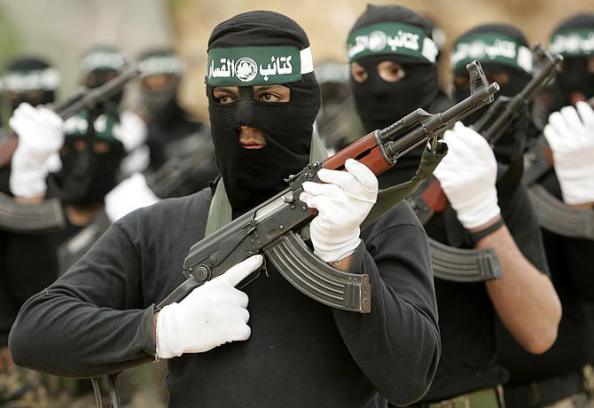
And that is the question that should be asked. It boggles the mind and offends the senses that there is EVEN ONE MEMBER OF WESTERN CIVILIZATION who is upset that Israel is pummeling the Palestinian wing of the Muslim Brotherhood. Under Ariel Sharon, Israel forcibly removed its citizens from Gaza and turned the land over to the Arabs. Israel has been rewarded for that gesture of conciliation with the abduction and killing of its citizens and the launching of hundreds of rockets into its territory.
Such provocations have finally goaded the state of Israel into launching a ground invasion of Gaza to take on the infamous Hamas, a terrorist group famous for hiding behind women and children even as they target the same. Death and destruction…
View original post 1,002 more words
Iraq’s Christians ‘Systematically Targeted for Extinction’
This is where Kerry aka Lurch should be doing something not trying to stop Israel from defending themselves!
Israeli Chariot-4’s Windbreaker armor, defets Hamas rockets!
A “humanitarian” ceasefire would give Hamas time to find answers for Israeli Chariot-4’s Windbreaker armor which has rendered Hamas toothless!
Re-post from DEBKAfile Exclusive Analysis July 24, 2014, 1:16 PM (IDT)

The Armored Shield Protection-Active Trophy aka Windbreaker
Thursday, July 24, the 17th day of the IDF’s Gaza operation, Israeli ministers were discussing a possible “humanitarian ceasefire” in IDF-Hamas hostilities, which could last up to five days. According to debkafile‘s military sources, it is Hamas which, behind its tough stance, is keen on a pause – and not just out of sudden concern for Gaza’s civilians. Its tacticians are desperate to find a chink in the Chariot-4 tank’s Armored Shield Protection-Active Trophy missile defense system, known as the Windbreaker. The 401st armored brigade is the only IDF unit with this armor.
Hamas has tried to stop these tanks with two kinds of advanced guided anti-tank missiles, the Russian Kornet-E, and the Concord. But Windbreaker repels them and blows them all up.
Wednesday July 23 the IDF deliberately placed brigade commander Col. Sa’ar Tzur, one of the outstanding commanders in Operation Protective Edge, before TV cameras, while standing in front of a Chariot-4 tank.
He spoke at length about the brigade’s unstoppable performance under anti-tank missile fire. Those missiles are blown up without penetrating the tanks’ armor, he said, and are powerless to slow their advance.
Hamas has found no answer for the Active Trophy defense system, any more than it has for the Iron Dome anti-missile defense batteries, which keep Israeli civilian populations safe from its rockets. Both systems are home-made, developed by Rafael advanced armed systems industries.
Hamas is not giving up, which is why it is holding out against a long ceasefire, but aiming for just enough time to come up with new stratagems, debkafile‘s military sources say.
This was the message conveyed in the statement Hamas leader Khaled Meshal made Wednesday July 23 in Qatar: He rejected a long-term ceasefire, but left the door open for a “humanitarian” pause.
While its forces have taken serious punishment, most of Hamas’ underground command and military infrastructure is still far from knocked out. But if the Israeli military decides to go for a decisive coup against those core facilities – defined by the Israeli security cabinet’s euphemism of “expanding the operation” – Hamas chiefs expect it to be spearheaded by a fleet of Chariot-4 tanks hurtling towards them behind the protection of their impenetrable “Windbreakers.”
To maintain any kind of draw with the IDF, Hamas stands in urgent need of two resources: 1) Technology for neutralizing the Windbreaker; and 2) Missiles able to pierce it.
While Khaled Meshal haggles with ceasefire brokers in Qatar, his agents are known to have appealed urgently to Tehran to find the weapons they need and deliver them at top speed to the Gaza Strip – possibly from Libya by the Iranian-terrorists’ arms smuggling route through Egypt.
A reference to this appeal was made in a comment by a senior military intelligence official Wednesday, when he disclosed that Iran had promised to rebuild Hamas’ military machine, including its rocket production and launch systems. Hamas and Tehran also broached the problem of the Chariot-4 armor. Both fully understood that unless it can be solved, Hamas may have no way of defending its high command and arsenal in their elaborately furnished underground bunkers.
US Secretary of State John Kerry has all these facts to hand, fed by a steady stream of intelligence from US informants in and over the battlefield. His efforts for a ceasefire are based on his perception that Israel has so far not managed to inflict a clear defeat on Hamas and needs to expand its operation to tip the scales.
He calculates that if Israel launches its final thrust, which has not yet been approved, it will not accept a ceasefire before achieving its goal, and this may take at least a week to ten days.
But if Prime Minister Binyamin Netanyahu and Defense Minister Moshe Ya’alon hold off on Israel’s decisive attack, then negotiations can start for a truce of some kind, while both sides size up their respective situations and decide whether or not it is to their advantage.
IDF demolishes Hamas!
IDF Commanders: Time for decisive war move after IDF victories in Shejaiya, E. Rafah and Khan Younes
Re-Post from DEBKAfile Exclusive Analysis July 23, 2014, 12:16 PM (IDT)

Israel tank wins a battle in Gaza
Senior IDF commanders said Wednesday July 23 that the time had come for a decisive war move. Breaking up the Hamas’ subterranean tunnels would take weeks, they said, but the critical encounter for completing their military mission and bringing the war to a close was still to be fought after three key IDF victories: The battle for Shejaiya grabbed the headlines, but the confrontations in eastern Rafah and eastern Khan Younes in the south were just as important.
The commanders are now urging a large-scale assault on the bunker complex housing Hamas’ top military command and infrastructure. They say it is up to national leaders, i.e., the security cabinet, to determine the military’s next move and the disposition of the forces present on the battlefields of the Gaza Strip.
The tank units could undertake the opening moves for the next, critical stage of the Israeli operation at no more than hours’ notice.
Political circles in Israel agree that after Hamas rejected all the ceasefire proposals floated, the next stage is the war’s expansion for its closing shots. There is no word yet on how they are to be conducted.
The Western diplomats and Palestinian Authority officials who met Hamas politburo chief Khaled Meshaal in Qatar Sunday were amazed to hear him assert that Hamas was winning the war against the IDF and confident of being able to keep going for a long time, debkafile‘s military and intelligence sources report.
On Monday, July 21, Meshaal told one Western official: “In Gaza we see that the IDF is slow and clumsy. Our forces are mobile and flexible, including our rockets which we can move quickly from one place to another.”
Asked about Hamas’ defeat in Shajaiya, where a Gaza City suburb, home to 100,000 Palestinians, was razed to the ground, he declined to comment.
After Israel learned of Meshaal’s comments, the IDF was instructed Monday night to demolish the empty home of Mohammed Deif, head of Hamas military wing. Israeli war planners believe Deif is the brain behind Hamas’ war, along with Izz-e- din al Qassam Brigades commander Marwan Issa.
While their forces were in retreat in the Gaza Strip, Hamas diplomacy won a strong point against Israel by a rocket that hit close enough to Ben-Gurion Airport to persuade US and certain European airlines to suspend their flights.
The rocket landed at Yehud, which is not far from the runways of Ben-Gurion airport and Airport City which houses a business and shopping center and Israel Aircraft Industries.
By Tuesday night, 85 international flights were cancelled by all American and a few European airlines. The Israeli El Al and Arkia moved fast to expand their service to and from Israel to fill the gap.
Early Wednesday morning, US Secretary of State John Kerry declined a request by Prime Minister Binyamin Netanyahu to intervene with the Federal Aviation Administration-FAA to rescind its ban on US carriers’ flights to Israel.
Kerry said he could not interfere in this and that anyway the FAA reviews its decisions every 24 hours. The European carriers are unlikely to resume their flights to Ben-Gurion so long as the Americans observe the ban.
debkafile‘s military sources note that Hamas’ success in disrupting civilian air traffic to and from Israel exposed a hidden side of its war on Israel. Most of the nearly 2,000 rockets fired over the last 16 days did not miss Israel’s urban centers by chance, although many were deflected by Iron Dome interceptors. Hamas was focusing on strategic targets, such Israeli Air Force bases and facilities in the south and center. When IDF communiqués report that rockets land in open areas, this does not necessarily rule out their explosion in or near military bases.
The IDF and Hamas duke it out in Gasa! Obama supports Hamas but that might not mean anything!
Israeli forces are fighting hard to win their first battle against Hamas, a savage and tenacious enemy
Re-Post from DEBKAfile Exclusive Analysis July 22, 2014, 12:34 PM (IDT)

An Israeli tank driving forward in Gaza
The battle for Shejaiya, the Hamas stronghold on Gaza City’s outskirts, was still unresolved Tuesday, July 22, indicating that the Islamists were not giving up. Indeed, fresh Hamas reinforcements appeared to have taken up new positions in the battle zone during the night. They may have arrived through Hamas’ many-branched tunnel system.
Every few hours, the IDF spokesman releases two sets of figures: Israeli casualty statistics and the number of IDF strikes against Hamas. He has little to say about Israel’s military movements. Neither Israeli nor foreign correspondents have been permitted to accompany IDF troops fighting in the Gaza Strip – a policy the IDF has pursued since the second Lebanon war of 2006. Military leaders are therefore free to manage the data, human and electronic, coming out of the war, including images from the various fronts, without independent coverage. The public sees the same IDF surveillance footage day after day.
This policy reduces the hazards faced by Israeli forces and keeps their scale and identities secret from the enemy – and that is good for Israel’s war effort.
On the other hand, it creates a widening gap between the “official version” and the real state of affairs on the battlefield. Since most people have access to relatives on the front – not to mention prolific rumor mills powered by the social media – the credibility of national war leaders suffers.
Official communiqués are studded with impressive figures. Tuesday morning, the IDF was reported to have struck 3,200 Hamas targets since the start of the operation. In the last four days, the soldiers located 23 secret tunnels and 36 shafts leading into Hamas’ subterranean complex, and killed 186 Hamas operatives in combat. Israel lost 27 officers and men in the same period.
Those figures are telling in that they illustrate the hardships confronting the IDF from a ferocious enemy which refuses to crack under air or ground assault.
Because the Golani Brigades’ losses in Shejaiya were so heavy, IDF chiefs had no choice but to disclose information about the combatants on this front. But no one, aside from the combatants and their officers, knows what is going on in the other arenas to which the five special IDF task forces have been assigned. There is no news for instance from the southern sector of Rafah and Khan Younes. or the northern towns of Shati and Zeitun. No one knows how many Hamas tunnels are left to be destroyed – and where – before the IDF claims to have completed this critical part of its counter-terror mission
By any military standard, the IDF has the edge over Hamas. But the battle still needs to be won.
This situation has stiffened Hamas’ resistance to any of the ceasefire proposals taking shape in various parts of the region in the last couple of days. Its leaders feel strong enough to carry on fighting and holding out for better terms than those on offer at present.
Hostilities are therefore likely to drag out for an indeterminate period.
For Israel, the diplomatic clock is ticking too fast. As the warfare stretches out without a decisive battle on at least one Gaza front, the rising casualty toll threatens to undermine Israel’s ability to stand up to the pressures of international truce diplomacy.
Israel plans to take over Gaza, good for them!
Five IDF task forces begin driving into Gaza City. Israel draws up over-plan for control of the Gaza Strip
Re-post from DEBKAfile Exclusive Report July 21, 2014, 10:09 AM (IDT)
The IDF’s Shejaiya operation in the Gaza Strip continues apace, carried forward by five task forces now heading for the center of Gaza City amid casualties on both sides. Sunday, July 20, Israel’s crack Golani Brigades lost 18 fighters, without slowing down, compared with 170 Palestinian fatalities.
debkafile’s military sources report that each task force, the size of half a division, is an integrated amalgam of air, armored, artillery and engineering forces, capable of operating almost autonomously in field combat. The buildup of the last 24 hours has expanded Israel’s fighting strength in the Gaza Strip to a total of 75,000 men, the largest ever fielded in this territory. Because of its scale, Israeli leaders are referring to Defensive Edge as a war rather than an operation.
The battle for Shejaiya waged Sunday burst into public prominence because of the heavy losses suffered by the Golani Brigades, but it is not the largest engagement underway at present. The other ongoing IDF battles, their progress, the units involved and their locations, are kept secret. We can only point to their general locations as being around Beit Hanoun in the north; Zeitun, south of Gaza City and the Shati refugee camp to the north.
More arenas are scheduled to be added to the list of battle zones Monday.
Rather than causing despondency, the high IDF casualty toll Sunday – the highest in a single engagement since the 2006 Lebanon War – has invigorated the fighting forces in the field, making them more determined than ever to get the better of Hamas with all possible speed.
Whereas their orders on Sunday were to advance warily and slowly, meanwhile testing the strength of Hamas resistance and observing their tactics, the tempo went into high gear at dawn Monday, when the troops were told to speed their advance from the outer fringes of Gaza City into its center.
Their performance in Shejaiya and other engagements Sunday deeply impressed Israel’s war leaders and made them confident enough to step up the rate of advance.
This upbeat mood was evident in the comments made Sunday night by Prime Minister Binyamin Netanyahu, Defense Minister Moshe Ya’alon and, from the field, by Chief of Staff Lt. Gen. Benny Gantz. While condoling deeply with the bereaved families of the 18 soldiers who died in combat, they were full of praise for the troops’ performance “in defense of our home” which outdid all expectations.
The following decisions were reached in consequence:
1. Gen. Gantz would stay in the field and lead the forces from there, rather than from staff headquarters in Tel Aviv.
2. The prime minister and defense minister would manage the war, without constant recourse to security cabinet sessions to obtain its approval of every stage of the plan of operation, the final goal of which debkafile has learned, is Israel’s military takeover of the Gaza Strip.
3. As the military operation unfolded, the three war leaders were convinced more than ever that demolishing Hamas’ terror tunnel complex was not optional, any more than wiping out the rocket menace hanging latterly over five million Israelis and, for nearly a decade over the million people living directly in the shadow of the Gaza border. Publicity guidelines were to be built around this conclusion.
International statesmen are flitting busily around regional capitals, including Jerusalem, in search of an opening to broker a ceasefire in Gaza hostilities. UN Secretary General Ban Ki-moon has been holding meetings and US Secretary John Kerry will try and reach the Middle East in the coming days, according to a White House directive – unless he again cancels at the last minute.
According to debkafile’s sources, the requisite political and military conditions for a ceasefire are not yet in place because of a number of circumstances, not least of which is Hamas’ refusal to contemplate a halt.
Israel, for its part, is fighting for the first time in its history with solid Arab backing from the Egyptian-Saudi-United Arab Emirates bloc. So determined are its members to obliterate the Muslim Brotherhood that they have virtually blacklisted Qatar for supporting the Brothers and for patronizing the Palestinian Hamas, regarded as the MB’s paramilitary arm.
This rift has put a spoke in the diplomatic effort to set in motion effective mediation for a Gaza ceasefire predicated on co-opting Qatar.
A bid to make Palestinian Authority chairman Mahmoud Abbas the bridge between the Egyptian-Saudi-UAE grouping and Qatar has likewise foundered. And there isn’t much Secretary Kerry can do if and when he comes over to try his hand.
US President Barack Obama’s suggestion, when he called Netanyahu Sunday, to build a new Gaza ceasefire around the 2012 formula concocted by the US, Egypt, Qatar and Turkey – and accepted by Israel and Hamas – for ending Operation Pillar of Defense, shows him to be cut off from the fundamentally altered diplomatic and military realities of the current Gaza conflict.
He declines to recognize the emergence of a powerful new Arab bloc. It will be necessary to twist the arms of each of its members, Egypt, Saudi Arabia and UAE, to gain their consent for a bid to cut the Israeli offensive short to rescue Hamas from defeat. And even then, they will stall.
And although anti-Israel demonstrations are being staged in some parts of the world, the most violent in Paris, hardly any world governments have openly condemned the Israeli operation – as yet.
The IDF Strategy to take down Hamas
Israel faces perilous, protracted war as IDF expands its operation into Hamas’ urban strongholds
Re-Post from DEBKA file Exclusive Analysis July 20, 2014, 9:59 AM (IDT)
The IDF tried to mitigate the bad news from Hamas warfront by releasing it in sections over Saturday and Sunday, July 19-20. Four soldiers were killed and a score were wounded. Maj. Amotz Greenberg, 45, from Hod Hashorn and Sgt. Adar Bresani, 20, from Nahariya, were shot dead Saturday when their jeep was attacked by Hamas infiltrators bursting out of a tunnel.
On the Gaza battlefield, Paratrooper Staff Sgt. Bana Roval, 20, from Holon, was shot dead by a terrorist from another tunnel, and 2nd Lt, Bar Rahav, 21, from Ramat Yishai, was killed by a missile defense system in a nearby tank.
Hamas is not only bringing its deadly tunnels into play, but also planting small commando units heavily armed with anti-tank rockets across the paths of advancing Israeli armored forces.
Saturday, those commandos fired 10 anti-tank rockets. Without their Windbreaker armor, many tanks would have been destroyed and the casualty toll much higher.
However, most of all, Hamas is fighting to save its tunnel system from systematic destruction by IDF demolition teams. This system was designed to be the Palestinian Islamists’ highest strategic asset, comparable in importance to the IDF’s chain of fortifications along the Syrian border.
Around 16,000 men, around 15 percent of Hamas’ fighting strength, were assigned to the tunnel project in the last five years and substantial funds. The IDF will not be permitted to demolish this flagship project without a savage fight.
The most important conclusion for Israel’s war planners, from the first days of the ground phase of Israel’s Operation Defensive Edge, is that Hamas is standing firm and not cracking, even under the relentless pounding of their military infrastructure by Israeli artillery and air might, and appears determined to fight on.
Its commanders believe they can keep going for another 4 to 6 weeks, while also maintaining a steady hail of rockets against the Israeli population.
This estimate has spurred a major buildup of Israeli military strength for the Gaza operation. Another 50,000 reservists were called up Saturday night and a large number of infantry brigades started moving into the Gaza Strip overnight and will continue to arrive Sunday. The extra forces have made it possible to embark on the second, urban stage of the IDF operation, the breaching of the densely-populated towns.
A different type of combat lies ahead from the project for destroying tunnels. It is tougher and more perilous. But there is no other way to reach Hamas’ command centers and its longest-range rockets.
With this mission still unaccomplished, talk of a ceasefire sounds as though it comes from another planet. Hamas feels strong and confident enough to spurn the Egyptian-Israeli ceasefire proposal, which is firmly backed by Saudi Arabia and the United Arab Emirates. Every attempt to sway its political leader Khaled Meshaal, when he was buttonholed in Kuwait, ran into a blank wall. He summarily rejected invitations from Egypt and the Arab League to travel to Cairo and discuss the cessation of hostilities.
The various international mediation efforts have therefore nowhere to go.
As far as Hamas is concerned, no incentive has been offered tempting enough to persuade its leaders to give up their predestined war on Israel.
US Secretary of State John Kerry changed his mind about visiting the region for the second time this month, when the Obama administration decided to stay out of it and let Egypt handle the crisis. UN Secretary General Ban Ki-moon, who scheduled a visit for Saturday, postponed it indefinitely.
Israel has accordingly won a rare opportunity to deal with Hamas without being stopped short and the enemy saved by international intervention. But although it has wide popular support, this opportunity confronts Israelis with one of the cruelest, costly and drawn-out conflicts in their embattled history.
 Centinel2012