Posted originally on CTH on March 18, 2026 | Sundance
Director of National Intelligence Tulsi Gabbard, CIA Director John Ratcliffe and FBI Director Kash Patel are scheduled to deliver testimony on Global Threat Assessments today at the Senate Select Committee on Intelligence (SSCI). The hearing is scheduled to begin at 10:00am ET. Livestream Links Below.
The SSCI sits at the center of the U.S. Intelligence Community operations, providing support and alignment with all ongoing IC activity, with control mechanisms that work around the leadership of all IC institutions. The SSCI, acting as an oversight body, facilitates all activity.
Keep in mind, as DNI Tulsi Gabbard appears for testimony today the worst elements of the Intelligence Community, and the orcs within the SSCI that underpins the IC, despise Tulsi Gabbard.
Remember, Gabbard intercepted an impeachment construct (TdA, Venezuela deportation – Boasberg et al) and Gabbard refused to promote the fabricated IC construct that Jared Kushner was in control of Trump and manipulating the White House on behalf of Israel. Today, the SSCI will take strides to regain control. WATCH:
Posted originally on CTH on March 15, 2026 | Sundance
Some additional contexts not included in the British-centric financial review below.
(1) Japanese Prime Minister Takaichi Sanae will be at the White House next week. This meeting was scheduled several weeks before Operation Epic Fury began. The timeline continues to indicate that President Trump’s primary geopolitical focus is on China, not necessarily the U.K-EU angle, although that is a materially significant overlay.
(2) “A major U.S. weapons package for Taiwan worth about 14 billion dollars is awaiting approval from Donald Trump and could be announced after his planned visit to China later this month, according to sources familiar with the discussions. The proposed deal would be the largest U.S. arms sale ever to Taiwan and comes as military tensions between China and the self-ruled island continue to rise.” {SOURCE}
.
Heavenly Father, we ask for You to protect our leadership’s intent through value-driven stewardship. Keep arrogance and pride far from the heart of our leadership and help them to listen well. Dear God, we ask that You provide spiritual protection and intellectual discernment; provide calm through troubled waters, and space for wisdom to enter the hearts and minds of our national leadership keeping their bold influence aligned with Christ’s example. ~ Amen
Posted originally on CTH on March 1, 2026 | Sundance
The United Arab Emirates (UAE) is a very popular tourist destination in the middle east with most travelers traveling to the playground of Dubai. Their economy and image as a safe and secure country are very important. As a result, they are keenly sensitive, proactive toward negative impressions and highly focused on international opinion/security.
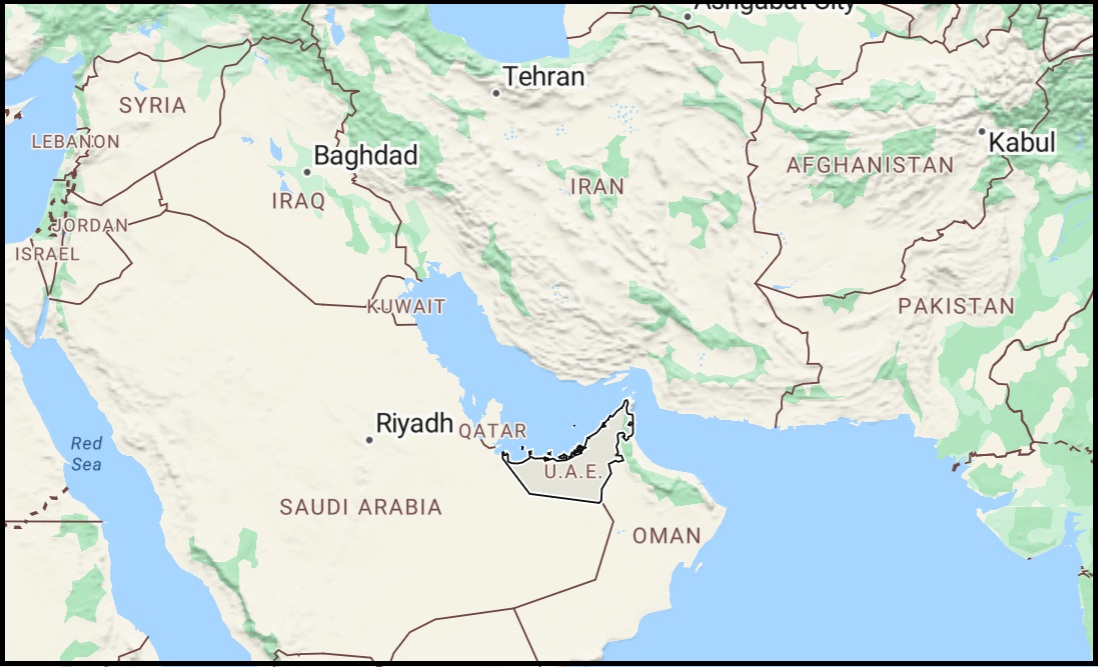
Iran has been sending drones and cruise/ballistic missiles into the entire region; hitting Kuwait, Saudi Arabia, the UAE, Bahrain, Qatar, Jordan and Israel.
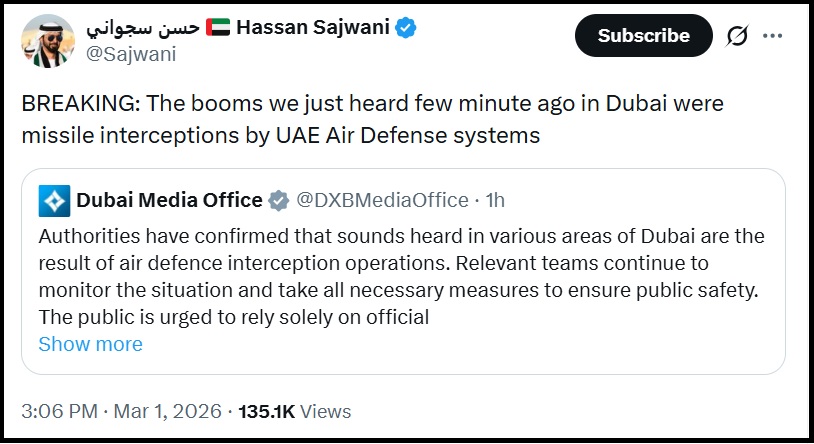
The UAE is sharing how intense they are being targeted along with the network of defense systems being deployed to intercept the attacks.
UAE Ministry of Defense confirms we successfully shot down: 165 ballistic missiles, 2 cruise missiles and 541 drones fired by Iran.
On day 2, we shot down 20 ballistic missiles (8 fell in sea), 2 cruise missiles, and 311 drones. 21 drones hit civilian targets. {SOURCE}
This is a remarkable amount of Iranian firepower being targeted toward one regional nation. The air defense system of the UAE is highlighting the value in very proactive defense positioning. Quite remarkable.
“[…] – The UAE’s air defense today achieved a success rate of more than 96% in intercepting missiles after destroying 132 out of 137, and more than 93% in intercepting drones after intercepting 195 out of 209, for a total of 327 threats intercepted out of 346 with a success rate of around 95%. This is a figure that places it among the highest interception rates globally, which typically range between 85% and 95% depending on the type of threat and the conditions of engagement.” (source)
Posted originally on CTH on February 15, 2026 | Sundance
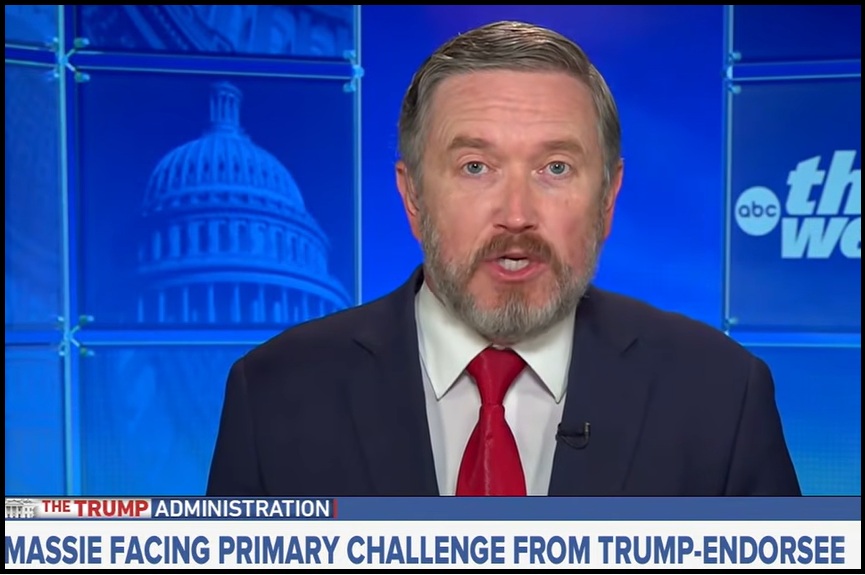
Kentucky congressman Thomas Massie appears on ABC This Week with Martha Raddatz to assert his position as our nation’s ultimate judge of morality and righteousness and pass judgement upon any individual that does not meet his expectation or standard.
Against the backdrop of billionaire leftist Reid Hoffman who has financed most of the claims promoted by Epstein victims for use by Representative Massie, the congressman pledges to remain on task. Hoffman never called as a witness. Video and Transcript below.
[TRANSCRIPT] – RADDATZ: I’m joined now by Republican Congressman Thomas Massie of Kentucky, who helped lead the efforts to release the Epstein files.
Good morning to you, Congressman.
I would like your overall reaction to the hearing this week and Pam Bondi’s performance, combativeness.
REP. THOMAS MASSIE, (R) KENTUCKY & JUDICIARY COMMITTEE MEMBER: I don’t think she did very well. She came with a book full of insults, one for each congressperson. She obviously had one for me.
And, you know, I’ve been there when Merrick Garland was there. Obviously, politically, I don’t agree with him, but he performed much better in terms of at least not looking bad. And, unfortunately, we didn’t get the answers we wanted about the Epstein Files Transparency Act from her.
RADDATZ: You — did you get any of the answers you wanted?
MASSIE: No, but she did come off her script and engage with me about this production of documents where she admitted that 40 minutes after I pointed out to the DOJ that they had over-redacted some of the documents, they did unredacted documents. So, it’s clear they’ve made mistakes in the document production. At least she acknowledges that tacitly. And it’s clear that their work is not done here yet.
RADDATZ: And I want to go to those — some of those unredacted files. Congressman Ro Khanna said names of some of the men who were redacted shouldn’t have been redacted. They then sent that back to you, and two of them were not redacted. But on Friday, Deputy Attorney General Todd Blanche accused you and Congressman Khanna of unmasking those people, saying they had nothing to do with Epstein or Maxwell. They were from an FBI line-up years ago.
What’s your response to that?
MASSIE: Well, three hours before Todd Blanche himself unredacted those names, I told him in an X post, which I know he read because he reposted it, that those may be men in a line-up. And then I went on TV and said, those may be men in a line-up. And it was actually the DOJ who released those names, which is fine, but they omitted the context that I provided, which is these may be in a line-up.
Now, there were two men who needed to be named, one of whom has already resigned, the Emirate, a sultan, resigned for — as a CEO of a very large company because we released his name.
And there’s another man, Leslie Wexner, I’ll add him to the list with Jes Staley and Leon Black, who need to be investigated right now. They’ve appeared in these files.
Leslie Wexner is the one who — you know, Pam Bondi said, oh, he’s appeared thousands of times in these documents. We’re not covering up anything. But I pointed out to her, they redacted his name from the one document that says “child sex trafficking co-conspirator.”
And my question is, who is the person at DOJ who redacted Leslie Wexner’s name from a document titled “child sex trafficking” with “co-conspirator” next to this name?
(CROSSTALK)
RADDATZ: And I want to say right now that Wexner denies and they say he was not a co-conspirator. Wexner has a statement: The assistant U.S. attorney told Mr. Wexner’s legal counsel in 2019 that Mr. Wexner was neither co-conspirator nor target in any respect. Mr. Wexner cooperated full by providing background information on Epstein and was never contacted again.
But I’d like to move on, if we can.
MASSIE: Yeah.
RADDATZ: Yesterday, the DOJ sent Congress a letter explaining the reason for all these reactions. So, you are not satisfied with that?
MASSIE: No, they’re citing deliberative process privilege in order not to release some of the documents. The problem with that is the bill that Ro Khanna and I wrote says that they must release internal memos and notes and emails about their decisions on whether to prosecute or not prosecute, whether to investigate or not investigate.
It’s important they follow that because then we could find why they didn’t prosecute Leslie Wexner. What was the decision tree there? And also, why, in 2008 they gave Jeffrey Epstein such a light sentence?
And finally, I know the DOJ wants to say they’re done with this document production. The problem is they’ve taken down documents before we were able to go over to the DOJ and look at the unredacted versions. They took down some of the most significant documents. Two of them involving Virginia Giuffre’s case and other things, the picture of Epstein at — in a room where it’s — got CIA written on the boxes. That’s been taken down.
We want to be able to look at all these files. They can’t keep those documents down after they’ve already produced them.
RADDATZ: I want to talk to you about one of the moments in this hearing, and that is the attorney general would not look at the Epstein survivors behind her. Did that surprise you?
MASSIE: I think that was kind of cold on her part. I think she was afraid to.
And look, these survivors would love to have a meeting. It’s not about Bill Clinton, and it’s not about Donald Trump. This Epstein Files Transparency Act was about getting these survivors justice.
We’ve got some degree of transparency, but it’s called the Department of Justice, not the department of transparency.
And so, what these survivors need, they need to see some of their own 302 forms, which haven’t been released, and they also need to see some of the men that they’ve implicated prosecuted.
RADDATZ: Do you still have confidence in Pam Bondi as Attorney General?
MASSIE: I don’t think Pam Bondi has confidence in Pam Bondi. She wasn’t confident enough to engage in anything, but name calling in a hearing. And so, no, I don’t have confidence in her. She hasn’t got any sort of accountability there at the DOJ.
When I asked her specifically, who redacted Leslie Wexner’s name from the one document that mattered, she couldn’t give me an answer, she wouldn’t give me an answer. But ultimately, it’s her who is responsible for the document production according to our law, the attorney general.
It’s not Todd Blanche. It’s not the people below them. You can assign tasks to people but you can’t assign your responsibility.
RADDATZ: And just very quickly, if you will. You’ve supported most of what Donald Trump has done during his presidency. Because of your actions with these files, he is supporting your primary opponent and has waged very personal attacks on you.
I know we just have a few seconds here. But just your reaction to that.
MASSIE: Look, this is about the Epstein class, the people who are funding the attacks against me. They may or may not be implicated in these files, but they were certainly rubbing shoulders with the people who are in these files. They’re billionaires who are friends with these people. And that’s what I’m up against in Washington, D.C.
Donald Trump told us that even though, you know, he had dinner with these kinds of people in New York City and West Palm Beach, that he would be transparent. But he’s not. He’s still in with the Epstein class. This is the Epstein administration, and they’re attacking me for trying to get these files released.
RADDATZ: And again, I’m going to say, President Trump has not been accused of anything criminal here.
Thank you very much for joining us this morning, Congressman. We appreciate it.
MASSIE: Thank you. Thank you, Martha.
[End Transcript]
It is rather curious that congress has no interest in calling any of the state or federal officials, including the FBI, to give testimony as to the outcomes of their prior investigations. Show us what was actually done instead of theater. But no, theater seemingly has a greater value.
Posted originally on CTH on February 6, 2026 | Sundance
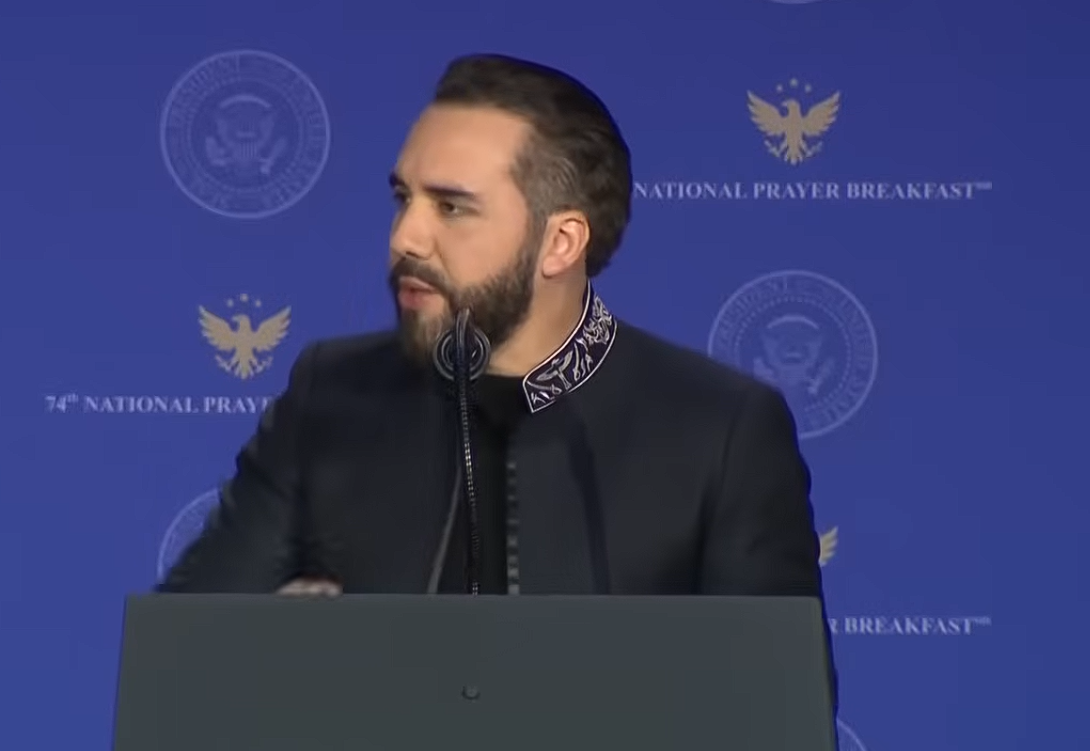
El Salvador President Nayib Bukele delivered a remarkable speech at the National Prayer Breakfast yesterday. Bukele accurately frames the bigger battle forces we face, the challenge of confronting evil.
Nayib Bukele delivers a powerful and inspiring speech at the National Prayer Breakfast in Washington DC, addressing topics of faith, leadership, hope, and moral guidance. Bukele emphasizes the importance of values, public service, and global unity, sharing his vision for a better future. His remarks are exceptionally well framed and delivered. Watch:
Posted originally on CTH on December 30, 2025 | Sundance
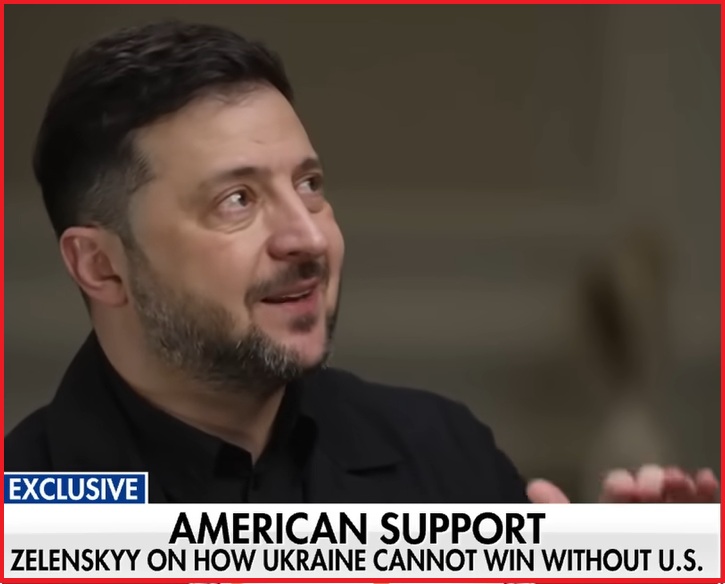
Ukraine President Volodymyr Zelenskyy appears on Fox News for an interview with Bret Baier. Within the interview Zelenskyy gives some context and details to the 20-point plan organized between him and the EU Leaders, currently being reviewed and modified by President Trump, Steve Witkoff, Marco Rubio and Jared Kushner.
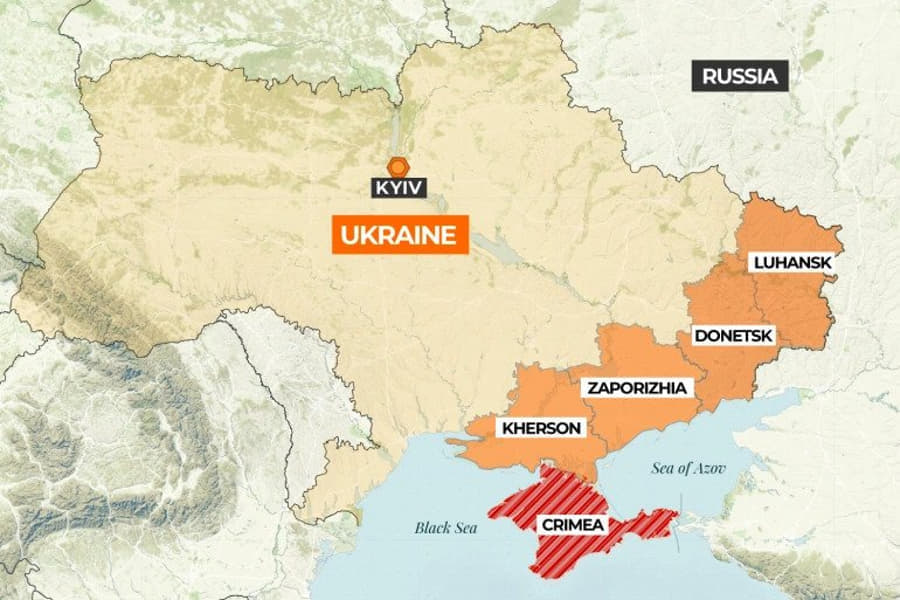
The two remaining issues as described by Zelenskyy are the (1) security guarantees and (2) the territorial issue, Donbas control.
(1) Within the security guarantee proposal there are troubling signs. Zelenskyy describes it as a bilateral agreement between the USA and Ukraine, with similar constructs to the NATO alignment. A non-NATO pact between the U.S. and Ukraine that commits us to his defense if Russia would advance another attack. A 15-year guarantee committed in U.S. law through the U.S. House and Senate. This sounds troubling.
(2) On the territorial issue, regional control of the Donbas, Zelenskyy appears to be willing to cede territory but only under very limited circumstances. Zelenskyy wants a demilitarized zone under the term “a free economic zone” with specific rules.
Zelenskyy admits Ukraine cannot win the conflict against Russia without the United States involvement. Essentially without America, Russia would own the skies and be able to crush the Ukrainian army. WATCH:
Posted originally on CTH on December 29, 2025 | Sundance |
Following a series of FOIA lawsuits, memos from conversations between Russian Federation President Vladimir Putin and former US President George W. Bush have been released online by the National Security Archive. [Original Source Here]
I know it’s Christmas, but bookmark or review as time allows, because the content is very interesting and very important. As early as 2001 and 2008, President Putin clearly told President Bush of his opposition to Ukraine’s accession to NATO, along with other key positions.
Despite what popular media might say, these are NOT full transcripts. Rather, they are memos containing quotes from both leaders as they discuss geopolitical relations between the U.S. and Russia. [SOURCE HERE]
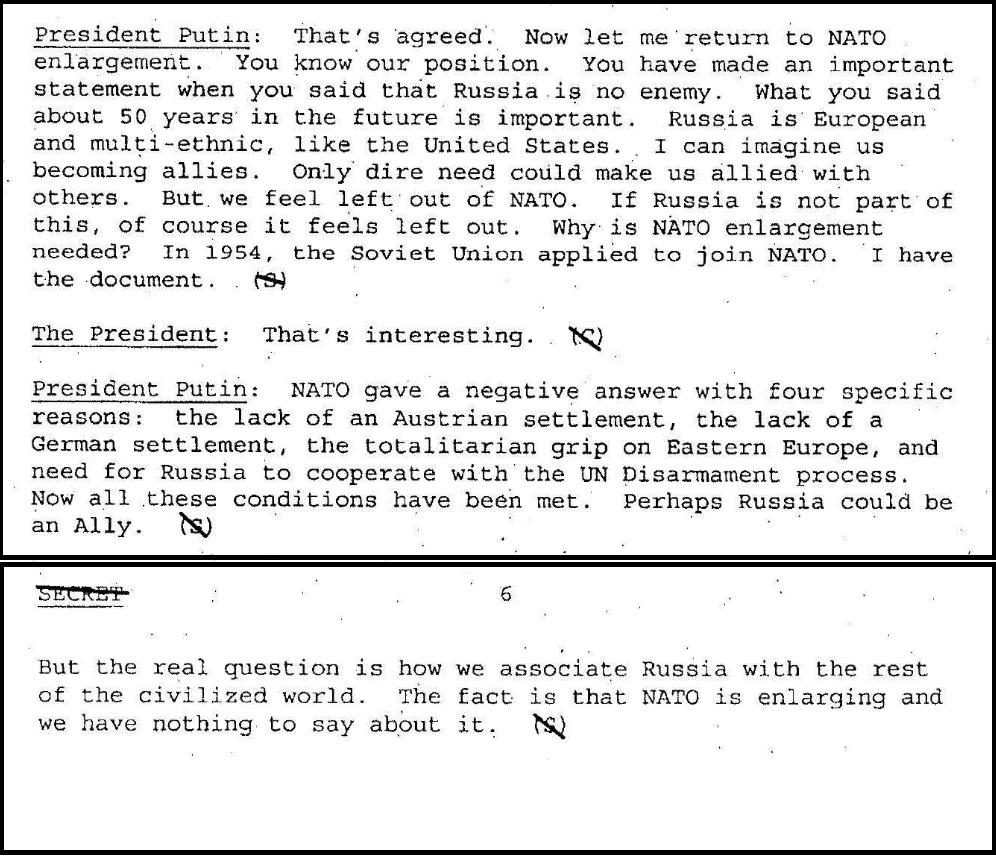
♦ June 16, 2001 – Memorandum of Conversation. Subject: Restricted Meeting with Russian President Vladimir Putin. [LINK HERE] In this first personal meeting at the Brno Castle in Slovenia Vladimir Putin and George W. Bush express respect for each other and desire to establish a close relationship. Putin tells Bush about his religious beliefs and the story of his cross that survived a fire at his dacha. In a short one-on-one meeting they cover all the most important issues of U.S.-Russian relations such as strategic stability, ABM treaty, nonproliferation, Iran, North Korea and NATO expansion. Bush tells his Russian counterpart that he believes Russia is part of the West and not an enemy, but raises a question about Putin’s treatment of a free press and military actions in Chechnya. Putin raises a question of Russian NATO membership and says Russia feels “left out.” [READ MEMO HERE]
♦ September 16, 2005: Document 2 – Memorandum of Conversation. Subject: Vladimir Putin, President of the Russian Federation: [LINK HERE] Putin meets the U.S. President in the Oval Office for a plenary that covers mainly issues of nonproliferation and U.S.-Russian cooperation on Iran and North Korea. The conversation shows impressively close positions on Iran and North Korea, with Putin presenting himself as an eager and supportive partner. Bush tells Putin “we don’t need a lot of religious nuts with nuclear weapons” referring to Iran. Putin said that Ukraine’s accession to NATO would, in the long term, create a field of conflict between Russia and the United States, adding that internal divisions within Ukraine could lead to its fragmentation. [READ MEMO HERE]
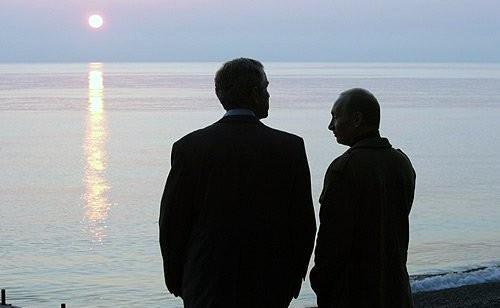
♦ April 6, 2008 – Document 3: Memorandum of Conversation. Subject: Meeting with President of Russia [LINK HERE] This is the last meeting between Putin and Bush, taking place at Putin’s residence in Bocharov Ruchei in Sochi on the Black Sea. The tone is strikingly different from the early conversations, where both presidents pledged cooperation on all issues and expressed commitment to strong personal relationship. This meeting takes place right after the NATO summit in Bucharest where tensions flared about the U.S. campaign for an invitation to Georgia and Ukraine to join NATO. Turning to conversations in Bucharest, Putin states his strong opposition to NATO membership for Ukraine and Georgia and says that Russia would be relying on anti-NATO forces in Ukraine and “creating problems” in Ukraine “all the time,” because it is concerned about “threat of military bases and new military systems being deployed in the proximity of Russia.” Surprisingly, in response, Bush expresses his admiration for the Russian president’s ability to present his case: “One of the things I admire about you is you weren’t afraid to say it to NATO. That’s very admirable. People listened carefully and had no doubt about your position. It was a good performance.” [READ MEMO HERE]
2001 – Putin raises a question of Russian NATO membership and says Russia feels “left out.”
As noted by The Islander (Via Twitter)– “The 2001 Memo That Should Have Ended the Cold War 2.0 and Instead Helped Write the Preface to Ukraine. There are documents that don’t merely record history, they expose it. This is one of them.
June 2001. A “restricted meeting” between President George W. Bush and President Vladimir Putin. Not a podium performance, not a television soundbite, not a speech crafted for domestic applause. A private conversation, the place where empires are supposed to speak plainly, where leaders test ideas that could reroute decades.
And what does the memo show?
Putin raises the idea that Russia could eventually join NATO. He says Russia feels “left out” by NATO enlargement. He points to an older fact most Western publics were never meant to internalize: the Soviet Union applied to join NATO in 1954. He argues the reasons for rejection no longer apply. He suggests, almost clinically, that perhaps Russia could be an ally — “European and multi-ethnic,” comparable in character to the United States.
Read that again slowly.
Because the propaganda version you’ve been fed for years requires amnesia: it requires you to believe Russia woke up one morning and decided to be “a threat,” as if geopolitics is a mood swing and security architecture is irrelevant.
But here is the declassified record: Russia was probing for an exit ramp. A pathway into a shared system. A new security architecture. A post–Cold War settlement that could have turned the 1990s from a hollow victory lap into a durable peace.
And it didn’t happen.
Not because it was impossible. Not because Russia “never wanted it.” Not because “the West tried everything.”
It didn’t happen because NATO, as an institution, does not know how to live without a frontier. It does not know how to justify itself without an adversary. It does not know how to maintain internal cohesion without a map that points east and says: there.
The 1954 Ghost: the offer the West never wanted to remember
The most important part of this memo is not the 2001 line, but the 1954 reference.
Because it collapses the morality play.
If the Soviet Union, a state the West defined as the existential enemy, floated the notion of joining NATO in 1954, that means something profound: the idea of Russia being inside the European security architecture is not a “Putin-era trick.” It is a recurring historical proposal, returning whenever Moscow believes there may be a rational way to avoid permanent confrontation.
And what happened then? It was refused.
Which is exactly the point: NATO was never simply a “defensive alliance.” Even in 1954, It was a structure. A protection racket. A way to organize Europe under an American strategic roof and to keep it there. If Russia enters that roof as an equal, the architecture changes. Budgets decrease, with less money for the MIC. Threat perceptions change. The entire postwar hierarchy changes.
So the West did what empires do when presented with a peace that would reduce their leverage:
It smiled, took notes, and kept moving.
“Join NATO” was never a plea, it was a test.
Some people still misunderstand the early Putin posture. They interpret it as naivete, or worse, submission.
Wrong.
This was not Russia begging to be absorbed. The consistent theme in contemporaneous accounts is conditionality, that Russia could consider joining if treated as an equal partner, but not as a defeated province invited into the emperor’s club after proving it can submit.
That distinction matters.
Because it reveals the real incompatibility: •Russia wanted a security system where it is a partner of European security, not an object to be managed. •The Atlantic system wanted Russia as a managed periphery, permanently “integrating,” permanently reforming, permanently conceding, never truly sovereign in security decisions.
You can’t fuse those visions. One side must yield.
So the Atlantic system chose the only thing it has ever really chosen, expansion.”
A quarter century has passed since that original outreach by Russian Federation President Vladimir Putin in 2001. It was rejected by President George W Bush and all presidents thereafter. In 2025, we are in the phase of consequence.
This public release just happened on December 23, 2025.
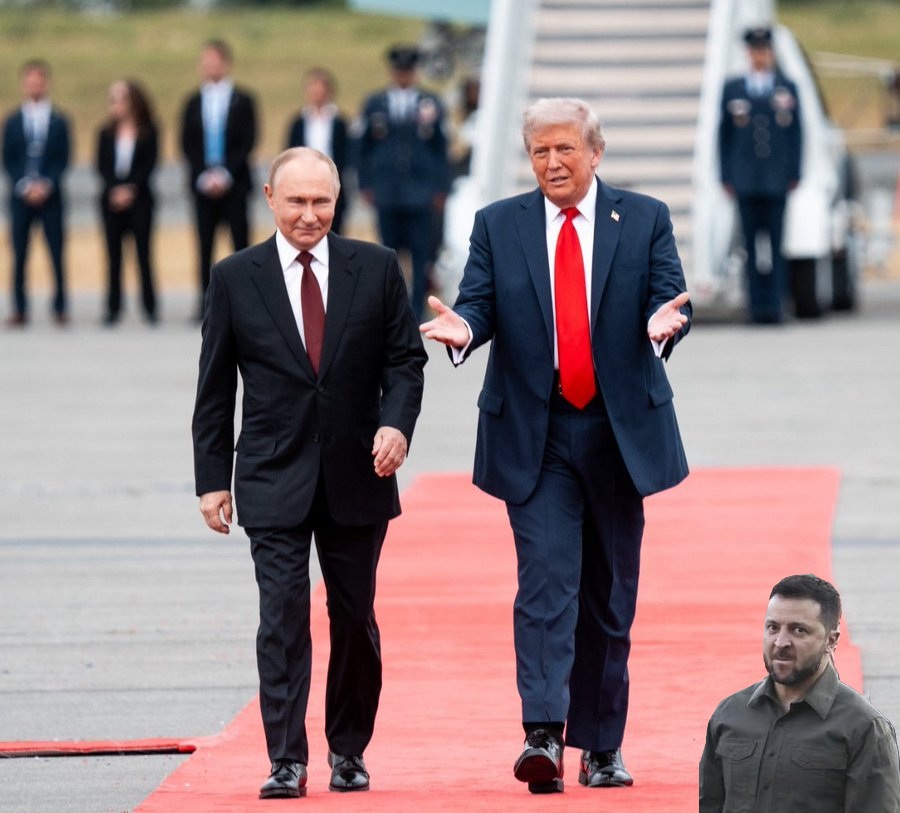
Perhaps, just perhaps, this release can change the conversation in the United States. Perhaps, just perhaps, President Trump, Secretary Rubio and Emissary Witkoff can reverse the course, and change the arc of history toward peace and a strategic alliance.
The timing of the release inspires hope, but the opposition to peace is extreme.
Posted originally on CTH on December 1, 2025 | Sundance
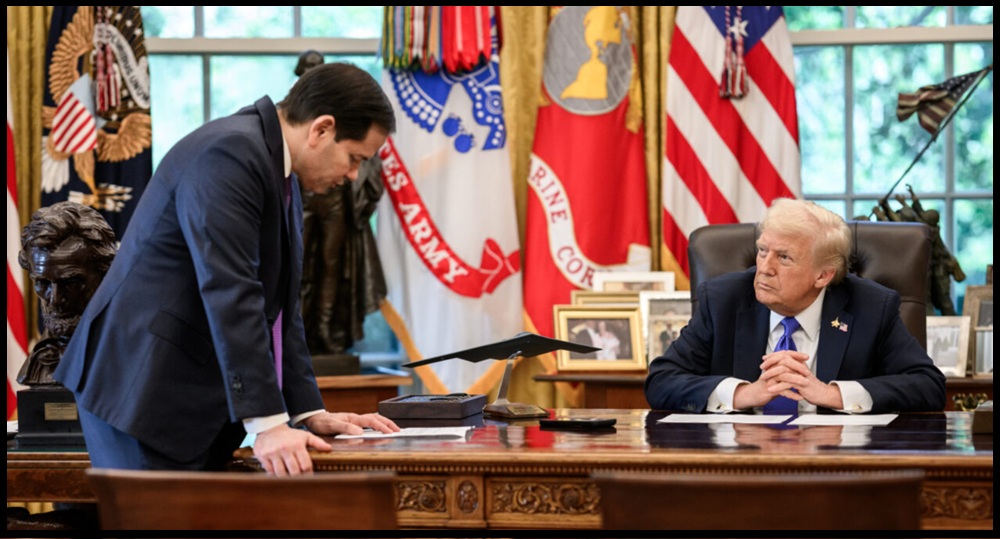
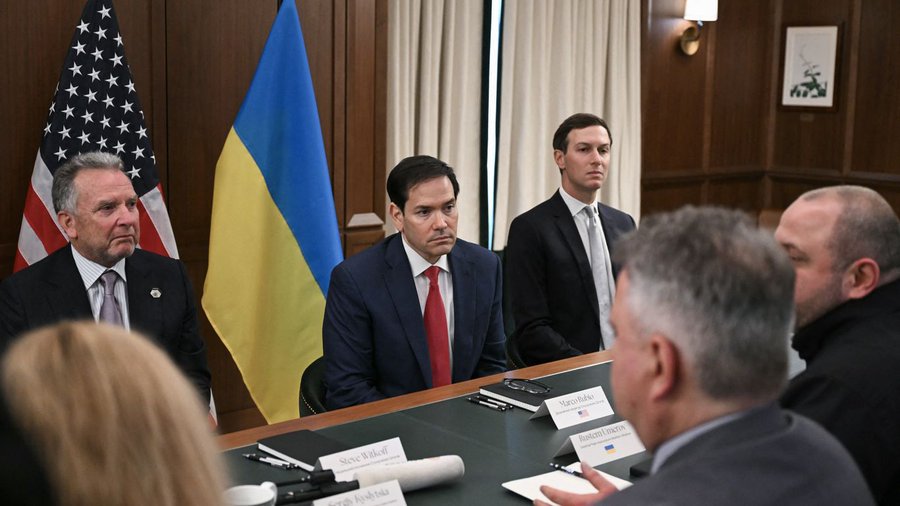
On Sunday, Secretary of State Marco Rubio, Trump emissaries Steve Witkoff and Jared Kushner met with the Ukraine negotiating team in Florida to further discuss acceptable terms for a broader ceasefire and end to the war.
Still trying to recover from corruption charges against his senior presidential team, Volodymyr Zelenskyy was not at the talks. Instead, the Ukraine delegation was led by State Security Council Secretary Rustem Umerov, while Zelenskyy went to Paris for an emotional support session with Emmanuel Macron.
Secretary Rubio and Secretary Umerov spoke before and after their 5-hour negotiation session. Secretary Rubio emphasized the main topic as securing the long-term future of Ukraine both from a security position and from an economic prosperity position.
This state security aspect comes as the Ukraine delegation is facing pressure to accept, they will lose most -if not all- of the Donbas region to Russia. “The end goal is obviously not just the end of the war. Obviously, that’s central and fundamental,” Rubio said. “It’s also about securing an end to the war that leaves Ukraine sovereign and independent and with an opportunity at real prosperity.”
In better-than-expected news, the EU is now saying they will not comply with any removal of sanctions against Russia. If the U.S-Russia and Ukraine work out a negotiated settlement that permits legal or economic relief for Vladimir Putin, the European Union will not agree and will instead make up their own decision on the issues.
Europe is holding this position as a threat, because President Trump is not fully consulting with them on all the granular details. However, this is the type of threat that is exactly beneficial to what appears to be the long-term strategy of Trump.
If Europe refuses to remove sanctions or legal threats against Russia, but the U.S. negotiates the removal of U.S treasury and financial sanctions against Russia, then the Europeans have chosen to stay behind the locked door of economic benefit. More than two-thirds of the world does not participate in the sanctions at all.
If Europe and Canada continue blacklisting Russia, the U.S-Russia energy development program gains exclusive benefits to Trump, Putin and other allies like Mohammed bin Salmon (Saudi Arabia), ASEAN nations and even Japan.
In very practical terms, someone like Viktor Orban (Hungary) would like nothing more than to violate ongoing Brussels sanctions against Russia, and as a consequence create a fracture point for European Union exit.
In practical terms, what would this look like? Well, the entire world would have lower energy prices, lower oil and natural gas prices, and lower gasoline prices by big margins. Meanwhile, Europe would have a massive disparity in their much higher energy costs – likely double the rest of the world. Think about the ramifications. Hungary, Georgia, Montenegro, and Serbia with 50% lower prices on gasoline and electricity than the EU. lolol It would be funny.
Unfortunately, with this in mind I find the EU threats hollow. As soon as the U.S-Russia-Ukraine work out a peace and security agreement, Europe will comply with whatever terms are negotiated for Russia. Failure to do so only isolates the Europeans and will create a problem amid their collective mindsets.
(Via Axios) Negotiations between the U.S. and Ukraine on Sunday focused on where the de facto border with Russia would be drawn under a peace deal, two Ukrainian officials tell Axios. They described the five-hour meeting as “difficult” and “intense,” but productive.
Why it matters: Russian President Vladimir Putin — who’s expected to meet with President Trump’s envoy on Tuesday — insists Russia won’t stop until it controls the entire Donbas region in eastern Ukraine.
After an hour in a wider format, the meeting narrowed to three officials from each side — with the line of territorial control virtually the only issue discussed, according to the two Ukrainian officials.
On the U.S. side were Witkoff, Secretary of State Marco Rubio and Trump’s adviser and son-in-law Jared Kushner. The Ukrainian side was represented by national security adviser Rustem Umerov, military chief of staff Gen. Andrii Hnatov and deputy head of military intelligence Vadym Skibitskyi.
After the talks with their teams ended, Umerov held another one-on-one meeting with Witkoff. Umerov then called Ukrainian President Volodymyr Zelensky to brief him on the talks.
“It was intense but not negative. We really appreciate serious U.S. engagement. Our position is that we have to make everything to help U.S. succeed without losing our country and preventing another aggression from happening,” one of the Ukrainian officials wrote to Axios after the meeting.
Between the lines: Ukrainian President Volodymyr Zelensky had wanted to discuss territory directly with Trump, but Trump said he’d only meet Zelensky or Putin again once a deal is close.
Umerov is expected to meet Zelensky in Paris on Monday and give him a more detailed report about the negotiations, Ukrainian officials say.
Witkoff plans to depart for Moscow on Monday and meet Putin on Tuesday.
“The main question is where the Russians stand and if their intentions are real. Let’s see what Witkoff brings from Moscow,” a Ukrainian official said. (more)
I have created this site to help people have fun in the kitchen. I write about enjoying life both in and out of my kitchen. Life is short! Make the most of it and enjoy!
This is a library of News Events not reported by the Main Stream Media documenting & connecting the dots on How the Obama Marxist Liberal agenda is destroying America


 Centinel2012