Posted originally on CTH on June 15, 2025 | Sundance
SENATOR TOM COTTON (R-Arkansas): Thank you, Margaret.
MARGARET BRENNAN: So, I know you are staying on top of all these events.
When it comes to what President Trump has said publicly, he seems to be indicating not just that the U.S. had nothing to do with the attack on Iran, but he’s saying this is not America’s fight unless Iran hits the U.S.
Should it be such a bright line?
SENATOR TOM COTTON: Well, what the president said in his overnight post was a clear message to the ayatollahs, that, if you hit America in any way, whether our troops or our citizens or our ships, for instance, then you’re going to feel the full force and strength of the U.S. military in a way no one’s ever seen.
That’s a clear deterrent message, setting aside the threat that the nuclear program poses to Israel and to the United States, because, let’s remember, the Iranian regime has been terrorizing Americans. It’s killed thousands of Americans. It’s taken them hostage. It still chants “Death to America.” And it’s building missiles that can strike not just our troops or our friends in the region, but soon enough here in the United States as well.
And that’s why President Trump has been consistent for his 10 years in political life that we cannot allow Iran to have a nuclear weapon. We cannot allow them to have a path to a nuclear weapon with uranium enrichment. That’s the deal that he was trying to negotiate for the last two months.
But, as he said early last week, Iran was simply too stubborn. They weren’t willing to come to the table and negotiate. And I have to disagree with the reporter who said that Israel strikes in Iran ended those negotiations. It was Iran’s – Iran’s stubbornness that ended them.
President Trump was clear about that. And he is still clear that there is time, if they want to come back to negotiate an end to the uranium enrichment program, that he would accept that. But he’s given them chance after chance, as he said.
MARGARET BRENNAN: But, in terms of the line he’s drawing on military force, should the U.S. involvement be purely defensive and deterrent, or should the U.S. be willing to be engaged in these military operations?
SENATOR TOM COTTON: Well, I don’t think he’s drawn that line. He’s been very clear that all options remain on the table to defend our own people, to support Israel…
MARGARET BRENNAN: He hasn’t said that.
SENATOR TOM COTTON: But he – well, he said that for 10 years, and he said it for months leading up to this moment.
He said that Iran can make a deal and live happily without death, or there will be bombing. So, I think he’s appropriately kept all options on the table. He made clear in the early days of this conflict, on Thursday night and Friday morning, that we back Israel to the hilt. There’s almost 700,000 Americans in Israel at any time. So, of course, we’re going to protect Israel, and that we have the best military technology in the world.
And he said that he has proudly provided Israel with those weapons, both in his first term and in this term as well. So, we back Israel to the hilt all the way. But he’s appropriately keeping all options on the table.
MARGARET BRENNAN: But he’s emphasizing again and again, this isn’t us. This isn’t America. This isn’t an American operation.
SENATOR TOM COTTON: So, so far in this operation, we have not been involved in offensive strikes. We’ve been involved in other ways, through our provision of Israel with weapons over the years or our defense of Israel and its citizens and our citizens in Israel.
Now, he has said his objective remains the same, which is Iran’s nuclear disarmament. And he has said that that can happen still through a deal. I don’t think…
MARGARET BRENNAN: He prefers diplomacy.
SENATOR TOM COTTON: And he would like Iran to come back to the table, I think, now that Iran sees that Israel and America mean business…
MARGARET BRENNAN: Yes.
SENATOR TOM COTTON: … and surrender its enrichment capabilities voluntarily. If that doesn’t happen, though, I think these strikes are going to continue.
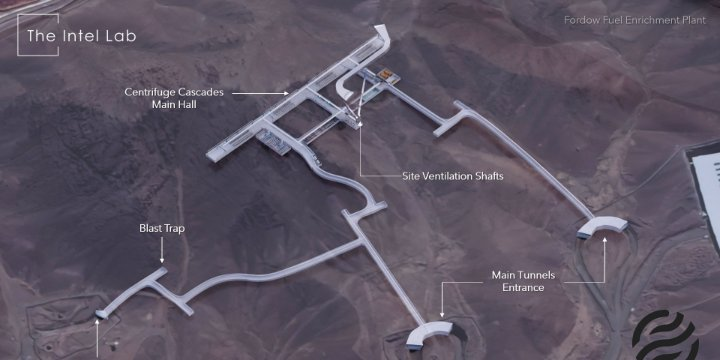
MARGARET BRENNAN: But to the point, if it’s really about destroying the nuclear program that Iran has, you know this very well, that there’s this underground facility at Fordow, very deep, under a mountain.
It’s long been assessed that only the U.S. has the capability with a bunker-buster bomb to take it out. Should the United States offer that kind of massive ordnance penetrator to Israel to finish the job?
SENATOR TOM COTTON: Well, I’m not going to speculate about the methods that the United States or Israel might use…
MARGARET BRENNAN: But should they?
SENATOR TOM COTTON: … to protect our own interests.
I will simply say this. It is, as you say, widely known that Israel does not have heavy bombers. It doesn’t have those 30,000-pound penetrating munitions. But, as we saw with Hezbollah last fall, as we saw in Iran on Thursday night, when the Mossad had infiltrated officers and agents and manufactured drones in Iran, Israel has more than a few tricks up their sleeve.
And I wouldn’t be surprised if Israel has other cards yet to play.
MARGARET BRENNAN: So, when it comes to differences in intelligence assessments, the U.S. intelligence that was made public in March said at the time the U.S. does not assess Iran’s building a nuclear weapon and that the supreme leader has not reauthorized the nuclear weapons program that he suspended back in 2003.
Was there more recent U.S. intel sharing or intel indicating that there was some kind of sprint for a bomb?
SENATOR TOM COTTON: Well…
MARGARET BRENNAN: Because that seems a very different assessment from what Israel’s claiming.
SENATOR TOM COTTON: Well, unfortunately, Iran enriched a lot of the uranium to near weapons-grade over the four years of the Biden administration. And they…
MARGARET BRENNAN: But that’s not weaponization. You know that.
SENATOR TOM COTTON: They are – they are close to having enough pure weapons-grade uranium for several weapons.
Now, that’s not the only step to having a weapon. You also have to have the weapon design. We’ve seen indications that Iran is once again exploring those weapon designs. And then, if you want to use a missile, obviously, you have to marry up the warhead to the missile. But Iran has other delivery methods as well, through terrorist proxies.
So I think that’s one of the reasons why both President Trump and Prime Minister Netanyahu thought we – things that were coming to a head. A second reason is, Iran is rapidly producing ballistic missiles, both medium-range to target Israel and short-range to target our troops, and they add substantially to those stockpiles every single month.
And at a time when Iran is both continuing its work on its nuclear program and trying to rebuild its offensive missile capacity, that the window to actually stop Iran from entering that zone of immunity was rapidly closing.
MARGARET BRENNAN: Right, but why Thursday night?
SENATOR TOM COTTON: Well, as President…
MARGARET BRENNAN: There seems to be a difference in this idea of a sprint.
SENATOR TOM COTTON: Well, as President Trump – well, as President Trump said on Friday morning, that he had given Iran 60 days to make a deal.
That was day 61.
MARGARET BRENNAN: And he scheduled talks on day 63. You know that.
I mean, this was a – this wasn’t really a hard deadline.
SENATOR TOM COTTON: He gave them 60 days. On day 61, the strikes began.
MARGARET BRENNAN: Day 63, Steve Witkoff wanted to meet with them.
But if this was a covert race to weaponize, though, it – it raises questions here, because it appears President Trump’s offer is to negotiate with the existing regime that is in place in Iran.
Do you support a deal with the existing regime in Iran to stay in place? Do you support his push for diplomacy?
SENATOR TOM COTTON: President Trump has always said his goal is to end Iran’s nuclear weapons program…
MARGARET BRENNAN: Right.
SENATOR TOM COTTON: … which means the surrender of its uranium enrichment capability.
MARGARET BRENNAN: But this would be offering them a lifeline, wouldn’t it?
SENATOR TOM COTTON: Well, it would be protecting our interests and securing Israel’s interests as well in Iran not having a nuclear weapon.
We’ve seen what happens when they don’t have nuclear weapons. They’re deliberately targeting civilian areas in Israel. We’ve seen their campaign of terror against Americans over the decades. That’s why we can’t allow them to have a nuclear weapon.
MARGARET BRENNAN: Right.
SENATOR TOM COTTON: And presidents have said – for 20 years, presidents have said that. George Bush said it, didn’t act on it. Barack Obama and Joe Biden, frankly, aided and abetted Iran’s nuclear program. Only Donald Trump has drawn that line and is willing to enforce that line.
MARGARET BRENNAN: But he’s not enforcing that line. It is Israel that’s bombing. As you just said, the United States is not involved in these offensive operations.
SENATOR TOM COTTON: But, in – in Israel, we are helping – we’re help…
MARGARET BRENNAN: Do you – but do you share the president’s assessment that the way to finish this is through negotiating with the existing regime that the Israelis have called for the Iranian people to rise up against?
SENATOR TOM COTTON: I think there’s multiple ways to eliminate Iran’s enrichment capability. They are today what they were Thursday morning, before these strikes started. As the president has said repeatedly, they can make a deal, or there’s going to be bombing.
MARGARET BRENNAN: I want to move to some domestic issues, but, very quickly, I know in the past, you have said that former officials who have a direct threat against them from Iran should continue to receive security. President Trump pulled it.
SENATOR TOM COTTON: I think we should…
MARGARET BRENNAN: Should they get it now?
SENATOR TOM COTTON: We should probably revisit the threat that all persons face – remember, President Trump faced assassination threats from Iran as well – in this moment of tension, to ensure that no one who worked for President Trump in the first term or works for him now could be the target of Iranian agents.
MARGARET BRENNAN: And that security detail was pulled by the president himself.
On immigration, the Trump administration has decided to pull back its policy a little bit. They are pausing raids on farms, hotels and restaurants. Arkansas has a lot of agricultural business in your state. Do you support this decision?
SENATOR TOM COTTON: I think we need to have robust worksite enforcement.
I don’t think ICE is going to show up at one or two restaurants where they have an illegal migrant working. Usually, it’s unscrupulous employers who have large numbers of illegal immigrants working in their worksites. And whatever worksite it is, whatever industry it is, ICE has to be able to go and enforce our immigration laws and remove illegal immigrants.
MARGARET BRENNAN: But the president has pulled back from that. That was the change in policy last week when it came to farms, in particular.
SENATOR TOM COTTON: I don’t – I don’t think we should – I don’t think we should pull back to any – on any kind of enforcement at all.
I think worksite enforcement in all industries needs to be able to move forward. And I think ICE agents on the front lines need the support of political leadership.
MARGARET BRENNAN: You would want more enforcement, including in manufacturing, including in construction, where it could impact the economy?
SENATOR TOM COTTON: We – we – we should – we should not – we should not declare any industry or any worksite that uses large numbers of illegal immigrants off-limits for enforcement of federal law.
MARGARET BRENNAN: I also want to ask you about the enforcement to date.
As you know, there has been outcry. We’ve seen protests across the country because of the enforcement policies. You wrote an op-ed supporting President Trump’s decision to send in federalized National Guard troops and active-duty Marines to California.
You referred to it as “the threat from the radical left, an overwhelming show of force to end the riots,” and talked about communities being terrorized.
Given the amount of tension in the country right now, is that really the language to use?
SENATOR TOM COTTON: Yes, when you see left-wing street militias who are throwing bricks and frozen water bottles at police officers and shooting them with fireworks.
And, unfortunately, you have mayors and governors in some places that won’t allow police to maintain order. The next step is to call in the National Guard. And if the governor won’t call on the National Guard, then the president has to federalize them.
We always hope that the local police are allowed to do their job and have sufficient numbers to do their job to maintain order and protect innocent life and property. But, if they can’t, or they’re not allowed to, the National Guard has to be on scene to restore civil order.
MARGARET BRENNAN: LAPD says they were handling when things turned violent yesterday. They fired rubber bullets, but they said they had it under control.
SENATOR TOM COTTON: The L.A. police chief said last weekend that his forces were overwhelmed, and they couldn’t manage the situation.
MARGARET BRENNAN: Senator Cotton, thank you very much for your time today.
SENATOR TOM COTTON: Thank you.
MARGARET BRENNAN: Face the Nation will be back in a minute, so stay with us.



 Centinel2012