Sunday Talks – U.N. Ambassador Mike Waltz vs Jake Tapper


Posted originally on CTH on March 15, 2026 | Sundance 

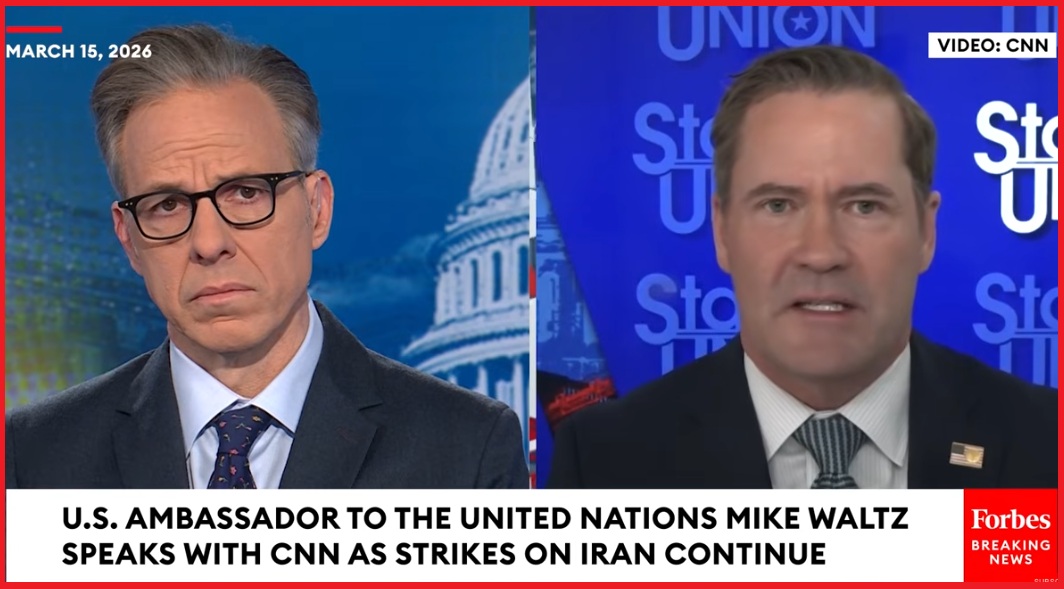
Perhaps the Ellison effect is actualizing inside CNN, but the insufferable furrowed brows of Jake Tapper were unusually non-combative today as he interviewed U.N Ambassador Mike Waltz while discussing Iran. [Video and Transcript Below]

[Transcript] – Joining us now to discuss, the U.S. ambassador to the United Nations, Mike Waltz, a former Green Beret who served in Afghanistan and the Middle East.

Ambassador Waltz, thank you so much for joining us.

The president just said that the U.S. has beaten and completely decimated Iran, both militarily, economically, and in every other way. Help us understand what that means, that Iran has been beaten. Does that mean that U.S. service members will soon be coming home?

MIKE WALTZ, U.S. AMBASSADOR TO THE UNITED NATIONS: Well, Jake, let’s just unpack that for a moment.

Militarily, the U.S. military has decimated Iran’s air force, their air defenses, their missile capability, their missile production capability. This has been a dominant victory, the likes of which we haven’t seen in modern American military history, economically, the maximum pressure campaign that President Trump put in place his first term and reinstituted the second — as the second major item, executive order that he signed this term.

Their currency is tanking. Their foreign reserves are completely depleted. And that’s why you saw the most recent uprising. You saw the uprising based on economic terms. And then, diplomatically, we just saw this week at the U.N. Security Council 135 nations — Jake, it was a U.N. record — 135 nations side with the Gulf Arab countries and condemn the GCC — excuse me — with the Gulf Arab countries, the GCC countries, and condemn Iran for its atrocious attacks on civilian infrastructure, ports, airports, hotels, resorts. And, as I pointed out at the Security Council, I don’t see how the regime argues that those are military targets. They are clearly not, and they are clearly deliberately targeting civilian infrastructure.

And I have got to tell you, this shoot-in-all-directions strategy that Iran has taken on is backfiring. They have never been more diplomatically isolated. Just one more point. Russia and Iran had an opportunity to veto that measure, and they stood back and did not. They abstained.

So, with friends like those, I think Iran is going to stay incredibly isolated.
TAPPER: You said Russia and Iran abstained. I assume you meant Russia and China abstained.

WALTZ: Excuse me, Russia and China. That’s right.

TAPPER: Yes. Yes.

So, is he willing, the president, to accept an end to the war that leaves whatever of the regime is left still in place, the new ayatollah as supreme leader? Because it sounds like — the way you describe it, it sounds like President Trump, with the exception of the stranglehold that the Iranians have of the Strait of Hormuz, it sounds like everything has been achieved pretty much, with the possible exception of a new regime, which was not one of the specific goals.

WALTZ: Well, the president has said he’s not happy with this new nominated Mojtaba Khamenei, who, by many accounts, is an incredibly hardline individual, a hardline cleric.

We will see if he’s actually really in charge. As Secretary Hegseth said, he was wounded during the initial strikes. And it’s unclear that he really has control of the country, if he’s even alive at this point.

So, look, I will leave it to the president where he decides and when he decides and on what terms he decides as commander in chief to end hostilities. But I think the important point here is, the United States has never been in such a position of strength and the Iranian regime has never been in such a position of weakness when it comes to its options.

TAPPER: Despite U.S. strikes on military targets on Iran’s key oil hub of a Kharg Island Friday night, Iran says that oil production on the island is proceeding normally.

If Iran does not reopen the Strait of Hormuz, is President Trump prepared to target those oil facilities, which, as you know, handle 90 percent of Iran’s crude oil exports? And, if so, are you worried that that could risk even more of an escalation when it comes to the Strait of Hormuz? WALTZ: Well, President Trump is not going to take any options off the

table, Jake, and he pointed out in his TRUTH where he announced the military infrastructure strikes on Kharg, which, by the way, they use to project their fast boats, drones and other types of attacks on — into the Gulf, that he deliberately hit the military infrastructure only for now.

And I would certainly think he would maintain that optionality if he wants to take down their energy infrastructure. But we have to take a step back, Jake. I mean, look at what they’re doing to global energy supplies. Look at what they’re trying to do in terms of constraining the world’s economy with drones and boats.

One could only imagine if they had a nuclear arsenal or if they had a nuclear weapon. That’s what many of these Gulf Arab countries have woken up to, that they now realize, and why they have been so supportive and are standing with us as we seek to ensure this regime can never have a nuclear weapon, which President Trump has been consistent about for 10 years.

TAPPER: If not longer.

WALTZ: Yes.

TAPPER: President Trump said that the Navy, the U.S. Navy, is going to begin escorting tankers through the Strait of Hormuz and that will begin very soon. And he said — quote — “Many countries will be sending warships to keep the strait open and safe” — unquote.

The administration has been talking about potential Navy escorts for more than a week now. Shipping executives tell CNN that all their requests for escorts have, as of now, been rebuffed. President Trump said — quote — “Hopefully, China, France, Japan, South Korea, the U.K. and others will send ships to the area” — unquote.

Is he hoping that those countries are going to send ships or have they committed to sending ships? And how soon will those naval escorts be ready?

WALTZ: Well, I will leave those conversations to him. The conversations are ongoing.

I think there’s an important point that’s getting kind of missed in the conversation, that 80 percent of the oil coming out of the Gulf heads to Asia. Only about 7, 8 percent heads to the Western Hemisphere. And thank God for President Trump’s energy dominance agenda, everything from opening up ANWR, new pipeline in Alaska, incentivizing fracking, what we’re going to see come out of Venezuela and Guyana in the coming months and years.

This is why we have to be energy-independent. And I have to just say it’s a little rich coming from the progressive left, who has literally been at war against oil, literally were putting policies in place to drive up the price of oil in order to force Americans to buy E.V.s and go to wind and solar, are now suddenly celebrating it or decrying the lack of it.

Like I said, it’s a little bit rich. We have the energy dominance in place. But, to your point on escorts, look, back, in the ’80s, under the tanker wars then, the last time Iran tried to constrain global energy supplies, you had French, United Kingdom, even Soviet Union forces in there escorting their tankers out that were heading to their markets.

And I think that’s what President Trump is calling upon the world, saying the entire world is affected. Iran can’t hold your economies hostage. And we certainly welcome, encourage, and even demand their participation to help their own economies.

And, meanwhile, the U.S. military will continue to pound the Iranian military, their missile, boat and drone forces to keep the straits open.

TAPPER: Sources tell CNN that Russia has been providing Iran with intelligence to help Iran better target U.S. service members. You said in an interview last week that President Trump will — quote — “deal with it accordingly.”

Here’s what President Trump had to say about this on Friday.

(BEGIN AUDIO CLIP)

BRIAN KILMEADE, FOX NEWS ANCHOR: Do you think Putin is helping them?

TRUMP: I think he might be helping him a little bit, yes, I guess. And he probably thinks we’re helping Ukraine, right? China would say the same thing. You know, it’s like, hey, they do it and we do it, in all fairness. They do it and we do it.

(END AUDIO CLIP)

TAPPER: Do you see an equivalence between the U.S. helping Ukraine defend itself and Russia helping Iran target U.S. service members?

WALTZ: Well, Jake, we have known that Russia and Iran have this symbiotic, have this strategic partnership for some time now.

I will tell you what Russia has lost out of this. They have lost their biggest manufacturer of the Shahed drones. Russia’s been licensing those drones for quite some time and hitting Ukraine with it, all the more reason why we need to defang this regime and all the more reason that they cannot have a nuclear weapon.

And I will just point out too, because a lot of critics out there are making hay of this, it was President Trump that put sanctions on Russia’s largest oil producer, Rosneft. He also put sanctions on Lukoil. The Biden administration did not do that for many years.

They only did a kind of a pinprick action at the very end of the administration. He also took tough action on India. And now he’s put a temporary pause on that in order to calm energy markets. I think these are all pragmatic, commonsense approach — approaches,

while we deal with the Iranian regime.

TAPPER: But, surely, surely Russia helping Iran target our service members is upsetting and distressing, and action needs to be taken.

WALTZ: Well, I’m not going to get into leaked assessments of what intelligence is being provided or not. I just can’t and won’t do that.

But I will tell you, if they are doing it, it certainly hasn’t been affected — or effective, excuse me, because the Iranian air force, air defenses, missile forces, and Navy have been completely decimated.

TAPPER: All right, Ambassador Mike Waltz, thank you so much. Appreciate your time today, sir.

WALTZ: All right, thank you.
President Trump Calls on Oil Dependent Nations to Send Military Ships to Backstop Security in Hormuz


Posted originally on CTH on March 14, 2026 | Sundance 

President Trump’s latest two messages via Truth Social present an interesting geopolitical approach with multiple enmeshed aspects.

First, some background context is needed.  Treasury Secretary Scott Bessent and USTR Jamieson Greer are in Paris to meet with Chinese government officials ahead of a scheduled meeting between Chairman Xi Jinping and President Trump.

The main objective of the pre-summit assembly before President Trump goes to Beijing, is to hammer out the actionable agreement details that can be signed off by Xi and Trump.  Bessent and Greer are looking to put a deal together with their Chinese counterparts so that Trump and Xi can announce mutually beneficial outcomes during their summit.

Second, President Trump has already indicated the March 31/April 1 meeting with Xi will be all business. The traditional pomp and splendor will not be present, and Trump will only be visiting Beijing – no sidelines.

Third, Secretary Rubio will be accompanying Trump on this trip to Beijing, which might seem ordinary were it not for the fact that in 2020 China sanctioned and banned Rubio from entering China for criticizing Xinjiang and Hong Kong.

Fourth, there are rumors that President Trump is going to announce a significant weapons deal with Taiwan at some point immediately following the trip.  If those rumors are true, it would be a top priority for the Chinese advance team in Paris to stop that from happening.

Regardless of what happens in the next few weeks, President Trump will be meeting with Chairman Xi with full Eagle eye confrontation toward the returning dragon stare.  There will be no panda mask on this trip whatsoever; this face to face is an apex predator showdown, while the world watches intently.

Everything President Trump does between now and his arrival in Beijing, should be contemplated through this adversarial position.  With strong moves in Venezuela and Iran President Trump has already pulled Chairman Xi into the jianshu circle, showing the soul of his blade.

Chairman Xi does not have anything resembling a retreat position. He has a highly focused domestic audience, and the eyes from the Great Hall of the People will be watching intensely.

In the next two weeks we will likely see critical probes of both Trump and Xi’s wills surface in ancillary stories connected to each stakeholder, most likely swirling around the Iran conflict. Do not be surprised if we see all of the advanced USA influence purchasing by China now activated with very specific anti-Trump narratives.

That is the context for President Trump to call out many of the oil dependent countries:

TRUTH SOCIAL – “Many Countries, especially those who are affected by Iran’s attempted closure of the Hormuz Strait, will be sending War Ships, in conjunction with the United States of America, to keep the Strait open and safe. We have already destroyed 100% of Iran’s Military capability, but it’s easy for them to send a drone or two, drop a mine, or deliver a close-range missile somewhere along, or in, this Waterway, no matter how badly defeated they are.

Hopefully China, France, Japan, South Korea, the UK, and others, that are affected by this artificial constraint, will send Ships to the area so that the Hormuz Strait will no longer be a threat by a Nation that has been totally decapitated. In the meantime, the United States will be bombing the hell out of the shoreline, and continually shooting Iranian Boats and Ships out of the water. One way or the other, we will soon get the Hormuz Strait OPEN, SAFE, and FREE! President DONALD J. TRUMP

There is a significant overlay here.

First, any nation that sends supportive military ships into the Strait of Hormuz is openly taking a position against the Iranian regime.  China cannot take that position, and President Trump knows it – so he’s calling out the dragon’s alignment for the world to see.

…. If you get oil from the region, come protect your ships while I kill the bad guys…

Remember, Japan has a very limited military, and their post-World War II constitution was blocking them from building one.  Changing that position was the goal of Japanese Prime Minister Shinzo Abe, a friend of Trump, and he was traveling throughout Japan with that message when he was assassinated.  That objective now falls to the protege’ of Abe, Prime Minister Sanae Takaichi.

Japan is included on that list of countries specifically to antagonize the dragon, with President Trump saying I have a strong industrial friend in your back yard.

For the rest, notice the countries Trump did not name: India, Thailand, Vietnam, Philippines or any of the Asian countries that are dependent on oil from the middle east.   Trump is not asking the dependency allies of the United States to participate. Instead, President Trump is calling upon the fake-ally countries that oppose the United States but hide behind a friendly smiling mask.

This is a bold underline for President Trump’s former statement where he publicly doubted the NATO allies would ever come to assist the USA (ie. Greenland), even though they are dependent on the security the USA provides.

In this Iranian conflict, the Europeans are dependent on oil from the middle east, but they will not put their military into the fight even if it secures their own economic future.  Opening the Strait of Hormuz benefits the Europeans, but they only want to pontificate grand prose about it; similar to how they pontificated about the threat Iran presented, then lost their supportive tongue when Trump finally did something about it.

A few hours later, President Trump drives home the point:

TRUTH SOCIAL – “The United States of America has beaten and completely decimated Iran, both Militarily, Economically, and in every other way, but the Countries of the World that receive Oil through the Hormuz Strait must take care of that passage, and we will help — A LOT! The U.S. will also coordinate with those Countries so that everything goes quickly, smoothly, and well. This should have always been a team effort, and now it will be — It will bring the World together toward Harmony, Security, and Everlasting Peace!” President DONALD J. TRUMP

Now we wait to see who steps up.

Spoiler Alert – ¹No one will!

¹And that’s the point Trump is making.

I also concur with this point:

Shanaka Anslem Perera“The coalition call is not about Iran. Iran’s military is destroyed. The coalition call is about the world that emerges after Iran. If America escorts the tankers alone, the Strait reopens under American control and dollar pricing survives. If a coalition escorts them, the Strait reopens under international consensus and the yuan-for-Hormuz proposal dies. If nobody escorts them, the Strait stays closed and China’s shadow fleet is the only commerce moving through it.”

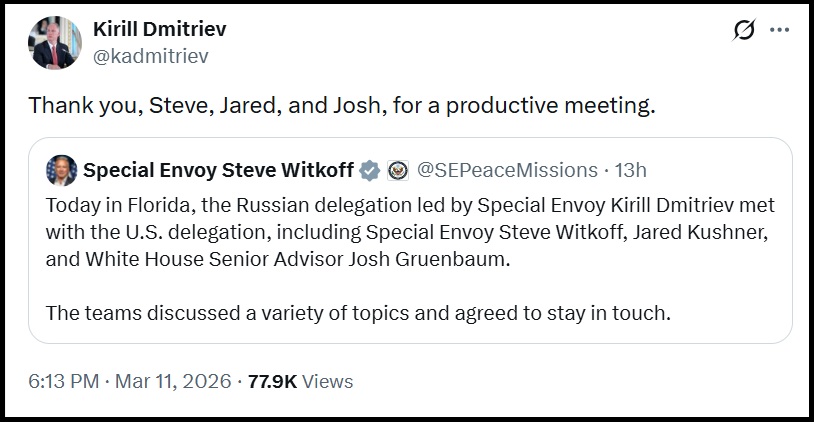
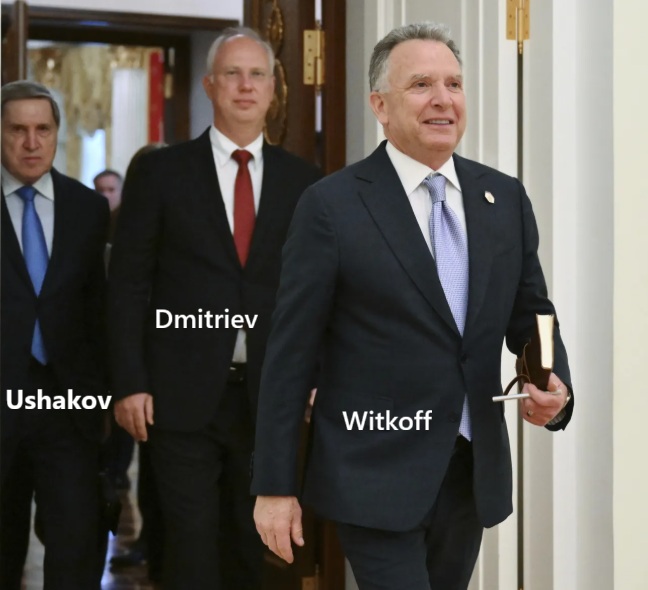
Witkoff and Kushner Meet Russian Delegation in Florida – Reports Indicate Discussions of Strategic Economic Cooperation on Oil


Posted originally on CTH on March 12, 2026 | Sundance 

The fact that Team Russia and Team USA would be discussing a strategic economic alliance on the issue of energy is not a surprise to those who watched both President Putin and President Trump outline that same content discussion in Alaska last August.  However, given the current conflict with Iran and the escalating oil price issue, Russia and the USA discussing Russian oil capacity and U.S. sanctions therein takes on a new angle.

It has been obvious that domestic U.S. politics, in combination with the Russia-Ukraine war, has impeded President Trump from organizing a strategic reset with Russia pulling away from historic conflicts.  However, CTH is also clear-eyed on the longer-term ramifications for Eastern Europe when contrast with Putin’s ambitions to fix what he perceives as prior Russian Federation mistakes regarding the West (more on that at the end).

As noted in social media exchanges from Witkoff and Dmitriev, the discussion was productive.

[SOURCE]

All indications of this meeting give the appearance of less focus on progress in the Ukraine-Russia conflict, and a higher focus on current economic conditions -created by the Iran conflict- that could be enhanced with cooperation between the U.S. and Russia. {GO DEEP BACKGROUND}

According to Kirill Dmitriev, Russian special presidential envoy for investment and economic cooperation with foreign countries and director general of the Russian Direct Investment Fund (RDIF), relayed through the Russian News Agency (TASS), “he visited the US upon orders from Russian President Vladimir Putin, taking part in a meeting of the heads of a working group on economic cooperation between the two countries.”

According to the envoy, the meeting addressed both promising projects that can help restore Russia-US relations and the current crisis on global energy markets.

The US is becoming increasingly aware of the role of Russian oil and gas in ensuing the stability of the world economy, as well as of the [in]effectiveness of sanctions against Russia, Dmitriev said after the meeting. (source)

“We discussed promising projects that could contribute to the restoration of Russian-American relations and the current crisis on global energy markets,” Dmitriev also wrote in a Telegram post.

“Today, many countries, primarily the United States, are beginning to better understand the key, systemic role of Russian oil and gas in ensuring the stability of the global economy, as well as the ineffectiveness and destructive nature of sanctions against Russia.”

With the strong likelihood that Russia’s restart of their flagship LNG terminal Arctic-2 was directly related to the August summit in Alaska {SEE HERE}, there is already a baseline established for strategic cooperation.

President Trump would have no problem with Russia introducing millions of barrels of oil into the global market given the issues created by conflict in/around the Strait of Hormuz.  However, obviously the issues for streamlined Russia oil exports surround (1) preexisting sanctions, (2) domestic U.S. anti-Russia politics and (3) the political and economic position of the anti-Russia European Commission leadership.

As we previously outlined with the Liquified Natural Gas (LNG) benefit, Russia previously extracted, liquified and pumped massive amounts of LNG into floating storage platforms from Arctic-2.  Those LNG supplies doubled and tripled in value in a few days once Qatar shut down their production facilities and are now being sold to various Asian countries.

Europe has a massive energy problem with severely low LNG storage rates and now a shortage of oil, with EU gasoline prices rising much higher & faster than the rest of the world.  Europe is facing a severe energy crisis overall and now their preexisting economic troubles are being amplified.

More than ever Europe needs the Russian oil/gas, but ridged ideologues will never compromise on their anti-Russia position.  They have even steeper sanctions against Russian oil/gas scheduled to trigger at the end of this month.

It will be interesting to see how President Trump navigates the potential benefit from Russian energy products into the global market against the backdrop of all the geopolitical angst and political opposition against Russia.

…. AND that brings me to a point of discussion that I’ve had with a few dialed-in people.

When you look at the long term, and when you overlay the mindset of Russian President Vladimir Putin, almost everyone in Russia/Eastern Europe who evaluates the future can see the potential for Putin to exploit the EU’s self-created economic vulnerabilities for his own expansionist objectives.

Yes, some elements of the U.S. banter about further Russian expansion are not propaganda.  Most of it is, but there is an element to the future forecast -beyond the Ukraine conflict- that could see Russia in a much stronger position, and the EU in a position of significant weakness.

The MAGA-minded European and Russian people, the ones who have strong wisdom on the issues, can all see a specific set of dominos falling that could place Putin in a position to recapture the remaining pro-Russian geographies in Europe back into an expanded Russian Federation.

Given the highly unstable mindset and friction points within European leadership, that would be a very bad combination to contemplate.

A strategic USA reset with the Russian Federation is a reasonable and pragmatic goal.  There is no reason for America and Russia to be in conflict or opposition and pulling Russia away from a relationship with China has massive benefits for both countries.

The Russian people are not affectionate toward China at all, not even a little bit.  In reality, China is a necessary ally for Russia but not a choice they would select if other options were available and variables were changed.  The Russian people are exceptionally independent, incredibly strong and brutally proud; however, they are also more Western-minded (European, without self-flagellation) than Eastern-minded (Asian).

Here’s where/why Trump is being careful and pragmatic.  President Trump doesn’t want to see an outcome where Russia is eventually stronger than Europe.  There’s not enough frictionless history between the USA and Russia to trust Putin when he says the Federation has no plan to expand into Europe.

The USA can/should be strategic allies with Russia. However, it would be much better if a strong Europe existed at the same time.  Hence, Vice President Vance and Secretary of State Rubio continuing to emphasize that Europe needs to stop cowering in politically correct wokeness.  The EU is destroying itself at the same time Russia is getting stronger.

.

Last point, the Lyndon LaRouche team, Promethean Action PAC, are very happy with the ongoing fracture of the USA away from the UK/EU group.  However, be cautious around Political Action Committees who say, “President Trump needs people to understand what he is doing” and we are here as his official policy interpreters.

Remember, President Trump doesn’t need policy interpreters.

President Trump Impromptu Presser on Iran and SAVE America Act Departing the White House


Posted originally on CTH on March 11, 2026 | Sundance

President Trump answers questions from the media as he departs the White House for Ohio and Kentucky.  The majority of the questions surrounded Iran and the SAVE America Act.  WATCH:

.

Special Envoy Steve Witkoff Gives Background Information on Breakdown of U.S-Iran Diplomatic Discussions


Posted originally on CTH on March 11, 2026 | Sundance

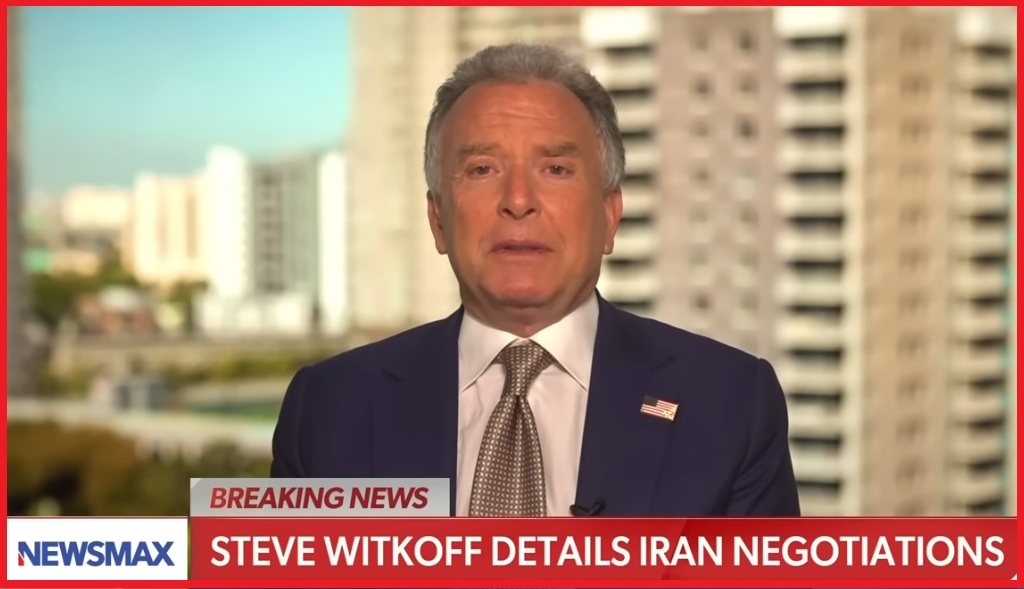
President Trump’s U.S. Special Envoy, Steve Witkoff, recently sat down with Greta Van Susteren to outline the point of diplomatic discussions with Iran’s Foreign Minister Abbas Araghchi when things broke down.

The Witkoff explanation is interesting as he outlines Iran’s unwillingness to even consider a cease to their ballistic missile program as part of the expanded security talks.  According to Envoy Witkoff, Foreign Minister Araghchi was intransigent on several key points of concern; even becoming loud and aggressive as he was pushed to explain why seeking ballistic missiles would be needed.

It’s an interesting background perspective that gives context to the decision that President Trump ultimately reached.  WATCH: 

.

Secretary Pete Hegseth and Joint Chiefs Chair Dan Caine Hold a Press Conference – The First Ten Days


Posted originally on CTH on March 10, 2026 | Sundance

Secretary of War Pete Hegseth and Chairman of the Joint Chiefs Dan Caine hold a press briefing from the Pentagon with updates on Operation Epic Fury.  “The First Ten Days” recapped.

General Dan Caine noted CENTCOM Commander Brad Cooper will continue delivering intermediate updates.  Caine also outlined how targeting of the Iranian missile systems continues as a priority along with the systematic destruction of the Iranian navy assets.  Both aspects of the operation continue having maximum success and impact.

General Caine also noted how the third objective of dismantling Iran’s infrastructure systems to mechanize war are intensifying.  “We are moving deeper into Iran’s industrial base,” General Caine noted.   Missile attack launches from inside Iran have dropped 90%, and one-way drone launches have dropped more than 80%.  50 Iranian vessels have been destroyed by U.S. targeting.

As Iran’s treat capacity to target vessels continues to be degraded, the Strait of Hormuz begins to open.

US West Texas Intermediate Crude Oil Futures with April 2026 Expiry, traded at $89.89 per barrel, down by 5.2%. This oil benchmark touched an intraday low of 84.45 and recorded an overall decline of 29.3% from $119.43 per barrel level that was touched on March 9th. Yesterday, US WTI plunged nearly 18%.

Brent Crude Oil Price: Brent crude has nosedived by nearly 26.2% and touched an intraday low of $88.10 per barrel. This is compared to $119.50 per barrel mark it hit on March 9. Yesterday, the price dropped nearly 9%. {SOURCE}

President Trump Gives Update Presser Aboard Airforce One – Video


Posted originally on CTH on March 8, 2026 | Sundance | 

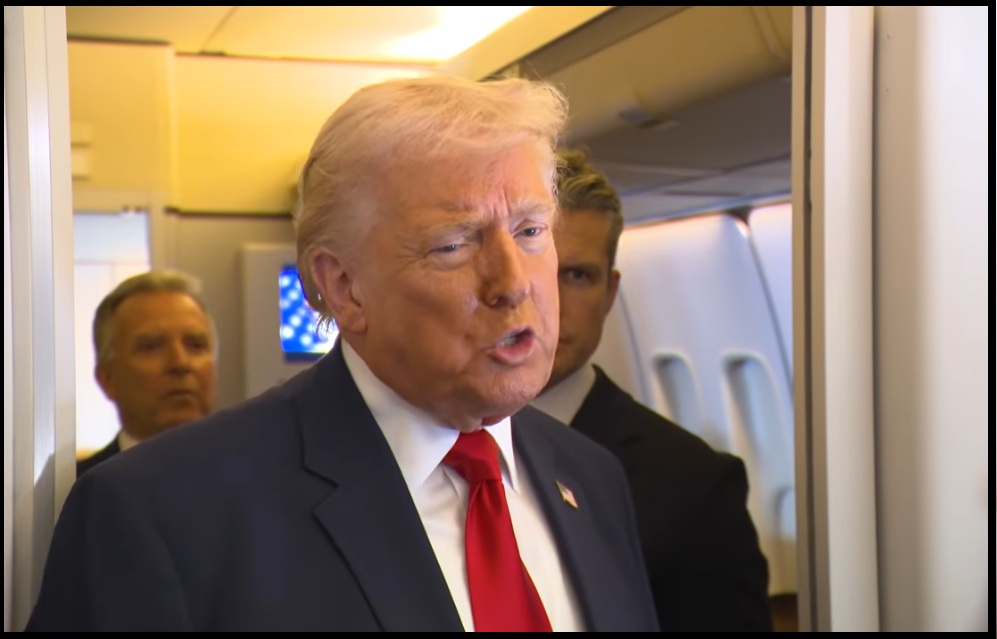
President Trump gives an impromptu press conference aboard Airforce One returning to Florida following the solemn ceremony at Dover Airforce Base. Emissary Steve Witkoff and Defense Secretary Pete Hegseth also delivered some comments on questions from the media.

President Trump answered questions about rising U.S. gas prices saying, this is a confrontation that should have taken place before. For 47 years various presidents have navigated the risk and threats presented by Iran, but President Trump is choosing to end the threat once and for all.

Keeping security issues close to the chest, President Trump refused to directly answer any questions about ongoing operations, targeting or matters of military strategy.  At 7:45 of the video Steve Witkoff and Pete Hegseth also answered questions.  WATCH:

At 10:35 President Trump was asked his opinion on what Russia would say if confronted about support for Iran, and President Trump showcased how well he knows the Russian approach by saying if we confronted them, Russia would just say the U.S. supports Ukraine against Russia, right?   President Trump is correct; Russian President Putin is the master at pointing out hypocrisy in foreign intervention.

At 13:15 President Trump is asked about Kurdish support, and Trump notes the U.S. appreciates the offer but does not want the Kurdish forces to get involved because it only complicates the issues.  The Kurds are our allies, and President Trump has had conversations with Kurdish leadership; however, within that friendship Trump notes it would be dangerous for the Kurds to get involved.

President Trump Expands Iranian Target List


Posted originally on CTH on March 7, 2026 | Sundance 

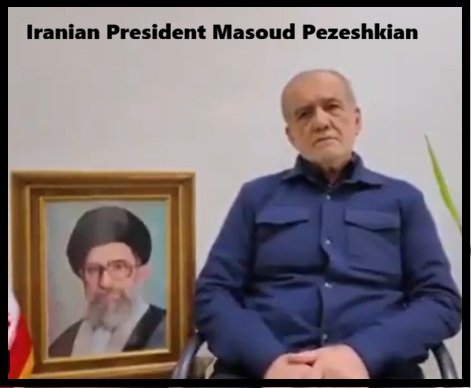
Overnight last night, Iranian President Masoud Pezeshkian issued a statement apologizing for attacks against neighboring countries and claiming that some attacks were carried out independently by regional commanders without directive due to loss of communication.

President Pezeshkian further stating the Temporary Leadership Council in Iran had ordered a halt to attacks on other countries unless their territory is used to attack Iran.

Within hours the remaining elements of the Islamic Revolutionary Guard Corps (IRGC) rebuked the statement by President Pezeshkian saying the IRGC would continue attacking any/all gulf states as needed.  This was followed by the Iranian clergy saying their president was “weak, unprofessional and totally unacceptable.”

Obviously the political, military and religious elements within Iran are not on the same page.  However, at around 6:00am this morning, President Trump reacted to the original statement by Iran President Masoud Pezeshkian:

PRESIDENT TRUMP – “Iran, which is being beat to HELL, has apologized and surrendered to its Middle East neighbors, and promised that it will not shoot at them anymore. This promise was only made because of the relentless U.S. and Israeli attack. They were looking to take over and rule the Middle East. It is the first time that Iran has ever lost, in thousands of years, to surrounding Middle Eastern Countries. They have said, “Thank you President Trump.” I have said, “You’re welcome!”

Iran is no longer the “Bully of the Middle East,” they are, instead, “THE LOSER OF THE MIDDLE EAST,” and will be for many decades until they surrender or, more likely, completely collapse! Today Iran will be hit very hard!

Under serious consideration for complete destruction and certain death, because of Iran’s bad behavior, are areas and groups of people that were not considered for targeting up until this moment in time. Thank you for your attention to this matter! ” ~ President DONALD J. TRUMP

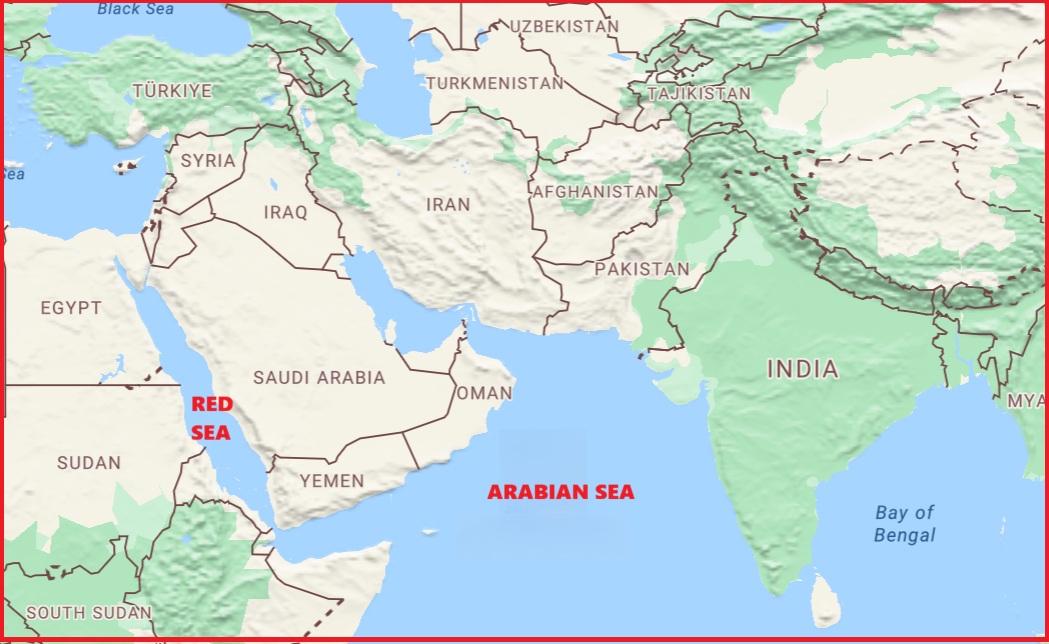
Two carrier strike groups are currently on station in the region as the ongoing conflict with Iran continues. The USS Ford (CVN-78) just passed through the Suez Canal and has assumed position in the Red Sea.  The USS Abraham Lincoln (CVN-72) is operating in the Arabian Sea, according to the latest USNI News Fleet and Marine Tracker.

The USS Ford departing their position in defense of Israel, would seem to indicate the threat analysis has been greatly diminished.  Moving the Ford group and the Abraham Lincoln group into proximity seems to indicate they are positioning to support the maritime transit and guardian program through the straits of Oman.

These maritime moves are taking place as the U.S. and Israel shift their attack profiles toward new Iranian targets.

President Trump Announces U.S. Insurance Underwriting for “All Maritime Trade Flowing Through the Gulf” Along with U.S. Military Escorts


Posted originally on CTH on March 3, 2026 | Sundance

♦ First blow, the Trump tariffs hit Beijing hardest. ♦ Second blow, the Beijing tentacle on the Panama Canal is severed.  ♦ Third blow, global tariff threats changed the risk dynamic for southeast Asia countries who acted as transnational shippers for China. ♦ Fourth blow, cheap sanctioned oil from Venezuela was cut-off. ♦ Now, the fifth blow; cheap, sanctioned Iranian oil is disrupted.

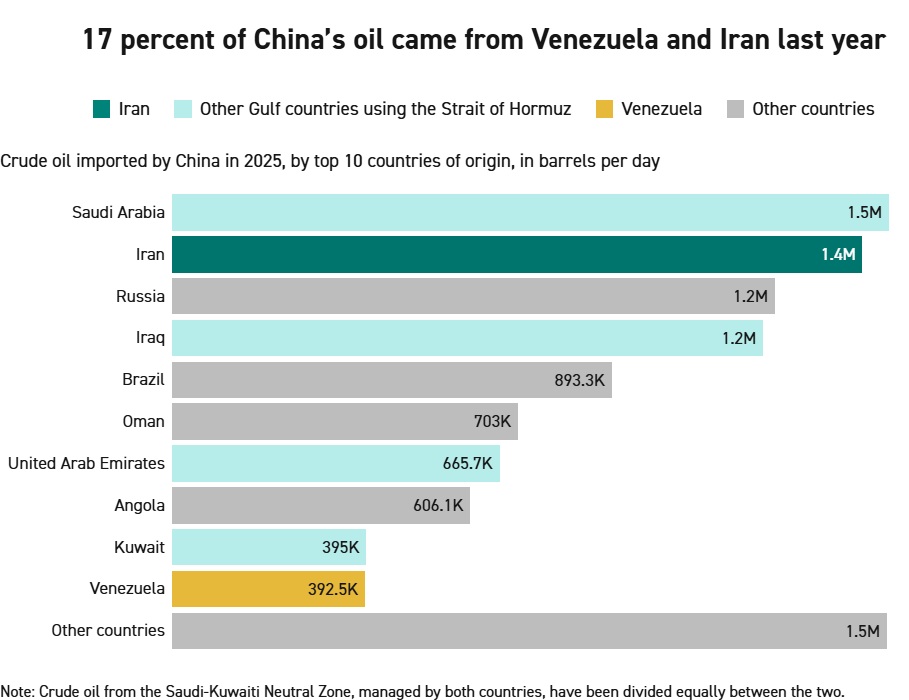
As noted by Politico: Following USA military strikes, “ships have begun to avoid the Strait of Hormuz off the coast of Iran — a critical shipping lane for Gulf nations to export oil to Asia. China in 2025 received about half of its imported oil from the six Gulf countries that rely on the strait. Other large crude oil producers in the region — including Saudi Arabia, Iraq and the United Arab Emirates — transport almost all their crude exports through the geographic bottleneck.

[SOURCE]

It’s not just a factor of oil flow, but also the price that China will ultimately end up having to pay.  Beijing was buying oil from Venezuela, Iran and Russia at steep discounts because their purchases were skirting western sanctions.

With Iranian oil production now no longer a market option, China will seek to replace their needs with more Russian alternative. However, that diversion means the oil India was purchasing from Russia will come at a higher price, and the refined final product that was exported by India will arrive to the European Union carrying an additional cost.

Simultaneously, Vladimir Putin was asked about Russia’s lack of military support to Iran in response to the U.S. military action, to wit the Russian president noted the technical terms of their joint military agreements did not include Russia’s immediate involvement.  In shorthand, Russia is busy and is not getting involved.

Russia was/is partially dependent on receiving military supplies from Iran in exchange for oil transfers.  The military component is reported to include drones from Iran for use in the Ukraine conflict.  Now that exchange profile is shuttered.

Taking Iran’s malign influence off the geopolitical chessboard is beginning to surface in major challenges to the BRICS assembly (Brazil, Russia, India, China, South Africa).  Russia, China and India are impacted directly.

The BRICS nations were skirting western oil sanctions by trading the commodity outside the petrodollar structure.  However, President Trump now controls the flow of oil from Venezuela, and his administration controls the currency in which it is sold.

With Iranian oil removed from the non-petro supply chain, the only remaining non-petro oil producer is Russia – who is simultaneously hit with a loss in military hardware support.  China may end up as a larger oil customer to Russia, but at what price and in what payment structure.

With global oil supplies in a state of flux, and with the USA in control of the oil flow from Venezuela, North America is certainly in the best position for minimal energy disruption.

Asia is heavily dependent on oil flows through the Strait of Hormuz, and the majority of Europe has already shut themselves off from Russian oil production, putting themselves in a position of dependency to the global markets.  The short-term ramifications of this oil disruption hit China, Southeast Asia, Japan and Europe particularly hard.

“OPEC+ countries affirmed on Sunday that they would boost oil production starting in April by 206,000 barrels daily — a modest increase intended to dampen the war’s effect on prices down the road. The majority of the increase would come from Saudi Arabia and Russia.” {SOURCE}

All of a sudden, this happens: Zelenskyy not to be trusted?

“Ukraine is under pressure to let the EU inspect a damaged pipeline carrying Russian oil to Hungary and Slovakia, as the two pro-Kremlin countries accuse Kyiv of overstating the impact of an attack by Moscow — despite what Ukrainian officials say is evidence of extensive destruction,” the report said.

According to five diplomats and EU officials who spoke to the FT, even pro‑Ukrainian governments within the European Union and the European Commission have also asked Ukraine to permit a delegation to inspect the pipeline. Two sources told the newspaper that European Commission President Ursula von der Leyen requested access for EU experts during her visit to Kyiv on Feb. 24, the fourth anniversary of Russia’s full-scale invasion. The request, according to the sources, was refused.

As tensions escalated, the EU’s ambassador to Ukraine, Katarina Mathernova, reportedly asked through the presidential office for permission to inspect the damaged pipeline herself or to allow visits by other EU diplomats. Those requests were denied for security reasons, the sources said.” (link)

T

Iran Conflict – Oil Disruption Hits Key BRICS Members Hard


Posted originally on CTH on March 3, 2026 | Sundance

Consider the severe economic body blows to China in the past 14 months.

♦ First blow, the Trump tariffs hit Beijing hardest. ♦ Second blow, the Beijing tentacle on the Panama Canal is severed.  ♦ Third blow, global tariff threats changed the risk dynamic for southeast Asia countries who acted as transnational shippers for China. ♦ Fourth blow, cheap sanctioned oil from Venezuela was cut-off. ♦ Now, the fifth blow; cheap, sanctioned Iranian oil is disrupted.

As noted by Politico: Following USA military strikes, “ships have begun to avoid the Strait of Hormuz off the coast of Iran — a critical shipping lane for Gulf nations to export oil to Asia. China in 2025 received about half of its imported oil from the six Gulf countries that rely on the strait. Other large crude oil producers in the region — including Saudi Arabia, Iraq and the United Arab Emirates — transport almost all their crude exports through the geographic bottleneck.

[SOURCE]

It’s not just a factor of oil flow, but also the price that China will ultimately end up having to pay.  Beijing was buying oil from Venezuela, Iran and Russia at steep discounts because their purchases were skirting western sanctions.

With Iranian oil production now no longer a market option, China will seek to replace their needs with more Russian alternative. However, that diversion means the oil India was purchasing from Russia will come at a higher price, and the refined final product that was exported by India will arrive to the European Union carrying an additional cost.

Simultaneously, Vladimir Putin was asked about Russia’s lack of military support to Iran in response to the U.S. military action, to wit the Russian president noted the technical terms of their joint military agreements did not include Russia’s immediate involvement.  In shorthand, Russia is busy and is not getting involved.

Russia was/is partially dependent on receiving military supplies from Iran in exchange for oil transfers.  The military component is reported to include drones from Iran for use in the Ukraine conflict.  Now that exchange profile is shuttered.

Taking Iran’s malign influence off the geopolitical chessboard is beginning to surface in major challenges to the BRICS assembly (Brazil, Russia, India, China, South Africa).  Russia, China and India are impacted directly.

The BRICS nations were skirting western oil sanctions by trading the commodity outside the petrodollar structure.  However, President Trump now controls the flow of oil from Venezuela, and his administration controls the currency in which it is sold.

With Iranian oil removed from the non-petro supply chain, the only remaining non-petro oil producer is Russia – who is simultaneously hit with a loss in military hardware support.  China may end up as a larger oil customer to Russia, but at what price and in what payment structure.

With global oil supplies in a state of flux, and with the USA in control of the oil flow from Venezuela, North America is certainly in the best position for minimal energy disruption.

Asia is heavily dependent on oil flows through the Strait of Hormuz, and the majority of Europe has already shut themselves off from Russian oil production, putting themselves in a position of dependency to the global markets.  The short-term ramifications of this oil disruption hit China, Southeast Asia, Japan and Europe particularly hard.

“OPEC+ countries affirmed on Sunday that they would boost oil production starting in April by 206,000 barrels daily — a modest increase intended to dampen the war’s effect on prices down the road. The majority of the increase would come from Saudi Arabia and Russia.” {SOURCE}

All of a sudden, this happens: Zelenskyy not to be trusted?

“Ukraine is under pressure to let the EU inspect a damaged pipeline carrying Russian oil to Hungary and Slovakia, as the two pro-Kremlin countries accuse Kyiv of overstating the impact of an attack by Moscow — despite what Ukrainian officials say is evidence of extensive destruction,” the report said.

According to five diplomats and EU officials who spoke to the FT, even pro‑Ukrainian governments within the European Union and the European Commission have also asked Ukraine to permit a delegation to inspect the pipeline. Two sources told the newspaper that European Commission President Ursula von der Leyen requested access for EU experts during her visit to Kyiv on Feb. 24, the fourth anniversary of Russia’s full-scale invasion. The request, according to the sources, was refused.

As tensions escalated, the EU’s ambassador to Ukraine, Katarina Mathernova, reportedly asked through the presidential office for permission to inspect the damaged pipeline herself or to allow visits by other EU diplomats. Those requests were denied for security reasons, the sources said.” (link)