Since the Passover of the Jews was near, Jesus went up to Jerusalem. He found in the temple area those who sold oxen, sheep, and doves, as well as the money changers seated there. He made a whip out of cords and drove them all out of the temple area, with the sheep and oxen, and spilled the coins of the money changers and overturned their tables, and to those who sold doves he said, “Take these out of here, and stop making my Father’s house a marketplace.” His disciples recalled the words of Scripture, Zeal for your house will consume me. At this the Jews answered and said to him, “What sign can you show us for doing this?” Jesus answered and said to them, “Destroy this temple and in three days I will raise it up.” The Jews said, “This temple has been under construction for forty-six years, and you will raise it up in three days?” But he was speaking about the temple of his body. Therefore, when he was raised from the dead, his disciples remembered that he had said this, and they came to believe the Scripture and the word Jesus had spoken.
While he was in Jerusalem for the feast of Passover, many began to believe in his name when they saw the signs he was doing. But Jesus would not trust himself to them because he knew them all, and did not need anyone to testify about human nature. He himself understood it well.
Even now, says the LORD, return to me with your whole heart, with fasting, and weeping, and mourning; Rend your hearts, not your garments, and return to the LORD, your God. For gracious and merciful is he, slow to anger, rich in kindness, and relenting in punishment. Perhaps he will again relent and leave behind him a blessing, Offerings and libations for the LORD, your God.
Blow the trumpet in Zion! proclaim a fast, call an assembly; Gather the people, notify the congregation; Assemble the elders, gather the children and the infants at the breast; Let the bridegroom quit his room and the bride her chamber. Between the porch and the altar let the priests, the ministers of the LORD, weep, And say, “Spare, O LORD, your people, and make not your heritage a reproach, with the nations ruling over them! Why should they say among the peoples, ‘Where is their God?’”
Then the LORD was stirred to concern for his land and took pity on his people.
Many people associate the season of Lent with Catholicism, but that no longer holds true. Many other churches and people are choosing to observe the forty days (not including Sundays) before Easter. Lent is a time of penance, of choosing to look closely at our lives and invite the Holy Spirit in to help us clean house.
Often we will choose to give up something, a sacrifice we offer to the Lord, but also something we use as a way to remind us to be more holy, more dependent on God. We fast on Ash Wednesday and Good Friday, and we abstain from meat on Fridays as well, although many Catholics do not understand that we still have an obligation to fast on Fridays or substitute another penitential practice year round. We are called to give alms during Lent.
These practices are meant to help us prepare to meet Jesus on Easter Sunday, having walked these six weeks with him toward Calvary, fasting as he fasted in the desert, carrying our cross as he carried his, doing the will of the Father as Jesus taught us so well.
Like Mary, we hope to find ourselves at the foot of the cross on Good Friday, still with our Savior, looking with a more hopeful and receptive heart toward the Resurrection.
If you are not a member of a church, or your particular church does not have any Ash Wednesday service, you are welcome to participate at any Catholic Church. You do not have to be Catholic to attend the service or receive the ashes. I’m sure that is true of other denominations as well.
Catholics, and many other Protestant denominations follow a liturgical calendar, which I find to be of great aid to me daily and yearly in my attempt to follow Jesus. Advent begins our new Church year, and we look forward to the birth of Jesus. We then celebrate Christmas for an Octave, and the season ends with Epiphany. Soon after comes Lent, and we cast our eyes toward Holy Week, and the death, and Resurrection, and we again spend eight days, another Octave, celebrating Easter. After Pentecost comes the long stretch of what the Church call Ordinary Time before we start again with Advent.
I find this yearly journey helps me keep an eye on where I am going. It helps me not just tread water spiritually, but make progress, and to more “live out” the life of Christ.
If your church has special services today or during Lent, please tell us about it, especially if visitors are welcome to participate. And don’t forget the Knights of Columbus fish fry on Fridays! Usually for five or six bucks you’ll get a get supper and help the Knights raise money for their charitable causes.
This post, and all of those you will encounter during Lent and Easter are meant to encourage us in our worship. If you choose not to worship, are not Christian, or have a grudge against specific faiths such as Catholicism , there are many forums online where you can debate or condemn. This is not one of them, and I will without any second chances ban anyone who breaks that rule. I’m sorry that this has become a necessary warning, but it has.
Tens-of-thousands traveled to Washington, D.C., today to participate in the 2020 Prayer March with Franklin Graham. People from all 50 states assembled in prayer for our divided nation. Vice-President Mike Pence delivered remarks on behalf of the administration.
.
Cissie Graham Lynch and Mike Huckabee provided commentary during the live broadcast event.
Armstrong Economics Blog/Religion
Re-Posted from Jan 23, 2020 by Martin Armstrong
COMMENT: Concerning the post today of the “Decline and Fall of Religion?”
I nearly fell out of my seat when you mentioned 1860 as a cyclic date. You mentioned the US Civil War. However, you may not be aware of the Baha’i faith which started in the early 1860’s with the prophet Bahá’u’lláh in Iran. The specific date depends on the source but the consensus is the early 1860’s.
While the Baha’i faith does not have the greatest number of total members, it is globally the second widest spread, and their books have been translated into more languages than the Christian Faith. According to the Baha’i’s, their prophet, Bahá’u’lláh, was prophesied to present himself in the 1860’s as was written in the books of the Zoroastrians, Hindu, Old Testament, and Koran.
One very interesting aspect of the religion is that Bahá’u’lláh claimed that the growth of humanity had progressed well enough that there would be no need for an ordained priesthood anymore. He also proclaimed that all major wars and turmoil that has been brought on humanity have been caused by priests and politicians. Therefore, in the Baha’i faith, there is no organized priesthood permitted and no members are allowed to become elected politicians.
They select their representatives from the intimacy of their small groups that meet in their own homes. These selected individuals then meet regionally and select their regional representatives. Ultimately, their global representatives are selected to serve for defined terms with only a modest food and housing allowance. No campaigning by individuals is allowed during the selection process. It becomes an obligatory duty for the length of the term. In other words, the selected individuals will ask themselves “Why me?”
I can just imagine the potentials for any government if local everyday individuals were selected in this manner to lead their regions and nations with obligatory defined term lengths. What a day for humanity when the selected president will ask themself the question “Why me?” rather than “Why not me?”
REPLY: Yes, the Baháʼí Faith began in Iran as was the case with the Zorasters. The Baháʼí Faith was established around 1863 and spread to various parts of the Middle East. It has been subjected to ongoing persecution ever since its inception. It is a small religion that is estimated to have between 5 and 8 million followers.
The 1860s was a major turning point in religion. There was even the birth of the Christian Methodist Episcopal Church during this time period. The Seventh-day Adventist Church also began in 1863 and this is when the Jehovah’s Witnesses also began about 1870. The following decade saw initial movements that began during the 1860s take shape formally creating the Theosophical Society (Eastern Theosophy) by 1875, Ethical Culture in 1877, and the Church of Christ, Scientist (Christian Science) by 1879. It was a major period of a search for new religions.
Of course, it was religion and the objection to slavery that led to the American Civil War. The 1860s was a major turning point in religion
With all respect to you and enlightenment you share with us, I would like to share some with you on Russ tribe, its origin, and its connection to Ukraine vs Russia. This topic is essential for it explains the legacy of Russ tribe and who can have a claim about it.
The gist here is that original Russ tribe was definitely of Germanic origin, being indigenous to Crimea and the Black Sea and Azov Sea Steppes. Yes, they were “locals” – in effect a part of Crimean Goths (called “Rosomonorum Gens Infida”). They were a syncretic culture combining Germanic and Alanic features. Their polity splits away from Goths and Crimea in the last quarter of 8th century. The split stems from the revolt of John the Goth and political and religious controversies in Gothic society. After the split, Russ tribe headed North into the lands of their tributaries, Slavs.
Sure, this period conveniently coincides with the beginning of Vikings’ Great Time, and those who forged our history used this pretext to make up “Calling for Normans Theory”. Beneficiaries to this Theory were a few Ugly Ones. The first and foremost, Catherine the Prussian, whose Prussian “historians” forged the Theory as an excuse for Prussian takeover of Russia. The second Big One is Greek Orthodox Church, who from the 11th century tried to cover the fact that Russ tribe was baptized long ago in its Crimean Time, but Christianity of the tribe initially was of Arian rite, not of “orthodox” Greek-style (due to this very reason churches in Kiev were re-consecrated in the 11th century when Greeks finally crushed Rus’ original Christianity). Note that “obsession” of the first khagans of so-called “Kiev Rus” about Crimea and Khozaria can be explained not with the thirst of “wild Varangians” for raids, blood, and gold, but with their claim to Crimean and Khozarian Christian dioceses, which they wanted to make their “Arian Domain”.
Another beneficiary to Normans Theory is Germanic “scientific” oecumene happy to believe without any valid proof that Sweden raiders could conquer half of Europe as easily as Danes and Norwegians could do with Northern part of the Continent…
For what it’s worth when in your Cycle of War Report you said that 2018 will be crucial for Ukraine, as was the year of 1709, I tested cycle of 309.6 years further on against our history. Amazingly, I spotted the points of really great importance for the development of consequent events, and bumped into the year of 781!!! The year of possible political split and exodus of Russ tribe from Crimea.
Thus, the origin of Russ tribe is rather associated with the South, not with the North, as they used to fool the people for centuries.
With deep respect and kind regards,
From Russia
REPLY: I fully agree. The claim that the Rus were Vikings has debatable support in history and it was used for political purposes. According to the Primary Chronicle, it was the Vikings who invaded in the later 9th century who invited by the Slavs. To be fair, Oleg of Novgorod was a Varangian prince who was argued that he ruled all or part of the Rus’ people during the late 9th and early 10th centuries. He was supposed to be the supreme ruler of the Rus’ from 882 to 912. However, the dating remains a controversy because it is inconsistent with other sources that mention other people ruling the Rus’ as late as the 940s. Even the relationship of Oleg with the Rurikid ruling family of the Rus’ remains questionable. Furthermore, his successor Igor of Kiev is also a matter of much controversy among historians.
The claim of ethnic connections has always been an excuse for invasion. Hitler began his invasion under the pretense he was defending ethnic Germans being prejudiced. The occupation of the Sudetenland, the border regions in the north and west of Czechoslovakia, was the first time Hitler flexed his military muscles in Europe. The region was conceded to Germany by the Czech government in an attempt to avoid war after the Germans made demands for it to be handed over. Hitler’s claim was to unite the German-speaking people of this region with Germany. This has always been a common theme in war. Nonetheless, the conversion of Russia to Greek Orthodox is a little more complicated. In 1439, at the Council of Florence, some Orthodox hierarchs from Byzantium as well as Metropolitan Isidore, who represented the Russian Church, signed a union with the Roman Church, whereby the Eastern Church would recognize the primacy of the Pope. However, the Moscow Prince Vasili II rejected the act of the Council of Florence brought to Moscow by Isidore in March 1441.
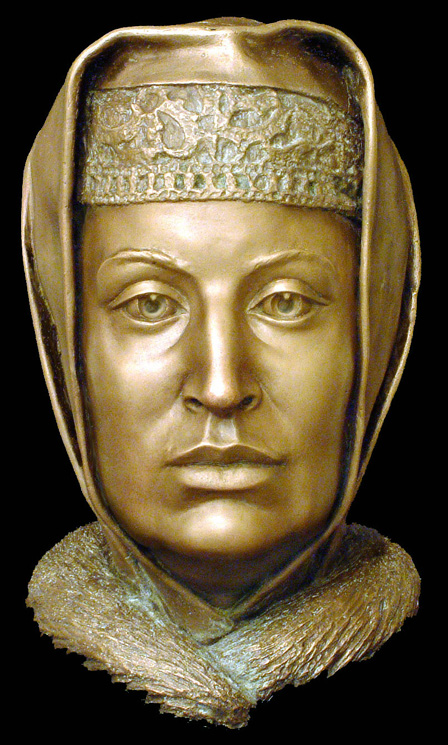
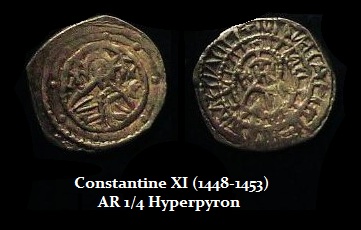
The real final division came with the niece of the last Byzantine Emperor Constantine XI, Sophia Paleologa (1440/49-1503), who eventually went to Russia and married Ivan III (The Great) (1462-1505) when Constantinople fell to the Turks in 1453. Many scholars fled to Rome and there they opened schools. It was no coincidence that Christopher Columbus used the teachings of the Greeks to argue that the world was round.
The marriage between Sophia and Ivan III was proposed by Pope Paul II in 1469. This was intended to strengthen the influence of the Roman Catholic Church in Russia and the unification of the Orthodox and Catholic as was attempted in the Council of Florence. Most likely, Ivan III’s motives for pursuing this union was probably connected with the status and rights of the Greek princess over Constantinople. He was marrying into a historical line of royalty that dated back centuries. Sophia brought her court with her and it was probably the Greek line that actually justified more than ever maintaining the Orthodox religion separate and distinct from Rome.
The early history of Russia can be divided into three 224 year cycles of Cimmerian Rule, followed by cycles of Scythian Rule, then cycles of Sarmatian Rule, with the invasion of the Goths in the 3rd Century followed by the 4th Century invasion of the Huns in 370AD. Upon the death of Attila in 453AD, it was the Avars who took control, although they were closely related to the Huns. Russia fell to the Mongols led by the grandson of Genghis Khan who destroyed the capital Kiev in 1240AD. Moscow began to rise as a city in the 14th century. The Mongols were fierce warriors. Genghis Khan had tried to conquer China, but broke off his invasion in 1218 and turned toward the West. He died in 1227AD, and it was his grandson who turned back to conquer China in 1279. His dynasty fell in 1368, and so was the fate of the Mongolian Empire.
The Russian Monetary System began also with cattle (skot) during the Kievan period. Skins of small animals and precious metals were used as fixed-value exchange rate based upon barter goods. Up until the end of the 12th century, cattle was the unit of account but commerce took place with the skins of small animals. Actually, furs became the common method of payment for they were valued in terms of cattle, but were much easier for transport and divisibility for small transactions. This made small furs much more suitable for money and they were also an important item of export. Written sources began to speak of such units of payment as kuna (marten’s fur, from kunitsa, a marten), belka or veksha (squirrel), veveritsa (ermine) and nogata (fur with legs, from Arabic nagd, a good or full-value coin), and also of pieces of fur (resana), muzzle furs (mordka) and paw furs (lapka).
The word for silver was “serebro” which became more and more common to denote money as trade with the Byzantine world increased. The Old Russian words kuna and nogata, come from the old “fur money” or “leather money,” thereby retaining their meaning as metal money began to emerge. The names continued in use even though the money began to change to metals given the trade with the Byzantine world. The Rus relied upon foreign produced money. Both Byzantine silver coins and the silver dirhems of the Arab Caliphate are found in Ukraine and parts of Russia confirming trade existed.
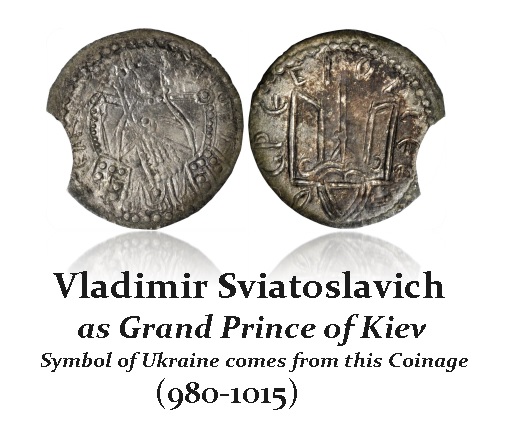
It is clear that there was a change from “fur money” to silver and the oldest Russian unit of value was the “grivna”, which was based on the Arab coinage system. We begin to find only from the 10th century onwards that local coinage began to be struck and once this took place, then coins became the actual unit of payment in markets. This enabled the expansion of the economy and really the rise of Russia out of the barter age. The “grivna” became both a unit of account an money by weight. Its value equaled to that of 96 gold dinars (s[o]lotniki) or 144 silver dirhems (s[e]rebreniki).
I have created this site to help people have fun in the kitchen. I write about enjoying life both in and out of my kitchen. Life is short! Make the most of it and enjoy!
This is a library of News Events not reported by the Main Stream Media documenting & connecting the dots on How the Obama Marxist Liberal agenda is destroying America


 Centinel2012