Hemispheric Boss Level: Epic – Venezuela Edition


Posted originally on CTH on March 5, 2026 | Sundance

Sometimes you have to sip coffee slowly, while taking in the landscape.

About a month ago President Donald J Trump bombed Caracas, engaged the U.S. military with a direct firefight against Venezuela military & security forces, then snatched regime dictator Nicholas Maduro out of the country to face criminal charges in the United States.

Yesterday, Maduro’s replacement, President Delcy Rodriquez, stood on the steps to the Venezuela presidential office and publicly thanked Interior Secretary Doug Bergum for the kindness and support of President Donald Trump.

That reality represents a level of hemispheric ‘ultimate boss’ that boggles the mind.  But wait, it gets better. There’s video (prompted):

Before going further to current events, let us remind ourselves of a few details.

Sandwiched between the Venezuela Maduro operation and the recent Operation Epic Fury in Iran, approximately three weeks ago, Gen. Dan Caine, chairman of the Joint Chiefs of Staff, and Defense Secretary Pete Hegseth convened a gathering in Washington of all the defense chiefs and senior military officials from 34 Western Hemisphere countries.

As most of you will remember, securing the national security of the entire Western Hemisphere, was outlined in the national defense strategy document [SEE HERE] released by President Trump. In addition to setting the priorities for the United States focus, the report details the Trump administration perspective on the world as broken down into specific regions.  The report is a brutally honest review of the current state of geopolitical benefits, risks and threats as they pertain to vital U.S. interests. The report outlines a critically renewed focus on the Western Hemisphere.

Now, back to Secretary Bergum’s visit.

At the same time as Interior Secretary Bergum is meeting with key government and private sector partners to discuss strategic mineral development (ie. deconflict dependency on China via independent development), oil production for U.S. hemispheric security (Iran output offsets), Venezuela announced the transfer of 1,000 kilos (more than a ton) of gold reserves for sale on the U.S. market {SOURCE}.

Venezuela needs stability.  Hemispheric Boss President Trump wants Venezuela to have stability.  Venezuela needs dollars and both the coordinated sale of Venezuela oil and Venezuela gold (47 tonnes in strategic reserve) will provide those dollars to retain stability and seed economic growth projects.

This coordinated approach secures the economic future of Venezuela and simultaneously secures the energy security of the Western Hemisphere while geopolitical operations continue in other regions, like the confrontation with Iran.

In essence, President Trump is isolating the Western Hemisphere from collateral economic damage that is likely to happen as the U.S. begins to take down the leading sponsors of global conflict.  As things are in flux, the close and controlled partnership with Venezuela can offset/mitigate a lot of chaos.

While the ongoing Iran confrontation happens in the middle east, and in combination with the priority of the National Security Strategy, President Trump then convenes a meeting of hemispheric leaders in Florida this weekend.

The Latin-America meeting in Doral is being called the “Shield of the Americas Summit.”  The Trump administration has made it a priority to assert dominance over the Western Hemisphere, where China previously built influence through massive loans and expansive trade.

Yesterday, White House Press Secretary Karoline Leavitt announced President Trump will host heads of state from “Argentina, Bolivia, Chile, Costa Rica, the Dominican Republic, Ecuador, El Salvador, Honduras, Panama, Paraguay, Trinidad and Tobago, and maybe some others as well.”

So, let’s put it all together.

President Trump proactively secured the border, targeted narcotraffickers, confronted narcoterrorists, targeted Mexican drug cartel leadership, leveraged the DOJ to indict regional actors, pushed China out of control in the Panama Canal, took out Nicholas Maduro, took control of Venezuela oil production – both for the security of the U.S. and benefit of the Venezuelan people, removed the discounted oil benefit for China and reasserted stability in the Western hemisphere.

Then, with all that in place, he turned toward Iran…. but, proactively planned for a ‘Shield of the Americas Summit’ before the Iran operation began and scheduled it while Operation Epic Fury continues.

Jumpin’ ju-ju bones.  That outline and timeline is not supposition; it is what took place.

And, yeah, we just watched “interim” Venezuela President Delcy Rodriquez react to what she is witnessing happening all around her.

Accepting all of this, I would not be in the least surprised to see President Rodriquez in Doral this weekend.

[SOURCE]

This my friends, is a level of strategic boss maneuvering beyond anything we have ever witnessed before.

[…] – “Interior Secretary Doug Burgum landed in Venezuela on Wednesday to begin talks about a potential rare earth minerals partnership, just weeks after the U.S. arrested former Venezuelan President Nicolás Maduro.

FOX Business exclusively joined Burgum on the trip. President Donald Trump‘s administration views Venezuela’s untapped resources as a potential alternative to relying on China for critical minerals, FOX Business has learned.

While in Venezuela, Burgum will also help expand the relationship between U.S. oil companies and the Venezuelan government. The secretary will meet with the current Venezuelan President Delcy Rodríguez to continue the growing relationship between the two countries.

Burgum is the first member of Trump’s Cabinet to leave the country since the U.S. launched Operation Epic Fury against Iran on Saturday.” (read more)

President Trump Announces Senator Markwayne Mullin Will Replace DHS Secretary Kristi Noem


Posted originally on CTH on March 5, 2026 | Sundance

Making the announcement on his Truth Social Account, President Trump announces that Dept of Homeland Security Secretary Kristi Noem will be replaced with Oklahoma Senator Markwayne Mullin.

[Truth Social– I am pleased to announce that the Highly Respected United States Senator from the Great State of Oklahoma, Markwayne Mullin, will become the United States Secretary of Homeland Security (DHS), effective March 31, 2026. The current Secretary, Kristi Noem, who has served us well, and has had numerous and spectacular results (especially on the Border!), will be moving to be Special Envoy for The Shield of the Americas, our new Security Initiative in the Western Hemisphere we are announcing on Saturday in Doral, Florida. I thank Kristi for her service at “Homeland.”

Serving 10 years in the United States House of Representatives, and 3 in the Senate, Markwayne has done a tremendous job representing the wonderful People of Oklahoma, where I won all 77 out of 77 Counties — in 2016, 2020, and 2024! A MAGA Warrior, and former undefeated professional MMA fighter, Markwayne truly gets along well with people, and knows the Wisdom and Courage required to Advance our America First Agenda.

As the only Native American in the Senate, Markwayne is a fantastic advocate for our incredible Tribal Communities. Markwayne will work tirelessly to Keep our Border Secure, Stop Migrant Crime, Murderers, and other Criminals from illegally entering our Country, End the Scourge of Illegal Drugs and, MAKE AMERICA SAFE AGAIN. Markwayne will make a spectacular Secretary of Homeland Security. Thank you for your attention to this matter!

PRESIDENT DONALD J. TRUMP

Ken Paxton Offers to Drop Out of Race if Thune and Cornyn Will Eliminate Filibuster and Pass SAVE Act


Posted originally on CTH on March 5, 2026 | Sundance

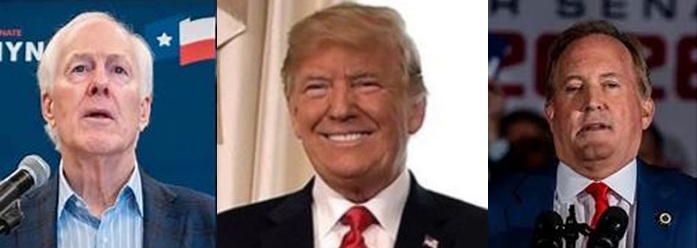
This is a pretty solid position by Texas Attorney General Ken Paxton who is offering to drop out of the Texas senate race if John Thune and John Cornyn will stop blocking President Trump, eliminate the filibuster and pass the SAVE Act.

Paxton gets a pass at calling Cornyn a “coward,” as the slight is negligible considering the selflessness within the offer. Paxton is a patriot and this is a solid alternative that boosts President Trump.

[SOURCE]

Division, Derision and the Economics of the Thing


Posted originally on CTH on March 5, 2026 | Sundance

Do you remember this moment during the 2015 republican presidential debates when all of the candidates were on stage and leading control outlet Fox News (Bret Baier) purposefully asked the candidates:

…”is there anyone on stage, unwilling tonight, to pledge your support to the eventual nominee of the republican party, and pledge to not run an independent campaign against that person.  Again, we are looking for you to raise your hand now if you won’t make that pledge tonight.”

[The moment in video is here] The need for control is a reaction to fear.  The question was intentionally constructed to create both an optic and a narrative Fox News, Rupert Murdoch and the republican party were purposefully shaping.  Collectively the professional republicans were desperately afraid Donald Trump would run as an independent candidate.

I bring us back to that moment because it is the key to understand where we are even today.  This was the core of the matter. This is the “trillions at stake” aspect.  This is the economics of the thing as it first manifest.

Why did Donald J Trump stand against them all?

For many years before that moment, a small group of us had been outlining why it was urgent for MAGAnomics to take charge of the U.S. economy; because underneath both wings of the UniParty in Washington DC was a system that few understood.

♦ Prior to 2016, the United States Chamber of Commerce (U.S CoC), a private K-Street lobbying consortium, were the negotiators for every single trade deal done from the office of the United States Trade Representative (USTR).

The U.S. government (USTR, POTUS and Congress) was the trade stakeholder who signed the agreements; however, the actual nuts and bolts of what the trade deal included, the terms and conditions, were negotiated by the US CoC.

The U.S. Chamber of Commerce represented the corporate interests of their Wall Street clients. After all, the corporations paid the CoC and the business model of the CoC is dependent on the corporations.

This is the larger background for how decades of trade agreements ended up with offshoring, the Rust Belt, diminished domestic manufacturing, and increased corporate profits. This is the core mechanics of how a U.S. manufacturing economy was shifted to a “service driven economy.”

The U.S. Chamber of Commerce was writing the trade deals. The CoC would then fund the politicians who would approve the trade deals. The CoC would also finance the presidential candidates.

When President Trump ran for office in 2016, his trade, manufacturing and economic policies were against the interests of the entire business network that controlled trade. The U.S. CoC poured money into Hillary Clinton’s campaign and their main GOP partner in the enterprise, Mitch McConnell.

When Trump won the election, he completely shut out the CoC from any involvement in U.S. trade negotiations. Trump literally put himself, Wilbur Ross, and Robert Lighthizer in control.

The CoC was apoplectic but powerless to stop this action. CoC President Tom Donohue could not even get an appointment to see President Trump in the White House.

The only thing the CoC and Tom Donohue could do was to fund anyone who would assist them in removing the existential threat that Trump represented. That’s what they did.

With the CoC removed from influence, President Trump, Wilbur Ross and Robert Lighthizer began the painstaking process of taking the Wall Street profit tentacles off U.S. trade policy.

In essence, President Trump put the interests of the American citizens back into the top priority of the U.S. govt, as it pertained to the biggest of all big picture items, the U.S. economy. That’s why in 2018 and 2019 the U.S. economy was on fire with growth.

All of that MAGAnomic background remained in place when President Trump retook control in 2025, and now we are starting to see the positive economic effects again resurface.  However, that collective UniParty opposition still remains, albeit significantly diminished by the refusal of President Trump to move away from America-first policy.

The core of the opposition to all of President Trump’s actions, remains almost exclusively an outcome of the economics of policy the DC system no longer controls.  It’s about the money.  It will always be about the money.  The division we are encountering in the MAGA ranks, is specifically driven by those same financial interests who opposed candidate Donald Trump a decade ago.

When it came to trade policy, economic policy, tariff policy and the confrontation with China, there was not one iota of difference between any of the 17 republican candidates in that 2016 election.

There was not one degree of divergence from the traditional corporate economic policy of the 30 years that preceded that moment on stage.  Every one of the republican candidates aligned with the CoC message.

♦ CTH had previously identified our assembly as “The Last Refuge” specifically because there was no information space, no website, no organized group, no podcast, no functional assembly who understood the basic problem and simultaneously rejected the noisy pontificating baseline notion that our status was doomed to remain as a “service driven economy.”

We rejected that notion here.  So too did Donald J Trump, and subsequently we championed him.

His intention in this MAGAnomic regard has never wavered, flinched or diminished.  President Trump has focused on delivering real, actionable economic benefits due to a radically shifted policy approach toward jobs, trade and the underlying blue-collar economy.

As President, Donald Trump has never stopped being Main Street First in all policy outcomes.

What we are witnessing now with the division, derision and conflict goes right back to that original set of policy distinctions.

In 2016 we did not use the term “influencers,” but they existed inside every team for every republican candidate.  Dick Cheney’s daughter worked for Ben Carson. Mark Levin’s son worked for Ted Cruz. The daughter of Fox News Executive Producer for Political Content, Bill Sammon, worked for Marco Rubio.

All of those campaigns and every person in the professional republican apparatus that worked inside those campaigns had one very unique thing in common, they all adhered to the U.S. Chamber of Commerce constructs of economic policy.

Not a single candidate ever mentioned China as a strategic economic threat until Donald Trump kept hammering it.  Not a single Republican ever said economic security was national security, until Donald Trump made it core policy.

Remember this core difference when you see all of these voices who backbite, bitch, complain and protest that Donald Trump is not focused enough on American interests; it’s bullshit. It is all bullshit.

Not a single republican candidate ever cared about any of this stuff until Donald J Trump made it his mission in life to fundamentally restructure the economics of everything.  This is still his primary focus, and if you watch him work you will see it unfold in the outcomes of every single policy, even the foreign policy engagements.

President Trump is delivering a global shift, a multigenerational shift, in the return of U.S. power and financial WEALTH to our nation.  And, he’s unbelievably good at it.

MAGAnomics! The rest is just noise.

Importers, Exporters and Producers Trigger Force Majeure Notifications for Gulf LNG Shipments


Posted originally on CTH on March 4, 2026 | Sundance

Force Majeure is a common clause in contracts which essentially frees both parties from liability or obligation when an extraordinary event or circumstance beyond the control of the parties, such as a war, strike, riot, crime, epidemic, or sudden legal change prevents one or both parties from fulfilling their obligations under the contract.

People would be well advised to wait a few days when announcements are made before jumping to immediate conclusions. The announcement by Qatar Energy of a force majeure notification did not originate from Qatar’s inability to produce contractual LNG supplies…..

[SOURCE]

…. two days prior to this announcement, India’s top gas importer Petronet LNG Ltd issued a force majeure notice to Qatar Energy and local buyers because its LNG tanker ships were unable to reach the Ras Laffan load port due to the crisis in the Middle East.  Without ships arriving to take the LNG Qatar Energy cannot keep producing.

Qatar Energy operates 14 liquefied natural gas (LNG) trains with a total annual production capacity of 77 million tonnes {SOURCE}.  If ships don’t reach the terminals, there’s no need for Qatar Energy to keep pumping and liquifying from well heads.  It’s a downstream issue.

Bahrain made the same announcement for their refined aluminum exports {SOURCE}. Indonesian company Chandra Asri made the same announcement for petrochemicals {SOURCE}. Chevron made the same announcement two days ago after Israel shut down the Leviathan natural gas field {SOURCE}.  Thus, we see the ramifications for the entire region around the Iran conflict zone and the downstream destinations (Asia and Europe) for energy products therein.

Dutch shipping company Maersk has also suspended operation for cargo container ships cancelling all bookings between the Indian subcontinent—India, Pakistan, Bangladesh and Sri Lanka—and the Upper Gulf. {SOURCE} German shipping group Hapag-Lloyd made the same decision.

These are not decisions being made due to maritime insurance or reinsurance rates or availability. These are decisions being made by private corporations that go beyond their actuarial risk.  They simply don’t want to operate in a region where there is the potential for loss of life or cargo.

This is not solely an insurance issue and people should pause before offering analysis that only considers the financial aspect.

MAERSK -Maersk announced on Wednesday that it is temporarily suspending most cargo reservations in and out of Iraq as security worries mount throughout the Gulf.

The business said that the ban applies to shipments involving many regional nations, including the UAE, Oman, Kuwait, Qatar, Bahrain, and Saudi Arabia.

Maersk said that the measure would stay in effect until further notice. The firm did not disclose any more information on how long the disruption will endure or the scope of the operating effect.

The decision comes as increased tensions and military action in the Gulf area have prompted worries about the safety of maritime routes and logistical operations, hurting commerce flows via many Gulf nations. (LINK)

Susan Kokinda and the Lyndon LaRouche network give their perspective on the British reaction to the U.S. strikes against Iran.  The analysis has some value from a review of the historic relationship of the British imperialist policy toward matters of foreign entanglement and the control mechanisms that have historically flowed from the U.K

As a consequence of British government policy much of the Kokinda analysis accurately touches on the root cause of U.K response. However, the emphasis on the modern UK government as the lead of a global control network is not always as severe or complicated as the Lyndon LaRouche network would espouse.

Prior to visiting the White House, German Chancellor Fredrich Merz had just returned from China and gave a press conference in Germany saying Germans need to “work harder” and “ditch the four-day week” to compete.

Merz visit to Shenzhen shocked him, and he is right to be rattled by the cold indifference of Chairman Xi Jinping.  This was Merz first visit to meet Chairman Xi in person.  A cold and productivity focused Merz just met an even colder and more productivity focused industrial giant.

Merz met the industrial dragon and returned home visibly shook.  The Chancellor thought he represented an apex industrial nation. However, he experienced something far more industrial than he ever imagined.

As noted by Nina Schick: “Take Germany’s famous auto industry, 5% of GDP, 800,000 jobs, but losing ground fast. VW’s market share in China has plunged from 24% to 15% in four years. Chinese brands doubled their European market share in 2025 and now outsell Mercedes on the continent. Germany lost 120,000 industrial jobs last year. And cars are just the most visible example.

But it’s not just competition. Germany has some of the highest industrial energy prices in the world, nearly triple what the US pays. After shutting down nuclear and losing cheap Russian gas via Nord Stream, Berlin built its first LNG terminal in 194 days. Now 96% of the LNG arriving at those terminals comes from the US. (That LNG is even more important in light of events in the Gulf….)

The US is Germany’s second-largest trading partner (€240 billion in two-way trade last year.) German auto exports to the US fell 18% in 2025 under tariffs. Merz cannot afford a trade war with Washington. Today, he watched Trump threaten to cut off all trade with Spain, while sitting next to him in the Oval Office. He backed him up.

Now look at how Merz is positioning on Iran. Spain blocked the US from using its bases. Sánchez called the strikes “unjustified.” Starmer hesitated before eventually allowing UK bases for “defensive” strikes. Merz is the first EU leader invited to the White House for a tête-à-tête with Trump.

Days before, he said legal assessments under international law “achieve relatively little” and that now is “not the time to lecture allies.” Compare that to Sánchez insisting Spain’s agreement with the US “must operate within the framework of international law.” From a German chancellor, Merz’s position is seismic.

And none of this is separable from home. Germany’s economy is in its fourth year of industrial contraction. An aging population, a shrinking workforce, sky-high welfare costs, and an immigration debate that’s handing the AfD seats on a plate. Merz needs the US relationship, because it’s one of the levers he has left to keep the economy blowing in the right direction.

All of this points to a Germany that’s understood its critical vulnerabilities and is pursuing a hard-nosed realpolitik in response. To stay industrially competitive, they need American LNG. They need access to US compute and critical hardware. They need EU member states to spend on defense: something Trump has been remarkably effective at unleashing.

The result is an astonishingly pro-Trump German chancellor. In a country where only about 15% of the population views Trump favorably. The question isn’t whether Merz has realistically assessed Germany’s vulnerabilities (he’s starting to see the bigger picture). It’s whether this wins or loses him votes at home. And on that, my guess is it won’t. {LINK}

Fredrich Merz thought he was an apex predator, until he met Xi Jinping.

Suddenly, Merz looks at the unpredictable Trump, an apex predator who swims around Chairman Xi as if it’s just another boring Tuesday, with an entirely new perspective.

Chancellor Merz realizes that this rather unorthodox American President likely possesses the only qualified skillset that can deal with a REAL apex predator like Xi.

Fredrich Merz dismounts his EU high horse and uppishness turns into respect.

Defense Secretary Hegseth and Joint Chief’s Chairman Dan Caine Hold a Press Briefing


Posted originally on CTH on March 4, 2026 | Sundance

Secretary Pete Hegseth and Joint Chief’s Chairman Dan “Razin” Caine hold a press briefing to outline the latest developments in Operation Epic Fury.

As day #4 unfolds, Secretary Hegseth notes the U.S. and Israeli Airforce are now in complete command of the skies above Iran.  The capacity of Iran to launch missiles and drones is shrinking rapidly.  Additionally, the Iranian navy continues to be targeted and destroyed.

General Dan Caine outlines the specifics of the targets and forces deployed. WATCH: 

Treasury Secretary Scott Bessent Outlines U.S. Financial/Economic Stabilization Plan, Backstopping U.S. Action toward Iran


Posted originally on CTH on March 4, 2026 | Sundance |

Treasury Secretary Scott Bessent appears on CNBC to discuss the Trump administration policies that were proactively deployed during Operation Epic Fury.

The goal of global financial stabilization is actually part of the strategic planning within the White House, including Treasury, Energy and Interior in alignment with the State Dept., Pentagon and national security agencies.  Part of that plan was the announcement for the U.S. to underwrite maritime insurance to ensure a minimal disruption to the global energy markets.

Secretary Bessent discusses the insurance facet at the 3:00 minute mark of the video below. WATCH:

.

White House Press Secretary Karoline Leavitt Holds a Press Briefing – 1:00pm ET Livestream


Posted originally on CTH on March 4, 2026 | Sundance 

White House Press Secretary Karoline Leavitt holds a press briefing today at 1:00pm ET.  This is Mrs. Leavitt’s first press briefing since Operation Epic Fury began. Livestream Links Below:

.

.

Secretary of State Marco Rubio Updates Media


Posted originally on CTH on March 3, 2026 | Sundance 

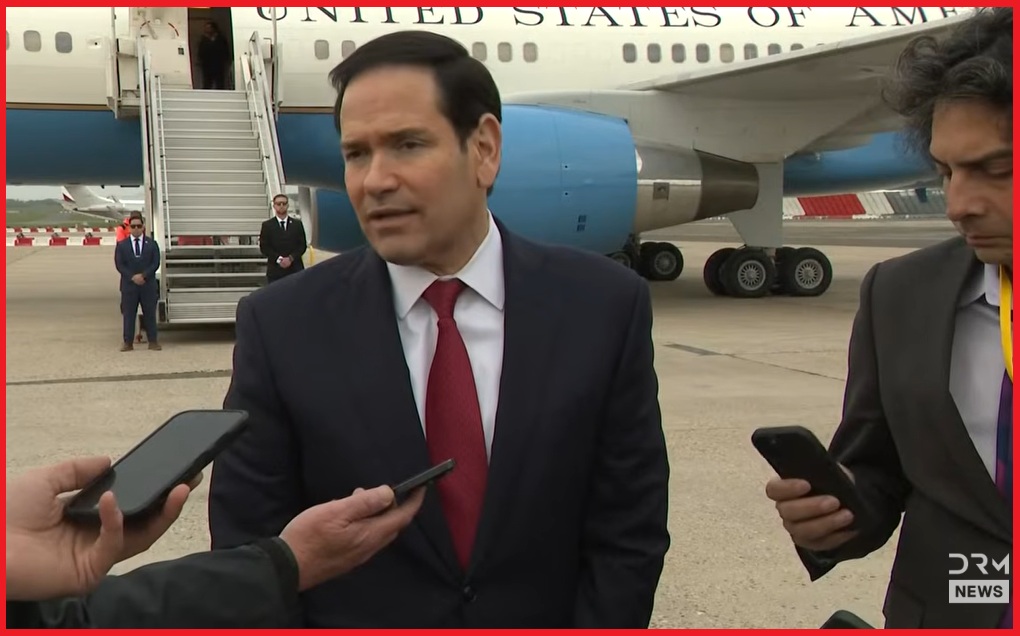
Secretary of State Marco Rubio updates the media on current activity surrounding Operation Epic Fury.

Secretary Rubio begins with an update on what Americans in the region need to know. Rubio asks all Americans to record their status with the U.S. State Department. [State Dept. Website] To get the latest updates visit http://travel.state.gov/destination and enroll to receive alerts directly at http://step.state.gov. Americans who need consular help can reach us 24/7 by phone: +1-202-501-4444 (from abroad) and +1-888-407-4747 (from the U.S. and Canada).

Rubio then outlines the latest report on a drone hitting near a U.S. embassy in Dubai.  A drone struck a parking lot adjacent to a chancellery building and a fire broke out.  No Americans were hurt or injured. The consulate was already on minimal staffing.

Secretary Rubio then provides an update on the general disposition of the conflict effort.  Rubio notes the two most powerful air forces in the world are about to go even more severe in our combat activity deep inside Iran.

The traditional frame of reference for pundits surrounds “the escalation trap.”  Most of them are so stuck in their old Washington DC view of nation building they just cannot see another approach.

How do you avoid the trap? You don’t play the game.

You don’t try to control the outcome on the ground.  You change behavior, without being on the ground.

Eventually, having killed or destroyed everything you want to see killed or destroyed (including their ability to wage war against you), you withdraw – then demand terms.

You don’t need to be there on the ground.

It’s a version of the Venezuela model.

Tell the governing body, whoever that is, whoever surfaces to claim lead with the support of the people, what you expect. Then you hold them accountable.

If they refuse to change behavior, bomb them again – select the refusers as new targets. Wash – Rinse – Repeat.

Again, pull back, await the governing authority to surface, tell them the expectations, if they balk, reject or refuse, bomb them again…. Pull back, await the next crew, tell them the expectations; if they balk, fail or reject, bomb them again…. Then pull back.

Is there an escalation trap? No, you are trying to change behavior – full stop.

You remain open but cold, hard and indifferent to any non-compliant replies.

President Trump Announces U.S. Insurance Underwriting for “All Maritime Trade Flowing Through the Gulf” Along with U.S. Military Escorts


Posted originally on CTH on March 3, 2026 | Sundance

♦ First blow, the Trump tariffs hit Beijing hardest. ♦ Second blow, the Beijing tentacle on the Panama Canal is severed.  ♦ Third blow, global tariff threats changed the risk dynamic for southeast Asia countries who acted as transnational shippers for China. ♦ Fourth blow, cheap sanctioned oil from Venezuela was cut-off. ♦ Now, the fifth blow; cheap, sanctioned Iranian oil is disrupted.

As noted by Politico: Following USA military strikes, “ships have begun to avoid the Strait of Hormuz off the coast of Iran — a critical shipping lane for Gulf nations to export oil to Asia. China in 2025 received about half of its imported oil from the six Gulf countries that rely on the strait. Other large crude oil producers in the region — including Saudi Arabia, Iraq and the United Arab Emirates — transport almost all their crude exports through the geographic bottleneck.

[SOURCE]

It’s not just a factor of oil flow, but also the price that China will ultimately end up having to pay.  Beijing was buying oil from Venezuela, Iran and Russia at steep discounts because their purchases were skirting western sanctions.

With Iranian oil production now no longer a market option, China will seek to replace their needs with more Russian alternative. However, that diversion means the oil India was purchasing from Russia will come at a higher price, and the refined final product that was exported by India will arrive to the European Union carrying an additional cost.

Simultaneously, Vladimir Putin was asked about Russia’s lack of military support to Iran in response to the U.S. military action, to wit the Russian president noted the technical terms of their joint military agreements did not include Russia’s immediate involvement.  In shorthand, Russia is busy and is not getting involved.

Russia was/is partially dependent on receiving military supplies from Iran in exchange for oil transfers.  The military component is reported to include drones from Iran for use in the Ukraine conflict.  Now that exchange profile is shuttered.

Taking Iran’s malign influence off the geopolitical chessboard is beginning to surface in major challenges to the BRICS assembly (Brazil, Russia, India, China, South Africa).  Russia, China and India are impacted directly.

The BRICS nations were skirting western oil sanctions by trading the commodity outside the petrodollar structure.  However, President Trump now controls the flow of oil from Venezuela, and his administration controls the currency in which it is sold.

With Iranian oil removed from the non-petro supply chain, the only remaining non-petro oil producer is Russia – who is simultaneously hit with a loss in military hardware support.  China may end up as a larger oil customer to Russia, but at what price and in what payment structure.

With global oil supplies in a state of flux, and with the USA in control of the oil flow from Venezuela, North America is certainly in the best position for minimal energy disruption.

Asia is heavily dependent on oil flows through the Strait of Hormuz, and the majority of Europe has already shut themselves off from Russian oil production, putting themselves in a position of dependency to the global markets.  The short-term ramifications of this oil disruption hit China, Southeast Asia, Japan and Europe particularly hard.

“OPEC+ countries affirmed on Sunday that they would boost oil production starting in April by 206,000 barrels daily — a modest increase intended to dampen the war’s effect on prices down the road. The majority of the increase would come from Saudi Arabia and Russia.” {SOURCE}

All of a sudden, this happens: Zelenskyy not to be trusted?

“Ukraine is under pressure to let the EU inspect a damaged pipeline carrying Russian oil to Hungary and Slovakia, as the two pro-Kremlin countries accuse Kyiv of overstating the impact of an attack by Moscow — despite what Ukrainian officials say is evidence of extensive destruction,” the report said.

According to five diplomats and EU officials who spoke to the FT, even pro‑Ukrainian governments within the European Union and the European Commission have also asked Ukraine to permit a delegation to inspect the pipeline. Two sources told the newspaper that European Commission President Ursula von der Leyen requested access for EU experts during her visit to Kyiv on Feb. 24, the fourth anniversary of Russia’s full-scale invasion. The request, according to the sources, was refused.

As tensions escalated, the EU’s ambassador to Ukraine, Katarina Mathernova, reportedly asked through the presidential office for permission to inspect the damaged pipeline herself or to allow visits by other EU diplomats. Those requests were denied for security reasons, the sources said.” (link)

T