Posted originally on CTH on February 24, 2026 | Sundance
The Ukraine military, technically and non-pretendingly accepted as the EU military, has targeted a key oil pumping station in Russia that feeds into the westerly directed oil supply. However, if you stand back from the western media, what you will notice from this attack is not the target in Russia, but the customers at the end of the pipeline in Europe, mainly Hungary and Slovakia.
[…] Through local stations, including infrastructure around Kaleykino, oil from Tatarstan and neighboring regions feeds into the main pipeline, which runs through the Samara region and continues westward toward Belarus and further to countries in Eastern and Central Europe. […] There were also earlier reports that Ukrainian forces carried out several attacks on Druzhba pipeline infrastructure inside Russia, which at times disrupted Russian oil supplies to Hungary and Slovakia. {source}
So, what’s going on here?
Well, with the anniversary of the Russian Federation beginning the war into Ukraine, the Europeans who now control the military operations inside Ukraine are targeting European countries who do not align with their bloodlust, specifically Hungary and Slovakia.
Both Hungary and Slovakia are land locked countries without easy access seaports. Because of their geographic locations, they rely on Russian oil and gas for their energy needs. Hungary and Slovakia have not wanted to expand the war against Russia. The EU is demanding Hungary and Slovakia agree to expanded war.
The European ‘coalition of the willing’ is now targeting key Russian infrastructure that supplies energy products to European countries who are not in compliance with the EU dictates of war.
Putin says threats to energy pipelines sabotage peace process with Ukraine.
In his televised speech, the Russian president also accused Ukraine of threatening Russian energy pipelines with the help of Western intelligence agencies. He claimed these attacks were aimed to sabotage the peace process.
Putin also stressed it was vital for Russia to strengthen the defence of energy infrastructure and other strategic sectors. {source}
This is why Secretary of State Marco Rubio travelled to Hungary and Slovakia last week.
Essentially, now we see European leaders attacking their own European “allies” through the use of Ukraine. If you do not support the continued bloodlust, you are an enemy of the EU collective hive mind.
A picture is worth a thousand words….
On this grim anniversary, the Coalition of the Willing stands with Ukraine.
We will step up military support and deliveries, with a focus on air defence systems, drones and long-range ammunition.
We are working on robust security and prosperity guarantees
The Druzhba-1 station at Kaleikino, a rather important part of the Druzhba oil pipeline through which Hungary and Slovakia hope to get their Russian oil, has just been blown to smithereens and most likely won't be supplying Hungary and Slovakia with oil again anytime soon. pic.twitter.com/7M3aezultz
STATEMENT OF THE PRIME MINISTER OF THE SLOVAK REPUBLIC 🇸🇰
I have fulfilled what I declared on Saturday: “If oil supplies to Slovakia are not restored by Monday, I will ask SEPS, the state-owned joint-stock company, to halt emergency electricity supplies to Ukraine. In January… pic.twitter.com/EyjfEgmple
Posted originally on Feb 24, 2026 by Martin Armstrong |
A new law signed by Putin grants the FSB the authority to order telecom operators to disconnect individuals from internet and mobile services. This long trajectory toward centralized digital control that has been unfolding for years, especially since the 2019 “sovereign internet” framework, which already laid the groundwork for isolating Russia’s domestic network from the global internet if necessary.
The legislation helps telecommunications providers to cut communications access upon the requirement of the FSB, while shielding those companies from any legal liability for outages. In practical terms, that means the state security apparatus can legally disconnect individuals or entire regions from the internet and mobile networks at will, under conditions defined by presidential regulation.
Governments historically move to control information flows first, long before they impose overt capital controls. I have warned repeatedly that the next phase of government intervention would not begin with seizing bank accounts outright, but with restricting the free flow of communication. The new law allows authorities to restrict connectivity without court oversight, which further centralizes power in the executive and security services. The bill evolved from vague “requests” to binding “requirements” from the FSB, meaning telecom providers are legally required to comply with shutdown orders across internet, mobile, calls, and messaging services.
They justify this as counter-terrorism and defense against security threats, including drone warfare and cyber risks, yet historically such language has always been used to expand state surveillance powers. Russianauthorities have already blocked major platforms, restricted messaging services, and pushed citizens toward state-monitored applications, all under the banner of national security and technological sovereignty.
Digital shutdowns increase systemic risk in modern economies that rely on online banking, digital payments, logistics, and real-time financial transactions. Even temporary internet disruptions can trigger spikes in cash withdrawals and anxiety over digital isolation, which is a classic sign of declining institutional trust.
The Soviet Union restricted communication channels, China built the Great Firewall, and now Russia is formalizing a legal framework to disconnect individuals digitally. By granting the FSB authority to disconnect communications nationwide or individually, the state effectively gains a “kill switch” over the digital economy. That extends beyond politics into commerce, finance, and even emergency infrastructure. Control the communication networks, and you control the flow of capital, opinion, and resistance. That has always been the unspoken objective behind expanding surveillance laws, regardless of the political system implementing them.
Posted originally on CTH on February 18, 2026 | Sundance
The U.S. mediating team met with Ukraine and Russia negotiators for the second day in Geneva, Switzerland. Unfortunately, despite the high praise and customary diplomatic niceties spoken, there was not much progress.
There was, however, a rather remarkable accusation hurled by Russian media about uninvited British officials going to Geneva in order to conduct surveillance of the negotiations. Apparently, this is part of UK Prime Minister Keir Starmer’s efforts to retain maximum involvement and influence.
STEVE WITKOFF – “Today, at President Trump’s direction, the United States moderated a third set of trilateral discussions with Ukraine and Russia. Thank you to the Swiss Confederation for being gracious hosts for today’s meetings.
President Trump’s success in bringing both sides of this war together has brought about meaningful progress, and we are proud to work under his leadership to stop the killing in this terrible conflict. Both parties agreed to update their respective leaders and continue working towards a deal.” (source)
Consultations are taking place in working groups by areas within the political and military tracks. We are working on clarifying the parameters and mechanisms of the decisions discussed yesterday.
We are focused on substantive work. We will provide additional information on the results.” (source)
In Geneva, while Russia, the US, and Ukraine are trying to talk, Britain sneaks in with a delegation led by Starmer’s security advisor, Jonathan Powell. This clearly trying to meddle.
Italy, Germany, and France are sticking to formal channels, but Britain is lurking, ready to… pic.twitter.com/wErmZtQsCs
🛢️ The Ukrainians’ decision to block oil deliveries through the Friendship pipeline to Hungary is blatant political blackmail. They’re trying to pressure us to support their EU membership & hand over funds belonging to Hungarian families. In response, Hungary has decided to stop… pic.twitter.com/Sv9jw4lFDX
VIDEO BELOW Between Piers Morgan and Volodymyr Zelenskyy:
CHAPTERS:
00:00 Introduction and monologue 02:14 President Zelensky on the latest developments in Ukraine 08:13 Zelensky on breaking news over the trilateral meeting in Geneva 10:30 Zelensky: ‘We need European representatives’ 14:50 Would Ukraine ever concede any territory for the Russians? 20:40 Zelensky’s view over Russia’s red lines involving NATO 25:55 Bill Clinton on dealing with Putin 35:19 Zelensky: “I don’t need all this historical shit!” 37:12 Would Zelensky authorise forces to kill Putin? 41:40 Zelensky on his relationship with America 46:57 Piers asks Zelensky is he trusts President Trump 50:04 Zelensky on the possibility of having free and fair elections following a 2-month ceasefire 53:54 Zelensky being voted the world’s favourite leader 01:03:00 Zelensky on Russia in the Winter Paralympics: “I don’t want to say it’s about money but it’s a dirty decision” 01:07:05 Zelensky on his relationship with his family 01:11:00 Piers’ monologue following his interview with President Zelensky
Posted originally on CTH on February 16, 2026 | Sundance
Secretary Marco Rubio went out of his way in this joint presser to emphasize the personal relationship between Hungarian Prime Minister Viktor Orban and U.S. President Donald Trump. Orban is facing a serious election challenge this April and all of the EU/NATO systems are actively trying to create pressure points to remove him.
Secretary Marco Rubio is in Budapest today for meetings with Prime Minister Viktor Orbán and his government to include the signing of a civilian-nuclear cooperation agreement heralded by the Trump administration. Hungary is one of the few voices within the European Union who is pushing back against Brussels efforts to go to war against Russia.
Prime Minister Orban has been very critical of Ukraine, openly stating his opposition to EU membership for the embattled country. In response President Zelenskyy has weaponized Ukraine’s geographical stewardship of oil and gas pipelines to shut down Hungarian energy and drive-up prices. VIDEO:
[Transcript] – MODERATOR: (Via interpreter) Good morning, ladies and gentlemen. May I extend my most cordial welcome to all of you, and may I extend my most special welcome to His Excellency Mr. Marco Rubio, Secretary of State of the United States of America, at the press conference and signing ceremony organized on the occasion of his visit to Hungary. Let me also extend my warm welcome to Mr. Viktor Orban, Prime Minister of Hungary, members of the U.S. and Hungarian delegations, and all our esteemed guests.
At today’s event, the agreement between the Government of the United States of America and the Government of Hungary to facilitate cooperation on the civilian nuclear program in Hungary will be signed. The signatories to the agreement on behalf of the United States of America, Secretary of State Marco Rubio, and on behalf of Hungary, Minister for Foreign Affairs and Trade Mr. Peter Szijjarto.
MODERATOR: (Via interpreter) Thank you very much, gentlemen. And now, may I invite Prime Minister of Hungary Viktor Orban to deliver his statement.
PRIME MINISTER ORBAN: (Via interpreter) Good morning, distinguished ladies and gentlemen, distinguished Mr. Secretary of State. This week starts well. It’s only Monday, and we are already over friendly and very serious discussion with the Secretary of State arriving from the United States of America. We agreed upon this visit with the President of the United States on our visit to the U.S. last November, and I’d like to deliver my heartfelt thanks to Secretary of State to – for visiting Hungary and therefore doing a privilege to Hungary.
We reviewed and overviewed our bilateral relationships. There is a new U.S. President, so I am also adapting to the new expressions. A new golden age has set upon us concerning the relationship between the United States and Hungary. We operate with understatements in the Hungarian language and Hungarian politics, but the situation is that I cannot remember – although for 30-odd years I have been present in politics – when the last time it was that the relationships between the two nations were at such a high level, so balanced and so friendly. So, my heartfelt thanks goes to President Trump.
Perhaps the last time we were near this, when President Bush visited us prior to the change of the political regime, which visit greatly contributed to us doing away with the communists and the Warsaw Pact. Since then, we had better and worse periods in the U.S.-Hungarian relationships, but we’ve never been to this high a level.
Since last year’s January, 17 U.S. investments have been decided upon here in Hungary. This is a decade-long record. And Hungarians can once again travel to the U.S. without a visa – thank you very much, Mr. Secretary of State. Hungary was invited to the Peace Council. The first inauguration meeting will take place in Washington, D.C., this Thursday, perhaps where I shall represent Hungary. And we entered into agreements of key importance in the fields of energy, including oil, gas, and nuclear energy. And these agreements, with the exception provided by the President of United States of America which allows for the use of Russian gas and oil here in Hungary, jointly contribute to the fact that Hungary can continue to remain secure on the aspect of energy supply and that we shall be able to supply households and the industry with cheap energy in an international comparison. And we also discussed the refinery in Serbia, how that can be purchased – NIS – how NIS can be purchased by MOL, the Hungarian oil company.
As for me, I assured Secretary of State Mr. Rubio that Hungary continues to support, regardless of European conflicts (inaudible), Hungary shall continue to support the efforts of peace of the U.S. in Ukraine. The current President of the United States did the most in international politics in order to ensure peace in the Russia-Ukrainian war. And I must reiterate, although everybody knows, that if Donald Trump had been the president of the United States, this war would never have broken out. And if he were not the President now, then we would not even stand a chance to put an end to the war with peace. So, thanks goes to the United States President for his efforts in favor of peace.
Hungary remains ready that if there is a peace summit, that we provide a venue for that here in Budapest, and I assured Mr. Rubio that Mr. Trump has a live invitation to Hungary. Thank you very much, Mr. State Secretary, for the opportunity to enter into discussions today.
MODERATOR: (Via interpreter) Thank you very much, Mr. Prime Minister. Now, may I invite Secretary of the United States of America Marco Rubio to make a statement?
SECRETARY RUBIO: Well, thank you, Mr. Prime Minister, for welcoming us here today. It’s an honor to be with you in this incredibly gorgeous city. It’s my first time being here, and it’s phenomenal, even to be in this hall where – and the history behind it and everything that’s going on here.
The second is the relationship – you talked about the golden age, which is not an exaggeration. The relationship between the United States and Hungary today is as close as I can possibly imagine it being. And it’s not just close rhetorically; it’s close in action and things that are actually happening. And I think some evidence of that is here today in the agreement that we’ve just signed that builds on a historic meeting that we had in November at the White House, that you had with the President and that I happened to be – have the honor to be present and be a part of.
The signed agreement we’ve had today is one that we hope will be many in the years to come in areas of collaboration. You spoke about the 17 investments. To those who think that Hungary is being isolated, that’s an example of the fact that that’s not the case – that under the prime minister’s leadership, in fact, there is a growing number of American companies, as evidenced by the 17 that have already arrived, who want to invest in your economy and want to be a part of what’s happening here and are excited about it – because you have strong leadership, because you have leadership that we know are going to protect investments and allow it to continue to be a place that’s friendly for business, and be competitive with rules that are competitive that allow businesses to grow and prosper in comparison to other places. And there are so many other areas that we can work together on, especially on energy, but just so many areas of common interest.
But I have to say this because it’s important to understand. We are entering this golden era of relations between our countries, and not simply because the alignment of our people, but because of the relationship that you have with the President of the United States. I don’t think it is any mystery – and should not be a mystery to anyone here – how the President feels about you, how he interacted with you in his first term as President, and now in his second term as President that relationship’s grown even closer. And it’s important to understand how important the relations between leaders are to the relations between countries. There is – we are – at the end of the day, we are still human, we are still people, and that person-to-person connection that you’ve established with the President has made all the difference in the world in building this relationship and in hopefully growing this relationship even more.
It is the kind of thing that I think, for example, I can say to you with confidence that President Trump is deeply committed to your success because your success is our success, because this relationship we have here in Central Europe through you is so essential and vital for our national interests in the years to come – that if you face financial struggles, if you face things that are impediments to growth, if you face things that threaten the stability of your country, I know that President Trump will be very interested because of your relationship with him and because of this importance of this country to us, to finding ways to provide assistance if that moment ever were to arise, and obviously with regards to finances and the like.
I also think it’s the reason why, in your visit in November, you saw an extension of – and a suspension of the imposition of sanctions and allowed to move forward on energy. It was because of that personal relationship. It’s because we want you to continue, because we want this economy to prosper, we want this country to do well. It’s in our national interest. Especially as long as you’re the prime minister and the leader of this country, it’s in our national interest that Hungary be successful. It helps America, and obviously it helps you.
So, it’s an honor to be with you here today. We have a lot that we can continue to work on. We also want to thank you, and I want to thank you, on behalf of the President of the United States, for the indispensable role you’ve played on the Board of Peace. Not everyone’s on the Board of Peace, and not everyone – for different reasons they can be participants or not be participants, but you are, and you’ve been there from the very first day. And again, a testament to the personal relationship between President Trump and Prime Minister Orban that I think speaks volumes. The role you play geopolitically, the role you play even outside of this region in affairs involving the Middle East, is invaluable and indispensable, and we are very appreciative of it.
And that’s why after traveling to Munich for the Security Conference, I wanted to make sure we paid a visit here to continue to build on this relationship and to signal very clearly that not only are we in a golden age, but we haven’t even scratched the surface of what we can achieve together as a people – as peoples, as nations, and as leaders. And so I thank you for the opportunity to be with all of you here today, and thank you for the very warm invitation and the very important conversations that we had where we touched on a bunch of subjects and a bunch of topics that I think will be of great interest back in Washington when I return. Thank you.
MODERATOR: (Via interpreter) Mr. Secretary of State, thank you very much. We have some time for questions. Hungarian Television gets the floor.
QUESTION: (Via interpreter) Good morning. I am Laszlo Meszaros. Volodymyr Zelenskyy, president of Ukraine, is constantly attacking Prime Minister Viktor Orban for not supporting the accession of Ukraine. What is your take on this political action, this political attack against a NATO and EU member-state?
PRIME MINISTER ORBAN: (Via interpreter) And who is the question addressed to?
QUESTION: (Via interpreter) Both of you. Both of you, naturally.
PRIME MINISTER ORBAN: (Via interpreter) I don’t wish to drag Secretary of State into Hungarian internal political issues.
(In English) So if you allow me, I start to answer first to this question.
(Via interpreter) The Ukrainians and their president obviously have entered into the Hungarian election campaign. For a while, I was thinking whether we should take that on the wrong note or not. I mean, with such brutal openness entering into the election campaign of another country is not very frequent. You don’t see that often. But then again, I realized it was understandable, because the Hungarian elections is the most important to Hungarian people but it has an impact beyond Hungary as well. And the Ukrainians quite justly believe that what government Hungary shall have is significant to them. And there are only two options.
One is what you knew well – that is the option of the Hungarian people who, at a vote – vote 2025, clearly stated that they would not undertake the Ukraine acceding to the European Union because that would drag us into a war and ruin our economy. And you can also know that we shall not provide money for Brussels in order for them to send that to Ukraine.
The other option, which is a real option, and the Ukrainians would favor that – and with common sense you can realize that if a government arrived which would want or which will accept Ukraine becoming a member of the European Union, they obviously want a government which will take a part in the financial burden of Ukraine – in other words, send money to Ukraine. And for the Ukrainians it does matter what the outcome of the elections will be, therefore they decided to participate in the campaign. And since we stand on the ground of common sense, we must not be surprised at that. We must adapt to it, and we must acknowledge that the Ukrainian president and Ukraine will be an active participant of this election, and we have to prevail against them too. That is our reality. Anything else attached to that – the future of the war, the funding of the war – are beyond the framework of this press conference. I will not go into detail.
I would only return to a single aspect, that this is an election. As an election, people decide. And for Ukraine, it does matter what the outcome of the decision is, and therefore, they put their full weight and weaponry in participating in the Hungarian campaign. We know full well that they fund – finance our opponents. We know how that happens. This is a well-known, written fact.
But once again, we must not be outraged, but we must acknowledge that this campaign in Hungary also has an international dimension – in other directions, too, but in the Ukrainian direction. That is why it’s an important international event, not only for Hungarians, but as the example of the Ukrainians shows, it’s important for other greater nations. That’s how you have to win elections. We have won elections in many ways. Now, we shall win this way.
SECRETARY RUBIO: My only comment is the United States interest is to see the war end, and we want to do what we can to make it end. We’re the only nation on Earth that apparently can get both sides to the table to talk. I’m not here to insult anybody, but the United Nations hasn’t been able to do it. There’s no other country in Europe that’s been able to do it. The United States has been successful at being able to get both sides to talk. I mean, for the first time in a number of years, you have – truly have, at a technical level, military officials from both sides sat down last week in the Middle East. And we’ll restart those talks again in Geneva later this week. I think that’s a very positive thing.
That said, all we are trying to do is play a role, if it’s possible, in reaching a deal. We’re not seeking to impose a deal on anybody. We’re not trying to force anyone to take a deal they don’t want to take. We just want to help them, because we think it’s a war that’s incredibly damaging. We think it’s a war that’s incredibly destructive. We think it’s a war that never should have happened and should end as soon as possible. That’s how the President feels, and the President’s invested a tremendous amount of time and political capital in trying to serve a useful purpose. Usually, in my time observing geopolitics, when a president tries to engage himself in peacemaking and in ending wars, that’s usually applauded.
So, this is one of the few times, for a lot of different reasons – I don’t know what they may be, but maybe I can speculate what they are – where people actually criticize a President trying to end a war. Usually when you’re trying to end wars, the international community applauds you. This is one of the few wars I’ve ever seen where some people in the international community condemn you for trying to help end a war. But that’s what we’re trying to do. That’s what we’re going to continue to do as long as our role is, and our engagement is, a positive one.
And, hopefully, the war will end – the sooner, the better. It should have ended a long time ago. It should have never actually happened. This war should have never happened. This war would have never happened if Donald Trump had been president of the United States at the time it began. But that’s what happened, and so now here we are. So, we’re going to continue to do everything we can to try to bring it to an end. And if we can be successful at it, I think the world will be a better place. And if we can’t, then unfortunately the suffering and the dying and the killing will continue, and that’s not good for anybody, but that’s where we find ourselves. So hopefully we can stop it, but let’s see.
MODERATOR: Next is CBS News. Please, Olivia.
QUESTION: Thank you very much. Budapest is, in fact, beautiful. Mr. Secretary, on the notion of a golden age, why isn’t the United States conditioning deeper cooperation with Budapest on Hungary reducing its extensive and ongoing, deepening cooperation with China, which is a strategic rival for the United States?
Secondly, if, despite President Trump’s endorsement and your visit here, Prime Minister Orban does not succeed and loses the April election, does the U.S. commit to working with his challenger constructively? Prime Minister Orban, do you commit to accepting electoral defeat if it happens?
And to both of you, president – I mean, sorry, Prime Minister Orban has said that the exemption that Hungary has been granted for Russian energy purchases is indefinite. The U.S. has said it was for one year. Which one is it? Thank you.
SECRETARY RUBIO: All right, well, let me start by answering that question. First of all, let me – so everybody can be very clear, I’ve made this point repeatedly. I’ll make it again. Under President Trump, it is our expectation that every nation on Earth is going to act in their national interest. That’s what nations are supposed to do. If the prime minister of Hungary does not act in the national interest of Hungary, he won’t be prime minister for long; but who’s going to act in the national interest of Hungary if their prime minister doesn’t do it? If your government is not acting in your national interest, then who will? By the way, we feel the same way about America.
So, in those instances in which our national interest and some other country’s national interests are aligned, that is an opportunity for extraordinary partnership. And we have many, many areas where our national interests are aligned. Where they’re not aligned or where we have some differences, that’s where that – alignment and the other issues, that’s where this relationship, that’s where these deep ties to one another are so important, because that’s where you can find accommodation. That’s where you can hear each other out. That’s where maybe you can work together on.
But we’re not asking any country in the world to isolate themselves from anybody. We understand that every country in the world has to deal with the reality of their geography, of their economy, of their history, and of the challenges of their future. We will obviously share with partners and friends concerns we may have about certain things. But as an example, the United States – you mentioned China as an example. Okay. We have trade and relations with China. The President of the United States is going to travel in April to China. Why? Because China is a big country. It’s got a billion-something people, second largest economy in the world. They have nuclear weapons. It would be crazy – okay, it’s insane for the United States and China not to have relations and interact with one another.
Now, two big countries like this, do we have differences? We absolutely do, and we’ll have to manage those differences. And some of those differences are things – we’ve spoken very frankly and clearly and repeatedly about the fact that it is not good for the world – it’s not good for anybody – to rely on one country or one economy for 90 percent of anything, especially things like critical supply chains. This is a reality. We want to diversify supply chains around the world. We’ve spoken clearly about it. That’s not an anti-China thing. That’s just the reality that over-dependence on one source is not good, and especially when there’s been a willingness in the past to use it as leverage against each other.
But we expect – we pursue these things within the context of the U.S. national interest. And that’s why we met with the Chinese in South Korea earlier in the year and were able to reach an understanding on some trade matters. That was a mutual interest between us and them. So, geopolitics is difficult because it requires a little bit of maturity and seriousness, okay? It requires a little bit of seriousness about these things have real implications, and the balancing of relations between nation-states requires maturity and seriousness.
So, our relationship here, you asked the last question about it. Look, I’m just telling you guys what it is, okay? The President has an extraordinarily close relationship to the prime minister. He does. And it has had tangible benefits in our relationship. I’m not going to speculate about the future. What happens in this country is up to the voters of this country to determine and decide, and we love the people of Hungary. But I’m not – but there’s no reason to sugarcoat it. I’m going to be very blunt with you. The prime minister and the President have a very, very close personal relationship and working relationship, and I think it has been incredibly beneficial to the relationship between our two countries.
QUESTION: The sanctions waiver, sir? Is it a year?
SECRETARY RUBIO: What’s that? I’m sorry.
QUESTION: The sanctions waiver on Russian energy purchases?
SECRETARY RUBIO: Yeah, but here’s the way I would couch that. Those sanctions waivers happened, as much as anything else, because of the relationship between the prime minister and the President. And so I think all I can tell you is that’s the – that relationship and the importance of that relationship, and the importance of that relationship to our bilateral relationship, underpins the decision the President made and, I think, will continue to underpin it as long as that relationship is a factor in our bilateral relations.
PRIME MINISTER ORBAN: Thank you very much, Your Excellency. So, to answer to your question, for those who are relatively young, it’s difficult to know the Hungarian modern political history. But if you look at it carefully, you see that I’m not just registered as the longest-serving prime minister in Europe, which means 20 years, but I’m the longest-serving leader of the opposition with 16 years. So, I spent 16 years as leader of opposition. What does it mean? It means that sometimes I lose, sometimes I win. So don’t afraid what will be if we are not winning, because it’s regularly happened here at least four times already. So, there is no need to be afraid what will happen in Hungary.
The Hungarian democracy is very strong, and the government of this country is very strongly believe on democracy and competitiveness and competition in politics as well, as we have done in the last 35 – 35 years. So, our record is very strong on the governmental side and on opposition side as well. So, a government will be created after the election in Hungary based on the intention of the Hungarian people, and Hungary as a country will remain strong anyway.
MODERATOR: (Via interpreter) Thank you very much. Now Index is up next.
QUESTION: Good morning. I’m Balazs Karóczkai from Index. I will ask my question in English because I think it’s easier for you. So —
SECRETARY RUBIO: (Inaudible) in English than in Hungarian, absolutely. You can ask it in Spanish, and that’s – maybe Italian I might be able to pick it up too, but —
QUESTION: Unfortunately, my Spanish is not so good.
SECRETARY RUBIO: (Laughter.) Okay.
QUESTION: So, Mr. Prime Minister, you mentioned the invitation of President Trump. I have a question for both of you. Is there – have been any discussion regarding a potential visit by President Trump? And if so, when might it take place, and will it be a peace summit? And a brief question is: Have there been any progress toward new Hungarian-U.S. tax treaty? Because the last one is terminated on two years ago. Thank you.
SECRETARY RUBIO: Yeah. On the visit, I don’t have any news for you on it today other than I know the President would love to come and I know the President would love to be here. Obviously, like any world leader, there’s a lot of balancing going on, but we’ll see what happens. I mean, the President has made very clear his feelings about the prime minister, both on a personal and on a political level in terms of the relationship and the impact it’s had on us. And so, I’m certainly here today because I wanted to make sure that, having been in Munich for the Security Conference, being so close by, we saw an opportunity to be here today and build on that historic gathering that we had. I don’t have any updates for you on the tax treaty per se today, but we may soon. It’s something we’ll look at.
PRIME MINISTER ORBAN: (Via interpreter) And if you’ll allow it, I’ll answer in Hungarian. So, in Hungarian, all I’d like to say is that it’s not worth planning in the distant future in current politics. I mean, the fact that this Thursday we will meet in Washington, D.C., with the President of the United States was not in our calendar two weeks ago. What I’m trying to say is that events take place and the current of international politics is that significant changes can take place in three or four days. For instance, when the first meeting was called for the establishment of the Board of Peace in Sharm El-Sheikh, you could only know that three or four days in advance.
So, in international politics, it is not long-term planning, but short-term response is what is a real virtue. And the Americans are very good at that. So, the fact that we don’t know anything for certain now does not mean that it will not happen. In fact, it might mean the exact opposite. The less we know anything certain about something, the more possible it might happen. Thank you.
MODERATOR: (Via interpreter) Thank you. And the last question is for Reuters.
QUESTION: Thank you, Mr. Secretary. Good to see you. Mr. Prime Minister. Just two questions, Mr. Secretary. Iran is pursuing a nuclear agreement with the U.S. that it says would deliver economic benefits for both sides. Is that acceptable for the U.S., even if it doesn’t cover Tehran’s ballistic missile program?
Recently a U.S. immigration judge has ruled that there were no grounds to deport Tufts University student who wrote an op-ed on Gaza. A second judge said using deportation as a threat violated the First Amendment rights of people like her because those rights apply to foreigners. What is your response to that?
And, Mr. Prime Minister, I just wanted to follow up on the China angle. Secretary just spoke about balancing relationships. You’ve been pushing a lot for more Chinese investments in Hungary. How will you make sure that that does not create a problem in your relationship with Washington? Thank you.
SECRETARY RUBIO: Yeah, on the two questions you asked, first of all, on the particular case of the student, look, my job at the State Department is if I identify someone who I believe is present – someone who’s not – who’s a visitor, a guest to the United States, and we identify that their presence in our country poses a threat to our foreign policy, to our national security, we’re going to take that person’s visa away. We’re going to take their visa away. That’s what we’re going to do. We’ve done that – in a lot of cases over the last year, we’ve done it.
Fact is that visas are not a right. I’ve said this repeatedly. I don’t know why it’s so hard for some to comprehend it, so let me repeat it again. A visa – no one’s entitled to a visa. There is no constitutional right to a visa. Okay, a visa is a permission to enter our country as a visitor. If you enter our country as a visitor, and as a visitor in our country – be it a student, a tourist, a journalist, whatever you want to be – and you undertake activities that are against the national interest and national security of the United States, we will take away your visa. In fact, if we knew you were going to do it, we probably wouldn’t have given you your visa.
That’s what we do. The decision to remove someone from our country after we take away our visa, that belongs to other agencies of our government. As far as judges are concerned, judges – that’s a different branch of government. They’re not going to tell us how to conduct the foreign policy of the United States. If they have an issue with the process by which someone was removed, then obviously that’s an issue for other agencies in our government that are involved in enforcing that. All I can opine to you on is the – is taking away someone’s visas. And no judge is going to tell the Executive Branch how to conduct foreign policy because that’s not up to judges. That’s up to the Executive Branch.
On your first question about Iran, look, doing a deal with Iran is not easy. I said it yesterday; I’ll repeat it again today. I mean, we have to understand that Iran ultimately is governed and its decisions are governed by Shia clerics – radical Shia clerics, okay? These people make policy decisions on the basis of pure theology. That’s how they make their decisions. So, it’s hard to do a deal with Iran. We’ve always said it’s hard, but we’re going to try. That’s what the President is trying. I’m not going to prejudge those talks. I’m certainly not going to negotiate with Iran here in front of the press and on the stage. Our negotiators are on their way there now. They’ll have meetings. We’ll see what happens.
We’re hopeful there’s a deal. The President always prefers peaceful outcomes and negotiated outcomes to things. He’s a President that’s shown his willingness to talk to anyone and meet with anyone. And I think if there’s an opportunity here to diplomatically reach an agreement that addresses the things we’re concerned about, we would be very open and welcoming to that. But I don’t want to overstate it either. It’s going to be hard. I mean, we’re dealing – it’s been very difficult for anyone to do real deals with Iran because we’re dealing with radical Shia clerics who are making theological decisions, not geopolitical ones. But, let’s see what happens. I hope it works out; we all hope it works out.
PRIME MINISTER ORBAN: (Via interpreter) I can answer in Hungarian, right? There is a fact that we must take into consideration in every international relationship of ours as an (inaudible), and that is that we are members of NATO. This means that in the field of security issues, that determines the boundaries of cooperating with others. In fact, in security issues, Hungary only cooperates with NATO member-states. Anything beyond that, including commerce, trade, we are in favor of cooperating with as many entities as possible. And if our cooperation does not – is not liked by any of our partners, disliked by them, they will indicate that to us. And if they do so, we shall discuss the matter.
I have been working together with Americans for over 30 years now. President Bush, Sr., was the first president I met. I don’t know how many I’ve met since, and I do have an experience pertaining to Americans. It is best if you share with them everything openly and clearly. We play with open cards – open, visible cards. Our partnership is built upon clear speech, and if we do not like anything, we tell our partner. And if the Americans don’t like anything, they will share that with us.
And I can report to you that since there is a new President, there is not one single point of conflict. I have never come across any of those in the field of our cooperation with the United States. That was not the case, previously. When we had a Democrat administration, we had multiple conflicts. We still openly represented our position, but we could not cooperate with that administration. We can with the current one.
But one thing has unchanged: Hungarians always say what they want, for what reason, what they object against, what they can support, and what they ask. We are a reliable partner because we are open. We are in favor of open, clear speech. And as I observe the current President of the United States, he represents the same school. He is very straightforward. He says what is the interest of the United States of America. There are no taboo issues. We can discuss any issue, including the issue of China and any other issue. And I think that is to the best.
MODERATOR: (Via interpreter) Mr. Secretary of State, Mr. Prime Minister, thank you very much. This concludes our press conference. Thank you very much for being with us today. I wish you a pleasant remaining part of the day. Goodbye.
Posted originally on CTH on February 15, 2026 | Sundance
Secretary of State Marco Rubio took a different path on his European visit than Brussels wanted to see. After his time at the Munich Security Conference, Rubio headed to Slovakia and Hungary for conversations with the two nations who are not at all in alignment with Brussels leadership on the issue of Ukraine.
UPDATE: Better video and Transcript Added
Rubio speaks very bluntly on the topics that are of key concern to Prime Minister Robert Fico, including the topic of energy which is a major problem for both Slovakia and Hungary right now. Toward the end of the presser, the very last response by Fico [44:20 of video] is very interesting.
Prime Minister Fico directly claims that Ukraine is purposefully withholding oil and gas from pipelines that travel from Russia through Ukraine, into Slovakia. Fico notes he is not going to blame either Ukraine or Russia for previously detonations at the oil refinery and transport hub, but he is very sure Ukraine is purposefully withholding energy products from Hungary as blackmail until Hungary changes their position on Ukraine achieving status in the European Union.
You can tell from the way Fico presents the subject and from the prior points of Rubio this hot button issue is why Fico flew to Mar-a-Lago a few weeks ago for a talk with President Trump. WATCH:
MODERATOR: (Via interpreter) Hello, ladies and gentlemen. Please, welcome to our press conference after mutual meeting of the Prime Minister of Slovakia Robert Fico and Secretary of State of the U.S. Marco Rubio. So, Prime Minister, please, you have the word.
PRIME MINISTER FICO: Thank you. (Via interpreter) Dear Secretary of State, dear Marco Rubio, please allow me to welcome you once again – you and your whole delegation – to Bratislava and our office of the Government of the Slovak Republic. Dear ladies, dear gentlemen, we had a shared, short tete-a-tete meeting with the Secretary of State, and then we had delegations’ discussion when we went into details, where we discussed topics that are the point of our today’s meeting. I’ll try to briefly sum up the conclusions of our discussions, be it in Four Eyes or, let’s say, in our meeting of delegations.
First of all, I deeply appreciate the fact that this visit comes quickly after our meeting in Florida, where I had a chance to speak with the President of the United States Donald Trump with Mr. Rubio being present. So, it’s a great follow-up and great country, nation. And after a short while when we met in Florida, we could discuss how much we achieved during those few weeks about topics we discussed.
And the most important thing about today’s meeting, dear Secretary of State, I consider the following thing, and that is our mutual respect. I mentioned that I am a representative of the government that wants to do sovereign Slovak foreign policy in all four corners of the world, and I also underlined the fact that my crucial priority is not to defend national and state interests of others, but the – my basic obligation is to protect national and state obligations and interests of the Slovak Republic. And I believe it’s correct understanding that anywhere where our interests meet we act as allies, and in areas where we have different opinions we have to negotiate and find a suitable solution.
I think I am one of the politicians who are sincere in our discussions, and I do everything possible to do – to speak what I say in private meetings and also say the same things in public. So let me allow – allow me to say a few conclusions based on our agreement with the Secretary of State.
Slovakia cares about our cooperation with the U.S. in the area of nuclear energy. Thirteenth February, the intergovernmental agreement went into power, agreement between Slovakia and the U.S. regarding cooperation in the area of nuclear energy. I informed the Secretary of State about the current status of things. We are greatly, deeply interested under auspices of the U.S. partner to create a multinational consortium which would guarantee the fact that Slovakia could build another nuclear block until 2040 with the power of 1,200 megawatts. And we’d be happy if it would be possible to sign a specific agreements with Westinghouse in the span of the following year.
And I also asked our American partners regarding cooperation in those different levels of preparation of this project, because it’s a project that goes above Slovakia. It concerns the whole European Union, and because of that we will have to have intensive discussions with our European partners. And because of that, we need cooperation and help of our American partners.
When we were speaking about energy, I also informed the Secretary of State about what is going on in this region regarding gas and oil. I’m not going too deep or I will not get into details, but I can state that Slovakia as a country that has always been at the beginning of any pipeline, be it gas or oil, ended up at their end. We’re truly in a not so good situation because of ideological and bad decisions of European Union. I am mentioning REPowerEU, which stops flow of any sort of gas from East to Europe, and in our case from 1st November 2027.
Together we are looking for potential alternatives and solutions, and I believe that tomorrow’s meeting with the Hungarian Prime Minister Viktor Orban can show us a solution to this crisis situation that is undergoing in relation to supplies of oil and gas to refineries under control of Hungarian company, MOL.
Third company is of course related to the war in Ukraine. There in this regard Slovakia has its unique and unrepeatable positions that do not always reflect the positions of our European partners in the EU, but that’s our openness and directness. And as the implementation of the sovereign foreign policy in all four corners of the world, I clearly and openly told my opinion to the Secretary of State about how we perceive the military conflict, and we think is going to continue for certain period of time. We see no peace solutions in short period of time – short.
And I offered Slovakia as a country which understands the language in Ukraine and the Russian Federation, as a country which has good intelligence services, as a country who – which is a neighbor of Ukraine to exchange opinions about this topic. And dear Secretary, I want to praise the approach of your president because it’s an approach of a person who is pragmatic and rational and wants to end this war as soon as possible. We also consider it as senseless, pointless, and if Slovakia can be of help in any peace initiatives that could bring this war to end, we’re totally ready for it.
Dear ladies, dear gentlemen, I would like to inform you that from 1st July 2026 Slovakia will chair the presidency of its really unique structure of regional cooperation, and that is V4, Visegrad Group. I would like to confirm the words on the Secretary of State that this organization should be used not only for regional cooperation, but we should think of invitation of partners which in regard to our current topics that may be relevant. We spoke about this briefly. If, after the 1st of July 2026, we will have a topic where it would be of use to have the U.S. join the V4 and the partners in V4 would agree on this, we will be ready to organize such event. I say this in name of Slovakia: V4 plus the U.S. and basic questions of the international cooperation, energy cooperation, we are interested in this.
Of course, we also exchange opinions about lots of different topics, and I would like to just add that we are a member-state of NATO. We are partners in the North Atlantic delegation, and we understand the stance of the U.S. that Europe has to take care of its security more. And I think it’s clear that in Europe we speak about increasing expenditures on our defense as a natural development of things, and because of that, we spoke about a topic in regards how to continue with our budgets. Perhaps in the following years we, of course, have to take care and we have to pay attention to our obligations; but if Slovakia wants to be a member of collective security in Europe and NATO, we have to participate also in improving and strengthening our capacities.
I would like to ask for understanding in the area of the fact that we want to do projects of dual use based on military budgets. For example, a good example is a military hospital which is being built in the eastern part of Slovakia near Ukraine border. We’ll continue our military cooperation. You know that we procured fighter jets, F-16, from the U.S. There’s an interest to increase numbers to 18 fighter jets, and now we’re discussing the topic about how to get four more of the planes to our armed forces because there is – it’s not a good sign of sovereignty that our airspace is protected by planes of Czech Republic, Hungary, and Poland. We get into this sad situation because our military equipment was gifted to Ukraine from 2022 to 23. There are lots of different aspects of military cooperation because we are in NATO together. And also vice minister and minister of defense mentioned this, Mr. Kalinak, to the State of Secretary. Also, other members of delegation from Slovak part participated; also minister of environment; the vice prime minister, minister of economy, which is responsible for cooperation area of economy; also partner of the State of Secretary, Minister of Foreign Affairs Mr. Blanar.
So again, State of Secretary, please welcome to Slovakia. I think our discussion was open. Nobody tried to hide anything, and I think you’ve heard opinions that you don’t hear elsewhere, I guess, especially in relation to war in Ukraine. That’s why we’re here. We are not here to lie to our partners or to mislead them about information that are not based on objective facts.
Thank you for coming, and we are looking for further cooperation.
MODERATOR: (Via interpreter) Thank you, Prime Minister. State of Secretary of the U.S., please.
SECRETARY RUBIO: First of all, thank you, Mr. Prime Minister, for welcoming us. This is a follow-up, as you said, to a meeting we had not too long ago in Florida, in my home state, with the President of the United States. And in the aftermath of that meeting we discussed some things during that meeting regarding specific purchase of airplanes or some impediments to it. We were able to resolve those, and we’re happy that that got resolved because it’s an example of how this direct engagement could lead to more things we can achieve together. In fact, that meeting happened the day after a deal was signed with Westinghouse and with our Secretary of Energy Chris Wright to lay the groundwork for this energy opportunity, which is so incredible.
I use these things only to illustrate the importance of this direct engagement. We both have excellent teams, and people have worked very hard and communicate all the time, but there is no replacement for that direct level of engagement. And engagement in Central Europe is what you can expect to see more of from the United States of America.
Mr. Prime Minister, you mentioned that the Visegrad Group, the V4. It is something we are eager to engage with as a forum in which we can find areas where we can work together and achieve cooperation.
You mentioned something else which I don’t know why it ever became controversial but it’s important to remind everybody of. It is the view of the President of the United States, President Trump and of the United States under his presidency, that we expect every country in the world, we expect every country in the world to act in their national interest. That is what countries are supposed to do. That is what the leaders of the countries – I don’t know why that is a – like a strange consideration. The fact of the matter is we view policy the exact same way.
Now, when our national interests are aligned – when the national interest of the United States, for example, and the national interest of Slovakia are aligned – this is an extraordinary opportunity for cooperation and for partnership. Where there might be some misalignment, well, that’s where the relationship comes in. That’s where the partnership comes in. That’s where we try to accommodate one another and find a way forward. There is nothing controversial about that, at least not as long as President Trump is in the White House.
And we believe that within the area of common alignment there are so many things we can work on together that are good for your country, good for our country, but frankly good for Europe and good for the world.
I also appreciate your input with regards to the war in Ukraine. It is important that we take as many viewpoints. Your viewpoint and the viewpoint that you’ve expressed both to me and publicly as well is one that’s informed by both your geography and by your history, and it’s a very important point of view to take into account in the broader context.
As I said yesterday in response to some questions in Munich, we view the United States role as one of trying to facilitate an end to a very deadly, very bloody, very costly war with horrible suffering. What’s happening in Kyiv right now is horrifying – people in the coldest part of the year going without electricity, energy. This is nothing positive about that. The death, regardless of what the number are on both sides, way too high. And the President has spent a year at the highest levels of our government trying to find whether we can be facilitators of a negotiated end to this terrible conflict. And it is something that we care about, but it is something you live next door to. You’re on the border. You’re right there. You face – and not only do you have to face the consequences of the war, but you also have to face the benefits or the consequences of the peace. And so we appreciate your input in that regard.
We talked about a lot of things we have an opportunity to work together on. Energy is one of them. I think you have an opportunity as a nation, not just because you can generate energy, to also be in a very advantageous role when it comes to new technologies like artificial intelligence, as an example. It’s an opportunity there. There’s a very energy-dependent industry, and so it’s something we can work together on.
We’re always talking about military sales, and this is important. We’re very happy that the F-16 program is your program of choice. We hope you’ll consider some others as well that we can work together on because apart from – one of the key components of any country’s national interest is the ability to protect their people. There is no more important – there is no more important obligation of any government than the ability to protect your own people and your own nation.
This is why, by the way, we talk about the importance of our partners having capabilities in NATO. Every time we say this, people, they go crazy. They think oh, that means you’re going to abandon NATO, you’re going to abandon your allies. I think the point we’re making is that the stronger our allies are, the stronger we are collectively. The stronger we are collectively.
And so we want to be – we want to play a positive role in that regard, and you’re doing many good things in that space, and we want to thank you and want to continue to work with you on that.
So there are many thing that we have an opportunity to work together on, but the – first, thank you for receiving me here on a Sunday. And I try never to burden people on Sundays. It’s an important day for me because of my faith, and I know for many of you as well. But it was – but I thank you for opening this space to us on this day because we wanted to show and we are showing and we are going to show in the weeks and months and years to come that under President Trump this administration is going to make not just Slovakia but Central Europe a key component of how we engage the continent and the world, and that we are not just going to engage in meetings and pleasantries but in concrete actions that we will take together in ways that are beneficial to your people and our people, in ways that are beneficial to your country and our country.
I’m very excited about this opportunity. I know the President is as well. That’s why I’m here. When did we meet? It wasn’t too long ago. It was just a few weeks ago.
PRIME MINISTER FICO: Yes, few weeks.
SECRETARY RUBIO: A few weeks, and here we are. So – and we’ll be back and we’ll be sending others back, and I think some members of your team are going to be coming to Washington this week to have a conversation. So, you’re going to get used to seeing us, and you’re going to get used to dealing with us, because we’re very happy to be here and we look forward to working with you very closely.
PRIME MINISTER FICO: Thank you. Thank you very much.
(Via interpreter) Thank you very much. Now there’s some space for questions. Please, first question, Slovak TV.
QUESTION: (Via interpreter) Katarina Chovancakova, the Slovak Television and Radio. Dear Secretary of State, the U.S. last week gave the command of NATO to European countries, and there are some words about American soldiers leaving Europe. Some say that NATO is dead. What is the stance of NATO, of U.S.-NATO and regarding cooperation of the U.S. and Slovakia?
Dear Prime Minister, did you also mention the defense cooperation agreement? Prime Minister, you criticized this. You wanted to cancel it, then you allowed for some changes. Did you mention this topic?
SECRETARY RUBIO: You want me to go first? Okay.
On – yeah, I don’t understand. The United States has thousands and thousands of troops deployed to the NATO mission. And we’ve made very clear – I think it was made very clear at the summit just a few days ago at the meeting at the defense minister level – we’re not leaving NATO. We’re not leaving – I mean, we may move a couple thousand troops from one country to another, but this has always been the case. This has always happened.
By the way, we are not threatened or feel that it’s hostile to see NATO grow in its own capabilities – not independent of the United States, in conjunction with the United States. We don’t think it’s a negative thing that other countries have more influence in NATO, other partner nations have more influence in NATO, or that other countries within NATO have more capability. We view that as a positive.
I see it reported yesterday in some places, oh, the Europeans are very upset, they’re going to be less dependent on America now. We never – we don’t want Europe to be dependent on – we’re not asking Europe to be a vassal of the United States. We want to be your partner. We want to work with Europe. We want to work with our Allies. We want to work in cooperation with you.
And our point has been and continues to be the stronger you are both on an individual basis in terms of countries and collectively as an alliance, the stronger the members of NATO are, the stronger NATO is. That’s not minus the United States. That’s just common sense, okay? If you have an alliance made up of countries, the stronger all those members are, the stronger the alliance is. And we want The Alliance to be so strong that no one will ever, ever dare test it, no one will ever dare challenge it. So, we welcome any measures that are taken to strengthen The Alliance by the individual members, and we see that as a very positive thing.
PRIME MINISTER FICO: (Via interpreter) I would just like to mention the question you’re asking on the agenda was not in our – on our schedule. But nonetheless minister of defense and vice prime minister will tell you more about those discussions, but today it was not a part of our discussion.
MODERATOR: (Via interpreter) Thank you very much. Now the second question, Washington Post.
QUESTION: Thanks very much. Mr. Secretary, will the Trump Administration consult and inform Congress in advance if it decides to attack Iran or remove the Supreme Leader? It’s a question on the minds of many given the major potential consequences of a new war in the Middle East.
And also, five European countries issued a joint statement saying Aleksey Navalny was most likely poisoned by a toxin found in South America, a South American frog. How come the United States didn’t join the statement? Any response to it?
SECRETARY RUBIO: Yeah, a couple –
QUESTION: Then, Mr. Prime Minister –
SECRETARY RUBIO: Oh.
QUESTION: Sorry to interrupt. Thank you for your hospitality. On Venezuela, you strongly opposed America’s removal of Maduro by force, saying it demonstrates a deepening breakdown of the international order. Do you still feel that way given where we’re at now?
And also, you’ve denied saying that you were worried about President Trump’s psychological state following your meeting with him in Mar-a-Lago. Can you explain how this was potentially misinterpreted?
SECRETARY RUBIO: Let me go first on your – I’m not going to talk about attacks on Iran or anything of that nature, because the President’s made clear he prefers diplomacy and an outcome of negotiated settlement.
Now, we’re dealing with radical Shia clerics, okay? We’re dealing with people who make political – geopolitical decisions on the basis of pure theology, and it’s a complicated thing. I mean, no one’s ever been able to do a successful deal with Iran, but we’re going to try. Steve Witkoff and Jared Kushner will be traveling – I think they’re traveling right now – to have important meetings, and we’ll see how that turns out. And we’ll always comply with the applicable laws of the United States in terms of involving Congress in any decisions.
But right now, we’re not talking about any of that. We are postured in the region for one simple reason, and that is we understand that there could be threats to our forces in the region. We’ve seen them be threatened in the past, and we want to make sure that we have sufficient capacity to defend them if, God forbid, that were to happen.
QUESTION: You’ll inform Congress?
SECRETARY RUBIO: We’ll follow whatever the law is on it, and it depends on the circumstance it would lead to. But right now, we’re talking about negotiations. We are focused on negotiations. That’s what we’re – the President’s made that clear. If that changes, it’ll be obvious to everyone. And obviously, whatever the law requires us to do, we’ll do.
With regards to your question about the frog toxin – no, it’s a very serious thing. Look, those countries came to that conclusion. They coordinated that. We chose – it doesn’t mean we disagree with the outcome. We just – it wasn’t our endeavor. Sometimes countries go out and do their thing with – based on the intelligence they have gathered. We obviously are aware of the report. It’s a troubling report. We’re aware of that case of Mr. Navalny, and certainly it’s – we’ll – we don’t have any reason to question it, or we’re not disputing or getting into a fight with these countries over it. But it was their report, and they put that out there.
And let me just make one more point, because I think you asked him a question in order to, like, see if you can get him against us with something about, oh, you criticized – a lot of countries didn’t like what we did in Venezuela. That’s okay. That was in our national interest. I’m sure there’s something he’ll do one day that we don’t like, and we’ll say, hey, we didn’t like you did this. So what? That doesn’t mean we’re not going to be friends, we’re not going to be partners, we’re not going to be able to cooperate with one another. Countries express their opinion all the time. We have very close allies that didn’t like what we did in that regard.
I can tell you what, it was successful. We’re proud of it. It was necessary because the guy was a narcoterrorist, and we made him a bunch of offers, and he chose to throw them under. And look what’s happened in Venezuela in the six weeks since he’s been gone, okay? It is a – now, it’s got a long way to go. There’s still much work that needs to be done. But I can tell you Venezuela is much better off today than it was six weeks ago, so we’re very proud of that project. And I know some will disagree and didn’t like, but irrespective, I think everyone can now agree that Venezuela has an opportunity at a new future that wasn’t there six weeks ago.
PRIME MINISTER FICO: (Via interpreter) Thank you very much for your questions, and I have no reason to avoid answering your questions. When someone doesn’t like the sovereign, independent behavior of Slovakia, they always automatically trying to create obstacles to this sovereign, independent behavior. Don’t be afraid. I will not avoid your question. I’m just going to use as an example.
I decided independently, sovereignly, in the name of our sovereign policy, to participate in celebration of the 80th anniversary of the end of Second World War and win against fascism in Moscow. I have thousands of good reasons for that, because it was the Red Army that liberated Slovakia in 1944 and 1945, believe it or not. But two member-states of the EU – two member-states of NATO, our partners – did not allow me to fly throughout their airspace to Russia. I don’t remember anyone from the U.S. administration to tell me don’t go there when I went to celebration of the end of Second World War in China, to the anniversary. I was shocked how the whole European Union ignored the celebrations solely based on political, ideological reasons. I have thousands of good reasons to go to China, and so I went there.
And it seems strange to me when you meet informally, like when I meet with my colleagues, they ask me, whispering, what did Putin tell you? What did Xi tell you? We have to lead a dialogue. We have to speak with each other. Discussions create space to receive and get valuable information, just like now I am mentioning we have to lead discussion with Russian Federation. We have to lead dialogue. We have to have dialogue with the Russian president, Vladimir Putin. If we will not do that, we cannot say that we are interested in ending this military conflict we see today in Ukraine.
And now I approach your question like in this manner: Simply, not everyone likes that we independently made cooperation regarding nuclear energy. So, then they started making things up, and I will not even focus on that, because it’s always like that when a sovereign Slovak government makes a decision that is in line with our sovereign policy to all four corners of the world. They always do obstacles. They make things up, so they just do damages. That’s the answer to second part of your question.
Regarding the first part, that is a question regarding Venezuela. Slovakia is a country with 5.5 million citizens. We cannot compare it economically with superpowers which we have today, and we base our work on principles. The first principle is that we are interested in peaceful cooperation and peace. Because of that, I have a completely different opinions regarding war in Ukraine, and I do not support it, and I say that there are some member-states of the EU that are interested in continuing the war.
And I would like to say at the same time that we are upkeeping the rule of not interference, not to interfere to other internal matters of other countries. It’s funny, when I go and visit China, we have great strategic partnership. Journalists, they ask me, did you mention or did you complain about how they manage their internal things? Every country has the right to choose their own path. That’s the rule I abide to.
And a third thing, and that’s the question regarding international law. We have different opinions on certain matters. As far as I know, the U.S. is not a signatory of the International Court of Justice. We are members. Perhaps we may have different opinions on other things, but we have defined it at this very beginning. We have same opinions on certain matters that unite us, and when we disagree we should have negotiations and come to a conclusion.
So all our stances we form are based on such principles, and that’s the reason, dear colleague, why you still – why you still did not recognize Kosovo, why we didn’t recognize Kosovo, because we believe that it was created against the international law. But we didn’t have a problem, just like we stated our opinion on Venezuela. We did the same thing with Ukraine. Using military force in Ukraine is also a breaking of international law, and I have no other opinion but to comment the same things in same manner.
But I totally recognize, because we see this after long period of time, the common-sense pragmatism in foreign policy. That’s what has been missing. And I think that is the most valuable thing that the American president brought to the foreign and world policy: common-sense pragmatism and not looking at interests of others. Everyone has to consider their own interests, national interests, but of course, considering that it will lead to peaceful cooperation for countries and nations.
MODERATOR: (Via interpreter) Thank you very much. Now, following questions TA3 TV – Robert Zalak, TA3.
QUESTION: (Inaudible.) Mr. Secretary, yesterday in Munich you said and you repeated basically today here that –
SECRETARY RUBIO: Can you hold the mike up just a little it? There you go.
QUESTION: I’m sorry. You said yesterday in Munich and as well as today that it’s very important for every alliance to have all of the members very strong, and you are – you support it. At the same time, before your visit to Bratislava and Budapest, you said that this is kind of strengthening the ties with so-called cooperative allies. Who are the non-cooperative allies from your point of view? And isn’t this kind of creation of a two-tier EU or the policy of carrot and stick?
(Via interpreter) And another question to our prime minister. Secretary of State mentioned that according to Washington, Russia is not interested in ending the war. You yourself like to repeat that you have a different opinion regarding the war in Ukraine compared to the common opinion in Europe. How did you resolve this question in your discussion with the Secretary of State?
SECRETARY RUBIO: I think I followed your question. Let me just briefly say I don’t know about the – look, I’m not going to use this press conference to attack this member of NATO or that member of NATO in terms of what they’re doing or not doing with regards to The Alliance. I was giving a speech about our relationship – the transatlantic alliance, as they call it – which on the military front is largely built on NATO and on the commercial and economic front is built through the European Union and, obviously, to non-members of the European Union then through bilateral agreements with them.
And the core point of my speech yesterday remains that our relationship to Europe as a continent – the transatlantic relationship – is not just a military alliance. It is not just a commercial alliance or a trade alliance. If it was just built on commerce and military, then this is very transactional, and it’s only going to be an alliance as long as it’s mutually beneficial in that regard. The point of my argument yesterday was that our transatlantic alliance, as it’s been called, is built on something even more important and more enduring, and that is the ties we have as people: cultural ties, historical ties, religious ties, direct descendants in many cases, our language, et cetera, shared experience. And that’s the – that’s the point of it.
And as far as – if you want to talk about NATO-specific, yeah, I mean, I don’t think this is a mystery. This has been something the President has talked about since his first administration as 45th president of the United States, and that is that he wants NATO to be stronger. And in order for NATO to be stronger, the member-states have to be stronger. That’s the point. I think we’re headed in a good path in that regard. I think we’ve seen a tremendous amount of progress. And we’ll continue to see progress in that direction, I hope, because it makes The Alliance stronger.
And asking member-states of NATO to be stronger is not a threat to say, well, if you’re not stronger, then we’re going to – it’s to point out to everybody that it is a stronger alliance, we are collectively stronger, when we are individually stronger – whatever capabilities we bring. And every nation has a unique situation. Every nation that’s a member of the coalition of NATO has in some cases some strategic advantages, special things that they can bring to the table that perhaps another member state cannot. That has to be taken into account as well.
PRIME MINISTER FICO: (Via interpreter) Thank you for your answer. Dear colleague, we have this huge benefit – as for myself, I don’t have to think about the answer because I’ll just read the same thing I said from the very beginning, and I believe the Secretary of State will confirm what I said today.
The European Union – or some member states of the union – are trapped, and the trap consists from the fact that we are facing unprecedential crisis of the EU regarding their competitiveness. We face a huge problem. The EU is economically in a deep crisis; and if we will not admit that we passed senseless ideological climatic goals, we will not get out of this crisis.
And in this situation, dear colleague, it’s quite difficult to tell something to member states regarding our strategy in Ukraine. The strategy was clear: In April, three months after the beginning of the conflict, the war, agreement was ready on the table in Istanbul, and the war could be ended. And some Western politicians went there and they say – said you cannot do this, because they thought that this strategy of war, support of Ukraine, sanctions, loans, that Russia will get weakened by this economically and strategically. And now everyone – we know that it’s not working out. But the countries which have been supporting this strategy from the very beginning are not brave enough to admit this and say enough is enough.
Dear colleague, we discussed numbers of victims of this war. Of course, there are different numbers. They differ. But the fact is – let’s take a pen and paper and write it down, and when we meet at the end of this year, I will confront you with that number. So, the EU grants a loan of 90 billion euros for Ukraine, and correct me if I’m wrong, 60 billion is spent on weapons and 30 billion is so that Ukraine can operate on its own. And I am proud that at the European Council I didn’t want to participate in this military council – military loan. You know what will happen in December. We’ll count more victims dead, hundreds of thousands of dead both on Russian and Ukraine side, and the only result would be the fact that Russia will be even deeper into Ukraine territory.
So, what’s this whole strategy about? I’m not changing my opinion. I am convinced that this war is pointless. The conflict in Ukraine has no military solution. It has no military solution. And if this conflict will continue without the interest in speaking with each other, the only result will be hundreds of thousands of dead and a stronger position of Russian Federation.
Dear colleague, 20th – 20th – sanction package is getting ready. How many of them do we need so that we could stop the progress of Russian army? Perhaps 100, 150?
I believe – we came up with 20 sanction packages. We should have came up with 20 peace initiatives. The EU should spent all of our efforts – there’s 500 million of us. We are quite economically strong despite being in crisis. We should have tried convincing both parties of the conflict to stop it, and let’s find a solution that is suitable for both parties.
So, I did not say anything new and we repeat the same thing from the very beginning: My opinion is different from (inaudible). Not all partners in the EU agree with me, but I think it’s a task of position. We consider ourselves to be independent, to say those opinions when they believe in that truly.
MODERATOR: Thank you very much. and the last question, Bloomberg.
QUESTION: Thank you.
SECRETARY RUBIO: I just did an interview with you guys. This guy keeps following me. (Laughter.) All right, go ahead.
QUESTION: Thank you for more of your time, Secretary Rubio.
SECRETARY RUBIO: No, no, thank you. That’s why I’m here.
QUESTION: I wanted to ask you – you met in the last several days with the leaders of Greenland and Denmark in Munich. Is there agreement or acceptance from the U.S. side at the issue of ceding sovereignty of Greenland to the U.S. is no longer on the table or that Greenland will not ultimately become part of the U.S.?
And on Syria, you also met with the foreign minister in Munich. Several Republican congressional leaders have talked about serious concerns over al-Sharaa’s ability to fulfill the conditions that you had laid out in May of 2025 and saying he’s moving backwards on some of those regarding treatment of minorities, the role of foreign fighters. Do you share that assessment? And was that something you conveyed to the foreign minister?
And then, Prime Minister Fico, can you clarify the situation regarding oil supplies via the Druzhba pipeline? And do you have any information on why the flows have not resumed, or can you confirm Hungary’s claim that Ukraine has indeed repaired the damaged section of the pipeline but that there is no political will from the Ukrainian side to restart that flow?
And then lastly, on energy, Prime Minister –
SECRETARY RUBIO: That’s like four questions. How does the guy get four questions?
QUESTION: Just in terms – (laughter) – in terms of the –
SECRETARY RUBIO: You guys did a pool or something? Go ahead?
QUESTION: The energy reduction, the energy reliance, dependence of Slovakia on Russia, is that something that you’re willing – that Slovakia is willing to reduce or end the oil and gas imports or to increase imports of fuels like LNG from the U.S.?
Thank you both, so much.
SECRETARY RUBIO: All right, I don’t even remember your first question. I think it was about Greenland and Denmark, right? Okay.
Yeah, we met with them. We’re meeting with them. I’m not going to talk about it. I told you guys we’re not going to have this thing in back and forth in media and press conferences. We have a good process in place. We’re engaging with them. I feel very positive and optimistic that we’re on a good trajectory.
In the case of Syria, actually, let me point something out. Number one – and we met with the foreign minister of Syria. You know who else was there? General Mazloum. They came together. The Kurdish leader was there. We put that out. I don’t know why that wasn’t reported.
Interestingly, by the way, I read – and I knew this was going to happen. I told my people to tell you this because I knew this was going to happen. The – we had the – we couldn’t go to a Ukraine meeting that they were having, one of the multiple Ukraine meetings that we attend, we couldn’t go to one of them. And the reason why we couldn’t go to that one with four other European countries was because we were meeting with Syria and the Kurds. But I just – I couldn’t figure out a way how to be in two places at the same time. It’s a problem many people face. You can’t be in two places at the same time.
So, we met with the Syrian foreign minister and with General Mazloum on behalf of the Kurds, a historic meeting, okay? Together in the same meeting. Now, let me say that no one here has ever disputed that the challenge of Syria was going to be a very significant one. A very significant one, okay? We are dealing with elements that, as we’ve said in the past, we have concerns about things that they have done in the past.
But the bottom line was we had two choices in Syria. Choice number one was to let the place fall apart into 18 different pieces, long-term civil war, instability, mass migration, a playground for terrorists, ISIS running all over the place, Iran getting back in. That was choice number one.
Choice number two is to try to see if it was possible to work with these interim authorities and president – with al-Sharaa and with his team. Guess what? We chose number two because it’s what made sense. Now, is it going to be easy? No. It is going to be difficult? Absolutely. Is it going to have ups and downs and good days and bad days? No doubt about it.
Here’s the fact, okay? And I’m not saying that this tells you that we should claim victory and start a parade, but here’s the fact. The fact is that when this situation erupted in the northeast of Syria, we went – the President engaged personally not once but twice with al-Sharaa, and he said stop the fighting so that we can move the ISIS prisoners that are there – thousands of ISIS prisoners who, by the way, could have broken out and created havoc and chaos – stop the fighting so that we can move these ISIS prisoners and so that you can – we have more time to work on this reintegration, the integration of the Kurds into the national Syrian forces.
And you know what? Al-Sharaa did it. Now, he’s kept his word up to this point. Obviously, he has to keep doing that. But that’s what we’ve been able to achieve. We’ve been able to at least get him to agree to do that. And that’s been important because we’ve been able to move those prisoners into Iraq and out of harm’s way so that we don’t have a massive jailbreak and four or five thousand ISIS killers running crazy all over the place and threatening us in the future. And it’s given us time to work on this integration agreement, which they have agreed to, between the Kurds and the Syrian authorities in Damascus.
Now you have to implement that agreement. That’s not going to be easy. And there are other such agreements that they need to reach with the Druze, with the Bedouins, with the Allawis, with all the elements of a very diverse society in Syria. But we think the alternative – we think that outcome, as difficult as it’s been, is far better than a Syria that would have been broken up into eight pieces with all kinds of fighting going on, all kinds of mass migration. So, we feel very positive about that.
And as far as members of Congress are concerned, we’ve worked with them on this. We’ve kept them informed. We’ve invited them to many of the meetings. In fact, Ambassador Barrack was in Washington last week briefing the congressional committees – always very blunt and very honest about the challenges involved in executing on this very difficult situation. But we think it’s headed in a positive direction even though it’s been tested. There’s been some difficult days. Frankly, there’s been some days that have been very concerning. But we like the trajectory. We have to keep it on that trajectory. We’ve got good agreements in place. The key now is implementation, and we’ll be very involved in that regard.
Those were my two questions, right? Okay.
PRIME MINISTER FICO: (Via interpreter) Look, I’d like to join your two questions together and I am going to answer with one answer. When countries fight, just like in the case of Ukraine, no one considers anything. All matters are going to be used – the propaganda is used from both sides. And just like Ukraine accuses Russian Federation that they are using energies as gas and oil to their political goals, and also the other side also blames Ukraine for the very same thing. We as Slovakia used to transport gas that went through Ukraine – from Ukraine through Slovakia to Western Europe. We made around 500 million euros per year just on transit fees. And Ukraine by transiting – by transit fees from Russian gas they made around from 800 to 900 millions of euros per year.
And then ideological decision was made: no Russian gas will go through Ukraine, so it will not also go through Slovakia. So, I guess Ukraine is not missing that one billion, but they are getting huge loans, hundreds of millions, billions, crazy amount of money. We cannot even imagine it. And in those circumstances, I would like to say that Slovakia is behaving seriously. We could get mad and get and accept some measures against Ukraine, but we don’t see Zelenskyy in Ukraine, we do not see politicians. We see children, families that have to survive a harsh winter. And because of that we decided that despite in fact what Zelenskyy did to us, he took 500 million euros per year from us, we provide Ukraine with electricity. Those are so-called special provisions of electricity when their electricity system fails. And believe it or not, we also provide them with gas, despite the fact that there is no flow from east to west.
At the same time, you’re asking about oil, so I would just like to say there was a decision, so-called REPowerEU, and 1st November 2027, from that date any – any – transit of Russian gas will be stopped from Russia to Europe. This will cause great trouble. I will not – I don’t want to get into the detail here, but as a country that has always been at the beginning of the pipeline we will be at its end. We don’t have LNG terminals. This greatly complicates our matter. We spoke about this with the Secretary of State, and I think that after – when – after war decisions on Ukraine, I think we will have to discuss in all seriousness the ownership of this pipeline so it will not be a blackmail instrument regarding all countries.
And now regarding oil and the current situation, Ukraine wants to be a member state of the EU. There are countries who are not speaking the truth about Ukraine, and then there are countries which speak the truth about Ukraine. Hungary for long time has been fair towards Ukraine when saying they will not agree with Ukraine membership to the EU, and Slovakia would say that Ukraine can join the EU under the assumption they will meet all the necessary criteria. We cannot lie now to Serbia or Montenegro or Albania. Those countries are 100 times better prepared for accession than Ukraine, and I don’t know their colleague who bombed the oil infrastructure in Ukraine. I do not believe any of those parties. I will believe only what I see with my own eyes. There has been so many lies from both parties, and now I am not brave enough to tell who bombed this oil infrastructure. According to our information, apparently it should be fixed.
But I think that supplies of gas – of oil from Ukrainian side towards Hungary and Slovakia have become an instrument of political blackmail and pressure on Slovakia and Hungary. And regarding – and they said that perhaps if Hungary will agree with Ukraine membership to the EU, there may be some supplies of gas. And hopefully Slovnaft refinery in Bratislava, everything works out.
We’re discussing things with the management of this refinery. We will accept all necessary measures. I think Slovnaft refinery is also behaving properly, and all those things regarding oil, I think they are just a part of political blackmail regarding Ukraine membership to the EU in relation to Hungary. I’m direct and I’m – in the question of national interests I’m speaking what I believe. I’m speaking my mind. And when Hungary is threatened in relation to oil, Slovakia is also threatened because all oil the Slovak refinery gets is bought by Hungary because the Slovak refinery is owned by Hungarian company called MOL.
Thank you very much.
MODERATOR: (Via interpreter) Thank you very much. This was the last question. Thank you. Bye-bye.
Posted originally on CTH on February 14, 2026 | Sundance
Overnight in the USA time zones, Secretary of State Marco Rubio delivered a very important speech at the Munich Security Conference [3:00am ET]. The video is below [prompted] and a FULL transcription will soon follow.
This is a critically worded speech that is very important to listen to with great deliberation. Within his remarks Rubio is telling Europe that we want to remain allied in our interests, but we are no longer going to allow the system of “globalism” to destroy our uniquely American life.
The United States is separating from the madness; this is not up for debate. The only question is whether Europe is too far gone, or whether they will join us.
The euphoria that followed the collapse of the Berlin Wall, “led us to a dangerous delusion. That we had entered quote the end of history. That every nation would now be a liberal democracy; that the ties formed by trade and by commerce alone would now replace nationhood. That the rules-based global order, an overused term, would now replace the national interest, and that we would now live in a world without borders where everyone became a citizen of the world. This was a foolish idea that ignored both human nature and it ignored the lessons of over 5,000 years of recorded human history, and it has cost us dearly.”
Posted originally on CTH on February 1, 2026 | Sundance
In January of 2017 California Senator Dianne Feinstein abdicated her position as Vice-Chair of the Senate Select Committee on Intelligence (SSCI). Upon the initiation of a new congress, and two weeks before the inauguration of President Donald Trump, Virginia Senator Mark Warner took the SSCI Vice-Chair seat…. and that’s how things get started.
Amid a concerted effort to resist the incoming administration the Russia Collusion Conspiracy was launched. Politicians, the U.S. intelligence apparatus and DC beltway media united in common purpose to push a Trump-Russia narrative.
Within the early days of that effort, the Senate Select Committee on Intelligence initiated an investigation into Russian interference with the election. Chairman Richard Burr and Vice-Chair Warner were toasted throughout DC as an example of bipartisan oversight against what House minority leader Nancy Pelosi called a “fraudulent president.”
Sometime in late February/early March 2017 Senator Warner requested a copy of the top secret FISA application used against Carter Page, falsely accusing him of being “an agent of a foreign power.” Simultaneous to this the FBI was trying to track down the details of dozens of classified intelligence leaks to the media from within the DC system. FBI Special Agent, Washington DC Field Office, Brian Dugan appears to have been tasked with tracking and identifying intelligence leakers. Dugan saw an opportunity.
On March 17, 2017, in order to fulfill the request of SSCI Vice-Chairman Mark Warner, Agent Dugan goes to the FISA Court and picks up a copy of the FISA application. At the time there were only two components: The original application (Oct ’16), and the first renewal (Jan ’17). The next renewal did not come until April and then again in June.
NOTE: The FBI did not go to the DOJ-NSD to pick up a copy. Why?
You’ll see.
The FBI went to FISA Court for their copy. The FISA Clerk stamped the copy with the Date March 17, 2017, and Dugan returned to the Washington Field Office of the FBI.
We know this was the process, because Dugan later writes the copy was “an FBI equity”, meaning the origination of the leaked document came from the FBI. Not the DOJ-NSD or the FISA Court directly (the two other possible sources).
When SSA Dugan returned to the FBI office he changed the dates (by one day) on the application and first renewal, presumably as a leak tracer, and prepared them for release.
Throughout this process DOJ Main Justice appears purposefully unaware. The Washington Field Office FBI were limiting information in order to track classified leaks.
This exclusion process narrows the possibility.
Later in the afternoon of March 17, 2017, the WFO delivered the FISA application to SSCI Security Director James Wolfe. [Wolfe indictment page 6 – Line 17, 18]
Shortly after 4:00pm Mark Warner arrives at the SSCI Sensitive Comparmented Information Facility, or SCIF. We discover this exact timeframe from text messages belonging to Chris Steele’s U.S. Attorney, Adam Waldman. More on that in a minute.
Before, during or after Senator Warner’s review of the FISA application, SSCI Security Director James Wolfe leaked the FISA application content to his allied media cohort, a journalist at Buzzfeed, Ali Watkins.
Additional material later released puts the most likely sequence for Wolfe’s leak coming after Warner’s review.
The leak was accomplished by a series of picture texts. The original FISA application is 83 pages in total with one intentionally blank page [Ali Watkins is “Reporter #2”]:
James Wolfe took a photograph of each of the pages and then sent those 82 image texts to Ms. Ali Watkins. At this moment, March 17, 2017, Ms. Watkins now holds a copy of the unredacted original FISA application. However, the copy also carries the leak tracer.
After reporting of Carter Page (Male 1) appears in Buzzfeed written by Watkins; and after both the New York Times and Washington Post publish articles about the FISA application using the leak trace information; the FBI now knows the leak came from the SSCI.
Over the next several months physical surveillance on Wolfe is conducted. The FBI must have been able to gather very credible evidence that Wolfe was the leaker to Watkins because eventually a DC judge granted the FBI a search warrant for Ms. Watkins records.
It is very difficult to get a warrant on a journalist. There are tight legal protocols for doing so. The evidence gathered must have been very overwhelming. The court granted the search warrant. Ms. Watkins is unaware. Additionally, and importantly, it appears Main Justice now occupied by the Mueller investigation, is also unaware. [Doc Link]
The search warrant runs from Feb 1, 2017 to July 31, 2017. This specific leak of the FISA application is March 17, 2017.
Somewhere in/around this mid-late summer timeframe the Washington Field Office FBI also retrieved text messages from Lawyer and registered Lobbyist Adam Waldman.
We know the text messages are from Waldman’s side of the conversation from the attached screenshots later released. We also know the date of the capture was similar to Ms. Ali Watkins. Feb 15, 2017 to May 15, 2017. Again the Wolfe leak was March 17th.
The telephone communication of both SSCI Vice-Chairman Senator Warner and Journalist Ali Watkins were captured. This indicates both were suspects in the investigation. Thus, it seems likely the Wolfe pictures were sent *after* Mark Warner reviewed them, not before.
It would be very tenuous for the FBI to capture texts messages from the sitting Vice-Chair of the SSCI. This is not something the Washington Field Office of the FBI would do lightly. That aspect also explains why the texts were captured from the Waldman side of the conversation. Much easier to get the texts of a lobbyist than a sitting SSCI member.
In October 2017 the FBI first approached Wolfe with an fyi on the leak investigation to see how he would respond. [Indictment Here] By mid December 2017 Wolfe is confronted. He lied repeatedly, until shown the evidence, then he admitted, and admitted he lied.
James Wolfe was quietly removed from the SSCI immediately after, and was in a state of suspension until his indictment was unsealed June 8th. However, it’s the story between December 2017 and June 8th where things are very interesting.
As you can see from above, Mueller and the 17 resistance members that took over Main Justice had no idea any of this FBI investigation was happening, UNTIL the FBI investigative files were transferred to seat a grand jury to hear the evidence.
It appears FBI SSA Brian Dugan finished his investigation immediately after Wolfe left the SSCI; or soon thereafter. Somewhere around the end of January, to first week of February, all reports and FBI evidence would be submitted.
That transfer included: the March 17, 2017, FISA application with leak tracers; the Ali Watkins phone records; the Adam Waldman/Mark Warner phone records; and all the subsequent interview notes with James Wolfe and other parties (FD-302’s etc).
Keep in mind, every investigation that touched on Trump-Russia became proprietary to the Robert Mueller Special Counsel. This FBI investigation centered around the FISA application which was at the center of the special counsel probe.
This means the Mueller special counsel took ownership and control over the FBI evidence in the totality of the Wolfe investigation.
The evidence did not go to a grand jury.
On February 9, 2018, the evidentiary text messages capturing Mark Warner’s involvement with James Wolfe were sent back to the Senate Select Committee on Intelligence:
In essence, Senator Mark Warner was given a head’s up. Or put another way, time to clean up any sticky issues and narrate a justification.
Four days later, February 13, 2018, the DOJ notified Ali Watkins, and the New York Times, that all of her communications were intercepted as part of the investigation. By now Wolfe was two months removed from his position; undoubtedly Watkins knew.
In essence to the New York Times, who had been using the FISA application as part of its false reporting, were also given a legal head’s up.
The Wolfe Grand Jury was not seated until May 3, 2018; and the indictment unsealed on June 8, 2018. [link] All the work that SSA Brian Dugan put into catching an intelligence leaker was ignored. Wolfe was only indicted for lying to the FBI because it appears the grand jury never saw the evidence of his leaking the FISA application.
Why not? Because an admission of the FISA leak would have been toxic to special counsel Robert Mueller in 2018. It would have also been toxic to the SSCI and specifically Senator Mark Warner. The leak would have outlined how the Senate was involved in the targeting of Trump.
In 2018 Robert Mueller and Andrew Weissmann were in control of Main Justice for everything surrounding the Trump-Russia information. It appears the evidence file against James Wolfe went into Main Justice with clear and overwhelming evidence of Wolfe leaking the FISA, only to have it return to DC US attorney Jessie Liu for presentation to a grand jury with the evidence of that core element removed. Ergo, Wolfe was only charged with lying to the FBI.
However, it appears FBI Special Agent Brian Dugan didn’t relent. In a sentencing attachment on December 14th 2018, well after the plea agreement was concluded, Dugan swears under oath that James Wolfe leaked the FISA application:
“In this case, because the known disclosure of classified information – the FISA application– involved an FBI equity, the FBI devoted substantial agent and intelligence analyst resources”…
The evidence is irrefutable that Wolfe leaked the FISA application on March 17, 2017.
Once that point is established…. then the reason why the special counsel released the FISA application under the premise of a FOIA application, July 21, 2018, starts to have much more significance.
However, let’s just stop there.
The Top Secret FISA application was leaked March 17, 2017, by James Wolfe.
Why wasn’t he prosecuted for it?
Additionally, despite the evidence above, no media outlet has ever admitted James Wolfe leaked the FISA application.
Posted originally on Jan 28, 2026 by Martin Armstrong |
The idea that Europe always tries to conquer Russia is a common historical fact. To be accurate, there have been several major conflicts initiated by European powers against Russia, driven by specific geopolitical, ideological, and strategic reasons. It’s not a constant effort by a monolithic “Europe,” but rather a series of distinct invasions from different Western powers at different times; the goal has always been to capture Russian wealth. They consistently rewrite history to justify their endless greed to conquer Russia. The truth about the January 1863 Uprising against Russia, it was the Polish-Lithuanian Army that invaded and even occupied Moscow until the Russian people staged an uprising to take their country back.
Ukraine’s President Volodymyr Zelensky, Lithuania’s President Gitanas Nauseda, and Poland’s President Karol Nawrocki met to commemorate the 1863 January Uprising against Russian rule. They have declared their hatred for Russians and boldly stated “Russia will ALWAYS be a threat.”
The January Uprising is a central symbol of Polish resistance and the fight for independence, and its memory is honored for its heroism and sacrifice. However, this is also a one-side revision of history.
The January Uprising of 1863 was not a war, it was a major Polish-Lithuanian rebellion against the Russian Empire that ended in a decisive defeat for the rebels. What they omit from their history books is the blunt fact that the Polish-Lithuanian Commonwealth invaded Russia during a period of profound crisis known as the Time of Troubles (c. 1598-1613). This was not a single, clear-cut war but a complex series of interventions and campaigns driven by Polish-Lithuanian ambition to conquer Russia for its wealth taking advantage of internal Russian instability. So to be historically correct, they sought to conquer Russia, lost, were then occuppied, and celebrate this 1863 uprising as if they were the victims of an invasion they launched and lost.
The Dimitriads (1605-1612) This refers to Polish-backed campaigns by pretenders to the Russian throne, known as False Dmitrys. False Dmitry I (1605-1606) with the support of Polish magnates, invaded Russia, gained support from disaffected Russians, and briefly seized the throne in Moscow. His rule ended with his assassination.
False Dmitry II (1607-1610) was a second pretender, also backed by Polish-Lithuanian forces and Cossacks, set up an alternate court near Moscow. His campaign further destabilized the country.
Then came the Polish-Muscovite War (1609-1618). As the chaos continued, King Sigismund III Vasa of Poland-Lithuania shifted from covert support for pretenders to an open, royal invasion with the goal of conquering Russia and placing his son (or himself) on the throne.
The Polish-Lithuanian army besieged and captured the key fortress city of Smolensk (1609-1611) after a long and brutal 20-month siege. A decisive Polish-Lithuanian victory over a much larger Russian-Swedish army took place at the Battle of Klushino in 1610. This opened the road to Moscow.
Polish Occupation of Moscow the took place 1610-1612. Following Klushino, a group of Russian boyars invited the Polish prince Władysław IV Vasa to become Tsar, on conditions including his conversion to Orthodoxy. Polish-Lithuanian troops entered and garrisoned the Moscow Kremlin. However, King Sigismund insisted he should be Tsar, negotiations broke down, and the occupation turned into a hostile siege from within the Kremlin itself.
A Russian national uprising, led by Kuzma Minin and Prince Dmitry Pozharsky, formed a militia and besieged the Polish garrison in the Kremlin. In November 1612, the starving Polish forces surrendered, ending the occupation. This event is now commemorated in Russia as National Unity Day.
The war officially ended with the Truce of Deulino (1618), which granted the Commonwealth significant territorial gains, including the Smolensk region. However, the primary goal of placing a Polish king on the Russian throne had failed.
The Polish invaded Russia during a civil war. The Commonwealth exploited Russia’s internal collapse (dynastic crisis, famine, peasant uprisings). It ultimately failed yet the Commonwealth gained territory, the core ambition of political control over Russia was defeated by a national uprising.
In Russia, this period is remembered as a patriotic struggle against foreign invaders. In Poland, it is seen as the zenith of the Commonwealth’s power and a “lost opportunity” to dominate Eastern Europe.
This invasion was a pivotal moment that deepened the long-standing rivalry between the two powers, setting the stage for future conflicts (like the Smolensk War and The Deluge) and contributing to a mutual distrust that shaped Eastern European history for centuries.
To this day, celebrating the January Uprising of 1863 is a revision of history for Russia has NEVER invaded Europe even once, whereas there have been five attempted conquests of Russia sll based on the fact that to this day, Russia is still the richest country on Earth from a natural resource perspective. In 1917, Russia had the largest gold reserves in the world. Someone hid them so the Communists would not get them, and they have never been found since.
The German Emperor Wilhelm II Imperial Government actually feared that Russia would enter World War I. The rising communist movement in Russia was anti-war. Germany saw a chance for victory in Europe if it kept Russia out of the war. Hence, Germany supported the Communist anti-war sentiment of the Bolsheviks in Russia. Germany permitted Vladimir Lenin (1870-1924) to travel in a sealed train wagon from his place of exile in Switzerland through Germany, Sweden, and Finland to Petrograd. Since the start of the February Revolution in Russia, Lenin was trying to figure out a way to get back into Russia. Germany aided his return assuming he was anti-war and would thus keep Russia out of World War I. Lenin returned to Russian on April 16th, 1917. Within months of arriving, Lenin led the October Revolution in Russia and the Bolsheviks seized power and indeed Russia withdrew from the world war. According to Leon Trotsky, the October Revolution would not have succeeded without Lenin.
The West has been abscessed with Russia for centuries. They are painted as evil and the excuse always changes. Before Gorbachev, it was that Russia was Communist and wanted to spread communism and conquer Europe. Communism collapsed all by itself, but the claim that Russia wants to still invade Europe remains. It does not matter who is the head of state in Russia, they will always change the narative to justify the conquest of Russia no matter what.
As one of our readers from Poland noted, the October 26th 2023 turning point was the precise day that President Duda called for a new Polish parliament to convene after the October 15th elections. Our models show a Directional Change in 2027 and that volatility in Poland was due to start rising here in 2026 all the way into 2034.
Europe seems to have a death wish because the EU experiment is failing. Instead of addressing the issues, they prefer to live in the past, assume they can conquer Russia and the 6th time will be the charm, celebrate with $75 trillion in assets, free gas for all, and the EU will rise to lead the world, which is why Carney is taking Canada into the arms of the EU.
Posted originally on CTH on January 27, 2026 | Sundance
The headline is the reality of the thing.
In order to make themselves feel better, the European Union is now banning the EU countries from purchasing discounted Russian oil and gas directly. Instead, the EU will force their assembly to purchase Russian oil and gas from India at a premium. The EU is still buying Russian oil and gas; however, paying more, they believe, will work out better for them in the long-term. Go figure.
The actual target of this oil and gas ban is the nation of Hungary, who as a landlocked nation is dependent on the gas from Russia. The EU ban expressly hurts the position of Hungary because Hungarian Prime Minister Viktor Orban has refused to kneel to the dictates of Brussels.
Prime Minister Orban has vowed to sue the European Parliament over the ban. The lawsuit will likely be supported by other EU countries who understand the stupidity of paying India for what amounts to a brokerage fee to deliver the same oil and gas.
🇺🇸🇪🇺🇷🇺🇮🇳 "We have put 25% tariffs on India for buying Russian oil. Guess what happened last week? Europeans signed a trade deal with India. Russian oil goes into India, the refined products come out, and Europeans buy the refined products."
Posted originally on CTH on January 27, 2026 | Sundance
German Chancellor Friedrich Merz, Danish Prime Minister Mette Frederiksen, and Belgian Prime Minister Bart De Wever held a joint press conference at the North Sea Summit in Hamburg. During the pontificating EU session much anxiety was expressed about the Kingdom of Denmark’s ownership of Greenland and their position to use NATO leverage to remain sovereign to their interests.
During question-and-answer session about EU energy, Prime Minister Mette Frederiksen then said this about the position of overall European energy dependence. WATCH:
.
Prime Minister Fredericksen couldn’t quite bring herself to say Trump was right; however, the reality of her statement proved that President Donald Trump was right. Imagine that.
I have created this site to help people have fun in the kitchen. I write about enjoying life both in and out of my kitchen. Life is short! Make the most of it and enjoy!
This is a library of News Events not reported by the Main Stream Media documenting & connecting the dots on How the Obama Marxist Liberal agenda is destroying America

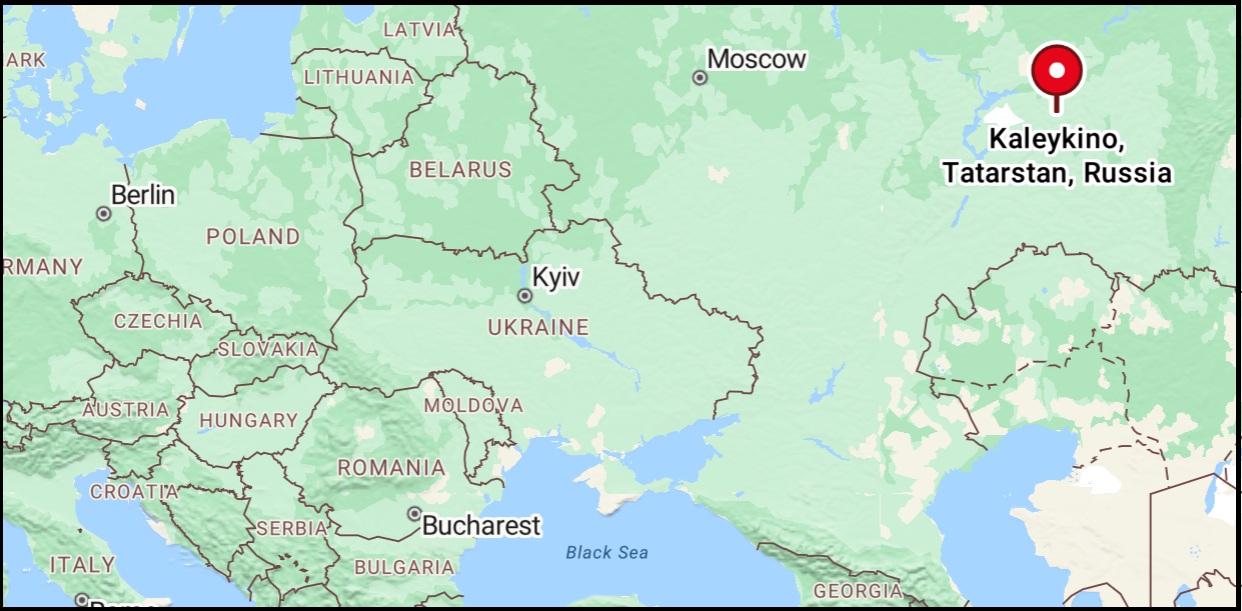
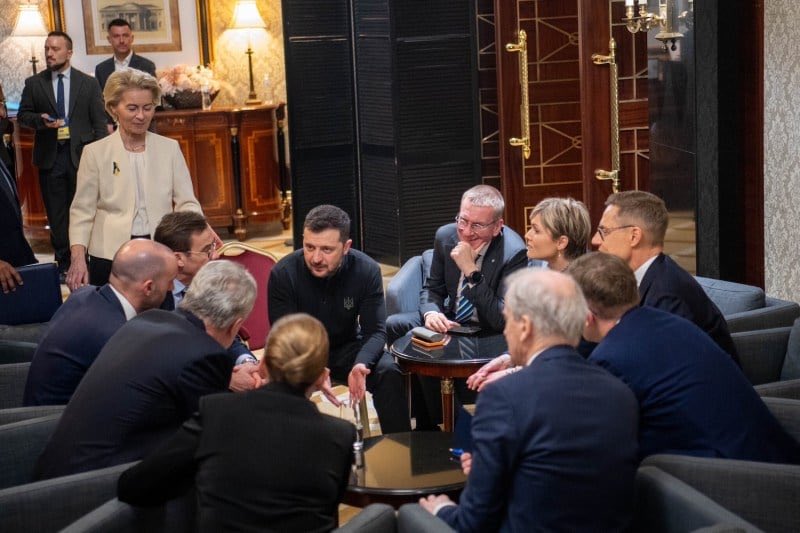

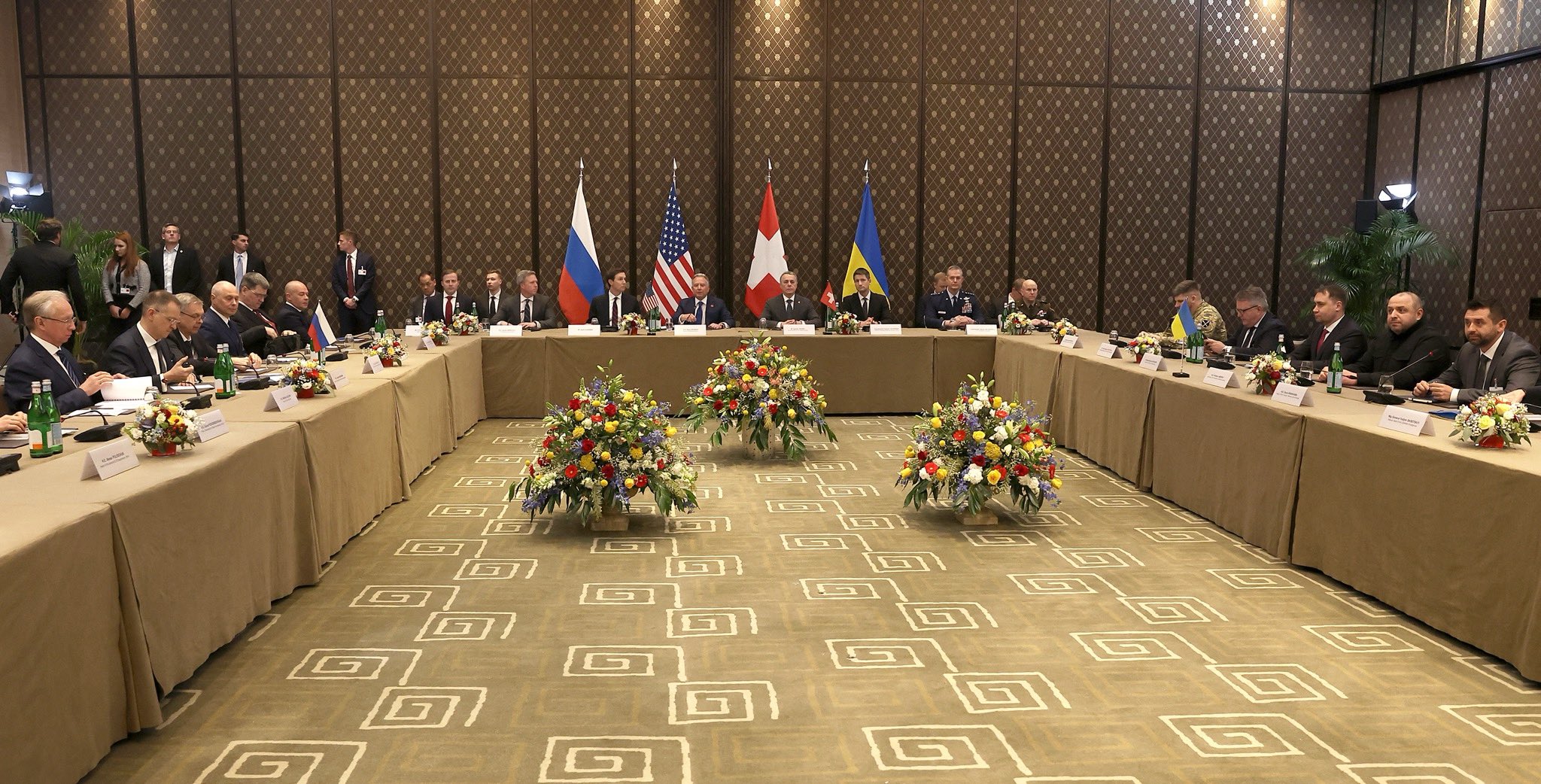
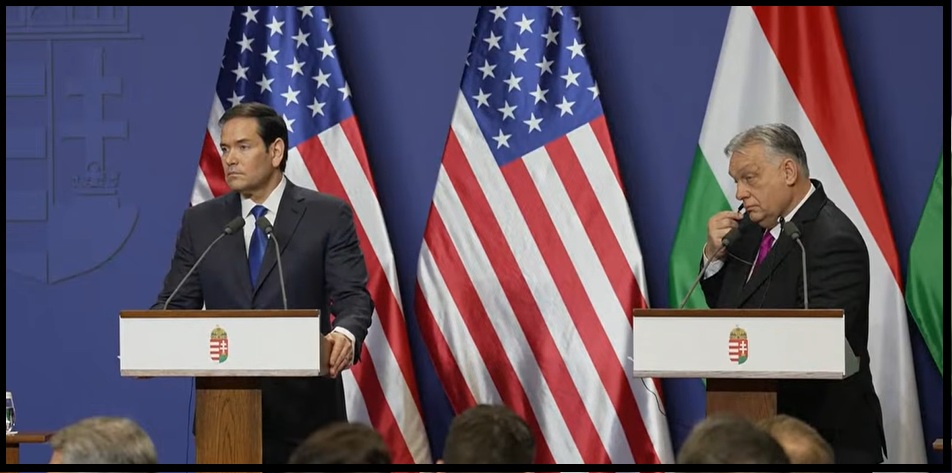
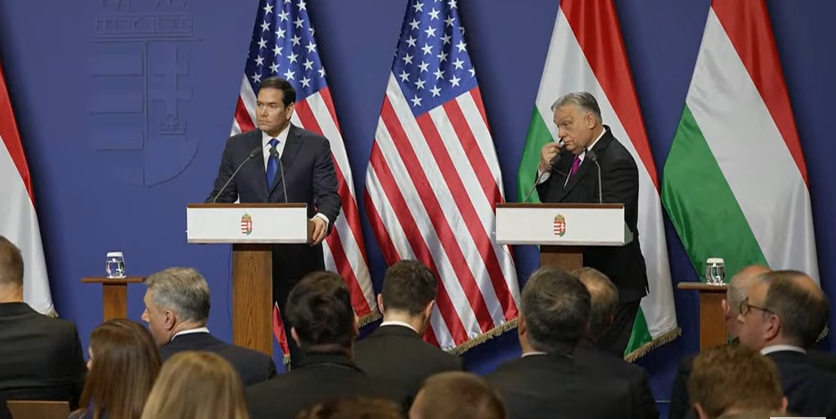
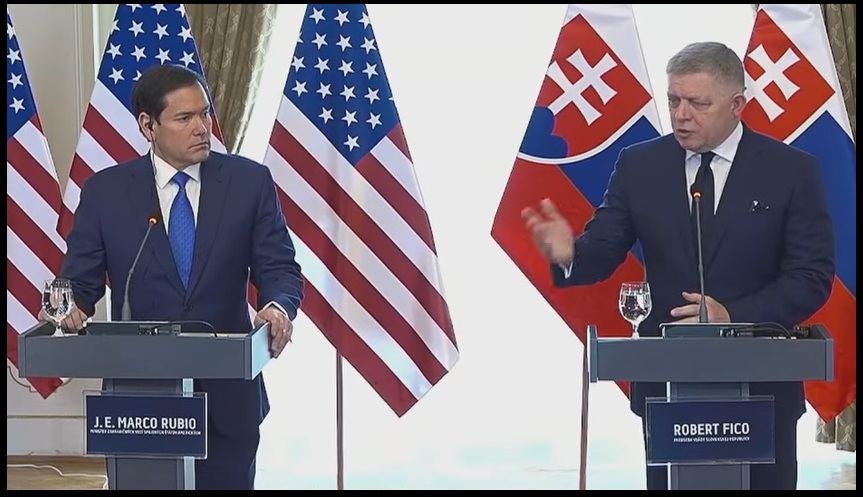
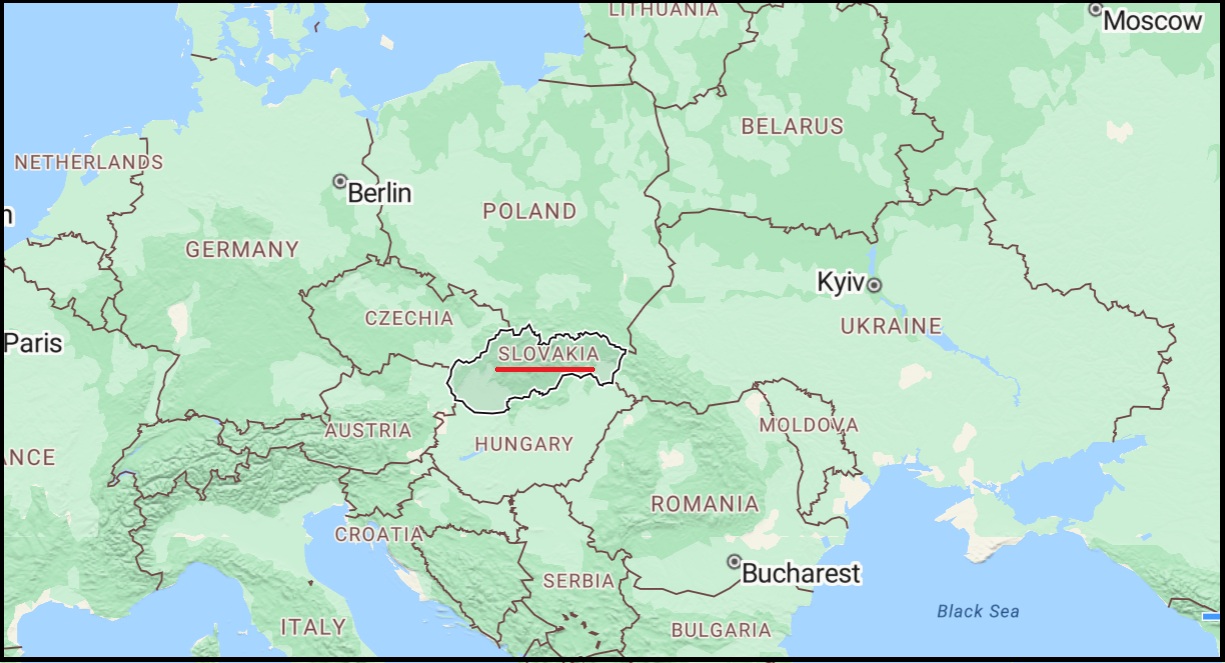
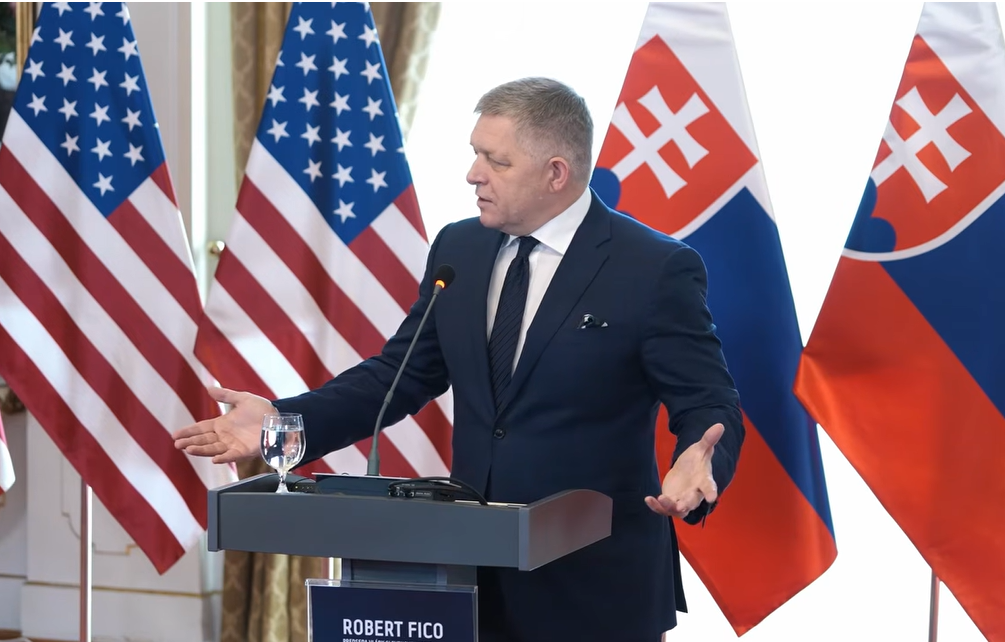
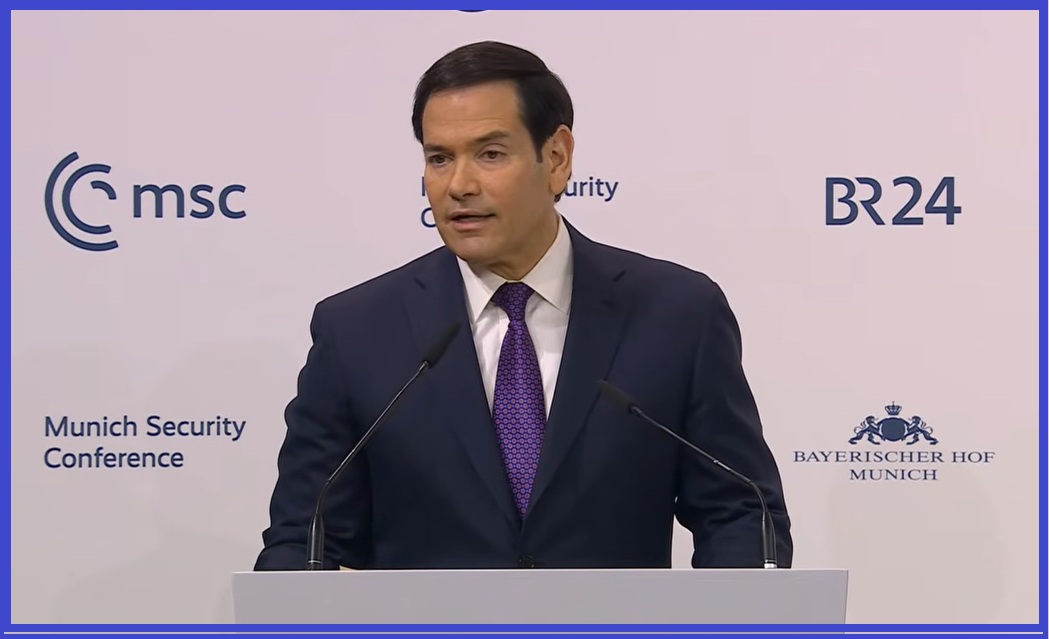


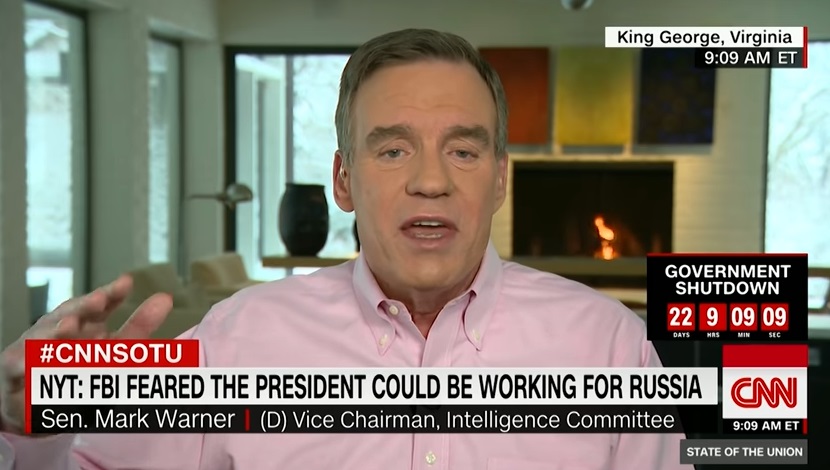
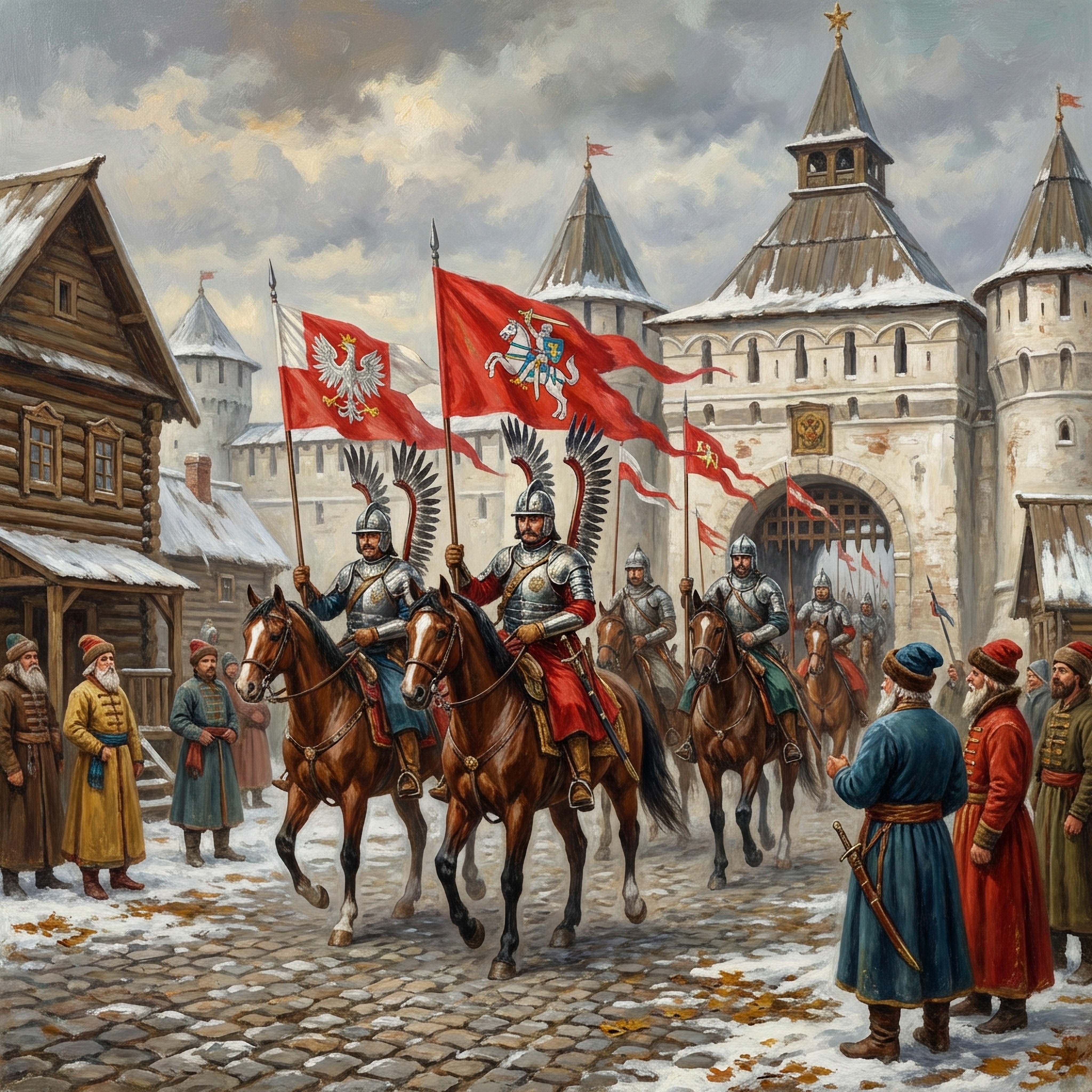
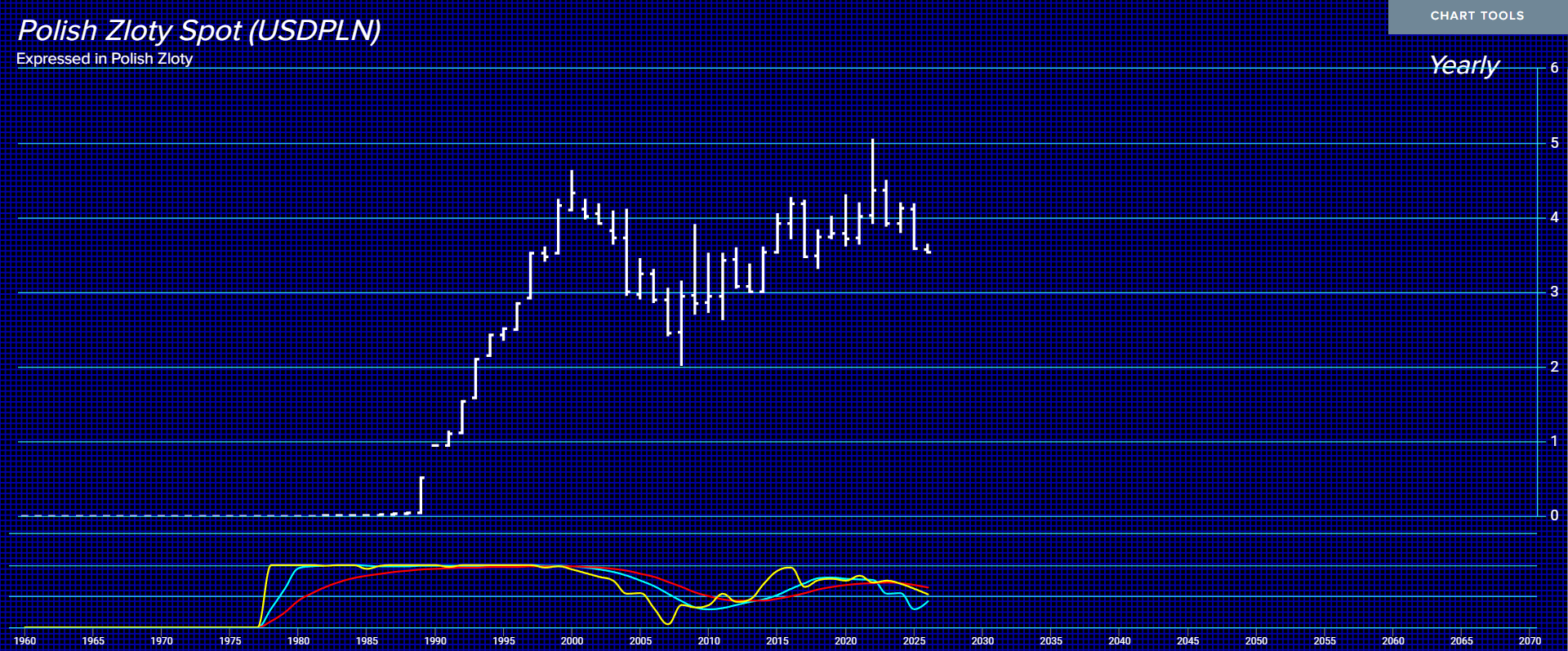

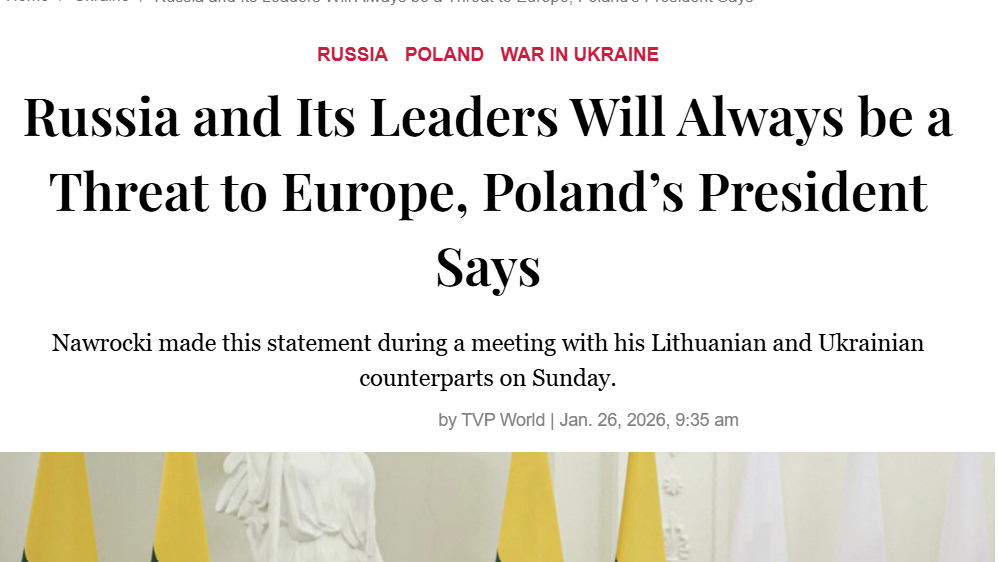
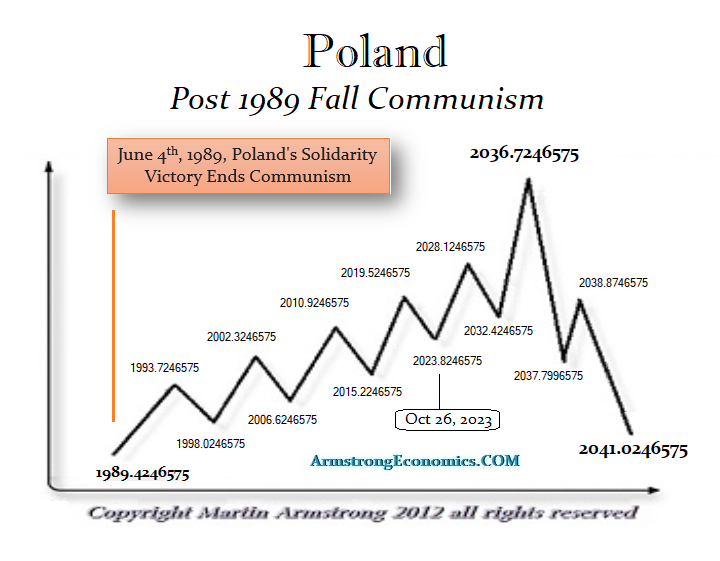

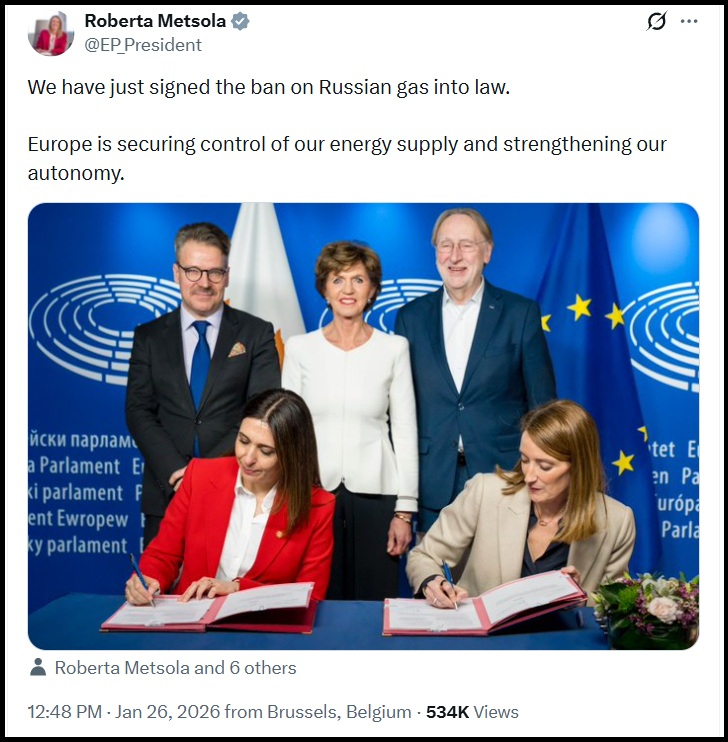
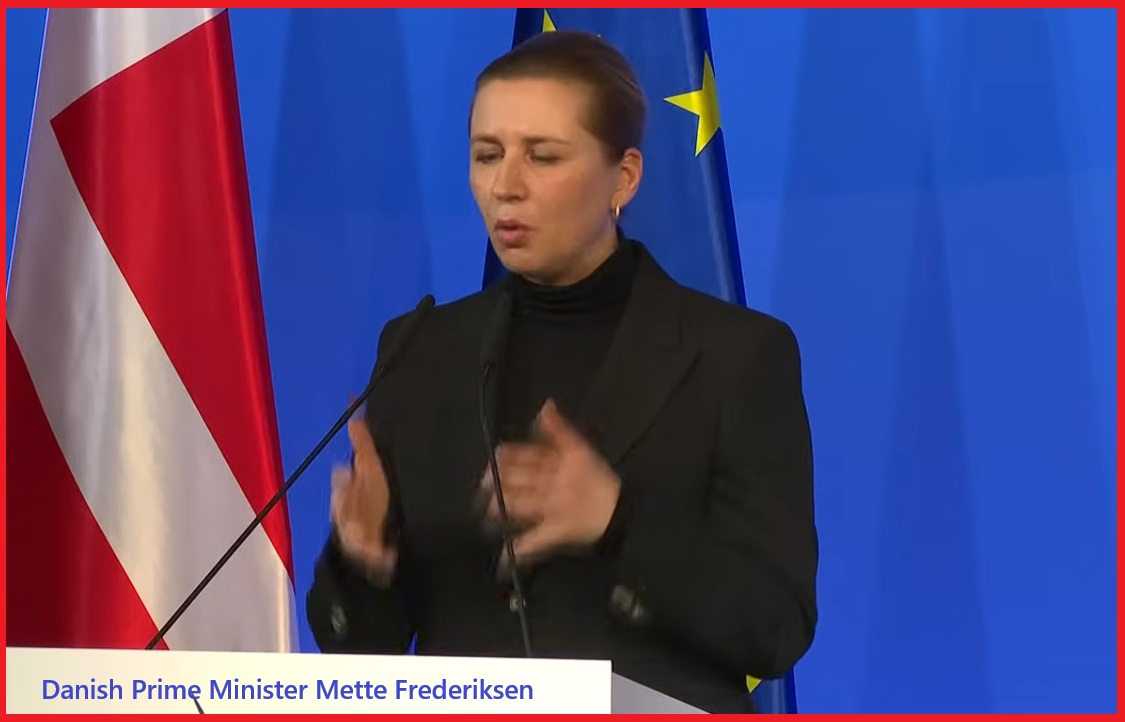
 Centinel2012