While Easter is the celebration of the Resurrection of Christ in Christianity, there are those who claim that Easter bunnies and eggs are Pagan rituals. The tradition of the Easter bunny bringing eggs is an interesting mystery. No one knows for sure how these things became a part of Easter observances. The most we can say is that the word “Easter” is probably related to the word “east” (ost in German) and that the Saxons had a month they called Eosturmononath. The legend of the Easter bunny bringing eggs appears to have been brought to the United States by settlers from Germany, as was the case with Santa Claus.
The German tradition of the Easter bunny (or Oschter Haws) appears to have migrated to America in the 1700s from Germany with the immigrants. Since then, the Easter bunny has become the most commercially recognized symbol of Easter in the United States. In legend, the Easter bunny brings baskets filled with colored eggs, candy, and sometimes toys for children on the night before Easter. This is the same tradition as Santa Claus bringing gifts on Christmas Eve. The Easter bunny will typically hide them somewhere in the house or garden for the children to find. Hence, the Easter egg hunt.
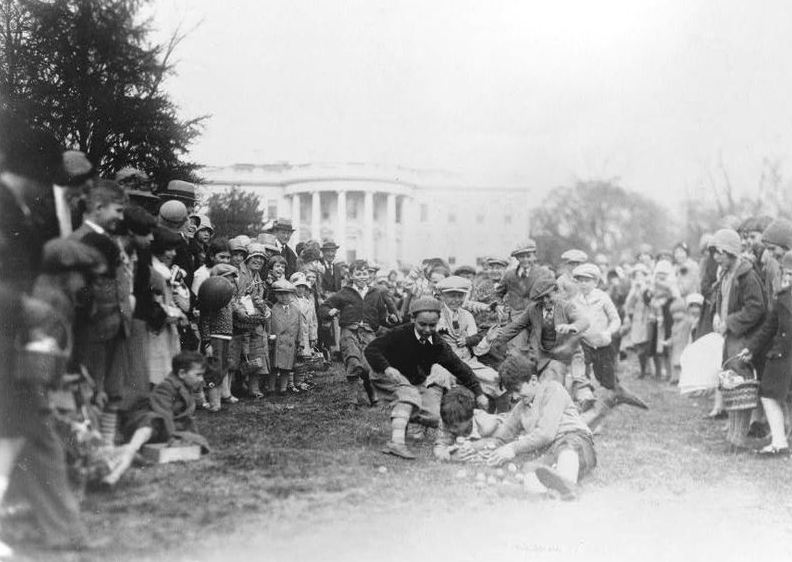
White House Easter Egg Roll – 1929
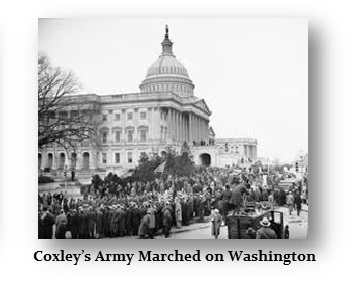
Believe it or not, the White House Easter egg roll began as a protest against Congress. By 1876, there was a four-year-old tradition on Easter Monday of an egg roll at the U.S. Capitol. The Easter Monday activity for the area schoolchildren began and schools would close on that Monday. These informal annual festivities, however, offended Rep. William Holman (1822 – 1897; Chairman of the Democrats). Holman pushed through legislation “to prevent any portion of the Capitol grounds and terraces from being used as play-grounds or otherwise, so far as may be necessary to protect the public property, turf and grass from destruction and injury.” Holman apparently did not like children. He viewed that they would ramble at will on the fresh green grass of the Capitol and he was out to put an end to it. As a result, he rammed through Congress the Turf Protection Law, which was signed by President Ulysses S. Grant in 1876. This Turf Protection Law was indeed ruthless, and it would be used to eventually break up Coxley’s Army protest of 1893 by arresting Coxley for walking in the grass.
The Turf Protection Act was a direct measure to ban children on Easter from using the grass as “play-grounds or otherwise.” President Ulysses S. Grant subsequently signed the bill into law. Up to then, schools in the Washington area would close the day after Easter, so that children could indeed “ramble” on the grass on the Capitol grounds while their parents picnicked nearby. The children rolled colored eggs down an embankment. This would often result in taring up the sod. The U.S. Capitol Police would issue tickets or warnings that they would enforce the new law.
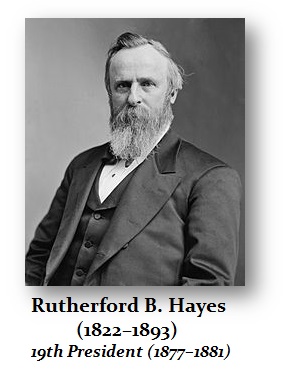
President Rutherford B. Hayes, however, viewed the law as absurd. After one boy called out to him: “Say! Say! Are you going to let us roll eggs in your yard?” Hayes ignored Congress and invited children to the White House lawn for an Easter egg roll on April 22, 1878. Ironically, Easter egg rolls began as a protest against Congress by children. Where Congress actually said “get off our lawn” in the Turk Protection Act, it took children to defy them. In 1885, Easter egg rollers went into the East Room in the White House, looking to meet President Grover Cleveland. When he came down from his office to greet them, he was moved by the children and an indoor egg roll reception became customary from thereon out.
So Easter has emerged as an interesting event, which in many ways was a protest against the status quo from the Resurrection of Christ to the Easter egg roll on the White House lawn. It is not some Pagan ritual despite some claiming that Christian parents should not allow their children to participate in traditional activities that refer to the Easter bunny. There are no real roots to some Pagan ritual, and the last time I checked, I don’t recall that bunnies lay eggs.
There is a tradition of painting hard-boiled eggs during springtime, which does predate Christianity. However, the egg was not a Pagan symbol, but a cultural symbol around the world that symbolizes new life, fertility, and rebirth. The only thing we can surmise is that it was simply, at best, a symbol that winter was over and spring was here with a new birth for everything that perhaps aligned with the spring equinox. There is no direct evidence that the egg was anything more than a symbol of the rebirth of the cycle once again.
Posted originally on the conservative tree house April 2, 2021 | Menagerie | 13 Comments
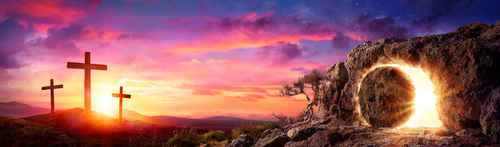
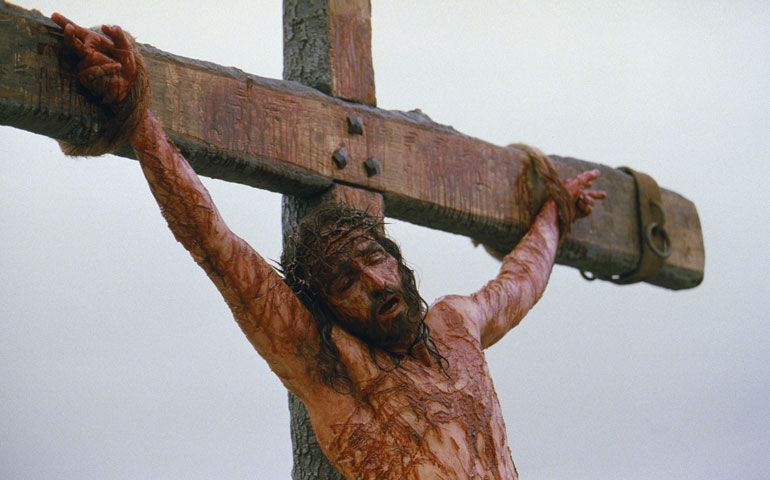
Today we observe Good Friday, the day of the death of Jesus. Many Christian Churches have different ways of observation, to prepare us for the coming resurrection of the Lord on Easter Sunday. Today, the sacrifices we have made during Lent culminate in our internalization of the great offering of Christ’s life. If we have been diligent in our Lenten preparations, Good Friday hits us with a power and force that brings us, literally and figuratively, to our knees with the grasp of what Jesus poured out for us. It becomes personal, a tiny sliver of the cross is buried in our heart. And so each year, we find that we give ourselves over to Christ just a little more through this time of penance and reflection.
It is our wish here in the Tree that you all, so dear to us, and to each other, have a blessed and holy weekend, this most holy time of the year. May the Lamb’s Good Friday sacrifice lead you to the joy we rightfully claim on Easter Sunday. This post mentions some things from my Catholic “language” or viewpoint, if you will. Please share some of the traditions and customs from your church or family with us. Are there special observations and services at your church this weekend?
This post is partially reproduced from previous posts.
The Easter Triduum, the marking of the days of Jesus’ passion and resurrection, the most important time of the church year, begins with the evening Mass of Holy Thursday, reaches its high point in the Easter Vigil, and closes on Easter Sunday evening. After preparing during the days of Lent, we celebrate these holiest of days in the Church year.
Jesus went out with his disciples across the Kidron valley to where there was a garden, into which he and his disciples entered. Judas his betrayer also knew the place, because Jesus had often met there with his disciples. So Judas got a band of soldiers and guards from the chief priests and the Pharisees and went there with lanterns, torches, and weapons. Jesus, knowing everything that was going to happen to him, went out and said to them, “Whom are you looking for?” They answered him, “Jesus the Nazorean.” He said to them, “I AM.” Judas his betrayer was also with them. When he said to them, “I AM, “ they turned away and fell to the ground. So he again asked them, “Whom are you looking for?” They said, “Jesus the Nazorean.” Jesus answered, “I told you that I AM. So if you are looking for me, let these men go.” This was to fulfill what he had said, “I have not lost any of those you gave me.” Then Simon Peter, who had a sword, drew it, struck the high priest’s slave, and cut off his right ear. The slave’s name was Malchus. Jesus said to Peter, “Put your sword into its scabbard. Shall I not drink the cup that the Father gave me?”
So the band of soldiers, the tribune, and the Jewish guards seized Jesus, bound him, and brought him to Annas first. He was the father-in-law of Caiaphas, who was high priest that year. It was Caiaphas who had counseled the Jews that it was better that one man should die rather than the people.
Simon Peter and another disciple followed Jesus. Now the other disciple was known to the high priest, and he entered the courtyard of the high priest with Jesus. But Peter stood at the gate outside. So the other disciple, the acquaintance of the high priest, went out and spoke to the gatekeeper and brought Peter in. Then the maid who was the gatekeeper said to Peter, “You are not one of this man’s disciples, are you?” He said, “I am not.” Now the slaves and the guards were standing around a charcoal fire that they had made, because it was cold, and were warming themselves. Peter was also standing there keeping warm.
The high priest questioned Jesus about his disciples and about his doctrine. Jesus answered him, “I have spoken publicly to the world. I have always taught in a synagogue or in the temple area where all the Jews gather, and in secret I have said nothing. Why ask me? Ask those who heard me what I said to them. They know what I said.” When he had said this, one of the temple guards standing there struck Jesus and said, “Is this the way you answer the high priest?” Jesus answered him, “If I have spoken wrongly, testify to the wrong; but if I have spoken rightly, why do you strike me?” Then Annas sent him bound to Caiaphas the high priest.
Now Simon Peter was standing there keeping warm. And they said to him, “You are not one of his disciples, are you?” He denied it and said, “I am not.” One of the slaves of the high priest, a relative of the one whose ear Peter had cut off, said, “Didn’t I see you in the garden with him?” Again Peter denied it. And immediately the cock crowed.
Then they brought Jesus from Caiaphas to the praetorium. It was morning. And they themselves did not enter the praetorium, in order not to be defiled so that they could eat the Passover. So Pilate came out to them and said, “What charge do you bring against this man?” They answered and said to him, “If he were not a criminal, we would not have handed him over to you.” At this, Pilate said to them, “Take him yourselves, and judge him according to your law.” The Jews answered him, “We do not have the right to execute anyone,“ in order that the word of Jesus might be fulfilled that he said indicating the kind of death he would die. So Pilate went back into the praetorium and summoned Jesus and said to him, “Are you the King of the Jews?” Jesus answered, “Do you say this on your own or have others told you about me?” Pilate answered, “I am not a Jew, am I? Your own nation and the chief priests handed you over to me. What have you done?” Jesus answered, “My kingdom does not belong to this world. If my kingdom did belong to this world, my attendants would be fighting to keep me from being handed over to the Jews. But as it is, my kingdom is not here.” So Pilate said to him, “Then you are a king?” Jesus answered, “You say I am a king. For this I was born and for this I came into the world, to testify to the truth. Everyone who belongs to the truth listens to my voice.” Pilate said to him, “What is truth?”
When he had said this, he again went out to the Jews and said to them, “I find no guilt in him. But you have a custom that I release one prisoner to you at Passover. Do you want me to release to you the King of the Jews?” They cried out again, “Not this one but Barabbas!” Now Barabbas was a revolutionary.
Then Pilate took Jesus and had him scourged. And the soldiers wove a crown out of thorns and placed it on his head, and clothed him in a purple cloak, and they came to him and said, “Hail, King of the Jews!” And they struck him repeatedly. Once more Pilate went out and said to them, “Look, I am bringing him out to you, so that you may know that I find no guilt in him.” So Jesus came out, wearing the crown of thorns and the purple cloak. And he said to them, “Behold, the man!” When the chief priests and the guards saw him they cried out, “Crucify him, crucify him!”
Pilate said to them, “Take him yourselves and crucify him. I find no guilt in him.” The Jews answered, “We have a law, and according to that law he ought to die, because he made himself the Son of God.” Now when Pilate heard this statement, he became even more afraid, and went back into the praetorium and said to Jesus, “Where are you from?” Jesus did not answer him. So Pilate said to him, “Do you not speak to me? Do you not know that I have power to release you and I have power to crucify you?” Jesus answered him, “You would have no power over me if it had not been given to you from above. For this reason the one who handed me over to you has the greater sin.” Consequently, Pilate tried to release him; but the Jews cried out, “If you release him, you are not a Friend of Caesar. Everyone who makes himself a king opposes Caesar.”
When Pilate heard these words he brought Jesus out and seated him on the judge’s bench in the place called Stone Pavement, in Hebrew, Gabbatha. It was preparation day for Passover, and it was about noon. And he said to the Jews, “Behold, your king!” They cried out, “Take him away, take him away! Crucify him!” Pilate said to them, “Shall I crucify your king?” The chief priests answered, “We have no king but Caesar.” Then he handed him over to them to be crucified.
So they took Jesus, and, carrying the cross himself, he went out to what is called the Place of the Skull, in Hebrew, Golgotha. There they crucified him, and with him two others, one on either side, with Jesus in the middle. Pilate also had an inscription written and put on the cross. It read, “Jesus the Nazorean, the King of the Jews.” Now many of the Jews read this inscription, because the place where Jesus was crucified was near the city; and it was written in Hebrew, Latin, and Greek. So the chief priests of the Jews said to Pilate, “Do not write ‘The King of the Jews,’ but that he said, ‘I am the King of the Jews’.” Pilate answered, “What I have written, I have written.”
When the soldiers had crucified Jesus, they took his clothes and divided them into four shares, a share for each soldier. They also took his tunic, but the tunic was seamless, woven in one piece from the top down. So they said to one another, “Let’s not tear it, but cast lots for it to see whose it will be, “ in order that the passage of Scripture might be fulfilled that says: They divided my garments among them, and for my vesture they cast lots. This is what the soldiers did. Standing by the cross of Jesus were his mother and his mother’s sister, Mary the wife of Clopas, and Mary of Magdala. When Jesus saw his mother and the disciple there whom he loved he said to his mother, “Woman, behold, your son.” Then he said to the disciple, “Behold, your mother.” And from that hour the disciple took her into his home.
After this, aware that everything was now finished, in order that the Scripture might be fulfilled, Jesus said, “I thirst.” There was a vessel filled with common wine. So they put a sponge soaked in wine on a sprig of hyssop and put it up to his mouth. When Jesus had taken the wine, he said, “It is finished.” And bowing his head, he handed over the spirit.
Here all kneel and pause for a short time.
Now since it was preparation day, in order that the bodies might not remain on the cross on the sabbath, for the sabbath day of that week was a solemn one, the Jews asked Pilate that their legs be broken and that they be taken down. So the soldiers came and broke the legs of the first and then of the other one who was crucified with Jesus. But when they came to Jesus and saw that he was already dead, they did not break his legs, but one soldier thrust his lance into his side, and immediately blood and water flowed out. An eyewitness has testified, and his testimony is true; he knows that he is speaking the truth, so that you also may come to believe. For this happened so that the Scripture passage might be fulfilled: Not a bone of it will be broken. And again another passage says: They will look upon him whom they have pierced.
After this, Joseph of Arimathea, secretly a disciple of Jesus for fear of the Jews, asked Pilate if he could remove the body of Jesus. And Pilate permitted it. So he came and took his body. Nicodemus, the one who had first come to him at night, also came bringing a mixture of myrrh and aloes weighing about one hundred pounds. They took the body of Jesus and bound it with burial cloths along with the spices, according to the Jewish burial custom. Now in the place where he had been crucified there was a garden, and in the garden a new tomb, in which no one had yet been buried. So they laid Jesus there because of the Jewish preparation day; for the tomb was close by.
I would also like to share a paragraph from The Catechism of the Catholic Church. In Her Magisterial teaching of the faith and in the witness of her saints, the Church has never forgotten that “sinners were the authors and the ministers of all the sufferings the Divine Redeemer endured.” Taking into account the fact that our sins affect Christ himself, the Church does not hesitate to impute to Christians the gravest responsibility for the torment inflicted upon Jesus, a responsiblity with which they have all too often burdened the Jews alone.
Some Greeks who had come to worship at the Passover Feast came to Philip, who was from Bethsaida in Galilee, and asked him, “Sir, we would like to see Jesus.” Philip went and told Andrew; then Andrew and Philip went and told Jesus. Jesus answered them, “The hour has come for the Son of Man to be glorified. Amen, amen, I say to you, unless a grain of wheat falls to the ground and dies, it remains just a grain of wheat; but if it dies, it produces much fruit. Whoever loves his life loses it, and whoever hates his life in this world will preserve it for eternal life. Whoever serves me must follow me, and where I am, there also will my servant be. The Father will honor whoever serves me.
“I am troubled now. Yet what should I say? ‘Father, save me from this hour’? But it was for this purpose that I came to this hour. Father, glorify your name.” Then a voice came from heaven, “I have glorified it and will glorify it again.” The crowd there heard it and said it was thunder; but others said, “An angel has spoken to him.” Jesus answered and said, “This voice did not come for my sake but for yours. Now is the time of judgment on this world; now the ruler of this world will be driven out. And when I am lifted up from the earth, I will draw everyone to myself.” He said this indicating the kind of death he would die.Posted in Uncategorized
Since the Passover of the Jews was near, Jesus went up to Jerusalem. He found in the temple area those who sold oxen, sheep, and doves, as well as the money changers seated there. He made a whip out of cords and drove them all out of the temple area, with the sheep and oxen, and spilled the coins of the money changers and overturned their tables, and to those who sold doves he said, “Take these out of here, and stop making my Father’s house a marketplace.” His disciples recalled the words of Scripture, Zeal for your house will consume me. At this the Jews answered and said to him, “What sign can you show us for doing this?” Jesus answered and said to them, “Destroy this temple and in three days I will raise it up.” The Jews said, “This temple has been under construction for forty-six years, and you will raise it up in three days?” But he was speaking about the temple of his body. Therefore, when he was raised from the dead, his disciples remembered that he had said this, and they came to believe the Scripture and the word Jesus had spoken.
While he was in Jerusalem for the feast of Passover, many began to believe in his name when they saw the signs he was doing. But Jesus would not trust himself to them because he knew them all, and did not need anyone to testify about human nature. He himself understood it well.
Even now, says the LORD, return to me with your whole heart, with fasting, and weeping, and mourning; Rend your hearts, not your garments, and return to the LORD, your God. For gracious and merciful is he, slow to anger, rich in kindness, and relenting in punishment. Perhaps he will again relent and leave behind him a blessing, Offerings and libations for the LORD, your God.
Blow the trumpet in Zion! proclaim a fast, call an assembly; Gather the people, notify the congregation; Assemble the elders, gather the children and the infants at the breast; Let the bridegroom quit his room and the bride her chamber. Between the porch and the altar let the priests, the ministers of the LORD, weep, And say, “Spare, O LORD, your people, and make not your heritage a reproach, with the nations ruling over them! Why should they say among the peoples, ‘Where is their God?’”
Then the LORD was stirred to concern for his land and took pity on his people.
Many people associate the season of Lent with Catholicism, but that no longer holds true. Many other churches and people are choosing to observe the forty days (not including Sundays) before Easter. Lent is a time of penance, of choosing to look closely at our lives and invite the Holy Spirit in to help us clean house.
Often we will choose to give up something, a sacrifice we offer to the Lord, but also something we use as a way to remind us to be more holy, more dependent on God. We fast on Ash Wednesday and Good Friday, and we abstain from meat on Fridays as well, although many Catholics do not understand that we still have an obligation to fast on Fridays or substitute another penitential practice year round. We are called to give alms during Lent.
These practices are meant to help us prepare to meet Jesus on Easter Sunday, having walked these six weeks with him toward Calvary, fasting as he fasted in the desert, carrying our cross as he carried his, doing the will of the Father as Jesus taught us so well.
Like Mary, we hope to find ourselves at the foot of the cross on Good Friday, still with our Savior, looking with a more hopeful and receptive heart toward the Resurrection.
If you are not a member of a church, or your particular church does not have any Ash Wednesday service, you are welcome to participate at any Catholic Church. You do not have to be Catholic to attend the service or receive the ashes. I’m sure that is true of other denominations as well.
Catholics, and many other Protestant denominations follow a liturgical calendar, which I find to be of great aid to me daily and yearly in my attempt to follow Jesus. Advent begins our new Church year, and we look forward to the birth of Jesus. We then celebrate Christmas for an Octave, and the season ends with Epiphany. Soon after comes Lent, and we cast our eyes toward Holy Week, and the death, and Resurrection, and we again spend eight days, another Octave, celebrating Easter. After Pentecost comes the long stretch of what the Church call Ordinary Time before we start again with Advent.
I find this yearly journey helps me keep an eye on where I am going. It helps me not just tread water spiritually, but make progress, and to more “live out” the life of Christ.
If your church has special services today or during Lent, please tell us about it, especially if visitors are welcome to participate. And don’t forget the Knights of Columbus fish fry on Fridays! Usually for five or six bucks you’ll get a get supper and help the Knights raise money for their charitable causes.
This post, and all of those you will encounter during Lent and Easter are meant to encourage us in our worship. If you choose not to worship, are not Christian, or have a grudge against specific faiths such as Catholicism , there are many forums online where you can debate or condemn. This is not one of them, and I will without any second chances ban anyone who breaks that rule. I’m sorry that this has become a necessary warning, but it has.
Tens-of-thousands traveled to Washington, D.C., today to participate in the 2020 Prayer March with Franklin Graham. People from all 50 states assembled in prayer for our divided nation. Vice-President Mike Pence delivered remarks on behalf of the administration.
.
Cissie Graham Lynch and Mike Huckabee provided commentary during the live broadcast event.
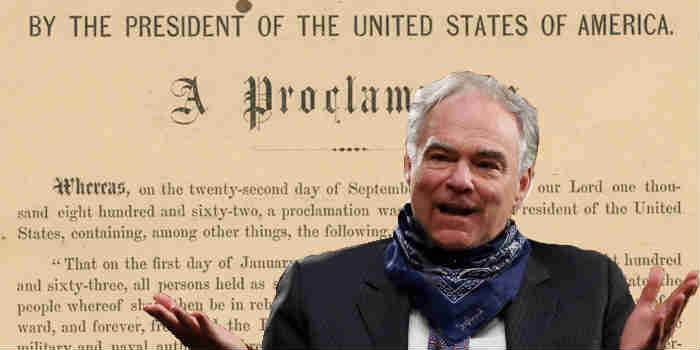
This past Tuesday, Senator Tim Kaine (D-Va.) proved himself to be an utter embarrassment to the good people of Virginia in a speech he gave in the Senate by his claim that the United States “created” slavery and “didn’t inherit slavery from anybody.” Senator Kaine was giving a speech in support of the Justice in Policing Act of 2020, a bill that Senator Cory Booker (D-N.J.) and Senator Kamala Harris (D-CA.) jointly introduced into the Senate. Tim Kaine may want to check reputable history books rather than relying primarily upon the pious propaganda from the New York Times’ “1619 Project,” which is an outright distortion of American history.
Kaine is a Virginian, yet historically challenged
Kaine recently urged fellow senators to “dismantle the structures of racism that our federal, state, and local governments carefully erected and maintained over centuries.” Kaine the anti-historian has explained:
The first African Americans sent into the English colonies…were slaves, they had been captured against their will, but they landed in colonies that didn’t have slavery — there were no laws about slavery in the colonies at that time… The United States didn’t inherit slavery from anybody. We created it. It got created by the Virginia General Assembly and the legislatures of other states. It got created by the court systems in colonial America that enforced fugitive slave laws.
What Kaine would be challenged to explain, either due to ignorance or deception, is the the “Virginia General Assembly” in 1619 consisted of the royal Governor appointed by the King of England, a Council of State appointed by the Virginia Company, as well as 22 local land owners, elected only by owners of land via the Virginia Company, via the permission from the King of England. That was how monarchy operated in 1619. Kaine could also be challenged to explain that the War for Independence from British tyranny did not simply end the slavery that had been implemented on the plantations. Kaine may do well to catch up by reading the Declaration of Independence that condemned the King for allowing colonies to be poisoned by slavery.
Kaine is a Virginian, yet historically challenged, and he would likely not be aware of the pains it took for another Virginian, former President George Washington, to free his slaves in that state, even after victory over the daunting British government. The laws supporting the “peculiar institution of African slavery” were established by the British government. George Washington did free his slaves, but revisionist historians omit this history. Yet, Washington’s actions of freeing his slaves were quite controversial in the time he lived. Despite fierce opposition and severe resistance, he made it happen.
With the help of former Virginia governor, Thomas Jefferson, Washington managed to repeal the old British law regarding manumission of slaves
Despite Washington’s misgivings about slavery after he helped win independence for the United States, Washington had to fight to change the laws of Virginia that would allow a slave owner to free his slaves. During the period prior to 1782, British colonial law in Virginia restricted slave owners in their efforts to free their slaves. A slave owner could only set a slave free for “meritorious service” and only with the approval of the Governor and his selected “council” (other landed slave owners). However, in 1782, with the help of former Virginia governor, Thomas Jefferson, Washington managed to repeal the old British law regarding manumission of slaves. Emancipation of slaves under the new U.S. law was permitted through a split allocation in a deed from the sale of land, or through one’s last will and testament.
Washington had tried in vain to sell his property. Ultimately, a few months before he passed away, he drafted his last Will and testament that stipulated the freeing of all of his slaves upon Martha’s death. He had lamented that he wished he could free all the slaves at Mt. Vernon, but they did not all belong to him. Some belonged to Martha’s heirs, and they were not even hers to free under the state law.
Complicating this inheritance issue was the fact that over the years after their marriage, Washington’s slaves had intermarried with Martha’s slaves, and law required that they would have to be returned or taken in by the heirs of her first husband. If Washington freed his slaves without being able to free Martha’s slaves, it would have divided the various families, and that was something Washington did not want to do.
Washington also stipulated in his will that the elderly ex-slaves would be provided for, specifically clothed and fed, by his direct heirs, and the younger, freed children would be taught to read, to write, and some valuable trade in order to provide support for themselves. Martha Washington actually carried out her husband’s wishes to free the slaves within twelve months of his death and ultimately allowed them to stay on at Mt. Vernon if they had family members there.
Juneteenth was the outcome of the practical fulfillment of President Abraham Lincoln’s Emancipation Proclamation
Indeed, former President George Washington was a man ahead of his time because his personal emancipation of his slaves set the precedent for another president to create another Emancipation Proclamation, but it proved as controversial as Washington’s emancipation.
Juneteenth was the outcome of the practical fulfillment of President Abraham Lincoln’s Emancipation Proclamation. Juneteenth was initially celebrated upon announcement of Union Army “General Order No. 3” in Galveston, Texas. However, this military order was a military mandate. The southern Democrats had preferred to fight to hold onto their “rights” to own other human beings. There was no intent to follow any precedent that had been set by George Washington or the northern states. The Democrat slave owners had to be forced by the Union military to emancipate their slaves.
Unfortunately, President Lincoln was murdered in April, less than a week after the Civil War ended, so any basis for his plans for freeing the slaves was handled by the Union Army. And unfortunately, over 620,000 men and boys died during the American Civil War. Americans just celebrated Memorial Day at the end of May, a holiday born from the ashes and loss during the Civil War. This Sunday, Americans celebrate Father’s Day, but consider this: over 300,000 boys and men died so that freedom could be extended to the former slaves. Among those who gave their lives for that freedom, there were so many fathers and would be fathers whose lives were cut short because the evil of slavery had to be rectified.
Juneteenth should be celebrated because liberation should be celebrated. Juneteenth should be celebrated without “white guilt.” 300,000 plus boys and men paid in blood for the sins of slavery in America owners. Their blood should wipe away any “white guilt” unless of course, like Tim Kaine and the Democrats, people get fixated upon it and want to displace their guilt upon their willing victims. Fanning the flames of racism (historical, institutionalized, or manufactured) keeps American citizens prisoners to the past.
Juneteenth should continue to be celebrated as Freedom Day for all people because a victory over tyranny should always be celebrated.
Earlier today President Trump and First Lady Melania participated in a tree planting ceremony in recognition of Arbor Day (ie. Earth Day). [Video & Transcript below]
.
[Transcript] – THE PRESIDENT: Hi, Mike. Hi. David, hi. Please, thank you. Everyone is very far away from each other. That’s good. We’re learning, right? Hi, Kevin. That’s really nice. Well, this is great to be here. And we’re doing something I love doing: planting trees. I’ve always loved it. And we get great trees.
The First Lady and I are very grateful to be here on the South Lawn of the White House as we celebrate the 50th annual Earth Day, National Park Week, and the upcoming Arbor Day. And that’s going to be — tell me, David?
SECRETARY BERNHARDT: Friday.
THE PRESIDENT: That’s right. Friday. Thank you.
As more than 180 nations around the world battle the vicious coronavirus, we continue to mourn the precious souls who have been lost — so sadly lost and so unnecessarily lost. It should’ve been stopped, and it should’ve been stopped right where it started. And everyone knows where it started. But in this time of trial, the beauty of springtime fills us with the peace and the hope of renewal.
We’re pleased to be joined by our great Vice President Mike Pence. Please, Mike, stand up. (Applause.) You have done such a great job on getting us open again. We’re opening again, Mike. It’s starting to move. A lot of states are in great shape and they’re starting to move it along.
And very importantly, Karen Pence, who has been so fantastic and done such a great job representing the country. Thank you, Karen. Beautiful job. (Applause.)
Also here are Secretaries David Bernhardt; Sonny Perdue; Administrator Wheeler — Andrew Wheeler, thank you; and Leader Kevin McCarthy. And what a job he has done. And good vote the other day, yesterday. That was good.
LEADER MCCARTHY: (Inaudible.)
THE PRESIDENT: How’s that — no, but previous to that. And when are you voting on the —
LEADER MCCARTHY: Thursday.
THE PRESIDENT: Thursday? Good. Is there — is that a guarantee or — there’s no guarantee.
LEADER MCCARTHY: (Inaudible.)
THE PRESIDENT: There’s never a guarantee when you’re dealing with people, right?
LEADER MCCARTHY: Yes, sir.
THE PRESIDENT: But anyway — but it’s in good shape, right? Yeah. Thank you, Kevin, very much.
On this special occasion, we are renewing our strong national commitment on conserving the wonder of God’s creation. One of the most important ways we uphold this tradition is by protecting our priceless national parks and our public lands. To support our all-out war against the virus, many of the places that we have here were temporarily closing. But we will — we will have them open quickly. As we said, we’re starting to open our country again.
Thanks to our significant progress against the invisible enemy, I am pleased to announce that, in line with my administration’s Guidelines for Opening Up America Again, we will begin to reopen our national parks and public lands for the American people to enjoy. So what is that? Now tell us about that, David.
SECRETARY BERNHARDT: We’ll roll out with the governors.
THE PRESIDENT: Right, roll out.
SECRETARY BERNHARDT: (Inaudible.)
THE PRESIDENT: Good.
SECRETARY BERNHARDT: We began to reopen facilities.
THE PRESIDENT: When will they start?
SECRETARY BERNHARDT: We’ll run right along the side of governors.
THE PRESIDENT: That’s great. Okay. That’s going to be very exciting. That’s going to be very exciting. You have a lot of land to open up too, don’t you, huh? People are going to be very happy.
On this Earth Day, we celebrate that America leads the world in environmental stewardship, which is so, so true. I see it. I see the love and devotion that so many people, like — David, like you give — and that we continue to have among the cleanest air and cleanest water anywhere on the planet Earth.
We’re also honoring our country’s heritage of conservation, including through the support of One Trillion Trees — and that’s the One Trillion Tree Initiative, which is a very big deal. We’ll be planting, over a period of time, one trillion trees. That’s a lot of trees, Kevin. How do we do that, huh? Do you have any ideas? (Laughs.)
LEADER MCCARTHY: Yes, sir, we do. We even have a bill.
THE PRESIDENT: That’s great. That’s great. That’s going to be exciting.
As a sign of our dedication, in a few moments, the First Lady and I will plant a maple tree right here on the South Lawn of the White House. Wherever the tree is — where is this tree now? That’s a beautiful straight trunk. That’s a triple-A tree. That’s great.
As our nation grows stronger and greater in the months and years to come — and we will. We will be bigger, better, stronger than ever before. You watch what’s happening. You see it happening already. There’s such spirit with the concept of the states starting to open. Such incredible spirit.
This tree will grow also and it will stand tall and beautiful. And the future generations will be looking at it, and they’ll say, “I wonder who planted that tree.” And we’ll say it was Kevin and David and Mike and Karen and a whole group of people. And we really appreciate it. But they’ll be admiring this tree and they’ll be admiring nine more trees. We’re planting 10 beautiful specimen trees. They’re specimens — all specimens. People may think that’s an exaggeration or that’s a Trump term; actually, they’re sold as specimens. And they cost more money, but they are better. I buy a lot of them.
And now I’d like to invite the Vice President up and Karen to say a few words, please. Thank you. (Applause.)
THE VICE PRESIDENT: Well, thank you, Mr. President. And it is a great honor for us to be here on the South Lawn with you and the First Lady, to be able to plant a tree of promise and a tree of hope.
I know we are here, in the midst of National Park Week, just few days before Arbor Day, on the 50th anniversary of Earth Day, to plant and commemorate this beautiful maple tree. But as you said, Mr. President, we also — we also gather at a time of great challenge in the life of our nation. But it’s a — it’s a time that the American people have met the challenge. And as you’ve observed, Mr. President, that with your leadership, the American people are — are beginning to step forward and states around the country are beginning to put into practice the Guidelines to Open Up America Again. And you’re a President who knows that America works when America is working.
And, on — on behalf of the entire White House Coronavirus Task Force, I can assure the American people that we’re going to work very closely with your governors every day to get America safely and responsibly back to work.
But today, with the planting of this tree, Mr. President, you also renew your commitment to preserve and protect and allow for the enjoyment of the vast natural resources of this nation.
I’ve often thought that the three pillars of American greatness are our faith, our freedom, and our vast natural resources. And today we celebrate that with the planting of this new tree. And we also celebrate it with a word from — from the Secretary that, at your direction, in the days ahead, we’ll work closely with governors to reopen our national parks so that the American people can enjoy the blessings of those — those extraordinary — those extraordinary places that our family has traveled to so many different times.
Mr. President, I can tell you that Karen and I have so many fond memories of — of loading up in the minivan, driving across the country, making our way to Yellowstone and the Grand Canyon and to Yosemite. And I know the American people are anxious to see us, on this Earth Day 2020, a few days from Arbor Day, they’re — they’re anxious to get back to enjoying all of those — those beautiful parks. And we’ll greatly welcome your direction.
And so we thank you for your leadership during this challenging time, Mr. President. We want to thank the First Lady for her extraordinary compassion and the way she supported American families throughout this ordeal. And I’m absolutely convinced that with your continued leadership, with the strong leadership that we’ve — we have at states across the country, with the cooperation of the American people, that our — our nation will be growing again soon, just like this beautiful maple will for many years to come.
So thank you, Mr. President. God bless you.
THE PRESIDENT: Thank you very much, Mike. Thank you very much. Kevin, would you come up and say a few words? And why don’t you stay right there, Mike? Perfect.
LEADER MCCARTHY: Mr. President, First Lady, and Vice President, Karen — our Second Lady: I want to thank you for your work. I want to thank you for your commitment for the health and safety of every human.
Today, we’re witnessing the planting of the tree of the hope and dream that we know tomorrow will be better than today, that the Earth will be stronger with our health tomorrow than it was today.
This is the first of 1 trillion trees that will be planted around the world. Trees are the lungs of the Earth. They inhale carbon dioxide and they exhale oxygen. When 1 trillion trees are planted around this Earth, that will remove the equivalent of two thirds of all manmade carbon dioxide — or of all carbon — since the Industrial Revolution until today.
So as you continue to work for the health of every human, you show today you are working to make sure the health is even greater with this Earth. So I congratulate you on this. And the first of 1 trillion just proves that America will lead the way in every industry, in every part, making it environmentally sound and common sense, but also lead the world in an opportunity that tomorrow will be better.
Thank you.
THE PRESIDENT: Thank you, Kevin. That’s beautiful. Thank you. He gave a lot of facts that a lot of people didn’t know, including me. I thought that — I just spoke with our great First Lady, and she said, “You know, it’d be wonderful for Karen Pence to say a few words.
People have no idea the incredible job Karen Pence does representing this nation. Everybody loves her. She’s special in every way. And, Karen, I’d like to have you say a few words, please. You — she didn’t know this, but I’d like — (laughter and applause).
THE SECOND LADY: Thank you, Mr. President. I — I do cherish the opportunity to speak because David and I were just talking about, while this tree makes the Earth better and stronger — we talked a lot about mental health. And that’s an issue that I know the First Lady has been dealing with her whole time that she’s been First Lady. But I just started doing a little bit with PREVENTS.
And we do want people to understand that, during this crisis, we need to also mitigate the effects that — on our mental health. And so we ask people to watch out for yourself, check in with yourself every day, check in with those you love. If there’s something that you like to do — for me, it’s painting; maybe it’s gardening, maybe it’s reading or cooking — we ask people to schedule that into your day so that you have a little bit of time that’s just for you each day. And then we also ask that you talk about the struggles, but also talk about the successes.
So as you have kids who are struggling with not having their graduation ceremony, or they’re not being able to go out and play sports, or they’re missing their friends or their teachers, it’s important to talk with them and let them get those issues out. But also talk about the successes, some of the great things that are happening while we’re having to stay at home — things you’re learning about your family, games you’re starting to play that maybe you didn’t play before.
And then, last of all, if you’re worried about somebody or you’re worried about yourself, please reach out. If you go to Facebook.com/WeArePREVENTS, there’s so much help out there. We don’t want anybody to feel like there isn’t help, because it’s okay to say, “I’m not okay.”
Thank you. (Applause.)
THE PRESIDENT: That was very nice. Thank you, Karen. Wow.
Armstrong Economics Blog/Religion
Re-Posted from Jan 23, 2020 by Martin Armstrong
COMMENT: Concerning the post today of the “Decline and Fall of Religion?”
I nearly fell out of my seat when you mentioned 1860 as a cyclic date. You mentioned the US Civil War. However, you may not be aware of the Baha’i faith which started in the early 1860’s with the prophet Bahá’u’lláh in Iran. The specific date depends on the source but the consensus is the early 1860’s.
While the Baha’i faith does not have the greatest number of total members, it is globally the second widest spread, and their books have been translated into more languages than the Christian Faith. According to the Baha’i’s, their prophet, Bahá’u’lláh, was prophesied to present himself in the 1860’s as was written in the books of the Zoroastrians, Hindu, Old Testament, and Koran.
One very interesting aspect of the religion is that Bahá’u’lláh claimed that the growth of humanity had progressed well enough that there would be no need for an ordained priesthood anymore. He also proclaimed that all major wars and turmoil that has been brought on humanity have been caused by priests and politicians. Therefore, in the Baha’i faith, there is no organized priesthood permitted and no members are allowed to become elected politicians.
They select their representatives from the intimacy of their small groups that meet in their own homes. These selected individuals then meet regionally and select their regional representatives. Ultimately, their global representatives are selected to serve for defined terms with only a modest food and housing allowance. No campaigning by individuals is allowed during the selection process. It becomes an obligatory duty for the length of the term. In other words, the selected individuals will ask themselves “Why me?”
I can just imagine the potentials for any government if local everyday individuals were selected in this manner to lead their regions and nations with obligatory defined term lengths. What a day for humanity when the selected president will ask themself the question “Why me?” rather than “Why not me?”
REPLY: Yes, the Baháʼí Faith began in Iran as was the case with the Zorasters. The Baháʼí Faith was established around 1863 and spread to various parts of the Middle East. It has been subjected to ongoing persecution ever since its inception. It is a small religion that is estimated to have between 5 and 8 million followers.
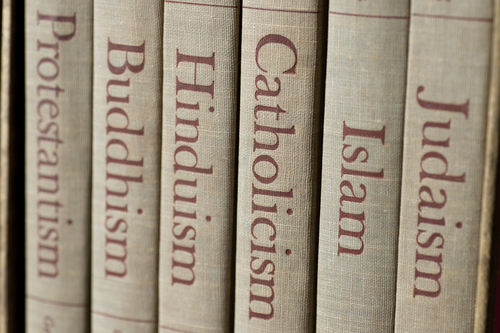
The 1860s was a major turning point in religion. There was even the birth of the Christian Methodist Episcopal Church during this time period. The Seventh-day Adventist Church also began in 1863 and this is when the Jehovah’s Witnesses also began about 1870. The following decade saw initial movements that began during the 1860s take shape formally creating the Theosophical Society (Eastern Theosophy) by 1875, Ethical Culture in 1877, and the Church of Christ, Scientist (Christian Science) by 1879. It was a major period of a search for new religions.
Of course, it was religion and the objection to slavery that led to the American Civil War. The 1860s was a major turning point in religion
I have created this site to help people have fun in the kitchen. I write about enjoying life both in and out of my kitchen. Life is short! Make the most of it and enjoy!
This is a library of News Events not reported by the Main Stream Media documenting & connecting the dots on How the Obama Marxist Liberal agenda is destroying America







 Centinel2012