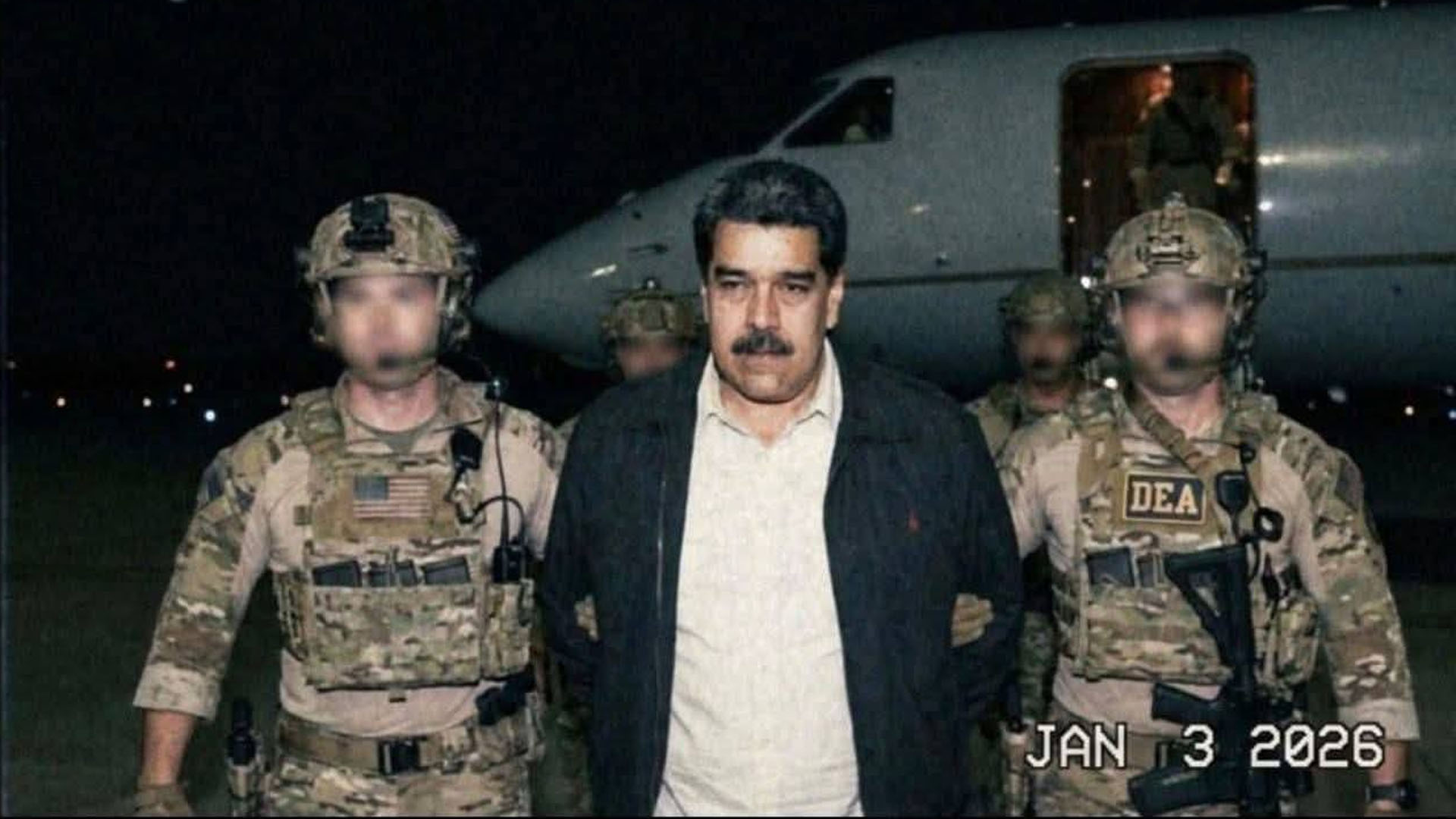
Maduro Bodyguard Reveals Stunning Information About U.S. Attack on Compound – Was a Sonic Weapon Deployed?


Posted originally on CTH on January 11, 2026 | Sundance

I first read and listened to the following account a few days ago and hesitated to share the story because what was described sounded surreal.  However, White House Press Secretary Karoline Leavitt has also shared these details giving the account some level of potential authenticity that did not exist before.
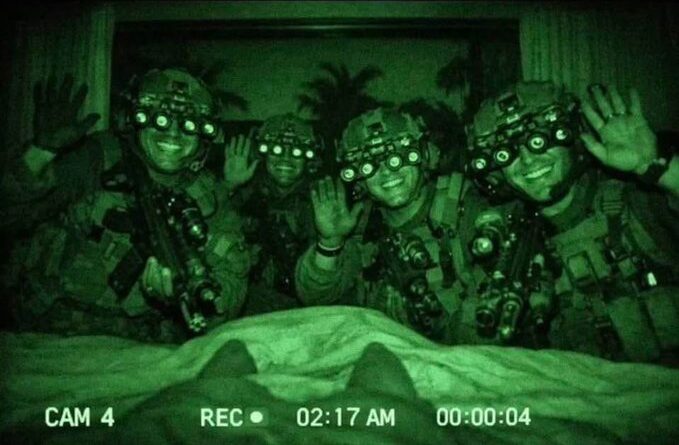
What is described about the attack on the compound of Nicolas Maduro is quite remarkable.  All electronic countermeasures, including radar were rendered ineffective after initial U.S. military strikes.

Then a wave of drones moved in and began targeting specific infrastructure.  Then a network of Venezuelan aircraft was destroyed on the ground. Then the helicopters arrived and the technology with the U.S. soldiers’ weapons was unlike anything the Cuban/Venezuelan military had ever encountered.

Maduro was being protected by approximately 300 armed soldiers. One of Maduro’s guards survived with injuries and gave an account in Spanish [LINK] that was also shared in English translation [LINK] The original video is below the transcript.

[TRANSCRIPT] – This account from a Venezuelan security guard loyal to Nicolás Maduro is absolutely chilling—and it explains a lot about why the tone across Latin America suddenly changed.

Security Guard: On the day of the operation, we didn’t hear anything coming. We were on guard, but suddenly all our radar systems shut down without any explanation. The next thing we saw were drones, a lot of drones, flying over our positions. We didn’t know how to react.

Interviewer: So what happened next? How was the main attack?

Security Guard: After those drones appeared, some helicopters arrived, but there were very few. I think barely eight helicopters. From those helicopters, soldiers came down, but a very small number. Maybe twenty men. But those men were technologically very advanced. They didn’t look like anything we’ve fought against before.

Interviewer: And then the battle began?

Security Guard: Yes, but it was a massacreWe were hundreds, but we had no chance. They were shooting with such precision and speed… it seemed like each soldier was firing 300 rounds per minute. We couldn’t do anything.

Interviewer: And your own weapons? Didn’t they help?

Security Guard: No help at all. Because it wasn’t just the weapons. At one point, they launched something—I don’t know how to describe it… it was like a very intense sound wave. Suddenly I felt like my head was exploding from the inside. We all started bleeding from the nose. Some were vomiting blood. We fell to the ground, unable to move.

Interviewer: And your comrades? Did they manage to resist?

Security Guard: No, not at all. Those twenty men, without a single casualty, killed hundreds of us. We had no way to compete with their technology, with their weapons. I swear, I’ve never seen anything like it. We couldn’t even stand up after that sonic weapon or whatever it was.

Interviewer: So, do you think the rest of the region should think twice before confronting the Americans?

Security Guard: Without a doubt. I’m sending a warning to anyone who thinks they can fight the United States. They have no idea what they’re capable of. After what I saw, I never want to be on the other side of that againThey’re not to be messed with.

Interviewer: And now that Trump has said Mexico is on the list, do you think the situation will change in Latin America?

Security Guard: Definitely. Everyone is already talking about this. No one wants to go through what we went through. Now everyone thinks twice. What happened here is going to change a lot of things, not just in Venezuela but throughout the region. {SOURCE}

.
It sounds like the U.S. Delta Force was moving like this:

Was a Sonic Weapon Deployed?

Interview: The Real Reason Behind Venezuela and Ukraine


Posted originally on Jan 11, 2026 by Martin Armstrong |  

Chevron CEO Mike Worth Outlines Current and Future Production Capacity of Venezuela Oil


Posted originally on CTH on January 10, 2026 | Sundance 

Energy Secretary Wright asked Chevron CEO Mike Wirth to give some information about the current status of the Venezuelan oil industry.  Chevron has been on the ground in Venezuela for a long period of time and has significant infrastructure investment already in place.

Wirth notes that with current personnel (3,000) and equipment (4 locations) on site, Chevron could likely double capacity almost immediately, however, from there it would take approximately 18-months to gain more significant outputs.

President Trump asked if Chevron was in a position of advantage from already having their people and material already in operation, Wright noted generally yes, they do; however, the opportunities for industrial capacity gains are significant.

.

Secretary Rubio Outlines the Three Phases of Stabilization in Venezuela


Posted originally on CTH on January 10, 2026 | Sundance

During the energy roundtable, Secretary Rubio made remarks outlining the three phases within the U.S. policy toward Venezuela.  Essentially the core of the policy is: (1) Stabilization; (2) Transition, and (3) a Return to sovereign representative democracy.

The initial phase is ‘stabilization,’ where the U.S. government is working with existing leadership in Venezuela under tight controls and clear expectations.  Reconciliation of political factions is supported. The U.S. leverage is maintained by financial and economic control, provided by the threat of U.S. military.  Venezuela’s oil production pays for U.S. oversight.

The second phase involves ‘transition’, where the civic and governing responsibilities are shared between the existing Venezuelan leadership and aligned policy of the U.S. government.  In the transitional phase the economic wealth is apportioned to the people of Venezuela with oversight by the U.S. government.

The third phase ‘sovereign representative democracy’ happens when the reformed government holds legitimate elections to decide the representative form of government, the voice of the people, within Venezuela.  The U.S. influence then begins to withdraw, and new sovereign political leadership takes control.

.

Topic, Venezuela – President Trump Participates in a Meeting with Oil and Gas Executives


Posted originally on CTH on January 10, 2026 | Sundance

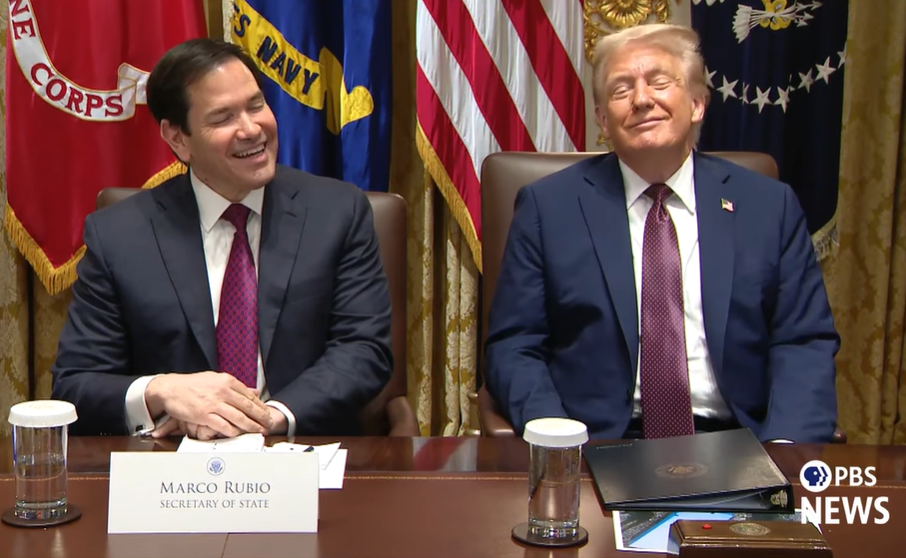
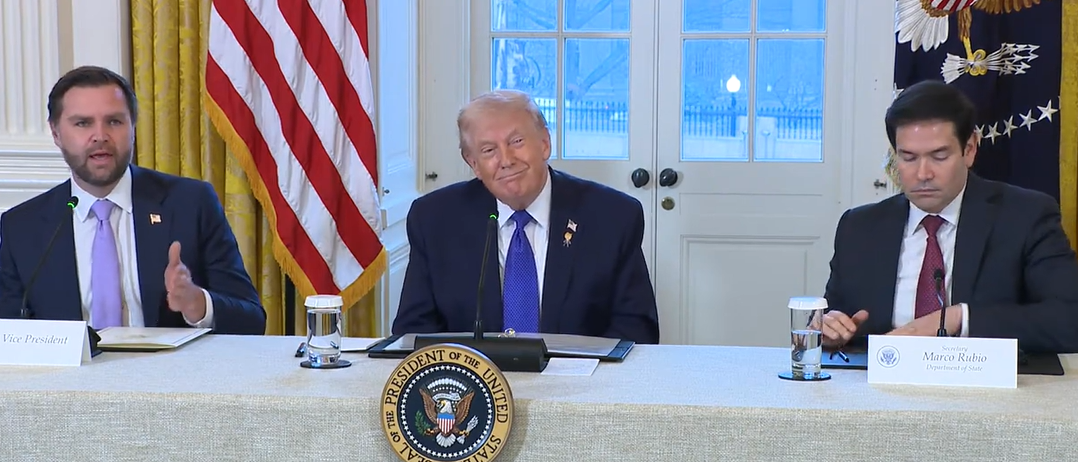
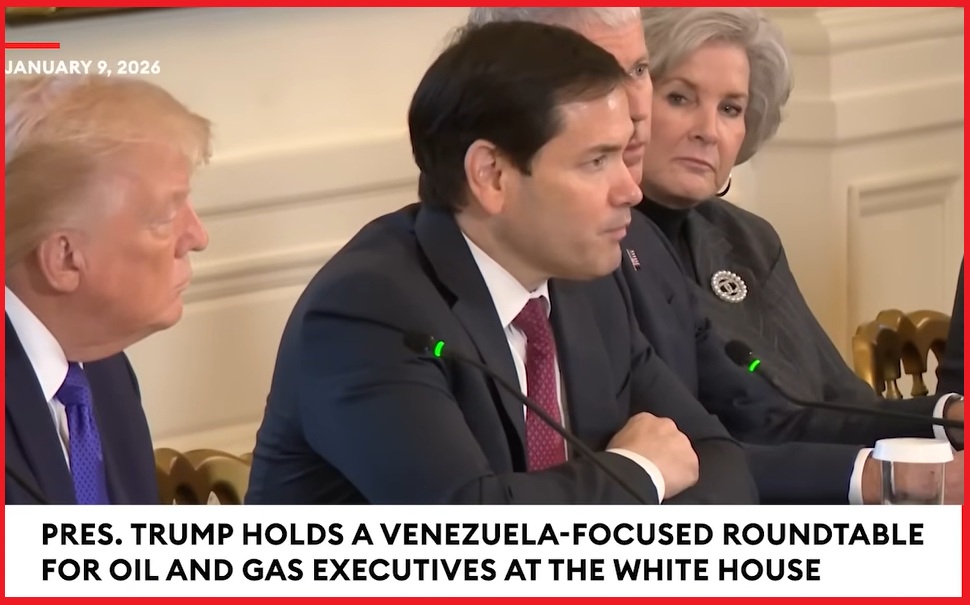
President Trump, Vice-President JD Vance and Secretary of State Marco Rubio participate in a roundtable discussion with major oil and gas executives on the issue of energy investment in Venezuela.

The primary concern for oil executives is stability within Venezuela.  The Maduro government previously seized the assets of U.S. oil companies, and the investment required to restart the industry at scale are significant.

.

Interim Venezuela President Delcy Rodriquez Begins Releasing Political Prisoners


Posted originally on CTH on January 9, 2026 | Sundance

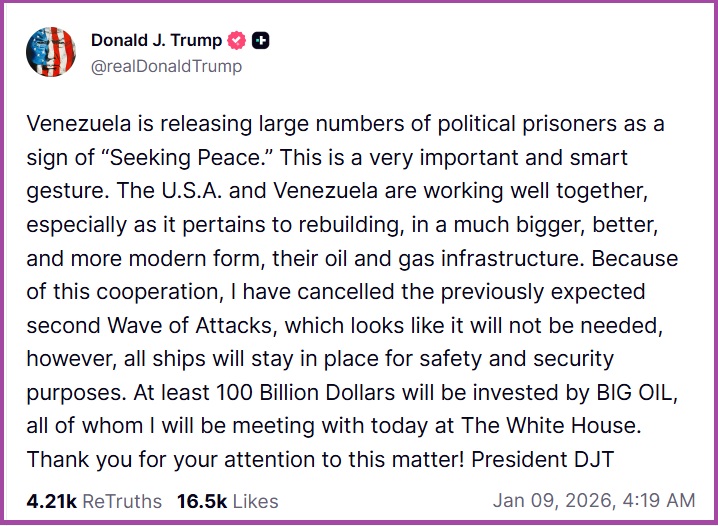
She really doesn’t have much choice.  President Trump has shown the Venezuelan government how the U.S. can put a complete stranglehold on the South American country if they do not adhere to the transition plans of Trump and Secretary of State Marco Rubio, the enforcer.

Following the U.S. capture of Nicolás Maduro, Venezuela’s new government under Delcy Rodríguez has begun releasing political prisoners in a bid to foster unity and peace. The change in Venezuelan politics comes directly as the result of President Trump using the military to block oil shipments, the major source of revenue for the nation.

The move seems to indicate a potential shift in Venezuela’s political landscape, though compliance with the Trump administration is likely happening through gritted teeth.

[SOURCE]

MIAMI – The interim government of Venezuela is releasing of “an important group” of Venezuelan and foreign political prisoners to guarantee unity and peace, according to Jorge Rodríguez, the president of the parliament and brother of the new president in charge of the South American country.

Rodríguez, who also represented now-deposed Venezuelan ruler Nicolás Maduro for years in political negotiations with the opposition and the United States, indicated Thursday that the government of his sister, Delcy Rodríguez, was working together with the rest of the state institutions to carry out what he defined as “a unilateral gesture” of the executive branch.

The measure comes three days after the swearing-in of Delcy Rodríguez, former vice president of Maduro’s government, following the armed, Saturday morning incursion of U.S. military forces in Caracas that culminated in the arrest of the socialist ruler and his wife Cilia Flores, and some 100 deaths.

Jorge Rodríguez, recently ratified as leader of the national parliament, avoided referring to those released as prisoners for political reasons and said that these releases were taking place simultaneous to his announcement, made at noon on Thursday.

[…] Rodríguez thanked, at times with a broken voice, the mediation of Brazilian President Luiz Inácio Lula Da Silva, the government of Qatar, the former president of Spain José Luis Rodríguez Zapatero and the institutions of the Venezuelan state that responded “in a prompt manner” to the order of his sister and interim president.

[…] Regarding the economic agreements between the United States and Venezuela, including the sale of crude oil from the South American country, Rodríguez insisted that it is only a “commercial transaction” between two countries with these ties for “many years. (more)

Meanwhile, back in Washington DC, the established UniParty is working earnestly on a public relations campaign to install their selected candidate, María Corina Machado.

Apparently, the Jeb Bush aligned Republican supporters of Maria Machado will be using the roadmap previously deployed by Volodymyr Zelenskyy to visit Congress, create a narrative and then work to influence the White House to support Mrs. Machado. The professionally Republican want Venezuela to be the next Ukraine.

[SOURCE]

Thankfully, President Trump and Secretary Rubio appear immune to the congressional pressure campaign.  While they have spoken in nice diplomatic terms about the WEF-aligned Maria Machado – there is no indication the Trump administration is going to change current approaches.

As of right now, the Trump/Rubio approach is to leverage the U.S. control over the wealth and income of Venezuela (oil production and exports), while retaining stability in the structures of government and pressuring the Delcy Rodriquez administration toward strong institutional reform and eventually a new election.

If Mrs. Maria Machado wins the election, then she will carry the support of the Venezuelan people into office.  Winning a legitimate election is a better outcome than being installed and domestically/geopolitically being viewed as a puppet of the U.S. government.

♦ Stabilize the government. ♦ Push strong democratic reform. ♦ Keep Cuba, Iran, China and Russia out of the influence equation. ♦ Control oil sales to ensure financial returns and benefits to the Venezuelan people, while ♦ planning and organizing free and fair elections.

China Loses Access to Venezuelan Oil


Posted originally on Jan 8, 2026 by Martin Armstrong |  

Image

China became Venezuela’s largest oil purchaser through oil-for-debt deals. Socialism failed, and the nation was desperate for funds, especially after being ostracized from Western trade. Beijing supplied Venezuela with credit in exchange for heavily discounted crude. China’s access to cheap oil from Venezuela came to a sudden halt after the US takeover.

China was purchasing around 778,000 barrels a day before Maduro’s capture. Venezuela had borrowed up to $100 billion from China in loans since 2007, using PDVSA crude sales to ChinaOil as collateral. Venezuela agreed to ship fixed volumes of crude to Chinese buyers through small “teapot” refineries. While the average output was 778,000 bpd DAILY, exports reached 952,000 bpd at the end of 2025. These flows accounted for 4% of China’s total oil imports.

China is now looking to Iran and Russia for crude, furthering the disconnect between the East and West. Cargoes secured in Asian waters can cover two and a half months of China’s demand, easing any immediate shocks. Yet, Venezuela still owes China around $19 billion in outstanding debt that was largely secured by long-term crude imports.

China is enraged. Foreign Ministry spokespeople Mao Ning and Lin Jian demanded Venezuela retain “full and permanent sovereignty” over its natural resources and accused the US of “seriously breaching” international law. China’s “legitimate rights and interests in Venezuela must be protected,” according to state media. China’s United Nations representative reiterated this statement, demanding that the US  “cease its bullying and coercive practices.”

Russia stepped in to protect China’s short-term investments using a military submarine to protect an oil carrier from US forces. However, US forces successfully boarded and seized the cargo ship. There was no direct conflict between Russia and the US, but “direct” is key as Russia is showing its willingness to oppose Western influence.

Canada’s Carney chimed in to offer clean Canadian oil as an alternative. No one cares if the oil is clean; everyone wants the best deal.

Rest assured China will ensure it is repaid. Yet, the Trump Administration may not permit repayment in crude. The situation is unfolding and tensions are rapidly rising. The international community is split on America’s actions, with even America’s European allies condemning the move. Europe is now painting Trump with the same brush as Putin by insisting he will continue nation-building and expanding the great American Empire. The models pointed to geopolitical upheaval during the first week of January as we move toward the pinnacle of the panic cycle set to explode in 2026.

Secretary Rubio and Secretary Hegseth Speak to Media Following Senate Briefing on Venezuela


Posted originally on CTH on Secretary of State Marco Rubio and Secretary of War Pete Hegseth deliver remarks to the media following a briefing of Senators on the ongoing Venezuela operations.

As noted by Secretary Rubio, the U.S. is now in control of all Venezuela oil production and distribution.  WATCH:

Further to Rubio’s remarksEnergy Secretary Chris Wright said Wednesday that the United States will sell Venezuelan oil “indefinitely” after completing sales of the crude currently accumulating in storage there.

Wright said the proceeds from those sales would be “deposited into accounts controlled by the U.S. government” and then “flow back into Venezuela to benefit the Venezuelan people.”

“Instead of the oil being blockaded, as it is right now, we’re gonna let the oil flow … to United States refineries and around the world to bring better oil supplies, but have those sales done by the U.S. government,” he said at Goldman Sachs’ Energy, CleanTech & Utilities Conference.

“We’re going to market the crude coming out of Venezuela, first this backed-up stored oil, and then indefinitely, going forward, we will sell the production that comes out of Venezuela into the marketplace,” Wright added. (read more)

January 7, 2026 | Sundance

Brilliant Restitution Plan – President Trump Announces Interim Venezuela Oil Payment of $2 Billion


Posted originally on CTH on January 6, 2026 | Sundance 

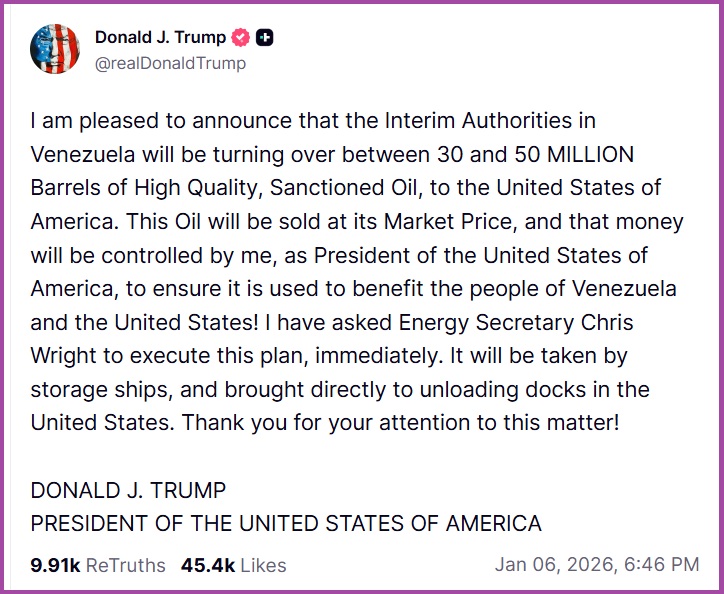
This is way beyond winning, this is stunningly brilliant strategy.  Not only has President Trump successfully apprehended Venezuela dictator Nicolas Maduro, but the remaining interim government officials have acquiesced to fund a civil restitution plan to pay for their malfeasance.

The government that stole from its people is being forced to pay restitution for their own fraud, abuse and misconduct.

[SOURCE]

As we noted yesterday the immediate issue for Venezuela would be to fill the economic/financial void.

The Sea Island attendees support a quick Machado installation.  Trump/Rubio prefer to proceed with more caution, especially because someone is going to be on the hook for financial support to Venezuela, because the domestic rewards from any expanded oil revenue are at least 5 to 10 years away.

Changing the regime in Venezuela may break China’s ‘belt and road’ grip, but China’s money is going to need to be replaced with independent domestic economic wealth for the Venezuelan people.  That process takes time. [link]

Some type of short-term funding is needed during any kind of reconstruction of govt.  Typically, the U.S. taxpayer would be on the hook during this phase; however, President Trump has found a way for the corrupt Venezuelan authorities to pay for their own civic shift back to democracy.  Brilliant.

The 30 to 50 million barrels of oil is approximately a $2 billion self-created reconstruction effort.

Compare and contrast this approach with the trillions of U.S. taxpayer funds that were used in the failed efforts in Iraq, Afghanistan, Libya, Syria, etcetera….  or even Kuwait, albeit the Kuwaiti’s offered, but prior U.S. leadership chose influence over restitution.

In this example, almost immediately the funds now in the control of President Trump can be deployed to the greater benefit of the Venezuelan people.

Another way to look at this is like a type of ‘sovereign wealth fund’ created by the corrupt Venezuelan officials, using the resources that belong to the Venezuelan people, to support the interim needs of the same citizens they victimized.

Well done President Trump and Secretary Rubio!

Venezuelans Rejoice – Socialism Failed Yet Again


Posted originally on Jan 6, 2026 by Martin Armstrong |  

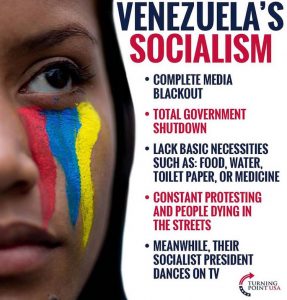
The people of Venezuela are celebrating Maduro’s departure. Those who have lived under socialism understand the depths of its destruction. Hugo Chávez is celebrated as a social justice warrior for eliminating capitalism in the 2000s. Socialism does not work because the system eventually runs out of other people’s money, as Margaret Thatcher once proclaimed. We only need to look at recent history to see the severe consequences of switching to this system. Venezuela first reported that it had a “nutritional emergency” in February 2016.  President Nicolás Maduro also declared an “economic emergency” in January of the same year, providing him the power to rule by decree. Inflation was running at 141.5%, according to Venezuelan authorities, but the IMF believed the figure reached 270% in 2015 and had the potential to reach 500% by the end of 2016.

Venezuela.Socialism

There were rumors going around that people under socialism faced such severe food shortages that they were forced to break into zoos and eat the animals. Unfortunately, this is a fact. Reports were circulating in Venezuela of people consuming zoo animals around 2016 and 2017. The animals that remained in these zoos starved to death or ate one another. The people were in such dire conditions that they were forced to consume dogs, cats, decaying meat, and anything else they could find.

The socialists claimed that acknowledging the food shortages could lead to American intervention, and Maduro consistently blamed US sanctions for his nation’s failure. As reported by a Spanish newspaper, this is how the average person waiting for their food rations: “Five hours in line to buy a chicken; kicks, pushes, and blows of all kinds to be one of the fortunate ones to enter the supermarket and get away with a bag of flour or rice, basic goods that Venezuela does not have available to everyone, unfortunately.”

Maduro told the people to grow their own food and gloated that he, too, was producing his own eggs and produce. The government owned the grocers and food production companies and intervened numerous times to prevent private-sector intervention. Politicians take no responsibility for the suffering caused by their policies, and this is precisely what a portion of the West is seeking to implement today.

Maduro.Venezuela

Over 7.7 million people have fled Venezuela due to one of the worst economic collapses in modern history not attributed to war. GDP contracted 80% from 2013, according to the IMF. Inflation reached an astounding 130,060% by 2018, the bolivar collapsed, prices doubled daily, and people were forced to carry carts of worthless cash for basic purchases. Around 30% of the population lived in poverty in 2013. Fast forward to 2025, roughly 87% to 90% of the population lives in extreme poverty and despair.

People wonder why Venezuelans are cheering Maduro’s downfall from the safety of their first-world suburbs. Older generations remember a time when Venezuela was a thriving economic powerhouse before it rapidly fell under socialism. Oil was insufficient to sustain a system that rendered innovation and productivity worthless.

Now, Venezuela’s problems did not begin with Maduro. Maduro inherited a flawed socialist system and continued its mismanagement. Under Chávez, Venezuela was already in decline, but Maduro assumed power precisely as the country entered a major ECM down wave. Instead of reforming, he doubled down on the same policies that were already destroying confidence and refused to take ownership in typical bureaucratic fashion. The destruction was locked in long before sanctions became meaningful because the government destroyed confidence, property rights, and capital formation. Socialism wages war on capital, and capital is a pacifist that will willingly flee. Once you nationalize industry, confiscate private property, impose price controls, and criminalize profit, capital will flee and not return. Every war waged against capital results in a lost battle for the aggressor as it cannot be captured and the business cycle cannot be defeated.