Russia Expels Ukraine/EU Vanguard from Kursk


Posted originally on Apr 30, 2025 by Martin Armstrong 

1 Russian expells EU rat

Russia has finally ejected all Ukrainian troops from the Kursk region who invaded on orders of NATO/EU last August 6th, ending the most significant incursion into Russian territory since World War II. This has certainly removed Kursk as a pawn in peace negotiations, which Zelensky refused to accept when he met at the White House in a desperate effort to embarrass Trump into keeping the funding for Ukraine’s war against Russia.
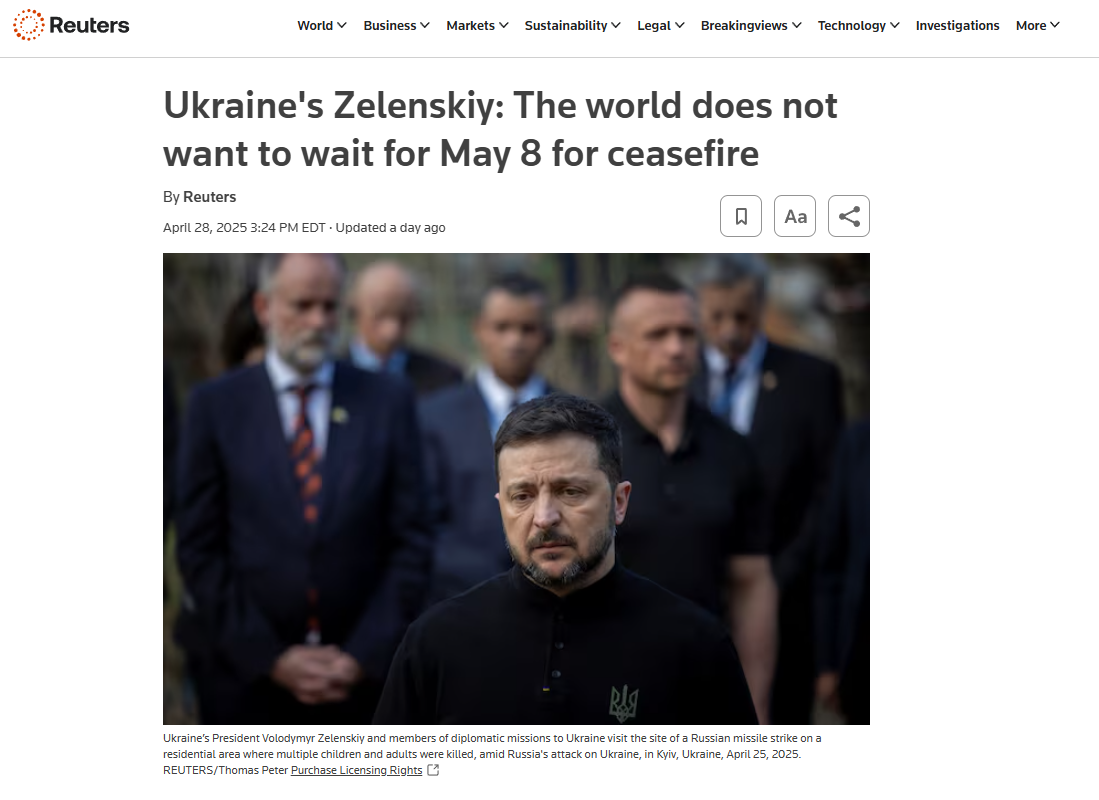
2025_04_29_21_38_06_Ukraine_s_Zelenskiy_The_world_does_not_want_to_wait_for_May_8_for_ceasefire_R

Reuters reported that Zelensky said the world did not want to wait until May 8 for Putin’s announced ceasefire in the more than three-year-old war, only for it to be in effect for a few days.

“For some reason, everyone is supposed to wait for May 8 and only then have a cease-fire to ensure calm for Putin during the parade,” Zelensky said in his nightly video address.
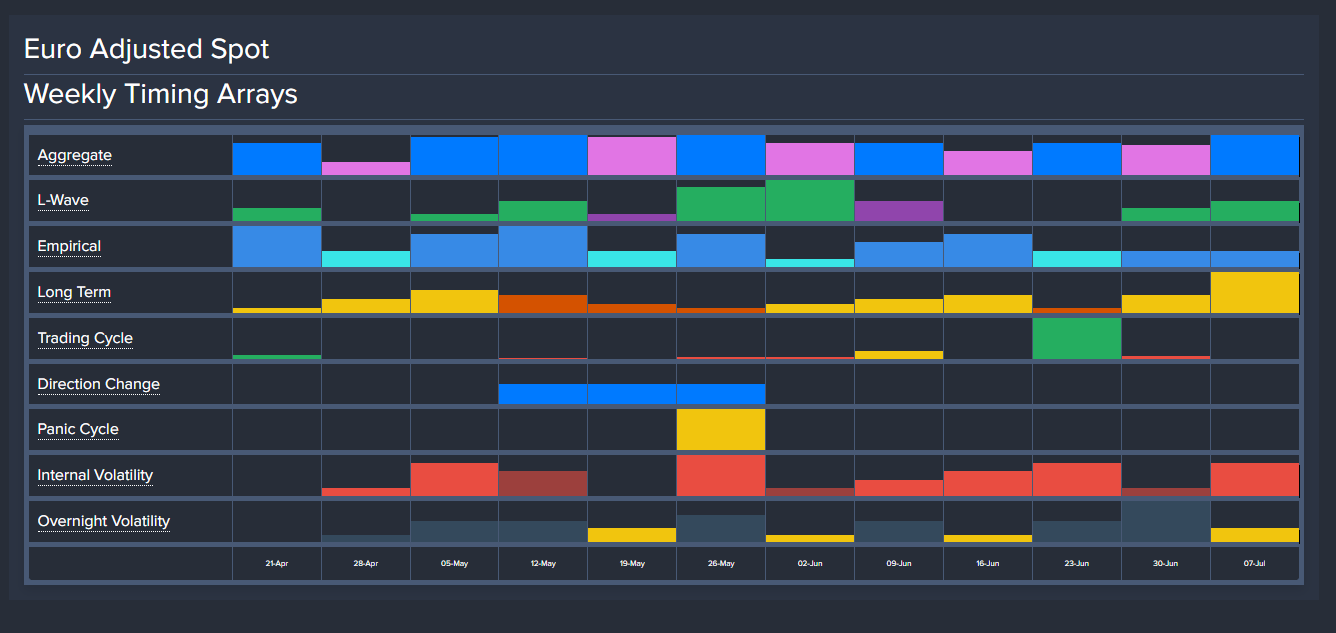
IBEUUS W Array 4 29 2025

Yet in that same address to Ukraine, he hinted at an attack in Moscow on the Victory Day Parade. He said that his Ukrainian generals were choosing “Russia’s pain points.” And then he makes a frank allusion to the attack on Red Square on May 9th. Now they are worried that their parade is in question, and they are right to worry. But we must worry that this war continues. They must end the war, Zelensky declared.
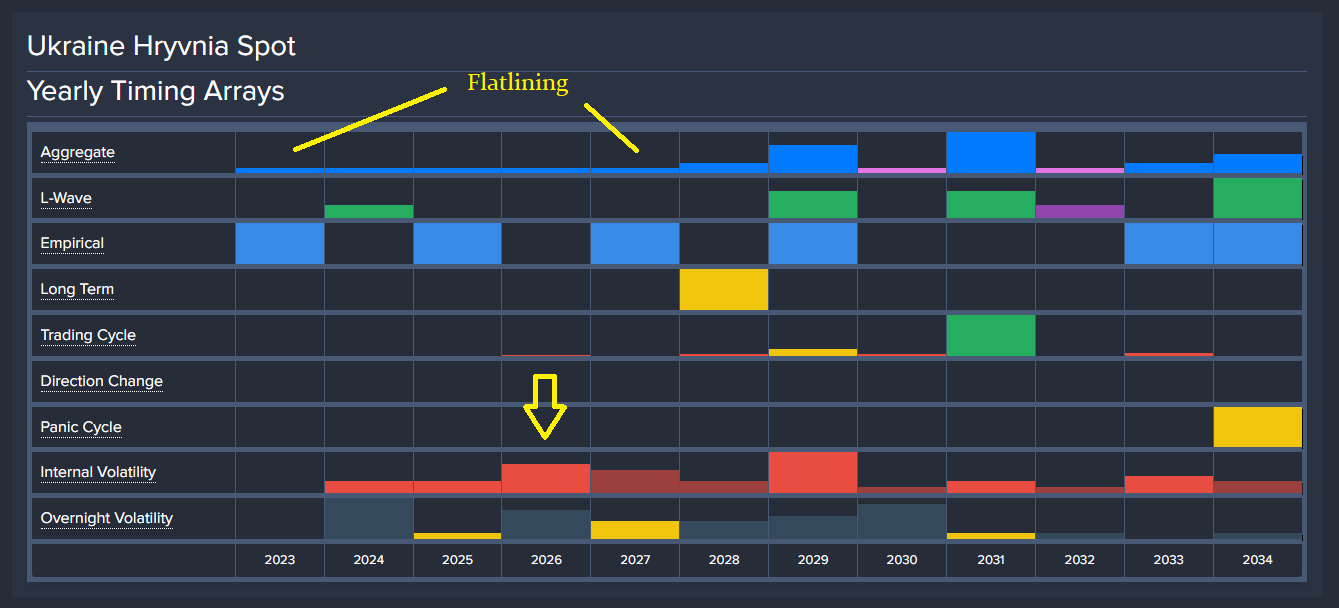
Ukraine_Hryvnia Y Array 6 16 24 Flatlining

We definitely see volatility rising the week of May 5th and from the week of May 12th into the end of the month remain as key targets. Our computer has warned that Ukraine would NEVER win this war with Russia, and NATO has played them for fools, sacrificing them to reduce the military strength of Russia so they can move in for the kill.

Boris Johnson flew to Kiev 3 days before the signing of the rare minerals deal was supposed to take place in Liev. Johnson told Zelensky to go to the White House to try to embarrass Trump into funding the war. Zelensky refused a ceasefire, claiming that the Ukrainian people did not want one. That is not what I have heard from sources in Ukraine. Now Zelensky suddenly claims that, after his troops lost in Kursk, the world does not want to wait until May 8th for a ceasefire because he is losing?

“It’s amazing what comes out through emotion, and I have determined that President Zelenskyy [sic] is not ready for Peace if America is involved.”

Trump wrote on Truth Social.

Zelensky knows nothing about war and has been a Neocon plant to order Ukraine to fight to the last Ukrainian. His arrogance has cost over 1 million lives among Ukrainians, and over 8 million have fled to Europe, and most will never return.
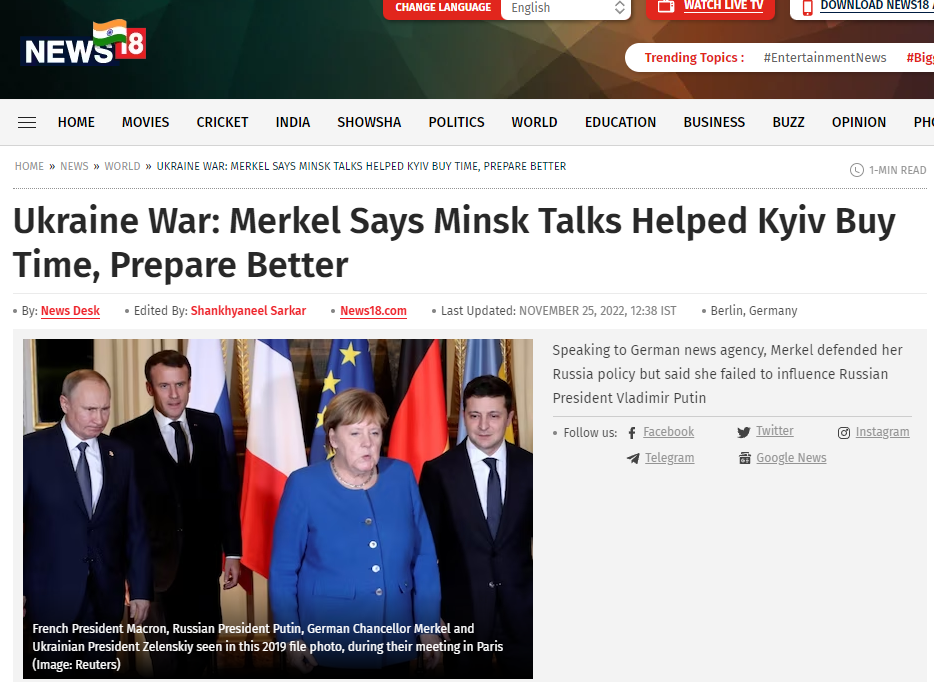
Merkel_Minsk_Buy_Time_to Prepare for wart

The day after Moscow announced the completion of the Kursk operation, President Vladimir Putin declared a unilateral three-day ceasefire to mark the 80th anniversary of the Soviet Union’s and its allies’ victory in World War II, Russian Foreign Minister Sergey Lavrov emphasized that international recognition of Crimea, the Donetsk and Lugansk People’s Republics, as well as the Kherson and Zaporozhye regions as part of Russia, is a non-negotiable condition for any settlement. There was the Minsk Agreement that Europe signed in bad faith, only to allow Ukraine time to raise an army. They now have 1.1 million dead Ukrainians’ blood on their hands, and they do not have a problem sleeping at night.
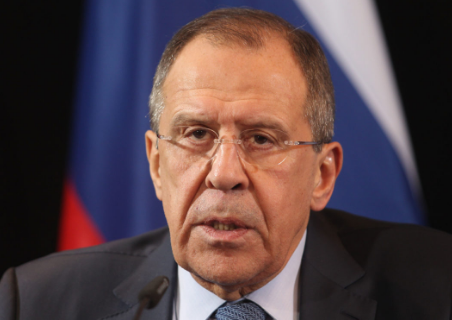
Sergei Lavrov 1

Foreign Minister Sergei Lavrov made it clear on Monday, April 28, that Moscow would accept nothing less than a total victory. Lavrov insisted that the Russian Federation will not negotiate unless Ukraine recognizes that the original regions that were supposed to be allowed to separate under the Minsk Agreement after a vote, including Crimea, Donetsk, Luhansk, Kherson and Zaporizhia, now belong to Russia. “The international recognition of Crimea, Sevastopol, Donetsk, Luhansk, Kherson and Zaporizhia regions as part of Russia is an imperative,” Lavrov said, emphasizing that Ukraine must legally acknowledge these regions as Russian territory. This seems to be reasonable after the false negotiations by Europe over the Minsk Agreement. But Russia must now realize that Europe cannot be trusted, and any peace deal would NEVER mean that there will still not be war after Europe builds its European army.

NATO’s INVOLVEMENT IN UKRAINE

NATO conducted military exercises in Ukraine between 2000 and 2010 in advance of the start of the civil war as part of its partnership programs aimed at enhancing cooperation and interoperability with non-member states. Key exercises and initiatives during this period include:

1. Partnership for Peace (PfP) Program

Ukraine joined NATO’s PfP program in 1994, which facilitated joint training and exercises. These activities continued into the 2000s, focusing on peacekeeping, disaster response, and military interoperability.

2. Exercise Sea Breeze

    • An annual naval exercise co-hosted by the U.S. and Ukraine in the Black Sea since 1997.
    • Conducted throughout the 2000–2010 period, involving NATO allies and regional partners to enhance maritime security and coordination.

3. Exercise Rapid Trident

    • land-based exercise focused on peacekeeping and interoperability.
    • While later iterations became more prominent post-2010, initial drills began in the mid-2000s as part of the PfP framework.

4. Exercise Cooperative Partner

    • Air force exercises aimed at improving compatibility with NATO standards.
    • Held in Ukraine during the mid-2000s, involving aerial maneuvers and joint training.

5. NATO-Ukraine Action Plan (2002)

    • This formalized deeper cooperation, leading to increased joint exercises and defense reforms in Ukraine.
    • Exercises often emphasized peacekeeping, counterterrorism, and crisis management.

6. Annual National Program (ANP)

    • Under the NATO-Ukraine Commission (established 1997), Ukraine implemented defense reforms and hosted NATO-linked training events.

These exercises were part of NATO’s broader effort to build trust and capability with Ukraine, though full membership was not on the table at the time. The 2008 Bucharest Summit later affirmed Ukraine’s eventual NATO membership prospects. In summary, NATO-Ukraine military exercises during this decade were regular and multifaceted, reinforcing Ukraine’s gradual alignment with Western defense structures in preparation for war with Russia.
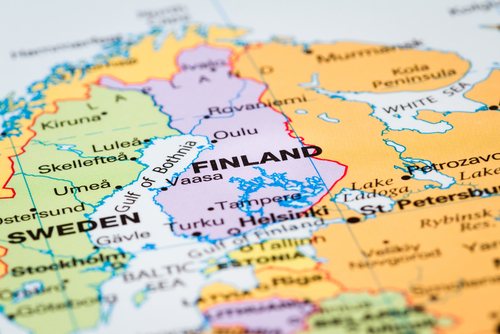
Finland Map

Finland’s Prime Minister has shown herself to be a staunch supporter of Zelensky to the detriment of her people.

Now that Sweden has surrendered its neutrality, which protected its people through two world wars, they have joined NATO and even sent planes to Poland. This has led the Kremlin to expand its military bases along the Finnish border in response to Sweden and Finland’s decision to join NATO. As you can see from the map, it’s not very far from Finland to St. Petersburg in Russia. Sweden and Finland have now placed their populations in the Kremlin’s crosshairs for joining the NATO alliance.
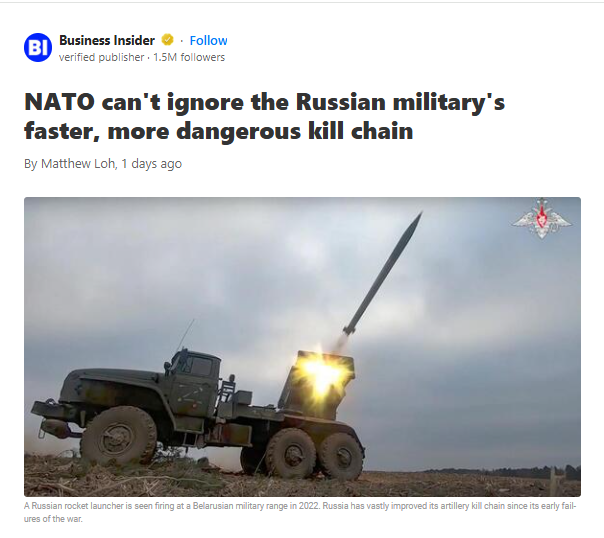
2025_04_29_23_09_14_NATO_can_t_ignore_the_Russian_military_s_faster_more_dangerous_kill_chain_New

Russia is reportedly expanding its army bases on the border with Finland and rapidly expanding its military as it prepares for a potential clash with NATO. Russia’s kill chain, defined as how quickly the army moves from finding a target to firing on it, is now far more responsive than that of NATO’s capability.
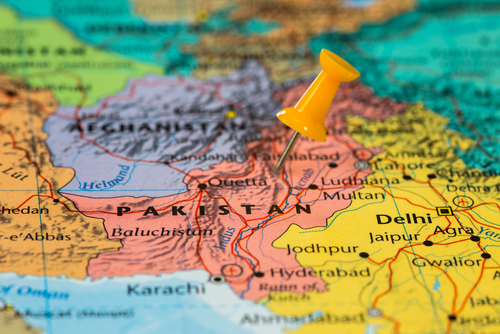
Pakistan India Map

Then, on the other side of the world, the risk of war during May also exists between Pakistan and India, two lifelong enemies. On top of all of this, Pakistan says India is preparing to strike in 36 hours, if not days.

Sting – The Russians


Posted originally on Apr 20, 2025 by Martin Armstrong 

Sting released this song in June 1985

Armstrong on Russia Today


Posted originally on Apr 9, 2025 by Martin Armstrong 

RT 4 9 25 R

COMMENT: I just saw you here on RT (Russia Today) explaining the tariffs. What a marvelous job. Nobody knew that interest and dividends are part of what people call the trade deficit. You appear on TV in Russia explaining the world, but not in America. They are still prejudiced by what the bankers did to you. Thank you for your insight into Trump’s being a businessman, not a politician. The world needs to understand him better.

Yuri

REPLY: I have been criticized by some I know in Washington for appearing on Russian TV. My response is blunt – I don’t give a shit. As President Kennedy said, we all breathe the same air and are all human with our flaws and strengths. I do not subscribe to being prejudiced against a whole people for past events or one person. I have gone to dinner with outright Neocons who, personally, I believe are traitors to humanity. My father taught me long ago to NEVER judge others by your own standards. You must understand their thinking process to grasp why they acted in the past and why they may respond in the future. Everyone and every creature will act in their own self-interest.

Sun Tzu

I learn as much by doing an interview in Russia as they get from me. I like to hear the questions, for it shows me what is at the top of their thinking process. It is the Neocons who tell leaders never to talk to the enemy. Why? Because you may come to an agreement and settle on peace.

Germany Troops Move to Russian Border in Lithuania 1st Time Post-WWII


Posted originally on Apr 3, 2025 by Martin Armstrong 

Germany deploy to Lithuania

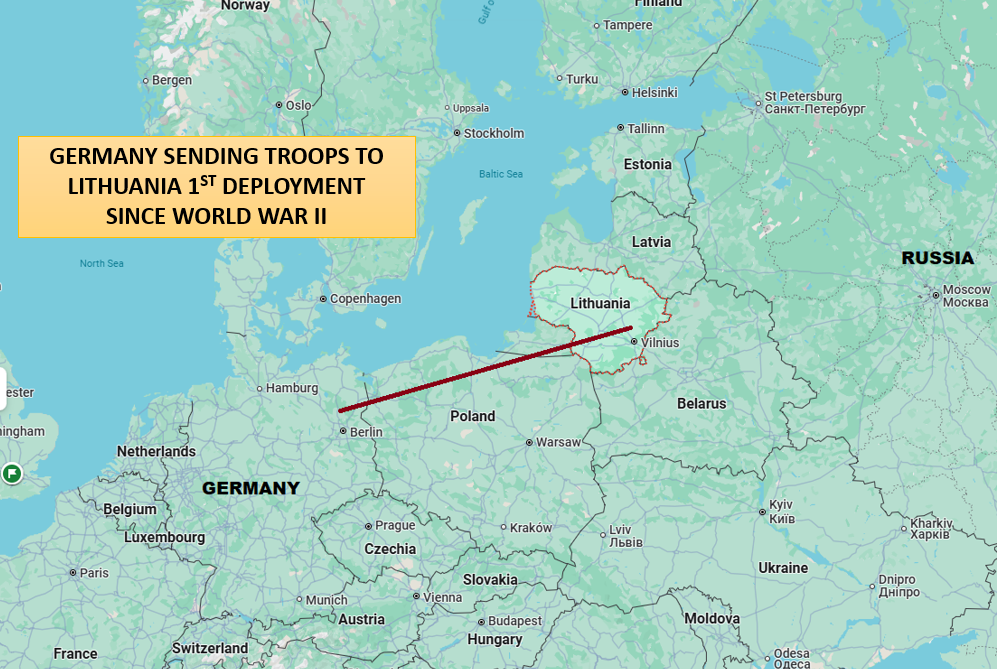
It has begun. German hospitals are preparing for war. Germany has embarked on its first permanent foreign deployment of its troops outside of Germany since the days of Hitler and World War II. Merz is a very dangerous warmonger, and Germany’s parliament has approved the dispatch of German troops to eastern Lithuania, along NATO’s eastern boundary. This is truly a historic event. I was in Tokyo when the government wanted to send troops to the Middle East, but the US had restricted its constitution to confine Japanese troops within 200 miles of their border. The politicians wanted to change the constitution, and hundreds of thousands of Japanese protested, fearing the military would rise again.

US Russia Cold War

Because of the Cold War. The CIA funded the birth of the EU Community as a unified Europe to be the buffer against Communist Russia. Therefore, the restrictions imposed on Japan were NOT applied to Germany since the CIA was exploiting Germany. After World War II, the Allied powers subjected both Germany and Japan to strict military restrictions. Still, the nature and evolution of these limitations differed significantly due to geopolitical contexts and post-war developments, as the CIA/Neocons were focused on Communist Russia rather than China.

German Troops

Germany:

  1. Immediate Post-War (1945–1949):
    • Germany was fully disarmed and demilitarized under Allied occupation (Potsdam Agreement, 1945). Its military (Wehrmacht) was disbanded, and war industries were dismantled.
    • The country was divided into four occupation zones (U.S., British, French, and Soviet), with no independent military allowed.
  2. Cold War Re-militarization (1950s):
    • The rise of the Cold War led to the creation of two German states:
      • West Germany (FRG): Joined NATO in 1955 and established the Bundeswehr (defense forces) under NATO integration.
      • East Germany (GDR): Formed the National People’s Army under Soviet/Warsaw Pact oversight.
    • Restrictions remained on nuclear, biological, and chemical weapons, but troop deployment was permitted within alliance frameworks (NATO/Warsaw Pact).
  3. Post-Reunification (1990–Present):
    • The 1990 Treaty on the Final Settlement with Germany (Two-Plus-Four Treaty) capped reunified Germany’s military at 370,000 troops and banned nuclear/chemical weapons.
    • Today, Germany’s military operates under NATO and EU missions, with parliamentary approval required for deployments (e.g., Afghanistan, Mali).

Japan:

  1. Immediate Post-War (1945–1952):
    • Japan was completely disarmed under U.S. occupation (1945–1952). The 1947 Article 9 Constitution renounced war and prohibited maintaining military forces.
  2. Cold War Adjustments (1950s–Present):
    • The 1954 Self-Defense Forces (SDF) were created for limited self-defense, but Article 9 interpretations barred offensive capabilities (e.g., aircraft carriers, long-range missiles).
    • Japan relies on the U.S. security umbrella and avoids “collective self-defense” (e.g., aiding allies under attack) until reinterpretations in 2014.
  3. Modern Limitations:
    • Deployments overseas (e.g., Iraq 2003, peacekeeping missions) require special legislation and remain politically contentious.
    • Japan’s military spending and capabilities have grown, but constitutional constraints persist, unlike Germany’s NATO-integrated forces.

Key Differences:

  • Germany regained sovereign military capacity earlier (1950s) under NATO, while Japan retained constitutional limits on offensive capabilities.
  • Deployment Authority: Germany’s military operates under NATO/EU mandates, while Japan’s SDF requires strict legal justification for overseas actions.
  • Nuclear Policy: Both forswear nuclear weapons, but Germany hosts U.S. nuclear arms under NATO sharing; Japan does not.
Merz Friedrich

In summary, both faced initial demilitarization, but Germany’s military normalizes within alliances, whereas Japan’s remains uniquely constrained by its pacifist constitution. Consequently, this deployment of German troops to Lithuania is a NATO deployment, and the German people have no say in whether Merz is taking Germany head-first into war. Merz wants to punish Hungary for refusing to declare war on Russia. This deployment of German troops to Lithuania is truly a historic moment for Germany. This means that German troops will be continuously deployed outside of Germany, and Merz can’t wait to send troops to Ukraine. Hitler’s excuse to send troops into Poland was to protect German citizens living there in the regions taken from Germany and handed to Poland after World War I. Is Merz sending troops to defend the Lithuanians?

Putin signs

Meanwhile, Putin is no fool, and neither is China. They are now both aware that NATO intends to create some sort of false flag to invade Russia. This is the end goal. Putin has just issued the biggest military call-up in years with 160,000 more soldiers. While the Western press continues to paint Russia as collapsing and troops are deserting all to justify a NATO invasion of Russia, the truth is that the Russian people are coming to realize that the West hates all Russians. They are fighting for not just their country, but for their families.

Kaja Kallas is extremely dangerous. She is the person who hates all Russians and said that Russia is too big and it needs to be broken up. She ignores the facts of this war and that the Donbas were promised the right to secede with the Minsk Agreement brokered by Germany and France. That was an outright lie. Can you imagine if Putin said that the EU should be broken up or the United States? The press would be going crazy. But it’s perfectly fine for the West to hate Russians and turn a blind eye to this thirst for war, pretending that they can defeat Russia without losing one European?

Kaja Kallas will be remembered by history for she will cause the deaths of far more people than Marx or World War II.

Merkel_Minsk_Buy_Time_to Prepare for wart

Merkel even admitted publicly that they NEVER intended to honor that peace agreement. They played Putin for a fool to buy time for Ukraine to build an army. This has been the plot to conquer Russia from the outset. Let’s stop the bullshit. Europe is desperate for war. They can taste the blood of Russians on their lips. But that is going to be mixed with European blood.

Beware of the Ides of May

Current Status: Russian President Vladimir Putin


Posted originally on CTH on March 31, 2025 | Sundance

Russian President Vladimir Putin recently (3/27/25) visited the Commander and Crew of the latest Russian nuclear submarine, the Arkhangelsk.

The Arkhangelsk is a Project 885M Yasen-M ship, the latest fourth-generation multipurpose nuclear-powered submarine capable of carrying any sea-launched missiles and effectively hitting targets both at sea and on land. The submarine was completed and delivered to the Russian Navy on December 27, 2024. “Its crew has recently completed its basic training and is now ready to carry out its duties at sea.”

President Putin’s full remarks are HERE.

♦ Could you share your assessment of the latest developments and how the special military operation has been unfolding?

Vladimir Putin: “Of course, I can.

To put it briefly, we are gradually moving towards achieving all the objectives we set for ourselves at the start of the operation. Some would have liked these advances to happen at a quicker pace, but we have gathered steady momentum and have been confidently advancing our positions. But I would like to frame this question in a different way.

What I want to say is that we were not the ones who started or launched hostilities. It all started in the wake of the 2014 coup d’etat in Ukraine. Western countries supported it, and this was how hostilities broke out in southeastern Ukraine.

We tried to resolve these issues by peaceful means for eight years. Taking Crimea and its people, as well as the people of Sevastopol under our wing was something we had to do. And we went to great lengths and were unrelenting in our efforts to resolve all matters concerning Donbass and Lugansk by peaceful means.”

“It turned out, and everyone knows this today, that both the Ukrainian authorities and their Western curators were unfortunately misleading us and trying to trick us. Former leaders who used to stand at the helm of several leading Western nations, including former President of France Hollande and Ms Merkel, the former German Chancellor, stated openly that they needed these Minsk agreements merely to deliver more weapons to the Ukrainian regime and to prepare it for a military confrontation with Russia. However, during these eight years, the people in Donbass, Lugansk and Donetsk faced outright genocide, and I mean real genocide. But the Ukrainian regime’s Western curators preferred to turn a blind eye to these developments, forcing us to try to stop the war which started in 2014 by military means. We were not the ones who started it.

By the way, even when the armed conflict escalated into open confrontation in 2022, we were still offering to settle all the outstanding issues by peaceful means. Moreover, as I have said many times, we reached an agreement with Ukraine during our talks in Istanbul. I must mention that we had an agreement on matters that are being raised all the time these days and are viewed as something impossible. I am referring to de-Nazifying and demilitarising efforts. In fact, we had a deal on these issues, and it was all set forth in the agreement, I mean its draft. Ukraine’s head negotiator initialled a summary of this document. They initialled and signed this document, which means that it was acceptable to them.

We know what happened next. After that, their European curators arrived, including former UK Prime Minister Boris Johnson, who convinced the Ukrainian leadership to keep fighting until there are virtually no Ukrainians left and to inflict a strategic defeat on Russia.

He probably forgot that we have crews like the one you are in, and that we have means like this submarine. He probably forgot, or maybe they ignore altogether what the Russian people represent, what they stand for and what they have in their hearts and souls when it comes to ¹defending their Fatherland.

Overall, we can clearly see what is happening right now. Our troops have the strategic initiative along the entire contact line. Only recently, I said that we would squeeze them into a corner, but now we have reason to believe that we are set to finish them off. I think that people in Ukraine need to realise what is going on.

Our Armed Forces have been gathering momentum and acting increasingly effectively. Major General Mikhail Gudkov, who took part in combat action, can tell you about it.

He commands the Pacific Fleet’s 155th Naval Infantry Brigade. I believe that this is one of the best brigades in our Armed Forces. The Defence Minister and the Chief of the General Staff believe that Major General Gudkov’s achievements must be replicated across our Armed Forces, primarily by the naval infantry units, which have been quite effective in combat. They are actually very good. It would not be an exaggeration to say that these are elite units within the Armed Forces, just like the paratroopers and the special operations units.

Although I should note that earlier today, just before arriving here, I received another report from the Chief of the General Staff. Other units of the Armed Forces have gained significant momentum.

Regarding the marines, I have already stated that they are performing superbly. Since both the Defence Minister and the Chief of the General Staff believe that your experience should be replicated across other units, I have decided to transfer you to a new position, elevating your level of responsibility. You are hereby appointed Deputy Commander of the Navy of the Armed Forces of the Russian Federation.”

♦ Petty Officer II class Ivan Domnin. Today, the entire world’s attention is focused on the negotiations between Russia and the United States. Unexpectedly, we have begun dialogue and rapprochement with our main rival. If possible, I would like to hear first-hand about the progress and the outcomes of these talks.

Vladimir Putin: “Do not concern yourself with this; simply carry out your service and fulfil your duty. (Laughter.)

That was a joke. I understand that everyone in the world and in our country is closely following these developments.

In this regard, I would like to state – first and foremost – that, in my view, the newly elected President of the United States sincerely wishes to end this conflict for a number of reasons – I will not list them now, as they are numerous. But in my opinion, this aspiration is genuine.

It is clear that the conflict I have just mentioned and briefly characterised in terms of recent developments, remains complex and requires thorough discussion and consideration.

We stand for resolving all these issues by peaceful means, as I have just stated, reinforcing the measures we have taken from the very beginning – first, second, and third.

Therefore, we advocate resolving these issues through peaceful means, but with the elimination of the root causes that have led to the current situation. We must undoubtedly ensure Russia’s security from the long-term historical perspective. Any step taken to achieve this objective will be welcomed by us, and we will work with any partners who strive towards this goal.

This includes not only the United States but also the People’s Republic of China, India, Brazil, South Africa, all BRICS nations, and many others, such as the Democratic People’s Republic of Korea, with which we have a signed treaty. Article 4 of this treaty outlines in detail our mutual obligations for support. Cooperation with this country is also progressing in both military-technical and defence spheres.

We are prepared to work with Europe as well, despite their inconsistent behaviour and constant attempts to lead us up the garden path. Nevertheless, we have grown accustomed to this. I trust we will avoid making mistakes rooted in excessive trust towards our so-called partners.

But in general, they have a problem over there, which is never highlighted, just mentioned in passing. I am highlighting it. What is it? Ultranationalists have had considerable influence in Ukraine from the start, in fact, since the collapse of the Soviet Union. These people hold openly neo-Nazi views, and they even use the term in Ukraine, so we were not the ones who invented it. Curiously, few people mention this now, either.

In 2017, the United States Congress added a provision to the government spending bill that prohibited financing or having any relations with units like the Azov militia unit. An American lawmaker directly described that paramilitary group as terrorist and anti-Semitic.

Moreover, although the amendment was not supported by the Senate at that time, in a year or two, its sponsors, including the oldest member of the US Congress, supported that legislation, and it was adopted by Congress. The US Congress recognised Azov as a terrorist, anti-Semitic, and neo-Nazi organisation.

Has anything changed since then? No. Essentially, Azov has not changed. It has remained the same. However, in 2022, the State Department decided that US military aid could go to that controversial unit because it had been integrated into the Armed Forces of Ukraine – apparently, the bill allowed this interpretation. The fact that it was integrated into the official armed forces changed nothing. Their views and actions remained the same as they were at the start.

If anything, it has become worse, because now they plan to strengthen these units, including Azov, and elevate them to divisions. This means that such people now have even more weapons at their disposal. They have more supporters, people they have persuaded to fight for them by implanting their views.

What happens next? As a result, the current civil authorities in Ukraine have no legitimacy in accordance with the country’s constitution. Ukraine has held no presidential election, while according to the constitution, all key officials are to be appointed by the president, including regional government bodies, governors and so on. So, if the president is illegitimate, so are all the others.

So, under these circumstances of de facto illegitimacy, neo-Nazi formations receive additional weapons and recruit new personnel. What does this lead to, what could it lead to? It results in de facto power being in their hands. This, in turn, means that it is already unclear with whom to sign documents and what effect such documents might carry, for tomorrow new leaders may come to power through elections and declare: “We do not know who signed those papers, so goodbye.”

The issue is not just this uncertainty; it is that these neo-Nazi formations, such as Azov, among others, are effectively beginning to run the country. This raises the question: how is it possible to conduct negotiations with them?

In such situations, international practice follows a well-established path. Within the framework of the United Nations peacekeeping operations, there have been several cases of what is termed external governance or temporary administration. This occurred in East Timor, I believe in 1999, in parts of the former Yugoslavia, and in New Guinea. In short, such precedents exist.

In principle, it would indeed be possible to discuss, under UN auspices with the United States and even European countries – and certainly with our partners and allies – the possibility of establishing a temporary administration in Ukraine. To what end? To conduct democratic elections, to bring to power a competent government that enjoys public trust, and only then to begin negotiations on a peace treaty and sign legitimate agreements that would be recognised worldwide as consistent and reliable.

This is just one option; I do not claim that others do not exist. They certainly do. At present, there is no opportunity – and perhaps no possibility – to lay out every detail, as the situation is evolving rapidly. But this remains a viable option, and such precedents exist within UN practice, as I have already noted.

Ultimately, we advocate for the resolution of all conflicts, including this one, through peaceful means. But not at our expense.”  (Full Remarks)

Factually, a civil war was ongoing in Ukraine for well over a decade. NATO exploited that civil war to create a U.S. proxy war against Russia.  Zelenskyy is not negotiating for peace; he’s buying time against what Trump wants to do.

He’s buying time for the EU/UK and corrupt NATO interests to organize a separate funding mechanism for continuation of war. The UK/France have promised to provide the intel service. The EU/UK now need to organize the funding mechanisms. They are doing it currently.

A generally belligerent Volodymyr Zelensky, who will not accept any terms for negotiated peace (so far), continues playing the victim and saying Russia is violating terms needed for peace.   NATO and the EU alliance continue telling Zelensky to keep fighting; Zelensky rejects anything that stops the fighting; NATO and the EU alliance continue demanding that President Trump support Zelensky.  That’s the current cycle.

Putin knows the game, that’s why he is keeping up the offensive action.

At some point in this great game of ‘ceasefire’ pretense, President Trump is going to cut the gordian knot.

.

[¹After spending three months in Russia last year, I penned a review of my experience.  Many “Russian experts” took exception to my use of the term “fatherland” calling it the wrong gender to describe the modern relationship between the Russian Federation government and the citizens therein. – SEE HERE – Please note, the USSR system no longer exists and as President Putin factually describes it, I was correct.]


Europe Preparing for War To Conquer Russia


Posted originally on Mar 10, 2025 by Martin Armstrong 

2025_03_09_12_00_20_Europe_to_stand_with_Ukraine_because_Ukraine_is_fighting_for_Europe_Metsola

The European Parliament President Roberta Metsola has completely sealed the fate of Europe and its desire for self-destruction. She is now claiming that it is Ukraine that is defending Europe against a full-scale invasion by Russia. Ukraine is fighting for the security of Europe.

POSOBIEC: The Russians Have Cut Off The Ukrainians And Their Supply Lines


Posted originally on Rumble By Bannon’s War Room on: Mar 8, 2025, at 12:00 am EST

North Korean Troops in Ukraine May Never Return Home


Posted originally onMar 3, 2025 by Martin Armstrong 

NorthKorea.Russia

North Korean dictator Kim Jong-un has refused to repatriate the bodies of soldiers killed fighting on behalf of Russia. Reports are circulating that Russia has repeatedly asked the nation to transfer bodies, but Pyongyang refuses as it fears civil unrest.

The only information that the people of North Korea can access is what the government provides and most do not know the extent of the war abroad. They have been brainwashed to believe that the rest of the world is living in dire conditions far worse than their own. The regime is allegedly worried that accepting the dead would stain Kim’s invincible carefully orchestrated image and cause outrage among the people who have been living in utter poverty and despair.

What’s worse is that Kim allegedly will not accept the injured either. What happens to the thousands of North Korean troops when the war ends? They now know of the world outside North Korea—the lies have been exposed. Democracy is not an oppressive system and people outside their nation live FAR better than one could have possibly imagined. An inkling of dissent is enough to send the current regime into a tailspin.

The troops cannot defect as North Korean law dictates that THREE GENERATIONS of one’s family must be punished if someone commits a crime. If someone defects, their entire family will be killed or sent off to labor camps. Ukraine could decimate North Korea by shattering the illusion created by the Kim dynasty, but the men have been ordered not to surrender. Ukrainian troops have described their foes as outright suicidal, with many detonating grenades beneath their chin rather than face capture. One Ukrainian soldier said a North Korean troop called out “General Kim Jong Un” before taking his life.

There are now at least 3,000 to 4,000 deceased bodies awaiting proper burial. Between 10,000 to 12,000 men have been sent to Russia thus far, and North Korea said it plans to continue sending troops to Russia in exchange for economic relief.

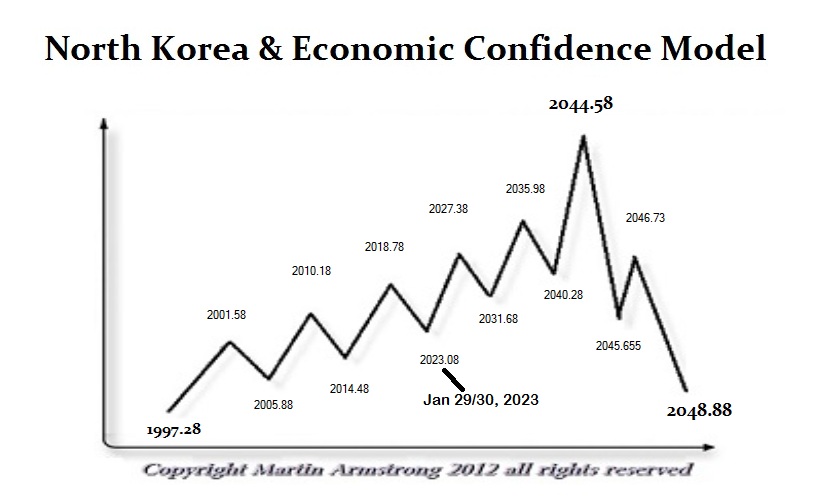
North Korea ECM 2 1

The 72-year Revolutionary Cycle for North Korea is set to turn up in 2025, suggesting potential for significant changes or upheaval within the country.

North Korea is one of the most militarized nations in the world, hosting 1.2 million troops. Some believe that those deployed to Russia have such a strong loyalty to their leader that they plan to use their battleground experience to continue supporting Kim’s regime back home. But what happens if Pyongyang does not allow these men to return? How effective can rhetoric be when thousands of sons, husbands, nephews, neighbors, and friends never return?

On the other hand, what happens if these men do return home but begin to question their loyalty? Empires fall when the military turns against the very people they have sworn to protect. These men have the potential to form the most powerful alliance and coup that could be capable of the unthinkable—destroying the Kim dynasty and freeing the people of North Korea.

London Offloading Gold to New York


Posted originally on Feb 25, 2025 by Martin Armstrong 

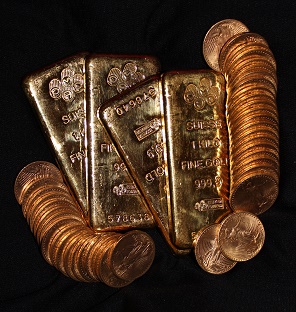
20 Bullion

Capital is unsafe in Europe as the war drums beat louder by the day. Looming tariffs have many questioning if they will spread to precious metals and smart money has selected the USA as its safe haven. Moreover, gold is selling at a premium in the US leading to an uptick in arbitrage. Gold has been on the rise since the outbreak of the Ukrainian war and we’ve seen a 10% rise in the past year alone. Now, the Bank of England is working quickly to move a large portion of its gold reserves from London to New York.

Gold prices have been about $20 lower per troy oz in London compared to New York. J.P. Morgan, for example, moved $4 billion in gold reserves from London to NYC this February. The central bank is especially eager to send its reserves off to America. London’s largest gold reserve currently holds 310 tonnes of gold or 420,000 gold bars. England only owns 5.4% of its gold holdings with major banking institutions and foreign central banks accounting for the bulk.

The London Bullion Market Associated stated that 150 tonnes of gold were shipped out to the Big Apple in January alone, with 100 tonnes of that coming directly from the Bank of England’s massive vaults. Transporting tangible assets is no easy feat, even for a central bank. The Bank of England stockpiles massive gold bars weighing 400 troy oz each. New York’s gold exchange only accepts smaller ingots of 100 oz, so the bullion must be sent to Swiss refiners to be melted and recast.

There is a rush to get gold out amid war and geopolitical tensions. Swiss exports of gold to the US reached a 13-year high this January and has no signs of slowing. The risk of war in Europe is very real and that can take gold prices up dramatically. Banks are often severely restricted during times of war and it certainly would not be as simple to move precious metals across the Atlantic.

In both world World Wars, capital fled Europe for the US, strengthening the dollar and driving up gold demand as a hedge against uncertainty. Gold doesn’t necessarily move with inflation but reacts to geopolitical instability and loss of trust in institutions. If conflict escalates in Europe, capital outflows could once again drive gold higher, similar to historical patterns. There is a reason we are witnessing a mass exodus of gold into the US. As far as a matter of confidence is concerned, DOGE’s search into Fort Knox could have many questioning if gold is indeed safe in the US. We are certainly living in a time of mass political uncertainty.

Inflation Soars in Russia


Posted originally on Jan 21, 2025 by Martin Armstrong 

Inflation up

Russia’s CPI reached 9.5% this December as government spending has pulled the reigns away from the central bank. Inflation elevated from 8.9% YoY in November to 9.5%, slightly below expectations of 9.7%. Prices are up 1.3% on a monthly basis overall, but Russians are feeling the impact of war.

Services from 11.4% to 11.5% on the yearly while non-food goods are up from 5.7% YoY to 6.1% Prices at the grocery store have soared from 9.9% YoY to 11.1% as Russia struggles to find reasonably priced imports. Core inflation is up 1% monthly, but up 10% over the past four quarters. The central bank is lightyears away from its 4% inflation target. The spread between rates and inflation is a concerning 11.5%.

Russia’s Central Bank maintained its policy rate of 21% in December. This is not a money supply issue and government cannot curtail spending amid a rapidly escalating war effort. The Kremlin pumped 10 trillion rubles ($100 billion) into military spending last year and that figure will continue to grow. Russia’s economy still grew by 4% in 2024 as it adapted to trade without the West.

Analysts had expected the central bank to raise rates in December, but that would not have deterred government borrowing. The Kremlin also required banks to issue state-direct soft loans to military defense contractors for 25 trillion ($250 billion). As we are seeing in Russia, there is absolutely nothing more inflationary than war.