As Always – Unintended Consequences of Neocon Objectives


Posted originally on Jun 23, 2025 by Martin Armstrong 
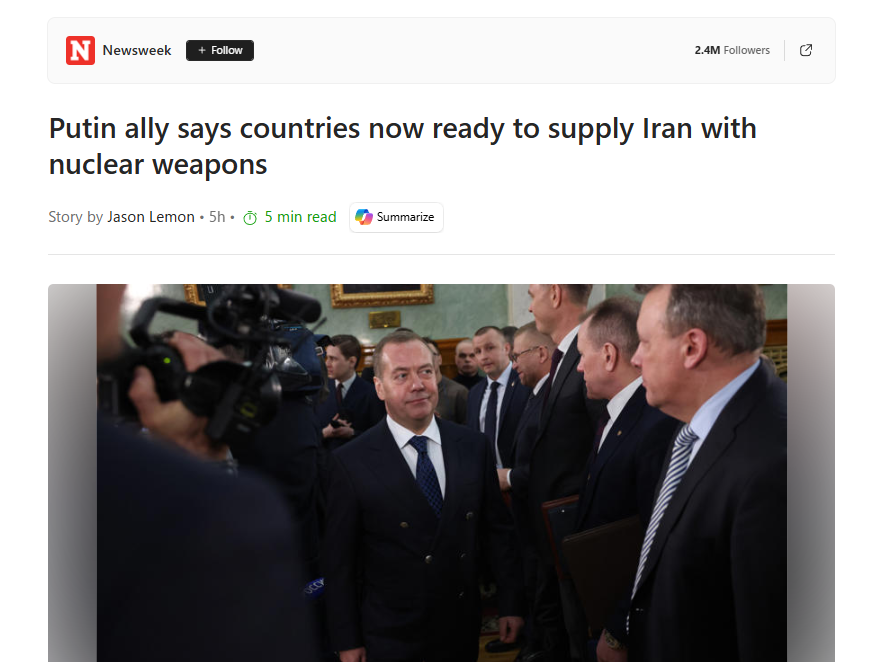
Putin_ally_says_countries_now_ready_to_supply_Iran_with_nuclear_weapons 6 22 25

COMMENT: Marty, it is disgraceful that people take your work and issue books pretending it is their research. Yet it is even more shameful that Donald Trump isn’t calling you for advice instead of these people who couldn’t find the door in a room if the lights went out. You stated clearly that Iran’s nukes were irrelevant, for Russia, China, or North Korea could place them there just as Russia did during the Cuban Missile Crisis. Then what? I can see your concern. This is not a solvable issue, and it was just made worse. Your computer is always correct.

KW

Hornet Nest

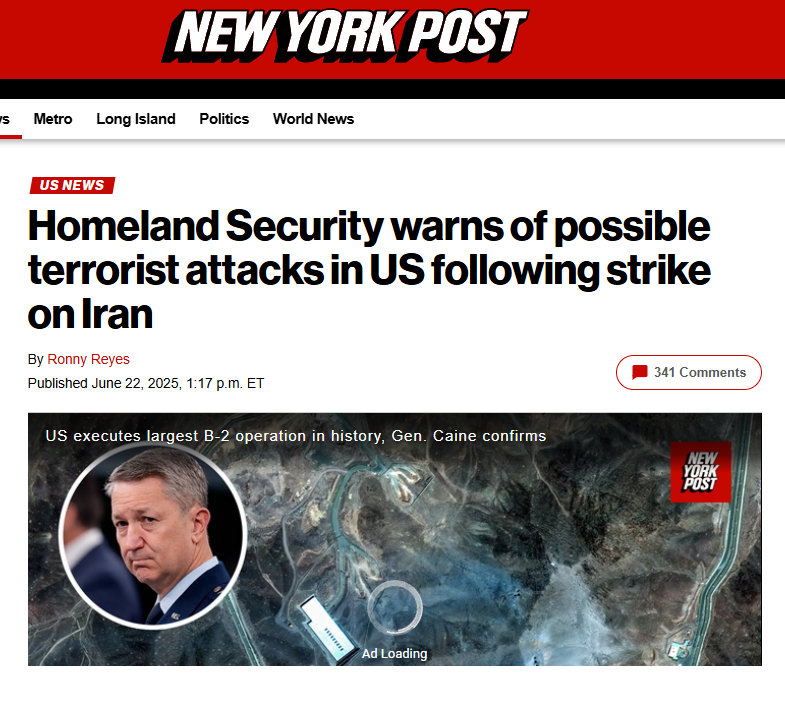
When I was barely a teen, I was climbing a tree and fell. I didn’t get hurt from the fall, but when I fell, I took down a Yellow-Hacket hornet’s nest. Fortunately, I was not too far from home, and I ran like hell with bees attacking me all over. I fear this is what we have just done for the Neocons; they only look at what is immediately in front of their nose, with no thought for what comes next. There are sleeper cells in major cities in Europe and the United States. The Neocons think that they have won, and Iran has no cards. They always assume they are superior, yet they have lost every single war from Korea, Vietnam, to Afghanistan and Iraq, and they said they would win Iraq in 3 weeks or less, and then invade seven countries.
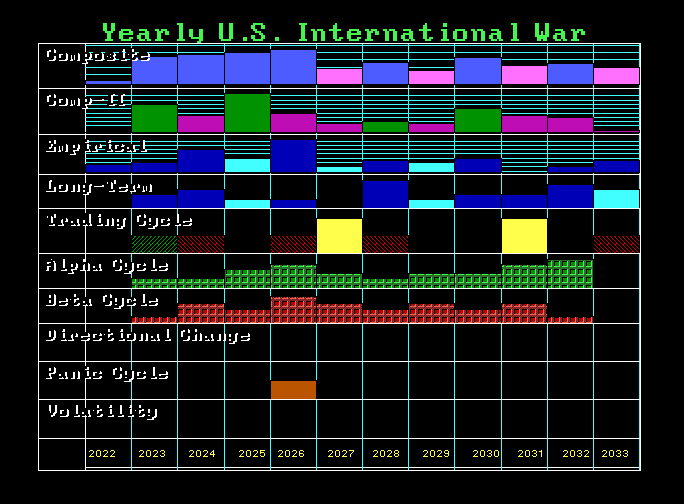
2022 Intl War Index

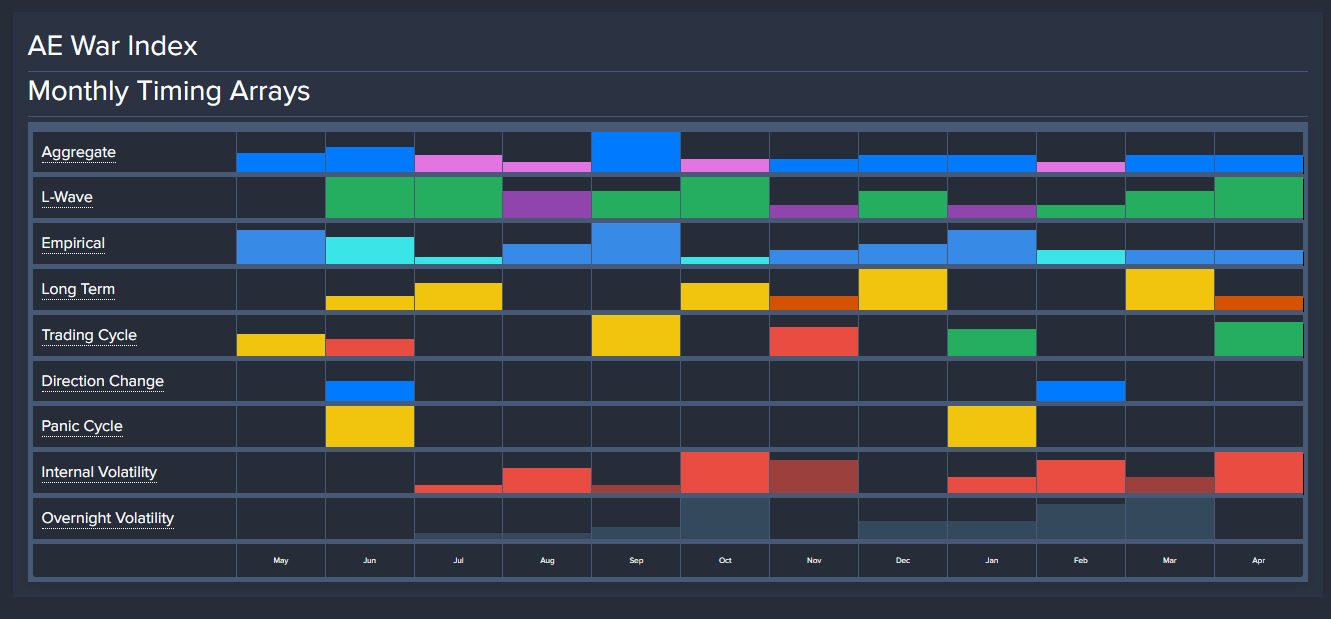
While the Neocons look only at their immediate objective, they are INCAPABLE of ever comprehending the UNINTENDED CONSEQUENCES. This is NOT the end, but the beginning, and that is according to our computer, not my personal opinion. I wish it were my opinion, for then we would have a shot at that statement being wrong. We have a Panic Cycle in 2026 when it comes to international war.

President Donald Trump has just delivered the dream of the Neocons, and he does not even know it. He wrote on Truth Social:

“There is not another military in the World that could have done this. NOW IS THE TIME FOR PEACE! …
This is an HISTORIC MOMENT FOR THE UNITED STATES OF AMERICA, ISRAEL, AND THE WORLD. IRAN MUST NOW AGREE TO END THIS WAR.”

By dropping powerful bombs on Iran’s nuclear facilities at Fordow and elsewhere, Trump has acquiesced to the behest of Israel, and that was a fateful choice, for it demonstrated that the United States has chosen sides not simply with Iran. Still, it is reverberating behind the veil of the Middle East as a one-sided gunboat diplomacy. The growing concern is that the USA may no longer be able to deal impartially in the Middle East.

Iran’s Sunni neighbours are just 200 miles away at most. This is well within reach of Iran’s short-range missiles. Since Iran’s neighbors are hosts to key US military bases, there is a rising fear that they can be dragged into the major Middle East conflict. Then some question the loyalty of the United States if the US must choose between Israel and the Arab world.

The last time we saw war in the Middle East, there was also a major shock and fragmentation of the entire region. The 2003 US-led invasion of Iraq resulted in irreparable damage to the region, costing the USA $3 trillion. The UNINTENDED CONSEQUENCE was the ensuing mayhem, which benefited Iran by removing their arch enemy Saddam Huesin. The action by the Neocons inflamed sectarian tensions in the entire region and led to the birth of the Sunni jihadist group ISIS.

Whatever Iran’s response, America’s foreign policy is more closely aligned with Israel’s than it has ever been. As previously noted, Netanyahu seems to be calling the shots with President Trump scrambling to keep pace with his supposedly junior ally, a Neocon through and through. Now, despite years of claiming he would avoid wars and other foreign entanglements, President Trump has just bet his entire presidency on a dramatically aggressive act in Iran that does violate international law, and there was undoubtedly no declaration of war. Trump will now go down in history as the American president to ever strike another country with bombers without a formal war. At least in the Gulf War, the US invoked Article 5 of NATO. President Trump is also the first to have overtly joined Israel in an attack on an adversary. That is a severe issue that history will not forget.
Sun Tzu

Our National Debt has risen dramatically, all because of the endless wars of the Neocons. They do not care about the people or our country. All they care about is the destruction of their enemies to satisfy their raw hatred. We are facing sovereign defaults around the world, all because of perpetually borrowing with no intention of ever paying back the debt.
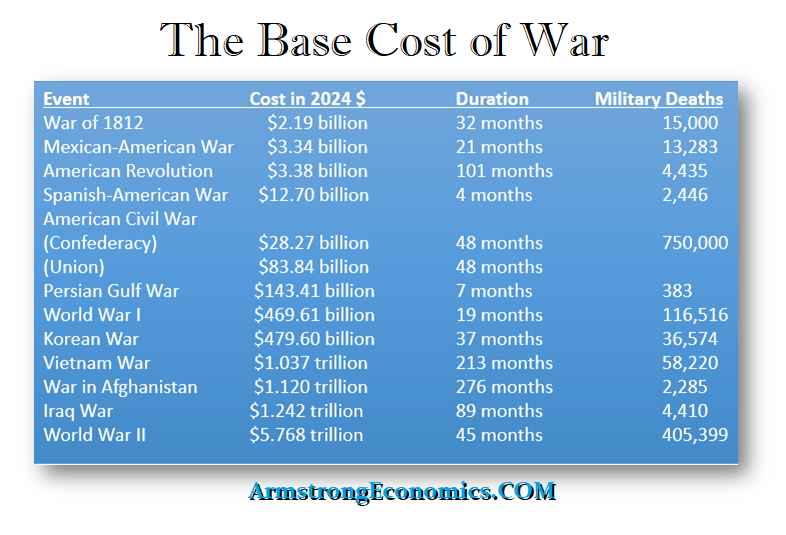
1 Cost of War

We are still paying interest on World War I and II, along with Vietnam, Korea, Afghanistan, and Iraq. This one will be many trillions, and it will contribute to the collapse of the world monetary system post-2030.
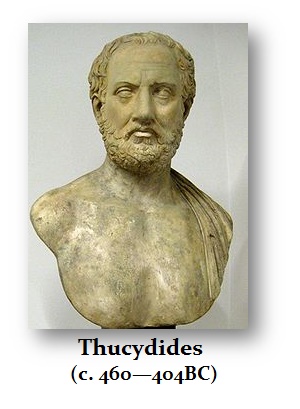
Thucydides 2

We have just entered the Thucydides Trap. This highlights the profound and often perilous instability caused by a major shift in global power, which is what is now unfolding. The hubris of the United States, in believing it is invincible, was promoted by the Neocons, just as it was in ancient Athens. This lesson from history serves as a stark warning that the natural friction between a rising and ruling power is a prime historical catalyst for catastrophic conflict, emphasizing the critical need for skillful statecraft, clear communication, and crisis management mechanisms to navigate this dangerous phase peacefully. This lesson from history highlights a powerful pattern that warrants serious attention, particularly in the context of US-Russia and US-China relations.

Thucydides (c. 460-395 BC) in his seminal work, History of the Peloponnesian War, identified the fundamental cause of the devastating 27-year war between Sparta and Athens. He wrote:

“It was the rise of Athens and the fear that this instilled in Sparta that made war inevitable.”

Thucydides.HumanNatureViolence

The Trap refers to the structural stress created by a major shift in the balance of power. The established power (like Sparta) feels threatened by the rising power’s (like Athens’) growing influence, wealth, and military capabilities. Simultaneously, the rising power demands greater recognition, influence, and a role in shaping the system commensurate with its new power. This mutual fear, suspicion, and rivalry often lead to miscalculation, crises, and ultimately, war – even if neither side actively desires it. Hence, the computer projects that WWIII is inevitable.
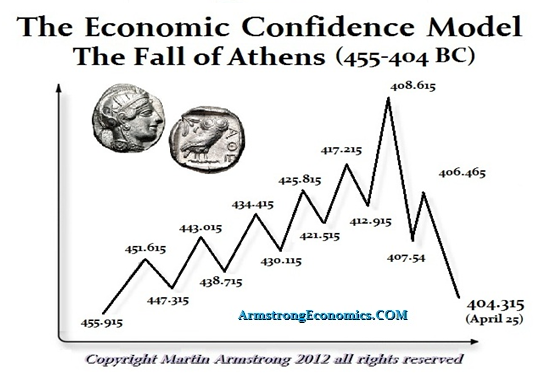
ECM Fall of Athens

The Peloponnesian War (431-404BC) was fought between Sparta and Athens, the two superpowers of ancient Greece at the time. Each was dominant in its own way, and the war was essentially a clash between these two giants. Athens ended in defeat in 404 BC, precisely on schedule with our ECM model.
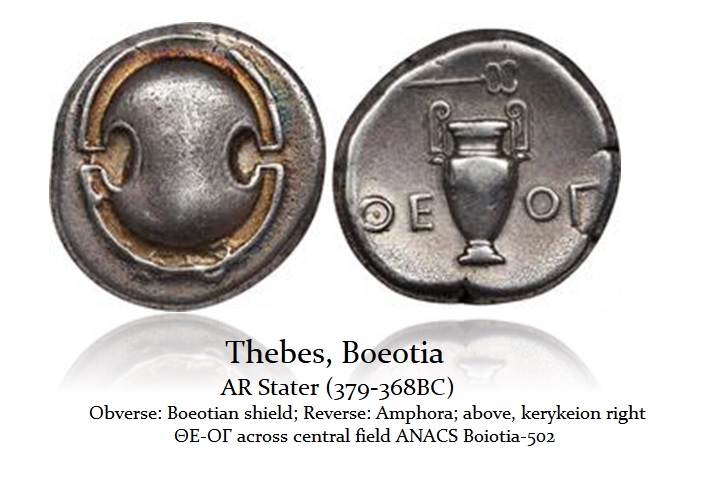
Thebes AR Stater 379 368BC

Sparta and its allies (specifically Thebes) struck the first blow. However, the war’s origins involve decades of tension and specific provocations not unlike the relationship between the United States, Russia, and China.  In early 431 BC, a small force of Thebans (members of the Spartan-led Peloponnesian League) launched a surprise night attack on the city of Plataea, a long-standing ally of Athens within Boeotia (Theban territory). Thebes sought to eliminate Plataean resistance to Theban dominance over Boeotia, much like Israel versus Iran. They sought to bring Plataean firmly into their sphere. They were also encouraged by pro-Theban Plataean citizens who opened the gates, not unlike Israel’s sympathizers inside Iran.

The initial coup attempt failed. Plataean citizens rallied, captured many Thebans, and executed them. This act was a clear violation of the existing Thirty Years’ Peace treaty. This attack by Sparta’s most powerful ally is widely considered the first overt military action of the war. It gave Athens justification to mobilize and support Plataea. The city-state of Plataea was located in Boeotia. The dominant power in Boeotia was Thebes, which did issue prolific coinage (featuring the Boeotian shield) as the leader of the Boeotian League. There are no coins issued by Plataea, for they appear to have used the coinage of Thebes.

After the failed Theban attack on Plataea and the execution of the Theban prisoners, Sparta, as the leader of the Peloponnesian League, formally declared war on Athens. This declaration followed failed negotiations in which Sparta demanded that Athens lift sanctions against Megara (another Spartan ally) and effectively cede its empire. This demand would have led to Athens’ empire being surrendered, which would have been a committed act of geopolitical suicide. Hence, it was resoundingly rejected.
Sparta Warriors

So, while Thebes struck the first physical blow, Sparta, as the leader of the opposing alliance, formally initiated the state of war. I should point out that Sparta was a Communist State and never issued coinage to prevent people from attaining wealth. Everyone was to provide military service.

The historian Thucydides, who lived through the war, argued that the real cause was deeper than any single event. This was rooted in the rivalry between the two superpowers, not unlike today, with the USA and Europe on one side and Russia and China on the other. Thucydides wrote in his History of the Peloponnesian War.

“The growth of the power of Athens, and the alarm which this inspired in Sparta, made war inevitable.”

After the Persian Wars, Athens transformed the Delian League (originally a defensive alliance) into an Athenian Empire, using its powerful navy to dominate other Greek city-states, extract tribute, and interfere in their affairs. It even moved the treasury from Delos to Athens and funded the construction of the Parthenon. Athens was mainly a maritime power.

Sparta, the traditional land power and leader of the more conservative Peloponnesian League, viewed Athens’ growing power, wealth, and democratic influence with deep suspicion and fear. They saw it as a fundamental threat to their own security, way of life, and leadership in Greece.

There had been a civil war in Epidamnus, which drew in Corcyra (Corfu) and then Corinth (Sparta’s key ally). Corcyra, not part of either league, appealed to Athens for help against Corinth. Athens made a defensive alliance with Corcyra and sent ships, which fought against Corinthian ships at the Battle of Sybota (433 BC). This directly involved Athens in a conflict against a major Spartan ally, heightening Spartan fears of Athenian expansionism. This is what Trump just did by attacking Iran, an ally of both Russia and China.
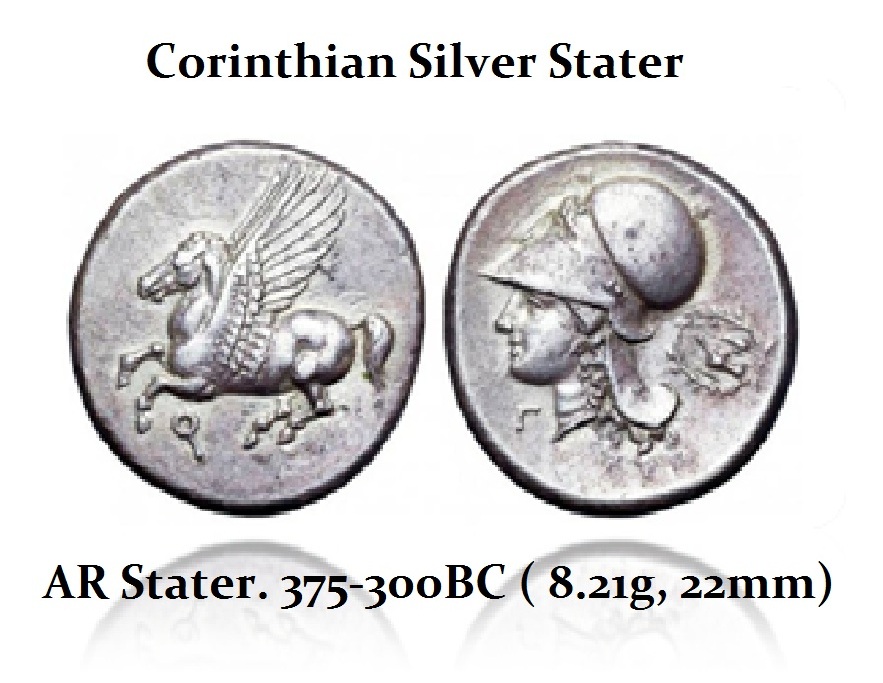
Corinth Staters 375 300BC

The Potidaea Revolt (432-429 BC), which was a Corinthian colony, but also a tribute-paying member of the Athenian Empire, revolted with encouragement from Corinth and Sparta. Athens besieged Potidaea. Corinthian troops fought alongside the Potidaeans against the Athenians. This created another direct military clash between Athens and a key Spartan ally (Corinth), further straining relations and giving Sparta’s allies strong grievances against Athens.

Athens banned Megara in 432BC (a Spartan ally strategically located near Athens) from the ports and markets of the Athenian Empire, crippling its economy. This was not unlike the idea of the Neocons imposing sanctions on Iran. Sparta strongly protested this as a violation of the Thirty Years’ Peace and used it as a key justification for war. This economic sanction was seen as particularly harsh and aggressive, providing Sparta with a specific casus belli and rallying support among its allies who feared similar treatment. This is my concern about the attack on Iran that can be seen as religious.

The fundamental cause, as Thucydides argued, was Sparta’s deep-seated fear of Athens’ growing power and imperial ambitions, which made a major conflict seem inevitable to them. Therefore, while Sparta formally declared war, the aggressive actions of its ally Thebes provided the immediate spark, and decades of Athenian expansion created the tinderbox. The Peloponnesian War began with Sparta and its allies taking the offensive against Athens and its empire. This is very similar to Israel’s attack on Iran, akin to Thebes’ attack on Plataea, which can then draw in the superpowers – USA, Russia, and China.
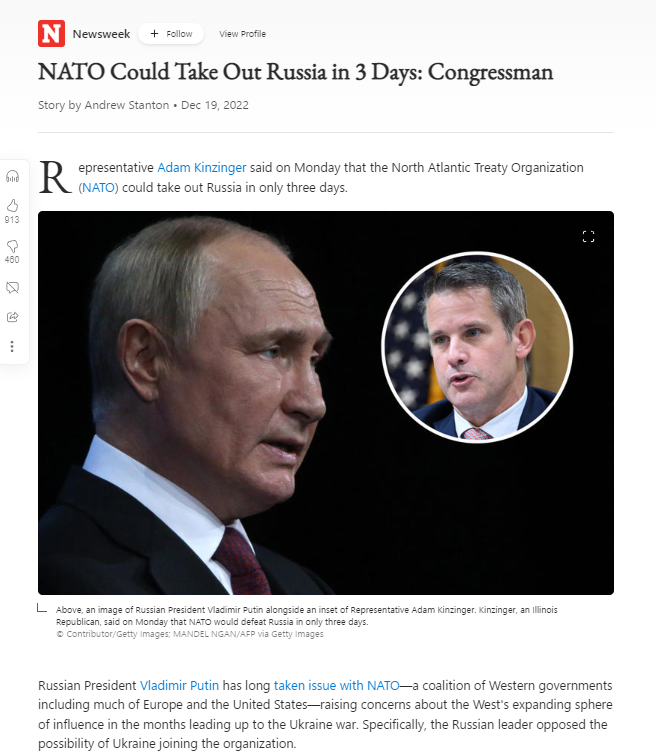
NATO_Defeat Russia_in_3_Days Adam Kinzinger

The likelihood of Iran surrendering is ZERO. The Neocons have, as always, judged their target by what they think rather than the thinking process of their target. They have portrayed Trump as a warring president, yet he, too, thought one strike would end the war, listening to the same people who said they could win Vietnam and Iraq would fall in 3 weeks. Like Adam Kinzinger, who boasted that we could defeat Russia in 3 days. They talk to each other and believe their own BS and pat each other on the back for their brilliance.
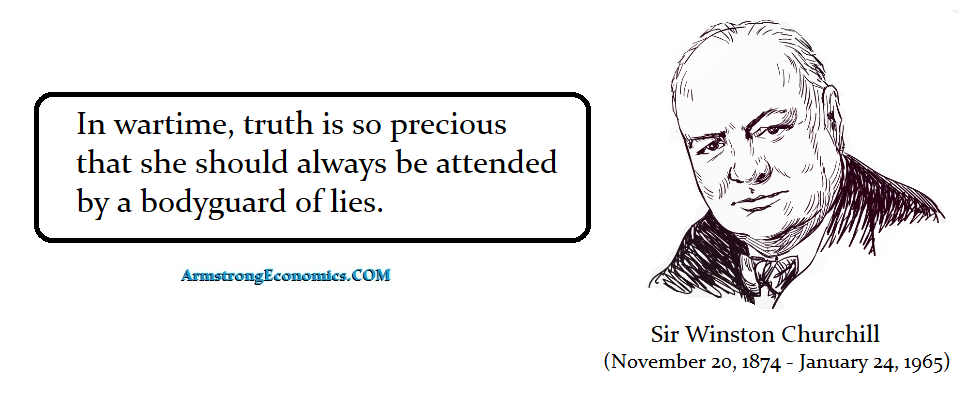
Churchill on Truth

Even Cicero once said, “Laws are silent in time of war.” Herodotus once said, “For war never ends as expected. Once begun, it takes its own course.” (Herodotus, The Histories, 7.49). And the fake news will keep telling us that Iran is devastated, as is Russia, and we can defeat them in just a few days.
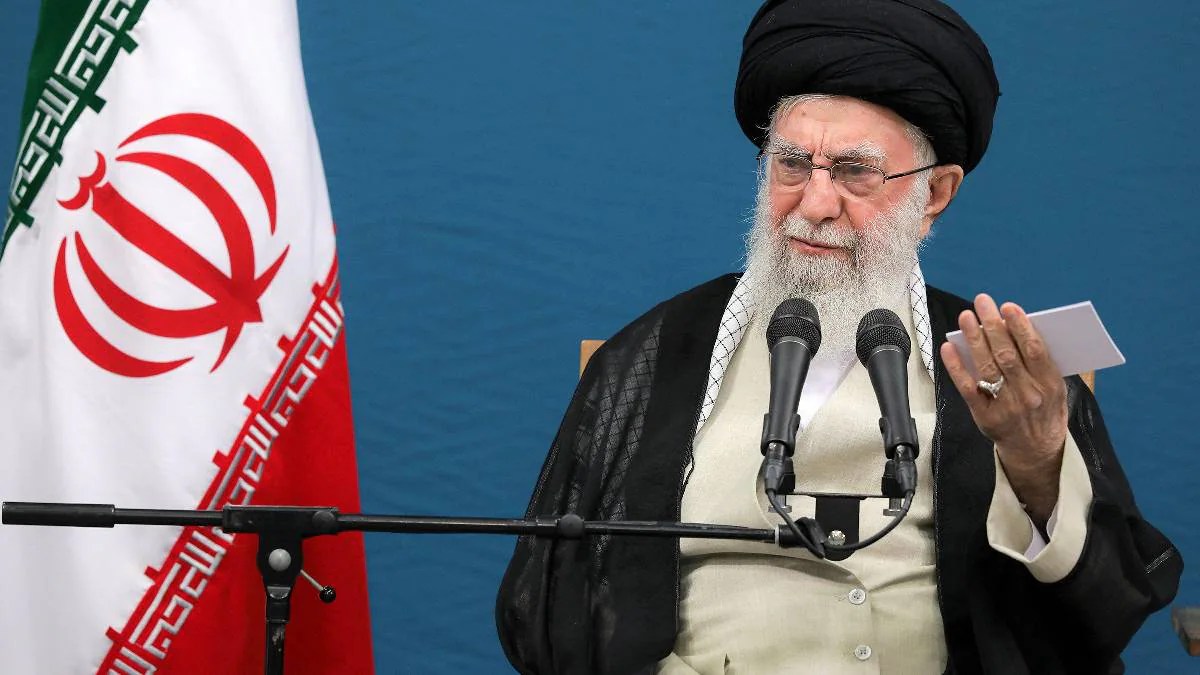
Khamenei.Iran_ 1

Iran’s defiant leaders fired 40 missiles at Israel on Sunday. As expected, the Neocons never understand their adversary – NEVER! Iran now will feel that almost any action is justified if they are to create weapons to deter future attacks. They would most likely urge their allies to give them nukes. If you understand the background of Ayatollah Ali Khamenei, you would immediately comprehend that he will give very little credence to Mr Trump’s claim this weekend that the bombs have “obliterated” the nuclear programme and that Iran should surrender. Iran’s nuclear project is widely dispersed so that the destruction of one does not end their program. It was designed to expect an attack and to survive.

Ayatollah Khamenei’s background is that of a revolutionary cleric who rose through the ranks of the opposition to the Shah, became a key lieutenant to Khomeini, held high office during the Iran-Iraq War, and was chosen as Supreme Leader primarily for his political loyalty and experience within the system, despite initial questions about his religious credentials. His tenure has been characterized by consolidating theocratic control, resisting Western influence, and upholding the core principles of the Islamic Revolution. He no more cares about Iran as a country than the Neocons care about the United States or Europe. They are all motivated by their resolve, if not hatred, of their opponents.

Khamenei became an active opponent of Mohammad Reza Shah Pahlavi’s regime in the 1960s and 1970s. His activism led to multiple arrests and periods of imprisonment by the Shah’s secret police (SAVAK) throughout the 1960s and 70s. He was also tortured during this time. I explained that when Trump was shot, people were saying he would now reverse his rhetoric. I said no, when you face a near-death attempt on your life, you LOSE all sense of any fear of death. You have more resolve and realize that they tried to kill you because you are right.

During periods of freedom and exile within Iran (including in Mashhad and Kirman), Ayatollah Ali Khamenei continued organizing opposition, translating revolutionary texts (like works by Sayyid Qutb), preaching against the Shah, and building networks crucial to the revolution.
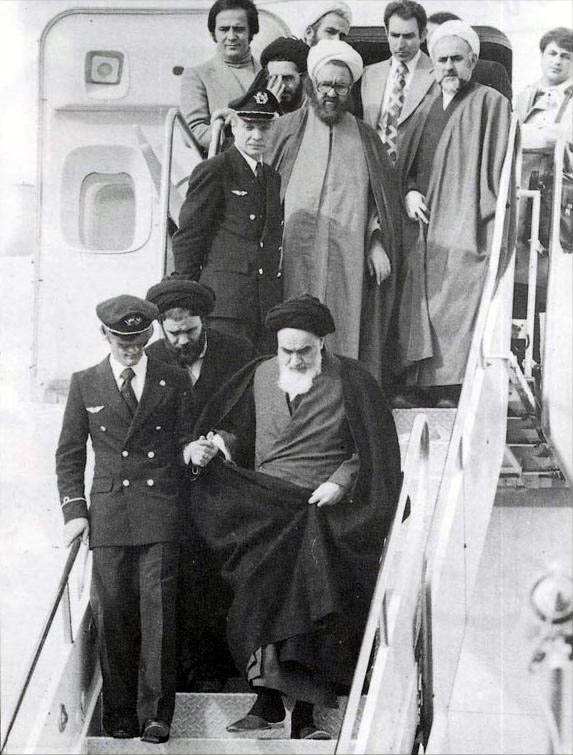
Imam_Khomeini_Return 1979

Upon the death of Ayatollah Khomeini in June 1989, the Assembly of Experts faced the critical task of selecting a new Supreme Leader. Ayatollah Ali Khamenei, while a senior figure and President, was not considered a top-ranking religious authority (Marja’) at the time. His theological credentials were lower than those of other potential candidates. However, due to his proven loyalty to Khomeini and the revolution, his political experience, his organizational skills within the clerical establishment, and likely the backing of powerful networks within the IRGC and IRP, he was selected as the new Supreme Leader. To address the issue of his religious rank, he was quickly promoted to the rank of Ayatollah (and later Grand Ayatollah/Marja’), though this remains a point of contention among some traditional Shi’a clergy outside Iran.
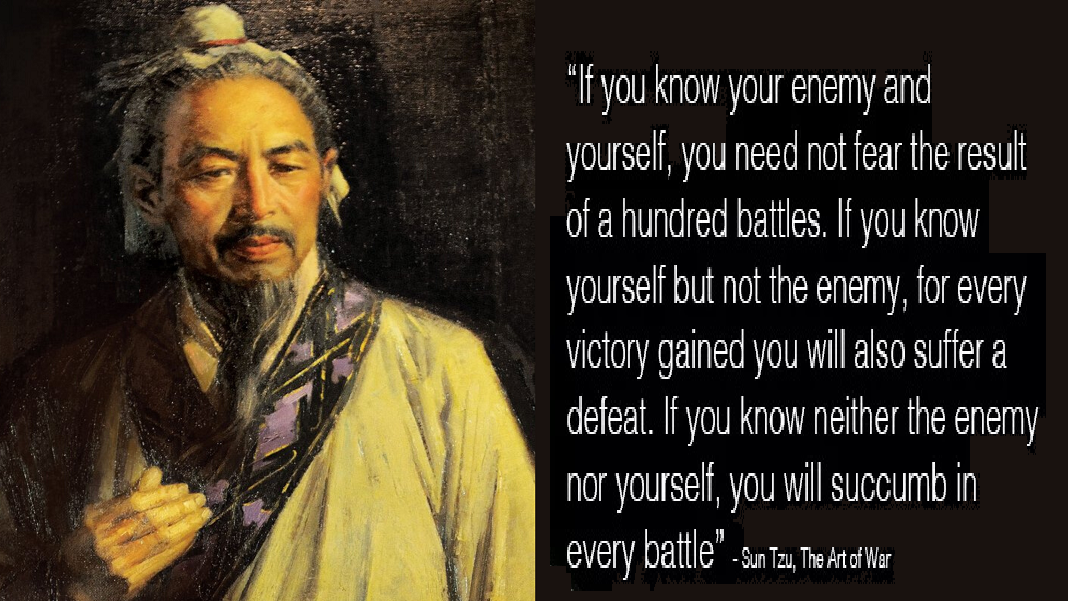
Sun Su Art of War Know Your Enemy

 As Supreme Leader, Khamenei has systematically consolidated power over the military (especially the IRGC), the judiciary, the media, and key economic sectors. He has ultimate authority over all branches of government and key state institutions. A staunch advocate of Khomeini’s doctrine of Velayat-e Faqih (Guardianship of the Islamic Jurist), his resistance to Western (especially US) influence, Islamic unity, technological advancement, and support for “oppressed” groups, such as the Palestinians, ultimately prevailed. The Neocons clearly fail to understand their target. These Neocons constantly make every single mistake driven by their fanaticism, no different than they talk about the Islamic terrorists. Both believe only in their myopic view of the other.

The UNINTENDED CONSEQUENCES that these Neocons have again overlooked are the reality that this attack will by no means end this war, and Iran will not surrender. This will lead to terrorist attacks and civil unrest in Europe. As always, these Neocons only look at their personal hatred and never care about the people or the country.
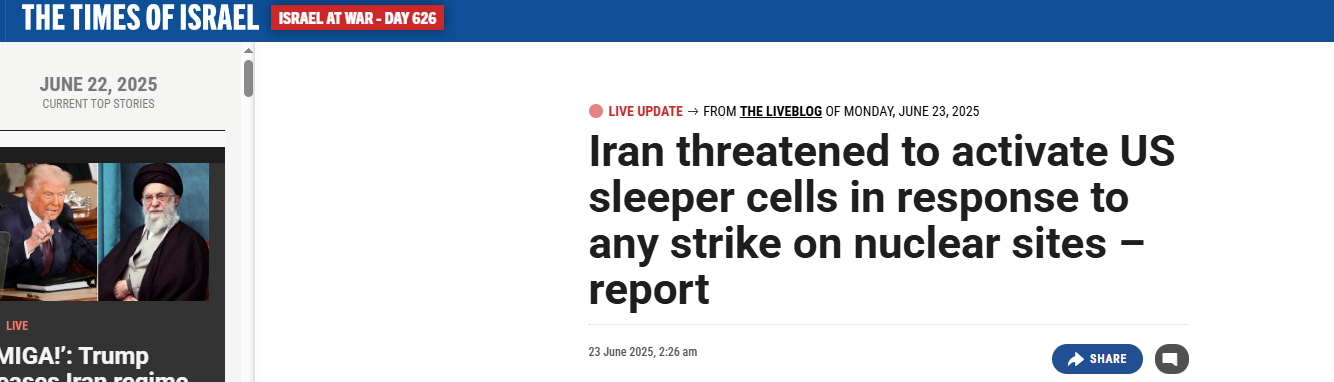
6 22 25 Sleep Cells
6 22 25 Sleep Cells Homeland Security

Iran to shut down Strait of Hormuz & Arab Countries Shutting Downoriginally onIran to shut down Strait of Hormuz & Arab Countries Shutting Down


Posted Jun originally on 22, 2025 by Martin Armstrong 

Strait of Hormuz

COMMENT: Well, Iran voted to close the Strait of Hormuz. Thank you for explaining the Iran-China connection. I now understand how this becomes an option.

Sam

QUESTION: The last report you did on the cycle of war with Israel turned up on April 1, 2025. That was the precise day when Jerusalem police detained several dozen protesters and arrested two of Prime Minister Netanyahu’s top aides—Yonatan Urich and Eli Feldstein—on corruption charges linked to alleged bribes from Qatar. The IDF intensified operations in Gaza, especially around Rafah and Khan Younis, and Israeli warplanes bombed southern Beirut. Your model projected from 2025 to 2029. Do you have any plans to update on the Middle East?

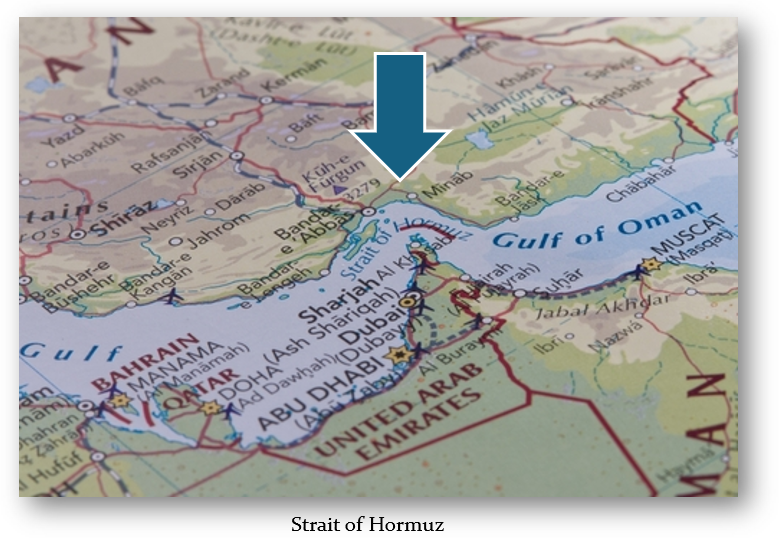
REPLY: The Iranian parliament has indeed approved the closure of the Strait of Hormuz in response to the US strikes against their nuclear facilities. This is the passage through which approximately 20% of the world’s oil and gas flows. The two central oil-producing countries that use this route are Saudi Arabia and the United Arab Emirates (UAE).

Those in the West, like the head of the Institute for the Study of War, General Keane, another hardline Neocon at Victoria Nuland’s sister-in-law’s operation, keep judging others by themselves. They seem to think that they can force political change by armed force, and somehow, the people will rise up against the government to achieve their goal. That’s the same thinking behind sanctions. Punish the Russian people enough, and they will overthrow Putin. I have never witnessed this philosophy ever working, even once.

How_Countries_Separtate F
How_Countries_Separtate INDEX

My concern is that even the moderates in the region have become skeptical of Israel since it started stepping up its assassinations of generals and nuclear scientists. From what I’ve heard, that has changed things for some Iranians who would have been opposed to the Supreme Leader. When I conducted this research report on how governments are overthrown, to my shock, it turns out that on average, it takes less than 15% of real devoted rebels to overthrow a government.

Israeli Flag

Yes, updating the cycle of war for the Middle East is on the list of priorities. My sources in several Arab countries have all said the same thing: businesses are closed, and they are in shock that Trump acted the way he did. They are uncertain about the future of the Middle East now. So this is a top priority.

Is War a Contagion?


Posted originally on Jun 15, 2025 by Martin Armstrong 

AE WAR M Array 6 14 25

Is War a Contagion?

World War I is certainly a classic case of war emerging as a contagion. The assassination of Archduke Franz Ferdinand triggered a chain reaction of alliances pulling countries into the conflict. That seems like contagion through formal treaties. Yet, there is also the spread of revolutions. The American Revolution saw Washington being inaugurated in 1789, while the French Revolution erupted. Then in 1848, another revolution in France inspired uprisings across Europe. The 1848 revolutions are another example of how ideas and uprisings spread from one nation to another. This is more about ideological influence rather than direct conflict spread.

But not all wars spread. Some stay localized. The Iran-Iraq War in the 80s didn’t escalate beyond the two countries. So why is that? Factors such as alliances, geography, or international intervention can contribute to conflicts. Economic interdependence is another point. Countries tied by trade might avoid war because it’s costly. That has been my point that sanctions promote war, whereas free trade inspires cooperation. Sanctions have not worked on Russia, and they have only galvanized Iran and North Korea. They deter peace and build a wall between hardened adversaries. The European Community is often cited as an example of how economic ties can reduce conflicts. Still, it then formalized a centralized government that imposed centralized laws on migrants, which has divided countries by ignoring their concerns for law and order. But does that always work? Maybe not, but it’s a factor.

Then there’s nationalism and ethnic ties. Yugoslavia’s breakup led to multiple wars because ethnic groups in neighboring areas were affected. That’s contagion through shared identities and tensions spilling over. NATO intervened and bombed Serbia simply because they were pro-Russian. NATO refused to honor the Minsk Agreement in Ukraine because the Donbas was pro-Russian, demonstrating that NATO is by no means impartial or ethical.

The United Nations is just as much a failure as the League of Nations, largely due to internal biases and ethical corruption. The Cold War involved proxy wars but avoided direct superpower clashes, maintaining a semblance of containment for image purposes. Every war that the US got itself into, thanks to the Neocons since World War II, has always been about Russia.

They might also be looking for ways to prevent war contagion. Highlighting factors such as diplomacy, economic ties, and international cooperation could be beneficial. Emphasizing that while contagion happens, it’s not inevitable, and there are mechanisms to stop it.

In conclusion, war can spread like a contagion under certain conditions, but various factors can contain it only to a point.  The idea that war spreads like a contagion holds significant weight in historical analysis, although it’s not a universal or an inevitable law. Several mechanisms demonstrate how conflict can leap from one nation to another, and that MUST be our concern right now between Israel vs Iran, when Iran is by no means standing alone, and the confrontation by the West is in motion against Russia, China, and North Korea, providing incentives to support Iran.

NATO North Atlantic Terror Organization

Alliance Systems & Entangling Commitments, as in NATO, are more of a threat of creating a global war contagion than a deterrence. Treaties (defensive, offensive, or mutual aid) can draw neutral countries into a conflict when one signatory is attacked. This is arguably the most direct form of contagion and the very design of NATO. World War I is the quintessential example of how NATO threatens the very future of Europe and the world. The assassination of Archduke Franz Ferdinand triggered Austria-Hungary’s ultimatum to Serbia. Russia mobilized to support Serbia, Germany mobilized to support Austria-Hungary and declared war on Russia, France mobilized to help Russia, Germany invaded Belgium to attack France, pulling in Britain due to its guarantee of Belgian neutrality. A localized Balkan conflict engulfed Europe and its surrounding regions within weeks. The EU hopes to drag the United States and Canada into their dream war with Russia, which has no benefit to Canada or the United States other than making Bill Gates jump for joy by reducing the population.

Charles I Cromwell

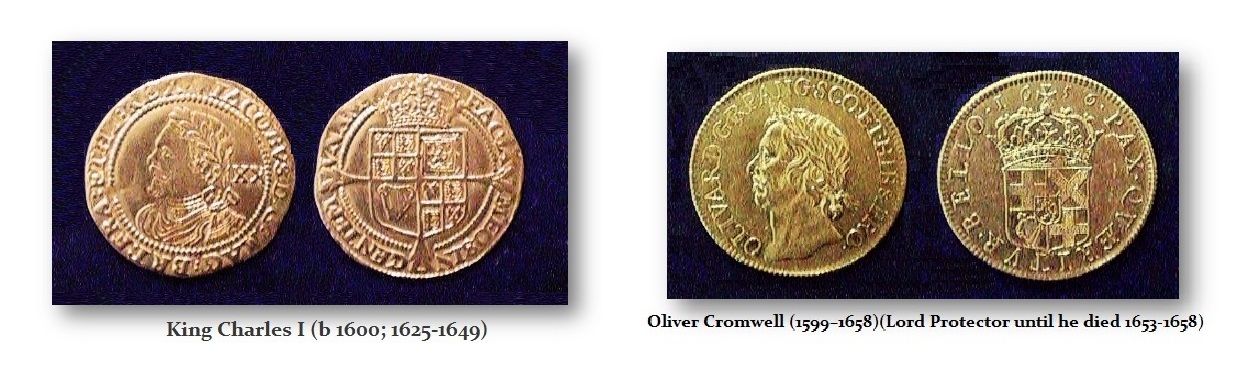
The Ideological or Revolutionary element like overthrowing monarchy, communism against capitalism, Protestant vs Catholic, or Sunni vs Shite, or Islam vs Jeudiam. Successful revolutions or ideological movements can inspire and directly support similar uprisings in neighboring or ideologically aligned countries. Fear of such a spread can also trigger preemptive interventions. Countless examples can be found in the American and French Revolutions, the Cold War, the Revolutions of 1848, and the various religious wars, from pagan vs. Christian to the Protestant Reformation against Catholics, which even led to the English Civil War. The coinage of England displayed the image of Cromwell wearing a laurel wreath (The king is dead, long live the King).

German 1918 Revolution

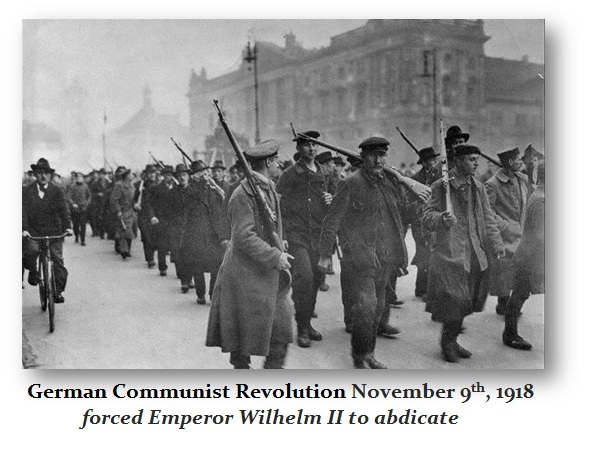
Even the rise of Marxism with the 1917 Russian Revolution inspired the German Revolution in 1918, which overthrew the government and ushered in the Weimar Republic. That, too, ended in hyperinflation.

Spillover Effects:

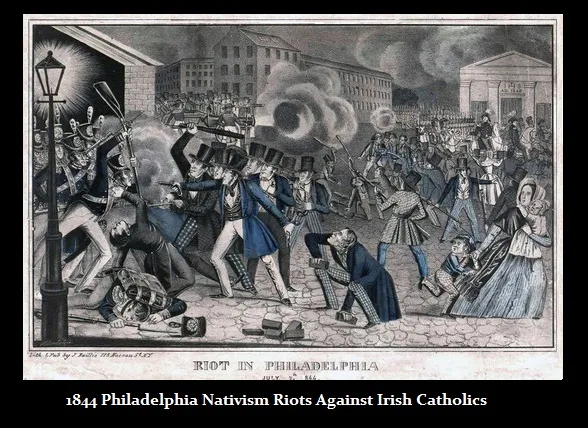
1844 Phila Nativism Riot Againt Irish

 Active conflicts create destabilizing forces that inevitably cross borders. Look at the Refugee Crisis. Mass displacement strains resources and can alter demographics/politics in neighboring states. Allowing immigration during an economic decline will always spark civil unrest, which can result in revolution and the overthrow of governments.

Rebels, terrorists, or militias may use neighboring territory as safe havens, drawing those countries into the conflict. That has always been a common practice, as in Vietnam. The Vietnam War (1955-1975) spilled over significantly into neighboring countries, primarily due to the Ho Chi Minh Trail (a vital North Vietnamese supply route) and US efforts to disrupt it, along with political instability in the region. Thailand was a crucial US ally and provided major airbases for US operations over Vietnam, Laos, and Cambodia.

Economic Disruption has also played a key role. Trade routes are severed, markets collapse, and resources become scarce, affecting neighboring countries. This has often resulted in border skirmishes, accidental incursions, or attacks on shared ethnic groups, which can ignite new fronts.

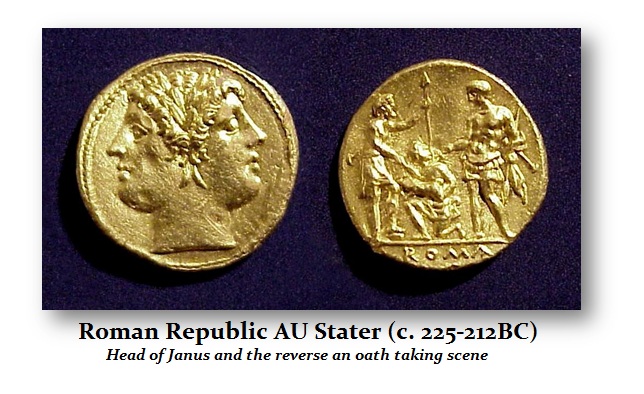
Roman Republic AU Stater 225 212BC

The Syrian Civil War spilled significantly into Iraq and impacted Lebanon, Jordan, and Turkey through refugees, Kurdish issues, and ISIS operations. The Rwandan Genocide spilled into Zaire (DRC), contributing directly to the devastating First and Second Congo Wars.

Even in ancient times, one need only look at the Punic Wars between Rome and Carthage. While Rome and Carthage were the principal antagonists, the Punic Wars were truly Mediterranean-wide conflicts. They involved extensive campaigns across multiple continents (Europe, Africa), drew in major regional powers (Macedon, Syracuse, Numidia), forced countless smaller tribes and cities to choose sides, and reshaped the political map far beyond the immediate territories of the two main rivals. The “spillover” was fundamental to the nature and scale of these wars. Rome issued its first gold coin to impress other Italian city-states to side with them.

The Danger of Victory – Power Vacuums:

A major conflict can weaken a regional power or create a power vacuum. This is what NATO and the EU are doing, sacrificing Ukraine to reduce Russia in hopes of conquest. Here, the EU is deliberately promoting war against Russia to create an opportunity to settle old scores, grab territory, and expand its influence, believing that Europe can rise again to its former glory.

During World War II, Italy’s invasion of Greece and the Soviet Union’s invasion of Finland were opportunistic moves made while the major powers (Germany, France/UK) were focused elsewhere. The collapse of the Ottoman Empire created power vacuums that drew in multiple regional and European powers, who carved up the Middle East.

Nationalism & Ethnic Kin:

Conflict involving a specific ethnic group can ignite tensions or interventionist desires in neighboring states where the same group lives (or where a rival group lives). Hitler invaded Poland because the carving up of Germany after World War I left the Germans stranded in Poland.

The breakup of Yugoslavia saw conflicts spread partly due to the presence of Serb populations in Croatia and Bosnia, drawing in Serbia, and Croat/Bosniak populations drawing in support from Croatia. Albanian populations in Kosovo and Macedonia are also linked to conflicts. This is the core issue in Ukraine since the Donbas and Crimea are ethnic Russians, not Ukrainians, but the EU and US Neocons do not care because they want war with Russia.

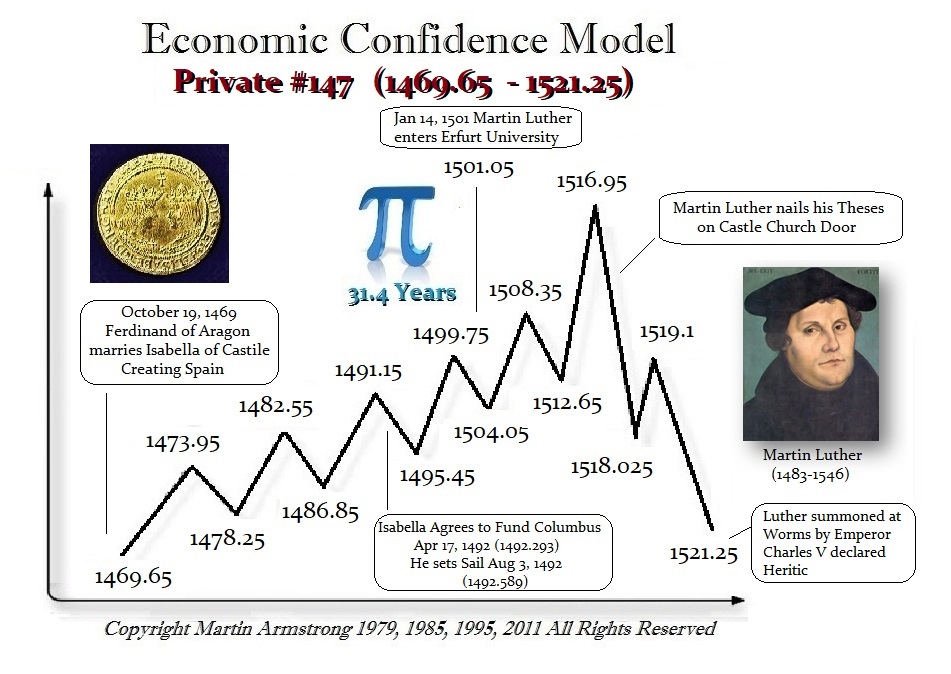
147 ECM Wave 51.6 1469.65 1521.25

Religious Conflict:

The most significant danger that we have currently is that this war between Iran and Israel is perceived as a religious war. With the massive influx of Muslims into Europe, the danger is that we see major civil unrest in all the major cities throughout Europe as this war is seen through ethnic/religious lines. We find that religion becomes the excuse for civil unrest and war when the economy turns down. We saw that with the Protestant Reformation, once the ECM turned down from 1516.95.

The Protestant Reformation spread through a powerful combination of technological innovation, political ambition, social discontent, religious fervor, and adaptable ideas. It is widely believed that the invention of the printing press facilitated this movement, as Johannes Gutenberg’s invention (c. 1440) revolutionized communication, allowing for the mass distribution of ideas. Pamphlets, sermons, cartoons (often crude and effective), and crucially, Martin Luther’s 95 Theses and subsequent writings were printed cheaply and in massive quantities.

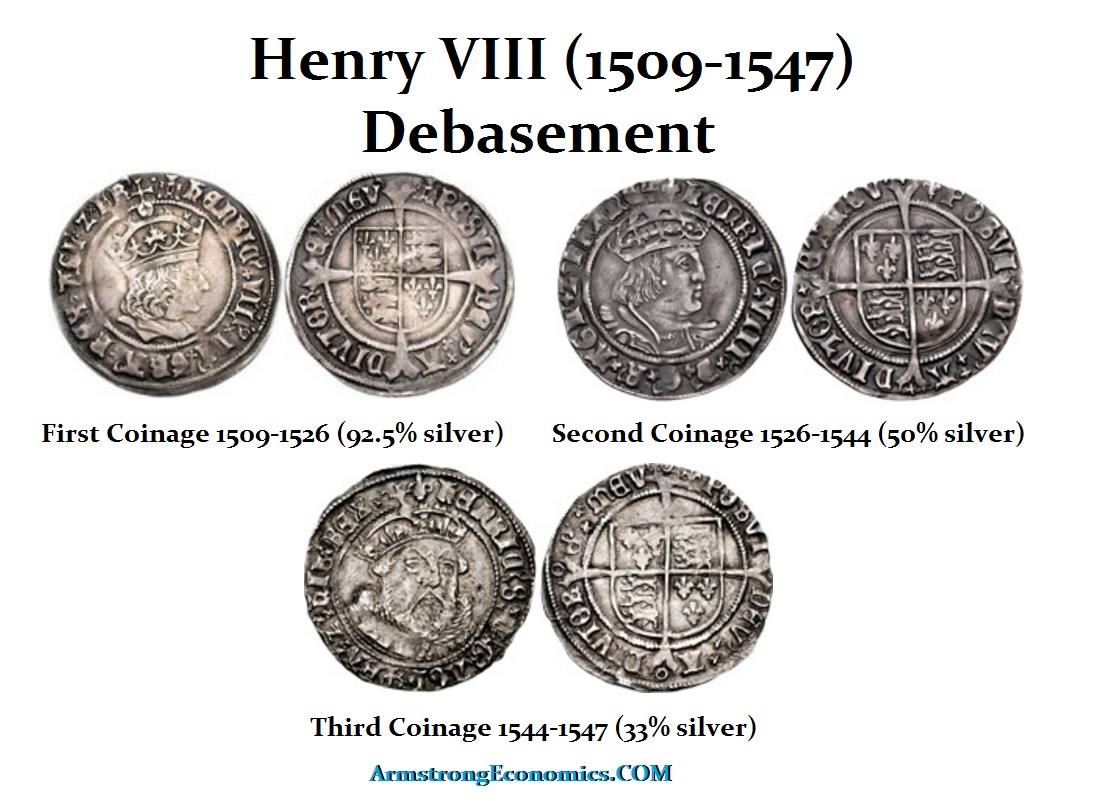
Henry VIII Debased Groats

Translations of the Bible into German (Luther), English (Tyndale), French, and other languages also finally allowed laypeople direct access to scripture, bypassing the Latin-literate clergy and fueling critiques of Church practices. Luther’s German Bible became a bestseller. Many rulers in the Holy Roman Empire saw the Reformation as an opportunity to seize Church lands and wealth as the economy was turning down very hard. Kings like Henry VIII of England were dead broke and debasing their coinage. The Reformation rhetoric that called for a break with Rome prevented his bankruptcy. Gustav Vasa of Sweden used the Reformation to consolidate national power, confiscate Church property, and reduce papal influence. The powerful merchant cities, such as Strasbourg, Zurich, Geneva, and Nuremberg, often embraced reform, which was also profitable. They now controlled local churches, ended payments to Rome, and aligned with the rising merchant classes who favored reform and banking. Urban settings were also hotbeds for the exchange of new ideas. This is where history draws the beginning of capitalism, as Christians could not become bankers, rejecting the Sin of Usury.

Luther’s ideas provided the compelling religious message that resonated with existing grievances. Ambitious rulers and city councils provided the essential political protection and institutionalization. Other reformers adapted the message to different contexts, ensuring its relevance across diverse regions. Social and economic discontent created fertile ground. Together, these factors created an unstoppable wave that permanently fractured Western Christendom.

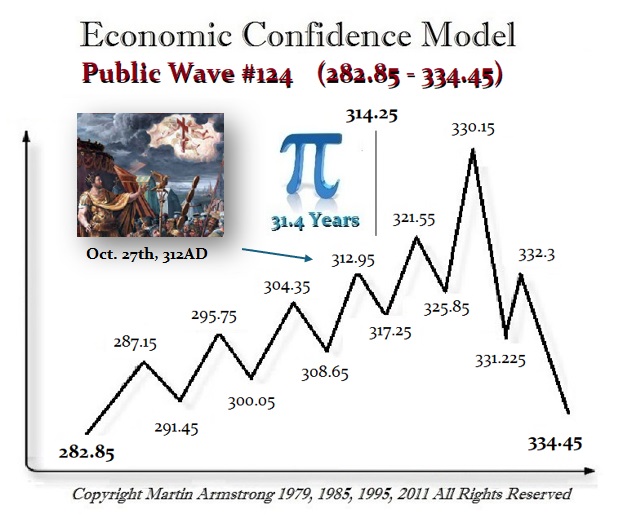
124 ECM Wave 51.6 282.85 334.45
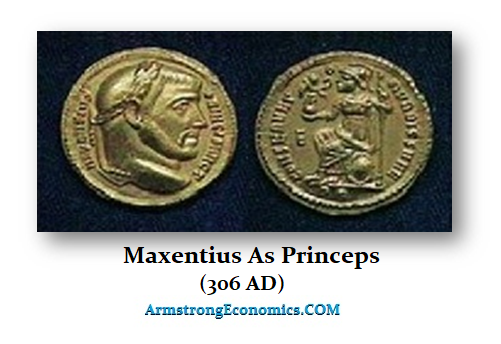
Maxentius AU Aureus as Princeps

We see the same incentives behind Constantine claiming he saw a vision in the sky and painted a cross on the shield of his legions, who were outnumbered 2:1, because the legions of Magentius were Christian. Magnentius built the first Christian church in Rome. With his victory, Constantine entered Rome on October 29th, 312 AD, and staged a grand entrance into the city. Constantine did everything possible to pretend it was a widespread jubilation, but the people did not trust him.

ArchConstantine

The fall hid Maxentius’ scepter to deprive Constantine of his glorious victory. Constantine ordered Maxentius’ body to be fished out of the Tiber River, where he had drowned, and decapitated the corpse, parading his head on a pike through the streets of Rome for all to see. Constantine was not baptized until his deathbed. He continued to issue pagan coinage, not Christian.

Constantine certainly did not patronize Christianity alone. After gaining victory in the Battle of the Milvian Bridge in 312 AD, he constructed in 315 AD a triumphal arch that still stands by the Colosseum. —The Arch of Constantine. The arch is decorated with images of the goddess Victoria. At the time of its dedication, sacrifices were made to gods such as Apollo, Diana, and Hercules. Absent from the Arch are any depictions of Christian symbolism whatsoever.

AE Follis 325-328 Christian Symbol

This is the ONLY coin that Constantine issued with any Christian symbol. This was issued briefly once, in 327-328 AD, and is quite rare. All his other coins are standard Pagan type issues, even years after his victory at the Battle of the Milvian Bridge, which took place between the Roman Emperors Constantine I and Maxentius on October 28, 312 AD.

Constantine’s approach to pagan temple wealth was complex and not a simple confiscation. He “redirected” significant resources from pagan institutions to support mainly his own projects. Constantine did not issue a blanket decree stripping all pagan temples of their wealth across the empire. Many temples continued to function, especially in the West, during his reign. He did seize temple wealth famously using their treasures (gold, statues, precious materials) stripped from major pagan temples in the Eastern provinces (Greece, Asia Minor) to fund and adorn his new capital, Constantinople. This was presented as a transfer of imperial glory, not purely religious plunder, but it undeniably drained wealth from pagan centers. The temples in the West escaped and continued to practice compared to those in the East.

Local vs Spreading Conflicts:

A war is UNLIKELY to spread when the issues are purely local and do not involve ethnic differences that extend to surrounding nations. This includes religion. The Iran-Iraq War (1980-1988) remained largely bilateral despite its scale and regional impact. The Falklands War was also contained. The same can be said of the English Civil War (which reached a pivotal point with the execution of King Charles I in January 1649), which did not directly spread as a large-scale military conflict to other sovereign nations like France, Spain, or the Dutch Republic. However, it significantly impacted and involved other parts of the British Isles and had international repercussions:

War & Contagions:

War demonstrably can and has spread from country to country through mechanisms resembling contagion, like a disease. This has often been facilitated, particularly through alliances, ideological spillover, physical spillover effects, opportunism, and ethnic or nationalist ties. Our greatest threat with this war between Iran and Israel is that this becomes religious and spreads, especially in Europe, as a clash between Islam and Judaism, as well as Christianity, from the militants who have flooded into Europe. 

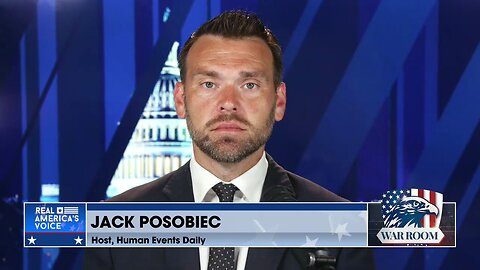
POSOBIEC: “Russian Response, Status Of Negotiations In Ukraine Is Going To Be Called Into Question.”


Posted originally on Rumble By Bannon’s War Room on: June 13, 2025, at 1:00 pm EST

War is a Racket as is Civil Unrest


Posted Jun 11, 2025 by Martin Armstrong 

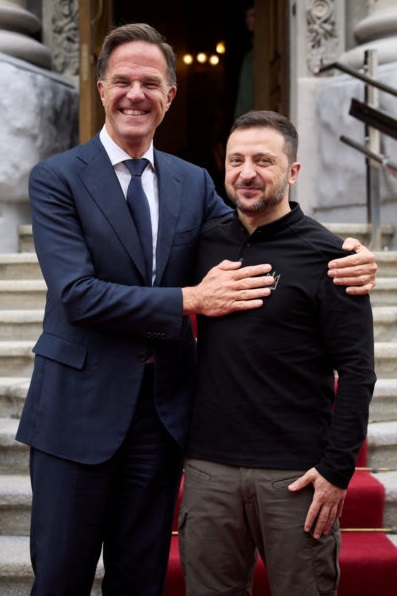
Rutte Mark with Zelensky

COMMENT: The next moron in charge of nato… Rutte… with a psycho propaganda quote: “invest now, or learn Russian later”

Let’s rephrase this with a counter slogan “let’s learn Russian now, let’s listen to Russia and de-escalate, let’s not betray Russia anymore, let’s not waste our money in a bottomless nato money pit based on western lies, and let’s enjoy wealth and freedom later”.

RB

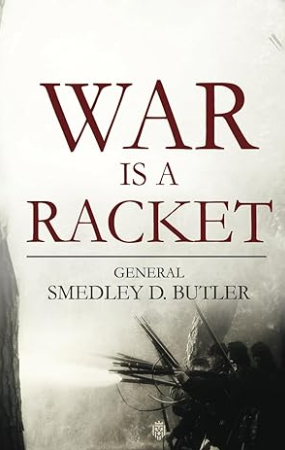
War_is_a_Racket_Butler_General_Smedley_D._9798789413876_Amazon.com_Books

REPLY: While the Democrats embrace alien criminals just because Trump wants to deport them, in Europe, it is NATO and the EU which does everything to undermine Trump and any possible peace in Ukraine. This all brings to mind Smedley D. Butler’s “War Is a Racket” which captures the essence, power, and enduring relevance of war and also civil unrest when it always comes down to money. Butler’s brutally honest book was written in 1935 by one of the most decorated Marines in U.S. history. After a 34-year career fighting in nearly every major U.S. conflict from the Spanish-American War through the “Banana Wars,” Butler reached a shocking conclusion.

Butler came to see that war is not primarily fought for democracy, freedom, or national defense. Instead, it is a carefully orchestrated “racket” – a criminal enterprise designed to generate enormous profits for a select few at the expense of the many. Butler’s critique carried immense weight precisely because of who he was. As a Major General, two-time Medal of Honor recipient, and commander of major expeditions, he had seen the inner workings of war from the highest levels. He couldn’t be dismissed as a naive pacifist.

The “Racket” had three phases, which he identified as:

  1. Lobbying for War: Powerful business interests (bankers, arms manufacturers, industrialists, resource extractors) pressure governments into conflicts that will protect or expand their markets and investments overseas.
  2. Profiteering During War: The same interests make obscene profits selling weapons, munitions, ships, loans, and supplies to the government (funded by taxpayer dollars). Soldiers pay with their lives; civilians pay with blood, suffering, and taxes.
  3. Profiteering After War: These interests often control the post-war settlement, securing lucrative concessions, resource rights, and loan arrangements from defeated nations (reparations), further enriching themselves while saddling populations with debt.The Costs are Borne by Others: The young men who fight and die, the families who lose loved ones, the taxpayers who foot the astronomical bill, and the societies left shattered bear all the real costs. The profits are privatized; the losses are socialized.

Butler pulls no punches, as they say. His language is direct, vivid, and often scathing. He uses stark figures to expose the grotesque disparity between war profits and human cost. (“Out of war nations acquire additional territory… the newly acquired territory promptly is exploited by the few – the self-same few who wrung dollars out of blood in the war.”)

Butler’s first-hand experience draws powerful examples from his own service in Cuba, the Philippines, China, Central America, and the Caribbean, showing how U.S. interventions directly benefited specific corporations (e.g., United Fruit, sugar interests, banks).

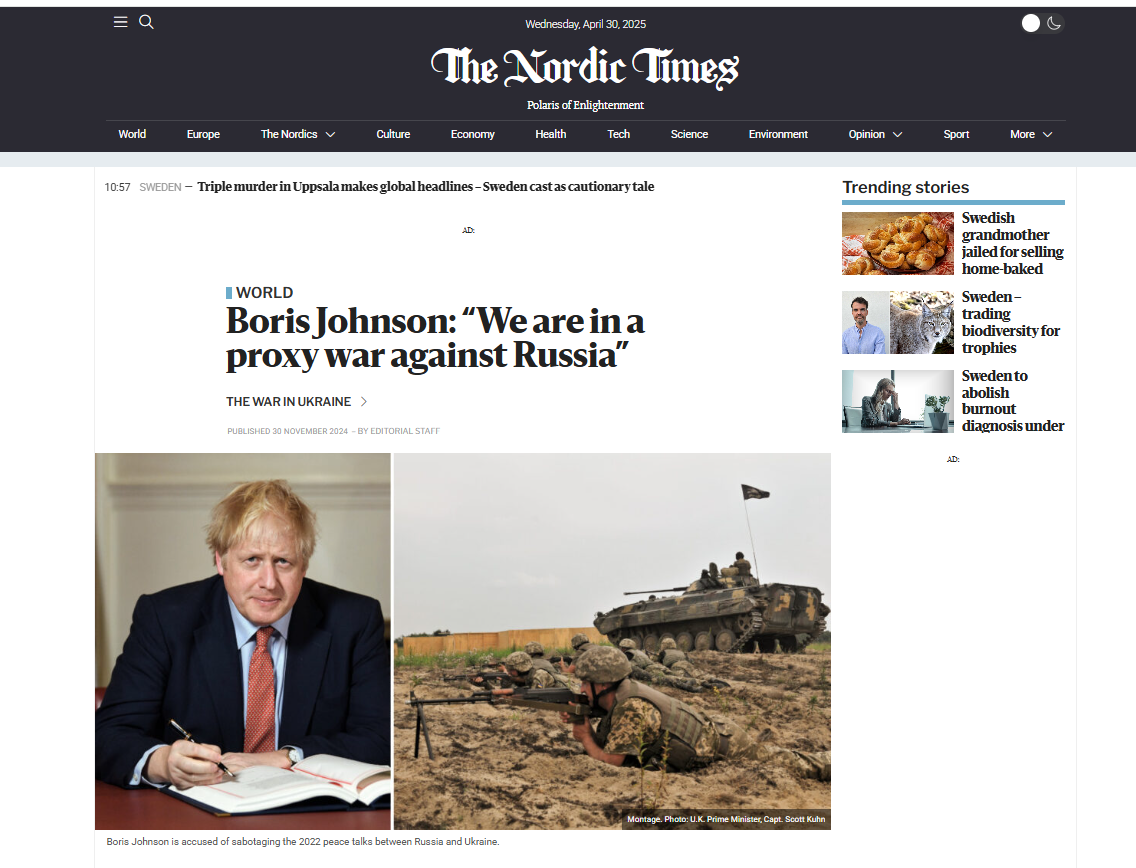
Boris_Johnson_We_are_in_a_proxy_war_against_Russia_

The critique of the Military-Industrial Complex (a term Eisenhower popularized later) is central. The dynamics Butler described – corporate influence on foreign policy, war profiteering, the manipulation of patriotism, the human cost vs. private gain – remain potent issues. They still dominate this proxy war against Russia, as Boris Johnson openly stated that Britain is at war with Russia.

Naturally, anyone who speaks the truth will have critics who argue for the continued carnage and bloodshed. Critics of Butler argue that he reduces complex geopolitical events to solely economic motives. While he powerfully exposes a crucial driver often overlooked, factors such as ideology, nationalism, genuine security threats, and diplomatic failures also play significant roles in wars. There is always an economic element. When everyone is fat and happy, there is no war.

Butler’s proposed solution was that the only way to stop the racket was to make war unprofitable. When young men are conscripted to die, wealth should be conscripted to pay for the war. Limit wartime profits to a small, fixed percentage. He also argued for restricting military deployment. Only allow the military to defend U.S. soil. No more expeditions to protect corporate investments abroad. “Take the profit out of war.”

Only those registered for frontline service should be allowed to vote on whether to go to war. Not those who profit from war.

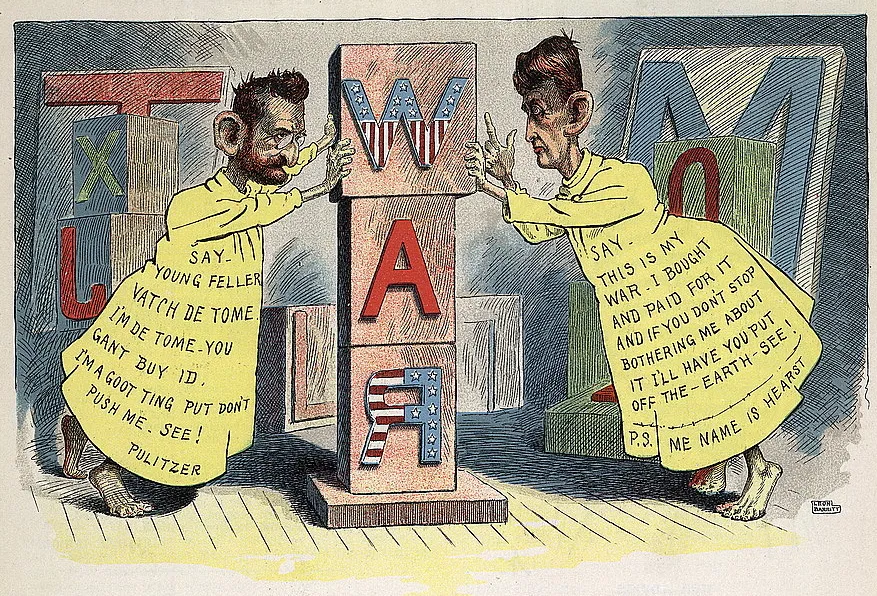
PulitzerHearstWarYellowKids

It remains a foundational text for understanding the critique of the Military-Industrial Complex, corporate influence on foreign policy, and the inherent injustice of war profiteering. It forces readers to question the official narratives of war and consider the powerful economic interests that often lurk beneath the surface. While perhaps not the only factor in wars, Butler highlights a factor that is frequently overlooked or downplayed. Mainstream media beats the war drums, and they too profit from sensationalizing war to get readership. The Spanish-American War was created by Pulitzer and Hearst competing for readership, creating biased yellow journalism.

In short, “War Is a Racket” is a short, essential, and provocative read. It’s a powerful dose of uncomfortable truth from a man who knew war intimately. Its message is as relevant and disturbing today as it was in 1935. It’s less a book to agree with on every point, and more one to grapple with and be challenged by.

Newsom Gavon

I, for one, will strongly object to ANY federal funds going to California to rebuild LA. Let Newsom raise taxes in California even more to pay for his protection of non-Americans. He forgot that he swore an oath to uphold the Constitution of the United States. He has rejected that and all responsibility to enforce the law simply because he disagrees with whatever any Republican says – he just has to take the opposite, regardless of whether it is right or wrong. It would be nice to expel California from the United States and let it take in all illegal immigrants who cannot possibly have a legitimate job without citizenship or a Greencard. He supports illegal aliens against Americans – plain and simple. He is violating the civil rights of Americans and for that he could even be criminally charged.

The segregation of the South refused to honor the Constitution. The Civil Rights Act of 1964 gave the Department of Justice (DOJ) powerful tools: filing lawsuits against states, cities, businesses, and school districts; withholding federal funds; and sending federal marshals to protect activists and enforce court orders. The Supreme Court consistently upheld the constitutionality of these laws, especially their use of the Commerce Clause (e.g., Heart of Atlanta Motel v. U.S.Katzenbach v. McClung for the CRA ’64) and the enforcement provisions of the Voting Rights Act of 1965 (e.g., South Carolina v. Katzenbach). This judicial backing was essential.

The Civil Rights Act of 1964 demolished the legal framework of segregation in public spaces, schools, and employment. The Voting Rights Act of 1965 smashed the political system built on Black disenfranchisement. Together, backed by federal enforcement, court rulings, and sustained activism, these laws broke the legal backbone of Jim Crow segregation in the American South, transforming the region and the nation. However, the fight for true racial equality continues.

The Voting Rights Act of 1965 is a significant U.S. law that prohibits racial discrimination in voting, aiming to enforce the voting rights guaranteed by the Fifteenth Amendment. It was signed into law by President Lyndon B. Johnson on August 6, 1965, and has been amended several times to strengthen its protections against discriminatory practices. The Supreme Court just ruled for straight woman who claims she was subjected to reverse discrimination.

What Newsom is doing in California could land him in prison for a very long time. He is engaging in REVERSE DISCRIMINATION against American citizens when illegal aliens are NOT entitled to voting rights any more than I can vote in London just because I got in and refused to leave. Newsom has violated his oath of office, and this is what Democrats do just to win at all costs anymore, for they feel they MUST oppose whatever Trump does, no matter what..

New York Times Obtains Internal FSB Report Highlighting Russian Govt Concerns About Chinese Influence


Posted originally on CTH on June 9, 2025 | Sundance 

At sporadic times of inconsequential normalcy, on the streets of Russia you will see two distinct types of people asked for identification, Asians and middle eastern males. When asked why, the average, ordinary grey-person in Russia going about their business, ambivalently has no idea.

Russia is a massive country.

To the southeast they are bordered by China, Mongolia and Asia, they even have a small border with North Korea. To the southwest they have the “stans,” most notably Kazakhstan; this region is the source of most domestic terrorists who attack inside Russia. To the West they have Ukraine and the EU nations.

From the standpoint of Russia, they have Asians on their East, Arabs on their South and EU supported Nazis on their Western flank. Keep in mind, despite the breakup of the Soviet Union the muscle memory from World War II is still very much a part of their social compact.

Consider Arlington Cemetary for scale. If you were to build a cemetery just from the battle of Leningrad (now St Petersburg) it would be bigger than Washington DC. If you were to build an Arlington type cemetery for all the Russians killed in World War II, the 27 million gravesites would envelop a landmass bigger than Washington DC and the state of Virginia combined.  These realities underpin Russian perspectives.

CTH shared previously that Russia is drawn into an alignment with China not by desire, but rather by necessity.  Most ordinary Russians do not like China, and they would prefer not to purchase Chinese industrial or manufactured goods.  Russian President Vladimir Putin is well aware of this, and I believe U.S. President Donald Trump is aware also.

Secretary of State Marco Rubio said publicly it should be U.S. policy to support separating the two biggest nuclear powers, China and Russia as a matter of strategic U.S. interest.  President Trump said, “I’m going to have to un-unite them, and I think I can do that, too,” shortly before his election in November. “I have to un-unite them.” {link}

In a very downplayed statement earlier this year hidden by media, the former Chairman of the Senate Select Committee on Intelligence and current Secretary of State -also National Security Advisor- Marco Rubio, said “Ukraine was a proxy war for the United States against Russia.”  Despite the U.S. media intentionally hiding the statement, Moscow immediately noticed and affirmed the accuracy.

Ukraine launched a covert attack against Russian air force bases last Sunday June 1st.  President Trump was not informed of the attack in advance and was unaware it was going to take place.  In the aftermath, President Trump and Secretary Rubio stayed quiet.

Three days after the attack, Wednesday, June 4, President Trump held a 90-minute phone call with Russian President Vladimir Putin.

Last week the New York Times received “an eight-page internal F.S.B. planning document” … “that sets priorities for fending off Chinese espionage.”

[…] Ares Leaks, a cybercrime group, obtained the document but did not say how it did so. That makes definitive authentication impossible, but The Times shared the report with six Western intelligence agencies, all of which assessed it to be authentic. The document gives the most detailed behind-the-scenes view to date of Russian counterintelligence’s thinking about China.

[…] Russia has survived years of Western financial sanctions following the invasion, proving wrong the many politicians and experts who predicted the collapse of the country’s economy.

[…] The Russian document describes a “tense and dynamically developing” intelligence battle in the shadows between the two outwardly friendly nations.

[…] Read one way, the F.S.B. document lends credence to the theory that, with the right approach, Russia can be cleaved away from China. The document describes mistrust and suspicion on both sides of the relationship. (more)

CTH will repeat prior outlines based on available public data as well as my research trip into the current disposition of Russia.  The Russian Federation and the Russian people do not want deepening ties with China.

Despite people from the Eastern side of Russia often being called Asians, even within Russia they are known as Asian-Russians, they do not align with a Chinese worldview.  One of the key positive characteristics of Russia is the lack of pretending both in government and in the people.  Russians do not describe China as the panda; they have very clear eyes and see the dragon behind the panda mask.

From the Southeast Russia has Chinese espionage pressure points; from the Southwest Russia has Arab terrorist pressure points; from the West Russia has EU/Nazi NATO pressure points, and the CIA has activated strategies to stimulate all these agitations.

All of my political instincts tell me that President Putin and President Trump are in alignment.  The challenge for President Trump is to overcome the opposition forces from within Western government (NATO) and Western media.

When President Trump and President Putin come into open alignment, the entire world changes.

Their opposition knows this.

JACK POSOBIEC: The Russians seem to be gearing up for an infantry offensive.


Posted originally on Rumble By Bannon’s War Room on: June 6, 2025, at 1:00 pm EST

81st Anniversary of D-Day – June 6, 1944


Posted originally on CTH on June 6, 2025 | Sundance

First, a message from the White House:

“In the pre-dawn hours of June 6, 1944, American and Allied forces stormed a 50-mile stretch of beach in Normandy, France, winning a crucial victory that turned the tide of World War II and changed the course of history.  The largest amphibious invasion in history—Operation Overlord—was achieved through meticulous planning, utilizing 13,000 aircraft and gliders, 23,400 paratroopers, 5,000 ships and landing craft, and roughly 160,000 American, British, and Canadian troops. 

By nightfall, the valiance and intrepidity of the Allied soldiers, sailors, airmen, marines and merchant mariners had carried the day, establishing beachheads on all five of the landing beaches – Omaha, Utah, Sword, Gold, and Juno.  This victory, though, was achieved at great cost.  More than 9,000 Allied service members were killed or wounded that day, to ensure that freedom would once again prevail over the European continent.

On the 81st anniversary of D-day, we pause to pay homage to the warfighters whose indescribable valor, fierce determination, and unwavering patriotism delivered this pivotal victory for the global cause of freedom.  The monumental victory forged on land, at sea, and in the skies of Normandy led to the liberation of Europe, the defeat of the evil Nazi regime, and the preservation of democracy. 
We are grateful for those young men who answered their nations’ calls and faced the carnage of war in order to defeat tyranny—and we are eternally indebted to the souls who gave their lives in this noble struggle.  It is our solemn obligation to remember their heroic stories, honor their sacrifices, and ensure that the freedom for which they died for may never again be in peril.”
Defense Secretary Pete Hegseth is in Normandy, France, marking the 81st anniversary of D-Day. He’s attending events at the Normandy American Cemetery and Utah Beach, along with leaders from NATO and other countries. Hegseth is also speaking at a NATO defense meeting in Brussels, where he’s stressing the need for member nations to invest 5% of their GDP in defense.

.

How Putin Can Win


Posted originally on Jun 6, 2025 by Martin Armstrong 

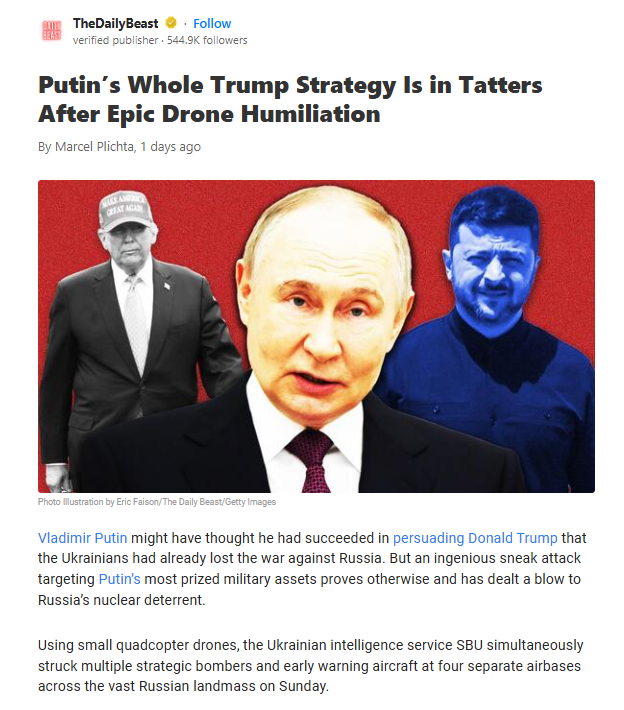
2025_06_03_11_29_20_Putin_s_Whole_Trump_Strategy_Is_in_Tatters_After_Epic_Drone_Humiliation_NewsBr

The Daily Beast, another LEFT-WING propaganda outlet, pretends that this strike means Ukraine is winning. I think every one of these journalists should be drafted, handed a gun, and sent to Ukraine to defend what they boast about. Sorry, Putin is the smartest leader in the room. He has drawn so many red lines, and the EU has crossed each one, trying to compel him to attack NATO. Despite the NEOCON propaganda that Western media keeps spouting, this attack does not mean Ukraine is winning on the battlefield, which takes soldiers.

Anyone with real sources knows that this is a proxy war, and the EU does not care if a single Eastern European is left alive as long as they take a Russian with them. Europe is collapsing economically, and without war, the EU will crumble and divide. The two economies that are actually shrinking are Japan and Germany. A source who was there in Brussels stated plainly that it is now Germany and Merz who are the most aggressive, pushing for war. The entire financial system built on perpetual debt that is NEVER paid off is coming to an end. They need war as a distraction, or the people will be storming the Parliaments.

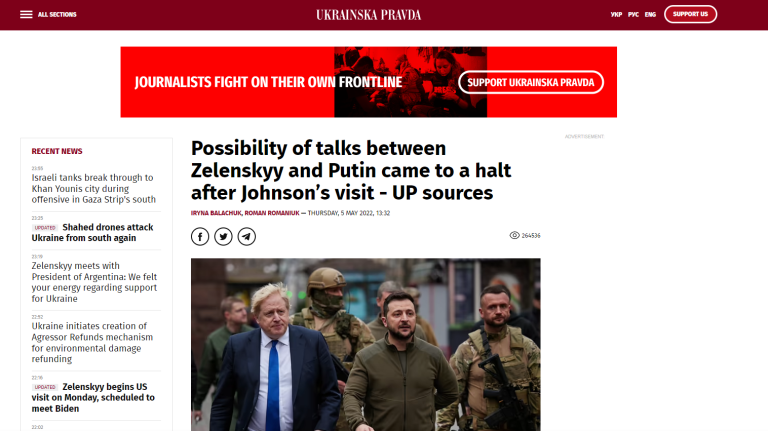
Zelenskyy Johnson

Former UK Prime Minister Boris Johnson said that Ukrainians are doing everything possible to strike Russian military targets, while Russian invaders continue attacking civilians. Johnson is probably one of the most loathsome politicians out there. I do not know how he sleeps at night. He is responsible for the deaths of more than 500,000 Ukrainians since he hopped on a plane to instruct Zelensky that he was not allowed to sign a peace deal.

Boris_Johnson_We_are_in_a_proxy_war_against_Russia_

“Ukrainians are unbreakable and technologically brilliant. They’re doing everything they can to hit military targets, while Putin indiscriminately slaughters civilians. Time for the UK and EU to back Lindsey Graham’s secondary sanctions bill. Time to tighten the noose around Putin and end this war.”

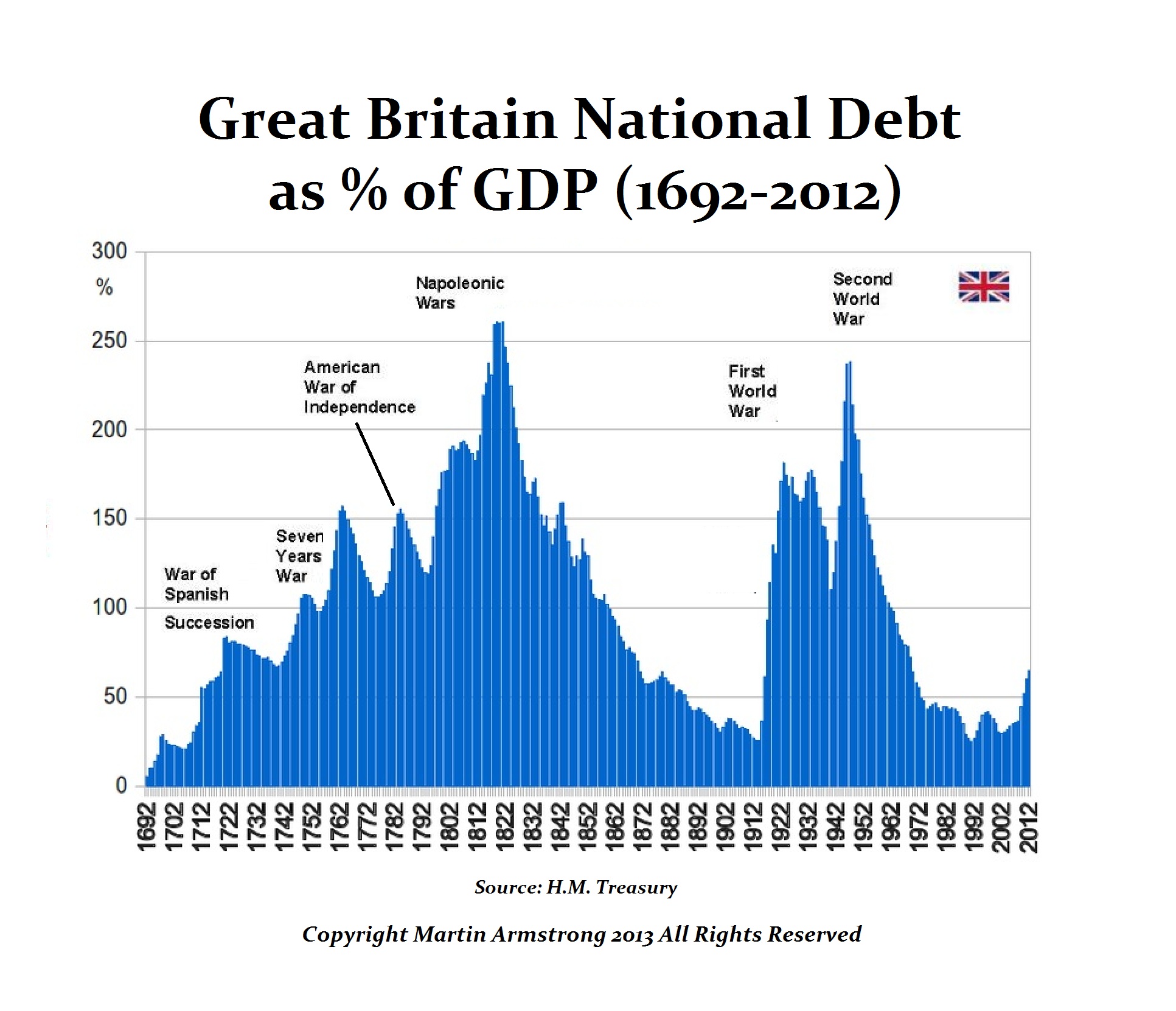
UK Debt 1692 2012

The UK government’s debt-to-GDP ratio stands at 97.6% and has been steadily rising. The UK claims that it has never formally defaulted on its sovereign gilt debt by refusing to make a scheduled interest or principal payment. However, the 1720 South Sea Bubble restructuring and the 1932 War Loan conversion involved significant unilateral changes to debt terms that harmed creditors, leading some historians and economists to argue they indeed represent forms of selective or de facto default/restructuring.

There are clearly economic reasons behind this thirst for war coming out of Europe, egged on by the Neocons on both sides of the Atlantic. The computer warns that the EU will fail and collapse. There is another problem nobody is talking about, and that is that all the migrants they let into Europe brought with them ethnic feuds. The EU politicians thought they would allow these people in and then send them to war. This is not going to work out as they hoped. There is a higher probability that we will see rising civil unrest in Europe.

Ukraine War
Putin can Win

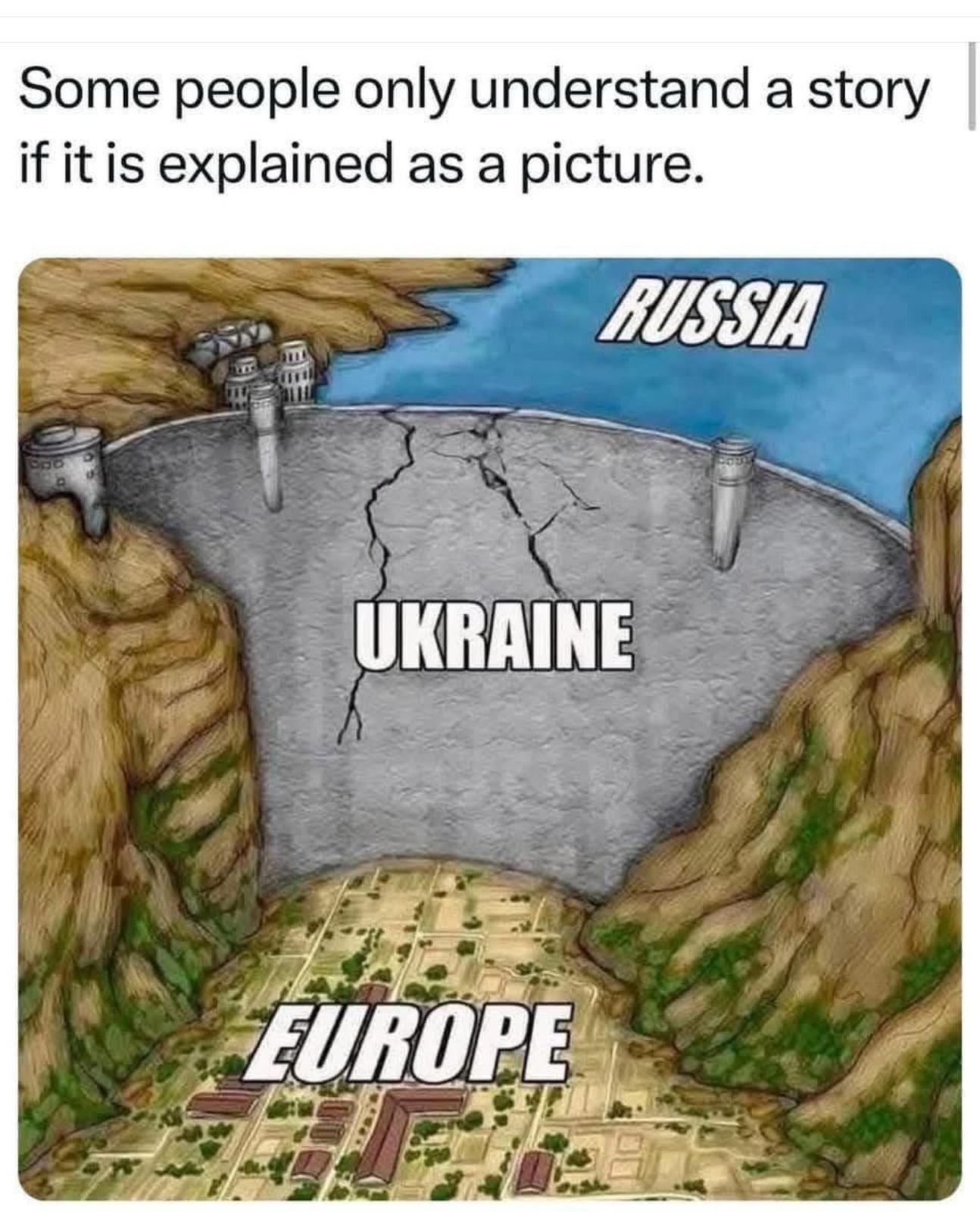
The EU is correct that if Ukraine falls, there goes Europe. However, that does NOT mean Russia invades Europe. There is NOTHING there worth taking. Instead, the collapse of Ukraine is more about the collapse of the Western political hegemony. This will lead to the crumbling of the EU internally with division – not some invasion by Putin.

Euro Gamble

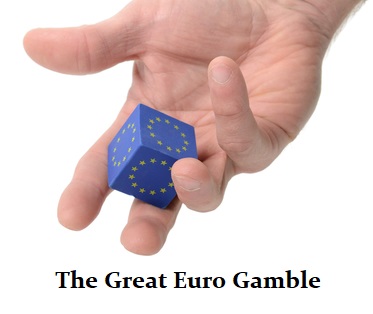
Ukraine is the great EU gamble. The hopes of conquering Russia to get the $75 trillion in natural resources to resurrect Europe as the pinnacle of economic power. The collapse of Ukraine really means the collapse of European debt, and the division will erupt just as you see in the American Democratic Party and its internal Civil War.

We will create a private blog to discuss the timing of the end of the Euro.

Koffler: “The United States Is Officially In A Direct Kinetic War With Moscow”


Posted originally on Rumble By Bannon’s War Room on: May 2, 2025, at 7:00 pm EST