June 17, 2020
President Donald Trump calls-in to the Sean Hannity television show to discuss current events including police reform, the coronavirus pandemic, and his re-election campaign.


President Donald Trump calls-in to the Sean Hannity television show to discuss current events including police reform, the coronavirus pandemic, and his re-election campaign.
Earlier today White House Press Secretary Kayleigh McEnany held a press briefing with the press pool. [Video and Transcript Below]
.
[Transcript] – MS. MCENANY: Good afternoon, everyone. Great to join you today. So, five years ago today, nine innocent parishioners of a historically black church were killed during an evening Bible study in Charleston, South Carolina. We all remember that tragedy, and this was a despicable act of evil that happened five years ago today. So we remember that somber day at that Charleston church, as our hearts still break for the victims and our prayers go out to the families.
Yesterday, President Trump led and brought our nation together behind real, meaningful, substantial change to ensure that we have safe streets and safe policing. Part of that was having an incentive structure to implement the highest professional standards in our police departments through an accreditation process.
This accreditation entails making sure you have de-escalation practices in place, use of force tactics in place. Part of that is prohibiting chokehold, except in the event where lethal force is used. It also incentivizes information sharing and makes sure that if they have an officer who’s had multiple uses of excessive force, that that information is sent to a national database.
And then, finally, another prong of this was having co-responders, who are experts in mental health, going alongside law enforcement, because we know law enforcement officials often have to deal with mental health, homelessness, and addiction. And having a co-responder, who is an expert in this process, will go a long way.
This is project — progress. It’s tangible action. And it’s solutions.
And today, Senator Tim Scott said this is “not a binary choice” between supporting police officers and between supporting victims of grave injustices, like George Floyd. It’s not a binary choice. There are not sides here. This is about America coming together. This is about human decency. And this is about justice. And when we see injustices, we recognize them.
As President Trump said yesterday, all children deserve equal opportunity because we are all made equal by God. That is so true.
First, let me point out that I have sat across from a police officer family that lost their loved one. I saw a little girl named Charlie, who will forever grow up without a father; who will forever grow up without a father for prom, for the father-daughter dance. And it was heartbreaking to know that she lost her father, who was a valiant hero.
But yesterday, I sat across from families who lost their loved ones in mass instances of injustice. And it was heartbreaking to hear their stories. It was a real tragedy. It was a tearful moment. It was an emotional moment. And it’s one that the President, when I asked him in the Oval Office about it afterwards, he said this: “I love those families. I want to help those families.” And President Trump means that. Because this is about humanity. That is ultimately what this is about.
And Senator Scott shared a very beautiful Bible verse with those families yesterday, and I just want to read it here, to close. Romans 8:28: “And we know that in all things, God works for the good of those who love Him, who have been called according to his purpose.” He shared that Bible verse with those families, and it was particularly meaningful to me and, I think, to the families, as well.
And, with that, I’ll take questions. Yes.
Q First of all, you did a great job dealing with that feedback. I know that’s not — that’s not —
MS. MCENANY: Mix-minus.
Q Mix-minus — it’s the worst.
MS. MCENANY: Yes. Thank you.
Q All right. So the Trump administration — the Trump Justice Department has appointment six U.S. attorneys to examine the actions of the President’s political adversaries, but they’ve only opened one federal investigation into systemic bias in policing. So my question to you is: Why are so many resources being allocated to make sure the President and his allies were treated fairly by law enforcement and not the same for millions of black Americans?
MS. MCENANY: So I think you’re comparing two things that it’s not accurate to compare on the level of the number of —
Q They’re Justice Department investigations.
MS. MCENANY: — attorneys looking into.
First, we all know that this administration was dragged four years through a bogus investigation founded upon a dossier full of lies, funded by Hillary Clinton and the Democrats. It was an injustice to the American people who elected President Trump as President of the United States, who was then bogged down by an investigation, which ended up with two words: no collusion.
That’s one —

Q But there were convictions. There were guilty pleas.
MS. MCENANY: That’s the first part of your question.
But as to the second part, this President has taken real, tangible, concrete action on the issue of policing. We saw that yesterday. Guess who hasn’t led? Democrats. They’ve engaged in meaningless symbolism as we saw them, you know, kneeling for minutes on end. But this President isn’t about gestures. It’s not about symbolism. It’s about action. It’s about making sure someone like George Floyd never dies in that manner ever again in this country.
Q He did not mention racial bias yesterday, nor does that executive order.
MS. MCENANY: This — first of all, this executive order addresses the issue at hand. And I thought my colleague Ja’Ron Smith handled this really well yesterday when he said this about the executive order on this very question from you. He said, “A lot of people want to make it about race, but it’s about communities and individuals. You’re trying to fix something that — you can’t really fix the heart of people, but you can fix individual pieces that deal with the real problem, which is access [to] opportunity.”
You can fix schools and remedy the disparities we see in schooling. You can fix policing to the degree we can, at the federal level, to incentivize good behavior and fair practices. You can fix the economy, as President Trump has done. He brought about the lowest economic unemployment rate for African American individuals, and paychecks going up prior to this pandemic when we had to artificially shut down the economy. You can fix the individual pieces, but it’s up to our country to change hearts.
Yeah.
Q Does the President — the President talked about chokeholds yesterday. The bill that’s been unveiled by the Republican Senator Scott and other Republicans does not ban chokeholds. Does he think it should?
MS. MCENANY: The President is fully in support of the Scott bill. They are working closely on that. And our EO puts an end to that, or incentivizes through the accreditation process to put an end to chokeholds in the — unless there’s lethal force used. We fully support the Scott bill and every element of it.
And one thing I would note about the Scott bill is: For years, we’ve tried to make lynching a federal crime in this country, and the Scott bill does it. It’s a great bill. It’s more great action from Republicans, and we hope we can have bipartisan support on that.
Q But to be clear, the executive order does not ban chokeholds. I mean, you can’t actually do that, I don’t believe, through an executive order. And this bill does not ban chokeholds. Do you think, does the President think that chokeholds simply should be banned?
MS. MCENANY: So what I have from the Justice Act here is that this will also end the practice of utilizing chokeholds. And I would underscore the executive order does that through an incentivizing process. So we’ve done what we can, and we’ll continue to do more and we’ll continue to work with the Scott bill. And there might be amendments to it, there might not. But we want to see this come to fruition.
Yes.
Q Because it does incentives; it doesn’t actually ban the practice? It encourages, but it doesn’t not actually ban the practice?
MS. MCENANY: Yes. Well, that is —
Q (Inaudible) Democrats (inaudible).
MS. MCENANY: We’re incentivizing to ban chokeholds and lessen the case of where lethal force is used. That’s the process that we’re using, and I’ll tell you this: It’s a much better process than the Democrats who, so far, have offered zero — nothing — except a lot of bad ideas about this that would ultimately, I would note, defund the police department.
Yes.
Q Kayleigh, in the last day, 96 people in Tulsa have contracted the coronavirus. I’m wondering about this rally coming up on Saturday. Will the President or the White House take responsibility if people get sick and catch the coronavirus at this rally on Saturday?
MS. MCENANY: So the campaign has taken certain measures to make sure this is a safe rally: temperature checks, hand sanitizers, and masks. So we are taking precautions.
Q But you’re not requiring people to wear masks.
MS. MCENANY: They will be given a mask. It’s up to them whether to make that decision. CDC guidelines are recommended but not required.
Q And the CDC guidelines suggest that people practice social distancing. You’re not going to be able to practice social distancing in a rally with thousands of people. So aren’t you, in essence, bringing people to a rally where they won’t be abiding by those guidelines, adhering to those guidelines?
MS. MCENANY: It’s the personal choice of individuals as to what to do. But if we want to talk about internal coherence, I believe that the media needs to work on internal coherence.
This wonderful New York Post story — I don’t think Steven Nelson is here, but good job to the New York Post — highlights the hypocrisy of the media where this is okay: protesting; this is not okay: Trump rallies.
It’s really remarkable, and I think the American people have taken notice when, for instance, NBC tweets at 4:05 p.m. on June 14th: “Rally for Black trans lives draws [packed] crowds,” in Brooklyn Museum Plaza, seeming to be lauding the protests. And then, less than an hour and a half later, they say, “President Trump plans to rally…but health experts are questioning that decision.” CBS had a similar logically inconsistent tweet.
Q Kayleigh, these are protesters protesting against injustice, against racism and police brutality. This is a rally — a political rally. They’re — they’re not going to be demonstrating for any kind of cause other than supporting the President. And I go back to my original question: Will the White House, will the President take responsibility if there are people who catch the coronavirus and get sick? As you know, you’ve been to these rallies.
MS. MCENANY: So have you, by the way.
Q Many of the people who go to the rallies — I’ve been to them too —
MS. MCENANY: Yes.
Q — are elderly. Probably half, preexisting conditions that put them at risk for serious complications if they catch this virus.
MS. MCENANY: So, first, let me note, you’ve been to rallies — these Trump rallies. We do rally in support of something. We rally in support of the President who got us the lowest number of black unemployment in the history of our country and paychecks going up. We rally that HBCU funding for historically black colleges and universities is permanent because of President Trump.
Q Right. But you’re not answering my question.
MS. MCENANY: We rally — but to say —
Q Will the President, will the White House take responsibility if people get sick?
MS. MCENANY: No, because you — Jim, you suggested —
Q Can you answer that question?
MS. MCENANY: You suggested that we don’t rally on behalf of anything. So let me note one more thing: We rally on behalf of —
Q I said you rally on behalf of the President. That’s why you’re going.
MS. MCENANY: We rally on behalf of criminal justice reform and the FIRST STEP Act, which President Obama and Vice President Biden talked about, but we did.
And I would note this: If we want to talk about the efficacy of what we’re doing, 1,300 health experts signed a letter about the protest, saying, “We do not condemn these gatherings. We support them as vital.” So you have the health experts on one side saying this, and then, all of a sudden, a Trump rally is different.
Q Okay. You’re dancing around — you’re dancing around the question. You’re holding up a newspaper headline. That’s very nice.
MS. MCENANY: And I’ve taken five of your questions. Work on your internal cohesion, and get back to me, Jim.
Yes, please.
Q Ms. McEnany, you have not answered the question. Will the President, will the White House —
MS. MCENANY: I answered five of your questions. And last —
Q But my first question has not been answered. Will the President, will the White House take responsibility —
MS. MCENANY: I said to you we are taking precautions.
Q — if people get sick?
MS. MCENANY: I said to you we are taking precautions: masks, hand sanitizer.
Q So you’re not going to take responsibility?
MS. MCENANY: Zeke.
Q Kayleigh, so for attendees at this rally, the campaign is requiring them to sign a waiver to waive them of liability, acknowledging that there’s an assumed risk with going to that rally. Does not the President have some responsibility himself to ensure — to set an example of for the nation to stop — you know, to prevent these larger gatherings or ensuring social distancing so that the American people — and people around the world, for that matter — follow his example and (inaudible) the most safe environment? Why is the President not following CDC guidance in doing that?
MS. MCENANY: We are doing temperature checks, hand sanitizers, masks. When you come to the rally, as with any event, you assume a personal risk. That is just what you do. When you go to a baseball game, you assume a risk. That’s part of life. It’s the personal decision of Americans as to whether to go to the rally or whether or not to go to the rally.
But I would note that this concern for the rallies has been largely absent when it came to the protesters. People really note when CBS says, “Thousands participate in a rally in a silent march for black trans lives,” and then less than — this more than an hour and a half later, “President Trump moving ahead with the rally. Serious risk of spreading coronavirus.” It’s really inconsistent. The media seems to not be interested in health so much as the ideology behind certain events.
So, you know, for instance, you go and the lockdown protesters were widely condemned by the media — who were protesting the lockdown — but then, all of a sudden, this protest for Black Lives Matter is lauded. It makes no sense. Ideology is driving the line of questioning in many of these cases, when it should be — if you’re focused on science, you should be out there asking these same questions about the protests.
Q Well, Kayleigh, public health officials here, local officials, mayors in large — many of the cities where there have been protests have encouraged those who attended those large gatherings and others to get tested four or five days after their attendance at the event. Does the President want attendees at his own rally on Saturday to get tested four or five days later to make sure that they didn’t get the virus there? And who should they inform if they do come down with the virus after the rally?
MS. MCENANY: It’s their personal decision as to whether they want to get tested after, but I’d note testing capability is, thanks to President Trump, 23.7 million people tested in this country so far. That’s an extraordinary number.
So, testing is out there and available if someone chooses to do that.
Jen.
Q Sorry, Kayleigh, just one more. Excuse me — sorry. Has the White House been monitoring this outbreak of violence between Indian and Chinese troops? And does the White House have any reaction? Is the President getting on the phone and talking to the relevant countries there?
MS. MCENANY: So the President is aware of it. We’re monitoring the situation between Indian and Chinese forces along the Line of Actual Control in eastern Ladakh.
So we’ve seen that the Indian Army statement that 20 Indian soldiers died as a result of the confrontation today, and we extend our deepest condolences on that.
Jen.
Q To follow up on Zeke, has the Coronavirus Task Force been consulted? Have they done any modeling on how many people could get sick at the Tulsa rally or die from the Tulsa rally? Have they even been consulted about the rally?
MS. MCENANY: The Coronavirus Task Force — they’re meeting today. I would first point that out. They meet regularly, and they monitor the whole country. So they don’t zone in on a Trump rally; they zone in on the whole country and analyze it through a database lens.
Q So they haven’t specifically done modeling on the rally?
MS. MCENANY: They look at the entirety of the country. That would include the state of Oklahoma, but they look at all 50 states in close consultation with governors.
Q And on Jay Powell — this morning, the Fed chairman, Jay Powell, this morning said that he thinks it would be appropriate for there to be more federal stimulus. Does the White House have any comment on his comments?
MS. MCENANY: You know, it’s something that’s being looked at, of course — a phase four. And no announcements on what those elements be, and wouldn’t want to get out ahead of the President. But I would note that this economy is robust and growing and coming back stronger than anyone could think from this because of the President.
I mean, you look at retail sales surging, 17.7 percent; unemployment insurance weekly claims falling. We have the fastest growth rate in American history in the third quarter.
So we artificially shut down the economy, but we have a robust recovery happening and taking place, and that’s thanks to President Trump. And there are a lot of good metrics, like new business applications skyrocketing, small businesses now opening at about 80 percent, Apple mobility index that’s practically pre-pandemic levels.
So there’s more work to be done, and phase four will address that, should it take place.
But we are encouraged by what we’re seeing, that the Donald Trump economy is coming back, because ultimately, investors and business owners have faith in this President.
Yes, Jeff.
Q Thank you, Kayleigh. You mentioned testing just now. The President has also both been tweeting and saying publicly, on Monday, that if the country just stopped testing, that there would be no — or virtually no cases left. That doesn’t make sense. Can you explain what he means by that?
MS. MCENANY: Yeah, it’s entirely logical. When you do more testing, you identify more cases. Countries that don’t do as much testing don’t identify the same number of cases. I mean, it’s pretty logical exactly what he said.
Q Okay, so it’s about identifying them. Because he seemed to suggest that if we weren’t testing, then those cases wouldn’t exist. Is that — is that just a misunderstanding?
MS. MCENANY: No, that — that wasn’t — that was not at all what he was saying. He was saying, when you test, you end up identifying more cases. And we’ve tested 23.7 million people; positivity rate of 5.9 percent. So we are in a good place when it comes to testing.
Yes.
Q And just along those same lines, the Vice President today wrote an op-ed — I believe in the Wall Street Journal — playing down the prospects of a second wave. Does the White House — is the White House just confident that there’s not going to be a second wave of the coronavirus?
MS. MCENANY: The White House is confident that we have enough testing to identify asymptomatic individuals; that we have therapeutics that are promising; that we are working on a vaccine with Project Warp Speed that we hope will be there by the end of the year and we think will be. And we have a robust public-private partnership that has shored up America’s supply chain.
So we are in a good place, and that’s what the Vice President was noting.
Jon.
Q Thanks a lot, Kayleigh. Two subjects. The first question has to do with the lawsuit that was filed against John Bolton, the former National Security Advisor, by the Department of Justice yesterday. The DOJ did not file a lawsuit against Simon & Schuster, nor did it file an injunction against the publisher. Why not? Do you still expect this book to hit bookstores, to be on Amazon, to be available for people to read on the 23rd of this month?
MS. MCENANY: So that — as to why they went down that particular path, that’s a question for DOJ. But what I would note is this book is full of classified information, which is inexcusable. Former National Security Advisor John Bolton should know all too well that it’s unacceptable to have highly classified information from the government of the United States in a book that will be published. It’s unacceptable. It has not gone through the review process, and that’s where we currently stand.
And I’d refer you back to Barr’s comment on this, which is, “We don’t believe that Bolton went through that process.” It hasn’t been completed, the process, and therefore he “is in violation of that agreement.” That was part of his quote from Monday.
Q Then, on the other subject, the executive order the President signed yesterday. During that event, in his comments, he acknowledged that there are, indeed, bad police officers. Is the President opposed to the idea of removing qualified immunity for police officers, even bad police officers?
MS. MCENANY: Yeah, so qualified immunity, let me note, is a total and complete non-starter. What qualified immunity would do is it would really enable the police in this country to do their job. That’s in the Democrat bill.
And I’d argue this: You know, Democrats, they say, “Defund the police, defund the police.” We hear that from Congresswoman Ocasio-Cortez and Congresswoman Omar and others. Well, what does the Democrat bill do? By removing qualified immunity, what you’re essentially doing is not allowing police to do their job. There would be a decrease in policing in this country. Our streets would not be safe.
What President Trump has done is worked with the law enforcement to improve law enforcement, to ensure that the bad cops that exist are pushed out of the system. The overwhelming majority of cops are good, so we’ve got to address the handful that are bad, and that’s what the President’s order has done.
But taking away qualified immunity would make the streets of this country a whole lot less secure. Just look at what happened when we didn’t have ample law enforcement out on Lafayette Square: A church burned and multiple officers injured.
Q So how do you handle the situation, Kayleigh, of a bad police officer hiding behind the shield of qualified immunity?
MS. MCENANY: Look, I would note that also the court has litigated this pretty strongly. It’s been adjudicated. The Harlow court — in that decision, Harlow, the Supreme Court talked about achieving a balance between allowing victims to hold officials accountable while also minimizing the social cost to the whole — the cost of police officers, for example, pulling back.
So the Supreme Court has litigated this for decades and has approached what they think is the appropriate balance with qualified immunity.
And I think it would go a long way just doing what the President did yesterday: having that national database of offenders so we ensure that a police officer doesn’t leave one department and then go to another.
Francesca.
Q Thank you, Kayleigh. You outlined the White House’s position on qualified immunity, defunding the police. But you also said earlier that the Democratic bill is full of bad ideas. What are the other “bad” ideas, besides those two, that the President would not sign a policing bill if they wound up in the final version?
MS. MCENANY: So, one of the things the bill does is it undermines due process. The Democrat bill would undermine the due process rights of every officer by making pending and unsubstantial allegations available to the public, causing reputationable [sic] — reputational damage based on allegations alone. That’s a really good example, because what our database does is once a claim has been adjudicated, we know something was done wrong, it goes into a database that remains private. It protects privacy of the officers, but it is utilized to ensure that officer does not get to go to another department.
What the Democrat bill would do is: If someone submits an allegation, well, we’re going to violate the due process rights of this officer and put it into a system.
We have to balance everything in this situation, making sure our good, hardworking, overwhelmingly good police officers are able to do their job, but ensuring that we do not have victims like the victims I heard about yesterday in the excruciating, painful, devastating stories of their sisters, of their mothers and of their fathers.
Q So, sorry, one other question on that and something else. So you’re saying those are the three? That’s it?
MS. MCENANY: There’s a number of things, but those are the ones that I’ve listed out so far. There’s a number of problems in the bill.
Q And on the President’s rallies, he has also said that he has rallies on the books in North Carolina and also Florida, two states that have seen recent spikes in coronavirus. Who told the President that it would be safe to have rallies in states that are seeing spikes right now?
MS. MCENANY: Well, we are confident that there are embers out there that exist, that we’ll be able to put out those embers. Florida has a great governor. He’s done a great job so far. We work closely with Governor DeSantis, and we believe that we will be at a safe place.
Yes.
Q But who said it was safe?
Q Kayleigh, Justice Gorsuch’s decision from the Supreme Court this week against anti-LGBT discrimination was focused on employment civil rights law, but also had implications on housing, healthcare. How does the President want this implemented? Does he wanted it implemented as extensively or as narrowly as possible?
MS. MCENANY: So what the President says is he’s read the decision, they’ve ruled; we live with the decision, and we live with the decision of the Supreme Court. So that’s where he stands currently. And in terms of how it’s implemented, DOJ will lead the multi-agency effort to help provide certainty to the regulated parties.
Q I understand DOJ’s rule, but the President also has the opportunity to express his opinion and to lead, much like President Obama, in 2013, who said he hoped the marriage decision from the Supreme Court would be implemented as extensively as possible. What is President Trump’s view on the appropriate scope of the Court’s decision?
MS. MCENANY: So DOJ will be guiding that entirely, so I will leave that to DOJ.
Q And, finally, has the President — will the President have any conversations with DOJ about the implementation about the Court’s decision?
MS. MCENANY: Not that I’m aware of. He might have had one I don’t know about, but not that I’m aware of.
Q And one more question. Does the President think that the Gorsuch decision is a win for civil rights?
MS. MCENANY: Sorry?
Q Does the President think the Gorsuch decision is a win for civil rights?
MS. MCENANY: So one thing I would say — I have not talked to the President about that personally, but one thing I wanted to read was from the Kavanaugh dissent. There are some real concerns that this was a complete distortion of how we do statutory interpretation, and Kavanaugh lays that out very nicely.
But one thing Justice Kavanaugh did say, and I thought it was a very powerful quote, is: “Notwithstanding my concern about the Court’s transgression of the Constitution’s separation of powers…” — which was a grave concern as the separation of powers point that the DOJ argued in court — “it is appropriate to acknowledge the important victory achieved today by gay and lesbian Americans.”
So I thought that that was a very good quote from Justice Kavanaugh.
Yes. Alexandra.
Q Thank you. On the plans to reduce U.S. troops in Germany, is there a timeline you can share with us? And could this decision, this plan, be changed or softened if Berlin agreed to increase its defense spending?
MS. MCENANY: So the President addressed our presence — American troop presence in Germany, and he said we’re bringing that number down from 52,000 — about what it’s at now — to 25,000. And the rationale for that, he articulated, was that Germany is very delinquent in their payments to NATO. They’re paying 1 percent. They’re supposed to be at 2 percent, and even 2 percent is low. It should be much more than that.
Q Would he change his plan if Germany agreed to increased (inaudible)?
MS. MCENANY: I wouldn’t get ahead of the President on making that decision.
Michael.
Q Hi. Thanks, Kayleigh. I have one question, and then I have two quick questions from colleagues who have sent to me as the pool person.
So, on my question, back when two White House officials tested positive for COVID, we all reported on an email that went out to West Wing employees instructing them that masks were mandatory to be worn in the West Wing at all times, with the exception of being when they were sitting at their desks, alone. Obviously, none of the White House people that I’ve seen today have been wearing masks at all.
Has that been rescinded? Has that instruction to West Wing employees been rescinded formally, or is it just still in place but nobody is paying attention to it? Or —
MS. MCENANY: So, masks are recommended, but not requi- –required. Excuse me. As I said.
Q Okay. And two quick questions.
MS. MCENANY: Could I — I want to get to everyone in the room, so —
Q Well, these are from people who can’t be in the room because of the restrictions.
MS. MCENANY: I understand. But I want to make sure I get to everyone in the room, and then we can come back.
Q Okay.
MS. MCENANY: So, Rob.
Q Can I just get a clarification on your equivalence between protests in the streets and this rally on Saturday? Is it the White House position that outdoor events carry the same risk as indoor events?
MS. MCENANY: It’s our position that the media should not be making decisions about their guidelines to us about social distancing based on political ideology or what they think is the worthiness of the cause.
Q But my point is, there a good scientific reasons for treating the two events different. One is outdoors and one is indoors.
MS. MCENANY: Right. And there’s not a good logical reason for this, so that’s the one thing I would keep going back to.
And can I also ask — can you tell us anything —
MS. MCENANY: Yes, Owen.
Q — about the Secretary of State’s trip to Hawaii to meet his Chinese counterpart?
MS. MCENANY: So, I have no information on that.
Owen. Yes.
Q Blake. Different mask.
MS. MCENANY: Oh, sorry. Blake. They subbed you in.
Q No worries. No worries.
MS. MCENANY: Good to see you Blake.
Q You too. A couple on the economic front. Earlier this month in Maine, the President was talking about Maine lobster, and he said the following: He said, “If the European Union doesn’t drop that tariff immediately, we’re going to put a tariff on their cars, which will be equivalent.” Can you give us an update on that? What is “immediately”? What is the status of potential tariffs on EU autos?
MS. MCENANY: I haven’t inquired about that today, but I will inquire about that, and I’ll try to get back to you before five, if that works.
Q And secondly, an infrastructure bill — can you just sort of give us a broad outline of what the administration wants to see? Is that a reauthorization of the highway bill that comes up at the end of the year? Is that added on to a potential phase four stimulus? What is the administration — what does the White House want as it relates to infrastructure?
MS. MCENANY: Yeah, I don’t want to get ahead of the administration on our official plans for that. Infrastructure is something we’ve talked about for a long time, and it’s something that we think that we could find common ground on. But it’s up to Democrats to really come to us and make that happen. It’s been mentioned as potentially a phase four, but that’s not in stone, but that has been mentioned. No formalized plans, though, on where infrastructure stands.
Q Is that a trillion dollars? Is it a trillion dollars? Up to it?
MS. MCENANY: We don’t have a number on that right now.
Yes.
Q On the Tulsa rally, can you give us a sense of which health experts the campaign and the White House consulted before deciding to hold it? Did anyone talk to the CDC about whether it be a good idea?
MS. MCENANY: Look, we are taking every single safety precaution that we can. And again, I would note this is probably question number 10 on rallies. And while we appreciate the great concern for our rally goers, you should exhibit that same concern for the protesters who are out there who are not socially distancing, in many cases, and not wearing masks.
Chanel.
Q Thank you, Kayleigh. Going back to the international front on China and India, you just mentioned that the administration is monitoring the situation, but the President has mentioned that he would be willing to mediate the conflict between China and India. Now, if he were to do so, what does that look like? Does that mean — does that look like a one-on-one conversation? Does that mean bringing the two leaders together? Has the President indicated what mediation looks like for China and India?
MS. MCENANY: So, again, no formal plans on that beyond what I already said in expressing our absolute condolences to the Indian soldiers that died as a result of today’s confrontation. We extend our deepest condolences there.
And I would note just that during the phone call on June 2nd of this year that President Trump had with Prime Minister Modi, they did discuss the situation on the India-China border.
Q On the relationship between President Trump and President Xi, the Chinese forces have been moving thousands of troops to that region that — it doesn’t seem like that region is going to see de-escalation anytime soon. If you were to characterize President Trump’s relationship with President Xi today, would you —
MS. MCENANY: Yeah, I —
Q Would you venture into that realm?
MS. MCENANY: I would just say what the President has said before: that he is really appalled at the fact that the coronavirus came out of China. They weren’t allowing flights into China but were allowing flights out. They slow-walked information. The WHO seemed to partner with China in slow-walking that information about asymptomatic spread.
So that is an appalling state of events, and the President is very upset by that action of China — or inaction, in some cases, I should say.
Thank you all very much. I hope you have a great rest of the day, and I hope we start seeing more consistent headlines. Thanks very much.
This afternoon President Trump announces the PREVENTS Task Force Roadmap which highlights the admin’s work to prevent veteran suicide and offer mental health resources to veterans. Anticipated Start Time 2:15pm ET [Video Added]
WH Livestream Link – Fox News Livestream Link – Fox Business Livestream
.
.
.

U.S. Trade Representative Robert Lighthizer is testifying tomorrow at 10:00am to the House Ways and Means committee; later in the afternoon Ambassador Lighthizer will testify before the Senate Finance Committee.
The New York Times has received an advance copy of USTR Lighthizer’s opening statement, and the liberal publication is apoplectic the Trump administration plans to outline an even more aggressive stance toward the iff’s.

According to the pearl-clutching Wall St. class, Lighthizer is going to inform congress of Trump/USTR plans to demand tariff reciprocity; and Lighthizer will indeed raise tariffs against any nation that continues to attempt one-sided benefit. [EU will go bananas]
One method to approach tariff inequality would be for the U.S. to lower the import value threshold for non-tariff exemptions. Currently the U.S. does not apply import duties to any product valued under $800. This is a great benefit to China, southeast Asia, and U.S. on-line retailers such as ebay and Amazon; however, the zero tariff threshold hurts U.S. manufacturers because China and other nations do not reciprocate.
It is anticipated that USTR Lighthizer will inform congress the U.S. will lower that import threshold to match the same value level applied by other nations. Obviously the U.S. Chamber of Commerce and the Wall Street multinationals will not like this approach.
WASHINGTON — The Trump administration plans to continue its aggressive trade tactics this year by pushing for a “broader reset” of the tariffs set by the World Trade Organization, a top trade official plans to tell Congress in testimony on Wednesday.
Robert E. Lighthizer, the U.S. trade representative, will tell the House Ways and Means Committee that the tariffs the organization sets for various countries are “outdated” and far above the levels charged by the United States, according to a copy of his prepared remarks.
The United States “must ensure that tariffs reflect current economic realities to protect our exporters and workers,” Mr. Lighthizer’s prepared testimony says.
The remarks suggest that American officials will continue their offensive this year on the World Trade Organization, the international body charged with writing and enforcing trade rules. (read more)
Following the four year pattern of opposition, we can well expect the majority of purchased politicians to stand against the Trump administration efforts. That said, none of the doomsayer tariff predictions ever came true; and President Trump has the support of the majority with him against the United States Congress.


QUESTION: Mr. Armstrong; Hong Kong is the source for US dollars for China. If Trump imposes serious sanctions, this would actually lead to a shortage of dollars in Asia. What do you see as a possibility in the middle of this madness?
HJ
ANSWER: The actual composition of the sanction from the United States remains unclear. The Trump administration is not likely impose extreme sanctions against Chinese financial institutions. Such a move would cut them off outright from the the US dollar payment system which is the foundation of the entire Swift network. In addition, it is unlikely that Trump would unleash a financial war with China over Hong Kong given the unsettled world economy at this stage. It would not make sense at this stage to undermine the original phase one trade deal. There are political factions pushing for precisely that sort of response. I see them as the typical war mongers.


Both Canada and the US botched the extradition case against Meng Wanzhou, daughter of the founder of Huawei that’s still pending. You don’t have to like anything about China to know that the case for extraditing Meng to the US compounds tensions for no useful purpose.
Here’s a summary of what happened. On December 1, 2018 Canada Border Services officers detained Meng on arrival by air in Vancouver, where she owns sumptuous homes. The RCMP then formally arrested her on a provisional US extradition request. The US alleged that she was involved with multiple financial institutions in breach of their sanctions against Iran.
The first thing you have to know about dealing with Asians is the culture of face. Losing face, or incurring public humiliation, strikes at the core of identity and honor. In all cultures, a favorable personal disposition and mutual respect between leaders helps to enable good outcomes in international affairs. Similarly, antagonism exacerbates challenges. It’s especially risky to humiliate a powerful adversary from a position of weakness, and Canada stands against China as a mouse against a carnivorous dragon.
Given the symbiotic relationship between Huawei and the Chinese Communist Party (CCP), it was foreseeable that China would regard Meng as having quasi diplomatic status, and would deliver reprisals following her arrest. That connection threatens security throughout the western democracies. And that relationship is why the CCP wants to maintain it. The imprisonment without charges of Michael Kovrig and Michael Spavor could hardly have come as a surprise. Nor the trade reprisals.
Canada’s Extradition Act provides for the political oversight that China evidently expected to work in Meng’s favor. It says this, under the subhead Minister’s approval of request for provisional arrest:
The Minister [of Justice] may, after receiving a request by an extradition partner for the provisional arrest of a person, authorize the Attorney General to apply for a provisional arrest warrant …
What the Minister may do, the Minister may also decide not to do. The Act also says “the Minister is responsible for the implementation of extradition agreements.” Although it might be problematic to abort the process once started, implementation could presumably end at any time during the process.
Violating US sanctions against Iran is not an offence under Canadian law, and not therefore a valid reason for extradition under the Act. But it was only on January 28, 2019, eight weeks after her arrest, that the US Department of Justice (DOJ) additionally announced financial fraud charges against Meng. In February DOJ came up with the further charges that Huawei had stolen trade secrets from the US company, T-Mobile.
Arguably, the US put Canada in a jam with the extradition request. Nevertheless, what could Canada have done? And was China entitled to expect Meng’s release after her arrest?
As happens in Canada’s slow-moving justice system, the extradition process has been delayed for a year and a half and counting. Why didn’t Meng appear before a judge for a summary disposition within a week, or two at the most? Evidently, the Americans didn’t have their case ready by then for offences that would have been criminal in Canada. So the court could have thrown out the claim for extradition summarily. Then she could have left Canada and stayed away.
After the US produced the new charges, and given Prime Minister Justin Trudeau’s love-in for China and all things Communist, the CCP could have expected that Meng’s case would be amenable to pressure on the justice system—as in China. With politics, big business and the justice system so closely aligned in Canada, the CCP will have known that the SNC Lavalin case was only a rare instance when a few honest people couldn’t stomach the corruption. (There are obvious self-serving reasons why Canada’s lawyers and judges uphold self-regulation so strenuously and resist credibly independent oversight.)
Instead, last month BC’s Supreme Court Associate Chief Justice Heather Holmes almost certainly ruled correctly in law to sustain Meng’s extradition. But that’s not the point. Both the US and Canada have better ways to deal with Chinese assertiveness than proceeding with her prosecution. Even if the US extradited her and sentenced her to life imprisonment, what good would that do?
Reallocation of capital investment and reducing reliance on the supply chain from China comprise the primary recourses for countering real and prospective hostile action by Huawei and the CCP. Whatever Meng’s prominence, she’s only a cog in the machine.
Faced with increasing pressure from the US government, last year Huawei announced that it was moving its entire research operations to Canada. But given China’s predations, do we need that? What about Canada standing solid alongside the US against Huawei in parallel with their withdrawal from the extradition process for Meng—and, presumably, to obtain the release of Kovrig and Spavor?
Since Huawei began expanding into Canada in the late 2000s, the company received $22 million in corporate welfare from the cash-strapped government of Ontario, as well as tax credits from the federal government. For the future, however, the recourse available, and clearly necessary, is for the US and Canada to rein in Huawei and, especially, to exclude it from involvement in the 5G network.
Having won a significant victory in court, the US is now in a position to be magnanimous from the high ground by reversing an unnecessarily provocative action against Meng that serves no purpose. Recognizing that there’s a not-so-cold trade war with China, it’s important to fight battles that are winnable and effective. Meng’s case is not one of them, neither for the US nor for Canada.
Secretary of State Mike Pompeo appears on Fox News with Maria Bartiromo to discuss current events surrounding China and their aggression toward Hong Kong.
Within the discussion Secretary Pompeo outlines how the Trump administration is currently in the process of changing multiple levels of cabinet regulations (treasury, trade, state and commerce) and U.S. policy as it pertains to the new geopolitical threat presented by a new and more hostile Chinese Communist Party approach.

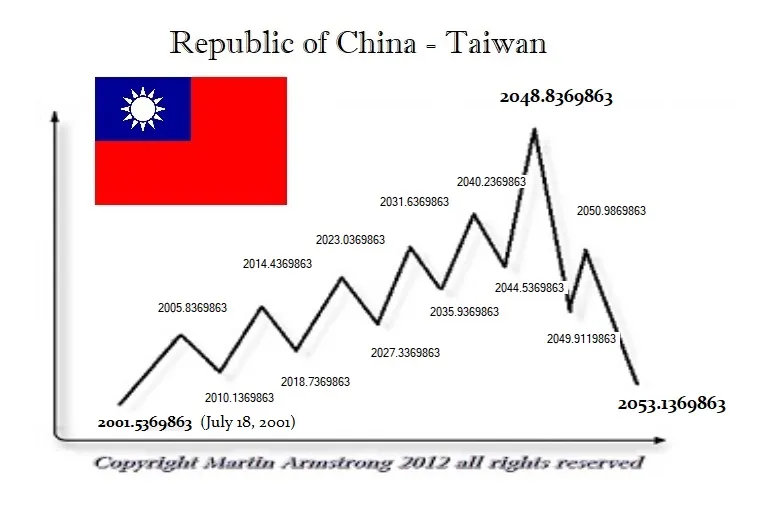
QUESTION: Obviously, China is not Hitler or Napoleon with dreams of conquering the world. The days of empire building are gone. China has always been the one who is invaded from the Mongols and Japanese to the Europeans. Do you see China becoming more dominant in empire building retaking Taiwan?
JN
ANSWER: I am working a report on this subject. You are correct that China historically has not been the aggressor. They were conquered by the Mongols and were invaded by Japan. They never set out on a world domination plan like Hitler or Napoleon because that culture was not prevalent in Asia compared to Europe where each country at one point was the dominant political state in Europe. Russia, on the other hand, believed that it was their position to spread communism to the world.
That said, both Hong Kong and Taiwan were part of China historically. From their perspective, it is not a conquest compared to reunification as Germany viewed the return of East Germany.
What has protected Hong Kong is the economy. That is why China was willing to allow it to retain a lot of its freedom. Now that the world economy is under assault, the protection of both Hong Kong and Taiwan is not as secure as it once was. Alienate China and they have no incentive to just observe.
This is not the war of old. Standing by and not engaging against Hitler and hoping he would stop each time was the wrong decision BECAUSE Hitler was motivated by revenge and conquering Europe. That incentive is no longer present today among the superpowers. Nobody wants to occupy the other. As long as everyone got along economically, that was the bottom-line benefactor to prevent war. Today, war would be strikingly different. It would not be one of conquest, but of annihilating an enemy. Stop the world economy and you encourage war today.
President Donald Trump is holding a news conference at the Rose Garden of the White House on China and other matters. Anticipated start time 2:00pm ET. Links below.
UPDATE: Video Added
WH Livestream Link – PBS Livestream Link – RSBN Livestream Link
.
.
.

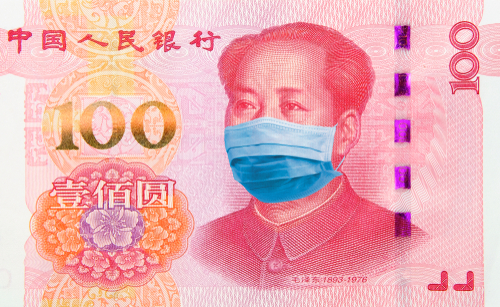
China Proposes A Law Allowing Citizens To Sue US For Starting Coronavirus Pandemic which is entirely understandable after the US Congress proposed Americans can sue China in US courts for the same reason. So lawsuits will be filed, each country will decide against the other, and the people will be entitled to confiscate each other’s assets in their country. Ya – that should be great for the economy!
Of course, what the Congress proposed was a violation of international law. They can no more waive sovereign immunity of another country than the USA would be subject to suit in China. But law no longer matters. This is all just politics now on both sides.
What is going on is really absurd. The US threatens sanction if Beijing passes the new laws on Hong Kong which GUARANTEES that they they then MUST do so. I do not know if we have the dumbest politicians in history right now, but it certainly seems to be. You cannot threaten sanctions against a major power be it Russia of China and actually expect that they will back down. All this does is build the cold war with higher walls that lead to war.
Of course, I get the typical hate mail that twist it to say I just “love” China. They are the typical cowards like Dick Cheney who have no problem sending other people’s children off to war to die so they can cheer while watching it on CNN as some video game completely detached from reality or human responsibility. I would love to send such people to the front lines in a war and they should be the first to die for their childish nonsense. I lost 50% of my high school friends to Vietnam. What die the die for? Strip clubs in Vietnam? Communism fell all by itself because Marxism is unsustainable no matter how many times these people try.

These people who are cheering war will, unfortunately, get their way. They will be sitting drinking their beer and watching CNN as if this is a sports game and their team will smash the other. They are total idiots who have no idea what unfolds in war. Nevertheless, they will cheer it like the sick individuals they really are. I am sure they just party on Memorial Day and have never for one second thought about all the people who have died fighting wars that have never been about what the politicians claim.
I have created this site to help people have fun in the kitchen. I write about enjoying life both in and out of my kitchen. Life is short! Make the most of it and enjoy!
De Oppresso Liber
A group of Americans united by our commitment to Freedom, Constitutional Governance, and Civic Duty.
Share the truth at whatever cost.
De Oppresso Liber
Uncensored updates on world events, economics, the environment and medicine
De Oppresso Liber
This is a library of News Events not reported by the Main Stream Media documenting & connecting the dots on How the Obama Marxist Liberal agenda is destroying America
Australia's Front Line | Since 2011
See what War is like and how it affects our Warriors
Nwo News, End Time, Deep State, World News, No Fake News
De Oppresso Liber
Politics | Talk | Opinion - Contact Info: stellasplace@wowway.com
Exposition and Encouragement
The Physician Wellness Movement and Illegitimate Authority: The Need for Revolt and Reconstruction
Real Estate Lending

