
Posted originally on CTH on January 18, 2026 | Sundance
Last week President Donald Trump officially announced the members of the Gaza Board of Peace; an organization headed by President Trump and tasked to oversee the second phase of his plan to end the Israeli conflict in Gaza, specifically the reconstruction and disarmament of Gaza and Hamas respectively. [SEE HERE]
The members of the “Board of Peace,” chaired by Trump himself, includes Secretary of State Marco Rubio; Emissary Steve Witkoff; Jared Kushner; former British Prime Minister Tony Blair; an American-Jewish billionaire named Mark Rowan; World Bank President Ajay Banga; and Deputy National Security Advisor of the United States, Robert Gabriel. President/Chairman Donald Trump has also appointed Aryeh Lightstone and Josh Gruenbaum as senior advisors to the Board of Peace.
At the same time, President Trump announced another executive body that would operate under the Peace Council to assist with the facilitation of a new Palestinian government, the “Gaza Executive Board.” This structure is intended to manage day to day events on the ground instead of a Hamas loyalist govt. The appointees to the executive board have upset the Netanyahu government of Israel.
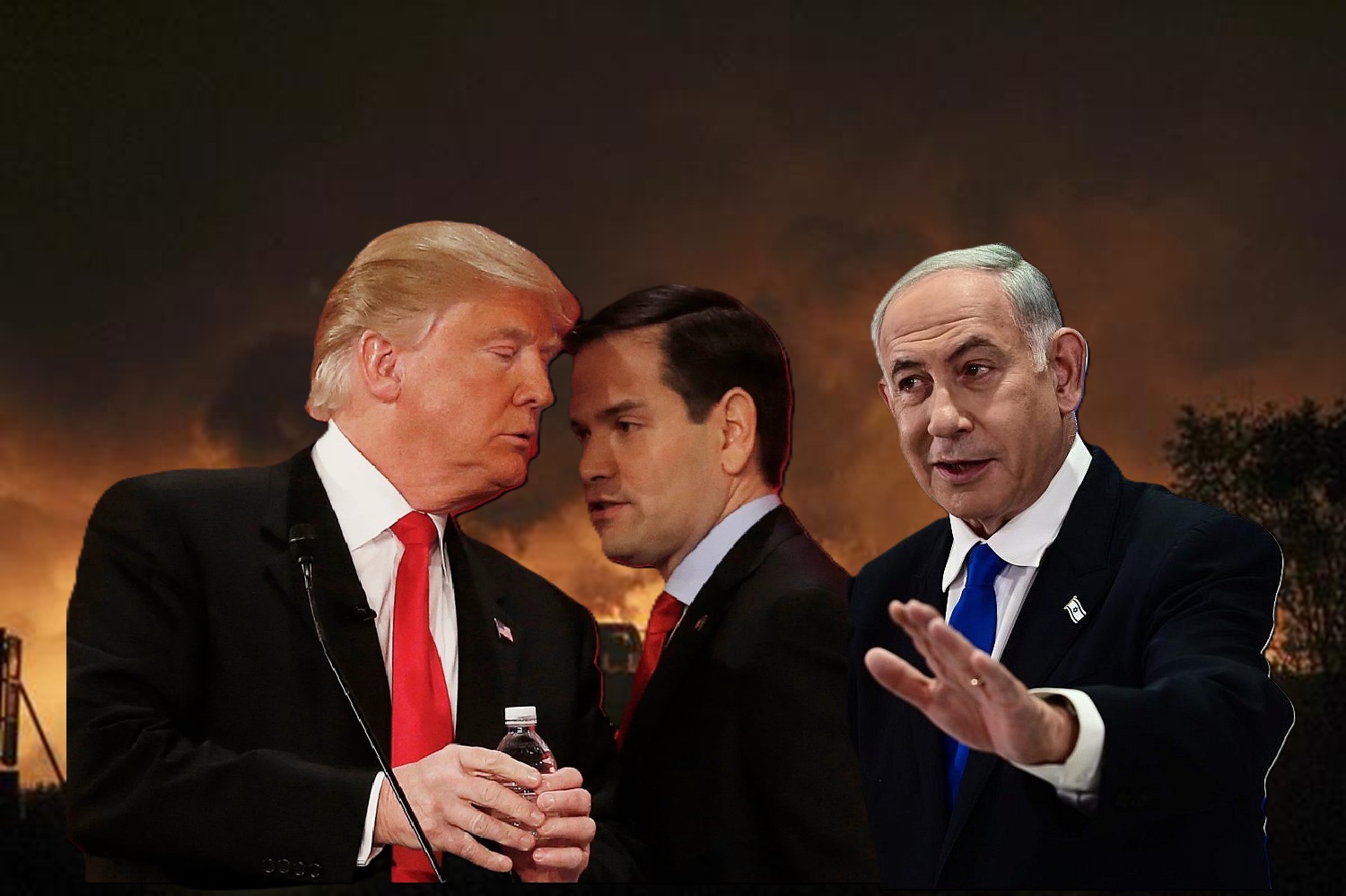
According to the White House announcement, the Gaza Executive Board will include: Witkoff; Kushner; Turkish Foreign Minister Hakan Fidan; senior Qatari official Ali al-Thawadi; Egyptian intelligence chief Hassan Rashad; Tony Blair; billionaire Mark Rowan; UAE Minister Reem Al Hashimi; former Bulgarian Foreign and Defense Minister Nickolay Mladenov, who also served as the UN envoy for the Middle East peace process; U.N Representative Sigrid Kagg, and Israeli-Cypriot businessman Yakir Gabbay, who specializes in real estate, technology and international investments.
Additionally, to establish security, preserve peace, and establish a durable terror-free environment, Major General Jasper Jeffers has been appointed Commander of the International Stabilization Force (ISF), where he will lead security operations, support comprehensive demilitarization, and enable the safe delivery of humanitarian aid and reconstruction materials. [link]
According to Israeli media Netanyahu is not happy, and planning to protest the Turkish, Qatari and UAE appointments to Marco Rubio (not Trump):
“A very unusual statement by the prime minister against the US president, following the publication of the members of the “Executive Committee for Gaza” – which includes, among other things, the Turkish foreign minister and a senior Qatari official. “The announcement of the panel was not coordinated with Israel and is contrary to its policy,” the Prime Minister’s Office said.
“The announcement of the composition of Gaza’s Executive Committee, which is subordinate to the peace conference, was not coordinated with Israel and is contrary to its policy,” the Prime Minister’s Office said, adding that “the prime minister has instructed Foreign Minister Gideon Sa’ar to contact US Secretary of State Marco Rubio on this matter.” (more)
Within the appointments for the executive board, the use of Turkey, Qatar and UAE officials for the governance and reconstruction of Gaza explains the recent parsing of the Muslim Brotherhood chapters as terrorist enablers. When Secretary Rubio made the terrorist designation announcement, the Turkish and Qatari Muslim Brotherhood chapters were notably absent. With the Gaza initiative ongoing, now we see coordinated pragmatism at work.
Rubio chose to focus on Egypt, Jordan and Lebanon to target the Muslim Brotherhood. As we noted, “The Egyptian Muslim Brotherhood were chased out of the country by President Abdel Fattah al-Sisi over a decade ago. The Jordanian chapter is similarly aligned and was previously targeted by King Abdullah. The Lebanese faction is not as well known, but their support for Hamas is well understood.” {Go Deep}
A few things are obvious.
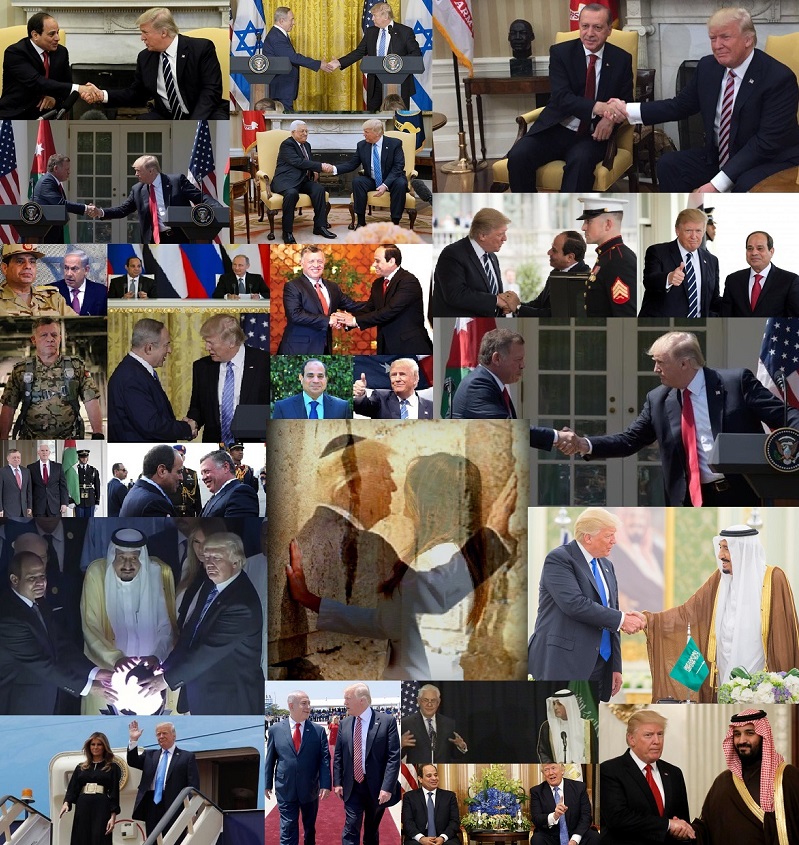
First, President Trump and Secretary Rubio knew in advance they were going to need the strong influences of Qatar and Turkey if they were going to stabilize the interim Gaza reconstruction governing system. Secondly, both Trump and Rubio knew Israeli Prime Minister Benjamin Netanyahu wouldn’t like that; however, pragmatically Trump and Rubio are doing what is in the best interest of the region as a whole, not being narrowly focused on Israel. Additionally, these appointments have upset the Israel-first influencer group in the U.S.
President Trump is restructuring mid-east stability without the need for direct U.S. intervention. Instead, under President Trump’s approach conflict resolution is the responsibility of the regional stakeholders with strong support from President Trump. It is a similar outlook conveyed to Europe about needing to be responsible for their own defense and security solutions while the USA role is supportive in nature.
In this approach the sharp tendrils of U.S. influence start to be untangled, and the national security focus returns to the USA domestically. Mutually beneficial national sovereignty replaces toxic and unending globalist intervention. This is a similar worldview that President Trump also takes toward trade agreements.
Multilateral trade agreements like the Transpacific Trade Partnership (TPP) or the Transatlantic Trade and Investment Partnership (TTIP), or even the NAFTA/USMCA trade agreement are rejected in favor of direct bilateral free trade agreements with individual nations.
In Trump’s trade policy the multilateral deals are dissolved, while the bilateral deals are affirmed. The same outlook holds true for massive institutional agreements that end up with large entanglements often carrying disproportionate costs and disparate benefits. Like NATO, the USA usually ends up with the largest price tag and least benefit from the agreement.
Is NATO/Europe going to fight China over Taiwan? Of course not. If they were, Canada wouldn’t be making deals with Beijing, and Europe would not be allowing China to purchase stakeholder interests in the European car market. The same pragmatic and reasonable outlook applies right now toward how the EU has responded to the Russia/Ukraine conflict; only “willing” if the USA puts our blood and treasure on the line.
This nationalistic outlook is honestly encapsulated in this recent soundbite from President Trump when asked about Canadian Prime Minister Mark Carney making a trade agreement with China. President Trump genuinely doesn’t care. WATCH:
Canada can make whatever deal they want with China; however, that doesn’t mean it will work out well for Canada when the USMCA is dissolved and a new bilateral trade deal between the USA and Canada is renegotiated. Factually, it means Canada will end up in a worse economic place, just look at the history of countries that hugged Big Panda. It is their own independent right to be blind to the risk.
Despite all the warnings from President Trump, Europe became dependent on Russia for low-cost energy; how’d that work out for them? Germany now seriously regrets their green energy approach, but there’s nothing President Trump can do to stop multinational assemblies from being collectively stupid; the only thing he can do is mitigate any collateral damage to the USA.
Instead of European leaders calling President Trump every time Turkish President Recep Erdogan does something against their interests, eventually the group will learn how to engage him individually. In a world of bilateral respect, the lessons from Trump could even have the downstream effect of training the EU to drop their obsession with Russia-bad everything.
The Ukraine conflict could end when Europe finally realizes it’s much easier to turn on a Nordstream gas valve than it is to rebuild 30 German nuclear power plants. President Trump’s refusal to commit U.S. troops to Zelenskyy’s security guarantee will hopefully hasten that conversation.
The same pragmatic realism applies to Greenland. Europe will never respond to any increase in strategic threat presented by China or Russia in the Arctic, and the U.S. will shoulder all the costs if that risk were to materialize. Strategic pragmatism combined with economic realism is why President Trump is focused on the security of the North American continent.
Lastly, there is a segment of MAGA that is angered by President Trump’s interim and necessary approach to removing our foreign policy entanglements in both the European and Mideast continents. Those who are short-sighted don’t see how President Trump is strategically and factually withdrawing U.S. policy from a world of enmeshed dependencies, because in reality charity –along with security– begins at home.
Thankfully, the former Lyndon LaRouche assembly from Promethean Action have begun to recalibrate their British-centric focus, and they’ve started to look at Trump policy beyond the ramifications to London and through the more accurate prism of Trump’s global pragmatism. President Donald Trump isn’t trying to unilaterally destroy British imperialism, not directly. Instead, that old, stuffy and elitist collapse is a consequence of reestablishing independent sovereignty.
Smile, live your very best life and watch it all unfold. After all, Davos is going to be a must-watch event next week.
.


 Centinel2012