Posted originally on CTH on November 14, 2025 | Sundance
Megyn Kelly asked Trump Empire CEO Eric Trump if the non-answers to the lingering questions about Thomas Crooks concerns him. Eric Trump responds with a very pragmatic perspective, albeit clouded in frustration. WATCH:
.
Tucker Carlson ran a 30-minute review of Thomas Crooks earlier this evening. Video Below:
Posted originally on CTH on November 14, 2025 | Sundance
Seth Dillon of the Babylon Bee is a member of the alligator emoji tribe and a rabid never Trumper. In an effort to stir up more Israel vs America First friction as useful for the Alligator Emoji agenda to split MAGA, Dillon and the Bee write a “joke” story about Megyn Kelly being at risk from her pager.
Dillon and crew came under backlash, likely from their benefactors who didn’t appreciate the Bee reinforcing the “Israel will kill you” sentiment, and subsequently deleted the “joke” tweet while the alligator emoji supporters rallied to defend Dillon for both posting the Tweet then deleting it.
Jokes are only funny when the context behind them is well known. In order for this Tweet to be funny you have to know the Israeli government will kill anyone who does not support them. Hamas found out with the exploding pagers, hence the reference to Megyn Kelly in danger.
Doesn’t sound all that funny does it? It likely wasn’t the least bit funny to the benefactors of the Babylon Bee, who also support the larger agenda of the alligator emojis. You can almost hear them saying, don’t make fun of what we do – it reinforces the stereotypes. That’s why Dillon deleted it.
If it was a joke, and everyone knew it was a joke, there would be no reason to delete it. The too-cute-by-half joke failed miserably. More of DeSantis and the alligator emoji followers echo-chambering themselves into foolishness. I digress.
Posted originally on CTH on November 14, 2025 | Sundance
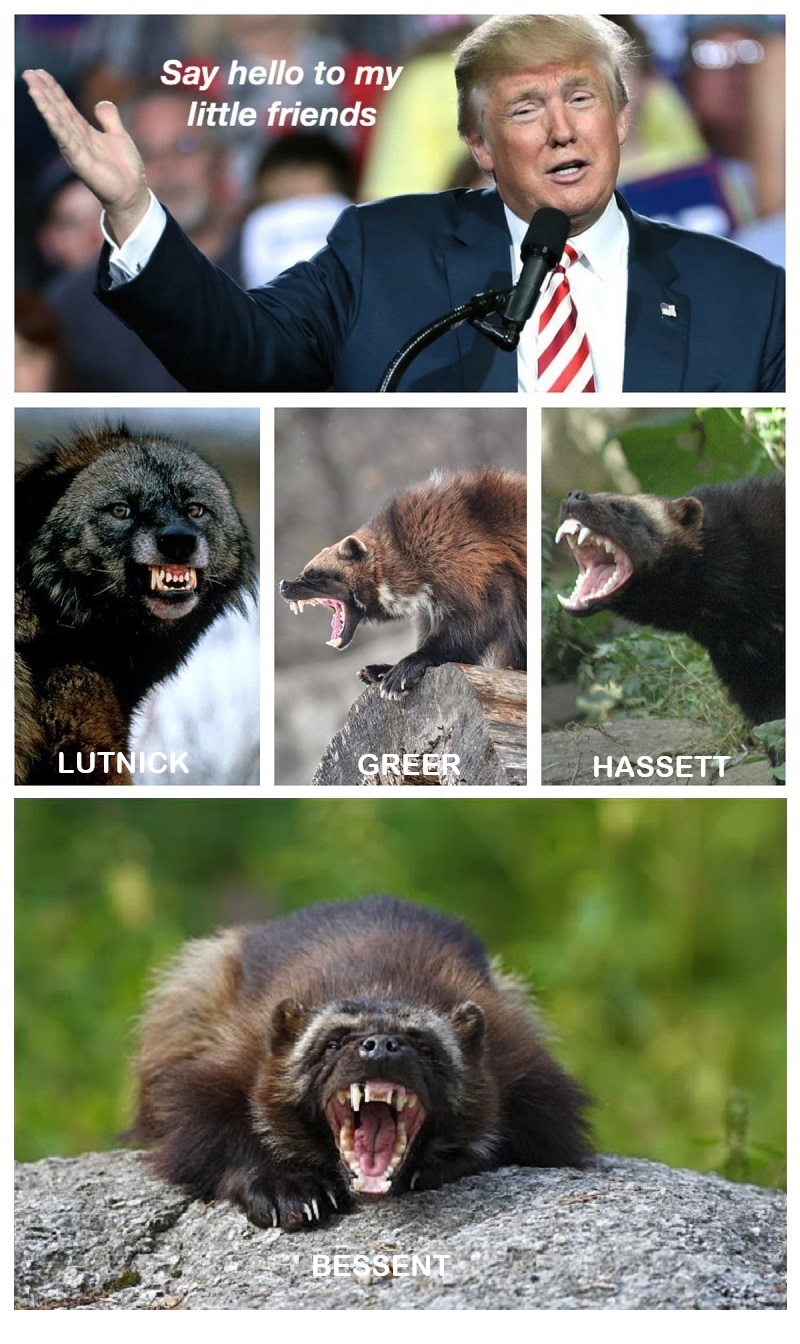
President Donald Trump gave U.S. Trade Representative, Ambassador Jamieson Greer, all the tools and leverage needed to bring the Swiss govt to a substantive trade agreement. The pressure was too much to bear, so Switzerland quickly negotiated a deal.
In the background President Trump’s global trade reset has been seriously damaging for the Swiss industrial economy. The EU overall, Germany specifically and China, have stopped purchasing precision Swiss industrial machinery.
It’s not the direct tariffs against Swiss precision machinery itself that created the pressure, but rather the tariffs against nations who purchased the Swiss precision machinery.
China was a big purchaser of the Swiss machinery, until Beijing stole enough intellectual property to develop their own precision machining capacity. Slowly China didn’t need Switzerland.
Germany and the EU economy then began to contract as the Trump tariffs bit hard against their exports to the USA.
Simultaneously, Chinese EV production started replacing more expensive European EV production, and the tooling purchases within the auto industry began contracting within Switzerland.
As things unfolded, the forecast for the future of the Swiss economy started to become very clear; their precision industrial exports were going to continue contracting. Something needed to change, and fast.
Ambassador Jamieson Greer announces a major free trade agreement with Switzerland {SEE HERE} and the White House provides a fact sheet {SEE HERE}. A joint statement is then released:
Today, the United States of America (United States), the Swiss Confederation (Switzerland), and the Principality of Liechtenstein (Liechtenstein) (collectively, Participants) express through this Framework their intention to negotiate an Agreement on Fair, Balanced, and Reciprocal Trade (Agreement). Through the Agreement, the Participants intend to create a dynamic and balanced trading relationship on a reciprocal and mutually advantageous basis, with a view toward creating good, high-paying jobs and economic growth in their markets. The Participants share a desire to make trade fairer, easier, and more substantial. The Participants further share a desire to foster secure and resilient supply chains and a conducive business environment to attract high-quality and trusted investment. Switzerland intends to take action to balance its trade with the United States, including by purchasing U.S. goods, facilitating investment in the United States, and removing tariff and non-tariff barriers for U.S. goods. The Participants intend to immediately begin negotiations of the Agreement with the aim to make significant progress, and if possible conclude the Agreement, by the first quarter of 2026, subject to their respective domestic processes.
The Participants intend for the negotiations of the Agreement to focus on the following key areas:
Investment, Commercial Considerations, and Opportunities
Switzerland and Liechtenstein support the increase of foreign direct investment by Swiss and Liechtenstein enterprises into the United States.
Switzerland intends to encourage and facilitate at least $200 billion of investment into the United States, across all 50 states, over the next five years, to create manufacturing and research and development jobs. Liechtenstein intends to encourage and facilitate at least $300 million of investment into the
United States and increase by 50 percent over the next five years the number of jobs created by its private sector in the United States. Switzerland and Liechtenstein intend to encourage and facilitate one third of these investments by the end of 2026. The United States intends to determine, in its application of reciprocal tariffs, if Switzerland and Liechtenstein have taken appropriate steps to encourage and facilitate these investments and associated job creation. If needed, the Participants intend to jointly discuss the steps taken to encourage and facilitate such investment and job creation and determine additional measures for investment promotion and facilitation.
The Participants intend to encourage their enterprises to promote and develop training and apprenticeship programs, including Registered Apprenticeship programs, for U.S. workers in key high-growth sectors in the United States, taking into account their current and future investments.
The Participants intend to cooperate on this issue.
Switzerland and Liechtenstein intend to work together with the United States on addressing potential distortions of bilateral trade and investment arising from industrial subsidies or actions of state-owned enterprises.
The Participants intend to create the best possible environment to encourage and facilitate cross-border investments and job creation.
2. Tariffs
Recognizing the Treaty of 29 March 1923 between Switzerland and Liechtenstein on Accession of the Principality of Liechtenstein to the Swiss Customs Area, the United States intends to apply the same tariff treatment to both Switzerland and Liechtenstein.
Switzerland and Liechtenstein intend to improve market access for U.S. goods, through the application of zero duties on all U.S. industrial goods, U.S. seafood, and certain U.S. agricultural goods, and through the application of tariff rate quotas for a number of other U.S. agricultural goods.
The United States intends to apply the higher of either the U.S. most-favored-nation (MFN) tariff rate or a tariff rate of 15 percent, comprised of the MFN tariff and a reciprocal tariff, on originating goods of Switzerland and Liechtenstein and to apply only the U.S. MFN tariff rate on certain products listed in the “Potential Tariff Adjustments for Aligned Partners” Annex to Executive Order 14346 (Modifying the Scope of Reciprocal Tariffs and Establishing Procedures for Implementing Trade and Security Agreements).
The United States intends to promptly ensure that the MFN tariff and the tariff imposed pursuant to Section 232 of the Trade Expansion Act of 1962 (Section 232) do not exceed 15 percent for originating pharmaceutical goods and semiconductors of Switzerland and Liechtenstein subject to Section 232 tariffs. The United States intends to positively consider the effect of the Agreement on national security, including when taking action under Section 232.
The Participants intend for the benefits of the Agreement to accrue predominantly to the Participants. If the Participants determine that the benefits are not accruing predominantly to the Participants, the Participants may modify the Agreement with rules of origin necessary to achieve that objective.
The Participants intend to cooperate, where relevant, on matters relating to transshipment and circumvention practices, in accordance with their respective domestic laws and regulations.
3. Non-Tariff Barriers and Related Matters
The United States and Switzerland each intend to accord to conformity assessment bodies located in the territory of the other treatment no less favorable than they accord to conformity assessment bodies located in their own respective territories. Treatment under this paragraph includes procedures, criteria, fees, and other conditions relating to accrediting, approving, licensing, or otherwise recognizing conformity assessment bodies.
The Participants intend to apply the World Trade Organization (WTO) Decision of the Technical Barriers to Trade Committee on Principles for the Development of International Standards, Guides and Recommendations (2000) to determine relevant international standards within the meaning of Articles 2 and 5 and Annex 3 of the WTO Agreement on Technical Barriers to Trade, and intend to negotiate provisions clarifying this understanding.
With respect to automobiles, Switzerland intends to work with the United States to facilitate the recognition of Federal Motor Vehicle Safety Standards.
The Participants intend to advance cooperation in mutually agreed strategic sectors, including medical devices. Switzerland intends to facilitate the acceptance of medical devices cleared or approved by the U.S. Food and Drug Administration.
The United States acknowledges the efforts made by Switzerland to facilitate trade in beef and beef products. Switzerland intends to work with the United States to address specific measures that restrict market access for U.S. poultry and poultry products, strengthening opportunities for U.S. agricultural exports in Switzerland. The United States and Switzerland intend to cooperate on streamlining sanitary requirements for labelling and certificates, particularly for beef, bison, and dairy products.
The Participants intend to discuss robust commitments related to intellectual property rights protection and enforcement, including transparent and fair treatment of geographical indications.
The Participants intend to continue to provide an open and competitive environment for service suppliers. Accordingly, Switzerland and Liechtenstein intend to consider opportunities to provide service suppliers additional access to their markets.
The Participants intend to increase their cooperation on labor-related trade issues, and work to address forced labor, including forced child labor, and the worst forms of child labor in supply chains. Switzerland and Liechtenstein intend to continue to protect internationally recognized labor rights. Switzerland and Liechtenstein intend to continue to adopt and implement high levels of environmental protections, effectively enforce their respective environmental laws, and work together with the United States on trade-related environmental measures, including those that may affect trade between each of them and the United States.
The Participants intend to negotiate commitments on good regulatory practices to ensure greater transparency, predictability, and participation throughout the regulatory lifecycle.
With a view to achieving greater reciprocal benefits from participation in their procurement markets, the Participants reaffirm their commitments under the WTO plurilateral Agreement on Government Procurement and their other binding international procurement obligations, and intend to clarify that states that are not party to these agreements do not benefit from non-discriminatory treatment in procurement at the central governmental level covered by such agreements, including through further implementation measures in their respective national procurement frameworks, if necessary.
The United States and Switzerland intend to foster the use of technology solutions that allow for full pre-arrival processing, paperless trade, and digitalized customs procedures.
4. Digital Trade and Technology
Switzerland and Liechtenstein intend to continue to refrain from imposing digital services taxes.
The Participants intend to facilitate trusted cross-border data flows and address data localization requirements, taking into account legitimate public policy objectives.
The Participants intend to explore mechanisms that promote interoperability between their respective privacy frameworks with a view to facilitating secure cross-border transfers of data.
The Participants intend to refrain from imposing customs duties on electronic transmissions and to support the multilateral adoption of a permanent moratorium on customs duties on electronic transmissions at the WTO.
5. Economic Security
The Participants intend to strengthen their cooperation on economic security, including on addressing non-market policies of third countries.
The Participants recognize that the effective enforcement of economic and trade sanctions serves the Participants’ shared interests. The Participants intend to strengthen existing cooperation with regard to U.S. export controls and sanctions.
Switzerland and Liechtenstein intend to cooperate with the United States on matters related to the review of inbound investment, including on the basis of national security.
Switzerland and Liechtenstein intend to work cooperatively with the United States to secure supply chains and improve supply chain resilience in sectors of shared interest.
The Participants intend to coordinate the timing of their respective domestic processes for the entry into force and implementation of the Agreement.
This document does not constitute a legally binding instrument creating or affecting any rights or obligations under international law. {SOURCE}
Posted originally on CTH on November 14, 2025 | Sundance
Whenever an echo-chambering mob assembles, a frequent occurrence within the leftist tribe, often they cannot stop themselves from taking their ordinary crazy to new levels of insane nonsense. The Democrat Party making a claim that Donald Trump spent Thanksgiving 2017 with Jeffrey Epstein is one of those cases.
Donald Trump was President Trump in November of 2017 and the entire press pool travels with him or sits in wait for his next move. Dozens of journalists were with President Trump in November of 2017 when Donald and Melania Trump spent the day with the U.S. Coast Guard in Florida for the holiday. Any quick reference check would discover this day’s events.
President Trump even did a video conference with ♦Army: 82nd Airborne in Afghanistan; ♦Marines: Direct Support Team Golf (2ndMarine Raider Battalion) in Iraq; ♦Navy: The USS Monterey 5th Fleet at sea; ♦Air Force: 74th Expeditionary Fighter Squadron in Incirlik Turkey; and ♦Coast Guard*: USCG Wrangell at Kuwait Navy Base, and held a press conference. Then they went to the Florida Coast Guard for dinner.
The Democrat Party deleted their claim after people began laughing at their stupidity and ridiculing them. However, President Trump turns the issue upon the DNC, and announces his request for the DOJ to investigate exactly who Jeffrey Epstein was associated with.
Posted originally on CTH on November 14, 2025 | Sundance
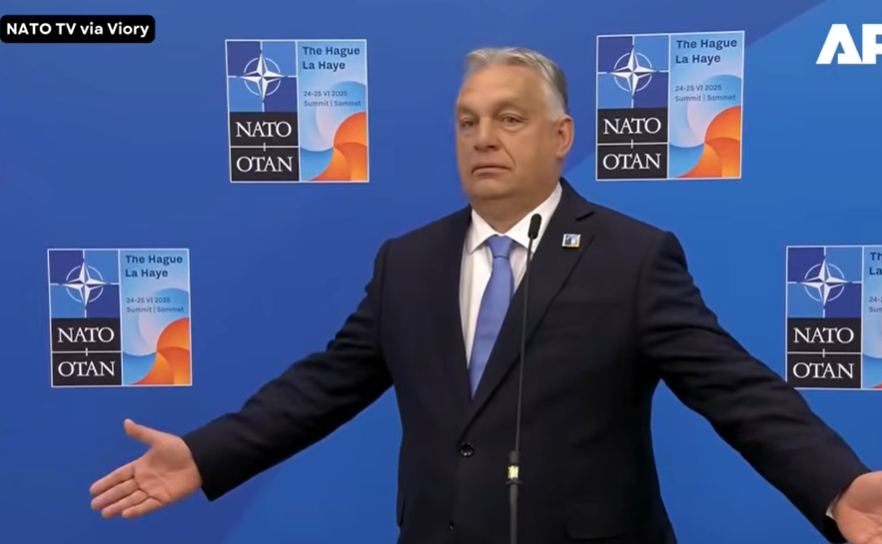
Hungarian Prime Minister Viktor Orban has had enough. The European Union is consistently targeting him for his position against the Russia-Ukraine conflict, and western elements of the intelligence apparatus have been trying to undermine Orban’s government for years.
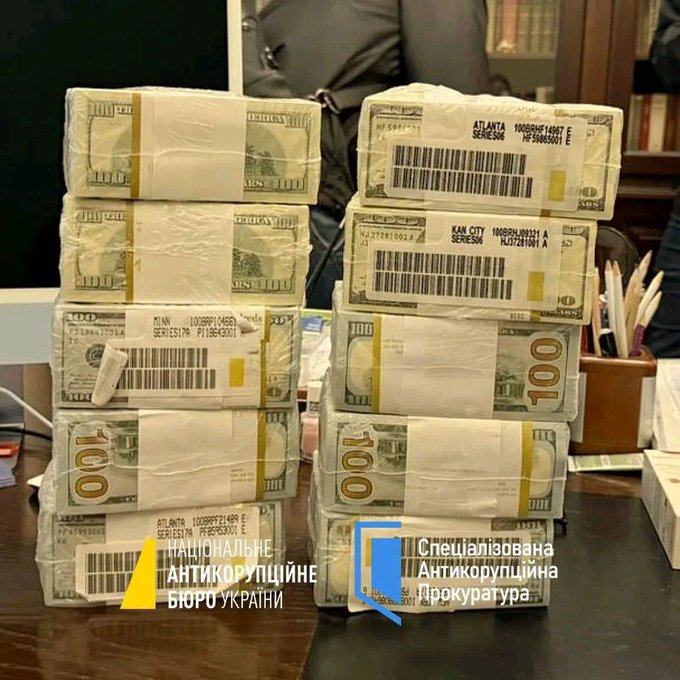
Against the most recent revelations of direct corruption connected to the government of Ukraine President Volodymyr Zelenskyy, Orban says, “enough.”
Prime Minister Orban – “The golden illusion of Ukraine is falling apart. A wartime mafia network with countless ties to President [Zelensky has been exposed. The energy minister has already resigned, and the main suspect has fled the country.
This is the chaos into which the Brusselian elite want to pour European taxpayers’ money, where whatever isn’t shot off on the front lines ends up in the pockets of the war mafia. Madness.
Thank you, but we want no part of this. We will not send the Hungarian people’s money to Ukraine. It can be put to far better use at home: this week alone we doubled foster parents’ allowances and approved the 14th month’s pension.
Anyhow, after all this, we certainly won’t give in to the Ukrainian president’s financial demands and blackmail. It’s high time Brussels finally understood where their money is really going.” [SOURCE]
PM Orban and President Donald Trump are allies and personal friends. No doubt they both spoke about this.
Posted originally on CTH on November 13, 2025 | Sundance
The BBC is apologizing again to President Trump after lawyers representing his interests sent a letter threatening legal action on his behalf.
The legal threats are about a spliced edit of Trump’s speech on Jan. 6, 2021, that appeared in the network’s program “Trump: A Second Chance?” In the edited clip, the president is framed to say “We’re going to walk down to the Capitol and I’ll be there with you, and we fight. We fight like hell.”
However, in reality, those phrases were delivered almost an hour apart, and the footage omitted the part where President Trump tells supporters “to peacefully and patriotically make your voices heard.” The BBC responded to the first public criticism by stating:
BBC – “This programme was reviewed after criticism of how President Donald Trump’s 6th January 2021 speech was edited.
During that sequence, we showed excerpts taken from different parts of the speech. However, we accept that our edit unintentionally created the impression that we were showing a single continuous section of the speech, rather than excerpts from different points in the speech, and that this gave the mistaken impression that President Trump had made a direct call for violent action.
The BBC would like to apologise to President Trump for that error of judgement. This programme was not scheduled to be re-broadcast and will not be broadcast again in this form on any BBC platforms.” [SOURCE]
The BBC Media Center then posted a public notification following the letter received from President Trump’s legal team.
BBC – “Lawyers for the BBC have written to President Trump’s legal team in response to a letter received on Sunday.
“BBC Chair Samir Shah has separately sent a personal letter to the White House making clear to President Trump that he and the Corporation are sorry for the edit of the President’s speech on 6 January 2021, which featured in the programme.
“The BBC has no plans to rebroadcast the documentary ‘Trump: A Second Chance?’ on any BBC platforms.
“While the BBC sincerely regrets the manner in which the video clip was edited, we strongly disagree there is a basis for a defamation claim.” (read more)
Posted originally on CTH on November 13, 2025 | Sundance
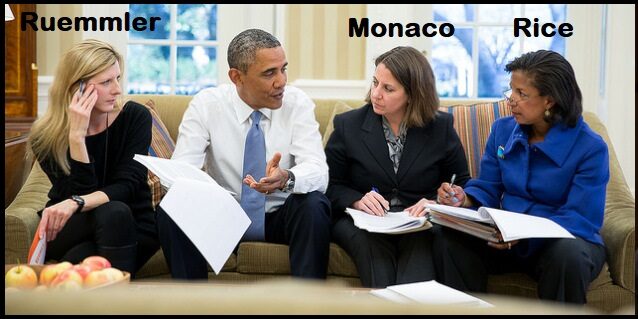
In an effort to further create friction and division amid the base of support for President Trump, emails previously released to congress are resurfacing – including emails between Kathryn Ruemmler, Obama’s former White House Counsel, and Jeffrey Epstein. The UniParty players are pushing this narrative hard.
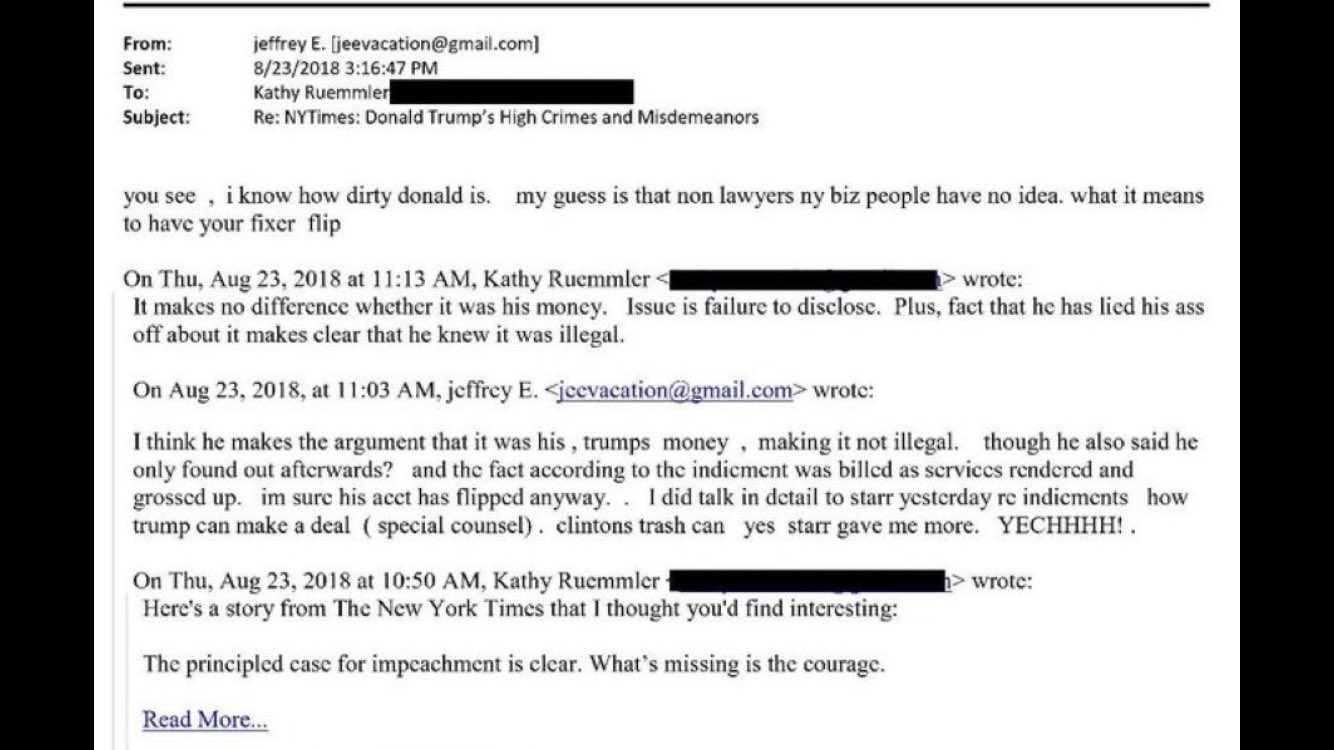
However, in fact, this is an old story going back to 2023 when the connections between then CIA Director William Burns, Kathryn Ruemmler and Jeffrey Epstein were previously released to the public {SEE HERE}. However, amid the new effort to stir up friction, the Ruemmler-Epstein emails are being talked about again. Example Below:
As noted before by the Wall Street Journal, “Kathryn Ruemmler, a White House counsel under President Barack Obama, had dozens of meetings with Epstein in the years after her White House service and before she became a top lawyer at Goldman Sachs Group Inc. He also planned for her to join a 2015 trip to Paris and a 2017 visit to Epstein’s private island in the Caribbean.”
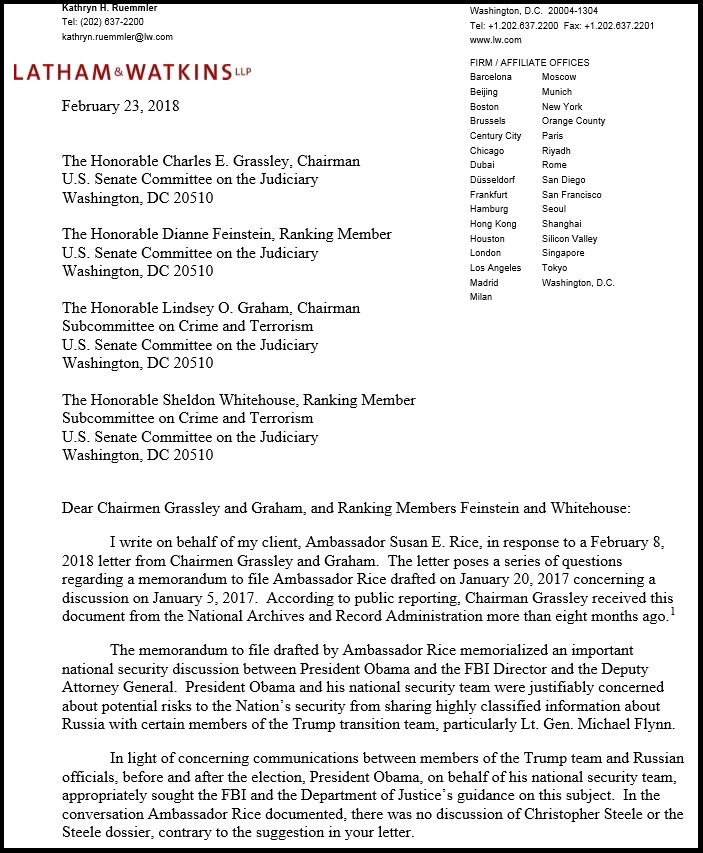
The email above is from August 2018, approximately six months after Ruemmler, who represented former National Security Advisor Susan Rice, lied to Senate Judiciary Committee about Rice’s knowledge of the FBI opening an investigation of President Trump in 2016.
Wall Street Journal 2023 – […] The documents show that Epstein appeared to know some of his guests well. He asked for avocado sushi rolls to be on hand when meeting with Ms. Ruemmler, according to the documents. He visited apartments she was considering buying. In October 2014, Epstein knew her travel plans and told an assistant to look into her flight. “See if there is a first-class seat,” he wrote, “if so upgrade her.”
[…] Epstein and his staff discussed whether Ms. Ruemmler, now 52, would be uncomfortable with the presence of young women who worked as assistants and staffers at the townhouse, the documents show. Women emailed Epstein on two occasions to ask if they should avoid the home while Ms. Ruemmler was there. Epstein told one of the women he didn’t want her around, and another that it wasn’t a problem, the documents show.
Ms. Ruemmler didn’t see anything that would lead her to be concerned at the townhouse and didn’t express any concern, the Goldman spokesman said.
[…] Over the next few years, Ms. Ruemmler, then a partner specializing in white-collar defense at Latham & Watkins, had more than three dozen appointments with Epstein, including for lunches and dinners.
“In the normal course, Epstein also invited her to meetings and social gatherings, introduced her to other business contacts and made referrals,” the Goldman spokesman said. “It was the same kinds of contacts and engagements she had with other contacts and clients.” (source)
Beyond the friendly contact visible in the emails and dates of the Ruemmler-Epstein friendship, years before Donald Trump entered politics, is a transparently obvious issue the mainstream media intentionally omit.
If Epstein had any dirt on President Trump, Kathryn Ruemmler would be the primary person who would use that information against Donald Trump politically, especially because of Ruemmler’s relationship with President Obama and Susan Rice. If there was anything against Trump in the Epstein mess, it would have been deployed to the benefit of Hillary Clinton in 2016.
Instead, Ruemmler took up a defensive position to cover up the trail of unlawful activity within the 2016 Spygate and Russiagate operations. Ruemmler was Susan Rice’s personal lawyer at a key moment in the coverup operation.
Former FBI Director James Comey admitted to Congress, on March 20, 2017, that the FBI, FBI Counterintelligence Division, DOJ and DOJ-National Security Division, together with the Office of the Director of National Intelligence (ODNI) and the CIA, had been conducting independent investigations of Donald Trump for over a year without informing the Gang of Eight.
Comey justified the lack of informing Go8 oversight by saying, “because of the sensitivity of the matter.”
Stupidly, Congress never pressed James Comey on that issue. The arrogance was astounding, and the acceptance by Congress was infuriating. However, that specific example highlighted just how politically corrupt the system had become. In essence, Team Obama usurped the entire design of congressional oversight…. and Congress just brushed it off.
Keep in mind, Comey did not say the White House was unaware; in fact, he said exactly the opposite. He said, “The White House was informed through the National Security Council,” (the NSC).
The very direct and specific implication, the unavoidable implication and James Comey admission that everyone just brushed aside, was that President Obama’s National Security Advisor, Susan Rice, was informed of the intelligence operation(s) against Donald Trump. After all, the NSC reports to the National Security Advisor, and Comey could only “inform” the NSC through Susan Rice.
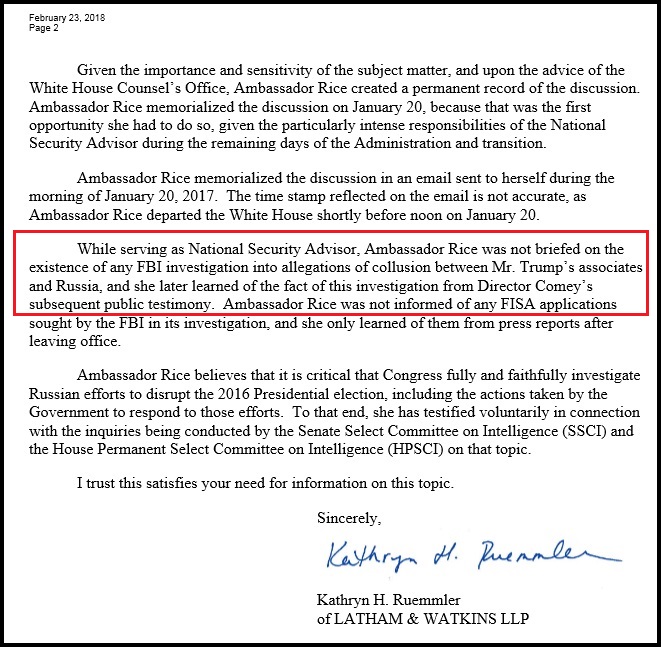
That Comey testimony is why Susan Rice’s attorney, then Katheryn Ruemmler, could never allow Rice to appear before a congressional inquiry.
Ruemmler lied!
Look at that highlighted box from Susan Rice’s lawyer, Kathryn Ruemmler, and remember in his March 20, 2017, testimony Comey said, “The White House was informed through the National Security Council,” (the NSC).
FBI Director James Comey was protecting himself against fallout from the spygate surveillance of Trump, by leveraging his prior notification to the White House. Comey was signaling, ‘You can’t get me for spying on Trump without getting Susan Rice and Barack Obama’, who knew about it.
Does the January 20, 2017, Susan Rice memo look different now?
The bottom line in this Epstein nonsense is that Kathryn Ruemmler had a long relationship with Jeffrey Epstein after his arrest for child sexploitation, and before the 2016 election, before the Trump targeting began and long before Spygate/Russiagate made headlines.
If Epstein had dirt on Trump, Ruemmler would have used it.
Posted originally on CTH on November 13, 2025 | Sundance
White House National Economic Council Director, Kevin Hassett, made two appearances today to discuss economics and ongoing Trump policy.
As noted by Hassett earlier today (bottom video), the October unemployment numbers will be generally unknown when reported because during the shutdown the BLS household survey was not completed. All other data will likely have an asterisk as the NEC calculates that roughly 60,000 private sector workers were impacted during the shutdown. Two Short Videos Below:
Posted originally on CTH on November 12, 2025 | Sundance
House members returned to Washington after a 54-day recess to vote on the shutdown-ending bill from the Senate. The representatives voted 222-209 to support the Senate bill and reopen government.
“Two Republicans joined Democrats in opposition to the measure, Reps. Thomas Massie of Kentucky and Greg Steube of Florida. Otherwise, Speaker Mike Johnson’s conference stuck together to back the funding package endorsed by the president.” ~Politico
President Trump is expected to sign the bill at 9:45pm ET. RSBN has a livestream in case the oval office is open for the signing. UPDATE: Video Added
Posted originally on CTH on November 12, 2025 | Sundance
Secretary of State Marco Rubio holds a press conference with the traveling State Dept press pool following the G7 foreign ministers meeting.
Secretary Rubio was questioned about Russia’s attacks on Ukraine and the EU position against the USA on the narco terrorist strikes toward Central America. Secretary Rubio sets the record straight. WATCH:
On Sudan: “The horrifying reports of the massacre of hundreds of Sudanese civilians after the Darfur city of El Fasher was captured by the rebel Rapid Support Forces (RSF) last week were the latest chapter in a brutal conflict that has killed more than 150,000 people over the past two and a half years.” (read more)
I have created this site to help people have fun in the kitchen. I write about enjoying life both in and out of my kitchen. Life is short! Make the most of it and enjoy!
This is a library of News Events not reported by the Main Stream Media documenting & connecting the dots on How the Obama Marxist Liberal agenda is destroying America










 Centinel2012