Part One History
Climate Change as currently talked about in the government, the press and the blogs has a long history and there is a great divide between those that religiously accept the premise that man is changing the climate for the worse (the anthropogenic climate change theory), this group is known as the believers and those that agree that the climate is changing but not as a result of man and this group is known as the flat earthers. The divide between the two beliefs is wide as can be seen by the monikers given them. This debate, which is not settled, is complicated by the huge amount of government money that has been poured in to the issue to solve the problem that they have created.
Since climate moves in cycles from many decades to centuries a look at global climate only since WW II is not sufficient to determine cause and effect. Then we have politicians who, by definition, like power and they always use causes to enhance their positions and climate change is no exception. The following is a brief history of the key players in the, now, worldwide battle which is waged by politicians who pay scientists to publish work to support what the politicians want. Prior to WW II science was independent of government after WW II that was not the case which calls into question the motivations of hired guns!
Scientists have been studying global climate since thermometers and barometers were invented and the International Meteorological Organization (IMO) was founded in 1873 as a result. During WW II forecasting weather, for obvious reason, became a major interest for governments and after the war was over the IMO was placed under the newly formed United Nations (UN) and changed into the World Meteorological Organization (WMO) with an expanded role.
The National Aeronautics and Space Administration (NASA) was formed On July 29, 1958, and began operations on October 1, 1958 by absorbing the 46-year-old National Advisory Committee for Aeronautics (NACA) intact; its 8,000 employees, an annual budget of US$100 million, three major research laboratories (Langley Aeronautical Laboratory, Ames Aeronautical Laboratory, and Lewis Flight Propulsion Laboratory) and two small test facilities. In general NASA is responsible for the operations and control of manned and unmanned space fight and research in our solar system. In 1959 the Goddard Space Flight Center (GSFC) was established and of particular importance is the Goddard Institute for Space Studies (GISS) formed in 1961 and located at Columbia University in New York City, where much of the Center’s theoretical research is conducted. Operated in close association with Columbia and other area universities, the institute provides support research in geophysics, astrophysics, astronomy and meteorology. GISS in important as it publishes global temperatures month in various formats and the one used here is the Land Ocean Temperature Index (LOTI).
The National Oceanic and Atmospheric Administration (NOAA) was formed on October 3, 1970, out of existing agencies that were among the oldest in the federal government. Some of these were the United States Coast and Geodetic Survey, formed in 1807; the Environmental Science Services Administration (ESSA) formed in 1965 from the Weather Bureau formed in 1870; and the Bureau of Commercial Fisheries, formed in 1871. The purpose for NOAA was for better protection of life and property from natural hazards, for a better understanding of the total environment and for exploration and development leading to the intelligent use of our marine resources. NOAA’s ESRL Carbon Cycle Greenhouse Gases (CCGG) group makes ongoing discrete measurements from land and sea surface sites and aircraft, and continuous measurements from baseline observatories and tall towers. These measurements document the spatial and temporal distributions of carbon-cycle gases and provide essential constraints to our understanding of the global carbon cycle. Of particular importance is the Earth Systems Research Laboratory (ESRL) section formed in October 1, 2005. ESRL is important as it publishes the CO2 level of the planet monthly from its Mauna Loa facility.
Two years later in 1972 another UN agency the United Nations Environment Program (UNEP) was formed to assist developing countries do so with sound polices. United Nations Conference on the Human Environment, having met at Stockholm from 5 to 16 June 1972, made a statement part of which is, “… having considered the need for a common outlook and for common principles to inspire and guide the peoples of the world in the preservation and enhancement of the human environment …” and then they established a set of principles and an international forum, which would have a major impact on the world later.
In 1979 the National Academy of Science (NAS) formed an ad hoc committee to study the climate concern issue which was established because of a just published alarming report by the European Scientific Committee on Problems of the Environment (SCOPE) which had been formed in 1969 which showed CO2 levels reaching level up to 500 to 600 ppm by 2020. The NAS issued a report, now called the Charney Report, that took James Hansen’s high estimate of 4.0 C and added .5 degrees C to it and then took Syukuro Manabe’s low estimate of 2.0 C and subtracted .5 from it and then average the two which then gives us 1.5 C Low 3.0 C expected and 4.5 C high which is what the IPCC is still using today as shown in the IP{CC Fifth assessment report (AR5) finalized in 2014 thirty five years later, this is despite a downward trend in sensitivity estimates ever since then discussed later. Hansen (NASA) and Manabe (NOAA) were the only two that had climate models that were reviewed in the Charney Report.
The principle architect of the anthropogenic climate change theory was James Edward Hansen and according to Wikipedia he is “… an American adjunct professor in the Department of Earth and Environmental Sciences at Columbia University. Hansen is best known for his research in the field of climatology, his testimony on climate change to congressional committees in 1988 that helped raise broad awareness of global warming, and his advocacy of action to avoid dangerous climate change.” From 1981 to 2013, he was the head of the NASA Goddard Institute for Space Studies in New York City, a part of the Goddard Space Flight Center in Greenbelt, Maryland. Hansen, while at NASA in a leadership role, was the driver for the US governments push for control of energy and therefore we must look at his work since it is, if not the primary driver certainly one of the main drivers of world policy on climate today. Hansen retired from NASA in April of 2013 and is now active in the environmental movement.
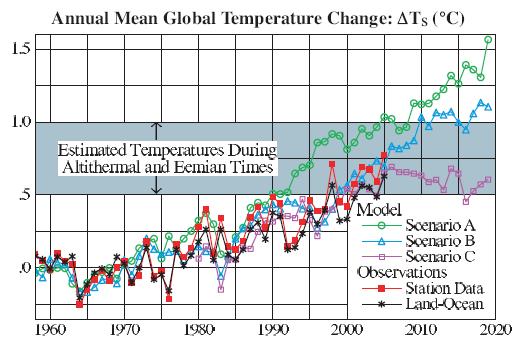
From the NASA website, “In particular Hansen gave a presentation to the US congress in 1988 where he showed them what he thought would happen to Global Climate if we did not stop putting CO2 into the earth’s atmosphere. In the original 1988 paper, three different scenarios were used A, B, and C. They consisted of hypothesised future concentrations of the main greenhouse gases – CO2, CH4, CFCs etc. together with a few scattered volcanic eruptions. The details varied for each scenario, but the net effect of all the changes was that Scenario A assumed exponential growth in forcings, Scenario B was roughly a linear increase in forcings, and Scenario C was similar to B, but had close to constant forcings from 2000 onwards. Scenario B and C had an ‘El Chichon’ sized volcanic eruption in 1995. Essentially, a high and low estimate was chosen to bracket the expected value. Hansen specifically stated that he thought the middle scenario (B) the “most plausible”.
From NASA we find the following Chart of Hansen’s Various Scenario’s these three scenarios are the base for the IPCC climate models. Altithermal time means the period 6,000 to 10,000 years before the present (end of the last Ice Age) where the temperatures were .5 degrees higher than the NASA base of 14.0 degrees Celsius (explained later). Eemian times means 120,000 years before the present where the temperature was estimated to be 1.0 degrees higher than the NASA base. I have no idea why these times were picked as they have no significance to the present and are based on proxy data which means the uncertainty of the values is high.
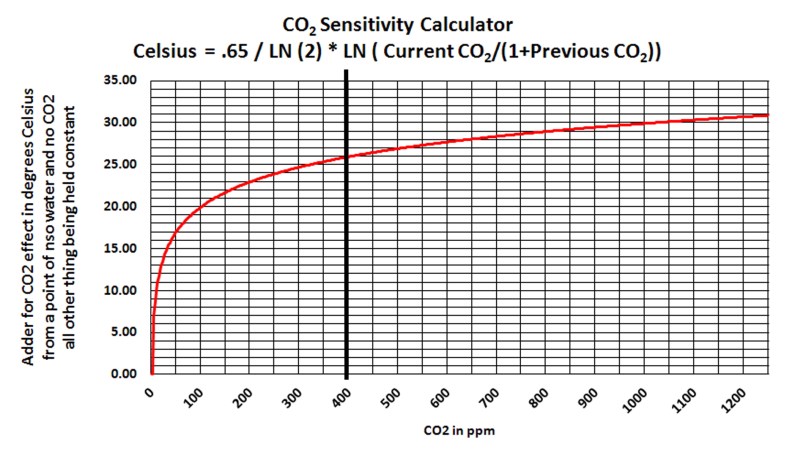
The next Chart shows the key value of 3.0 degrees Celsius as the CO2 Sensitivity value for a doubling of CO2 which was developed in part by NAS in 1979 with the help of Hansen to produce Scenario B. The equation shown in the next Chart is CO2 used to determine the increase in the planets temperature at any given level of CO2. It’s a log function and so matter what value is used 1, 2 or 3 the climate effect tappers off at some point. The vertical black line at 400 ppm is where we are now; and since it crosses the red plot at 26.0 degrees Celsius that is how much of the planets temperature is because of CO2. We will discuss this in more detail later as there is a problem with this value.
Hansen’s work then lead to the formation of the Intergovernmental Panel on Climate Change (IPCC) in 1988. The IPCC was set up by the World Meteorological Organization (WMO) and the United Nations Environment Program (UNEP) to prepare, based on available scientific information, assessments on all aspects of climate change and its impacts, with a view of formulating realistic response strategies. This last group came about as the environmental movement became concerned of the rapid industrial development and the resulting in increases of CO2 from burning fossil fuels since CO2 is known to have an effect on climate by aiding in trapping Infar red radiation and adding to the temperature of the planet.
The IPCC doesn’t do research so the information they use comes predominantly from four sources the National Aeronautics and Space Administration Goddard Institute for Space Studies (NASA-GISS) and the National Oceanic & Atmospheric Administration Carbon Cycle Greenhouse Gas Group (NOAA-CCGG) in the U.S. and the Met Office Hadley Centre (UKMO) and the Climate Research Unit University of East Anglia (CRU) in the United Kingdom (UK). Others are involved as well such as the European Space Agency (ESA) but these four agencies at the direction of political elements within their governments are the primary drivers of this concept. In the balance of this paper we will use NASA and NOAA.
The first major program to began the task of changing how the entire world would adapt to the “required” reductions in CO2 was made public at the UN Conference on Environment and Development (Earth-Summit), held in Rio-de-Janeiro on June 13, 1992, where 178 governments voted to adopt the program called UN Agenda 21. The final text was the result of drafting, consultation, and negotiation, beginning in 1989 and culminating at the two-week conference. Agenda 21 is a 300-page document divided into 40 chapters that have been grouped into 4 sections that was published in book form the following year:
Section I: Social and Economic Dimensions is directed toward combating poverty, especially in developing countries, changing consumption patterns, promoting health, achieving a more sustainable population, and sustainable settlement in decision making.
Section II: Conservation and Management of Resources for Development Includes atmospheric protection, combating deforestation, protecting fragile environments, conservation of biological diversity (biodiversity), control of pollution and the management of biotechnology, and radioactive wastes.
Section III: Strengthening the Role of Major Groups includes the roles of children and youth, women, NGOs, local authorities, business and industry, and workers; and strengthening the role of indigenous peoples, their communities, and farmers.
Section IV: Means of Implementation: implementation includes science, technology transfer, education, international institutions and financial mechanisms.
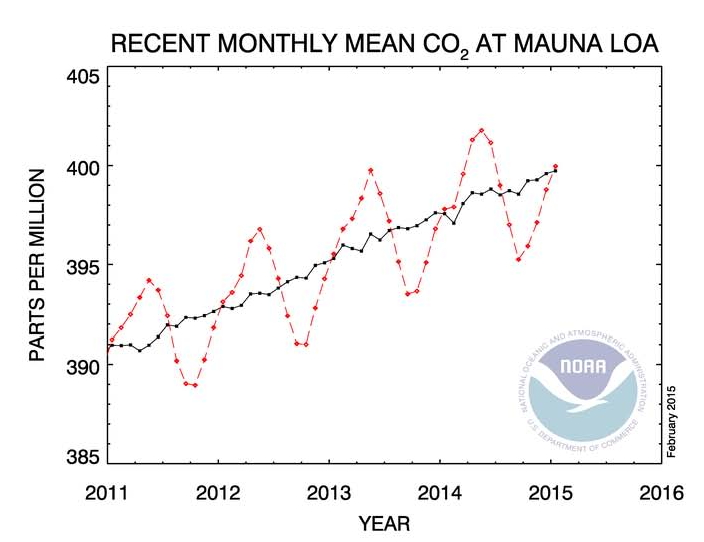
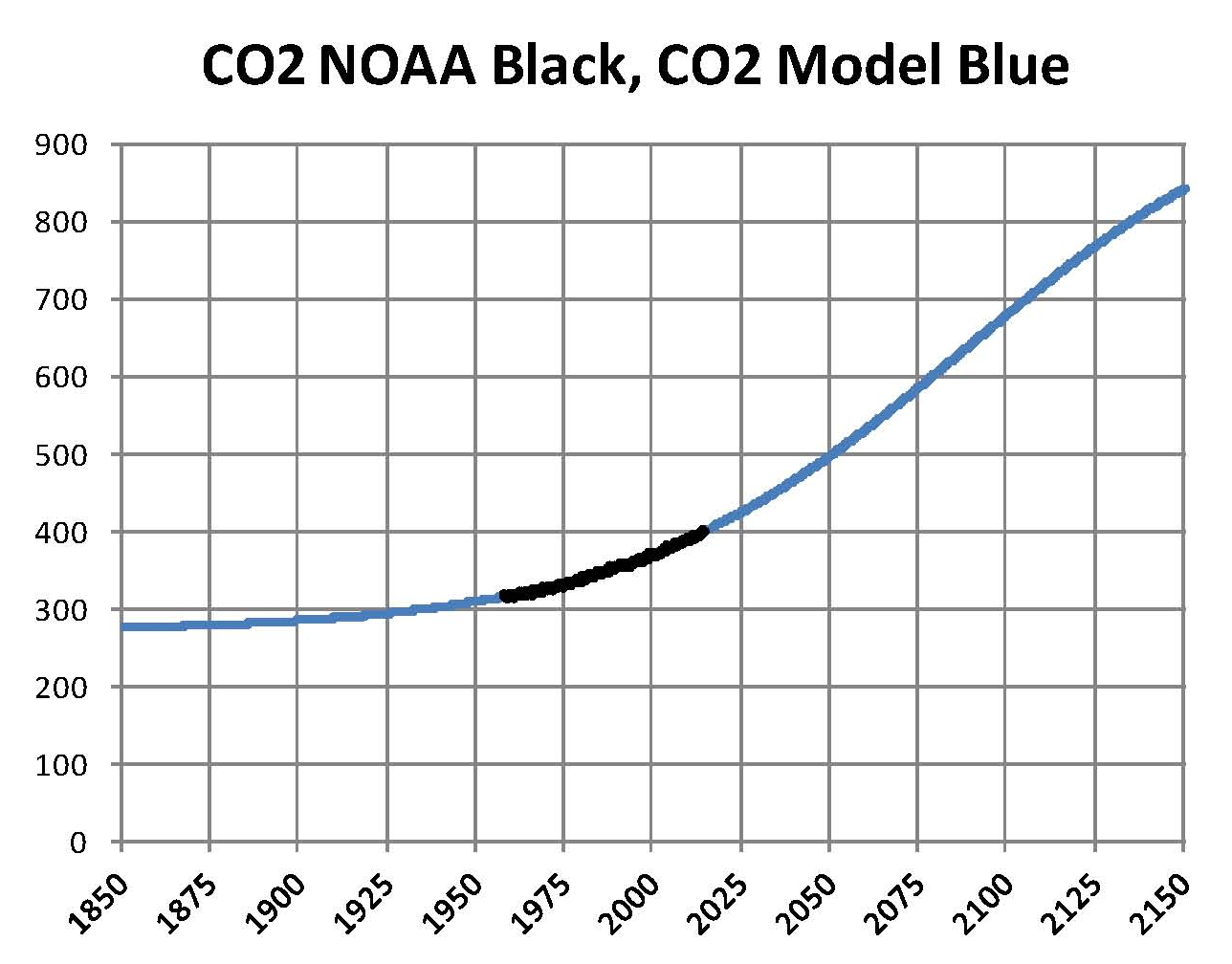
The goal of UN Agenda 21 is to create a world economic system that equalizes world incomes and standards of living and at the same time reduces CO2 levels back to the levels that existed prior to the industrial age of ~300 ppm. We are now at 400 ppm and growing at a geometrically increasing rate now a bit over 2 ppm per year and at that rate we will reach 500 ppm in 2050 at which point the UN Climate models and there spokespersons Al Gore and James Hansen say we will have an ecological and economic disaster that is irreversible.
The study of climate change centers on four items. The First is archeological records of climate as developed prior to this current debate. The Second is accurate measurements of current and past atmospheric CO2. The Third is accurate measurements of current and past global temperatures. The Fourth is a means of looking at these items to determine relationship, if any.
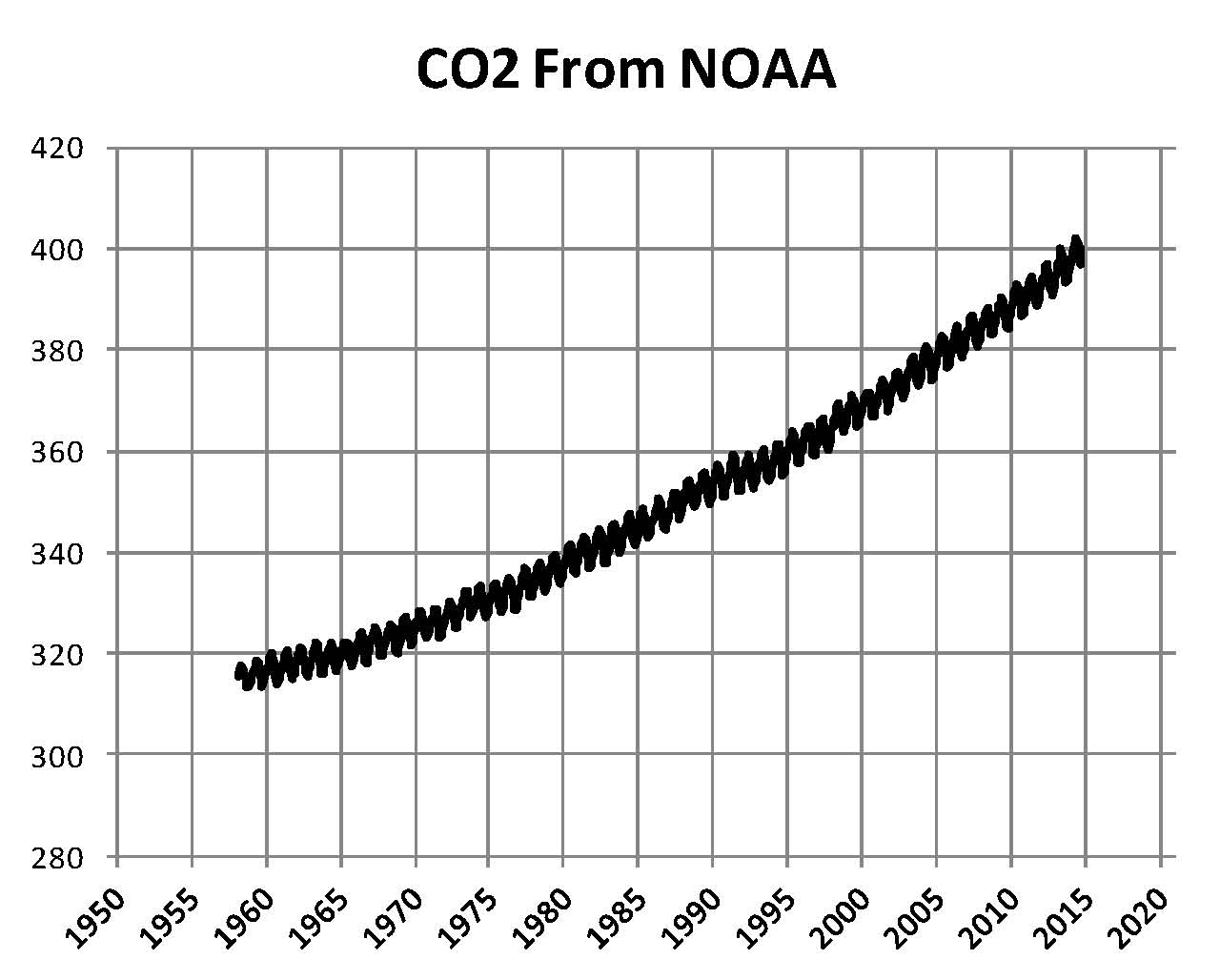
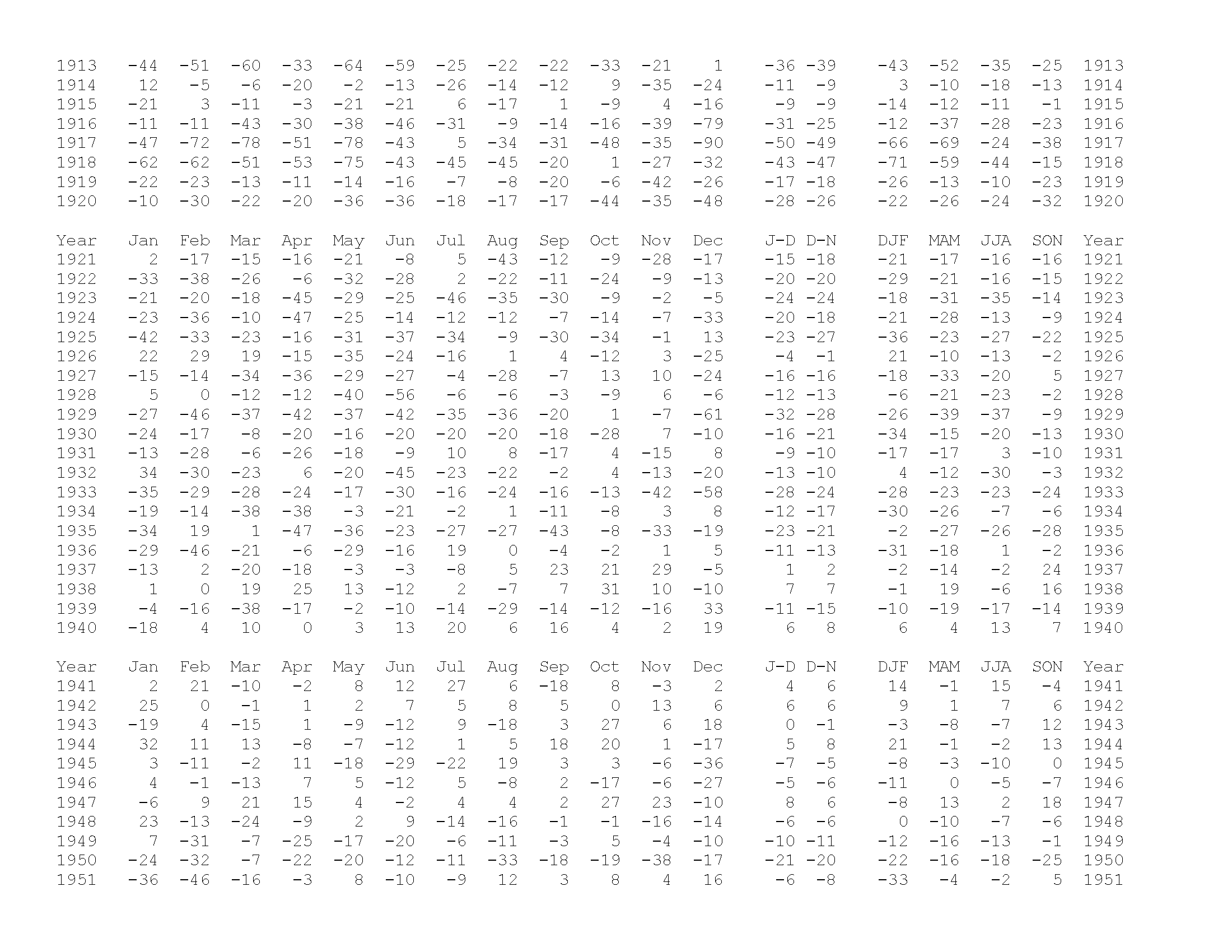
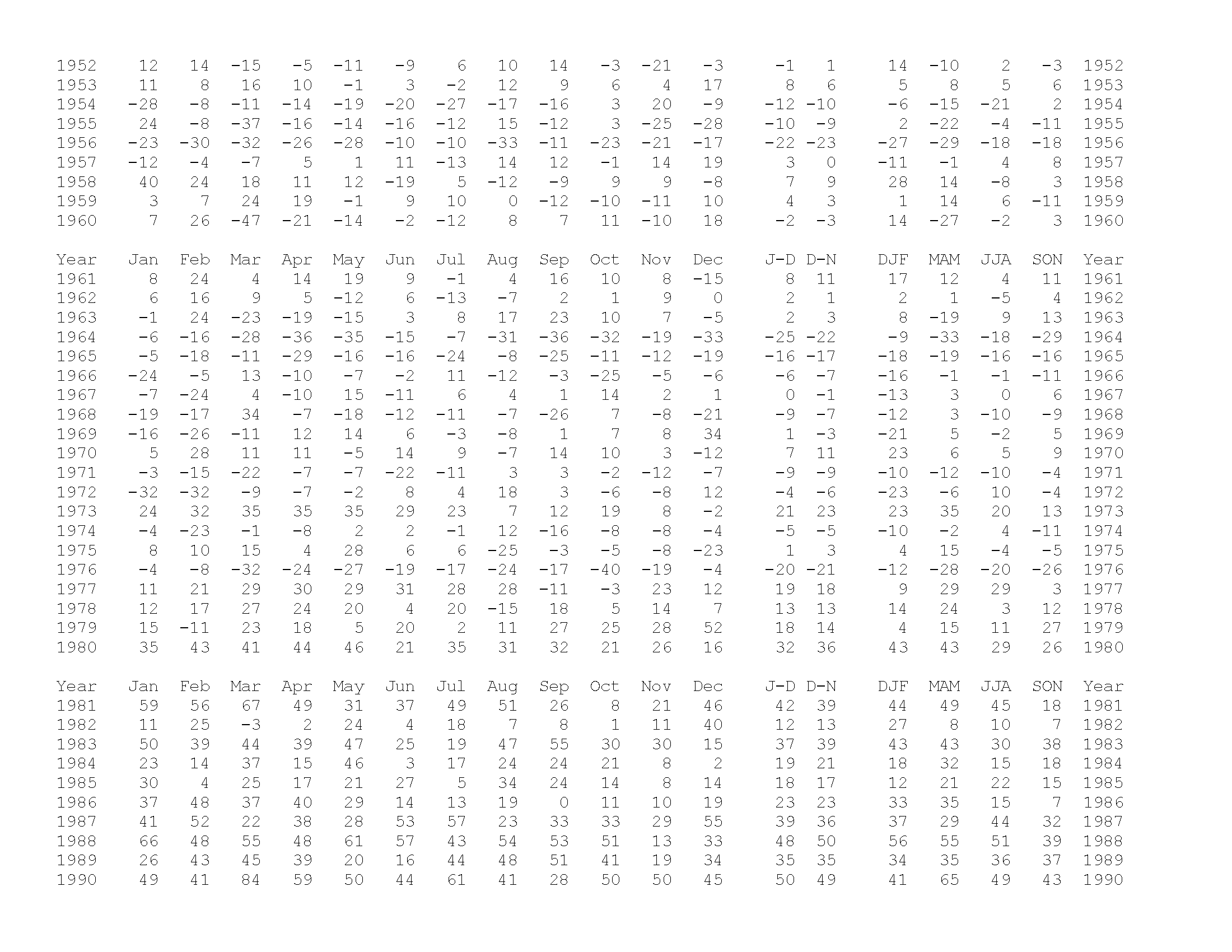
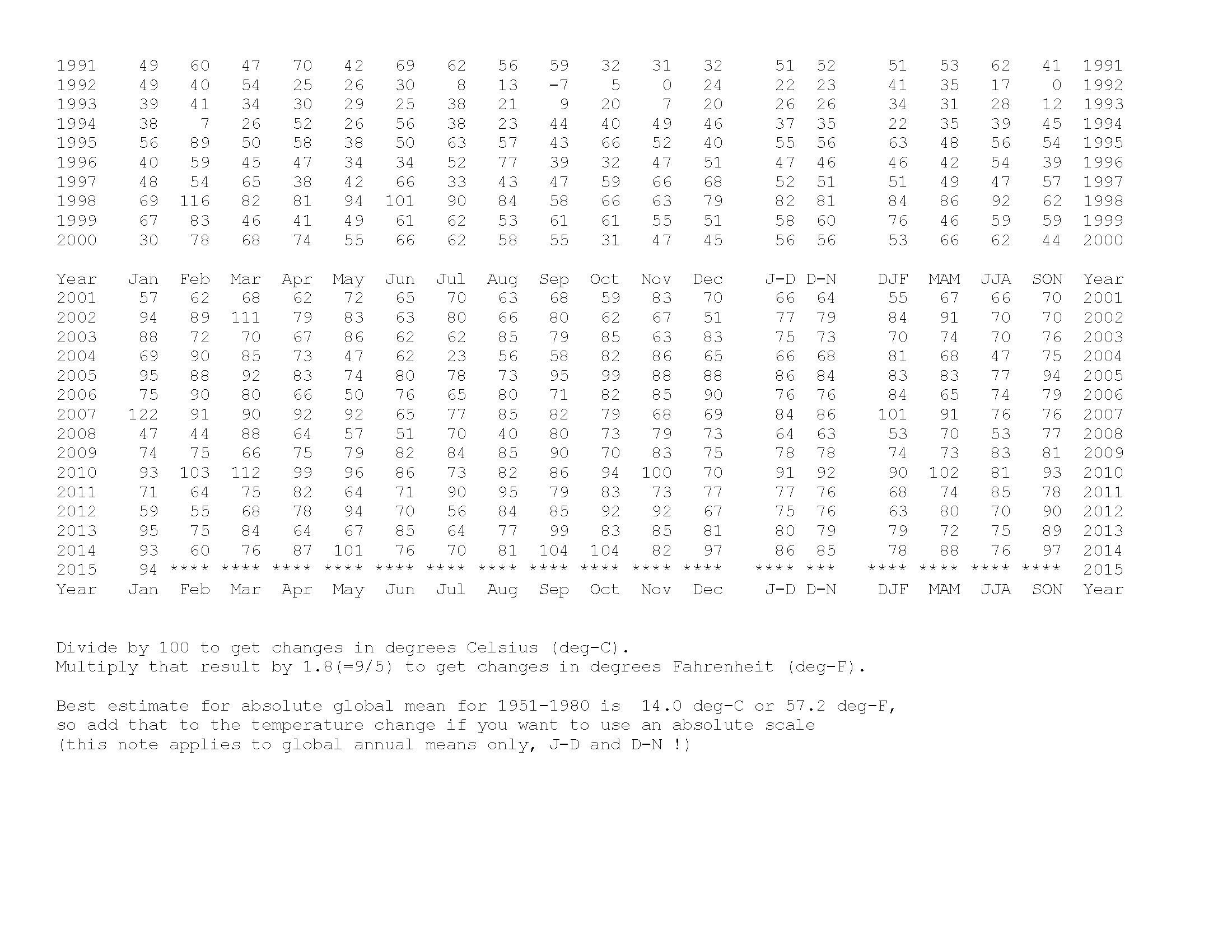
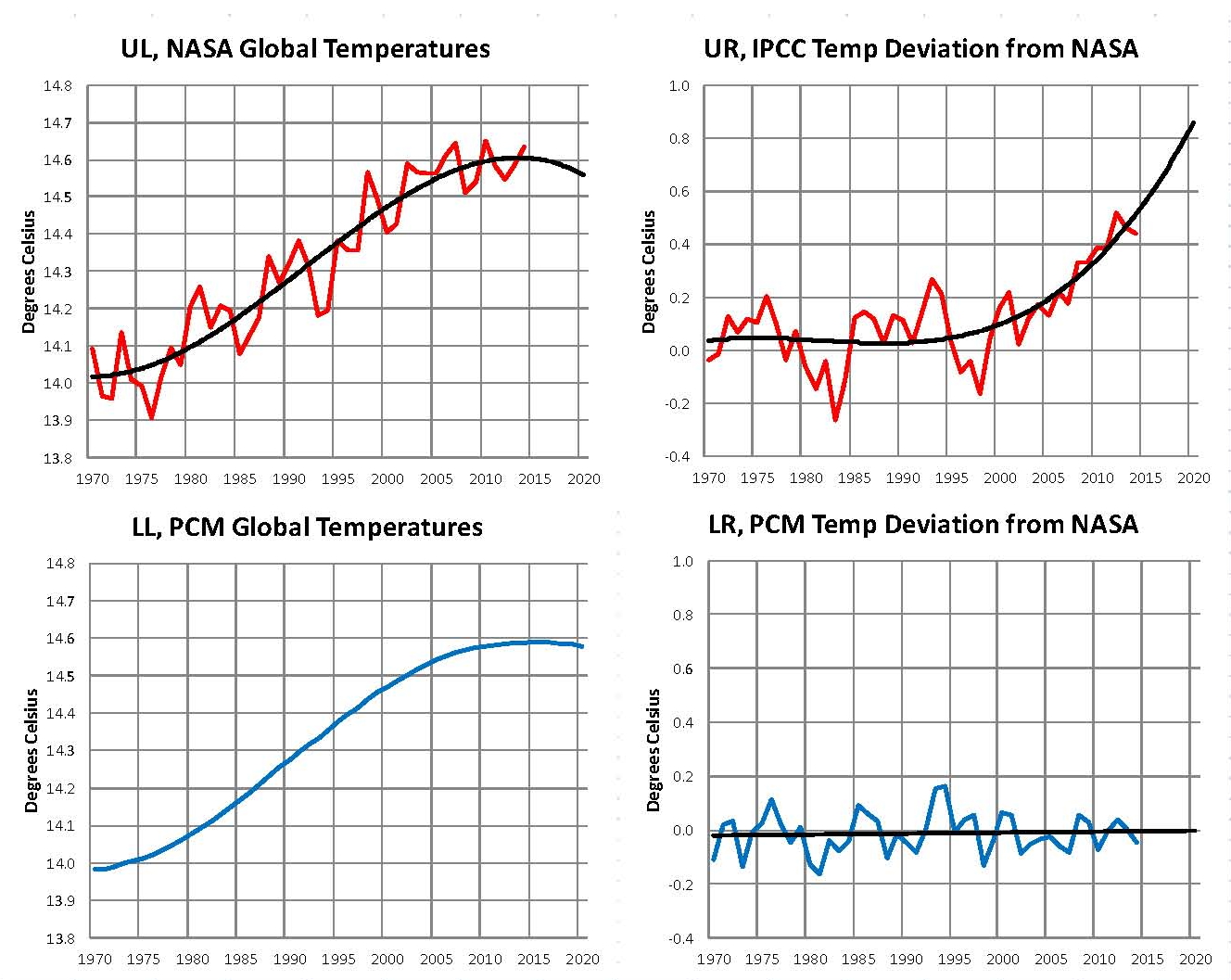
The first is generally available and not an issue. The second is also generally available for the past and the current values, since 1958 are published by NOAA each month as a part per million by volume (ppmv) . The third is also available from NASA but there are concerns over the methodology used by NASA to determine the global temperature; for now we’ll use what NASA publishes in the Land Ocean Temperature Index (LOTI) as the value. The fourth is complicated and the purpose here is to properly blend the variable so they can be compared.
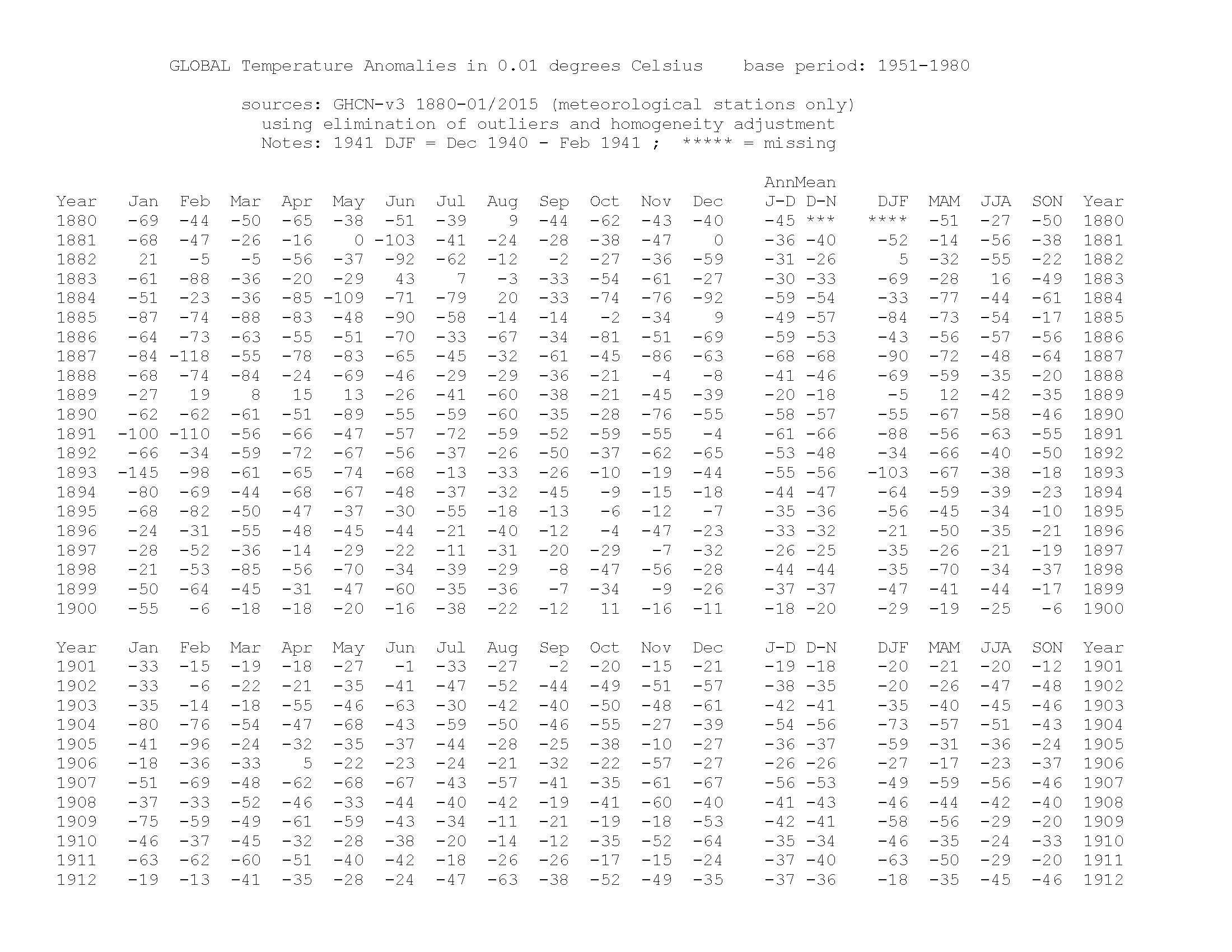
Since NASA publishes temperatures as an anomaly an explanation is required. NASA publishes a Global temperature each month as an anomaly which is determined as follows. First a base temperature is determined and according to NASA it is 14.0 degrees Celsius which is the average temperature from 1951 to 1980. Next the current temperature is determined by software then the base is subtracted from it and the value is multiplied by 100. For example if the current temperature is 14.5 degrees C subtracting 14.0 we get .50 multiplying that by 100 gives us an anomaly of 50. If the current temperature is 13.5 we subtract 14.0 and get -.5 and multiplying that we get an anomaly of -50. If an actual temperature is required we reverse the process.
This completes the basic history of the current situation although most that read this already know the details its always good to review the facts before diving into the conflict. The next post will be on Carbon Dioxide and Water which are the two molecules that allow us to live on this planet.




 Centinel2012