Posted originally on Jan 19, 2026 by Martin Armstrong |
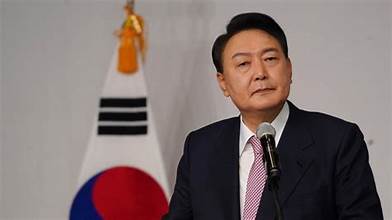
South Korea sentencing former President YoonSuk Yeol to five years in prison over his martial law attempt is a major historical event because it cuts straight to the heart of what always happens when a leader believes he personally IS the state. The court found him guilty of abuse of power, obstruction of justice, and falsifying official documents, all tied to that failed martial law move.
Martial law exists in most constitutions as a last-resort mechanism because once a head of state tries to invoke it for political survival, it is no longer governance. It becomes the weaponization of government against the people. Yoon panicked when it became apparent that he was facing impeachment. Blaming North Korea, Yoon declared emergency martial law for a full three hours before it was overturned by Parliament.
The former president was sentenced to five years in prison, a small price to pay considering there were calls for the death penalty. South Korea has not carried out a execution in three decades. “Calling for the death penalty for Yoon is not a matter of choice but a necessity and cannot be considered excessive,” said Moon Geum-ju, a Democratic Party floor spokesperson. Executing a former head of state does not inspire confidence to say the least.
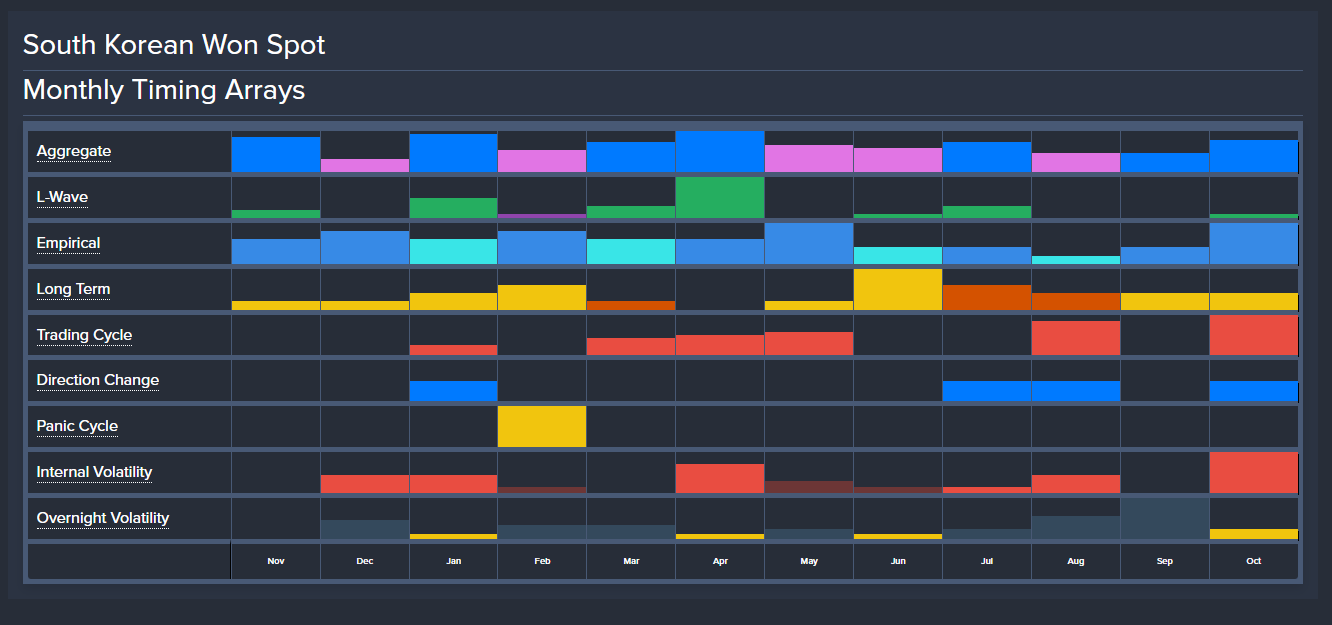
When we look at the Monthly Array from 2023, we can see that the major turning point would be April 2024, which the computer was projecting from November 2023. The April 10, 2024, election, when all 300 members of the National Assembly were elected, 254 from first-past-the-post constituencies and 46 from proportional party lists. The two largest parties, the Liberal Democratic Party and the conservative People Power Party, once again set up satellite parties to take advantage of the electoral system.
The election served as a “mid-term evaluation” of President Yoon Suk-yeol’s administration, which is nearing its third year. The question became whether the ruling party could surpass the constraints of the ruling coalition, which did not secure a majority in the previous general election. The election saw opposition parties, primarily the Democratic Party, retain their majority in the National Assembly. We can see that the numerous Directional Changes thereafter ensured a divided political state.
South Korea has a long history of prosecuting former leaders after they leave office. But this case is uniquely important because it wasn’t just a bribery scandal or political persecution. Yoon is being held accountable for permitting his own ambitions to override the constitution and crossing a line that no leader in a constitutional republic is permitted to cross.
Leaders start thinking they can rule by decree. They silence opponents. They use state power to protect themselves. And when they fall, the entire system suffers the aftershock. The markets may shrug for a day, but society doesn’t.
Posted originally on Jan 19, 2026 by Martin Armstrong |
Governor Tim Walz threatened to command the state National Guard to attack federal agents. “We do not need any further help from the federal government. To Donald Trump and Kristi Noem, you’ve done enough. I’ve issued a warning order to prepare the Minnesota National Guard,” Walz said in a press event. “We have soldiers in training and prepared to be deployed if necessary. I remind you, a warning order is a heads-up for folks,” Walz said. “Minnesota will not allow our community to be used as a prop in a national political fight.” Now, Washington is considering invoking the Insurrection Act to deploy US troops to Minnesota.
“If the corrupt politicians of Minnesota don’t obey the law and stop the professional agitators and insurrectionists from attacking the Patriots of I.C.E., who are only trying to do their job, I will institute the INSURRECTION ACT, ” Trump said on his Truth Social platform.
We live in a world where states are openly defying the federal government, toying with the idea of separatism, as politics have become too divided for the states to remain united. The 1807 Insurrection Act permits US presidents to unilaterally deploy federal military personnel within the US to restore law and order.
Fifteen different presidents have invoked the Insurrection Act on 30 separate occasions throughout US history. The Insurrection Act was last utilized by President George Bush in May 1992 during the Los Angeles riots. President Trump has the authority to invoke the Act, and if chaos prevents federal agents from carrying out tasks, he may be forced to deploy the military. Shaken by the threat, Walz is asking Trump to “turn the temperature down,” and “stop this campaign of retribution.” Yet, Walz boldly declared he would command state troops to defy Washington.
The unrest in Minnesota is largely due to paid agitated actors who take orders from dark money NGOs controlled by the globalist elite, but I will discuss that matter in a separate post. Democrats like Walz are deliberately creating unrest ahead of the midterm elections. The plan has been to force Washington into a corner where force must be met with force to maintain order. Trump’s presidency will be met with resistance at every corner, as the computer warned, as Washington now faces enemies both domestic and international.
Posted originally on Jan 19, 2026 by Martin Armstrong |
Peace was never an option. The Russia-Ukraine war was plotted out over a decade ago by people unassociated with either nation. The Plot to Seize Russia explains everything in detail. Yeltsin handed Putin the reins to protect Russia from the oligarchs. The West installed Zelensky to quietly control Ukraine and position it for battle. Former German Chancellor Angela Merkel admitted that the Minsk Agreement was a lie, an appeasement to pass time to allow Ukraine to build its military.
World leaders continually declare that Russia shows no signs of accepting peace. “What we’ve seen is the huge commitment to work being done by Ukraine, with the US and supported by Europe to draw up plans for peace including security guarantees,” Britain’s Foreign Secretary, Yvette Cooper said. “But so far, I don’t see the evidence that Putin is yet willing to come to the table, or yet willing to have discussions.”
“Most importantly, we want peace and harmony to reign in Ukraine, and we are ready to work together with other countries to do everything to facilitate and support such a development,” President Putin stated on March 17, 2014, during his reunification speech.
“For eight years, for eight long years, we have done everything possible to resolve the situation by peaceful political means,” Putin said on a televised address on February 24, 2022, when Russia began its “special military operation” in Ukraine. Moscow was prepared to honor the Minsk Agreement, but Europe was not. The Minsk Agreement is paramount. Putin has repeatedly called for peace over the past four years.
“We are set on serious negotiations with Ukraine. Their aim is to eliminate the root causes of the conflict and to achieve a long‑term lasting peace for a historical perspective,” the Russian President said in May 2025 when he discussed a potential ceasefire. Dmitry Peskov, Kremlin spokesman, reiterated readiness for “a peaceful settlement to end the war.”
The headlines continue to spit out propaganda—peace is not an option. Peace IS an option for Russia, and perhaps Ukraine, but the neocon elite simply will not allow the war to end. Zelensky seemed willing to accept a peace deal in 2022, but the UK’s Boris Johnson promptly talked him out of accepting the deal.
I submitted my peace proposal to Washington in November 2025. The Trump Administration, perhaps with the guidance of my proposal, created a strategy for peace that only one side was willing to accept.
War is a great way to default on debts. You get to form a new government, and they always disavow the debts of the previous government. Europe has been committing economic suicide. Between the COVID-19 Lockdowns, the NET-ZERO Climate Change, and then the sanctions on Russia that doubled their fuel costs, you could not ask for a more brain-dead group of politicians who have ZERO comprehension of even how the economy functions.
Posted originally on CTH on January 18, 2026 | Sundance
Last week President Donald Trump officially announced the members of the Gaza Board of Peace; an organization headed by President Trump and tasked to oversee the second phase of his plan to end the Israeli conflict in Gaza, specifically the reconstruction and disarmament of Gaza and Hamas respectively. [SEE HERE]
The members of the “Board of Peace,” chaired by Trump himself, includes Secretary of State Marco Rubio; Emissary Steve Witkoff; Jared Kushner; former British Prime Minister Tony Blair; an American-Jewish billionaire named Mark Rowan; World Bank President Ajay Banga; and Deputy National Security Advisor of the United States, Robert Gabriel. President/Chairman Donald Trump has also appointed Aryeh Lightstone and Josh Gruenbaum as senior advisors to the Board of Peace.
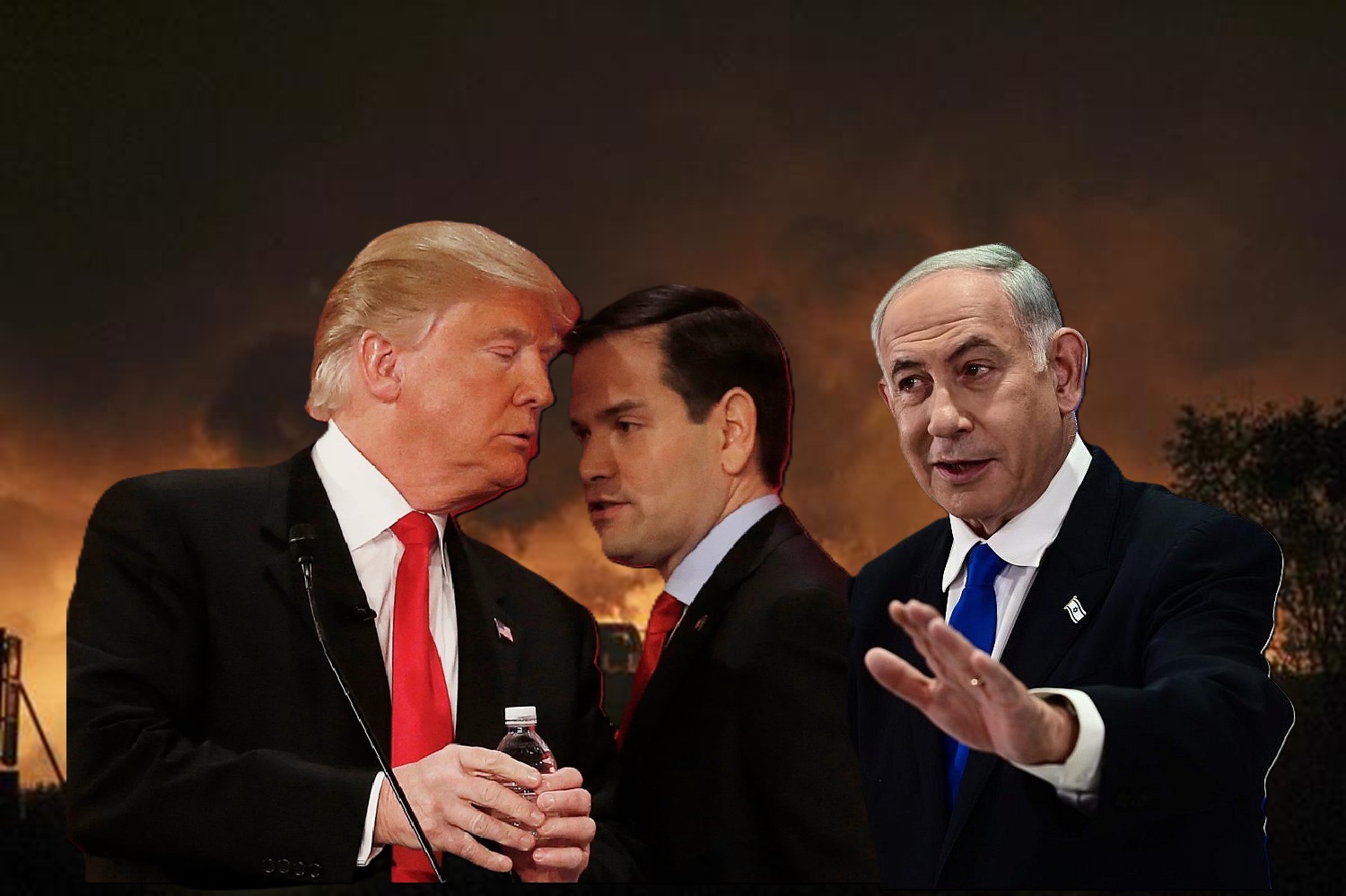
At the same time, President Trump announced another executive body that would operate under the Peace Council to assist with the facilitation of a new Palestinian government, the “Gaza Executive Board.” This structure is intended to manage day to day events on the ground instead of a Hamas loyalist govt. The appointees to the executive board have upset the Netanyahu government of Israel.
According to the White House announcement, the Gaza Executive Board will include: Witkoff; Kushner; Turkish Foreign Minister Hakan Fidan; senior Qatari official Ali al-Thawadi; Egyptian intelligence chief Hassan Rashad; Tony Blair; billionaire Mark Rowan; UAE Minister Reem Al Hashimi; former Bulgarian Foreign and Defense Minister Nickolay Mladenov, who also served as the UN envoy for the Middle East peace process; U.N Representative Sigrid Kagg, and Israeli-Cypriot businessman Yakir Gabbay, who specializes in real estate, technology and international investments.
Additionally, to establish security, preserve peace, and establish a durable terror-free environment, Major General Jasper Jeffers has been appointed Commander of the International Stabilization Force (ISF), where he will lead security operations, support comprehensive demilitarization, and enable the safe delivery of humanitarian aid and reconstruction materials. [link]
According to Israeli media Netanyahu is not happy, and planning to protest the Turkish, Qatari and UAE appointments to Marco Rubio (not Trump):
“A very unusual statement by the prime minister against the US president, following the publication of the members of the “Executive Committee for Gaza” – which includes, among other things, the Turkish foreign minister and a senior Qatari official. “The announcement of the panel was not coordinated with Israel and is contrary to its policy,” the Prime Minister’s Office said.
“The announcement of the composition of Gaza’s Executive Committee, which is subordinate to the peace conference, was not coordinated with Israel and is contrary to its policy,” the Prime Minister’s Office said, adding that “the prime minister has instructed Foreign Minister Gideon Sa’ar to contact US Secretary of State Marco Rubio on this matter.” (more)
Within the appointments for the executive board, the use of Turkey, Qatar and UAE officials for the governance and reconstruction of Gaza explains the recent parsing of the Muslim Brotherhood chapters as terrorist enablers. When Secretary Rubio made the terrorist designation announcement, the Turkish and Qatari Muslim Brotherhood chapters were notably absent. With the Gaza initiative ongoing, now we see coordinated pragmatism at work.
Rubio chose to focus on Egypt, Jordan and Lebanon to target the Muslim Brotherhood. As we noted, “The Egyptian Muslim Brotherhood were chased out of the country by President Abdel Fattah al-Sisi over a decade ago. The Jordanian chapter is similarly aligned and was previously targeted by King Abdullah. The Lebanese faction is not as well known, but their support for Hamas is well understood.” {Go Deep}
A few things are obvious.
First, President Trump and Secretary Rubio knew in advance they were going to need the strong influences of Qatar and Turkey if they were going to stabilize the interim Gaza reconstruction governing system. Secondly, both Trump and Rubio knew Israeli Prime Minister Benjamin Netanyahu wouldn’t like that; however, pragmatically Trump and Rubio are doing what is in the best interest of the region as a whole, not being narrowly focused on Israel. Additionally, these appointments have upset the Israel-first influencer group in the U.S.
President Trump is restructuring mid-east stability without the need for direct U.S. intervention. Instead, under President Trump’s approach conflict resolution is the responsibility of the regional stakeholders with strong support from President Trump. It is a similar outlook conveyed to Europe about needing to be responsible for their own defense and security solutions while the USA role is supportive in nature.
In this approach the sharp tendrils of U.S. influence start to be untangled, and the national security focus returns to the USA domestically. Mutually beneficial national sovereignty replaces toxic and unending globalist intervention. This is a similar worldview that President Trump also takes toward trade agreements.
Multilateral trade agreements like the Transpacific Trade Partnership (TPP) or the Transatlantic Trade and Investment Partnership (TTIP), or even the NAFTA/USMCA trade agreement are rejected in favor of direct bilateral free trade agreements with individual nations.
In Trump’s trade policy the multilateral deals are dissolved, while the bilateral deals are affirmed. The same outlook holds true for massive institutional agreements that end up with large entanglements often carrying disproportionate costs and disparate benefits. Like NATO, the USA usually ends up with the largest price tag and least benefit from the agreement.
Is NATO/Europe going to fight China over Taiwan? Of course not. If they were, Canada wouldn’t be making deals with Beijing, and Europe would not be allowing China to purchase stakeholder interests in the European car market. The same pragmatic and reasonable outlook applies right now toward how the EU has responded to the Russia/Ukraine conflict; only “willing” if the USA puts our blood and treasure on the line.
This nationalistic outlook is honestly encapsulated in this recent soundbite from President Trump when asked about Canadian Prime Minister Mark Carney making a trade agreement with China. President Trump genuinely doesn’t care. WATCH:
Canada can make whatever deal they want with China; however, that doesn’t mean it will work out well for Canada when the USMCA is dissolved and a new bilateral trade deal between the USA and Canada is renegotiated. Factually, it means Canada will end up in a worse economic place, just look at the history of countries that hugged Big Panda. It is their own independent right to be blind to the risk.
Despite all the warnings from President Trump, Europe became dependent on Russia for low-cost energy; how’d that work out for them? Germany now seriously regrets their green energy approach, but there’s nothing President Trump can do to stop multinational assemblies from being collectively stupid; the only thing he can do is mitigate any collateral damage to the USA.
Instead of European leaders calling President Trump every time Turkish President Recep Erdogan does something against their interests, eventually the group will learn how to engage him individually. In a world of bilateral respect, the lessons from Trump could even have the downstream effect of training the EU to drop their obsession with Russia-bad everything.
The Ukraine conflict could end when Europe finally realizes it’s much easier to turn on a Nordstream gas valve than it is to rebuild 30 German nuclear power plants. President Trump’s refusal to commit U.S. troops to Zelenskyy’s security guarantee will hopefully hasten that conversation.
The same pragmatic realism applies to Greenland. Europe will never respond to any increase in strategic threat presented by China or Russia in the Arctic, and the U.S. will shoulder all the costs if that risk were to materialize. Strategic pragmatism combined with economic realism is why President Trump is focused on the security of the North American continent.
Lastly, there is a segment of MAGA that is angered by President Trump’s interim and necessary approach to removing our foreign policy entanglements in both the European and Mideast continents. Those who are short-sighted don’t see how President Trump is strategically and factually withdrawing U.S. policy from a world of enmeshed dependencies, because in reality charity –along with security– begins at home.
Thankfully, the former Lyndon LaRouche assembly from Promethean Action have begun to recalibrate their British-centric focus, and they’ve started to look at Trump policy beyond the ramifications to London and through the more accurate prism of Trump’s global pragmatism. President Donald Trump isn’t trying to unilaterally destroy British imperialism, not directly. Instead, that old, stuffy and elitist collapse is a consequence of reestablishing independent sovereignty.
Smile, live your very best life and watch it all unfold. After all, Davos is going to be a must-watch event next week.
Posted originally on CTH on January 18, 2026 | Sundance
Deputy Attorney General Todd Blanche appears on Fox News to discuss ongoing DOJ investigations in/around the Minneapolis, Minnesota region to include reviews of state and municipal political officials.
Deputy AG Blanche notes the governor of the state, and mayor of Minneapolis, have purposefully and willfully impeded federal law enforcement and immigration officials. Additionally, Blanche notes the President has the right to invoke the Insurrection Act if needed.
Posted originally on CTH on January 18, 2026 | Sundance
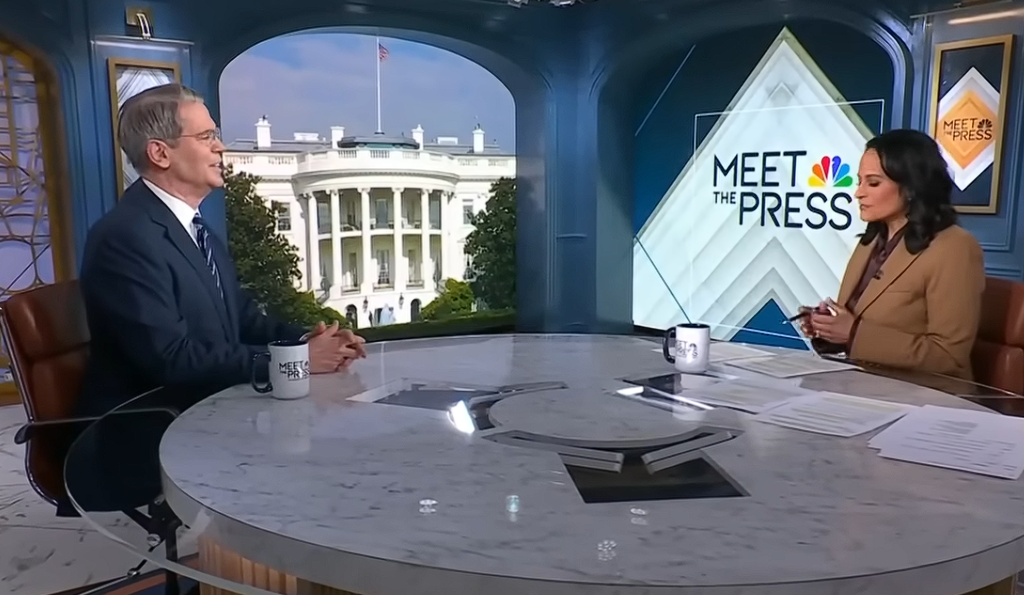
Treasury Secretary Scott Bessent appears on NBC to discuss the national security issues surrounding Greenland and the Trump administration’s face off against Europe and NATO. Additionally, Welker wants to protect Fed Chairman Jerome Powell against mounting evidence of his political bias and mismanagement of the Federal Reserve. Video and Transcript Below.
Joining me now is Treasury Secretary Scott Bessent. Secretary Bessent, welcome back to Meet the Press.
SEC. SCOTT BESSENT:
Good morning, Kristen. Good to be with you.
KRISTEN WELKER:
It’s great to have you here, thank you for being here in person. Let’s start right there. President Trump threatening to impose steep tariffs against some of America’s closest European and NATO allies. The leaders of Denmark and Greenland say bluntly, “Greenland is not for sale.” What makes President Trump think it is?
SEC. SCOTT BESSENT:
Kristen, if we look for years, for over a century, American presidents have wanted to acquire Greenland. And what we can see is that Greenland is essential to the U.S. national security — we’re building the golden dome, the missile system. And look, President Trump is being strategic. He is looking beyond this year. He’s looking beyond next year to what could happen for a battle in the Arctic. We are not going to outsource our national security. We are not going to outsource our hemispheric security to other countries. In Trump 1.0, President Trump told the Europeans, “Do not build Nord Stream 2. Do not rely on Russian oil.” And guess what, Kristen? Guess what is funding Russia’s efforts against Ukraine? European purchases of Russian oil. So America has to be in control here.
KRISTEN WELKER:
I want to delve into everything that you said. But I just want to ask you big picture: Is this a negotiating tactic, Mr. Secretary? Or is President Trump serious about annexing Greenland?
SEC. SCOTT BESSENT:
President Trump strongly believes that we cannot outsource our security. Because, Kristen, let me tell you what will happen, and it might not be next year, might not be in five years. But down the road, this fight for the Arctic is real. We would keep our NATO guarantees. And if there were an attack on Greenland from Russia, from some other area, we would get dragged in. So better now, peace through strength, make it part of the United States, and there will not be a conflict because the United States right now, we are the hottest country in the world. We are the strongest country in the world. Europeans project weakness. U.S. projects strength.
KRISTEN WELKER:
But just very quickly, is this a negotiating tactic, Mr. Secretary? Is the goal to get a deal to have enhanced security in Greenland, for example?
SEC. SCOTT BESSENT:
The president believes that enhanced security is not possible without Greenland being part of the U.S.
KRISTEN WELKER:
Okay. Let me press you on what you have said are national security concerns, particularly as it relates to Russia and China. Senior Democrats say there are no pressing threats on Greenland’s security from Russia or China. The Danish foreign minister says there hasn’t been a Chinese warship in Greenland for a decade. What evidence do you have that this is a pressing threat?
SEC. SCOTT BESSENT:
Well, first of all, Kristen, we have asymmetric information. And again, President Trump is being strategic here. What evidence was there that the Russians were going into Crimea? Well, actually there was a lot of evidence that the Russians were going to go into Ukraine. And Joe Biden said, “Well, just take a little bit of it.” But what we know is that the U.S., that Greenland can only be defended it if is part of the U.S. And it will not need to be defended if it is part of the U.S. The president is trying to avoid a conflict.
KRISTEN WELKER:
You bring up Crimea. The president, as far as I have heard, has not taken military force off the table. If the United States were to take Greenland by force, how would that be different than Russia’s annexation of Crimea?
SEC. SCOTT BESSENT:
Look, I believe that Europeans will understand that this is best for Greenland, best for Europe, and best for the United States.
KRISTEN WELKER:
But military action is still on the table?
SEC. SCOTT BESSENT:
I haven’t spoken with the president on that. And again, I believe that the Europeans will understand that the best outcome is for the U.S. to maintain or to receive control of Greenland.
KRISTEN WELKER:
Well, so far what we’ve heard and seen from the Europeans is alarm and outrage. In fact they’re, as you know, holding an emergency meeting today. And part of the issue, the president has already reached a trade deal with the EU. How can countries have confidence in trade deals moving forward if President Trump is prepared to blow them up?
SEC. SCOTT BESSENT:
Well, first of all, the trade deal hasn’t been finalized. And an emergency action can be very different from another trade deal. So we’re in a very good equilibrium right now with China. But if China did something to upset that balance, I think the president would be willing to act. You know, same thing with India. We were working on a trade deal with India. But the president, unlike the Europeans, started charging the Europeans 25% for buying Russian oil. So the president leverages his emergency powers to do this.
KRISTEN WELKER:
I hear you saying that the deal hasn’t been finalized. And yet it was moving towards finalization. Doesn’t it undercut the United States’ word by threatening these steep new tariffs?
SEC. SCOTT BESSENT:
I think it does not. What it does is it enhances United States security. And again, we have seen that Europeans are unable to push back against Russia. The U.S. — this war that never would have started in Ukraine, Kristen, we are going to settle it. But it wouldn’t have started. And what President Trump is trying to do is prevent a taking or the Russian, Chinese action in Greenland in the future. So why not be strategic? Why? Always live in the moment.
KRISTEN WELKER:
Okay, let’s talk about being strategic. The United States has a base in Greenland. I’ve been talking to lawmakers on Capitol Hill. Denmark has given the United States a green light to beef up its security as much as is needed in Greenland. Why not take that route? Why is it necessary to take over and annex all of Greenland, something that 85% of people living in Greenland oppose?
SEC. SCOTT BESSENT:
Well, again let’s look back. Denmark has a terrible history with Greenlanders. There were forced sterilizations up until the ‘80s or the ‘90s. So all of a sudden, now that the U.S. has expressed an interest, there is, you know, this new interest. And again, the United States needs to be in control to prevent a war. And we do not want to get dragged into someone else’s war.
KRISTEN WELKER:
Well, but this is about the United States relationship with its allies, NATO allies, again reacting with alarm. They are warning that this move to annex Greenland could in fact destroy NATO. So let me just put this to you bluntly. Is Greenland or NATO more essential to the United States national security?
SEC. SCOTT BESSENT:
Both. Kristen, that’s obviously a false choice. You know, that’s an absolute —
KRISTEN WELKER:
Not from the perspective of European leaders.
SEC. SCOTT BESSENT:
The European leaders will come around. And they will understand that they need to be under the U.S. security umbrella. What would happen in Ukraine if the U.S. pulled its support out? The whole thing would collapse. The U.S., Kristen, to be clear, since 1980 the U.S. military spending versus NATO military spending, we have spent $22 trillion more than the Europeans have, that we are peace through strength, and the Europeans now are only trying to play catch-up. And that is only through President Trump. President Trump believes in NATO. But he does not believe in the American people being dragged in.
KRISTEN WELKER:
Well, in terms of the cost that has been paid, Denmark has stood shoulder-to-shoulder with the United States including after 9/11. In fact, it lost more soldiers per capita in Afghanistan than any other NATO nation apart from the United States itself, Mr. Secretary. Does President Trump want the United States to remain a part of NATO?
SEC. SCOTT BESSENT:
Of course, we are going to remain a part of NATO. But what President Trump does not want is for a war to start and the U.S. gets dragged in. Again, we are not going to outsource our Western Hemisphere security to others.
KRISTEN WELKER:
Let me ask you, broadly speaking, about the tariff portion of this. The president, as you well know, has justified his authority to impose previous tariffs without going to Congress by declaring national emergencies. It’s an issue before the Supreme Court right now. We’re all awaiting the high court’s decision. What is the national emergency that justifies these new slate of tariffs?
SEC. SCOTT BESSENT:
The national emergency is avoiding a national emergency. It is a strategic decision by the president. This is a geopolitical decision. And he is able to use the economic might of the U.S. to avoid a hot war. So why wouldn’t we do that? You know, same thing that what if we had a national emergency coming with these gigantic trade balances that we had with the rest of the world — I’ve been in financial markets for 30, 45 years — much better to be strategic, avoid the emergency.
KRISTEN WELKER:
You’re saying it’s a national emergency. But you’re also saying it’s a threat. It’s years away. How can both be true, Mr. Secretary?
SEC. SCOTT BESSENT:
Because you are avoiding creating the emergency, Kristen. What if during the great financial crisis, someone had raised their hand in 2005, 2006 and said, “Stop the sub-prime mortgages?” But no one did. President Trump is raising his hand. And that is preventing the emergency.
KRISTEN WELKER:
Do you think the Supreme Court will agree with that rationale, Mr. Secretary?
SEC. SCOTT BESSENT:
I believe that it is very unlikely that the Supreme Court will overrule a president’s signature economic policy. They did not overrule Obamacare. I believe that the Supreme Court does not want to create chaos. As you said earlier, we have set these trade deals. And it is very good for the United States if we are balancing our trade deficit. If you look, Europe is being overrun with Chinese goods. There is now an emergency in Europe. There is going to be an economic emergency. The Europeans will follow us. So President Trump is pre-empting this if we go back to emergencies, he put a fentanyl tariff, Mexico, Canada, China. Guess what’s happened to fentanyl deaths? If that’s an emergency, I don’t know what is. October 8th, when the Chinese threatened to put rare Earth export controls on the entire world, President Trump threatened 100% tariff. And the Chinese came to the table. And we negotiated on behalf of the whole world.
KRISTEN WELKER:
All right. Let me move to the Federal Reserve. I want to ask you about the revelations this week that the Department of Justice is investigating Jerome Powell and the Fed for allegedly going over budget in the Fed building renovations. Chairman Powell responded. He fired back at this. I want to play a little bit and get your reaction on the other side.
[BEGIN TAPE]
JEROME POWELL:
This is about whether the Fed will be able to continue to set interest rates based on evidence and economic conditions, or whether instead monetary policy will be directed by political pressure or intimidation.
[END TAPE]
KRISTEN WELKER:
Is President Trump committed to the independence of the Federal Reserve, Mr. Secretary?
SEC. SCOTT BESSENT:
Of course, he’s committed to the independence of the Federal Reserve. But independence does not mean no oversight.
KRISTEN WELKER:
But doesn’t this undercut the independence of the Federal Reserve if the Justice Department is investigating renovations? There are renovations at the White House.
SEC. SCOTT BESSENT:
The renovations at the White House are not $700 million, more than $1 billion or $1.5 billion over budget, Kristen. And the White House, that is being paid for with private funds. If I want to buy a new chair for my office at Treasury, that is an appropriation. Just to understand, the Federal Reserve has magic money. They print their own money. So when you have no oversight, why not have a little sunlight? Kristen, I have called since last summer for the Fed to do its own internal investigation. And that has not been heeded, not been heeded. And again, I don’t know about you. If I were to receive inquiries from the Justice Department, I would answer them. They went unanswered.
KRISTEN WELKER:
Well, let me ask you because Axios reported that you were not happy about DOJ’s investigation, that you told President Trump as much. Axios writes, “a perturbed Treasury Secretary Scott Bessent told President Trump late Sunday that the federal investigation into the Federal Reserve Chair made a mess and could be bad for financial markets.” That’s according to two sources familiar with the call. Is that accurate?
SEC. SCOTT BESSENT:
You know what, Kristen? I’m not going to discuss my conversations with the president. But if I said that, I was wrong. Financial markets, stock market went up, bond yields went down. So the markets are the ultimate arbiter of over whether the Fed’s independence is being impugned. And bond yields went down. I can tell you we had two of the best bond auctions that we have had in months for U.S. treasuries. So the market is looking beyond this. And again, maybe the market wants some transparency from the Fed.
KRISTEN WELKER:
One final question for you, Mr. Secretary. Some Republican senators, as you know, are threatening to block the president’s nominees over the Justice Department’s investigation. Do you think the investigation needs to be dropped in order for the Senate to confirm the president’s next pick to run the Fed?
SEC. SCOTT BESSENT:
I think that that will be up to the senators. I think —
KRISTEN WELKER:
But are you worried that they’ll block the president’s pick for the Fed?
SEC. SCOTT BESSENT:
I am not. I think we have four great candidates. I think that they will be quite happy with either of the four. I think we will move forward. I believe that we will probably be hearing from the banking committee soon on what they would like to see. And again, the supervision and bringing in some sunlight does not mean coercion.
KRISTEN WELKER:
All right. Thank you so much, Secretary Bessent, for being here to respond to all of the breaking
I have created this site to help people have fun in the kitchen. I write about enjoying life both in and out of my kitchen. Life is short! Make the most of it and enjoy!
This is a library of News Events not reported by the Main Stream Media documenting & connecting the dots on How the Obama Marxist Liberal agenda is destroying America