Rep. Luna Accuses NBC of Withholding Bombshell Video Showing Lee Harvey Oswald Near JFK’s Limo


Published originally on Rumble By The Gateway Pundit on Mar 28, 2025 at 1:00 am EST

President Trump Files Emergency Appeal to Supreme Court Asking for Intervention to Stop Judicial Overreach


Posted originally on CTH on March 28, 2025 | Sundance

President Donald Trump through the Acting Solicitor General has filed an emergency appeal to the Supreme Court seeking intervention and relief from lower court rulings blocking deportation efforts against criminal aliens. [pdf Filing Here]

The DOJ is arguing that lower court judge James Boasberg is unconstitutionally intruded on the president’s national security powers by barring Trump from using the two-century-old Alien Enemies Act to swiftly deport Venezuelans the administration says are members of Tren de Aragua.

[SOURCE]

“Only this Court can stop rule-by-TRO from further upending the separation of powers—the sooner, the better. Here, the district court’s orders have rebuffed the President’s judgments as to how to protect the Nation against foreign terrorist organizations and risk debilitating effects for delicate foreign negotiations.

More broadly, rule-by-TRO has become so commonplace among district courts that the Executive Branch’s basic functions are in peril. In the two months since Inauguration Day, district courts have issued more than 40 injunctions or TROs against the Executive Branch.

Whereas ‘district courts issued 14 universal injunctions against the federal government through the first three years of President Biden’s term,’ they issued ’15 universal injunctions (or temporary restraining orders) against the current Administration in February 2025 alone.’”

This puts the issue squarely in the hands of the Supreme Court.

WASHINGTON DC – […] Earlier this week, a divided panel of the D.C. Circuit Court of Appeals allowed Boasberg’s order to remain in place, leading to Trump’s emergency appeal at the Supreme Court. The panel splintered, with one judge raising concerns about due process, another suggesting Trump had misused the 1798 law by claiming Tren de Aragua had mounted an “invasion” against the United States, and a third siding with the administration, arguing that the deportees should have filed their claims in Texas rather than Washington. (more)

This is a major inflection point.  Let’s see what happens.

“You Have To Purge These Faculties And Administrations” Steve Bannon On Marxists In Higher Education


Posted originally on Rumble By Bannon’s War Room on: Mar 27 2025, at 7:00 pm EST

LIVE: House Intelligence Committee hearing on global security threats


Posted originally on Rumble By Bannon’s War Room on: Mar 26 2025, at 10:01 am EST

Paulo Figueiredo: “Lula Is A Close Ally To China.”


Posted originally on Rumble By Bannon’s War Room on: Mar 27 2025, at 1:00 pm EST

The Sinister Reason Cowardly “Republicans” Are Calling For Pete Hegseth to be Fired


Posted originally on Rumble By Charlie Kirk show on: Mar 27, 2025 at 4:00 pm EST

JB Pritzker For President? Why the Tyrannical Illinois Governor is Embracing the Gay Agenda


Posted originally on Rumble By Charlie Kirk show on: Mar 27, 2025 at 4:00 pm EST

Your Taxpayer Dollars Are Still Enriching Left-Wingers At PBS and NPR: It’s Time to Defund Them


Posted originally on Rumble By Charlie Kirk show on: Mar 27, 2025 at 4:00 pm EST

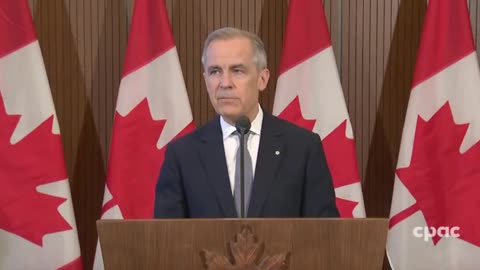
New Canadian Prime Minister Mark Carney Announces ‘Old Relationship with U.S. Is Over’


Published originally on Rumble By The Gateway Pundit on Mar 28, 2025 at 5:00 am EST

Canada’s Provincial Trade Barriers


Posted originally on Mar 28, 2025 by Martin Armstrong 

canada_flag_perspective_800_clr_1522

Several readers were surprised to hear that Canada imposes provincial “tariffs” or trade barriers that simply act as tariffs. Canadian politicians have been promoting a marketing campaign against US-imposed tariffs, but must recognize that their own domestic policy is hurting the Canadian economy in a massive way. Canada’s tariff rate on international imports averages 1.4%, utterly disproportional in comparison to domestic trade barriers. Estimates believe that current domestic trade barriers cost the Canadian economy $32 billion annually, but these interprovincial trade taxes can surpass 14% on domestic goods.

It is quite difficult for provinces to conduct business with one another; in fact, it is often more cost-efficient to work with international companies. Section 121 of the Constitution Act of 1867 implemented by the British Parliament states:

  1. All Articles of the Growth, Produce, or Manufacture of any one of the Provinces shall, from and after the Union, be admitted free into each of the other Provinces.

The March 1867 stated:

  1. All Articles of the Growth, Produce, or Manufacture of any one of the Provinces shall, from and after the Union, be admitted free into each of the other Provinces.

The act should have prevented tariffs between provinces and has been amended, but the current framework fails to prevent excessive regulation.  The Supreme Court attempted to address the matter in 1921 and stated that “free” meant tariff free, but did not address regulation which in itself acts as a tariff. The wording is the only aspect that changed but it is indeed a tariff.

The Canadian Free Trade Agreement (CFTA) of 2017 attempted to reduce trade barriers between provinces but it ultimately failed to address the root issue. Certain sectors were exempt from the rules, but individual provinces could choose to opt out. It is an absolute nightmare for businesses that are often required to obtain licenses, labor certifications, and meet an array of requirements from environmental to health and safety. One province may not meet the requirements, and there are many, of another and it causes mass confusion. Transportation costs alone for interprovincial trade cost $1.6 billion annually, and we all know how well the last administration treated the nation’s truckers.

Prime Minister Mark Carney plans to eliminate these tariffs on July 1, Canada Day, amid widespread nationalist sentiments. Estimates that reducing interprovincial trade barriers could increase GDP by at least 4.4%–a massive uptick as one-third of Canadian trade is interprovincial.