Posted originally on CTH on March 30, 2026 | Sundance
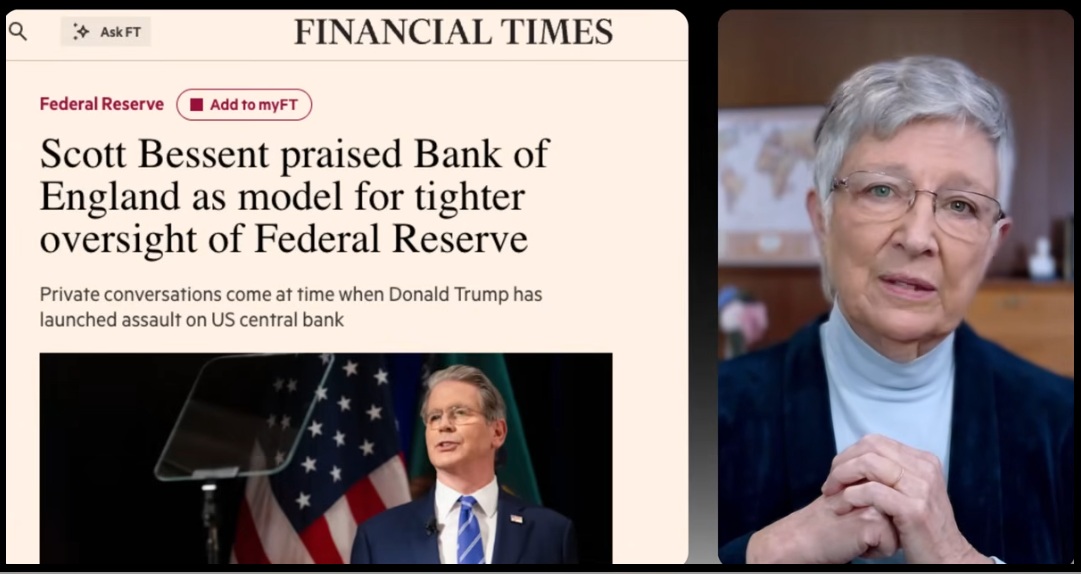
Susan Konkinda from Promethean Action, touches on the recent developments where President Trump and Secretary Bessent have distanced themselves from the old regimes of the former global alliances. Striking out anew, by charting a new course for sovereign nations.
“Susan Kokinda argues that RFK Jr.’s CPAC remarks—praising Trump’s use of power and saying JFK and RFK would back Trump on Iran, Ukraine, and rebuilding the middle class—cut through media narratives and signal a break from post–WWII imperial management. She says Britain and allied institutions are being sidelined, citing Chatham House’s warnings about UK limits and a “Not So Special Relationship” under Trump 2.0, while Pakistan, Saudi Arabia, Turkey, and Egypt convene in Islamabad to open U.S.-Iran dialogue without the UK, EU, or NATO.”
“Trump names Vice President JD Vance lead negotiator, presented as an anti–forever war interlocutor who has challenged Netanyahu’s regime-change expectations. Kokinda links this foreign-policy shift to a broader “American System” agenda: Peter Navarro’s protectionist trade revolution and Treasury Secretary Scott Bessent’s rejection of Bank of England–style Fed models, framing it as American System versus British System.” WATCH:
Posted originally on CTH on March 30, 2026 | Sundance
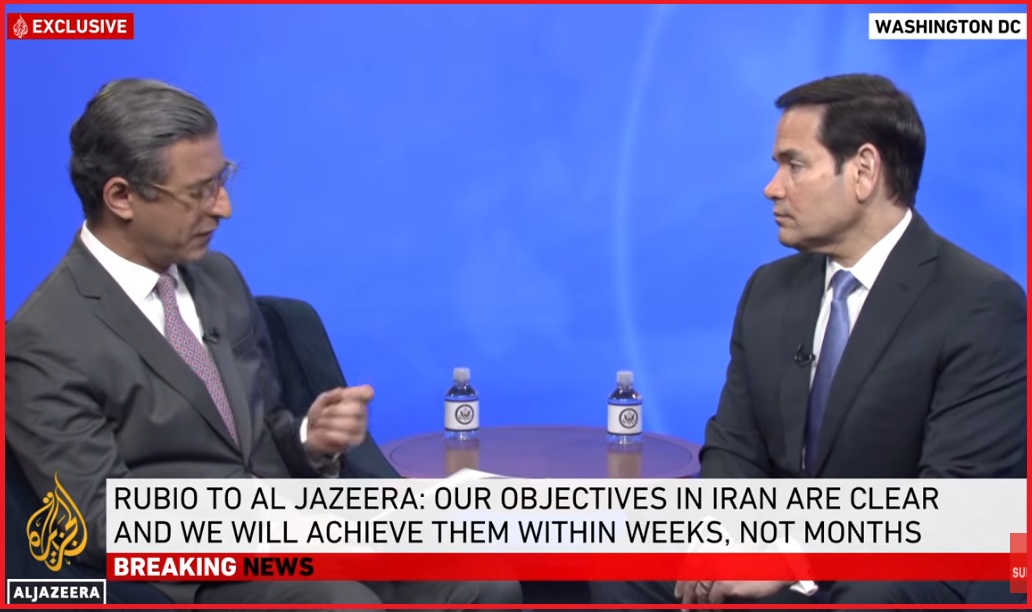
Al Jazeera is essentially the state run media outlet of Qatar. Secretary of State Rubio sat down for a lengthy interview with Al Jazeera that will be shared throughout the Arab world.
“In an exclusive Al Jazeera interview, US Secretary of State Marco Rubio stated that President Trump always prefers diplomacy, with messages and indirect talks ongoing between the US and figures inside Iran. Rubio demanded that Iran abandon all nuclear weapons ambitions, end its missile and drone programmes, and stop sponsoring terrorism across the region. He rejected Iran’s conditions for ending the war — including sovereignty over the Strait of Hormuz and financial compensation — calling the strait demand illegal and a dangerous global precedent. Rubio declared that the strait “will be open one way or another” after US military objectives are achieved, whether through Iranian compliance or an international coalition.”
“He outlined those objectives as the destruction of Iran’s air force (achieved), navy (largely achieved), missile launchers, and weapons factories — all to be completed in weeks, not months. Rubio expressed disappointment with NATO allies like Spain for denying basing rights and airspace, warning that the US would re-examine its NATO commitment. He confirmed the US would welcome regime change in Iran but insisted it was not the official objective of the current military operation. The interview also covered post-Maduro stabilisation in Venezuela and called for serious economic and political reforms in Cuba.”
Posted originally on CTH on March 25, 2026 | Sundance
The rebranded Lyndon LaRouche PAC has another good outline on the new strategic alliances assembled by President Trump as the ongoing conflict with Iran continues.
Susan Kokinda reviews how the United Kingdom and Europe have been sidelined as President Trump directly negotiates with key stakeholders in the middle east and Asia. Kokinda correctly notes the messaging from Russia indicates a strategic awareness that old systems are fracturing and the potential for new strategic alliances is rising.
“Susan Kokinda argues President Trump has opened a new diplomatic space to de-escalate the Iran conflict by working through a regional roster—Saudi Arabia, Egypt, Turkey, Pakistan, Gulf States, and back channels into Iran—while the U.K., EU, and NATO are absent and increasingly irrelevant. Citing reporting that ministers met in Riyadh and that Egypt, Turkey, and Oman carried messages, she says this “Board of Peace” architecture is isolating Iran and weakening its proxies, pointing to Lebanon’s move against Hezbollah, the Palestinian Authority’s condemnation of Iran, and Hamas considering disarmament. Kokinda links Europe’s exclusion to self-inflicted energy weakness from Green and anti-Russia policies, noting rushed LNG moves and a delayed Russian oil ban vote. She concludes Ukraine’s outlook darkens as Europe and Britain lack leverage, highlighting Zelenskyy’s scramble for support in London and Washington.” WATCH:
Posted originally on CTH on March 25, 2026 | Sundance
This is good news from the standpoint of us wanting to see President Trump continue to make MAGAnomic progress on trade as well as geopolitical alliances.
It will be a very interesting summit against the backdrop of Venezuela, Iran, oil/gas energy shifts, the previous Alaska summit with Russian Federation President Vladimir Putin, the renegotiation of the USMCA and the Chinese auto deal in Canada…
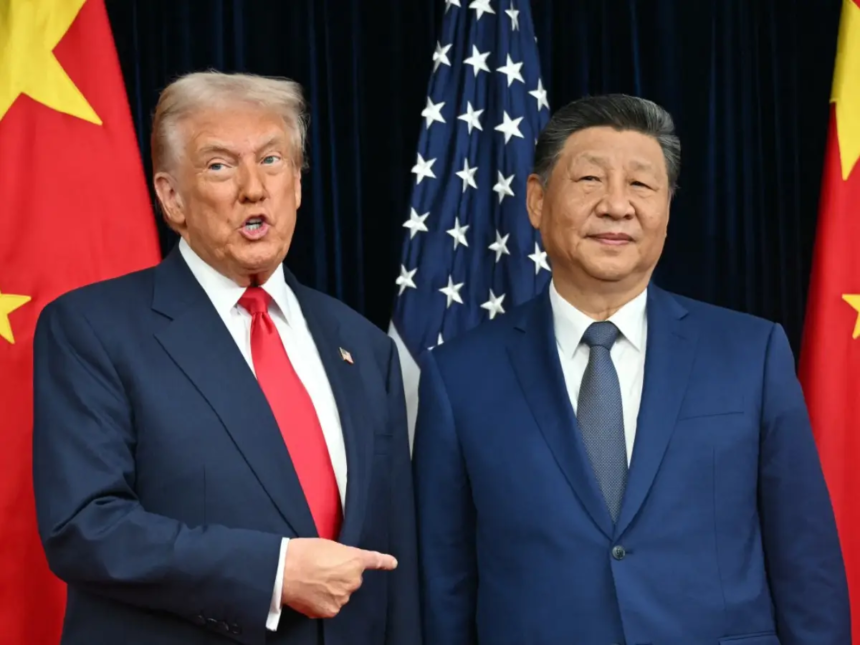
There are a lot of important topics within a Trump-Xi summit.
PRESIDENT TRUMP – “My meeting with the Highly Respected President of China, President Xi Jinping, which was originally postponed due to our Military operation in Iran, has been rescheduled, and will take place in Beijing on May 14th and 15th.”
“First Lady Melania and I will also host President Xi and Madame Peng for a reciprocal visit in Washington, D.C., at a later date, this year. Our Representatives are finalizing preparations for these Historic Visits. I look very much forward to spending time with President Xi in what will be, I am sure, a Monumental Event. Thank you for your attention to this matter!” ~ President DONALD J. TRUMP
Posted originally on CTH on March 25, 2026 | Sundance
The Trump curse is real.
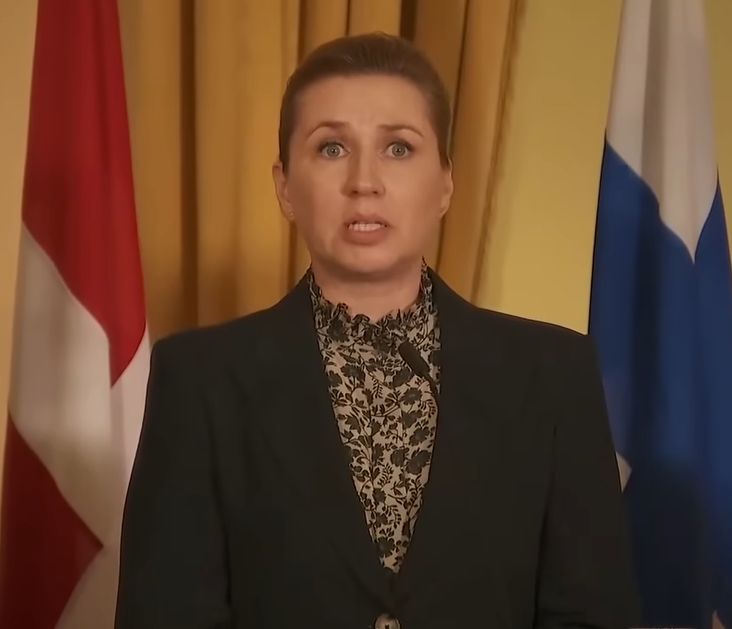
With what she perceived as strong domestic support following her confrontation with President Trump, Danish Prime Minister Mette Frederiksen decided to trigger an early election. Frederiksen thought the timing was perfect; however, it backfired.
Mette Frederiksen’s political party suffered the biggest ruling party election defeat in 120+ years, and her coalition of left-wing parties now lost their majority.
As a result of the election, Prime Minister Mette Frederiksen has resigned.
COPENHAGEN, March 25 (Reuters) – Danish Prime Minister Mette Frederiksen on Wednesday submitted her government’s resignation to the king after her three-party coalition suffered a large defeat in a general election, the royal palace said in a statement.
Parties are set to launch potentially tough and long negotiations to determine whether the next government will be formed by Frederiksen or another party leader. (link)
Via Washington Examiner – “[…] The Social Democrats’ left-wing bloc walked away as the ostensible winners of the Tuesday general election with 84 seats in the nation’s 179-seat parliament. But it was far from a majority, with their rival right-wing bloc securing 77 seats and the centrist Moderate Party walking away with 14.
[…] The Social Democrats remain the single largest party in the legislature with 38 seats and 21.9% of the vote, but it’s a hollow victory for the long-dominating juggernaut of Danish politics. The last time the Social Democrats did worse was in 1903 with 20.4%.
The Royal Palace confirmed on Wednesday that Frederiksen resigned and advised the sovereign to hold meetings with the leaders of the nation’s 12 major political parties — standard procedure after an election shifts the balance of power in the parliament. (read more)
The European Union didn’t think they needed to provide any support to their socialist candidate Mette Frederiksen; they were certain all the Danes would rally in support. Major facepalm.
Domestic issues dominated the electorate, including immigration, the cost of living, welfare, energy policy and agriculture.
To understand just how filled with hubris they were going into the election, watch this video (prompted):
.
🇩🇰The ‘far-right’ Danish People’s Party have QUADRUPLED their vote share in today’s General Election in Denmark, despite polling lowly.
They advocate for closing Denmark’s borders, limiting asylum and deporting refugees. pic.twitter.com/o2yqaOsL6L
Posted originally on CTH on March 23, 2026 | Sundance
This is one of those small stories that carries the potential for significant domestic economic gains.
As many are aware, the U.S. imports a lot of softwood lumber from Canada. Combined with the energy products the lumber sector represents the top two U.S. imports from Canada. With Venezuela now potentially positioned to replace the former, USDA Rural Development now stimulates domestic lumber development potentially positioned to replace the latter.
Taken as a whole, these two approaches significantly weaken the Canadian leverage that could be deployed in a Free Trade Agreement negotiation. Assuming, of course, the USMCA is dissolved in favor of two bilateral FTAs.
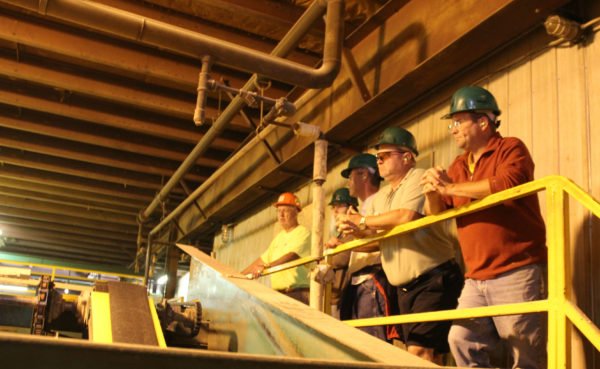
USDA Press Release – At the Advanced Bioeconomy Leadership Conference today, U.S. Department of Agriculture Administrator for the Rural Business and Cooperative Service J.R. Claeys announced the U.S. Department of Agriculture is guaranteeing $115.2 million across eight states through the Timber Production Expansion Guaranteed Loan Program (TPEP) to ensure sawmills and other wood processing facilities have the necessary funding to establish, reopen, expand, or improve their operations.
Today’s announcement includes recipients in the states of California, Idaho, Kansas, Louisiana, Maine, Oklahoma, Virginia, and Wisconsin.
These investments represent a commitment by the Trump Administration to expand American timber production by 25%, reduce wildfire risk, and save American lives and communities by strengthening domestic wood processing capacity.
“We cannot allow wildfires to devastate and destroy our rural communities,” said Administrator Claeys. “That’s why the USDA is taking bold action to stop the destruction of our forestlands by investing in sawmills and wood processing facilities that support sustainable timber harvesting. These actions strengthen local businesses, support rural prosperity, and create jobs for hardworking Americans.” (source)
This is not to say that expanded U.S. sawmill production would completely eliminate Canadian softwood lumber imports. However, it does create inventory and a stronger domestic supply chain that would diminish any applied leverage that Canadian trade negotiators would seek to deploy.
Without pipelines flowing East or West, Canada is stuck pumping their heavy oil south for processing. Nothing about that is likely to change in the next few years, even if Canada abandoned their climate change policy (highly unlikely).
Then comes the cross-border auto manufacturing industry, and the realization that -sans USMCA- both U.S. and Japanese automakers are likely to stick with the manufacturing center where their greatest customer base exists, the USA.
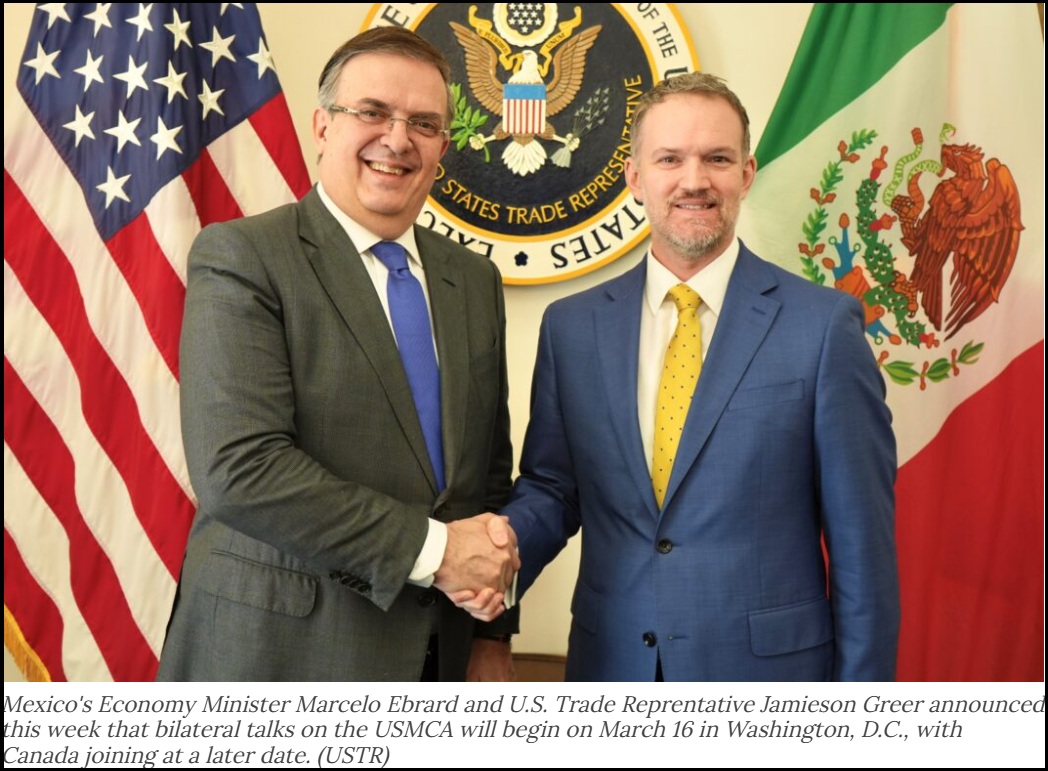
Now overlay softwood lumber, and you can see the top three economic dependencies of the U.S and Canada are slowly being uncoupled, simultaneous with the trilateral USMCA provisions being reviewed starting with the U.S. and Mexico having direct conversations.
Posted originally on CTH on March 23, 2026 | Sundance
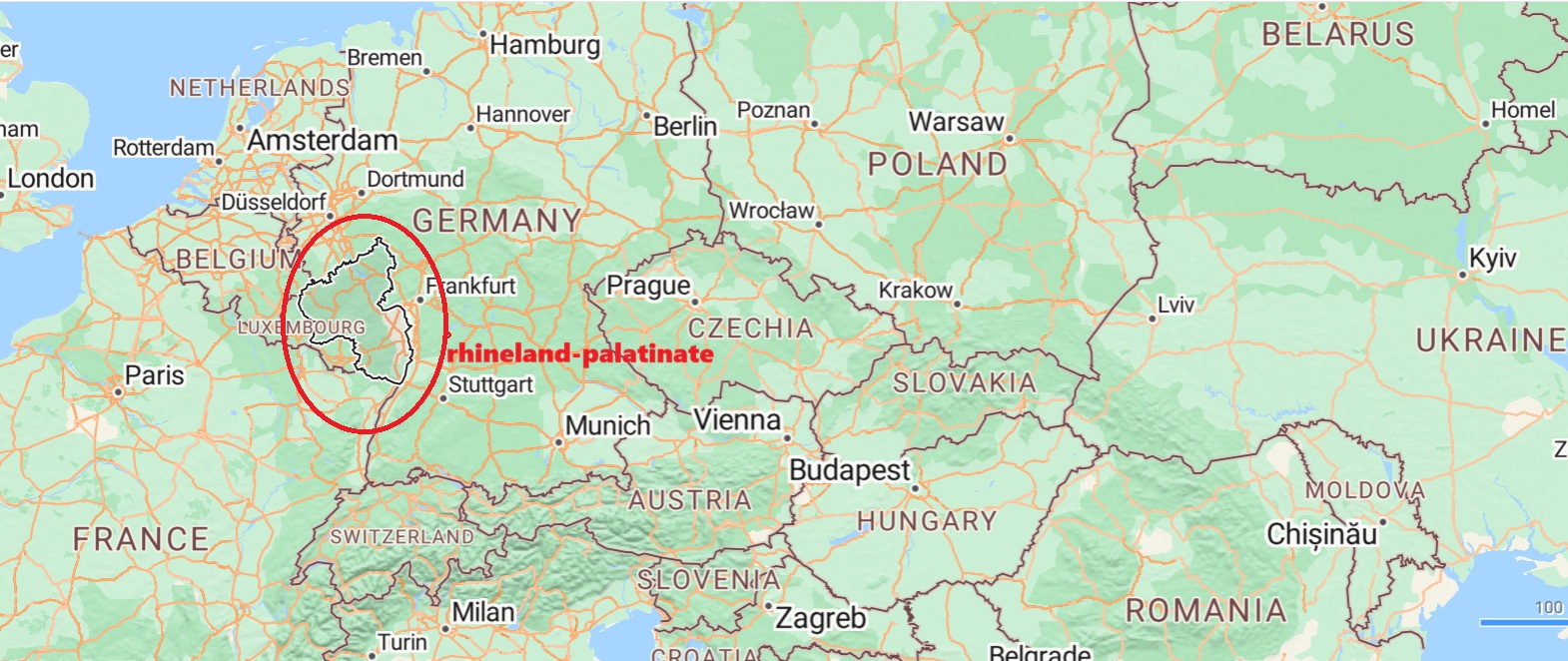
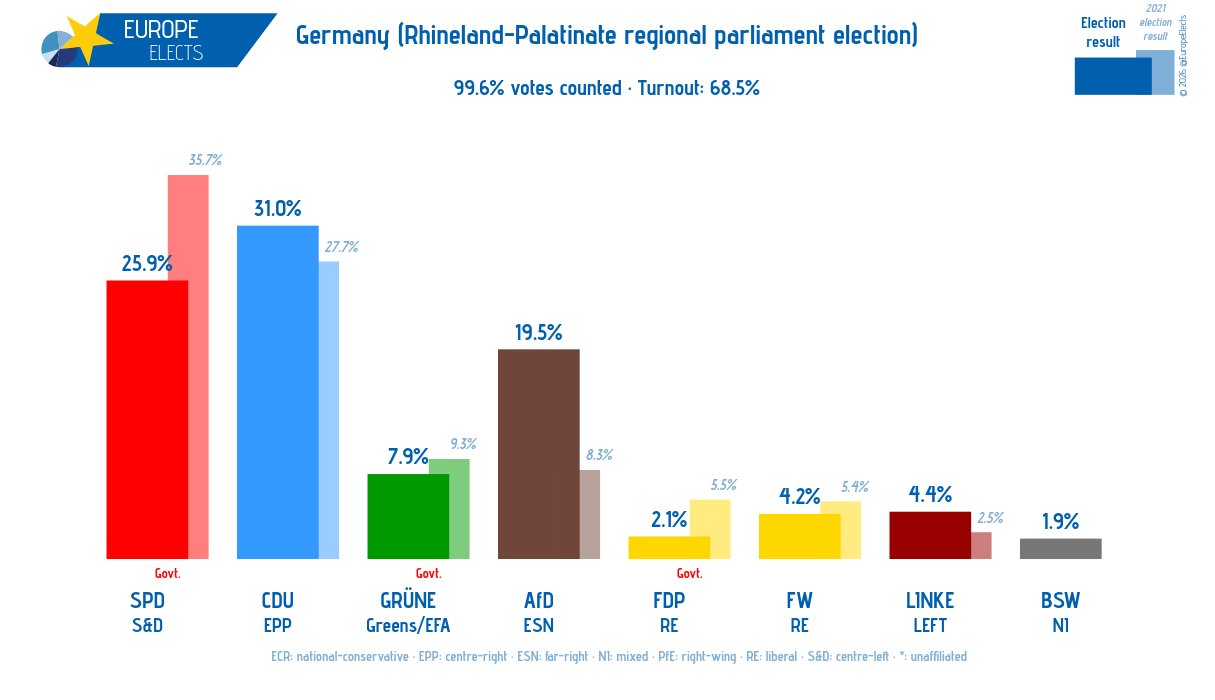
Within Germany the Rhineland-Palatinate regional parliament electionwas held yesterday. The region is the heart of the German industrial sector and home to the massively important auto-manufacturing sector.
Chancellor Friedrich Merz’s conservative party the Christian Democratic Union (CDU) won the biggest portion of the election, defeating the Social Democratic Party (SPD) who lost ground in the western area bordering France. However, the biggest electoral gains were for the Alternative for Germany (AfD) party, with gains that more than doubled its previous vote share.
There is intense interest throughout Europe on the ideological shift in political sentiment mostly driven by economic concerns as well as rising nationalistic sentiment against the elitist minds in Brussels. Essentially those being ‘ruled’ are increasingly fed-up by those doing the ‘ruling.’ The AfD party is akin to the pragmatic MAGA base more focused on economic nationalism than all the nonsense associated with multiculturalism, green energy programs and terrible immigration policy.
The ideological battle within Europe is ongoing, with some gains by nationalist parties over the collective mindset of the European elites. However, the European Commission doesn’t just have a finger on the scales, they have full control over the mechanics of the elections themselves. Yes, AfD more than doubled their share of votes to 20%, but CDU at 31% and the socialists at 26% is akin to mainstream corporate republicans and progressives respectively controlling 57% of the support base.
The biggest election to be held in Europe in the last decade or more, is going to be the election in Hungary which takes place April 12, next month.
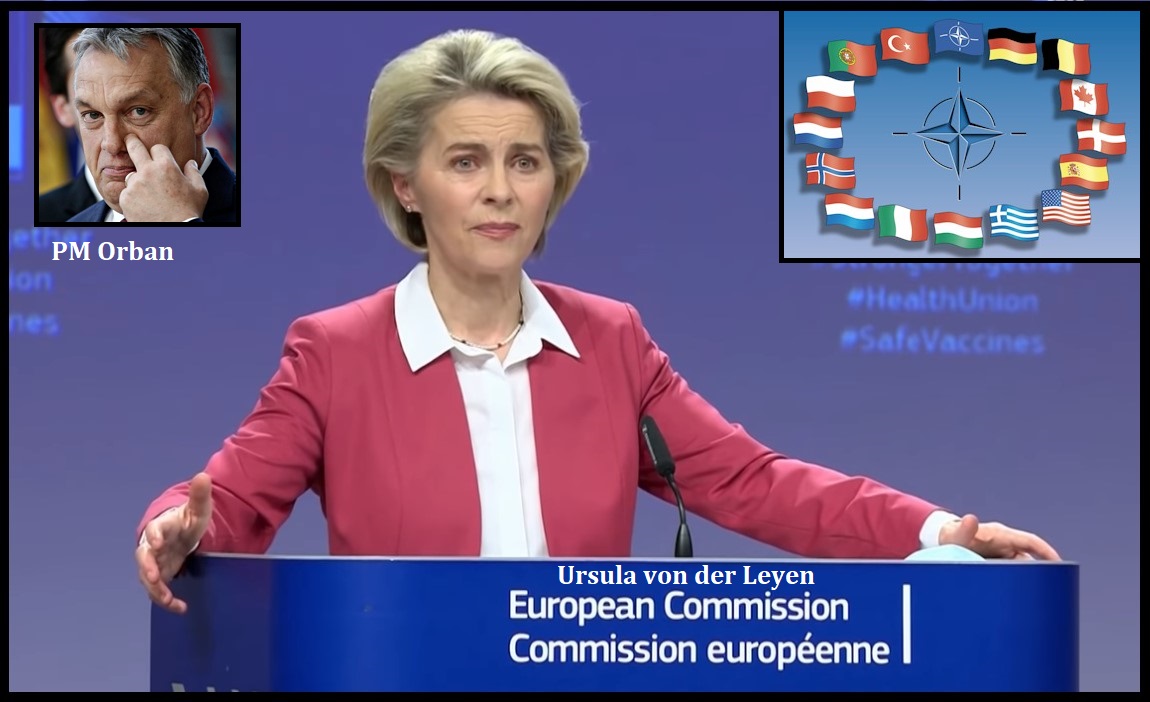
The European Commission is going all-in to try and manipulate the Hungarian voting base against Prime Minister Viktor Orban and the Fidesz party who is/are viewed by Brussels as standing in the way of their scheme to fund the ongoing war in Ukraine.
Orban’s reelection campaign has been under relentless assaults from restrictions on EU social media, to outright propaganda and financing for his opposition Péter Magyar and the Tisza party.
Prime Minister Orban is strongly supported by President Donald Trump and the Trump administration; however, the scale of opposition to both of them is intense.
Former leftist USAID Administrator Samantha Power spent time inside Hungary organizing the Tisza party to oppose Viktor Orban, and the totality of the European opposition to Orban cannot be underestimated.
Every element of every political construct within the Europe Union is aligned to try and defeat Orban and the Fidesz party. Additionally, the government of Ukraine is actively working all intelligence angles to defeat Orban due to the $90 billion EU loan scheme that Hungary is blocking.
Prime Minister Viktor Orban winning reelection this time in 2026 would be akin to Trump’s victory in 2016.
Do not underestimate the power of the U.K/European control system and the alignment of all their collective interests. Chancellor Friedrich Merz (Germany), President Emmanuel Macron (France), Prime Minister Keir Starmer (UK) along with the governing elites of Denmark, Finland, Sweden, Norway, Austria, Netherlands and many more, have all publicly taken positions against Hungary.
As we saw in Romania, Moldova and Georgia, it is not simply a matter of what the Hungarian voters want that will determine the outcome of the Hungarian election, the European Commission has many tools and techniques to shift the outcome.
This single small Hungarian election is the most critical election for the EU since Brexit.
Posted originally on CTH on March 23, 2026 | Sundance
The noise can seem overwhelming at times. There are those who say the U.S-Israeli joint military operation against Iran is a catastrophic miscalculation. There are those who say the operation is strategically succeeding. Many interests even appear to be cheering for the military operation to fail; others want the operation to escalate.
It is difficult to find pragmatic facts about the events without shaped information to promote specific narratives. However, accepting there is a psychological component to the information flow, it seems like the best option to listen to the experts who are conducting the operation.
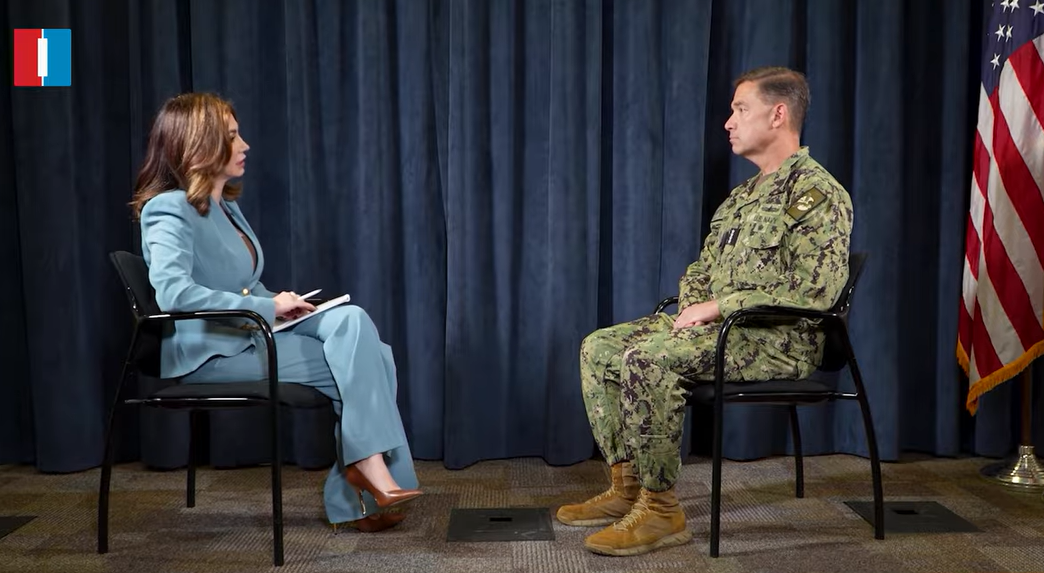
Giving his first interview since Operation Epic Fury began, CENTCOM Commander Bradley Cooper outlines the current status of the conflict and the elements he notes are of most importance. According to Adm. Cooper, Iran is “operating in a sign of desperation… In the last couple of weeks, they’ve attacked civilian targets very deliberately, more than 300 times.”
“The Strait of Hormuz is physically open to transit,” he said. “The reason ships are not transiting right now is because the Islamic Republic is shooting at them with drones and missiles.” WATCH:
“I’d like everyone to note is I’ve watched this over the last week, this extraordinary contrast between the comfort and protection that you’re seeing with the senior generals in the Islamic Republic, at least those that are still alive, who are up in deep bunkers and facilities in and around Tehran. And contrast that with the soldiers who are down on the ground who are unprotected. The generals are protected. The soldiers are not protected.”
“They’re launching missiles and drones from populated areas and you need to stay inside for right now,” he said. “There will be a clear signal at some point, as the President has indicated, for you to be able to come out.”
Posted originally on CTH on March 22, 2026 | Sundance
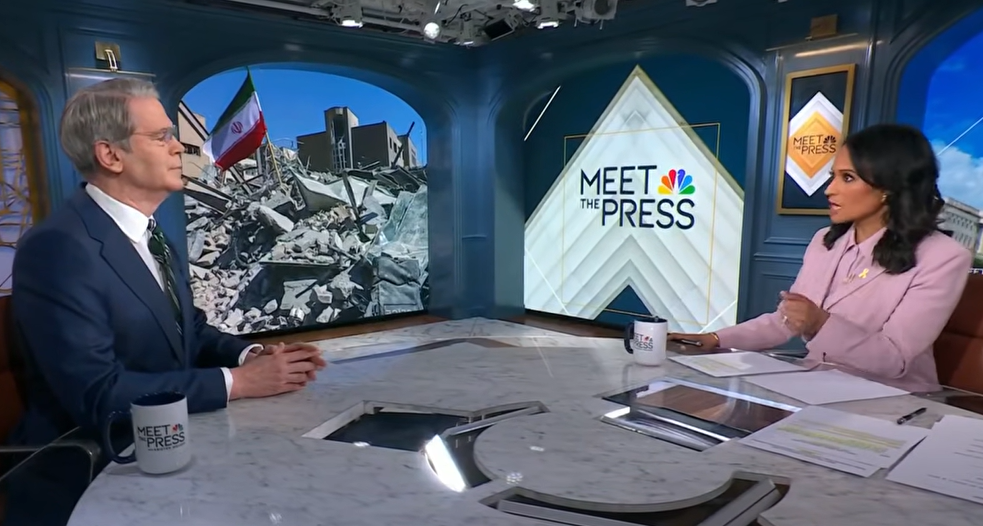
Treasury Secretary Scott Bessent appears on NBC News to outline the purpose and intents of the lifting sanctions as it pertains to Russian and Iranian oil shipments currently in transit. The video and transcript below:
[Transcript] – KRISTEN WELKER: And joining me now is treasury secretary Scott Bessent. Secretary Bessent, welcome back to Meet the Press.
SEC. SCOTT BESSENT: Kristen, good morning.
KRISTEN WELKER: Good morning. Good to have you back. I want to start with the latest of what we’re hearing from President Trump. Let me read you what he posted overnight. He says, “If Iran doesn’t fully open, without threat, the Strait of Hormuz within 48 hours from this exact point in time, the United States of America will hit and obliterate their various power plants, starting with the biggest one first.” Has the president changed his mind about winding down the war, as he said a day earlier, and instead plans to escalate?
SEC. SCOTT BESSENT: I think he said he could wind the war down at any time he wants. And, Kristen, this is the only language the Iranians understand.
KRISTEN WELKER: But this seems to be an escalation, a threat of escalation, and it seems to run counter to his statement that he, in fact, wants to wind down the war.
SEC. SCOTT BESSENT: Again, Kristen, the president’s been very clear from the beginning that the goals are: destroy the Iranian air force and the navy, to completely demolish their missile capabilities, demolish their ability to replenish those capabilities, make sure the Iranians cannot have a nuclear weapon and stop their ability to project power internationally. And the president will take whatever steps it takes to achieve those goals.
KRISTEN WELKER:
Well, you know, I was on the phone with President Trump a week ago. He told me allies were on the way to help secure the Strait of Hormuz. Has the Trump administration abandoned that strategy and now chosen to go it alone?
SEC. SCOTT BESSENT:
Again, what we have done there has been a campaign to -using military assets to soften up the Iranian fortifications along the strait. That’s going to continue until they are completely demolished. And, Kristen, let me tell you, whether it’s this network or the mainstream press, the American people do not have good framing what is going on here. If you were to read what is happening, and I’m sure when Senator Murphy is on, you know, he has come out and said we are losing the war. That is wrong. We have demolished the Iranian capabilities. Their air force is completely destroyed, navy destroyed. And every day we are taking out their missiles, their missile systems, and the factories that build those missiles. And now our- General Caine, Secretary Hegseth, are leading a campaign to destroy all the fortifications along the straits of Hormuz.
KRISTEN WELKER:
Just to put a fine point on this though, is the president in the process of winding down this war or escalating the conflict?
SEC. SCOTT BESSENT:
Again, they are not mutually exclusive. Sometimes you have to escalate to de-escalate, Kristen.
KRISTEN WELKER:
Okay. NBC News is reporting that President Trump is considering sending troops into Iran. Will the administration use troops to secure the Strait of Hormuz or for any other reason, Mr. Secretary?
SEC. SCOTT BESSENT:
Again, as President Trump said during the press break yesterday when he was going out to Marine One, he’s not going to give away what we’re going to do. As President Trump always does, he’s leaving all options on, on the table. We had a very successful bombing campaign against the military installations, Kharg Island, the nexus for all the Iranian oil supply. You know, what could happen with Kharg Island? We’ll see. And again, just to be clear, the command and control system of the Iranian regime is in chaos. This is Hitler’s bunker. Hitler’s dead. Himmler’s dead. Göring is dead. The-most of what you’re seeing are lone wolf activities. The mid-range ICBM that was shot off, these two missiles yesterday, that’s out of desperation, Kristen.
KRISTEN WELKER:
You bring up Kharg Island. I want to ask you about your statement. You said it could become a U.S. asset. What exactly does that mean? Could U.S. troops go into Kharg Island to secure it?
SEC. SCOTT BESSENT:
Again, as I said, all options are on the table.
KRISTEN WELKER:
Okay. So, that’s a possibility.
SEC. SCOTT BESSENT:
All options are on the table.
KRISTEN WELKER:
All right. Let me talk about your announcement this past week. On Friday, the Treasury Department lifted sanctions on Iranian oil stored on tankers, a move that would effectively allow Iran to get more than $14 billion of oil revenue.
SEC. SCOTT BESSENT: I, I –
KRISTEN WELKER: Hold on. Why is the U.S. helping to fund a country that it’s currently at war with, Mr. Secretary–
SEC. SCOTT BESSENT:
Again, Kristen, why don’t we have good facts here? That Iranian oil was always going to be sold to the Chinese. It was going to be sold at a discount. So, which, which is better, Kristen? The uh, which is better? If oil prices spike to $150 and they were getting 70% of that? Or oil prices below $100? It’s better to have them where they are now. And to be clear, we had always planned for this contingency. About 140 million barrels are out on the water. In essence, we are Jiu-Jitsuing the Iranians. We are using their own oil against them. We have a much better line of sight, to be clear, at Treasury, when this oil goes to — if it goes to Indonesia, if it goes to Japan, if it goes to Korea, we have a much better line of sight and are able to block accounts that the oil goes into. When it goes into China it completely gets recycled. So, to be clear, that 14 billion number is grossly overstated.
KRISTEN WELKER:
Let me unpack what you’re just saying. First of all, how much is it? And second of all, I don’t hear you disputing that Iran will get some of the money.
SEC. SCOTT BESSENT:
Iran alway–already gets a huge amount of the money because Iran is the largest sponsor of state terrorism and China has been funding them.
KRISTEN WELKER:
So was always part of the plan to un-sanction Iranian oil?
SEC. SCOTT BESSENT:
Again, we unsanctioned the –at Treasury we plan for all contingencies. We have break-the-glass plans. And to be able — this water — this oil is floating out in Asia, and it is mostly our Asian allies — the U.S. gets virtually no oil from the Gulf. We are energy sufficient. So, when we un-sanction this, rather than the oil going to China, it can go to Japan. It can go to Korea. It can go to Indonesia. It can go to Malaysia –
KRISTEN WELKER:
And it can go to Iran too. I mean, isn’t the point that the sanctions were in place to prevent Iran from getting any of the money. They will have access to some of the –
SEC. SCOTT BESSENT:
No, again–
KRISTEN WELKER:
– money now –
SEC. SCOTT BESSENT:
– Kristen, you’re missing the point. So, please listen to me. They were getting it from China anyway.
KRISTEN WELKER:
Alright. Let me talk about the real-world impact of this because you’re talking about 140 million barrels of Iranian oil, and that’s just a little bit more than what the world uses in one day. How much can that really change prices here at home –
Talk to consumers. How much will it change prices here at home?
SEC. SCOTT BESSENT:
Let me explain. 140 million barrels — about 20 million barrels a day — comes out of the Gulf. About five million has been the uh, repurposed by the Saudis, by the UAE. So, we’re at a 15 deficit. About 1.5 is Iranian oil that comes out. So, we are at between a 10 and 14 million deficit on a daily basis. So, the- if you think about 140 million barrels, that’s between 10 days and two weeks of supply. And one of the reasons, one of the reasons that prices in the U.S. of West Texas crude are below $100 — and we have not seen this massive spike as we did during the beginning of Russia/Ukraine — is because we are well supplied in the market, whether it is the Russian oil, whether it is the Iranian oil, or it is the largest the SPR release in history done by a coalition of 32 countries, 400 million barrels.
KRISTEN WELKER:
Alright. Let’s talk about the Russian oil, which you just raised. The administration did ease oil sanctions on Russia earlier this month. You had initially defended imposing those sanctions, calling Russian exports, quote, “Oil that funds the Russian war machine.” If the point of the sanctions was to stop funding the Russian war machine, why is the administration effectively rewarding Russia now?
SEC. SCOTT BESSENT:
Again, Kristen, you’re missing the point. Which, which is better? Does Russia get more money if oil goes to $150 and they get 70% of that — that’s $105 — or if oil stays below $100, so they’re getting less money? Our analysis shows-our analysis shows that the maximum extra amount that Russia could get would be $2 billion, which is which is one day of the Russian Federation’s budget.
KRISTEN WELKER:
Understood. But they wouldn’t have gotten any of –
SEC. SCOTT BESSENT:
No, no, no–
KRISTEN WELKER:
– that with the sanctions in place –
SEC. SCOTT BESSENT:
Kristen. Kristen, I don’t know, whoever’s –
KRISTEN WELKER:
But would they have gotten –
SEC. SCOTT BESSENT:
No, no, no –
KRISTEN WELKER:
– any of that in place –
SEC. SCOTT BESSENT:
Kristen, whoever does your research, you should get rid of because they were getting it. It was going into China. China was buying over 90% of the Russian oil, and it was –
KRISTEN WELKER:
–But what’s the point of sanctions if not to punish Russia, if not to punish countries?
SEC. SCOTT BESSENT:
Again, the uh, it–we had no ability to do that to China — if China wants to be a bad actor. But we were substantially able to degrade their exports. Their exports have dropped about 25% when the rest of the world isn’t buying it. So, exports are down, but there was a lifeline into China. Now we’ve opened up that to everyone else.
KRISTEN WELKER:
Okay. Just to be clear though. You did defend imposing those sanctions in the first place. Let me ask –
SEC. SCOTT BESSENT:
Just to be clear, it is a maximum of $2 billion. So let’s have good framing on this.
KRISTEN WELKER:
Okay. Let’s talk about the overall cost of this war. The administration’s asking Congress — poised to an additional $200 billion in additional funding for this war. Some Republicans who could cast key votes on this are expressing hesitation or outright opposition. Take a listen to them and then I want to get your reaction on the other side.
[BEGIN TAPE]
FEMALE REPORTER:
Are there any initial red flags for you?
SEN. RICK SCOTT:
No — maybe, it’s a lot of money. I’ll go through it, see what they need.
REP. LAUREN BOEBERT:
I am a no. I’ve already told leadership I am a no on any war supplementals. I am so tired of spending money elsewhere.
[END TAPE]
KRISTEN WELKER:
Should President Trump have gone to Congress on the front end of this war if he was going to ask for Congress’s help now for more funding?
SEC. SCOTT BESSENT:
Again, President Trump was within his authorities under the War Powers Act to initiate this action. And we, we actually now we have plenty of money to fund this war. What we are doing is this is supplemental. President Trump has built up the military, as he did in his first term, as he is now doing in his second term, and he wants to make sure that the military is well-supplied going forward.
KRISTEN WELKER:
Would the administration ever raise taxes in order to fund this war?
SEC. SCOTT BESSENT:
Again, Kristen, terrible framing. I think that the –
KRISTEN WELKER:
Well, it’s just a que– it’s a simple question that I think a lot of people have –
SEC. SCOTT BESSENT:
It’s a ridiculous question.
KRISTEN WELKER:
Well, but –Can you answer it?
SEC. SCOTT BESSENT:
Why would we do that? That the, that we-we have plenty. We have a trillion dollars in this year’s budget for the military. And President Trump, even before the conflict started, had said that he would like to further build out the military.
KRISTEN WELKER:
So, just–is raising taxes under consideration at all –
SEC. SCOTT BESSENT:
Not —
KRISTEN WELKER:
– if you’re saying you have plenty of money?
SEC. SCOTT BESSENT:
Not at all.
KRISTEN WELKER:
Okay. Let’s turn to how all of this is impacting consumers. United Airlines CEO Scott Kirby is now planning, he says, to cut flights and is planning for oil to go as high as $175 a barrel with prices potentially staying above $100 a barrel through 2027. This is according to him. All of this could potentially mean higher prices for consumers. What do you say to Americans who feel they were promised lower costs and now they’re getting the opposite?
SEC. SCOTT BESSENT:
Uh, Kristen, I think the American people understand that any 50 — I’m not going to put a time on it but let’s just pick 50 days of temporary elevated prices, prices will come off on the other side, for 50 years of not having an Iranian regime with a nuclear weapon. The American people are beginning to understand, thanks to President Trump, that there is no prosperity without security.
KRISTEN WELKER:
I heard you say 50 days. Are you saying that prices could start to come down –
SEC. SCOTT BESSENT:
No, no, no, no –
KRISTEN WELKER:
What’s the time frame –
SEC. SCOTT BESSENT:
I was just picking a point. I don’t know whether it’s going to be 30 days. I don’t know whether it’s going to be 50 days. I don’t know whether it’s going to be 100 days. But to have 50 years the, uh, of peace in the Middle East and know that the Iranian regime is defanged because, Kristen, what we had before was the illusion of security. Imagine this regime if they had had another year or two years to build out their missile capabilities. They would’ve built a shield around themselves and it would’ve been impossible to prevent them from getting a nuclear weapon.
KRISTEN WELKER:
All right. I want to ask you on a different topic about a post by President Trump from yesterday responding to the death of former special counsel Robert Mueller. He posted this quote, “Robert Mueller just died. Good, I’m glad he’s dead. He can no longer hurt innocent people!” Do you think it’s appropriate for the president of the United States to celebrate the death of an American citizen, someone who’s a Bronze Star, Purple Heart recipient and who served in Vietnam?
SEC. SCOTT BESSENT:
Kristen, I was with the president in the green room at Davos and there was a video playing of the — what may have been an illegal raid on his home at Mar-a-Lago. They are going through his wife’s wardrobe. And I watched the look in his eye, and I think that neither one of us can understand what has been done to the president and to his family.
KRISTEN WELKER:
But to the question of the president’s post, I mean, Robert Mueller didn’t order that raid. Is it appropriate for the president to celebrate the death of any American citizen –
SEC. SCOTT BESSENT:
Again —
KRISTEN WELKER:
– Mr. Secretary –
SEC. SCOTT BESSENT:
I think that given what has been done to President Trump and his family it is impossible for either of us to understand what he has been through.
KRISTEN WELKER:
So, you don’t think that there’s anything wrong with the post, saying, “Good. Robert Mueller’s dead”
SEC. SCOTT BESSENT:
Again, I think that we should all have a little empathy for what has been done to him and his family.
KRISTEN WELKER:
All right. Treasury Secretary Scott Bessent, thank you as always for being here. Really appreciate it.
Posted originally on CTH on March 19, 2026 | Sundance
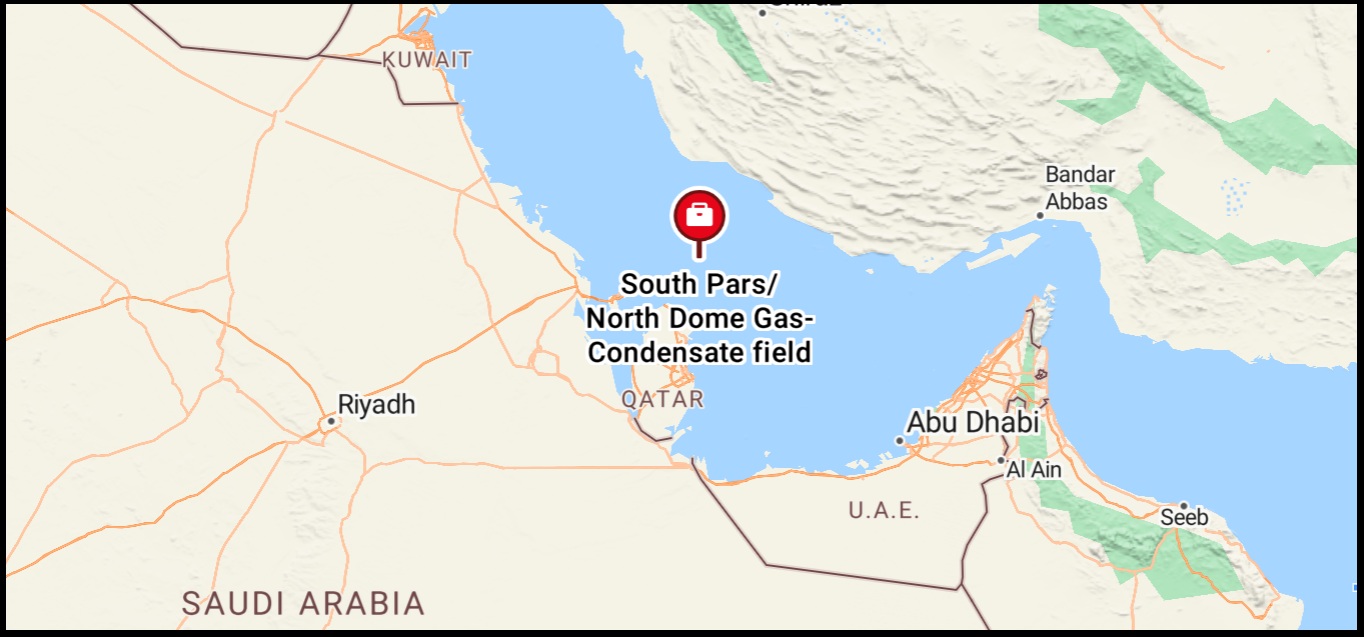
The South Pars/North Dome field is a natural-gas condensate field located in the Persian Gulf. It is by far the world’s largest natural gas field, with ownership of the field shared between Iran and Qatar. According to the International Energy Agency, the field holds an estimated 1,800 trillion cubic feet of in-site natural gas.
President Trump is not happy about Israel’s unilateral decision to strike at the Pars gas field; however, pay attention to what Trump diplomatically describes as the motive:
[TRUTH SOCIAL] – “Israel, out of anger for what has taken place in the Middle East, has violently lashed out at a major facility known as South Pars Gas Field in Iran. A relatively small section of the whole has been hit. The United States knew nothing about this particular attack, and the country of Qatar was in no way, shape, or form, involved with it, nor did it have any idea that it was going to happen.
Unfortunately, Iran did not know this, or any of the pertinent facts pertaining to the South Pars attack, and unjustifiably and unfairly attacked a portion of Qatar’s LNG Gas facility.”
“NO MORE ATTACKS WILL BE MADE BY ISRAEL pertaining to this extremely important and valuable South Pars Field unless Iran unwisely decides to attack a very innocent, in this case, Qatar – In which instance the United States of America, with or without the help or consent of Israel, will massively blow up the entirety of the South Pars Gas Field at an amount of strength and power that Iran has never seen or witnessed before.
I do not want to authorize this level of violence and destruction because of the long-term implications that it will have on the future of Iran, but if Qatar’s LNG is again attacked, I will not hesitate to do so. Thank you for your attention to this matter.”
The joint economic relationship over the Pars gas field is part of the connective tissue between Iran and Qatar and underpins why Qatar has always been an intermediary for all issues of deconfliction that surround the U.S and Iran.
Factually Qatar was always the mediator, and within that mediation relationship the USA used Qatar as the bank to receive the confiscated funds Obama delivered when he lifted sanctions. There are hundreds of examples of the USA using Qatar as the intermediary for Iran policy, just as there are hundreds of citations and examples available for Qatar supporting the Muslim Brotherhood.
It is only recently, very recently, like only in the era of Donald Trump as U.S. President, when Qatar started pulling away from a very friendly relationship with Iran. So recently, that for the past 15-months, since long before it even made sense, CTH has been calling attention to this weird Qatar -vs- Israel division dynamic within USA domestic politics.
Then this happens….
The United States and Israel are working together on the targeting and military objectives of Operation Epic Fury. But, for some unknown reason the United States did not know Israel was going to strike the Qatar Pars gas field? Interesting.
President Trump assigns the motive for the Israeli attack as “out of anger for what has taken place in the Middle East.” However, Israel has another, perhaps opportunistic motive, worth billions.
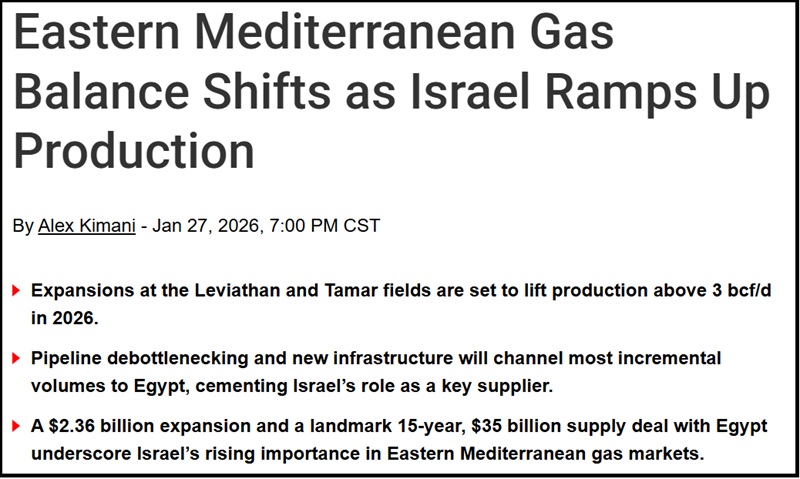
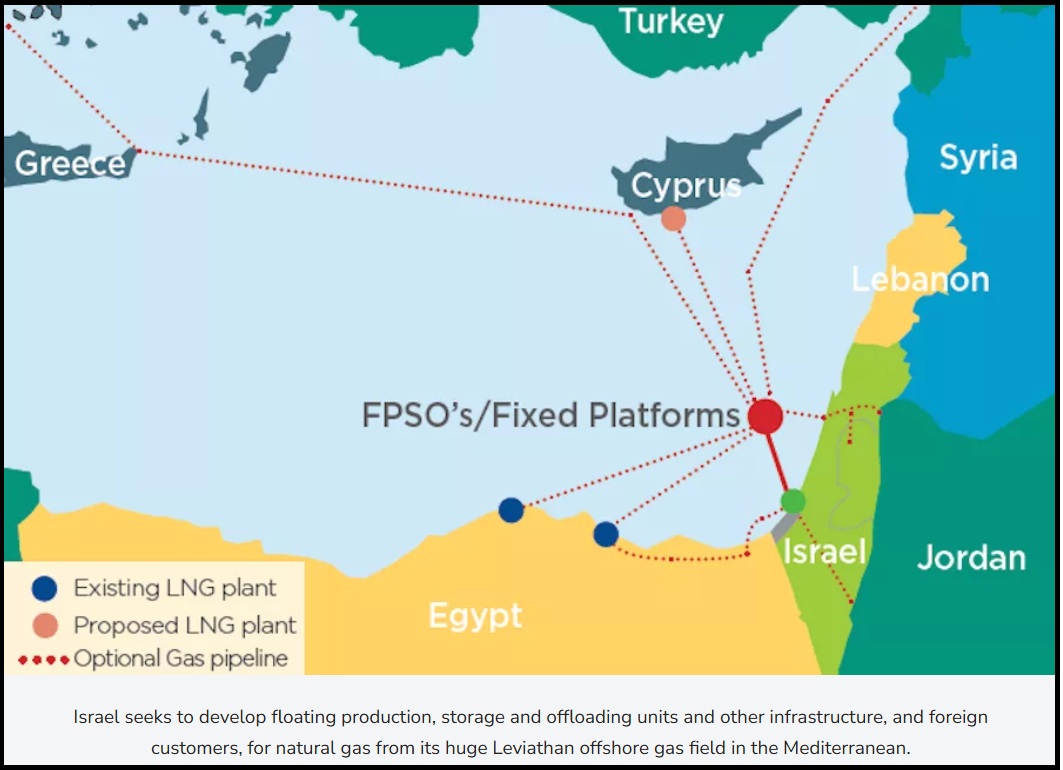
Israel is set to achieve record natural gas production in 2026, with expansion projects in the Leviathan and Tamar fields expected to push total output above 3 billion cubic feet per day (cfd) for the first time ever. According to the experts, the Chevron (NYSE:CVX) operated fields are expected to add a combined 600 million cfd in the coming months, with the bulk of the extra gas piped to Egypt after the removal of bottlenecks in the export pipeline network. Israel’s gas output in 2025 is estimated to have dropped slightly from a record 2.587bn cfd achieved in 2024 as fields were shut-in during Israel’s conflict with Iran in June.
Chevron and its partners NewMed Energy (OTCPK:DKDRF) and Ratio Energies (OTCMKTS:RTEXF) confirmed a $2.36 billion Final Investment Decision (FID) in January 2026 to expand the Leviathan field, increasing production capacity from 12 bcm to roughly 21 bcm annually. The expansion involves drilling three additional offshore wells, installing new subsea infrastructure and enhancing the platform’s processing capabilities. The expansion aims to significantly increase natural gas exports to Egypt and Jordan. The companies managed to boost production at the Tamar field to increase capacity from approximately 1.1 billion cubic feet per day (bcf/d) to 1.6 bcf/d in 2025.
Debottlenecking of the export pipeline network is enabling higher volumes to reach Egypt, helping to fill their domestic supply gapsKey projects, including upgrading the Ashdod-Ashkelon pipeline and constructing the Nitzana pipeline (expected to be operational by 2028). The projects are designed to boost exports to Egypt and Jordan by 1.8 billion cubic feet per day. The 46-km offshore natural gas Ashdod–Ashkelon pipeline is undergoing upgrades scheduled for completion in the current year to handle increased capacity. Approximately 55% of the gas flows through the offshore Eastern Mediterranean Gas (EMG) pipeline, while 45% is transported via the Arab Gas Pipeline through Jordan.
[…] The Leviathan and Tamar gas fields are key Israeli offshore natural gas assets, with current capacities of approximately 12 billion cubic meters (BCM) per year and 11 BCM per year, respectively. Both fields are expanding, with Leviathan projected to increase to 21–23 BCM annually to meet rising regional demand and exports. Still, the Middle East oil giants have potential for higher gas production. (SOURCE)
Did Israel bomb the collaborative Iran-Qatar gas field “out of anger for what has taken place in the Middle East.” Or did Iseael just diminish an LNG competitor?
I have created this site to help people have fun in the kitchen. I write about enjoying life both in and out of my kitchen. Life is short! Make the most of it and enjoy!
This is a library of News Events not reported by the Main Stream Media documenting & connecting the dots on How the Obama Marxist Liberal agenda is destroying America





 Centinel2012