Posted originally on CTH on December 6, 2025 | Sundance
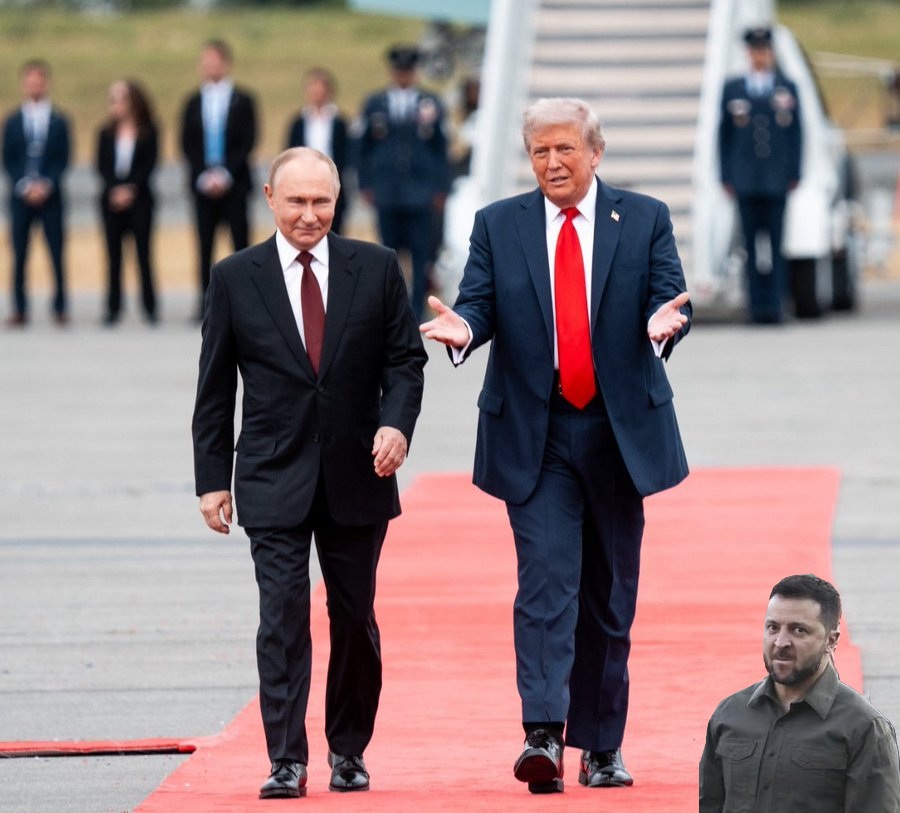
If we read between the lines in the latest update from President Trump emissary Steve Witkoff, we can clearly see the negotiations have entered into that critical phase where payments to all of the stakeholders will determine a successful outcome.
Pragmatic people have long predicted the ultimate solution to the bloodshed will only be determined once western interests get to the point where negotiators propose a long-term plan for continued financial benefit. Too many people, “stakeholders” are making money from the conflict.
From a western perspective, support for the Ukraine conflict is based on money. Therefore, the solution to the conflict requires a system where the western opportunity for financial benefit continues.
Written in polite diplomatic terms, the continued payments are identified as “the prosperity agenda which aims to support Ukraine’s post-war reconstruction, joint U.S.–Ukraine economic initiatives, and long-term recovery projects.” This is codespeak for the U.S. Senate and EU will retain a financial mechanism to exploit for personal benefit.
From the language it appears that Witkoff and Kusher are confident they can construct a financial reward system for western banks, investors, politicians and Ukraine officials that will retain the benefits of war without the ancillary ingredient of bloodshed.
If the U.S. delegation can pull this off, then Russia can gain the territory they want, corrupt Ukraine officials can keep skimming investment money, the EU can retain the power it wants to extract financial payments, American politicians can use the “long-term recovery projects” for money laundering and quasi-public/private investment banks can benefit from the exploitation of Ukraine resources.
Again, from a ‘western geopolitical perspective’, the territorial issues, security guarantees, EU membership status and the position of NATO are downstream details once the larger payment system is organized. Put another way, they are down to the stuff that really matters, the money.
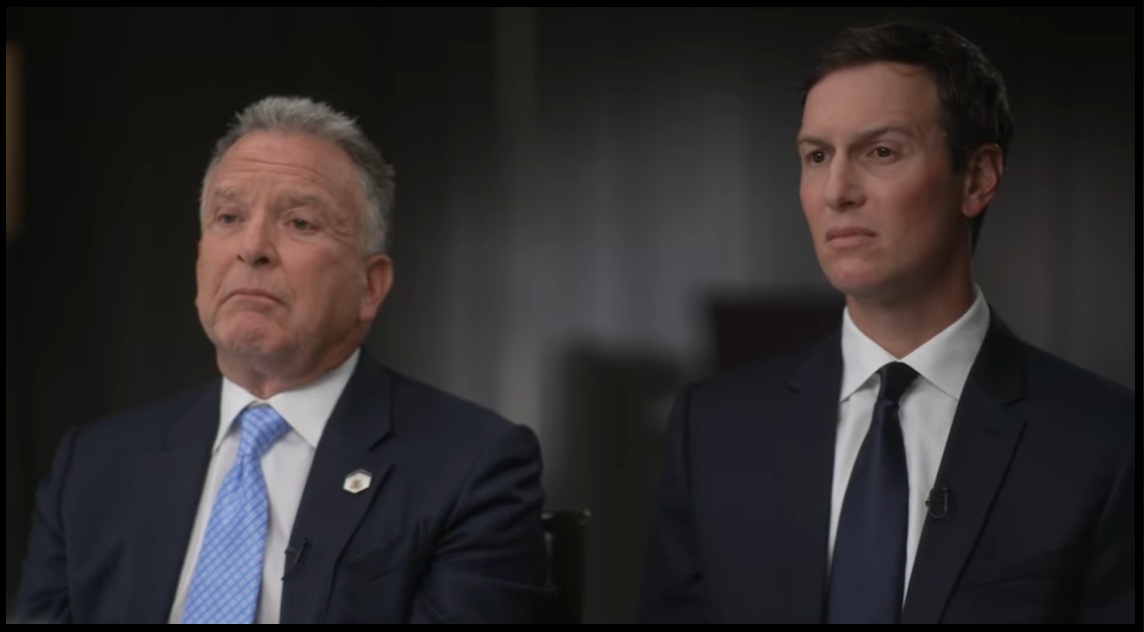
STEVE WITKOFF – Readout of Meeting Between Special Envoy for Peace Steven Witkoff, Jared Kushner, Ukrainian Secretary of National Security and Defense Council Rustem Umerov, and Chief of General Staff General Andriy Hnatov
Over two days, Special Envoy for Peace Steven Witkoff and Jared Kushner met with Ukrainian Secretary of National Security and Defense Council Rustem Umerov and Chief of General Staff General Andriy Hnatov for constructive discussions on advancing a credible pathway toward a durable and just peace in Ukraine.
Today, the group had their sixth meeting over the past two weeks. Secretary Umerov reaffirmed that Ukraine’s priority is securing a settlement that protects its independence and sovereignty, ensures the safety of Ukrainians, and provides a stable foundation for a prosperous democratic future.
The participants discussed the results of recent meeting of the American side with the Russians and steps that could lead to ending this war. The American and Ukrainians also agreed on the framework of security arrangements and discussed necessary deterrence capabilities to sustain a lasting peace.
Both parties agreed that real progress toward any agreement depends on Russia’s readiness to show serious commitment to long-term peace, including steps toward de-escalation and cessation of killings.
Parties also separately reviewed the future prosperity agenda which aims to support Ukraine’s post-war reconstruction, joint U.S.–Ukraine economic initiatives, and long-term recovery projects.
American and Ukrainian parties underscored that an end to the war and credible steps toward ceasefire and de-escalation are necessary to prevent renewed aggression and to enable Ukraine’s comprehensive redevelopment plan, designed to make the nation stronger and more prosperous than before the war.
Parties will reconvene tomorrow to continue advancing the discussions.” (source)
From the Russian side of the equation the war is about ideology, national security and proactive defeat of western, mostly American, encroachment and influence. From the western side, the EU support for Ukraine was less ideological and more financially motivated.
Russia and Ukraine have paid a high price in the larger proxy war. Russia has won the physical fight. Hopefully soon the financial terms will be accepted by the western stakeholders and combat operations can cease.
Ukraine President Zelenskyy will get a nice villa in Europe and a reasonable mansion in the USA. The cocktail parties will continue with crustless cucumber sandwiches and white wine spritzers, while the ladies go shopping and the men get manicures while talking about which of their favorites will replace Zelenskyy.
Posted originally on CTH on December 5, 2025 | Sundance
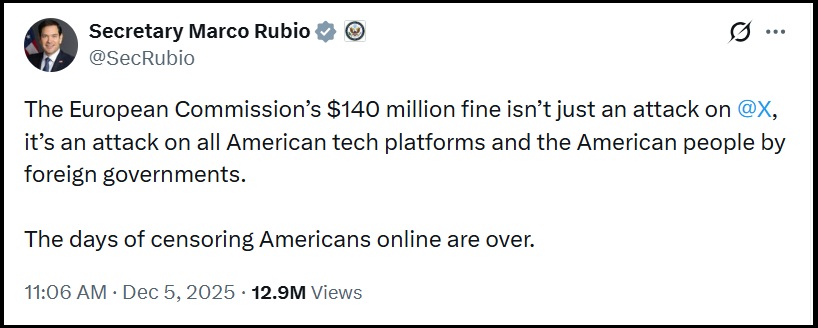
The European Union has fined the X social media platform (formerly Twitter), owned by Elon Musk and his investment group, $140 million (usd) for violations of the EU Digital Services Act. The decision by the EU is likely to create even more friction between President Trump and the European Union. However, this problem is not difficult to solve.
The collective government within the EU accuse Elon Musk and X of permitting misinformation, disinformation and malinformation to appear on the platform.
The European DSA is ultimately designed to control information, that reality should not be debated. All efforts to control traditional and social media are efforts to control information.
The specifics of the reasoning for the fine are typically European. (1) Twitter allows ordinary people to deliver information at the same level as people who should be defined as more important. (2) Advertisers of those who pay for promotion of information on X are not easily identifiable – people need to figure it out on their own. (3) It is too difficult to figure out who is providing the information.
Basically, all of the EU concerns center around information control. It’s really an ideology issue. In the outlook of the EU, bureaucrats and elites feel they are superior and must rule/protect the people under them. Ordinary people having access to information that may or may not be approved by the EU is the underlying issue.
EUROPE – […] Before Musk acquired X, when it was previously known as Twitter, the checkmarks mirrored verification badges common on social media and were largely reserved for celebrities, politicians and other influential accounts, such as Beyonce, Pope Francis, writer Neil Gaiman and rapper Lil Nas X.
After he bought it in 2022, the site started issuing the badges to anyone who wanted to pay $8 per month.
That means X does not meaningfully verify who’s behind the account, “making it difficult for users to judge the authenticity of accounts and content they engage with,” the Commission said in its announcement.
X also fell short of the transparency requirements for its ad database, regulators said.
Platforms in the EU are required to provide a database of all the digital advertisements they have carried, with details such as who paid for them and the intended audience, to help researches detect scams, fake ads and coordinated influence campaigns. But X’s database, the Commission said, is undermined by design features and access barriers such as “excessive delays in processing.”
Regulators also said X also puts up “unnecessary barriers” for researchers trying to access public data, which stymies research into systemic risks that European users face.
“Deceiving users with blue checkmarks, obscuring information on ads and shutting out researchers have no place online in the EU. The DSA protects users,” Henna Virkkunen, the EU’s executive vice-president for tech sovereignty, security and democracy, said in a prepared statement. (more)
Stopping this nonsense is not complicated.
Attach a $1,000 free speech support fee to every European automobile sold in the USA.
Their pontificating ideology is less important than their need for money.
Posted originally on CTH on December 3, 2025 | Sundance
Secretary of State and National Security Advisor Marco Rubio appears on Fox News for an extensive interview about current events. Within the interview Secretary Rubio discusses the current status of immigration vetting and the pause therein.
Additionally, Rubio outlines the current state of the U.S. operation in/around Venezuela and the ongoing negotiations with Ukraine and Russia to end the conflict in Eastern Europe. WATCH:
Posted originally on CTH on December 1, 2025 | Sundance
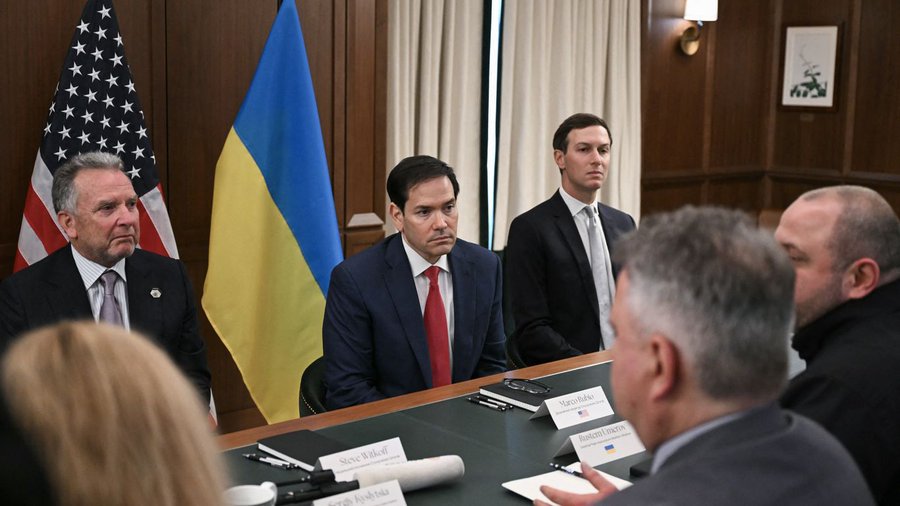
On Sunday, Secretary of State Marco Rubio, Trump emissaries Steve Witkoff and Jared Kushner met with the Ukraine negotiating team in Florida to further discuss acceptable terms for a broader ceasefire and end to the war.
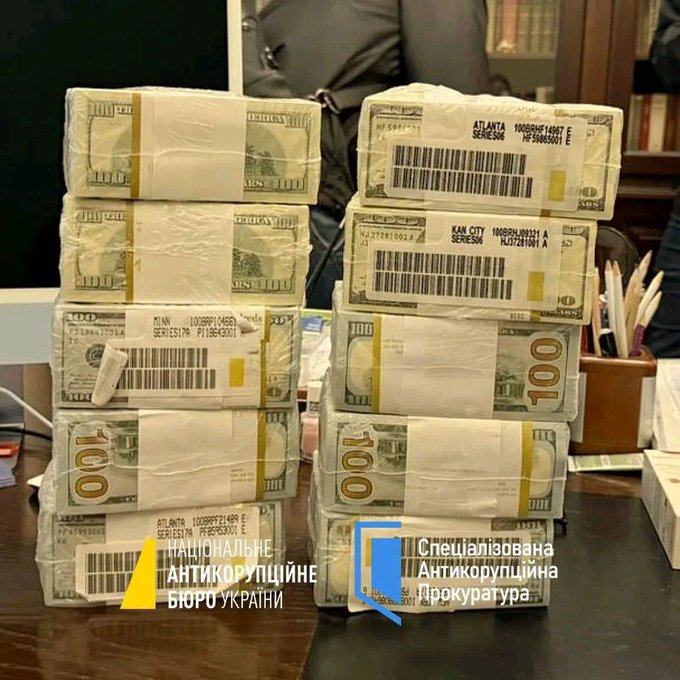
Still trying to recover from corruption charges against his senior presidential team, Volodymyr Zelenskyy was not at the talks. Instead, the Ukraine delegation was led by State Security Council Secretary Rustem Umerov, while Zelenskyy went to Paris for an emotional support session with Emmanuel Macron.
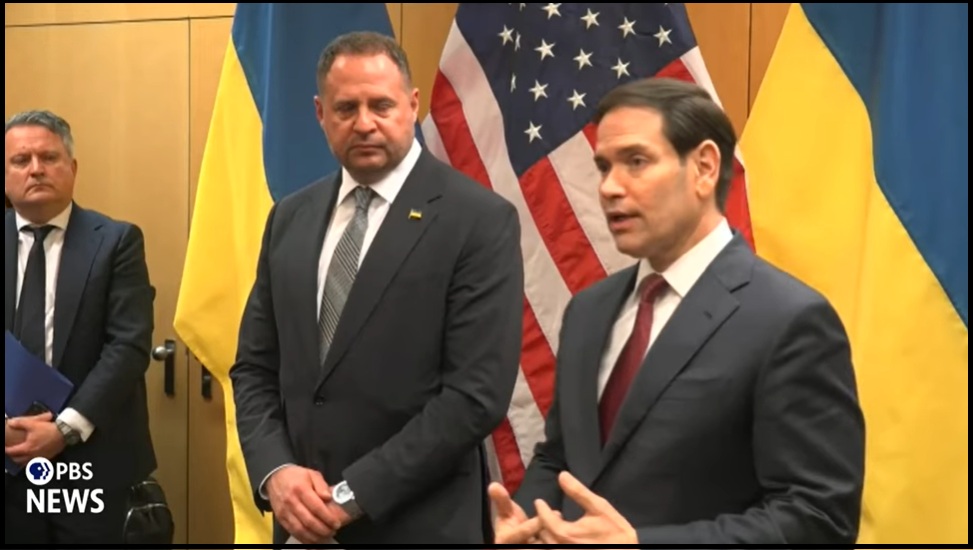
Secretary Rubio and Secretary Umerov spoke before and after their 5-hour negotiation session. Secretary Rubio emphasized the main topic as securing the long-term future of Ukraine both from a security position and from an economic prosperity position.
This state security aspect comes as the Ukraine delegation is facing pressure to accept, they will lose most -if not all- of the Donbas region to Russia. “The end goal is obviously not just the end of the war. Obviously, that’s central and fundamental,” Rubio said. “It’s also about securing an end to the war that leaves Ukraine sovereign and independent and with an opportunity at real prosperity.”
In better-than-expected news, the EU is now saying they will not comply with any removal of sanctions against Russia. If the U.S-Russia and Ukraine work out a negotiated settlement that permits legal or economic relief for Vladimir Putin, the European Union will not agree and will instead make up their own decision on the issues.
Europe is holding this position as a threat, because President Trump is not fully consulting with them on all the granular details. However, this is the type of threat that is exactly beneficial to what appears to be the long-term strategy of Trump.
If Europe refuses to remove sanctions or legal threats against Russia, but the U.S. negotiates the removal of U.S treasury and financial sanctions against Russia, then the Europeans have chosen to stay behind the locked door of economic benefit. More than two-thirds of the world does not participate in the sanctions at all.
If Europe and Canada continue blacklisting Russia, the U.S-Russia energy development program gains exclusive benefits to Trump, Putin and other allies like Mohammed bin Salmon (Saudi Arabia), ASEAN nations and even Japan.
In very practical terms, someone like Viktor Orban (Hungary) would like nothing more than to violate ongoing Brussels sanctions against Russia, and as a consequence create a fracture point for European Union exit.
In practical terms, what would this look like? Well, the entire world would have lower energy prices, lower oil and natural gas prices, and lower gasoline prices by big margins. Meanwhile, Europe would have a massive disparity in their much higher energy costs – likely double the rest of the world. Think about the ramifications. Hungary, Georgia, Montenegro, and Serbia with 50% lower prices on gasoline and electricity than the EU. lolol It would be funny.
Unfortunately, with this in mind I find the EU threats hollow. As soon as the U.S-Russia-Ukraine work out a peace and security agreement, Europe will comply with whatever terms are negotiated for Russia. Failure to do so only isolates the Europeans and will create a problem amid their collective mindsets.
(Via Axios) Negotiations between the U.S. and Ukraine on Sunday focused on where the de facto border with Russia would be drawn under a peace deal, two Ukrainian officials tell Axios. They described the five-hour meeting as “difficult” and “intense,” but productive.
Why it matters: Russian President Vladimir Putin — who’s expected to meet with President Trump’s envoy on Tuesday — insists Russia won’t stop until it controls the entire Donbas region in eastern Ukraine.
After an hour in a wider format, the meeting narrowed to three officials from each side — with the line of territorial control virtually the only issue discussed, according to the two Ukrainian officials.
On the U.S. side were Witkoff, Secretary of State Marco Rubio and Trump’s adviser and son-in-law Jared Kushner. The Ukrainian side was represented by national security adviser Rustem Umerov, military chief of staff Gen. Andrii Hnatov and deputy head of military intelligence Vadym Skibitskyi.
After the talks with their teams ended, Umerov held another one-on-one meeting with Witkoff. Umerov then called Ukrainian President Volodymyr Zelensky to brief him on the talks.
“It was intense but not negative. We really appreciate serious U.S. engagement. Our position is that we have to make everything to help U.S. succeed without losing our country and preventing another aggression from happening,” one of the Ukrainian officials wrote to Axios after the meeting.
Between the lines: Ukrainian President Volodymyr Zelensky had wanted to discuss territory directly with Trump, but Trump said he’d only meet Zelensky or Putin again once a deal is close.
Umerov is expected to meet Zelensky in Paris on Monday and give him a more detailed report about the negotiations, Ukrainian officials say.
Witkoff plans to depart for Moscow on Monday and meet Putin on Tuesday.
“The main question is where the Russians stand and if their intentions are real. Let’s see what Witkoff brings from Moscow,” a Ukrainian official said. (more)
Posted originally on CTH on November 23, 2025 | Sundance
Treasury Secretary Scott Bessent appears on Meet the Press to debate Kirsten Welker’s formatted corporate media talking points. The source of most American division is found in the behavior of the media.
Video and Transcript Below:
[TRANSCRIPT] – KRISTEN WELKER: And joining me now is Treasury Secretary Scott Bessent. Secretary Bessent, welcome back to Meet the Press.
Good to see you this morning, Senator.
SEN. MARK WARNER (D-VA), INTELLIGENCE COMMITTEE VICE CHAIR: Good morning, Martha.
RADDATZ: What is your reaction to this peace proposal that is on the table?
WARNER: My reaction is it’s awful. It would make Neville Chamberlain’s giving in to Hitler outside of World War II looks strong in comparison. The fact that this was almost a series of Russian talking points, would require Ukraine to give the — totality of the Donbas, parts they still control, cut back their military forces going forward, never be able to join NATO.
This would be a complete capitulation. And it’s why I think you’re hearing from Congress, both sides, people pushing back. And, obviously, the Europeans feel like they’ve been totally left high and dry.
MARTHA RADDATZ, ABC “THIS WEEK” CO-ANCHOR: You’ve heard the deadline from President Trump, but then him saying that’s not — there’s room for negotiation here, it seems like. So, what do you think happens after today (ph)?
WARNER: I think what happens — it feels like this was a plan that they took almost entirely from the Russians, did no consultation with Congress, no consultation with the Europeans, obviously didn’t read in Zelenskyy and the Ukrainians, and now they’re getting ferocious pushback. So, one more time, Trump is changing his deadline.
Of course, how he picked Thanksgiving to start with, I have no idea. But now it — even with this — some of this back and forth that it’s not really an American plan, or isn’t an American plan, this is the kind of chaos that, unfortunately, represents so much of the Trump foreign policy.
RADDATZ: So, what do you think President Zelenskyy should do? He’s been through this before. It’s kind of back and forth with this White House. They support you. They pull it back. Do you think all of this, this proposal, which seems to heavily favor Russia, is that just a starting point again?
WARNER: Well, I would hope — I would hope so. Again, the Ukrainians have performed magnificently in the field. And they are reinventing the nature of warfare in terms of use — use of drones. To have this proposal forced upon them, I think as Zelenskyy said, Ukrainian dignity versus giving up a partner, I would hope the president would not be so weak as to try to force this plan on the Ukrainian and our other allies. It would, I think, send not only a horrible signal for Europe, but the person who’s watching this probably the most closely is President Xi in China. And if the Americans are willing to throw in their towel so much like this on Ukraine, you can bet that Xi is thinking, this gives him a clearer path in terms of taking Taiwan.
RADDATZ: But what does Zelenskyy do here? If on Thursday the president says, I’m telling you right now, take what we’ve got on the table and — and there will probably be some changes, or we’re done. What — what does Zelenskyy do, just hope that Europe rises and helps him out?
WARNER: Well, let’s — let’s, again, you have overwhelming support still for Ukraine. The last Ukraine aid package had 80 percent of the Congress. I think the president is seeing this one-sided plan kind of blow up in his face with pushback from the Ukrainians, from the Europeans, from members of Congress of his own party. And my hope is, he’ll come back and be a bit more reasonable.
RADDATZ: I want to turn to Venezuela. We’re all watching that this week. What can you tell us about what you think happens now. We’ve got this massive buildup. We’ve got this massive show of force. We have airline who aren’t — that aren’t flying there because of all the activity and the military activity right now.
Do you expect something more to happen?
WARNER: Well, historically, the United States’ intervention in Central America or South America has not always rolled out the way we’d hope. Maduro was a bad guy, frankly, under Biden. When the Venezuelan people voted in overwhelming numbers, Biden should have put more pressure on getting Maduro out then. It was a mistake.
But now, to have this much armed forces, we have not been briefed on any military action that would have been authorized. He keeps putting the word out that maybe he has authorized, maybe he’s not. We are trying to get the answer on that. But there is a real question. You know, to take this big a fleet, bring our largest aircraft carrier, put them there to further blow up boats that they claim have drugs on them, frankly they could have interdicted some of those boats and shown the world that there were drugs.
In terms of Venezuela, the legal opinion about the drug run — drug running doesn’t touch Venezuela at all. So, the president would have to come back and brief us.
RADDATZ: Trump says he’ll be speaking with Venezuelan President Nicolas Maduro. Do you think that is a good idea? And what can you say to him?
WARNER: Because I think the notion that Trump says he’ll talk to anyone, I think that is — I’m not going to critique him on that, if there’s a way to push Maduro out. Remember, our government and fifty other governments, almost all of Western Europe, don’t recognize the Maduro government as legitimate. But it does not feel like there is an organized plan. And coming down again, America only, without any of our other allies in South America or Central America again seems not the right approach to me.
RADDATZ: What could happen short of a show of force? When you have that massive a show of force, it’s almost like, you’re in a position where you have to do something or you might look weak. Short of Maduro saying, OK, I’ll leave, then what does he do?
WARNER: Well, again, that’s the million-dollar question. And as you know, when you’ve got this many forces down there, and you can’t keep the carrier positioned there forever, you also have the chance of an accident happening or a conflict between the Venezuelan air force or some of our planes that might —
RADDATZ: Do you think he wants to go to war with Venezuela? Do you think he wants (INAUDIBLE) —
WARNER: I don’t know. I don’t know. I think he is trying to put outside pressure on Maduro. But by doing it in this kind of America only approach, again without giving any sign to, I think, even his — the Republicans on The Hill what his plans are, I’m not sure is the right way to do foreign policy. You couple this Venezuela misadventure with this desertion of Ukraine and this is not making America safer, and it’s sure not putting America first.
RADDATZ: Thanks very much for joining us, Senator. Always appreciate it.
Posted originally on CTH on November 23, 2025 | Sundance
Delegations from Ukraine and the USA have been holding talks in Geneva on a draft peace plan. No statement has been officially released, but Ukraine and Russia had received the draft 28-point plan aimed at ending the war. President Trump put the general deadline date of Thursday for review.
Russian Federation President Vladimir Putin has said the plan could form the basis of an agreement, but Ukraine and its European money laundering stakeholders have expressed concern. Giving a brief update during discussions, Secretary of State Marco Rubio said the US and Ukrainian teams had held “probably the best meeting” since Trump returned to office.
Negotiations continued all day with Secretary Rubio noting significant progress has been made and talks will continue into tomorrow. Rubio noted, “we just need more time.” WATCH:
Ukraine President Volodymyr Zelenskyy has been using his X Account all day to message with allies and “stakeholders” about the negotiations. Zelenskyy is the performative face of opposition to the peace agreement and leveraging external pressure to maintain a fight that domestically has lost significant support.
President Trump has expressed frustration with Zelenskyy’s intransigence; however, if the reporting is accurate Zelenskyy has been informed this 26 or 28 point proposal is his last opportunity to negotiate in good faith before President Trump cuts off all assistance to Ukraine. Secretary Rubio seems very optimistic.
Posted originally on CTH on November 21, 2025 | Sundance
President Trump confirmed on Fox News (during an interview with Brian Kilmeade) he gave Ukraine President Volodymyr Zelenskyy a week to review the 28-point peace proposal organized by Secretary of State Marco Rubio and Special Envoy Steve Witkoff.
Ukraine will likely never agree to the proposal, because too many European and American interests are grounded in maintaining conflict between Russia and Ukraine. However, the shift this time is that if Ukraine/EU/NATO and Congress do not agree to the ceasefire and peace proposal, President Trump has indicated he will withdraw all support.
Zelenskyy – “President of Ukraine Volodymyr Zelenskyy held a joint phone call with President of France Emmanuel Macron, Prime Minister of the United Kingdom Keir Starmer, and Federal Chancellor of Germany Friedrich Merz.
The Head of State thanked them for their principled support for Ukraine and for all our people.
The parties discussed the plan for peace for Ukraine and all of Europe. The leaders value the efforts of the United States, President Trump, and his team aimed at ending this war, and are working on the document prepared by the American side. This must be a plan that ensures a real and dignified peace.
The leaders are coordinating closely to make sure that the principled stances are taken into account. Volodymyr Zelenskyy, Emmanuel Macron, Keir Starmer, and Friedrich Merz coordinated the next steps and agreed that the teams will work together at the corresponding levels.” (link)
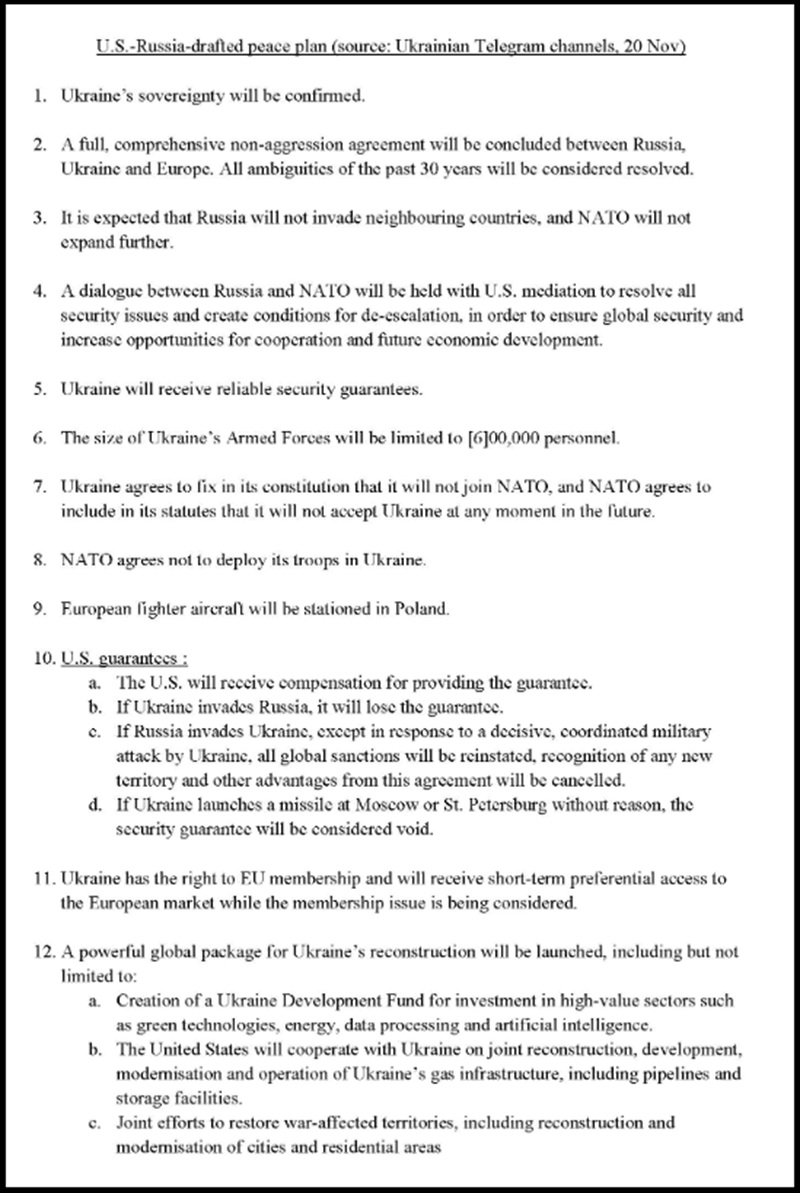
1. Ukraine’s sovereignty will be confirmed.
2. A comprehensive non-aggression agreement will be concluded between Russia, Ukraine and Europe. All ambiguities of the last 30 years will be considered settled.
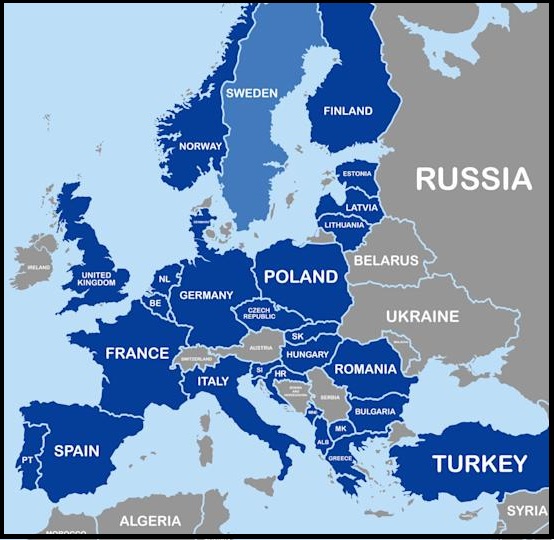
3. It is expected that Russia will not invade neighboring countries, and NATO will not expand further.
4. A dialogue will be held between Russia and NATO, mediated by the United States, to resolve all security issues and create conditions for de-escalation in order to ensure global security and increase opportunities for cooperation and future economic development.
5. Ukraine will receive reliable security guarantees.
6. The size of the Ukrainian Armed Forces will be limited to 600,000 personnel.
7. Ukraine agrees to enshrine in its constitution that it will not join NATO, and NATO agrees to include in its statutes a provision that Ukraine will not be admitted in the future.
8. NATO agrees not to station troops in Ukraine.
9. European fighter jets will be stationed in Poland.
10. The U.S. guarantee:
•The U.S. will receive compensation for the guarantee; •If Ukraine invades Russia, it will lose the guarantee; •If Russia invades Ukraine, in addition to a decisive coordinated military response, all global sanctions will be reinstated, recognition of the new territory and all other benefits of this deal will be revoked; •If Ukraine launches a missile at Moscow or St. Petersburg without cause, the security guarantee will be deemed invalid.
11. Ukraine is eligible for EU membership and will receive short-term preferential access to the European market while this issue is being considered.
12. A powerful global package of measures to rebuild Ukraine, including but not limited to:
•The creation of a Ukraine Development Fund to invest in fast-growing industries, including technology, data centers, and artificial intelligence. •The United States will cooperate with Ukraine to jointly rebuild, develop, modernize, and operate Ukraine’s gas infrastructure, including pipelines and storage facilities. •Joint efforts to rehabilitate war-affected areas for the restoration, reconstruction and modernization of cities and residential areas. •Infrastructure development. •Extraction of minerals and natural resources. •The World Bank will develop a special financing package to accelerate these efforts.
13. Russia will be reintegrated into the global economy:
•The lifting of sanctions will be discussed and agreed upon in stages and on a case-by-case basis. •The United States will enter into a long-term economic cooperation agreement for mutual development in the areas of energy, natural resources, infrastructure, artificial intelligence, data centers, rare earth metal extraction projects in the Arctic, and other mutually beneficial corporate opportunities. •Russia will be invited to rejoin the G8.
14. Frozen funds will be used as follows:
•$100 billion in frozen Russian assets will be invested in US-led efforts to rebuild and invest in Ukraine; •The US will receive 50% of the profits from this venture. Europe will add $100 billion to increase the amount of investment available for Ukraine’s reconstruction. Frozen European funds will be unfrozen. The remainder of the frozen Russian funds will be invested in a separate US-Russian investment vehicle that will implement joint projects in specific areas. This fund will be aimed at strengthening relations and increasing common interests to create a strong incentive not to return to conflict.
15. A joint American-Russian working group on security issues will be established to promote and ensure compliance with all provisions of this agreement.
16. Russia will enshrine in law its policy of non-aggression towards Europe and Ukraine.
18. Ukraine agrees to be a non-nuclear state in accordance with the Treaty on the Non-Proliferation of Nuclear Weapons.
19. The Zaporizhzhia Nuclear Power Plant will be launched under the supervision of the IAEA, and the electricity produced will be distributed equally between Russia and Ukraine — 50:50.
20. Both countries undertake to implement educational programs in schools and society aimed at promoting understanding and tolerance of different cultures and eliminating racism and prejudice:
•Ukraine will adopt EU rules on religious tolerance and the protection of linguistic minorities. •Both countries will agree to abolish all discriminatory measures and guarantee the rights of Ukrainian and Russian media and education. (Note: Similar ideas were incorporated into Trump’s 2020 Israel-Palestine peace plan). •All Nazi ideology and activities must be rejected and prohibited.
21. Territories:
•Crimea, Luhansk and Donetsk will be recognized as de facto Russian, including by the United States. •Kherson and Zaporizhzhia will be frozen along the line of contact, which will mean de facto recognition along the line of contact. •Russia will relinquish other agreed territories it controls outside the five regions. •Ukrainian forces will withdraw from the part of Donetsk Oblast that they currently control, and this withdrawal zone will be considered a neutral demilitarized buffer zone, internationally recognized as territory belonging to the Russian Federation. Russian forces will not enter this demilitarized zone
22. After agreeing on future territorial arrangements, both the Russian Federation and Ukraine undertake not to change these arrangements by force. Any security guarantees will not apply in the event of a breach of this commitment.
23. Russia will not prevent Ukraine from using the Dnieper River for commercial activities, and agreements will be reached on the free transport of grain across the Black Sea.
24. A humanitarian committee will be established to resolve outstanding issues:
•All remaining prisoners and bodies will be exchanged on an ‘all for all’ basis. •All civilian detainees and hostages will be returned, including children. •A family reunification program will be implemented. •Measures will be taken to alleviate the suffering of the victims of the conflict.
25. Ukraine will hold elections in 100 days.
26. All parties involved in this conflict will receive full amnesty for their actions during the war and agree not to make any claims or consider any complaints in the future.
27. This agreement will be legally binding. Its implementation will be monitored and guaranteed by the Peace Council, headed by President Donald J. Trump. Sanctions will be imposed for violations
28. Once all parties agree to this memorandum, the ceasefire will take effect immediately after both sides retreat to agreed points to begin implementation of the agreement.
VIA POLITICO – ““Now the pressure on Ukraine is one of the most difficult. Now Ukraine may find itself facing a very difficult choice. Either loss of dignity, or the risk of losing a key partner,” Zelenskyy said, in reference to the U.S., where Trump has long been skeptical of fully backing Kyiv’s war effort.
“They will expect an answer from us,” Zelenskyy said about the peace proposal. “Although in fact I have already given it,” he added, citing the oath he took when he entered office in 2019 to defend Ukraine’s sovereignty.” (LINK)
Posted originally on CTH on November 19, 2025 | Sundance
When Europe goes to war with Russia, they will not require the military to fill out customs declarations as they cross borders within the EU.
Tanks, missiles, artillery and most combat weapons could be exempt from EU customs declarations if the plan by Brussels moves forward.
Additionally, under the proposal most drivers of military equipment may even be permitted to exceed the limits on driving times and rest periods, should the fight against Russia require extended physical effort.
The newly proposed objective is to empower European soldiers to make independent decisions without having to fill out the customary paperwork, requiring prior approval from the European Commission before affixing their bayonets. The EU wants to work out the details before they begin military operations against the Russian Federation.
EUROPE – […] The communication notes that some countries require 45 days of advance notice before allowing military equipment to cross their territory. “Significant barriers to effective military mobility in the EU persist,” the communication notes. “National rules are often divergent, fragmented and non-harmonised.”
[…] “We need to move fast. We need to move faster than what Europe is used to or is expecting to,” Tzitzikostas said, saying the target is to get the basics in place by 2030.
German Defense Minister Boris Pistorius warned over the weekend that Russia may be capable of launching an attack on a NATO member state as early as 2028-2029.
If approved, EMERS would also grant derogations from standard customs and transport rules, including limits on driving times and rest periods for civilian operators, as well as faster, dedicated customs procedures under a specific EU protocol.
[…] To ensure coordination on the ground, each member state will appoint a national coordinator for military transport, serving as a single contact point for permissions, notifications and crisis response. (read more)
I would not be too concerned about the capabilities of Europe to confront Russian troops. It appears there are now multiple discussions within the EU proposing to stop tracking carbon footprints for soldiers during those times of the day when maximum energy expenditure would be needed.
The French and German military leadership are against lifting the climate rules; however, the pressure from the U.S. within NATO appears to be shifting the overall sentiment.
While negotiations are still underway about permitting the burning of fossil fuels for meal preparation in the field, thankfully there are military consultants beginning to convince Brussels leadership that soldiers making coffee in forward operating positions should be permitted regardless of emissions. FULL STORY HERE
Posted originally on CTH on November 14, 2025 | Sundance
President Donald Trump gave U.S. Trade Representative, Ambassador Jamieson Greer, all the tools and leverage needed to bring the Swiss govt to a substantive trade agreement. The pressure was too much to bear, so Switzerland quickly negotiated a deal.
In the background President Trump’s global trade reset has been seriously damaging for the Swiss industrial economy. The EU overall, Germany specifically and China, have stopped purchasing precision Swiss industrial machinery.
It’s not the direct tariffs against Swiss precision machinery itself that created the pressure, but rather the tariffs against nations who purchased the Swiss precision machinery.
China was a big purchaser of the Swiss machinery, until Beijing stole enough intellectual property to develop their own precision machining capacity. Slowly China didn’t need Switzerland.
Germany and the EU economy then began to contract as the Trump tariffs bit hard against their exports to the USA.
Simultaneously, Chinese EV production started replacing more expensive European EV production, and the tooling purchases within the auto industry began contracting within Switzerland.
As things unfolded, the forecast for the future of the Swiss economy started to become very clear; their precision industrial exports were going to continue contracting. Something needed to change, and fast.
Ambassador Jamieson Greer announces a major free trade agreement with Switzerland {SEE HERE} and the White House provides a fact sheet {SEE HERE}. A joint statement is then released:
Today, the United States of America (United States), the Swiss Confederation (Switzerland), and the Principality of Liechtenstein (Liechtenstein) (collectively, Participants) express through this Framework their intention to negotiate an Agreement on Fair, Balanced, and Reciprocal Trade (Agreement). Through the Agreement, the Participants intend to create a dynamic and balanced trading relationship on a reciprocal and mutually advantageous basis, with a view toward creating good, high-paying jobs and economic growth in their markets. The Participants share a desire to make trade fairer, easier, and more substantial. The Participants further share a desire to foster secure and resilient supply chains and a conducive business environment to attract high-quality and trusted investment. Switzerland intends to take action to balance its trade with the United States, including by purchasing U.S. goods, facilitating investment in the United States, and removing tariff and non-tariff barriers for U.S. goods. The Participants intend to immediately begin negotiations of the Agreement with the aim to make significant progress, and if possible conclude the Agreement, by the first quarter of 2026, subject to their respective domestic processes.
The Participants intend for the negotiations of the Agreement to focus on the following key areas:
Investment, Commercial Considerations, and Opportunities
Switzerland and Liechtenstein support the increase of foreign direct investment by Swiss and Liechtenstein enterprises into the United States.
Switzerland intends to encourage and facilitate at least $200 billion of investment into the United States, across all 50 states, over the next five years, to create manufacturing and research and development jobs. Liechtenstein intends to encourage and facilitate at least $300 million of investment into the
United States and increase by 50 percent over the next five years the number of jobs created by its private sector in the United States. Switzerland and Liechtenstein intend to encourage and facilitate one third of these investments by the end of 2026. The United States intends to determine, in its application of reciprocal tariffs, if Switzerland and Liechtenstein have taken appropriate steps to encourage and facilitate these investments and associated job creation. If needed, the Participants intend to jointly discuss the steps taken to encourage and facilitate such investment and job creation and determine additional measures for investment promotion and facilitation.
The Participants intend to encourage their enterprises to promote and develop training and apprenticeship programs, including Registered Apprenticeship programs, for U.S. workers in key high-growth sectors in the United States, taking into account their current and future investments.
The Participants intend to cooperate on this issue.
Switzerland and Liechtenstein intend to work together with the United States on addressing potential distortions of bilateral trade and investment arising from industrial subsidies or actions of state-owned enterprises.
The Participants intend to create the best possible environment to encourage and facilitate cross-border investments and job creation.
2. Tariffs
Recognizing the Treaty of 29 March 1923 between Switzerland and Liechtenstein on Accession of the Principality of Liechtenstein to the Swiss Customs Area, the United States intends to apply the same tariff treatment to both Switzerland and Liechtenstein.
Switzerland and Liechtenstein intend to improve market access for U.S. goods, through the application of zero duties on all U.S. industrial goods, U.S. seafood, and certain U.S. agricultural goods, and through the application of tariff rate quotas for a number of other U.S. agricultural goods.
The United States intends to apply the higher of either the U.S. most-favored-nation (MFN) tariff rate or a tariff rate of 15 percent, comprised of the MFN tariff and a reciprocal tariff, on originating goods of Switzerland and Liechtenstein and to apply only the U.S. MFN tariff rate on certain products listed in the “Potential Tariff Adjustments for Aligned Partners” Annex to Executive Order 14346 (Modifying the Scope of Reciprocal Tariffs and Establishing Procedures for Implementing Trade and Security Agreements).
The United States intends to promptly ensure that the MFN tariff and the tariff imposed pursuant to Section 232 of the Trade Expansion Act of 1962 (Section 232) do not exceed 15 percent for originating pharmaceutical goods and semiconductors of Switzerland and Liechtenstein subject to Section 232 tariffs. The United States intends to positively consider the effect of the Agreement on national security, including when taking action under Section 232.
The Participants intend for the benefits of the Agreement to accrue predominantly to the Participants. If the Participants determine that the benefits are not accruing predominantly to the Participants, the Participants may modify the Agreement with rules of origin necessary to achieve that objective.
The Participants intend to cooperate, where relevant, on matters relating to transshipment and circumvention practices, in accordance with their respective domestic laws and regulations.
3. Non-Tariff Barriers and Related Matters
The United States and Switzerland each intend to accord to conformity assessment bodies located in the territory of the other treatment no less favorable than they accord to conformity assessment bodies located in their own respective territories. Treatment under this paragraph includes procedures, criteria, fees, and other conditions relating to accrediting, approving, licensing, or otherwise recognizing conformity assessment bodies.
The Participants intend to apply the World Trade Organization (WTO) Decision of the Technical Barriers to Trade Committee on Principles for the Development of International Standards, Guides and Recommendations (2000) to determine relevant international standards within the meaning of Articles 2 and 5 and Annex 3 of the WTO Agreement on Technical Barriers to Trade, and intend to negotiate provisions clarifying this understanding.
With respect to automobiles, Switzerland intends to work with the United States to facilitate the recognition of Federal Motor Vehicle Safety Standards.
The Participants intend to advance cooperation in mutually agreed strategic sectors, including medical devices. Switzerland intends to facilitate the acceptance of medical devices cleared or approved by the U.S. Food and Drug Administration.
The United States acknowledges the efforts made by Switzerland to facilitate trade in beef and beef products. Switzerland intends to work with the United States to address specific measures that restrict market access for U.S. poultry and poultry products, strengthening opportunities for U.S. agricultural exports in Switzerland. The United States and Switzerland intend to cooperate on streamlining sanitary requirements for labelling and certificates, particularly for beef, bison, and dairy products.
The Participants intend to discuss robust commitments related to intellectual property rights protection and enforcement, including transparent and fair treatment of geographical indications.
The Participants intend to continue to provide an open and competitive environment for service suppliers. Accordingly, Switzerland and Liechtenstein intend to consider opportunities to provide service suppliers additional access to their markets.
The Participants intend to increase their cooperation on labor-related trade issues, and work to address forced labor, including forced child labor, and the worst forms of child labor in supply chains. Switzerland and Liechtenstein intend to continue to protect internationally recognized labor rights. Switzerland and Liechtenstein intend to continue to adopt and implement high levels of environmental protections, effectively enforce their respective environmental laws, and work together with the United States on trade-related environmental measures, including those that may affect trade between each of them and the United States.
The Participants intend to negotiate commitments on good regulatory practices to ensure greater transparency, predictability, and participation throughout the regulatory lifecycle.
With a view to achieving greater reciprocal benefits from participation in their procurement markets, the Participants reaffirm their commitments under the WTO plurilateral Agreement on Government Procurement and their other binding international procurement obligations, and intend to clarify that states that are not party to these agreements do not benefit from non-discriminatory treatment in procurement at the central governmental level covered by such agreements, including through further implementation measures in their respective national procurement frameworks, if necessary.
The United States and Switzerland intend to foster the use of technology solutions that allow for full pre-arrival processing, paperless trade, and digitalized customs procedures.
4. Digital Trade and Technology
Switzerland and Liechtenstein intend to continue to refrain from imposing digital services taxes.
The Participants intend to facilitate trusted cross-border data flows and address data localization requirements, taking into account legitimate public policy objectives.
The Participants intend to explore mechanisms that promote interoperability between their respective privacy frameworks with a view to facilitating secure cross-border transfers of data.
The Participants intend to refrain from imposing customs duties on electronic transmissions and to support the multilateral adoption of a permanent moratorium on customs duties on electronic transmissions at the WTO.
5. Economic Security
The Participants intend to strengthen their cooperation on economic security, including on addressing non-market policies of third countries.
The Participants recognize that the effective enforcement of economic and trade sanctions serves the Participants’ shared interests. The Participants intend to strengthen existing cooperation with regard to U.S. export controls and sanctions.
Switzerland and Liechtenstein intend to cooperate with the United States on matters related to the review of inbound investment, including on the basis of national security.
Switzerland and Liechtenstein intend to work cooperatively with the United States to secure supply chains and improve supply chain resilience in sectors of shared interest.
The Participants intend to coordinate the timing of their respective domestic processes for the entry into force and implementation of the Agreement.
This document does not constitute a legally binding instrument creating or affecting any rights or obligations under international law. {SOURCE}
Posted originally on CTH on November 14, 2025 | Sundance
Hungarian Prime Minister Viktor Orban has had enough. The European Union is consistently targeting him for his position against the Russia-Ukraine conflict, and western elements of the intelligence apparatus have been trying to undermine Orban’s government for years.
Against the most recent revelations of direct corruption connected to the government of Ukraine President Volodymyr Zelenskyy, Orban says, “enough.”
Prime Minister Orban – “The golden illusion of Ukraine is falling apart. A wartime mafia network with countless ties to President [Zelensky has been exposed. The energy minister has already resigned, and the main suspect has fled the country.
This is the chaos into which the Brusselian elite want to pour European taxpayers’ money, where whatever isn’t shot off on the front lines ends up in the pockets of the war mafia. Madness.
Thank you, but we want no part of this. We will not send the Hungarian people’s money to Ukraine. It can be put to far better use at home: this week alone we doubled foster parents’ allowances and approved the 14th month’s pension.
Anyhow, after all this, we certainly won’t give in to the Ukrainian president’s financial demands and blackmail. It’s high time Brussels finally understood where their money is really going.” [SOURCE]
PM Orban and President Donald Trump are allies and personal friends. No doubt they both spoke about this.
I have created this site to help people have fun in the kitchen. I write about enjoying life both in and out of my kitchen. Life is short! Make the most of it and enjoy!
This is a library of News Events not reported by the Main Stream Media documenting & connecting the dots on How the Obama Marxist Liberal agenda is destroying America