Lines in the Sand – Iran War


Posted originally on Mar 6, 2026 by Martin Armstrong |  

Iran, China and Russia Sign Strategic Pact, Deepening Alignment Against Western Pressure - GV Wire

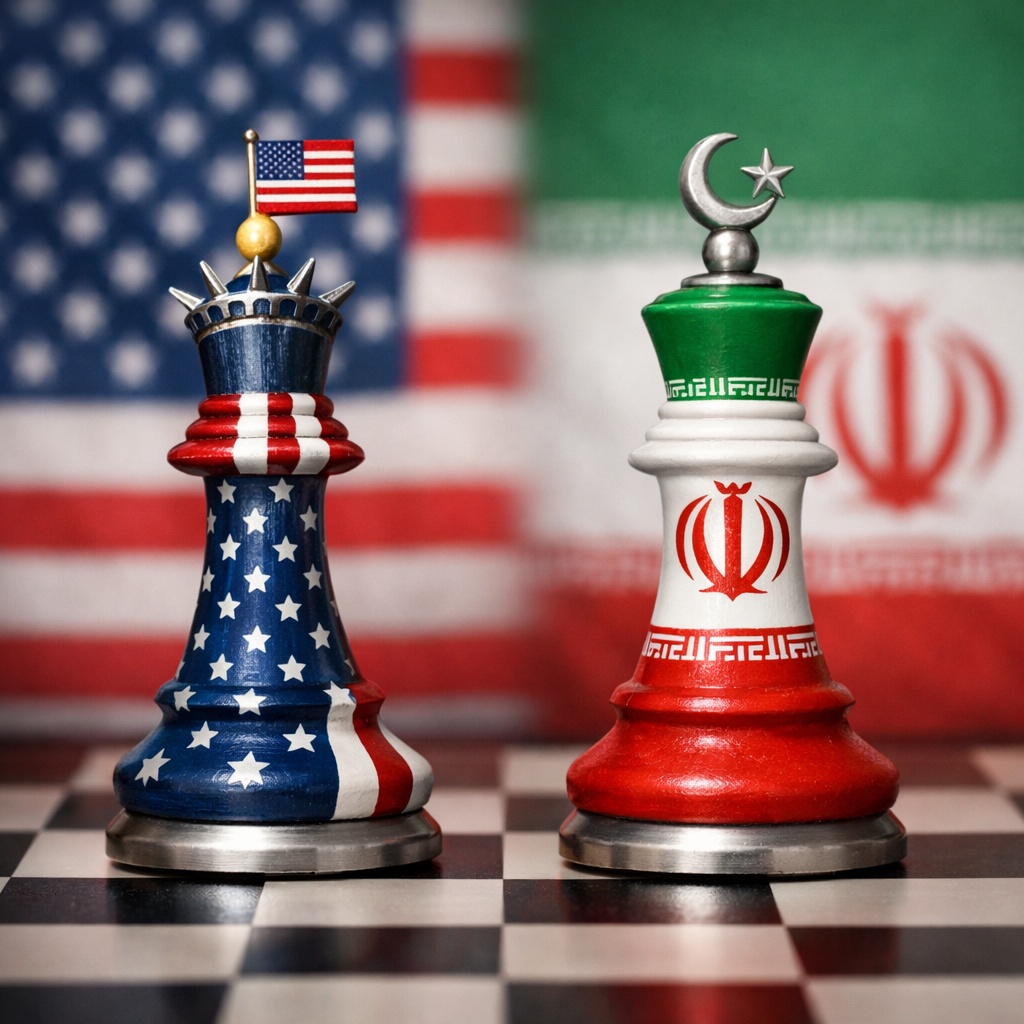
The conflict now unfolding with Iran is beginning to expose a series of geopolitical lines that had been quietly building for years. What is striking about the current situation is not simply the military confrontation itself, but the reaction of various nations. The world is no longer responding as it did in earlier conflicts where alliances moved almost automatically behind Washington. Instead, governments are drawing their own lines in the sand.

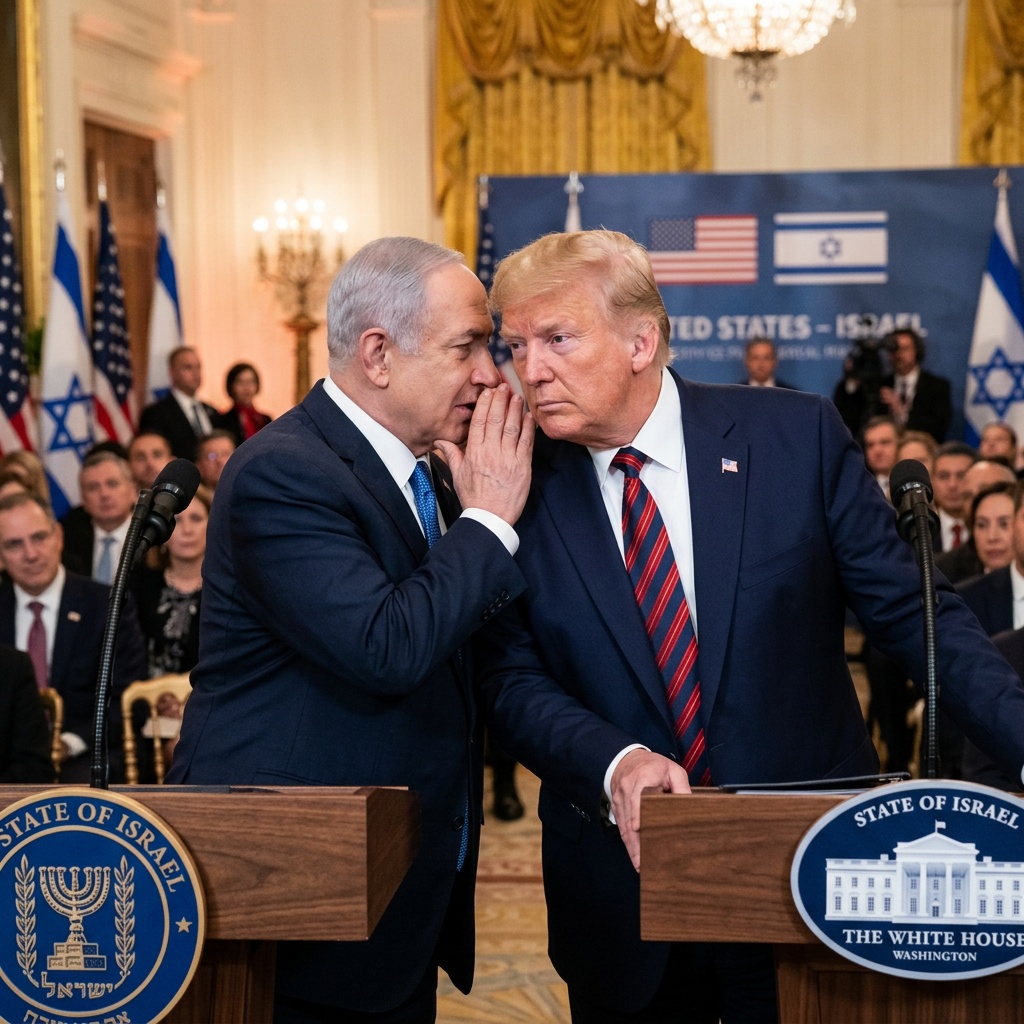
The United States and Israel are presently the two nations directly engaged in military operations against Iran. While Washington has access to bases throughout the Middle East, most of those countries are not actively participating in combat. Gulf states such as Qatar, Bahrain, Kuwait, Saudi Arabia, and the United Arab Emirates host American military infrastructure, but their involvement largely reflects long-standing defense agreements rather than enthusiastic participation in a new regional war. These nations find themselves caught between two competing pressures: their security arrangements with the United States and the geographic reality of living within missile range of Iran.

What has been particularly revealing is the response in Europe. Spain openly refused to allow the United States to use its bases at Rota and Morón for operations against Iran, sparking a diplomatic confrontation with Washington. That decision has highlighted the growing divide inside NATO. During the Cold War and even in the early post-Cold War era, European governments generally aligned themselves with U.S. military policy. Today that unity is no longer automatic. European leaders increasingly calculate their own political and economic risks before committing themselves to American military campaigns.

Who are Iran's allies in a potential conflict with the United States? - ABC  News

The reluctance to join the conflict reflects deeper concerns about escalation. Many European governments are already facing fragile economies, political fragmentation, and rising social tensions. Opening another military front in the Middle East while the war in Ukraine continues would add another layer of uncertainty to an already unstable geopolitical environment. As a result, several governments are publicly urging diplomacy rather than military expansion.

Iran does not stand entirely alone. Its support network is less conventional than traditional state alliances but still significant. Groups such as Hezbollah in Lebanon, the Houthis in Yemen, and various militias operating in Iraq form part of a regional structure that Tehran has cultivated over decades. These organizations are not merely political sympathizers; they possess their own military capabilities and can operate across multiple fronts simultaneously. This creates a form of distributed conflict that complicates any direct confrontation with Iran itself.

What we are witnessing is the emergence of a fragmented geopolitical landscape where alliances are no longer rigid. Countries are evaluating their interests in a far more transactional way. Some governments provide logistical support while avoiding direct involvement. Others refuse cooperation altogether. Meanwhile, regional actors pursue their own strategic agendas independent of traditional Western alliances.

When crises arise, the difference between formal alliances and genuine strategic alignment becomes visible. The current situation with Iran is exposing those differences in real time. Nations are making calculations not only about military risk but also about energy markets, economic stability, and domestic political pressures.

The phrase “lines in the sand” has long been associated with the Middle East, yet today it applies equally to the diplomatic landscape surrounding the conflict. Countries are defining the limits of their involvement, sometimes publicly and sometimes quietly behind the scenes. These decisions reveal a world where geopolitical loyalties are becoming far more fluid than they once appeared.

Newsmax Carl Higbie Outlines the Stakes for China from Operation Epic Fury


Posted originally on CTH on March 5, 2026 | Sundance

I’m working on a deep explainer for the behavior of China as it relates to ongoing U.S. strategic military operations.  More to come soon.  In the interim, Carl Higbie from Newsmax outlines how China is spending domestically inside the USA in order to try and stimulate opposition to the Iran confrontation.  WATCH:

.

Hemispheric Boss Level: Epic – Venezuela Edition


Posted originally on CTH on March 5, 2026 | Sundance

Sometimes you have to sip coffee slowly, while taking in the landscape.

About a month ago President Donald J Trump bombed Caracas, engaged the U.S. military with a direct firefight against Venezuela military & security forces, then snatched regime dictator Nicholas Maduro out of the country to face criminal charges in the United States.

Yesterday, Maduro’s replacement, President Delcy Rodriquez, stood on the steps to the Venezuela presidential office and publicly thanked Interior Secretary Doug Bergum for the kindness and support of President Donald Trump.

That reality represents a level of hemispheric ‘ultimate boss’ that boggles the mind.  But wait, it gets better. There’s video (prompted):

Before going further to current events, let us remind ourselves of a few details.

Sandwiched between the Venezuela Maduro operation and the recent Operation Epic Fury in Iran, approximately three weeks ago, Gen. Dan Caine, chairman of the Joint Chiefs of Staff, and Defense Secretary Pete Hegseth convened a gathering in Washington of all the defense chiefs and senior military officials from 34 Western Hemisphere countries.

As most of you will remember, securing the national security of the entire Western Hemisphere, was outlined in the national defense strategy document [SEE HERE] released by President Trump. In addition to setting the priorities for the United States focus, the report details the Trump administration perspective on the world as broken down into specific regions.  The report is a brutally honest review of the current state of geopolitical benefits, risks and threats as they pertain to vital U.S. interests. The report outlines a critically renewed focus on the Western Hemisphere.

Now, back to Secretary Bergum’s visit.

At the same time as Interior Secretary Bergum is meeting with key government and private sector partners to discuss strategic mineral development (ie. deconflict dependency on China via independent development), oil production for U.S. hemispheric security (Iran output offsets), Venezuela announced the transfer of 1,000 kilos (more than a ton) of gold reserves for sale on the U.S. market {SOURCE}.

Venezuela needs stability.  Hemispheric Boss President Trump wants Venezuela to have stability.  Venezuela needs dollars and both the coordinated sale of Venezuela oil and Venezuela gold (47 tonnes in strategic reserve) will provide those dollars to retain stability and seed economic growth projects.

This coordinated approach secures the economic future of Venezuela and simultaneously secures the energy security of the Western Hemisphere while geopolitical operations continue in other regions, like the confrontation with Iran.

In essence, President Trump is isolating the Western Hemisphere from collateral economic damage that is likely to happen as the U.S. begins to take down the leading sponsors of global conflict.  As things are in flux, the close and controlled partnership with Venezuela can offset/mitigate a lot of chaos.

While the ongoing Iran confrontation happens in the middle east, and in combination with the priority of the National Security Strategy, President Trump then convenes a meeting of hemispheric leaders in Florida this weekend.

The Latin-America meeting in Doral is being called the “Shield of the Americas Summit.”  The Trump administration has made it a priority to assert dominance over the Western Hemisphere, where China previously built influence through massive loans and expansive trade.

Yesterday, White House Press Secretary Karoline Leavitt announced President Trump will host heads of state from “Argentina, Bolivia, Chile, Costa Rica, the Dominican Republic, Ecuador, El Salvador, Honduras, Panama, Paraguay, Trinidad and Tobago, and maybe some others as well.”

So, let’s put it all together.

President Trump proactively secured the border, targeted narcotraffickers, confronted narcoterrorists, targeted Mexican drug cartel leadership, leveraged the DOJ to indict regional actors, pushed China out of control in the Panama Canal, took out Nicholas Maduro, took control of Venezuela oil production – both for the security of the U.S. and benefit of the Venezuelan people, removed the discounted oil benefit for China and reasserted stability in the Western hemisphere.

Then, with all that in place, he turned toward Iran…. but, proactively planned for a ‘Shield of the Americas Summit’ before the Iran operation began and scheduled it while Operation Epic Fury continues.

Jumpin’ ju-ju bones.  That outline and timeline is not supposition; it is what took place.

And, yeah, we just watched “interim” Venezuela President Delcy Rodriquez react to what she is witnessing happening all around her.

Accepting all of this, I would not be in the least surprised to see President Rodriquez in Doral this weekend.

[SOURCE]

This my friends, is a level of strategic boss maneuvering beyond anything we have ever witnessed before.

[…] – “Interior Secretary Doug Burgum landed in Venezuela on Wednesday to begin talks about a potential rare earth minerals partnership, just weeks after the U.S. arrested former Venezuelan President Nicolás Maduro.

FOX Business exclusively joined Burgum on the trip. President Donald Trump‘s administration views Venezuela’s untapped resources as a potential alternative to relying on China for critical minerals, FOX Business has learned.

While in Venezuela, Burgum will also help expand the relationship between U.S. oil companies and the Venezuelan government. The secretary will meet with the current Venezuelan President Delcy Rodríguez to continue the growing relationship between the two countries.

Burgum is the first member of Trump’s Cabinet to leave the country since the U.S. launched Operation Epic Fury against Iran on Saturday.” (read more)

China Halts Refiners from Exporting Diesel and Gasoline


Posted originally on CTH on March 5, 2026 | Sundance 

An interesting reaction from Beijing highlights an evaluation of risk from the lack of oil flowing from Iran.

According to most evaluated data, China was buying more than 80% of Iran’s shipped oil. That’s according to data from 2025 as analyzed by Kpler and published in January by Reuters.

Iranian oil always had limited buyers due to U.S. sanctions. However, China purchased on average 1.38 million barrels per day of Iranian oil last year, according to Kpler. That represented about 13.4% of the total 10.27 million bpd of oil it imported by sea.

With President Trump previously cutting of discounted oil from Venezuela, two things unfolded.  First, the Venezuela oil was no longer sold with non-petrodollar currencies; Venezuela oil is now being sold on the standard oil market.  Secondly, with the Venezuela oil disrupted China would become even more dependent on Iranian oil shipments if they wanted to retain the discounted rate.

How big is the financial difference?  According to Reuters, “Iranian Light crude has traded at around $8 to $10 a barrel below ICE Brent on a delivered basis to China since December.” … “That means Chinese refiners save about $8 to $10 a barrel if they buy Iranian Light rather than non-sanctioned oil.”

Additionally, as noted before Operation Epic Fury began, “Iran has a record amount of oil on the water, equivalent to around 50 days of output, as China has bought less because of sanctions and Tehran seeks to protect its supplies from the risk of U.S. strikes, Kpler said.”

Buying discounted oil from Venezuela, Iran and Russia resulted in billions of dollars saved by China.  The only production venue not currently disrupted would be purchases from Moscow.  This increases the dependency, but the purchase price may no longer carry any discounted value, at least not at the previous rate.

India was purchasing a significant amount of Russian oil for its own refinery use and sale back into the global market. China and India would now be bidding for what is likely a more valuable Russian export.  No more discounts put the “teapot” refining operations in Shandong, China, into a squeeze. This also highlights the decision by China to limit refined exports.

[VIA NBC] – China’s government has told the country’s largest oil refiners to suspend exports of diesel and gasoline as an escalating conflict in the Persian Gulf disrupts the arrival of crude from one of the world’s largest producing regions.

Officials from the National Development and Reform Commission, the country’s top economic planner, met refinery executives and verbally called for a temporary suspension of refined product shipments that would begin immediately, according to people familiar with the matter. They asked not to be named, as the discussions are not public.

The refiners were asked to stop signing new contracts and to negotiate the cancellation of already-agreed shipments. The people said. An exception was made for jet and bunker fuel held in bonded storage and supplies to Hong Kong and Macau, they added.

[…] China has a vast refining sector, but much of its production is funnelled to serve domestic demand, meaning it is not a critical supplier. Across Asia, it ranks third for seaborne exports, behind South Korea and Singapore. However, Beijing’s precautionary curbs reflect efforts across the import-dependent region to prioritise domestic needs as the crisis in the Middle East deepens. (read more)

Importers, Exporters and Producers Trigger Force Majeure Notifications for Gulf LNG Shipments


Posted originally on CTH on March 4, 2026 | Sundance

Force Majeure is a common clause in contracts which essentially frees both parties from liability or obligation when an extraordinary event or circumstance beyond the control of the parties, such as a war, strike, riot, crime, epidemic, or sudden legal change prevents one or both parties from fulfilling their obligations under the contract.

People would be well advised to wait a few days when announcements are made before jumping to immediate conclusions. The announcement by Qatar Energy of a force majeure notification did not originate from Qatar’s inability to produce contractual LNG supplies…..

[SOURCE]

…. two days prior to this announcement, India’s top gas importer Petronet LNG Ltd issued a force majeure notice to Qatar Energy and local buyers because its LNG tanker ships were unable to reach the Ras Laffan load port due to the crisis in the Middle East.  Without ships arriving to take the LNG Qatar Energy cannot keep producing.

Qatar Energy operates 14 liquefied natural gas (LNG) trains with a total annual production capacity of 77 million tonnes {SOURCE}.  If ships don’t reach the terminals, there’s no need for Qatar Energy to keep pumping and liquifying from well heads.  It’s a downstream issue.

Bahrain made the same announcement for their refined aluminum exports {SOURCE}. Indonesian company Chandra Asri made the same announcement for petrochemicals {SOURCE}. Chevron made the same announcement two days ago after Israel shut down the Leviathan natural gas field {SOURCE}.  Thus, we see the ramifications for the entire region around the Iran conflict zone and the downstream destinations (Asia and Europe) for energy products therein.

Dutch shipping company Maersk has also suspended operation for cargo container ships cancelling all bookings between the Indian subcontinent—India, Pakistan, Bangladesh and Sri Lanka—and the Upper Gulf. {SOURCE} German shipping group Hapag-Lloyd made the same decision.

These are not decisions being made due to maritime insurance or reinsurance rates or availability. These are decisions being made by private corporations that go beyond their actuarial risk.  They simply don’t want to operate in a region where there is the potential for loss of life or cargo.

This is not solely an insurance issue and people should pause before offering analysis that only considers the financial aspect.

MAERSK -Maersk announced on Wednesday that it is temporarily suspending most cargo reservations in and out of Iraq as security worries mount throughout the Gulf.

The business said that the ban applies to shipments involving many regional nations, including the UAE, Oman, Kuwait, Qatar, Bahrain, and Saudi Arabia.

Maersk said that the measure would stay in effect until further notice. The firm did not disclose any more information on how long the disruption will endure or the scope of the operating effect.

The decision comes as increased tensions and military action in the Gulf area have prompted worries about the safety of maritime routes and logistical operations, hurting commerce flows via many Gulf nations. (LINK)

Susan Kokinda and the Lyndon LaRouche network give their perspective on the British reaction to the U.S. strikes against Iran.  The analysis has some value from a review of the historic relationship of the British imperialist policy toward matters of foreign entanglement and the control mechanisms that have historically flowed from the U.K

As a consequence of British government policy much of the Kokinda analysis accurately touches on the root cause of U.K response. However, the emphasis on the modern UK government as the lead of a global control network is not always as severe or complicated as the Lyndon LaRouche network would espouse.

Prior to visiting the White House, German Chancellor Fredrich Merz had just returned from China and gave a press conference in Germany saying Germans need to “work harder” and “ditch the four-day week” to compete.

Merz visit to Shenzhen shocked him, and he is right to be rattled by the cold indifference of Chairman Xi Jinping.  This was Merz first visit to meet Chairman Xi in person.  A cold and productivity focused Merz just met an even colder and more productivity focused industrial giant.

Merz met the industrial dragon and returned home visibly shook.  The Chancellor thought he represented an apex industrial nation. However, he experienced something far more industrial than he ever imagined.

As noted by Nina Schick: “Take Germany’s famous auto industry, 5% of GDP, 800,000 jobs, but losing ground fast. VW’s market share in China has plunged from 24% to 15% in four years. Chinese brands doubled their European market share in 2025 and now outsell Mercedes on the continent. Germany lost 120,000 industrial jobs last year. And cars are just the most visible example.

But it’s not just competition. Germany has some of the highest industrial energy prices in the world, nearly triple what the US pays. After shutting down nuclear and losing cheap Russian gas via Nord Stream, Berlin built its first LNG terminal in 194 days. Now 96% of the LNG arriving at those terminals comes from the US. (That LNG is even more important in light of events in the Gulf….)

The US is Germany’s second-largest trading partner (€240 billion in two-way trade last year.) German auto exports to the US fell 18% in 2025 under tariffs. Merz cannot afford a trade war with Washington. Today, he watched Trump threaten to cut off all trade with Spain, while sitting next to him in the Oval Office. He backed him up.

Now look at how Merz is positioning on Iran. Spain blocked the US from using its bases. Sánchez called the strikes “unjustified.” Starmer hesitated before eventually allowing UK bases for “defensive” strikes. Merz is the first EU leader invited to the White House for a tête-à-tête with Trump.

Days before, he said legal assessments under international law “achieve relatively little” and that now is “not the time to lecture allies.” Compare that to Sánchez insisting Spain’s agreement with the US “must operate within the framework of international law.” From a German chancellor, Merz’s position is seismic.

And none of this is separable from home. Germany’s economy is in its fourth year of industrial contraction. An aging population, a shrinking workforce, sky-high welfare costs, and an immigration debate that’s handing the AfD seats on a plate. Merz needs the US relationship, because it’s one of the levers he has left to keep the economy blowing in the right direction.

All of this points to a Germany that’s understood its critical vulnerabilities and is pursuing a hard-nosed realpolitik in response. To stay industrially competitive, they need American LNG. They need access to US compute and critical hardware. They need EU member states to spend on defense: something Trump has been remarkably effective at unleashing.

The result is an astonishingly pro-Trump German chancellor. In a country where only about 15% of the population views Trump favorably. The question isn’t whether Merz has realistically assessed Germany’s vulnerabilities (he’s starting to see the bigger picture). It’s whether this wins or loses him votes at home. And on that, my guess is it won’t. {LINK}

Fredrich Merz thought he was an apex predator, until he met Xi Jinping.

Suddenly, Merz looks at the unpredictable Trump, an apex predator who swims around Chairman Xi as if it’s just another boring Tuesday, with an entirely new perspective.

Chancellor Merz realizes that this rather unorthodox American President likely possesses the only qualified skillset that can deal with a REAL apex predator like Xi.

Fredrich Merz dismounts his EU high horse and uppishness turns into respect.

Defense Secretary Hegseth and Joint Chief’s Chairman Dan Caine Hold a Press Briefing


Posted originally on CTH on March 4, 2026 | Sundance

Secretary Pete Hegseth and Joint Chief’s Chairman Dan “Razin” Caine hold a press briefing to outline the latest developments in Operation Epic Fury.

As day #4 unfolds, Secretary Hegseth notes the U.S. and Israeli Airforce are now in complete command of the skies above Iran.  The capacity of Iran to launch missiles and drones is shrinking rapidly.  Additionally, the Iranian navy continues to be targeted and destroyed.

General Dan Caine outlines the specifics of the targets and forces deployed. WATCH: 

Treasury Secretary Scott Bessent Outlines U.S. Financial/Economic Stabilization Plan, Backstopping U.S. Action toward Iran


Posted originally on CTH on March 4, 2026 | Sundance |

Treasury Secretary Scott Bessent appears on CNBC to discuss the Trump administration policies that were proactively deployed during Operation Epic Fury.

The goal of global financial stabilization is actually part of the strategic planning within the White House, including Treasury, Energy and Interior in alignment with the State Dept., Pentagon and national security agencies.  Part of that plan was the announcement for the U.S. to underwrite maritime insurance to ensure a minimal disruption to the global energy markets.

Secretary Bessent discusses the insurance facet at the 3:00 minute mark of the video below. WATCH:

.

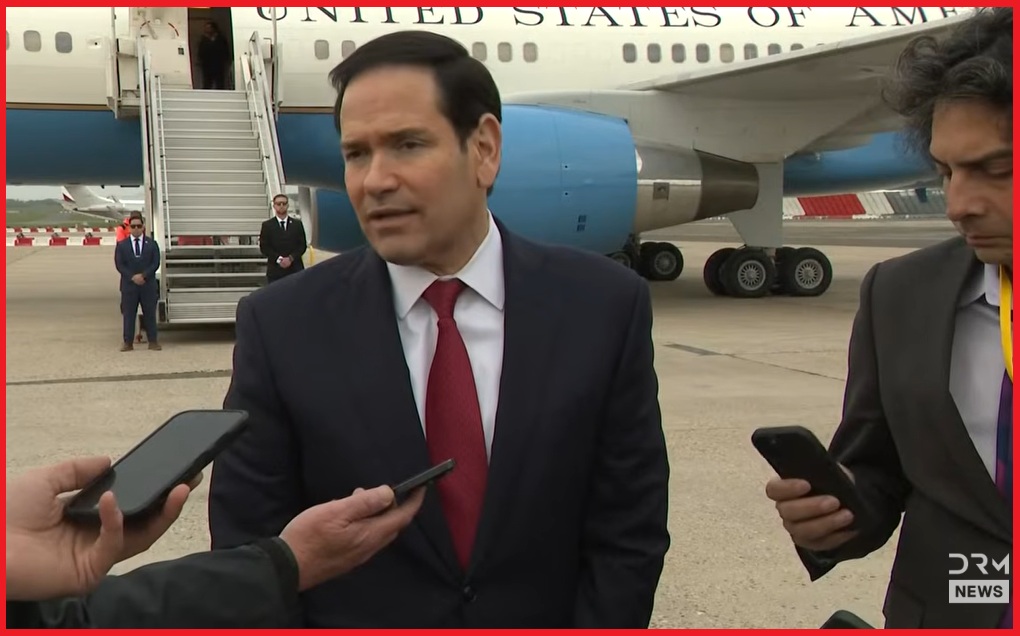
Secretary of State Marco Rubio Updates Media


Posted originally on CTH on March 3, 2026 | Sundance 

Secretary of State Marco Rubio updates the media on current activity surrounding Operation Epic Fury.

Secretary Rubio begins with an update on what Americans in the region need to know. Rubio asks all Americans to record their status with the U.S. State Department. [State Dept. Website] To get the latest updates visit http://travel.state.gov/destination and enroll to receive alerts directly at http://step.state.gov. Americans who need consular help can reach us 24/7 by phone: +1-202-501-4444 (from abroad) and +1-888-407-4747 (from the U.S. and Canada).

Rubio then outlines the latest report on a drone hitting near a U.S. embassy in Dubai.  A drone struck a parking lot adjacent to a chancellery building and a fire broke out.  No Americans were hurt or injured. The consulate was already on minimal staffing.

Secretary Rubio then provides an update on the general disposition of the conflict effort.  Rubio notes the two most powerful air forces in the world are about to go even more severe in our combat activity deep inside Iran.

The traditional frame of reference for pundits surrounds “the escalation trap.”  Most of them are so stuck in their old Washington DC view of nation building they just cannot see another approach.

How do you avoid the trap? You don’t play the game.

You don’t try to control the outcome on the ground.  You change behavior, without being on the ground.

Eventually, having killed or destroyed everything you want to see killed or destroyed (including their ability to wage war against you), you withdraw – then demand terms.

You don’t need to be there on the ground.

It’s a version of the Venezuela model.

Tell the governing body, whoever that is, whoever surfaces to claim lead with the support of the people, what you expect. Then you hold them accountable.

If they refuse to change behavior, bomb them again – select the refusers as new targets. Wash – Rinse – Repeat.

Again, pull back, await the governing authority to surface, tell them the expectations, if they balk, reject or refuse, bomb them again…. Pull back, await the next crew, tell them the expectations; if they balk, fail or reject, bomb them again…. Then pull back.

Is there an escalation trap? No, you are trying to change behavior – full stop.

You remain open but cold, hard and indifferent to any non-compliant replies.

President Trump Announces U.S. Insurance Underwriting for “All Maritime Trade Flowing Through the Gulf” Along with U.S. Military Escorts


Posted originally on CTH on March 3, 2026 | Sundance

♦ First blow, the Trump tariffs hit Beijing hardest. ♦ Second blow, the Beijing tentacle on the Panama Canal is severed.  ♦ Third blow, global tariff threats changed the risk dynamic for southeast Asia countries who acted as transnational shippers for China. ♦ Fourth blow, cheap sanctioned oil from Venezuela was cut-off. ♦ Now, the fifth blow; cheap, sanctioned Iranian oil is disrupted.

As noted by Politico: Following USA military strikes, “ships have begun to avoid the Strait of Hormuz off the coast of Iran — a critical shipping lane for Gulf nations to export oil to Asia. China in 2025 received about half of its imported oil from the six Gulf countries that rely on the strait. Other large crude oil producers in the region — including Saudi Arabia, Iraq and the United Arab Emirates — transport almost all their crude exports through the geographic bottleneck.

[SOURCE]

It’s not just a factor of oil flow, but also the price that China will ultimately end up having to pay.  Beijing was buying oil from Venezuela, Iran and Russia at steep discounts because their purchases were skirting western sanctions.

With Iranian oil production now no longer a market option, China will seek to replace their needs with more Russian alternative. However, that diversion means the oil India was purchasing from Russia will come at a higher price, and the refined final product that was exported by India will arrive to the European Union carrying an additional cost.

Simultaneously, Vladimir Putin was asked about Russia’s lack of military support to Iran in response to the U.S. military action, to wit the Russian president noted the technical terms of their joint military agreements did not include Russia’s immediate involvement.  In shorthand, Russia is busy and is not getting involved.

Russia was/is partially dependent on receiving military supplies from Iran in exchange for oil transfers.  The military component is reported to include drones from Iran for use in the Ukraine conflict.  Now that exchange profile is shuttered.

Taking Iran’s malign influence off the geopolitical chessboard is beginning to surface in major challenges to the BRICS assembly (Brazil, Russia, India, China, South Africa).  Russia, China and India are impacted directly.

The BRICS nations were skirting western oil sanctions by trading the commodity outside the petrodollar structure.  However, President Trump now controls the flow of oil from Venezuela, and his administration controls the currency in which it is sold.

With Iranian oil removed from the non-petro supply chain, the only remaining non-petro oil producer is Russia – who is simultaneously hit with a loss in military hardware support.  China may end up as a larger oil customer to Russia, but at what price and in what payment structure.

With global oil supplies in a state of flux, and with the USA in control of the oil flow from Venezuela, North America is certainly in the best position for minimal energy disruption.

Asia is heavily dependent on oil flows through the Strait of Hormuz, and the majority of Europe has already shut themselves off from Russian oil production, putting themselves in a position of dependency to the global markets.  The short-term ramifications of this oil disruption hit China, Southeast Asia, Japan and Europe particularly hard.

“OPEC+ countries affirmed on Sunday that they would boost oil production starting in April by 206,000 barrels daily — a modest increase intended to dampen the war’s effect on prices down the road. The majority of the increase would come from Saudi Arabia and Russia.” {SOURCE}

All of a sudden, this happens: Zelenskyy not to be trusted?

“Ukraine is under pressure to let the EU inspect a damaged pipeline carrying Russian oil to Hungary and Slovakia, as the two pro-Kremlin countries accuse Kyiv of overstating the impact of an attack by Moscow — despite what Ukrainian officials say is evidence of extensive destruction,” the report said.

According to five diplomats and EU officials who spoke to the FT, even pro‑Ukrainian governments within the European Union and the European Commission have also asked Ukraine to permit a delegation to inspect the pipeline. Two sources told the newspaper that European Commission President Ursula von der Leyen requested access for EU experts during her visit to Kyiv on Feb. 24, the fourth anniversary of Russia’s full-scale invasion. The request, according to the sources, was refused.

As tensions escalated, the EU’s ambassador to Ukraine, Katarina Mathernova, reportedly asked through the presidential office for permission to inspect the damaged pipeline herself or to allow visits by other EU diplomats. Those requests were denied for security reasons, the sources said.” (link)

T

Iran Conflict – Oil Disruption Hits Key BRICS Members Hard


Posted originally on CTH on March 3, 2026 | Sundance

Consider the severe economic body blows to China in the past 14 months.

♦ First blow, the Trump tariffs hit Beijing hardest. ♦ Second blow, the Beijing tentacle on the Panama Canal is severed.  ♦ Third blow, global tariff threats changed the risk dynamic for southeast Asia countries who acted as transnational shippers for China. ♦ Fourth blow, cheap sanctioned oil from Venezuela was cut-off. ♦ Now, the fifth blow; cheap, sanctioned Iranian oil is disrupted.

As noted by Politico: Following USA military strikes, “ships have begun to avoid the Strait of Hormuz off the coast of Iran — a critical shipping lane for Gulf nations to export oil to Asia. China in 2025 received about half of its imported oil from the six Gulf countries that rely on the strait. Other large crude oil producers in the region — including Saudi Arabia, Iraq and the United Arab Emirates — transport almost all their crude exports through the geographic bottleneck.

[SOURCE]

It’s not just a factor of oil flow, but also the price that China will ultimately end up having to pay.  Beijing was buying oil from Venezuela, Iran and Russia at steep discounts because their purchases were skirting western sanctions.

With Iranian oil production now no longer a market option, China will seek to replace their needs with more Russian alternative. However, that diversion means the oil India was purchasing from Russia will come at a higher price, and the refined final product that was exported by India will arrive to the European Union carrying an additional cost.

Simultaneously, Vladimir Putin was asked about Russia’s lack of military support to Iran in response to the U.S. military action, to wit the Russian president noted the technical terms of their joint military agreements did not include Russia’s immediate involvement.  In shorthand, Russia is busy and is not getting involved.

Russia was/is partially dependent on receiving military supplies from Iran in exchange for oil transfers.  The military component is reported to include drones from Iran for use in the Ukraine conflict.  Now that exchange profile is shuttered.

Taking Iran’s malign influence off the geopolitical chessboard is beginning to surface in major challenges to the BRICS assembly (Brazil, Russia, India, China, South Africa).  Russia, China and India are impacted directly.

The BRICS nations were skirting western oil sanctions by trading the commodity outside the petrodollar structure.  However, President Trump now controls the flow of oil from Venezuela, and his administration controls the currency in which it is sold.

With Iranian oil removed from the non-petro supply chain, the only remaining non-petro oil producer is Russia – who is simultaneously hit with a loss in military hardware support.  China may end up as a larger oil customer to Russia, but at what price and in what payment structure.

With global oil supplies in a state of flux, and with the USA in control of the oil flow from Venezuela, North America is certainly in the best position for minimal energy disruption.

Asia is heavily dependent on oil flows through the Strait of Hormuz, and the majority of Europe has already shut themselves off from Russian oil production, putting themselves in a position of dependency to the global markets.  The short-term ramifications of this oil disruption hit China, Southeast Asia, Japan and Europe particularly hard.

“OPEC+ countries affirmed on Sunday that they would boost oil production starting in April by 206,000 barrels daily — a modest increase intended to dampen the war’s effect on prices down the road. The majority of the increase would come from Saudi Arabia and Russia.” {SOURCE}

All of a sudden, this happens: Zelenskyy not to be trusted?

“Ukraine is under pressure to let the EU inspect a damaged pipeline carrying Russian oil to Hungary and Slovakia, as the two pro-Kremlin countries accuse Kyiv of overstating the impact of an attack by Moscow — despite what Ukrainian officials say is evidence of extensive destruction,” the report said.

According to five diplomats and EU officials who spoke to the FT, even pro‑Ukrainian governments within the European Union and the European Commission have also asked Ukraine to permit a delegation to inspect the pipeline. Two sources told the newspaper that European Commission President Ursula von der Leyen requested access for EU experts during her visit to Kyiv on Feb. 24, the fourth anniversary of Russia’s full-scale invasion. The request, according to the sources, was refused.

As tensions escalated, the EU’s ambassador to Ukraine, Katarina Mathernova, reportedly asked through the presidential office for permission to inspect the damaged pipeline herself or to allow visits by other EU diplomats. Those requests were denied for security reasons, the sources said.” (link)