Posted originally on CTH on March 23, 2026 | Sundance
The noise can seem overwhelming at times. There are those who say the U.S-Israeli joint military operation against Iran is a catastrophic miscalculation. There are those who say the operation is strategically succeeding. Many interests even appear to be cheering for the military operation to fail; others want the operation to escalate.
It is difficult to find pragmatic facts about the events without shaped information to promote specific narratives. However, accepting there is a psychological component to the information flow, it seems like the best option to listen to the experts who are conducting the operation.
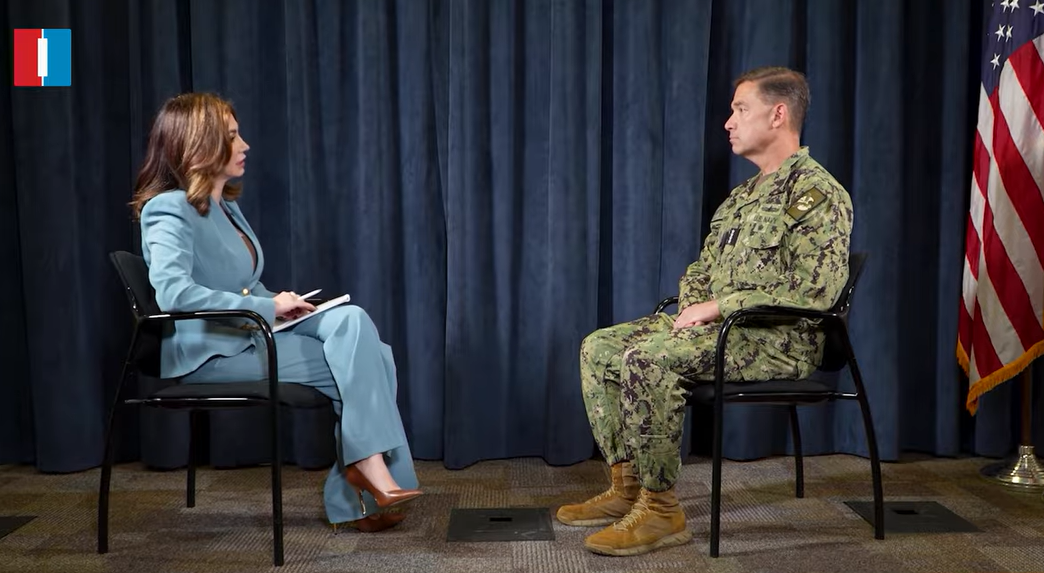
Giving his first interview since Operation Epic Fury began, CENTCOM Commander Bradley Cooper outlines the current status of the conflict and the elements he notes are of most importance. According to Adm. Cooper, Iran is “operating in a sign of desperation… In the last couple of weeks, they’ve attacked civilian targets very deliberately, more than 300 times.”
“The Strait of Hormuz is physically open to transit,” he said. “The reason ships are not transiting right now is because the Islamic Republic is shooting at them with drones and missiles.” WATCH:
“I’d like everyone to note is I’ve watched this over the last week, this extraordinary contrast between the comfort and protection that you’re seeing with the senior generals in the Islamic Republic, at least those that are still alive, who are up in deep bunkers and facilities in and around Tehran. And contrast that with the soldiers who are down on the ground who are unprotected. The generals are protected. The soldiers are not protected.”
“They’re launching missiles and drones from populated areas and you need to stay inside for right now,” he said. “There will be a clear signal at some point, as the President has indicated, for you to be able to come out.”
Posted originally on Mar 22, 2026 by Martin Armstrong |
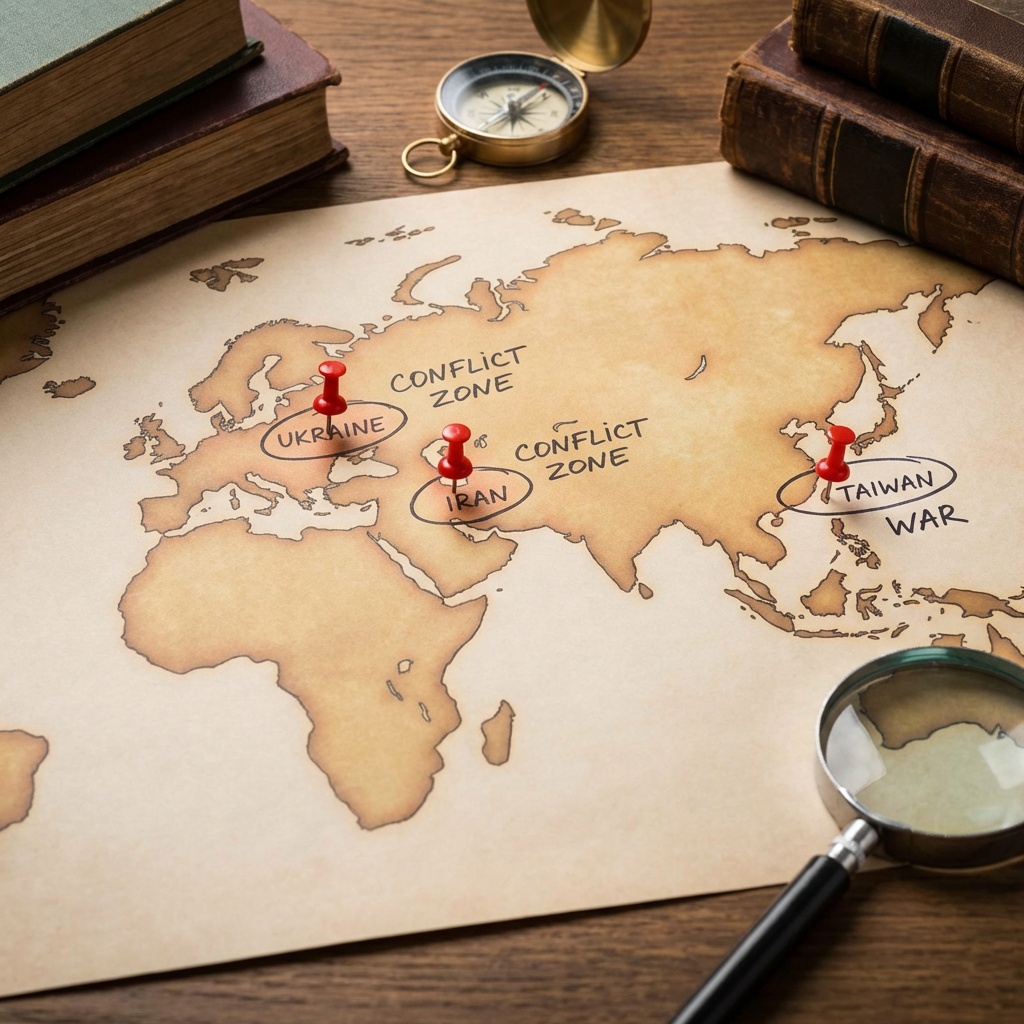
I have warned that (1) Iran can become a proxy war dragging the USA in deeper and deeper using up its missile inventory. At the same time, this is distracting the Administration from Ukraine and Taiwan. The obvious way to defeat the United States is the way Napoleon was defeated. While fighting on multiple fronts certainly contributed to Napoleon’s downfall, describing his defeat as simply a result of “too many wars” is an oversimplification. The core of the problem was strategic overreach: he initiated massive, unnecessary conflicts that bled his forces dry, which in turn allowed a united coalition of European powers to eventually overwhelm him.
China has adopted what is known as the “All-Dimensional Deterrence outside the island chain.” This is a very clear reference to intercepting any U.S. military forces in the Western Pacific Ocean that might attempt to intervene in Taiwan’s defense against an actual attack. Taiwan is already concerned that the US is going through cruise missiles like water in Iran even bringing assets from other regions to protect Ukraine and now Iran. I am concerned that the arrogance of the Neocons really running this war are clearly blinded for they cannot see that engaging in three wars simultaneously will necessitate resurrecting the draft and will add so much debt, the entire system may come crumbling down post 2028.
Iran’s warning that it will strike energy and water infrastructure across the Persian Gulf if Donald Trump follows through on his threat to destroy its power plants has raised fears of mass disruption in a region heavily dependent on desalination for drinking water. Such an attack on Iran’s electricity may hurt the Iranian people where they hope they will rise up against the government. But such an attack will be potentially catastrophic for its Gulf neighbors, which consume around five times as much power per capita. It is electricity that makes the desert cities habitable, in part by powering the desalination plants that produce 100% of the water consumed in Bahrain and Qatar. Such plants use seawater to meet more than 80% of drinking water needs in the United Arab Emirates, and 50% of the water supply in Saudi Arabia. Donald Trump on Sunday gave Iran 48 hours to fully reopen the vital strait of Hormuz to shipping or face the destruction of its energy infrastructure.
The consequences of that will backfile on Trump for it will drastically cut energy from the Middle East and send prices significantly higher and this will shift the markets that are up to now believing the BS that this will be a short war, So far, it appears Trump might back down, but not for long.
We need someone with a cool head here to prevent a major crisis that will forever change the political landscape post-2032.
Posted originally on CTH on March 22, 2026 | Sundance
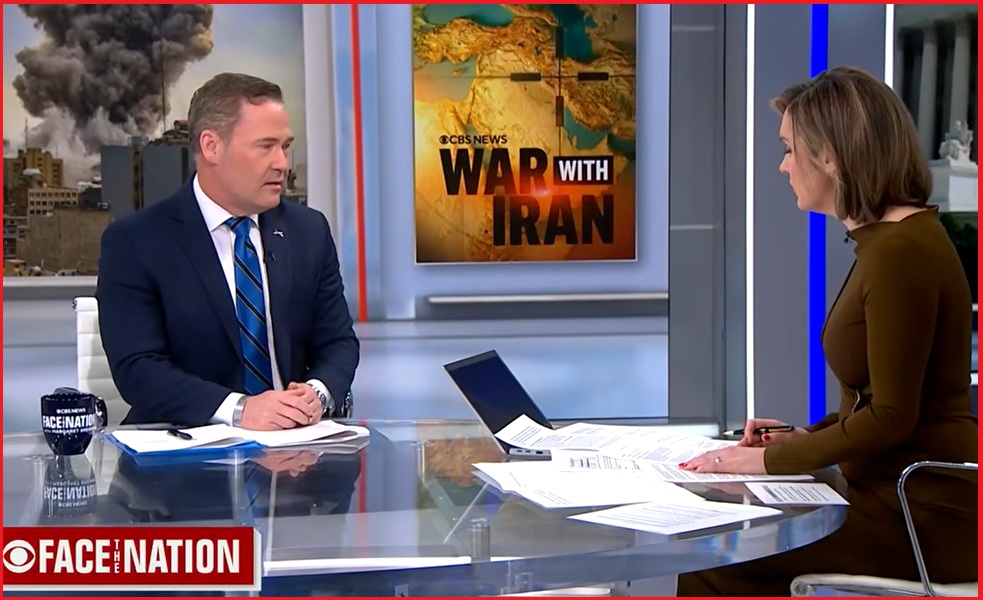
U.S. Secretary to the United Nations, Mike Waltz, appears on CBS to discuss the political angles to the U.S. military operation against Iran. There was some critical questioning about whether Iran was factually capable of sending a missile from Iran to the U.S. base at Diego Garcia in the Indian Ocean. Ambassador Waltz seems to question the reporting on their capabilities. Video and Transcript Below:
[Transcript] – MARGARET BRENNAN: That’s Charlie D’Agata reporting in Arad, Israel. We’re joined now by the U.S. Ambassador to the United Nations, Mike Waltz, and it’s good to have you here in person.
AMB. MIKE WALTZ: Thank you, Margaret.
MARGARET BRENNAN: So Ambassador, on Friday, the president tweeted, “The Hormuz Strait will have to be guarded and policed, as necessary, by other Nations who use it — The United States does not!” And then last night he threatened that if Iran doesn’t fully open the Strait of Hormuz within 48 hours from the time of his post, the US will “hit and obliterate” their power plants, starting with the “biggest one first.” So which is it, is the U.S. opening Hormuz by force or having others do it.
AMB. WALTZ: Well, I think it can be both. It’s not necessarily mutually exclusive. I am glad you are having NATO Secretary General Mark Rutte on. I think at his urging and his leadership, we have now seen Italy, Germany, France and a number of others commit to help with this effort.
MARGARET BRENNAN: –After combat operations end.
AMB. WALTZ: Particularly since, particularly since so much energy is going to Europe out of the strait. We just had the Japanese Prime Minister commit to portions of her navy and the Japanese navy, 80% of what is coming out of the Gulf is going to Asia. So we are seeing our allies come around as they should, but at the same time, the president is not going to stand for this regime, as it has threatened and tried for five decades to hold the world’s energy supplies hostage under its, its genocidal intent.
MARGARET BRENNAN: So some allies like the United Kingdom have talked about things like surveillance, anti-mining, anti-drone support for the United States. But in that appeal from the United States, I should say in the Strait of Hormuz, but not until active combat ends. To be clear, that is what we are talking about.
AMB. WALTZ: And the president has been clear too. He’s going to continue to pound Iran’s capabilities, its missile, its naval and its drone capability. Margaret, we have to take a step back. We have seen what it’s doing now in terms of attacking ports, airports, civilian infrastructure, hotels, resorts, and what it is trying to do to global energy supplies. One can only imagine if it had a nuclear umbrella. One could only imagine if Iran achieved its aim to test. Then you have Saudi Arabia wanting a nuclear program, then perhaps the UAE, Turkey or others. And when people ask why this matters to our security here at home, it should petrify every American that you could potentially have a nuclear Middle East awash in weapons.
MARGARET BRENNAN: Well, they are not enriching. They weren’t enriching leading up to this. This is what U.S. officials have testified to. But just on this point about what the president–
AMB. WALTZ: Well they couldn’t enrich because of Operation Midnight Hammer that obliterated their ability to enrich. They had every intent to continue.
MARGARET BRENNAN: They do have a nuclear power plant, Bushehr. It’s actually their largest energy plant. It’s a civilian site.
AMB. WALTZ: It is actually not their largest energy plant. It is about one, about one gigawatt. They have larger ones that are gas, fired outside of Tehran. But just case in point, yeah.
MARGARET BRENNAN: Okay, but- but in this case, in that clarification, the reason I am asking you is when the president says he is going to bomb energy infrastructure, civilian energy infrastructure, is he going to bomb a nuclear power plant, or is that off the table.
AMB. WALTZ: Well, I would never take anything off the table for the president, certainly not on national television. However, there are larger plants. There is one outside of Tehran. There are others outside of other cities that are gas fired, thermal powered. I think the important point here is to understand the IRGC, a declared terrorist organization, not only by us–
MARGARET BRENNAN: Yeah, in Europe too.
AMB. WALTZ: –but in a number of European countries, controls a huge swath of Iran’s critical infrastructure, their economy and certainly many of their governing institutions. And so to the extent we are degrading their military capability and their defense industrial base, all options should be on the table, and the president has made that very clear.
MARGARET BRENNAN: How do you ensure that this doesn’t constitute a war crime, which the UN Secretary General said an attack on energy infrastructure could be. How do you make sure this is not mass punishment for innocent civilians?
AMB. WALTZ: Well, I think you know, I would encourage and will encourage the Secretary General to point out the twenty to thirty thousand Iranians that the regime massacred at scale, the civilian infrastructure that they are attacking–
[CROSS-TALK STARTS]
MARGARET BRENNAN: –No one is endorsing that but how do you make sure this doesn’t hurt–
AMB. WALTZ: — And when you, but when have a regime that has its grips on so much critical infrastructure, that is using it to further not only the repression of its own people, to attack its neighbors, and in contravention of UN sanctions, to march towards a nuclear weapon, then that makes those legitimate targets.
[CROSS-TALK ENDS]
MARGARET BRENNAN: Okay, well, you know that in many of these places, water desalination is linked into that energy infrastructure, civilian infrastructure. This is why it is a question of it being a war crime.
AMB. WALTZ: I have no doubt that the president, the Pentagon, their team will ensure that what they target is geared towards the military infrastructure of Iran. But I have to tell you, they deliberately blend, have a long history, everything from hiding weapons under schools and hospitals to using power plants and other critical infrastructure to not only power their military but their civilian, and they deliberately blend in contravention of international law.
MARGARET BRENNAN: Let me ask you about what we saw overnight with these missile attacks. The Director of National Intelligence testified last week to Congress that Iran could not develop a militarily viable ICBM, intercontinental ballistic missile, before 2035 if it attempted to pursue that capability. Yesterday, the IDF said Israel said that Iran did fire an ICBM. Has this changed the U.S. assessment?
AMB. WALTZ: I am not familiar with the IDF assessment. I can tell you-–
MARGARET BRENNAN: They said what was fired at Diego Garcia and them was an ICBM.
AMB. WALTZ: I can tell you the UK just condemned the firing of an intermediate range ballistic missile at Diego Garcia, that same type of missile Iran has lied about in terms of its development, said they were not developing yet. They just lied. Yet they just did it. Not only could it hit Diego Garcia, it could hit capitals in Europe. And Margaret, the technology, the booster technology that Iran has been hiding behind its space program. I don’t think we are going to see Iranian astronauts on the moon anytime soon. That this space program has been hiding that technology. You have the re-entry technology to marry the two really does not take very much in terms of technological development. And we just have to you know, thank God the president is taking action now and stopping this march towards a fully fledged nuclear program, instead of waiting until after it’s developed, like we saw in North Korea under the Clinton administration say, surprise, we now have, a full program.
MARGARET BRENNAN: So a difference there in the assessments. But let me ask you about our polling.
AMB. WALTZ: It wouldn’t be the first time you have different intelligence assessments, by the way, by different intelligence communities.
MARGARET BRENNAN: Absolutely. The administration has not convinced, we’ve seen it in our polling, the majority of Americans that this war was necessary. Sixty six percent of Americans believe conflict with Iran is a war of choice. Sixty percent disapprove of the US taking military action against Iran. Fifty seven percent of Americans think the conflict is going very or somewhat badly. How do you tell the American people they’re wrong?
AMB. WALTZ: Well, I can. I could quote a whole slew of polls that show, for example, self-described MAGA Republicans give the president a 100% percent approval rating–
MARGARET BRENNAN: –his base is in there, absolutely–
AMB. WALTZ: A majority say the number one job of the commander in chief is to keep Americans safe. I can point here to an NBC poll, 90% of Republicans, broader Republicans, support Trump’s effort to destroy Iran’s nuclear capabilities. And I have to point out, no one should be surprised here. President Trump has said Iran cannot have a nuclear weapon 2016 campaign, 2020 campaign. Since 2024 he has said it seventy four times out in the public space.
MARGARET BRENNAN: But if he is going to commit any kind of ground troops or boots on the ground. Don’t you think he needs to persuade the majority of American people, not just his base?
AMB. WALTZ: I think the president will keep all options on the table to secure these objectives. And as a veteran, as a parent, I thank God he is not kicking the can like so many administrations have for fifty years, until this is a catastrophic problem where we have very limited options to deal with, much less an entire Middle East potentially awash in nukes.
MARGARET BRENNAN: Ambassador Walz, thank you for your time this morning.
Posted originally on CTH on March 22, 2026 | Sundance
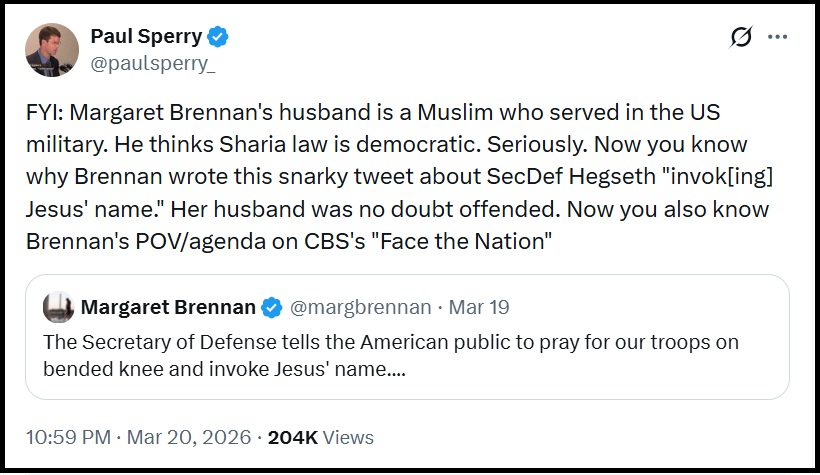
Margaret Brennan’s husband is a Syrian Muslim named Major Ali Iyad Yakub, who goes by the nickname ‘Yado’. He served in the U.S. military. Mrs. Brennan studied abroad at Yarmouk University in Irbid, Jordan, and Yakub’s sister, Samia Yakub, was her roommate. Mr. Yakub founded Y2 Global Advisory specializing in global intelligence, communications, and government relations. He also worked for Senator Joe Biden on the Senate Foreign Relations Committee. Margaret Brennan and Ali Iyad Yakub have two children together.
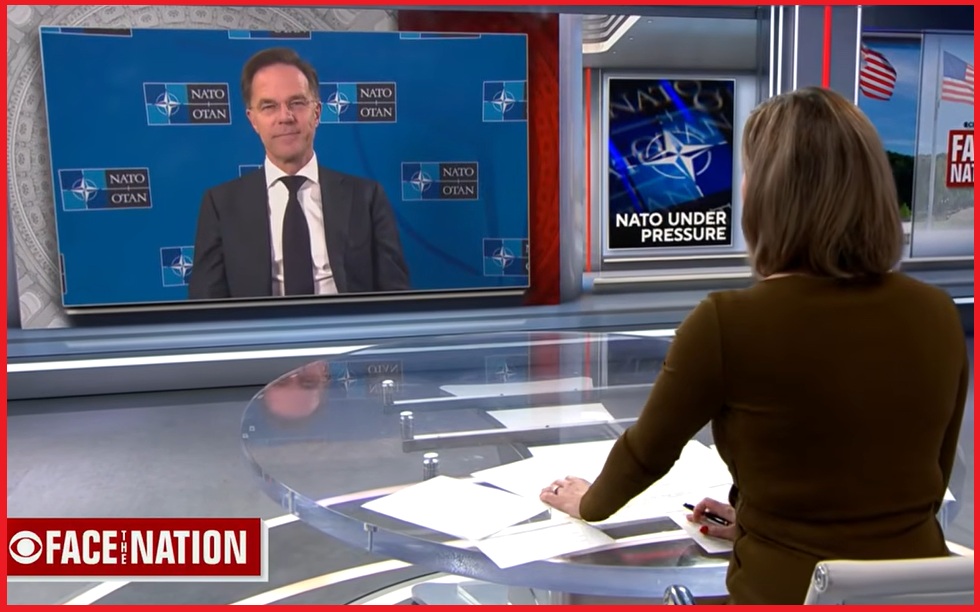
NATO General Secretary Mark Rutte appears on CBS Face the Nation to discuss the European opinion of the U.S. military operation against Iran, and outline how many countries within the NATO alliance are prepared to support the ongoing effort to eliminate the threat Iran represented. Video and Transcript Below:
[Transcript] – MARGARET BRENNAN: We turn now to NATO Secretary General, Mark Rutte, who joins us this morning from The Hague in the Netherlands. Welcome back to ‘Face The Nation.’
NATO SECRETARY GENERAL MARK RUTTE: Margaret, good to be back on the program. Good morning.
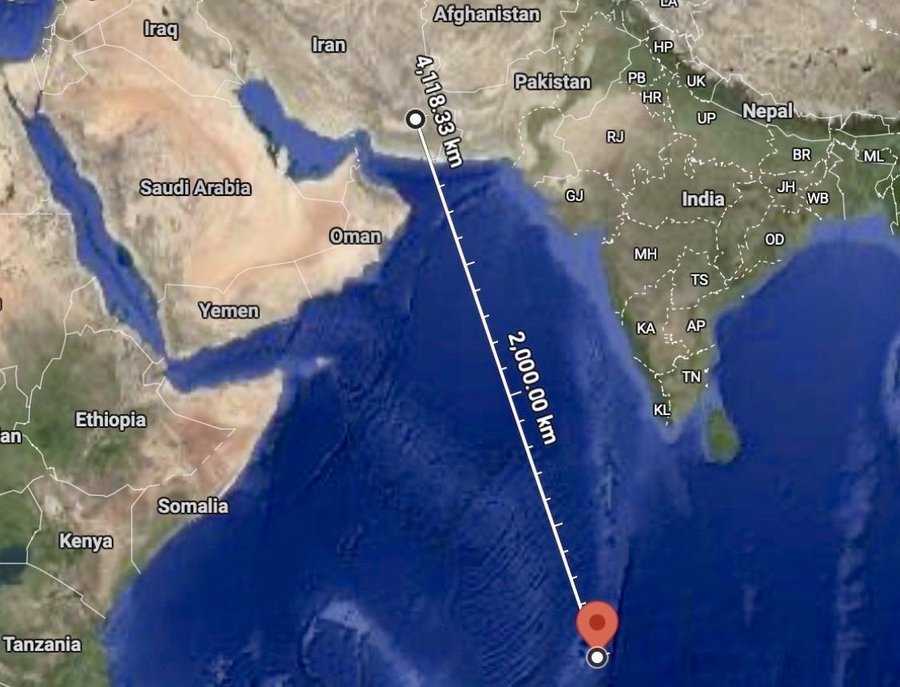
MARGARET BRENNAN: Good morning. We did see that Iran fired two missiles at Diego Garcia. That’s that island in the Indian Ocean, which houses a U.S. UK joint base. That was 4000 kilometers from Iranian territory, furthest Iran has ever gone. You just heard Ambassador Waltz say there might be a difference there in how Israel and the U.S. assess that capability Iran has in terms of what they fired. But Israel says these were intercontinental ballistic missiles that could hit Berlin, Paris and Rome. Does NATO share that Israeli assessment?
SECRETARY GENERAL RUTTE: We cannot confirm that at the moment, so we’re looking into that. But if this would be true, it is the more evidence that what the President is doing here, taking out the ballistic missile capability, taking out the nuclear capability from Iran, is crucial. And exactly as the ambassador just said, Ambassador Waltz, we have seen with North Korea, if we negotiate for too long, you might pass the moment where you can still get this thing done, and North Korea now has the nuclear capability. If Iran would have the nuclear capability, including, together with the missile capability, it will be a direct threat, a existential threat, to Israel, to the region, to Europe, to the stability in the world. So the president doing this is crucial, and I’ve seen the polling, but I really hope the American people will be with him, because he is doing this to make the whole world safer.
MARGARET BRENNAN: So but just to be clear at this hour, do you believe that Iran could bomb Berlin, Paris and Rome? Are they all within direct threat range?
SECRETARY GENERAL RUTTE: What we know for sure is that they are very close to having that capability, whether this case with the UK base, Diego Garcia, we are still assessing. But if it is true, it means they already have that capability. If it is not true, we know they are very close to having that capability. And that is exactly why I feel in Europe, that most politicians, it resonates with them. What the President is doing here, which is taking out- degrading Iran’s capability to be, again, an exporter of chaos, sheer chaos to the region, to the world.
MARGARET BRENNAN: Well, I’m sure the president appreciates your praise, but he has been very frustrated, and made that clear this week with NATO and the European allies. He called NATO quote a paper tiger without the US. He said they complain about high oil prices when they forced to pay but they don’t want to help open the Strait of Hormuz. Easy for them cowards. We will remember.
SECRETARY GENERAL RUTTE: I’ve been in several conversations this week with the president, and the good news is that, look, we had the U.S. for weeks planning for Epic Fury and for reasons of security and safety, they could not share with European allies and allies around the world and partner countries what they were doing, because that would have jeopardized the effect of the first- first attack–
MARGARET BRENNAN: –Or it would have allowed you to plan
SECRETARY GENERAL RUTTE: So it is only logical that European countries needed a couple of weeks to come together. But at this moment, the good news is this, that since Thursday, 22 countries, most of them NATO, but also Japan, Korea, Australia, New Zealand, Bahrain, the UAE, have come together to basically answer three questions, what do we need? When do we need it? And where do we need it? These three questions are now worked through to answer the president’s call, to make sure that we secure the free sailing through the Strait of Hormuz.
MARGARET BRENNAN: To be clear, the president has said four to six weeks for this war, that would put us in early April for an end to combat operations. But then he’s also sending troops. He’s also possibly asking Congress for more money. What’s the when part? When did he tell you your support from these European countries will be needed because from the sources I speak to, they are not willing to send in the midst of combat.
SECRETARY GENERAL RUTTE: Obviously, I cannot in a program which is aired around the world, and you have a lot of viewers, discuss with you what is discussed in secrecy, but I can assure you that, of course, and the UK is- is at the forefront of leading this effort of the 22 countries on the leadership of Prime Minister Starmer. I’ve been in the phone call this week with Prime Minister Starmer and President Macron, and again, this has led to 22 countries now signing up to this initiative. And indeed, one of the key questions is not only the what question and the where question, but also the when question. And this is why military planners are now working together to make sure that we are ready, to make sure that that street- that Strait of Hormuz, that we secure the free sailing there, which is crucial for the world economy.
MARGARET BRENNAN: The president seemed to say, though, that this will go beyond Iran in terms of the impact on his thinking about NATO and his willingness to help Europe. Take a listen to this.
[DONALD TRUMP SOT]
DONALD TRUMP: I think NATO is making a very foolish mistake. And I’ve long said that, you know, I wonder whether or not NATO would ever be there for us. So this is a this was a great test, because we don’t need them, but they should have been there.
[END SOT]
MARGARET BRENNAN: The president continues to frame this as sort of like a quid pro quo, and he’s also mentioned Ukraine in the same context, saying, I help Europe with Ukraine. Why aren’t they helping me? Are you worried that this is going to hurt NATO’s goals elsewhere?
SECRETARY GENERAL RUTTE: What I know is that we always come together. It was under President Trump’s leadership that we had the extremely successful Summit in the Hague where we agreed to spend 5% of our GDPs on defense, and therefore equalizing for the first time since Eisenhower. So this is quite some time- some time back in history, equalizing what the Europeans are spending and what Americans are spending, not only because it is fair that we all spend the same, and this was a wish from Trump 45 and now is Trump 47 he got this done, but also because we need it, because of the Russian threat and our other adversaries. Then on Ukraine, it is again the U.S. providing critical intelligence support and weapons flow, working together with Europeans to secure Ukraine’s fight against the Russians, making sure they have what they need. And now with Iran, I’m absolutely convinced, and I understand the president’s frustration that it takes some time, but again, I also ask for some understanding, because nations had to prepare for this, not knowing and for good reasons about the initial attack on Iran, but now coming together to make sure that we can be able to secure the Strait of Hormuz.
MARGARET BRENNAN: No but to be clear, I’ve spoken to some NATO members who say this is a defensive alliance, not an offensive one. We didn’t sign up to go do what the president is asking us to do. But on the Russia point you just made, the European Council president said the U.S. decision to lift sanctions on Russian oil exports. Is very concerning as it impacts European security. This is part of what President Trump’s doing to try to stop the spike in oil prices here at home, the Treasury Secretary says this means about $2 billion is going to Russia now, President Zelenskyy says it’s more like 10 billion. Doesn’t this benefit Vladimir Putin?
SECRETARY GENERAL RUTTE: Well, this is the thing the president has to balance all these different interests. I know that he is with his team, with Jared Kushner and Steve Witkoff and Marco Rubio. They are constantly working with the Ukrainians to put maximum pressure on the Russians to come to a deal. I know–
MARGARET BRENNAN: This isn’t maximum pressure.
SECRETARY GENERAL RUTTE: –I spoke an hour and a half with President Zelenskyy in London. He wants to get the deal done, and we have to make sure that we also take this to the Russians, to make sure that they are willing to play ball. It is the president putting that pressure together with the Europeans. But again, he has to balance all these different interests. So I’m not going to comment on each element of what is happening here, but his effort to bring the war in Ukraine to a successful end is crucial. He was the only one who was able to break the death lock with Putin when he made the first phone call in February last year, and he has consistently, with his team, done what is necessary to put that pressure, of course, on the Ukrainians, and they want to play ball. They show this. They want to end the war, and are also with the Russians.
MARGARET BRENNAN: Well, we’ll see if Vladimir Putin wants to play ball. Secretary General, thank you for your time, and we’ll be right back with a lot more ‘Face the Nation.’ Stay with us.
Posted originally on CTH on March 22, 2026 | Sundance
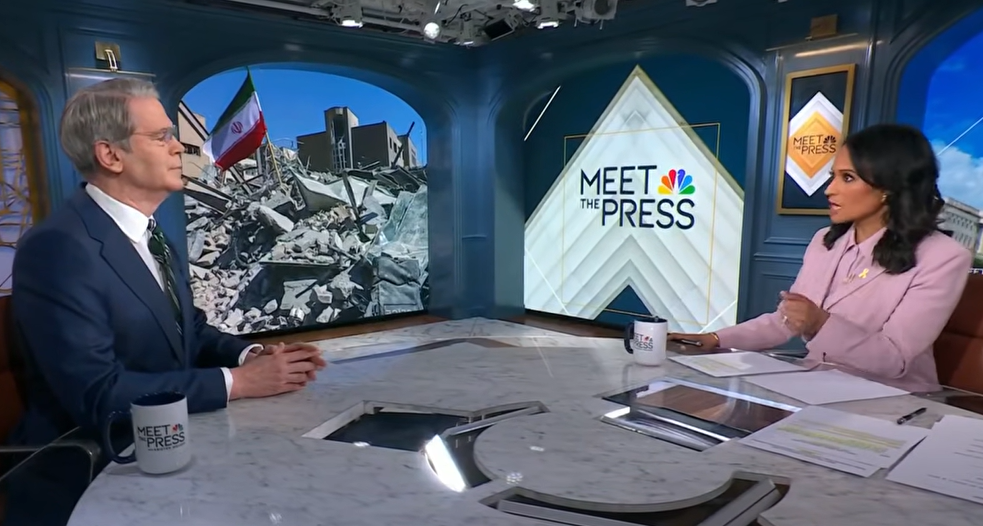
Treasury Secretary Scott Bessent appears on NBC News to outline the purpose and intents of the lifting sanctions as it pertains to Russian and Iranian oil shipments currently in transit. The video and transcript below:
[Transcript] – KRISTEN WELKER: And joining me now is treasury secretary Scott Bessent. Secretary Bessent, welcome back to Meet the Press.
SEC. SCOTT BESSENT: Kristen, good morning.
KRISTEN WELKER: Good morning. Good to have you back. I want to start with the latest of what we’re hearing from President Trump. Let me read you what he posted overnight. He says, “If Iran doesn’t fully open, without threat, the Strait of Hormuz within 48 hours from this exact point in time, the United States of America will hit and obliterate their various power plants, starting with the biggest one first.” Has the president changed his mind about winding down the war, as he said a day earlier, and instead plans to escalate?
SEC. SCOTT BESSENT: I think he said he could wind the war down at any time he wants. And, Kristen, this is the only language the Iranians understand.
KRISTEN WELKER: But this seems to be an escalation, a threat of escalation, and it seems to run counter to his statement that he, in fact, wants to wind down the war.
SEC. SCOTT BESSENT: Again, Kristen, the president’s been very clear from the beginning that the goals are: destroy the Iranian air force and the navy, to completely demolish their missile capabilities, demolish their ability to replenish those capabilities, make sure the Iranians cannot have a nuclear weapon and stop their ability to project power internationally. And the president will take whatever steps it takes to achieve those goals.
KRISTEN WELKER:
Well, you know, I was on the phone with President Trump a week ago. He told me allies were on the way to help secure the Strait of Hormuz. Has the Trump administration abandoned that strategy and now chosen to go it alone?
SEC. SCOTT BESSENT:
Again, what we have done there has been a campaign to -using military assets to soften up the Iranian fortifications along the strait. That’s going to continue until they are completely demolished. And, Kristen, let me tell you, whether it’s this network or the mainstream press, the American people do not have good framing what is going on here. If you were to read what is happening, and I’m sure when Senator Murphy is on, you know, he has come out and said we are losing the war. That is wrong. We have demolished the Iranian capabilities. Their air force is completely destroyed, navy destroyed. And every day we are taking out their missiles, their missile systems, and the factories that build those missiles. And now our- General Caine, Secretary Hegseth, are leading a campaign to destroy all the fortifications along the straits of Hormuz.
KRISTEN WELKER:
Just to put a fine point on this though, is the president in the process of winding down this war or escalating the conflict?
SEC. SCOTT BESSENT:
Again, they are not mutually exclusive. Sometimes you have to escalate to de-escalate, Kristen.
KRISTEN WELKER:
Okay. NBC News is reporting that President Trump is considering sending troops into Iran. Will the administration use troops to secure the Strait of Hormuz or for any other reason, Mr. Secretary?
SEC. SCOTT BESSENT:
Again, as President Trump said during the press break yesterday when he was going out to Marine One, he’s not going to give away what we’re going to do. As President Trump always does, he’s leaving all options on, on the table. We had a very successful bombing campaign against the military installations, Kharg Island, the nexus for all the Iranian oil supply. You know, what could happen with Kharg Island? We’ll see. And again, just to be clear, the command and control system of the Iranian regime is in chaos. This is Hitler’s bunker. Hitler’s dead. Himmler’s dead. Göring is dead. The-most of what you’re seeing are lone wolf activities. The mid-range ICBM that was shot off, these two missiles yesterday, that’s out of desperation, Kristen.
KRISTEN WELKER:
You bring up Kharg Island. I want to ask you about your statement. You said it could become a U.S. asset. What exactly does that mean? Could U.S. troops go into Kharg Island to secure it?
SEC. SCOTT BESSENT:
Again, as I said, all options are on the table.
KRISTEN WELKER:
Okay. So, that’s a possibility.
SEC. SCOTT BESSENT:
All options are on the table.
KRISTEN WELKER:
All right. Let me talk about your announcement this past week. On Friday, the Treasury Department lifted sanctions on Iranian oil stored on tankers, a move that would effectively allow Iran to get more than $14 billion of oil revenue.
SEC. SCOTT BESSENT: I, I –
KRISTEN WELKER: Hold on. Why is the U.S. helping to fund a country that it’s currently at war with, Mr. Secretary–
SEC. SCOTT BESSENT:
Again, Kristen, why don’t we have good facts here? That Iranian oil was always going to be sold to the Chinese. It was going to be sold at a discount. So, which, which is better, Kristen? The uh, which is better? If oil prices spike to $150 and they were getting 70% of that? Or oil prices below $100? It’s better to have them where they are now. And to be clear, we had always planned for this contingency. About 140 million barrels are out on the water. In essence, we are Jiu-Jitsuing the Iranians. We are using their own oil against them. We have a much better line of sight, to be clear, at Treasury, when this oil goes to — if it goes to Indonesia, if it goes to Japan, if it goes to Korea, we have a much better line of sight and are able to block accounts that the oil goes into. When it goes into China it completely gets recycled. So, to be clear, that 14 billion number is grossly overstated.
KRISTEN WELKER:
Let me unpack what you’re just saying. First of all, how much is it? And second of all, I don’t hear you disputing that Iran will get some of the money.
SEC. SCOTT BESSENT:
Iran alway–already gets a huge amount of the money because Iran is the largest sponsor of state terrorism and China has been funding them.
KRISTEN WELKER:
So was always part of the plan to un-sanction Iranian oil?
SEC. SCOTT BESSENT:
Again, we unsanctioned the –at Treasury we plan for all contingencies. We have break-the-glass plans. And to be able — this water — this oil is floating out in Asia, and it is mostly our Asian allies — the U.S. gets virtually no oil from the Gulf. We are energy sufficient. So, when we un-sanction this, rather than the oil going to China, it can go to Japan. It can go to Korea. It can go to Indonesia. It can go to Malaysia –
KRISTEN WELKER:
And it can go to Iran too. I mean, isn’t the point that the sanctions were in place to prevent Iran from getting any of the money. They will have access to some of the –
SEC. SCOTT BESSENT:
No, again–
KRISTEN WELKER:
– money now –
SEC. SCOTT BESSENT:
– Kristen, you’re missing the point. So, please listen to me. They were getting it from China anyway.
KRISTEN WELKER:
Alright. Let me talk about the real-world impact of this because you’re talking about 140 million barrels of Iranian oil, and that’s just a little bit more than what the world uses in one day. How much can that really change prices here at home –
Talk to consumers. How much will it change prices here at home?
SEC. SCOTT BESSENT:
Let me explain. 140 million barrels — about 20 million barrels a day — comes out of the Gulf. About five million has been the uh, repurposed by the Saudis, by the UAE. So, we’re at a 15 deficit. About 1.5 is Iranian oil that comes out. So, we are at between a 10 and 14 million deficit on a daily basis. So, the- if you think about 140 million barrels, that’s between 10 days and two weeks of supply. And one of the reasons, one of the reasons that prices in the U.S. of West Texas crude are below $100 — and we have not seen this massive spike as we did during the beginning of Russia/Ukraine — is because we are well supplied in the market, whether it is the Russian oil, whether it is the Iranian oil, or it is the largest the SPR release in history done by a coalition of 32 countries, 400 million barrels.
KRISTEN WELKER:
Alright. Let’s talk about the Russian oil, which you just raised. The administration did ease oil sanctions on Russia earlier this month. You had initially defended imposing those sanctions, calling Russian exports, quote, “Oil that funds the Russian war machine.” If the point of the sanctions was to stop funding the Russian war machine, why is the administration effectively rewarding Russia now?
SEC. SCOTT BESSENT:
Again, Kristen, you’re missing the point. Which, which is better? Does Russia get more money if oil goes to $150 and they get 70% of that — that’s $105 — or if oil stays below $100, so they’re getting less money? Our analysis shows-our analysis shows that the maximum extra amount that Russia could get would be $2 billion, which is which is one day of the Russian Federation’s budget.
KRISTEN WELKER:
Understood. But they wouldn’t have gotten any of –
SEC. SCOTT BESSENT:
No, no, no–
KRISTEN WELKER:
– that with the sanctions in place –
SEC. SCOTT BESSENT:
Kristen. Kristen, I don’t know, whoever’s –
KRISTEN WELKER:
But would they have gotten –
SEC. SCOTT BESSENT:
No, no, no –
KRISTEN WELKER:
– any of that in place –
SEC. SCOTT BESSENT:
Kristen, whoever does your research, you should get rid of because they were getting it. It was going into China. China was buying over 90% of the Russian oil, and it was –
KRISTEN WELKER:
–But what’s the point of sanctions if not to punish Russia, if not to punish countries?
SEC. SCOTT BESSENT:
Again, the uh, it–we had no ability to do that to China — if China wants to be a bad actor. But we were substantially able to degrade their exports. Their exports have dropped about 25% when the rest of the world isn’t buying it. So, exports are down, but there was a lifeline into China. Now we’ve opened up that to everyone else.
KRISTEN WELKER:
Okay. Just to be clear though. You did defend imposing those sanctions in the first place. Let me ask –
SEC. SCOTT BESSENT:
Just to be clear, it is a maximum of $2 billion. So let’s have good framing on this.
KRISTEN WELKER:
Okay. Let’s talk about the overall cost of this war. The administration’s asking Congress — poised to an additional $200 billion in additional funding for this war. Some Republicans who could cast key votes on this are expressing hesitation or outright opposition. Take a listen to them and then I want to get your reaction on the other side.
[BEGIN TAPE]
FEMALE REPORTER:
Are there any initial red flags for you?
SEN. RICK SCOTT:
No — maybe, it’s a lot of money. I’ll go through it, see what they need.
REP. LAUREN BOEBERT:
I am a no. I’ve already told leadership I am a no on any war supplementals. I am so tired of spending money elsewhere.
[END TAPE]
KRISTEN WELKER:
Should President Trump have gone to Congress on the front end of this war if he was going to ask for Congress’s help now for more funding?
SEC. SCOTT BESSENT:
Again, President Trump was within his authorities under the War Powers Act to initiate this action. And we, we actually now we have plenty of money to fund this war. What we are doing is this is supplemental. President Trump has built up the military, as he did in his first term, as he is now doing in his second term, and he wants to make sure that the military is well-supplied going forward.
KRISTEN WELKER:
Would the administration ever raise taxes in order to fund this war?
SEC. SCOTT BESSENT:
Again, Kristen, terrible framing. I think that the –
KRISTEN WELKER:
Well, it’s just a que– it’s a simple question that I think a lot of people have –
SEC. SCOTT BESSENT:
It’s a ridiculous question.
KRISTEN WELKER:
Well, but –Can you answer it?
SEC. SCOTT BESSENT:
Why would we do that? That the, that we-we have plenty. We have a trillion dollars in this year’s budget for the military. And President Trump, even before the conflict started, had said that he would like to further build out the military.
KRISTEN WELKER:
So, just–is raising taxes under consideration at all –
SEC. SCOTT BESSENT:
Not —
KRISTEN WELKER:
– if you’re saying you have plenty of money?
SEC. SCOTT BESSENT:
Not at all.
KRISTEN WELKER:
Okay. Let’s turn to how all of this is impacting consumers. United Airlines CEO Scott Kirby is now planning, he says, to cut flights and is planning for oil to go as high as $175 a barrel with prices potentially staying above $100 a barrel through 2027. This is according to him. All of this could potentially mean higher prices for consumers. What do you say to Americans who feel they were promised lower costs and now they’re getting the opposite?
SEC. SCOTT BESSENT:
Uh, Kristen, I think the American people understand that any 50 — I’m not going to put a time on it but let’s just pick 50 days of temporary elevated prices, prices will come off on the other side, for 50 years of not having an Iranian regime with a nuclear weapon. The American people are beginning to understand, thanks to President Trump, that there is no prosperity without security.
KRISTEN WELKER:
I heard you say 50 days. Are you saying that prices could start to come down –
SEC. SCOTT BESSENT:
No, no, no, no –
KRISTEN WELKER:
What’s the time frame –
SEC. SCOTT BESSENT:
I was just picking a point. I don’t know whether it’s going to be 30 days. I don’t know whether it’s going to be 50 days. I don’t know whether it’s going to be 100 days. But to have 50 years the, uh, of peace in the Middle East and know that the Iranian regime is defanged because, Kristen, what we had before was the illusion of security. Imagine this regime if they had had another year or two years to build out their missile capabilities. They would’ve built a shield around themselves and it would’ve been impossible to prevent them from getting a nuclear weapon.
KRISTEN WELKER:
All right. I want to ask you on a different topic about a post by President Trump from yesterday responding to the death of former special counsel Robert Mueller. He posted this quote, “Robert Mueller just died. Good, I’m glad he’s dead. He can no longer hurt innocent people!” Do you think it’s appropriate for the president of the United States to celebrate the death of an American citizen, someone who’s a Bronze Star, Purple Heart recipient and who served in Vietnam?
SEC. SCOTT BESSENT:
Kristen, I was with the president in the green room at Davos and there was a video playing of the — what may have been an illegal raid on his home at Mar-a-Lago. They are going through his wife’s wardrobe. And I watched the look in his eye, and I think that neither one of us can understand what has been done to the president and to his family.
KRISTEN WELKER:
But to the question of the president’s post, I mean, Robert Mueller didn’t order that raid. Is it appropriate for the president to celebrate the death of any American citizen –
SEC. SCOTT BESSENT:
Again —
KRISTEN WELKER:
– Mr. Secretary –
SEC. SCOTT BESSENT:
I think that given what has been done to President Trump and his family it is impossible for either of us to understand what he has been through.
KRISTEN WELKER:
So, you don’t think that there’s anything wrong with the post, saying, “Good. Robert Mueller’s dead”
SEC. SCOTT BESSENT:
Again, I think that we should all have a little empathy for what has been done to him and his family.
KRISTEN WELKER:
All right. Treasury Secretary Scott Bessent, thank you as always for being here. Really appreciate it.
According to multiple media and government accounts, Iran targeted the joint U.S-UK base at Diego Garcia in the Indian Ocean with two intermediate-range ballistic missiles (IRBM).
This is significant because Diego Garcia is 4,000 km away from where the missiles were launched and would indicate that all of Europe was within the strike zone as President Donald Trump previously warned.
Europe and the NATO alliance previously said Iran did not possess such capabilities. Apparently, they do.
As noted by Defense Security, “This attempted strike occurred around day 22 of the latest escalation cycle in the U.S.–Israel–Iran confrontation, reinforcing the view among defense planners that Tehran is prepared to expand its missile envelope to threaten strategic rear-area bases supporting Western operations rather than limiting attacks to regional targets within the Persian Gulf.”
“Diego Garcia’s distance of roughly 3,800 – 4,000 km from Iran makes the launch operationally significant because it suggests either the use of a lighter warhead estimated at approximately 300–500 kg or the deployment of a previously undisclosed extended-range variant, both of which indicate a deliberate demonstration of reach rather than a conventional strike attempt.”
According to the reports, one missile failed in flight whilst the other was engaged by a U.S. destroyer utilizing an SM-3 interceptor; however, as of this writing a successful interception was not confirmed.
Regardless, neither of the missiles hit the base. Iranian long-range precision missiles have not previously been publicly assessed as having this kind of range.
(VIA MSM) – Iran fired two intermediate-range ballistic missiles from roughly 2,400 miles away at the Diego Garcia base in the Chagos Islands, marking its first confirmed strike attempt at such a distance. US officials said one was intercepted by a warship’s SM-3 system and the other failed mid-flight. Iranian media hailed the attack as a “significant step” showing capabilities beyond the previously assumed 2,000 km range limit.
Military analysts, including Gen Sir Richard Barrons, said the strike proves Iran’s missile reach is greater than believed, potentially covering Western Europe. This revelation could force NATO and allied forces to rethink missile defence postures and regional force deployment. The capability leap also signals a shift in Iran’s deterrence strategy, potentially emboldening it in future confrontations. (more)
🚨 WOW. President Trump has just been proven right AGAIN on the world stage — Iran just proved they can fire missiles WAY BEYOND the Middle East
"2,500 miles away — previously, Iran said their missiles go only 1,300 miles!"
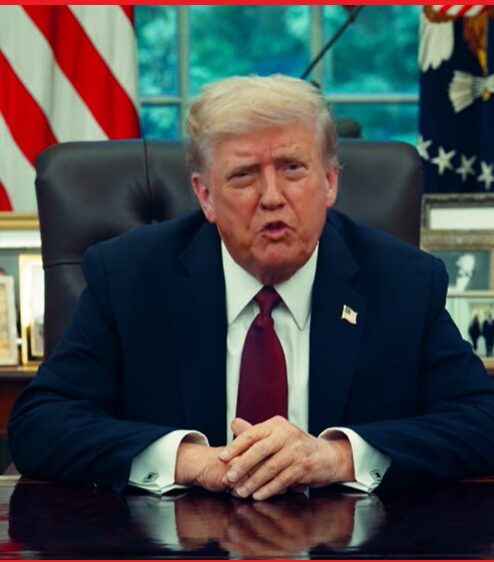
“We are getting very close to meeting our objectives as we consider winding down our great Military efforts in the Middle East with respect to the Terrorist Regime of Iran: (1) Completely degrading Iranian Missile Capability, Launchers, and everything else pertaining to them. (2) Destroying Iran’s Defense Industrial Base. (3) Eliminating their Navy and Air Force, including Anti Aircraft Weaponry. (4) Never allowing Iran to get even close to Nuclear Capability, and always being in a position where the U.S.A. can quickly and powerfully react to such a situation, should it take place. (5) Protecting, at the highest level, our Middle Eastern Allies, including Israel, Saudi Arabia, Qatar, the United Arab Emirates, Bahrain, Kuwait, and others. The Hormuz Strait will have to be guarded and policed, as necessary, by other Nations who use it — The United States does not! If asked, we will help these Countries in their Hormuz efforts, but it shouldn’t be necessary once Iran’s threat is eradicated. Importantly, it will be an easy Military Operation for them. Thank you for your attention to this matter!”
Posted originally on CTH on March 20, 2026 | Sundance
Michael Caputo was interviewed by Catherine Herridge as he outlines all of the FBI targeting and DOJ harassment that took place in the past several years. This is a very interesting interview. WATCH:
00:35 Michael Caputo: Biden Era FBI ‘Surveilled’ Dozens of Trump Associates 01:28 Caputo Says He Was Targeted Over His Investigation into Bidens and Anti-Weaponization Initiative 02:12 How Did the Biden-Era Investigation Continue Under AG Bondi? 03:10 Google Alert: FBI Subpoenaed His Records 04:29 Caputo Says He Was Working in Same DOJ Building as DOJ Investigation Targeting Him 06:00 August 2024 Susie Wiles Calls with Shocking News 06:40 Before 2024 Presidential Election, FBI Laid A Trap?
07:58 Federal Warrant Wanted Information About Caputo’s State of Mind 09:30 FBI Should Be Shattered: ‘Russia, Russia, Russia All Over Again’ 10:42 FBI File: Caputo Called A Radical Traditionalist Catholic (RTC) 11:30 Caputo ‘Had To Go To The Highest Authority’ To Get Case Closed 12:44 Russia Gate Cost Caputo’s Family Everything 13:55 Threats To Caputo And Family 16:10 Accountability For RussiaGate 18:00 If Democrats Win Mid-Terms: Weaponization Will Increase 10x 19:50 Caputo: Task Force For Americans Who Were Harmed By Weaponization 20:50 Response to Critics Who Say Caputo Sees Conspiracies 21:43 Independent Journalism
Posted originally on CTH on March 20, 2026 | Sundance
Let me start by saying there is a lot of misleading information circling current events, some of it by what CTH considers very dubious alt-right voices. I suggest just to be leery of “exclusive” insider information. There are motives and angles that are not obvious and would not be comfortable for those who follow events closely.
[As an example, the election/voting information -connected to the Intelligence Community- and recently outlined by John Solomon, is not new. What Solomon is rehashing is the background information exposed by Catherine Englebrecht and True the Vote surrounding Chinese involvement in prior elections (Konnech etc.). Englebrecht gave the FBI the data, the FBI buried it and eventually targeted Englebrecht. The hidden data and FBI conduct is now resurfacing.]
As a result of datamining the FBI ‘prohibited access’ records Chuck Grassley has released an FD-302 from an FBI agent who was on the Mueller team and became a whistleblower about the motives and agenda of the Mueller participants. [SEE HERE]
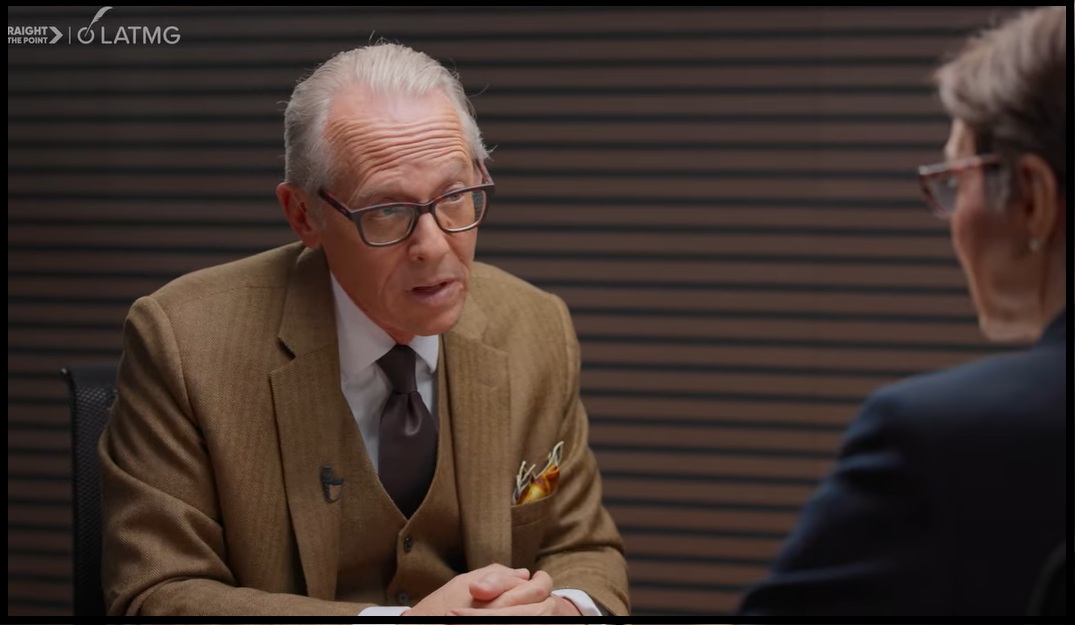
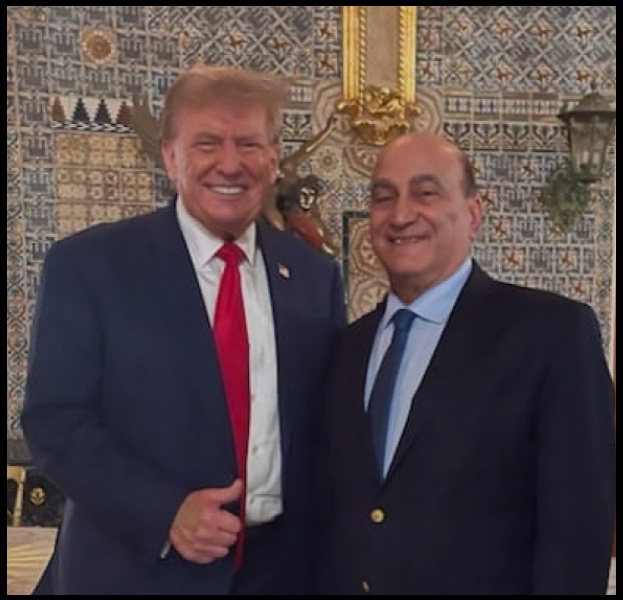
One of the stories surfacing surrounds one of the Mueller targets, Walid Phares. [SEE HERE]
Walid Phares was the 5th target within the Weissmann/Mueller probe who were using Foreign Agent Registration Act (FARA) violations as targeting mechanisms.
The other four were Paul Manafort, Michael Flynn, Carter Page and George Papadopoulos.
♦ Why Phares? This is a little complicated but become straightforward once you get it.
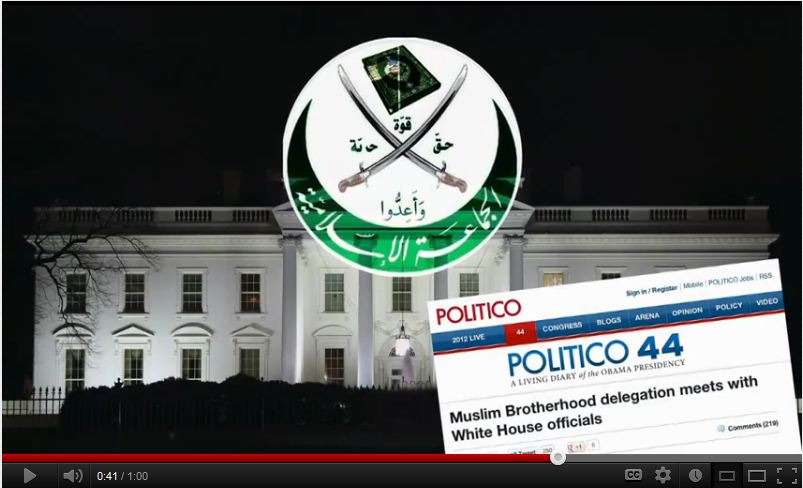
One of the first things President Obama did when he took office was to travel to Cairo, Egypt, give a speech to the Islamic world and trigger what later became known as the “Arab Spring.” Obama was an ideological ally of the Muslim Brotherhood, which positioned him in alignment with Qatar, Iran, Turkey and various factions of the more extremist Muslim community. The Muslim Brotherhood is political Islam.
Trying to keep it short, essentially Walid Phares was on the opposite side of that ideology. He was a critic of the Brotherhood, and a supporter of the person who eventually shut down the Arab Spring uprisings, Egyptian President Fattah al-Sisi.
After success in Tunisia, Egypt, Bahrain and Libya, President Obama was furious when Army General al-Sisi stepped up and removed Muslim Brotherhood aligned Mohammed Morsi in Egypt. That military uprising stopped the Arab Spring, and it stalled out thereafter.
Obama’s efforts to give increased power and voice to the Muslim Brotherhood was essentially stopped by Sisi, and that made anyone on the stability side of Islam an enemy of Obama. Without Egypt, Team Obama couldn’t trigger Syria – they did get extremism to expand via ISIS, but the coalition of Arab states al-Sisi put together pushed back on the extremists.
That’s the Muslim ideological part of the issue, and we could write a dozen deep articles about all of the ancillary issues within it. However, for the sake of reader time, we’ll just jump forward to the other, perhaps more important, issue.
Walid Phares was an advisor to Donald Trump, helping him to connect to middle east moderate Arab leaders like al-Sisi and frame policies to end the extremism aspect.
As a policy advisor Phares saw the structural flaws in the Obama Iran-deal and, more importantly, Phares saw the outline of a financial relationship that intersected with Obama policy.
The Obama Iran deal involved the U.S. dropping sanctions, feeding billions of dollars back to Iran (via Qatar) as part of the incentive for the Joint Comprehensive Plan of Action (JCPOA) to “eliminate Iran’s nuclear ambitions.” At least that was the forward face of the policy goal.
However, in the background there was a semi-opaque quid-pro-quo where Obama would transfer sanctioned funds back to Iran and then Iran would send a portion of the funds back to the Obama network. The problem was the return funds were contingent upon the success of the Iran deal.
By advising President Trump against the Iran deal, Walid Phares was essentially putting a stop to the quid-pro-quo that was contingent upon the deal’s success. In the bigger picture, that made Phares a target and the Weissmann-Mueller probe was the mechanism to target him, using FARA as the weapon.
[SIDEBAR – In a collaborative relationship between the Senate and the State Department, U.S. senators write foreign aid policy, rules and regulations thereby creating the financing mechanisms to transmit U.S. funds (think USAID). Those same senators then received a portion of the funds laundered back through their various “institutes” and business connections to the foreign government offices. Example Ukraine [Burisma to Biden] or The McCain Institute.
The U.S. State Dept. served as a distribution network for the authorization of the money laundering by granting DC conflict waivers, approvals for financing (think Clinton Global Initiative), and permission slips for the payment of foreign money. The officials within the State Dept. take a slice of the overall payments through a system of “indulgence fees”, junkets, gifts, expense payments from foreign dignitaries, and payments back to leadership pacs and structured political institutes.
If anyone gets too close to revealing or interrupting this process, they become a target of the apparatus. By all accounts, President Trump was considered an existential threat to this entire process. – END SIDEBAR]
President Obama was ideologically aligned with the Muslim Brotherhood (time spent in Pakistan as a young man), that made him sympathetic to Iran (Valerie Jarrett), and simultaneously team Obama had a financial motive.
The Mueller investigation was used by Obama-era officials, deep state embeds and eventually FBI investigators as a mechanism to block President Trump from executing a divergent foreign policy. The primary policy to protect was the Iran deal.
It’s a similar process in various foreign policy outcomes:
President Obama was positioned to make money from the Iran deal.
Vice President Biden was similarly positioned to make money from Ukraine.
Hillary Clinton (CGI) would make money from Haiti.
Donald Trump was a disruption to all of those ideological and financial constructs. President Trump would and did carry an entirely new foreign policy. This would result in ideological diminishment for the former policy teams, and financial loses for the former beneficiaries.
WASHINGTON – Carter Page wasn’t the only adviser from Trump’s first campaign wiretapped by the FBI. Walid Phares was electronically monitored for a 12-month period between 2017 and 2018, according to the Washington-based FBI agent who was assigned to investigate him as part of Special Counsel Robert Mueller’s Russia collusion probe.
As in Page’s case, the bureau withheld evidence exonerating Phares from the court to secure surveillance authorization, according to newly declassified FBI documents.
“I had no idea any of this was happening,” Phares told RealClearInvestigations in an exclusive interview Wednesday night. “This is shocking because they told my lawyer that I was only a ‘witness’ and that they just needed some information.”
“But these were huge abuses that I can see now,” he added. Phares said he intends to sue the FBI and Justice Department for damages.
The 68-year-old Lebanese-American scholar said case agents and prosecutors grilled him for months, questioned his employer, and even went after his bank records. As a result, he said he lost his job at a university, his livelihood, and even his bank accounts and credit card after Wells Fargo cancelled them.
“It was like a disaster for me financially and physically,” he said. “I also lost my Fox News contract” as an expert on terrorism and the Middle East, which he had held since 2007.
Phares was not hired by the Trump administration, even though he had been expected to land a high-level foreign policy position. “They scared the agencies from me so I would have problems with (obtaining) a security clearance,” he said.
Investigators could find “nothing” criminal on Phares during their probe, according to the lead case agent, and in fact, they concluded he was “honest.” Yet Mueller’s team continued to secretly spy on Phares – without providing the powerful federal spy court any of the exculpatory evidence that could clear Phares as required by law.
The agent told investigators in a separate 2020 internal FBI review that “there were no corroborating facts that tied Crosswind [the codename for Phares’ case] to certain facts that we thought were originally true,” according to a transcript of his testimony, released after more than five years of concealment.
He added that “nothing” collected from Phares’ communications under the Foreign Intelligence Surveillance Act (FISA) warrants, including phone messages and emails, “aided the investigation other than to prove the target was being honest with investigators,” who had interviewed him repeatedly.
Nonetheless, the FBI continued monitoring Phares as part of a Foreign Agents Registration Act (FARA) investigation. He was never charged with any violations of the act. (read more)
Former Deputy Attorney General Rod Rosensten gave testimony to the Senate in June of 2020 {LINK}. Within Rosenstein’s election year and little covered testimony, he revealed that Special Counsel Robert Mueller and his main deputy Andrew Weissmann were completely in charge of Main Justice at the DOJ during the time the special counsel investigation was happening. Attorney General Jeff Sessions was recused, and DAG Rosenstein was in charge of how much power and authority Mueller and Weissmann’s team held in the DOJ.
Rosenstein testified the special counsel had full control over everything and anything related to Trump-Russia, including the Carter Page FISA application the special counsel had re-submitted for the third renewal on June 29, 2017.
Anything that remotely touched the Trump-Russia investigation was completely and unilaterally controlled by Mueller and Weissmann, including any ancillary investigation that would come as an outcome from anything to do with Trump-Russia
Rosenstein also testified he deferred everything to Mueller/Weissmann and never challenged any of their requests for expanded investigative scope or authority. Rosenstein felt the special counsel was in charge, and anything they wanted – they got. As Deputy AG Rosenstein said all the special counsel operations were part of their investigative authority, and he felt he had no place in questioning, challenging or refusing anything related to their investigative authority.
I have created this site to help people have fun in the kitchen. I write about enjoying life both in and out of my kitchen. Life is short! Make the most of it and enjoy!
This is a library of News Events not reported by the Main Stream Media documenting & connecting the dots on How the Obama Marxist Liberal agenda is destroying America




 Centinel2012