Sunday Talks: Mike Waltz Says Iran’s 4,000km Missile Range Not Verified


Posted originally on CTH on March 22, 2026 | Sundance

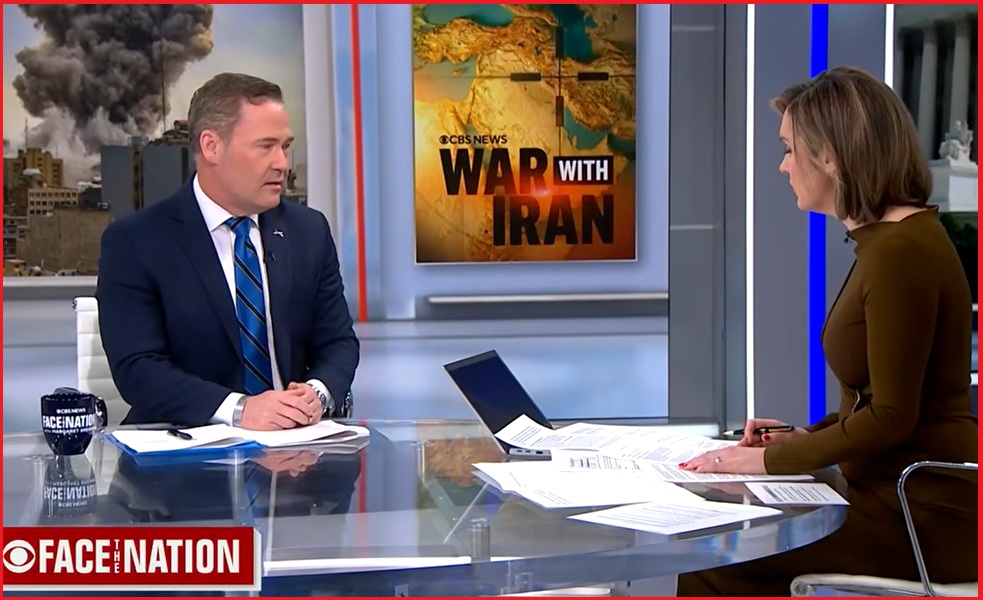
U.S. Secretary to the United Nations, Mike Waltz, appears on CBS to discuss the political angles to the U.S. military operation against Iran.  There was some critical questioning about whether Iran was factually capable of sending a missile from Iran to the U.S. base at Diego Garcia in the Indian Ocean.   Ambassador Waltz seems to question the reporting on their capabilities.  Video and Transcript Below:

[Transcript] – MARGARET BRENNAN: That’s Charlie D’Agata reporting in Arad, Israel. We’re joined now by the U.S. Ambassador to the United Nations, Mike Waltz, and it’s good to have you here in person.

AMB. MIKE WALTZ: Thank you, Margaret.

MARGARET BRENNAN: So Ambassador, on Friday, the president tweeted, “The Hormuz Strait will have to be guarded and policed, as necessary, by other Nations who use it — The United States does not!” And then last night he threatened that if Iran doesn’t fully open the Strait of Hormuz within 48 hours from the time of his post, the US will “hit and obliterate” their power plants, starting with the “biggest one first.” So which is it, is the U.S. opening Hormuz by force or having others do it.

AMB. WALTZ: Well, I think it can be both. It’s not necessarily mutually exclusive. I am glad you are having NATO Secretary General Mark Rutte on. I think at his urging and his leadership, we have now seen Italy, Germany, France and a number of others commit to help with this effort.
MARGARET BRENNAN: –After combat operations end.

AMB. WALTZ: Particularly since, particularly since so much energy is going to Europe out of the strait. We just had the Japanese Prime Minister commit to portions of her navy and the Japanese navy, 80% of what is coming out of the Gulf is going to Asia. So we are seeing our allies come around as they should, but at the same time, the president is not going to stand for this regime, as it has threatened and tried for five decades to hold the world’s energy supplies hostage under its, its genocidal intent.

MARGARET BRENNAN: So some allies like the United Kingdom have talked about things like surveillance, anti-mining, anti-drone support for the United States. But in that appeal from the United States, I should say in the Strait of Hormuz, but not until active combat ends. To be clear, that is what we are talking about.

AMB. WALTZ: And the president has been clear too. He’s going to continue to pound Iran’s capabilities, its missile, its naval and its drone capability. Margaret, we have to take a step back. We have seen what it’s doing now in terms of attacking ports, airports, civilian infrastructure, hotels, resorts, and what it is trying to do to global energy supplies. One can only imagine if it had a nuclear umbrella. One could only imagine if Iran achieved its aim to test. Then you have Saudi Arabia wanting a nuclear program, then perhaps the UAE, Turkey or others. And when people ask why this matters to our security here at home, it should petrify every American that you could potentially have a nuclear Middle East awash in weapons.

MARGARET BRENNAN: Well, they are not enriching. They weren’t enriching leading up to this. This is what U.S. officials have testified to. But just on this point about what the president–

AMB. WALTZ: Well they couldn’t enrich because of Operation Midnight Hammer that obliterated their ability to enrich. They had every intent to continue.

MARGARET BRENNAN: They do have a nuclear power plant, Bushehr. It’s actually their largest energy plant. It’s a civilian site.

AMB. WALTZ: It is actually not their largest energy plant. It is about one, about one gigawatt. They have larger ones that are gas, fired outside of Tehran. But just case in point, yeah.

MARGARET BRENNAN: Okay, but- but in this case, in that clarification, the reason I am asking you is when the president says he is going to bomb energy infrastructure, civilian energy infrastructure, is he going to bomb a nuclear power plant, or is that off the table.

AMB. WALTZ: Well, I would never take anything off the table for the president, certainly not on national television. However, there are larger plants. There is one outside of Tehran. There are others outside of other cities that are gas fired, thermal powered. I think the important point here is to understand the IRGC, a declared terrorist organization, not only by us–

MARGARET BRENNAN: Yeah, in Europe too.

AMB. WALTZ: –but in a number of European countries, controls a huge swath of Iran’s critical infrastructure, their economy and certainly many of their governing institutions. And so to the extent we are degrading their military capability and their defense industrial base, all options should be on the table, and the president has made that very clear.

MARGARET BRENNAN: How do you ensure that this doesn’t constitute a war crime, which the UN Secretary General said an attack on energy infrastructure could be. How do you make sure this is not mass punishment for innocent civilians?

AMB. WALTZ: Well, I think you know, I would encourage and will encourage the Secretary General to point out the twenty to thirty thousand Iranians that the regime massacred at scale, the civilian infrastructure that they are attacking–

[CROSS-TALK STARTS]

MARGARET BRENNAN: –No one is endorsing that but how do you make sure this doesn’t hurt–

AMB. WALTZ: — And when you, but when have a regime that has its grips on so much critical infrastructure, that is using it to further not only the repression of its own people, to attack its neighbors, and in contravention of UN sanctions, to march towards a nuclear weapon, then that makes those legitimate targets.

[CROSS-TALK ENDS]

MARGARET BRENNAN: Okay, well, you know that in many of these places, water desalination is linked into that energy infrastructure, civilian infrastructure. This is why it is a question of it being a war crime.

AMB. WALTZ: I have no doubt that the president, the Pentagon, their team will ensure that what they target is geared towards the military infrastructure of Iran. But I have to tell you, they deliberately blend, have a long history, everything from hiding weapons under schools and hospitals to using power plants and other critical infrastructure to not only power their military but their civilian, and they deliberately blend in contravention of international law.

MARGARET BRENNAN: Let me ask you about what we saw overnight with these missile attacks. The Director of National Intelligence testified last week to Congress that Iran could not develop a militarily viable ICBM, intercontinental ballistic missile, before 2035 if it attempted to pursue that capability. Yesterday, the IDF said Israel said that Iran did fire an ICBM. Has this changed the U.S. assessment?

AMB. WALTZ: I am not familiar with the IDF assessment. I can tell you-

MARGARET BRENNAN: They said what was fired at Diego Garcia and them was an ICBM.

AMB. WALTZ: I can tell you the UK just condemned the firing of an intermediate range ballistic missile at Diego Garcia, that same type of missile Iran has lied about in terms of its development, said they were not developing yet. They just lied. Yet they just did it. Not only could it hit Diego Garcia, it could hit capitals in Europe. And Margaret, the technology, the booster technology that Iran has been hiding behind its space program. I don’t think we are going to see Iranian astronauts on the moon anytime soon. That this space program has been hiding that technology. You have the re-entry technology to marry the two really does not take very much in terms of technological development. And we just have to you know, thank God the president is taking action now and stopping this march towards a fully fledged nuclear program, instead of waiting until after it’s developed, like we saw in North Korea under the Clinton administration say, surprise, we now have, a full program.

MARGARET BRENNAN: So a difference there in the assessments. But let me ask you about our polling.

AMB. WALTZ: It wouldn’t be the first time you have different intelligence assessments, by the way, by different intelligence communities.

MARGARET BRENNAN: Absolutely. The administration has not convinced, we’ve seen it in our polling, the majority of Americans that this war was necessary. Sixty six percent of Americans believe conflict with Iran is a war of choice. Sixty percent disapprove of the US taking military action against Iran. Fifty seven percent of Americans think the conflict is going very or somewhat badly. How do you tell the American people they’re wrong?

AMB. WALTZ: Well, I can. I could quote a whole slew of polls that show, for example, self-described MAGA Republicans give the president a 100% percent approval rating–

MARGARET BRENNAN: –his base is in there, absolutely–

AMB. WALTZ: A majority say the number one job of the commander in chief is to keep Americans safe. I can point here to an NBC poll, 90% of Republicans, broader Republicans, support Trump’s effort to destroy Iran’s nuclear capabilities. And I have to point out, no one should be surprised here. President Trump has said Iran cannot have a nuclear weapon 2016 campaign, 2020 campaign. Since 2024 he has said it seventy four times out in the public space.

MARGARET BRENNAN: But if he is going to commit any kind of ground troops or boots on the ground. Don’t you think he needs to persuade the majority of American people, not just his base?

AMB. WALTZ: I think the president will keep all options on the table to secure these objectives. And as a veteran, as a parent, I thank God he is not kicking the can like so many administrations have for fifty years, until this is a catastrophic problem where we have very limited options to deal with, much less an entire Middle East potentially awash in nukes.

MARGARET BRENNAN: Ambassador Walz, thank you for your time this morning.

AMB. WALTZ: All right, thank you.

[END TRANSCRIPT]
Sunday Talks: NATO General Secretary Mark Rutte Outlines Support for Operation Epic Fury


Posted originally on CTH on March 22, 2026 | Sundance 

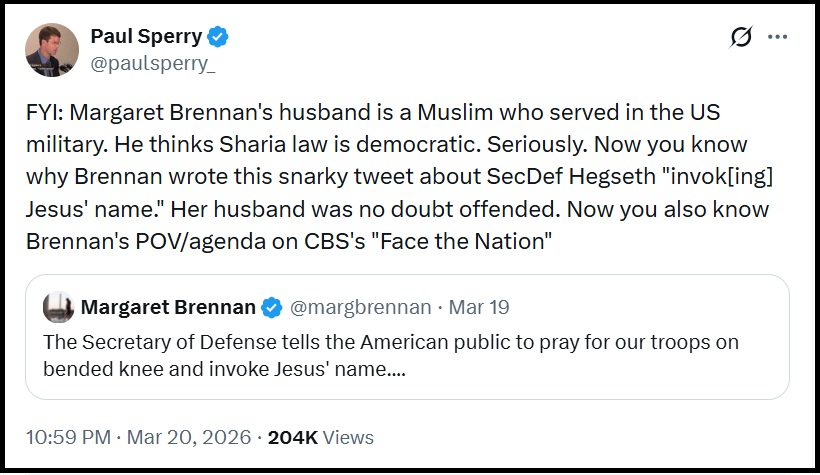
Margaret Brennan’s husband is a Syrian Muslim named Major Ali Iyad Yakub, who goes by the nickname ‘Yado’.  He served in the U.S. military. Mrs. Brennan studied abroad at Yarmouk University in Irbid, Jordan, and Yakub’s sister, Samia Yakub, was her roommate. Mr. Yakub founded Y2 Global Advisory specializing in global intelligence, communications, and government relations. He also worked for Senator Joe Biden on the Senate Foreign Relations Committee.  Margaret Brennan and Ali Iyad Yakub have two children together.

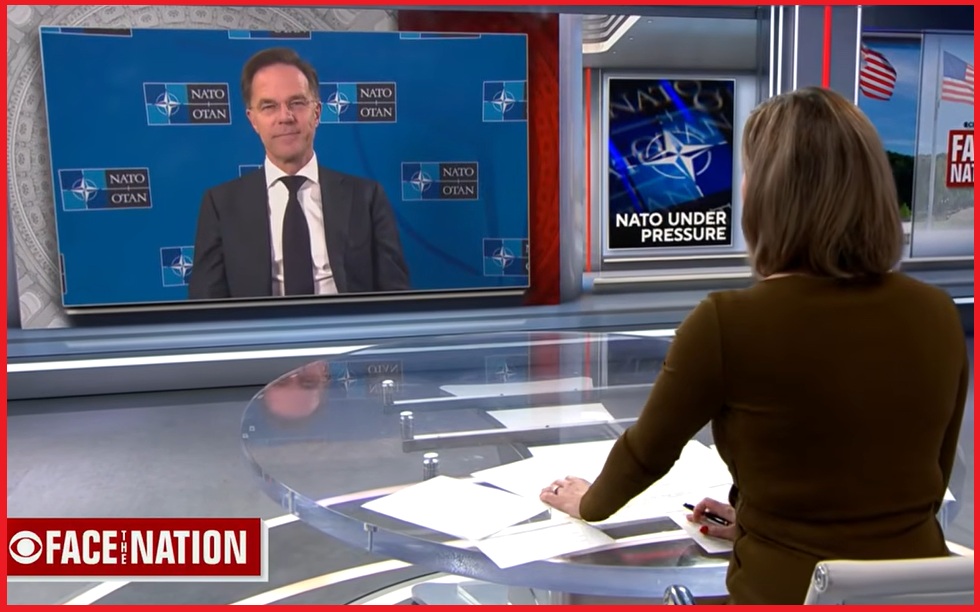
NATO General Secretary Mark Rutte appears on CBS Face the Nation to discuss the European opinion of the U.S. military operation against Iran, and outline how many countries within the NATO alliance are prepared to support the ongoing effort to eliminate the threat Iran represented.  Video and Transcript Below:

[Transcript] – MARGARET BRENNAN: We turn now to NATO Secretary General, Mark Rutte, who joins us this morning from The Hague in the Netherlands. Welcome back to ‘Face The Nation.’

NATO SECRETARY GENERAL MARK RUTTE: Margaret, good to be back on the program. Good morning.

MARGARET BRENNAN: Good morning. We did see that Iran fired two missiles at Diego Garcia. That’s that island in the Indian Ocean, which houses a U.S. UK joint base. That was 4000 kilometers from Iranian territory, furthest Iran has ever gone. You just heard Ambassador Waltz say there might be a difference there in how Israel and the U.S. assess that capability Iran has in terms of what they fired. But Israel says these were intercontinental ballistic missiles that could hit Berlin, Paris and Rome. Does NATO share that Israeli assessment?

SECRETARY GENERAL RUTTE: We cannot confirm that at the moment, so we’re looking into that. But if this would be true, it is the more evidence that what the President is doing here, taking out the ballistic missile capability, taking out the nuclear capability from Iran, is crucial. And exactly as the ambassador just said, Ambassador Waltz, we have seen with North Korea, if we negotiate for too long, you might pass the moment where you can still get this thing done, and North Korea now has the nuclear capability. If Iran would have the nuclear capability, including, together with the missile capability, it will be a direct threat, a existential threat, to Israel, to the region, to Europe, to the stability in the world. So the president doing this is crucial, and I’ve seen the polling, but I really hope the American people will be with him, because he is doing this to make the whole world safer.

MARGARET BRENNAN: So but just to be clear at this hour, do you believe that Iran could bomb Berlin, Paris and Rome? Are they all within direct threat range?

SECRETARY GENERAL RUTTE: What we know for sure is that they are very close to having that capability, whether this case with the UK base, Diego Garcia, we are still assessing. But if it is true, it means they already have that capability. If it is not true, we know they are very close to having that capability. And that is exactly why I feel in Europe, that most politicians, it resonates with them. What the President is doing here, which is taking out- degrading Iran’s capability to be, again, an exporter of chaos, sheer chaos to the region, to the world.

MARGARET BRENNAN: Well, I’m sure the president appreciates your praise, but he has been very frustrated, and made that clear this week with NATO and the European allies. He called NATO quote a paper tiger without the US. He said they complain about high oil prices when they forced to pay but they don’t want to help open the Strait of Hormuz. Easy for them cowards. We will remember.

SECRETARY GENERAL RUTTE: I’ve been in several conversations this week with the president, and the good news is that, look, we had the U.S. for weeks planning for Epic Fury and for reasons of security and safety, they could not share with European allies and allies around the world and partner countries what they were doing, because that would have jeopardized the effect of the first- first attack–

MARGARET BRENNAN: –Or it would have allowed you to plan

SECRETARY GENERAL RUTTE: So it is only logical that European countries needed a couple of weeks to come together. But at this moment, the good news is this, that since Thursday, 22 countries, most of them NATO, but also Japan, Korea, Australia, New Zealand, Bahrain, the UAE, have come together to basically answer three questions, what do we need? When do we need it? And where do we need it? These three questions are now worked through to answer the president’s call, to make sure that we secure the free sailing through the Strait of Hormuz.

MARGARET BRENNAN: To be clear, the president has said four to six weeks for this war, that would put us in early April for an end to combat operations. But then he’s also sending troops. He’s also possibly asking Congress for more money. What’s the when part? When did he tell you your support from these European countries will be needed because from the sources I speak to, they are not willing to send in the midst of combat.

SECRETARY GENERAL RUTTE: Obviously, I cannot in a program which is aired around the world, and you have a lot of viewers, discuss with you what is discussed in secrecy, but I can assure you that, of course, and the UK is- is at the forefront of leading this effort of the 22 countries on the leadership of Prime Minister Starmer. I’ve been in the phone call this week with Prime Minister Starmer and President Macron, and again, this has led to 22 countries now signing up to this initiative. And indeed, one of the key questions is not only the what question and the where question, but also the when question. And this is why military planners are now working together to make sure that we are ready, to make sure that that street- that Strait of Hormuz, that we secure the free sailing there, which is crucial for the world economy.

MARGARET BRENNAN: The president seemed to say, though, that this will go beyond Iran in terms of the impact on his thinking about NATO and his willingness to help Europe. Take a listen to this.

[DONALD TRUMP SOT]

DONALD TRUMP: I think NATO is making a very foolish mistake. And I’ve long said that, you know, I wonder whether or not NATO would ever be there for us. So this is a this was a great test, because we don’t need them, but they should have been there.

[END SOT]

MARGARET BRENNAN: The president continues to frame this as sort of like a quid pro quo, and he’s also mentioned Ukraine in the same context, saying, I help Europe with Ukraine. Why aren’t they helping me? Are you worried that this is going to hurt NATO’s goals elsewhere?

SECRETARY GENERAL RUTTE: What I know is that we always come together. It was under President Trump’s leadership that we had the extremely successful Summit in the Hague where we agreed to spend 5% of our GDPs on defense, and therefore equalizing for the first time since Eisenhower. So this is quite some time- some time back in history, equalizing what the Europeans are spending and what Americans are spending, not only because it is fair that we all spend the same, and this was a wish from Trump 45 and now is Trump 47 he got this done, but also because we need it, because of the Russian threat and our other adversaries. Then on Ukraine, it is again the U.S. providing critical intelligence support and weapons flow, working together with Europeans to secure Ukraine’s fight against the Russians, making sure they have what they need. And now with Iran, I’m absolutely convinced, and I understand the president’s frustration that it takes some time, but again, I also ask for some understanding, because nations had to prepare for this, not knowing and for good reasons about the initial attack on Iran, but now coming together to make sure that we can be able to secure the Strait of Hormuz.

MARGARET BRENNAN: No but to be clear, I’ve spoken to some NATO members who say this is a defensive alliance, not an offensive one. We didn’t sign up to go do what the president is asking us to do. But on the Russia point you just made, the European Council president said the U.S. decision to lift sanctions on Russian oil exports. Is very concerning as it impacts European security. This is part of what President Trump’s doing to try to stop the spike in oil prices here at home, the Treasury Secretary says this means about $2 billion is going to Russia now, President Zelenskyy says it’s more like 10 billion. Doesn’t this benefit Vladimir Putin?

SECRETARY GENERAL RUTTE: Well, this is the thing the president has to balance all these different interests. I know that he is with his team, with Jared Kushner and Steve Witkoff and Marco Rubio. They are constantly working with the Ukrainians to put maximum pressure on the Russians to come to a deal. I know–

MARGARET BRENNAN: This isn’t maximum pressure.

SECRETARY GENERAL RUTTE: –I spoke an hour and a half with President Zelenskyy in London. He wants to get the deal done, and we have to make sure that we also take this to the Russians, to make sure that they are willing to play ball. It is the president putting that pressure together with the Europeans. But again, he has to balance all these different interests. So I’m not going to comment on each element of what is happening here, but his effort to bring the war in Ukraine to a successful end is crucial. He was the only one who was able to break the death lock with Putin when he made the first phone call in February last year, and he has consistently, with his team, done what is necessary to put that pressure, of course, on the Ukrainians, and they want to play ball. They show this. They want to end the war, and are also with the Russians.

MARGARET BRENNAN: Well, we’ll see if Vladimir Putin wants to play ball. Secretary General, thank you for your time, and we’ll be right back with a lot more ‘Face the Nation.’ Stay with us.

[END TRANSCRIPT]

Posted

Sunday Talks – Secretary Scott Bessent -vs- NBC Kirsten Welker – Video and Transcript


Posted originally on CTH on March 22, 2026 | Sundance

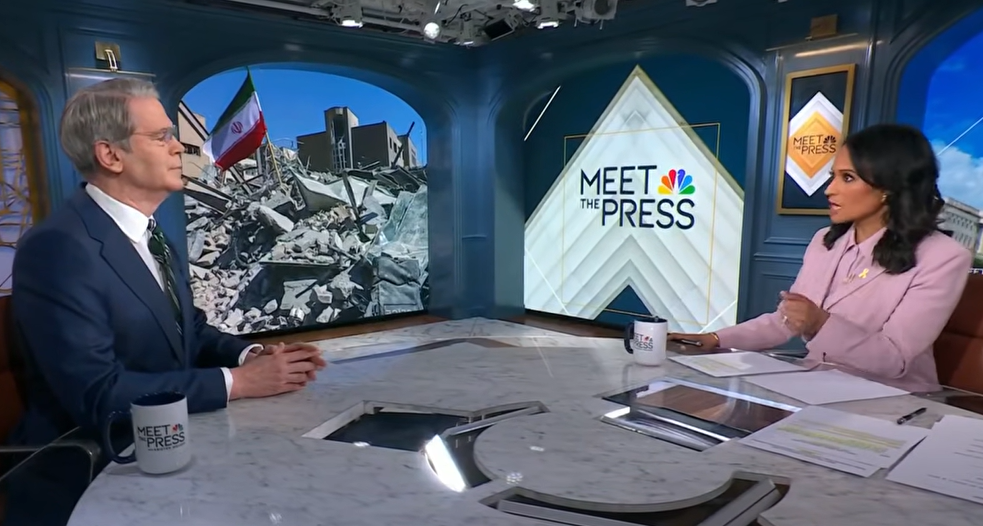
Treasury Secretary Scott Bessent appears on NBC News to outline the purpose and intents of the lifting sanctions as it pertains to Russian and Iranian oil shipments currently in transit.  The video and transcript below:

[Transcript] – KRISTEN WELKER: And joining me now is treasury secretary Scott Bessent. Secretary Bessent, welcome back to Meet the Press.

SEC. SCOTT BESSENT: Kristen, good morning.

KRISTEN WELKER: Good morning. Good to have you back. I want to start with the latest of what we’re hearing from President Trump. Let me read you what he posted overnight. He says, “If Iran doesn’t fully open, without threat, the Strait of Hormuz within 48 hours from this exact point in time, the United States of America will hit and obliterate their various power plants, starting with the biggest one first.” Has the president changed his mind about winding down the war, as he said a day earlier, and instead plans to escalate?

SEC. SCOTT BESSENT: I think he said he could wind the war down at any time he wants. And, Kristen, this is the only language the Iranians understand.

KRISTEN WELKER: But this seems to be an escalation, a threat of escalation, and it seems to run counter to his statement that he, in fact, wants to wind down the war.

SEC. SCOTT BESSENT: Again, Kristen, the president’s been very clear from the beginning that the goals are: destroy the Iranian air force and the navy, to completely demolish their missile capabilities, demolish their ability to replenish those capabilities, make sure the Iranians cannot have a nuclear weapon and stop their ability to project power internationally. And the president will take whatever steps it takes to achieve those goals.

KRISTEN WELKER:

Well, you know, I was on the phone with President Trump a week ago. He told me allies were on the way to help secure the Strait of Hormuz. Has the Trump administration abandoned that strategy and now chosen to go it alone?

SEC. SCOTT BESSENT:

Again, what we have done there has been a campaign to -using military assets to soften up the Iranian fortifications along the strait. That’s going to continue until they are completely demolished. And, Kristen, let me tell you, whether it’s this network or the mainstream press, the American people do not have good framing what is going on here. If you were to read what is happening, and I’m sure when Senator Murphy is on, you know, he has come out and said we are losing the war. That is wrong. We have demolished the Iranian capabilities. Their air force is completely destroyed, navy destroyed. And every day we are taking out their missiles, their missile systems, and the factories that build those missiles. And now our- General Caine, Secretary Hegseth, are leading a campaign to destroy all the fortifications along the straits of Hormuz.

KRISTEN WELKER:

Just to put a fine point on this though, is the president in the process of winding down this war or escalating the conflict?

SEC. SCOTT BESSENT:

Again, they are not mutually exclusive. Sometimes you have to escalate to de-escalate, Kristen.

KRISTEN WELKER:

Okay. NBC News is reporting that President Trump is considering sending troops into Iran. Will the administration use troops to secure the Strait of Hormuz or for any other reason, Mr. Secretary?

SEC. SCOTT BESSENT:

Again, as President Trump said during the press break yesterday when he was going out to Marine One, he’s not going to give away what we’re going to do. As President Trump always does, he’s leaving all options on, on the table. We had a very successful bombing campaign against the military installations, Kharg Island, the nexus for all the Iranian oil supply. You know, what could happen with Kharg Island? We’ll see. And again, just to be clear, the command and control system of the Iranian regime is in chaos. This is Hitler’s bunker. Hitler’s dead. Himmler’s dead. Göring is dead. The-most of what you’re seeing are lone wolf activities. The mid-range ICBM that was shot off, these two missiles yesterday, that’s out of desperation, Kristen.

KRISTEN WELKER:

You bring up Kharg Island. I want to ask you about your statement. You said it could become a U.S. asset. What exactly does that mean? Could U.S. troops go into Kharg Island to secure it?

SEC. SCOTT BESSENT:

Again, as I said, all options are on the table.

KRISTEN WELKER:

Okay. So, that’s a possibility.

SEC. SCOTT BESSENT:

All options are on the table.

KRISTEN WELKER:

All right. Let me talk about your announcement this past week. On Friday, the Treasury Department lifted sanctions on Iranian oil stored on tankers, a move that would effectively allow Iran to get more than $14 billion of oil revenue.

SEC. SCOTT BESSENT: I, I –

KRISTEN WELKER: Hold on. Why is the U.S. helping to fund a country that it’s currently at war with, Mr. Secretary–

SEC. SCOTT BESSENT:

Again, Kristen, why don’t we have good facts here? That Iranian oil was always going to be sold to the Chinese. It was going to be sold at a discount. So, which, which is better, Kristen? The uh, which is better? If oil prices spike to $150 and they were getting 70% of that? Or oil prices below $100? It’s better to have them where they are now. And to be clear, we had always planned for this contingency. About 140 million barrels are out on the water. In essence, we are Jiu-Jitsuing the Iranians. We are using their own oil against them. We have a much better line of sight, to be clear, at Treasury, when this oil goes to — if it goes to Indonesia, if it goes to Japan, if it goes to Korea, we have a much better line of sight and are able to block accounts that the oil goes into. When it goes into China it completely gets recycled. So, to be clear, that 14 billion number is grossly overstated.

KRISTEN WELKER:

Let me unpack what you’re just saying. First of all, how much is it? And second of all, I don’t hear you disputing that Iran will get some of the money.

SEC. SCOTT BESSENT:

Iran alway–already gets a huge amount of the money because Iran is the largest sponsor of state terrorism and China has been funding them.

KRISTEN WELKER:

So was always part of the plan to un-sanction Iranian oil?

SEC. SCOTT BESSENT:

Again, we unsanctioned the –at Treasury we plan for all contingencies. We have break-the-glass plans. And to be able — this water — this oil is floating out in Asia, and it is mostly our Asian allies — the U.S. gets virtually no oil from the Gulf. We are energy sufficient. So, when we un-sanction this, rather than the oil going to China, it can go to Japan. It can go to Korea. It can go to Indonesia. It can go to Malaysia –

KRISTEN WELKER:

And it can go to Iran too. I mean, isn’t the point that the sanctions were in place to prevent Iran from getting any of the money. They will have access to some of the –

SEC. SCOTT BESSENT:

No, again–

KRISTEN WELKER:

– money now –

SEC. SCOTT BESSENT:

– Kristen, you’re missing the point. So, please listen to me. They were getting it from China anyway.

KRISTEN WELKER:

Alright. Let me talk about the real-world impact of this because you’re talking about 140 million barrels of Iranian oil, and that’s just a little bit more than what the world uses in one day. How much can that really change prices here at home –

SEC. SCOTT BESSENT:

Again, Kristen, terrible framing, terrible framing –

KRISTEN WELKER:

Well, how much can it change –

SEC. SCOTT BESSENT:

No, no, no —

KRISTEN WELKER:

– prices here at home?

SEC. SCOTT BESSENT:

Just — just –

KRISTEN WELKER:

Talk to consumers. How much will it change prices here at home?

SEC. SCOTT BESSENT:

Let me explain. 140 million barrels — about 20 million barrels a day — comes out of the Gulf. About five million has been the uh, repurposed by the Saudis, by the UAE. So, we’re at a 15 deficit. About 1.5 is Iranian oil that comes out. So, we are at between a 10 and 14 million deficit on a daily basis. So, the- if you think about 140 million barrels, that’s between 10 days and two weeks of supply. And one of the reasons, one of the reasons that prices in the U.S. of West Texas crude are below $100 — and we have not seen this massive spike as we did during the beginning of Russia/Ukraine — is because we are well supplied in the market, whether it is the Russian oil, whether it is the Iranian oil, or it is the largest the SPR release in history done by a coalition of 32 countries, 400 million barrels.

KRISTEN WELKER:

Alright. Let’s talk about the Russian oil, which you just raised. The administration did ease oil sanctions on Russia earlier this month. You had initially defended imposing those sanctions, calling Russian exports, quote, “Oil that funds the Russian war machine.” If the point of the sanctions was to stop funding the Russian war machine, why is the administration effectively rewarding Russia now?

SEC. SCOTT BESSENT:

Again, Kristen, you’re missing the point. Which, which is better? Does Russia get more money if oil goes to $150 and they get 70% of that — that’s $105 — or if oil stays below $100, so they’re getting less money? Our analysis shows-our analysis shows that the maximum extra amount that Russia could get would be $2 billion, which is which is one day of the Russian Federation’s budget.

KRISTEN WELKER:

Understood. But they wouldn’t have gotten any of –

SEC. SCOTT BESSENT:

No, no, no–

KRISTEN WELKER:

– that with the sanctions in place –

SEC. SCOTT BESSENT:

Kristen. Kristen, I don’t know, whoever’s –

KRISTEN WELKER:

But would they have gotten –

SEC. SCOTT BESSENT:

No, no, no –

KRISTEN WELKER:

– any of that in place –

SEC. SCOTT BESSENT:

Kristen, whoever does your research, you should get rid of because they were getting it. It was going into China. China was buying over 90% of the Russian oil, and it was –

KRISTEN WELKER:

–But what’s the point of sanctions if not to punish Russia, if not to punish countries?

SEC. SCOTT BESSENT:

Again, the uh, it–we had no ability to do that to China — if China wants to be a bad actor. But we were substantially able to degrade their exports. Their exports have dropped about 25% when the rest of the world isn’t buying it. So, exports are down, but there was a lifeline into China. Now we’ve opened up that to everyone else.

KRISTEN WELKER:

Okay. Just to be clear though. You did defend imposing those sanctions in the first place. Let me ask –

SEC. SCOTT BESSENT:

Just to be clear, it is a maximum of $2 billion. So let’s have good framing on this.

KRISTEN WELKER:

Okay. Let’s talk about the overall cost of this war. The administration’s asking Congress — poised to an additional $200 billion in additional funding for this war. Some Republicans who could cast key votes on this are expressing hesitation or outright opposition. Take a listen to them and then I want to get your reaction on the other side.

[BEGIN TAPE]

FEMALE REPORTER:

Are there any initial red flags for you?

SEN. RICK SCOTT:

No — maybe, it’s a lot of money. I’ll go through it, see what they need.

REP. LAUREN BOEBERT:

I am a no. I’ve already told leadership I am a no on any war supplementals. I am so tired of spending money elsewhere.

[END TAPE]

KRISTEN WELKER:

Should President Trump have gone to Congress on the front end of this war if he was going to ask for Congress’s help now for more funding?

SEC. SCOTT BESSENT:

Again, President Trump was within his authorities under the War Powers Act to initiate this action. And we, we actually now we have plenty of money to fund this war. What we are doing is this is supplemental. President Trump has built up the military, as he did in his first term, as he is now doing in his second term, and he wants to make sure that the military is well-supplied going forward.

KRISTEN WELKER:

Would the administration ever raise taxes in order to fund this war?

SEC. SCOTT BESSENT:

Again, Kristen, terrible framing. I think that the –

KRISTEN WELKER:

Well, it’s just a que– it’s a simple question that I think a lot of people have –

SEC. SCOTT BESSENT:

It’s a ridiculous question.

KRISTEN WELKER:

Well, but –Can you answer it?

SEC. SCOTT BESSENT:

Why would we do that? That the, that we-we have plenty. We have a trillion dollars in this year’s budget for the military. And President Trump, even before the conflict started, had said that he would like to further build out the military.

KRISTEN WELKER:

So, just–is raising taxes under consideration at all –

SEC. SCOTT BESSENT:

Not —

KRISTEN WELKER:

– if you’re saying you have plenty of money?

SEC. SCOTT BESSENT:

Not at all.

KRISTEN WELKER:

Okay. Let’s turn to how all of this is impacting consumers. United Airlines CEO Scott Kirby is now planning, he says, to cut flights and is planning for oil to go as high as $175 a barrel with prices potentially staying above $100 a barrel through 2027. This is according to him. All of this could potentially mean higher prices for consumers. What do you say to Americans who feel they were promised lower costs and now they’re getting the opposite?

SEC. SCOTT BESSENT:

Uh, Kristen, I think the American people understand that any 50 — I’m not going to put a time on it but let’s just pick 50 days of temporary elevated prices, prices will come off on the other side, for 50 years of not having an Iranian regime with a nuclear weapon. The American people are beginning to understand, thanks to President Trump, that there is no prosperity without security.

KRISTEN WELKER:

I heard you say 50 days. Are you saying that prices could start to come down –

SEC. SCOTT BESSENT:

No, no, no, no –

KRISTEN WELKER:

What’s the time frame –

SEC. SCOTT BESSENT:

I was just picking a point. I don’t know whether it’s going to be 30 days. I don’t know whether it’s going to be 50 days. I don’t know whether it’s going to be 100 days. But to have 50 years the, uh, of peace in the Middle East and know that the Iranian regime is defanged because, Kristen, what we had before was the illusion of security. Imagine this regime if they had had another year or two years to build out their missile capabilities. They would’ve built a shield around themselves and it would’ve been impossible to prevent them from getting a nuclear weapon.

KRISTEN WELKER:

All right. I want to ask you on a different topic about a post by President Trump from yesterday responding to the death of former special counsel Robert Mueller. He posted this quote, “Robert Mueller just died. Good, I’m glad he’s dead. He can no longer hurt innocent people!” Do you think it’s appropriate for the president of the United States to celebrate the death of an American citizen, someone who’s a Bronze Star, Purple Heart recipient and who served in Vietnam?

SEC. SCOTT BESSENT:

Kristen, I was with the president in the green room at Davos and there was a video playing of the — what may have been an illegal raid on his home at Mar-a-Lago. They are going through his wife’s wardrobe. And I watched the look in his eye, and I think that neither one of us can understand what has been done to the president and to his family.

KRISTEN WELKER:

But to the question of the president’s post, I mean, Robert Mueller didn’t order that raid. Is it appropriate for the president to celebrate the death of any American citizen –

SEC. SCOTT BESSENT:

Again —

KRISTEN WELKER:

– Mr. Secretary –

SEC. SCOTT BESSENT:

I think that given what has been done to President Trump and his family it is impossible for either of us to understand what he has been through.

KRISTEN WELKER:

So, you don’t think that there’s anything wrong with the post, saying, “Good. Robert Mueller’s dead”

SEC. SCOTT BESSENT:

Again, I think that we should all have a little empathy for what has been done to him and his family.

KRISTEN WELKER:

All right. Treasury Secretary Scott Bessent, thank you as always for being here. Really appreciate it.

SEC. SCOTT BESSENT:

Thank you.

[END Transcript]

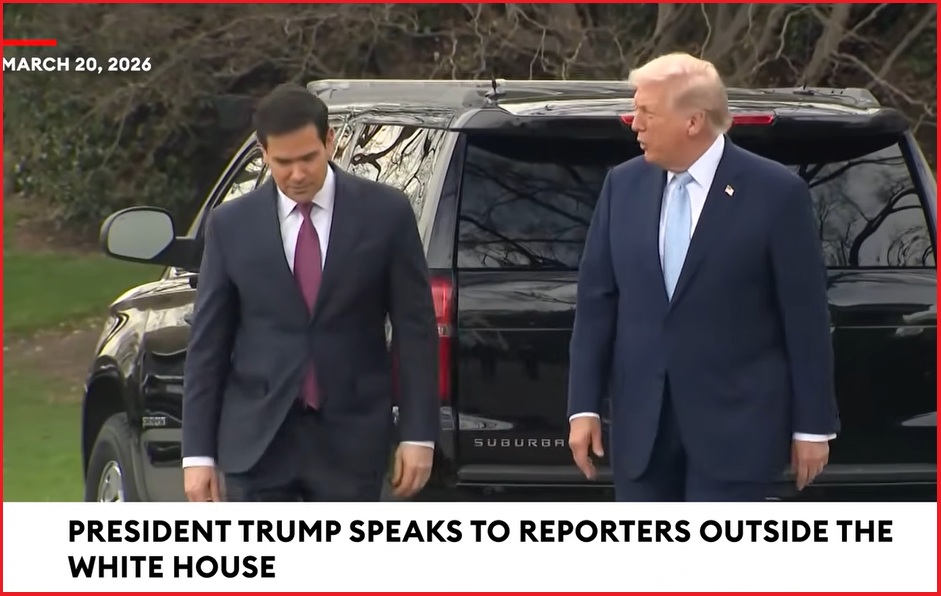
President Trump and Secretary Rubio Hold an Impromptu Presser at the White House


Posted originally on CTH on March 20, 2026 | Sundance | 7 Comments

President Donald Trump and Secretary of State Marco Rubio take questions from the media in front of the White House.

.

.

Elise Stefanik Questions DNI Gabbard About Politically Shaped Intelligence, and Joe Kent


Posted originally on CTH on March 19, 2026 | Sundance

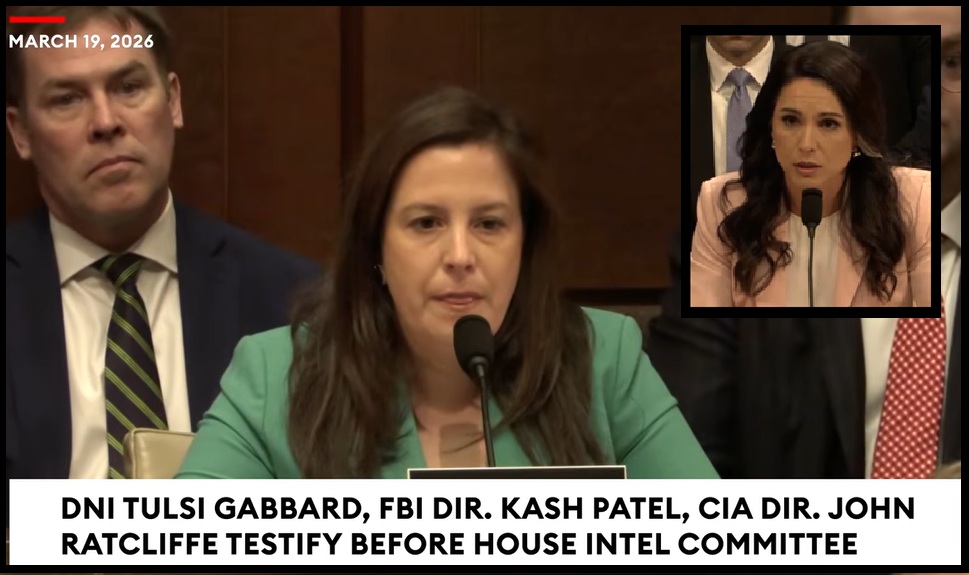
Representative Elise Stefanik is a strong supporter of Israel and has concerns about current narratives swirling around the politicization of Intelligence Community information to shape anti-Israel sentiments.  Part of that collective effort is a not-so-subtle effort to remove DNI Gabbard from her position by questioning her loyalties.  A considerable segment of Washington DC wants to return to a more Dan Coats style DNI.

As a tenured member of the House Permanent Select Committee on Intelligence (HPSCI), Mrs. Stefanik used her time during the congressional testimony of Gabbard, Ratcliffe and Patel to confirm the Trump administration policy toward the IC to remove all political interests.  WATCH:

.

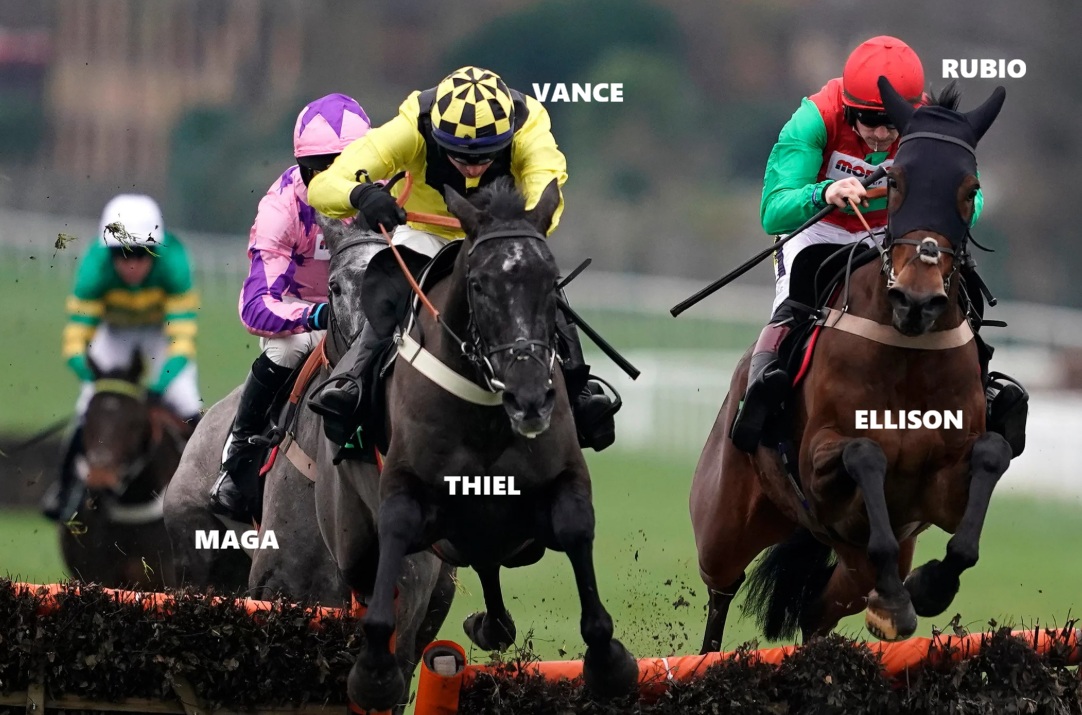
In the political horse racing analogy, the stable of Peter Thiel has taken major hits recently as the stable of Larry Ellison is gaining considerable influence.  However, it’s a steeplechase and anything can happen.

Peter Thiel <-> Elon Musk <-> Larry Ellison

Israel Unilaterally Strikes Iran/Qatar South Pars Gas Field – President Trump Is Not HappyPosted originally on CTH on


Posted originally on CTH on March 19, 2026 | Sundance 

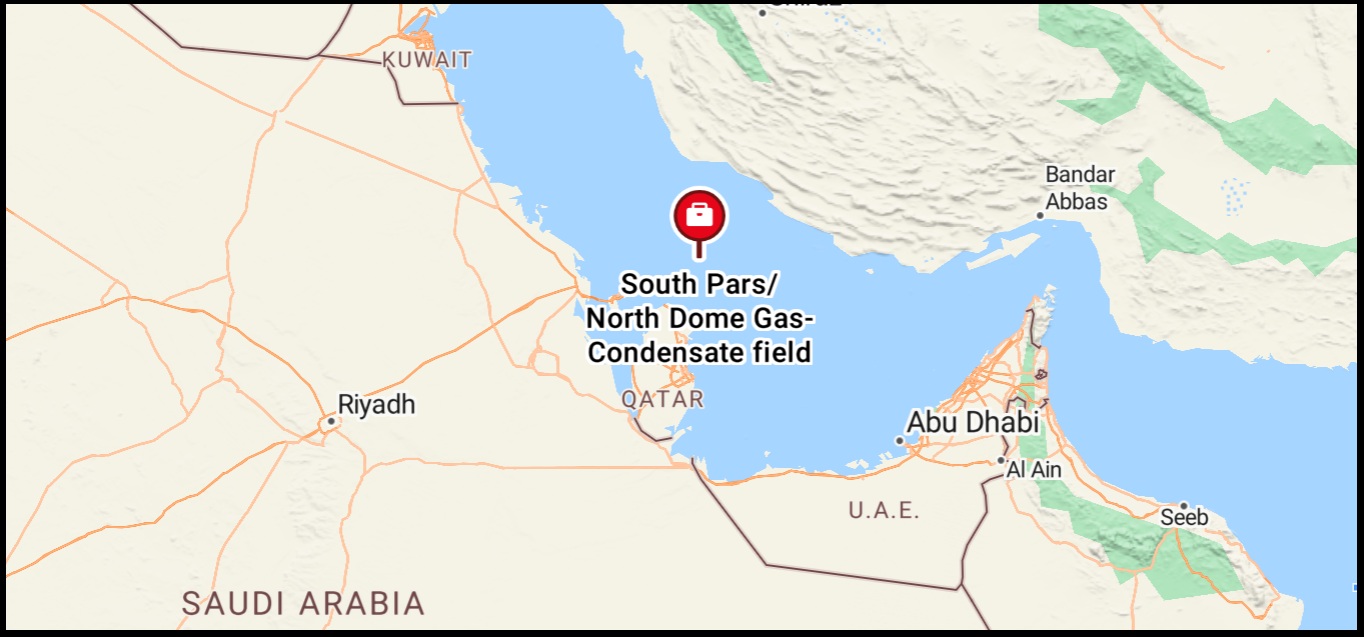
The South Pars/North Dome field is a natural-gas condensate field located in the Persian Gulf. It is by far the world’s largest natural gas field, with ownership of the field shared between Iran and Qatar. According to the International Energy Agency, the field holds an estimated 1,800 trillion cubic feet of in-site natural gas.

President Trump is not happy about Israel’s unilateral decision to strike at the Pars gas field; however, pay attention to what Trump diplomatically describes as the motive:

[TRUTH SOCIAL] – “Israel, out of anger for what has taken place in the Middle East, has violently lashed out at a major facility known as South Pars Gas Field in Iran. A relatively small section of the whole has been hit. The United States knew nothing about this particular attack, and the country of Qatar was in no way, shape, or form, involved with it, nor did it have any idea that it was going to happen.

Unfortunately, Iran did not know this, or any of the pertinent facts pertaining to the South Pars attack, and unjustifiably and unfairly attacked a portion of Qatar’s LNG Gas facility.”

“NO MORE ATTACKS WILL BE MADE BY ISRAEL pertaining to this extremely important and valuable South Pars Field unless Iran unwisely decides to attack a very innocent, in this case, Qatar – In which instance the United States of America, with or without the help or consent of Israel, will massively blow up the entirety of the South Pars Gas Field at an amount of strength and power that Iran has never seen or witnessed before.

I do not want to authorize this level of violence and destruction because of the long-term implications that it will have on the future of Iran, but if Qatar’s LNG is again attacked, I will not hesitate to do so. Thank you for your attention to this matter.”

President DONALD J. TRUMP

The joint economic relationship over the Pars gas field is part of the connective tissue between Iran and Qatar and underpins why Qatar has always been an intermediary for all issues of deconfliction that surround the U.S and Iran.

Factually Qatar was always the mediator, and within that mediation relationship the USA used Qatar as the bank to receive the confiscated funds Obama delivered when he lifted sanctions.  There are hundreds of examples of the USA using Qatar as the intermediary for Iran policy, just as there are hundreds of citations and examples available for Qatar supporting the Muslim Brotherhood.

It is only recently, very recently, like only in the era of Donald Trump as U.S. President, when Qatar started pulling away from a very friendly relationship with Iran.  So recently, that for the past 15-months, since long before it even made sense, CTH has been calling attention to this weird Qatar -vs- Israel division dynamic within USA domestic politics.

Then this happens….

The United States and Israel are working together on the targeting and military objectives of Operation Epic Fury.  But, for some unknown reason the United States did not know Israel was going to strike the Qatar Pars gas field?  Interesting.

President Trump assigns the motive for the Israeli attack as “out of anger for what has taken place in the Middle East.” However, Israel has another, perhaps opportunistic motive, worth billions.

[SOURCE]

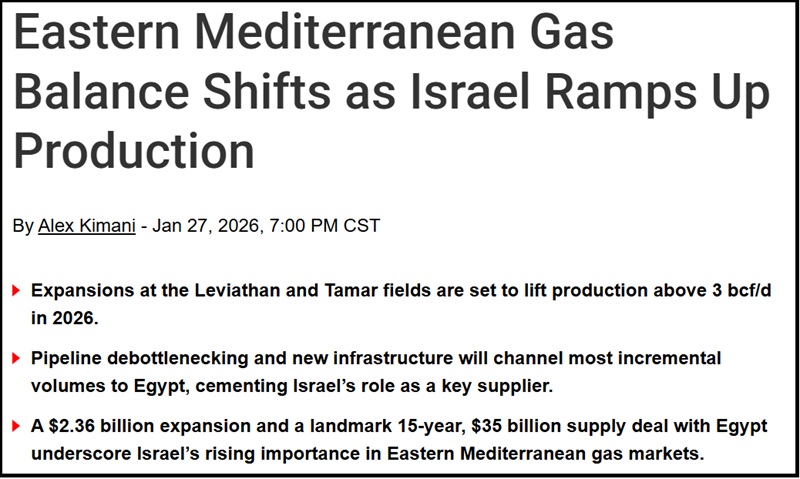
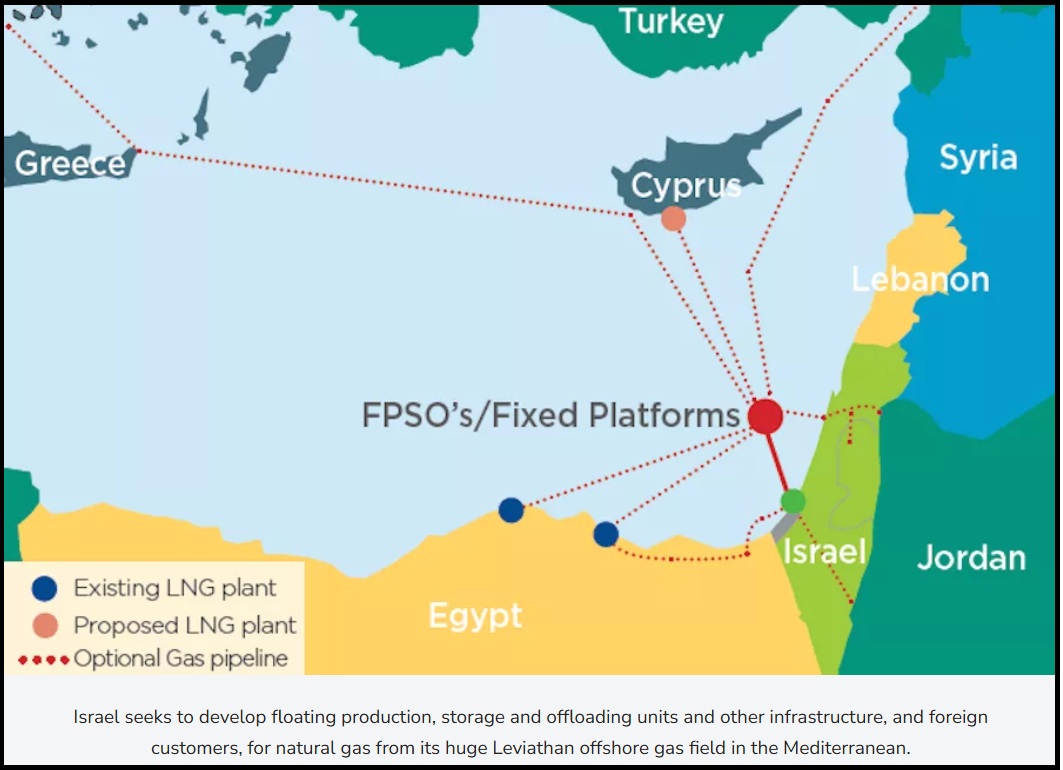
Israel is set to achieve record natural gas production in 2026, with expansion projects in the Leviathan and Tamar fields expected to push total output above 3 billion cubic feet per day (cfd) for the first time ever. According to the experts, the Chevron (NYSE:CVX) operated fields are expected to add a combined 600 million cfd in the coming months, with the bulk of the extra gas piped to Egypt after the removal of bottlenecks in the export pipeline network. Israel’s gas output in 2025 is estimated to have dropped slightly from a record 2.587bn cfd achieved in 2024 as fields were shut-in during Israel’s conflict with Iran in June.

Chevron and its partners NewMed Energy (OTCPK:DKDRF) and Ratio Energies (OTCMKTS:RTEXF) confirmed a $2.36 billion Final Investment Decision (FID) in January 2026 to expand the Leviathan field, increasing production capacity from 12 bcm to roughly 21 bcm annually. The expansion involves drilling three additional offshore wells, installing new subsea infrastructure and enhancing the platform’s processing capabilities. The expansion aims to significantly increase natural gas exports to Egypt and Jordan. The companies managed to boost production at the Tamar field to increase capacity from approximately 1.1 billion cubic feet per day (bcf/d) to 1.6 bcf/d in 2025.

Debottlenecking of the export pipeline network is enabling higher volumes to reach Egypt, helping to fill their domestic supply gapsKey projects, including upgrading the Ashdod-Ashkelon pipeline and constructing the Nitzana pipeline (expected to be operational by 2028). The projects are designed to boost exports to Egypt and Jordan by 1.8 billion cubic feet per day. The 46-km offshore natural gas Ashdod–Ashkelon pipeline is undergoing upgrades scheduled for completion in the current year to handle increased capacity. Approximately 55% of the gas flows through the offshore Eastern Mediterranean Gas (EMG) pipeline, while 45% is transported via the Arab Gas Pipeline through Jordan.

[…] The Leviathan and Tamar gas fields are key Israeli offshore natural gas assets, with current capacities of approximately 12 billion cubic meters (BCM) per year and 11 BCM per year, respectively. Both fields are expanding, with Leviathan projected to increase to 21–23 BCM annually to meet rising regional demand and exports. Still, the Middle East oil giants have potential for higher gas production. (SOURCE)

Did Israel bomb the collaborative Iran-Qatar gas field “out of anger for what has taken place in the Middle East.” Or did Iseael just diminish an LNG competitor?

President Trump is not happy with this one Bibi.

We’ll keep watching…

Vice President JD Vance Responds to Question About Joe Kent Resignation


Posted originally on CTH on March 18, 2026 | Sundance

Vice President JD Vance was asked about NCTC Director Joe Kent resigning from his position over a disagreement surrounding the Iran conflict.

This could have been a challenging question for Vance to answer because both Vance and Kent are funded and supported by the same ideological donor, Billionaire Peter Thiel.  [FYI Tucker is also in this stable] Thiel is a libertarian minded billionaire within Big Tech and not necessarily an ideological fan of Donald Trump or MAGA.  Palantir is one of Thiels companies with CEO Alex Karp running it.  Palantir is a major contractor within the national security apparatus.

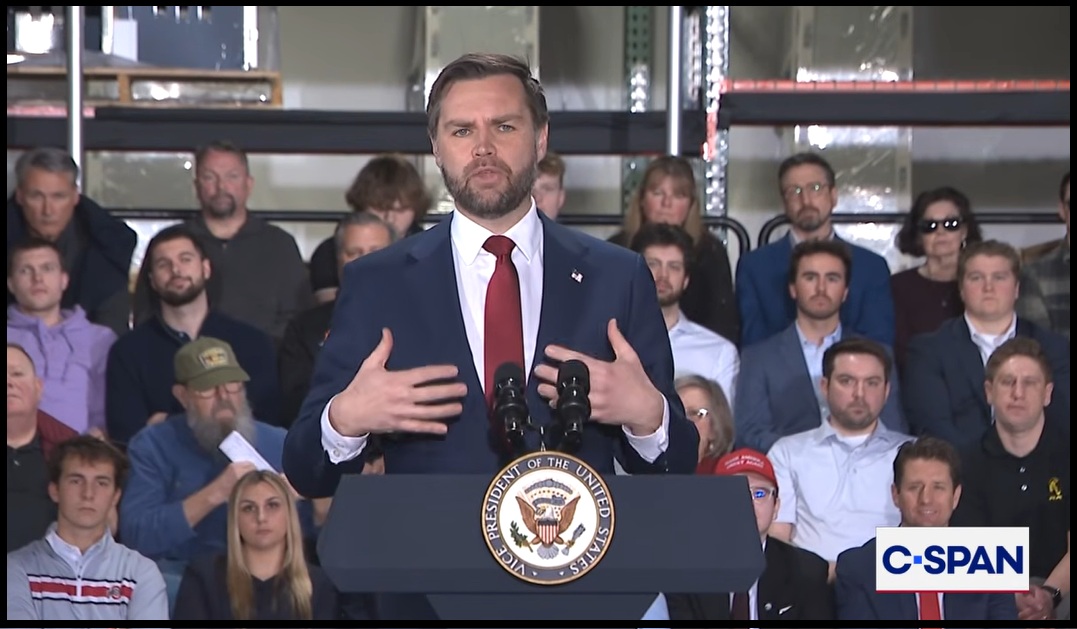
JD Vance adroitly navigates the answer by saying once the President makes a decision, the role of all subordinates is to get behind that decision, and never openly compromise your leadership.

“It’s one thing to have a disagreement of opinion…That said, whatever your view is, when president of the United States makes a decision, it’s your job to help make that decision as effective and successful as possible…If you are on the team and you can’t help implement the decisions of his administration, he has the right to make those decisions, then it’s a good thing for you to resign. And I think that’s exactly right. It’s fine to disagree, but once the president makes a decision, it’s up to everybody who serves in his administration to make it as successful as possible.” WATCH:  

.

It’s obvious Team Thiel didn’t agree with the policy decision to attack Iran, that’s more of a neocon Team Ellison/Adelson policy move.  However, JD Vance is very correct in how the Team Thiel horses within the administration should respond to the decision in trying to make it as successful as possible.

Thiel <-> Musk <-> Ellison

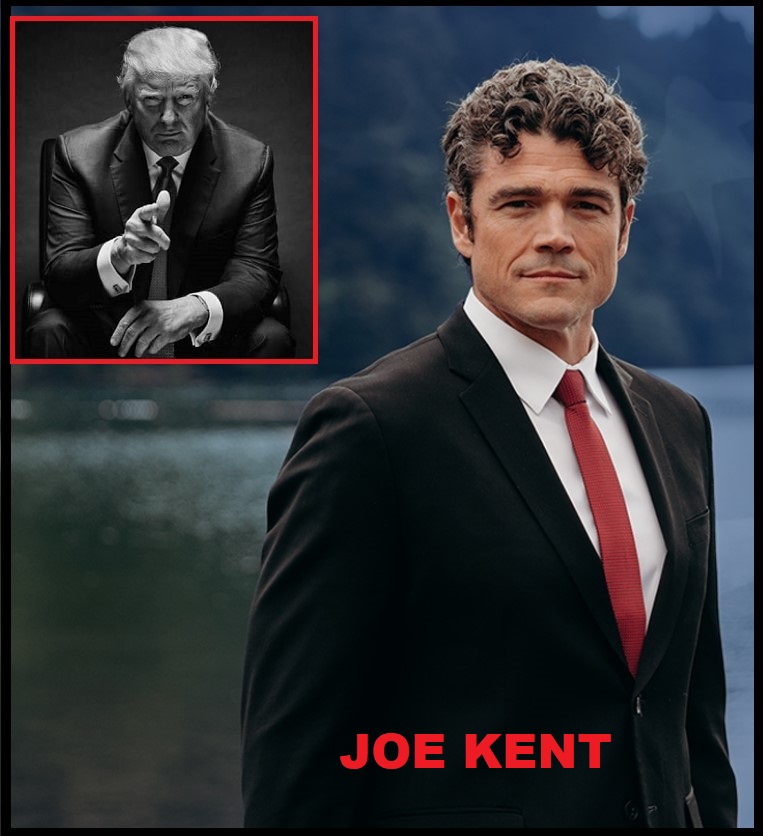
NCTC Director Joe Kent Resigns from Trump Administration in Protest to Iran War


Posted originally on CTH on March 17, 2026 | Sundance

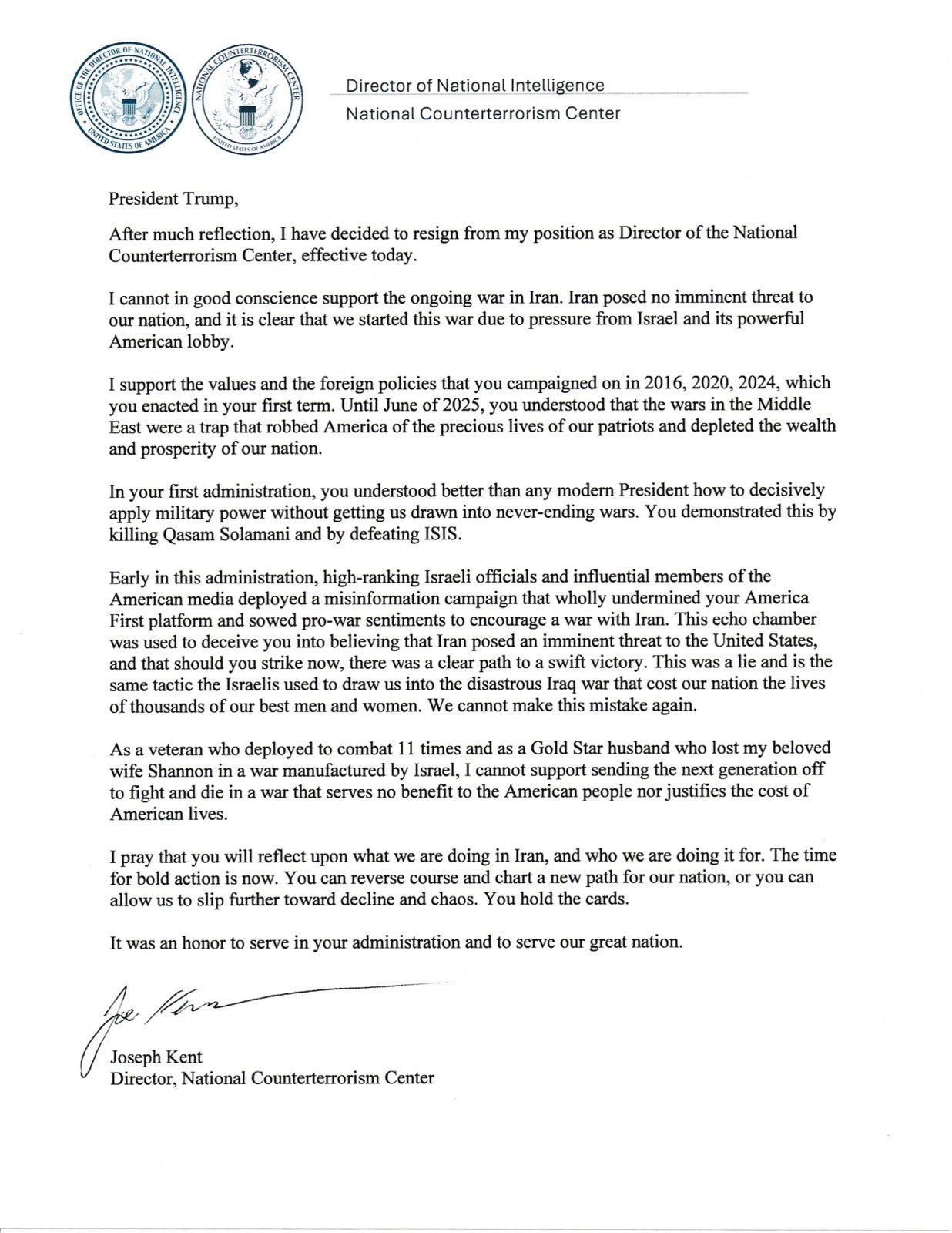
Joe Kent, the director of the National Counterterrorism Center, has announced his resignation.  Director Kent outlines his decision as driven by opposition to the war against Iran.

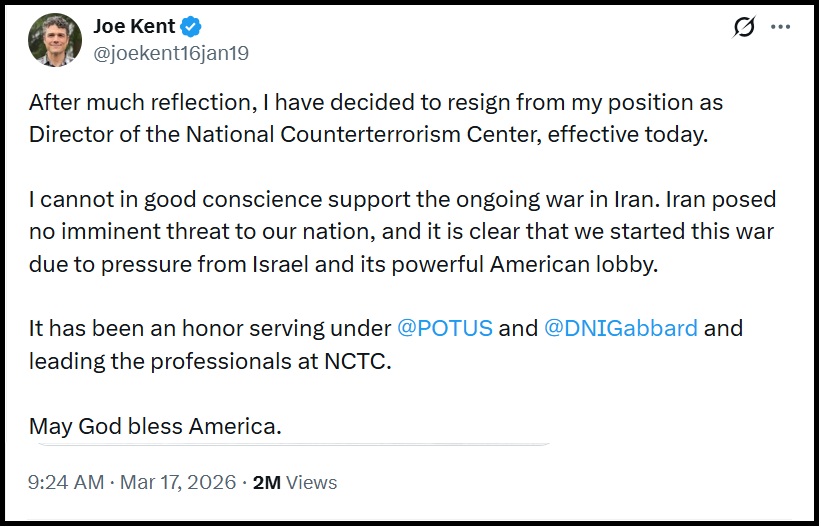
Kent, a senior deputy to Director of National intelligence Tulsi Gabbard posted his resignation letter on the X platform, writing: “I cannot in good conscience support the ongoing war in Iran.” … “Iran posed no imminent threat to our nation, and it is clear that we started this war due to pressure from Israel and its powerful American lobby.”

[SOURCE]

This is quite a remarkable development.  Director Joe Kent’s full resignation letter is below, and out of an abundance of caution I prefer to await to see how President Trump and/or Tulsi Gabbard responds.

Unfortunately, one of the consequences of this very public resignation is going to be fuel upon the fire of division surrounding the issue of Israeli influence inside the Trump administration.

Ugh!

PRO TIP: Watch closely how JD Vance reacts.

September 1, 2021 – President Donald Trump previously said this:

Joe Kent is a retired Green Beret and Gold Star husband running against RINO and incompetent Congresswoman Jaime Herrera Beutler in the 3rd District of the State of Washington. Joe served his country proudly for many years and understands the tremendous cost of America’s wars in the Middle East, and elsewhere. In Congress, Joe will be a warrior for the America First agenda, unlike Jaime Herrera Beutler who voted, despite the facts, against the Republican Party and for the Democrats’ Impeachment Scam.”

Joe Kent is strong on Crime and the Border, loves our Military and our Vets, and will protect our Second Amendment, which is under siege. I met Joe at Dover Air Force Base on the evening that his wife was being brought back from the Middle East, where she had been killed in combat. It was a very sad moment in Joe’s life, but I was incredibly impressed with him and told him that he should someday run for office—we need his voice and leadership in Washington, D.C. Now he is running, and Joe Kent has my Complete and Total Endorsement!

  ~ President Donald J Trump

President Trump Answers Media Questions During Roundtable Luncheon


Posted originally on CTH on March 16, 2026 | Sundance 

Moments ago, President Donald Trump took questions from the assembled press pool during a lunch with the Trump-Kennedy Center board members.

The full video is below the fold. However, the shorter segment of media questions and answers is highlighted in this video. President Trump was asked about countries willing to support the military escort request through the Strait of Hormuz. President Trump noted an announcement of supporting countries will be forthcoming.

President Trump also noted the biggest beneficiary of the oil from Iran is China, and he would expect those nations who are dependent on the stability of that oil flow to rise in support of the escorts. WATCH:

.

The full event video is below.

The Strait of Hormuz


Posted originally on Mar 16, 2026 by Martin Armstrong |  

Strait of Hormuz

There is a critical failure in the Neocons’ playbook. They assumed that Iran would NOT close the Strait of Hormuz, for they assumed that they would line it with mines and physically close the waterway, which would be suicidal for them as well. Still, they sought out and destroyed several of their mine laying ships. But Iran has been able to close the Strait with just threats. Ships headed to China are passing with no problem and the US is not doing anything about it fearing (1) it would be confrontational with China, and (2) it would cause oil prices to rise even higher. Iran attacks ships selectively. That is the fear tactic that has shut the Strait without mines or Iranian naval ships.

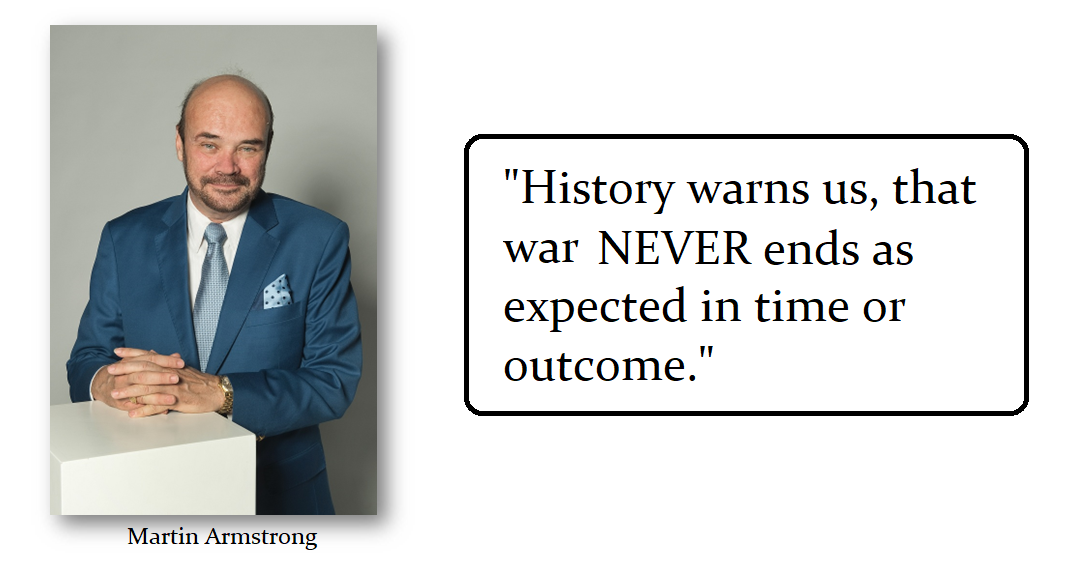
Armstrong on war never ends

Our greatest problem here is that we DO NOT know what the goal of this war is supposed to be. Trump has said regime change, end nuclear weapons, as well as degrade the Iranian military. As long as he does not clearly state what is the objective, then this leaves the door open to declare victory and exit. If he says it was just to degrade the military, then he can declare victory and end it tomorrow. Bur why then assassinate the Ayatollah? That made it seem to be the regime change and calling to the people to rise up was in line with that. Iran has stated that it 400 kg of uranium is under ruble. If that is true, then the nuclear argument is off the table. Yet to do either the regime change or the seizure of the nuclear material will necessitate boots on the ground and there is no real support in America for that.

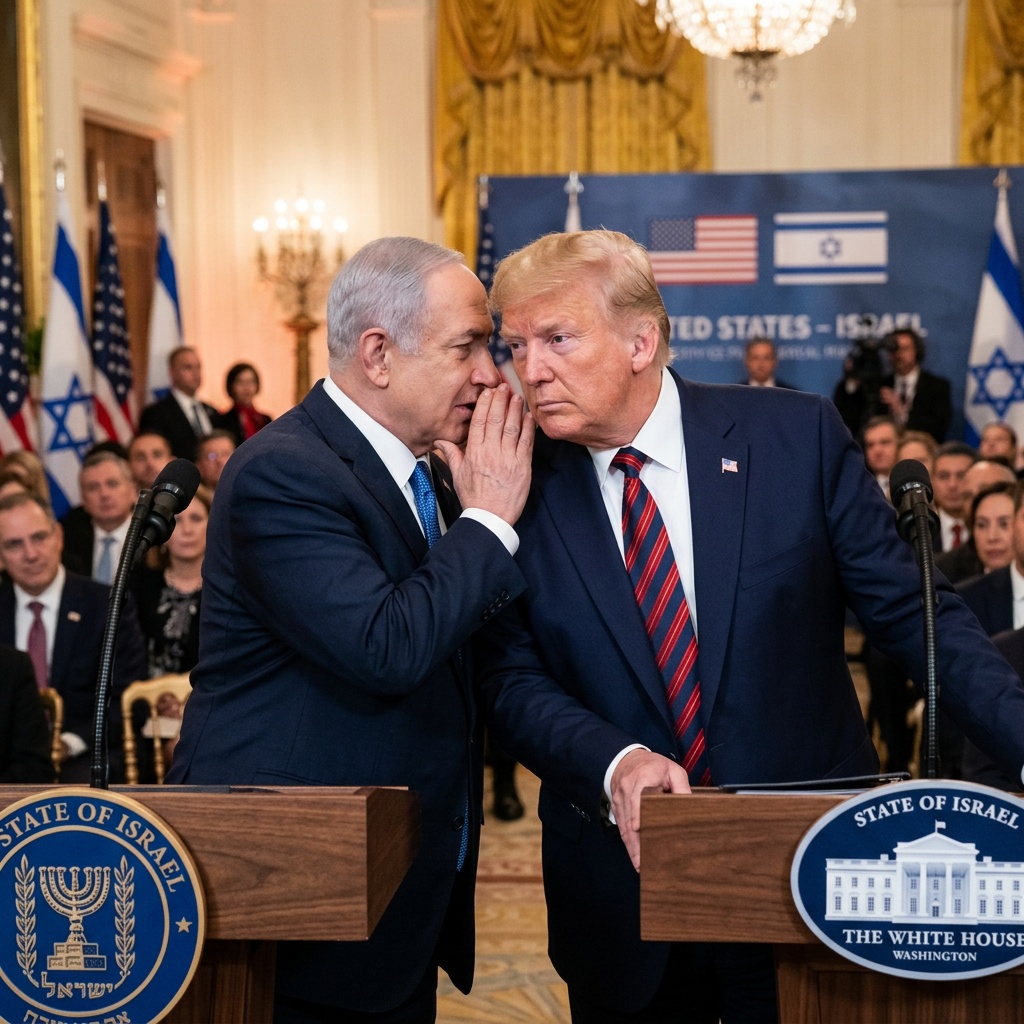
Netanyahu whispering Trump 1

No matter what the truth may be, the perception remains that this is Israel’s war and we have participated in the targeting and killing of the Ayatollah, which was Israel’s policy of decapitation.

Apocalypse fears, once associated with the fringes of society, are now commonplace across North America—and are shaping attitudes towards perceived threats. New research has revealed just how widespread these beliefs have become, fueled by climate change, geopolitical instability and rapid advancements in artificial intelligence. Belief in the end of the world is surprisingly common across North America, and it’s significantly influencing how people interpret and respond to the most pressing threats facing humanity. This is becoming a dominant concern with many viewing the Middle East war as leading to Armageddon.