Posted originally on CTH on December 7, 2025 | Sundance
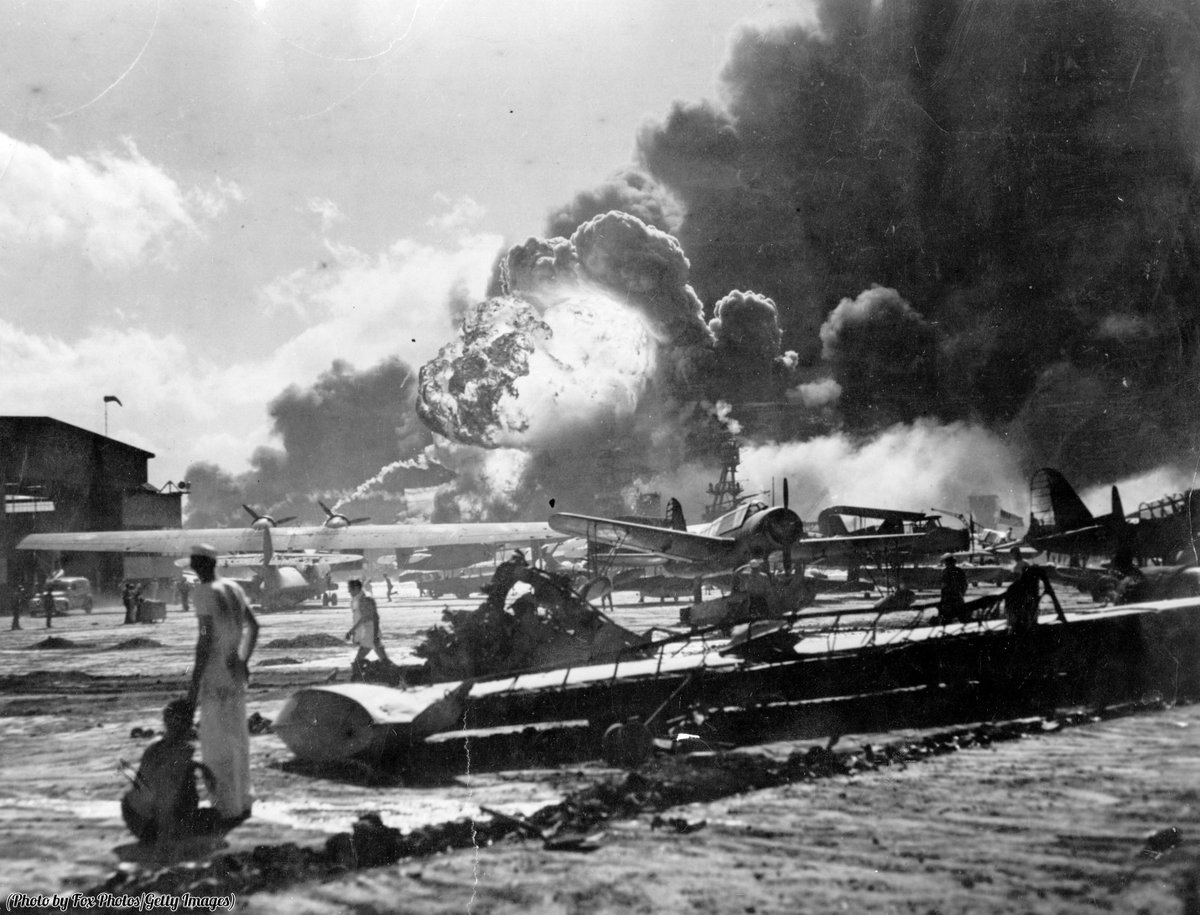
Via White House – “On December 7, 1941, a peaceful Sunday morning on the Hawaiian island of Oahu was shattered by an unprovoked attack by the naval and air forces of the Empire of Japan on the United States Pacific Fleet at Pearl Harbor and the aircraft and hangars at Kaneohe, Ford Island, Barbers Point, and Hickam Field. The surprise offensive claimed the lives of 2,403 American service members and civilians and propelled our Nation into the Second World War.
The Japanese mission was designed to cripple our military assets and obliterate the American spirit, but instead, the fatal attacks rallied our shattered citizenry and fueled our resolve. Young men from every corner of our country put their lives and futures on hold and were thrust into bloody and brutal battles of historic consequence that would forever change the world. Although untested in battle, these patriots, still reeling from horror and disbelief, united in a singular mission: to defeat tyranny. The exceptional courage and immeasurable sacrifices of the Greatest Generation secured our way of life and the blessings of freedom for future generations.”
“In the decades since the “date which will live in infamy,” the aggressor has become our loyal ally and trusted friend. Japan is one of our closest security partnerships, and our military forces work together every day to defend our common interests. We are united by commerce, history, culture, and mutual respect. Our strong alliance is a testament to the transformational power of peace, diplomacy, and democracy.
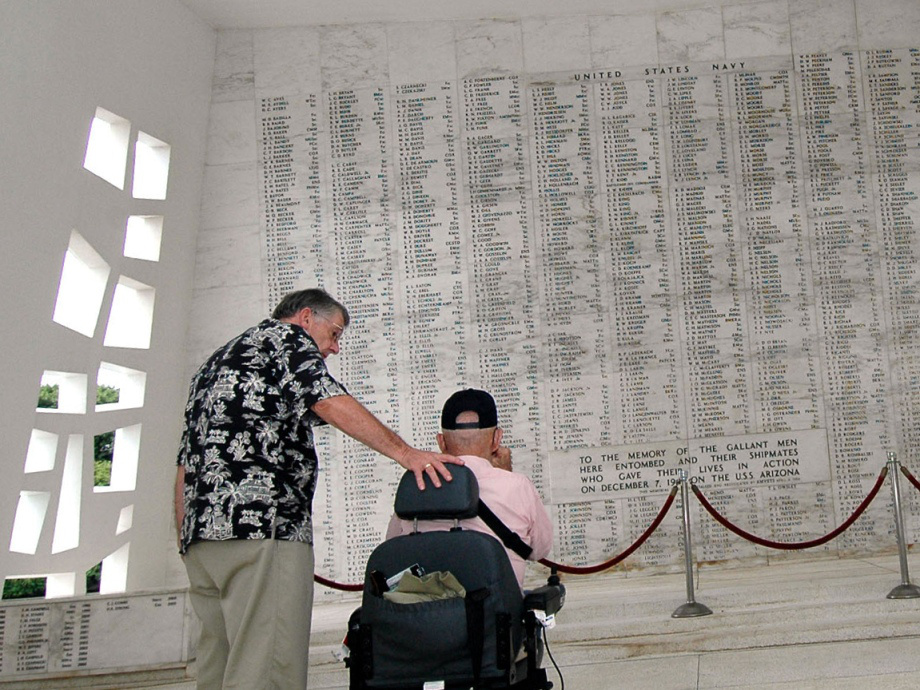
The lessons learned 84 years ago on that fateful day still resound with America’s exceptional fighting force. We must remain ever vigilant and prepared to annihilate any foe who dares to threaten our liberty. This annual day of remembrance must be held in the highest esteem and reverence as we honor the Americans who laid down their lives to defend our homeland on the island of Oahu and in the battles of World War II.
The Congress, by Public Law 103-308, as amended, has designated December 7 of each year as “National Pearl Harbor Remembrance Day.”
NOW, THEREFORE, I, DONALD J. TRUMP, President of the United States of America, by virtue of the authority vested in me by the Constitution and the laws of the United States, do hereby proclaim December 7, 2025, as National Pearl Harbor Remembrance Day. I encourage all Americans to observe this solemn day and to honor our military, past and present, with appropriate ceremonies and activities. I urge all Federal agencies and interested organizations, groups, and individuals to fly the flag of the United States at half-staff in honor of those American patriots who died as a result of their service at Pearl Harbor.
IN WITNESS WHEREOF, I have hereunto set my hand this fifth day of December, in the year of our Lord two thousand twenty-five, and of the Independence of the United States of America the two hundred and fiftieth.”
Posted originally on CTH on October 30, 2025 | Sundance |
Secretary of Treasury Scott Bessent appears on Fox News with Maria Bartiromo to discuss the Asia tour by President Trump and the trade delegation that culminated with a lengthy meeting between President Trump and Chairman Xi Jinping.
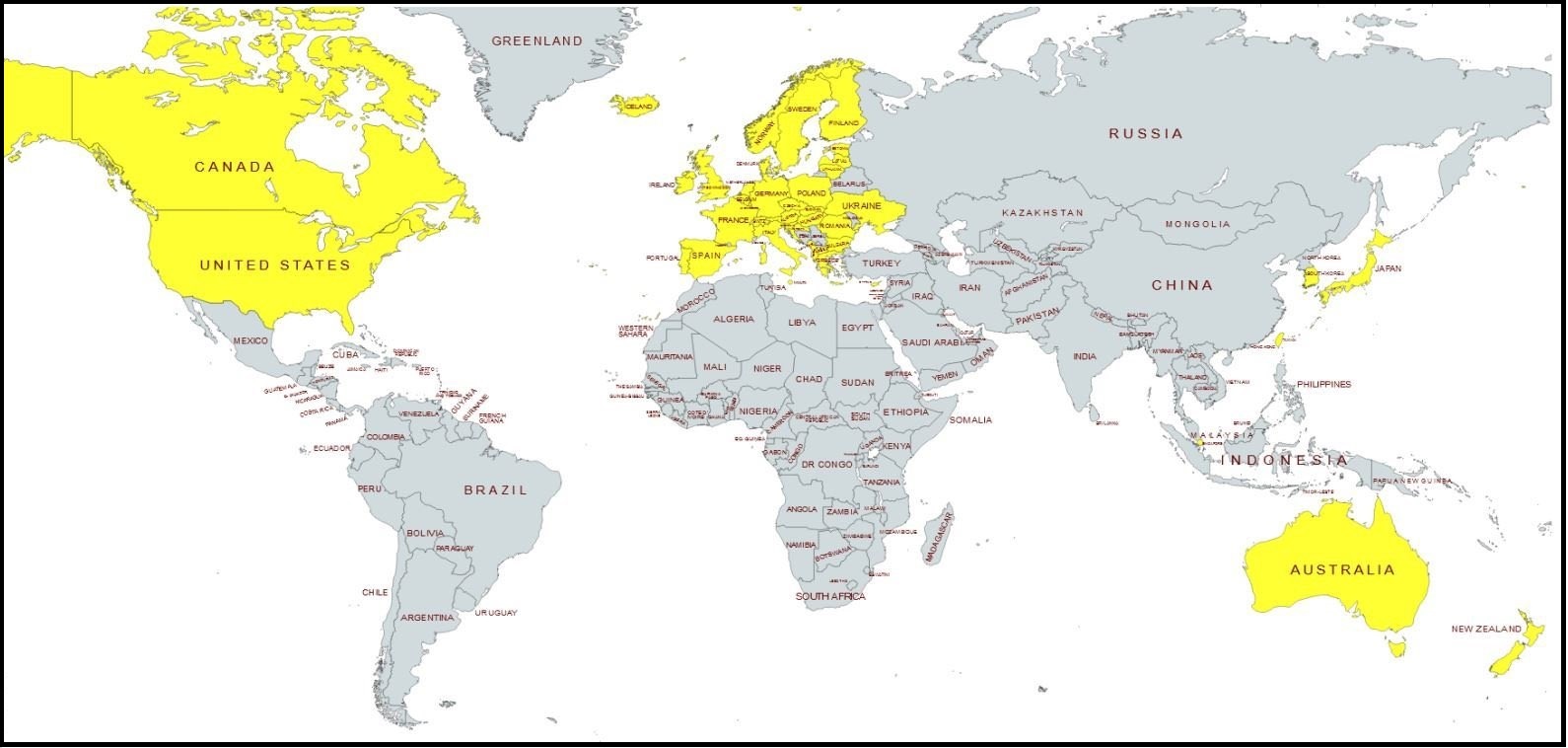
By locking down trade agreements with Australia, Malaysia, Cambodia, Vietnam, Philippines, Thailand, Japan and South Korea in advance of the meeting with Xi, President Trump had effectively boxed out the maneuvers of Beijing and isolated any contravening strategy.
Chairman Xi was facing a U.S. strategic trade reset with multiple options for replacement of Chinese goods and resources. As a result, the Beijing trade delegation recognized President Trump had effectively neutered the scale of their economic power and influence over the U.S. economy. Instead, the best play for big panda was to shake hands and come to agreeable terms. WATCH:
.
Playing into President Trump’s hands was/is the strains currently ongoing within the Chinese domestic economy. Further friction against the USA would have weakened Chairman Xi domestically.
Posted originally on Oct 30, 2025 by Martin Armstrong |
There is perhaps no more critical resource than rare earth minerals. They largely cannot be created or derived in the US and are absolutely essential for not only manufacturing but also maintaining the nation’s military power. Japan recently lifted the trade export ban on military and defense equipment under new Prime Minister Sanae Takaichi who declared a “new golden age” alliance with the United States. Japan has now penned a deal with the US to coordinate efforts to coordinate and fund investment and mining efforts for these crucial minerals.
Washington will fund new mining projects throughout Japan and form a “Rapid Response Group” to ensure emergency mineral deliveries when needed. Tokyo is lifting regulations to permit the US to streamline the process from beginning to end.
The two nations will engage in joint stockpiling efforts to fortify the security of the supply chain. Australia and the European Union may be called upon for joint efforts. However, it will be difficult to form trade around rare earths when China processes over 90% of the global supply.
This is one of the reasons why it would be extremely beneficial for the US to explore a rare earth minerals deal with Russia. The West has foolishly sanctioned the very source of what sustains its technological civilization. Russia holds vast reserves of critical rare earth minerals essential for electronics, defense systems, batteries, and renewable energy. Yet, Western policymakers, driven by ideological hatred, have cut off the very lifeline of modern industry.
These sanctions have only forced Moscow to align closer with Beijing. A genuine peace between the United States and Russia will not emerge from diplomats — it will come through trade. The only workable framework is to tie the economies together so deeply that conflict becomes too costly to sustain.
A closer alliance with Japan will only push the US further away from diplomatic ties with Beijing. It is true that Japan has more untapped minerals than Russia; however, the key here is that they are untapped. The US is looking for immediate relief and the majority of the minerals in Japan are lying deep within the seabed.
Roughly 230 metric tons of cobalt, nickel, and other elements are embedded in the seabed floor near Minamitori Island. Japan required US assistance to fund the extraction, which is extremely costly. Russia’s supply is mostly land-based, and the reserves are proven rather than loosely estimated. Russia’s proven reserves far exceed Japan’s, though Japan could become one of the world’s top suppliers if these projects are successful.
No one can compete with China in rare earth minerals at this time. Collaboration is essential.
Posted originally on CTH on October 28, 2025 | Sundance
President Trump visited U.S. troops stationed in Japan and gave a speech aboard the USS George Washington. President Trump was accompanied by Prime Minister Sanae Takaichi and during a segment of the speech Trump invited Takaichi to deliver remarks. This is certainly very cool. WATCH:
.
The full video of President Trump’s remarks to the troops is below:
Posted originally on Oct 28, 2025 by Martin Armstrong |
Japan has strictly regulated, if not banned, the majority of defense exports for over three decades. Japan recently outbid Germany for a lucrative contract to export submarines to Australia, marking the first major defense contract in years. Japan also assisted the US in creating Patriot missiles that have been in high demand since the start of the war in Ukraine. Under new leadership, Japan plans to remove bans on defense exports.
The Liberal Democratic Party was aligned with the Buddhist Party Komeito and essentially took a pacifist stance. Critics accused Komeito of falling under Beijing’s influence and prioritizing amity to prevent the nation from increasing its adherence to and loyalty to NATO and the West.
Prime Minister Sanae Takaichi and her coalition partner, the Japan Innovation Party, have taken a nationalist stance and plan to abolish any defense export restrictions. The “Three Principles on Transfer of Defense Equipment and Technology” currently provides guidelines for Japan’s defense trade.
The Three Principles:
Prohibition Principle: Transfers are prohibited in specific cases—such as when they would violate Japan’s treaty obligations, U.N. Security Council resolutions, or are destined for countries involved in international conflicts or subject to UN measures for peace and security.
Permissible Cases Principle: Transfers may be permitted only if they promote international peace, cooperation, or Japan’s own security, and must undergo rigorous, transparent examination. This process aims to support humanitarian assistance, disaster relief, peacekeeping, counter-terrorism, anti-piracy operations, and capacity building.
Control Principle: Every transfer requires strict controls against the equipment being repurposed for unauthorized uses or being transferred to third countries. Recipient governments must obtain Japan’s prior consent for any change in use or third-party transfers.
Japan must go through third parties to transfer or export weapons. Politicians must craft creative rhetoric to pretend that all defense trade adheres to the Three Principles. New PM Takaichi would like Japan to operate as a “normal” country that does not need to restrict defense to peacemaking obligations. China, Russia, and North Korea are now openly viewed as a threat.
Japan will not become a mega defense manufacturer overnight, but the move is quite a historic break from decades of postwar pacifism. The new administration plans to increase spending on military and defense to 2% of GDP by March 2026 as it prepares to protect itself beyond the shield of the US.
Posted originally on CTH on October 27, 2025 | Sundance
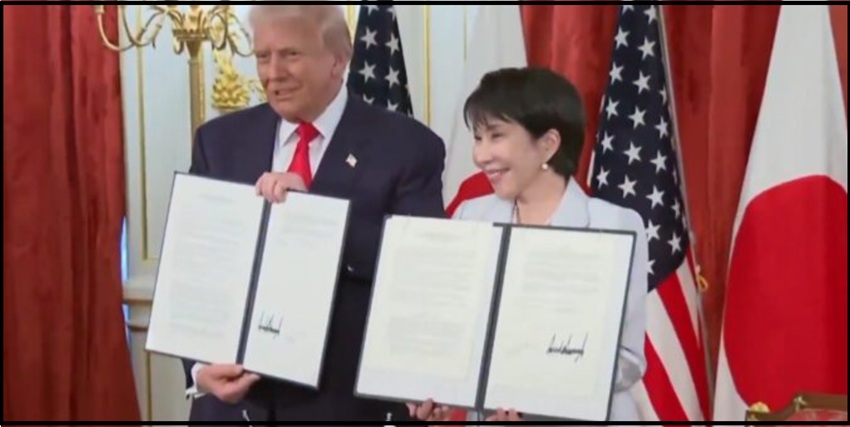
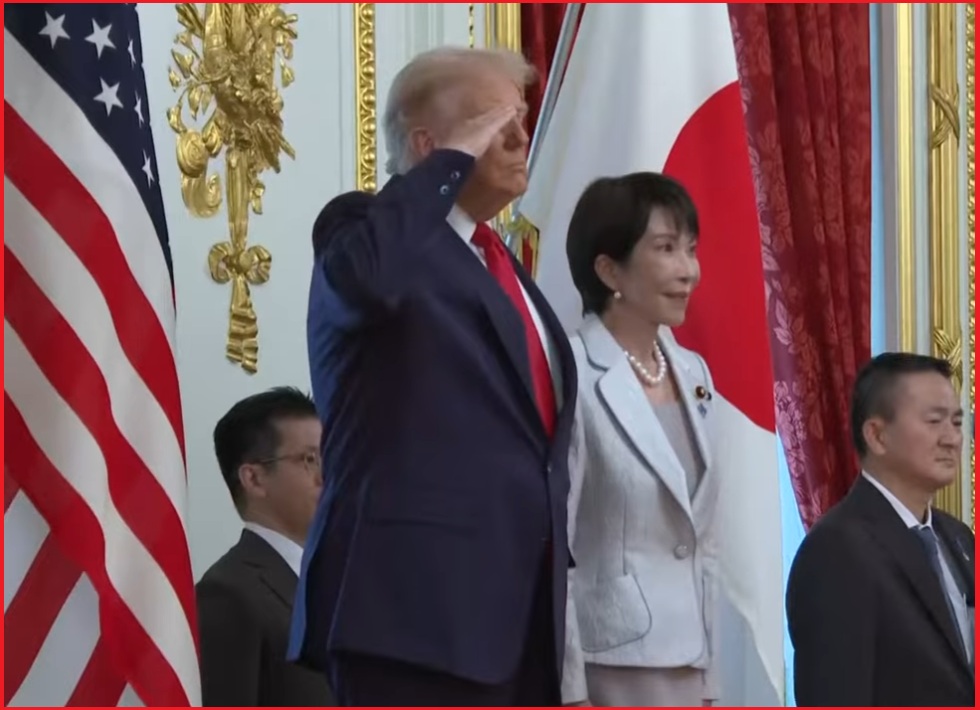
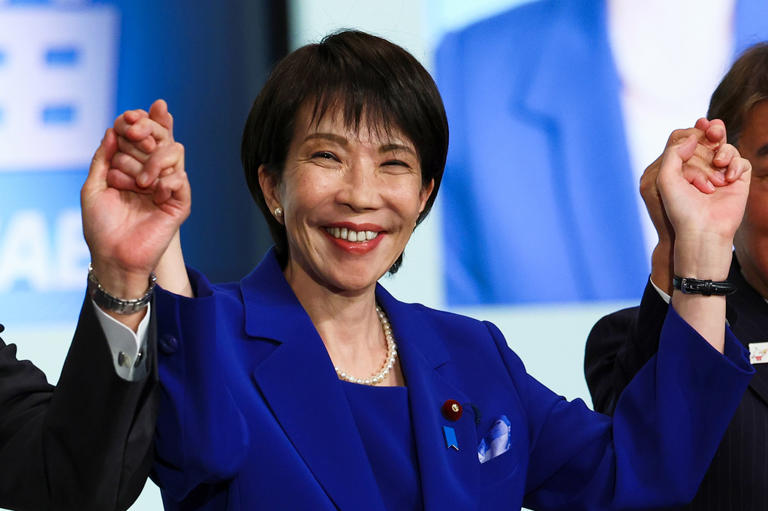
U.S. President Donald Trump received a grand welcome from Japan’s first female Prime Minister, Sanae Takaichi, in Tokyo before the two leaders held a bilateral meeting focused on trade, defense and regional stability.
Video segments below, as presented, starting with the formal welcome ceremony.
.
At the grand Akasaka Palace, President Donald Trump met Japan’s Prime Minister Sanae Takaichi for a historic U.S.–Japan summit. The leaders celebrated shared achievements, discussed new trade and defense commitments, and promised a stronger alliance for peace and prosperity.
President Trump delivered very touching remarks about former Prime Minister Shinzo Abe, Mrs Takaichi’s friend and mentor in politics.
Posted originally on CTH on October 27, 2025 | Sundance
Tremendous warmth surrounds President Donald J Trump participating in a bilateral meeting with new Japanese Prime Minister Sanae Takaichi at Akasaka Palace in Minato, Japan.
Why China Wants Control Of The South China Sea In 10 Charts
Re-Post from Zero Hedge
Submitted by Tyler Durden on 08/02/2014 20:00 -0400
A stunning $5.3 trillion in goods cross South China Sea every year, and as we previously explained, 190 trillion cubic feet of gas reserves sit below the ocean floor – enough to replace China’s natural gas imports for over a century – so it is hardly surprising that the world’s largest importer of oil wants control of such a critical region.
As Bloomberg illustrates in these 10 incredible graphics, everyone has a claim on the same territory and tensions are rising. “The Chinese believe they have the right to be a great power,” said Richard Bitzinger, a senior fellow at the S. Rajaratnam School of International Studies in Singapore. “What we are seeing is a hardening of China’s stance about its place in the world.”
The ambitions of China’s leaders don’t stop at the nine-dash line.
“China’s ultimate long-term goal is to obtain parity with U.S. naval capacity in the Pacific,” said Willy Wo-Lap Lam, adjunct professor at the Centre for China Studies at the Chinese University of Hong Kong. “This is a long-term proposition. At this stage the Chinese understand they don’t have the capacity to take on the U.S. head-on.”
“China is testing the limits of America’s alliance relationships in Asia,” said Storey. “By pushing and probing and essentially showing that the U.S. isn’t willing to respond to these provocations, it is undermining those alliances and hence ultimately U.S. credibility and U.S. power over the long term.”
There are two schools of thought on the eventual outcome of China’s ascendancy, according to Rory Medcalf, director of the International Security Program at the Lowy Institute for International Policy in Sydney.
One argues that dominance of the South China Sea is an inevitable outcome of China’s economic and military expansion. The other says that China will have to curb its ambitions or risk provoking a conflict, even war, which could draw in the U.S.
It’s not possible to judge which scenario ends up proving right, said Medcalf. “The story is only beginning.”
I have created this site to help people have fun in the kitchen. I write about enjoying life both in and out of my kitchen. Life is short! Make the most of it and enjoy!
This is a library of News Events not reported by the Main Stream Media documenting & connecting the dots on How the Obama Marxist Liberal agenda is destroying America