Posted originally on CTH onApril 18, 2026 | sundance
Two hundred fifty-one years ago tonight Paul Revere rode into history, intent on warning John Hancock and Sam Adams of the British intent to arrest them.
Patriots’ Day, April 18/19 1775…
A friend once asked: “How do you celebrate Patriots’ Day?” Which, perhaps, should spur me to share my own thoughts on this day of consequence.
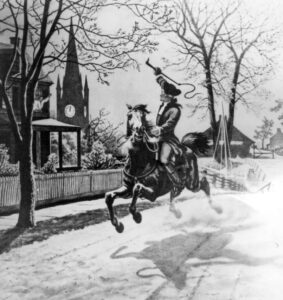
Many are familiar with the poem Paul Revere’s Ride, however, far fewer know that Paul Revere actually memorialized the events of the April 18 and 19, 1775, in an eight-page letter written several years later.
Each Patriots’ Day I remind myself to read his letter from a copy handed down, and I think about how Paul Revere was really just a common man of otherwise undue significance…. yet, capable to the task at hand.
To me everything about the heart of Revere, which you can identify within his own writing, is what defines an American ‘patriot’.
There is no grand prose, there is no outlook of being a person of historical significance, there is just a simple recollection of his involvement, an ordinary man in extraordinary times.
Unsure if anyone else would enjoy I have tracked down an on-line source for sharing and provide a transcript below (all misspelling is with the original).
Paul Revere personally recounts his famous ride. – In this undated letter, Paul Revere summarizes the activities surrounding his famous ride on 18 April 1775. He recounts how Dr. Joseph Warren urged him to ride to Lexington to warn John Hancock and Samuel Adams of British troop movements. He arranged to signal the direction of the troops with lanterns from Old North Church, and then had friends row him across the Charles River borrowing a horse for his ride.
Revere wrote this letter at the request of Jeremy Belknap, corresponding secretary of the Massachusetts Historical Society. Revere signed his name to the letter but then wrote above it, “A Son of Liberty of the year 1775”, and beside it, “do not print my name.” Nonetheless, the MHS included Revere’s name when it printed the letter in 1798.


EXPLORE THE DOCUMENT – Or Read the incredible transcript below:
Dear Sir,
Having a little leisure, I wish to fullfill my promise, of giving you some facts, and Anecdotes, prior to the Battle of Lexington, which I do not remember to have seen in any history of the American Revolution.
In the year 1773 I was imployed by the Select men of the Town of Boston to carry the Account of the Destruction of the Tea to New-York; and afterwards, 1774, to Carry their dispatches to New-York and Philadelphia for Calling a Congress; and afterwards to Congress, several times.* [This asterisk points to a note in the left margin written by Jeremy Belknap: “Let the narrative begin here.” ]
In the Fall of 1774 & Winter of 1775 I was one of upwards of thirty, cheifly mechanics, who formed our selves in to a Committee for the purpose of watching the Movements of the British Soldiers, and gaining every intelegence of the movements of the Tories.
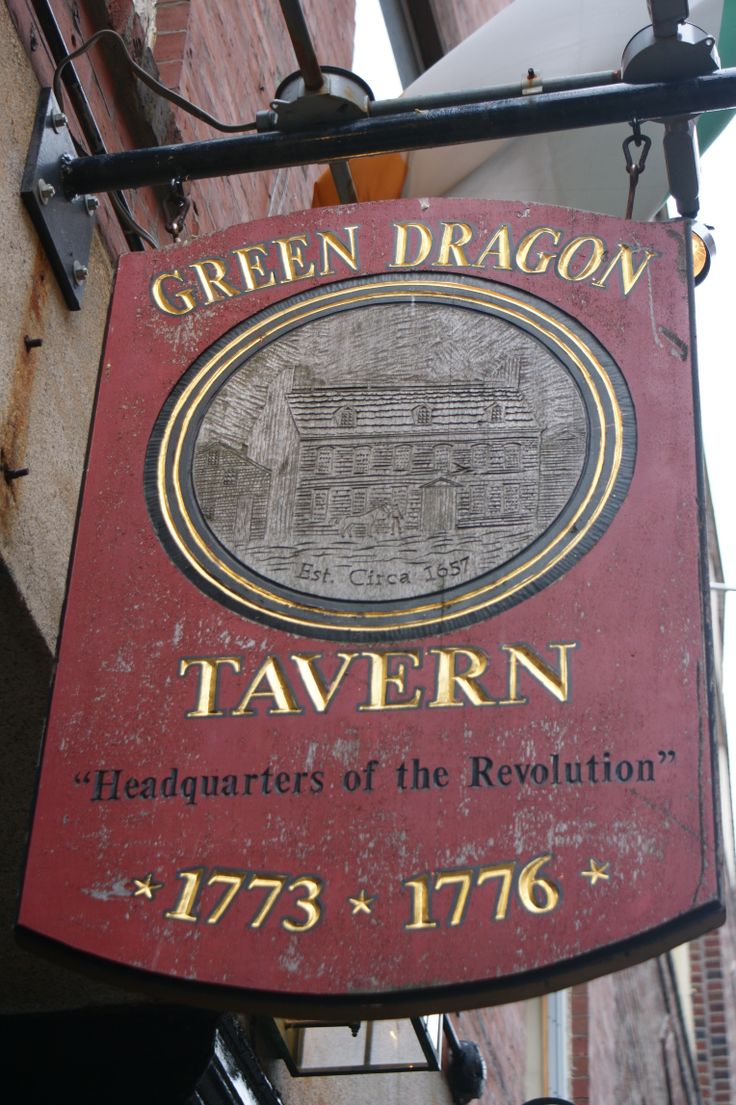
We held our meetings at the Green-Dragon Tavern. We were so carefull that our meetings should be kept Secret; that every time we met, every person swore upon the Bible, that they would not discover any of our transactions, But to Messrs. Hancock, Adams, Doctors Warren, Church, & one or two more.
About November, when things began to grow Serious, a Gentleman who had Conections with the Tory party, but was a Whig at heart, aquainted me, that our meetings were discovered, & mentioned the identical words that were spoken among us the Night before. We did not then distrust Dr. Church, but supposed it must be some one among us.
We removed to another place, which we thought was more secure: but here we found that all our transactions were communicated to Governor Gage. (This came to me through the then Secretary Flucker; He told it to the Gentleman mentioned above).
It was then a common opinion, that there was a Traytor in the provincial Congress, & that Gage was posessed of all their Secrets. (Church was a member of that Congress for Boston.) In the Winter, towards the Spring, we frequently took Turns, two and two, to Watch the Soldiers, By patroling the Streets all night.
The Saturday Night preceding the 19th of April, about 12 oClock at Night, the Boats belonging to the Transports were all launched, & carried under the Sterns of the Men of War. (They had been previously hauld up & repaired). We likewise found that the Grenadiers and light Infantry were all taken off duty.
[Page 2]
From these movements, we expected something serious was [to] be transacted. On Tuesday evening, the 18th, it was observed, that a number of Soldiers were marching towards the bottom of the Common.
About 10 o’Clock, Dr. Warren Sent in great haste for me, and beged that I would imediately Set off for Lexington, where Messrs. Hancock & Adams were, and acquaint them of the Movement, and that it was thought they were the objets. When I got to Dr. Warren’s house, I found he had sent an express by land to Lexington – a Mr. Wm. Daws.
The Sunday before, by desire of Dr. Warren, I had been to Lexington, to Mess. Hancock and Adams, who were at the Rev. Mr. Clark’s. I returned at Night thro Charlestown; there I agreed with a Col. Conant, & some other Gentlemen, in Charleston, that if the British went out by Water, we would shew two Lanthorns in the North Church Steeple; if by Land, one, as a Signal; for we were aprehensive it would be dificult to Cross the Charles River, or git over Boston neck.
I left Dr. Warrens, called upon a friend, and desired him to make the Signals. I then went Home, took my Boots and Surtout, and went to the North part of the Town, where I had kept a Boat; two friends rowed me across Charles River, a little to the eastward where the Somerset Man of War lay.
It was then young flood, the Ship was winding, & the moon was Rising. They landed me on Charlestown side. When I got into Town, I met Col. Conant, several others; they said they had seen our signals. I told them what was Acting, & went to git me a Horse; I got a Horse of Deacon Larkin.
While the Horse was preparing, Richard Devens, Esq. who was one of the Committee of Safty, came to me, & told me, that he came down the Road from Lexington, after Sundown, that evening; that He met ten British Officers, all well mounted, & armed, going up the Road. I set off upon a very good Horse; it was then about 11 o’Clock, very pleasant. After I had passed Charlestown Neck, got nearly opposite where Mark was hung in chains, I saw two men on Horse back, under a Tree.
When I got near them, I discovered they were British officer. One tryed to git a head of Me, & the other to take me. I turned my Horse very quick, & Galloped towards Charlestown neck, and then pushed for the Medford Road. The one who chased me, endeavoring to Cut me off, got into a Clay pond, near where the new Tavern is now built. I got clear of him,
[Page 3]
and went thro Medford, over the Bridge, & up to Menotomy. In Medford, I awaked the Captain of the Minute men; & after that, I alarmed almost every House, till I got to Lexington.
I found Mrs. Messrs. Hancock & Adams at the Rev. Mr. Clark’s; I told them my errand, and inquired for Mr. Daws; they said he had not been there; I related the story of the two officers, & supposed that He must have been stopped, as he ought to have been there before me.
After I had been there about half an Hour, Mr. Daws came; after we refreshid our selves, we and set off for Concord, to secure the Stores, & there. We were overtaken by a young Docter Prescot, whom we found to be a high Son of Liberty. I told them of the ten officers that Mr. Devens mett, and that it was probable we might be stoped before we got to Concord; for I supposed that after Night, they divided them selves, and that two of them had fixed themselves in such passages as were most likely to stop any intelegence going to Concord.
I likewise mentioned, that we had better allarm all the Inhabitents till we got to Concord; the young Doctor much approved of it, and said, he would stop with either of us, for the people between that & Concord knew him, & would give the more credit to what we said.
We had got nearly half way. Mr Daws & the Doctor stoped to allarm the people of a House: I was about one hundred Rod a head, when I saw two men, in nearly the same situation as those officer were, near Charlestown. I called for the Doctor & Daws to come up; were two & we would have them in an Instant I was surrounded by four; – they had placed themselves in a Straight Road, that inclined each way; they had taken down a pair of Barrs on the North side of the Road, & two of them were under a tree in the pasture. The Docter being foremost, he came up; and we tryed to git past them; but they being armed with pistols & swords, they forced us in to the pasture; -the Docter jumped his Horse over a low Stone wall, and got to Concord.
[Page 4]
I observed a Wood at a Small distance, & made for that. When I got there, out Started Six officers, on Horse back, and orderd me to dismount;-one of them, who appeared to have the command, examined me, where I came from, & what my Name Was? I told him. it was Revere, he asked if it was Paul? I told him yes He asked me if I was an express? I answered in the afirmative. He demanded what time I left Boston? I told him; and added, that their troops had catched aground in passing the River, and that There would be five hundred Americans there in a short time, for I had alarmed the Country all the way up.
He imediately rode towards those who stoppd us, when all five of them came down upon a full gallop; one of them, whom I afterwards found to be Major Mitchel, of the 5th Regiment, Clapped his pistol to my head, called me by name, & told me he was going to ask me some questions, & if I did not give him true answers, he would blow my brains out.
He then asked me similar questions to those above. He then orderd me to mount my Horse, after searching me for arms. He then orderd them to advance, & to lead me in front. When we got to the Road, they turned down towards Lexington. When we had got about one Mile, the Major Rode up to the officer that was leading me, & told him to give me to the Sergeant. As soon as he took me, the Major orderd him, if I attempted to run, or any body insulted them, to blow my brains out.
We rode till we got near Lexington Meeting-house, when the Militia fired a Voley of Guns, which appeared to alarm them very much. The Major inquired of me how far it was to Cambridge, and if there were any other Road? After some consultation, the Major
[Page 5]
Major Rode up to the Sargent, & asked if his Horse was tired? He told answered him, he was – (He was a Sargent of Grenadiers, and had a small Horse) – then, said He, take that man’s Horse. I dismounted, & the Sargent mounted my Horse, when they all rode towards Lexington Meeting-House.
I went across the Burying-ground, & some pastures, & came to the Revd. Mr. Clark’s House, where I found Messrs. Hancok & Adams. I told them of my treatment, & they concluded to go from that House to wards Woburn. I went with them, & a Mr. Lowell, who was a Clerk to Mr. Hancock.
When we got to the House where they intended to stop, Mr. Lowell & I my self returned to Mr. Clark’s, to find what was going on. When we got there, an elderly man came in; he said he had just come from the Tavern, that a Man had come from Boston, who said there were no British troops coming. Mr. Lowell & myself went towards the Tavern, when we met a Man on a full gallop, who told us the Troops were coming up the Rocks.
We afterwards met another, who said they were close by. Mr. Lowell asked me to go to the Tavern with him, to a git a Trunk of papers belonging to Mr. Hancock. We went up Chamber; & while we were giting the Trunk, we saw the British very near, upon a full March.
We hurried to wards Mr. Clark’s House. In our way, we passed through the Militia. There were about 50. When we had got about 100 Yards from the meeting-House the British Troops appeard on both Sides of the Meeting-House. In their
[Page 6]
In their Front was an Officer on Horse back. They made a Short Halt; when I saw, & heard, a Gun fired, which appeared to be a Pistol. Then I could distinguish two Guns, & then a Continual roar of Musquetry; When we made off with the Trunk.
As I have mentioned Dr. Church, perhaps it might not be disagreeable to mention some Matters of my own knowledge, respecting Him. He appeared to be a high son of Liberty. He frequented all the places where they met, Was incouraged by all the leaders of the Sons of Liberty, & it appeared he was respected by them, though I knew that Dr. Warren had not the greatest affection for him. He was esteemed a very capable writer, especially in verese; and as the Whig party needed every Strenght, they feared, as well as courted Him.
Though it was known, that some of the Liberty Songs, which We composed, were parodized by him, in favor of the British, yet none dare charge him with it. I was a constant & critical observer of him, and I must say, that I never thought Him a man of Principle; and I doubted much in my own mind, wether He was a real Whig. I knew that He kept company with a Capt. Price, a half-pay British officer, & that He frequently dined with him, & Robinson, one of the Commissioners. I know that one of his intimate aquaintances asked him why he was so often with Robinson and Price? His answer was, that He kept Company with them on purpose to find out their plans.
The day after the Battle of Lexington, I came across met him in Cambridge, when He shew me some blood on his stocking, which he said spirted on him from a Man who was killed near him, as he was urging the Militia on. I well remember, that I argued with my self, if a Man will risque his life in a Cause, he must be a Friend to that cause; & I never suspected him after, till He was charged with being a Traytor.
[Page 7]
The same day I met Dr. Warren. He was President of the Committee of Safety. He engaged me as a Messinger, to do the out of doors business for that committee; which gave me an opportunity of being frequently with them.
The Friday evening after, about sun set, I was sitting with some, or near all that Committee, in their room, which was at Mr. Hastings’s House at Cambridge. Dr. Church, all at once, started up – Dr. Warren, said He, I am determined to go into Boston tomorrow – (it set them all a stairing) – Dr. Warren replyed, Are you serious, Dr. Church? they will Hang you if they catch you in Boston. He replyed, I am serious, and am determined to go at all adventures.
After a considerable conversation, Dr. Warren said, If you are determined, let us make some business for you. They agreed that he should go to git medicine for their & our Wounded officers. He went the next morning; & I think he came back on Sunday
evening.
After He had told the Committee how things were, I took him a side, & inquired particularly how they treated him? he said, that as soon as he got to their lines on the Boston Neck, they made him a prisoner, & carried him to General Gage, where He
was examined, & then He was sent to Gould’s Barracks, & was not suffered to go home but once.
After He was taken up, for holding a Correspondence with the Brittish, I came a Cross Deacon Caleb Davis;-we entred into Conversation about Him;-He told me, that the morning Church went into Boston, He (Davis) received a Bilet for General Gage-(he then did not know that Church was in Town)-When he got to the General’s House, he was told, the General could not be spoke with, that He was in private with a Gentleman; that He waited near half an Hour,-When General Gage & Dr. Church came out of a Room, discoursing together, like
[Page 8]
like persons who had been long aquainted. He appeared to be quite surprized at seeing Deacon Davis there; that he (Church) went where he pleased, while in Boston, only a Major Caine, one of Gage’s Aids, went with him.
I was told by another person whom I could depend upon, that he saw Church go in to General Gage’s House, at the above time; that He got out of the Chaise and went up the steps more like a Man that was aquainted, than a prisoner.
Sometime after, perhaps a Year or two, I fell in company with a Gentleman who studied with Church -in discoursing about him, I related what I have mentioned above; He said, He did not doubt that He was in the Interest of the Brittish; & that it was He who informed Gen. Gage That he knew for Certain, that a Short time before the Battle of Lexington, (for He then lived with Him, & took Care of his Business & Books) He had no money by him, and was much drove for money; that all at once, He had several Hundred New Brittish Guineas; and that He thought at the time, where they came from.
Thus, Sir, I have endeavoured to give you a Short detail of some matters, of which perhaps no person but my self have have documents, or knowledge. I have mentioned some names which you are aquainted with: I wish you would Ask them, if they can remember the Circumstances I alude to.
I am, Sir, with every Sentment of esteem,
Your Humble Servant,
Paul Revere