
September 11, 2020
“Peace is the prize.” – Truly a remarkable diplomatic accomplishment and very apropos considering the timing of the events. Today the Kingdom of Bahrain and Israel formalize peace and diplomatic ties between the two nations. Bahrain now joins with the United Arab Emirates in a larger peace initiative. [Video of White House Announcement]

WHITE HOUSE – President Donald J. Trump has brokered a deal to establish full diplomatic relations between Bahrain and Israel – the second such agreement between Israel and an Arab nation in less than one month.
* Israel and Bahrain have committed to begin the exchange of embassies and ambassadors, start direct flights between their countries, and launch cooperation initiatives across a broad range of sectors.
* This peace deal is a significant step forward for both Israel and Bahrain.
+ It further enhances their security while creating opportunities for them to deepen their economic ties.
* This deal comes on the heels of the historic normalization agreement between Israel and the United Arab Emirates.
+ The United Arab Emirates and Bahrain are the first Arab nations to normalize relations with Israel in more than 25 years.
* The United States will continue to support the people of Bahrain as they work to counter terrorism and extremism, develop economically, and build new peaceful partnerships across the region.
CREATING THE CONDITIONS FOR PEACE: President Trump’s wise foreign policy strategy has created the conditions for peace between Israel and its neighbors.
* When President Trump took office, the Middle East was in a state of extreme turmoil.
* President Trump has worked to rebuild trust with our regional partners and identify their shared interests, moving them away from the conflicts of the past.
* Thanks to the President’s bold foreign policy vision and his acumen as a dealmaker, nations across the region are realizing the benefits of his thoughtful approach.
* As the President’s work continues, more Arab and Muslim countries will likely seek to normalize relations with Israel.
* Each country that normalizes relations will build upon the other, bringing peace and prosperity to the region and the people who live there.
AN UNPRECEDENTED REGIONAL TRANSFORMATION: After decades of instability and crisis, nations across the Middle East and Africa are increasingly working together to build a more peaceful and prosperous future.
* Thanks to President Trump’s leadership, the Arab world is experiencing the most rapid geopolitical transformation in more than a generation.
* As more countries normalize relations with Israel, the region is becoming more stable, secure, and prosperous.
* Expanded business and financial ties between economies will accelerate growth and economic opportunity across the region.
* Agreements with Bahrain and the United Arab Emirates also help to advance President Trump’s vision for finding a fair and lasting peace between Israel and the Palestinians.
* The United States will continue to stand with the people of the region as they work to build a brighter, more hopeful future.
(LINK)


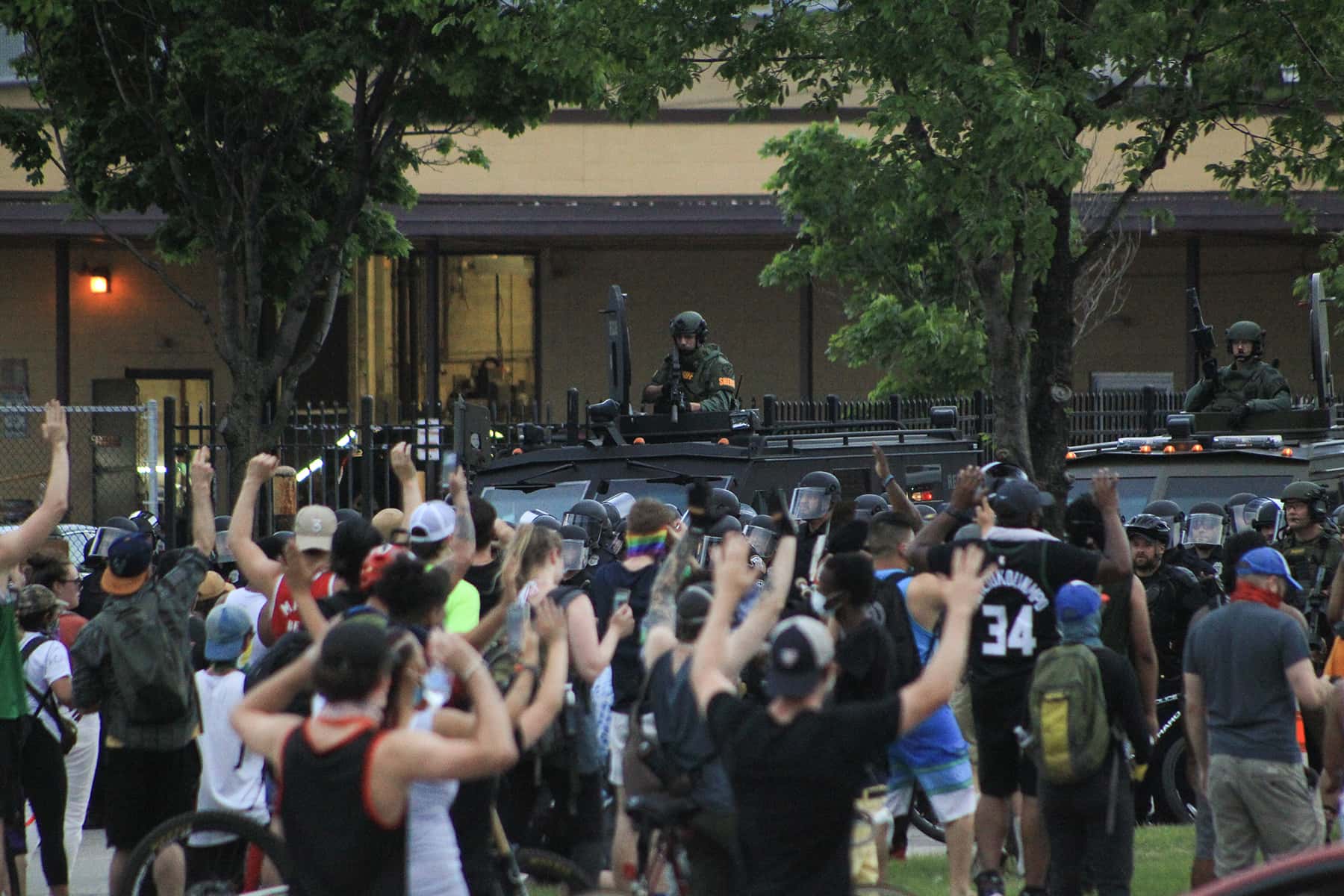
 Centinel2012
I would like to send you some studies that appear to provide evidence that appears to substantiate significant disparities in the use of force against African Americans. If you would kindly provide me an email I can use I would happy to send these to you for your comment. I would send you the actual studies, not the citations or mere references (with 1 exception.).
1. A Multi-Level Bayesian Analysis of Racial Bias
in Police Shootings at the County-Level in
the United States, 2011–2014
2. An Empirical Analysis of Racial Differences in Police Use of Force,
Roland G. Fryer, Jr.†
July 2017
3. Is There Evidence of Racial Disparity in Police Use of Deadly Force? Analyses of
Officer-Involved Fatal Shootings in 2015–2016
Joseph Cesario, David J. Johnson, William Terrill (abstract only)
4. Officer characteristics and racial disparities in fatal
officer-involved shootings
David J. Johnsona,b,1, Trevor Tressb, Nicole Burkelb, Carley Taylorb, and Joseph Cesariob (Heather MacDonald used this study as (among others?) for her editorial in the WSJ.
5. Correction for “Officer characteristics and racial disparities in
fatal officer-involved shootings,” by David J. Johnson, Trevor
Tress, Nicole Burkel, Carley Taylor, and Joseph Cesario, which
was first published July 22, 2019; 10.1073/pnas.1903856116 (Proc.
Natl. Acad. Sci. U.S.A. 116, 15877–15882).
6. Police, Race, and the Production of Capital Homicides
Jeffrey Fagan†
Amanda Geller*
Thank you for your considerations. I am very appreciative of the very fine work JustFacts does to bring a balanced and factual presentation of the evidences and arguments to the issues of our day.
Thank you for your kind words. Below are the key facts on these six studies. As you’ll see, they are either fatally flawed, inconclusive, or actually find that police are not more likely to use lethal force against minorities:
1) A Multi-Level Bayesian Analysis of Racial Bias in Police Shootings at the County-Level in the United States, 2011–2014
This study uses an incomplete, crowd-sourced dataset that records 16 cases of civilians being shot by police in Houston, TX and surrounding areas from 2011 to 2014. During this period, at least 177 such shootings occurred in Houston alone. In other words, the study’s data is so fragmentary that it is useless.
2) An Empirical Analysis of Racial Differences in Police Use of Force
This study found that “on the most extreme use of force – officer-involved shootings – we are unable to detect any racial differences in either the raw data or when accounting for controls.” The author, Harvard professor Roland G. Fryer Jr., called this “the most surprising result of my career.”
On the other hand, the study did find that “blacks and Hispanics are more than 50 percent more likely to experience some form of force in interactions with police,” but this drops to 21.3% when controlling for factors like resisting arrest. Fryer theorizes there is a racial reason for this, but the remaining difference could be due to factors that the study did not control for, or it may be because police are more likely to forcibly restrain people in high-crime neighborhoods to prevent situations that require lethal force, regardless of race.
The paper is also marred and its credibility is undermined by this misleading claim: “The raw memories of these [racial] injustices have been resurrected by several high-profile incidents of questionable uses of force. Michael Brown, unarmed, was shot 12 times by a police officer in Ferguson, Missouri, after Brown fit the description of a robbery suspect of a nearby store.” Before the working draft of this paper was published in 2016, the Obama Justice Department proved in 2015 that the officer shot Brown in self-defense. On 9/12/16, I personally wrote to Fryer with documentation of that fact, and yet, he still submitted this paper for final publication with this falsehood in it.
3) Is There Evidence of Racial Disparity in Police Use of Deadly Force? Analyses of Officer-Involved Fatal Shootings in 2015–2016
This is the exact same study that I quote in the article above. Again, it found that “in nearly every case, whites were either more likely to be fatally shot by police or police showed no significant disparity in either direction.”
4) Officer Characteristics and Racial Disparities in Fatal Officer-Involved Shootings
In the words of the study’s authors, this study found that “once crime rates were taken into account, civilians fatally shot by the police were not more likely to be black or Hispanic than white.” Furthermore, it showed that “white officers are not more likely to fatally shoot minority civilians compared to black or Hispanic officers.”
5) Correction for “Officer Characteristics and Racial Disparities in Fatal Officer-Involved Shootings”
This is merely a technical clarification of the study just above that changes none of its results.
6) Police, Race, and the Production of Capital Homicides
This study mentions earlier research about racial disparities in the death penalty, but the facts are that relative to the rates at which people of different races commit murder in the U.S., black people are less likely to be sentenced to death and executed than white people.
The study correctly points out that murders are less likely to be solved in minority neighborhoods and posits racial causes for this, but it also recognizes that this may be due to factors such as these:
• Minorities are more likely to be involved in murdering strangers than whites, and such murders are more difficult to solve.
• Police resources are stretched in minority neighborhoods due to high crime rates.
• Minorities are less likely to cooperate with murder investigations due to fear of reprisal and hostility towards police.