Posted originally on the CTH on November 4, 2023 | Sundance
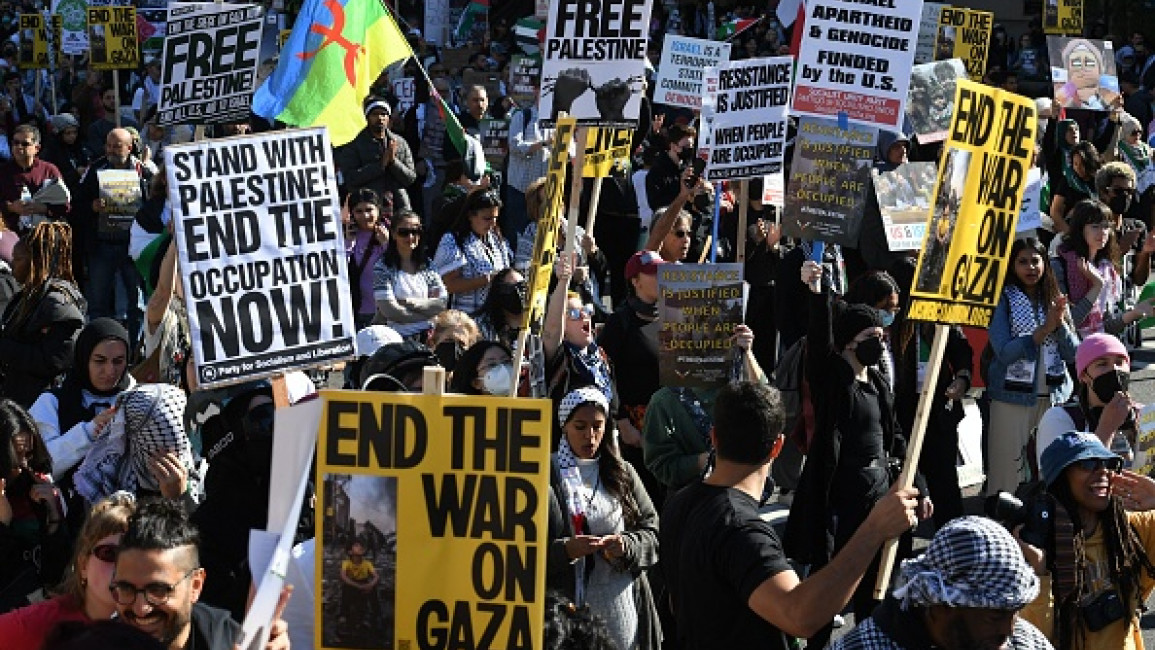
Washington DC saw a massive assembly of pro-Hamas, pro-Palestinian groups today. Tens of thousands of people protesting against Israel in support of Hamas and the Palestinian cause shouted, “from the river to the sea,” an increasingly popular slogan calling for the elimination of the nation state of Israel.
After the march and protest, the angry pro-Hamas groups converged on the White House, scaling the fence and waving the Palestinian flag. The chant changed to “long live the Intifada,” a nod of approval to the protests against Israel from within the West Bank and Gaza.
.
WASHINGTON DC – Tens of thousands of pro-Palestinian protesters massed in Washington, DC, Saturday afternoon before descending upon the White House to chant, “Allahu akbar” and “F–k Joe Biden” as they accused the president of genocide and demanded a ceasefire in the Gaza Strip.
“From the river to the sea, Palestine will be free,” the crowd dotted with Palestinian flags and signs cried at the start of the event, which drew attendees from across the country.
The chant – which is growing increasingly popular in the wake of Hamas’ deadly incursion into southern Israel last month and Israel’s subsequent retaliatory attacks on Gaza – is widely considered antisemitic because it implies the elimination of the State of Israel and its people.
Others chanted, “Long live the Intifada,” an Arabic word used to refer to Palestinian uprising, specifically to conflicts that ran from 1987 and 1993 and from 2000 to about 2005 that left thousands dead.
Unofficial reports estimate 300,000 showed up to the protest, but DC Police could not confirm, telling The Post it does not estimate crowd size.
[…] Around 7:30 p.m., protesters were smearing red paint on the gates of the White House and chanting: “Allahu akbar,” “F–k Joe Biden,” a Post reporter observed. (read more)
Posted originally on the CTH on November 3, 2023 | Sundance
It’s an odd dynamic to watch the professional political left support extremism yet pretend not to support the violent outcomes of the extremists.
We saw this dynamic domestically with Occupy Wall Street violence; we saw this with the Ferguson violence; we saw this with the Baltimore violence; we saw this with Black Lives Matter violence; we see this dynamic with the Antifa violence, and we continue to see this dynamic unfold on the streets and college campuses with the pro-Hamas terror rallies and sympathetic politicians.
There is a lot of pretending needed in order to reconcile how the professional political left embraces violence, then claims to desire peace. The easier approach is always to just accept things as they are, not as we would pretend them to be. However, if you understand this confliction, then you can well imagine how Israeli Prime Minister Benjamin Netanyahu must feel each time he talks to Secretary of State Anthony Blinken.
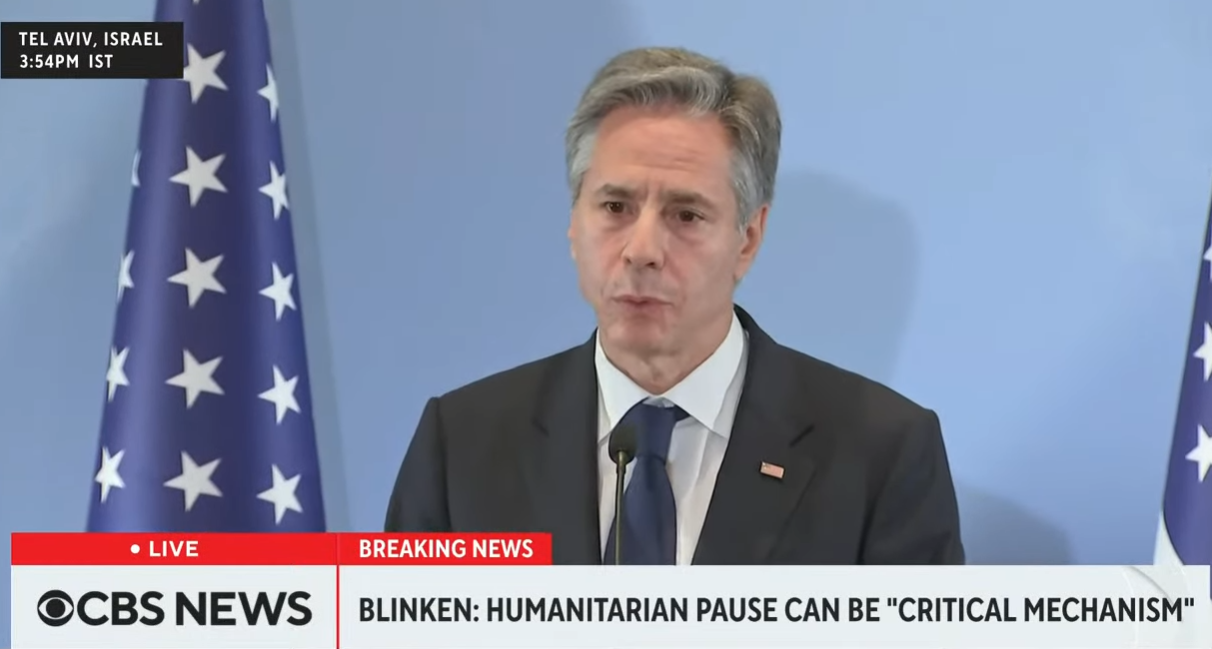
Today, Secretary Blinken is back in Israel and gave remarks to the press after his meeting with Netanyahu. There were actually some good questions raised during the press Q&A segment. One question about the “ultimate goal and vision in the aftermath” was particularly interesting. WATCH:
[TRANSCRIPT] – SECRETARY BLINKEN: Good afternoon, everyone.
“Days after Hamas’s attack on October 7th, I came to Israel, followed soon thereafter by President Biden, to make clear that as long as the United States stands, Israel will never stand alone. Today, in my fourth visit to Israel since October 7th, I reiterated that in all my discussions – with Prime Minister Netanyahu, President Herzog, the security cabinet. I reiterated and made clear our support for Israel’s right to defend itself, indeed its obligation to defend itself. That includes through the additional assistance that we’ve worked with Congress and we’re working with Congress now to provide for Israel’s defense, as well as for urgent humanitarian needs in Gaza.
This right to self-defense, indeed this obligation to self-defense, belongs to every nation. No country could or should tolerate the slaughter of innocents. You’ve heard me speak to some of the stories that Israelis have experienced on October 7th. Today, we saw additional images, additional footage collected by the Israeli Government from video cameras – some the terrorists’ own, others in communities that were attacked. It remains almost beyond the human capacity to process, to digest.
I saw, for example, a family on a kibbutz – a father of two young boys maybe 10, 11 years old grabbing them, pulling them out of their living room, going through their very small backyard and into a shelter, followed seconds later by a terrorist who throws a grenade into that small shelter and then, as the father comes staggering out, shoots him down. And then the boys come out, and they run into their house, and the camera in the house is filming everything. And they’re crying. “Where’s daddy?” one says. The other says, “They killed daddy.” “Where’s my mommy?” And then the terrorist comes in and casually opens the refrigerator and starts to eat from it.
That’s what we’re dealing with. And it is striking and in some ways shocking that the brutality of the slaughter has receded so quickly in the memories of so many. But not in Israel, and not in America. Thirty-five Americans were murdered that day as well, and more than 200 foreign nationals from 35 countries.
I’ve returned to the region to engage in intense diplomacy with our partners to try to help ensure that an attack like October 7th never happens again, and in doing so that we forge a different future, a very different future, for Israelis and Palestinians alike; that out of this tragedy emerges a better tomorrow for both peoples and for the region. There are a number of important steps that we can, indeed we must, take now to help make that possible.
First, we need to continue to prevent escalation of this conflict, its spread to other areas and other theaters. The United States has and we will continue to respond to attacks by Iran’s proxies to defend our personnel in the region, personnel who are here in Iraq and in Syria to help prevent the resurgence of ISIS. We will do what is necessary to deter and, as I said, respond to any attacks.
Partners throughout the Middle East and beyond have a critical role to play in averting escalation, and that will be a major focus of my conversations throughout this trip.
Second, we need to do more to protect Palestinian civilians. We’ve been clear that as Israel conducts its campaign to defeat Hamas, how it does so matters. It matters because it’s the right and lawful thing to do. It matters because failure to do so plays into the hands of Hamas and other terror groups. There will be no partners for peace if they’re consumed by humanitarian catastrophe and alienated by any perceived indifference to their plight.
This is what binds us as human beings. I’ve seen images too of Palestinian children, young boys and girls, pulled from the wreckage of buildings. When I see that, when I look into their eyes through the TV screen, I see my own children. How can we not?
Hamas doesn’t care one second or one iota for the welfare, for the well-being, of the Palestinian people. It cynically and monstrously uses them as human shields, putting its commanders in command posts, its weapons and ammunition within or beneath residential buildings, schools, mosques, hospitals.
But civilians should not suffer the consequences for its inhumanity and its brutality. We’ve provided Israel advice that only the best of friends can offer on how to minimize civilian deaths while still achieving its objectives of finding and finishing Hamas terrorists and their infrastructure of violence. Today, I spoke with Prime Minister Netanyahu and other senior officials about concrete steps to do that.
President Biden has consistently stressed the need for Israel to operate according to international humanitarian law. I also emphasized that the protection of civilians must take place not just in Gaza, but also in the West Bank, where incitement and extremist violence against Palestinians must be stopped – and perpetrators held accountable.
Third, we need to substantially and immediately increase the sustained flow of humanitarian assistance into Gaza, and getting American citizens and other foreign nationals out of Gaza.
Since we reached agreement with Israel, Egypt, and the United Nations two weeks ago on mechanisms to enable humanitarian aid to begin reaching civilians in need, we have scaled up deliveries. We’ve gone from zero to now over 100 trucks going into Gaza through the Rafah Crossing every day. But this is still not enough.
I spoke to Israeli leaders about tangible steps that can be taken to increase the sustained delivery of food, water, medicine, fuel, and other essential needs while putting in place measures to prevent diversion by Hamas and other terrorist groups. We’ve identified mechanisms to enable fuel to reach hospitals and other needs in the south.
Israel has raised appropriate concerns, concerns that we share, about Hamas’s hoarding and syphoning of fuel in northern Gaza. Again, its cynicism knows no bounds, denying fuel itself that it has to hospitals and other places that desperately need it. In meetings with regional partners, I’ll continue conversations about getting assistance to flow, including with help from the United Nations.
Over the last several days, U.S. citizens, foreign nationals, and critically wounded Palestinian civilians have begun to transit out of Gaza. We expect more to leave over the coming days. Even as these people are able to exit Gaza, we remain relentlessly focused on securing the release of hostages, including American citizens. We discussed these ongoing efforts today. Our Deputy Special Representative for Hostage Affairs Steve Gillen, who came with me on my first visit a couple of weeks ago, has remained here on the ground to help bring our people home and also to work with their families.
We believe that each of these efforts would be facilitated by humanitarian pauses, by arrangements on the ground that increase security for civilians and permit the more effective and sustained delivery of humanitarian assistance. That was an important area of discussion today with Israeli leaders: how, when, and where these can be implemented; what works needs to happen, and what understandings must be reached? Now, we recognize this would take time to prepare and coordinate as well with international partners.
A number of legitimate questions were raised in our discussions today, including how to use any period of pause to maximize the full humanitarian assistance, how to connect a pause to the release of hostages, how to ensure that Hamas doesn’t use these pauses or arrangements to its own advantage. These are issues that we need tackle urgently, and we believe they can be solved.
We’ve agreed to have our teams continue to discuss practical solutions. I’ve instructed our Special Envoy for Middle East Humanitarian Issues David Satterfield, who has been doing remarkable work here over the last couple of weeks, to continue these discussions. Ultimately, we believe this can be a critical mechanism for protecting civilians while enabling Israel to achieve its objectives of defeating Hamas.
Finally, and importantly, even as we work towards progress on each of these urgent needs, we’re focused on setting the conditions for a durable and sustainable peace and security. The United States continues to believe that the best viable path – indeed, the only path – is through a two-state solution. That’s the only guarantor of a secure, Jewish, and democratic Israel; the only guarantor of Palestinians realizing their legitimate right to live in a state of their own, enjoying equal measures of security, freedom, opportunity, and dignity; the only way to end a cycle of violence once and for all.
And it’s precisely now, in the darkest moments, that we have to fight hardest to preserve a path of stability, of security, of opportunity, of integration, of prosperity, and of peace – not tomorrow, not after the war, but today.
Thank you.
MR MILLER: First question goes to Leon Bruneau with AFP.
QUESTION: Yes. Excuse me. Hi, Leon Bruneau, Agence France-Presse. Thank you for doing this, Mr. Secretary. You mentioned it in your opening speech, of course, and yesterday also you said that you would – it was urgent or concrete measures needed to be taken to ease the fate of Palestinian civilians. What assurances did the prime minister, Benjamin Netanyahu, give you this morning in your talks? And also on the issue of humanitarian pauses that you say you have discussed – and I understand that you said you don’t know where, how, and when – but could you give us a little bit more details on what you mean by that exactly? I mean, is it stop bombings or what have you? Can you give us some details on that?
And then last question, very quickly, there was a strike yesterday on AFP’s office in Gaza where we have a continued live feed for – since the beginning of the conflict. The – apparently a missile strike – did serious damage to our office there. I’d like your thoughts on that, please.
SECRETARY BLINKEN: Great, Leon. Thank you very much. A few things in response. First, when it comes overall to humanitarian assistance, the Israeli Government is committed to providing that assistance – or enabling that assistance, more accurately – to get to people in Gaza. And as I said, just over the last two weeks, we’ve gone from nothing getting in through the Rafah gate to now, I think just today, well over 100 trucks. And as I said, that’s significant progress in the space of a couple of weeks, but it’s also insufficient. And there’s a recognition not only by us of that fact but also by the Israeli Government, as well as our Egyptian partners, as well as the United Nations.
So we are looking at very concrete, practical ways to widen the aperture, to significantly increase the assistance that’s getting in – the food, the medicine, the water, fuel, other critical needs for people who, through no fault of their own, are in desperate, desperate need. And we had a good conversation about that today. Again, Ambassador Satterfield, who’s here, is working on this every single day; but I’m confident, based on the conversations we had, that you’ll see a further increase in the assistance that’s getting in to people who need it.
With regard to humanitarian pauses, again, we see this as a way of further facilitating the ability to get assistance in, to make sure that the resources are in place as well to absorb the assistance coming in, to make sure that it gets to the people who need it. We see it as a way also, and very importantly, of creating a better environment in which hostages can be released. And this is a very important piece.
So as I mentioned already, and I won’t repeat it, there are a number of very important practical questions that go along with this that we’ve agreed to discuss and work on. We’ve agreed that our teams will continue to talk about this in the days ahead. And from our perspective, this can be a critical way to advance many of the interests that I discussed earlier.
I haven’t seen the details about the strike, Leon, that you alluded to that hit the AFP office in Gaza. And let me just say, and say again, that as we stand strongly for Israel’s right and obligation to defend itself, we also believe that it’s vitally important how Israel does this, including with the highest regard for the protection of civilians, and that of course includes journalists, journalists who are doing extraordinary work under the most dangerous conditions, to tell this story to the world something that we deeply admire, deeply respect, and we want to make sure that they are protected.
MR MILLER: The next question goes to Keren Betzalel with Channel 12.
QUESTION: Thank you. Thank you, Secretary Blinken, for being here. Two issues. Hasan Nasrallah, the secretary-general of Hizballah, is talking right now. If, following his speech or his remark, another front will open in the north, will the U.S. actually use its firepower in the region not only to deter but also to destroy target in Lebanon, or if needed, in Iran?
And on the hostages, the Biden administration is asking Israel for a temporary pause, and we understand it is not a ceasefire. But do you have any guarantees, any assurances, that this temporary pause will lead to hostage release? And I know you have heard the family of the hostages today outside the Kiyra base. And if – may I – can you assure us that the United States will not hold Israel back before the main objective of this war will fulfill, which is eliminating Hamas?
SECRETARY BLINKEN: Thank you.
QUESTION: Thank you.
SECRETARY BLINKEN: Let me take the second question first. There are no guarantees about anything as a general proposition, and maybe even more specifically, in the context of the fight against Hamas. But we are absolutely focused on getting hostages back and getting them back to their families in safety, and we believe that, among other things, a humanitarian pause could help that effort, could facilitate it. It’s one of the reasons why we’re focused on it. But regardless, our determination to get people back is manifested every single day in our efforts to do – to do just that.
And as I’ve said and said repeatedly, and as President Biden has said and has said repeatedly, we stand strongly with and behind Israel in its right and obligation to defend itself, defend its people, and take the steps necessary to try to ensure that this never happens again. Nothing has changed and that won’t change.
With regard to Lebanon, with regard to Hizballah, with regard to Iran, we have been very clear from the outset that we are determined that there not be a second or third front opened in this conflict. President Biden said on day one to anyone thinking of opening a second front, taking advantage of the situation, don’t. And we’ve backed up those words not only with work that we’ve done with many partners in the region to reinforce that message. but with practical deeds, including the deployment of two aircraft carriers battlegroups to the region; including with action that we’ve taken for example against missiles coming from Yemen in the direction of Israel, shooting them down; including as well with strikes that we took in response to multiple attacks on our personnel in Iraq and Syria who are there, as I said earlier, to try to prevent the resurgence in the region of ISIL, of Daesh. We remain absolutely determined in that effort. And I’m not going to get into hypothetical situations, but all I can say is we’re committed to deterring aggression from any part and we’ll take the steps necessary to deal with it.
MR MILLER: For the next question, Vivian Salama with The Wall Street Journal.
QUESTION: Mr. Secretary, thank you as always for bringing us along with you in your travels. Before we left D.C., you stressed that the U.S. was discussing with Israel the current conflict, and you added, “We will also be focusing on the day after.” Can you talk a little bit about what that looks like? In particular, what is being done to ensure that whatever does come after doesn’t spin into potentially short- or long-term occupation?
And also, are there discussions at all to create a multilateral force for Gaza? And if so, would the U.S. be willing to take part in something like that? Thank you.
SECRETARY BLINKEN: Thanks, Vivian. Here’s what we know and I think is agreed among everyone: There cannot and must not be a return to the pre-October 7 status quo. That’s unacceptable. It’s not tolerable for Israel; it shouldn’t be acceptable or tolerable by anyone else. And that means that the idea of Hamas remaining responsible for governance, such as it was, and security, and posing an ongoing and enduring threat to Israel and its citizens, is unacceptable. So that’s one thing we know.
We also know that Israel cannot reassume control and responsibility for Gaza. And it’s important to note that Israel has made clear it has no intention or desire to do that.
So within those parameters, we are and will continue to have discussions with partners throughout the region and well beyond about what should follow once Hamas is defeated. There are a number of possibilities, permutations, but it’s really premature to get into any detail about that.
As important is putting this into a bigger picture, a bigger vision of how we achieve enduring and lasting peace and security in the region. And as I said earlier, the United States is convinced – we have been for some time, and I think we’re only reinforced in that conviction since October 7th – that the best path, maybe even the only path, as I said, is through two states for two peoples. Again, that is the only way to ensure lasting security for a Jewish and democratic Israel, the only way to ensure that the Palestinians achieve their legitimate aspirations for a state of their own.
So I think it’s important, as we’re talking about all of this with every partner in the region – Israel, our Arab partners, and many others, as well as the broader international community – that we have that big frame in mind, and whatever we do, whatever is done, also helps to advance that. So that’s how we’re looking at it right now.
QUESTION: Can I just press you, Mr. Secretary? Because you’re talking about the defeat of Hamas. And I’m wondering for – Hamas is not just a bunch of individuals but probably an ideology as well. And especially with the intense bombardment that we’re seeing in Gaza right now, the potential for extremism down the line is high. And so when you say defeat Hamas, is that being factored in? And what are you doing, then, to address those issues as well?
SECRETARY BLINKEN: Yeah, Vivian, I – you’re exactly right. This is about dealing with Hamas in terms of defeating it physically, that is, making sure that it can’t repeat what it did on October 7th. But it is also about defeating an idea, a perverted idea, but an idea that we have to combat with a better idea, with a better future, with a better vision for what that future can be, and demonstrating that we’re committed to achieving that future, that vision. Because in the absence of that, even after Hamas, those who sing the siren song of nihilism will find open ears.
So it’s imperative, in our judgment, that not only is Hamas dealt with in a way that October 7th can never be repeated, but that we lay out a clear vision and a path to achieve that vision that gives people something to hope for, to buy into, to grab onto. And I believe that there is a broad and strong coalition throughout the region that wants to do exactly that. All of these countries are on one side of the equation. Who’s on the other side of the equation? Hamas, Hizballah, and Iran.
So it’s incumbent upon us, I think, not only to lay out that vision but to be clear about the ways that we propose to achieve it. This is not flipping a light switch, needless to say, given how deep-rooted and enduring these problems are. But there – we have to – we have to address this, and we have to address it in concrete ways and with determination because, again, it comes back to exactly what you said. We have to demonstrate that we have a better idea and a way to achieve it.
MR MILLER: For the final question, Muhannad Tutunji with BBC.
QUESTION: Thank you, Mr. Secretary. First question: The whole world is looking to end this war – when will you ask Israel to stop it? And the next question: The wave of settler violence is increasing with unarmed Palestinians being killed daily – what is the United States doing to address increasing settler violence against Palestinians in the West Bank? Thank you.
SECRETARY BLINKEN: Thank you. With regard to the first part of the question, again, I’ll repeat what I’ve said: We stand behind Israel’s right and, indeed, obligation to defend itself and to do everything it can to make sure that October 7th never happens again. And we will continue to stand with Israel to achieve that. And as I’ve also said repeatedly, the way that Israel does so matters, and we’ve discussed today, as well as in many preceding days, the imperative of doing everything possible to protect civilians, the imperative of doing everything possible to get assistance to those who need it.
With regard to extremist violence that we’re seeing in the West Bank, this is something that, before October 7th, was a real concern for the United States and one that we’ve repeatedly raised in our engagements with the Israeli Government, and it’s an acute concern right now. Look, I don’t want to speak for the Israeli Government; it’s not appropriate. But I think it’s fair to say that what I heard today was a clear commitment from the government to deal with extremist violence in the West Bank – to condemn it, to take action to prevent it, to take action against those who perpetrate it. So this is important, and we will be looking closely to ensure that our friends make good on that commitment.
MR MILLER: Thank you.
SECRETARY BLINKEN: Thank you very much. Thanks, everyone.
We know why Israel is upset with Elon Musk for sending Starlink services to Palestine, but now Iran is also demanding that he remove the satellites. Truth is always the first casualty in war. Governments are censoring absolutely everything to prevent the truth from spreading. Iranian journalism is non-existent and people rely on social media to receive their information through the use of VPNs. Iran has previously shutdown internet access for its own people and disabled VPN servers to prevent people from seeking the truth.
Reporters Without Borders (RSF) believes the Islamic Republic “enslaved Iran’s internet.”“The Islamic Republic’s strategy is cruel – locking its people into an empty information space and blocking all escape routes,” said Vincent Berthier, the head of RSF’s Tech Desk. “Internet shutdowns form the main barrier to information, and when the network comes back online, the government obstructs access in another way, by preventing access to VPNs. We call on the Iranian authorities to lift these oppressive constraints. Iranians have the right to access news and information freely.”
Iran has blocked the Apple App Store and Google Play to deter people from downloading a VPN to bypass censorship. WhatsApp and Signal have been blocked as they do not allow people to communicate. Internet shutdowns often occur regionally as the Iranian government will simply revoke all internet communications at whim. A company called Arvan Cloud has assisted Iran’s Information and Communications Technology Ministry in developing the National Information Network (NIN) to block the people from free communication. Ironically, the US placed sanctions on the company in June 2023. The US government prefers to discreetly block information rather than turning off the internet entirely.
Now in comes Elon Musk. He recently said he plans to make X (formerly Twitter) an all-purpose app that allows calls and messaging. He is permitting everyone to post to his social media channel and it has become the top spot for government officials to send the public instant alerts. His Starlink technology will ensure that people can access X and the internet. Starlink satellites operate at an altitude of 340 miles and would be extremely costly to shoot down and only a few countries have anti-satellite technology. It’s also not like Musk is sending one satellite as they launch a stack of them at once.
There is a reason Putin did not attempt to shoot down Starlink over Ukraine. First of all, it is extremely costly and a waste of resources. Secondly, these devices are technically American assets and attempting to remove them could be seen as an act of war. Third, they could not shoot these down without causing orbital debris and angering the international community. Russia or China could spend countless resources on anti-satellite technology, but Musk could simply send more. The only way to close them would be to attack the ground station, a move that could only be done by the West.
Posted originally on the CTH on October 31, 2023 | Sundance
Again, something not feeling right about this story from The Daily Mail relay. Apparently, at some recent moment before the October 7, 2023 Hamas terrorist attack, a reporter from Russia Today was given a tour of Hamas tunnels below Gaza. According to the article, there are approximately 300 miles of the tunnels, with some reaching 200 ft below the surface.
The engineering to build tunnels at a depth of 200 ft (60 meters) below the surface is a remarkable claim (think proximity to sea level). The scale of the tunnels at 300 miles under such a small geographic region is another element that seems quite remarkable. The report, originating from Russia Today, coming on the heels of western intelligence trying to frame Russia in connection to an alignment with Hamas, puts another element into the Suspicious Cat review. The report almost seems too defensive and conveniently timed. That said, it’s not impossible, just remarkable if true.
(Via Daily Mail) – […] A Russia Today (RT) reporter was allowed a rare visit inside the so-called ‘Gaza Metro’ which snakes for up to 300 miles under the war-torn enclave.
As the clip emerged, senior Hamas official Mousa Abu Marzouk was asked by another RT interviewer why they didn’t allow the beleaguered civilian population to shelter from the bombing in the tunnels.
His reply spoke volumes: ‘Protecting Gaza civilians is the responsibility of the UN and Israel…We have built the tunnels to protect ourselves from getting targeted and killed. These are meant to protect us from the airplanes.’
The RT journalist entered the network by being lowered by an electric hoist 200ft (60m) below the ground.
[…] Hamas’s military engineers have become skilled at rigging up the concrete-lined tunnels and installing ventilation, electric lighting and telephone lines, all of which can be seen as the reporter makes his way among the terrorists.
Terrorists can also be seen running along the tunnels in the film carrying weapons and meanwhile others are digging by hand to extend the network still further. (read more)
If Hamas is indeed this dug in, (a) that means they have spent an incredible amount of time and money building this labyrinth; and (b) that would also explain the extreme dangers of this kind of warfare. Even bunker busting bombs would have difficulty with this claimed scale of depth.
Quite remarkable if true.
For that reason, in combination with the accepted psychological warfare that surrounds both the Ukraine war narrative and the Israeli war Gaza narrative, Engineering Suspicious Cat remains, well, suspicious…
Israel has stripped Gaza of all electricity, and over 2.2 million people no longer have access to basic necessities. Elon Musk announced over the weekend that he would send Starlink connectivity to Gaza. “Starlink will support connectivity to internationally recognized aid organizations in Gaza,” Musk posted on X.
A billionaire’s net worth provides more than money can buy. Musk has the ability to intervene in international affairs on his own accord. Palestine did not ask Musk for help; he simply decided to provide it on his own. Musk provided Starlink connectivity to Ukraine after Ukrainian officials urged him to help the innocent people living there. He was celebrated in the media as a hero for powering Ukraine, but now, he is being villainized for his efforts to help the people of Palestine.
Israel is angered that their communication blackout is coming to an end. Israel’s Communications Minister Shlomo Karhi promised, “Israel will use all means at its disposal to fight this.” He continued, “HAMAS will use it for terrorist activities. There is no doubt about it, we know it, and Musk knows it. HAMAS is ISIS. Perhaps Musk would be willing to condition it with the release of our abducted babies, sons, daughters, elderly people. All of them! By then, my office will cut any ties with Starlink.”
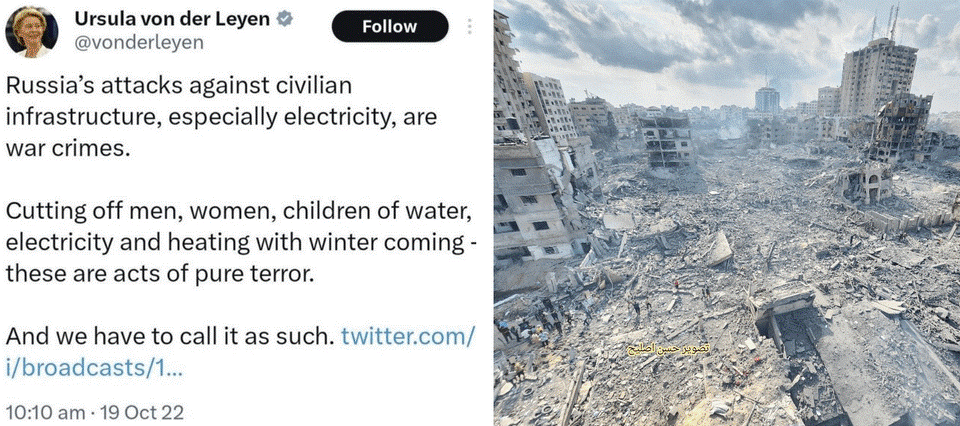
The United Nations and World Health Organization have said they have been unable to reach their people on the ground in Palestine. The world condemned Russia for committing a war crime, but it is ok when Israel and the West use these tactics against civilians.
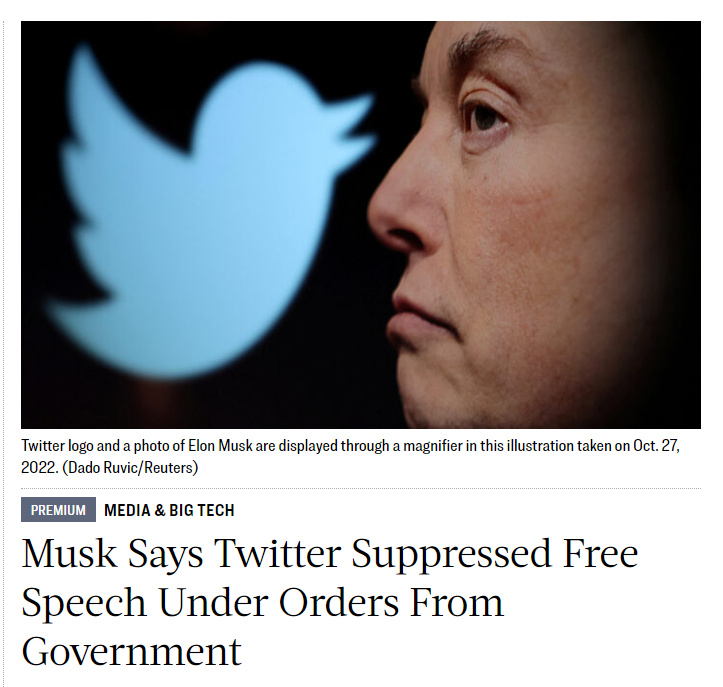
Another game changer in this war is X, formerly known as Twitter. Musk is not deplatforming people who disagree with the narrative. In fact, absolutely everyone is taking to X to express their views, including members of Hamas. This is one of the last platforms for free speech without censorship. Musk is using his wealth and technology for the greater good. Time will tell if the powers that be have the power to cancel an influential tech billionaire.
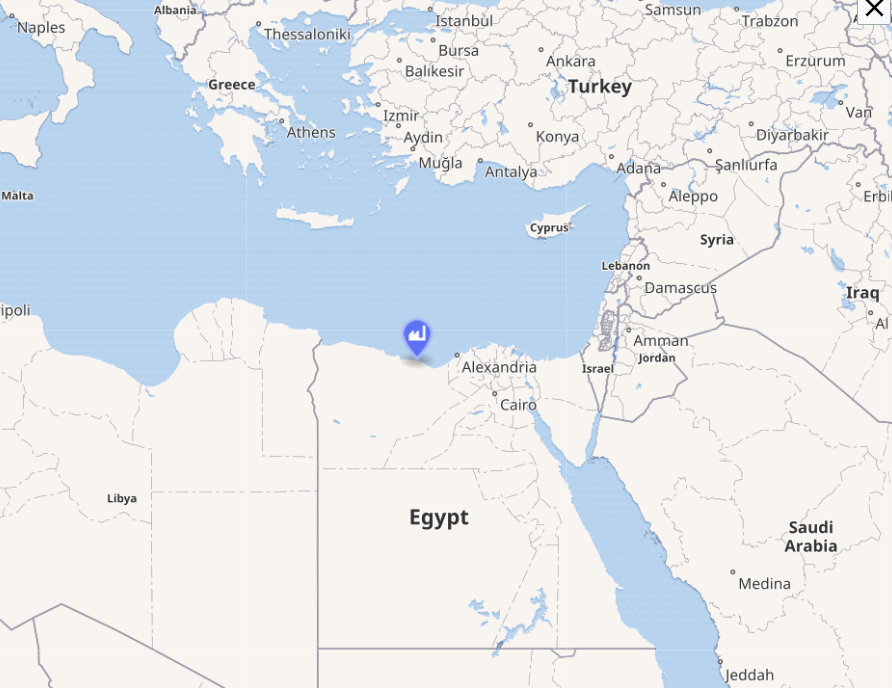
Russia poured $7 billion into Egypt in 2021 to create the Russian Industrial Zone (RIZ), the nation’s first industrial zone outside of Russia. Egyptian President Abdel Fattah al-Sisi developed a relationship with Russia in 2014 amid the Crimea crisis and the Ukrainian Revolution. Russia has been investing heavily in Egypt ever since and is currently pouring $4.6 billion into Egypt’s Suez Canal zone to create “Sun City,” an industrial zone covering 2,000 hectares.
Around 20% of all world trade moves through the Suez Canal. This is extremely strategic for Russian manufacturing and trade, and also explains Egypt’s refusal to support the West in its mission to escalate the Israel-Palestine war. Sun City is expected to bring 35,000 jobs to the Egyptian economy.
Egypt has become Africa’s leading destination for investment. It dethroned South Africa in 2017 to claim the title. The United Nations Conference on Trade and Development (UNCTAD) stated that Egypt “supported by a large increase in Chinese investment across light manufacturing industries and wide-ranging economic reforms, such as financial liberalisation, which is basically the establishment of higher interest rates that equate the demand for, and the supply of savings.” China’s Foreign Direct Investment (FDI) spiked 75% in 2017, providing Egypt with a large boost. The UAE, Qatar, and Saudi Arabia have also invested heavily in Egypt, especially in real estate and development.
There is nothing that the West can provide to Egypt to surpass what Arab and Eastern nations have done for its economy. The Egypt-Russia Trade and Investment Summary (YTD) 2022 indicates that Moscow and Cairo will continue to strengthen its relationship. A key to this report is that Russia is helping Egypt produce its first nuclear power plant, financing 85% of the project. El Dabaa Nuclear Power Plant will be positioned 320 kilometers from Cairo. But this deal initially began in 2015 when Russia promised to finance the project, and signed preliminary contracts in December 2017. The total project is set to cost $28.7 billion. Egypt will repay Russia the remaining 15% in installments with a repayment period of 22 years and an interest rate of 3%.
So basically, the plant will become Russia’s nuclear power in Africa and among the Arab world. They are anticipating completion in 2026 and it is safe to say that the West is going to do everything in its power to prevent this from happening. Look at the map above to see how strategic the positioning of this plant will be for Russia in not just Africa and the Arab nations but a stone’s throw away from Europe as well.
Posted originally on the CTH on September 24, 2023 | Sundance
R.E.M is a band from Georgia. This song was written in 1987. Did you ever notice the lyrics?
That’s great, it starts with an earthquake, Birds and snakes, an aeroplane Lenny Bruce is not afraid.
Eye of a hurricane, Listen to yourself churn World serves its own needs, Regardless of your own needs. Feed it up a knock, speed, Grunt no, strength no. Ladder structure clatter with fear of height, down height. Wire in a fire, represent the seven games In a government for hire And a combat site. Left her, wasn’t coming in a hurry with the furries Breathing down your neck. Team by team reporters baffled, Trump, tethered crop. Look at that low plane! Fine then. Uh oh, overflow, population, common group, but it’ll do. Save yourself, Serve yourself. World serves its own needs, Listen to your heart bleed. Tell me with the rapture and the Reverent in the right Right. You vitriolic, patriotic, slam, fight, bright Light, feeling pretty psyched.
It’s the end of the world as we know it. It’s the end of the world as we know it. It’s the end of the world as we know it and I feel fine.
Elon Musk’s Neuralinkreceived approval to begin a six-year trial to study the effects of brain-computer interface (BCI). A specialized surgical robot will be used to implant the devices into participants’ brains. The company’s mission: “Create a generalized brain interface to restore autonomy to those with unmet medical needs today and unlock human potential tomorrow.” Participants in the first trial must have a disability such as blindness, quadriplegia, paraplegia, deafness, or major limb amputation. Permitting those with disabilities to live a normal life seems noble, but Musk has stated he dreams of expanding the Neuralink’s availability to everyone.
The non-human trials failed miserably, resulting in 1,500 dead animals since 2018. Some past employees have criticized Musk for rushing his research, but not illegal acts were committed as it is common, if not expected, for at least some animal test subjects to die. Numerous errors could have been avoided if not for human error, according to those familiar with the studies.
“The PRIME Study (short for Precise Robotically Implanted Brain-Computer Interface) – a groundbreaking investigational medical device trial for our fully-implantable, wireless brain-computer interface (BCI) – aims to evaluate the safety of our implant (N1) and surgical robot (R1) and assess the initial functionality of our BCI for enabling people with paralysis to control external devices with their thoughts,” Neuralink states on its website. It would be an unbelievable feat if this device gave someone the ability to walk or see for the first time. It would make all the testing worthwhile. Musk stated himself that the chip will work. “As miraculous as it may sound, we’re confident that it is possible to restore full body functionality to someone who has a severed spinal cord.”
However, Musk has loftier goals and said that the Neuralink will be for everyone. Musk stated that he personally plans to have a brain chip installed once available. Neralink is not beholden to shareholders as Musk owns the company outright. The company claims it will not sell data to third parties. However, Neuralink’s third-party affiliates, regulatory boards, and research partners will have access. Time will tell how this six-year trial goes, as I expect we will hear much more about the new technology once the trial begins.
COMMENT: You are always ahead of the curve. Today AI is the buzzword – with most of the AI being machine learning, where you were developing Socrates with real AI in the 70s and 80s.
Lynne
REPLY: I fooled around with neural nets when they first began. The problem with this approach is that you expect a machine to develop a human instinct as if you are playing a poker game. It is a gut feeling you might have about a person to alert you if he is bluffing or real. That cannot be coded, nor will a computer with machine learning be able to acquire such a “gut feeling,” which is an entirely different game than chess.
Socrates is NOT a neutral net. I had to teach it how to trade. I put my instincts into the system. Creating a neural net, throwing in all the data, and praying it will learn how to trade is more or less like a monkey throwing darts at the Wall Street Journal regarding what stock to buy in a bull market. Raven, a six-year-old chimpanzee, became the 22nd most successful money manager in the USA after choosing her stocks by throwing darts at a list of 133 internet companies. The chimp created her own index, dubbed MonkeyDex, and in 1999 delivered a 213 percent gain, outperforming more than 6,000 professional brokers on Wall Street.
Attempts to use a neutral net with machine learning have not beaten Raven in funds management. The level of complexity is monumental. On top of all of that, it will never discover the nonlinear structure of the world by dumping in a chunk of data and praying for the best.
QUESTION: You do not see AI as actually becoming conscious? There are so many claiming that is the future. Are you hiring programmers in machine language?
LK
ANSWER: Let me explain something. Most generative AI models today are being trained and run in the cloud. These models are language-oriented, generating text. They are often at least 10 times to 100 times bigger than older AI models. ChatGPT is learning from the question people are asking. While this is impressive to the average person, there is no real economic value other than adding to the search function. This has resulted in a boom along with an insatiable appetite for running large language models at this point in time.
Even dogs have personalities. My little one will take a pill covered in peanut butter. The older one takes the peanut butter and spits out the pill. Just like having two children, they are not the same. What causes one to have a personality that is different from the other? I’m afraid I have to disagree with this theory that if you throw in enough data, suddenly, the computer will become self-aware. My little dog was just 11 weeks old. She is still exploring her environment, displaying curiosity, so she has a distinct personality BEFORE acquiring knowledge of her environment. This PROVES beyond a shadow of a doubt that this theory of a computer becoming self-aware is just nonsense. We do not teach our children how to be self-aware. They are born that way.
There is something there that creates the personality, and it appears from birth in dogs and humans. My dogs clearly think dynamically. If I get up with a coffee cup, they know I am going to the kitchen and heading there. Not all animals have that ability. So why are dogs capable of looking for patterns and anticipating my next move, and a hippo, snake, or alligator is not?
I do not believe we are anywhere close to comprehending those differences, and as such, we cannot create a true cognitive machine that is self-aware when we do not understand what makes us self-aware.
To build Socrates, I had to study intensely how we actually think. Let’s say you met the person who is your soul mate. You went to dinner. Your mind is actually recording every aspect of that evening, and you are totally unaware of what it is recording. Years later, you return to that same restaurant, and that memory involuntarily comes rushing to the forefront of your mind. Or there was music playing that night, and suddenly you hear that same song, and that memory again involuntarily comes to mind. Perhaps it is the food. The point is that memory is stored, but any of our senses can access it. The complexity is enormous.
My oldest dog does not like going to the Vet. She even knows her surroundings. Miles from the place, she knows where I am going and begins to tremble. She is aware of her surroundings miles from home, which astonished me. It was not a capability I assumed a dog would have. A dog stayed with a two-year-old girl who went missing and always protected her.
There is a lot more hidden within us and many animals that cannot be explained or recreated by a computer.
Just be careful with claims suddenly of people coming up with AI trading programs. It took me 17 years to build Socrates. You cannot create an AI trading program in a few weeks. As for hiring, yes, of course. We always have projects under development.
I have created this site to help people have fun in the kitchen. I write about enjoying life both in and out of my kitchen. Life is short! Make the most of it and enjoy!
This is a library of News Events not reported by the Main Stream Media documenting & connecting the dots on How the Obama Marxist Liberal agenda is destroying America


















 Centinel2012