President Trump Responds to the 91-Drone Attack on Putin’s Residence in Novgorod region


Posted originally on CTH on December 30, 2025 | Sundance

During an impromptu press availability beside Israeli Prime Minister Benjamin Netanyahu, President Trump responded to a question about a drone attack against the personal residence of Russian President Vladimir Putin.

President Trump noted that he was informed of the attack by President Putin during an early Monday phone call between the two leaders.

According to Russian media, confirmed by Russian foreign Minister Sergey Lavrov, Putin’s presidential residence in the Novgorod region, more than 400 kilometers (249 miles) northwest of Moscow, was targeted by 91 drones. Russia has vowed retaliation saying, “targets had already been selected.” President Trump’s response is prompted below:

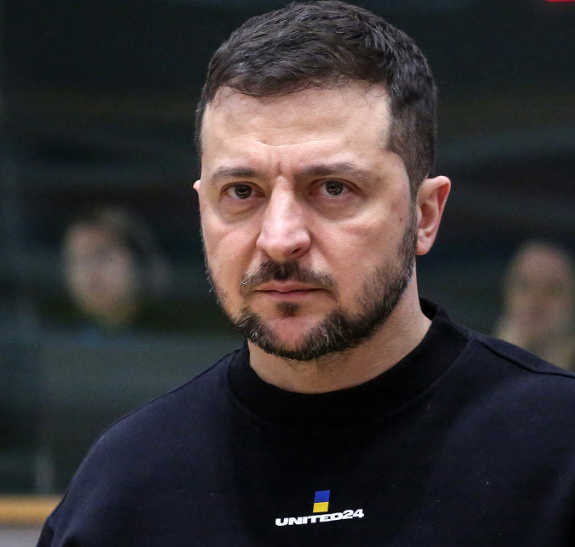
Ukraine President Volodymyr Zelenskyy has denied the accusation that Ukraine carried out this particular attack.  The attack took place while Zelenskyy was in Florida meeting with President Trump.

In context, there have been several attacks against Russia timed with negotiations.  CTH has noted that each instance of closer agreement during Russia/Ukraine negotiations (Turkey) or U.S/Ukraine negotiations (Turkey and Paris) there have been attacks into Russia that seemed to carry a motive from an external third party.

U.S. media have said the attack on Putin may be a lie; however, with physical evidence from the defense operation, it is less likely Russia just made up the attack.  At this moment in the conflict, Putin doesn’t need domestic propaganda.

CONTEXT: British intelligence previously confirmed their participation in the successful Ukraine drone attack against long-range Russian bombers.  That operation, highly controversial at the time, was previously confirmed by President Trump saying the U.S. was not informed in advance.

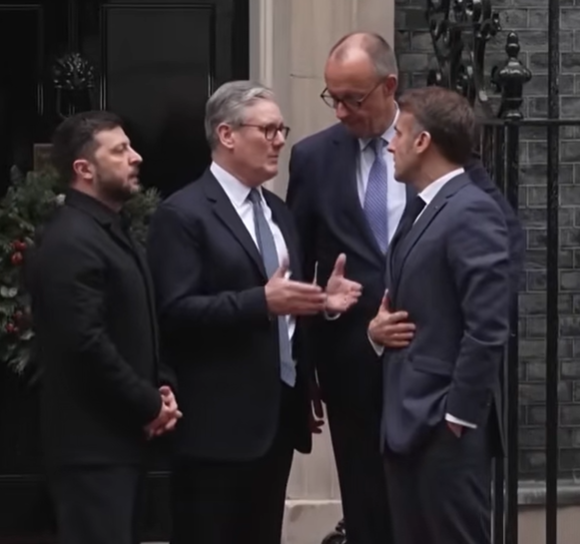
The “coalition of the willing” has also expanded.  Outside the Ukraine regime, the current group making up the “coalition of the willing” includes: the U.K, France, Germany, Canada and Australia.  It is worth noting the additions are all part of the British commonwealth (U.K, Canada, Australia).

Most observers note that Ukraine President Zelenskyy is not an independent actor in the warfare decisions as carried out from within Ukraine itself. In fact, British intelligence has now replaced U.S. intelligence for providing the majority of the satellite guidance systems, targeted systems and missile operations.  German and French intelligence have been closely coordinating with the U.K. on behalf of European Union stakeholders.
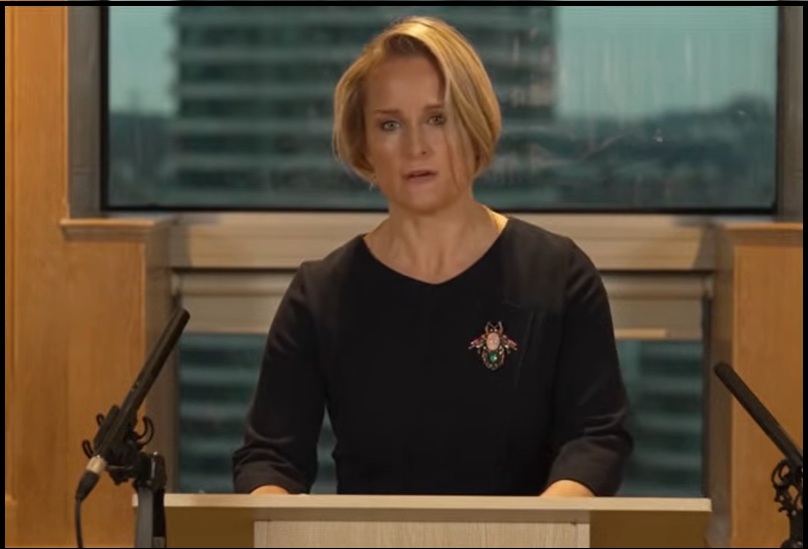
Europe, specifically the British MI6 intelligence service, have recently espoused their #1 priority is to defeat Russia using the proxy that Ukraine provides.

So, with full context applied it is entirely likely that both Vladimir Putin and Volodymyr Zelenskyy are not lying.

The most likely scenario is that U.K elements inside Ukraine again used the opportunity of the Trump-Zelenskyy negotiation meeting to carry out the attack against Russian President Putin.  The motive is obvious.

Beyond the ideological component, the economies of the U.K/EU are now increasingly dependent on their defense spending as was recognized yesterday with the severe contraction of the German economy in almost all sectors except those supported by defense spending.

An end to the Russia/Ukraine conflict is against the interests of the “coalition of the willing.”   Additionally, an ancillary motive for the U.S. group who support the EU effort is to keep President Trump bogged down.

(Bloomberg) — President Donald Trump’s campaign to end the war in Ukraine faced new complications on Monday when Vladimir Putin said he would revise his country’s negotiating position after the Russian leader claimed Ukrainian drones targeted his residence.

Putin told Trump of his decision in a call Monday, according to the Kremlin, even as Kyiv cast the Russian allegations as a fabrication aimed at derailing the peace process.

Trump addressed the dispute while speaking to reporters in Florida, saying that Putin had told him about the purported attack during their discussion. The US president, seeming to side with Putin, said he was “very angry.”

“It’s one thing to be offensive, because they’re offensive,” Trump told reporters in Florida. “It’s another thing to attack his house. It’s not the right time to do any of that.”

Ukrainian President Volodymyr Zelenskiy has dismissed the Russian claims as a “new lie” and warned that Moscow could be using it as an excuse to prepare an attack on government buildings in Kyiv.

Putin said Moscow intends to work closely with the US on peace efforts but would reconsider a number of previously reached agreements, Kremlin aide Yuri Ushakov told Russian newswires. Ushakov added that Putin assured Trump that Moscow would look to continue working with American partners to achieve peace and that the two leaders agreed to maintain their dialogue. (more)

I suspect the British did it.
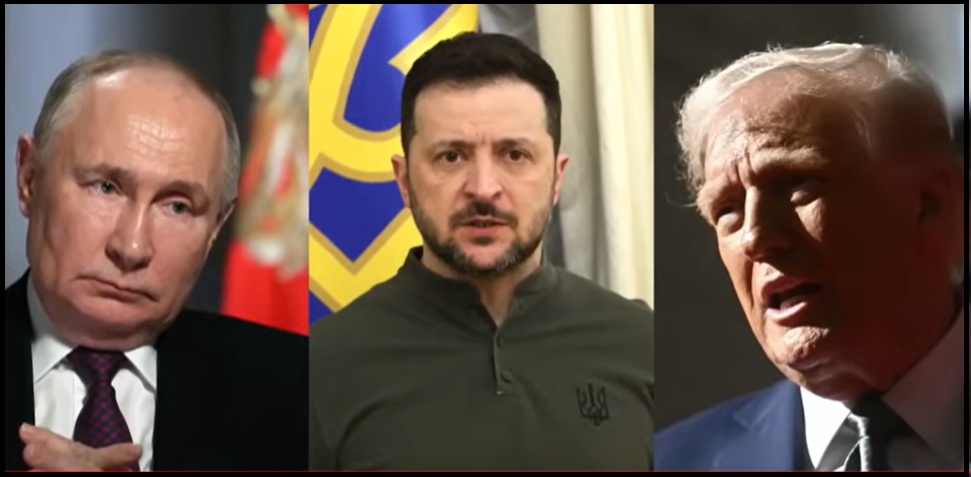
Memos of Conversations Between George W. Bush and President Vladimir Putin Are Released


BUMPED Due to Importance:

Posted originally on CTH on December 29, 2025 | Sundance |

Following a series of FOIA lawsuits, memos from conversations between Russian Federation President Vladimir Putin and former US President George W. Bush have been released online by the National Security Archive. [Original Source Here]

I know it’s Christmas, but bookmark or review as time allows, because the content is very interesting and very important. As early as 2001 and 2008, President Putin clearly told President Bush of his opposition to Ukraine’s accession to NATO, along with other key positions.

Despite what popular media might say, these are NOT full transcripts. Rather, they are memos containing quotes from both leaders as they discuss geopolitical relations between the U.S. and Russia. [SOURCE HERE]

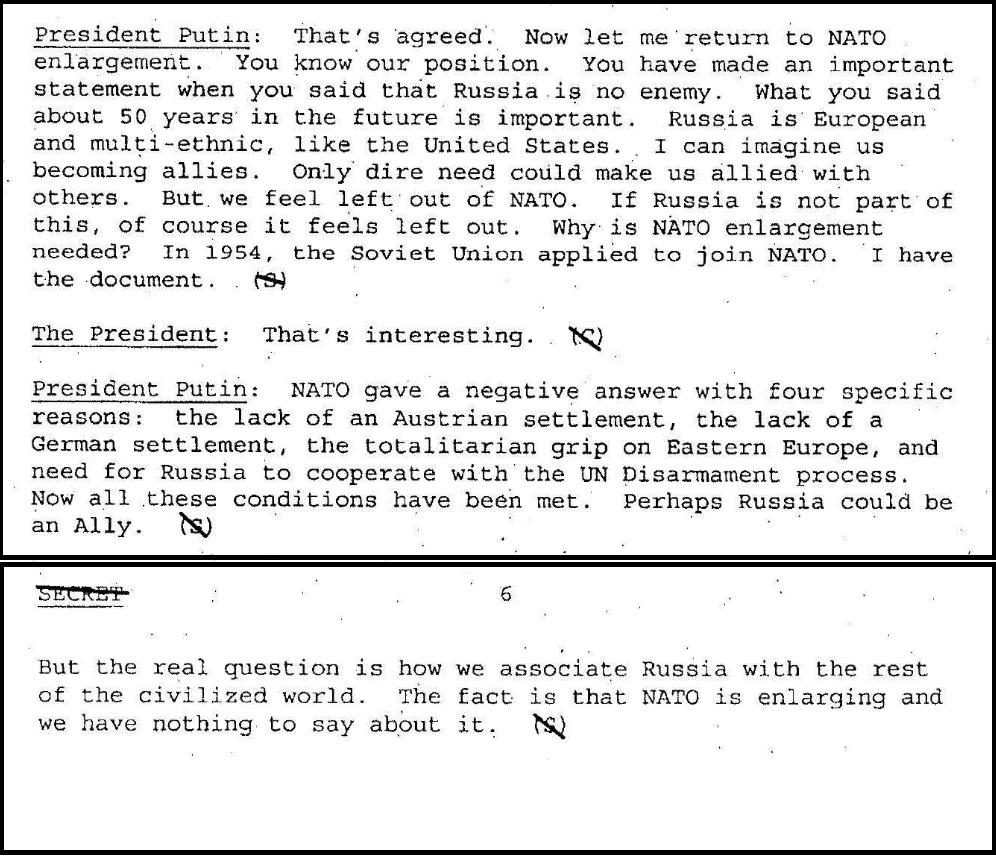
♦ June 16, 2001 – Memorandum of Conversation. Subject: Restricted Meeting with Russian President Vladimir Putin. [LINK HERE] In this first personal meeting at the Brno Castle in Slovenia Vladimir Putin and George W. Bush express respect for each other and desire to establish a close relationship. Putin tells Bush about his religious beliefs and the story of his cross that survived a fire at his dacha. In a short one-on-one meeting they cover all the most important issues of U.S.-Russian relations such as strategic stability, ABM treaty, nonproliferation, Iran, North Korea and NATO expansion. Bush tells his Russian counterpart that he believes Russia is part of the West and not an enemy, but raises a question about Putin’s treatment of a free press and military actions in Chechnya. Putin raises a question of Russian NATO membership and says Russia feels “left out.” [READ MEMO HERE]

♦ September 16, 2005: Document 2 – Memorandum of Conversation. Subject: Vladimir Putin, President of the Russian Federation: [LINK HERE] Putin meets the U.S. President in the Oval Office for a plenary that covers mainly issues of nonproliferation and U.S.-Russian cooperation on Iran and North Korea. The conversation shows impressively close positions on Iran and North Korea, with Putin presenting himself as an eager and supportive partner. Bush tells Putin “we don’t need a lot of religious nuts with nuclear weapons” referring to Iran. Putin said that Ukraine’s accession to NATO would, in the long term, create a field of conflict between Russia and the United States, adding that internal divisions within Ukraine could lead to its fragmentation. [READ MEMO HERE]

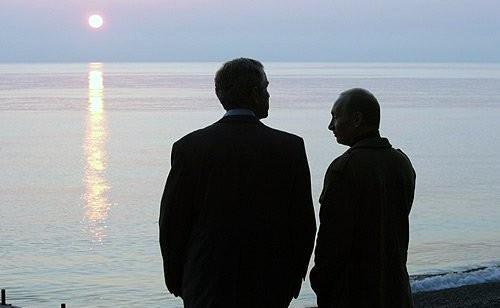
♦ April 6, 2008 – Document 3: Memorandum of Conversation. Subject: Meeting with President of Russia [LINK HERE] This is the last meeting between Putin and Bush, taking place at Putin’s residence in Bocharov Ruchei in Sochi on the Black Sea. The tone is strikingly different from the early conversations, where both presidents pledged cooperation on all issues and expressed commitment to strong personal relationship. This meeting takes place right after the NATO summit in Bucharest where tensions flared about the U.S. campaign for an invitation to Georgia and Ukraine to join NATO. Turning to conversations in Bucharest, Putin states his strong opposition to NATO membership for Ukraine and Georgia and says that Russia would be relying on anti-NATO forces in Ukraine and “creating problems” in Ukraine “all the time,” because it is concerned about “threat of military bases and new military systems being deployed in the proximity of Russia.” Surprisingly, in response, Bush expresses his admiration for the Russian president’s ability to present his case: “One of the things I admire about you is you weren’t afraid to say it to NATO. That’s very admirable. People listened carefully and had no doubt about your position. It was a good performance.” [READ MEMO HERE]

2001 –  Putin raises a question of Russian NATO membership and says Russia feels “left out.”

As noted by The Islander (Via Twitter) –  “The 2001 Memo That Should Have Ended the Cold War 2.0 and Instead Helped Write the Preface to Ukraine. There are documents that don’t merely record history, they expose it. This is one of them.

June 2001. A “restricted meeting” between President George W. Bush and President Vladimir Putin. Not a podium performance, not a television soundbite, not a speech crafted for domestic applause. A private conversation, the place where empires are supposed to speak plainly, where leaders test ideas that could reroute decades.

And what does the memo show?

Putin raises the idea that Russia could eventually join NATO. He says Russia feels “left out” by NATO enlargement. He points to an older fact most Western publics were never meant to internalize: the Soviet Union applied to join NATO in 1954. He argues the reasons for rejection no longer apply. He suggests, almost clinically, that perhaps Russia could be an ally — “European and multi-ethnic,” comparable in character to the United States.

Read that again slowly.

Because the propaganda version you’ve been fed for years requires amnesia: it requires you to believe Russia woke up one morning and decided to be “a threat,” as if geopolitics is a mood swing and security architecture is irrelevant.

But here is the declassified record: Russia was probing for an exit ramp. A pathway into a shared system. A new security architecture. A post–Cold War settlement that could have turned the 1990s from a hollow victory lap into a durable peace.

And it didn’t happen.

Not because it was impossible. Not because Russia “never wanted it.” Not because “the West tried everything.”

It didn’t happen because NATO, as an institution, does not know how to live without a frontier. It does not know how to justify itself without an adversary. It does not know how to maintain internal cohesion without a map that points east and says: there.

The 1954 Ghost: the offer the West never wanted to remember

The most important part of this memo is not the 2001 line, but the 1954 reference.

Because it collapses the morality play.

If the Soviet Union, a state the West defined as the existential enemy, floated the notion of joining NATO in 1954, that means something profound: the idea of Russia being inside the European security architecture is not a “Putin-era trick.” It is a recurring historical proposal, returning whenever Moscow believes there may be a rational way to avoid permanent confrontation.

And what happened then? It was refused.

Which is exactly the point: NATO was never simply a “defensive alliance.” Even in 1954, It was a structure. A protection racket. A way to organize Europe under an American strategic roof and to keep it there. If Russia enters that roof as an equal, the architecture changes. Budgets decrease, with less money for the MIC. Threat perceptions change. The entire postwar hierarchy changes.

So the West did what empires do when presented with a peace that would reduce their leverage:

It smiled, took notes, and kept moving.

“Join NATO” was never a plea, it was a test.

Some people still misunderstand the early Putin posture. They interpret it as naivete, or worse, submission.

Wrong.

This was not Russia begging to be absorbed. The consistent theme in contemporaneous accounts is conditionality, that Russia could consider joining if treated as an equal partner, but not as a defeated province invited into the emperor’s club after proving it can submit.

That distinction matters.

Because it reveals the real incompatibility:
•Russia wanted a security system where it is a partner of European security, not an object to be managed.
•The Atlantic system wanted Russia as a managed periphery, permanently “integrating,” permanently reforming, permanently conceding, never truly sovereign in security decisions.

You can’t fuse those visions. One side must yield.

So the Atlantic system chose the only thing it has ever really chosen, expansion.”

A quarter century has passed since that original outreach by Russian Federation President Vladimir Putin in 2001.  It was rejected by President George W Bush and all presidents thereafter.  In 2025, we are in the phase of consequence.

This public release just happened on December 23, 2025.

Perhaps, just perhaps, this release can change the conversation in the United States.  Perhaps, just perhaps, President Trump, Secretary Rubio and Emissary Witkoff can reverse the course, and change the arc of history toward peace and a strategic alliance.

The timing of the release inspires hope, but the opposition to peace is extreme.

Half of Germany’s Manufacturing Sectors Anticipate Significant Layoffs and Job Losses in 2026


Posted originally on CTH on December 29, 2025 | Sundance 

In addition to being the main economic engine in Europe, Germany is the epicenter of the European Union’s overall goal to chase the green energy agenda.

For the past several years Germany has been deconstructing their fossil fuel energy production and replacing it with far more expensive alternatives.  This has led to large increases in overall energy prices, and downstream increases in manufacturing costs.

The consequences have been snowballing throughout 2025, while cheap competitive alternatives coming into the EU from China have compounded their problem.  Recently a survey of major industries was conducted in Germany to determine the forecast for 2026, the results are not good.

Approximately half of the industrial sectors in Germany are anticipating job losses, cuts or layoffs this year.

22 out of 46 business associations are preparing to downsize their labor force.  Only 9 of the 46 are expected to increase hiring.

At a top-line this looks bad.  However, when you look at the sectors contracting versus the sectors stable or expanding, you suddenly realize there is a bigger geopolitical problem within the forecast.

Job losses are expected in auto manufacturing, the textile sector, wood and paper fabrication.  Job gains are expected in aerospace, shipbuilding and defense production – i.e. the war machinery.

When the largest and most developed industrial economy in Europe is pinning its economic survival on war machinery, a particular momentum is created.  It is never a good outcome for Europe when Germany becomes reliant on war to maintain employment.

Unfortunately, that economic forecast does provide context to the German position for continued Ukraine/Russia conflict.  You might say that without a war, Germany could slip into a severe economic contraction; not good.

BERLIN, Dec 29 (Reuters) – A majority of German business associations expect job cuts in 2026 as the country’s economic crisis persists, with industry hit hardest by global protectionism and weak exports, a survey by the German Economic Institute IW showed on Monday.

Of 46 business associations surveyed, 22 anticipate workforce reductions next year. Only nine expect to increase hiring and 15 foresee stable employment levels.

[…] Some bright spots emerged in sectors benefiting from increased defense spending, including aerospace and shipbuilding. (read more)

We will keep watching with additional background context for the Ukraine/Russia negotiations.

Zelensky’s Hatred of Russians is due to his association with Neo-Nazis & His Assassinations are a War Crime


Posted originally on Dec 29, 2025 by Martin Armstrong |  

Zelensky 4

Whether the car bomb is perfidious depends entirely on the method used to get the bomb to the generalPerfidy (Treachery) is strictly prohibited under Article 37 of the Geneva Conventions’ Additional Protocol I. Perfidy is defined as acts that invite the confidence of an adversary to make them believe they are entitled to, or are obliged to accord, protection under the rules of IHL, with the intent to betray that confidence.

Feigning surrender, feigning injury, feigning civilian status, or using the protective emblems of the Red Cross/Crescent to launch an attack. This is a war crime because it undermines the protections meant to safeguard vulnerable persons (like surrendering soldiers, the wounded, civilians) and erodes the minimal trust needed for IHL to function.

Ukrainian forces have been accused of carrying out assassinations of top Russian generals, including using methods like car bombs and remote-detonated explosives. For instance, Lt. Gen. Igor Kirillov was killed in December 2024 by a bomb hidden in an electric scooter Zelensky claims he has been assassinating Russians under the claim that they are responsible for war crimes. These operations are part of Ukraine’s strategy to weaken Russian military leadership and morale. However, these are outright war crimes.

If the bomber poses as a civilian driver, uses a civilian car with white flags, or in any way feigns a non-combatant or protected status to approach the general, this is perfidy. The act betrays the confidence the general would have that civilians are not directly participating in hostilities. This is a war crime.

Ukraine has been involved in a series of high-profile assassinations targeting senior Russian military officials during the ongoing conflict.

Notable Incidents

DateGeneral NameMethod of AssassinationDetails
December 2024Lt. Gen. Igor KirillovBomb hidden in an electric scooterKirillov was killed outside his apartment in Moscow. Ukraine’s security service claimed responsibility.
April 2025Lt. Gen. Yaroslav MoskalikExplosive device in his carMoskalik was killed by a bomb placed in his vehicle near his home. Ukraine’s President hinted at the operation.
December 2025Lt. Gen. Fanil SarvarovCar bombSarvarov was killed by a bomb detonated under his car in Moscow. Investigators suspect Ukrainian involvement.
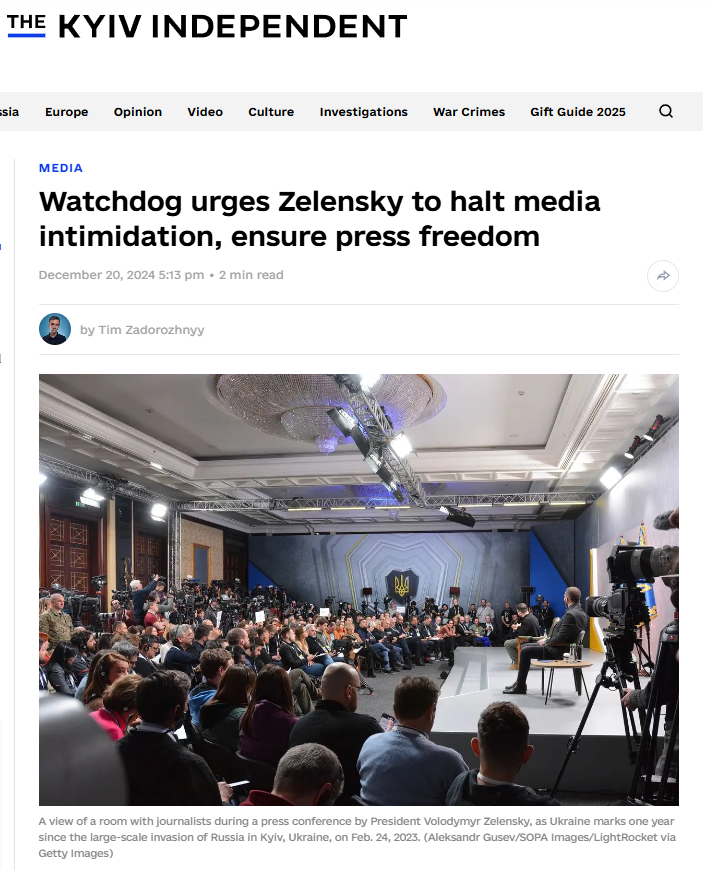
2025_12_28_17_40_36_Watchdog_urges_Zelensky_to_halt_media_intimidation_ensure_press_freedom

These assassinations demonstrate Ukraine’s total disregard for the Geneva Convention as they are using spies posing as civilians to carry out war crimes in Moscow. There are traits that are common to authoritarians as Zelensky has silence any opposition in Ukraine. Historically, revolutionary or authoritarian socialist systems—especially Leninist and Marxist-Leninist ones—have consistently used censorship and repression to silence opposition. That pattern isn’t accidental; it flows from how those systems understand power, truth, and opposition.

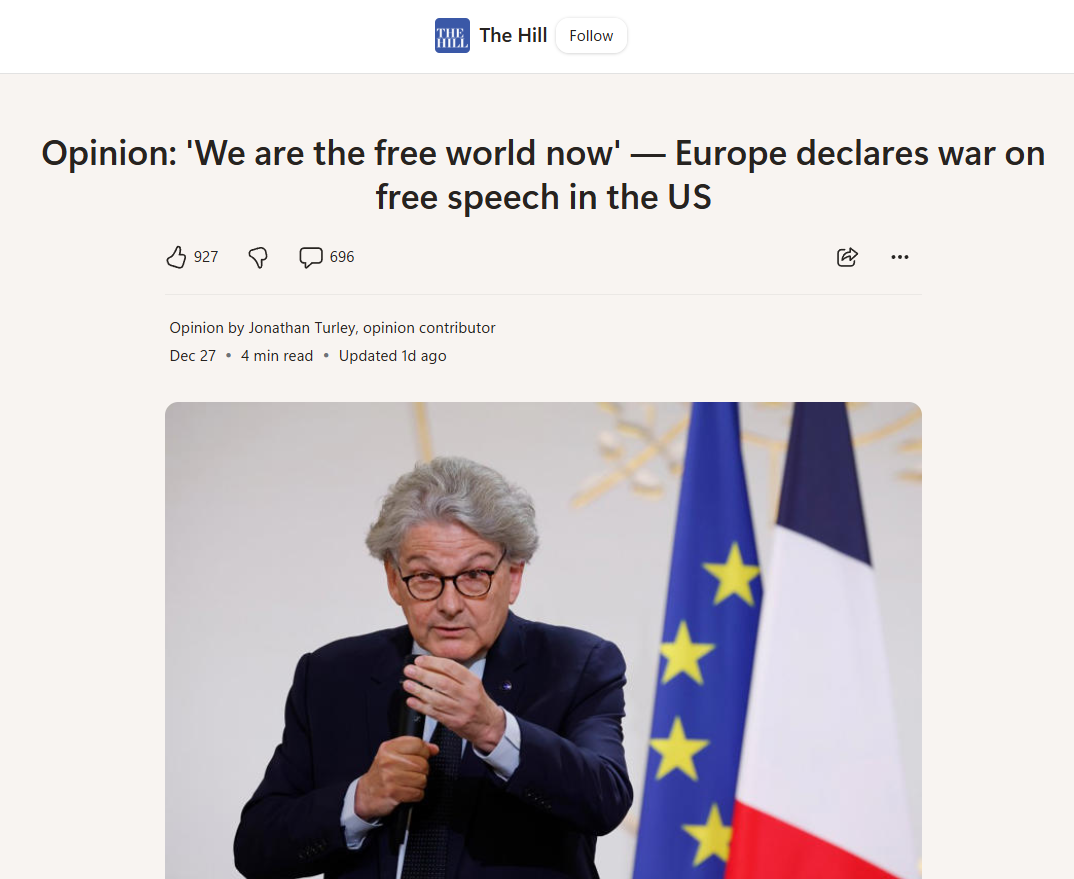
2025_12_28_17_43_17_Opinion_We_are_the_free_world_now_Europe_declares_war_on_free_speech_in_the

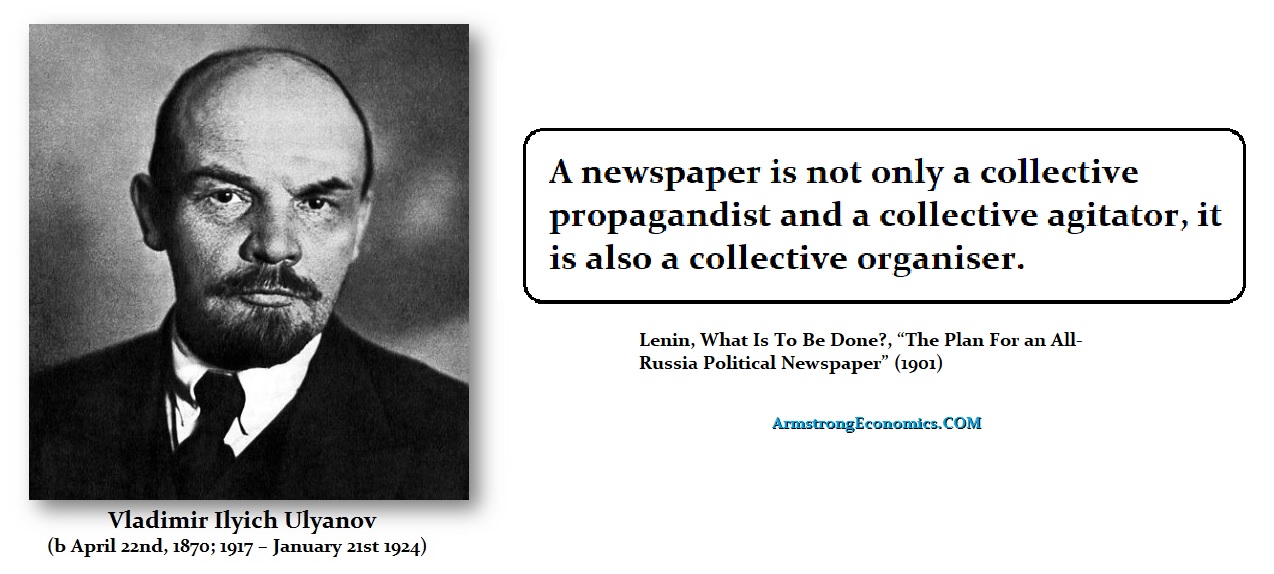
The EU has become indistinguishable from the censorship advocated by Lenin and Marx. They are desperate to cling to their Marxist view of the world and in so doing, they are now even seeking to interfere in the United States imposing sanctions on any anyone who dares to disagree with their views of totalitarianism. Confidence is cracking. Capital is watching. And history suggests the capital flow will not favor those who confuse control with trust. In Leninist theory, socialism is not just a policy preference—it is a historical inevitability. Once a party claims to represent “the working class” or “the people,” then any opposition is not merely disagreement, it is redefined as counter-revolutionaryreactionary, or bourgeois sabotage. This is what is unfolding in the EU. They are desperate to retain power and they know they are losing their grip. When that takes place, any government historically seeks total control. This is unfolding in the EU before our very eyes. This is why they will defend Zelensky no matter what his does and they are ignoring the corruption perhaps because they are getting kick-backs on the side.

Lenin on Press

Vladimir Lenin explicitly argued that freedom of the press and pluralism were tools of class domination, not neutral liberties. From that standpoint, suppressing opposition is framed as defensive, not tyrannical.

Zelensky is a Neo-Nazi who may be Jewish, but like Soros, has pretended to be Christian even joking about confiscating assets of Jews and Russians on stage before becoming president. He married a Christian and his children are baptized. Jews that I have spoken with say he is no Jew. The Ukrainian government has acknowledged some of these assassinations, framing them as necessary responses to Russian aggression and war crimes. Europe is fully aware that Ukraine is a rogue nation-state and that this has been a deliberate war to destroy Russia. The solution applied in Yugoslavia and Czechoslovakia was to divide them according to ethnicity. This war would NEVER have taken place if we simply allowed the people of the Donbas to choose as we did in Yugoslavia and Czechoslovakia. Ah, but they were not Russians. They hate the Russian people for the sins of Stalin, yet they forgave Germans for the sins of Hitler and Italians for the since of Benito Mussolini.

Zelensky has called for nuclear war. This is why I have advocated exiting NATO ASAP, because they will create a false flag to start WWIII. The EU is collapsing and needs this war to retain absolute authoritarian power. This is also in part why VP Vances has warned that the UK and France do in fact pose a national security risk to the USA for they are desperate for war. MI6’s involvement in Ukraine, to the extent publicly acknowledged, is intelligence cooperation. They also have been providing targeting information. This is like someone hiring an assassin to kill their spouse and claim they did not pull the trigger.

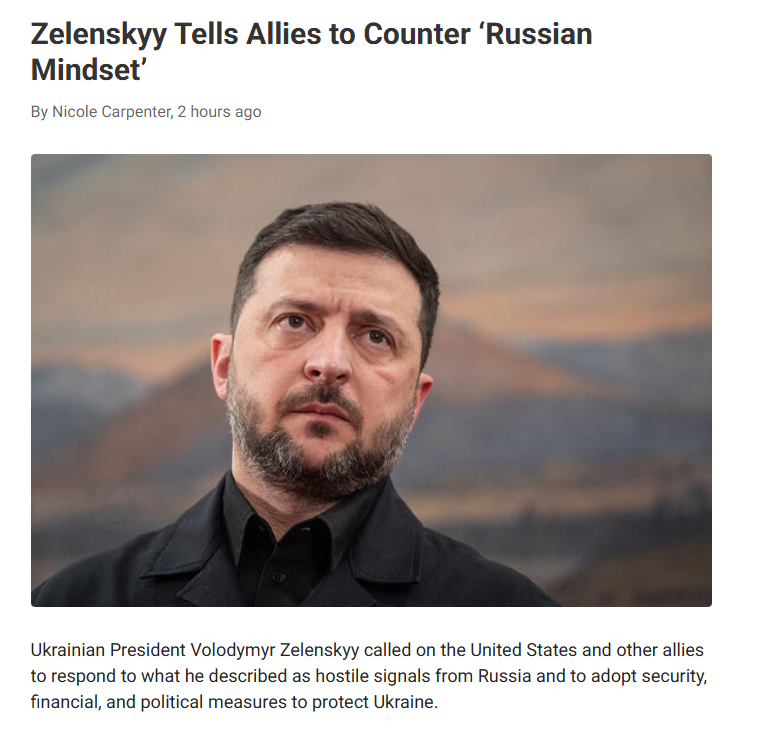
2025_12_28_18_12_32_Zelenskyy_Tells_Allies_to_Counter_Russian_Mindset_NewsBreak

Trump said on Sunday: “Well, I think the land — you’re talking about — some of that land has been taken. Some of that land is maybe up for grabs, but it may be taken over the next period of a number of months — and you’re better off making a deal now.”

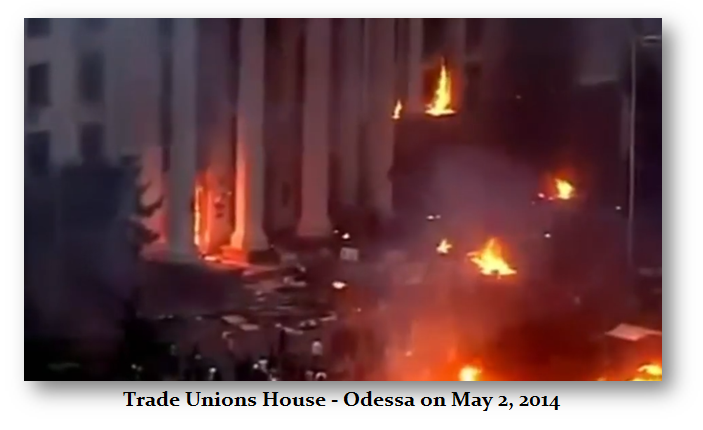
May 2 2014 Odessa Trade Unions House

Russian live in the Donbas. The Minsk Agreement was to allow them the human right to vote. After Ukrainians slaughtered Russian civilians burning them alive in Odessa, a city founded by Kathrine the Great, that is when the Donbas moved to separate. The Ukrainians HATE Russians and returning that land to Ukrainian will lead to ethnic cleansing but because they are Russians, the Western Press will never report the truth.

This, because the EU, the Neocons, and Ukrainians hate Russians, they will bring the world to the brink of total destruction. China will join with Ukraine because they know they will be next. Add to this, North Korea and Iran along with Pakistan. Nobody seems to be against war except some in the United States.

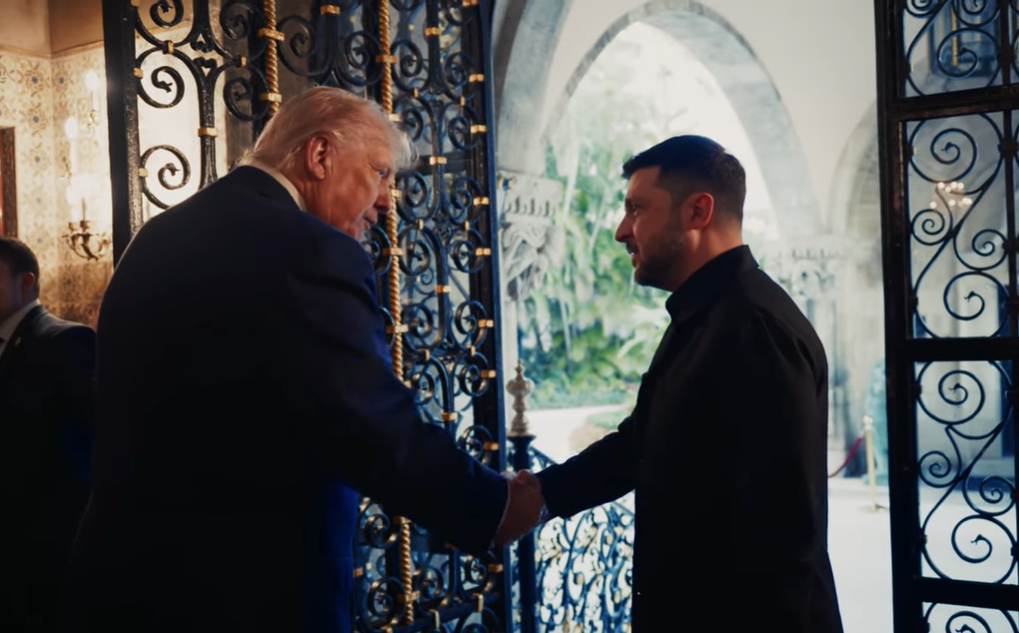
Recap Video of Zelenskyy Sunday at Mar-a-Lago


Posted originally on CTH on December 28, 2025 | Sundance 

President Donald Trump is ducking and weaving through the minefield of geopolitical politics, managing a proxy war he did not create that was organized by a corrupt U.S. State Dept./CIA and globalist agenda.

Trump wants the war to end; he wants the U.S. out of it; he wants peace with a fundamental reset of the entire European dynamic, and he wants a strategic relationship with the Russian Federation.  However, every element in the proverbial ‘West’ wants exactly the opposite.

Washington DC – the majorities in both parties, most of the European Union and the ‘Western’ military industrial complex stand in opposition to President Trump’s objective.  The value of the dollar rests on his ability to navigate this complex geopolitical dynamic.  The ‘stakeholders’ are against him.  Trump has few allies. This is the challenge.

Do not diminish the scale of the challenge without consideration for the scale of opposition.  Russian President Vladimir Putin knows exactly what President Trump is up against; we would be wise to watch with similar patience.

Volodymyr Zelenskyy has been convinced by European leaders, NATO and the Intelligence Community that he has the upper hand. President Trump has only his wits, a strategic perspective and us.

Let Trump be Trump. He’ll figure it out.

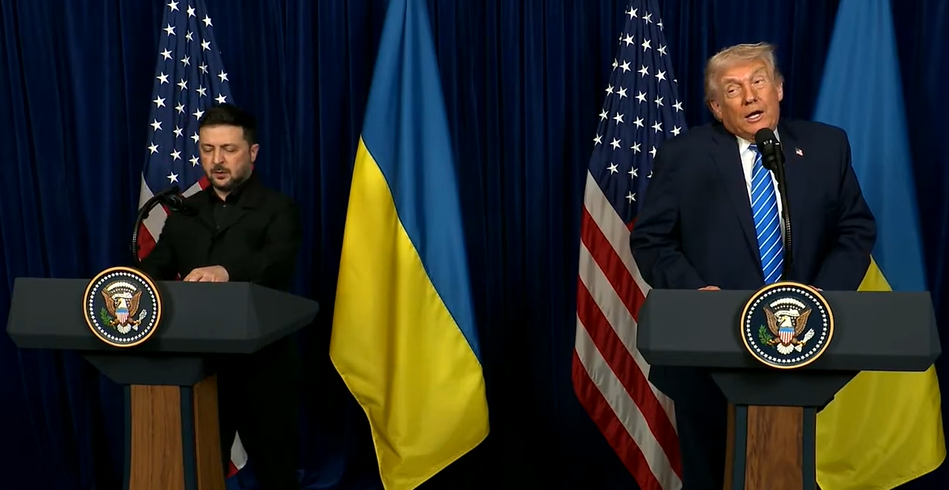
President Trump and President Zelenskyy Deliver Remarks Following Bilateral Discussions


Posted originally on CTH on December 28, 2025 | Sundance

President Trump stated earlier today he held a 2-hour phone call with Russian President Vladimir Putin as ongoing discussions with Ukraine President Volodymyr Zelenskyy continue.

President Trump suggested a few more weeks would be needed to iron out the remaining, critical sticking points. When asked if he and Zelenskyy had agreed on what would happen in the Donbas region, President Trump said the “word ‘agreed’ is too strong.” “I would say not ‘agreed’ but we’re getting closer to an agreement on that,” Trump said.

“Some of that land is maybe up for grabs, but it may be taken over the next period of a number of months,” Trump said. “And you’re better off making a deal now.” WATCH:

.

Cutting Through the Fog and Conflict Within Current U.S. Republican Politics


Posted originally on CTH on December 28, 2025 | Sundance

Prior to the 2012 Republican presidential primary, many conservative Americans -including myself- were confused by the consistent illusion of choice offered in republican presidential candidates. The Republican party’s successful installation of Mitt Romney was the final straw.

Going into the 2016 Republican presidential primary, we became more attune to how the illusion of choice is created. By closely following the Republican party’s assemblies, tracking the participants, researching the networks and looking at how the Republican party professionals modified their election rules at a state level, revealed the closed system used to create the illusion of choice.

The GOP winter meeting in Washington DC, December of 2014, outlined the playbook. The sequencing of state elections, the distribution of delegates (proportional or winner-take-all) and various internal mechanisms all play a part. This led to our first breakthrough – we began to understand the “splitter strategy”.

A small group of internal party officers in combination with powerful established politicians and major donors could coordinate a party objective to support the “acceptable candidate.”

The outcome of the GOP 2014 winter meeting was a pathway for Jeb Bush in 2016. The outcome of the DNC construct was a pathway for Hillary Clinton. Regardless of which wing of the UniParty system won the election, the actionable outcome in policy would be the same; the institutions of DC maintained, and network affluence apportioned according to the victor.

In this form of party democracy voting is an outcome of the illusion of choice. The real decisions were/are not being made by voters. The party system determines the candidate. DNC or RNC the policy outcome is a few degrees different, but the direction is the same.

In 2016 the left-wing of the Uniparty would diminish any challenger to Hillary, Bernie Sanders would be controlled. The right-wing of the Uniparty would diminish any challenger to Jeb, divide the voting base and use party rules to clear his path.

The opaque nature of this party control system became clearer when the last GOP candidate entered the race. In the clearest exhibition of controlled politics in modern history, Donald Trump was the wildcard.

Mainstream “conservative” voices, what a later vernacular would describe as “influencers,” began exposing their ideological special interest in this political control system through opposition to Trump, the popular people’s choice candidate.

You know the history thereafter. However, the problem for the GOP wing in 2016 was not Donald Trump per se’, their biggest problem was that American ‘conservatives‘ had discovered their playbook. The illusion of choice was now becoming very well understood by a subset of voters later named MAGA voters, the original “silent majority” was silent no more.

This review is simply context; however, it is important context if we are to understand exactly where we are in late 2025 going into the midterm election in 2026. [Star Wars (2016), the Empire Strikes Back (2020), the Return of the Jedi (2024)]

The fourth chapter of this conflict is now upon us. It is a battlefield that has been unfolding all year.

When you understand the larger objectives behind what is happening, you can clearly see -even predict- each of the moves.

President Trump Tempers Optimism Ahead of Zelenskyy Meeting on Sunday


Posted originally on CTH on December 27, 2025 | Sundance 

Ukraine President Volodymyr Zelenskyy is promoting support for his 20-point peace plan via phone calls with various EU stakeholders including, President of Finland Alex Stubb, Prime Minister of Canada Mark Carney, NATO General Secretary Mark Rutte, the Prime Minister of Estonia Kristen Michal, German Chancellor Friedrich Merz and the Prime Minister of Denmark Mette Frederiksen.

The overall position of Zelenskyy is a continuum of public relations and constructs intended to maintain the illusion of support in order to retain receiving funding from western interests.  Ukraine is the proxy war between the ‘west’ and the Russian Federation.

Zelenskyy is scheduled to meet with President Trump on Sunday.  However, in an interview with Politico U.S. President Donald Trump tamps down expectations.

(Via Politico) – […] Trump appeared lukewarm to Zelenskyy’s latest overture and in no rush to endorse the Ukrainian president’s proposal. “He doesn’t have anything until I approve it,” Trump said. “So we’ll see what he’s got.”

[…] Still, Trump believed he could have a productive meeting this weekend. “I think it’s going to go good with him. I think it’s going to go good with [Vladimir] Putin,” Trump said, adding that he expects to speak with the Russian leader “soon, as much as I want.”

Trump’s comments came the day after Zelenskyy spoke with special envoy Steve Witkoff and Jared Kushner, the president’s son-in-law. Zelenskyy called that a “good conversation.”

[…] Trump also confirmed that Israeli Prime Minister Benjamin Netanyahu would visit him this weekend. “I have Zelenskyy and I have Bibi coming. They’re all coming. They all come,” Trump said. “They respect our country again.”

Netanyahu, according to a report from NBC, will brief Trump on the growing threat from Iran.

Zelenskyy’s meeting, in addition to security guarantees, will focus on management of the Zaporizhzhia nuclear power plant, and territorial control of Donbas, the eastern territories claimed by Moscow.

Zelenskyy’s plan, which Ukrainian officials have described as an attempt to show flexibility without conceding territory, has received little public reaction from Washington.

Zelenskyy’s offer of a demilitarized zone came with a key condition: Russia would have to withdraw its forces from a corresponding stretch of land in Donetsk. (read more)

President Trump is correct in saying Zelenskyy has nothing until President Trump agrees to support the proposal.

Despite the promotional toursof the Ukraine president, ultimately Russian Federation President Vladimir Putin is in control of the majority of the Eastern Donbas region and has not indicated any willingness to give up that territory.

The European Leadership and ‘coalition of the willing’ have essentially constructed the terms and conditions of the Zelenskyy proposal.  However, that same group have positioned their interests with exceptional antagonism toward Russia.

According to those who control the political power centers, Russia is the existential threat to Europe, and all of their proposals are with a baseline of continued conflict at the center of their strategic plan.

Zelenskyy is proposing that Russia pulls back from the Donbas and Ukraine will agree to a demilitarized economic control zone in the region.  However, that is essentially no different from what existed prior to Russia’s entry into Ukraine, and there is no reason to think the “economic control zone,” filled with a regional population who support Russia, would be anything less than another name for a place where NATO will be playing games to provoke further conflict.

Without U.S. support the NATO proxy war against Russia will be much more difficult to maintain.  Team EU/Zelenskyy are positioning their tactics with an expectation that President Trump will be greatly diminished in the 2026 midterm election.

Zelenskyy will Meet with President Trump on Sunday in Mar-a-Lago


Posted originally on CTH on December 26, 2025 | Sundance 

Representatives from Zelenskyy’s public relations and media team have confirmed to various news outlets the Ukraine President will be meeting with President Donald Trump in Mar-a-Lago on Sunday to discuss the latest five segment draft document organized by negotiators.

The meeting between Zelenskyy and President Trump comes after several days of negotiations between the Ukrainian delegation, Trump Emissaries Steve Witkoff and Jared Kushner over the Christmas holiday.

(VIA UPI) Former Defense Minister “Rustem Umerov reported on his latest contacts with the American side,” Zelensky wrote. “We are not losing a single day. We have agreed on a meeting at the highest level — with President Trump in the near future. A lot can be decided before the New York.”

CNN reported that Zelensky told reporters he couldn’t say whether he’d leave the meeting with a deal in place. Negotiators will “finalize as much as we can,” he said.

Unnamed Ukrainian officials confirmed to Axios the meeting would take place Sunday at Trump’s private Mar-a-Lago estate.

The meeting will come one week after Russian negotiators and U.S. officials Steve Witkoff and Jared Kushner met in Miami to hammer out details on a peace plan. Zelensky on Wednesday unveiled a 20-point peace plan agreed upon during that meeting, which would provide strong NATO-style security concessions for Ukraine in exchange for land concessions to Russia. (more)

According to Politico: – […] “The 20-point plan that we worked on is 90 percent ready. Our task, to make sure that everything is 100 percent ready. It is not easy and no one says that it will be 100 percent right away, but nevertheles we must bring the desired result closer with each such meeting, each such conversation,” Zelenskyy told journalists.

He added that the meeting will focus on security guarantees, management of the Zaporizhzhia nuclear power plant, and territorial control of Donbas, the eastern territories claimed by Moscow.

“First of all, we are working on several documents every day, there are five of them now. We want to talk about a few nuances on security guarantees … In my opinion, I see now that the agreement between us and the United States is almost ready,” Zelenskyy said, adding that he is ready to sign a bilateral agreement depending on how the meeting goes.

The 20-point plan will be a four-party agreement between Ukraine, U.S., Russia and Europe, he added. European leaders might join the meeting online, Zelenskyy said.

Zelenskyy’s announcement came after Thursday talks with U.S. lead negotiator Steve Witkoff and Trump’s son-in-law Jared Kushner, which the Ukrainian president called a “good conversation” and said yielded “timing on how to bring a real peace closer.

Contacts between Ukrainian and U.S. officials have intensified as prospects for a possible peace deal grow in the war-torn country, which has been resisting Russian aggression for nearly four years.

The updated 20-point draft peace plan that Zelenskyy unveiled on Wednesday includes the possibility of creating a special demilitarized economic zone in some areas of Donbas. (read more)

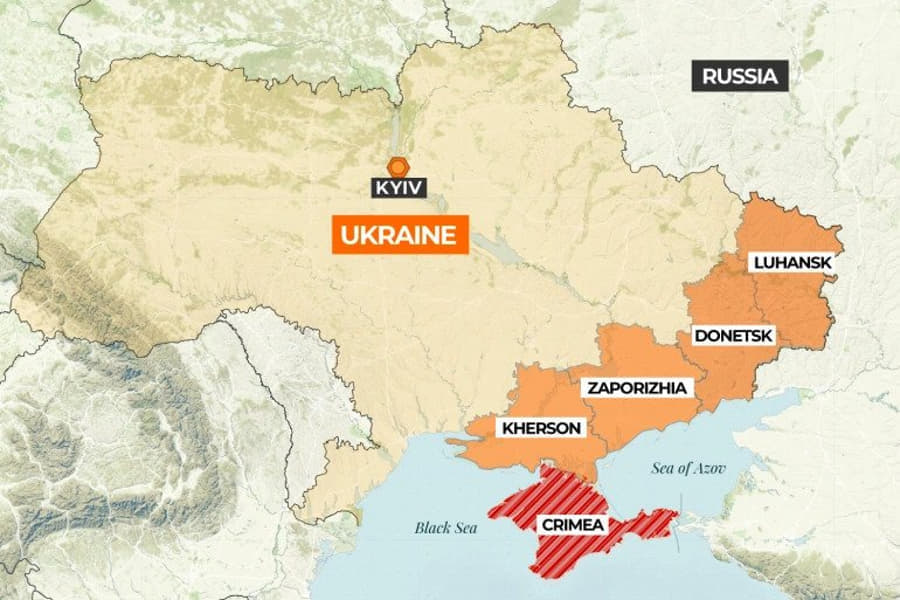
I would not hold out too much hope on this specific set of proposals from Zelenskyy because it still calls for the frontlines in Donetsk, Luhansk, Zaporizhzhia and Kherson regions to form the de facto border, while Russia will pull out of Ukraine’s Dnipropetrovsk, Mykolaiv, Sumy, and Kharkiv regions.

Despite the U.S. intelligence community, NATO forces and mercenaries assisting on the ground in Ukraine and generating successful counterattacks against Russian positions, there is no indication that Russia is willing to cede ground already under their control.

Memos of Conversations Between George W. Bush and President Vladimir Putin Are Released


Posted originally on CTH on December 25, 2025 | Sundance

Following a series of FOIA lawsuits, memos from conversations between Russian Federation President Vladimir Putin and former US President George W. Bush have been released online by the National Security Archive. [Original Source Here]

I know it’s Christmas, but bookmark or review as time allows, because the content is very interesting and very important. As early as 2001 and 2008, President Putin clearly told President Bush of his opposition to Ukraine’s accession to NATO, along with other key positions.

Despite what popular media might say, these are NOT full transcripts. Rather, they are memos containing quotes from both leaders as they discuss geopolitical relations between the U.S. and Russia. [SOURCE HERE]

♦ June 16, 2001 – Memorandum of Conversation. Subject: Restricted Meeting with Russian President Vladimir Putin. [LINK HERE] In this first personal meeting at the Brno Castle in Slovenia Vladimir Putin and George W. Bush express respect for each other and desire to establish a close relationship. Putin tells Bush about his religious beliefs and the story of his cross that survived a fire at his dacha. In a short one-on-one meeting they cover all the most important issues of U.S.-Russian relations such as strategic stability, ABM treaty, nonproliferation, Iran, North Korea and NATO expansion. Bush tells his Russian counterpart that he believes Russia is part of the West and not an enemy, but raises a question about Putin’s treatment of a free press and military actions in Chechnya. Putin raises a question of Russian NATO membership and says Russia feels “left out.” [READ MEMO HERE]

♦ September 16, 2005: Document 2 – Memorandum of Conversation. Subject: Vladimir Putin, President of the Russian Federation: [LINK HERE] Putin meets the U.S. President in the Oval Office for a plenary that covers mainly issues of nonproliferation and U.S.-Russian cooperation on Iran and North Korea. The conversation shows impressively close positions on Iran and North Korea, with Putin presenting himself as an eager and supportive partner. Bush tells Putin “we don’t need a lot of religious nuts with nuclear weapons” referring to Iran. Putin said that Ukraine’s accession to NATO would, in the long term, create a field of conflict between Russia and the United States, adding that internal divisions within Ukraine could lead to its fragmentation. [READ MEMO HERE]

♦ April 6, 2008 – Document 3: Memorandum of Conversation. Subject: Meeting with President of Russia [LINK HERE] This is the last meeting between Putin and Bush, taking place at Putin’s residence in Bocharov Ruchei in Sochi on the Black Sea. The tone is strikingly different from the early conversations, where both presidents pledged cooperation on all issues and expressed commitment to strong personal relationship. This meeting takes place right after the NATO summit in Bucharest where tensions flared about the U.S. campaign for an invitation to Georgia and Ukraine to join NATO. Turning to conversations in Bucharest, Putin states his strong opposition to NATO membership for Ukraine and Georgia and says that Russia would be relying on anti-NATO forces in Ukraine and “creating problems” in Ukraine “all the time,” because it is concerned about “threat of military bases and new military systems being deployed in the proximity of Russia.” Surprisingly, in response, Bush expresses his admiration for the Russian president’s ability to present his case: “One of the things I admire about you is you weren’t afraid to say it to NATO. That’s very admirable. People listened carefully and had no doubt about your position. It was a good performance.” [READ MEMO HERE]

2001 –  Putin raises a question of Russian NATO membership and says Russia feels “left out.”

As noted by The Islander (Via Twitter) –  “The 2001 Memo That Should Have Ended the Cold War 2.0 and Instead Helped Write the Preface to Ukraine. There are documents that don’t merely record history, they expose it. This is one of them.

June 2001. A “restricted meeting” between President George W. Bush and President Vladimir Putin. Not a podium performance, not a television soundbite, not a speech crafted for domestic applause. A private conversation, the place where empires are supposed to speak plainly, where leaders test ideas that could reroute decades.

And what does the memo show?

Putin raises the idea that Russia could eventually join NATO. He says Russia feels “left out” by NATO enlargement. He points to an older fact most Western publics were never meant to internalize: the Soviet Union applied to join NATO in 1954. He argues the reasons for rejection no longer apply. He suggests, almost clinically, that perhaps Russia could be an ally — “European and multi-ethnic,” comparable in character to the United States.

Read that again slowly.

Because the propaganda version you’ve been fed for years requires amnesia: it requires you to believe Russia woke up one morning and decided to be “a threat,” as if geopolitics is a mood swing and security architecture is irrelevant.

But here is the declassified record: Russia was probing for an exit ramp. A pathway into a shared system. A new security architecture. A post–Cold War settlement that could have turned the 1990s from a hollow victory lap into a durable peace.

And it didn’t happen.

Not because it was impossible. Not because Russia “never wanted it.” Not because “the West tried everything.”

It didn’t happen because NATO, as an institution, does not know how to live without a frontier. It does not know how to justify itself without an adversary. It does not know how to maintain internal cohesion without a map that points east and says: there.

The 1954 Ghost: the offer the West never wanted to remember

The most important part of this memo is not the 2001 line, but the 1954 reference.

Because it collapses the morality play.

If the Soviet Union, a state the West defined as the existential enemy, floated the notion of joining NATO in 1954, that means something profound: the idea of Russia being inside the European security architecture is not a “Putin-era trick.” It is a recurring historical proposal, returning whenever Moscow believes there may be a rational way to avoid permanent confrontation.

And what happened then? It was refused.

Which is exactly the point: NATO was never simply a “defensive alliance.” Even in 1954, It was a structure. A protection racket. A way to organize Europe under an American strategic roof and to keep it there. If Russia enters that roof as an equal, the architecture changes. Budgets decrease, with less money for the MIC. Threat perceptions change. The entire postwar hierarchy changes.

So the West did what empires do when presented with a peace that would reduce their leverage:

It smiled, took notes, and kept moving.

“Join NATO” was never a plea, it was a test.

Some people still misunderstand the early Putin posture. They interpret it as naivete, or worse, submission.

Wrong.

This was not Russia begging to be absorbed. The consistent theme in contemporaneous accounts is conditionality, that Russia could consider joining if treated as an equal partner, but not as a defeated province invited into the emperor’s club after proving it can submit.

That distinction matters.

Because it reveals the real incompatibility:
•Russia wanted a security system where it is a partner of European security, not an object to be managed.
•The Atlantic system wanted Russia as a managed periphery, permanently “integrating,” permanently reforming, permanently conceding, never truly sovereign in security decisions.

You can’t fuse those visions. One side must yield.

So the Atlantic system chose the only thing it has ever really chosen, expansion.”

A quarter century has passed since that original outreach by Russian Federation President Vladimir Putin in 2001.  It was rejected by President George W Bush and all presidents thereafter.  In 2025, we are in the phase of consequence.

This public release just happened on December 23, 2025.

Perhaps, just perhaps, this release can change the conversation in the United States.  Perhaps, just perhaps, President Trump, Secretary Rubio and Emissary Witkoff can reverse the course, and change the arc of history toward peace and a strategic alliance.

The timing of the release inspires hope, but the opposition to peace is extreme.