Exceptional Sky News Global Energy Report Highlights Dependency Risk for Entire British Commonwealth


Posted originally on CTH on April 4, 2026 | Sundance

You would have to read dozens of energy industry reports to get the information provided here in this exceptionally well-done news segment.

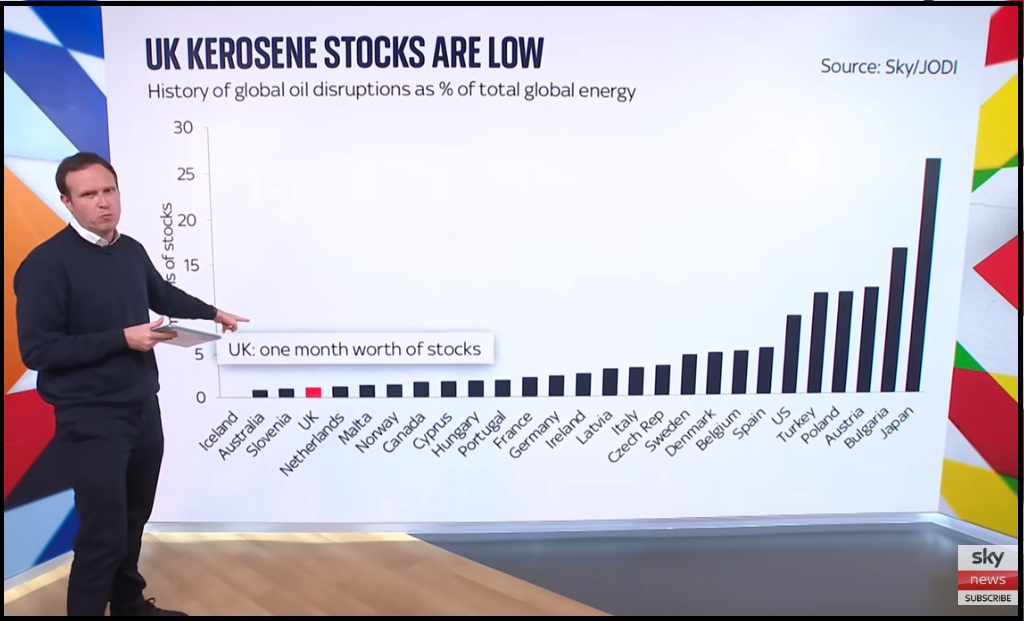
Sky News economics and data editor Ed Conway presents a fantastic look at how the issue with the Strait of Hormuz has impacted the global distribution of energy, oil, LNG and Kerosene (jet fuel), with particular emphasis on the vulnerabilities of the “modern industrialized western nations.”

Conway never points the finger to the “net zero” carbon goals of Europe, the U.K and Australia. However, he shows the outcome of their dependence on production and refining by other non-participating nations. The timelines clearly show, as the Green Energy policies were pushed the vulnerability inherent within any supply shock begins to get worse. This is a very well-presented data-driven analysis that is worth watching.

The last two-minutes also shred the claims by EU and British leadership, and highlights how Europe and the U.K are now dependent on the United States to meet their energy needs. WATCH:

.

Australian Prime Minister Albanese Gives National Address – Conserve Fuel, or Else!


Posted originally on CTH on April 1, 2026 | Sundance 

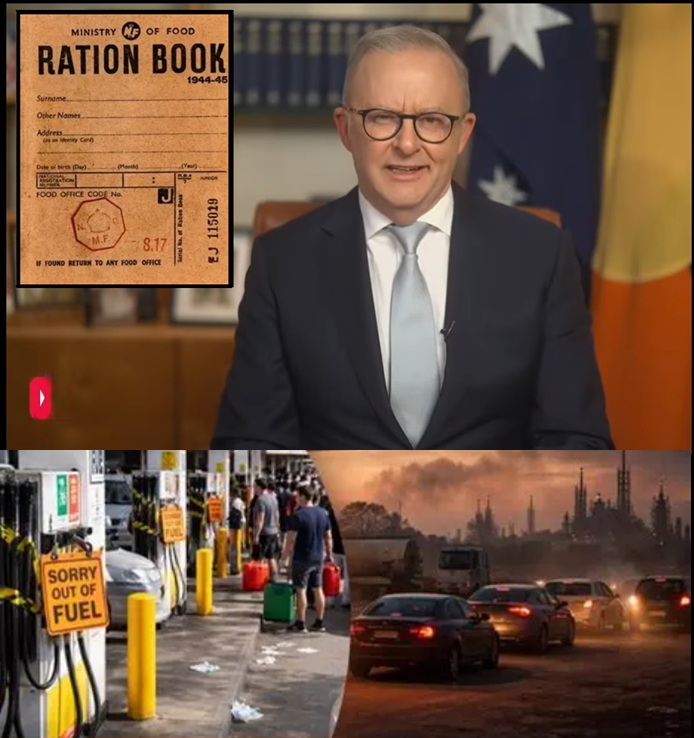
Three days ago, the Australian government was downplaying reports of a serious shortage of fuel.  Today the Australian Prime Minister gives a national address and warns Aussies to conserve fuel, or else things will get sketchy.

In non-pretending terms: it’s Australia – PREPARE FOR THE SKETCHY!

The leaders of Canada, Great Britain and now Australia have delivered national addresses in the past 36-hrs about Iran, the subsequent energy issues and the geopolitical shifts currently underway they cannot control.  Keep in mind, the other thing these countries have in common is they are four (count NZ in AU) of the Five-Eyes countries.  The remaining eye is the USA, and President Trump is scheduled to deliver his national address tonight at 9:00pm Eastern.

For the folks down under it is worth remembering their COVID-19 experience.  When the government starts saying, ‘we hope you will voluntarily consider doing XXX’, the next thing that comes in the ‘conservation’ effort are government mandates, travel restrictions, lockdowns, rations and severe authoritarian control mechanisms. It’s the Australian way.

For this example, Prime Minister Anthony Albanese delivers “a rare address to the nation” outlining his government’s response to the Middle East conflict and fuel crisis.  “The months ahead may not be easy. I want to be up front about that,” Albanese warns. He then continues, “we will deal with these global challenges, the ‘[¹]Australian way’,” which should forewarn every person in Australia that government control mechanisms are being planned immediately.  Good luck!  WATCH:  

.

I always found it rather remarkable that the countries who pushed the Build Back Better agenda the hardest; the countries who pushed climate change and complete restructuring of energy policies the most; were the exact same countries who triggered the expansive sanction regime against Russia. (reminder map below)

[¹] “The Australian Way

.

Sanctions Map – Participating Countries in Yellow

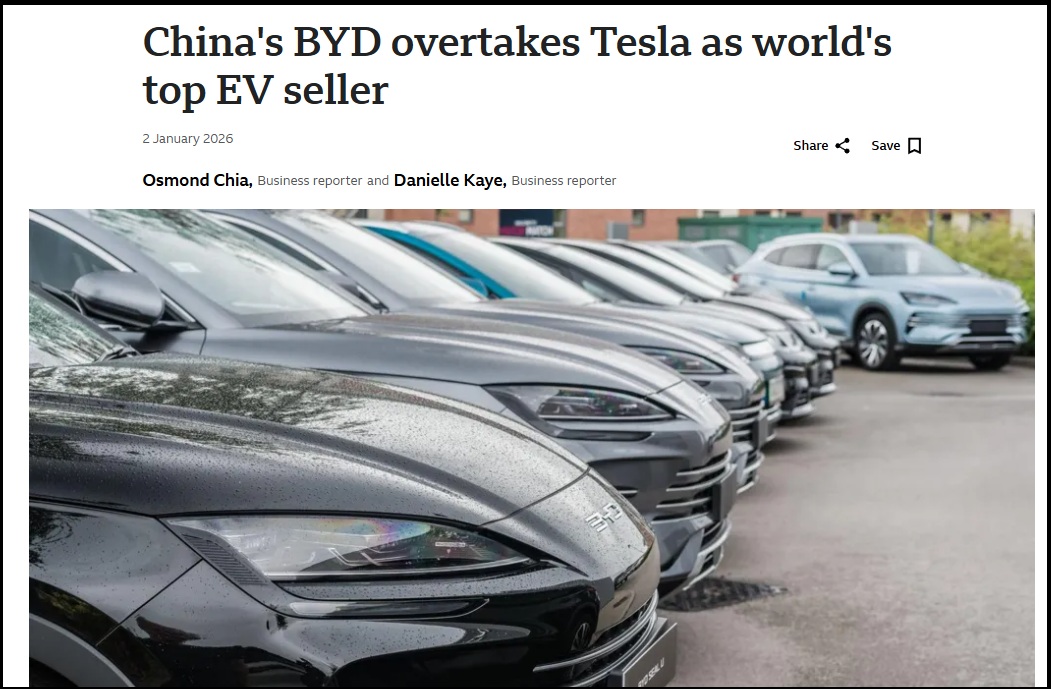
Put this in the USMCA (CUSMA) elimination/negotiation file.  Europe has already been the visible example of what happens when you open your market to low price Chinese EVs.


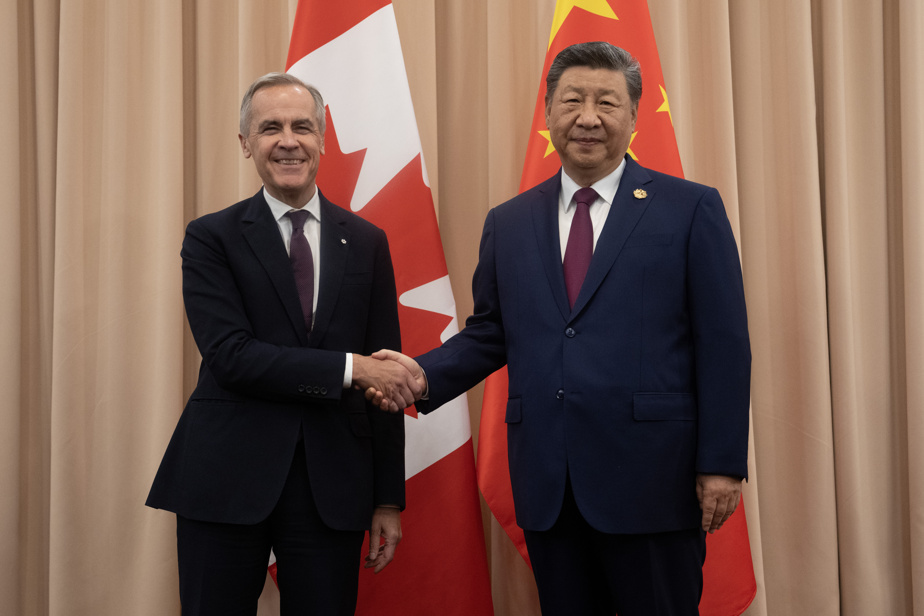
With the recent agreement by Canadian Prime Minister Mark Carney, Chinese auto manufacturers are now rushing to establish the dealerships, before the Beijing-Canada deal becomes an issue in the USMCA negotiation.

China is NOT going into Canada because they foresee a great market of Snow Mexicans purchasing their low price EVs.  They are going into Canada as a proactive measure to establish a North American footprint with an eye toward the USA.

(VIA MSM) – BYD and Chery are accelerating plans to establish a dealership network in Canada after the country introduced a quota allowing tens of thousands of Chinese-made EVs to enter at reduced tariffs. The rollout will begin in Toronto before expanding to other major cities, with BYD targeting about 20 dealerships in its first year. This marks a significant new front in North American EV competition, as Chinese automakers seek growth outside the U.S., where prohibitive tariffs keep them out.

Canada’s updated trade policy allows 24,500 Chinese-made EVs annually at a reduced 6.1% duty, giving BYD and Chery a rare North American entry point. This follows China’s surge to become the world’s top vehicle exporter, with similar pushes into Mexico, Europe, and Latin America. The quota’s scale is modest but strategically valuable for testing market response and building brand awareness.

The companies will launch in Toronto before moving into Vancouver, Montreal, and Calgary. BYD aims for around 20 dealerships in its first year, using consultants and internal teams to secure prime sites. While the network could strengthen visibility in key urban markets, experts warn the quota’s limited volume may test the viability of multiple outlets.

With U.S. tariffs exceeding 100% effectively barring entry, Canada offers Chinese automakers a platform to establish presence, gauge consumer interest, and potentially influence future trade talks. Similar strategies have been used in Europe, where Chinese EV makers have gained ground despite strong local competition. Success in Canada could pave the way for local assembly or increased quotas. (read more)

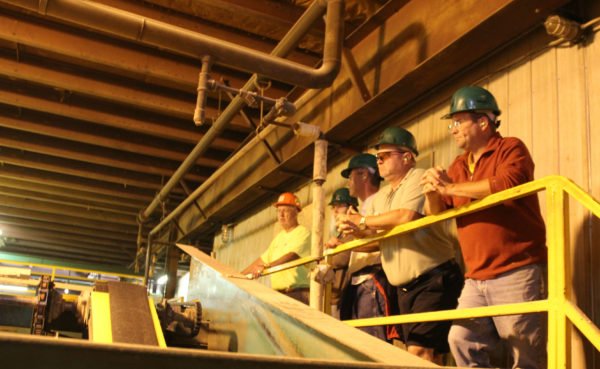
USDA Rural Announces a $115+ Million Investment to Expand USA Sawmills and Timber Development


Posted originally on CTH on March 23, 2026 | Sundance

This is one of those small stories that carries the potential for significant domestic economic gains.

As many are aware, the U.S. imports a lot of softwood lumber from Canada. Combined with the energy products the lumber sector represents the top two U.S. imports from Canada.  With Venezuela now potentially positioned to replace the former, USDA Rural Development now stimulates domestic lumber development potentially positioned to replace the latter.

Taken as a whole, these two approaches significantly weaken the Canadian leverage that could be deployed in a Free Trade Agreement negotiation.  Assuming, of course, the USMCA is dissolved in favor of two bilateral FTAs.

USDA Press Release – At the Advanced Bioeconomy Leadership Conference today, U.S. Department of Agriculture Administrator for the Rural Business and Cooperative Service J.R. Claeys announced the U.S. Department of Agriculture is guaranteeing $115.2 million across eight states through the Timber Production Expansion Guaranteed Loan Program (TPEP) to ensure sawmills and other wood processing facilities have the necessary funding to establish, reopen, expand, or improve their operations.

Today’s announcement includes recipients in the states of California, Idaho, Kansas, Louisiana, Maine, Oklahoma, Virginia, and Wisconsin.

These investments represent a commitment by the Trump Administration to expand American timber production by 25%, reduce wildfire risk, and save American lives and communities by strengthening domestic wood processing capacity.

“We cannot allow wildfires to devastate and destroy our rural communities,” said Administrator Claeys. “That’s why the USDA is taking bold action to stop the destruction of our forestlands by investing in sawmills and wood processing facilities that support sustainable timber harvesting. These actions strengthen local businesses, support rural prosperity, and create jobs for hardworking Americans.” (source)

This is not to say that expanded U.S. sawmill production would completely eliminate Canadian softwood lumber imports. However, it does create inventory and a stronger domestic supply chain that would diminish any applied leverage that Canadian trade negotiators would seek to deploy.

Without pipelines flowing East or West, Canada is stuck pumping their heavy oil south for processing.  Nothing about that is likely to change in the next few years, even if Canada abandoned their climate change policy (highly unlikely).

Then comes the cross-border auto manufacturing industry, and the realization that -sans USMCA- both U.S. and Japanese automakers are likely to stick with the manufacturing center where their greatest customer base exists, the USA.

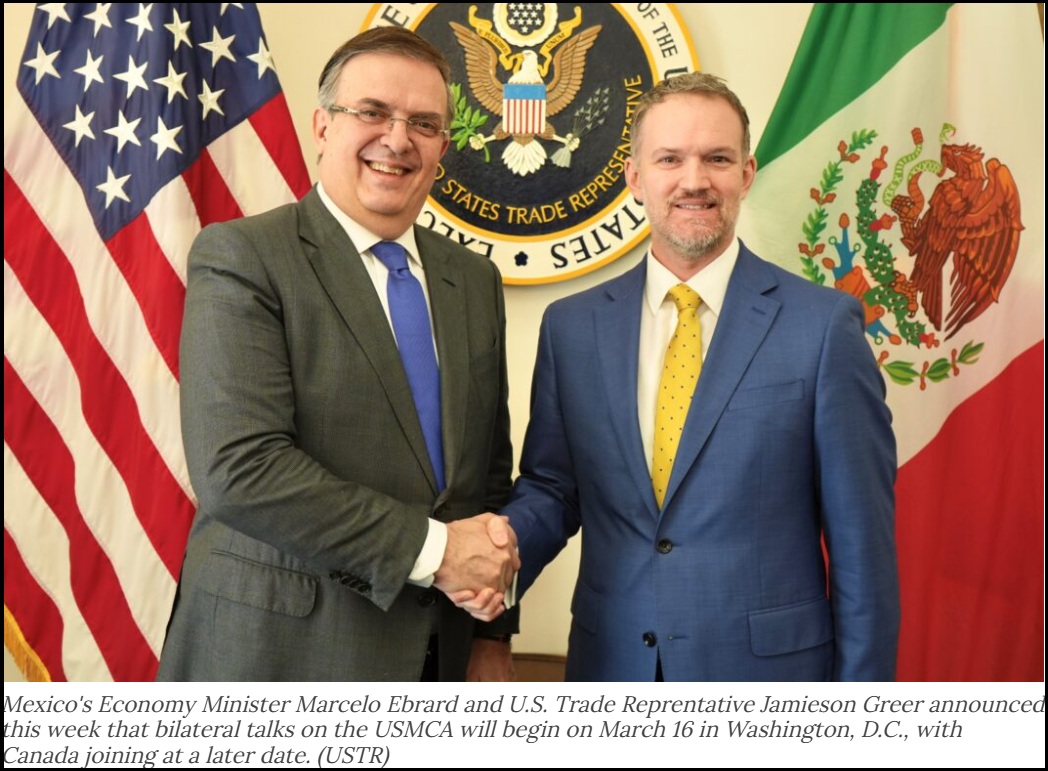
Now overlay softwood lumber, and you can see the top three economic dependencies of the U.S and Canada are slowly being uncoupled, simultaneous with the trilateral USMCA provisions being reviewed starting with the U.S. and Mexico having direct conversations.

We keep watching.

Peter Thiel’s Latest $2 Billion Investment, An “Agritech Unicorn” – Or Something Else?


Posted originally on CTH on March 22, 2026 | Sundance 

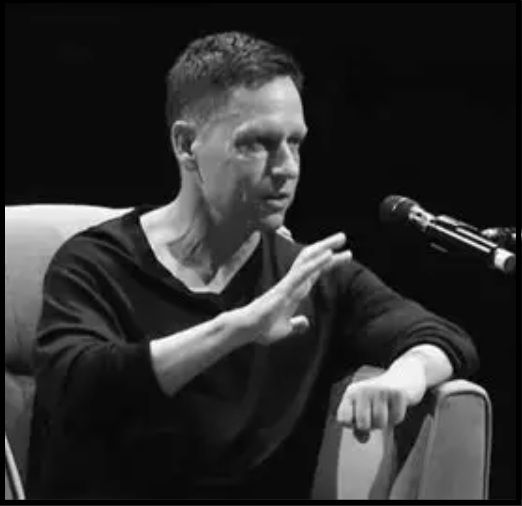
Peter Thiel is well known for his PayPal startup and later Palantir tech investment.  Most people now have a better understanding of exactly what Palantir software and AI interface are capable of.  Palantir AI is now established as a core military system, and the suite of associated products have both military and commercial applications.

At its core, the Palantir product line is about interfacing AI with surveillance software; behavior stuff that permits surveillance and targeting systems through massive database cross referencing and actionable targeting.  I’ll leave the rest of the explaining to those in the comments section who have followed the developing technology.

For his latest endeavor, Peter Thiel has now invested $2 billion in a New Zealand (think five-eyes) based company that assists cattle ranchers with their herds. “New Zealand-based Halter has secured funding at a $2 billion valuation from Peter Thiel’s Founders Fund, marking one of the highest-profile venture investments in agricultural AI to date. The startup, which manufactures AI-powered collars that autonomously manage cattle movement and behaviour, now operates across more than 5,000 farms globally.” (READ MORE) – AND WATCH:

https://platform.twitter.com/embed/Tweet.html?dnt=true&embedId=twitter-widget-0&features=eyJ0ZndfdGltZWxpbmVfbGlzdCI6eyJidWNrZXQiOltdLCJ2ZXJzaW9uIjpudWxsfSwidGZ3X2ZvbGxvd2VyX2NvdW50X3N1bnNldCI6eyJidWNrZXQiOnRydWUsInZlcnNpb24iOm51bGx9LCJ0ZndfdHdlZXRfZWRpdF9iYWNrZW5kIjp7ImJ1Y2tldCI6Im9uIiwidmVyc2lvbiI6bnVsbH0sInRmd19yZWZzcmNfc2Vzc2lvbiI6eyJidWNrZXQiOiJvbiIsInZlcnNpb24iOm51bGx9LCJ0ZndfZm9zbnJfc29mdF9pbnRlcnZlbnRpb25zX2VuYWJsZWQiOnsiYnVja2V0Ijoib24iLCJ2ZXJzaW9uIjpudWxsfSwidGZ3X21peGVkX21lZGlhXzE1ODk3Ijp7ImJ1Y2tldCI6InRyZWF0bWVudCIsInZlcnNpb24iOm51bGx9LCJ0ZndfZXhwZXJpbWVudHNfY29va2llX2V4cGlyYXRpb24iOnsiYnVja2V0IjoxMjA5NjAwLCJ2ZXJzaW9uIjpudWxsfSwidGZ3X3Nob3dfYmlyZHdhdGNoX3Bpdm90c19lbmFibGVkIjp7ImJ1Y2tldCI6Im9uIiwidmVyc2lvbiI6bnVsbH0sInRmd19kdXBsaWNhdGVfc2NyaWJlc190b19zZXR0aW5ncyI6eyJidWNrZXQiOiJvbiIsInZlcnNpb24iOm51bGx9LCJ0ZndfdXNlX3Byb2ZpbGVfaW1hZ2Vfc2hhcGVfZW5hYmxlZCI6eyJidWNrZXQiOiJvbiIsInZlcnNpb24iOm51bGx9LCJ0ZndfdmlkZW9faGxzX2R5bmFtaWNfbWFuaWZlc3RzXzE1MDgyIjp7ImJ1Y2tldCI6InRydWVfYml0cmF0ZSIsInZlcnNpb24iOm51bGx9LCJ0ZndfbGVnYWN5X3RpbWVsaW5lX3N1bnNldCI6eyJidWNrZXQiOnRydWUsInZlcnNpb24iOm51bGx9LCJ0ZndfdHdlZXRfZWRpdF9mcm9udGVuZCI6eyJidWNrZXQiOiJvbiIsInZlcnNpb24iOm51bGx9fQ%3D%3D&frame=false&hideCard=false&hideThread=false&id=2035510709124059305&lang=en&maxWidth=8000px&origin=https%3A%2F%2Ftheconservativetreehouse.com%2Fblog%2F2026%2F03%2F22%2Fpeter-thiels-latest-2-billion-investment-an-agritech-unicorn-or-something-else%2F&sessionId=1119d1af5eb6ced9f79365b5fb520415fc410c7a&theme=light&widgetsVersion=2615f7e52b7e0%3A1702314776716&width=550px

Stay with me, this might start to sound odd.

Here’s the explanation of Halter, as it directly relates to the cattle and cow industry:

“Peter Thiel just bet $2 billion on a collar that wraps around a cow’s neck. The company is called Halter and it has a proprietary algorithm that runs the entire operation. They actually trademarked the name for it and called it the Cowgorithm and here’s how it works.

A farmer opens an app, taps a button, and 600,000 cows across three countries start walking toward the milking station on their own. No farm dogs, fences or physical labor, it’s just a solar-powered GPS collar sending sound and vibration cues to each animal.”

“The collar does more than move cows around. It monitors digestion, fertility cycles, and health patterns in real time, 24 hours a day, using machine learning trained on the behavior of hundreds of thousands of animals.

Halter was founded by a rocket engineer who built spacecraft at Rocket Lab before deciding that farming was the bigger unsolved problem. US ranchers alone have already used the technology to build over 11,000 miles of virtual fencing, roughly the full perimeter of the continental United States, saving an estimated $220 million in physical fencing costs.

Halter’s previous funding round valued the company at $1 billion. This new round, led by Thiel’s Founders Fund, doubles that valuation to $2 billion before the new money even hits the account. And they charge farmers between $5 and $8 per animal per month on a subscription model, meaning the more cows they collar, the more locked-in the revenue becomes.

The most powerful venture capitalist on earth just decided that the future of food and farming runs through an algorithm named after a cow.” (SOURCE)

Peter Thiel’s prior developmental products are all based around human behavioral sciences.  Geolocation, predictive analysis, consumer patterns, behavior patterns, targeting, and the streamlined assembly of mass surveillance systems such as Palantir facial recognition software connected to identity tracking and tracing.

Why would Peter Thiel be shifting to animal behavioral sciences.  Yes, there is a strong marketable product that could ultimately make cattle ranching and cow farming much more efficient and productive.

However, overlay the Halter system on cows with the Palantir system on people.  Replace the cow with a human.

As someone else noted:

Let me explain what a $2 billion “cow collar” actually is 👇

They put an AI collar on a cow. It tracks location. Health. Movement. Behavior. Every second of every day.

A farmer opens an app. Draws a line on a map. That line becomes a fence.
No physical fence. No wall. Nothing visible.

When the cow gets close to the boundary.. the collar vibrates. The cow turns around. Within 10 days the animal doesn’t even test the boundary anymore. It just stays inside.

700,000 animals are already wearing them.

They called it a “cowgorithm.” They want you to laugh at it.

Now read the technology again without the word cow..

24/7 GPS tracking on every individual. Real time health and behavior monitoring. Invisible boundaries drawn from a phone. Movement controlled through vibration and sound. Subject learns compliance within days.

$2 billion. And guess who led the investment…

Peter Thiel. The same man who built Palantir. CIA backed surveillance from day one. The same man who just got a $10 billion Pentagon contract to run AI inside the military.

His entire career is building systems that track and control. Now he’s funding a collar that does exactly that.

They’re not investing in farming. The farming is the test. (SOURCE)

Where did the most aggressive testing of COVID-19 population control systems, and COVID-19 vaccination compliance take place?  Australia and New Zealand.  Five-Eyes countries.

Sound crazy?

So did this at the time:

h

Volkswagen Loses Half Their Profit, Now Plan to Cut 50,000 Jobs Over Next Four Years


Posted originally on CTH on March 10, 2026 | Sundance

The origin of this issue goes back to 2021 and the relaunch of the Build Back Better European green energy program to fight the non-existent climate change problem.  We have been highlighting the consequences within the EU auto sector.

We noted in October of last year, the EU’s mandated fines against auto manufacturers who do not hit their production goals for electric vehicle sales began in 2025.  EU automakers unable to meet the regulatory compliance goal began purchasing carbon credits to avoid stiff EU fines.  Many of those carbon credits were purchased from Chinese EV automakers, who then turned around and started using the extra EU revenue to discount Chinese cars sold in Europe.

At the same time as Chinese autos hit record highs in Europe, EU car sales are flat or declining.  Now, Volkswagen is announcing they lost half their profits in one year and will be cutting 50,000 jobs in the next four years.

(MSM – Europe) – Volkswagen just revealed its operating profit sank like a stone last year, dropping by more than half as tariffs, Chinese competition, and shifting strategies took a serious bite out of the bottom line. And that performance now has the VW Group’s execs reaching for the cost-cutting scissors, including plans to shed 50,000 jobs by the end of the decade.

The German automaker reported an operating profit of €8.9 billion ($10.3 bn at current rates) for 2025. That’s down a hefty 53 percent from the year before and well below what analysts were expecting. Revenue, meanwhile, barely moved, slipping only slightly to around €322 billion ($374 bn). (read more)

This was very predictable. In essence, EU car companies buy Chinese car company carbon credits, to avoid the EU fines.  The Chinese car companies then use the carbon credit revenue to subsidize lower priced Chinese EVs to the European car market, thereby undercutting the European EV car companies.

The EU tariff applied to gasoline powered cars or hybrids from China is 10%.  That tariff is not enough to stop the imports. The Chinese hybrid autos are substantially less than European car brands, and there’s no financial incentive for China to build auto plants in the EU zone especially when you consider the EU is subsidizing those cars by purchasing carbon credits.

When analyzed from a cost and consequence, the entire EU dynamic toward car companies is a little funny.  However, for Germany this is a serious issue, and with the German industrial economy already stagnant – every impact to their auto industry only makes the situation worse.

When you overlay the big picture of their expensive “green energy” costs, the EU find themselves in an unescapable downward spiral.  Quite literally, all commonsense seems to have been lost in their green energy chase.

By focusing on energy targets, specifically by trying to force production of European electric vehicles that are not favored by European car purchasers, the EU is shrinking their economy to the benefit of Beijing exploitation.

German Chancellor Friedrich Merz recently travelled to China for a discussion with Chairman Xi Jinping.  Chancellor Merz returned to German with a stark message about how the nation needed to quickly get productive in order to meet the far superior work ethic he saw in China.

At the same time, the EU has destroyed its energy sector by chasing windmills and solar farms instead of maintaining the much cheaper coal and gas alternatives.  Overall, Europe has made a series of really bad decisions, but those consequences will surface the hardest within the largest industrial economy, Germany.

They’ve got major problems now.

President Trump Delivers Remarks on U.S. Energy from Corpus Christi, Texas – 4:00pm ET Livestream


Posted originally on CTH on February 27, 2026 | Sundance

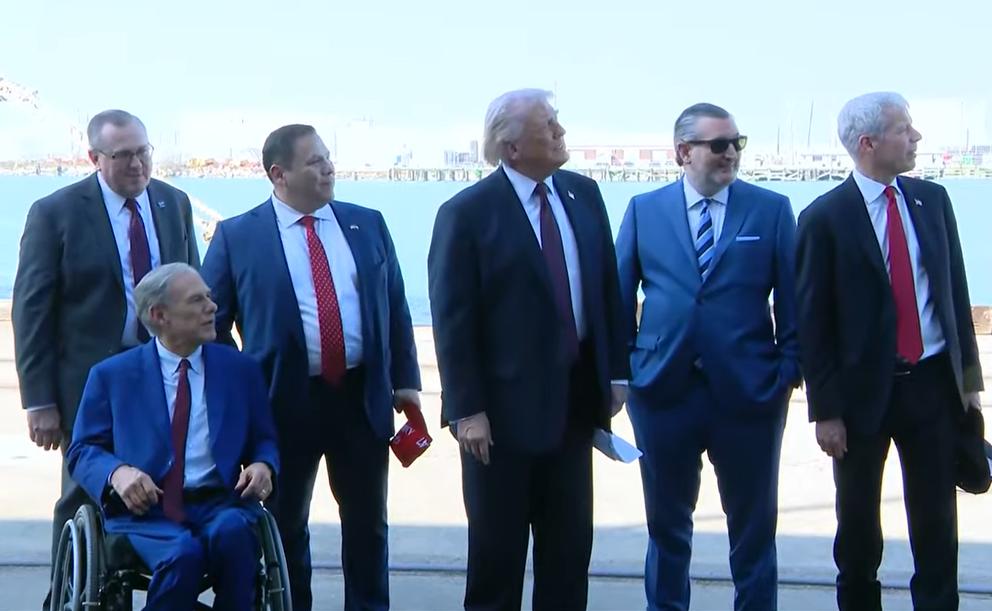
President Donald Trump travels to Corpus Christi, Texas, for an energy briefing and delivers remarks on U.S. energy independence.  President Trump is scheduled to deliver remarks at approximately 4:30pm ET.  Livestream Links Below.

.

.

President Trump and EPA Administrator Lee Zeldin Announce Reversal of Green Energy Climate Mandates


Posted originally on CTH on February 12, 2026 | Sundance 

The Obama-Biden administration couldn’t get the votes needed in Congress to amend the Clean Air Act and regulate “greenhouse gases.” So, they both decided to ignore the law and create trillions in regulatory costs on the American people.

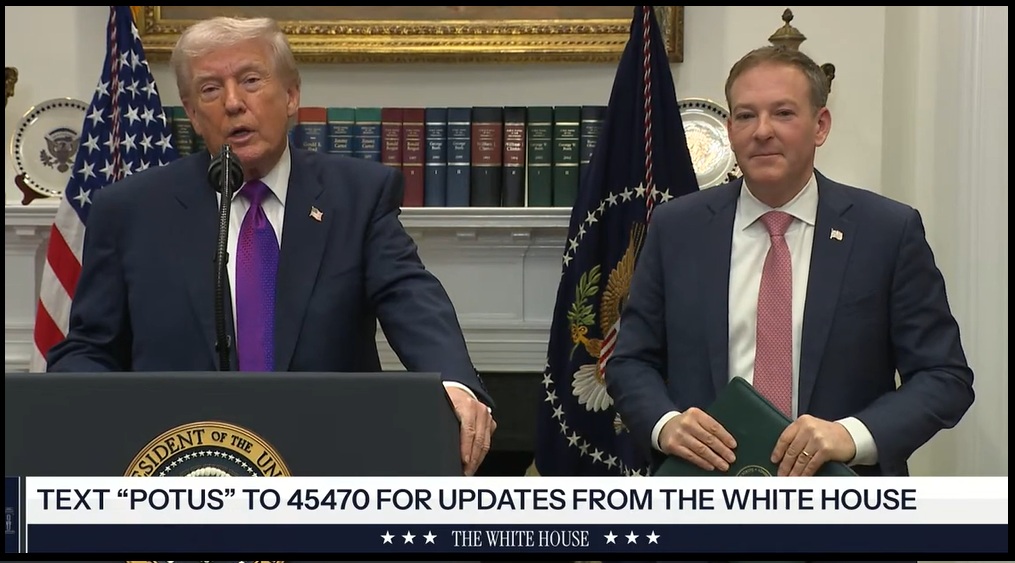
As noted by EPA Administrator Lee Zeldin, “The Trump Admin is proudly following the law, saving $1.3 TRILLION for the American people, lowering new car costs by over $2,400 per vehicle, and getting rid of the climate participation trophy for manufacturers to install Obama Switches that shut vehicles off at red lights and stop signs.” WATCH:

.

Media questions begin at 19:31.

Vice President JD Vance and Secretary of State Marco Rubio Lead ‘Critical Minerals’ Strategic Ministerial Gathering


Posted originally on CTH on February 4, 2026 | Sundance

In the past few years people have heard the term “rare earth minerals” or “critical minerals” as they relate to the manufacture of component goods that are vitally important in the lives of everyone.  However, the term “rare” is somewhat of a misnomer.  The minerals themselves are not rare; indeed, they have been around for hundreds of millions of years in abundant supply.  It is the processing of those minerals into stable second stage commodities that has become rare.

As a result of western environmental rules and regulations, U.S, EU and developed nations have outsourced critical mineral processing (the dirty stuff) to China and Asia. We then import the finished commodity after processing.  This becomes a problem when you realize the processor can weaponize western dependency, as we have recently seen with China controlling the export of processed minerals needed for manufacturing.

President Trump has made a strategic decision to bring back the manufacturing of critical minerals to the United States and has made a policy decision to create a critical mineral reserve. Just last Monday President Trump announced a $12 billion strategic mineral reserve to combat China’s domination of critical mineral supply chains, a major step toward tackling China’s advantage in a crucial sector of the U.S. economy.  The initiative is called “Project Vault.”

“For years, American businesses have risked running out of critical minerals during market disruptions,” President Trump said. “Just as we have long had a strategic petroleum reserve and a stockpile of critical minerals for national defense, we are now creating this reserve for American industry,” Trump said during the Oval Office announcement.

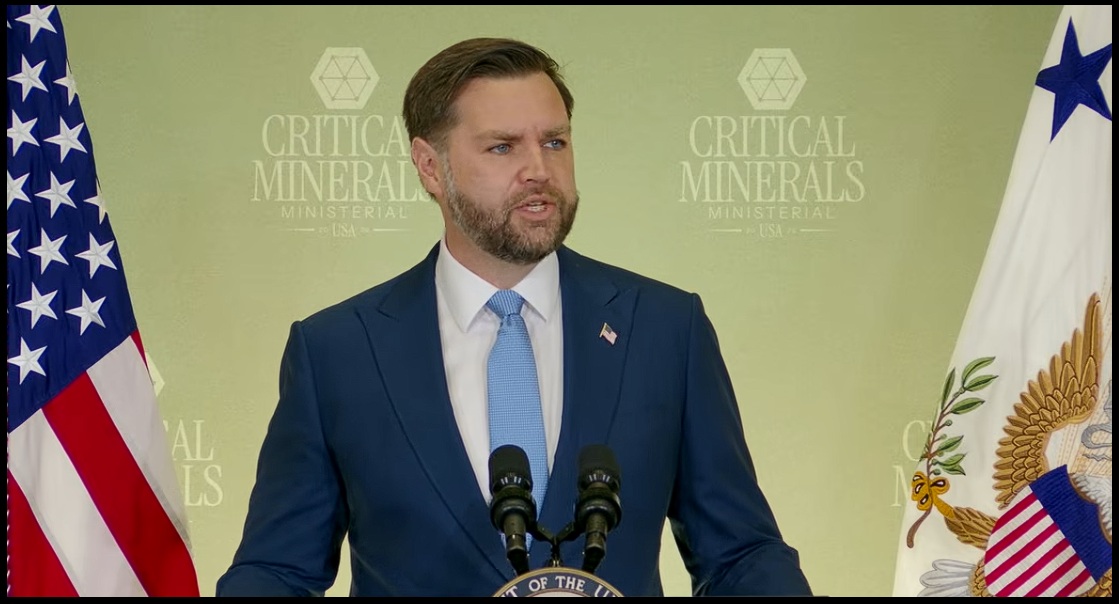
Today in Washington DC, Vice-President JD Vance and Secretary of State Marco Rubio led a critical minerals discussion at the State Dept., where they are organizing an effort to get all nations to invest and create their own critical minerals strategic reserves.  WATCH:

.

German Chancellor Merz Admits Shutting Down Nuclear Energy Production Was a “Severe Strategic Mistake”


Posted originally on CTH on January 16, 2026 | Sundance |

Germany has a severe electricity shortage and cost problem, and it’s getting worse.

German Chancellor Friedrich Merz recently made the admission that shutting down the German nuclear power reactors was a “severe strategic mistake.”

“To have acceptable market prices for energy production again, we would have to permanently subsidize energy prices from the federal budget,” Merz said, adding: “We can’t do this in the long run.”

“So, we are now undertaking the most expensive energy transition in the entire world,” Merz said with pronounced frustration. “I know of no other country that makes things so expensive and difficult as Germany.”

Keep in mind, Germany represents the largest contributing economy in the European Union.  The German industrial sector is the backbone of the European economic model.

All of these realities paint a very tenuous picture for the economic future in Europe, when combined with a new trade relationship with the USA, increasingly cheap goods dumped into the EU by China and the EU promising to continue spending on the war effort in Ukraine against Russia.