Lines in the Sand – Iran War


Posted originally on Mar 6, 2026 by Martin Armstrong |  
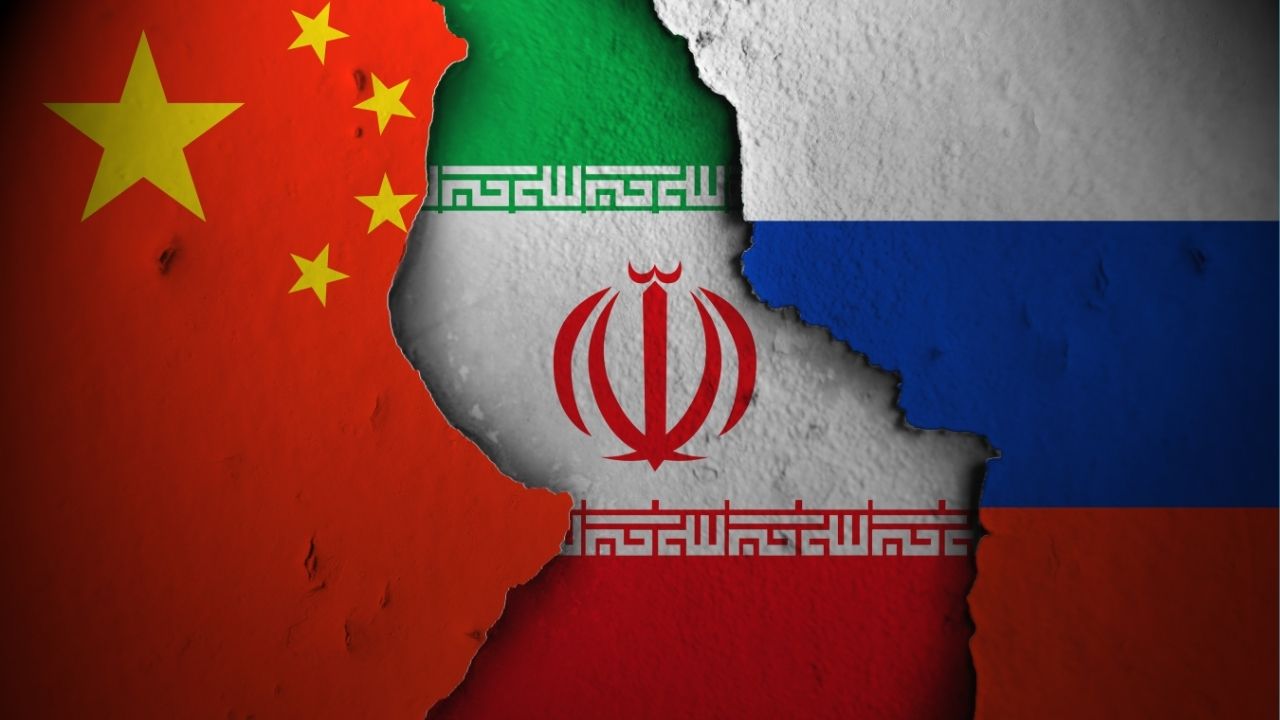
Iran, China and Russia Sign Strategic Pact, Deepening Alignment Against Western Pressure - GV Wire

The conflict now unfolding with Iran is beginning to expose a series of geopolitical lines that had been quietly building for years. What is striking about the current situation is not simply the military confrontation itself, but the reaction of various nations. The world is no longer responding as it did in earlier conflicts where alliances moved almost automatically behind Washington. Instead, governments are drawing their own lines in the sand.

The United States and Israel are presently the two nations directly engaged in military operations against Iran. While Washington has access to bases throughout the Middle East, most of those countries are not actively participating in combat. Gulf states such as Qatar, Bahrain, Kuwait, Saudi Arabia, and the United Arab Emirates host American military infrastructure, but their involvement largely reflects long-standing defense agreements rather than enthusiastic participation in a new regional war. These nations find themselves caught between two competing pressures: their security arrangements with the United States and the geographic reality of living within missile range of Iran.

What has been particularly revealing is the response in Europe. Spain openly refused to allow the United States to use its bases at Rota and Morón for operations against Iran, sparking a diplomatic confrontation with Washington. That decision has highlighted the growing divide inside NATO. During the Cold War and even in the early post-Cold War era, European governments generally aligned themselves with U.S. military policy. Today that unity is no longer automatic. European leaders increasingly calculate their own political and economic risks before committing themselves to American military campaigns.

Who are Iran's allies in a potential conflict with the United States? - ABC  News

The reluctance to join the conflict reflects deeper concerns about escalation. Many European governments are already facing fragile economies, political fragmentation, and rising social tensions. Opening another military front in the Middle East while the war in Ukraine continues would add another layer of uncertainty to an already unstable geopolitical environment. As a result, several governments are publicly urging diplomacy rather than military expansion.

Iran does not stand entirely alone. Its support network is less conventional than traditional state alliances but still significant. Groups such as Hezbollah in Lebanon, the Houthis in Yemen, and various militias operating in Iraq form part of a regional structure that Tehran has cultivated over decades. These organizations are not merely political sympathizers; they possess their own military capabilities and can operate across multiple fronts simultaneously. This creates a form of distributed conflict that complicates any direct confrontation with Iran itself.

What we are witnessing is the emergence of a fragmented geopolitical landscape where alliances are no longer rigid. Countries are evaluating their interests in a far more transactional way. Some governments provide logistical support while avoiding direct involvement. Others refuse cooperation altogether. Meanwhile, regional actors pursue their own strategic agendas independent of traditional Western alliances.

When crises arise, the difference between formal alliances and genuine strategic alignment becomes visible. The current situation with Iran is exposing those differences in real time. Nations are making calculations not only about military risk but also about energy markets, economic stability, and domestic political pressures.

The phrase “lines in the sand” has long been associated with the Middle East, yet today it applies equally to the diplomatic landscape surrounding the conflict. Countries are defining the limits of their involvement, sometimes publicly and sometimes quietly behind the scenes. These decisions reveal a world where geopolitical loyalties are becoming far more fluid than they once appeared.
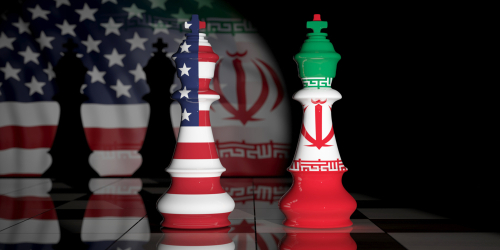
US & Israel vs Iran


Posted originally on Feb 28, 2026 by Martin Armstrong |  

Iran v USA 2

QUESTION: Mr. Armstrong, you pointed out previously that Zelensky was a war criminal for targeting leaders in Russia. You wrote:

“Zelensky is a war criminal based on the Rules of War and Geneva. Whether the car bomb is perfidious depends entirely on the method used to get the bomb to the targetPerfidy (Treachery) is strictly prohibited under Article 37 of the Geneva Conventions’ Additional Protocol I. Perfidy is defined as acts that invite the confidence of an adversary to make them believe they are entitled to, or are obliged to accord, protection under the rules of IHL, with the intent to betray that confidence.

Netanyahu targeted the leadership of Iran in 2025 and now they have employed the same tactics killing the Supreme Leader and several heads of the military. Trump has acknowledge that they killed the Supreme Leader. Will this seriously harm Trump’s legacy.

GH

ANSWER: There are a lot of people who are deeply angry over this attack. Not that they are pro-Iran, but they generally say they voted for Trump to stop these Neocon endless wars. Former Congresswoman Marjorie Taylor Greene issued a statement denouncing the president, claiming he is betraying voters who supported him for ending foreign wars.

‘Thousands and thousands of Americans from my generation have been killed and injured in never ending pointless foreign wars and we said no more. But we are freeing the Iranian people. Please,’ the former GOP lawmaker wrote on Saturday.

Tucker Carlson branded Trump’s attack ‘absolutely disgusting and evil‘ as the president’s MAGA base fractured. The fact that Tucker has broken with Trump signals that the decision to plunge the US into a major war with Iran could carry legacy-altering consequences for the president.

President Donald Trump confirmed on Feb. 28 that Iranian leader Ali Khamenei was killed in the U.S.-Israeli strikes. Trump wrote in a post on his Truth Social platform.

“He was unable to avoid our Intelligence and Highly Sophisticated Tracking Systems and, working closely with Israel, there was not a thing he, or the other leaders that have been killed along with him, could do.” 

I was deeply concerned when Trump took Marco Rubio as Secretary of State. He is a staunch Neocon. I knew that was trouble. Venezuela was easy. Trump most likely assumed that they would kill the leadership of Iran and it would also be quick and fast. The Supreme Leader was also the head of Shia Muslims, which know no borders. Saudi Arabia has a substantial Shia population who are located by its oil fields.

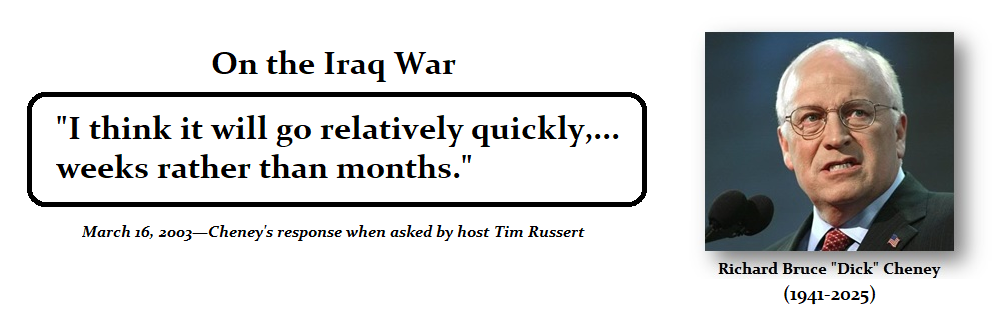
Cheney Dicj 1941 2025 weeks not months

The Neocons have created endless wars always with the promise of victory and in and out, since they skirt Congress entirely. The last Declaration of War was World War II.  This is NOT Trump’s idea, he is listening to the Neocons and thinks Iran will be just like Venezuela. The computer disagrees.

Categories:Iran

Canada to Provide Express Entry to Trained Foreign Military Personnel


Posted originally on Feb 20, 2026 by Martin Armstrong |  

I have warned many times that immigration policy is increasingly being shaped by political ideology rather than long-term social cohesion and economic stability. The report that Canada is considering an express entry pathway for highly trained foreign military personnel raises very serious questions that go far beyond labor shortages or skills-based immigration. When governments begin fast-tracking individuals with military training into civilian society under expedited frameworks, this is no longer just an economic policy — it becomes a national security and social stability issue.

Historically, successful immigration systems were built around assimilation, economic contribution, and cultural integration. Governments are struggling to build their militaries amid recruitment shortages. Their solution is to import “skilled” fighters as we move closer to global conflict. Military personnel will be included among other high-skilled occupations since the demand far exceeds the available domestic supply.

The larger concern is assimilation and demographic shifts. I have repeatedly stated that social stability depends on shared legal, cultural, and institutional norms. When immigration policy accelerates without equal emphasis on integration, fragmentation follows. Europe has already demonstrated this lesson in multiple countries where rapid demographic policy shifts created long-term social divisions and rising political polarization. Canada is not immune to those same cyclical forces simply because it has historically maintained a more structured immigration system.

There is also the geopolitical layer that cannot be ignored. We are entering a period of rising global volatility into the 2026–2032 window, according to the cyclical models. During such phases, governments increasingly prioritize security, institutional resilience, and strategic labor pools. Policies targeting military-trained migrants may be framed as skills-based immigration, but they also reflect a broader shift toward state planning in response to global uncertainty.

HowEmpiresDie

Look at Russia. Putin turned to Kim Jong-un in a desperate plea to recruit more men. Impoverished nations are willing to import anything, including humans. Canada’s announcement alludes to the government’s importance of rapidly building the armed forces. Canada was so focused on forcing their own men and women to take the COVID vaccines a few years back that they pushed away contenders. What could go wrong if a nation opens its borders to trained mercenaries who may have an allegiance to a foreign government? Ancient Rome too relied on non-Roman recruits, but that was merely one aspect of the collapse.

I have explained in my writings on the Fall of Rome and How Empires Die that empires always turn to external manpower when domestic demographics weaken, and the population no longer supports the state financially or militarily. Hiring outsiders, expanding bureaucracy, and increasing control are all late-cycle responses to declining confidence in the system itself.

Macron Suffers from De Gaulle Syndrome Threat to World Peace


Posted originally on Feb 19, 2026 by Martin Armstrong |  

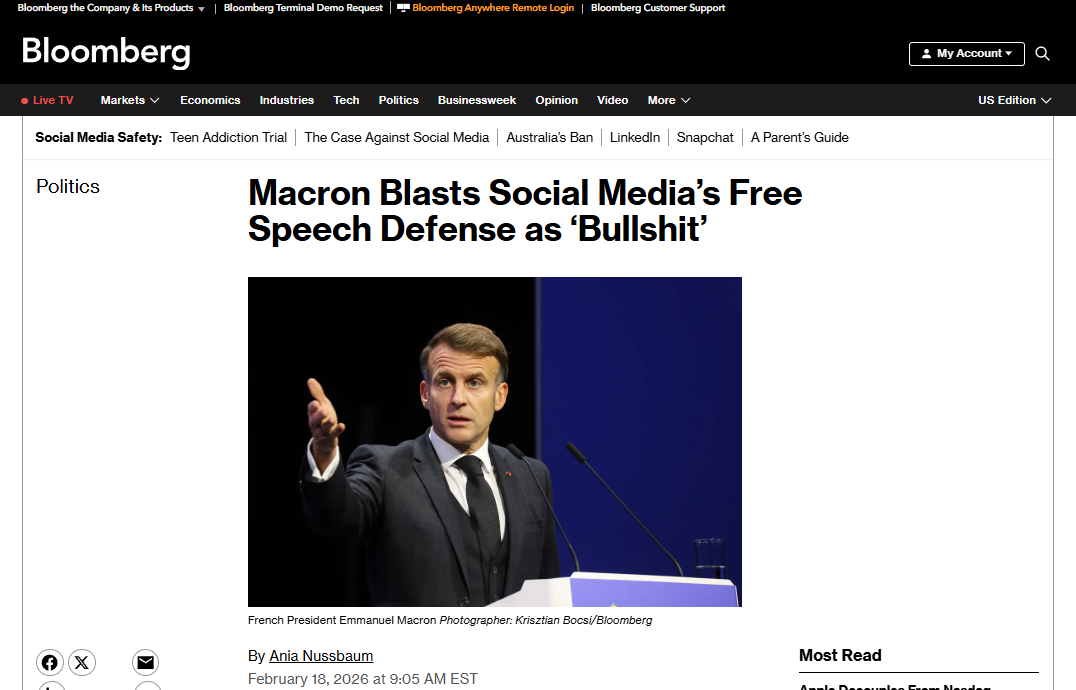
2026_02_19_08_35_02_Macron_Calls_Social_Media_s_Free_Speech_Defense_Bullshit_in_AI_Policy_Clash_

Macron just said  “Free speech is pure bullshit if nobody knows how you are guided to this so-called free speech, especially when it is guided from one hate speech to another.” He expect the EU to clash with Trump because they are in dire straights and when a country is in the death spiral, they will become increasingly authoritarian. The two worst offenders are France and Spain. Macron has been covertly telling French institutions to sell dollars and bring the money home pushing the euro higher which then reduced their trade surplus.

Last April 2025, in response to Trump’s sweeping tariffs, Macron called for European companies to suspend planned investment in the United States, stating “Investments to come or investments announced in recent weeks should be suspended until things are clarified with the United States”

Macron has been pushing “targeting digital services and financing mechanisms of the US economy.” We are seeing that in trying to come up with a European credit card and banning both Visa and Mastercard.

At Davos 2026, Macron noted that European savings are “overinvested in bonds and sometimes in equities – but outside Europe,” suggesting he wants Europeans to invest more domestically. They call Macron the Petite Napoleon. Despite his approval rating at 11%, probably lower than any world leader in history, he is carrying on the dream of Napoleon and Charles De Gaulle who destroy the gold standard because of his hated of the United States. He withdrew France from NATO which is why they have independent nukes. De Gaulle ordered all US troops and NATO instalation out of France which prompted the US to ask if that included the dead America buried there to defend France.

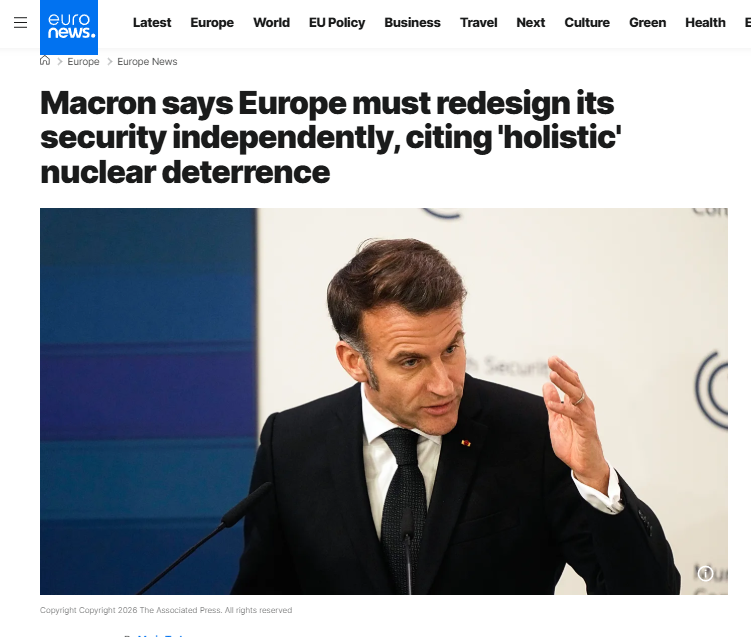
2026_02_19_09_08_06_Macron_says_Europe_must_redesign_its_security_independently_citing_holistic_n

At the Munich Security Conference in February 2026, Macron said Europe must redesign its security architecture independently and confirmed Paris is holding strategic nuclear talks with allies, referring to a more “holistic” approach to nuclear deterrence among European allies.

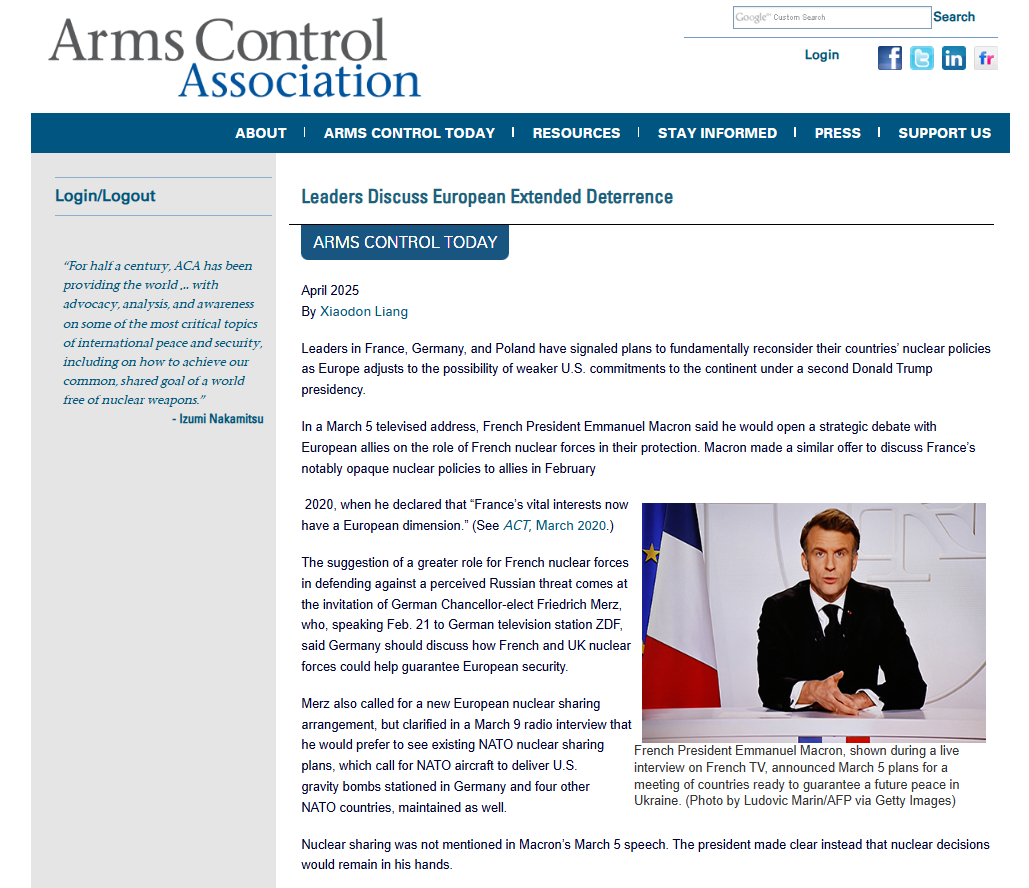
2026_02_19_09_11_01_Leaders_Discuss_European_Extended_Deterrence_Arms_Control_Association

In an address to the nation in March 2025, Macron announced plans to negotiate with the allies the possibility of placing European countries under the protection of France’s nuclear deterrence forces. Germany, Poland, Lithuania, and Denmark have expressed readiness to discuss the issue. This is why they call him the Petit Napoleon. He is once again trying to make France the dominant power of Europe and it has been him, according to sources, who pushes to invade Russia to gain the assets to rise above the United States as a rival.

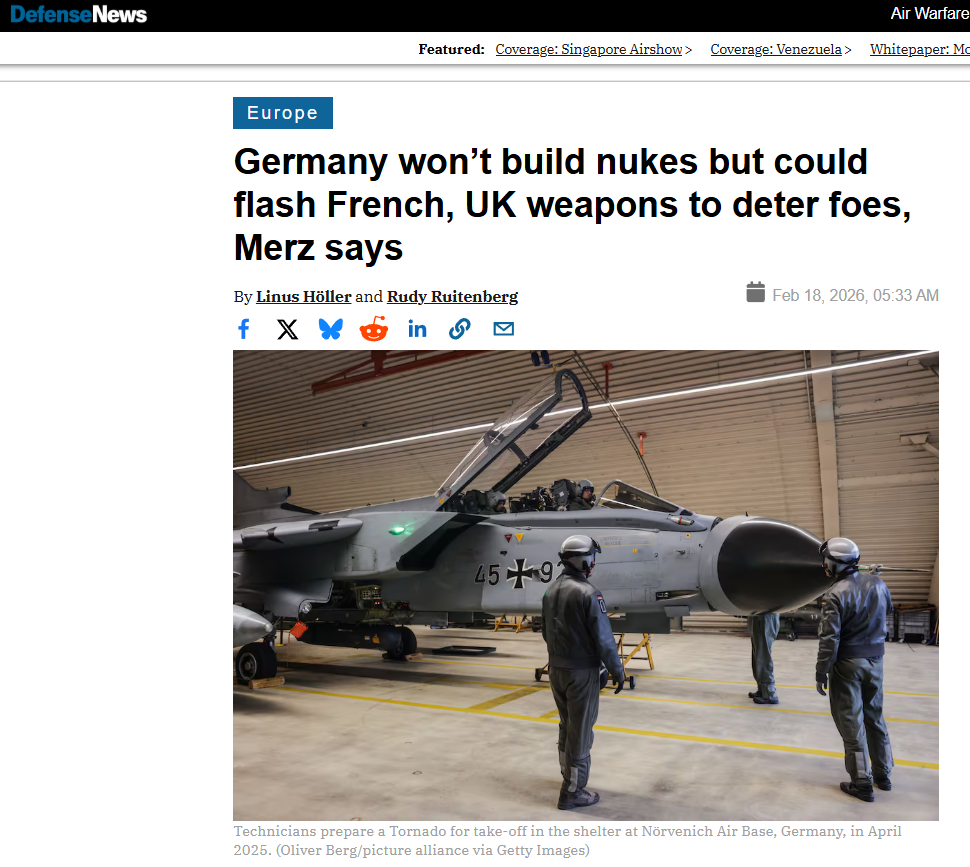
2026_02_19_09_15_02_Germany_won_t_build_nukes_but_could_flash_French_UK_weapons_to_deter_foes_Merz

German Chancellor Friedrich Merz said Germany does NOT want to develop its own nuclear weapons, but is interested in incorporating French and British atomic bombs in a deterrence arrangement reminiscent of NATO’s U.S.-based nuclear umbrella.

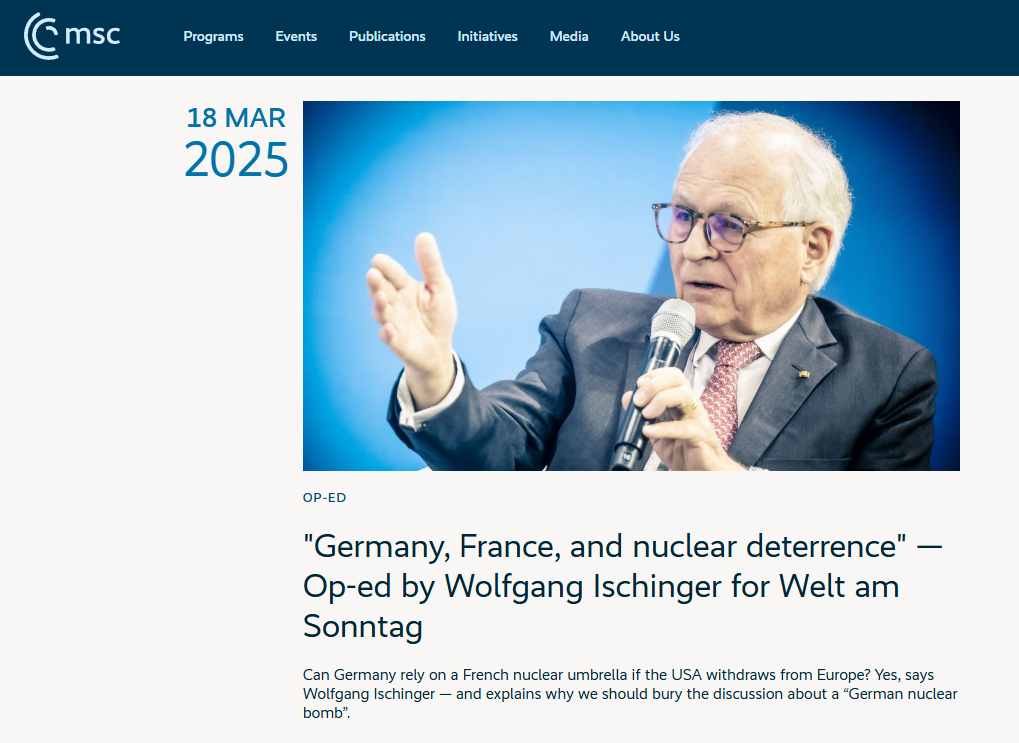
2026_02_19_09_17_37_Germany_France_and_nuclear_deterrence_Op_ed_by_Wolfgang_Ischinger_for_Welt

Wolfgang Ischinger at the Munich Security Conference noted that France has air-based nuclear-capable cruise missiles that can be deployed from Rafale aircraft, and “perhaps in the future, such systems could be stationed not only in France, as has been the case so far, but also in Poland or Germany, on a rotating or even permanent basis. Yes, one could even consider replicating the US model of nuclear sharing, whereby these weapons could be launched from suitable partner aircrafts.”

Macron’s proposal are definitely an offer to build an independent nuclear deterrent within the EU framework. Any arrangement whereby Paris would transfer sovereignty over the use of its own nuclear bombs to an EU institution or another state is a no-go in terms of domestic politics. Macron wants to replace the US and retain control of all nukes, not hand them over to the EU.

So yes—Macron has offered extended nuclear protection to Europe, and discussions about potentially stationing French nuclear-capable systems in Germany (similar to NATO’s nuclear sharing arrangement) are part of the conversation, though final decision-making would remain with France.

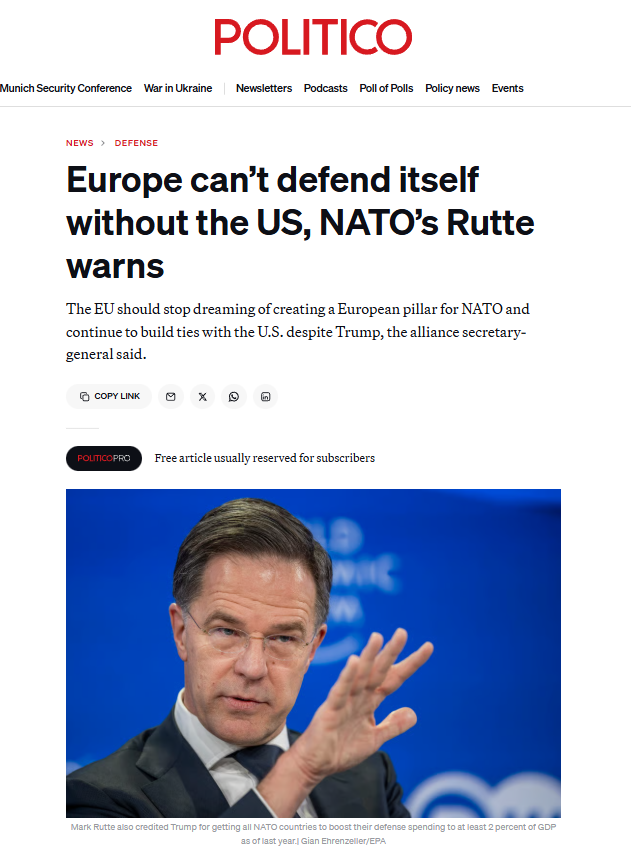
Rutte EU Cany Defeat Russia without US 1 26 26

Behind the curtain, it has been Macron who is trying to replace the USA and lead all of Europe as the modern version of Napoleon. NATO Secretary-General Mark Rutte has emphasized that European nations cannot defend themselves against Russia without the support of the United States, suggesting that they would need to significantly increase their defense spending in the absence of U.S. assistance. He warned that losing U.S. support would undermine Europe’s security and freedom. Rutte said bluntly during an appearance at the European Parliament: “If anyone thinks here again that the European Union, or Europe as a whole, can defend itself without the U.S., keep on dreaming,”

Franc vs Dollar

This is why reliable sources see through Macron seeking to seize power and take Europe into a third World War in hopes to leading Europe and fulfilling the dream of Napoleon and Charles De Gaulle. It was De Gaulle who was redeeming dollars for gold believing that if france had the larges gold reserves that the franc would replace the dollar.

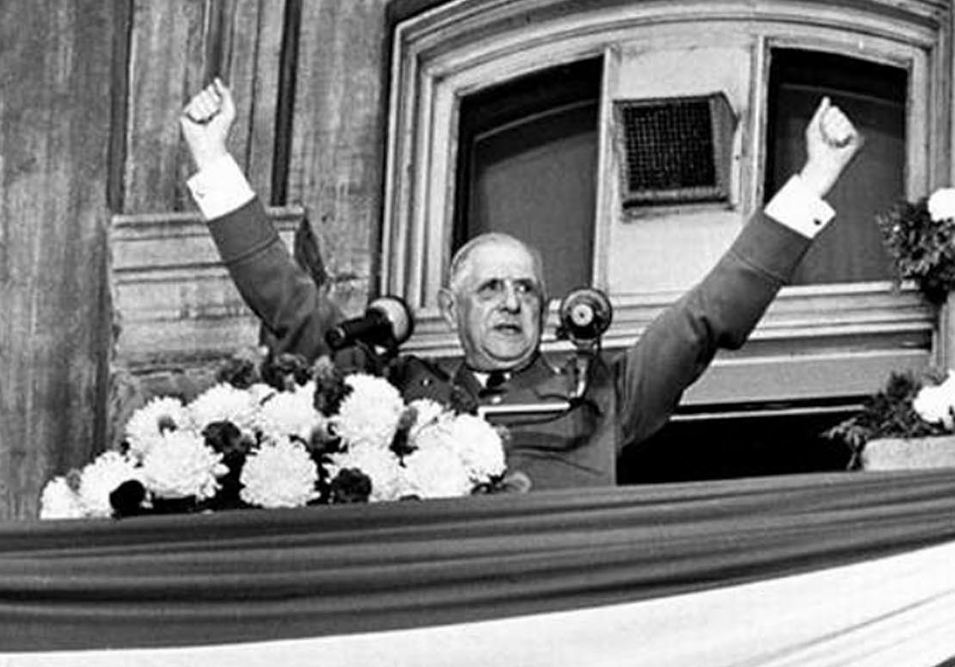
DeGaulee 1967 Vive Le Quebec libre

Charles De Gaulle was an extreme nationalist far worse than they acuse Trump today. He objected in February 1965 to what he called the “Exorbitant Privilege” of the US dollar’s dominant role and began converting France’s dollar reserves into gold, which put pressure on Bretton Woods. In 1967, I was there in Montreal with my Family at the World’s Fair. My father had met De Gaulle bing with Patton who liberated France. My father was a colonel with Patton and told me how De Gaulle demanded that he lead the victory parade ahead of the Americans as he liberated France. In Montreal, he encouraged Quebec to separate from Canada because they were the English. He was still anti-American and British all because they defeated Napoleon. He refused to allow Britain to join the European Community. Britain joined ONLY after De Gaulle died. Macron seems to be suffering from De Gaulle syndrome.

Episode 5150: Middle East Edges Closer To War; Counting The People Voting Is Just As Important As Hand Counting Ballots


Posted originally on Rumble on Bannon War Room on: February 17, 2026

Could Europe Defend Itself Without America?


Posted originally on Feb 5, 2026 by Martin Armstrong |  

NATO

Could Europe defend itself without America? In January 2026, NATO launched Operation Steadfast to answer that question. The operation is the largest exercise of the year, deploying around 10,000 troops from 11 member states across Central Europe. The plan involves the Allied Reaction Force, a rapid response element designed to test trans-Atlantic coordination in simulated high-intensity conflict conditions from land, air, sea, and cyber.

However, America is still assisting European NATO allies in carrying out Operation Steadfast through its financial backing. Greenland is not the reason for the exercise, as the plan was drafted last year. Brussels wishes for Europe to operate, vote, behave, and attack as a collective. Politicians claim broad “Europe-wide” threats from foreign nations to justify a stronger military alliance. Neocons believe they can eventually create a European army that will protect Brussels above all else.

The same politicians who push for European military power have been undermining capital through debt, regulation, and climate mandates that have destroyed the continent’s energy supply.

NATO was created during a period of high confidence in government following World War II. The alliance worked because the United States was economically dominant, politically unified, and willing to absorb the cost of global security. Europe, by contrast, redirected capital away from defense and into social spending, bureaucracy, and regulation.

Europe’s reliance on the United States through NATO delayed reform, encouraged dependency, and allowed politicians to sell the illusion that defense costs nothing. That illusion is now ending.

The ECM has been warning that the 2026–2032 window marks rising global conflict risk. Not because leaders want war, but because declining confidence removes the mechanisms that prevent it. Alliances fracture, miscalculations rise, and nations act in self-interest rather than collective stability. NATO is in the confidence erosion phase. Article 5 can only go forth if each member believes in the cause.

Ukraine & Trump


Posted originally on Feb 3, 2026 by Martin Armstrong |  

697b5a3c40421d5e60cdba7b

The letter I  received from Trump, dated January 15th, discusses foreign policy, not domestic economics. It also says thank you for writing. This refers to the Peace Plan i wrote back in 2025 I was asked to write. Most of what I stated in that plan appears to have been implemented, except for my recommendation to exit NATO, which the letter addresses. However, I specifically included how this war began and laid the blame on the Neocons for installing an unelected government in Kiev and ordering them to invade the Donbas to kill Russians, trying to draw in Putin. They succeeded, but they control the press, which has been putting out the bullshit that Putin invaded “UNPROVOKED” to get young, stupid men and women to volunteer for war with the rally-around-the-flag psychological ploy to wage World War III. I believe I have shaken the ground that the Neocons stand on, so if I suddenly die by suicide, you know who really did it.

US_ties_security_guarantees_to_Ukraine_giving_up_Donbas_

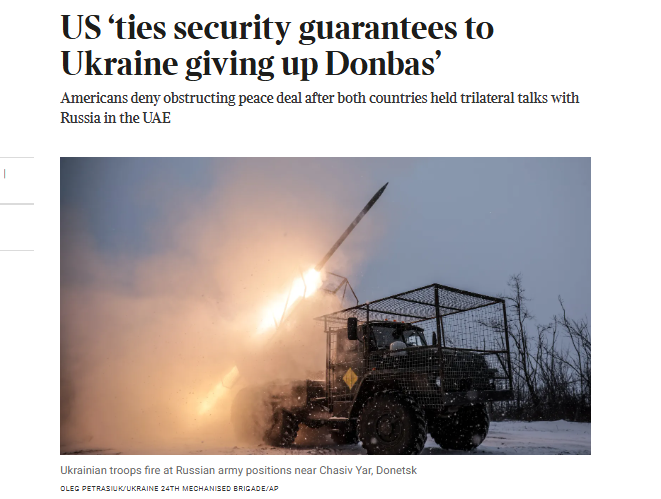
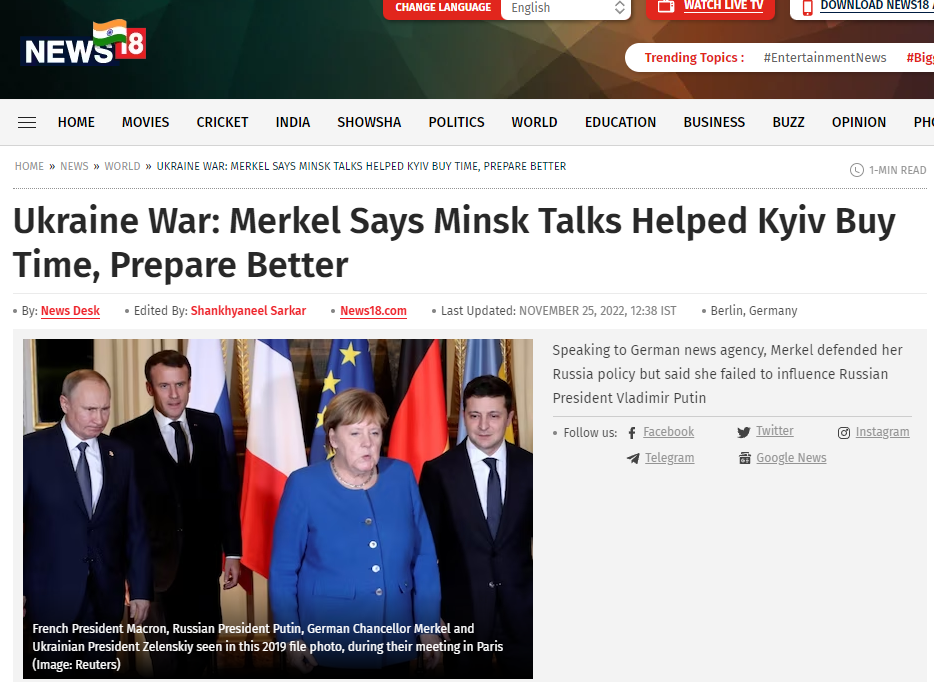
Of course, the European press are saying that to surrender the Donbas, Ukraine will commit suicide. They love war so much and are willing to sacrifice the future of their family all for the Donbas which the original Minsk Agreement was to allow them to vote on the fate of their own future. Chancellor Merkel admitted that she negotiated in bad faith and never intended to honor that peace agreement. They wallowing in the mud of propaganda.

Merkel_Minsk_Buy_Time_to Prepare for wart

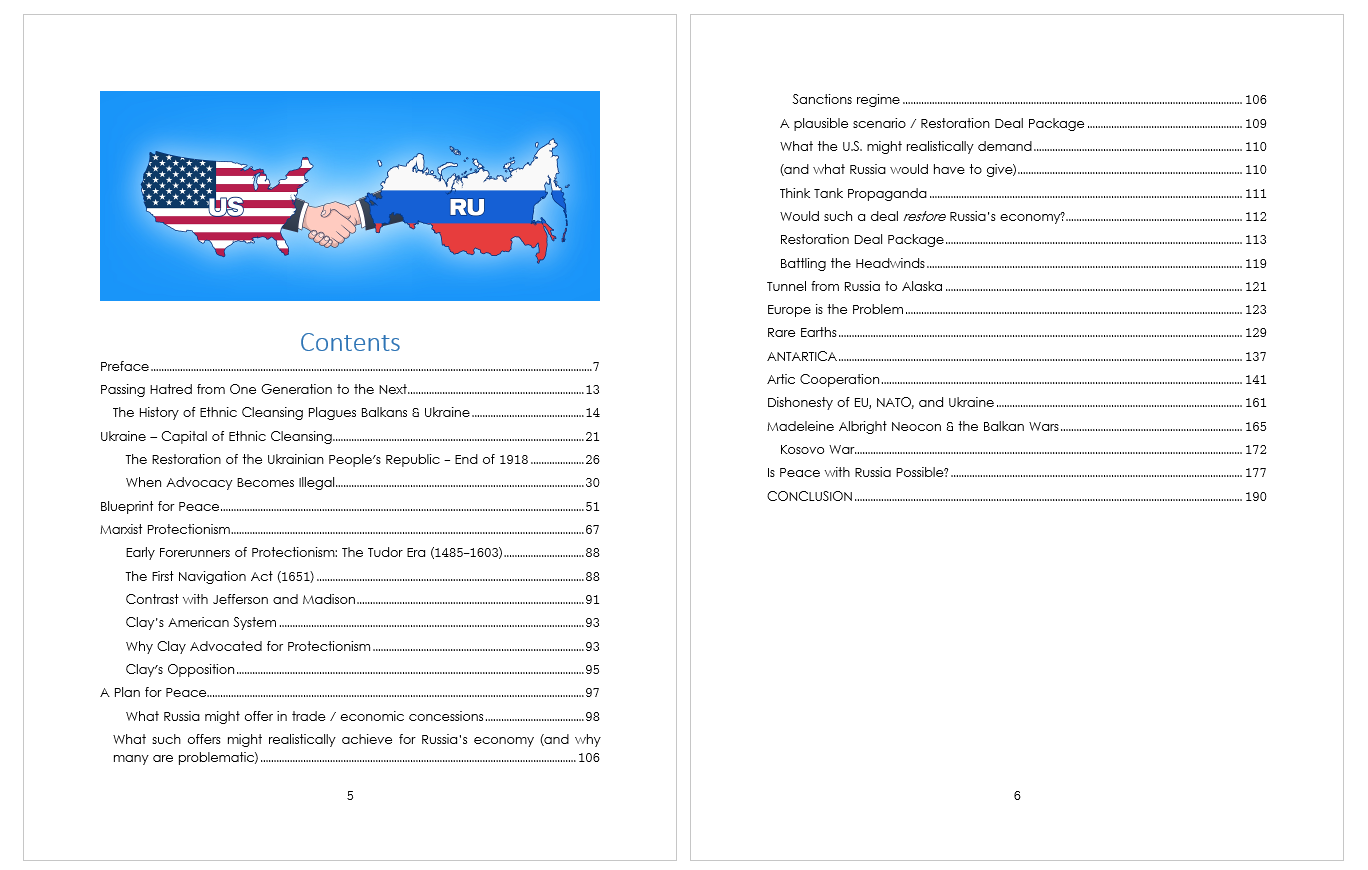
Russia_Peace_Deal 2025 COVER
Russia_Peace_Deal INDEX

The Road to Peace is undoubtedly attainable.
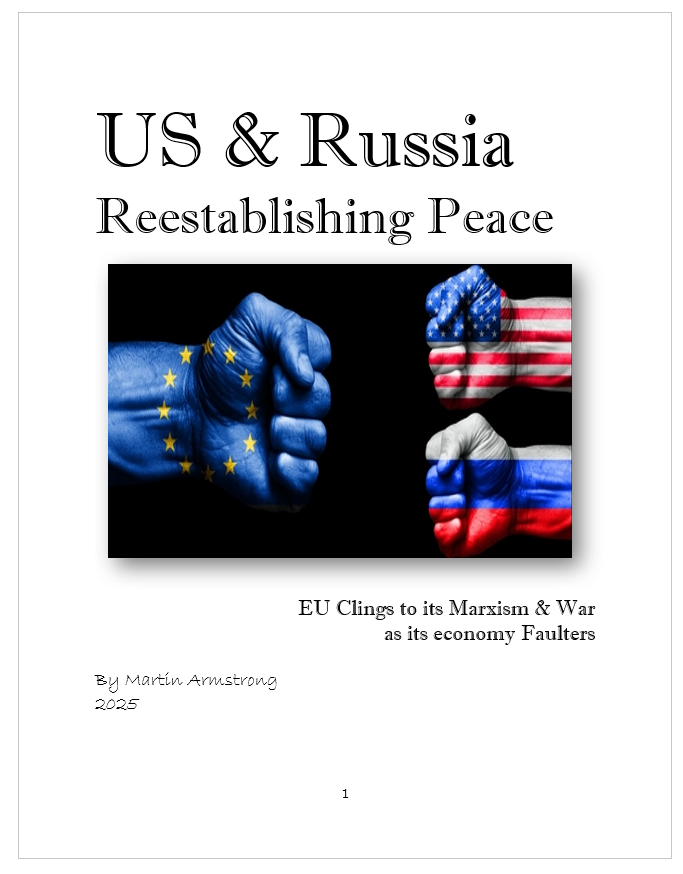
I urge everyone to read my Peace Proposal that details the intricacies of restoring global order. The importance of restoring peace is paramount. Without peace, we will be forced to endure World War III—the destruction and loss of life is unfathomable. Share this document with whoever is willing to listen.The core of the peace plan is as follows. Yet, it is essential to read the full proposal to understand why these solutions could restore peace and change the course of history.

A plausible scenario / Restoration Deal Package

Putting the above together, a possible realistic “Restoration Deal” (from Russia’s perspective) might look like this:

  • Russia agrees to end the Ukrainian War in return for the honoring of the Minsk Agreement, a freeze of conflict lines, and allow the Donbas to vote on their basic human right to decide their own fate
  • In return, the U.S. (and EU) lift key sanctions on energy, rare earth exports, and financial transactions in stages
  • Russia commits to independent oversight (by international monitors) of resource exports, pricing, and revenue accounting

What the U.S. might realistically demand

(and what Russia would have to give)

From the U.S. (and allies) side, the demands would likely include:

  • Full transparency, auditing, and verification (to ensure that Russia does not exploit the relief to fund further military aggression)
  • Oversight on technology transfers and security constraints
  • Guarantees that lifted sanctions are reversible if Russia reneges
  • Some quid pro quo on Ukraine: withdrawal, territorial concessions, ceasefire, no reparations payments for Ukraine
  • Human rights, protection of minority groups, recognition of international law norms, and any Ukrainians located in the Donbas should be compensated to vacate the region

Russia would effectively have to offer more than just trade goods—it would have to offer political concessions, oversight, and legal guarantees that would enable it to join the world economy as an equal partner

Would such a deal restore Russia’s economy?

These proposals will help stabilize and revive parts of the Russian economy, but it will take time to establish a full “restoration” since that is not possible in the short-term. Some likely outcomes:

  • Increased export revenues from resource and rare-earth deals
  • Inflow of foreign investment (if investor confidence returns)
  • Technology and capacity rebuild via joint ventures
  • Partial reintegration into global financial systems (banking, capital markets)
  • Pressure/drive for domestic reforms (if tied to the deal)

If Trump stops listening to these losers who have never won a single war to date yet have created the largest perpetual rolling debt for their personal hatreds. Perhaps we stand a chance for peace. In these meetings with Zelensky, Trump must abandon Europe and the Neocons and be the real peacemaker. Zelensky must be stripped of his arrogant, greedy power.

My ultimatum would be simple

(1)You will honor the Minsk Agreement and allow the people of the Donbas to vote on their human right to remain as part of Ukraine, which hates their very existence and has engaged in ethnic cleansing.

(2) If Zelensky refuses, I will impose sanctions on Ukraine, and NO American company will be allowed to invest in Ukraine to cut off his trillion-dollar rebuild dream to become the richest billionaire of Ukraine.

(3) If NATO or the EU refuses to honor the very agreement that they signed, the US will withdraw from NATO.

(4) We cut a deal with Russia, allowing American companies to enter joint ventures in Russia to exploit the rare earths and resources with a joint guarantee that their investments will be safe.

(5) All sanctions of Russia are to be lifted, including the Magnitsky Act, with the sole exception of sanctions that were against individual spies.

(6) Agree to do a joint venture in the Arctic and Antarctica for natural resources and accept Putin’s proposal for a tunnel to Alaska.

Bottom line

(1) Drop all Sanctions

(2) Allow Joint Venture in Russia Jointly Guaranteed

(3) Agree to establish free trade zones

(4) Allow the Tunnel from Russia to Alaska

(5) EU must honor the Minsk Agreement or the USA exits NATO

(6) Ukraine must allow elections and must honor the Minsk Agreement or executive order prohibits all investment in Ukraine by any American company directly or indirectly

(7) If the Donbas votes to separate as in Czechoslovakia and in the Balkans, then they are to recognized by the United Nations or US withdraws all support for the United Nations.

Economic decline produces tensions, and this is what we are witnessing on a global scale, primarily due in part to the crisis in sovereign debts that nations are increasingly finding more difficult to service. The risk of a sanction producing war is far greater during an economic contraction, especially when Russia looks at this as a confrontation with NATO rather than Ukraine.

Russia_Peace_Deal INDEX

The Peace Proposal is available for free in audio or PDF format. Spread the word that World War III is not inevitable.

Can Trump Save the UN?


Posted originally on Feb 3, 2026 by Martin Armstrong |  

United Nations Drawing

In a recent interview, Donald Trump claimed he could “very easily solve” the United Nations’ financial problems by requiring member states to pay their dues, much as he pressured NATO allies to increase defense contributions during his first term. Trump would not be able to do this with funds, as that is not the true nature of the problem. The core of the institution has rotted; global powers no longer have strong confidence in the United Nations.

Yesterday, I wrote about the United Nations warning that it was facing an “imminent financial collapse. I argued that when institutions fail to adapt to shifting power dynamics, they collapse under their own contradictions. That is exactly what we are witnessing now.

The UN’s financial crisis is not primarily about $4 billion in unpaid dues. Rather, it’s about the loss of legitimacy and mutual trust among sovereign states. The UN is a creature of consensus and shared obligations, but the financial obligation has fallen on the US, and the American people no longer wish to foot the bill. This is precisely why there is a rising tide of nationalism, as people demand that their politicians and taxes stay within the domestic realm.

“When I’m no longer around to settle wars, the U.N. can,” Donald Trump said, acknowledging that he won’t always be the one intervening in global conflicts. “It has tremendous potential. Tremendous.”

Now, the UN has international respect and the ability to function based on SHARED interests. The United Nations was never designed to be a global government; it was a forum for negotiation among sovereign powers. It worked as long as the major powers had a shared interest in maintaining stability. But that shared interest has eroded.

The West is fracturing internally, with the US and Europe increasingly at odds on security, economic policy, defense obligations, and industrial strategy. Countries are less willing to fund an institution they no longer see as effective, fair, or aligned with their interests. Expectations regarding payment compliance are rooted in a bygone era when the UN’s agenda broadly aligned with American and Western strategic leadership. That alignment is gone.

Poland’s Death Wish?


Posted originally on Jan 28, 2026 by Martin Armstrong |  

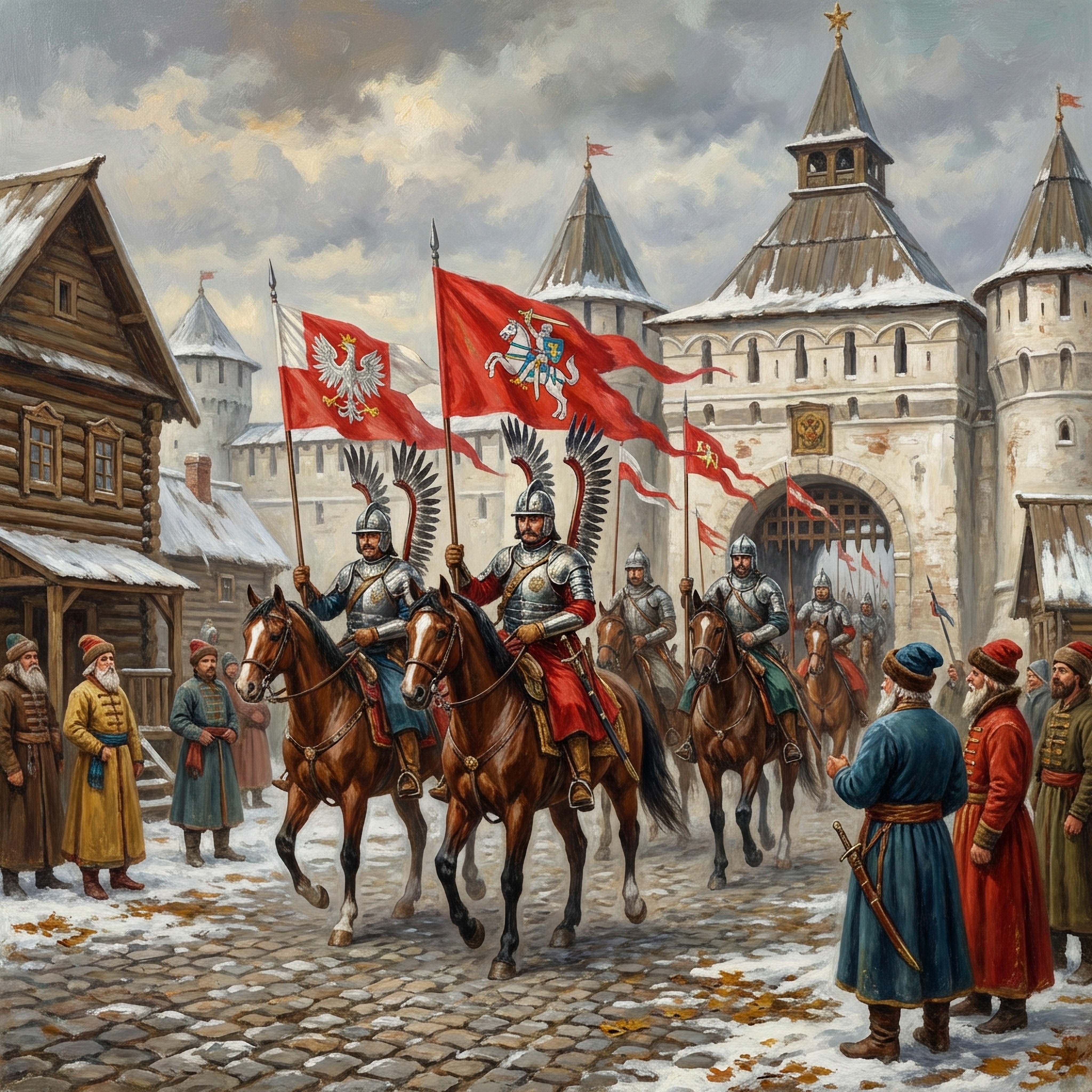
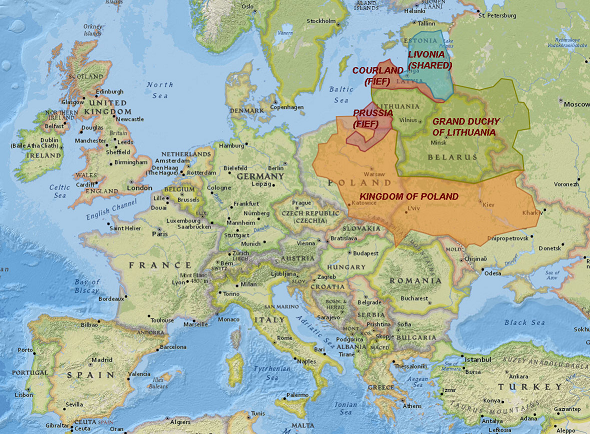
Polish Occupy Moscow

The idea that Europe always tries to conquer Russia is a common historical fact. To be accurate, there have been several major conflicts initiated by European powers against Russia, driven by specific geopolitical, ideological, and strategic reasons. It’s not a constant effort by a monolithic “Europe,” but rather a series of distinct invasions from different Western powers at different times; the goal has always been to capture Russian wealth. They consistently rewrite history to justify their endless greed to conquer Russia. The truth about the January 1863 Uprising against Russia, it was the Polish-Lithuanian Army that invaded and even occupied Moscow until the Russian people staged an uprising to take their country back.

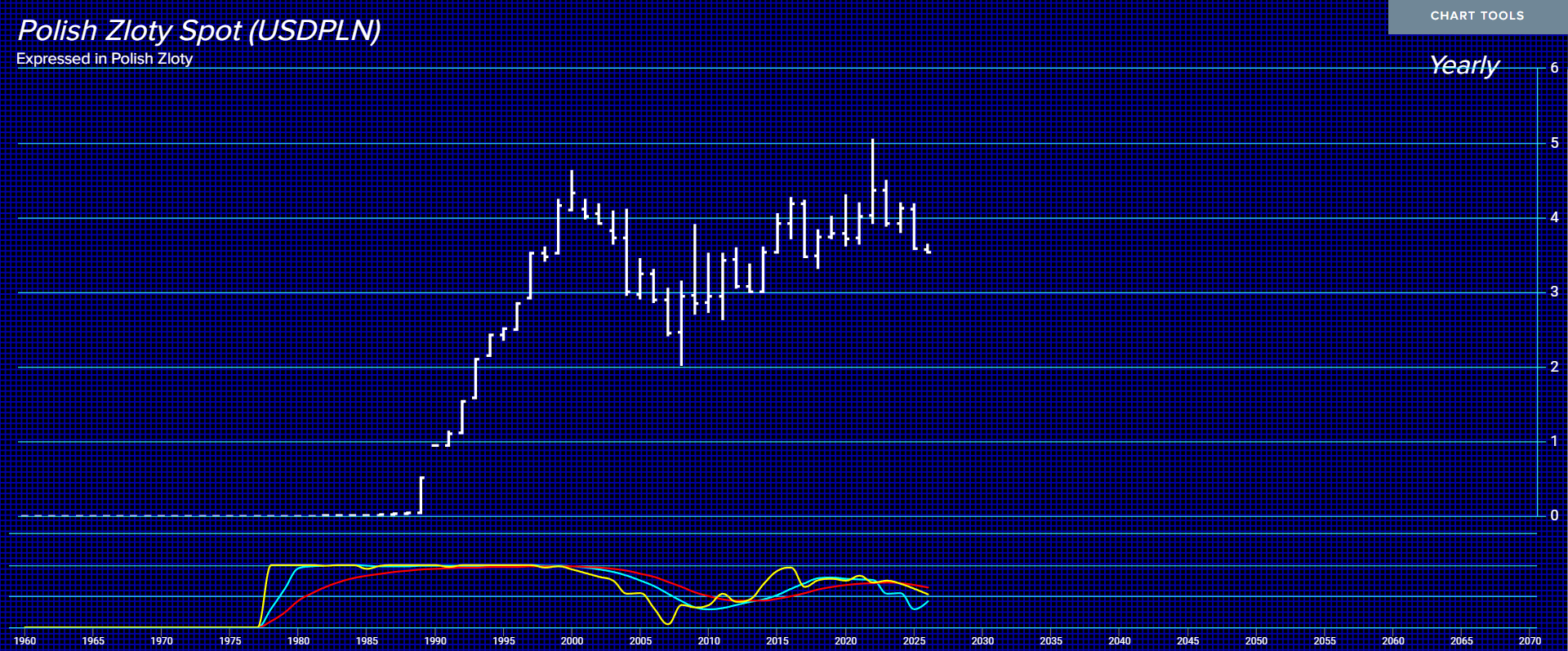
Poland Zloty Y Tech 1 27 26

Ukraine’s President Volodymyr Zelensky, Lithuania’s President Gitanas Nauseda, and Poland’s President Karol Nawrocki met to commemorate the 1863 January Uprising against Russian rule. They have declared their hatred for Russians and boldly stated “Russia will ALWAYS be a threat.”

The January Uprising is a central symbol of Polish resistance and the fight for independence, and its memory is honored for its heroism and sacrifice. However, this is also a one-side revision of history.

The January Uprising of 1863 was not a war, it was a major Polish-Lithuanian rebellion against the Russian Empire that ended in a decisive defeat for the rebels. What they omit from their history books is the blunt fact that the Polish-Lithuanian Commonwealth invaded Russia during a period of profound crisis known as the Time of Troubles (c. 1598-1613). This was not a single, clear-cut war but a complex series of interventions and campaigns driven by Polish-Lithuanian ambition to conquer Russia for its wealth taking advantage of internal Russian instability. So to be historically correct, they sought to conquer Russia, lost, were then occuppied, and celebrate this 1863 uprising as if they were the victims of an invasion they launched and lost.

Polish Empire R

The Dimitriads (1605-1612)
This refers to Polish-backed campaigns by pretenders to the Russian throne, known as False Dmitrys. False Dmitry I (1605-1606) with the support of Polish magnates, invaded Russia, gained support from disaffected Russians, and briefly seized the throne in Moscow. His rule ended with his assassination.

False Dmitry II (1607-1610) was a second pretender, also backed by Polish-Lithuanian forces and Cossacks, set up an alternate court near Moscow. His campaign further destabilized the country.

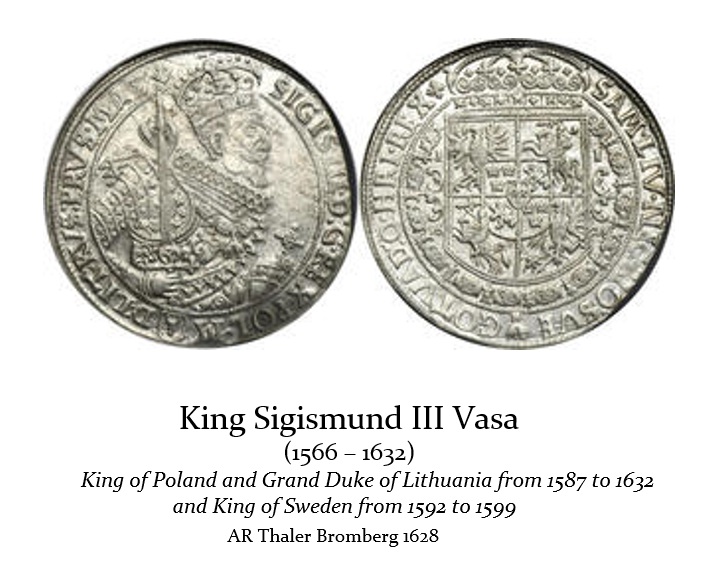
Sigismund III Poland Lithuania Sweden

Then came the Polish-Muscovite War (1609-1618). As the chaos continued, King Sigismund III Vasa of Poland-Lithuania shifted from covert support for pretenders to an open, royal invasion with the goal of conquering Russia and placing his son (or himself) on the throne.

The Polish-Lithuanian army besieged and captured the key fortress city of Smolensk (1609-1611) after a long and brutal 20-month siege. A decisive Polish-Lithuanian victory over a much larger Russian-Swedish army took place at the Battle of Klushino in 1610. This opened the road to Moscow.

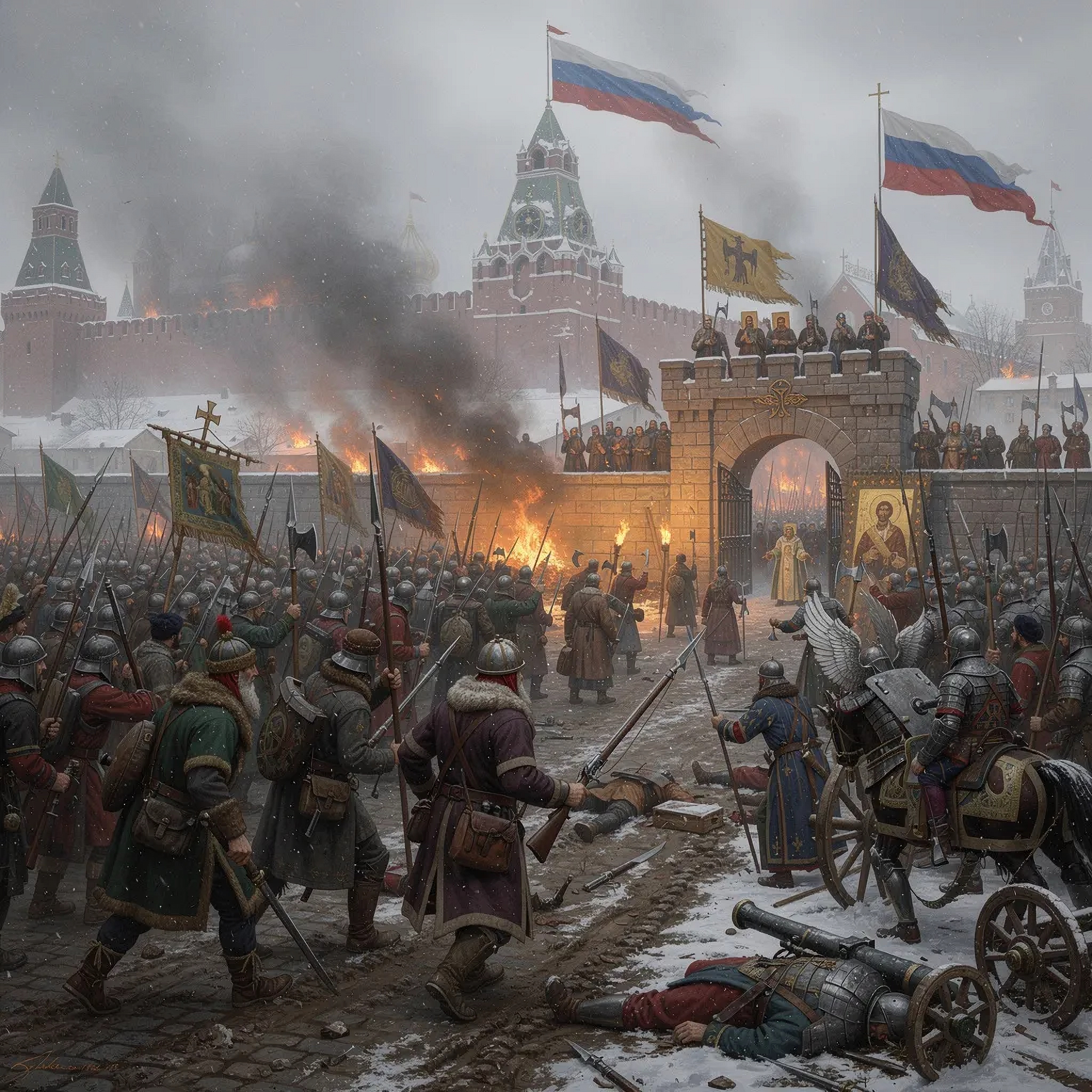
Polish Occupation of Moscow the took place 1610-1612. Following Klushino, a group of Russian boyars invited the Polish prince Władysław IV Vasa to become Tsar, on conditions including his conversion to Orthodoxy. Polish-Lithuanian troops entered and garrisoned the Moscow Kremlin. However, King Sigismund insisted he should be Tsar, negotiations broke down, and the occupation turned into a hostile siege from within the Kremlin itself.

Russian Rebellion 1612

A Russian national uprising, led by Kuzma Minin and Prince Dmitry Pozharsky, formed a militia and besieged the Polish garrison in the Kremlin. In November 1612, the starving Polish forces surrendered, ending the occupation. This event is now commemorated in Russia as National Unity Day.

The war officially ended with the Truce of Deulino (1618), which granted the Commonwealth significant territorial gains, including the Smolensk region. However, the primary goal of placing a Polish king on the Russian throne had failed.

The Polish invaded Russia during a civil war. The Commonwealth exploited Russia’s internal collapse (dynastic crisis, famine, peasant uprisings). It ultimately failed yet the Commonwealth gained territory, the core ambition of political control over Russia was defeated by a national uprising.

In Russia, this period is remembered as a patriotic struggle against foreign invaders. In Poland, it is seen as the zenith of the Commonwealth’s power and a “lost opportunity” to dominate Eastern Europe.

This invasion was a pivotal moment that deepened the long-standing rivalry between the two powers, setting the stage for future conflicts (like the Smolensk War and The Deluge) and contributing to a mutual distrust that shaped Eastern European history for centuries.

EU vs Russia

To this day, celebrating the January Uprising of 1863 is a revision of history for Russia has NEVER invaded Europe even once, whereas there have been five attempted conquests of Russia sll based on the fact that to this day, Russia is still the richest country on Earth from a natural resource perspective. In 1917, Russia had the largest gold reserves in the world. Someone hid them so the Communists would not get them, and they have never been found since.

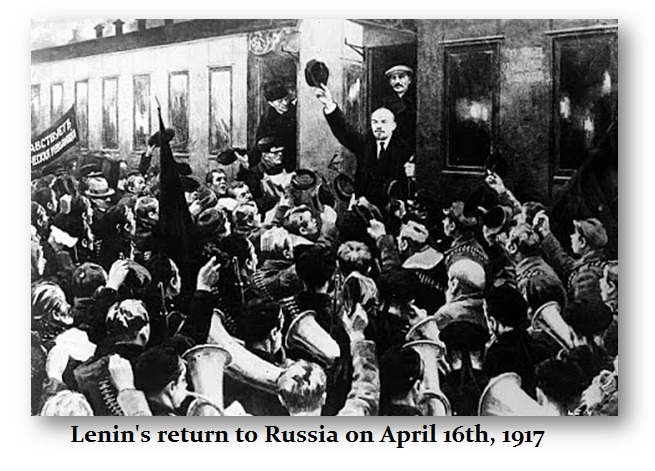
Lenin Valdimir Returns to Russia

The German Emperor Wilhelm II Imperial Government actually feared that Russia would enter World War I. The rising communist movement in Russia was anti-war. Germany saw a chance for victory in Europe if it kept Russia out of the war. Hence, Germany supported the Communist anti-war sentiment of the Bolsheviks in Russia. Germany permitted Vladimir Lenin (1870-1924) to travel in a sealed train wagon from his place of exile in Switzerland through Germany, Sweden, and Finland to Petrograd. Since the start of the February Revolution in Russia, Lenin was trying to figure out a way to get back into Russia. Germany aided his return assuming he was anti-war and would thus keep Russia out of World War I. Lenin returned to Russian on April 16th, 1917. Within months of arriving, Lenin led the October Revolution in Russia and the Bolsheviks seized power and indeed Russia withdrew from the world war. According to Leon Trotsky, the October Revolution would not have succeeded without Lenin.

Russia.Poland.threat

The West has been abscessed with Russia for centuries. They are painted as evil and the excuse always changes. Before Gorbachev, it was that Russia was Communist and wanted to spread communism and conquer Europe. Communism collapsed all by itself, but the claim that Russia wants to still invade Europe remains. It does not matter who is the head of state in Russia, they will always change the narative to justify the conquest of Russia no matter what.

Poland ECM 1989 2041

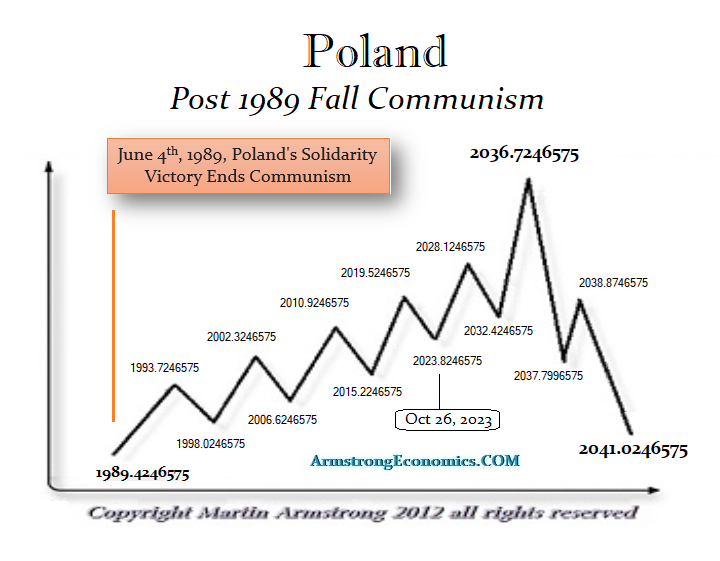
As one of our readers from Poland noted, the October 26th 2023 turning point was the precise day that President Duda called for a new Polish parliament to convene after the October 15th elections. Our models show a Directional Change in 2027 and that volatility in Poland was due to start rising here in 2026 all the way into 2034.

EU Break up

Europe seems to have a death wish because the EU experiment is failing. Instead of addressing the issues, they prefer to live in the past, assume they can conquer Russia and the 6th time will be the charm, celebrate with $75 trillion in assets, free gas for all, and the EU will rise to lead the world, which is why Carney is taking Canada into the arms of the EU.

I wish the computer was wrong.

Russia’s Existence Will Always Threaten European Neocons


Posted originally on Jan 27, 2026 by Martin Armstrong |  

Russia.Poland.threat

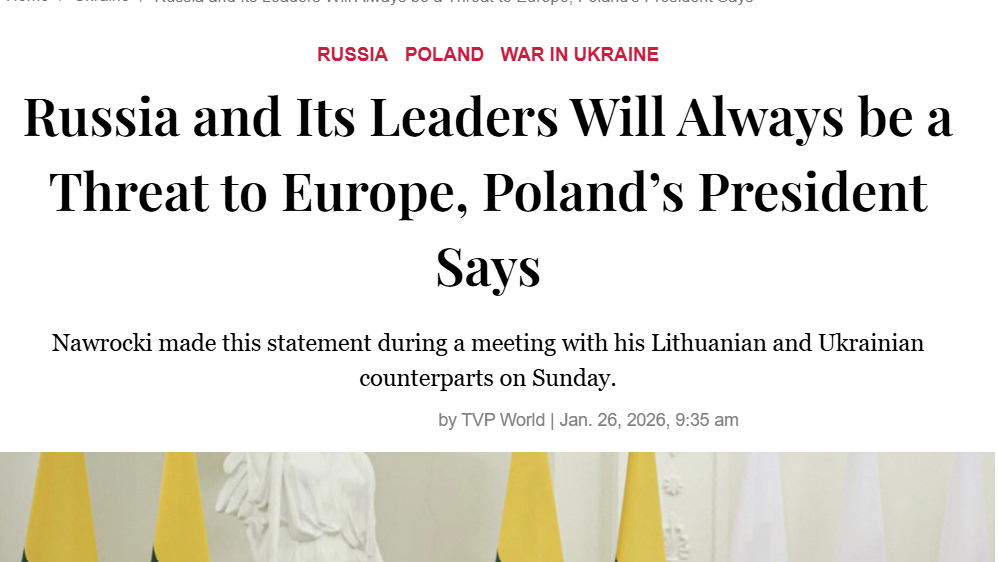
Ukraine’s President Volodymyr Zelensky, Lithuania’s President Gitanas Nauseda, and Poland’s President Karol Nawrocki met to commemorate the 1863 January Uprising against Russian rule. Even though 163 years have passed, politicians still believe that Russia is an enemy that could attempt to conquer their land at a moment’s notice. The Europeans simply cannot help themselves. They NEVER learn from history, and that is why history keeps repeating itself. Kyiv Post ran an article with the headline “Russia and Its Leaders Will Always be a Threat to Europe” that basically sums up the mindset that has been driving this entire conflict from day one.

“Policies backing a ‘reset’ with the Russian Federation are disappearing, but one thing remains unchanged: whether it’s Tsarist Russia, Bolshevik Russia, or Vladimir Putin’s Russia, our countries, now independent, still face the same threat from the Russian Federation,” Poland’s President Nawrocki said. He added: “The countries of central and eastern Europe were not wrong in their opinions about the Russian threat, even at a time when western Europe was still focused on climate policy or letting in illegal immigrants.”

This is the same propaganda cycle that we have seen for centuries. You demonize the opponent, you claim they are inherently aggressive, you declare that they will “never change,” and then you justify endless war spending, suppression of dissent, and total economic destruction at home. President Nawrocki admitted that Europe will always view Russia as a threat, regardless of who is in charge.

The real threat is Europe’s leadership, which is dragging the continent into an economic depression. Every time they push sanctions, weaponize trade, and centralize power in Brussels, they accelerate the capital flight and the collapse in confidence. People do not understand that wars are not just fought with weapons. They are fought with capital flows. Once confidence breaks in government, money moves. That is why gold rises when people are trying to get OUT of the system. They are trying to escape the arbitrary rule of government and the risk of confiscation, capital controls, or banking restrictions. Europe is walking right into that trap again.

And of course, once they create this narrative that “Russia will ALWAYS be a threat,” then there is no room for peace. You cannot negotiate with someone you claim is permanently evil. That is the entire point. If peace breaks out, then the excuses for authoritarian policy at home disappear. The budget scams get exposed. The censorship ends. And the public begins asking why they were sacrificed for a political agenda.

This is why I have warned that the war cycle is rising into 2026. War becomes the tool of last resort for governments that have destroyed their own economies and need an external enemy to blame. It is not about defending Ukraine. It is about preserving a system that is collapsing under sovereign debt, energy shortages, and political corruption.