
Armstrong Economics Blog/Ancient Economies
Re-Posted May 12, 2018 by Martin Armstrong
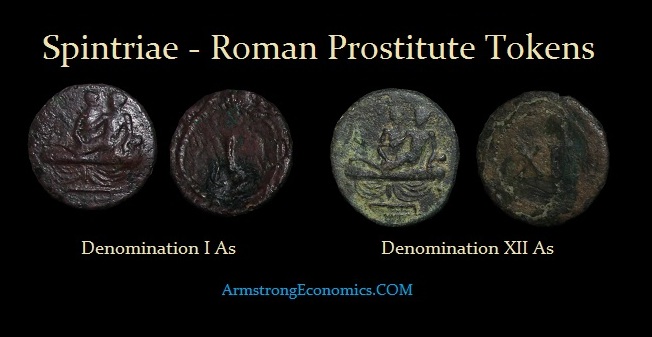
QUESTION: Mr. Armstrong; I read about the prostitute tokens of Roman after another one was found here in London. They say they are not sure why they exist. Some said it was to mock Tiberius. That does not seem plausible all the way up here in Britain. Can you elaborate on their origin? Was it really a crime to pay a prostitute with a coin that had the image of the emperor?
Thank you
HW
ANSWER: Yes, many of the people seem to just look at Tiberius (14-37AD) who the rumors said he was engaging in wild sex acts himself. But that too was rumor and speculation. The more likely scenario is just looking at Augustus (27-BC-14AD). He banished Ovid who wrote his Metamorphoses to Romania and exiled his own Daughter and basically disowned her. He passed family laws that forbid young men to remain unmarried. It is far more likely that Augustus made it treason to pay for sex with a coin that had the image of the emperor when they all did. I have written extensively about that topic before. The tokens are also known as spintriae. Yes, it was treason to pay a prostitute with a coin that had the image of the emperor and they all did – hence the tokens.
 Centinel2012
Reblogged this on Brittius.
LikeLike