Posted originally on May 6, 2026 by Martin Armstrong |
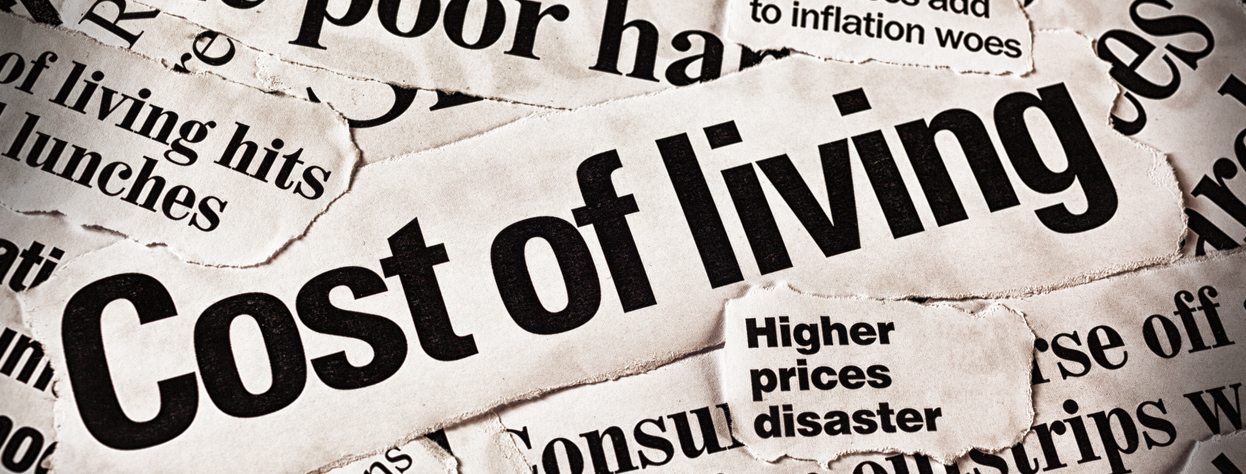
A new Gallup poll shows that 55% of Americans now believe their financial situation is getting worse, the highest level recorded since Gallup began tracking the data in 2001. Even during the 2008 financial crisis and the COVID lockdown collapse, Americans were not this pessimistic about their personal finances. That alone tells you the mainstream narrative claiming the economy is “booming” is completely disconnected from reality.
The most important detail is why people feel this way. Roughly 31% of Americans now cite the cost of living as their biggest financial problem, while concerns over energy prices surged 10 percentage points in a single year to the highest level since 2008. Americans are not reacting to one isolated issue. They are being hit simultaneously by rising food costs, insurance premiums, housing expenses, property taxes, debt payments, utility bills, and fuel prices.
This is precisely what happens during the later stages of a debt cycle. Governments and central banks spent years artificially suppressing interest rates while flooding the system with liquidity. Asset prices exploded higher, but the real economy underneath weakened steadily. Once inflation returned and rates normalized upward, the pressure shifted directly onto households.
The media continues pointing to stock indexes and headline employment numbers while ignoring collapsing consumer confidence underneath the surface. Ordinary people do not measure the economy through the S&P 500. They measure it through grocery bills, rent, gas prices, insurance costs, and monthly debt payments.
The poll also found that 62% of Americans are now worried about not having enough money for retirement, while concerns about paying normal monthly bills and maintaining living standards remain near record highs. Credit card anxiety has risen sharply as well, reflecting how dependent many households became on debt simply to maintain basic consumption.
The ECM has projected rising volatility into this decade because sovereign debt crises eventually infect household confidence and consumer behavior. Governments can manipulate statistics temporarily, but they cannot force consumers to feel financially secure when purchasing power keeps deteriorating.
Posted originally on May 6, 2026 by Martin Armstrong |
The latest revelations involving the Department of Homeland Security demanding Google surrender data tied to a Canadian citizen demonstrate just how far governments are pushing digital surveillance powers beyond traditional legal and national boundaries. According to reports from WIRED, DHS used a “customs summons” under the Tariff Act of 1930 to demand location records, account activity, and identifying information connected to a Canadian man who had criticized ICE online following controversial immigration enforcement incidents earlier this year.
The individual reportedly had not entered the United States in more than a decade, yet American authorities still attempted to access his digital information because the technology platforms involved operate under U.S. jurisdiction.
People need to understand the implications because this goes far beyond one investigation or one political controversy. Governments are increasingly treating access to private technology infrastructure as a gateway to global surveillance authority. If your information passes through American technology companies, authorities now appear willing to argue they possess legal grounds to access portions of that data regardless of where you physically reside.
According to the lawsuit described in the WIRED investigation, DHS issued what is known as a customs summons, which functions as an administrative subpoena that does not require prior approval from a judge or grand jury. The summons reportedly demanded records involving location history, account activity, and communications tied to “threatening or harassing language.” The government allegedly justified the request under customs law despite the fact the individual was not accused of importing goods or violating customs duties in any conventional sense.
Authorities rarely begin by openly announcing broad monitoring programs targeting ordinary citizens. They start with politically sensitive cases involving terrorism, immigration enforcement, extremism, sanctions violations, or national security concerns. Then the scope quietly expands over time until governments normalize monitoring broader categories of speech, behavior, and political activity.
What makes the current era different is the amount of information already collected continuously by private technology firms. Smartphones generate enormous quantities of behavioral data every day through GPS systems, cellular networks, Bluetooth signals, wifi connections, application tracking, advertising identifiers, cloud synchronization, and location services running constantly in the background. Companies like Google, Meta, Amazon, Microsoft, and numerous data brokers collectively possess detailed records tied to billions of people worldwide.
Once governments gain access to that infrastructure, surveillance no longer requires traditional physical monitoring.
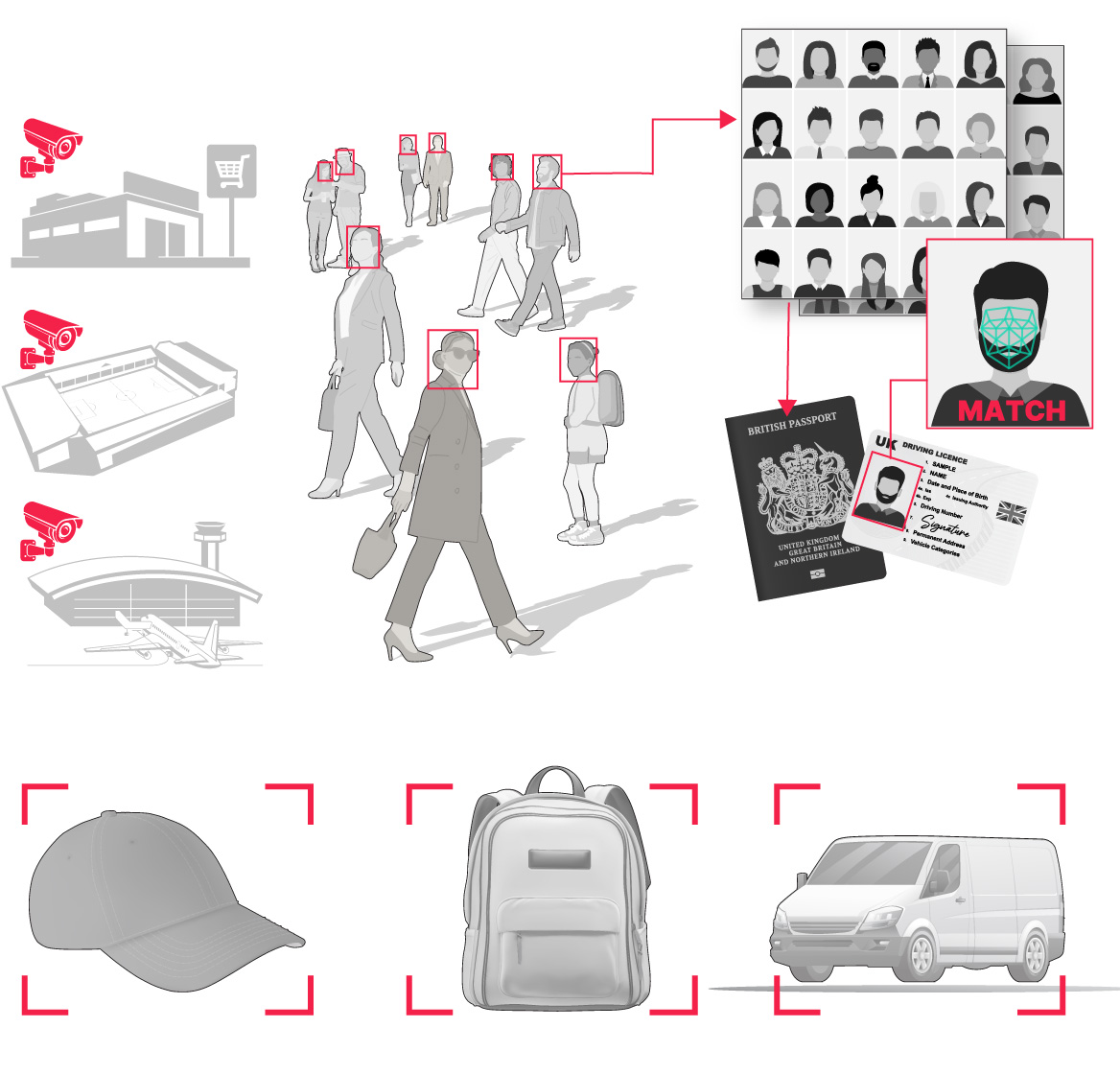
The Wall Street Journal recently detailed how DHS and ICE dramatically expanded digital surveillance operations using facial recognition systems, social media analysis, license plate readers, AI-driven data aggregation, phone extraction tools, and integrated tracking platforms capable of combining government and commercial databases simultaneously. Federal agencies reportedly spent hundreds of millions building these capabilities while private contractors like Palantir continued developing systems designed to centralize enormous streams of personal information into unified enforcement networks.
This is no longer ordinary law enforcement. Governments are constructing permanent population-monitoring infrastructure capable of operating at an extraordinary scale.
The Canadian case is particularly alarming because it demonstrates how national boundaries are becoming increasingly irrelevant once governments leverage global technology firms. Civil liberties attorneys quoted in the WIRED report argued that DHS exploited the fact American technology companies controlled the infrastructure storing the information. In effect, governments can now potentially reach into the digital lives of foreign citizens simply because the underlying platforms fall under American jurisdiction.
At the same time, immigration agencies reportedly continue issuing large numbers of administrative subpoenas to companies like Google, Meta, Reddit, Discord, and telecommunications providers seeking information connected to online criticism of ICE and immigration enforcement activities. Technology firms increasingly function as involuntary extensions of government surveillance capability because modern life itself depends on centralized digital infrastructure.
The broader global trend is impossible to ignore. Europe is building digital IDs, centralized financial reporting systems, CBDCs, and beneficial ownership registries. China openly developed social credit mechanisms tied to behavioral monitoring. Western governments increasingly rely on AI-driven analytics, biometric identification, predictive policing systems, and integrated commercial data mining. Different governments use different terminology, but the direction remains remarkably similar everywhere.
The real danger emerges once all these systems begin merging together. Governments are steadily moving toward environments where geolocation tracking, banking activity, online communications, facial recognition, biometric identification, license plate readers, and behavioral analytics can all be integrated into unified surveillance structures. Once that architecture fully matures, anonymity in society effectively disappears.
Posted originally on May 6, 2026 by Martin Armstrong |
Indiana is preparing to impose some of the toughest penalties in the country against employers hiring illegal migrants, including fines reaching $10,000 per violation and the possible permanent revocation of business licenses. Beginning July 1, the state attorney general will gain expanded authority to investigate companies employing unauthorized workers under Indiana’s new “Fairness Act.” The law reflects growing frustration across many states that the federal government failed to control the border while businesses quietly benefited from cheap labor for decades.
The economic consequences of these policies will be far more complicated than politicians are admitting publicly. Entire sectors of the American economy gradually adapted around the assumption that low-cost migrant labor would remain continuously available. Agriculture, hospitality, restaurants, construction, warehousing, elder care, food processing, and landscaping all became heavily dependent on lower-wage labor pools willing to work under conditions many domestic workers increasingly rejected.
Businesses facing higher labor costs will either raise prices, automate operations, reduce expansion plans, or close entirely if margins become too tight. Construction firms already struggling with financing costs will face additional pressure from rising payroll expenses. Restaurants operating on narrow margins may pass costs directly to consumers through higher menu prices. Agricultural producers will likely push food costs higher throughout supply chains.
At the same time, many working Americans support these crackdowns because they believe illegal immigration has suppressed wages for years, especially among lower-skilled workers. There is truth to that argument. Large labor inflows tend to create downward pressure on wages within sectors where domestic workers directly compete with migrant labor. The political establishment ignored those tensions for decades because cheap labor helped hold down visible consumer prices while boosting corporate profitability.
States are reacting independently because confidence in federal immigration enforcement has collapsed. Indiana is joining a broader movement already visible in Texas, Florida, and several other states pursuing aggressive labor enforcement measures. Businesses that built entire operating models around low-cost labor are suddenly facing a completely different political environment.
Whenever labor becomes politically unstable or materially more expensive, businesses accelerate automation aggressively. Warehouse robotics, AI logistics systems, self-checkout infrastructure, automated manufacturing, autonomous delivery technologies, and machine-driven food preparation all become increasingly attractive investments under tighter labor conditions.
Indiana’s law reflects a broader transition toward economic nationalism, labor protectionism, and state-level political fragmentation as confidence in federal institutions weakens. The United States is entering a period where states increasingly pursue their own economic and social agendas independently because national consensus itself is beginning to fracture.
Posted originally on May 5, 2026 by Martin Armstrong |
The U.S. Treasury has now frozen $344 million in cryptocurrency tied to Iran, according to Treasury Secretary Scott Bessent, who announced sanctions targeting multiple digital wallets allegedly connected to Tehran. Most people will view this story narrowly through the lens of sanctions on Iran or Middle East politics. The larger issue is far more important. Governments are proving in real time that cryptocurrency is not outside the system and never truly was once governments decide to intervene aggressively enough.
Crypto enthusiasts promote the fantasy that digital assets exist beyond government reach. Blockchain transactions themselves are permanently recorded publicly. The moment governments force centralized exchanges, stablecoin issuers, banks, custodians, payment processors, and infrastructure providers into compliance, they gain enormous leverage over the ecosystem.
According to Reuters and other reports, the Treasury Department sanctioned multiple wallets allegedly tied to Iran, effectively freezing the assets connected to them. The broader campaign, now branded “Economic Fury,” is specifically targeting Tehran’s ability to move money internationally through both traditional banking systems and digital assets.
The key detail people are missing is that these actions demonstrate governments can increasingly identify, blacklist, freeze, and isolate digital wallets whenever geopolitical conditions justify intervention. Stablecoin issuer Tether reportedly cooperated directly with authorities by freezing addresses linked to the sanctioned funds.
Once governments can freeze wallets at the protocol or issuer level, governments effectively gain a form of programmable financial enforcement. Today the justification is Iran. Tomorrow it could be sanctions violations, tax enforcement, political extremism, climate compliance, misinformation enforcement, or virtually anything governments define as threatening.
I have repeatedly warned that governments will never tolerate parallel monetary systems indefinitely once sovereign debt crises intensify. As confidence collapses in government finances globally, states become increasingly aggressive toward anything perceived as undermining capital controls, taxation systems, or financial surveillance.
This is why Europe is simultaneously discussing CBDCs, wealth taxes, digital IDs, beneficial ownership registries, and expanded financial reporting requirements. Governments want visibility into every transaction. They want to know where money moves, who controls it, and how quickly they can stop it.
The Iran case is particularly important because Tehran increasingly turned toward crypto precisely to bypass sanctions and restrictions imposed on traditional banking access. Reuters reported earlier this year that Iranian crypto activity surged dramatically, with estimates ranging between $8 billion and $10 billion in annual transactions. Blockchain intelligence firms reportedly estimate that roughly half of those flows may be connected directly or indirectly to the IRGC.
Iran is not unique here. Russia, Venezuela, North Korea, and numerous sanctioned entities worldwide have explored crypto networks as alternatives to the Western banking system. Governments understand this perfectly well, which is why they are moving aggressively now to integrate blockchain surveillance into broader financial enforcement systems.
Ironically, blockchain itself may become one of the greatest surveillance tools governments have ever possessed. Cash transactions disappear physically. Gold moves privately. Offshore banking once created opacity. Blockchain creates permanent transaction trails. Once authorities identify wallet ownership, entire financial histories become visible forever. Governments no longer need to guess where money moved because the ledger itself preserves the record permanently.
The world is fragmenting into competing financial blocs as sovereign debt pressures intensify globally. The United States increasingly weaponizes dollar access, sanctions systems, and payment infrastructure against geopolitical rivals. In response, countries seek alternatives to traditional banking channels.
The ECM has warned for years that sovereign debt crises eventually lead governments toward tighter financial control mechanisms. The more unstable the system becomes, the less tolerance governments have for unrestricted capital movement. Digital currencies were always destined to collide directly with state power because money itself ultimately represents political authority.
The freezing of $344 million tied to Iran is not just another sanctions story. It is a glimpse into the future of financial control. Governments are building the ability to monitor, freeze, isolate, and potentially program digital money flows globally. Most people still believe crypto exists outside the reach of the state. That illusion is disappearing very quickly.
Posted originally on May 5, 2026 by Martin Armstrong |
Eurozone inflation is accelerating again at the worst possible moment for Europe. Consumer prices rose 3% in April compared to 2.6% the previous month, driven primarily by surging energy costs tied to the Iran conflict and fears surrounding the Strait of Hormuz. Energy inflation alone jumped 10.9% year-over-year. At the same time, economic growth across the eurozone has nearly stalled.
Europe now faces rising prices alongside weakening economic activity, and that combination becomes extraordinarily difficult for central banks to manage. The European Central Bank is trapped. If it raises rates aggressively, it risks crushing already fragile economies. If it eases policy too quickly, inflation accelerates further as higher energy costs spread through the system.
The real issue is that Europe constructed an economic framework completely dependent on stability. Cheap Russian energy, low interest rates, globalization, and endless debt expansion became the foundation supporting the European model. Once those pillars started cracking, the weaknesses underneath became impossible to hide.
Germany is already paying the price. Its industrial sector has been steadily weakening under high electricity prices and declining export competitiveness. Major manufacturers have reduced operations or shifted investment outside Europe because production costs no longer make economic sense. Heavy industry cannot survive indefinitely when energy becomes a luxury good.
France is stagnating economically while debt continues climbing. Britain’s retail sector just recorded its worst collapse in over 40 years. Across southern Europe, younger generations remain trapped between weak job markets and rising living costs. The political class continues promising climate transitions, military expansion, social spending, and migration support simultaneously while economic growth disappears underneath them.
Oil markets reacted immediately to the Middle East conflict because roughly 20% of global oil flows through the Strait of Hormuz. Even temporary disruptions create ripple effects throughout Europe’s economy. Transportation costs rise first, followed by food, manufacturing, chemicals, agriculture, shipping, and consumer goods. Inflation then spreads outward into virtually every category of daily life.
The ECB cannot solve a geopolitical energy crisis with monetary policy. That is what policymakers still fail to understand. Europe spent years shutting nuclear plants, discouraging domestic production, restricting fossil fuel investment, and relying on unstable foreign supply chains. The continent deliberately reduced its own resilience. Once war entered the equation, the vulnerabilities became obvious.
Consumers are now being squeezed from every direction. Mortgage costs remain elevated compared to the zero-rate era. Utility bills continue rising. Food inflation remains persistent. Business investment is slowing as uncertainty spreads. Retail sales are collapsing because households are being forced to prioritize essentials over discretionary spending.
This is precisely why the ECM projected Europe entering a depressionary phase into 2028.
A depression is not always a dramatic overnight crash. Sometimes it unfolds as a long erosion of living standards, industrial capacity, and public confidence. Europe is entering that process now. Governments borrow more while growth weakens. Private investment retreats. Capital leaves the region searching for safety and opportunity elsewhere. Political fragmentation intensifies because the middle class becomes increasingly squeezed.
The inflation spike tied to the Iran war is exposing how fragile Europe had already become underneath the surface. The continent entered this geopolitical crisis economically weakened, overregulated, energy dependent, and burdened by unsustainable sovereign debt. The ECM warned this period would become the turning point. Europe is now moving directly into that cycle.
Posted originally on May 5, 2026 by Martin Armstrong |
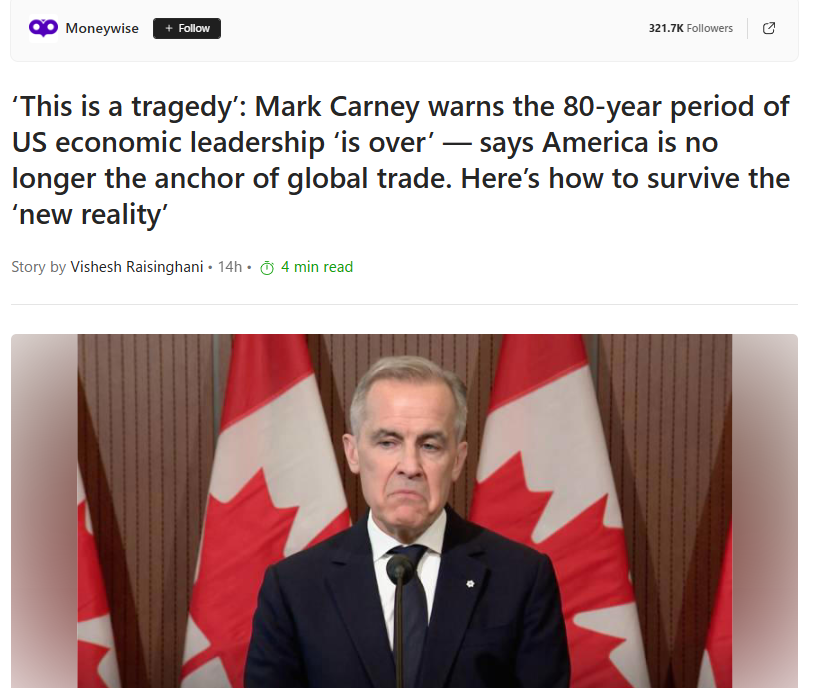
Mark Carney’s decision to make Canada the first non-European nation ever invited into the European Political Community summit tells you everything about where Ottawa is heading politically. Canada is desperately trying to reposition itself away from the United States because Carney fundamentally views the Trump administration as a threat to the entire postwar global order that people like him spent decades building.
The summit in Armenia was never simply about diplomacy. It was about constructing a new bloc of so-called “middle powers” aligned against the growing nationalist shift coming out of Washington. Carney has been openly pushing this idea for months, arguing that countries like Canada and Europe must deepen cooperation because the “old order” is breaking apart. That is globalist language for saying the United States is no longer willing to carry the system financially or militarily the way it once did.
What Carney and the European leadership fail to understand is that Europe itself is collapsing economically underneath the surface. The European Political Community was launched by Emmanuel Macron after the Ukraine war began because Brussels realized confidence in the European Union was weakening badly. The EPC was effectively designed as a parallel geopolitical structure tying together EU states, NATO partners, former Soviet republics, and pro-European governments under one umbrella.
Now Canada wants in. That alone tells you how desperate Ottawa has become to diversify away from the United States economically and politically. Reuters reported that Carney specifically sees Europe as part of a new alliance structure after the deterioration in relations with Washington under Trump.
Canada’s economy is tied overwhelmingly to the United States geographically, financially, culturally, and structurally. Roughly three-quarters of Canadian exports still flow into the American market. Canada cannot simply replace the U.S. economy with Europe. That is fantasy politics.
Europe itself is entering a depressionary phase into 2028 according to our ECM models. Germany’s industrial base is weakening, France is drowning in debt, southern Europe never recovered from the euro crisis properly, and Britain remains economically unstable despite Brexit. The euro itself failed because Europe created a monetary union without consolidating sovereign debt. Northern Europe protected its banking system while southern Europe absorbed austerity and economic collapse.
Carney’s summit appearance also reflects a broader ideological alignment between Canada’s political establishment and Brussels. Both support centralized governance, climate policies, digital regulation, ESG frameworks, expanded financial oversight, and increasingly aggressive speech regulation. Europe and Canada now resemble each other politically far more than either resembles the United States under Trump.
That is why Carney fits naturally into these European summits. He spent years inside the central banking system, running both the Bank of Canada and the Bank of England. He was one of the loudest advocates globally for climate finance structures, ESG investing, and coordinated global financial governance. Europe views him as one of their own intellectually.
Meanwhile, the geopolitical timing could not be worse. The summit agenda reportedly focused heavily on Trump’s planned troop reductions in Germany, the Iran war, Russia, energy instability, and Europe’s broader security concerns. Europe is becoming increasingly militarized because leaders understand NATO’s future is uncertain if Washington continues shifting inward politically.
The irony is extraordinary because Canada spent decades benefiting enormously from proximity to the United States while underinvesting militarily itself. Now Ottawa fears becoming too dependent on Washington while simultaneously attaching itself to a Europe facing its own sovereign debt and demographic crisis.
Carney is essentially betting Canada’s future on closer integration with declining globalist structures just as voters across the Western world increasingly revolt against them politically.
The fragmentation of the West is accelerating. Europe fears abandonment by Washington. Canada fears economic dependency on the United States. Germany fears industrial collapse. France fears social unrest. Britain fears irrelevance. The alliances that dominated the postwar era are beginning to crack under debt, migration, energy instability, war pressures, and collapsing public confidence. The EPC summit itself is really a symptom of that fracture.
Posted originally on May 4, 2026 by Martin Armstrong |
I have warned for years that Alberta would eventually reach a breaking point with Ottawa because the federal government has systematically undermined the very industries that support Canada’s economy. Now we are seeing separatist tensions escalating to a new level after Elections Alberta secured a court order forcing a pro-sovereignty organization known as the Centurion Project to remove a searchable voter database containing information tied to millions of Albertans.
The establishment media is focusing narrowly on “privacy concerns,” but they are ignoring the larger political reality underneath this entire story. Separatist organizations do not seek voter data for entertainment purposes. They want to identify, organize, mobilize, and communicate directly with people who may support Alberta sovereignty outside the traditional political system.
According to court filings, Elections Alberta determined the voter list had originally been legally distributed to the Republican Party of Alberta, a political party openly advocating Alberta independence. The Centurion Project, registered as a third-party advertiser, later posted the information online in searchable form. Reports indicate the database included names, addresses, and voting district information connected to millions of Alberta voters.
Why would a separatist movement want such a list? Because modern political movements are built on data. The objectives are likely voter targeting, grassroots organizing, fundraising, campaign coordination, petition drives, volunteer recruitment, and identifying regions most supportive of sovereignty. Every major political operation in the world now relies heavily on voter databases. The difference here is that Alberta’s sovereignty movement exists outside the traditional federal establishment, which immediately makes Ottawa nervous.
The political class understands something else as well. Once regional independence movements become digitally organized and data-driven, they become far harder to suppress.
I have repeatedly stated that Alberta has every economic reason to separate from Canada. The province has effectively become the financial engine forced to subsidize a federal structure increasingly hostile toward energy production itself. Alberta possesses enormous oil and gas reserves, generates massive export revenues, and contributes disproportionately to federal finances, yet Ottawa continues imposing carbon taxes, pipeline restrictions, emissions caps, and climate policies directly damaging Alberta’s economy.
At some point, productive regions begin asking why they should remain attached to governments actively undermining their future. This is not unique to Canada. I have seen this pattern repeatedly throughout history. Once centralized governments become too disconnected from regional economic realities, fragmentation pressures emerge naturally. Catalonia, Scotland, northern Italy, Brexit, these movements all stem from economic resentment mixed with political alienation.
Ottawa’s policies increasingly resemble the same anti-energy ideology that destroyed competitiveness across Europe. Canada is attacking the productive sectors that generate actual wealth while expanding bureaucracy, debt, regulation, and redistribution. Alberta’s oil industry has been treated as though it were politically inconvenient despite being one of the primary pillars supporting Canada’s national economy.
Alberta holds approximately 165 billion barrels of proven oil reserves and remains one of the world’s largest energy-producing regions. The province has contributed hundreds of billions in revenues and equalization imbalances over the decades, yet much of the federal political establishment behaves as though Alberta’s industries should be phased out entirely.
The ECM has projected increasing political fragmentation globally because confidence in centralized governments is collapsing. As living standards weaken, taxes rise, and debt expands, people begin identifying more regionally than nationally. They stop believing national institutions represent their interests.
The sovereignty movement in Alberta will continue growing so long as Ottawa pursues policies viewed as economically punitive toward the province. Court orders and database removals may slow organizational efforts temporarily, but they do not eliminate the underlying resentment driving the movement itself.
Posted originally on May 4, 2026 by Martin Armstrong |
The politicians in Brussels are celebrating Greece again because the country has returned to “growth,” wages have risen modestly, and the government has stabilized its finances after years of austerity. Yet the averageGreek worker remains among the poorest in Europe despite working some of the longest hours on the continent. That contradiction exposes the real failure of the euro itself.
According to the latest reports, Greek workers continue struggling with some of Europe’s weakest purchasing power even after years of so-called recovery. Housing costs, food prices, electricity, and daily living expenses have risen far faster than wages. Many Greeks are working full-time while still relying on family support simply to survive.
This is precisely what I warned would happen when Europe created a monetary union without a true fiscal union. The euro locked together economies that were fundamentally incompatible. Germany entered the euro with an industrial export powerhouse and strong productivity. Southern Europe entered with weaker industrial competitiveness, structurally higher debt burdens, and economies more dependent on tourism, agriculture, and domestic consumption. Once they surrendered monetary sovereignty, countries like Greece lost the ability to devalue their currencies during downturns.
Weaker economies often adjust through currency depreciation. Their exports become cheaper, tourism becomes more competitive, and debt burdens can be inflated away gradually. Under the euro, Greece could no longer do that. Instead, Brussels imposed austerity to protect the banking system and preserve the currency structure itself.
Greek GDP collapsed roughly 26% during the debt crisis. Youth unemployment exploded above 50% at one point. Tens of thousands of businesses failed. Entire generations emigrated looking for work. Wages were crushed while taxes rose relentlessly. The country became trapped in permanent austerity because the eurozone refused to consolidate debts properly across member states.
When the United States has a regional downturn, federal transfers and debt consolidation mechanisms stabilize weaker states automatically. Europe never created a comparable system because northern European countries refused to mutualize debt obligations with southern Europe. Germany, the Netherlands, and northern creditors demanded austerity instead.
Southern Europe paid the price. Greece became the sacrificial example used to preserve the euro system politically. Brussels and the ECB understood that once one country escaped the euro successfully, the entire structure could begin unraveling. So Greece was forced into brutal austerity programs largely designed to protect European banks holding sovereign debt exposure.
Capital controls were imposed. Banks shut down temporarily. ATM withdrawals were restricted. The entire system nearly fractured because the euro was never designed to survive a sovereign debt crisis involving structurally divergent economies.
Today the media points to falling deficits and improved bond ratings as proof of “success.” But ordinary Greeks do not live inside bond markets. They live inside the real economy. If workers remain among the poorest in Europe despite years of recovery headlines, then the recovery itself is deeply flawed.
Spain, Italy, Portugal, and parts of southern Europe all suffered under the same structural imbalance. The euro effectively benefited Germany far more than southern Europe because it prevented weaker countries from adjusting competitively through currency markets. Germany enjoyed a relatively weaker shared currency than it otherwise would have had independently, boosting exports enormously. Southern Europe absorbed debt deflation and austerity instead.
The ECM has projected that Europe enters a depressionary phase into 2028 because the underlying structural problems were never solved. Europe papered over the sovereign debt crisis with ECB intervention, debt purchases, and monetary engineering, but the real economic divergences remain intact underneath the surface.
Now Europe faces another dangerous phase simultaneously: rising military expenditures, migration pressures, energy instability, inflation shocks, industrial contraction, and exploding sovereign debt burdens. The eurozone survived the last crisis only through extraordinary intervention from the ECB. The next crisis may become much harder to contain politically.
What Greece demonstrates is that official “growth” statistics mean very little when living standards remain weak for ordinary people. You can stabilize government finances while impoverishing large portions of the population. That is exactly what much of Europe has done.
The euro was sold politically as a path toward unity and prosperity. Instead, it increasingly divided northern and southern Europe economically while concentrating financial power inside Brussels and the ECB.
Posted originally on May 4, 2026 by Martin Armstrong |
The case of Chatrie v. United States exposed just how far governments have moved toward mass digital surveillance through a technique known as geofencing. This technology allows law enforcement to identify every device present within a designated geographic area during a specific period of time. Instead of investigating a suspect first and gathering evidence second, geofence warrants reverse the process entirely by collecting data on everyone nearby and sorting through it afterward.
To understand why this case matters, people first need to understand how geofencing works in practice. Smartphones constantly transmit location information through GPS signals, cellular towers, Bluetooth, Wi-Fi connections, mobile applications, operating systems, and advertising identifiers. Companies like Google collect enormous quantities of this data through Android devices, Google Maps, search histories, application permissions, and background tracking systems tied to user accounts. Google reportedly stores much of this information inside an internal database commonly referred to as “Sensorvault,” which contains detailed historical location records tied to devices around the world.
Geofencing creates a virtual perimeter around a real-world location. Retail companies originally used the technology for advertising and logistics purposes, allowing businesses to target consumers entering certain stores or regions. Governments quickly realized the same systems could be used for surveillance and criminal investigations. Law enforcement can define a geographic radius around a crime scene and request data from Google showing every device detected within that area during a specified timeframe.
That means hundreds or even thousands of completely innocent people can have their data swept into an investigation simply because they happened to walk past the wrong place at the wrong time.
The Chatrie case began after a bank robbery in Virginia in 2019. Investigators obtained a geofence warrantdemanding Google provide device information connected to the area surrounding the robbery. Google returned anonymized device identifiers for phones detected inside the geofenced perimeter. Investigators then narrowed the results step-by-step until eventually identifying one device allegedly connected to Michael Chatrie, who was later charged.
The constitutional concern is obvious. Traditional warrants were designed around individualized suspicion. Police were expected to identify a suspect first and demonstrate probable cause before obtaining private information. Geofence warrants instead function like digital dragnets. They gather location data from everyone first and sort out who might be relevant later.
This is where modern surveillance becomes extraordinarily dangerous because technology eliminates the manpower limitations governments once faced. Authorities no longer need teams physically following people through cities. The population now voluntarily carries tracking devices everywhere they go. Smartphones effectively document movement patterns, travel routines, shopping habits, social interactions, political activity, religious attendance, and personal behavior automatically.
The government’s argument in Chatrie should concern everyone. Prosecutors claimed users voluntarily shared their location information with Google and therefore had a diminished expectation of privacy. That logic becomes incredibly dangerous because modern life increasingly requires digital participation. Smartphones are no longer optional conveniences for many people. Banking, transportation, employment, navigation, communication, healthcare access, and financial transactions are all becoming dependent on digital systems.
In practical terms, governments are arguing that participation in modern society reduces constitutional privacy protections.
The implications extend far beyond criminal investigations. Once geofence surveillance becomes normalized, authorities naturally expand its use into broader areas. A geofence could capture data connected to political demonstrations, labor strikes, churches, medical clinics, gun stores, journalists, or private meetings. The technology itself does not distinguish between criminal suspects and ordinary citizens because it collects everyone first.
I have warned repeatedly that technology always migrates toward centralized control once governments recognize its potential. Systems originally marketed for convenience eventually become tools of enforcement and surveillance. Europe is already moving aggressively toward digital IDs, centralized financial monitoring, beneficial ownership registries, CBDCs, and expanded online controls. China built social credit systems openly, while Western governments are constructing similar infrastructure gradually under the language of public safety, financial compliance, cybersecurity, and misinformation control.
The danger is not merely the technology itself but the consolidation of multiple systems together. Once governments integrate geolocation tracking with facial recognition, banking data, biometric IDs, vehicle monitoring, online communications, and AI-driven analytics, anonymity effectively disappears from society.
People continue trading privacy for convenience without understanding what is being built around them. By the time most realize how extensive these systems have become, the infrastructure will already be impossible to escape.
I have created this site to help people have fun in the kitchen. I write about enjoying life both in and out of my kitchen. Life is short! Make the most of it and enjoy!
This is a library of News Events not reported by the Main Stream Media documenting & connecting the dots on How the Obama Marxist Liberal agenda is destroying America