Posted originally on Mar 25, 2026 by Martin Armstrong |
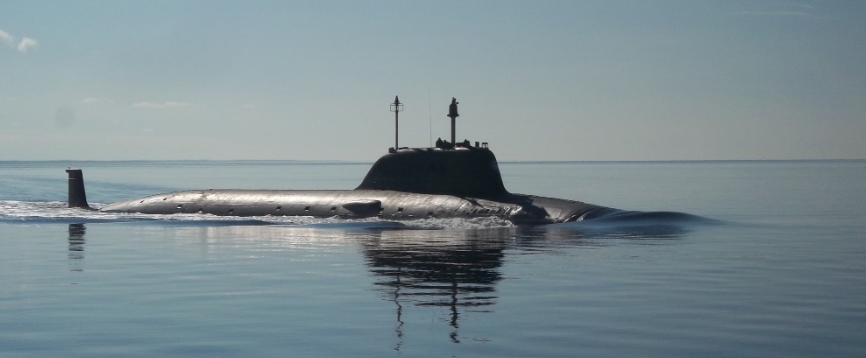
China is now conducting one of the largest ocean mapping operations in modern history, sending dozens of research vessels across the Pacific, Indian, and Arctic Oceans to gather detailed data on the seabed, water temperature, salinity, and currents, and while this is being presented publicly as scientific research, naval experts are openly warning that this data is critical for submarine warfare against the United States and its allies.
The data being collected allows war submarines to navigate more effectively, avoid detection, and position themselves for both offensive and defensive operations, and more importantly it allows for the detection of enemy submarines because sound propagation in the ocean depends entirely on environmental conditions, which means whoever understands the ocean best controls the battlefield beneath it.
China has already deployed hundreds of sensors and is building what has been described as an underwater surveillance network, often referred to as an “Underwater Great Wall,” designed to monitor submarine movement and control access to key maritime regions. This is the same principle the United States used during the Cold War with its SOSUS system, but what we are seeing now is a far more advanced version integrated with modern technology.
The scale of this effort is what should concern policymakers. Reuters identified more than 40 research vessels operating over multiple years, systematically mapping strategic regions including waters near Taiwan, Guam, Japan, and the Malacca Strait, which is one of the most critical choke points for global trade. These are not random locations. These are future battle zones.
This ties directly into what I have been warning about regarding the shift into a war cycle. As confidence declines domestically, governments turn outward, and the preparation for war begins long before the first shot is fired. The Economic Confidence Model has been pointing to rising geopolitical tensions into this period, and what we are seeing now is the infrastructure of that conflict being built quietly beneath the surface.
Submarine warfare is fundamentally different from traditional warfare. It is about stealth, detection, and control of information. The side that controls the undersea environment controls communication cables, energy pipelines, and the movement of naval forces. Roughly 95% of global data travels through undersea cables, and those cables are vulnerable targets in any conflict scenario. This is why seabed warfare has become a central focus among major powers.
China is expanding its submarine fleet, including nuclear-powered submarines that provide greater range and endurance, and is integrating mapping data with surveillance systems to create a comprehensive picture of the underwater battlespace. The nation displayed their new submarines and underwater drones last year at its historic military parade where it wowed the world with its technological advances.
The United States has historically held the advantage in submarine warfare because of decades of accumulated knowledge about the ocean. That advantage is now being challenged directly. Mapping the ocean floor does not make headlines like missile tests or troop movements. But it is far more important because it determines who controls the environment in which submarines operate.
This is why the distinction between civilian and military research is meaningless in this context. China’s strategy of civil-military fusion means that scientific data is immediately available for military use. What is being collected today under the guise of research becomes tomorrow’s combat capability. Even Chinese researchers have openly stated their intention to transform scientific achievements into military applications.
The real issue is that this is happening while Western governments remain focused on short-term political concerns rather than long-term strategic positioning. Mapping the ocean floor may seem like a technical exercise, but it is in fact the foundation of modern naval warfare.The next conflict will not be decided solely by ships or aircraft. It will be decided by who understands the ocean best.
Posted originally on Mar 25, 2026 by Martin Armstrong |
South Korean President Lee Jae Myung has now called for a nationwide energy-saving campaign, urging citizens to take shorter showers, reduce car usage, and adopt a list of government-defined conservation practices, while public institutions have been instructed to cut back on vehicle use and businesses with high energy consumption are being pressured to scale down operations, and Lee himself made clear the urgency by stating that the government must “mobilize all available resources” and act immediately rather than hesitate, which reveals how quickly policy shifts once a crisis narrative is established.
The justification is rooted in supply disruption tied to geopolitical tensions, particularly the near halt of tanker traffic through the Strait of Hormuz, which South Korea depends on for roughly 70% of its crude imports, and despite holding approximately 190 million barrels in reserves, officials have acknowledged that those reserves may not last even two months under current demand conditions, which exposes just how fragile the system has become after years of policy decisions that prioritized ideology over stable supply.
If this were simply about energy, then the solution would be focused on restoring supply and stabilizing markets, yet instead the burden is immediately shifted onto the people, which is always the telltale sign that governments are no longer managing the economy but are instead attempting to manage behavior, and this is where the climate narrative becomes relevant because it provides the perfect justification for telling people how to live under the guise of necessity.
I have said many times that climate change policies are part of a broader trend where governments seek oversight and influence over individual behavior. As we saw in the US with the Inflation Reduction Act, governments will request billions if not trillions all in the name of saving the planet. Once you begin dictating how long someone can shower, when they can drive, or how much energy they are allowed to consume, you are looking at tyrannical control measures.
The pattern is identical to what we saw during COVID, where the initial response was framed as temporary and necessary, followed by escalating guidance that quickly turned into mandates when compliance did not meet expectations, and South Korea is already signaling this trajectory by describing current measures as voluntary while leaving the door open for stricter enforcement, which is always how these policies evolve.
When governments lose the ability to influence outcomes through traditional economic tools, they turn toward direct intervention in society, and energy becomes one of the most effective levers since it underpins transportation, housing, and basic daily function. This is not about the normalization of control, because once the authority to regulate behavior is established under one crisis, it can be expanded and applied under another, and history shows that governments rarely relinquish powers once they have been obtained.
What we are witnessing is not simply an energy-saving campaign, but part of a larger structural change in how governments interact with their populations, and that shift is being driven not by necessity alone, but by the opportunity that crises provide to expand control.
Rumors are beginning to circulate that the government’s next control tactic will be energy lockdowns. I would not put anything past government.
Posted originally on Mar 25, 2026 by Martin Armstrong |
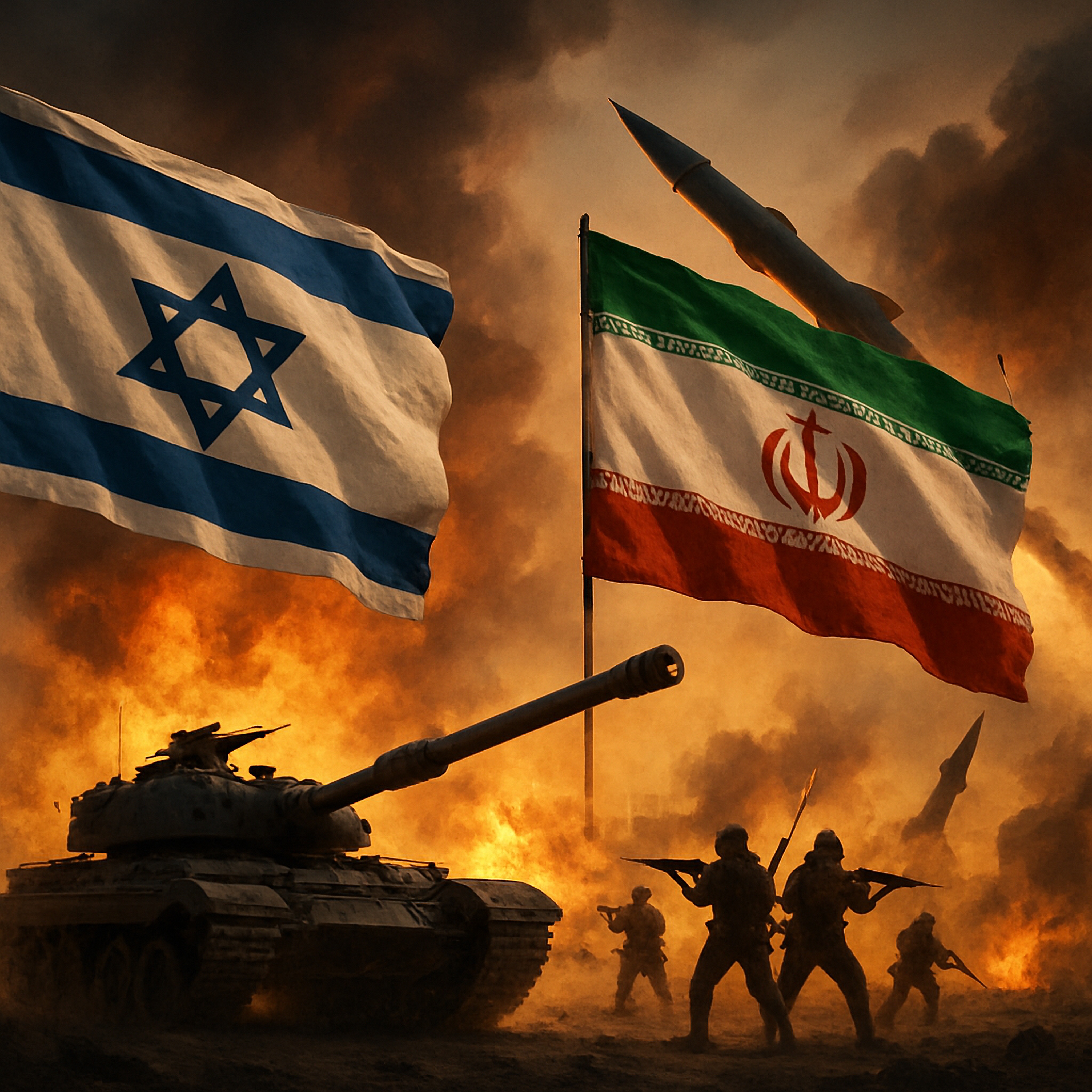
The Neocons running the Trump administration, as always, are a complete failure when it comes to thinking strategically about Iran or even the Middle East in general. Emails we receive from industry colleagues often mix statements with reality, and uncertainty about the future of a conflict is causing historic supply disruptions and upending industry planning. If Trump declares victory and pulls back the U.S. military, Iran would then say that it owns the Strait and declare victory. Rumors have circulated that Iran would then impose a tax on any ship passing through the Strait, perhaps resulting in a resumption of this crisis.
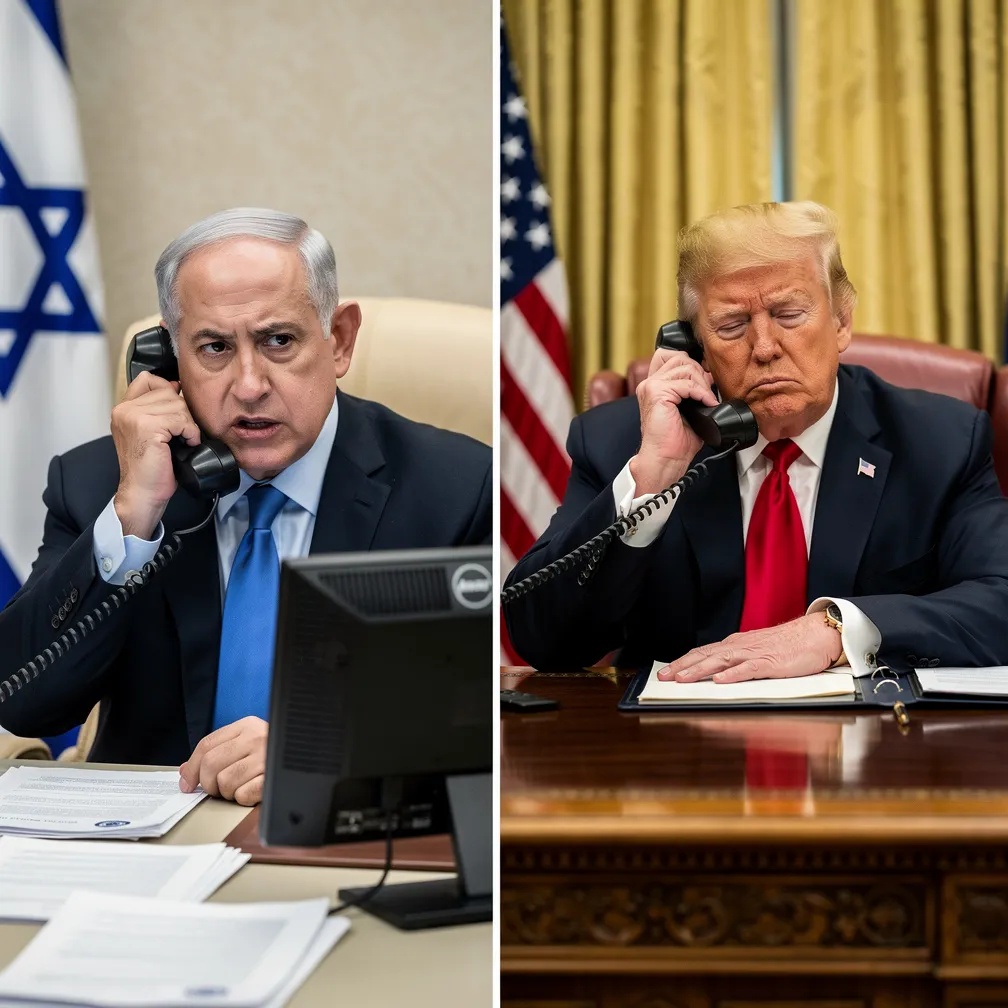
The overall U.S. and Israeli strategic objectives for Iran remain questionable. What I do know is that there was a private phone call in which Netanyahu manipulated Trump, stressing that he could “make history” by toppling the Ayatollah regime and taking revenge for Iranian efforts to assassinate him, which was central in Trump’s decision to strike when he did.
The classic Neocon claim that America can fight a markedly limited war, and engage in airplane targetry, has never worked even once, and it only demonstrates their dishonest lack of strategy to sell these endless wars. Claiming that naval protection of ships is absurd, for that would prove an impossible challenge and leave major vulnerabilities for the US Navy. That is no more invincible than Israel’s Iron Dome.
Trump’s threats to target Iran energy sector over Strait of Hormuz would have only escalate tensions if Iran did not reopen the Strait in 48 hours. He had to back down and then claim he was in talks with Iran which they instantly denied. I have some info that Trump has gone to Pakistan to present a 15 point peace proposal, which may be sidestepping Netanyahu. However, I have sources which has also said they will no longer deal with Steve Witkoff, or Trump’s son-in-law, Jared Kushner, who both are Jewish, and clearly a very serious afront to Iran and a major appearance of a conflict of interest. They have to be the worst possible people to negotiate with Iran given the hatred that Netanyahu has publicly made clear about Iran.
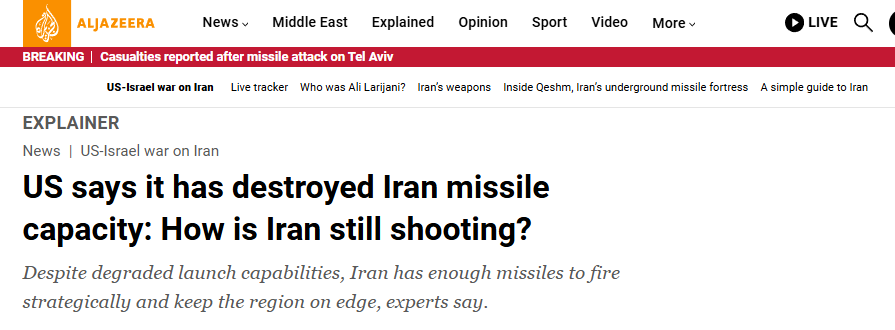
Furthermore, the claims that the United States won the war against Iran within the first hour of military action, stating that the conflict quickly tilted in favor of the U.S. However, he also mentioned that American forces would remain deployed until the mission was fully completed. This has been proven to be just bravado and fake news. They also claimed that they destroyed most of Iran’s missile capacity. yet, Iran launched waves of missiles at Israel on Tuesday, a day after U.S. President Donald Trump said there had been “very good and productive” talks aiming at halting the war unleashed and unprovoked by the U.S. and Israel.
History not going to come down on Trump’s versions. A year ago, in late March 2025, the U.S. Intelligence Community assessed that “Iran is not building a nuclear weapon and that [Supreme Leader Ayatollah Ali Khamenei has not reauthorized the nuclear weapons program he suspended in 2003.” However, in a congressional hearing about that assessment, Director of National Intelligence Tulsi Gabbard also said, “Iran’s enriched uranium stockpile is at its highest levels and is unprecedented for a state without nuclear weapons.” Trump instead used Netanyahu’s bogus claims. They never had a missile that could reach the United States, Europe yes, but not the United States. That calls into question the Neocon/Netanyahu lies to start this war just as the Weapons of Mass Destruction never existed in Iraq.
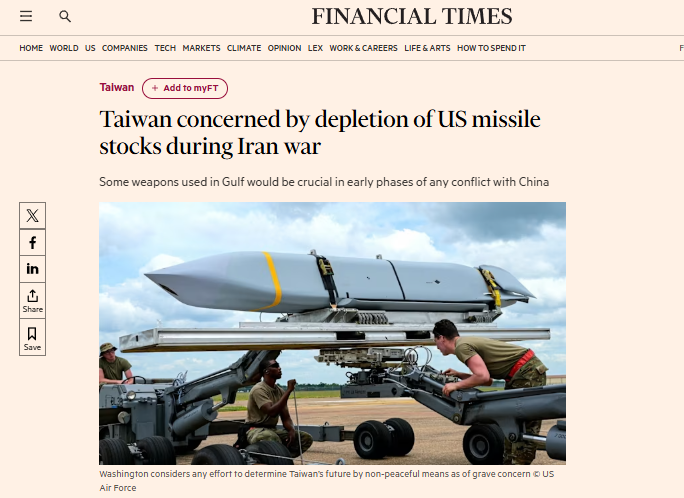
The Western press propaganda shows a ballistic missile being intercepted by Israel. What they fail to explain is the an Iranian Ballistic Missile costs $300,000 of less whole the Israeli interceptors cost $2-$3 million each. Israeli typically launched at least 3 interceptors per Iranian missile and some have said up to 6 interceptors have been fired. A Sling interceptor costs about $1 milion each and an Iron Dome interceptor costs $50,000 each. Iran is bleeding the West dry and even Taiwan has expressed concern that the US is using its entite stockpile of cruise missles meaning they cannot be defended.
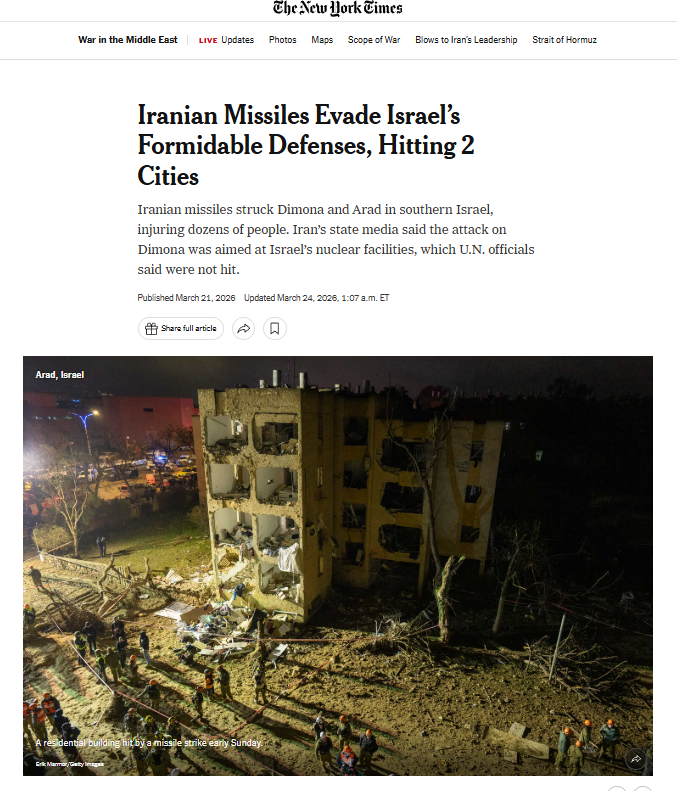
Reliable sources placed Iran had over 3,000 ballistic missiles in preparing for this war with Israel they knew was coming. Some suspect that they could have increased that to closer to 4,000. That does not even include the country’s burgeoning land-attack cruise missile force. Yet, Iran has fired over 400 ballistic missiles since the start of the current conflict as of March 24th, which began on February 28th, 2026. The Western press claims that approximately 92% of these missiles have been intercepted by Israeli air defense systems.
The propaganda comes from the fact that on February 28th, Iran fired around 182 ballistic missiles in a single day. That number has since fallen to single digits. Drone attacks have followed a similar trajectory, dropping from over 200 to fewer than 20. Pete Hegseth claims Iran’s missile volume is “down 90%” and drone attacks have reduced by 95% that means they are running out. What we do know is that Iran has been stockpiling missiles for this end-game war. However, strategic assessments suggest Iran is playing it smart. Let the US and Israel run out of their missiles and then they can flatten Israel for a final blow. Tehran appears to be adapting to mounting reality of this war and to just survive, they must outlast their enemies.
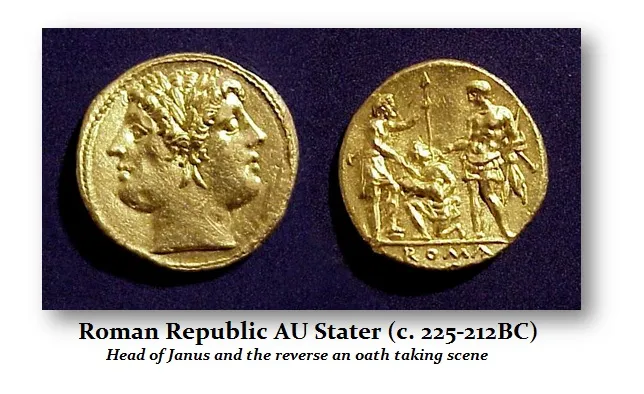
This specific tactic is a variation of the classic “Fabian strategy”—wearing down an enemy through logistics and attrition—and its principles have been used effectively throughout history. This name goes back to the Second Punic War (218–201 BC) when Roman General Fabius Maximus avoided direct battle with Hannibal’s army, instead shadowing it and cutting its supply lines to exhaust the Carthaginian forces. The strategy neutralized Hannibal’s tactical advantages. When it was abandoned, Rome suffered the disastrous defeat at Cannae in 216BC. The Roman Republic did issue this gold stater as a direct response to a national emergency. Hannibal crossed into Italy in 218BC, and the Roman gold stater was minted in the years that followed (circa 225–212 BC) to help finance the war effort.
It was during the monetary reform of 225BC that also introduced gold to the Roman list of denominations for the first time. This gold stater incorporates the familiar Roman Janiform while the reverse was made up of an oath-taking scene. These gold issues were extremely rare and did not make up an everyday circulating currency. Rather, these gold staters were used for very large transactions only.
The propaganda is how they have been degraded militarily. This sounds similar to the story about Russia. Yet, Iran retains the ability to still send 8 waves of ballistic missiles targeting Israel to deplete their defenses and still they can attack ships from shore along a vast stretch of coastline in the wider region. The cost of that attack was perhaps $40 million to Iran, but the cost of defense to Israel was more like $1.5 billion in one incident.
The ONLY way to secured the Strait of Hormuz is to occupy it with boots on the ground. You will have to stage massive troops along the Strait for 50 miles on BOTH sides, plus you will have to penetrate inward 100 miles on each side. Then you will have to create a no-fly zone and that will have to be patrolled and monitored 100% of the time. As long as Iran has the ability to impede the oil traffic and production, they retain leverage that these so-called brilliant minds who never took into account this scenario because their assumed being the biggest military power secures victory.
Iran has anti-ship cruise missiles that could be fired off the back of a pickup truck that can go 100 miles. This is Iran’s Trump Card and the Neocons along with Netanyahu painted an instant victory by simply killing the Ayatollah. They promise victory in just weeks in Iraq, which took 8 years.
Oil was roughly $73 right before the strikes on Iran started on February 28th, and even that price reflected an expectation of hostilities. The entire scheme of killing the Ayatollah is Netanyahu’s strategy and it has never worked. The agreed aim of toppling Iran’s leaders and encouraging regime change has proven a complete failure as took place in Afghanistan and Iraq.
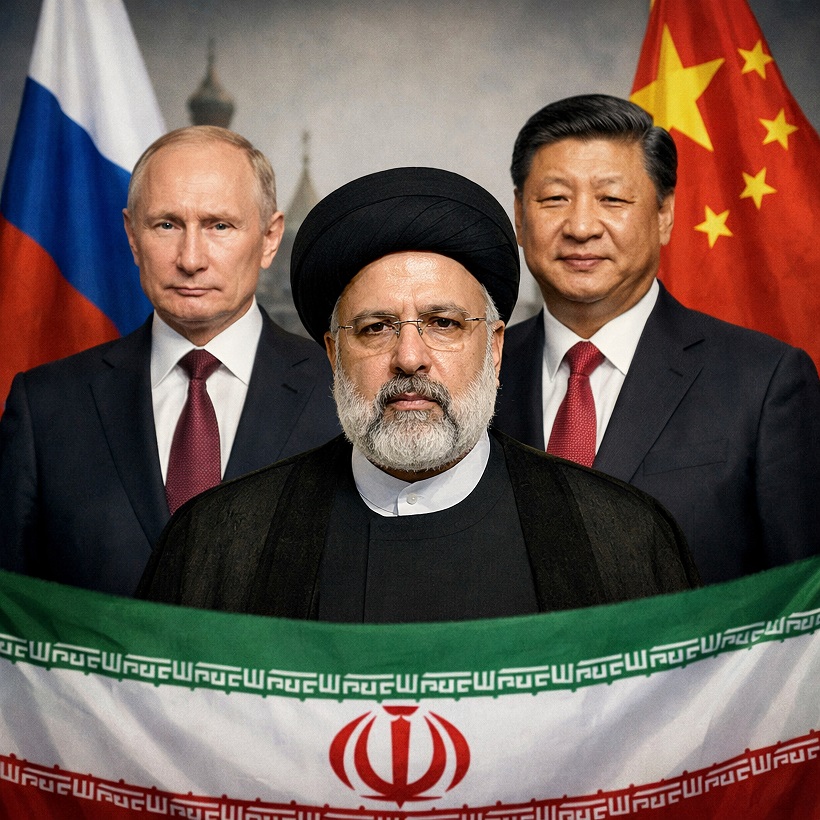
I think anyone who knows Iran, must also understand that this religious regime has been quite good at survival. There was no Plan B for an energy crisis because the Neocons/Netanyahu assumed instant victory. There was no strategic plan for even a short-term war no less a long-term one. I have warned that the strategy would be for Russia and China to use this war as their Proxy to drain the resources of the United States as the US and NATO has used Ukraine against Russia. They cried foul when Russia provided targeting info to Iran yet the US has been providing targeting objectives to Ukraine. Turn this into a proxy war, drain the USA, then by tying up the USA in this Middle East War, that frees Russia to destroy Ukraine outright and China to take Taiwan. Iran has already said that they invited Russia and China to establish bases in Iran.
The bottom line is, they know the intension of Netanyahu and his objective is the total destruction of the Islamic State. It makes perfect sense that they realize this proves that there will NEVER be peace with Israel and that this is a war Netanyahu began demonstrating any hope of peace will be just a delusion for the next attack. Both sides are digging in their heels and both sides see this as the fulfillment of prophecy.
So, we must face reality. The ONLY way this war would be over soon is the total destruction of Iran and the end of the Islamic Republic. There is no negotiation possible since there is no possibility of long-term peace without regime change. Thus, and claim of negotiations are not going to be possible and and the markets are reflecting that long-term. Even the 10-year interest rates are starting to rise overall in anticipation of a protracted war. Trump can forget a Nobel prize for peace.
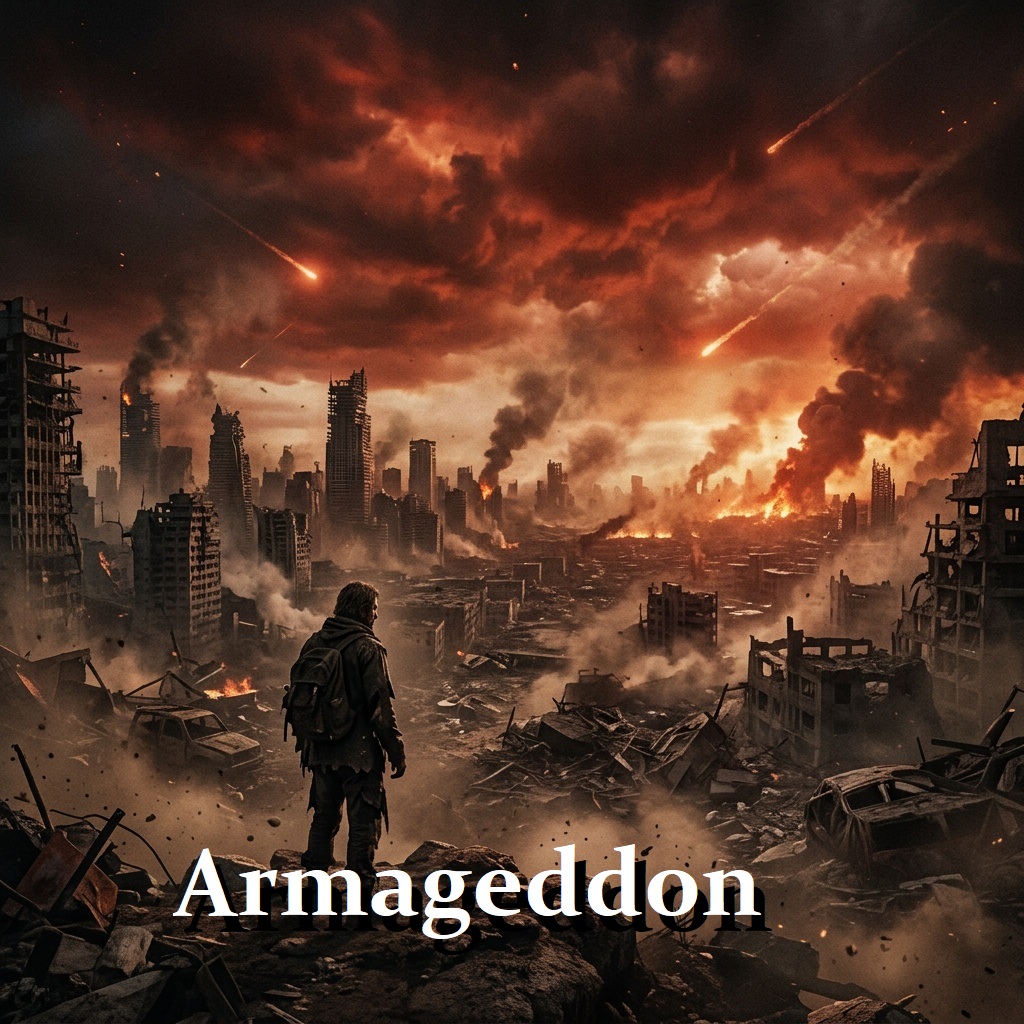
Perhaps the most fascinating question I have written about before than about one-third of the population see this as Armageddon. But what makes this worse is that essentially both sides see this as the final battle, though in different ways and with important caveats. Trump is clueless as to what he stepped into for Netanyahu has has religious fanaticism begind his decision making.
Netanyahu / Israeli-American Religious Right
Netanyahu has framed the war against Iran in explicitly biblical and messianic terms, rallying a political constituency that sees regional devastation as a holy mandate. When he invokes “the eternity of Israel,” many see this that he’s signaling to those who see end-times warfare as a cosmic necessity.
Most concretely, Netanyahu invoked the Torah shortly after strikes began, comparing Iran to the biblical Amalekites — ancient enemies the Torah commands must be remembered and confronted. “We read in this week’s Torah portion, ‘Remember what Amalek did to you.’ We remember – and we act.”
In portions of his speech not included in the official English translation, Netanyahu drew on Purim theology, saying: “In those days of Purim, the lot was cast, and the wicked Haman fell along with it. Even today on the holiday of Purim, the lot was cast, and the end of the evil regime will also come.” When an adversary is cast as the reincarnation of an ancient, irredeemable evil, we must take note that the normal rules of war and human rights tend to evaporate in the minds of those operating within that framework. This was why Netanyahu moved to kill the Ayatolla something not sanctioned by the rules of war.
Since the assassination of the Ayatolla was the very first act, and there can be no argument that he was a military target, this violated every principle of international law which clearly demonstrates nobody gives a shit about anymore. Historically, customary international law granted heads of state immunity from the jurisdiction of other states. However, this immunity is procedural (preventing arrest or prosecution in foreign courts) rather than substantive (making them inviolable targets). Many nations (including the United States via Executive Orders, though these have been interpreted differently by different administrations) prohibit assassination. If there is no ongoing armed conflict between the state conducting the killing and the state of the target, killing a foreign head of state is NOT sanctioned. It constitutes an act of unlawful aggression, a violation of sovereignty, and likely an extrajudicial killing. Since that was the first act of war, it was outrageous and unlawful.
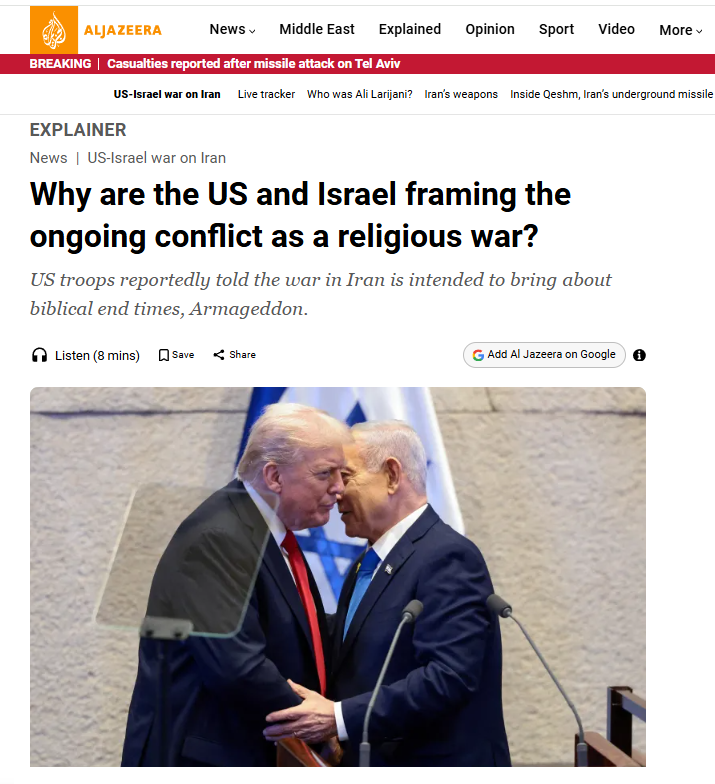
On the American side, US Secretary of Defense Pete Hegseth referred to Iran’s “prophetic Islamic delusions” at a Pentagon briefing, and it was reported that US military commanders were telling troops the war was a biblical step toward Armageddon. One soldier said his commander described Trump as “anointed by Jesus to light the signal fire in Iran,” according to Al Jazeera.
Iran / Shia “Mahdist” Eschatology
The Iranian side has its own parallel end-times theology that is, if anything, it is far more institutionalized. The Iranian regime considers its nation chosen by Allah to prepare the world for the return of the Twelfth Imam — the Mahdi. They believe that catastrophic world chaos and the defeat of their enemies, especially Israel, are prerequisites for this event. The founder of the Islamic Republic, Ayatollah Khomeini, designated Iran the “Vanguard of the Mahdi.”
Iran’s interpretation of Mahdism requires adherents to take proactive steps to usher in the Mahdi — most notably by initiating an apocalyptic showdown with America and Israel, which are called the “greater” and “lesser” satans. Hardline clerics affiliated with the IRGC cite hadiths claiming the Jewish state will be destroyed before the Mahdi’s arrival, and that Shia Muslims will be on the side of the war against Jews prior to the Mahdi’s reappearance.
Iran’s new supreme leader, Mojtaba Khamenei, is reportedly “obsessed with the end of days.” Some Iranian leaders appear convinced this war may be the Malhama al-Kubra — the great apocalyptic battle against Western powers described in Islamic traditions — which would mean, from their perspective, surrender is literally unthinkable. This is what I have been warning about.
Why This Matters — and the Important Caveats
Most ordinary people on both sides don’t see it this way. Many Iranians are secular or deeply opposed to the regime. Most Israelis support the war for security, not messianic, reasons. Religious eschatology is largely the ideology of ruling elites and hardline factions on both sides, NOT populations. Nevertheless, strategic interests still drive decisions. Netanyahu’s stated war goals — destroying Iran’s nuclear program, and achieving regime change — are conventional strategic aims. Many Israeli analysts say his real endgame is “a heavily diminished Iran,” and that he needs something he can declare a victory on, especially given his corruption trials and political pressures.
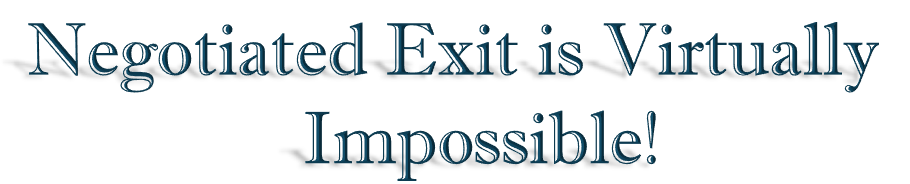
The danger of this apocalyptic framing is that it REMOVES all logic of compromise. These leaders are using theological beliefs to justify action, mobilise political opinion, and leverage support claiming they are doing God’s will. When both sides enlist God, the space for negotiated exits become virtually impossible!
So in short, the end-times framing is real, active, and being used rhetorically and ideologically by leadership on both sides — but it coexists with, and is often a cover for, conventional geopolitical and personal interests.
Any temporary ceasefire, even if possible, does not solve this religious war when both sides see this as the end times.
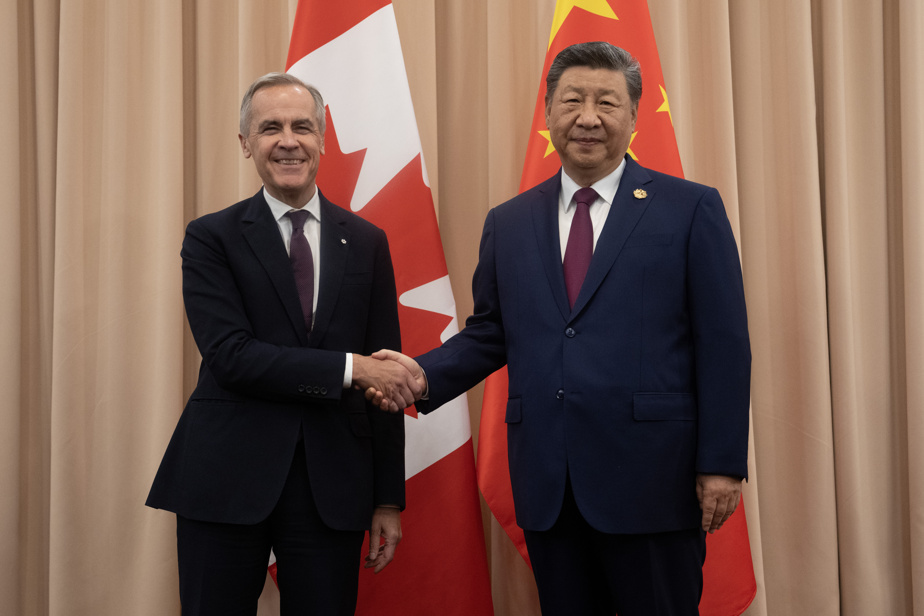
With the recent agreement by Canadian Prime Minister Mark Carney, Chinese auto manufacturers are now rushing to establish the dealerships, before the Beijing-Canada deal becomes an issue in the USMCA negotiation.
China is NOT going into Canada because they foresee a great market of Snow Mexicans purchasing their low price EVs. They are going into Canada as a proactive measure to establish a North American footprint with an eye toward the USA.
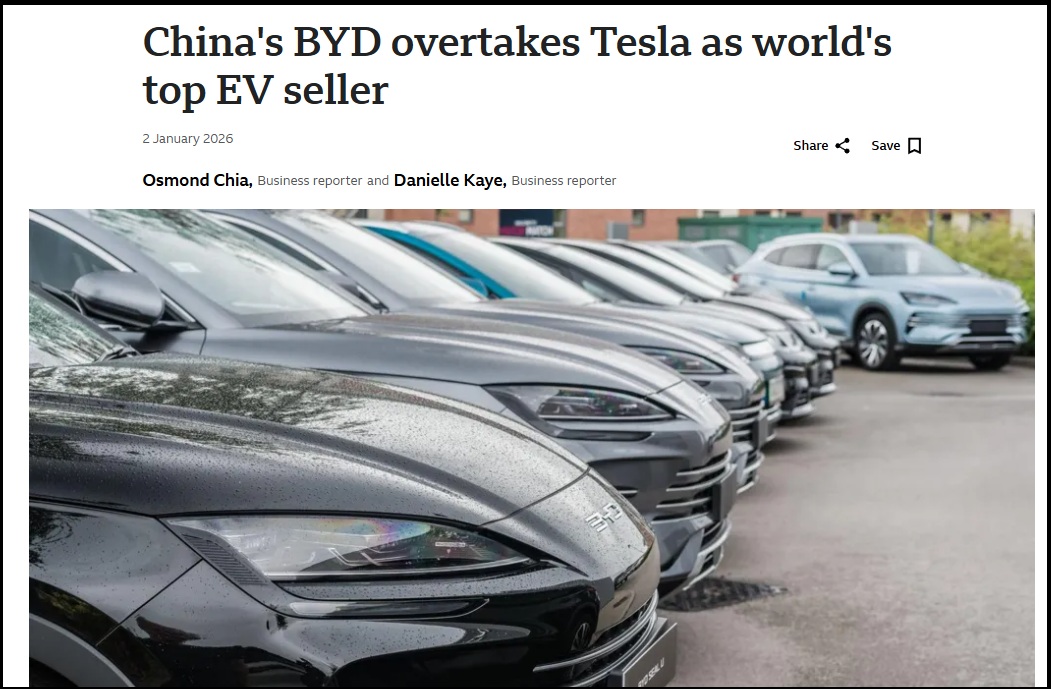
(VIA MSM) – BYD and Chery are accelerating plans to establish a dealership network in Canada after the country introduced a quota allowing tens of thousands of Chinese-made EVs to enter at reduced tariffs. The rollout will begin in Toronto before expanding to other major cities, with BYD targeting about 20 dealerships in its first year. This marks a significant new front in North American EV competition, as Chinese automakers seek growth outside the U.S., where prohibitive tariffs keep them out.
Canada’s updated trade policy allows 24,500 Chinese-made EVs annually at a reduced 6.1% duty, giving BYD and Chery a rare North American entry point. This follows China’s surge to become the world’s top vehicle exporter, with similar pushes into Mexico, Europe, and Latin America. The quota’s scale is modest but strategically valuable for testing market response and building brand awareness.
The companies will launch in Toronto before moving into Vancouver, Montreal, and Calgary. BYD aims for around 20 dealerships in its first year, using consultants and internal teams to secure prime sites. While the network could strengthen visibility in key urban markets, experts warn the quota’s limited volume may test the viability of multiple outlets.
With U.S. tariffs exceeding 100% effectively barring entry, Canada offers Chinese automakers a platform to establish presence, gauge consumer interest, and potentially influence future trade talks. Similar strategies have been used in Europe, where Chinese EV makers have gained ground despite strong local competition. Success in Canada could pave the way for local assembly or increased quotas. (read more)
Posted originally on CTH on March 24, 2026 | Sundance
Obviously, one of the challenges faced by President Trump following the elimination of all senior Iran political leadership, is to know who is left in power that has the ability to negotiate terms between Iran and the U.S.
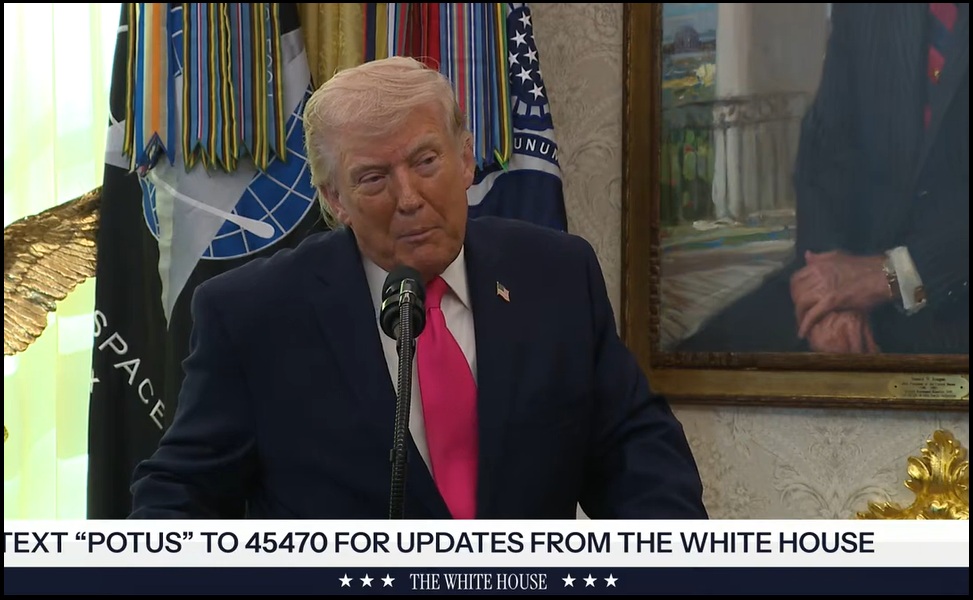
During the Q&A media segment of Mark Wayne Mullin’s swearing in ceremony, President Trump was asked how he can trust the Iranian leadership he is currently communicating with. President Trump responded that he doesn’t trust anyone; however, the voices in Iran currently negotiating with the U.S. team sent something of great value to the White House to verify their Bonafide’s. It is an interesting segment. WATCH (prompted):
Posted originally on CTH on March 24, 2026 | Sundance
Senators Chuck Grassley and Ron Johnson released 30 pages of documents today outlining how the Jack Smith investigation “Arctic Frost” was used to capture records of former Trump administration officials [SEE HERE].
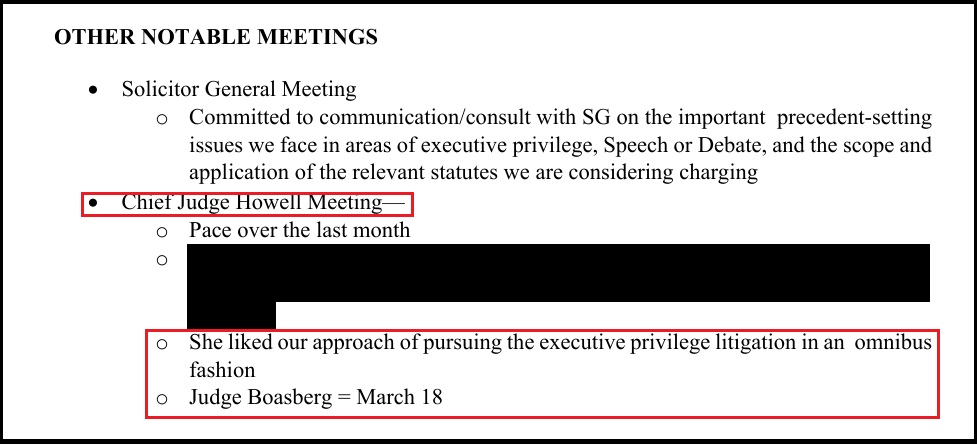
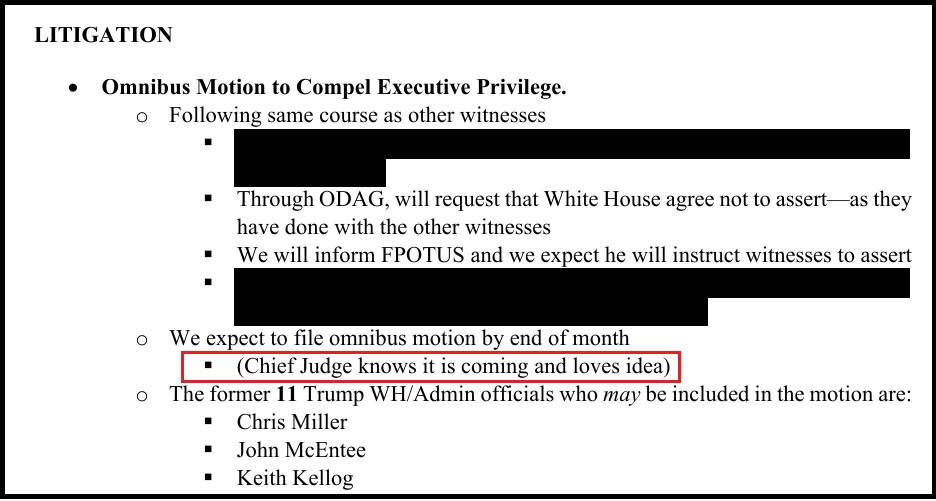
In addition to information showing how Jack Smith was collaborating and strategizing with DC Judge James Boasberg in advance of the subpoena submissions, literally strategizing how best to target Donald Trump, there is something even more interesting in the release.
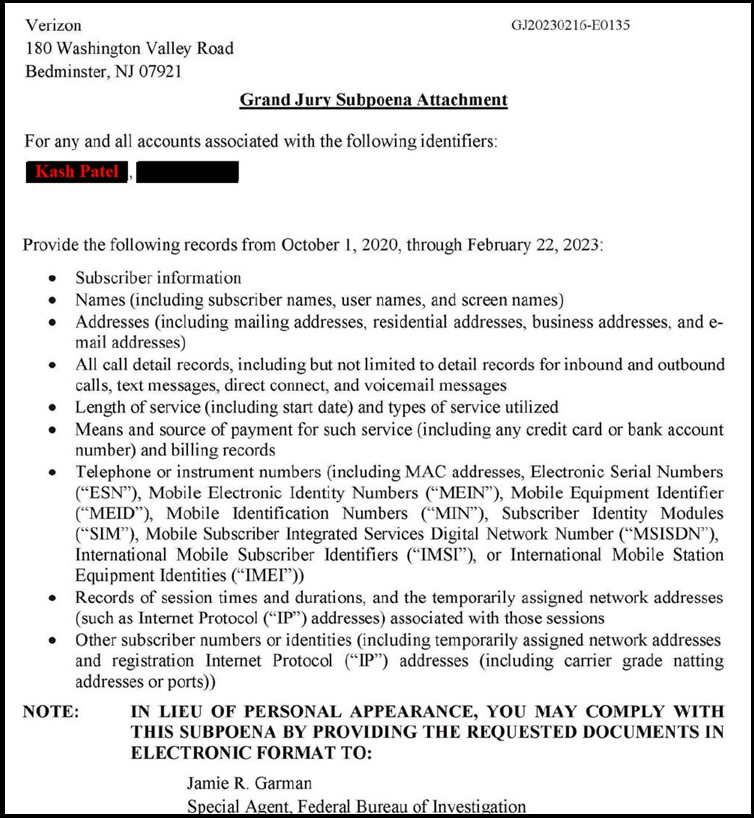
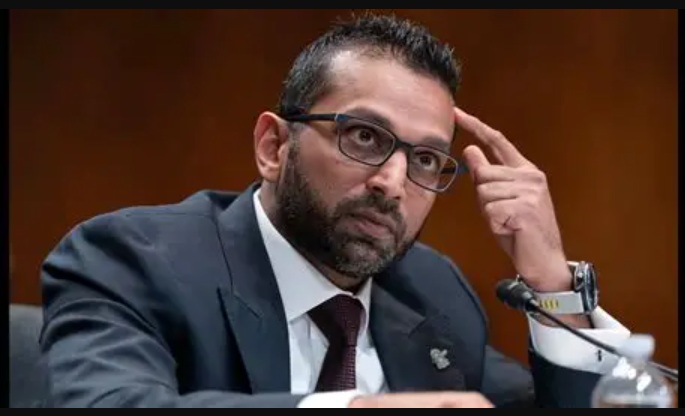
Many people have wondered why FBI Director Kash Patel seems compromised since he took office. Well, the FBI subpoena into then civilian Kash Patel, highlights the extent of the FBI operation as they gathered background intelligence that could be used for blackmail and leverage over the eventual FBI Director.
As noted by Hans Manche: “It didn’t just ask for Kash Patel’s phone records, it asked for everything he did from 2020 to 2023. Just to name a few, they requested all usernames and screen names, every address and email, complete billing and payment details including credit card and bank account numbers, every device ID, and a full log of every call, text, and voicemail showing who was contacted, when, and for how long. They also obtained all internet session data, including the exact IP addresses. So, this wasn’t just about who Kash called. It was basically a complete view of his entire life, mapping his daily routines, travel, relationships, finances, and even tracking the specific hardware he used. In short, they got a full digital shadow of his life.”
Yep, that’s how the FBI operates.
That’s how the FBI establishes leverage against anyone they view against their interests.
Now does the activity of FBI Director Kash Patel look a little differently with hindsight?
Here’s the part where the internal DOJ discussions reveal the Jack Smith prosecution team coordinating and strategizing with DC Circuit Court Judge James Boasberg and Judge Beryl Howell:
In March 2023, when I wrote the outline about Judge Boasberg being the corrupt DC judge who broke the constitutional restrictions on executive privilege, which technically forced Mike Pence to turn over his notes and testify to James Smith and the DC grand jury, I said at the time, “The entire judicial system is corrupt, soup to nuts, all of it.” I was not using hyperbole.
This is the same Judge Boasberg who sat as presiding judge on the FISA court. The same Judge Boasberg who gave FBI lawyer Kevin Clinesmith a slap on the wrist for manufacturing evidence used in the Carter Page FISA application that defrauded the court. The same Judge Boasberg who appointed former DOJ-NSD head Mary McCord as amicus curiae advisor to the court, after she knowingly and fraudulently submitted the FISA application to the court.
Four years ago, while Judge Boasberg was on the FISA Court, I warned about the implications of all these interconnected judicial dots. The entire DC federal bench is compromised. The entire judiciary of the FISA Court process is compromised. The entire federal judicial system is compromised. Then we witnessed the stunning scale and scope of that same DC judicial corruption in the fraudulent case against President Donald Trump.
Former FISA Court Presiding Judge James Boasberg is no longer on the FISC. However, he continues to advance the interests of the DC Deep State with rulings specifically tailored to protect the national security state. [Boasberg Background Here]
Boasberg, an ally of SSCI Chairman Mark Warner, has intercepted several cases that brought sunlight upon the corrupt DC system. In each case Boasberg ruled in favor of maintaining the corruption, including his willfully blind support of the FBI searching NSA databases to conduct illegal surveillance of Americans, and including Boasberg’s personal appointment of Mary McCord to run defense on behalf of the corrupt DOJ main office. Keep in mind, Mary McCord’s husband Sheldon Snook was working for Supreme Court justice John Roberts.
Posted originally on CTH on March 24, 2026 | Sundance
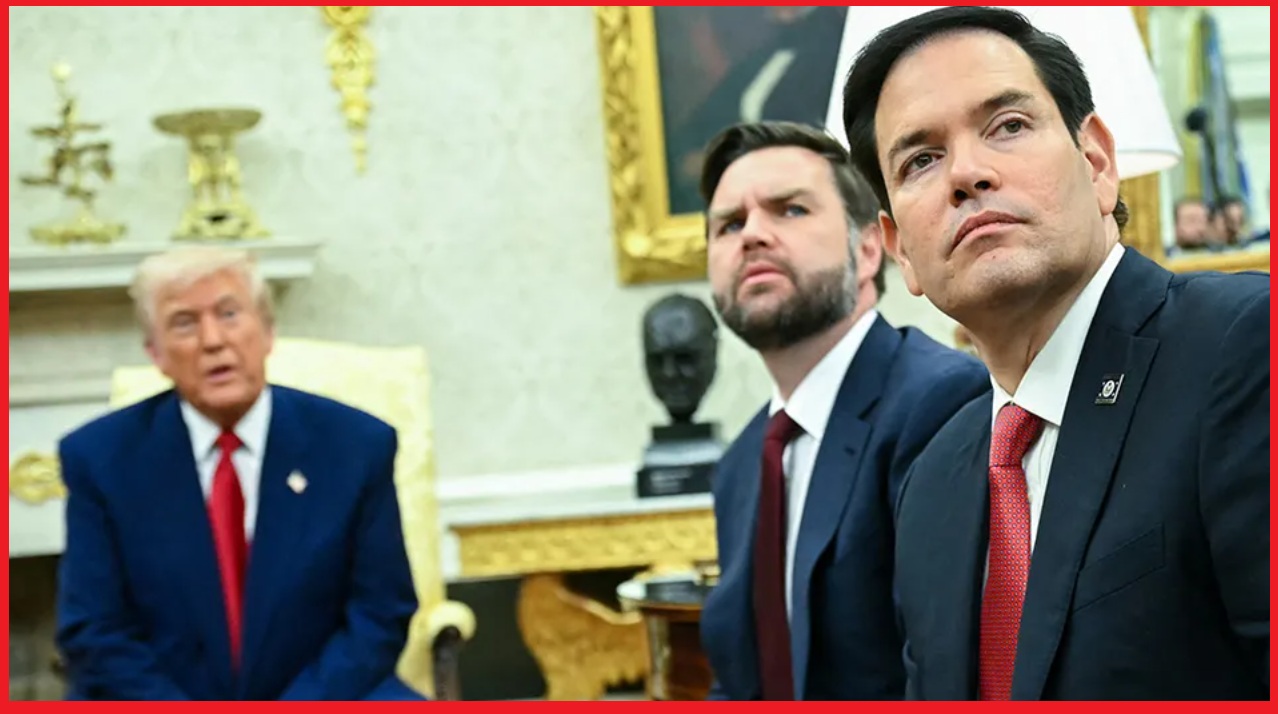
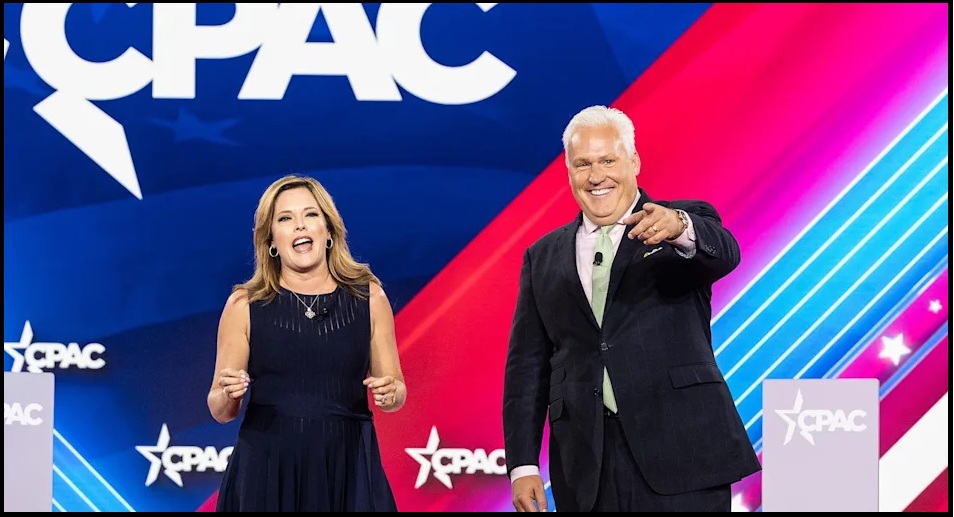
CPAC 2026 is scheduled to begin March 25 through March 28 in Grapevine, Texas. Interestingly, President Trump not scheduled to speak at the event; neither is JD Vance, Marco Rubio or any other potential GOP 2028 nominee including Florida Governor Ron DeSantis.
There are a few cabinet members scheduled as speakers [SEE HERE], however, all of the major MAGA politicians are not in attendance. It will be interesting to see if the attendance at CPAC 2026 is impacted.
The absence of Donald Trump, JD Vance, Marco Rubio, Ron DeSantis or any other major MAGA-era politician is not that surprising given the commercialized nature and evolution of the organization under the leadership of Matt and Mercedes Schlapp. The Schlapp’s are highly focused on affluence and considerably disconnected from the MAGA base.
When you chase money, you end up with traditional Republican outcomes. The corporate assembly that CPAC became has been spiraling downward in influence for the past dozen years. However, it is still remarkable to see just how diminished the organization has become.
Steve Bannon remains on the schedule to speak, and the remaining list of easily identifiable speakers resembles a Bannon podcast guest list. There are several foreign ‘conservatives’ scheduled to participate, but there are zero potential 2028 candidates in the currently displayed list of speakers. Ted Cruz will be there.
I have created this site to help people have fun in the kitchen. I write about enjoying life both in and out of my kitchen. Life is short! Make the most of it and enjoy!
This is a library of News Events not reported by the Main Stream Media documenting & connecting the dots on How the Obama Marxist Liberal agenda is destroying America




 Centinel2012