The Stupidity of Davos Explained Using an Example of Their Own Creation


Posted originally on CTH on January 22, 2026 | Sundance 

It’s around lunchtime and I’ve spent so much time deep in the weeds of an issue that I need a break.  So, here’s a little funny story from my real-world travels in the past few years that given the current Davos meeting topics you might find interesting.

I went to Russia in 2024, because what I was hearing in western media about the sanctions did not align with what I was seeing from reports inside Russia.  Before I went into Russia, I spent several weeks in Northern and Eastern Europe visiting various institutions, reading material and checking to see how systems in Europe were engaging with commerce given the Russian sanctions.  It wasn’t very exciting work, and sometimes I literally just sat in the lobbies of banks listening to conversations.

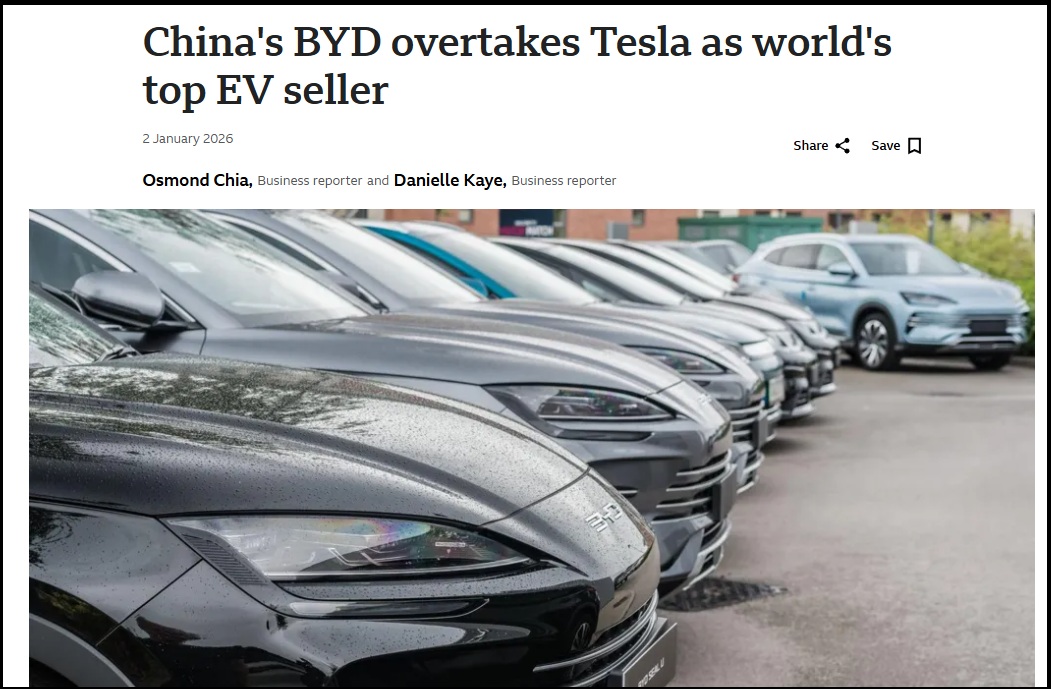
When I went into Russia (April, May, June and July ’24) I noticed many of the “Uber cars” were BYD brand, Chinese electric vehicles.  It made sense given two years of existing sanctions and few cars from Europe or America available except under costly brokerage fees for acquisition.  They like the Geely brand better, but BYDs are much cheaper.  A brand new BYD costs around $5,000 to $10,000 USD, in some places even less.

Then later I noticed even more of these BYD cars in Europe.  I started to pay attention to them and saw them everywhere.

When I went back into Russia a year later in 2025, there was a very noticeable increase in BYD cars.  It was crazy, they were everywhere.

My travels also took me to southeast Asia and again those damned BYD’s were all over the place.  In Thailand, Philippines, Malaysia, Vietnam, these BYD’s were everywhere, maybe even 30% of total vehicle traffic at times – most certainly well over 50% of all EVs – and there are digital billboards for “Build Your Dream” (BYD) all over the place throughout Asia.

Australia is stocked full of those things, and the middle east, yup, even there too.  It became increasingly weird to notice.  So many were visible I was wondering how the heck China can mass produce and ship this many cheap EVs so fast.
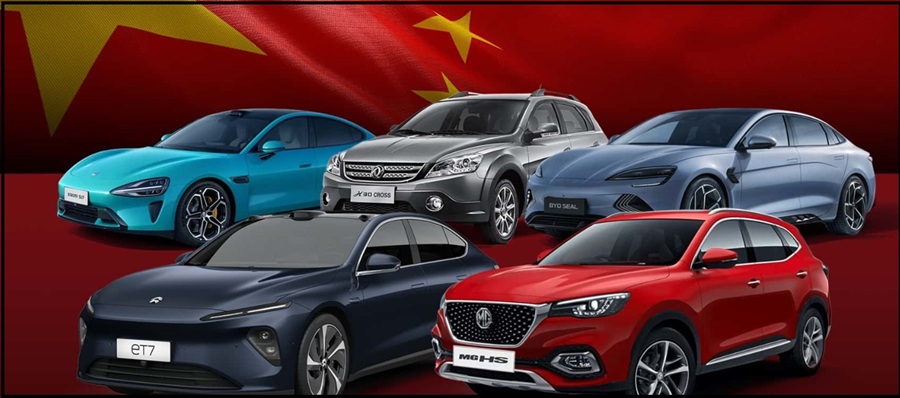
Then as serendipity would have it, I ran into a Chinese guy, professionally an actuary, in a hotel restaurant.  He explained to me that China produces the BYD not to make money from the automobile, but rather to sell the carbon credits the automobile generates within the auto industry.

The actual value to Beijing is in selling the carbon credit worthiness to various automakers who are fined or penalized by their government for producing gasoline powered vehicles.

BYD is, in essence, not a car per se’, but a mechanism to generate a carbon credit certificate that can be sold to other car companies. It’s the carbon credit certificate that generates the revenue, not the sale of the vehicle.  As my dinner guest explained, the auto insurance industry was having fits about this because the actuaries couldn’t accurately put a correct figure on the cost of the insurance warrantee within the industry (that’s another story).

The bottom line is that China is manufacturing a product to create a carbon credit certificate in response to the demand for carbon credits from all the world auto-makers.  Any nation that has a penalty or fine attached to their climate goals is a customer. Those are nations with fines or quotas associated with the production of gasoline powered engines if the auto company doesn’t hit the legislated target for sales of electric vehicles.

In essence, EU/AU/CA/RU/ASEAN car companies buy Chinese car company carbon credits, to avoid the EU/AU/CA/RU/ASEAN fines.  The Chinese then use the carbon credit revenue to subsidize even lower priced Chinese EVs to the EU/AU/CA/RU/ASEAN car markets, thereby undercutting the EU/AU/CA/RU/ASEAN car companies that also produce EVs.

Big Panda brilliantly exploits the ridiculous pontificating climate scam and has an interest in perpetuating -even emphasizing- the need for the EU/AU/RU/ASEAN countries to keep pushing their climate agenda.  China even goes so far as to fund alarmism research about climate change because they are making money selling carbon credit certificates on the back end of the scam to the western fear mongers.  This is friggin’ brilliant.

My dinner buddy was in the business of identifying the cost/benefit equation between the climate change fines and the prices Big Panda could charge for the carbon credit certificates.   If, as an example, Brussels dropped the quotas for EVs, China would need to lower the price for the carbon credit certificates.  So, Beijing wants Brussels to make sure they don’t drop the quotas.  See how that works?
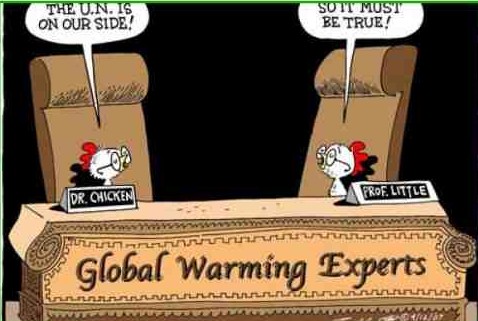
The climate change alarmists are helping China’s economy by pushing ever escalating fear of climate change.  You just cannot make this stuff up.

What does the outcome look like?

Well, in this example we see thousands of unsold BYDs piling up in countries that emphasize climate regulations with no restrictions on the import of EVs (which most don’t even manufacture), which is almost every country.  Big Panda doesn’t care about the car itself; they care about generating the carbon credit certificate to sell in the various carbon exchanges.

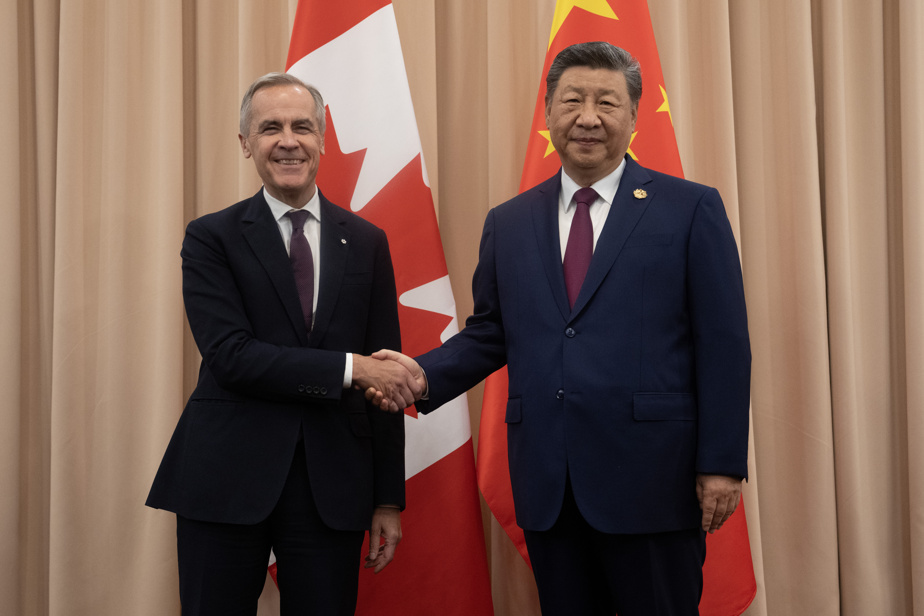
Put this context to the recent announcement by Canadian Prime Minister Mark Carney about his new trade deal with China to accept 49,000 EVs this year.

Prime Minister Carney bragged about getting the Chinese to agree to only super low prices for the Canadian market.  Mark Carney was very proud of his accomplishment to get much lower priced vehicles for Canadian EV purchasers.   No doubt Big Panda left the room laughing as soon as Carney made his grand announcement.

1. China sells EV’s in Canada, creating credits available on the carbon exchange scheme. Europe et al will purchase the carbon credits because Bussels has fines against EU car companies.

2. With a foothold already established in Europe, China will then take the money generated by the carbon credit purchases and lower the prices of the Chinese EV cars sold in Canada.

It’s gets funnier.

3. Carney bragged about forcing China to only sell low price EV’s as part of the trade agreement. The low price of the EV’s in Canada will be subsidized by Europe. China doesn’t pay or lose a dime.

But wait….

4. Carney can’t do anything about the scheme he has just enmeshed Canada into, because Canada has a Carbon Credit exchange in law. Big Panda wins again.
[…] In a statement published Thursday, BYD said sales of its battery-powered cars rose nearly 28% to 2.26 million units.

Musk openly laughed at the mention of BYD while being interviewed on Bloomberg TV in October 2011. He said he did not see the company as a competitor to Tesla, adding: “I don’t think they have a great product.” Meanwhile, Tesla said Friday it delivered 1.64 million vehicles in 2025. [SOURCE]

Elon thinks BYD are building cars.  They aren’t.
Canadian Prime Minister Mark Carney Bows to Big Panda, Looking for Financial Assistance Against Godzilla Trump


Posted originally on CTH on January 16, 2026 | Sundance |

My dear Canadian conservative friends, things look very troubling. You have my deepest sympathies for the events of the next few years that are about to unfold.

[A Full Deep Dive Background Context is Here]

If I am not wrong!

We have researched, tracked, measured and followed each detail.

Having travelled to regions of the world in discussions with people who factually determine economic outcomes, it is clear that every single policy shift undertaken by the Canadian government of Mark Carney is exactly the opposite of what is needed.  In the next 24 months, the lifestyle of every Canadian will forever change.

Prime Minister Mark Carney bows to Big Panda. The most alarming words spoken during the formal welcome ceremony are prompted below.  WATCH: “The New World Order”

Too many words; too small a man.

President Trump is reestablishing an entirely new economic, trade and finance system. The era of the Marshal Plan is over; it has been factually deconstructed in the past 12 months.

Canadians and Europeans are desperately trying to offset the ramifications, hold on to their economic benefits and find a new mechanism to afford the domestic indulgences now eliminated by President Trump and the absence of money.

Both the EU and Canada are looking to China and ASEAN partnerships as a financial offset.  However, the ASEAN group has no domestic wealth and can only provide one-way benefits.

Despite the reality of things, denial is rampant.  Here are three facts that will not change.

Fact #1: Asia is not a purchaser; they are producers. There are no customers in Southeast Asia, only workers. ASEAN nations are not customers. Any ASEAN trade agreement does not materially gain the EU or Canada any exports.

Fact #2: China is a closed economic system.  China does what is in China’s best interests. When negotiating with China, Chairman Xi wears a panda mask to cover the dragon face.  China now sees the EU/Canada refusal to adapt as an opportunity to exploit.

Fact #3:  The EU and Canada have chased ‘climate change’ and ‘green energy’ schemes into a dead end of economic crisis. The direct and collateral damage is generational, and only just now beginning to surface.  When combined with their intransigent resistance to adapt to President Trump’s global economic and trade reset, core issue “reciprocity”, this reality takes both economies down a path that becomes a self-fulfilling prophecy.

Choosing to embrace China in lieu of modifying bilateral trade agreements with the USA is a short-sighted fool’s errand. Unfortunately, with political calculations each entity, Canada and/or the EU collective, are pandering to their base out of an unwillingness to change trade behavior as demanded by Trump.

Yes, Canada may end up exporting more very specific goods to China; an offset for some of the USA losses, but at what cost long-term.

Think about the EU auto-sector as an example.

To avoid paying their own climate change fines, the EU automakers are purchasing carbon credits from Chinese EV automakers. In the short term, that trick may diminish the auto company fines to Brussels but think about the longer-term problem.

China takes the revenue from the EU companies and uses it to subsidize their EV exports making their EVs cost substantially less than EU electric vehicles in the EU.

Geely, BYD, etc. can lower the price of an EV in Europe because EU car companies are giving them money. The EU is paying China to destroy the EU auto industry. You cannot make this stuff up.

As a consequence, BYD is now building a factory in Hungary.  Additionally, Geely owns 10% of Mercedes.  You might have noticed that Mercedes recently announced they are shifting production of their Model-A to Hungary.  20,000 jobs shifted from Germany to Hungary.  Victor Orban is good friends with Donald Trump.  These are not coincidences.

In the Canadian model, Mark Carney may end up selling slightly more stuff to China but he’s going to end up selling less to the USA because Chinese components are subject to ever-enlarging USA trade tariffs.  The USMCA is on the cusp of being cancelled, it will happen this year.

Canada is betting they can export more $$ to Beijing than they will lose in diminished export $$ to the USA. Fine, that’s the bet (a political calculation). However, the reality of the end result is increased dependency on China. That never ends well.

Beijing keeps the panda mask on while the dependency is created, see belt and road; however, as soon as it is in Beijing’s interest to drop the panda mask, Canada will see the dragon face behind it.

From Ottawa to London, to Paris, Berlin and Brussels the geopolitical landscape is changing permanently as President Donald Trump resets their global trade relationship to the United States.

NOTE: despite the claims of the Lyndon LaRouche group (Promethean Action), President Trump doesn’t sit around thinking about how to destroy British imperialism or the multinational financial system. That result comes as an outcome of his reset, a consequence; it is not however, the intent of it.

Instead, President Trump is leveraging the largest consumer market in the world to the benefit of the customer; that’s America.  Trump’s direct and specific intent is transactional, to rebuild an industrial and self-sufficient nation that is the envy of the world.

For several generations, Canada and the EU have exploited their biggest customer and taken the U.S. for granted.

In the end, the customer always controls the success of the business.

Visual Reference:

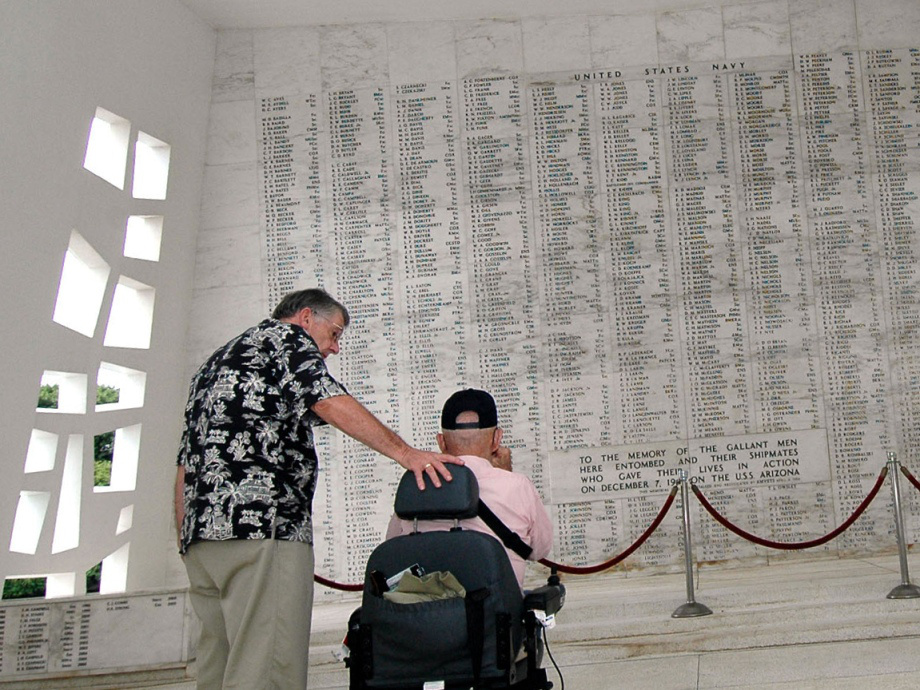
Commemorating Pearl Harbor Day


Posted originally on CTH on December 7, 2025 | Sundance

Via White House – “On December 7, 1941, a peaceful Sunday morning on the Hawaiian island of Oahu was shattered by an unprovoked attack by the naval and air forces of the Empire of Japan on the United States Pacific Fleet at Pearl Harbor and the aircraft and hangars at Kaneohe, Ford Island, Barbers Point, and Hickam Field. The surprise offensive claimed the lives of 2,403 American service members and civilians and propelled our Nation into the Second World War.

The Japanese mission was designed to cripple our military assets and obliterate the American spirit, but instead, the fatal attacks rallied our shattered citizenry and fueled our resolve. Young men from every corner of our country put their lives and futures on hold and were thrust into bloody and brutal battles of historic consequence that would forever change the world. Although untested in battle, these patriots, still reeling from horror and disbelief, united in a singular mission: to defeat tyranny. The exceptional courage and immeasurable sacrifices of the Greatest Generation secured our way of life and the blessings of freedom for future generations.”

“In the decades since the “date which will live in infamy,” the aggressor has become our loyal ally and trusted friend. Japan is one of our closest security partnerships, and our military forces work together every day to defend our common interests. We are united by commerce, history, culture, and mutual respect. Our strong alliance is a testament to the transformational power of peace, diplomacy, and democracy.

The lessons learned 84 years ago on that fateful day still resound with America’s exceptional fighting force. We must remain ever vigilant and prepared to annihilate any foe who dares to threaten our liberty. This annual day of remembrance must be held in the highest esteem and reverence as we honor the Americans who laid down their lives to defend our homeland on the island of Oahu and in the battles of World War II.

The Congress, by Public Law 103-308, as amended, has designated December 7 of each year as “National Pearl Harbor Remembrance Day.”

NOW, THEREFORE, I, DONALD J. TRUMP, President of the United States of America, by virtue of the authority vested in me by the Constitution and the laws of the United States, do hereby proclaim December 7, 2025, as National Pearl Harbor Remembrance Day. I encourage all Americans to observe this solemn day and to honor our military, past and present, with appropriate ceremonies and activities. I urge all Federal agencies and interested organizations, groups, and individuals to fly the flag of the United States at half-staff in honor of those American patriots who died as a result of their service at Pearl Harbor.

IN WITNESS WHEREOF, I have hereunto set my hand this fifth day of December, in the year of our Lord two thousand twenty-five, and of the Independence of the United States of America the two hundred and fiftieth.”

DONALD J. TRUMP

Secretary Scott Bessent Provides Background on Trump/Xi Discussions and Agreement


Posted originally on CTH on October 30, 2025 | Sundance |

Secretary of Treasury Scott Bessent appears on Fox News with Maria Bartiromo to discuss the Asia tour by President Trump and the trade delegation that culminated with a lengthy meeting between President Trump and Chairman Xi Jinping.

By locking down trade agreements with Australia, Malaysia, Cambodia, Vietnam, Philippines, Thailand, Japan and South Korea in advance of the meeting with Xi, President Trump had effectively boxed out the maneuvers of Beijing and isolated any contravening strategy.

Chairman Xi was facing a U.S. strategic trade reset with multiple options for replacement of Chinese goods and resources.  As a result, the Beijing trade delegation recognized President Trump had effectively neutered the scale of their economic power and influence over the U.S. economy.  Instead, the best play for big panda was to shake hands and come to agreeable terms.  WATCH:

.

Playing into President Trump’s hands was/is the strains currently ongoing within the Chinese domestic economy.  Further friction against the USA would have weakened Chairman Xi domestically.

The missing piece of the puzzle is now Russia.

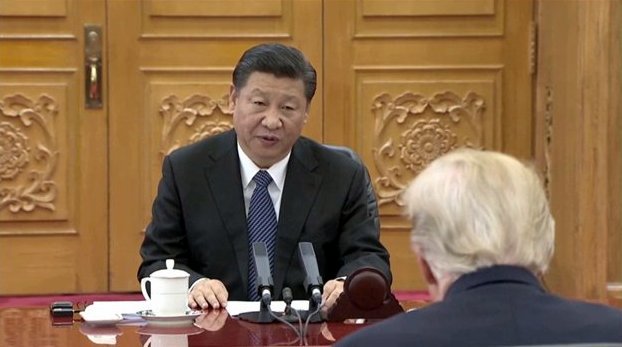
President Trump Meets with Chinese Chairman Xi Jinping – Livestream Links


Posted originally on CTH on October 29, 2025 | Sundance

President Trump will be meeting with Chinese Chairman Xi Jinping on the sidelines of the summit in South Korea.  The meeting was initially scheduled for an hour, but White House officials extended that anticipated schedule to 3 hours in advance of Xi’s arrival.

The stakes are very high as both leaders are at a key moment in the relationship between the USA and China.  Global and financial interests in the outcome are extensive, and the world is awaiting to see indications of their ongoing trade discussions.  Livestream Links are Below:

.

.

.

President Trump Meeting with Chairman Xi Shortly


Posted originally on CTH on October 29, 2025 | Sundance 

South Korea is 13 hours ahead of U.S. Eastern Time.  At 5:23pm Wed Eastern / 6:23am Thur local, President Trump sent the following message:

[SOURCE]

President Trump Delivers Keynote Address at APEC CEO’s Luncheon


Posted originally on CTH on October 29, 2025 | Sundance 

President Trump delivers the keynote address at the Asia Pacific Economic Council (APEC) CEO’s luncheon.

.

President Trump Arrives at Busan, South Korea – Welcoming Ceremony


Posted originally on CTH on October 29, 2025 | Sundance

President Trump arrives in South Korea to attend trade discussions and the APEC summit.

.

President Trump Airforce One Press Briefing Leaving Japan En Route to South Korea


Posted originally on CTH on October 29, 2025 | Sundance

Posted originally on CTH on President Trump delivers remarks to the media press pool and answers questions from the traveling group as they depart Japan on the way to South Korea and the APEC summit.

.

U.S. Ambassador to Canada Informs Govt and Business Leaders No Trade Deals Possible


Posted originally on CTH on October 28, 2025 | Sundance 

For those who have followed along with the U.S-Canada trade positioning, the current status of conflict between the Trump administration and the government of Canada is not surprising.  {GO DEEP} Going all the way back to the replacement of NAFTA, with the USMCA, President Trump always said he did not favor multilateral trade deals with multiple countries; instead, he preferred bilateral free trade agreements.

Some people have construed the bilateral preference of President Trump to be the elimination of globalism in favor of nationalism in trade agreements.

While the outcome of the Trump approach indeed aligns with that theme, it is not specifically the objective of President Trump to eliminate global trade, but rather to focus on specific interests in trade that benefit the unique nature of each party involved.

As a result, the USMCA -or CUSMA as said in Canada- is not in alignment with a bilateral free trade agreement, and the conflicted differences between trade with Mexico and trade with Canada are an outcome of this dynamic.  The solution is simply to eliminate the multilateral in favor of the bilateral approach.  This is the objective of President Trump as expressed.

That said, the USMCA covers approximately 60% of U.S-Canada trade, and the remaining 40% is being debated and argued.  President Trump would prefer to just deal with 100% of the trade sectors in one free trade agreement; hence, his ambivalence until the USMCA is dissolved.

Canada, on the other hand, continues to demand that all trade conflicts be resolved without opening up the entire USMCA. Again, another conflict. Canada is like the dependent spouse in a divorce arguing for child support payments when the “children” are in their twenties.

The current status is President Trump pulling back completely from discussions with Canada, while the various provincial Premiers and Prime Minister Mark Carney antagonize over the issue.

At a certain point, when the entire national economic plan of Canada is based on “Donald Trump bad”, and all political messaging internally is to proclaim they have no alternative policy positions, the Canadians might not realize it, but they are confirming complete and total dependency on the nation Donald Trump represents.

As the Canadian government continues demanding President Trump pay attention to their needs, U.S. Ambassador to Canada, Pete Hoekstra, informs the Carney administration, and various stakeholders, any trade agreement is no longer possible.

CANADA – The U.S. ambassador to Canada doesn’t foresee a new security and economic deal between Canada and the United States — which could see the reduction or full removal of tariffs amid an ongoing trade dispute — before the new year.

“We have stopped negotiations with Canada,” Pete Hoekstra said in a keynote address to the Coalition of Concerned Manufacturers and Business Canada on Monday. “I don’t see any way that there will be an agreement before American Thanksgiving.”

“I’m not sure what it’s going to take to get people back to the table in a constructive and positive mode,” he added.

Hoekstra’s comments come just days after U.S. President Donald Trump said he is terminating trade talks with Canada and increasing levies on Canadian goods by 10 per cent in response to an anti-tariff ad by the government of Ontario which featured the voice of former Republican U.S. president Ronald Reagan. Ontario has since pulled the ads, effective Monday.

Government sources had told CTV News that Canadian officials were hopeful there could be movement on a steel and aluminum deal by this week’s APEC Summit in South Korea.

[…] Asked by event attendees whether he sees any way to get negotiations back on track, such as an apology for the ad, Hoekstra said: “No.”

Speaking more broadly about the state of negotiations, Hoekstra laid the blame at Canada’s feet for the soured relationship.

Hoekstra has previous expressed his distaste for what he’s called “anti-American” sentiment in Canada, and on Monday pointed to some provinces removing U.S. liquor from store shelves and Canadians being discouraged from travelling south of the border as examples.

He also said the ad amounts to foreign interference, with the U.S. Supreme Court set to start hearing arguments on the legality of Trump’s tariffs on Nov. 5, as well as some gubernatorial and state legislative elections happening next week.

“Canada burnt the bridges with America,” he said. “Donald Trump did not slam the door.”

“Donald Trump could do the only thing that a leader of a sovereign nation could do when a neighbour, another sovereign nation, decided to interject itself into American politics,” he added. “Canada slammed that door shut all by itself.” (read more)

Canada is trying to force President Trump to give them preference, in a similar way the EU demanded special trade privileges.

President Trump is trying to end the Canadian one-way benefits toward the U.S. market.

President Trump is currently touring Asia, gathering up bilateral trade deals with various countries all across the ASEAN network.

In the bigger context, Trump is cutting all the tentacles and tools of China, and isolating them from Southeast Asia, as it relates to trade with the USA.

The bigger strategy of President Trump is very clear now, reduce dependency on China by retracting all of the manufacturing dependency.

All of the surrounding nations in Asia stand to benefit from this approach through bilateral free trade agreements with the USA.  Beijing’s influence is being seriously diminished as the lead-up to President Trump sitting down with Chinese Chairman Xi Jinping on Thursday.

Inside China, throughout the Chinese Communist Party, there are indications they are recognizing how successful President Trump has been at working around their influence.  Some outside observers have even started to believe the “moderates” within China feel empowered over the “hardliners” represented by Chairman Xi.  There is a lot going on behind the scenes.

This internal pressure inside Beijing’s politics works to President Trump’s favor, because it makes it even harder for Xi Jinping to be aggressive.  Additionally, with the Chinese economy being uncertain, perhaps significantly weak, Chairman Xi might even face a challenge to his power structure.  Meanwhile President Trump hops around shaking hands and making deals.