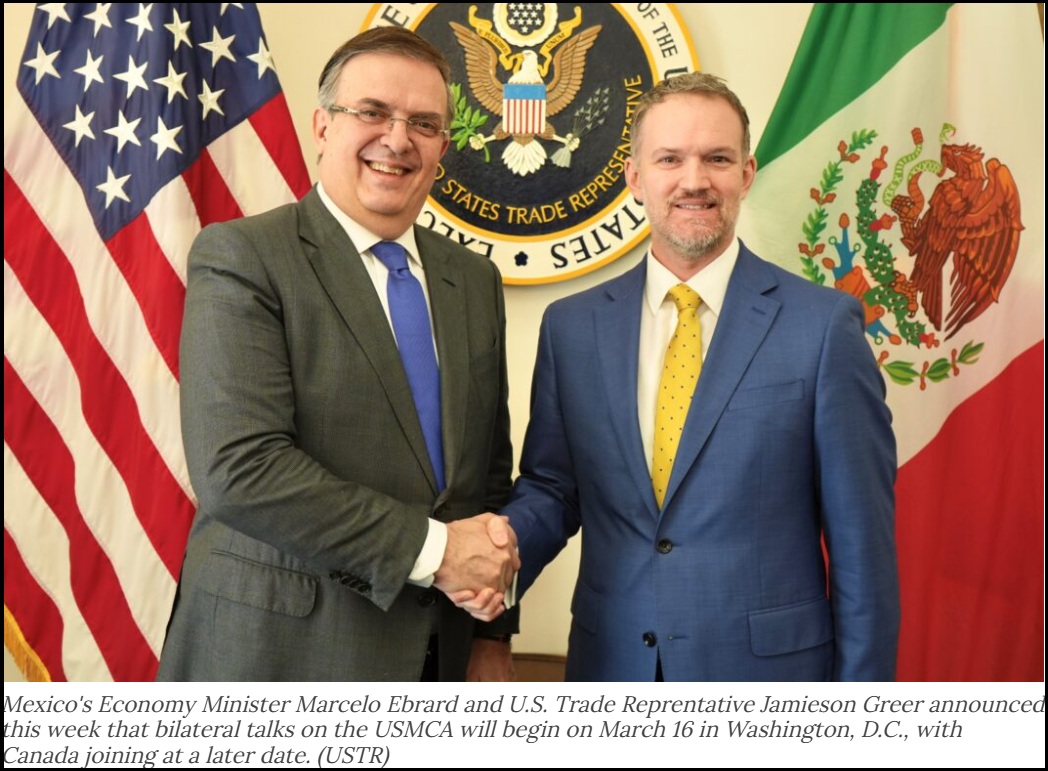
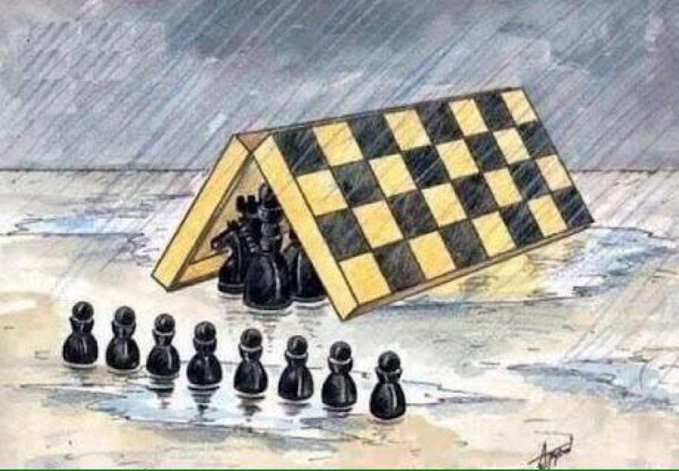
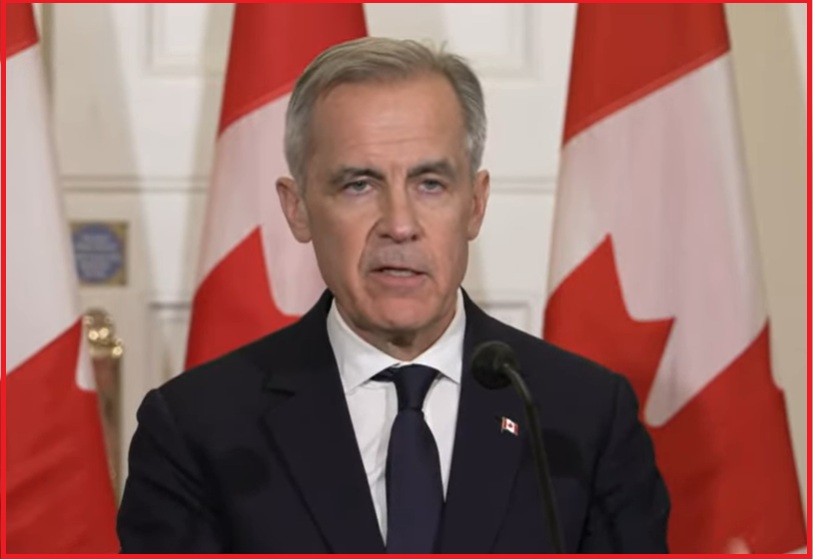
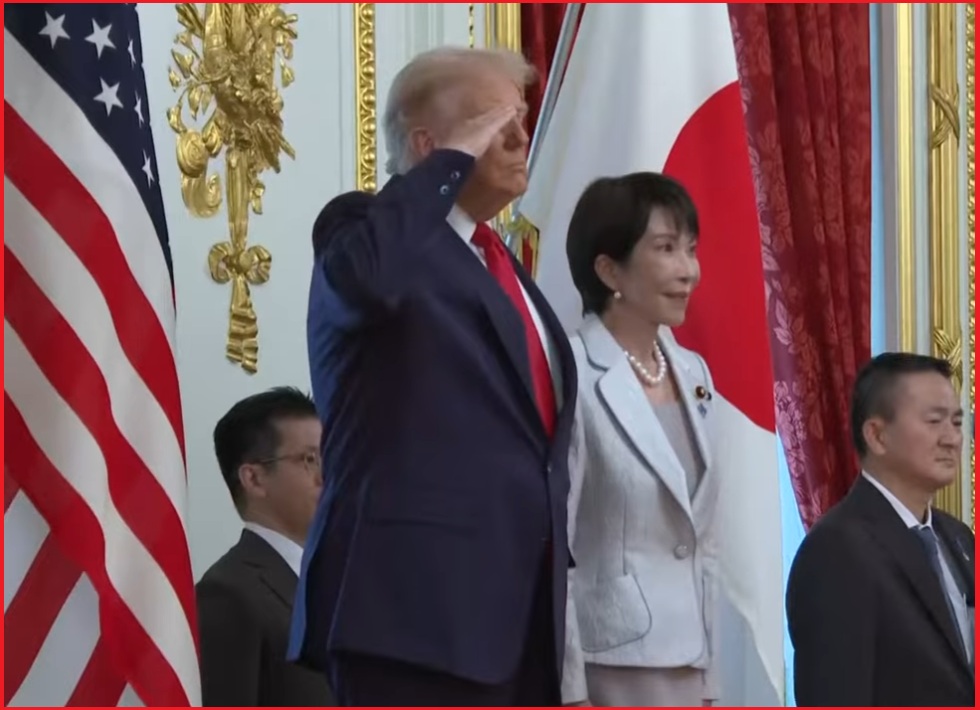
Chinese Auto Sales to Europe Expected to Top 700,000 Units Sold This year


Posted originally on CTH on December 13, 2025 | Sundance |

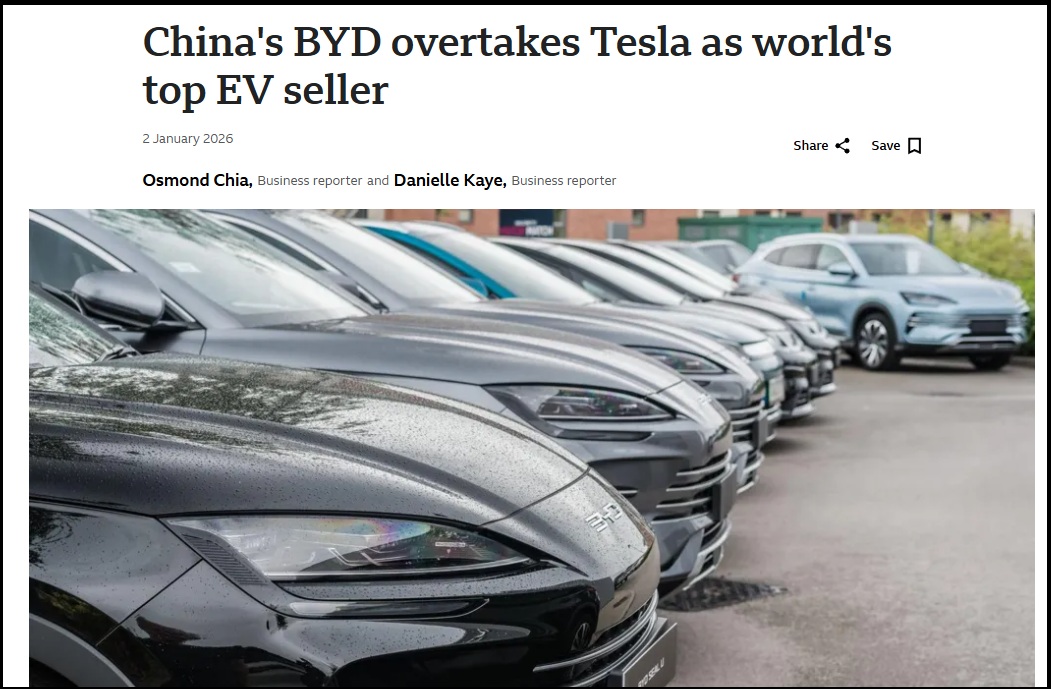
The geopolitical baseline for Europe is often determined by the economics of their situation.  In 2024 approximately 408,000 cars from China were sold in Europe.  For 2025 that number is now expected to exceed 700,000 units despite tariffs.

Previously we highlighted the short-term ramifications of the European Union push to force the sale of electric vehicle (EVs) upon the consumer base.  {SEE HERE} EU automakers unable to meet the compliance goal began purchasing carbon credits to avoid stiff EU fines.  Many of those carbon credits were purchased from Chinese automakers, who then turned around and started using the extra EU revenue to discount Chinese cars sold in Europe.

In essence, EU car companies started subsiding China to undercut their own market. An outcome of the EU chasing the ridiculous green energy project throughout the European free trade zone.

Now reports are beginning to surface of how the non-EV segment of the industry is being lost to less expensive Chinese hybrid autos that: (1) are much cheaper, (2) not bad in quality, and (3) are not subject to the 35% EV tariff rate.

The EU tariff applied to gasoline powered cars or hybrids from China is 10%.  That tariff is not enough to stop the imports. The Chinese hybrid autos are substantially less than European car brands, and there’s no financial incentive for China to build auto plants in the EU zone especially when you consider the EU is subsidizing those cars by purchasing carbon credits.

When analyzed from a cost and consequence, the entire EU dynamic toward car companies is a little funny.  However, for Germany this is a serious issue, and with the German industrial economy already stagnant – every impact to their auto industry only makes the situation worse.

When you overlay the big picture of their expensive “green energy” costs, the EU find themselves in an unescapable downward spiral.  Quite literally, all commonsense seems to have been lost in their green energy chase.

By focusing on energy targets, specifically by trying to force production of European electric vehicles that are not favored by European car purchasers, the EU is shrinking their economy to the benefit of Beijing exploitation.

EUROPE – This year, sales of Chinese-made cars across the EU, UK, and EFTA are expected to exceed 700,000. This is up significantly from the 408,000 that were sold in 2024.

The surge comes despite the fact that additional tariffs of up to 35 percent, on top of the existing 10 percent import duty, were instated in November of last year.

Rather than dampen demand, the tariffs have simply redirected it. While the added fees specifically target EVs and extended-range electric vehicles, hybrid and internal combustion engine (ICE) models remain subject only to the base 10 percent tariff.

Predictably, Chinese brands have leaned into that category, shifting their European strategy toward models that sidestep the higher costs.

Thanks to significantly lower production costs, up to 30 percent cheaper than in Europe, it doesn’t make financial sense for these brands to relocate production just to serve a tariff-guarded market. Instead, they’re exploiting the gap. (read more)

The only Chinese auto plant current in the works for construction is in Hungary, not coincidentally the country with the most common sense as it applies to energy costs. BYD (Build Your Dream) is building a plant in Hungary expected to manufacture 150,000 units/yr.

While most EVs are generally best for short duration use, the Chinese hybrid vehicles are not a terrible build quality if you are an auto purchaser that changes vehicles frequently.  We dodged a bullet by electing President Trump in 2024, because Joe Biden (Blackrock) had positioned the North American auto industry toward a similar fate as currently happening in Europe.

Three Chinese automakers were going to spend $5 billion in Mexico creating new EV and hybrid vehicles destined for the U.S. market. However, Beijing abandoned those plans as soon as President Trump won the election.

The Europeans and leftists in the U.S. scoffed at President Trump for rejecting the premise behind the Green New Deal, which included electric car mandates.  Those same Europeans are now watching as their industrial economy collapses segment by segment; taken over by far cheaper Chinese industrial outputs.

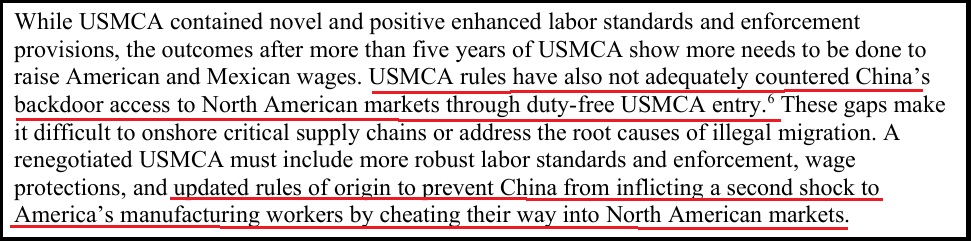
Canadian Media Catch On, U.S Trade Rep Jamieson Greer Says Trump Likely to Exit the USMCA (CUSMA)


Posted originally on CTH on December 5, 2025 | Sundance

In the world of Trumpian geopolitical trade stuff, three issues are very interesting to watch. (1) The strategic reset with Russia which could break the official western construct of financial control. (2) The proactive and defensive positioning of Mexico (desperate attempt to retain economic attachment), and (3) the certain dissolution of the USMCA what Canadians call CUSMA.

Canadian media are starting to realize something we have talked about on these pages for years; President Trump intends to end the USMCA because the USMCA was used as a fracture point to eliminate NAFTA.

Wall Street, the U.S. Congress, the massive K-Street lobbying network around the U.S. Chamber of Commerce and the entire political apparatus of business and industry would never permit the end to NAFTA; too many trillions at stake. So, President Trump replaced NAFTA with the interim USMCA, which was better but factually more useful in elimination of the original.

Now, as we have discussed by highlighting President Trump’s no-so-subtle words on the issue, the Canadian media is realizing the USMCA will be dissolved in favor of two independently negotiated bilateral trade agreements; one with Canada and one with Mexico.

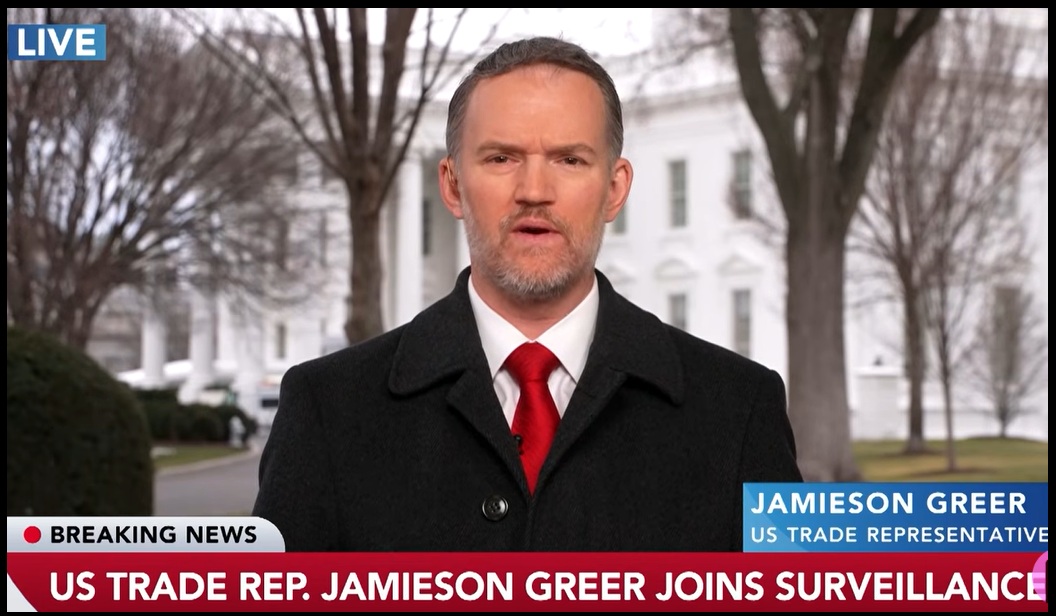
(CTV) – U.S. President Donald Trump could decide next year to withdraw from the Canada-United States-Mexico trade agreement (CUSMA), Politico reported on Thursday, citing U.S. Trade Representative Jamieson Greer.

“The president’s view is he only wants deals that are a good deal. The reason why we built a review period into CUSMA was in case we needed to revise it, review it or exit it,” Greer told Politico’s White House bureau chief Dasha Burns in a podcast episode that airs Friday.

Greer also raised the idea of negotiating separately with Canada and Mexico and dividing the agreement into two parts in the podcast, adding that he spoke with Trump about that possibility just this week.

The White House, Canadian and Mexican governments did not immediately respond to Reuters request for comment.

Trump on Wednesday said that the CUSMA agreement – which faces an upcoming review- will either be left to expire or another deal will be worked out.

The USMCA, which replaced the North American Free Trade Agreement in 2020 and was negotiated during Trump’s first term as president, requires the three countries to hold a joint review after six years. (link)

I have talked to a lot of Canadians on the issues of economics and trade. As a result, I can say with complete sincerity that not since the COVID-19 examples of New Zealand (lockdowns) and Australia (vaxx), has a nation engaged in such a level of mass cognitive dissonance as the govt of Canada on the issue of economics and trade – in the past few years. It is stunning.

To understand the reality of the situation Here’s an IN-DEPTH LINK. Apparently, few really understand the full scope of the issues.

For those who have followed along with the U.S-Canada trade positioning, the current status of conflict between the Trump administration and the government of Canada is not surprising.  {GO DEEP}

Going all the way back to the replacement of NAFTA, with the USMCA, President Trump always said he did not favor multilateral trade deals with multiple countries; instead, he preferred bilateral free trade agreements.

Some people have construed the bilateral preference of President Trump to be the elimination of globalism in favor of nationalism in trade agreements.

While the outcome of the Trump approach indeed aligns with that theme, it is not specifically the objective of President Trump to eliminate global trade, but rather to focus on specific interests in trade that benefit the unique nature of each party involved.

As a result, the USMCA -or CUSMA as said in Canada- is not in alignment with a bilateral free trade agreement, and the conflicted differences between trade with Mexico and trade with Canada are an outcome of this dynamic.  The solution is simply to eliminate the multilateral in favor of the bilateral approach.  This is the objective of President Trump as expressed.

There is zero leverage on the Canadian side of the trade negotiation, zero.

There is nothing that Canada provides to the USA that the USA cannot create, produce or secure independently.  The nature of the economic relationship is entirely lopsided, with the USA getting nothing in return for the massive outflow of U.S. dollars (USD).

Our trade relationship with Canada is based on the U.S. government simply liking our northern neighbor and giving them terms and conditions for their economy to benefit from proximity.  Take the friendship out of the equation, which is key to understanding the polar political ideology of the two nations, and there is simply not much reciprocal trade benefit.

Take away the soft wood lumber, we have our own.  Take away the oil, we have multitudes of domestic production options. Take away the minerals, again we have both our own unused capacities and enhanced trade agreements with other Free Trade Agreement nations.

Then look at the possibility of a strategic U.S-Russia economic alliance, and all those contracted icebreakers take on new meaning.

Some may think this is an overly harsh view of our Canadian friends.  However, the Canadian majority believes in climate change and unfortunately leftist politicians control their industrial economy.  Canada is in the middle of a mass formation psychosis. Canada needs to get hard, dispatch cultural Maxism and put deliberate men in charge.

A Canadian conservative is essentially a politically correct Mitt Romney; not strong enough to make a difference.

The best thing President Trump can do for our Canadian friends is to help strategic regions while their overall economy collapses around them.  Then we hope guys like this surface to rebuild the Great White North.

President Trump Cancels Joe Biden CAFE Standards Against Auto Industry


Posted originally on CTH on December 3, 2025 | Sundance 

In an effort to return common sense, practicality and affordability to the American consumer base for automobiles, President Trump announced the elimination of Joe Biden’s Corporate Average Fuel Economy (CAFE) standards for manufactured cars and trucks.

Under the auspices of the “Green New Deal”, the Biden administration mandated ridiculous quotas for EVs and demanded lower power combustible engines, or pay a climate change tax. These CAFE standards resulted in a surcharge for large vehicles, large engine autos and SUVs, and essentially bifurcated the auto consumer into those who could afford to pay for efficiency and stability, and those who could not.

“We’re officially terminating Joe Biden’s ridiculously burdensome, horrible actually, CAFE standards that impose expensive restrictions and all sorts of problems, gave all sorts of problems to automakers,” President Trump announced from the Oval Office. “It put tremendous upward pressure on car prices, combined with the insane electric vehicle mandate. Biden’s burdensome regulations helped cause the price of cars to soar more than 25%,” President Trump said. WATCH:

(Via White House) – DELIVERING A WIN FOR AMERICAN FAMILIES AND AUTOMAKERS: Today, President Donald J. Trump is delivering major relief to American families by resetting the Biden Administration’s costly and unlawful Corporate Average Fuel Economy (CAFE) standards.

President Trump is returning CAFE standards to levels that can actually be met with conventional gasoline and diesel vehicles. The Biden Administration standards imposed unrealistic fuel economy targets that effectively resulted in an electric vehicle (EV) mandate.

The Trump Administration’s reset of the CAFE standards ensures the program’s fidelity to the legal restrictions set forth by Congress.

The Biden standards broke the law by going far beyond the requirements that were mandated by Congress when it created the CAFE program.

SAVING AMERICAN FAMILIES MONEY: Today’s action represents an enormous win in response to the cost-of-living increases imposed on the economy by the Biden Administration.

The Biden Administration created extraordinarily stringent fuel economy standards for passenger cars and trucks, set at such aggressive levels that they were impossible to meet with available technologies for gas cars.

The Biden standards would have compelled widespread shifts to EVs that American consumers did not ask for, accompanied by significant cost-of-living increases. Since EVs are so expensive to build, automakers must sell them at a loss and make up the difference by significantly raising the sticker price of gas cars.

If President Trump had done nothing, the Biden standards would have raised the average cost of a new car by nearly $1,000, relative to the cost under the standards announced today.

President Trump’s actions will save American families $109 billion in total over the next five years.
By helping more Americans buy newer, safer vehicles, this reset is projected to save more than 1,500 lives and prevent nearly a quarter-million serious injuries through 2050.

MARKING A CRITICAL BATTLE IN THE FIGHT AGAINST BIDEN’S HIDDEN COST-OF-LIVING INCREASES: The CAFE reset represents the latest action by President Trump to prevent the Biden EV-related policies from raising costs for Americans.

In June, President Trump signed a joint resolution to end the California EV mandates, which would have effectively been a 100% ban on new gas cars sold in the state by 2035 (with similar effects in 17 states that adopted California’s standards).

In July, President Trump signed into law the Working Families Tax Cuts Act, which set the civil penalty for violating CAFE standards to $0, protecting the U.S. auto manufacturing industry from significant fines.

Under President Trump, the Environmental Protection Agency (EPA) has also released its proposal to rescind the 2009 Endangerment Finding, which ignores Congress’ clear intent under the Clean Air Act and has been used to justify over $1 trillion in costs for the American consumers and economy.

Today’s action helps ensure that even if far-left Democrats return to power, the CAFE standards are sensible, so U.S. automakers are not held to infeasible standards.

Combined with auto loan interest deductibility for new made-in-the-USA vehicles, President Trump continues to deliver real relief that makes owning a safe, reliable car more affordable for every American family. (source)

Sunday Talks: Treasury Secretary Scott Bessent vs George Stephanopoulos – Video and Transcript


Posted originally on CTH on November 9, 2025 | Sundance 

Treasury Secretary Scott Bessent appears on ABC This Week to combat the narrative engineering of DNC transcriptionist George Stephanopoulos.

Sometimes it’s worth watching Stephanopoulos, Bill Clinton’s former Chief of Staff, because he frames the political position, current and future, for the Democrat party. Video and Transcript Below:

[Transcript] STEPHANOPOULOS: And we’re joined now by the Treasury secretary, Scott Bessent.

Mr. Bessent, thank you for joining us this morning.

We’ve just heard about all these impacts from the shutdown — government shutdown right now. Are we starting to see — see a permanent impact on the economy?

TREASURY SECRETARY SCOTT BESSENT: Sure, George.

And good to be with you.

And we’ve seen an impact on the economy from day one, but it’s getting worse and worse. We had a fantastic economy under President Trump the past two quarters. And now there are estimates that the economy, economic growth for this quarter, could be cut by as much as half if the shutdown continues.

And what your correspondent didn’t talk about there, George, was there’s, of course, the human cost, and we’re going to have the busiest travel day of the year, the day after Thanksgiving. And, you know, Americans should look to five Democratic senators to come across the aisle to open that. But on the other side, there’s also, cargo is being slowed down. So, you know, we could end up with shortages, whether it’s in our supply chains, whether it’s for the holidays.

So, you know, cargo and people are both being slowed down here. And that’s for safety’s sake, George.

STEPHANOPOULOS: The president continues to post about ending the filibuster. Is that — is that the best way to end the shutdown right now? Is that what the administration’s position is?

BESSENT: No, George, the best — the best way to do it — and look, you were involved in a lot of these in the ’90s. And, you know, you basically called the Republicans terrorists and, you know, you said that it is not the responsible party that keeps the government closed.

And so, what we need is five brave, moderate Democratic senators to cross the aisle because right now it is 52 to three, 52 to three, five Democrats can cross the aisle and reopen the government. That’s the best way to do it, George.

STEPHANOPOULOS: I can disagree with you about the history there, but we don’t do history lesson right now.

BESSENT: No, George —

(CROSSTALK)

STEPHANOPOULOS: Let’s talk — let’s talk about — let’s talk about —

BESSENT: No, no, no. George, George, George —

(CROSSTALK)

STEPHANOPOULOS: Let’s talk — sir, let’s talk about what’s happening right now. I asked you a question —

BESSENT: If you want, I’ve got all your quotes here. I got all your quotes here, George.

STEPHANOPOULOS: I am sure — I am — I’m sure you do. But let’s talk about the situation right now —

(CROSSTALK)

BESSENT: And I went back and read your book. So, you got one — one purchase on Amazon this week. And that’s very much what you said.

STEPHANOPOULOS: That’s — it’s a mis — mischaracterization of history. But I do want to talk about right now, is the best way to end the — to end the shutdown right now to end the filibuster?

BESSENT: The best way is for five Democratic senators to come across the aisle. The — what are we on? Vote 13, 14, 15. Mike Johnson got the reopening out of the House very quickly.

And you know what — what’s changed since the spring, George, is — you know, is Chuck Schumer’s poll numbers. He had a clean continuing resolution in the spring.

And why are Democrats doing this now, George? Again, you’ve been involved with this. The — you know, explain what’s changed.

You know, Senator Chris Murphy gave the game away this week when he said, “Well, you know, now it’s to our advantage to keep the government closed.” They have turned the American people into pawns.

STEPHANOPOULOS: The president has also come forward with a new proposal overnight saying it’s time instead to do away with Obamacare, instead to have the money go directly to the people.

Do you have a formal proposal to do that?

BESSENT: We don’t have a formal proposal, but you know, what I have noticed over time is that the Democrats give all these bills the Orwellian names, the Affordable Care Act, the Inflation Reduction Act, and we end up with just the opposite. You know, the Affordable Care Act has become unaffordable, and the Inflation Reduction Act set off the greatest inflation in 50 years.

STEPHANOPOULOS: Well, I’m a little confused because the president been posting about that overnight and into this morning, but you’re not proposing that to the Senate right now?

BESSENT: We’re not proposing it to the Senate right now. No.

STEPHANOPOULOS: Then why is the president posting about it?

BESSENT: George, you know, the president’s posting about it, but again, we have got to get the government reopen before, you know, we do this. We are not going to negotiate with the Democrats until they reopen the government.

It’s very simple. Reopen the government, then we can have a discussion.

STEPHANOPOULOS: Let’s talk about affordability and inflation. That was one of the key concerns that voters said was on their minds as they were voting this Tuesday. It appeared to be the driving force in the elections. But President Trump is still insisting that prices are way down even though last month’s report showed inflation stuck at about 3 percent.

Are Americans worried about inflation just wrong?

BESSENT: Well, George, I can tell you, the — what we’re not going to do is what happened the — under the Biden administration where, you know, the administration and the media gaslit everyone and said, “Oh, you know, there’s a vibe session. You don’t understand how good you had — had it.”

And what happened then was we had the worst inflation, 40 or 50 years — you know, 22, 23 percent, but the basket of goods and services for working Americans was up more than 30 percent.

And what we’re seeing is we had to stop the increase first. Now we are starting to see prices level off, come down. You know, gasoline is down, interest rates are down, so mortgages are down. And I think we are making substantial progress on that.

And I think over the coming months and the next year, prices are going to come down.

STEPHANOPOULOS: The president says though, he just had posted this morning that there’s almost no inflation. The consumer price index is higher than it was in the beginning of the year. Electricity rates are rising, so are prices for coffee, beef, vegetables, televisions.

And it’s not just me. It’s not just economists are saying that. Your own Republican members of Congress are saying that, including Marjorie Taylor Greene. Let’s look.

(BEGIN VIDEO CLIP)

REP. MARJORIE TAYLOR GREENE (R-GA): I go to the grocery store myself. Grocery prices remain high. Energy prices are high. My electricity bills are higher here in Washington, D.C., at my apartment, and they’re also higher at my house in Rome, Georgia. Higher than they were a year ago. So — so, affordability is a problem.

(END VIDEO CLIP)

STEPHANOPOULOS: How do you respond to Congresswoman Greene?

BESSENT: Well, George, what I — what I would respond to is electricity prices are a state problem. And you know, I was very interested to see in the earlier clip where the governor — the governor-elect of New Jersey said, “Well, I’m going to bring down energy prices.” Well, it was her predecessor, Phil Murphy, who took them up.

So, you know, look, there are things that the federal government can control. Local electricity prices are not one of them. But, you know, energy prices, gasoline prices, are way down. And, you know, we — we are doing what we can every day. I think we’re on a very good path to bringing prices down.

STEPHANOPOULOS: Let’s talk about tariffs and the Supreme Court. The president is also posting about tariffs this morning. He’s saying, “people that are against tariffs are fools. We’re taking in trillions of dollars.” Is that true?

BESSENT: We have taken — over the course of the next few years, we could take in trillions of dollars, George. But the real — the real goal of the tariffs is to re-balance trade and make it more fair.

You know, over time, the president’s goal is to bring back manufacturing to the U.S. You know, for the past two, three, four decades we have seen our manufacturing sector gutted. So, what would happen over time is we would take insubstantial money, as factories come back to the U.S., as we’re seeing now. I was just down in South Carolina at a rare earth magnet plant and a Boeing plant on Friday. And, you know, that’s the, I believe, 1,500 total new jobs. Tariff income will be substantial, but then that will rebalance.

The goal here, George, is to re-balance trade. So, tariff income will be substantial at the beginning. It will come down. And then domestic tax revenues will climb as corporate taxes go up and all of these high-paying jobs are created.

STEPHANOPOULOS: The president’s main argument, though, seems to be that we’re — it’s about taking in the revenue. And he also promised this morning a dividend —

BESSENT: No, no, no, George. Stop right — no.

STEPHANOPOULOS: A dividend of at least $2,000 a person, not including high-income people. How is he going to pay that dividend of $2,000 a person?

BESSENT: Yes, George, it’s not about taking in the revenue, it’s about re-balancing. And the revenue occurs early on. And then as we rebalance and the jobs come home, then it becomes domestic tax revenue.

STEPHANOPOULOS: Are you worried that the president’s focus on revenue, though, which is what he’s been focusing on in his public statements, is going to hurt your argument in the Supreme Court?

BESSENT: Not at all. It’s completely consistent that the revenues come in at the beginning, then, as we rebalance, which is the goal of this, bring back high-paid manufacturing jobs to the U.S., then it will then morph into domestic tax revenues.

You know, President Trump has consistently fought for the American worker, and we are seeing trillions of investments in the U.S. that would not have occurred without the tariffs.

The other thing, too, is, you know, the authority that he uses is called IEEPA. It is an emergency authority. And he used that emergency authority. He got the Chinese to the table to negotiate on stopping the precursors for fentanyl drugs. You know, fentanyl, hundreds of thousands of Americans dying every year is not an emergency, what is? On October 8th, Chinese threatened to put export controls on rare earth materials. He was able to threaten 100 percent tariffs, and we were able to negotiate that away.

And then, finally, in terms of the general tariffs, we are doing these trial deals that would not be possible. We were at a tipping point in terms of the economy, in terms of our trade balance, and we are re-balancing successfully.

STEPHANOPOULOS: Do you have a proposal, a formal proposal, to give a $2,000 dividend to every American?

BESSENT: I haven’t spoken to the president about this yet, but, you know, it could — the $2,000 dividend could come in lots of forms, in lots of ways, George. You know, it could be just the tax decreases that we are seeing on the president’s agenda. You know, no tax on tips, no tax on overtime, no tax on Social Security. Deductibility of auto loans. So, you know, those are substantial deductions that, you know, are being financed in the tax bill.

STEPHANOPOULOS: Secretary, thanks for your time this morning.

Canadian Prime Minister Mark Carney Confirms He Apologized to President Trump for Reagan Ad Effort


Posted originally on CTH on November 1, 2025 | Sundance 

On Friday President Trump noted (off-the-cuff) he was ambivalent to the trade interests of Canada and had no intention to restart discussions. However, Trump also said he holds no personal animosity toward Canadian Prime Minister Mark Carney for the stupid and antagonistic move they made in purchasing a manipulative television ad intended to undermine the Trump trade position.

On Saturday, Prime Minister Mark Carney confirmed he did apologize to President Trump for the Canadian effort.

GYEONGJU, South Korea, Nov 1 (Reuters) – Canadian Prime Minister Mark Carney said on Saturday he had apologised to U.S. President Donald Trump over an anti-tariff political advertisement and had told Ontario Premier Doug Ford not to run it.

Carney, speaking to reporters after attending an Asia-Pacific summit in South Korea, said he had made the apology privately to Trump when they both attended a dinner hosted by South Korea’s president on Wednesday.

“I did apologise to the president,” Carney said, confirming comments by Trump made on Friday.

Carney also confirmed that he had reviewed the ad with Ford before it aired but said he had opposed using it.

“I told Ford I did not want to go forward with the ad,” he said.

The ad, commissioned by Ford, an outspoken Conservative politician who is sometimes compared to Trump, uses a snippet of Republican icon and former President Ronald Reagan saying that tariffs cause trade wars and economic disaster.

In response, Trump announced that he was increasing tariffs on goods from Canada, and Washington has also halted trade talks with Canada.

When departing South Korea earlier this week, Trump remarked he had a “very nice” conversation with Carney at that dinner but did not elaborate. On Friday Trump still said the United States and Canada will not restart trade talks. (read more)

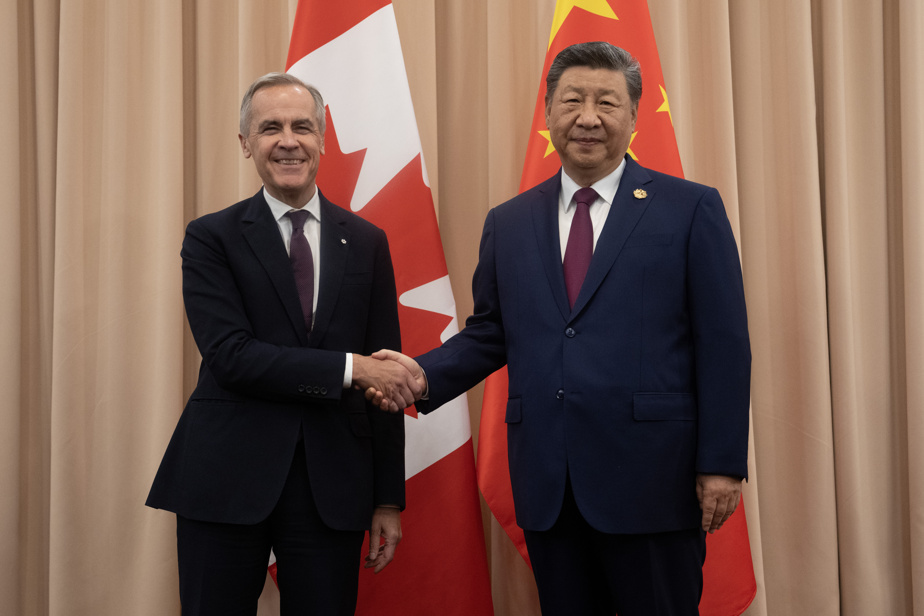
Carney also noted he had great discussions with Chinese Chairman Xi Jinping but did not negotiate any trade deals.

Instead, the Canadian Prime Minister emphasized the release of Canadian citizens detained in China and requested that Beijing not interfere in Canadian domestic politics.

The irony is strong.

The current USMCA (CUSMA) trade pact covers approximately 60% of U.S-Canada trade; it is the remaining 40% is being debated and argued.

President Trump’s position is pragmatic. He would prefer to just deal with 100% of the trade sectors in one bilateral free trade agreement; hence, his ambivalence until the USMCA is dissolved.

Canada, on the other hand, is entirely dependent.  They demand all trade conflicts be resolved without opening up the USMCA. Again, another conflict. Canada is like the dependent spouse in a divorce arguing for child support payments when the “children” are in their twenties.

The current status is President Trump pulling back completely from discussions with Canada, while the various provincial Premiers and Prime Minister Mark Carney agonize over the issue.

At a certain point, when the entire national economic plan of Canada is based on “Donald Trump bad”, and all political messaging internally is to proclaim they have no alternative policy positions, the Canadians might not realize it, but they are confirming complete and total dependency on the nation Donald Trump represents.

What took place in last week’s tour of Asia, makes Canadian Prime Minister Mark Carney look very small.

President Trump Participates in a Dinner Hosted by the President of the Republic of Korea


Posted originally on CTH on October 29, 2025 | Sundance |

President Trump participates in a dinner hosted by Lee Jae-myung, the President of the Republic of Korea.

PRESIDENT TRUMP – South Korea has agreed to pay the USA 350 Billion Dollars for a lowering of the Tariff’s charged against them by the United States. Additionally, they have agreed to buy our Oil and Gas in vast quantities, and investments into our Country by wealthy South Korean Companies and Businessmen will exceed 600 Billion Dollars. Our Military Alliance is stronger than ever before and, based on that, I have given them approval to build a Nuclear Powered Submarine, rather than the old fashioned, and far less nimble, diesel powered Submarines that they have now. A great trip, with a great President of South Korea! (link)

President Trump Arrives at Busan, South Korea – Welcoming Ceremony


Posted originally on CTH on October 29, 2025 | Sundance

President Trump arrives in South Korea to attend trade discussions and the APEC summit.

.

U.S. Ambassador to Canada Informs Govt and Business Leaders No Trade Deals Possible


Posted originally on CTH on October 28, 2025 | Sundance 

For those who have followed along with the U.S-Canada trade positioning, the current status of conflict between the Trump administration and the government of Canada is not surprising.  {GO DEEP} Going all the way back to the replacement of NAFTA, with the USMCA, President Trump always said he did not favor multilateral trade deals with multiple countries; instead, he preferred bilateral free trade agreements.

Some people have construed the bilateral preference of President Trump to be the elimination of globalism in favor of nationalism in trade agreements.

While the outcome of the Trump approach indeed aligns with that theme, it is not specifically the objective of President Trump to eliminate global trade, but rather to focus on specific interests in trade that benefit the unique nature of each party involved.

As a result, the USMCA -or CUSMA as said in Canada- is not in alignment with a bilateral free trade agreement, and the conflicted differences between trade with Mexico and trade with Canada are an outcome of this dynamic.  The solution is simply to eliminate the multilateral in favor of the bilateral approach.  This is the objective of President Trump as expressed.

That said, the USMCA covers approximately 60% of U.S-Canada trade, and the remaining 40% is being debated and argued.  President Trump would prefer to just deal with 100% of the trade sectors in one free trade agreement; hence, his ambivalence until the USMCA is dissolved.

Canada, on the other hand, continues to demand that all trade conflicts be resolved without opening up the entire USMCA. Again, another conflict. Canada is like the dependent spouse in a divorce arguing for child support payments when the “children” are in their twenties.

The current status is President Trump pulling back completely from discussions with Canada, while the various provincial Premiers and Prime Minister Mark Carney antagonize over the issue.

At a certain point, when the entire national economic plan of Canada is based on “Donald Trump bad”, and all political messaging internally is to proclaim they have no alternative policy positions, the Canadians might not realize it, but they are confirming complete and total dependency on the nation Donald Trump represents.

As the Canadian government continues demanding President Trump pay attention to their needs, U.S. Ambassador to Canada, Pete Hoekstra, informs the Carney administration, and various stakeholders, any trade agreement is no longer possible.

CANADA – The U.S. ambassador to Canada doesn’t foresee a new security and economic deal between Canada and the United States — which could see the reduction or full removal of tariffs amid an ongoing trade dispute — before the new year.

“We have stopped negotiations with Canada,” Pete Hoekstra said in a keynote address to the Coalition of Concerned Manufacturers and Business Canada on Monday. “I don’t see any way that there will be an agreement before American Thanksgiving.”

“I’m not sure what it’s going to take to get people back to the table in a constructive and positive mode,” he added.

Hoekstra’s comments come just days after U.S. President Donald Trump said he is terminating trade talks with Canada and increasing levies on Canadian goods by 10 per cent in response to an anti-tariff ad by the government of Ontario which featured the voice of former Republican U.S. president Ronald Reagan. Ontario has since pulled the ads, effective Monday.

Government sources had told CTV News that Canadian officials were hopeful there could be movement on a steel and aluminum deal by this week’s APEC Summit in South Korea.

[…] Asked by event attendees whether he sees any way to get negotiations back on track, such as an apology for the ad, Hoekstra said: “No.”

Speaking more broadly about the state of negotiations, Hoekstra laid the blame at Canada’s feet for the soured relationship.

Hoekstra has previous expressed his distaste for what he’s called “anti-American” sentiment in Canada, and on Monday pointed to some provinces removing U.S. liquor from store shelves and Canadians being discouraged from travelling south of the border as examples.

He also said the ad amounts to foreign interference, with the U.S. Supreme Court set to start hearing arguments on the legality of Trump’s tariffs on Nov. 5, as well as some gubernatorial and state legislative elections happening next week.

“Canada burnt the bridges with America,” he said. “Donald Trump did not slam the door.”

“Donald Trump could do the only thing that a leader of a sovereign nation could do when a neighbour, another sovereign nation, decided to interject itself into American politics,” he added. “Canada slammed that door shut all by itself.” (read more)

Canada is trying to force President Trump to give them preference, in a similar way the EU demanded special trade privileges.

President Trump is trying to end the Canadian one-way benefits toward the U.S. market.

President Trump is currently touring Asia, gathering up bilateral trade deals with various countries all across the ASEAN network.

In the bigger context, Trump is cutting all the tentacles and tools of China, and isolating them from Southeast Asia, as it relates to trade with the USA.

The bigger strategy of President Trump is very clear now, reduce dependency on China by retracting all of the manufacturing dependency.

All of the surrounding nations in Asia stand to benefit from this approach through bilateral free trade agreements with the USA.  Beijing’s influence is being seriously diminished as the lead-up to President Trump sitting down with Chinese Chairman Xi Jinping on Thursday.

Inside China, throughout the Chinese Communist Party, there are indications they are recognizing how successful President Trump has been at working around their influence.  Some outside observers have even started to believe the “moderates” within China feel empowered over the “hardliners” represented by Chairman Xi.  There is a lot going on behind the scenes.

This internal pressure inside Beijing’s politics works to President Trump’s favor, because it makes it even harder for Xi Jinping to be aggressive.  Additionally, with the Chinese economy being uncertain, perhaps significantly weak, Chairman Xi might even face a challenge to his power structure.  Meanwhile President Trump hops around shaking hands and making deals.

Canada Likely to Take Chinese EV Production as Offset to Lost U.S. Trade


Posted originally on CTH on October 27, 2025 | Sundance 

As previously outlined, Canada is so entrenched with their ‘orange man bad’ syndrome, they just cannot get out of their own way on stupid trade decisions.  {GO DEEP}

You might remember Mexico retreating from Chinese electric vehicle (EV) development following the November 2024 election of Donald Trump.

China was on the cusp of investing $5 to $7 billion in new EV manufacturing in Mexico, when President Trump announced he would impose massive tariffs to block any import of Chinese EVs made in Mexico. Trump won the election and together China and Mexico scrapped their plan.

Europe then stepped on the Chinese EV rake and began purchasing carbon credits from Chinese EV companies to avoid the “climate change” auto goals and subsequent fines to EU car companies for not hitting EV production targets. In essence, Europe is paying Chinese EV companies for carbon credits, thereby subsidizing lower priced Chinese EVs in Europe. The EU is paying China to destroy their own auto industry.

Now, it’s Canada’s turn.

As a result of President Trump asserting tariffs against imported autos, the large auto companies are abandoning plans to build or expand auto manufacturing in Canada. The Canadians are angry, and the professional political class in Canada is doing everything they can to continue ramping up opposition to Donald Trump.

With increased tariffs against Canada, and with the likely dissolution of the USMCA (CUSMA) coming in the near future, the Canadian govt of Mark Carney has been traveling the world to find alternative markets for their goods and services. The main targets for new Canadian economic and trade relations are the U.K, EU and China.

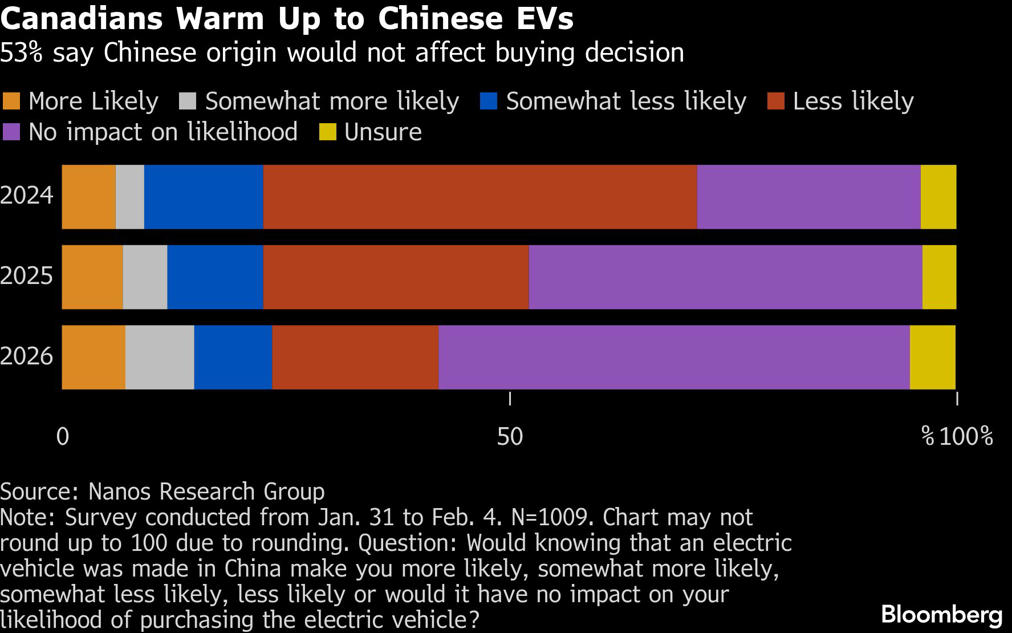
In a deal to expand the trade relationship with China, the Canadian government of Mark Carney is now proposing to drop tariffs against Chinese EVs in a deal to sell more pork and canola oil. That’s correct, in essence Canada will take the EV auto business abandoned by Mexico.

This was Canadian Prime Minister Mark Carney’s grand plan as he attended the ASEAN summit in Malaysia.

Keep in mind, as we have outlined all along during Trump’s trade reset, the USMCA is going to be abandoned in favor of two bilateral free trade agreements; one with Mexico and one with Canada.

As outlined in the Mexican decision to cancel EV investment, Mexico is aligning for a favorable trade relationship with President Trump and the USA.

The Mexican govt can see the benefits and accepts their regional dependency to the world’s largest consumer market. However, Canada is doing exactly the opposite and increasing the disconnect between Canada and the United States on key sectors of trade and commerce.

Canada may benefit in the short term from sales of pork and canola to Beijing, while simultaneously gaining Chinese investment in cobalt mining and auto development for EVs. But those EVs will never be permitted to cross the border into the USA and any effort to enhance Chinese EV sales in Canada will only disconnect them more from trade with Donald Trump and the USA.

[BACKGROUND HERE] – [Canada/Chinese EV Deal Here]

Mohamed El-Erian Outlines Stunning Success of President Trump’s Tariff, Trade and Economic Policy Agenda


Posted originally on CTH on October 27, 2025 | Sundance

Wharton Professor and noted economist Mohamed El-Erian appeared on Fox News to discuss the jaw-dropping success President Trump is having with his global trade reset.

As noted by El-Erian no one, including El-Erian himself, expected President Trump to be able to navigate a global trade and economic reset with such stunning success.  The entire economic policy is being driven by the personal influence of President Trump as he leverages tariffs and policy incentives to the benefit of the USA economy exclusively.

The scale of Trump’s agenda is difficult to overstate, and China is now positioned to feel incredible pressure to align Beijing policy with the requests of President Trump.  “We thought there would be a massive retaliation against the US, there hasn’t been” El-Erian noted.  “We’re collecting $800 Billion of tariff revenue” and “inflation has waned,” he said.  This is a remarkable situation that few economists could accurately predict.  WATCH:

This is not a surprise to readers here as we have discussed the Trump trade agenda with clear, non-pretending eyes.  The ASEAN trip by President Trump is a masterclass in leveraging trade relationships and creating isolation for China.  The downstream consequences for Canada continue to build as the Carney administration doubles down on their entrenched and futile opposition.

If President Trump can formulate a strong, actionable and enforceable free trade agreement with Chairman Xi, it will undercut the ability of Canada to assemble cheap component goods not available in the U.S. manufacturing equation for total cost of goods.  This puts Trump in an even stronger position heading into the 2026 USMCA (CUSMA) dissolution phase.

Additionally, despite the mainstream thoughts to the contrary, putting distance between Russia and China is not averse to the interests of Russian Federation Vladimir Putin, who would strategically prefer to do business with the ‘West’ over Beijing.  However, China does not want to see their Biden-created tentacle weakened in Russia.

China retains a vision of a global financial market option beyond the dollar, and Xi plays that long-term strategy game with Putin quite effectively.  It is only President Trump who holds the key to weakening that strategy, and Chairman Xi likely reminds everyone -through his emissaries- that they can wait out the Trump administration.

However, during the ASEAN conference, again we see President Trump drawing heavily on the personal factor as a part of his strategic influence operation to push distance between Southeast Asia and Beijing.  Cunning Panda can undoubtedly see that play, however, culturally they may underestimate the strength of the dynamic.  President Trump leverages the world’s biggest market with a smile.  The world’s biggest sellers want and need to keep that smile on the face of their #1 customer.

President Donald Trump is a friendly dealmaker, until he is not. Southeast Asia understands this dynamic very well.