Why Did Trump Really Take Venezuela? It Wasn’t Just Oil!


Posted originally on Jan 4, 2026 by Martin Armstrong |  

COMMENT: You said these podcasts that Venezuela had the oil but the big question is China. Would like to expand on that now? Socrates showed the dollar taking off in October 2024 and the fourth quarter was a turning point. But it now shows volatility rising from February on. It looks like this is not over as you say until the fat lady sings.

FDS
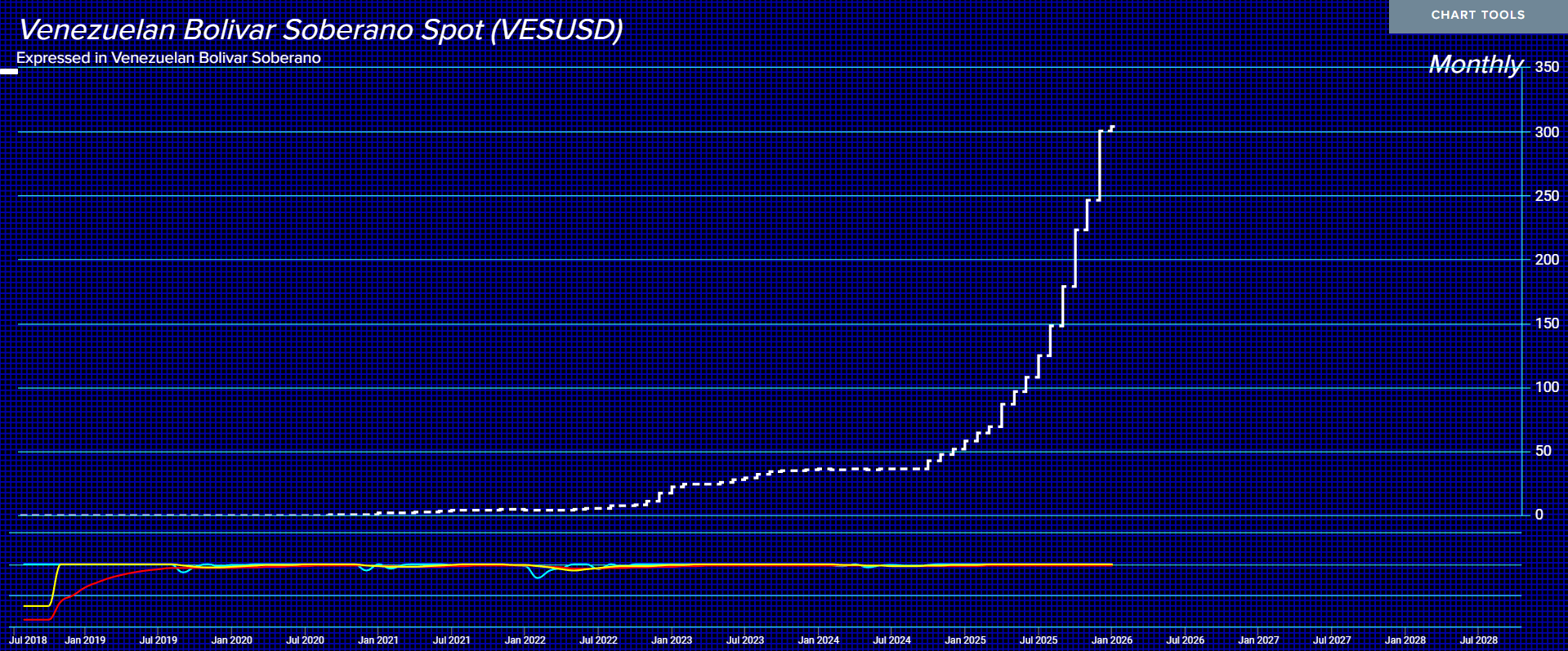
Venezuela Bolivar Y 1 3 26

ANSWER: OK. I suppose I can now give the bigger picture that headlines miss. Trump’s comment throws in energy secondly. He does not mention drugs. Most of the drugs come in through Mexico. As I have said, China is the #1 client of Venezuela. This all depends on the takover of those oil assets by the American oil companies and do they cut off China. That may not be in the cards just yet because Venezuela owes a lot of monet to China. However, overlooked here is the connection to Russia. That is the real issue nobody is taking about and this has been a goal of Rubio for a very long time.

Russian lawmaker Alexei Zhuravlyov told Gazeta.ru on November 1st, 2025 that Russia MAY supply Venezuela with its new Oreshnik and Kalibr missiles, stating “I see no obstacles to providing our friendly nation with new systems such as the Oreshnik or the well-proven Kalibr missiles.” This wasn’t merely hypothetical posturing but a direct response to U.S. military buildup in the Caribbean. This threat was taken seriously. The Oreshnik, with a reported maximum range of about 3,400 miles, could theoretically threaten much of the continental United States as well as Puerto Rico. The Kalibr is thought to have a range of between 930 and 1,550 miles, which could possibly threaten the southern continental U.S., as well as facilities throughout the Caribbean.

From Venezuelan territory, the missile could target most of South America, the Caribbean, Mexico, and large portions of the United States—with Washington likely among its primary targets, given the tense relations between the US and Maduro’s regime. Even parts of Canada could fall within its range.

The relationship between Venezuela and Russia and China represented one of the most significant geopolitical realignments of the 21st century, built on anti-American sentiment, oil-for-loans arrangements, and mutual opposition to U.S. hegemony. This trilateral dynamic evolved from modest beginnings under Hugo Chávez into a comprehensive strategic partnership that has sustained the Maduro regime through economic collapse and international isolation.

The relationship between China and Venezuela took formal shape in 2006, under President Hugo Chávez, with Caracas signing several trade agreements with Beijing and describing China as a “Great Wall” against US influence. Chávez, seeking to diversify Venezuela’s oil exports away from the United States and counter American regional dominance, found in China an eager partner with rapidly growing energy needs and no political conditions attached to its financing.

The financial dimensions proved staggering. China began extending large loans to Venezuela, backed by future oil supplies of oil. In 2006, Beijing provided $2 billion in loans, which rose to $7 billion in 2007. Of the $150 billion the Chinese Development Bank loaned to Latin America in the past 12 years, a third went to Venezuela. These weren’t traditional loans but rather oil-collateralized arrangements where Venezuela repaid through petroleum shipments to Chinese state companies.

In 2007, China and Venezuela set up a joint fund worth $6 billion–$4 billion loan from the China Development Bank (CDB) and $2 billion from El Fondo De Desarrollo Nacional S.A. (FONDEN) set up by Caracas. This fund doubled to $12 billion by 2009. The mechanism was straightforward: China provided upfront capital, and Venezuela committed to shipping specified quantities of oil at predetermined prices. When oil prices collapsed in 2014 and Venezuela’s economy imploded, China extended additional lifelines including a $10 billion loan to support the country’s balance of payments.

The relationship peaked between 2010 and 2013, when Venezuela received approximately 64% of China’s new credit lines to Latin America. However, as Maduro’s mismanagement destroyed the oil industry and production plummeted, Chinese enthusiasm collapsed as a result. By 2016, Venezuela received only 10% of Chinese regional lending, and new financing essentially ceased. China focused instead on restructuring existing debt and protecting already-committed investments.

China is owed by Venezuela at least $20 billion in loans established before 2017. Some estimate that is even higher. The relationship shifted from expansion to damage control. Maduro’s rampant corruption and mismanagement has led to the region’s worst economic depression, creating unfavorable investment conditions, affecting oil production and exports, and limiting return on Chinese investment and Venezuela’s ability to repay Chinese loans.

Now, that said, we must look at the Russian comment and look at this video. Who is standing there with Trump? Marco Rubio. If you remember, Rubio was also running for president against Trump in 2016. Who was funding his campaign? Goldman Sachs. Rubio has pushed for regime change in Venezuela because of Russia for years. Marco Rubio has held many titles during Donald Trump’s presidency, and he now adds another: Viceroy of Venezuela.

Russia’s engagement with Venezuela followed different patterns than China’s, emphasizing military cooperation alongside energy sector involvement since Russia did not need their oil. Where China provided infrastructure loans, Russia sold weapons systems. From 2005, Venezuela purchased more than $4 billion worth of arms from Russia. These sales included fighter aircraft, helicopters, armored vehicles, and air defense systems, transforming Venezuela’s military from American-equipped forces to Russian-supplied ones.

Russia and Venezuela forged a comprehensive strategic partnership centered on anti-hegemonic solidarity and pragmatic cooperation. This wasn’t merely commercial but explicitly geopolitical. Chávez and later Maduro positioned Venezuela as Russia’s foothold in the Western Hemisphere, allowing military exercises and bomber flights that signaled Moscow’s reach into America’s traditional sphere of influence.

The energy relationship proved more complex than China’s. Russia’s state oil company Rosneft provided billions in loans and took equity stakes in Venezuelan projects, though on smaller scale than Chinese financing. Russia’s state-backed oil company Rosneft loaned $2.3 billion, excluding interest. Critically, Russia helped Venezuela circumvent U.S. sanctions by facilitating oil exports through complex shipping arrangements and providing technical expertise to maintain declining production.

The trade balance between Moscow and Caracas increased by 64% in 2024, demonstrating sustained engagement despite Venezuela’s economic deterioration. Russia viewed Venezuela through multiple lenses simultaneously both as an economic opportunity, as well as a strategic geopolitical asset.

The Geopolitical Chess Move
Checkmate 2

I hope this explains behind the curtain for this is NOT simply a grab for oil NOR is it simply about drugs. We will see if Trump/Rubio cuts off the energy flow to China. But I believe that is a card to be played later in the game. I believe that #1 reason is to prevent Russia using Venezuela as a foothold like Cuba in 1962. But this is again only one reason in a complex strategic geopolitical move that is beyond the headlines right now.

Despite Media Protestations – No Congressional Notification Needed or Warranted in Maduro Operation


Posted originally on CTH on January 4, 2026 | Sundance

Many on the political left, and even a few on the political right, are having fits about President Trump authorizing the operation to capture Venezuela president and narcotrafficker Nicolas Maduro without any congressional notification.

Several House members attempted to frame the issue as Trump acting as a dictator. A few called attention to the lack of the Gang of Eight being notified, and even some Republican senators on the Senate Armed Services Committee were concerned with the military deployment without advance notice.

If a covert intelligence operation was deployed, the President would sign a “finding memo” generally notifying the Gang of Eight, but that doesn’t apply in this instance.

President Trump remarked a concern with leaks was an element, saying that Congress has “a tendency to leak,” which he said could have produced “a very different result.”  However, Secretary Marco Rubio was purposefully clear in his statement about the operation.

“This is not the kind of mission that you can do congressional notification on. It was a trigger-based mission in which conditions had to be met night after night,” Rubio said later at a Mar-a-Lago news conference.  “Remember, at the end of day, at its core, this was an arrest of two indicted fugitives of American justice, and the Department of War supported the Department of Justice in that job. Now there are broader policy implications here, but it’s just not the kind of mission that you can pre-notify because it endangers the mission,” he said.

Senate Intelligence Committee Chairman Tom Cotton affirmed after discussion with Rubio, “congress doesn’t need to be notified ever time the executive branch is making an arrest. And that’s exactly what happened this morning in Venezuela, and now Maduro is going to come to the United States, and he’s going to face justice.”

This is an important distinction.  The DEA and DOJ carried out an arrest of an indicted drug trafficker.

This was, as Rubio noted, a law enforcement operation to capture fugitives.  The military component was in support of that operation, nothing more.  The DOJ had the lead; the DEA was the enforcement mechanism, and the military were in tactical support.

Pertaining to the “broader policy implications” noted by Rubio, there are many facets.  As accurately noted by Cynical Publius:

“Under Maduro, Venezuela had become the Latin American crossroads for all of the USA’s principal enemies. Maduro was nurturing relationships with Russia, Hezbollah and Iran. Worst of all, Venezuela was eagerly becoming a part of Red China’s Belt & Road initiative.

As America’s enemies were lining up Venezuela as their base of operations in the Western Hemisphere to cause mischief and destruction for the USA, Maduro was at the same time making Venezuela a crossroads, safe haven and enabler for all manner of narcoterrorist operations, ranging from Colombia’s FARC to Mexico’s Sinaloa cartel.

On top of all that, Venezuela had become a key player in the illegal alien invasion of the USA, shipping its very worst to the USA in a deliberate and comprehensive destabilizing operation that might have worked had Donald Trump not won in 2024.

[…] So was Maduro seized because of some five-year-old drug charges? Yes. Legally–yes. However, like so many strategic issues in the world today, an action needed to be backed by the fine points of law, and it was. But the reality is that the Maduro takedown was a Monroe Doctrine-driven necessity that has greatly enhanced the power and national security of the USA. (read more)

However, beyond the geopolitical issue that relates to all the above, there is another consideration that might help explain the immediate and alarmed reaction of Mexico.

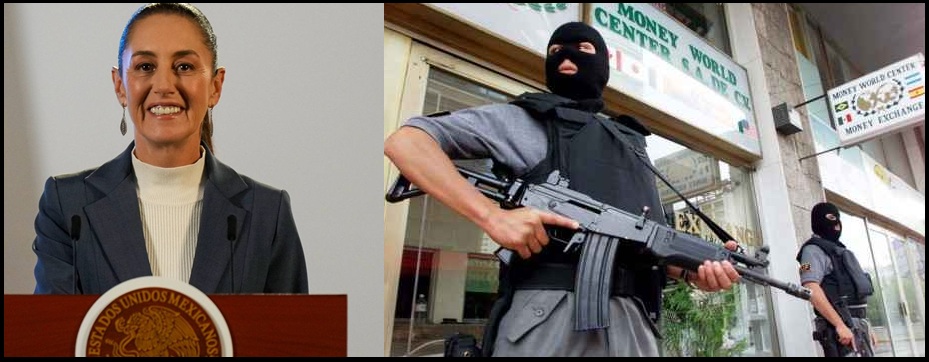
With President Trump now forcefully executing exfiltration of narcotic drug traffickers, the ramifications for Mexico and the Cartels who own/operate the Mexican government take on a new context.

If the U.S. will raid Venezuela, will the U.S. now conduct a similar approach closer to home?

OFFICIAL STATEMENTMexico condemns military intervention in Venezuela – The Government of Mexico strongly condemns and rejects the military actions carried out unilaterally in recent hours by armed forces of the United States of America against targets in the territory of the Bolivarian Republic of Venezuela, in clear violation of Article 2 of the Charter of the United Nations (UN).

Based on its foreign policy principles and its pacifist vocation, Mexico makes an urgent call to respect international law, as well as the principles and purposes of the UN Charter, and to cease any act of aggression against the Venezuelan government and people.

Latin America and the Caribbean is a zone of peace, built on the basis of mutual respect, the peaceful settlement of disputes and the prohibition of the use and threat of force, so that any military action puts regional stability at serious risk.

Mexico emphatically reiterates that dialogue and negotiation are the only legitimate and effective ways to resolve existing differences and therefore reaffirms its readiness to support any effort to facilitate dialogue, mediation or accompaniment that would help to preserve regional peace and avoid confrontation.

It also urges the United Nations to act immediately to contribute to the de-escalation of tensions, facilitate dialogue and create conditions that allow for a peaceful, sustainable solution in accordance with international law. (link)

Reconsider these words from Rubio, against the backdrop of what Mexico is known for. WATCH:

Chinese Auto Sales to Europe Expected to Top 700,000 Units Sold This year


Posted originally on CTH on December 13, 2025 | Sundance |

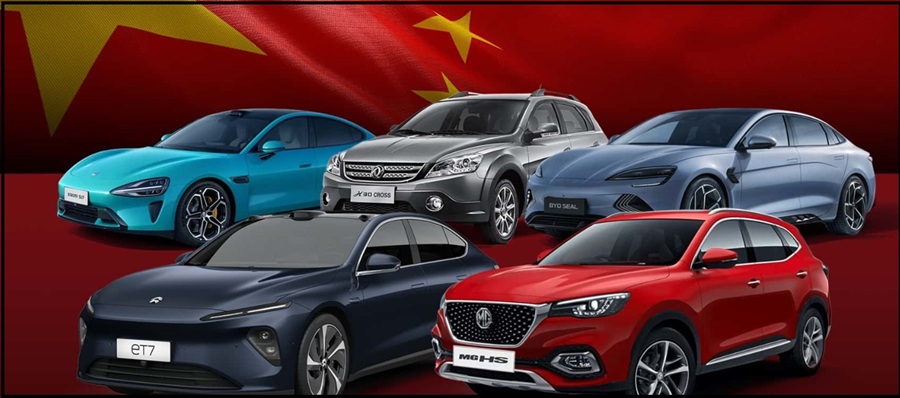
The geopolitical baseline for Europe is often determined by the economics of their situation.  In 2024 approximately 408,000 cars from China were sold in Europe.  For 2025 that number is now expected to exceed 700,000 units despite tariffs.

Previously we highlighted the short-term ramifications of the European Union push to force the sale of electric vehicle (EVs) upon the consumer base.  {SEE HERE} EU automakers unable to meet the compliance goal began purchasing carbon credits to avoid stiff EU fines.  Many of those carbon credits were purchased from Chinese automakers, who then turned around and started using the extra EU revenue to discount Chinese cars sold in Europe.

In essence, EU car companies started subsiding China to undercut their own market. An outcome of the EU chasing the ridiculous green energy project throughout the European free trade zone.

Now reports are beginning to surface of how the non-EV segment of the industry is being lost to less expensive Chinese hybrid autos that: (1) are much cheaper, (2) not bad in quality, and (3) are not subject to the 35% EV tariff rate.

The EU tariff applied to gasoline powered cars or hybrids from China is 10%.  That tariff is not enough to stop the imports. The Chinese hybrid autos are substantially less than European car brands, and there’s no financial incentive for China to build auto plants in the EU zone especially when you consider the EU is subsidizing those cars by purchasing carbon credits.

When analyzed from a cost and consequence, the entire EU dynamic toward car companies is a little funny.  However, for Germany this is a serious issue, and with the German industrial economy already stagnant – every impact to their auto industry only makes the situation worse.

When you overlay the big picture of their expensive “green energy” costs, the EU find themselves in an unescapable downward spiral.  Quite literally, all commonsense seems to have been lost in their green energy chase.

By focusing on energy targets, specifically by trying to force production of European electric vehicles that are not favored by European car purchasers, the EU is shrinking their economy to the benefit of Beijing exploitation.

EUROPE – This year, sales of Chinese-made cars across the EU, UK, and EFTA are expected to exceed 700,000. This is up significantly from the 408,000 that were sold in 2024.

The surge comes despite the fact that additional tariffs of up to 35 percent, on top of the existing 10 percent import duty, were instated in November of last year.

Rather than dampen demand, the tariffs have simply redirected it. While the added fees specifically target EVs and extended-range electric vehicles, hybrid and internal combustion engine (ICE) models remain subject only to the base 10 percent tariff.

Predictably, Chinese brands have leaned into that category, shifting their European strategy toward models that sidestep the higher costs.

Thanks to significantly lower production costs, up to 30 percent cheaper than in Europe, it doesn’t make financial sense for these brands to relocate production just to serve a tariff-guarded market. Instead, they’re exploiting the gap. (read more)

The only Chinese auto plant current in the works for construction is in Hungary, not coincidentally the country with the most common sense as it applies to energy costs. BYD (Build Your Dream) is building a plant in Hungary expected to manufacture 150,000 units/yr.

While most EVs are generally best for short duration use, the Chinese hybrid vehicles are not a terrible build quality if you are an auto purchaser that changes vehicles frequently.  We dodged a bullet by electing President Trump in 2024, because Joe Biden (Blackrock) had positioned the North American auto industry toward a similar fate as currently happening in Europe.

Three Chinese automakers were going to spend $5 billion in Mexico creating new EV and hybrid vehicles destined for the U.S. market. However, Beijing abandoned those plans as soon as President Trump won the election.

The Europeans and leftists in the U.S. scoffed at President Trump for rejecting the premise behind the Green New Deal, which included electric car mandates.  Those same Europeans are now watching as their industrial economy collapses segment by segment; taken over by far cheaper Chinese industrial outputs.

Interview: Venezuela, China, Tariffs, Russia, Europe, Japan, and Much More


Posted originally on Dec 13, 2025 by Martin Armstrong |  

China is not a Communist Country


Posted originally on Dec 1, 2025 by Martin Armstrong |  

China Yuan Currency

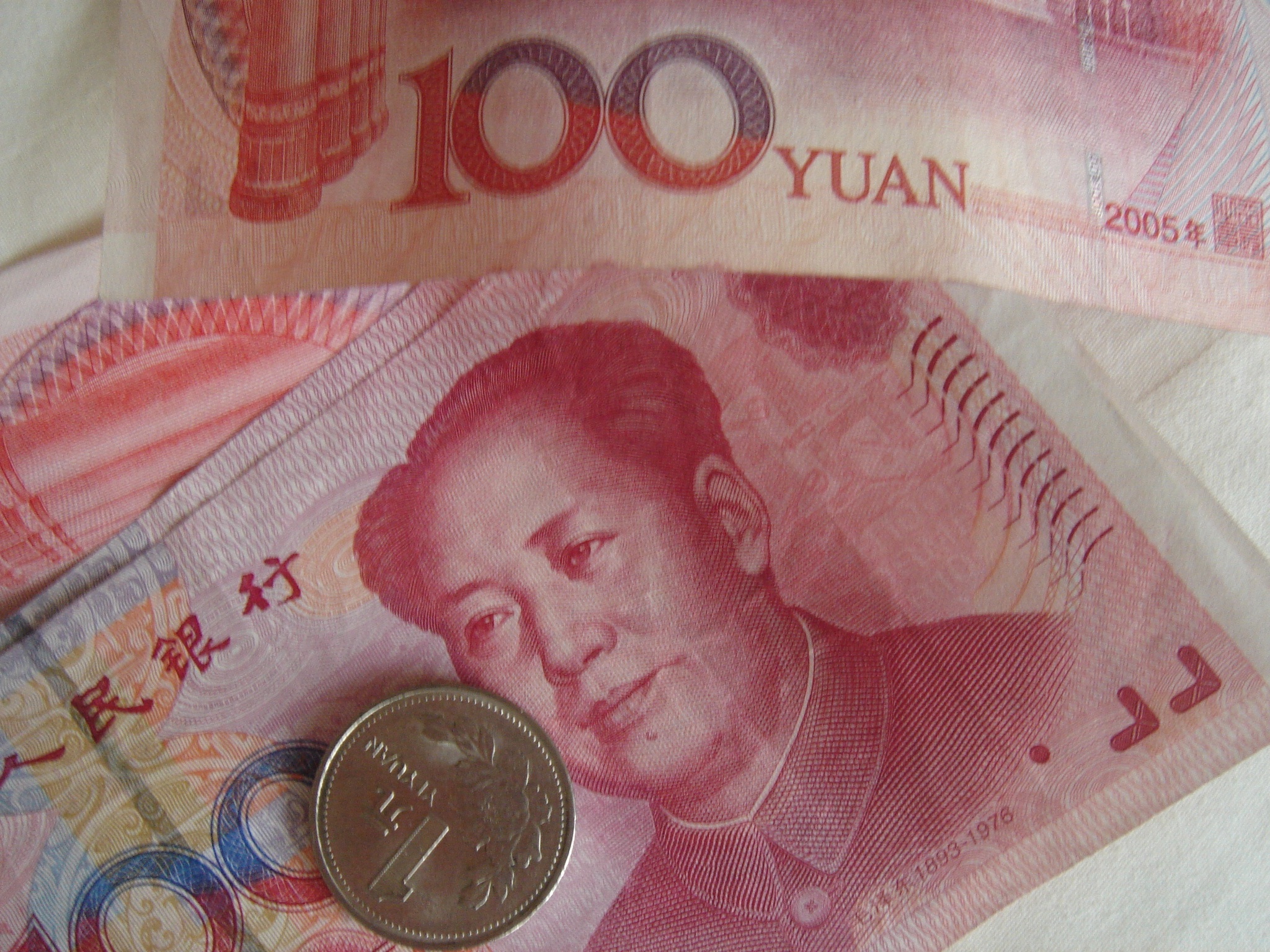
The Chinese Communist Party is not “communist.” China permits private ownership and corporations. Consumerism and capitalism are alive and well. Forbes reported in April 2021 that a new billionaire was created worldwide every 17 hours, with the majority of newfound wealth coming from China.

The USA may be the billionaire capital of the world, with between 813 and 902 billionaires recorded, but China has seen a significant rise in the top wealth bracket in recent years. Mainland China currently has around 450 billionaires with a combined wealth of $1.7 trillion. China also hosts over 1,400 people with fortunes above $700 million. Billionaires do not exist in communist nations.

Karl Marx’s communism involved seizing the means of production. The government owns land, infrastructure, factories, and corporations under the premise that the ruling class could be eliminated by surrendering ownership to the state. Citizens may not accumulate wealth, as no one may have more than another, and certainly not more than the state. Everyone must be equal in poverty.

Under communism, the incentive for innovation is null and void. China has become a pioneer in innovative technologies and discoveries in every sector. Entrepreneurs are abundant in China, and investment and international trade are encouraged. The China of today is one of the leading players in the global economy, driven by modernization and competitiveness. The China of the past may have been communist, but the government is not going to take down statues of Mao or announce past wrongdoings.

China quietly moved away from communism decades ago. They saw it wasn’t working and made a change without a public declaration. Yes, the CCP is certainly authoritarian to some degree, but it is a fallacy to call China a communist nation.

China Limits America’s Ability to Purchase Rare Earth Minerals


Posted originally on Nov 13, 2025 by Martin Armstrong |  

China.USA_

Over 90% of rare earth global production occurs in China. The materials are needed for absolutely everything, namely the production of military equipment, which is why China has imposed new restrictions to prevent the United States from military expansion.

China is preparing to implement a “validated end-user” (VEU) system to forbid any corporation with ties to the US military from purchasing rare earths. The VEU system will facilitate trade to civilian corporations, as outlined during Chinese President Xi Jinping recent meeting with US President Donald Trump. The two sides may have agreed to ease restrictions on rare earth trade, but the silent Cold War between the two continues.

The US and its allies have been prohibiting China from purchasing semiconductor chips and intellectual property that could be utilized in military expansion. Both sides have implemented

end-user \verification and approval systems. In fact, the US first implemented an end-user verification system specifically to weed out Chinese companies back in 2007.

Companies must first register to purchase any item that could be used by the Chinese or US military. Potential buyers must now be carefully vetted to ensure they are in compliance with national security standards. If approved, in the case of China, firms will receive a validated end-user certificate to confirm that they are authorized to purchase materials that will be used for civilian purposes. These certifications must be periodically renewed, and the government will be carefully monitoring companies granted approval. Exporters must verify that shipments will only be sent to verified end users. There will be ongoing monitoring and audits, shipment tracking systems, and careful record reporting.

The two nations are ultimately attempting to decrease their trade alliance. The US is completely banking on Japan to begin extracting rare earths to meet demand. Taiwan is the hot spot for all semiconductor chips, with the US and China both claiming rights to the island in various ways.

SEC. SCOTT BESSENT: Until Now, China Had Fully Taken Over Rare Earth Magnet Production, But With President Trump’s Leadership And New Facilities Like The One In Sumter, South Carolina, We’re Finally Taking Back Control


Posted originally on Rumble on Bannon War Room on: November 7, 2025

Canadian Prime Minister Mark Carney Confirms He Apologized to President Trump for Reagan Ad Effort


Posted originally on CTH on November 1, 2025 | Sundance 

On Friday President Trump noted (off-the-cuff) he was ambivalent to the trade interests of Canada and had no intention to restart discussions. However, Trump also said he holds no personal animosity toward Canadian Prime Minister Mark Carney for the stupid and antagonistic move they made in purchasing a manipulative television ad intended to undermine the Trump trade position.

On Saturday, Prime Minister Mark Carney confirmed he did apologize to President Trump for the Canadian effort.

GYEONGJU, South Korea, Nov 1 (Reuters) – Canadian Prime Minister Mark Carney said on Saturday he had apologised to U.S. President Donald Trump over an anti-tariff political advertisement and had told Ontario Premier Doug Ford not to run it.

Carney, speaking to reporters after attending an Asia-Pacific summit in South Korea, said he had made the apology privately to Trump when they both attended a dinner hosted by South Korea’s president on Wednesday.

“I did apologise to the president,” Carney said, confirming comments by Trump made on Friday.

Carney also confirmed that he had reviewed the ad with Ford before it aired but said he had opposed using it.

“I told Ford I did not want to go forward with the ad,” he said.

The ad, commissioned by Ford, an outspoken Conservative politician who is sometimes compared to Trump, uses a snippet of Republican icon and former President Ronald Reagan saying that tariffs cause trade wars and economic disaster.

In response, Trump announced that he was increasing tariffs on goods from Canada, and Washington has also halted trade talks with Canada.

When departing South Korea earlier this week, Trump remarked he had a “very nice” conversation with Carney at that dinner but did not elaborate. On Friday Trump still said the United States and Canada will not restart trade talks. (read more)

Carney also noted he had great discussions with Chinese Chairman Xi Jinping but did not negotiate any trade deals.

Instead, the Canadian Prime Minister emphasized the release of Canadian citizens detained in China and requested that Beijing not interfere in Canadian domestic politics.

The irony is strong.

The current USMCA (CUSMA) trade pact covers approximately 60% of U.S-Canada trade; it is the remaining 40% is being debated and argued.

President Trump’s position is pragmatic. He would prefer to just deal with 100% of the trade sectors in one bilateral free trade agreement; hence, his ambivalence until the USMCA is dissolved.

Canada, on the other hand, is entirely dependent.  They demand all trade conflicts be resolved without opening up the USMCA. Again, another conflict. Canada is like the dependent spouse in a divorce arguing for child support payments when the “children” are in their twenties.

The current status is President Trump pulling back completely from discussions with Canada, while the various provincial Premiers and Prime Minister Mark Carney agonize over the issue.

At a certain point, when the entire national economic plan of Canada is based on “Donald Trump bad”, and all political messaging internally is to proclaim they have no alternative policy positions, the Canadians might not realize it, but they are confirming complete and total dependency on the nation Donald Trump represents.

What took place in last week’s tour of Asia, makes Canadian Prime Minister Mark Carney look very small.

China Purges Military – Loyalty in Question


Posted originally on Oct 31, 2025 by Martin Armstrong |  

Xi JinPing Flag

President Xi Jinping has grown suspicious of his People’s Liberation Army (PLA). Nine senior generals, including CMC Vice-Chair He Weidong and Rocket Force commander Wang Houbin, were dismissed from their positions. The military has never seen such an intense campaign to eliminate corruption and consolidate power.

The precise nature of Xi’s suspicions are unknown, but many believe his caution began in February 2023 during the balloon incident in which a spy balloon found its way into a US military airspace. The incident embarrassed Xi who was unaware of the plan or mistake.

The “Fujian clique,” which is the most influential in the PLA and closest to Xi, came under intense scrutiny. The shake-up intensified in 2024 into the current year. Defense Minister Wei Fenghe was removed from his position in October 2023, and Li Shangfu was subsequently fired from the same role in June 2024. PLA political commissary Miao Hua was eliminated in June of this year.

“Disciplinary violations” and corruption were noted as the official reason for eliminating top officers, but there are deeper issues at play. The two Rocket Force commanders were subsequently fired, leading to suspicions of political instability in the force itself. When armed police units were purged en masse, it was clear that Xi feared a potential political coup. The Eastern Theater Command is crucial for maintaining order in Taiwan, but the majority of troops found themselves under investigation. Can they be trusted to follow the One China policy and adhere to Xi’s rule?

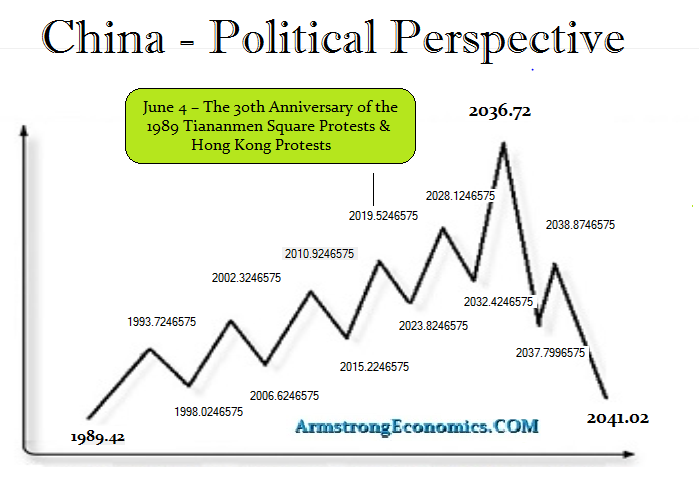
China 1989 2040

The PLA is not a conventional army but rather an armed wing of the Chinese Communist Party that works to guarantee the survival of the current regime. Political commissioners are assigned to every major unit to ensure they are completely in line with the CCP’s command. Eliminating these commissioners signaled to the world that the military was swaying from CCP guidance. Xi Jinping must have the final say.

The Community Party demands absolute loyalty. The sheer number of people eliminated during this purge is unprecedented and shows cracks within the ranks. Armies turn on their governments, historically causing regimes to crumble. China is on the brink of war over Taiwan as America begins to arm the island and offer protection in return for semiconductor chips.

China is no stranger to coups amid its long history. Lin Biao was destined to succeed Mao in 1971 but staged a coup against him. Biao’s plot was revealed, and he was executed. Xi has eliminated all potential successors and elders who may not have a say in the decision-making process.

President Trump Holds Presser Returning from Asia Trip


Posted originally on CTH on October 30, 2025 | Sundance

President Trump recapped the trip to both ASEAN and APEC conferences, along with the substantial trade agreements that took place with various nations. One of the key points of inquiry was the meeting between President Donald Trump and Chinese Chairman Xi Jinping.

President Trump released a recap via Truth Social (below video):

President Trump – “I had a truly great meeting with President Xi of China. There is enormous respect between our two Countries, and that will only be enhanced with what just took place. We agreed on many things, with others, even of high importance, being very close to resolved. I was extremely honored by the fact that President Xi authorized China to begin the purchase of massive amounts of Soybeans, Sorghum, and other Farm products. Our Farmers will be very happy! In fact, as I said once before during my first Administration, Farmers should immediately go out and buy more land and larger tractors.

I would like to thank President Xi for this! Additionally, China has agreed to continue the flow of Rare Earth, Critical Minerals, Magnets, etc., openly and freely. Very significantly, China has strongly stated that they will work diligently with us to stop the flow of Fentanyl into our Country. They will help us end the Fentanyl Crisis. China also agreed that they will begin the process of purchasing American Energy. In fact, a very large scale transaction may take place concerning the purchase of Oil and Gas from the Great State of Alaska. Chris Wright, Doug Burgum, and our respective Energy teams will be meeting to see if such an Energy Deal can be worked out.

The agreements reached today will deliver Prosperity and Security to millions of Americans. After this Historic trip to Asia, I am now heading back to Washington, D.C. I want to thank the Great Countries of Malaysia, Japan, and South Korea for being so generous, gracious, and hospitable — Also, Australia, Canada, New Zealand, Singapore, Thailand, and Vietnam, who were at the Dinner last night hosted by His Excellency Lee Jae Myung. Hundreds of Billions of Dollars are being brought into our Country because of them. Our Nation is Strong, Respected, and Admired. Again and, THE BEST IS YET TO COME!”