Iran Conflict – Oil Disruption Hits Key BRICS Members Hard


Posted originally on CTH on March 3, 2026 | Sundance

Consider the severe economic body blows to China in the past 14 months.

♦ First blow, the Trump tariffs hit Beijing hardest. ♦ Second blow, the Beijing tentacle on the Panama Canal is severed.  ♦ Third blow, global tariff threats changed the risk dynamic for southeast Asia countries who acted as transnational shippers for China. ♦ Fourth blow, cheap sanctioned oil from Venezuela was cut-off. ♦ Now, the fifth blow; cheap, sanctioned Iranian oil is disrupted.

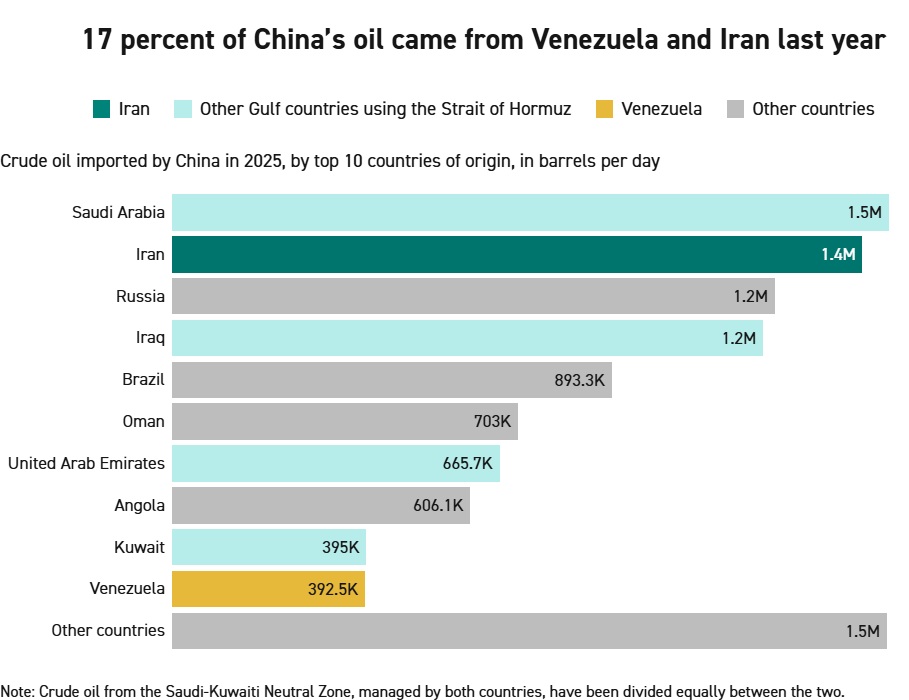
As noted by Politico: Following USA military strikes, “ships have begun to avoid the Strait of Hormuz off the coast of Iran — a critical shipping lane for Gulf nations to export oil to Asia. China in 2025 received about half of its imported oil from the six Gulf countries that rely on the strait. Other large crude oil producers in the region — including Saudi Arabia, Iraq and the United Arab Emirates — transport almost all their crude exports through the geographic bottleneck.

[SOURCE]

It’s not just a factor of oil flow, but also the price that China will ultimately end up having to pay.  Beijing was buying oil from Venezuela, Iran and Russia at steep discounts because their purchases were skirting western sanctions.

With Iranian oil production now no longer a market option, China will seek to replace their needs with more Russian alternative. However, that diversion means the oil India was purchasing from Russia will come at a higher price, and the refined final product that was exported by India will arrive to the European Union carrying an additional cost.

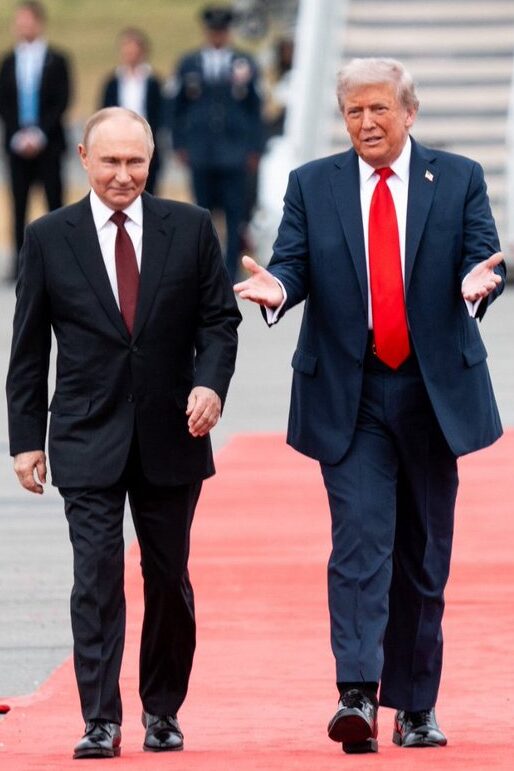
Simultaneously, Vladimir Putin was asked about Russia’s lack of military support to Iran in response to the U.S. military action, to wit the Russian president noted the technical terms of their joint military agreements did not include Russia’s immediate involvement.  In shorthand, Russia is busy and is not getting involved.

Russia was/is partially dependent on receiving military supplies from Iran in exchange for oil transfers.  The military component is reported to include drones from Iran for use in the Ukraine conflict.  Now that exchange profile is shuttered.

Taking Iran’s malign influence off the geopolitical chessboard is beginning to surface in major challenges to the BRICS assembly (Brazil, Russia, India, China, South Africa).  Russia, China and India are impacted directly.

The BRICS nations were skirting western oil sanctions by trading the commodity outside the petrodollar structure.  However, President Trump now controls the flow of oil from Venezuela, and his administration controls the currency in which it is sold.

With Iranian oil removed from the non-petro supply chain, the only remaining non-petro oil producer is Russia – who is simultaneously hit with a loss in military hardware support.  China may end up as a larger oil customer to Russia, but at what price and in what payment structure.

With global oil supplies in a state of flux, and with the USA in control of the oil flow from Venezuela, North America is certainly in the best position for minimal energy disruption.

Asia is heavily dependent on oil flows through the Strait of Hormuz, and the majority of Europe has already shut themselves off from Russian oil production, putting themselves in a position of dependency to the global markets.  The short-term ramifications of this oil disruption hit China, Southeast Asia, Japan and Europe particularly hard.

“OPEC+ countries affirmed on Sunday that they would boost oil production starting in April by 206,000 barrels daily — a modest increase intended to dampen the war’s effect on prices down the road. The majority of the increase would come from Saudi Arabia and Russia.” {SOURCE}

All of a sudden, this happens: Zelenskyy not to be trusted?

“Ukraine is under pressure to let the EU inspect a damaged pipeline carrying Russian oil to Hungary and Slovakia, as the two pro-Kremlin countries accuse Kyiv of overstating the impact of an attack by Moscow — despite what Ukrainian officials say is evidence of extensive destruction,” the report said.

According to five diplomats and EU officials who spoke to the FT, even pro‑Ukrainian governments within the European Union and the European Commission have also asked Ukraine to permit a delegation to inspect the pipeline. Two sources told the newspaper that European Commission President Ursula von der Leyen requested access for EU experts during her visit to Kyiv on Feb. 24, the fourth anniversary of Russia’s full-scale invasion. The request, according to the sources, was refused.

As tensions escalated, the EU’s ambassador to Ukraine, Katarina Mathernova, reportedly asked through the presidential office for permission to inspect the damaged pipeline herself or to allow visits by other EU diplomats. Those requests were denied for security reasons, the sources said.” (link)

Has China Blown the US Out of the Sky?


Posted originally on Feb 22, 2026 by Martin Armstrong |  

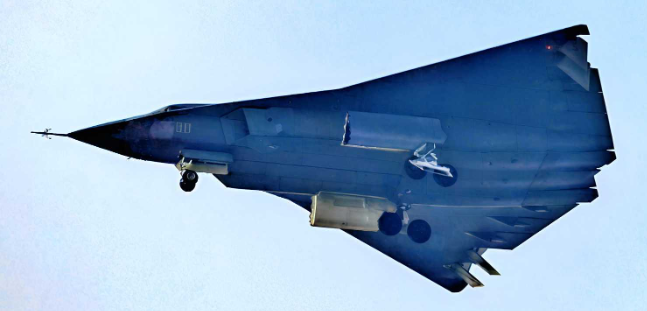
J 36 China

China’s military has for the first time shown a new, tailless combat aircraft widely identified by analysts as their sixth-generation fighter jet J-36, a large, unconventional prototype that flew in public alongside a J-20 chase plane and has reignited debate about whether Beijing is closing the technology gap with the West.

The alarm over China’s J-36 stems from its potential to fundamentally alter the strategic balance in the Asia-Pacific. It represents a generational leap beyond the F-22, not just in technology, but in its very concept of how air combat will be fought. Where the F-22 is a dedicated “air dominance” fighter, the J-36 is designed as a massive, stealthy “flying command center” built for long-range operations.

 The J-36 is reported to operate effectively above 65,000 feet (20,000 meters), giving it a literal “high ground” over the F-22, which has a service ceiling around 59,000 feet (18,000 meters). This allows the J-36 to spot the F-22 first while remaining harder to detect itself. The 2023 incident where an F-22 struggled to intercept a Chinese balloon at 65,000 feet (20,000 meters) is often cited as a practical example of this limitation.

The J-36 likely carries the PL-17 missile with a range of over 245 miles (400 km), more than double that of the F-22’s AIM-120D (approx. 100 miles (160 km)). Combined with a potentially more powerful AESA radar, the J-36 could theoretically detect, target, and fire upon an F-22 well before the F-22 could even get into firing range. This is a great concern.

If an F-22 survives the Beyond Visual Range phase and closes to visual range, its superior agility, thanks to thrust vectoring, would give it a significant advantage in a traditional dogfight against the much larger J-36, which is not designed for that kind of maneuvering.

The J-36 is designed with a “smart” skin and powerful onboard systems to process vast amounts of data and potentially employ directed-energy jamming. It could use its electronic warfare suite to disrupt the F-22’s sensors and communications, blinding it while feeding targeting information to its own missiles or accompanying drones.

The concern is not about a one-on-one dogfight. It’s about how the J-36’s design would allow China to project power and challenge U.S. operations in a way the F-22 cannot counter.

The J-36 vs. F-22 matchup is essentially a contest of “system vs. platform.” The F-22 is an incredibly capable but finite platform. The J-36 is the centerpiece of a networked system designed to dominate a battle-space. The alarm in the U.S. comes from the realization that China has not only fielded a prototype of a sixth-generation aircraft before the U.S. has finalized its own NGAD/F-47 design , but that its design philosophy directly targets the key vulnerabilities of the U.S. way of war in the Pacific.

In short, the US is alarmed because the J-36, if it enters production as advertised, could neutralize America’s primary tactical advantage in the region by leveraging superior range, altitude, and battlespace awareness to dictate the terms of an engagement.

That means the US may find it difficult to defend Taiwan altogether.

Canadian Prime Minister Pitching Global Trade Rules Agreement to Combat Trump – Connecting Trans-Atlantic to Trans-Pacific


Posted originally on CTH on February 17, 2026 | Sundance 

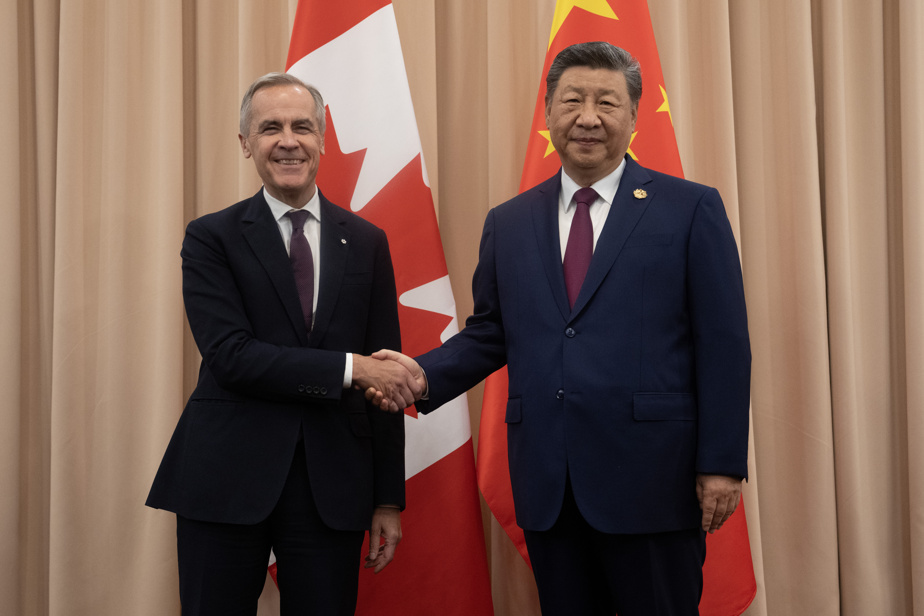
There is an awful lot to unpack in this seemingly obscure article talking about Canadian Prime Minister Mark Carney and a new trade approach he is pitching to Pacific/Asia and Atlantic/European nations. [Story Here]

Before getting to the substance of the outline, something important needs to be shared for context.

Do you remember the 2014, 2015 and 2016 top story conversations and debates over the Transpacific Partnership trade deal known as TPP?

You might also remember the Transatlantic Trade and Investment Partnership trade deal known as TTIP.

The TPP (Pacific) and TTIP (Atlantic) were two major multinational trade deals negotiated between 2013 and 2016. While both sparked plenty of debate, most of the spotlight was on the TPP, the Trans-Pacific Partnership.

Hillary Clinton was in favor of TPP as were most of the traditional republican field of candidates in ’15/’16.  However, Donald Trump was strongly against TPP and pledged to exit out of any negotiations and scrap the U.S. participation if he was to win the 2016 election.  Some of you may begin to remember this.

Donald Trump agreed with our position, that TPP was being falsely sold as a beneficial 12-nation massive trade agreement between the USA and pacific rim countries including Australia and Southeast Asia nations.

With the history of NAFTA behind us, we could see two major issues with TPP:  #1: It was structured with a back door to let China into the deal. And #2) it was created to ensure the USA remained a “service driven economy.”

Supporters of TPP and TTIP claimed this multinational trade deals would create smooth supply chains and align on ‘rules of origin.’ They believed TPP would benefit companies and lead to cheaper products. Critics, however, argued that the agreements were designed to exploit the U.S. consumer market and prevent the country from ever regaining a strong manufacturing base.

I share those reminders to set up the big 800-lb gorilla question.

If the TPP was such a great trade deal for all parties involved, why didn’t the group finalize it after the USA withdrew? It’s been a decade, so why haven’t the TPP nations completed their trade agreement?

The honest answer reveals the undiscussed lie.

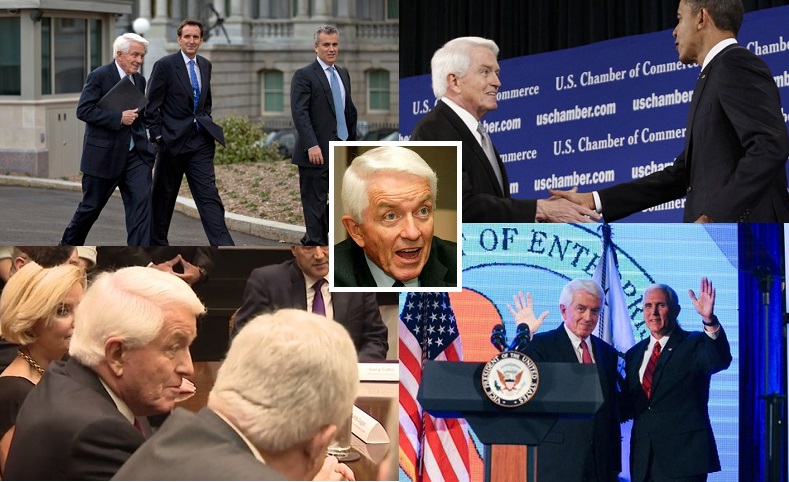
Both TPP and TTIP were constructed and designed to keep exploiting the U.S. consumer market. That’s it. That was the entire purpose of TPP (Asia) and TTIP (Europe). Corporations and lobbyists like the U.S. Chamber of Commerce wrote the TPP language to maximize corporate profits. That was the purpose of it.

Take the U.S.A. out of the TPP trade agreement and the purpose/benefit no longer exists.  Without the host, there is no need for a feeding agreement between parasites.  That’s why a decade has passed and TPP/TTIP went nowhere.

All of that said, suddenly with President Trump positioning to eliminate the USMCA trade agreement, Canadian Prime Minister Mark Carney wants to go back to the TPP/TTIP “Rules of Origin” trade framework in order to create an insurance policy against the end of the trilateral USMCA trade agreement.

Now, here is where it gets really interesting.  There is no way for Canada to remain in the USMCA and simultaneously commit to a trade agreement with different rules of origin.   This means that for Carney to accomplish what he’s reportedly aiming for, the dissolution of the UMCA would already need to be in the works.

USMCA Article 32.10 – Non-Market Country FTA (key provisions):

“A Party intending to negotiate a free trade agreement with a non-market country shall inform the other Parties at least three months prior to commencing negotiations and, upon request, provide information regarding the objectives of those negotiations.

A Party that enters into a free trade agreement with a non-market country shall provide the other Parties with the full text of the agreement prior to signing.

If a Party enters into a free trade agreement with a non-market country, the other Parties may terminate this Agreement on six months’ notice and replace it with a bilateral agreement.” [SOURCE]

The Canadian proposal violates the central tenet of the USMCA. Carney’s proposal can only move forward if the Canadian government has already accepted that the USMCA trade agreement will come to an end.

WASHINGTON – The European Union and a 12-nation Indo-Pacific bloc are opening talks to explore proposals to form one of the largest global economic alliances, multiple people with knowledge of the talks told POLITICO.

Canada is spearheading the discussions after Prime Minister Mark Carney called on middle powers to buck trade war coercion last month, days after Trump threatened to raise tariffs on Denmark’s European allies if it didn’t cede Greenland.

Ottawa is “championing efforts to build a bridge between the Trans-Pacific Partnership [CPTPP] and the European Union, which would create a new trading bloc of 1.5 billion people,” Carney told world leaders and the global business elite in Davos.

The middle powers are taking action. The EU and CPTPP are starting talks this year to strike an agreement to intertwine the supply chains of members like Canada, Singapore, Mexico, Japan, Vietnam, Malaysia and Australia with Europe.

It would bring nearly 40 nations on opposite sides of the globe closer together with the aim of reaching a deal on so-called rules of origin.

These rules determine the economic nationality of a product. A deal would allow manufacturers throughout the two blocs to trade goods and their parts more seamlessly in a low-tariff process known as cumulation. (read more)

In practice, a multilateral trade agreement with “Rules of Origin” involving many countries doesn’t really matter to the USA since our trade deals are bilateral. Other parties can set whatever terms they like, but if they want access to the U.S. market, that’s where we lay out our own specific terms on a one-to-one basis.

The same thing cannot be said for Canada, who is intentionally planning to remain a deindustrialized economy.  Canada will import component goods for assembly in Canada, but they will not fabricate much.

Prime Minister Mark Carney is strategically planning to keep Canada dependent on cheap foreign imports.

Canadians Embrace Cheap Chinese Electric Vehicles


Posted originally on CTH on February 17, 2026 | Sundance 

While the government of Canadian Prime Minister Mark Carney has inked a trade agreement with China to accept cheap imported vehicles in exchange for Beijing purchasing some agricultural products, President Trump has promised those cheap Chinese EVs will never cross the border into the USA.

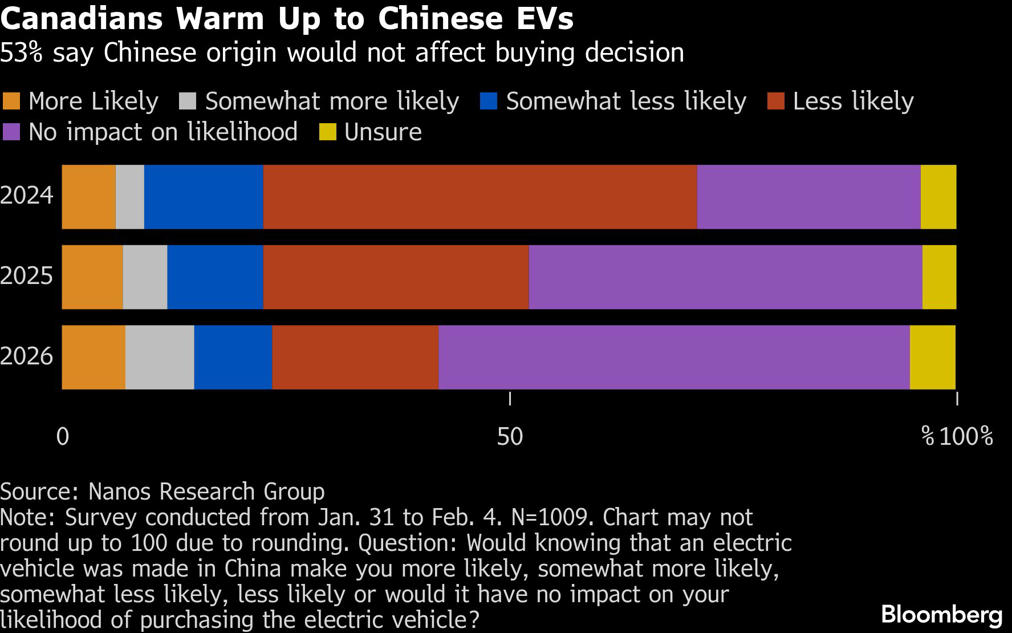
The Canadian polling on the issue has done a remarkable chang in the past few years.  Now, the majority of Canadians are willing to purchase cheap Chinese EVs. As outlined by Bloomberg, “More than half of Canadians, or 53%, say that knowing an EV was made in China would have no effect on their purchasing decision, according to a new poll by Nanos Research Group for Bloomberg News.”

Approximately 50,000 Chinese electric vehicles will enter the Canadian market in the first year. “The pact with China includes a provision that part of the quota will be reserved for electric vehicles priced at C$35,000 ($25,700) or less, the government has said.” {SOURCE}

The Canadian government wants a Chinese auto manufacturer, any Chinese auto manufacturer, to build factories in Canada to produce these electric vehicles.  Canada wants the jobs and economic activity because Canada is currently bleeding jobs and economic activity due to the trade conflict with the U.S.

Building cheap Chinese EVs in Canada might help offset a few thousand job losses, but building Chinese EVs in Canada only further ensures there will not be a substantive trade agreement between the USA and Canada once the USMCA (CUSMA) is dissolved.  [More on that coming]

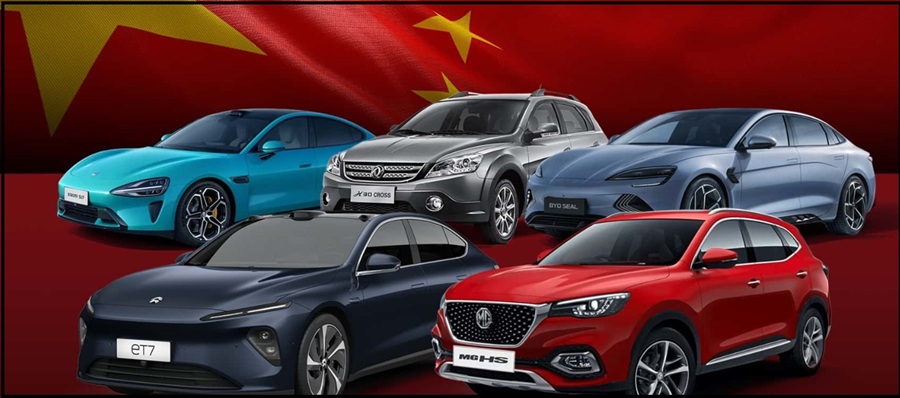
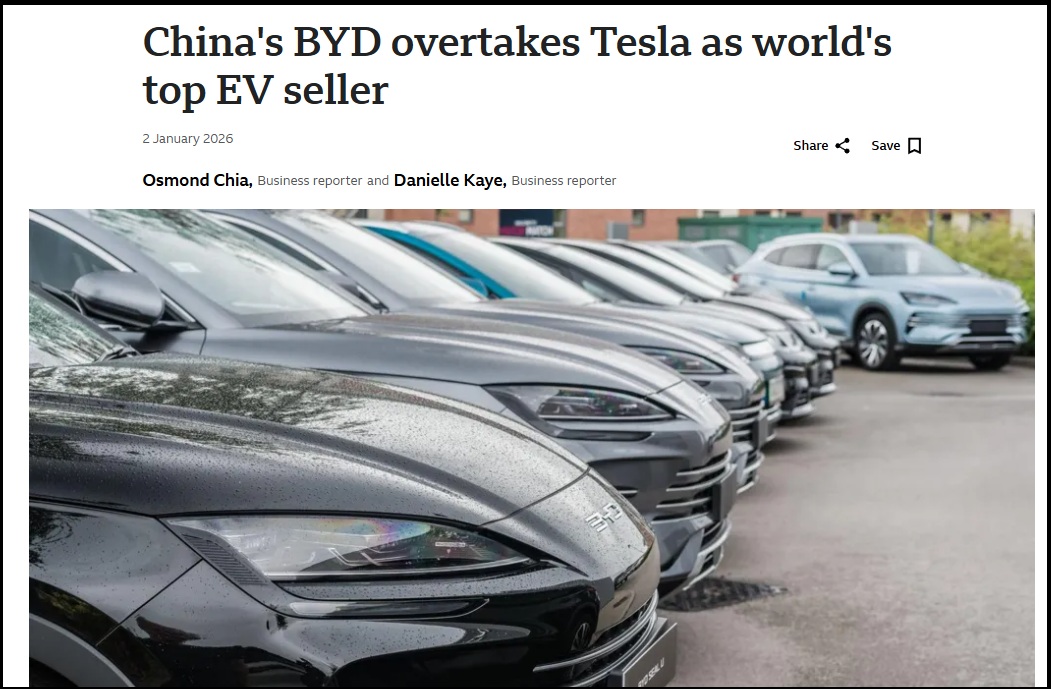
Meanwhile, Chinese EV company Build Your Dream (BYD) has announced they sold 4.6 million vehicles worldwide last year, far surpassing Tesla and even surpassing all of the Ford global auto manufacturing.  BYD is now the sixth largest auto manufacturing company in the world.

[Auto News] […] The 2025 sales figures place BYD at sixth largest among global automakers, meaning Ford slipped to seventh in total global deliveries. Toyota remains the dominant global seller with sales exceeding 10 million units followed by Volkswagen Group, Hyundai Motor (including Kia and Genesis), General Motors, and Stellantis.

BYD’s sixth position in the global automotive sales index is particularly notable for an auto maker that focuses almost exclusively on new energy vehicles (NEVs) — a category that includes battery-electric vehicles (BEVs) and plug-in hybrid vehicles (PHEVs). (more)

CTH previously outlined the specific explosion in BYD auto sales HERE.  Europe, Russia, Asia and Australia are flooded with cheap Chinese EVs particularly from the BYD brand.  Canada is now opening themselves to face the same issue.

Big Picture: President Trump and Trade Using the Art of the Self-Fulfilling Prophecy


Posted originally on CTH on January 27, 2026 | Sundance

People might be interested in the recent stories of Canadian Premier Doug Ford and his reversal of position on Chinese EV production. Ontario Premier Ford now welcomes Chinese EVs into Canada.

Or people might be interested in the recent story of the EU announcing a historic trade deal with India. The European Union is now looking to find new markets to replace the U.S., while simultaneously agreeing to establish a new immigration/recruitment process to accept massive numbers of Indian migrants.

Yes, Canada reverses their position on trade with China, that’s odd. And somehow the EU immediately forgets their demands for India to stop buying Russian oil or face EU sanctions, another oddity.  This is like watching someone you don’t like, get engaged to your smelly, fat ex-girlfriend. [Matthew 15:14]

Canada and the EU take trade and economic positions seemingly against U.S. interests. Simultaneously Mexico modifies all their trade positions to come into alignment with the USA. Yesterday, Mexican President Claudia Sheinbaum announced Mexico will no longer ship oil to Cuba.

What’s going on?

Well, to really understand what is happening you need to look at President Trump’s responses to all of the individual issues outlined above and take a much bigger picture view.  President Trump is the master of the ‘self-fulfilling prophecy.’

♦ CANADA – When President Trump was asked about Prime Minister Mark Carney creating a new trade agreement with China, President Trump responded that he didn’t care – it was irrelevant to him.  Yet, simultaneously inside the USMCA President Trump has the power to veto any trade agreement between Mexico or Canada and a non-member nation.

So, why didn’t President Trump care?  Easy, because in President Trump’s mind there’s not going to be a USMCA; so, he really doesn’t care if Canada runs to violate it.  In real terms, Canada doing bilateral deals with other countries, especially deals potentially detrimental to the USA, only strengthens his position on dissolving the USMCA.

If Canada violates the terms and spirit of the USMCA, it makes dispatch of the unliked trade agreement even easier.  Canada is helping President Trump remove the congressional justification they could use to block him.  If Canada is violating the USMCA (CUSMA), Congress is kneecapped from interference.

Provoking Canada into a trade position, that puts them at a disadvantage trying to stop the dissolution of the CUSMA, stops Congress from opposing the fracture, and then opens the door to a bilateral trade agreement, is creating a self-fulfilling prophecy that is entirely controlled by President Donald Trump.

[I pointed this out on the ‘Russian Sanctions’ map four years ago for a reason.] 

♦ EUROPE – In the last few months, the EU has been pressuring President Trump to join them in putting sanctions against India for purchasing Russian oil.  Suddenly, all those Russian energy issues are dropped, and the EU signs a trade agreement with India.  Again, just like with Canada, President Trump doesn’t care; he’s working on a much bigger objective.

Both Canada and Europe are independently, out of necessity, taking action that takes apart the trade and economic system they created.  At the core of the old trade system both Canada and Europe were exploiting the USA, exfiltrating wealth and skimming the independent entrepreneurial innovation that originates from within the U.S. economic system.

That necessary exploitation happened because the USA is innovative (freedom-based capitalism), while the CA/EU system is built on government control mechanisms.  The CA/EU energy policy is just one impactful example of their pontificating inability to be insightful when it comes to consequences.  The EU and Canada are now stuck looking for markets that will do the dirty jobs, provide them with core components, while simultaneously looking for markets for their finished products.

On the other side of the approach is President Trump, working to expand U.S. industrial dirty job capacity, create our own core components, then create finished goods entirely on our own.  A complete revitalization of the U.S. industrial and manufacturing base.  Our U.S. GDP is currently expected to grow north of 5%.  This is not happening by accident.

Additionally, EU Commission President Ursula von der Leyen is not bragging about importing Indian IT workers in a vacuum.  If the EU cannot skim off the IT capabilities of America, they have to find another Braintrust to tap.  Just like the innovative dependencies of China, the EU is intellectually frigid; compliance is ingrained in their academia.  Within the USA, we still have foundational disposition of ‘screw you‘ in our DNA.

Look at the advancements of Artificial Intelligence, or AI. All of the growth in that tech sector is being led by America. President Trump is taking every approach to ensure we remain the world’s dominant power in AI development. As much as Elon Musk’s quirks and quasi-friendly politics annoys me personally, strategically, on the technology side, it’s good to see him chumming around with President Trump; at least that’s what I tell myself.

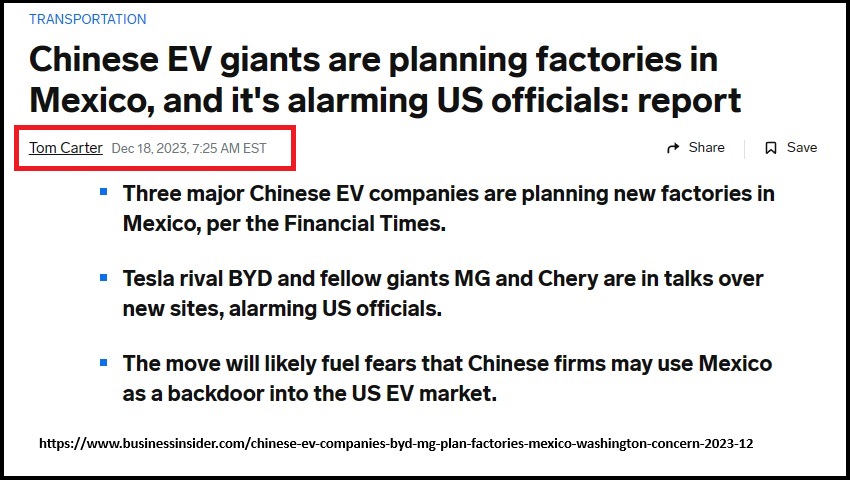
♦ MEXICO – This is where it gets really, super interesting.  You might remember that China was set to invest between $5 billion and $10 billion (total) in Mexico for EV auto manufacturing.  In December of 2023, three Chinese auto manufacturers, MG, BYD, and Chery, announced they were going to spend billions building new EV manufacturing plants.  Each Chinese manufacturer was initially going to spend between $1.5 to $2.0 billion.  By March 2024, the reasoning was evident – Biden was supporting it.

When President Trump won the November 2024 election, all of those Chinese investments and plans inside Mexico were cancelled.

As we noted at the end of last year, splitting the USMCA into two bilateral trade deals, one for Mexico and one for Canada, will be one of the most interesting and long-term economically significant moves in U.S. trade history.  It is going to be a lot of fun to watch these negotiations, and the pre-positioning gives us a preview of what is to come.  Mexico is doing everything almost perfectly in preparation for their bilateral deal, including their stopping of oil shipments to Cuba.

This alignment follows the Mexican government passing a sweeping set of tariffs against Chinese imports. The Mexican government, led by Sheinbaum, made moves throughout 2025 to stay in alignment with a favorable U.S. trade agreement.  Meanwhile, the Canadian government, led by Mark Carney, has been more antagonistic and positioning Canada to lose badly.

♦ SUMMARY: Some people have construed the bilateral trade preference of President Trump to be the elimination of globalism in favor of nationalism in trade agreements. While the outcome of Trump’s approach indeed aligns with that theme, it is not specifically the objective of President Trump to eliminate global trade, but rather to focus on specific interests in trade that benefit the unique nature of each party involved.

Canada can embrace China, and Europe can embrace India; in the bigger picture it really doesn’t matter.  These relationships only create dependencies which are the natural outcome of globalism.  From President Trump’s position, what really matters is what happens within our borders and how the United States economy is positioned.  This is President Trump’s singular focus.

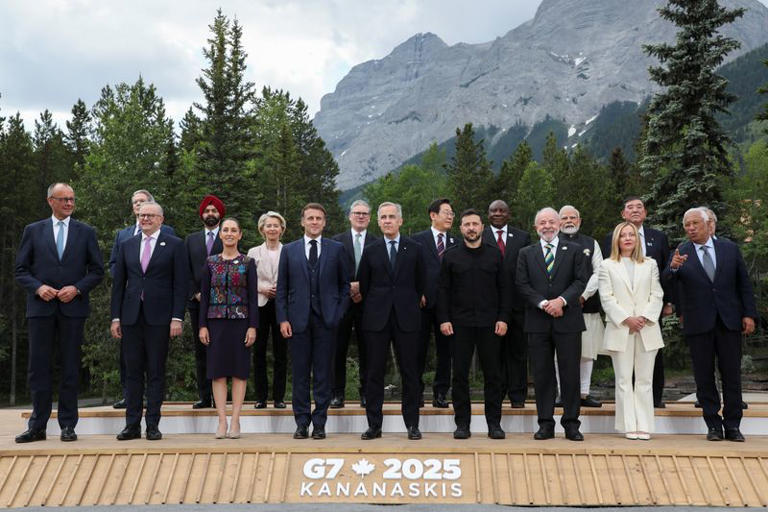
Do you remember President Trump leaving the 2025 G7 meeting in Canada early? The final day invitation list brought Australia, Mexico, Ukraine, South Korea, South Africa, India, the United Nations and the World Bank into the G7.  President Donald Trump smartly exited the G7 assembly a day early, he departed before that crowd of interests arrived.  The world leaders came because the process to keep USA wealth inside the USA is against their interests.  That’s why they came, and that’s why President Trump left.

Globalism, in its economic construct, is a series of dependencies. However, the opposite is also true. If nations are not dependent, they are sovereign – able to exist without the need for support from other nations and systems. If nations are sovereign, then globalism is no longer needed. If each nation of the world is operating according to its individual best interests, the position of Donald Trump, then what happens to the governing elite who set up the system of interdependencies?

“G7”?

Ontario Premier Doug Ford Appears in Awkward Presser – We Love Chinese EVs Now


Posted originally on CTH on January 27, 2026 | Sundance

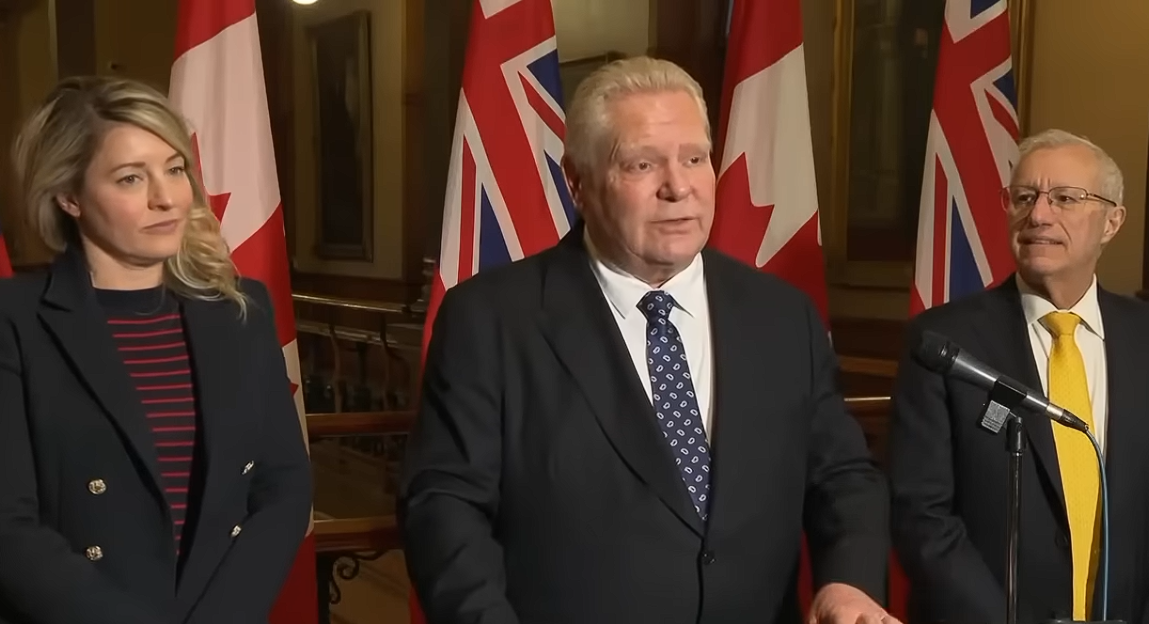
Ontario Premier Doug Ford went for a pizza with Canadian Prime Minister Mark Carney.  Following the meeting Doug Ford appears on camera for a debrief to explain how he has reversed his opposition to Chinese EV imports.  The presser looks like a hostage video (prompted):

USMCA Article 32.10 – Non-Market Country FTA (key provisions):

“A Party intending to negotiate a free trade agreement with a non-market country shall inform the other Parties at least three months prior to commencing negotiations and, upon request, provide information regarding the objectives of those negotiations.

A Party that enters into a free trade agreement with a non-market country shall provide the other Parties with the full text of the agreement prior to signing.

If a Party enters into a free trade agreement with a non-market country, the other Parties may terminate this Agreement on six months’ notice and replace it with a bilateral agreement.” [SOURCE]

President Trump Threatens to Hit Canada with 100% Tariff if they Become a Transshipping Hub for Chinese Imports


Posted originally on CTH on January 24, 2026 | Sundance 

Canada signing a trade agreement with China to permit the import of EVs is another escalation in the exploitation of the USMCA compact.

For the position of China, using Canada as a route to ship component goods into the United States is just a slight expansion of their current technique to avoid U.S. tariffs.  However, President Trump is taking action immediately.

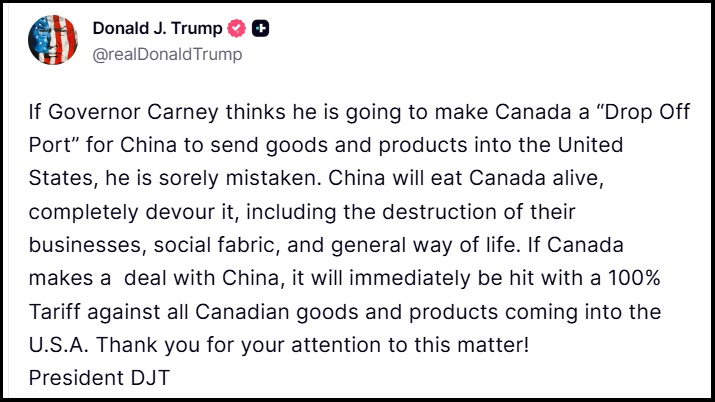
Noting on his Truth Social platform, President Trump announced that if Canada does effectively go through with allowing the import of Chinese electric vehicles, then the U.S. will impose a 100% countervailing duty against all Canadian imports.

[SOURCE]

“[…] As a part of the deal, Canada will ease the tariffs on Chinese electric vehicles that it imposed in tandem with the U.S. in 2024. In exchange, China will lower retaliatory tariffs on key Canadian agricultural products.” ~Politico

Canadian Prime Minister Mark Carney continues giving President Trump the ammunition to dissolve the USMCA trade agreement this year.

USTR Jamieson Greer and Commerce Secretary Howard Lutnick have both expressed anticipation of a new bilateral trade agreement to stop all this Canadian nonsense.

The Stupidity of Davos Explained Using an Example of Their Own Creation


Posted originally on CTH on January 22, 2026 | Sundance 

It’s around lunchtime and I’ve spent so much time deep in the weeds of an issue that I need a break.  So, here’s a little funny story from my real-world travels in the past few years that given the current Davos meeting topics you might find interesting.

I went to Russia in 2024, because what I was hearing in western media about the sanctions did not align with what I was seeing from reports inside Russia.  Before I went into Russia, I spent several weeks in Northern and Eastern Europe visiting various institutions, reading material and checking to see how systems in Europe were engaging with commerce given the Russian sanctions.  It wasn’t very exciting work, and sometimes I literally just sat in the lobbies of banks listening to conversations.

When I went into Russia (April, May, June and July ’24) I noticed many of the “Uber cars” were BYD brand, Chinese electric vehicles.  It made sense given two years of existing sanctions and few cars from Europe or America available except under costly brokerage fees for acquisition.  They like the Geely brand better, but BYDs are much cheaper.  A brand new BYD costs around $5,000 to $10,000 USD, in some places even less.

Then later I noticed even more of these BYD cars in Europe.  I started to pay attention to them and saw them everywhere.

When I went back into Russia a year later in 2025, there was a very noticeable increase in BYD cars.  It was crazy, they were everywhere.

My travels also took me to southeast Asia and again those damned BYD’s were all over the place.  In Thailand, Philippines, Malaysia, Vietnam, these BYD’s were everywhere, maybe even 30% of total vehicle traffic at times – most certainly well over 50% of all EVs – and there are digital billboards for “Build Your Dream” (BYD) all over the place throughout Asia.

Australia is stocked full of those things, and the middle east, yup, even there too.  It became increasingly weird to notice.  So many were visible I was wondering how the heck China can mass produce and ship this many cheap EVs so fast.

Then as serendipity would have it, I ran into a Chinese guy, professionally an actuary, in a hotel restaurant.  He explained to me that China produces the BYD not to make money from the automobile, but rather to sell the carbon credits the automobile generates within the auto industry.

The actual value to Beijing is in selling the carbon credit worthiness to various automakers who are fined or penalized by their government for producing gasoline powered vehicles.

BYD is, in essence, not a car per se’, but a mechanism to generate a carbon credit certificate that can be sold to other car companies. It’s the carbon credit certificate that generates the revenue, not the sale of the vehicle.  As my dinner guest explained, the auto insurance industry was having fits about this because the actuaries couldn’t accurately put a correct figure on the cost of the insurance warrantee within the industry (that’s another story).

The bottom line is that China is manufacturing a product to create a carbon credit certificate in response to the demand for carbon credits from all the world auto-makers.  Any nation that has a penalty or fine attached to their climate goals is a customer. Those are nations with fines or quotas associated with the production of gasoline powered engines if the auto company doesn’t hit the legislated target for sales of electric vehicles.

In essence, EU/AU/CA/RU/ASEAN car companies buy Chinese car company carbon credits, to avoid the EU/AU/CA/RU/ASEAN fines.  The Chinese then use the carbon credit revenue to subsidize even lower priced Chinese EVs to the EU/AU/CA/RU/ASEAN car markets, thereby undercutting the EU/AU/CA/RU/ASEAN car companies that also produce EVs.

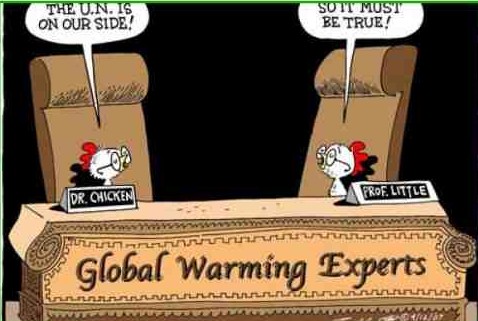
Big Panda brilliantly exploits the ridiculous pontificating climate scam and has an interest in perpetuating -even emphasizing- the need for the EU/AU/RU/ASEAN countries to keep pushing their climate agenda.  China even goes so far as to fund alarmism research about climate change because they are making money selling carbon credit certificates on the back end of the scam to the western fear mongers.  This is friggin’ brilliant.

My dinner buddy was in the business of identifying the cost/benefit equation between the climate change fines and the prices Big Panda could charge for the carbon credit certificates.   If, as an example, Brussels dropped the quotas for EVs, China would need to lower the price for the carbon credit certificates.  So, Beijing wants Brussels to make sure they don’t drop the quotas.  See how that works?

The climate change alarmists are helping China’s economy by pushing ever escalating fear of climate change.  You just cannot make this stuff up.

What does the outcome look like?

Well, in this example we see thousands of unsold BYDs piling up in countries that emphasize climate regulations with no restrictions on the import of EVs (which most don’t even manufacture), which is almost every country.  Big Panda doesn’t care about the car itself; they care about generating the carbon credit certificate to sell in the various carbon exchanges.

Put this context to the recent announcement by Canadian Prime Minister Mark Carney about his new trade deal with China to accept 49,000 EVs this year.

Prime Minister Carney bragged about getting the Chinese to agree to only super low prices for the Canadian market.  Mark Carney was very proud of his accomplishment to get much lower priced vehicles for Canadian EV purchasers.   No doubt Big Panda left the room laughing as soon as Carney made his grand announcement.

1. China sells EV’s in Canada, creating credits available on the carbon exchange scheme. Europe et al will purchase the carbon credits because Bussels has fines against EU car companies.

2. With a foothold already established in Europe, China will then take the money generated by the carbon credit purchases and lower the prices of the Chinese EV cars sold in Canada.

It’s gets funnier.

3. Carney bragged about forcing China to only sell low price EV’s as part of the trade agreement. The low price of the EV’s in Canada will be subsidized by Europe. China doesn’t pay or lose a dime.

But wait….

4. Carney can’t do anything about the scheme he has just enmeshed Canada into, because Canada has a Carbon Credit exchange in law. Big Panda wins again.

[…] In a statement published Thursday, BYD said sales of its battery-powered cars rose nearly 28% to 2.26 million units.

Musk openly laughed at the mention of BYD while being interviewed on Bloomberg TV in October 2011. He said he did not see the company as a competitor to Tesla, adding: “I don’t think they have a great product.” Meanwhile, Tesla said Friday it delivered 1.64 million vehicles in 2025. [SOURCE]

Elon thinks BYD are building cars.  They aren’t.

Domestic Demand Wanes in China


Posted originally on Jan 21, 2026 by Martin Armstrong |  

China Taiwan Map

China’s GDP advanced by 4.5% in Q4 2025, slightly down from the 4.8% in Q3. Economic output for the year was 5%, in line with the target and aided by a strong industrial output of 5.2% in December. Notably, retail sales grew at a slow pace of 0.9% for the month, and growth slowed 4.5% YoY, highlighting the decline in domestic demand.

When an economy is truly healthy, domestic demand leads. The consumer spends, business expands, imports rise, and you see balanced growth. Instead, what we are seeing is the opposite. External trade is carrying the headline numbers while the internal economy becomes more fragile.

Beijing is leaning on industrial activity and exports, and this is where the imbalance becomes glaring. China posted a nearly $1.2 trillion trade surplus in 2025, with exports rising about 5.5% even as imports showed little growth. China is selling to the world because it cannot fully absorb production domestically.

You also see this in the real estate collapse and the investment drag. Property has been the primary store of wealth and confidence for the Chinese. Reuters noted property investment fell 17.2% in 2025 and that consumption and investment are dragging while exports remain robust.

This is precisely why I have warned for years that you cannot look at “trade surplus” as some trophy without understanding the internal dynamics. The surplus is exploding because domestic demand is not keeping pace. Imports are not surging because the internal consumer and internal business confidence are not driving the same kind of pull. This is the classic imbalance of an economy becoming dependent on external demand. China is still on the rise long-term, but they’re looking at an economy that has become one-sided, which can be dangerous in today’s landscape of trade wars, regulations, supply chain constraints, and war itself.

Israel Not Happy with Trump Appointed Turkey and Qatar Roles in Assisting Gaza Stabilization and Executive Board


Posted originally on CTH on January 18, 2026 | Sundance

Last week President Donald Trump officially announced the members of the Gaza Board of Peace; an organization headed by President Trump and tasked to oversee the second phase of his plan to end the Israeli conflict in Gaza, specifically the reconstruction and disarmament of Gaza and Hamas respectively. [SEE HERE]

The members of the “Board of Peace,” chaired by Trump himself, includes Secretary of State Marco Rubio; Emissary Steve Witkoff; Jared Kushner; former British Prime Minister Tony Blair; an American-Jewish billionaire named Mark Rowan; World Bank President Ajay Banga; and Deputy National Security Advisor of the United States, Robert Gabriel. President/Chairman Donald Trump has also appointed Aryeh Lightstone and Josh Gruenbaum as senior advisors to the Board of Peace.

At the same time, President Trump announced another executive body that would operate under the Peace Council to assist with the facilitation of a new Palestinian government, the “Gaza Executive Board.” This structure is intended to manage day to day events on the ground instead of a Hamas loyalist govt.  The appointees to the executive board have upset the Netanyahu government of Israel.

According to the White House announcement, the Gaza Executive Board will include: Witkoff; Kushner; Turkish Foreign Minister Hakan Fidan; senior Qatari official Ali al-Thawadi; Egyptian intelligence chief Hassan Rashad; Tony Blair; billionaire Mark Rowan; UAE Minister Reem Al Hashimi; former Bulgarian Foreign and Defense Minister Nickolay Mladenov, who also served as the UN envoy for the Middle East peace process; U.N Representative Sigrid Kagg, and Israeli-Cypriot businessman Yakir Gabbay, who specializes in real estate, technology and international investments.

Additionally, to establish security, preserve peace, and establish a durable terror-free environment, Major General Jasper Jeffers has been appointed Commander of the International Stabilization Force (ISF), where he will lead security operations, support comprehensive demilitarization, and enable the safe delivery of humanitarian aid and reconstruction materials. [link]

According to Israeli media Netanyahu is not happy, and planning to protest the Turkish, Qatari and UAE appointments to Marco Rubio (not Trump):

“A very unusual statement by the prime minister against the US president, following the publication of the members of the “Executive Committee for Gaza” – which includes, among other things, the Turkish foreign minister and a senior Qatari official. “The announcement of the panel was not coordinated with Israel and is contrary to its policy,” the Prime Minister’s Office said.

“The announcement of the composition of Gaza’s Executive Committee, which is subordinate to the peace conference, was not coordinated with Israel and is contrary to its policy,” the Prime Minister’s Office said, adding that “the prime minister has instructed Foreign Minister Gideon Sa’ar to contact US Secretary of State Marco Rubio on this matter.” (more)

Within the appointments for the executive board, the use of Turkey, Qatar and UAE officials for the governance and reconstruction of Gaza explains the recent parsing of the Muslim Brotherhood chapters as terrorist enablers.  When Secretary Rubio made the terrorist designation announcement, the Turkish and Qatari Muslim Brotherhood chapters were notably absent.  With the Gaza initiative ongoing, now we see coordinated pragmatism at work.

Rubio chose to focus on Egypt, Jordan and Lebanon to target the Muslim Brotherhood.  As we noted, “The Egyptian Muslim Brotherhood were chased out of the country by President Abdel Fattah al-Sisi over a decade ago. The Jordanian chapter is similarly aligned and was previously targeted by King Abdullah. The Lebanese faction is not as well known, but their support for Hamas is well understood.” {Go Deep}

A few things are obvious.

First, President Trump and Secretary Rubio knew in advance they were going to need the strong influences of Qatar and Turkey if they were going to stabilize the interim Gaza reconstruction governing system.  Secondly, both Trump and Rubio knew Israeli Prime Minister Benjamin Netanyahu wouldn’t like that; however, pragmatically Trump and Rubio are doing what is in the best interest of the region as a whole, not being narrowly focused on Israel.  Additionally, these appointments have upset the Israel-first influencer group in the U.S.

President Trump is restructuring mid-east stability without the need for direct U.S. intervention.  Instead, under President Trump’s approach conflict resolution is the responsibility of the regional stakeholders with strong support from President Trump.  It is a similar outlook conveyed to Europe about needing to be responsible for their own defense and security solutions while the USA role is supportive in nature.

In this approach the sharp tendrils of U.S. influence start to be untangled, and the national security focus returns to the USA domestically. Mutually beneficial national sovereignty replaces toxic and unending globalist intervention.  This is a similar worldview that President Trump also takes toward trade agreements.

Multilateral trade agreements like the Transpacific Trade Partnership (TPP) or the Transatlantic Trade and Investment Partnership (TTIP), or even the NAFTA/USMCA trade agreement are rejected in favor of direct bilateral free trade agreements with individual nations.

In Trump’s trade policy the multilateral deals are dissolved, while the bilateral deals are affirmed. The same outlook holds true for massive institutional agreements that end up with large entanglements often carrying disproportionate costs and disparate benefits.  Like NATO, the USA usually ends up with the largest price tag and least benefit from the agreement.

Is NATO/Europe going to fight China over Taiwan? Of course not. If they were, Canada wouldn’t be making deals with Beijing, and Europe would not be allowing China to purchase stakeholder interests in the European car market.  The same pragmatic and reasonable outlook applies right now toward how the EU has responded to the Russia/Ukraine conflict; only “willing” if the USA puts our blood and treasure on the line.

This nationalistic outlook is honestly encapsulated in this recent soundbite from President Trump when asked about Canadian Prime Minister Mark Carney making a trade agreement with China. President Trump genuinely doesn’t care. WATCH:

Canada can make whatever deal they want with China; however, that doesn’t mean it will work out well for Canada when the USMCA is dissolved and a new bilateral trade deal between the USA and Canada is renegotiated.  Factually, it means Canada will end up in a worse economic place, just look at the history of countries that hugged Big Panda.  It is their own independent right to be blind to the risk.

Despite all the warnings from President Trump, Europe became dependent on Russia for low-cost energy; how’d that work out for them?  Germany now seriously regrets their green energy approach, but there’s nothing President Trump can do to stop multinational assemblies from being collectively stupid; the only thing he can do is mitigate any collateral damage to the USA.

Instead of European leaders calling President Trump every time Turkish President Recep Erdogan does something against their interests, eventually the group will learn how to engage him individually.  In a world of bilateral respect, the lessons from Trump could even have the downstream effect of training the EU to drop their obsession with Russia-bad everything.

The Ukraine conflict could end when Europe finally realizes it’s much easier to turn on a Nordstream gas valve than it is to rebuild 30 German nuclear power plants.  President Trump’s refusal to commit U.S. troops to Zelenskyy’s security guarantee will hopefully hasten that conversation.

The same pragmatic realism applies to Greenland.  Europe will never respond to any increase in strategic threat presented by China or Russia in the Arctic, and the U.S. will shoulder all the costs if that risk were to materialize.  Strategic pragmatism combined with economic realism is why President Trump is focused on the security of the North American continent.

Lastly, there is a segment of MAGA that is angered by President Trump’s interim and necessary approach to removing our foreign policy entanglements in both the European and Mideast continents.  Those who are short-sighted don’t see how President Trump is strategically and factually withdrawing U.S. policy from a world of enmeshed dependencies, because in reality charity –along with security– begins at home.

Thankfully, the former Lyndon LaRouche assembly from Promethean Action have begun to recalibrate their British-centric focus, and they’ve started to look at Trump policy beyond the ramifications to London and through the more accurate prism of Trump’s global pragmatism.  President Donald Trump isn’t trying to unilaterally destroy British imperialism, not directly. Instead, that old, stuffy and elitist collapse is a consequence of reestablishing independent sovereignty.

Smile, live your very best life and watch it all unfold.  After all, Davos is going to be a must-watch event next week.

.